← Ukraine: The Latest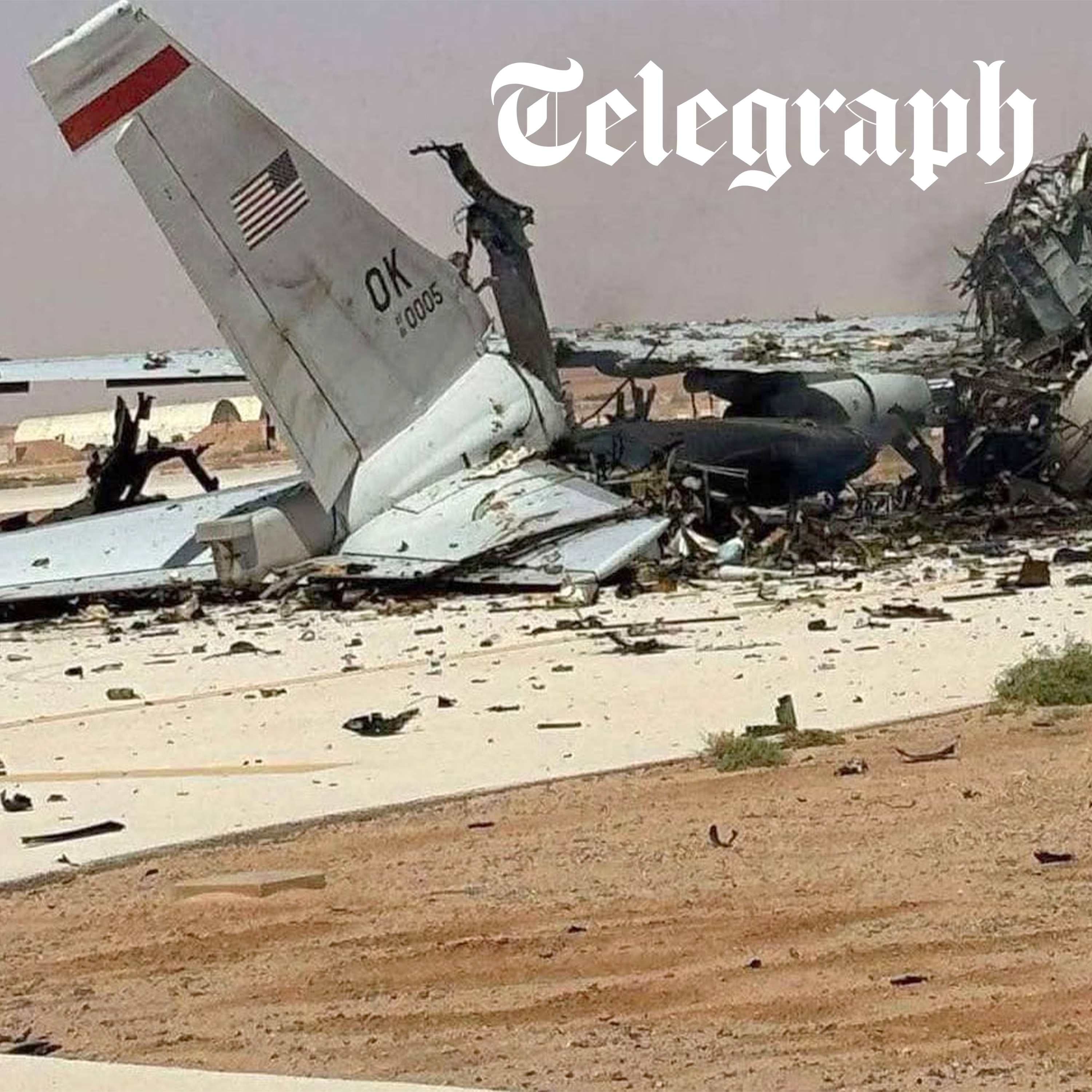
Ukraine: The Latest
Russia ‘helps Iran smash $500m US base’s battlefield nerve centre’ & Ukraine seals historic 10-year Gulf defence pacts
00:46:57
Loading summary
Transcript70 lines
- [00:04]
Francis Durnley
The telegraph. Avoiding your unfinished home projects because you're not sure where to start. Thumbtack knows homes so you don't have to don't know the difference between matte paint, finish and satin or what that clunking sound from your dryer is. With thumbtack, you don't have to be a home pro, you just have to hire one. You can hire top rated pros, see price estimates and read reviews all on the app. Download Today
- [00:32]
David Knowles
Acast powers the world's best podcasts. Here's a show that we recommend.
- [00:40]
Adli Pojman Ponte
Chicago 2011. A cop is murdered. Police and prosecutors swear they have the trigger man. He swears he didn't do it. How far will each side go to prove their right? Like it's just one bombshell after another.
- [00:56]
David Knowles
You know, you're like, what?
- [00:57]
Adli Pojman Ponte
What? The story of a PlayStation, a brain eating amoeba and the relentless pursuit of justice. Off duty out now. Listen wherever you get your podcasts.
- [01:12]
David Knowles
ACAST helps creators launch, grow and monetize their podcasts everywhere. Acast.com.
- [01:25]
Francis Durnley
I'm Francis Durnley and this is Ukraine. The latest today as we learn the true extent of the damage caused by Ukrainian strikes on the Baltic. We look at the stalling offensives by both Russia and Ukraine on the ground before turning to President Zelensky's Gulf grand tour, signing defense agreements to assist Middle Eastern countries in the war with Iran. Then we hear about a row in Germany where the CEO of one of its biggest defense companies claims Ukrainian drones are built by housewives. And hear whether it's possible for an EU member state to, like Hungary, to lose its voting rights and thereby unlock the €90 billion loan to Kyiv.
- [02:04]
James Rothwell
Bravery takes you through the most unimaginable hardships to finally reward you with victory.
- [02:14]
Adli Pojman Ponte
The Russia does not want peace.
- [02:24]
David Knowles
If I'm president, I will have that
- [02:26]
Francis Durnley
war settled in one day.
- [02:27]
David Knowles
24 hours.
- [02:28]
James Rothwell
We are with you.
- [02:29]
Francis Durnley
You.
- [02:29]
James Rothwell
Not just today or tomorrow, but for 100 years.
- [02:38]
David Knowles
Nobody's going to break us. We're strong. We're Ukrainians.
- [02:44]
Francis Durnley
It's Monday the 30th of March, four years and 34 days since the full scale invasion began. And today I'm joined by my co host Adli Pojman Ponte. From Germany, our Berlin correspondent James Rothwell and from Belgium, our Brussels correspondent Joe Barnes. But first, the major military updates from over the weekend. So let's pick up where we left you last week with Ukraine's long range strike campaign against Russia's oil export hubs in the Baltic as they try to scupper Kremlin profits from the war in Iran, with global oil prices now surpassing $116per barrel. Reuters reported last week that in a single attack, 40% oil export capacity for Russia was knocked out. Now, we don't know how much of that is offline, but the region was hit four times over five consecutive nights last week, creating smoke plumes that could be seen from Finland. Now, in new satellite pictures of Usluga from last week, which handles some 18 million tonnes of fuel oil annually, thick curtains of smog can be seen rising from a pulverised oil loading pier, while damage can also be seen at the storage tanks and technical trestles. Local governors naturally insisted there'd been little damage to the facility. Good luck trying to convince the bosses of that one. Now, there are reports and alleged footage showing Russian port workers watching on, unable to do anything. But the biggest sign that this has had a significant impact is that Moscow is apparently preparing to temporarily suspend all gasoline Exports as of April 1, likely in response to domestic gasoline price increases partly caused by these strikes. The Karishri refinery, another of the sites hit as we spoke about last week, was still burning late on Friday. Now, despite this, because of the increased profit margins, it is possible that despite being able to export less oil, there is still going to be a windfall for the Kremlin. An incredible fact for you. Iran is now earning nearly twice as much from oil sales each day as it did before the bombs started falling on February 28th. Now, just on Iran, President Zelensky is still keen to underscore the degree of Russian support for Tehran. On Saturday, he claimed Russia, already accused of sharing military information and hardware, had taken satellite images of a Saudi base in the days before the strike, which knocked out one of the 500 million dollar American E3 Sentry aircraft. Essentially a battlefield nerve center that allows commanders to track everything that's going on in the air. But again, no sign that this has had any shift in policy in Washington. But back to the air war. Last week, both Estonia and Latvia saw drones cross into their territory. And on Sunday, Finland's President Stubb confirmed that they had experienced the same, saying Ukrainian drones had strayed. And there is no military threat to Finland. Just note that there was no condemnation there, as one might expect if these had been Russian drones. Now, Helsinki also confirmed that amid fears of deliveries of weapon purchases by Kyiv's European allies via the Pearl Initiative may be being delayed, that they will now audit U.S. compliance with contracts. Ukrainian forces also reportedly struck a chemical plant in Toliati in Russia's Samara Oblast overnight with flamingos and explosions were heard in the southern Russian city of Taganrog late on Saturday, killing one and injuring another, according to local authorities. Such is the impact of this campaign. The Kyiv Independent reports that in a sign of just how far Moscow's war is being felt in inside Russia, bomb shelters are now appearing more than 1,000km from Ukraine in the city of Chiboksary. But Russia carried out another massive strike against Ukraine on the night of 3-28-29, striking a public recreation area and inflicting civilian casualties. The Ukrainian air Force reported one aerial ballistic missile and 442 drones. Odesa was hit badly, killing two and injuring at least 14, including a child. So too was the Donetsk region with at least three killed, including a 13 year old boy. Seven were wounded by a Russian glide attack on Kramatorsk, where Colin Freeman reported for us from recently. That happened at noon. Now turning to the front lines, more information and assessments are trickling through from the Russian spring summer offensive. Our friends at the ISW assess Russian forces are struggling to advance any further on the northern part of Ukraine's fortress belt near Slovyansk, with attacks there stalling and Russian forces going now a week without advancement. They write Russian tactical gains could support offensive operations to the north against Lyman or to the south against Konstantinivka, but are insufficient for a drive directly on Sloviansk itself. Russian forces are reportedly waiting for weather conditions to improve to intensify offensive operations near Kupiansk. A Ukrainian Joint Forces Task Force spokesperson claimed that no more than 20 Russian service members remain within Kupyansk, with assaults coming to their aid from the north and the east, Bukovsk is also still seeing an uptick in operations. As for the Ukrainian push in the south following the Starlink shutdown, it seems that the momentum has gone with no more advances reported, although some dramatic footage is doing the rounds of a Ukrainian tank attacking fixed positions, reportedly from near Heliopol. But we just don't know when this was taken. But to wrap up, I reported last week on the casualty figures that Ukraine has calculated they've incurred on Russian forces over 1.2 million men, including the killed, wounded and missing. Now there's been another update from mediazona and the BBC. These tend to be quite periodic of the number of Russians killed using public sources such as obituaries, posts by relatives, regional media reports and statements from local authorities. While they believe the true figures are considerably higher, they have put the confirmed killed at a minimum of 206,202 Russian military personnel dead, including 75,300 volunteers. 23,100 recruited prisoners. That's extraordinary high number. And 18,200 mobilized soldiers. 6,948 officers have also been confirmed killed. Now that is a brilliant piece of reporting. I then imagine how long and how difficult that evidence is to compile. So I highly recommend you take a look at that in the show notes. But let's go now to the diplomatic realm with Adli. Adli, where do you want to start?
- [09:38]
Adli Pojman Ponte
Thanks Francis. Well, let's first go to the Middle east where President Zelensky continues his Gulf grand tour. The Ukrainian President arrived today in Jordan where he's still playing Kyiv's drone expertise card and building support away from Washington and from Europe. He stressed that Ukraine was doing its part in ensuring global security, signing 10 year defence partnerships with no less than three Gulf countries in a matter of days. As we left it on Friday, Ukraine had already signed a deal with Saudi Arabia. Later that day after our broadcast, another agreement was announced, this time with Qatar. And yet another deal should come through in the following days with the United Arab Emirates. This comes after earlier in March, a Saudi Arabian arms company signed a deal to buy Ukrainian made interceptor missiles, a more cost efficient solution against Iranian shaheed drones than the US Patriot missiles. A Patriot missile is worth approximately $1 million, whereas Ukraine's drone interceptors are roughly worth $1,000 apiece. And they're also much more efficient at countering drone barrages. Let's not forget that in the first days of the war with Iran, more Patriot missiles have been fired from the Gulf than in all four years of Ukraine's war. The worry is that at this rate, the stocks of air defense missiles will continue to dwindle. Kyiv has dropped hints that it hopes to swap patriots for its interceptors. It seems that Kyiv, which has tightly controlled its weapon exports, fearing that the technology would get stolen from them, is now shifting its approach. These new partnerships will include co production of weapons with factories in Ukraine and in the Gulf. The deal also includes bringing Ukraine's military expertise to the region, which Kyiv showcased with the roughly 200 anti drone experts that have been deployed to the Middle east since the beginning of the war with Iran. Zelensky met some yesterday that will include training programs by Ukraine's military, including in electronic warfare. The other part of the deal focuses on energy cooperation. As Ukraine comes out of its hardest winter yet and with oil prices skyrocketing with Iran's blockade of the Strait of Hormuz as Francis was just talking about. You won't be surprised, Francis, but the Kremlin has offered an interesting response to the deals. Right on telegram. Medvedev posted a big bitter video where he compares Zelensky to a green insect hopping around the Gulf countries.
- [12:01]
Francis Durnley
Right.
- [12:02]
Adli Pojman Ponte
I imagine that's. That's cricket, probably.
- [12:04]
Francis Durnley
At least he didn't attack Kai Kallis this time.
- [12:06]
Adli Pojman Ponte
And he also said that if American. And he also said that if American bases couldn't protect his allies, how could, and I quote, a disappearing state do so?
- [12:16]
Francis Durnley
Disappearing state being Ukraine.
- [12:17]
Adli Pojman Ponte
Disappearing state being Ukraine. Yes, absolutely. Yeah. He's kind of anticipating a lot there, I think. Then he wonders where Zelenskyy will go on his next trip. And he offers up two ideas. The drug dealing Mexican cartels Tijuana and Sinaloa. He also implies that Zelenskyy may be a regular drug user.
- [12:36]
Francis Durnley
We've heard that one before. Drug addled Nazis, I seem to recall from the first year of the war was a phrase they always used to band around.
- [12:42]
Adli Pojman Ponte
Sensations are now I'm not really sure how the Gulf countries would feel about being equated with drug cartels. I don't know how diplomatically that's going to be received. Bold move there. So that's Medvedev up to his usual. Of course, Zelenskyy may also hope that the Gulf countries could take over mediation efforts with Russia, especially as the US seemed less interested in pursuing the trilateral talks with the war in Iran and the kind of dead end that it's reached. Zelenskyy cited intelligence reports on Friday saying that Russian satellites acting in the interest of Iran had been surveying US military facilities in the Middle east and in the Gulf region. Here's the list for last week, just so you get an idea of the scale. On March 24, it American British base Diego Garcia in the Chagos Islands in the Indian Ocean. They also conducted surveillance on Kuwait International Airport and parts of the oil industry in the Greater Bergen field. Then on March 25, Prince Sultan Air Base in Saudi Arabia, where the plane was hit a few days later, as
- [13:45]
Francis Durnley
you were just talking about, Francis, really significant operation that.
- [13:48]
Adli Pojman Ponte
And on March 26, the Sheba Oil and gas field still in Saudi Arabia, the Angirlik air base in Turkey and the Al Udid airbase in Qatar. So all of the countries that Zelenskyy has been, well, apart from Turkey signing deals with and in two instances where Iran and drones then attacked a few days later, which I think is very noteworthy. As discussed, it's now confirmed that Russia is sending a shipment to drones as well, including upgraded versions of the technology that Tehran originally supplied to Moscow after its invasion of Ukraine. So upgraded shahid drones that Russia has been making domestically. It's still unknown whether the shipment is a one time deal or part a bigger series. And it's also unknown the exact number of drones, although one European official said that, I quote, it would not have a major impact on the outcome of the war. President Trump has so far been dismissive of these reports. You'll remember that at the beginning of March, Russia had denied sharing any intelligence with Tehran and that Steve Witkoff had insisted, I quote, we can take them at their word. Let's hope they're not sharing. Seems like that didn't age well. The latest on this is that Trump says Russian intelligence makes no difference in Iran's ability to strike back at the US and that brings us stateside to another row between Zelenskyy and the US Administration. Marco Rubio, the US Secretary of State, accused President Zelenskyy of lying at the end of last week. He claimed it was untrue that Ukraine was being pressured to withdraw from Donbas by the US in order to obtain security guarantees. Here's the full quote from Rubio. That's a lie. And I saw him, him being Zelenskyy, say that and it's unfortunate he would say that because he knows that's not true. And that's what he was told is the obvious. Security guarantees are not going to kick in until there's an end to the war, because otherwise you're in, you're getting yourself involved in the war. He continued, we told the Ukrainian side what the Russians are insisting on. We're not advocating for it. We've explained it to them. It's their choice to make. It's not for us to make it for them. We've never told them they have to take it or leave it. The role we have played is to try and figure out what both sides want and see if we can bridge the middle ground. Zelenskyy responded in a press conference last Friday. A couple of days later, he didn't contradict Rubio's statement, but insisted that what Russia offered was an ultimatum within the framework of the current negotiations. Ukraine's withdrawal from Donbas was the necessary conditions to reach the end of the war and that US Security guarantees would not kick in until then. So let's wait and see what consequences this latest disagreement has on Ukraine's relationship with the US and whether any talks are being organized with Russia in The next few weeks. That's it for me, Francis.
- [16:37]
Francis Durnley
Well, thanks very much, Adli, for those updates. Let's go now to Germany, where there's been, well, quite a considerable row that's broken out in the last couple of days involving Rheinmetall. James, welcome back. Always a pleasure to have you on the podcast. Dialing in. Fill us in what's been going on.
- [16:53]
James Rothwell
Hello, Francis. Yes, it's quite a big row, and a nasty row at that. Rheinmetall, Germany's biggest defense firm, has been embroiled, really, in a public relations crisis after Armin Pap Egger, the CEO of Rheinmetall, belittled the efforts of Ukrainian drone producers. When asked about the innovation that Ukrainian drone makers have shown in this war, he compared them to children playing with Lego, and he also compared them to housewives working in kitchens. Now, this has understandably caused an absolute stink in Ukraine. There's a lot of outrage, not just because we've seen the evidence all for ourselves of just how formidable the Ukrainian Dr. Program is, but this is a case of an absolutely massive voice in the European defence industry. One of the biggest voices, by the way, kind of belittling, sort of making fun of, mocking, humiliating even Ukrainian drone producers while they are innovating at the same time as fighting a war. So you've got people from the Prime Minister of Ukraine and senior adviser to President Zelenskyy and a whole array of Ukrainian defence chief executives over the past 24 hours weighing in. They're saying that this was a sign disrespect to their drone makers, and they've asked Rheinmetall to address those comments that it made earlier. Now, Rheinmetal has tried to do a bit of damage control. It issued a tweet on Sunday which said it did acknowledge and recognize the massive contribution that Ukrainian drone producers have made. But unfortunately, Francis, the damage might have been done, really, in terms of the reputation to Rheinmetall when it comes to the way that it speaks of some of its colleagues in the European defence industry.
- [18:37]
Francis Durnley
Well, Dom's already changed his Twitter bio to pronouns fella slash housewife as a consequence of this, and I'm looking at some of the reaction to it. So President Zelensky's got involved. He said, if every housewife in Ukraine really can produce drones, then every housewife could be the CEO of Rheinmetall. Pretty punchy for me. I mean, he was a former comedian, of course. But I also note an interesting critique here by the chief of staff of the Defense of Mariupol, that obviously famous battle from the first year of the war. He said, would it really make sense today to argue that something is not innovative simply because it is a modification of an existing principle? Ukrainian drones are not a revolution at the level of physics or materials, but they are a revolution at the level of application, scaling and adaptability. The historical parallel is clear. The army of Genghis Khan did not invent the bow as a concept, but it brought it to a use that provided a strategic advantage and enabled the conquest of vast territories. Would it make sense to dismiss that as non innovative simply because it was based on. Based on an existing principle? So it feels like this is going to be a row that's going to run, James. I mean, how is it being received in the German press? Are people generally outraged by this or is there some agreement with it?
- [19:47]
James Rothwell
Well, I wouldn't say that the Germans necessarily are outraged, except of course, those who support Ukraine, of which there are a great many. We haven't yet, at the time of recording, seen the German government have to wade in on this. One fears that perhaps they may, considering that we've now got President Zelenskyy, as you said, himself commenting on this rather unedifying series of remarks that Mr. Pap Egger made. I think it is worth putting his remarks into context, not necessarily to sort of defend them, but to show where Rheinmetall is coming at this issue from. It's a tank producer, among other things, and it's a Co. Under Mr. Pap Egger's leadership, which has been quite dismissive of the idea of drones as a kind of agent of strategic change in a war. It's a company that is very, critics might say, old fashioned. It takes the view that, you know, your long range missiles, your tanks, your kind of conventional battlefield fighting weapons are what you should be focusing your efforts on. And there may be some in the European industry who in a very limited way, might agree with this comment. And I'm talking about those who feel that sometimes the debate on European defence gets too hung up on drones and not enough time is spent talking about, if you like, the bread and butter of defence, which is of course the air defence, the long range missiles, the tanks, the infantry fighting vehicles and so on. That's something that Job Barnes might want to weigh in on, because I know we've talked about this issue a lot between the two of us. It's certainly the case in some NATO circles. Jo will know much more about this than me, that there is, for example, skepticism of the idea that you just need drones, you know, to win a war these days. I think that may have been what the Rheinmetall CEO was driving at when he kind of made those comments. He's made similar comments before about his drone producing rivals in Germany for defense contracts. But you're quite right, Francis. I mean, this was a sort of totally, kind of very much. It's looking like an unfun forced error, really, especially because the whole sort of origin of this story was an interview with the Atlantic magazine with the headline Building Tanks while the Ukrainians Master Drones. In other words, it was an article which was supposed to really be about the difference in priorities, where you've got the tanks being built in Germany, so this article argues, and then you've got the Ukrainians focused on drones. I don't think the intention here was to publish a big dramatic interview that would trigger a public relations crisis with the leaders of Ukraine, but here we are, unfortunately.
- [22:13]
Francis Durnley
Well, thank you very much for talking us through that story, Jaz. I'm going to come back to you for more on Germany in a moment, but since you were talking about Joe, I'm going to bring Joe in here. Joe, what do you want to add to this? As James says, there is aroused discussions going on in Europe at the moment about whether too much emphasis has been made on drones. I know you've done a lot of work on this area.
- [22:31]
David Knowles
Yeah. Hi, folks. Good to be back. Good to see you all. It's really interesting, right, because you've got a situation where, and I almost compare it to when we say they're people speaking, let's call them the defense dinosaurs who are and rhyme Matal makes some brilliant bits of kit, some lethal weapons, there's no doubt about it. But while they're very good at that, they are sort of fixed in one way of doing war. And actually, I probably shouldn't say this, but I was once in the presence of a German general and we were having this very conversation. This was a couple of years ago now, now, and we were speaking about what do we do as a Western military group about the prospect of and the proliferation of drones being used by an enemy, an adversary. And they were like, oh, don't you worry, we've got if when you bring everything NATO has together so your fighter jets, your missiles, your tanks, your armored fighting vehicles, he's more together. Don't worry, we've got it. But I think what has become abundantly clear and as drones continue to evolve, and as that evolution really does get written, drawn up into A new doctrine for war. Let's go back to was it last May when Ukraine played the Red Team in a NATO exercise in Estonia, and after about 12 hours of fighting, they destroyed 17 to 20 NATO vehicles? War is done slightly differently now, and I think we're actually seeing this in in the Middle east. We've seen FPV drones being used to fly around and destroy some pretty big and expensive bits of kit. So I think the head of Rheinmetall would be sort of more useful if he was actually acknowledging that drones do have a role to play, rather than, and I guess what, being what he is and trying to sell his product, he's a salesman. Right.
- [24:33]
Francis Durnley
Well, thanks very much, Joe. I'll come back to you in a minute because I've got some questions to ask you, particularly about whether it's possible for Hungary to be blocked in its voting rights. This is an issue that's been risen very much to the top of the agenda in recent days. But, James, before we go to that subject, a couple more from you. We've obviously been speaking about Germany a lot recently, given its ramping up of support for Ukraine since Friedrich Merz became chancellor. But he's also been very vocal, interestingly, around the war in Iran in terms of being critical of the approach that's been adopted by President Trump. I wonder if you can just speak to that and the ramifications of that for potentially Washington's relationship with NATO and vice versa.
- [25:13]
James Rothwell
Yes, that's right, Francis. So, actually, at the start of this war, Friedrich Metz emerged as the biggest pro Trump voice in Europe. He actually rebuked fellow Germans in other countries for debating the question of whether or not the war in Iran was within the confines of international law when it started. He said, now is not the time to criticize our allies, meaning Israel and the United States, as they tackle a regime that Germany obviously loathes and would like to see the end of. As the war has progressed and it has become more and more clear that this war is absolutely not going in the direction that even the Americans want to see it go in, you know, let alone the Europeans. As a kind of sort of outside observer, Mr. Mertz has. Well, I want to say he's tempered his initial, shall we say, support of the war, but he's really kind of moved quite, quite aggressively in the other direction. He has said that the U.S. administration has no plan on how to how to end this war. We are talking about a German chancellor who began as a cheerleader for this war, but is now starting to become one of the most critical voices on it.
- [26:19]
Adli Pojman Ponte
Now.
- [26:20]
James Rothwell
I think this speaks to some quite complex relations in Germany which relate more to its instinctive support of Israel, perhaps, than its support of the United States. It views, like Israel, the Iranian regime an existential threat, particularly as both countries believe that it was getting much closer to acquiring nuclear weapons. That, I think is what was driving Friedrich Metz's initial, I won't say optimism, because he also said at the start of the war that it was important to know what the day after in Iran looks like. But nevertheless, Friedrich Metz's, if you like, encouragement and tacit support of the war, I think strong support for Israel influenced that. Now we're seeing another sort of further deterioration of the transatlantic relationship. It's painful for Friedrich Metz. He's a classic Christian Democrats transatlanticist. He loves the Americans also. That used to be the case under the Trump administration. He has, I mean, actually, you know, almost immediately after winning the election, all the way back in February 2025, you know, Mr. Met straight out the gate, was talking about the need, for example, European defense and security to become independent basically of the United States. We've seen a big deterioration in relations. It's probably going to get much worse before it gets gets better as well. And I think that, you know, how is this playing, you might ask, politically at home? Well, Germans on the whole, I think, are incredibly pro Israel, but they also really don't want to see interminable wars, especially wars that might risk sucking in potentially German troops. So this is a complicated issue, I think, for lots of German voters, instinctively, many of them, because of that strong pro Israel mindset, will see what the Israelis and the Americans said just before launching the war and immediately after and say, well, clearly they will say this was a necessary war. They would perhaps have supported it. We've even seen the hard right alternative for Germany party, that right wing super pro Trump populist party criticizing the Trump administration over this war. They've even gone as far as saying they'd now like to see American soldiers leave Germany. And when you've got a political situation in Germany where even the ultra pro Trump populist rights is kind of queuing up to criticize this war, you've got a serious problem.
- [28:36]
Francis Durnley
Extraordinary. Well, thank you very much for talking us through that, James. Just before we go to Joe, there's one other subject I want us to cover together, and this is you putting your Belarus hat on. This is another country that I know you follow very closely and spoken about with us before. And there's Been some developments here, James.
- [28:52]
James Rothwell
Yes, that's right. Well, picture the scene, if you will. It's a wonderful North Korean regime palace in Pyongyang. Two leaders are there. You have got Kim Jong Un rolling out the red carpet for Alexander Lukashenko. They sort of pad around these lovely majestic carpeted rooms and they get to a reception area where things suddenly get very interesting. Kim Jong Un is presented with a automatic rifle by Belarusian dictator Lukashenko. And as Kim Jong Un does a kind of the mimicry of a kind of reloading gesture as he's holding the rifle, Lukashenko jokes, this is for you in case enemies appear. And the two have a jolly good chortle. And then they move on to another table. And on that table we can see a sort of ceramic vase mosaic thing which has got the Belarusian president's face on it, and that was prepared for him by the North Koreans. Now, if the scene that I've just described to you, Francis, sounds deeply surreal, that's because it was. This was a bilateral meeting between Lukashenko and Kim Jong Un and it's part of that deepening security alliance that we're seeing between Russia, Belarus, China and North Korea. That machine gun that I was mentioning earlier, to be specific, automatic rifle, that I think was a very clear sign of the kind of flavour of this meeting. It was described as an opportunity to sign a friendship treaty between, between these two countries. But the fact that an automatic weapon is being given as one of the main gifts, I think really speaks to the underlying purpose of it, which is deepening security ties. We know that the North Koreans have played an active role in Vladimir Putin's war on Ukraine. They've put troops in Russia to fight against Ukraine. We know about the hybrid war campaign that Belarus has been waging on the west, kind of in tandem with Russia's wider hybrid war campaign. Just to cite one recent example that we did some reporting Belarus hiring experts from the Middle east to build these secret tunnels that go under Belarus and into Poland that they've been sending migrants through in order to undermine European border security. So they're cooperating much more now on defence. And to Ukrainian observers, that of course, is quite alarming indeed.
- [31:11]
Francis Durnley
Well, particularly so because President Trump has posted on Truth Social over the last, I think, 24 hours or so, a message praising, praising Lukashenko, saying that he's got 250 more political prisoners freed. I would like to give my warmest thank you to the President for doing this and look forward to being with him at the next board of peace meeting. So Very, very warm words between the two leaders, despite the fact that Belarus, as you say, is very much escalating its involvement in its relationships with North Korea and with Russia, and of course was a staging post for the full scale invasion, lest we forget. So quite extraordinary developments there. But Joe, going back to you now and still staying in the EU context, we've had question from multiple listeners, particularly on YouTube. We've also had this in the inbox and on Spotify as well. So thank you all very much for writing in. And this is a key question for the moment. As you'll know, I released a documentary on Hungary on Friday. We'll add the link to that in the show notes again. And it really raises this point about the 90 billion euros loan and the fact that Hungary is freezing that and may freeze it even if Orban loses and almost certainly will continue freezing it if he wins for the foreseeable future. So people are naturally asking, is there a way in which that can be stopped in which Hungary can lose its voting rights within the eu? Joe, is there?
- [32:27]
David Knowles
Yeah. Well, thanks for the question, guys. I sort of burst with excitement when Francis mentioned that you've been writing in to ask about the eu. I will start with proposing as well. James Crisp, our colleague, Telegraph's Europe editor, wrote a really fascinating piece, basically looking at Peter Maigar, who is the, the, the politician running against Victor Orban who could win. And inside that feature, what it means for Ukraine as well. I suggest that you go away and read that. I'm sure Francis can make sure that's dropped in the show notes as well, because essentially, not to ruin James's piece, it talks about Peter Mygar's time when he was working as a civil servant for the Hungarian government in Brussels and he was nicknamed Baby Orban by some of his European counterparts. So it's not all sort of smooth sailing. Anyway, to your brilliant question, what can the European Union do? Should Hungary continue to flout the rules? Let's rewind back to September 2018. I was relatively new in Brussels and the European Parliament triggered what is known as Article 7 of the founding treaties of the EU. Basically, Article 7, you ask, what is this, Joe? It is the nuclear button pattern that basically is meant to be used as the last resort by the European Union for ensuring that his founding values are respected by its member states. And I've just got a list here on my, on my notes of these values, and they are freedom, democracy, equality, the rule of law, respect for human rights, including the rights of persons belonging to minorities. But it is essentially Article 7 is essentially a paper title. It comes in two phases to sort of excuse my nerdery here you have Article seven open bracket, one close bracket. It's not particularly hard to trigger. The European Commission can do it off its own back. The European Parliament as it was the case for Hungary can do it and then member states, and I believe it's one third of member states, if they club together can trigger it. And this is basically a slap on the wrist risked to tell a country that look, we think you're flouting the rules. We think that you need to get your house in order, stop breaching these rules. And look at all these beautiful things you get from EU membership. In Hungary's case it gets billions and billions in cohesion funds which have been used to sort of basically prop up the country's public services for a long time but also help it attract businesses like I think Samsung is one of the, as a battery factory in the country which is massively important for its industry. So look, that's article 7.1. Then point 2 is the actual nuclear option and that is where the punishment comes such as. And I think the main one people speak about is the removal of voting rights basically allows EU member states to say, say in Hungary's case you're not voting on EU issues anymore because you don't deserve that you've been punished. But this is the problem and I've actually got this on my notes as well because it's very hard to understand why this is hard to reach. So first of all you need to have a unanimous decision by all of the EU's member states to enter Article 7.2 every country excluding the one being put into the Article 7 measures. So now it would be 26 plus 1 in Hungary's case. That for various reasons is basically not very easy because why I think a lot of countries back the idea of Hungary being sanctioned. They also look into a future crystal ball and see a situation where Hungary might end up being France or Germany or the Netherlands. And it doesn't take that many countries to start ganging up on someone they don't agree with. So I don't think a. Well, turkeys don't vote for Christmas, do they? And that's why I don't think an EU member state is going to vote for Article 7. Then even if we did get to that unanimous decision, you then need to find what is known as a qualified majority. So that's 55% of EU member states but those states have to be representing 65% of the time, total population of the EU and that is the decision of what comes with this punishment. So we've essentially, we've never really reached that stage because I think member states are scared of it one day happening to them. So could this debate over Article 7 re emerge for the loan to Ukraine? Yes, certainly. But also I think there is is basically a shield for governments to hang and hide behind. And that is, does anyone want to be seen to be interfering in domestic politics and domestic affairs in the buildup to this election that Viktor Orban would be the first politician to jump on that bandwagon and say, look what Brussels is doing, it's interfering, it's stopping you from having a democratic decision. Then I think there's another one that we've sort of of looked at as well, and that is, could the debate reemerge as a result of these allegations surrounding the Hungarian Foreign Minister and him essentially being accused of leaking key details directly from EU discussions to his Russian counterpart yet again? Look, potentially, but that's also really hard to prove. And I just don't think any EU member states are going to move without basically conclusing evidence. And then even then I'm sure that people and governments wouldn't vote for that because I'm sure that Ursula von der Leyen would often pick up the phone to Sakir Starmer and debrief him on Ukraine based discussions. Have they done the same with Donald Trump and the American administration? There's so many, many little things you have to look at to understand why that EU member states are a little bit terrified of punishing Hungary. But my main reading of the situation is because one day they think Hungary could be another member state, which is them.
- [38:46]
Francis Durnley
That's very interesting, Joe. Well, thanks. So what does this basically mean then? So if we can't see Article 7 being triggered and we also can't see in the short term it being likely that Orban will permit the 90 billion to go through. Certainly not before the election election, but almost certainly sometime after the election either if he wins. And neither can we necessarily see pet Hamadia doing that either, for all the reasons that you just referred to. So what options does the EU have? I mean, we are talking about here a country that cannot survive. Sometimes people are saying it's only got weeks to go if it doesn't get that loan. So what options are on the table? Is it bilateral, Joe? I mean, what are people talking about over there?
- [39:25]
David Knowles
So at the last meeting of EU leaders, which was not last week, the week before, I Actually spoke to a few sort of senior diplomats before and I said look, what's the plan B? And they were like, we don't really have a Plan B, it's Plan A and that's loan. I think a lot of them are hiding behind the fact that the IMF has guaranteed Ukraine some money before. So maybe that April date that people were speaking about being that sort of cliff edge for Ukrainian funding can be sort of eased because of this money from the imf. But ultimately again, the situation is hungry's veto isn't really there to be moved. It requires a unanimous decision from all EU member states. Hungary are just being, they're being told and accused of breaking the rules of sincere cooperation and friendly alliances and etc. Etc. That apparently exist within the EU treaties. But I then said can you just, to one diplomat, can you not just, just ignore what Hungary says? You've got their political go ahead from Victor Orban at the summit in December last year. He's got the opt out. Why don't you just do it? And they're like, well the European Commission would essentially have to rip up the treaties and ride roughshod over them and they are not willing to do that. And we're also not willing for the commission to do that because as soon as the commission do that in this case that sets a precedent for them doing it in other cases when member states want to row them back, back and let's talk non Ukraine issue, let's talk about very domestic issues on well, taxation or something like that. So again, until Viktor Orban basically decides that he's going to let this money go through, it's not going to leave Brussels and then we're going to have to start speaking and start the restart conversations about bridging loans where you like you say like bilateral options or is Germany going to have to foot the bill for a large portion of the of that because it has the biggest economy in Europe and then it will be like left to sit out when the EU money starts flowing and stuff like that. And then one of the other ones is I was actually reading a little bit see if I'd missed any think over the weekend and that lots of people and experts seem to be saying oh we need to change the EU's rules to make decisions on foreign policy, security and defense, basically move those decisions to qualified majority rather than unanimous. But what would that require to do that? A unanimous decision. And Viktor Orban's never going to vote for that. But also lots of other EU leaders wouldn't vote for that because they like the fact they have a veto over foreign policy decided in Brussels. So it's basically a whole lot of red tape and a lot of leaders, I would say, hiding behind Viktor Orban on certain decisions, that is blocking Ukraine, one, from getting his money and B, from the eu, basically being transformed from a clumsy super tanker when it comes to quick decisions to a nimble speedboat.
- [42:18]
Francis Durnley
Yeah, well, thank you very much, Joe, for talking us through this. I mean, this is so, so critical because it will be an absolute gift to Moscow if it doesn't go through the EU mechanisms. And it has to be done by other countries independently, like Germany, because, of course, that then makes it a domestic issue in those countries. People saying, I'm unhappy that I'm having to foot the bill. Me as a taxpayer having to foot the bell for a failure in Brussels. It becomes a political issue. Then that becomes something that can be debated, contested, helps build friction around the war in Ukraine because it's suddenly impacting your wallets. Now, of course it is, in a sense, if you're an EU member already impacting your wallets, but it feels less tangible somehow when it's just in a big pot in the eu. But when it's actually your government that's having to pay for it, it becomes complicated and controversial potentially, which is why we keep returning to this. I've just got an eye on the clock, so let's go to our final thoughts now. Adli, where do you want to start? Have you got some thoughts on that?
- [43:16]
Adli Pojman Ponte
Joe, quickly on Article 7. Has it ever been triggered? Has any country in the European Union ever been banned from voting? And in conclusion to all of what you just explained, is it just since the beginning of the invasion of Ukraine, where a lot of it comes down to political cowards? Goodness. In the end.
- [43:32]
David Knowles
Let's start from the beginning of the question. Article 7 has been triggered in that first format, Article 7.1 twice. Hungary in September 2018, and just before that, Poland. Both countries accused of flouting the rule of law. And I believe there were some LGBT issues put in there as well. Basically, again, not respecting the rights of those communities. Poland exited those measures in 2024 when Donald Tusk was elected as its prime minister. Those measures were basically removed because he removed the laws that prompted those measures. But Hungary still sits in that first bracket of Article 7, but not yet in the bracket of where the punishment comes. And that has never. That has never been reached.
- [44:23]
Francis Durnley
Foreign.
- [44:33]
David Knowles
Hey, listeners, meet Russell. Hey. Russell just launched a fitness app and he needed to get the word out to busy professionals looking to stay fit. So I turned to acast. I used their Smart Recommendations feature to easily find shows that talk about health and fitness. Booking sponsorships through their platform was a breeze. And just like that, my app was in their ears during their morning run. Sounds like a smart move. Russell, how's business looking now? Sweat is pouring and so are the installs. Spread the word about your business with podcast ads on Acast. Start today at go.acast.com advertisement.
- [45:19]
Francis Durnley
James, where would you like to leave listeners today?
- [45:21]
James Rothwell
Well, I think I'll end on this note, Francis. Let's see what happens with this terrible PR crisis. Basically, for Rheinmetall, they've put out a tweet on Sunday afternoon in an attempt to make it all go away, basically. Will it work? Or could this be the beginning of a kind of 2022 style diplomatic dust up between these two countries, Germany and Ukraine? We saw lots of those under the Scholz government Friedrich met. Since he's taken power, there's been barely any. So are we sort of backsliding into that more fractious relationship? Let's see.
- [45:53]
Francis Durnley
Well, thanks very much, James, for your final thoughts. Adli, where would you like to leave listeners today?
- [45:56]
Adli Pojman Ponte
Well, you know, I'm not a housewife, per me being in the studio, but I'm going to take a stand there and say that it's also very insulting to housewives everywhere. And especially if you think about the World War II efforts where hundreds of thousands of women in the UK across Europe joined factories and contributed to the war efforts. There are thousands of women who have joined the Ukrainian army. There are thousands of women probably building drones in various capacities in Ukraine, whether small workshops like we visited or bigger factories. So this is insulting on so many levels for so many different people, and it is disregarding a lot of how war is fought and potentially won.
- [46:36]
Francis Durnley
It speaks to a total misunderstanding of what total war really looks like, which is ironic in the circumstances, and crude misogyny as well. Well, well indeed. Well, thanks very much Adelie. And let's go to Joe for your final thoughts.
- [46:49]
David Knowles
I'm going to introduce you to our new Brussels Bureau mascot, which is my little duck, the drone pilot, which was finally donated by the good folk at Skyfall drones after I met them at a recent defense conference in Brussels. And yeah, he now sits pride of place on my desk with my other Ukraine merch. But yeah, it's just a little cute duck named Shrike, which is the name of their FPV drone. Drone which is also fitted with fiber optics. There we go.
- [47:16]
Adli Pojman Ponte
He looks great.
- [47:17]
Francis Durnley
Well, I think people will be looking out for him in in your future broadcast. John, thank you very much.
- [47:21]
David Knowles
I'm going to find a place so he can sit above my shoulder. It wasn't possible for Today.
- [47:30]
Francis Durnley
Ukraine the Latest is an original podcast from the Telegraph created by David Knowles. Every episode featuring us in the studio maps and battlefield footage is now available to watch on our YouTube channel. Subscribe@www.YouTube.com cranethelatest. There's a link in the description. If you appreciate our work, please consider following Ukraine the Latest on your preferred podcast app and leave us a review as it helps others find the show. Please also share it with those who may not be aware we exist. You can also get in touch directly to ask questions or give comments by emailing uk ukrainepodelegraph.co.uk we continue to read every message. You can also contact us directly on X. You'll find our handles in the description. As ever, we're especially interested to hear where you're listening from around the world. And finally, to support our work and stay on top of all of our Ukraine news, analysis and dispatches from the ground, please subscribe to the Telegraph. You can get one month free, then two months for just one pound at www.telegraph.co.uk Ukraine the latest Ukraine the Latest was Today produced by Rachel Porter. Executive producers are Francis Dernley, Louisa Wells and David Knowles.
- [48:50]
David Knowles
My name is David Knowles. Thank you all for listening.
- [48:53]
James Rothwell
Goodbye.
- [49:02]
David Knowles
Here's how to stay alive longer so you can enjoy Boost Mobile's unlimited plan with a price that never goes up. Do not mistake a wasp nest for a pinata. Stay alive and switch now at boost mobile. After 30 gigs, customers may experience lower speeds. Customers will pay 25amonth as long as they remain active on the Boost Mobile Unlimited plan. ACAST powers the world's best podcasts. Here's a show that we recommend Recommend
- [49:27]
Francis Durnley
this season on the Dream.
- [49:29]
James Rothwell
Supplies are being by nurses who run
- [49:32]
Adli Pojman Ponte
out in the middle of the night
- [49:33]
James Rothwell
and purchase diapers, but the hospital is still charging as if they still have these items.
- [49:39]
Francis Durnley
We are digging into every topic we've
- [49:41]
Adli Pojman Ponte
ever wanted to cover on this show. It's a spinning plate analogy. The second that you stop spinning those plates, that crashes. So you can never stop working.
- [49:50]
Francis Durnley
Working The Dream Season 4 comes at you weekly. Starting Monday, January 20,
- [49:58]
David Knowles
Acast helps creators launch, grow and monetize their podcasts everywhere. Acast. Com.