← Ukraine: The Latest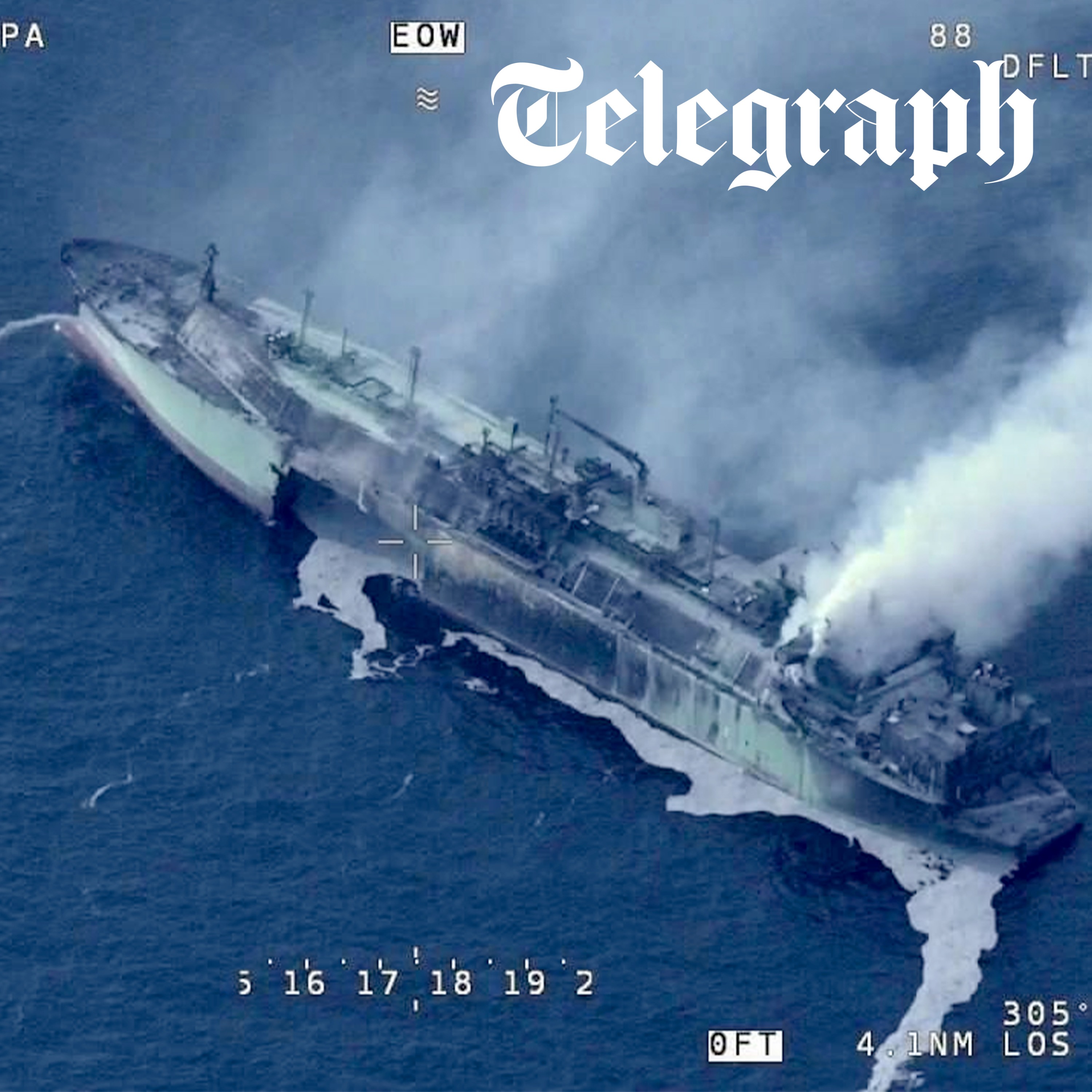
Ukraine: The Latest
‘Russian-made drones’ fired by Iran as Middle East war escalates & shadow fleet tanker explodes in Mediterranean
00:41:45
Loading summary
Transcript71 lines
- [00:04]
A
The telegraph. Carvana is so easy.
- [00:11]
B
Just a click and we've got ourselves a car.
- [00:14]
C
See so many cars.
- [00:16]
B
That's a clicktastic inventory.
- [00:18]
C
And check out the financing options, payments to fit our budget. I mean, that's Clickonomics101. Delivery to our door.
- [00:25]
B
Just a hop, skip and a click away. And what?
- [00:29]
A
No better feeling than when everything just clicks. Buy your car today on Carvana. Delivery fees may apply.
- [00:41]
B
Acast powers the world's best podcasts. Here's a show that we recommend.
- [00:49]
C
Howdy, howdy ho, and welcome to Fantasy Fan Fellas.
- [00:52]
B
I'm Hayden, producer of the Fantasy Fangirls
- [00:54]
C
podcast and your resident lover of all things Sanderson. And I'm Stephen, your bookish Internet goofball. But you can call me the Smash Daddy. And we are currently deep diving Brandon Sanderson's fantasy episod epic Mistborn. But here's the catch. Steven here has not read Mistborn before. That's right. Hey Hei. So each week you'll get my unfiltered raw reactions to every single chapter. And along the way we'll do character deep dives, magic explainers, and Steven will even try to guess what's next. Spoiler alert. He'll be wrong. Newsflash. I'm never wrong. Episodes come out every Wednesday and you can find Fantasy fanfellas wherever you get your podcasts.
- [01:30]
B
ACAST helps creators launch, grow and monetize their podcasts everywhere. Acast. Com. I'm Dom Nichols.
- [01:44]
A
I'm Francis Dernley and this is Ukraine.
- [01:46]
B
The latest today as questions are put to the Kremlin after Russian parts are found in the wreckage of a drone that hit Dubai. President Zelensky suggests swapping US made Patriot air defense missiles for Ukrainian interceptor drones to help defeat Iranian and Russian weapons. We report on another Russian Shadow fleet tanker that has somehow exploded in the Mediterranean Sea. And later we get the view from Brussels and we ask why EU member states have all but rejected the European Commission's fast track proposals for Ukrainian membership. Bravery takes you through the most unimaginable hardships to finally reward you with victory.
- [02:26]
A
Russia does not want peace.
- [02:36]
B
If I'm President, I will have that
- [02:37]
A
war settled in one day. 24 hours.
- [02:40]
B
Hours we are with you. Not just today or tomorrow, but for a hundred years.
- [02:49]
C
Nobody's going to break us.
- [02:51]
B
We're strong.
- [02:52]
C
We're Ukrainians.
- [02:54]
B
It's Wednesday the 4th of March, four years and eight days since the full scale invasion began. And today I'm joined by my co host Francis Dernley and Brussels correspondent Joe Barnes. I start with, with the military updates. I hesitate to say military updates because we still don't know exactly what happened. Although all the smart money is on a Ukrainian drone being responsible for a blast in the Mediterranean Sea just off the coast of Libya, when a Russian LNG tanker, liquefied natural gas tanker, the Arctic Metagaz has caught fire in the early hours of yesterday. The vessel is under sanctions, EU and US sanctions, said to be part of Russia's shadow fleet. Now, photos and videos posted to social media of the reported fire showed huge flames yesterday. And then, citing Malta's armed forces, Reuters reported that the crew had been found safe aboard a lifeboat within Libya's search and rescue zone. Now, earlier today, Russian state media, Tass, citing the Russian Ministry of Transport, alarm bells said the tanker was attacked by Ukrainian sea drones. As I say, that's not been confirmed, but probably worth a bet. Now, Tass said the vessel had left the Russian port of Murmansk and was attacked by sea drones launched off the coast of Libya. There is very dramatic imagery of the aftermath. The fire now seems to be out, but the vessel has got an enormous hole on the port side and I'm not entirely sure what it is that's in the water. I don't quite know what liquefied natural gas looks like if it's blasted out in the open. But anyway, that's Al Azuba La Platz, as they may say somewhere, maybe in Germany. Now, speaking of the shadow fleet, yesterday we reported on the joint Belgian French operation over the weekend to seize the suspected shadow fleet tanker, the Atheira. Today, Belgium has imposed a 10 million euro, that's nearly 12 million US dollar bail on the vessel. Now, the vessel's not going to be allowed to leave port. We think she's in Bruga at the moment. Not allowed to leave port until the bail is paid. And any reinspection confirms compliance with maritime regulations, including valid proper flag registration and the elimination of technical deficiencies, we're told. Belgian officials said that inspectors had ident 45 violations, primarily related to invalid certification. Now, also yesterday, we reported on the Russian drone strike on that passenger commuter train in the vicinity of Kryvy ri that killed one person and injured 10. That was the start. That was just the first of three drone strikes on trains in Ukraine over the last couple of days. Deputy Prime Minister Oleksii Kuleba said this morning that a train had been hit in Mykolaiv Oblast. Luckily, that train was empty. It had just arrived in a depot for maintenance. But one worker of Ukrainian railways was injured in that attack. And then last night Russian drones hit another passenger train on the route from dnipro to Kovel, Mr. Koleba said in a statement. Railway workers quickly implemented safety protocols. They stopped the train and evacuated passengers as a precautionary measure. As a result, the enemy drone struck a few meters away from the locomotive. He confirmed no people were injured in the attack. The train continued running once the threat had passed. I find absolutely amazing the resilience of Ukraine Zalnitsia, the Ukrainian railway service. They just get on with it it and a very punctual last week when Jack and I took the 12 hour train from Odessa to Dnipro. It was 12 hours overnight, got into Dnipro one minute early. Amazing. Now then on the ground in Ukraine no significant move. Same as in many recent recent weeks. Institute for the Study of War the US based think tank citing a deputy commander of a Ukrainian company operating in the vicinity of Kharkiv City say this individual says that Russian forces withdrew armored fighting vehicles from the front line north of Kharkiv City due to effective Ukrainian targeting and are instead increasing airstrikes so glide bombs and shahed and other fiber optic controlled drones. Now Ukraine is continuing to reclaim the city of Kupyansk up in the northeast. A Russian mill blogger yesterday said that Ukrainian forces are overwhelming what's left of the Russian troops in the city and forcing the Russians to move through basements and conduct logistics via drone drops. Now go a little bit further south and geolocated footage from Monday shows Russian forces advance slightly to the northwest of Lyman. Lyman itself is a very active front. There are conflicting territorial claims by Ukraine and Russia about the area around the city. Russia is pushing hard from the north through the east down to the south of Lyman number the outlying villages there variously claimed and refuted by by one side and the other for quite who controls it. We don't know the fog of war. Now go a little bit further south. We're still in the Donbass but south of there and the commander of a Ukrainian brigade operating near Sloviansk said yesterday that the challenging ground including rivers and very marshy areas as well as varying weather conditions over the last few days have complicated Russian forces advances. The commander said that Russians send high quality troops to attack well fortified urban areas but only use units composed of prisoners to attack through the open fields. These kind of infiltration efforts. Now the commander said that Russian forces shape the battlefield not just with infiltration tactics but also simultaneously trying to advance along a number of different routes, he said, between five and 10 different routes, hoping to complicate and overwhelm Ukrainian drone operators. ISW also cited commander of a Ukrainian tank battalion operating near Kramatorsk who said yesterday that Russian forces are exploiting the current rainy and very foggy conditions that complicate drone operations. This provides cover for Russian attacks. It's very difficult to fly drones or see where you're going in the fog. And now further to the southwest of there and there are continued Ukrainian counterattacks reclaiming territory in the vicinity of that space is north and northeast of the town there. That's as a result of the Starlink switch off. Now that was just a snapshot of a very typical day. As I say, the lines barely moved anywhere. Ukraine's general staff said that 980 Russians became casualties yesterday. That's killed, wounded, taken prisoner or missing. 129 of 149 drones were brought down by Ukraine, resulted in three people dead and 30 injured across the country. Authorities in Sumy Oblast said yesterday that there were 60 attacks across 30 towns and villages just in that region alone. Governor Ole Riverov said one man had been killed in a multiple launch rocket strike and another man injured in the area when a drone attack hit his car. Now there was another death in Kharkiv oblast, injuries to there and the third death was in in Donetsk. Power was briefly cut off this morning in Dnipro, Petrovsk, Mikhail Kharkiv, Sumy and Herzon Oblast after strikes in those areas. Now in Russia, there have been air alerts this morning down the Black Sea coast basically from the Kirch Bridge down, heading south, southeast down Russia's Black Sea coast. Sochi Airport is currently closed the last time I checked about half an hour ago along with two others in the Krasnodar region. No further details known about what may be going on there. But it comes just a couple of days after that mass Ukrainian drone strike against Novorossiysk. Now then, looking a little bit wider, Dmitry Lubinets, that's Ukraine's human rights ombudsman, he says that Russia has quote, deliberately and brutally executed at least 337 Ukrainian prisoners of war as of the end of the 2025. Now he was attending a meeting of the UN Human Rights Council. He said later on telegram. Russia has turned torture into state policy and uses it as a weapon. He was citing UN data and then said that 95% of Ukrainian prisoners of war are systematically tortured in captivity. He said this issue is critically important. The world cannot stand aside. You May remember last month President Zelensky said that Russia is holding approximately 7,000 Ukrainians captive. They are mostly military, but it's thought to about 3,000 civilians. Ukraine is said to be holding a similar number, about 4,000 Russian military personnel. That's the transfer fund. You may remember President Zelensky calls it every now and again. Zelensky has previously called for an all for all exchange of prisoners, but that's, that's not been agreed to by Russia. Now, last one for me. An article in the Euromaidan Press is worth pointing out. They say that Russia is printing 3D mines and hiding them in grass around Kherson where people, civilians will be stepping on them and becoming casualties. They say Ukrainian police have reported new devices that have 3D printed plastic casings wrapped in camouflage tape, making them resemble toys or some kind of candy sweets. They say it's very difficult to see this in the vegetation. Vladimir Perpeltia, who's head of the Explosive Ordnance Department of the National Police in Hairzon, said they are printed on a 3D printer. Inside is explosive material, a detonator and everything needed for it to function. It works like a pfm, that's a type of anti personnel mine. When someone steps on it or a vehicle passes over, the plastic bends or sometimes breaks, causing an explosion. Now that's the updates from the front line. Francis had been another day of frenzied diplomatic activity on the local and international scene. What have you been looking at?
- [12:15]
A
Yeah, thanks, Tom. We are obliged to return to the Middle East. That decision by the Iranians to close the Strait of Hormuz, one of the few strategic options available to them, really will have an impact on global oil prices. That was the route used by Russia to transport some of the discounted Russian oil to India and China. So it'll have a negative consequence on that. And yet the broader implications for global oil prices of the closing of that strait and access to other routes to New Delhi and Beijing may actually lead to a boost temporarily for Russia. In terms of the revenues it accrues from that, we just don't know. Now, there are some uncomfortable questions being put the Kremlin's way today by the Gulf states that have been attacked by Iran. Drone debris marked Garan 2 in Russian has reportedly been found at a port in Dubai, just underscoring Russia's cooperation in providing Tehran with drones and missiles. And on that subject, President Zelenskyy has once again sought to use Kyiv's expertise in aerial defence as leverage. He's floated swapping Patriot missiles Of course, we've spoken about them so many times. US made interceptor missiles, which Kyiv desperately needs, let's be honest, for Ukrainian interceptor drones, which he argues are of more value in this context in the Middle east, in those countries that are currently under attack. He said it is an equal exchange. Now, the US and other countries have stockpiles of Patriot interceptor missiles, but frankly, it feels unlikely, given all of this, that they're going to be willing to part with them with or without valid replacements. Indeed, this will lead to many countries prioritising their own air defences rather than Ukraine's, especially in Europe, which was, of course, an objective of Russia with those drone incursions that we've spoken about several months ago. So this is again, another unintended consequence of what's happened in recent days, is that it has in some ways assisted a core Moscow objective. Now, that is why a Ukrainian expert told the Telegraph, it is in Ukraine's interest that this operation in Iran does not drag on and ends with the punishment of the Iranian dictatorship. Now, President Zelenskyy also said this yesterday, and I think it is worth quoting this in full. It's quite interesting. We're sensing Russian weakness in certain areas. It's a new feeling. This doesn't mean we should let our guard down. We can't relax, we can't think the enemy's given up, can't think their numbers have dropped. But what's important is that, personnel wise, they feel a bit weaker, no time for training, so they have a major personnel problem. Of course, all our personnel challenges are known. We have no secrets. But this feeling, it's not a bad one. I think the monthly casualty numbers are starting to have an effect. Again, I don't want to sound like some pseudo optimist, but I'm just saying that in my view, the enemy personnel losses are starting to add up. So we'll see how things go moving forward. Now, if that is true from President Zelensky, and there is evidence to suggest that Moscow is not able to replace the number of men it is losing to the front, a core subject we talked about in last week's podcast, then that is a very significant development indeed. But returning Dom to the Middle east again, briefly, it is worth reflecting on the difference between the White House's approach to talks with Iran than talks with Russia. I think. Just listen to this quote from Steve Wyckoff on Fox. Yesterday. Trump sent us to see if Iran was serious about a deal ending its missile program, support for proxies, threats to Gulf shipping and any path to a bomb. By the second meeting, it was clear that was impossible. The third confirmed it. So, in other words, it took Wyckoff two meetings to conclude that Iran wasn't serious about a deal. He's been now in over a year of meetings with the Russians and there's been no suggested movement in terms of believing that the Kremlin may not, after all, be serious about a deal. So I think we can understand why. One of the core messages of German Chancellor Friedrich Merz in the Oval Office yesterday when he was meeting with Trump was precisely that. Russia is playing for time here, he said, and in doing so is acting against the will of the American president. In today's talks, I called for increasing the pressure on Moscow. We are also not prepared to accept an agreement that is negotiated over our heads and I think we can assume that the hour is European there now. During his conversation with Trump, Mertz also stressed Ukraine should not have to make additional territorial concessions and reiterated the need to maintain support for Kyiv. So the same old signalling from the Europeans, but no signs it's had any fundamental impact on how Washington has approached the issue. Now, on the economic front, just a few interesting, if knotty, updates. Ukraine received its first payment of 1.5 billion euros under the new International Monetary Fund scheme, as Kyiv still waits for progress from the EU to unlocking the 90 billion euro loan that was agreed at Christmas time. Something we spoke about at length with Joe back then. Now, the reason for that delay, of course, as we all know, are the Hungarians with the Prime Minister, Viktor Orban, saying that Budapest will block the loan until Russian oil starts flowing back through the Druzba pipeline, which has been offline since late January, I think, after Ukraine said it was damaged by Russia attacks and which remains a key source of energy for Hungary and for Slovakia. Now facing the very real chance, Viktor Orban, that he could lose the election on April 12. Orban has made the war in Ukraine and his stance on it a pillar of his re election campaign. Almost any excuse he can find to talk about the war and how it could possibly escalate were it not for him trying to dial things back. He has not escaped. He has been pushing forward on this as strong as conceivably possible. Yesterday he spoke to Putin where he discussed Hungarians serving in the Ukrainian army who'd ended up in Russian captivity. All designed to draw attention to the way that the war is impacting Hungarians, with Kyiv to blame. And our friends at the Financial Times report that the European Commission President, Ursula von der Leyen and Antonio Costa President of the European Council specifically asked Ukraine's leadership during their visit to Kyiv on the fourth anniversary last week for access to the Druzhba pipeline in order to assess the damage independently. They were denied that. So evidence that this is becoming a bigger issue. Quite helpful that for Budapest, I would wager. Why must we repair the pipeline? A Ukrainian source told the ft, in times of war and without a ceasefire, which gives oil from Russia to Russia's friends. But one senior EU official said to the Financial Times that Kyiv had scored an own goal by giving Hungary an excuse to block the loan. Now, the next meeting of European ambassadors is today, but we don't know whether that's going to see any movement on this. Personally, I don't think that we should be seeing what Orban has done here as being something that's the Ukrainians fault at all. I think he would have found another excuse to block this prior to the election. The big question is though, whether he's going to try and block this all the way to April 12 and his election campaign. If he does, that will have big impacts on Ukraine's ability to wage this war. The assumption was that Ukraine would run out of money by halfway through the year. So that might be where the IMF loan comes in, that they're basically building up a stock gap, a bridging loan in case the €90 billion loan gets blocked. Now, I hope you're staying with me at the back here. I know that this is all a bit confusing, but this does really matter and I'm sure that Joe will have some thoughts on this as well. And just finally, just to wrap up this economic issue at the moment, Russia's Central bank has also filed a legal challenge against the the EU's decision to indefinitely freeze part of its gold and foreign exchange reserves. They've brought the case towards the European Court of Justice. It's targeting the regulation that was adopted by the Council of the European Union back in December. I think that extended the asset freeze indefinitely. So this is what you call classic case of lawfare paying lip service to international law while really using it as a weapon of intimidation and equivocation. And I say, I'm sure that's something that Joe has seen countless times over his time covering Brussels. So I know a lot to process there and it is all, as I said earlier on, rather knotty, but it really matters.
- [21:21]
B
Dom, I love that characterization by whoever was speaking for the EU that Ukraine has caused a problem for themselves. Never mind your little war thing that's going on. You've created a political problem for yourself in Brussels because you've given them an excuse to block a vote. Crike yelling. Maybe looking at it from the wrong end of the lens, but I thought the EU had found a way to get past the whole voting mechanism, such that they could ignore Hungary and Slovakia and anyone else they choose to in a majority basis if there were some issues they felt particularly strongly about, like the 90 billion euro loan. If only there was somebody we could speak to, ask these questions. And as if by luck, here we go, the last one of the Telegraph regulars not to be seen on film yet. Brussels beardy Joe Barnes. Joe, welcome. Welcome to the new video pod. First time we've seen you. Looks like it's 70s night in Brussels from that shirt, but welcome, Joe.
- [22:16]
C
Thank you. It's a French summer shirt, I believe. Yeah, it's a very retro fit.
- [22:20]
B
Before I ask you about your article, can you just take us through that bit? Have I got that totally wrong? I thought the EU had come up with some mechanism whereby they could respectfully listen to and then put to one side the views of Hungary and Slovakia on certain issues.
- [22:32]
C
Yeah. So they did come up with a mechanism, but it still relies on Hungary and Slovakia's consent. Yeah. Please laugh. Please laugh. So let's rewind to the December European Council. When EU leaders agreed on this loan for Ukraine, the loan was agreed with the proviso that Hungary, Slovakia and the Czech Republic would not be a part of it. But to have it agreed that they are not the part of it, Hungary, Slovakia and the Czech Republic still have to give consent to it. And that is the big problem here. It's madness. But unfortunately, that's just the way the EU works. And they can look at legal loopholes, but they just know that if they try and ram something through the likes of Hungary, Slovakia, the Czech Republic, or maybe even Russia might go to the European Court of Justice and challenge it. So basically, they have put themselves between a rock and a hard place by trying to one thrust this money through for Ukraine without Hungary's backing, without Slovakia's backing, without the Czech Republic's backing, because ultimately, down the line, that was a political decision in December. What's being held up now is the technical decision, the legal paperwork, and until we get Hungary and Slovakia openly saying, look, okay, guys, we're going to let this go through. And don't forget, the 20th round of sanctions against Moscow are also being held up in this rail until basically those two, we'll call them rogue capitals, give their consent. There's not A lot we can do about it. And you can talk about bridging loans and trying to find money elsewhere. Maybe a member state does something, maybe France or Germany loans some money which can then claw back from Brussels at a later date, who knows? But yeah, sort of perilous times. I remember speaking to the Ukrainians at the time of that negotiation and they said they needed that money by April. And Viktor Orban, I think the election is next month, will use this veto until it serves his purpose in that election, which could be a crunch point for the Ukrainians. We could be in a situation where they're not receiving enough money that helps them build drones, that helps them buy pack free interceptors for their patriots. Air to surface missile batteries. Yeah, I think it's a real problem and ultimately it is one that was misjudged by Brussels because they thought they had this loophole like you did, Dom. They thought they had it secure. They didn't. But also I think the anonymous official in that Financial Times piece is actually hinting at a problem that the Europeans have had with President Zelenskyy a lot and that is managing his politics. He can be quite combatant and think how many people told him not to go to the Oval Office before he had that spat with Donald Trump, which essentially ended weapons supplies and more crucially intelligence supplies, which basically saw them thrust out of the Kursk region in Russia in a couple of weeks because of that outage. It's a real problem for Brussels to manage President Zelenskyy as much as it is for them to manage Hungary and Slovakia at times.
- [25:47]
B
I love the fact that Hungary, Slovakia have to give their consent such that their consent is then not required thereafter. Brilliant. Perfect piece of legislation there. Now, Joe. EU member states have all but rejected the European Commission's fast track proposals for Ukrainian membership of the eu. What's going on there?
- [26:07]
C
So let's go to the context first. The peace proposals that I've seen and been told about have previously contained a date for Ukraine's EU accession as 2027. So that's next year. Now, the European Commission put forward proposals that it thought would be good enough to meet those demands of the peace talks, but also for helping Ukraine. EU membership is seen as a key security guarantee for Kyiv. And the Commission, Ursula von der Leyen, essentially proposed that Ukraine would be be given membership in name, but it wouldn't be given certain benefits, such as EU funding for agriculture, for cohesion funds, or essentially development funds, but also like it would lack things like voting rights, but essentially it would be a member of the EU and it would unlock those extra benefits as it goes on by proving that it's done reforms, undertaken reforms basically bringing itself in line with EU rules, whether it be on sort of single market rules or rule of law and corruption and stuff like that. There's 36 different stages the country has to fulfill to join the eu. And basically Brussels European Commission was saying let's rip that up, let's make Ukraine an EU member and then it can tick off those boxes basically to go from membership light to full blown membership. But tonight in Brussels, so Wednesday night there is going to be a meeting of the EU's 27 national ambassadors and they are going to be briefed on this plan that the commission has come up with by Ursula von der Leyen, the commission of the President, her chief of staff, Bjorn Cyberg. But essentially what I'm hearing from my diplomatic sources around town is that there is a queue of countries that are essentially going to say we really love your idea, we really want to support Ukraine, but we don't want to move away from our existing protocols for accepting members. And that's that merit based process where a prospective member goes through that 36 stage process until it completes those. And then all of the EU's members unanimously say okay, we agree. So what I'm hearing is at this meeting tonight, France and Germany are going to essentially put in a counter proposal. They, from my sources, they don't actually know what this counter proposal is, but they're basically going to say look, we need to anchor Ukraine in the eu, but also we can't just run all over and trample all over what has been decades of process, mainly because we know that it's hungry or lining up to block a quick fire attempt to get, get Ukraine into the eu. But also other countries are also, I think Austria has said it wouldn't back it, Luxembourg has said publicly it wouldn't back it. So there's a real, there's a real problem here that sort of the pragmatism of France and Germany are saying, look, I think the commission has gone too far with its proposals for a quick fire, a session process. So let's try something different.
- [29:12]
B
Amazing. Yeah, it's not, it's not like the world is burning anyway. No, all good stuff. I'm sure they can have a very nice meeting. But if it's got to go to voting then Hungary is going to vote it down anyway. Anyway, we will see. We'll speak, we'll speak tomorrow no doubt and find out quite what happened now you've written a piece on what the Iran war means for Ukraine in which please correct me if I got this wrong. Natia Sekuria, international security expert at RUSI Royal United Services Institute, she said, I think Trump no longer prioritizes this issue Ukraine, because the Middle east is much more important for him right now. And it might be that this priority no longer shifts back to Ukraine because he no longer sees the possibility of him having the victory of portraying himself a peacemaker. Now, she says that would be the most negative scenario for Ukraine. I am inclined to think the sooner Donald Trump is removed from the negotiations at this point when it's obvious Putin isn't serious, the better. So why does Ms. Seskuria suggest I'm wrong? Joe?
- [30:13]
C
I think what she's saying is Donald Trump's involvement in the peace process is key and his interest in Ukraine is key for a whole lot of different reasons. One, you could say, I think by now Ukraine does want a peace deal, might not want it on the terms that Russia wants it on, but it is edging in the direction of, look, a ceasefire, an end to the hostilities would be a good thing. And they've never not said that. But they obviously they also have to protect their sovereignty and all the other issues. But I won't go into the that. But I think the other crucial thing of keeping Donald Trump interested in Ukraine is the fact that Ukraine is still heavily reliant on a number of US systems, whether it be intelligence. It is weaning itself off of American intelligence systems like satellites and things like that.
- [31:08]
B
I hear France's and I'm sure Britain as well. But I think there was a thing out last week about how France is stepping into the intelligence provision area. So question mark about how big the gap is between what the US Is providing or might be able to provide and what is available more readily available elsewhere. Question one. Carry on please. Joe.
- [31:29]
C
Yeah, no, the intelligence issue is slowly fixing itself, but the one issue that won't fix itself is Ukraine's need for pack free interceptors to go into their Patriot batteries. Because while the French sam tea, the irst that's donated by Germany, there isn't anything really out there that has the same rate when it comes to splashing ballistic missiles that are fired at Kyiv and through what's known as the pearl system, Europe essentially pays for American pack free interceptors to be sent to Ukraine. Donald Trump, if the peace talks break down completely or just becomes completely disinterested in it, could walk away from that scheme that's not entirely out of the realms of possibility. Even though he's making money on it, he might suddenly decide, hang on, the Middle east is more important to me. Let's make sure that Dubai, Abu Dhabi, Qatar and where else that has Patriot missiles and batteries in operation are fully stocked. Because the longer that war goes on in Iran, with Iran firing ballistic missiles at whoever it pleases, that's going to dwindle those already limited supplies of pack freeze right down to the ground.
- [32:43]
B
Yeah, and I think he's going to prioritize his own stocks as well. But surely right now. So is that, I wonder if that issue is now off the table. I mean it not pleasingly off the table, but how realistic is it that Ukraine through Pearl is going to get any more PAC3 interceptors? So I question how much sting there is left in that debate as well.
- [33:02]
C
Look, I think that's a valid point, but you basically, you can't close the door on it because they are desperately needed. But there is going to be a huge debate about where these interceptors go. President Zelenskyy said it in public. I spoke to Serhi Kazan, who's a former advisor to the Defence Ministry in Ukraine now of a think tank whose name I've briefly forgotten, but I urge you to read his comments in my piece. But he's essentially saying, look, this is a real big negative that we have to be conscious of and patriots are the main issue when it comes to, to the Iran question. And essentially keeping Donald Trump on side is all about making sure that flow of patriots still happens to Ukraine because if they're forgotten about or somehow annoys them, Ukraine annoys him again. That could close the door.
- [33:51]
B
Ukraine does annoy him. Ukraine will annoy him again. Zelenskyy does annoy him just by existing. Donald Trump can't stand Zelensky because he failed to find slash invent some dirt on Hunter Biden, didn't he, for the election 2020 election. So hope that as much effort as Ukraine has put into developing what we now see as the Flamingo to try and bridge that gap with the Tomahawks, I hope they've also been doing a similar research and development into PAC3 air defense variant. I know these things are hugely complex, but once they crack that and therefore less reliant on the United States, a lot of these, a lot of these issues go away. That is not to suggest, of course, that Donald Trump can't then overtly support, support Russia by easing sanctions and doing other other things as well. But I Just wonder how reliant Ukraine really is right now on, on America for intelligence and, and military hardware. But anyway, enough of me bumping my gums. Francis, got any thoughts?
- [34:47]
A
I think this is a really interesting issue. I think it's going to be very much at the forefront of the minds of many diplomats, ambassadors, senior officials in Europe at the moment, as we've just been hearing from Joe. And as I mentioned earlier on that meeting today of ambassadors, there's going to be some, some testy conversations, I imagine only about the 90 billion euros loan, but also some of these issues here. Fundamentally, it's still trying to keep the Americans on board for as long as possible, but at what point does that become an impediment? And that, of course, is one of the continual themes that we've been discussing really the last six months or so. At what point does that reliance of trying to keep Donald Trump on board actually impede your freedom of maneuver? I think just broadly, when we're reflecting on the impact of Iran, of course, as I said the other day, there are advantages for Ukraine. The weakening of the Russia Iran relationship is helpful. The destruction of Iranian drone and missile capacity, the diplomatic opportunities in the Middle east for the west, including better relations with Kyiv, them with certain Gulf states, and just the general embarrassment of Russian missile systems, if nothing else, failing in the way that they have. But there are disadvantages too, as Joe writes about in the piece that we'll link to in the show notes, the risk of U.S. weapons supplies, especially Patriot missiles, the shift in U.S. particularly political attention. But I think more broadly around the world and in Europe, disruption of the peace talks. There's no evidence now that the talks that were scheduled for Abu Dhabi are going to take place. It could now be weeks before that comes back together. European distraction, resource strain. So in the short term, there are probably more risks than benefits. But in the longer term, I'd say that there's potential upsides if Iran is crippled and the diplomatic world realigns in a very different way that's harmful to Moscow. But I do think that the longer this conflict lasts, the worse it is likely to be for Ukraine in other ways. So a very complicated issue, but that's what happens when you have a massive incident like this erupt.
- [36:40]
C
Your new home is now ready. Dr. Horton, America's builder has new homes that are ready today with new construction communities throughout the Puget Sound and Central Washington areas and more coming. Dr. Horton has the right home for you at Dr. Horton, we're still building with more construction, more communities and More homes available every day.
- [37:01]
B
Tap your screen now or visit drhorton.com
- [37:04]
C
to find your new home. Now ready Dr. Horton, America's builder and
- [37:09]
B
equal housing opportunity builder. Taco Bell is rolling out the new
- [37:13]
C
Chicken Bacon Ranch Street Chalupas. And here's the thing, you literally can't just get one. They come in twos. And thank goodness they do because these
- [37:22]
A
toasted cheddar street chalupas filled with slow
- [37:25]
C
roasted chicken, crispy bacon and avocado ranch are stacked with bold flavor that keeps you going.
- [37:30]
B
Back for more Chicken Bacon Ranch Ranch Street Chalupas only a Taco Bell.
- [37:35]
C
Get yours today at participating U.S. taco Bell locations for a limited time only while supplies last. Say hello to Mia.
- [37:41]
A
Hey there. Mia runs a pet grooming service in Chicago.
- [37:44]
C
But getting new clients was rough until I started using acast.
- [37:48]
A
I recorded my ad, targeted pet owners
- [37:50]
C
in the area and let ACAST do the rest.
- [37:52]
A
Now people all over the city know about my grooming services.
- [37:55]
C
Mia's business is looking sharp.
- [37:57]
A
What's your secret for happy pets and happy clients?
- [37:59]
B
A fresh cut, a friendly vibe and a well placed podcast ad.
- [38:03]
C
Get the word out about your business through Acast. Visit go.acast.com advertise to get started.
- [38:14]
B
Indeed. Joe, come back to you. Let's go to final thoughts now. I will start if I may. News breaking today. Turkey says an Iranian ballistic missile was fired at its at the country at Turkey but was intercepted by what they say was NATO air and missile elements deployed in the eastern Mediterranean. I think we can take that to be a US Navy flat top somewhere destroyer shooting it down in the eastern Med. Now that's interesting that's happened today. Quite why Iran would be firing a ballistic missile at Turkey. Unless they just want to continue to sow the seeds of chaos. We do not know but obviously if it had landed and maybe just the act itself, in fact probably just the act itself does allow Turkey now to call for Article 5 of the NATO peace treaty. Article 5 doesn't mean that everyone has to sort of suddenly rush to the barricades. It just means that they, they call for a, for some form of military response or a discussion on the potential military response. Has Iran just made the biggest mistake possible here? If NATO gets going, then I'm sure we'll, we'll see a lot of NATO countries looking for it not to escalate, see what they've got in the lockers. But yeah, I wonder if that's potentially the biggest mistake so far by Iran. Anyway, Francis, what's your Final thought, another
- [39:20]
A
Iranian mistake, albeit a slightly more amusing one in some regards. They accidentally messaged the Ukrainian ambassador to asking for him to, as he's put it, open a book of condolences in memory of the Ayatollah and the military leadership of Iran. And the Ambassador responded thus and has published this publicly since. You notified the Embassy of Ukraine of the book of condolences for deceased Ayatollah Khomeini and Iran's military leadership, I felt compelled to remind you of the following. As military allies of the Russian Federation, the deceased leaders of Iran had on their hands the blood blood of thousands of Ukrainian citizens, men and women, children and elderly, killed with the help of the infamous Iran made shahed drone and other military know how so eagerly provided to Russia by your government. Your leaders were complicit in bringing endless grief to Ukrainian citizens. Being a person of faith, I try not to rejoice in the death of other people. Even those who chose to be tormentors of my country that did nothing bad to them theirs. But as someone who has spent three years to the tune of Iran created machines of death howling every night in the sky over Kyiv and other peaceful Ukrainian cities, I cannot help but wish for every culprit to meet the justice they deserve, if not by human law than in the face of God Almighty. Ambassador, I do not know you personally and have no grudge against you. Sometimes good diplomats must speak for bad leaders and their policies. But I hope you understand that I won't express condolences for someone whose death I do not mourn. Sincerely, Dr. Oleksandr Scherber, Ambassador to South Africa from Ukraine. Pretty extraordinary remark, I think.
- [41:02]
B
Blimey, that's going to make the cocktail circuit a little bit spicy over the summer. Joe, what are your final thoughts?
- [41:09]
C
Final thoughts? Just touch on the NATO issue with Turkey or Turkey as we now are told to call them. Probably article four is probably more appropriate.
- [41:17]
B
Article four is a conversation, isn't it? The sort of precursor to.
- [41:21]
C
Actually it's not. The idea of is what Poland and the Baltics have used when Russian drones have penetrated their airspace, etc. And aircraft. So a discussion about strategy essentially rather than a full blown response. And then the other one is, while I spoke about the negatives, there are positives to the Iran issue. The Iran war for Zelenskyy and I think what he's got in terms of air defense expertise, for instance, instance, I think it was over the United Arab Emirates, they were using PAC free missiles to down shahed drones, which I think if you even suggested doing that to a Ukrainian air defense officer. They would squirm and say what a stupid idea. Zelensky can offer lots of expertise, but he's actually couched that. He said, look, I will send all of the air defence experts you need, but only if you ask Russia Russia to agree to a ceasefire in Ukraine. And as we know, Dubai, Abu Dhabi, Qatar, Saudi Arabia, they've never fully come on side with Ukraine and they've tried to act as mediators in this process throughout, whether it be on prisoner swaps, child freeing kidnapped children and in the peace talks. Abu Dhabi's hosted one round, it was due to host another. So actually, is this an opportunity that Zelenskyy can use to get in their ears to phone Putin and say, look, can you stop bombing Ukraine? Can you not agree to a ceasefire? Because actually your allies here in the Middle east are being bombarded by your other ally, Iran? We might actually need some help and Ukraine can provide that to us. There's lots of maneuvering that Zelenskyy can do that make war in Iran just as positive for him as it is a negative indeed.
- [43:07]
B
Another chaotic day folks. There's going to be many more of these before we can all relax. Joe, thanks for joining us today Francis than for being here. As always, we'll be back again tomorrow. More chaos. That's all I can really offer, pretty certain. But do hope you can join us. Thanks everyone.
- [43:21]
A
Thanks everyone. Ukraine the Latest is an original podcast from the Telegraph created by David Knowles. Every episode featuring us in the studio maps and battlefield footage is now available to watch on our YouTube channel. Subscribe@www.YouTube.com crane the latest there's a link in the description. You can also sign up to the Ukraine the Latest Newsletter Each week we answer your questions, provide recommended reading and give exclusive analysis and behind the scenes insights. Plus diagrams of the front lines and weaponry to complement our reporting. It's free for everyone including non subscribers. You can find the link to sign up in the episode Description Description if you appreciate our work, please consider following Ukraine the latest on your preferred podcast app and leave us a review as it helps others find the show. Please also share it with those who may not be aware we exist. You can also get in touch directly to ask questions or give comments by emailing ukrainepodelegraph.co.uk we continue to read every message. You can also contact us directly on X. You'll find our handles in the description. As ever, we're especially interested to hear where you're listening from around the world and finally, to support our work and stay on top of all of our Ukraine news, analysis and dispatches from the ground, please subscribe to the Telegraph. You can get one month for free, then two months for just one pound at www.telegraph.co.uk Ukraine. The latest my name is David Knowles.
- [44:59]
C
Thank you all for listening.
- [45:00]
B
Goodbye.
- [45:03]
C
Your new home is now ready. Dr. Horton, America's builder has new homes that are ready today. With new construction communities throughout the Puget Sound and Central Washington areas And more coming, Dr. Horton has the right home for you. Dr. Horton, we're still building, with more construction, more communities and more homes available every day.
- [45:24]
B
Tap your screen now or visit drhorton.com
- [45:27]
C
to find your new home. Now ready. Dr. Horton, America's builder and equal housing opportunity builder.
- [45:35]
B
Acast powers the world's best podcasts. Here's a show that we recommend.
- [45:43]
C
Howdy, howdy ho, and welcome to Fantasy Fan Fellas. I'm Hayden, producer of the Fantasy Fangirls podcast and your resident lover of all things Sanderson. And I'm Stephen, your bookish Internet goofball. But you can call me the Smash Daddy. And we are currently deep diving Brandon Sanderson's fantasy epic Mistborn. But here's the catch. Stephen here has not read Mistborn before. That's right. Hey. Hey. So each week you'll get my unfiltered raw reactions to every single chapter. And along the way, we'll do character deep dives, magic explainers, and Steven will even try to guess what's next. Spoiler alert. He'll be wrong. News flash. I'm never wrong. Episodes come out every Wednesday, and you can find Fantasy Fan fellas wherever you get your podcasts.
- [46:24]
B
ACAST helps creators grow and monetize their podcasts everywhere. Acast. Com.