← Ukraine: The Latest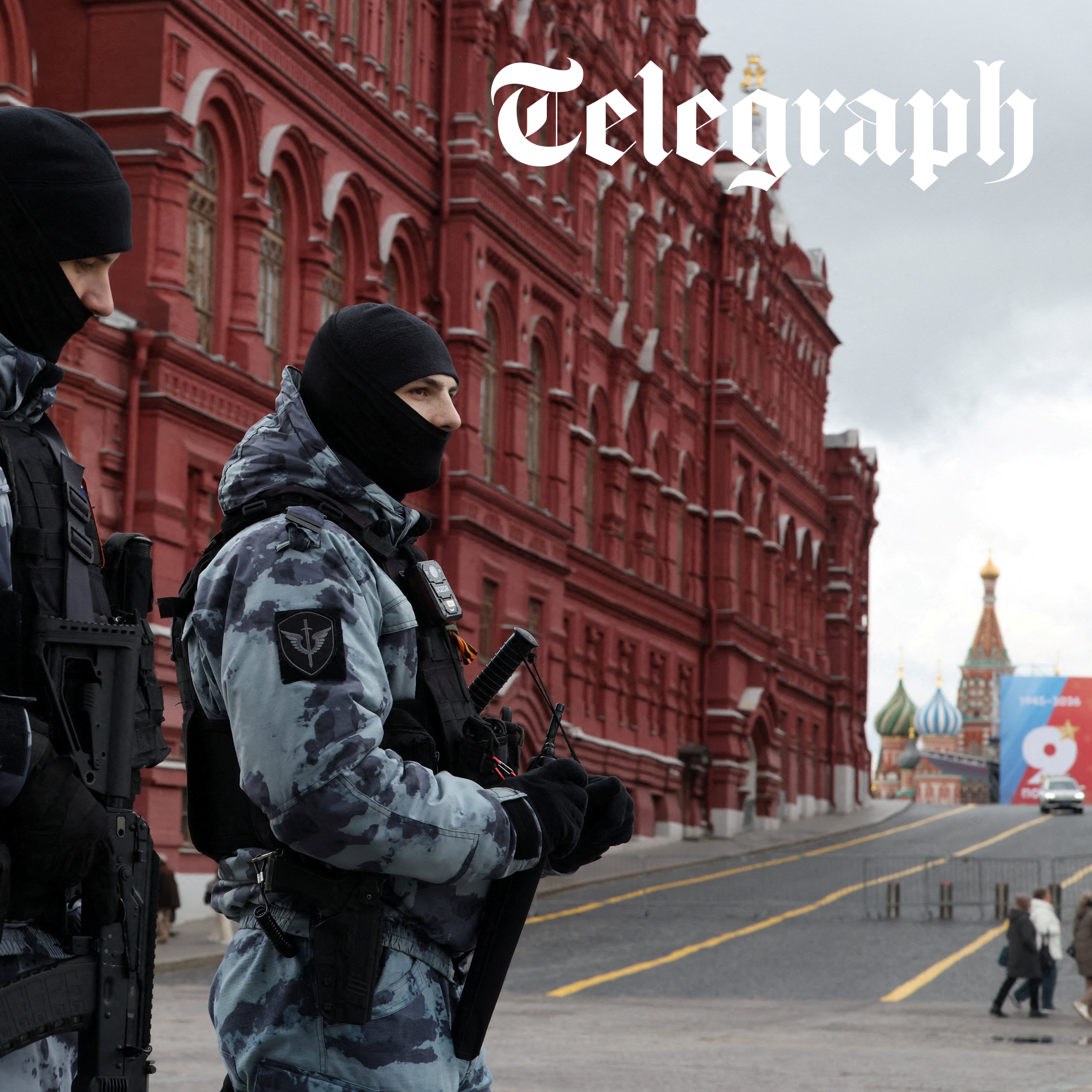
Ukraine: The Latest
Russia’s Victory Day parade ‘stripped of all military kit’ amid Putin ‘paranoia’ & Ukraine hits target 1,500km from its border
00:48:00
Loading summary
Transcript66 lines
- [00:04]
David Knowles
The Telegraph.
- [00:09]
Francis Durnley
I'm Francis Durnley and this is Ukraine. The latest. Today, following a 1500 kilometer Ukrainian deep strike on a Russian oil facility, we hear how for the first time in 18 years, Moscow's victory day parade will feature no military kit. Then we take you to Washington where where King Charles III sought to charm the Trump administration by deploying pomp, circumstance and a sprinkling of history 250 years ago.
- [00:36]
Guest or Narrator
Or as we say in the United Kingdom just the other day.
- [00:43]
Francis Durnley
Then we speak to a war artist about what it's like painting soldiers on the front line in an active war zone. Bravery takes you through the most unimaginable hardships to finally reward you with victory. Russia does not want peace. If I'm president, I will have that war settled in one day.
- [01:13]
James Kilner
24 hours we are with you. Not just today or tomorrow, but for a hundred years.
- [01:23]
Francis Durnley
On Ukraine.
- [01:23]
David Knowles
Nobody's going to break us. We are strong. We are Ukrainians.
- [01:28]
Francis Durnley
It's Wednesday 29 April, four years and 64 days since the full scale invasion began. And today I'm joined by our Russia analyst James Kilner and London based artist Max Denison Pender. But first, the major military and political updates of the past 24 hours. At least Vesuvius only erupted once. Yet more remarkable footage from the volcano at Tuapsi oil refinery has been released overnight after the third strike on that facility that we reported yesterday. It's still ablaze this morning. Another example of what President Zelenskyy amusingly calls Ukraine's long range sanctions initiative. Other examples are from the past 24 hours with oil facilities in the Russian cities of Perm and Osk, the former being a straight line distance of 1500km from Ukraine being hit. Drones sparking their own plumes of smoke visible for miles around. I'm grateful to the guys from the security service of Ukraine for their precision, zelenskyy said in a post this morning. Now later we'll be hearing from James just how much these attacks are being reported on in the Russian press. The footage is so extraordinary you'd think it would be impossible to ignore. Kyiv's special operations forces also claimed to have struck an Iskander missile storage facility in Crimea, 40 km from the city of Simferopol. Releasing foot footage of the incident, though without clarity as to exactly when this attack is meant to have occurred. They said the base's missiles could reach the front lines or hit Ukrainian cities in a matter of minutes. Also alleging that underground members of the resistance had sent them footage of the location that checks out with what we know is the most significant activity of the resistance, the passing on of information to Ukrainian forces. Now there was a rare daytime raid on Kyiv yesterday, damaging a building and a cemetery and injuring two people, according to Mayor Vitali Klitschko. Sumy in the northeast was also hit. The ISW say that Russian forces are continuing offensive operations north, northeast and southeast of the city without progress. Kharkiv was also badly hit again staying on the front lines after another day of relatively little movement down in Pokrovsk. On Donetsk, Moscow's forces are allegedly still pushing today, but without anti thermal cloaks that reduce the likelihood of being spotted by drones. It speaks again to the apparent issue of equipment shortages in that sector of the front and the generally careless way in which the Russian army is sending its troops into battle without support or really any likelihood of success. But more on that from Dom when he returns from his trip, which you'll hear about later this week. Speaking of drones, it's time to get the jar out. I thought I'd flag an interesting read in the Telegraph by our Jerusalem correspondent Henry Bodkin, showing helmet cam footage of the Israeli Defense Forces jumping for cover and shooting skyward as they try to take out first person view drones used by Hezbollah. As Henry writes, given that there is credible evidence that Hezbollah uses the same shahed drones as Russia, it should be no surprise if the group's patrons in the IRGC headquarters in Tehran are passing on other technologies and tactics from Ukraine in the fibre optic FPVs. It's not the first time that we've seen drones used in this way in the Middle East. You may remember their use by Hamas during the October 7th attacks in 2023, which I still don't think was talked about enough at the time, as being an example of how the tactics and weapons used in Ukraine were spilling out over other theatres because of the war being allowed to continue. But nonetheless, it's worth us taking notes of these newer incidents too. But let's now go to the diplomatic realm before hearing the latest stories from Russia. It would practically be treasonous for us not to start with Charles III's historic speech to the US Congress, the first time a British king has ever addressed the Joint Session, despite being greeted by American soldiers dressed in outfits from the Revolutionary War. Don't rub it in lads. It's been widely celebrated on both sides of the pond. President Trump is known for his long standing admiration for the Royal family and it's clear that the British government considerable effort into how the King should approach the visit and what points he should try to land among US politicians and the White House. Humour, flattery. It was all there but subtly deployed. And he clearly saw himself as an ambassador to values that transcended just the British national interest alone. Listen to this.
- [06:11]
Guest or Narrator
In the immediate aftermath of 9 11, when NATO invoked Article 5 for the first time and the United Nations Security Council was united in the face of terror, we answered the call together, as our people have done so for more than a century, shoulder to shoulder through two world wars, the Cold War, Afghanistan, and moments that have defined our shared security. Today, Mr. Speaker, that same unyielding resolve is needed for the defence of Ukraine and her most courageous people.
- [06:54]
Francis Durnley
Vice President JD Vance is said to have looked distinctly uncomfortable at that moment. Later, at the dinner with the President and the first lady and many of the most senior figures in the administration, the King referenced Aukus, the trilateral security partnership between Australia, the UK and the us.
- [07:12]
Guest or Narrator
Speaking of submarine alliances, there was one particular Orcus predecessor, launched from a UK shipyard in 1944, that served for the majority of her life attached to the 4th Submarine Squadron in Australia, playing a critical role during the war in the Pacific. Her name, HMS Trump. So tonight, Mr. President, I am delighted to present to you as a personal gift the original bell which hung on the conning tower of your valiant namesake. May it stand as a testimony to our nation's shared history and shining future. And should you ever need to get hold of us or just give us a ring,
- [08:13]
Francis Durnley
Masterful and credit to whichever civil servant managed to find the actual golden bell, I suspect we might see that appear in the Oval Office before too long. Suffice to say, it's hard to register what impact, if any, this will have on the actions of the Trump administration in relation to Ukraine, NATO, Russia or Western security. But it is surely better that it's taken place than not in extremis, the King could be asked to speak to Trump on behalf of the British government or wider allies. Just one final word on the us. The Financial Times reports that the acting US Ambassador to Ukraine will depart Kyiv in the coming weeks, leaving that critical diplomatic post vacant while peace talks stall. Julie Davis has only served as temporary ambassador in Kyiv since May last year and is understood to have grown frustrated with her role amid differences with President Trump over his dwindling support for Ukraine. That's one way of putting it. The same motivation, allegedly for her predecessor. Bridget Brink. A State Department spokesperson said it was false to suggest that Davis was resigning over differences with Trump saying it was her intention to retire yet more evidence that fundamentally ending the war in Ukraine is Europe's fight. But one last story for you because we know how much you enjoy the updates from Hungary. The new Prime Minister, Peter Magyar is on his way to Brussels today in the hope of unlocking frozen EU funds. But even more interestingly, he's announced that he is initiating consultations with President Zelensky in early June. In a statement, he said it is in the interests of Hungarians living in Transcarpathia to place Hungarian Ukrainian relations on new foundations, adding that the time has come for Ukraine to put an end to the restrictions that have been in place for more than a decade and to ensure that Hungarians in Transcarpathia region all regain their cultural, linguistic, administrative and higher education rights so that they can once again become equal and respected citizens of Ukraine. That would help us ensure that once the war ends, as many Hungarians from Transcarpathia as possible can return to their homeland. If we can resolve these issues, we, we can open a new chapter in bilateral relations. So that was the new prime minister there. This is a reference, of course, to the issue of Hungarian minority rights for those with Hungarian heritage in Ukraine, one of the subjects of my interviews with Orban's officials that you heard a few weeks ago. It remains a major sticking point between the two capitals. So we mustn't expect cordial relations to be re established overnight, if at all, frankly. And the same goes for Hungary's relations with the EU as well. But nonetheless, for both of those entities, this is a reset moment and that brings considerable opportunities. But let's go to our Russia analyst, now celebrated elevator watcher and cucumber lover, creator of the Kilner Index and thoroughly good chap, James Kilner, of course. James, lots going on for us to discuss today. May 9th has been a staple of our coverage since the war began, looking at how Russia on Victory Day is approaching its big parade in Red Square. But there have been some considerable changes by the sounds of it. James, where do you want to start?
- [11:30]
James Kilner
Thank you for the intro for a start. So like you say, the main 9th parade in Moscow is always important. It's like a barometer on where the Kremlin is on its various paranoia, psychosis scale. It was ostensibly set up to celebrate the Soviet Russian victory in the Great Patriotic War, used really by the Putin's regime to coalesce, cajole Russians into getting behind a Marshall state, the military at the forefront of Russian society. And it's really the set piece propaganda event of the year which Putin uses to invite various dignitaries. Last year, Xi Jinping, the Chinese president, was in there. This year is going to be very different. This is going to be a much smaller affair. Dimitri Peskov came on record today and confirmed that there would be no tanks, no trucks, no missiles trundling through Red Square as we've become used to seeing, and that the event would be watched by a few hundred people rather than a few thousand, and would last around 40 minutes rather than more than an hour or so. So a much smaller event. He used the excuse that this was not an anniversary parade. Last year was an anniversary parade, the 80th anniversary of the victory against the Nazi Germany, and this year wasn't. But there is no way getting around it. This is the first time in 18 years that there are no tanks storing this parade. It's very clearly a reaction to Ukraine's improved increased long range drone capability, long range missile capability, and is really important as we try and discern what is going on inside the Kremlin as a barometer of where Putin's mind is at. I think he's showing increasing paranoia around this sort of thing and it's important to note.
- [13:11]
Francis Durnley
Yeah, this is an extraordinary story, James. I mean, is this something that people are talking about in Moscow, as you say, 18 years since we've seen a tank or military kit of that ilk? It feels like a real significant step.
- [13:25]
James Kilner
Yeah, I think they are. I think this is, this is incredibly front and center of the calendar for Moscow and Russia. And for it to be dumbed down in such an obvious way is very clear to Russians. They know what's going on. They know this is a retreat in many ways by the Kremlin. We do know, for example, that the Kremlin has invited foreign dignitaries. Like I was saying, Putin really uses it to feti and favor various in favor of international leaders. But unusually, again, they haven't announced who these leaders are. So we don't know yet who's going to be prepared to stand next to Putin as he watches the parade trundle through Red Square. If anyone wants to take the risks of even being there, they're very much keeping it very close. So definitely a story to watch over the next couple of weeks as it develops.
- [14:10]
Francis Durnley
We certainly will, as we have every year since the full scale invasion. I believe Robert Fica of Slovakia has said still that he intends to go despite it being made more difficult for him because countries saying that they won't let him go to their airspace if he's on his way to Russia. But perhaps because of this, he'll find a convenient way out. We shall see. But speaking of Moscow's coverage of issues, James, we've been reporting on the podcast now, these incredible scenes from Tuapsi, of plumes, of smoke, from the destruction by drones, of critical aspects of this site. There have been so many others in the last few weeks, and particularly in the Baltic. You can't ignore these stories. Presumably this is something that is being covered in the Russian press. I'd just be fascinated to know how much is known about this and what excuses are given.
- [14:58]
James Kilner
Yeah, an interesting one, this one. France is. I think this is where the. The Kremlin ban on Telegram is highlighted. You can find these videos of the black smoke pouring out of this town on the beautiful Black Sea coast and polluting the town with all these poisonous gases. You can find them on Telegram. You can find the video of the petrol running down street in flames. You can find it on Telegram. You can't find it if you go to a regular Russian popular press website. They're controlled by the Kremlin. If you go to Komskamorska, Pravda or any of the others, you just won't find it there. You will find it reported in business press, Kommersant, for example, Venomosti, they do report it. It's lower down in their news agenda, but it is there. The angle of their reporting is quite bland and straight up and it's very much terrorists from Ukraine have hit another refinery. They talk about environmental damage and they also talk about the damage to tourism, which is interesting. They say that tourist numbers typically go to that actually case for summer holidays. 15% of the tourists have already canceled since these attacks. On to APS a refinery which I think start on April 16, so people are aware of it. There's plenty of reporting about dolphins being washed up on the beaches, poisoned and of course, genic chemicals in the air. It is being reported, but not in the port. Progress.
- [16:19]
Francis Durnley
Fascinating. Yeah. Imagine turning up for your summer holes and being greeted with some of the scenes that we've seen the last fortnight. Extraordinary. Interesting that it is being covered and people are obviously hearing the news, but as you say, not seeing it on their TV screens in the way they would if this was in a Western country with a free press. Now, you mentioned Telegram there. What's the latest on the VPN row, James?
- [16:39]
James Kilner
Yeah, as I referenced, the Telegram issue has become very important for the Kremlin. It again feeds into the atmosphere of psychosis. They're losing control of the news narrative. People are finding out what's really going on. We've blown up all Finos, etc. The Kremlin putting out a softer mayday parade on Telegram. So that has been banned, effectively the VPN issue. The security services in Russia seem to have failed. We've had news that major e commerce websites, Russian e commerce websites like Wild Barry's, have had to throw in the towel and accept customers back on their websites using VPNs. We've had information data reported by Commersant Pro Kremlin upmarket newspaper, I guess you'd call it, saying that VPNs have been downloaded 14 times more in the last month than the same time last year. So it's obviously it hasn't worked out. The security forces have been unable to block them. I think ironically, the sort of coverage the media given to VPNs has increased their attractive to ordinary Russians. So that was one of the unforeseen consequences of this whole attack on VPNs and the whole attack on media which we've seen so much of. The other consequences is Putin's popularity genuinely tumbling. This has been reported even by Kremlin pollsters. And it's incredibly important to keep reminding viewers and listeners about this whole melodrama around VPNs, about, around Telegram, around mobile Internet, has really backfired for the people in terms of popularity. We had a fashion blogger, he's based in Monaco. A Russian fashion blogger in Monaco, Victoria Bonya, released a video at the end of last week. I think it was criticizing the Kremlin on several issues, not directly Putin and not directly the war in Ukraine, as we said. She criticized the Kremlin over the flooding in North Caucasus which we touched on, and the lack of central government intervention, livestock culling in Siberia, brutal culling of livestock, oil spills in the Black Sea, these Internet restrictions and the hunting of endangered animals. Now, the point is here, the video has been viewed 30 million times and triggered debate inside the Russian parliament and among the Russian elite, not just ordinary people. And I think this, I think it's worth putting the marker out here that that is in itself quite extraordinary. It's very rare to see Kremlin inadequacy, impotency being discussed at such high levels. And I think that is symptomatic of the disquiet in Russia around the Kremlin, around Putin, and also particularly accelerated by this attack on VPNs and the ban on telegram.
- [19:17]
Francis Durnley
Fascinating. As you said before, this is breaking some of the covenant between the regime and people when it disturbs their everyday lives. To this degree, you can understand the frustration that is being vocalized here. So fascinating to hear your update on that, James. In terms of another story I wanted to bring attention to, I mentioned it very briefly earlier this week, and this is the visit by Iran's foreign minister to Moscow to meet with officials there. Now, given everything going on in the war with Iran at the moment, this felt like quite a significant moment, what was said afterwards.
- [19:55]
James Kilner
Yeah, I agree with your analysis straight away, Francis. I think it is significant. I think it's significant for a couple of reasons. I think it's significant because it shows the confluence of the wars in Iran and Ukraine and the crossover. And I think it's significant for Putin himself as well. I think it shows him on the world stage being influential. I think the Iranian foreign minister is there because to some degree there's an understanding or perception in Tehran that Putin may have weight in the White House, that he may be able to act as some sort of back channel intercalator. And I think that place of Putin's public image, especially inside Russia, and also allowed him the rare opportunity to show allies, potential allies, and I think we're going to talk about Mali coming up, that Russia can stand by them. There's certain humiliations in Syria, in Venezuela, even in Iran last year. So in many ways this makes Putin look very good and look reasonable in some ways and reasonable to potential allies. And I think that is worth considering. As far as what was said, he basically praised the Iranian people for remaining independent against US Israeli aggression. If you remember, we've discussed this at some length on the podcast already how the propaganda tone from Russia has changed with the war in Iran. And whereas previously he was very much praising Trump for his heroics and his sort of world leadership, in that they're now painting him as an idiot. He's got himself in a total muddle. And I think Putin was trying to emphasize that point at this trip. He called the Iranian people courageous and heroic for fighting for their independence and sovereignty. And it was a very warm, welcoming sort of meeting between the two guys at the same time with a story earlier this week that a super yacht owned by a Russian billionaire passed through the Strait of Hormuz, allowed to do this by both the Iranians and the U.S. so there's another little twist on that story.
- [21:50]
Francis Durnley
Yes, I mentioned that at the time. Very interesting development. We're still looking, I think, into that as to exactly what may or may not have occurred in that instance. Now Another significant meeting between two countries wasn't between between Russia and another, but was between Ukraine and another country. And this caught I think quite a few of us by surprise. Azerbaijan very much in your neck of the woods, James, in terms of expertise. I thought you'd have a lot to say on this.
- [22:14]
James Kilner
Yeah, this is obviously we're keen on this story on this podcast and I think it is a very important story. Azerbaijan. Ilham Aliyev, the President of Azerbaijan who less than two years ago was hosting Putin to a cozy dinner as villa overlooking the Caspian. And there are the photos of Putin and Aliyev gazing to each other's eyes and sharing jokes and tasting each other. He is now hosting Zelensky at his mountain palace in Gabala, which is about 200km away from Baku. This was Zelenskyy's first trip to former Soviet Central age or the South Caucasus since the invasion of Ukraine in February 22. Which really puts into context the importance of this visit and really shows how far Aliyev and Azerbaijan has traveled towards the west and away from Putin and Russia. The context here is that Azerbaijan had been seen inside the Kremlin as an important and vital ally against the West. Aliyev has a poor media and human rights record and was very much seen as a tough sort of autocratic type. But he has basically shifted massively towards Europe since Christmas 24 when a Russian shot down an Azbajan airliner and Putin basically failed to apologize. For Putin, this is a major headache. Azerbaijan sits on an important trade route to India and the more that Azerbaijan shifts away from the Kremlin and away from Russia, the more of a headache it is for Putin. This story goes deeper and deeper. Alievant greeted Zelensky with a massive bear hug that in itself said more than anything else. They then went through the various diplomatic standard, diplomatic chit chat, sharing jokes and smiles and shaking hands, etc, and then Aliyev started talking about creating a shared military industrial complex with Ukraine. And this is remarkable. I can't describe how remarkable it is for us to see as we are doing this. And it only it comes a few weeks after Nicole Pachinian, the Prime Minister of Armenia, was in the Kremlin, basically trolling Putin, laughing at Putin and telling him how terrible his media rights record was. So we're seeing a huge shift in the south caucuses away from Putin towards the west, basically primarily because of the war in Ukraine. And you have to hand it to them, some very deft and skillful diplomatic moves by the us, by Donald Trump last year, who was able to completely wrong through the Kremlin and preside over a peace deal between Armenia and Azerbaijan, who had been warring over disputed region of Nagorno Kalabak, and basically solve a problem that Russia and Putin had not been able to solve.
- [24:51]
Francis Durnley
Yeah, fascinating. Thanks for talking us through that story. James Little reported, but indicative, as you say, of a huge change, which is why it's great for us to be able to cover it here. Just very briefly before I turn to our guest here in the studio. I mentioned this earlier on. You mentioned it earlier on. This is of course, Mali and what's been going on with the Wagner group there and the fact that it's not looking too rosy from the perspective of Russian influence in the country. I just wanted to hear your take on this, James.
- [25:18]
James Kilner
West Africa and Mali in particular were considered a win for the Kremlin, a sort of important way of getting under the skin of the west where it's going to France in particular and winning votes in the un. This is a junta which has been propped up absolutely by the Kremlin. The leaders had been invited to Moscow and watched the May 9th parade. And now we now have news that they're called Afrika Corps. Now they used to be called Wagner had to flee from a town in North Mali that they captured in 2023 and they suffered various casualties. They retreated back to the capital, Bamako, and there's now reports certainly by the IS and Tuareg independent separatist groups saying that they've now got the capital under siege. So we have a scenario now where these sort of much fetished Russian mercenaries are actually getting a bit of a kicking and it's difficult to overstate the humiliation that this will be causing the Kremlin. Again, this is not being reported on Russian media for obvious reasons.
- [26:23]
Francis Durnley
Very interesting. I'm glad that we could just include your insights on that. James, very much welcome. And in case you're wondering, there will be an update on cucumbers and the economy in the final thoughts from James later on on. But let's go to our guest now. I've been looking forward to this one. Max Denison Pender, welcome to Ukraine. The latest, you're a war artist, London based, and you spent some time at the front line with a battalion recently. And for those of you on the video podcast, you'll be able to see some of the pictures throughout the interview that you painted during that time. I've got loads of questions about war art generally, your inspirations, the history of the genre as it were. But first of all, can you just tell us where you were stationed and who with?
- [27:01]
David Knowles
Okay, so it started off originally. A friend from school was taking supplies from Kyiv to the front line. And as everyone knows, when the war kicked off, everyone was trying to help. Taking supplies to Poland or running 5K. Everyone did their bit. And I don't drive and I don't like running. So I thought, I can paint.
- [27:19]
Francis Durnley
You and me both, max.
- [27:19]
David Knowles
Don't worry. So what happened? What, you can't drive?
- [27:23]
Francis Durnley
Running?
- [27:24]
David Knowles
Running, yes, I don't like running. And honestly, I said, look, I can paint. And my friend Ed said, look, come out here, come to Frontline, do some portraits of the soldiers and the medics, and we can raise money for Ukraine for medical aid. And that's how I jumped into it. We ended up going to places all over the East. Kramatorsk, Konstantinivka, Nikopol.
- [27:43]
Francis Durnley
All names are familiar very much at the moment, still active or wars.
- [27:47]
David Knowles
Honestly, Izium, you know, I had a big list. And it's just essentially, I believe there's so much room for painting and what painting allows. It lets your subject matter open up to how they otherwise might not. If you were just a journalist with a pen, you're with them for three, four weeks at a time, and you're doing the stuff they're doing. Well, you're with them doing what they're doing. You're in their safe house, you're spending time with them, whereas I'm not. In and out, quick job. It's essentially, they feel more comfortable. So when you ask, how are you? They'll say, funny enough, and you just get a real truth of the matter,
- [28:20]
Francis Durnley
and your style is fine art. And we can talk a little bit more about that in a moment, because, as I say, I want to talk about some of your inspirations, but what do you think that you can capture on a canvas and with paint that perhaps a photographer can't capture?
- [28:33]
David Knowles
I think my job on the front line, essentially, is to cover the things journalists don't. And that's a personal, humanitarian side of the war, in depth to the extent where the soldiers and the medics will collaborate with the peace itself. So I will rock up and I'll say, hey, guys, who wants a painting? They'll be, I want a painting, I want a painting. And they'll say, right, we're gonna put this guy there, we're gonna put that guy there. You need the Humvee driven out of the. Underneath the camouflage and all these things, which put me on edge sometimes, but essentially, you're allowing people to see them as humans. These are people on the front line with families who had ambitions, still have ambitions when the war's over. They have lives to live. And so the place for where a painter might fit in is just to be that person, to present to the world and remind the world again that they're not just things you're throwing to the front line. And it's not just that you remind people of the bravery, but this is such high cost of what's happening. And hopefully, as a painter, I can remind over and over again that the costs are seriously high and essentially give it some humanitarian sort of coverage.
- [29:40]
Francis Durnley
What are the unique challenges of being a narcissist in a frontline situation? One imagines Manet at the side of the Seine there comfortably for a few hours. He doesn't have shells dropping around him. What does it. What have been unique challenges?
- [29:54]
David Knowles
I think, like, when I do these things, I sign up for it. I know what I'm getting myself into, and recently it's just getting very heavy. It's four years in now, and you can't imagine what it would be like to be Ukrainian as it is. You try not to think about it when you're there because you signed up for it. So whatever happens, you're the one who put yourself here. When you're talking about challenges, everything's a challenge. Leaving home, say, mum's, what the hell are you doing that for? Their mum came out. My mum came out, joined me. She was doing volunteer things. Yeah, I'm proud that an apple doesn't fall too far from the tree. My parents are cool and awesome like that. My mum's got a very big heart, and she loves helping with humanitarian aid things. And the challenge, first challenge, leaving England again. Once again. I've been four times now. And you start there, then you get to Kyiv, and you go through Poland and all that stuff, and the most amazing feeling, you get there and you have your passport stamped and you see the Ukrainian flag on their arm, and you're just like, I'm here. This is what it's about. Because they are the most amazing, brave people. And then suddenly you hear the shahed drone go over and you see it. You're like, okay, we're not in Poland anymore. This is real. And then you get in a truck and you drive all the way to the front line, and the bombs are dropping all the time, and you just hope it doesn't land on you.
- [31:05]
Francis Durnley
Do you have more equipment with you as an artist?
- [31:07]
David Knowles
Yeah, I have my Big backpack with all the paintbrushes and all the things. If you want to talk about the nitty gritty of how I practically set up a painting, I can totally go into detail. But the challenges, I don't know beyond emotional challenges. The challenges are lack of sleep, lack of sort of great food out there. I go to Kyiv and Lviv, have fantastic restaurants open. But when you're on the front line, you're quite limited to sausages and potatoes. And I think just to the fear you're going to get blown up. I think that's quite a big one. Drones are much more prevalent, obviously. So when I first went, there weren't too many. The worst thing was surveillance drones. And you're in a village and you're thinking, the Russians are going to hit random building in that village. So you're just thinking, I hope I'm not one of those. In one of those buildings. Nowadays you've got all the FPVs and they're buzzing around and so you feel a lot more like you're being watched the whole time. And those challenges are not fun. But again, the soldiers you're painting, the medics, you're PA are in that. They live that. So I have nothing to be concerned about in that way because I'm doing it with them. I'm. What am I moaning about?
- [32:12]
Francis Durnley
Yeah. Just one question on the practical thing that you raised a moment ago. So you set up, you've got your subject, as it were. What happens next? How long are we talking? Would it take you to paint some of these pictures?
- [32:23]
David Knowles
Six hours, One day session, or come back, do a bit more the next day? I think I've always carried turpentine. You got your brushes, you got your oil paints. It's all very slickly put together so you can set up and pack down real, real quick. And then you're looking for the right light. The light really helps. And there was one time the Humvee was in armored vehicles under the netting, and I didn't mind painting them in there. It was very shady. And then they're like, no, we take it out, we take it out. So they drove the Humvee into the broad daylight. They all got on there and I started painting them. All of a sudden, Commando was like, they're on. Is that Russian or Ukrainian drove? They're like, don't know. What do you mean you don't know? And they're like, max, when it is your time, it is your time. And I'm like, okay, then, cool. So you got. You guys got Guns and things. I'm gonna shoot this thing down. Anyway, it just disappeared. And then a sort of week or two later, the whole place got blown up. And all the people who were living that safe house were on the front line, funny enough. So, as in, you're 5k from 0. So they'll go back and forth to position. Thank God, at that time they weren't there. And sadly, lots of them since have died anyway in different occasions. But there are loads of challenges. Francis? Yeah, it's just. Which taste should we talk about? It's just really exhausting, the whole thing.
- [33:39]
Francis Durnley
For the benefit of our audio listeners, I just want to talk a little bit about the style of painting and I hope I'm not misinterpreting this. There's a bit of Van Gogh, there's a bit of Gauguin in the style of your pictures, quite bright colors, a way in which it's quite expressive. But this has a long lineage, War art. Of course, everybody knows Picasso's Guernica, but in the British tradition, Nash and the First World War, the men in Gate, famous pictures, surrealists. But at the same time capturing the horror in quite a literal sense. You've got John Singer Sargent with the Ghast. When you're doing your painting, are you thinking back to that rich history or are you trying to do something a bit different?
- [34:15]
David Knowles
I think like a lot of those times, Sargent, for example, was commissioned by the government to do that. And I always. Especially Sargent. For me, Sargent, lots of it started because I'd seen Gassed. I saw gas at the Imperial War Museum. Yeah, exactly. One of the most incredible paintings because it's of a very sad subject matter, but it's painted incredibly beautifully, showing guests well. So, yeah, for those who don't know, it's about 13, if my numbers are correct, soldiers lined up and they're blindfolded and essentially they're playing football in the background. So you've got this really intense image, the soldiers who are now blinded from the mustard gas, and hundreds of soldiers on the floor, too. And it's seeing the sunset. It's a sunset. There's dog fights in the air and they're playing football in the back. There's this huge juxtaposition of sort of topics that Sargeant may have focused on, but it draws your eye and then makes you think about a really serious and important topic. And so the goal is to draw attention forever onto the front line, onto the people, onto Ukraine, what's happening. And however way to do that, my way is Painting and also finding those angles where you can see the beauty in sadness, the bravery. I always think this. If now journalists are playing obviously a massive role all around the world, and if you have a pen and paper to write, you go, maybe some journalists say, okay, I'll go to as far as 40k from the front. They can come to me. You ask them, okay, how many people are dead? Who's winning or losing? Do you have enough supplies? Okay, nice to meet you. Goodbye. Whereas the painters there find myself getting way involved in their lives, how it works. And I can present another side to the war and to the people that other people might not have seen.
- [35:52]
Francis Durnley
I think that's a really interesting aspect of this, is that you were saying six hour sessions, that's a long time for the potential for conversation and dialogue. And of course, you're trying to capture some of that personality in the paint. I know this is a sort of ineffable thing to describe, but how can one do that in a way that is possible, possible that other mediums just can't capture? Are you consciously doing it, or do you just accept that this is a subconscious thing that is not. Not something that you can rationally do?
- [36:24]
David Knowles
Yeah, it's funny because I'm going back in July at some point to paint my friend who's a medic, Victoria, among sunflowers. And that's just an initial inspiration for me, which I really want to do. I think it's going to be a great painting and we're going to support Ukraine again through selling it. Whereas most of the paintings, I do let the world work itself out when you're there. I don't plan any of these paintings. I rock up and I am, I like to call, an artist of filters. We're filters. We see the world around us and it comes through our funnel. And then we put out what we see. A portfolio of photographs is a portfolio of photographs, whereas a painting is one image, but that's still a portfolio of imagery. You've been painting there six hours, come back the next day, another six hours, whatever. And you've seen things throughout the day that have passed by, that have happened. So essentially you're collecting more information and putting it in one little package. And when it comes to emotion and storytelling, you've got to know what you're looking at or who you're dealing with and who these people are, are, and how they sit with themselves and what message are they portraying to you as the painter that you want to pass on. And this could be. I don't know Dima, who had his car. It was red. He stole it from Russians and he now uses it to evacuate Ukrainian soldiers off the front line. It's his favorite car, and he's sitting on it really relaxed in the sun. Lean back, very proud of how many people he saved in that car. And so things like that. And you got in the background a laundry thing where you're hanging up all the clothes they've cleaned from all the. The people who basically had blood on their shirt and things. Picture tells a thousand words. And getting across the character, I think, was your question. That is, they present you with that. And when it comes to. I don't know what. How you approach it originally, people, let's say, how do you tell someone's character with only being with them for the first instance you meet them? But shy people might not make too much eye contact and stuff the world. Essentially, when everyone views the painting, they're not necessarily too intense. You paint them looking away. You paint them, you ask them questions are they. How intellectual they are? And you paint them in a certain way that isn't just going to look through the fourth wall and be confident. Whereas some people, first time you meet them straight up to the point, so you paint them a bit prouder and all these things. So that is how you get a character. I hope that answers the question, how
- [38:32]
Francis Durnley
do you balance figurative versus abstract as well? Because at the moment, I don't think it's unfair to say that in the contemporary arts, it's very abstract photo. It's very postmodern in many respects. You're not that there are elements, as say, of early modernism in your work. Are you proud of the figurative tradition?
- [38:48]
David Knowles
Yeah, look, everything's got its place. Honestly, everything's got its place. And you could argue a lot of sort of postmodern things came from World War I, where the artists were quite tormented and they lacked the importance to put detail in it. They didn't see it as being the main point anymore. And that's with. You go to the Tate Britain, you see some of the artworks. Nash, of course, where you leave. That's not the main point. They're looking at the sharp edges and things because they're traumatized by these stories and these experiences. For me, I just wanted to. I love Sargent and I. And Alaprima is the style I paint in, which is wet and it's from life. And so I just love. That's the technical side of it. I'm very. I could go nerdy on you all day about that. But I think for me, telling a story, what we're dealing with now, I, I, I did lean towards representational, but I know it's affected me already. This whole time I've been supporting Ukraine. It has affected me and I don't, as I said, I'm a filter as a painter, so I'm just going about my life and it has affected me. It really has. My next body of work is about the jungle and it sounds so irrelevant, but life is the jungle. It's scary. It's absolutely horrific. Who do you trust? Who do you not trust? Are we dreaming sometimes? And that is the byproduct of me doing all these sort of trips and getting overwhelmed by it all and thinking I can't go and do that again. And I'm now committed to my friends out there anyway, so I'm always going to be supporting them in any way I can. So abstract. No, abstract.
- [40:14]
Francis Durnley
You describe yourself as a filter and of course, engaged with the war on a humanitarian level. We were referencing the canon a moment ago. One of the most famous pieces of war art is Goya's 3rd of May 1808. Had to get a Napoleonic reference in there somewhere. It's been a little while. A very powerful painting with a very political message. Do you see your work as being political?
- [40:35]
David Knowles
I find it to be slightly unavoidable because we're dealing. The subject matter is in itself a political situation. But what it's hopefully doing is drawing your eye away from the specifics and hopefully really drawing your eye into sort of, I don't know, the complete humanitarian side of it. Just again, reminding people that there's a bit more life out there than just these chessboards and things like that. One of the paintings I did in Kyiv, I was painting two tanks. And throughout the day I was doing the painting of the tanks. And then about three, four hours in, a little girl walked by in the little bunny ears and she stopped and she couldn't stop staring at these big tanks. And they're a war monument in Kyiv, the Russian tanks, if you've seen. I've seen. And this is her country that got invaded. She's about probably eight, I don't know. And she couldn't. She just stood there. So I just quickly put her in. That itself is, yes, is political, but it shows a really serious side of what's happening. And we're not talking about, I know, economics or anything like that. We're talking about this little girl who's basically country and city and maybe her parents are dead and what's the story behind her and why is she so awestruck? These big old monument things, you could certainly say that it leans towards politics but it's not the reason why. If anything it's historically accounting for what's happening. That's what I'm trying to do. That it is a part in history no one can ignore. Now it's serious and it's never going to go. It's always happened, it's in the past, it's there forever and I've just been there documenting what I can. And you then see it from the their angle and we can talk about later if you want to. The soldiers, when I first went out there, asked me to do a campaign. Basically they said please make a film of this experience and do a POV of what I'm seeing to get it out. This is again, when you're painting, you're living with them, you're eating sausages and bombs are dropping. Not everyone sees that. And so having done that you're essentially we're going to bring it to market at some point. It's a non profit. So when a painting sells once, that's great but film, every time it's watched can raise money for Ukrainian medical aid.
- [42:39]
Francis Durnley
I was going to mention, Max, the fact that you haven't mentioned this, but I think it's very important people know that the 5015 portraits that you produced and were exhibited at the Fine Art Commissions Gallery, all of the funds raised went to buying medical supplies to save the lives of those wounded troops. Credit to you for that and of course we'll link in the show notes to anybody who'd like to see your work and I don't know if you've still got some for sale or not.
- [43:01]
David Knowles
Two pieces left and all the work I've done over there. So that's a good effort.
- [43:05]
Francis Durnley
I'm glad that it said that it's been selling. Let's go to our final thoughts now then, James, you've been listening to this. I don't know if you want to comment on that or if you'd like to leave us with something else.
- [43:14]
James Kilner
I thought that was a great, really nice interview. Thank you very much, Matt. It's really insightful to hear it from an artist's point of view and to feel what you've been through covering it. Really interesting to put it back to something much more dry. Russian central bank interest rates. These were cut by.
- [43:31]
Francis Durnley
Oh yes, great.
- [43:33]
James Kilner
These are cut by 50 basis points last week to 14 basis points. The point here is that as we discussed in some detail on this podcast. The Russian economy is under great pressure. This pressure has been relieved a bit by the. The increase in oil prices linked to the war in Iran. But nonetheless it is under pressure. Analysts and economists and Russian business are desperate to see those interest rates drop further. They were at 21% in May 2025. But the Central bank, the Russian central bank is taking of a couple cautious approach. One of the interesting data points they did put out is they admitted that inflation's actually doubled over the last 12 months. So about 8.7% as the. The military intelligence chief in Sweden said last week, I think it was. This is generally considered low but below the real inflation number. But nonetheless, to see this Russian central bank admitting a sharp increase in inflation is important to note. On cucumbers, for instance, I know you're always interested. I don't have.
- [44:32]
Francis Durnley
Hold your. Hold that thought, James, because we've had correspondence from. From a listener. Yes. So Nick has written in and he says given your passion for cucumbers, I have had a friend in St. Petersburg give you an almost live update so that you can see them with your own eyes while there's only a single region for comparison. I thought you'd like it. And then there's some photographs that you should be seeing now. Everybody, if you're watching this on video showing them in the supermarket and I don't know that. Are those high prices, Jane?
- [45:00]
James Kilner
No, they've definitely come down. And I don't think St. Petersburg is where the massive cucumber inflation was. I don't think that's where they're chopping up and selling it by the gram. But yeah, so the story about cucumbers is that it obviously hit a chord with the Kremlin every week. Now I see a pro Russia cucumber story planted.
- [45:18]
Francis Durnley
You've upset them, James.
- [45:19]
James Kilner
You've riled them about how cucumber prices in Russia are less than Europe or have come down so substantially that they. They're a third of the price now. And there was even a story saying that can cucumber exports to the Middle east from Russia have boomed. So there we go. Wow.
- [45:36]
Francis Durnley
I'm glad we could fit that in, James. Very much appreciated. Max. Where would you like to leave listeners today?
- [45:42]
David Knowles
I'd like to say never forget Ukraine when the four invasions kicked off. It was very terrible use of word but cool to go and help. And now I think it's less talked about. It's almost a boring topic to bring up for some people and I think it should be should forever be in the limelight of being the cool thing to do and go and help Ukraine. They're protecting Europe, whether people like to say that or not. Slava Ukrainian that's right.
- [46:06]
Francis Durnley
So thank you very much, Max, for your time today. Feels remiss for us not to give the final words to His Majesty the King. Here's a jibe he made at the aforementioned dinner yesterday.
- [46:17]
Guest or Narrator
You recently commented, Mr. President, that if it were not for the United States States, European countries would be speaking German. Dare I say that if it wasn't for us, you'd be speaking French,
- [46:32]
Francis Durnley
God forbid. Sorry, Adelaide. See you all tomorrow, everyone. Ukraine the Latest is an original podcast from the Telegraph created by David Knowles. Every episode featuring us in the studio maps and battlefield footage is now available to watch on our YouTube channel. You can subscribe at www.YouTube.com crain the latest there's a link in the description. If you appreciate our work, please consider following Ukraine the Latest on your preferred podcast app and leave us a review as it helps others find the show. Please also share it with those who may not not be aware we exist. You can also get in touch directly to ask questions or give comments by emailing ukrainepodelegraph.co.uk we continue to read every message even if we can't reply to all of them. You can also contact us on X. You'll find our handles in the description. As ever, we're especially interested to hear where you're listening from around the world. And finally, to support our work and stay on top of all of our Ukraine news, analysis and dispatches from the ground. Please subscribe to the Telegraph. You can get one month for free, then two months for just one pound at www.telegraph.co.uk Ukraine the latest Ukraine the Latest was Today, produced by Sofia Sullivan in Video. The Executive Editor is me, Francis Durnley. The series creator is David Knowles.
- [48:04]
David Knowles
My name is David Knowles. Thank you all for listening.
- [48:07]
James Kilner
Goodbye.