← Ukraine: The Latest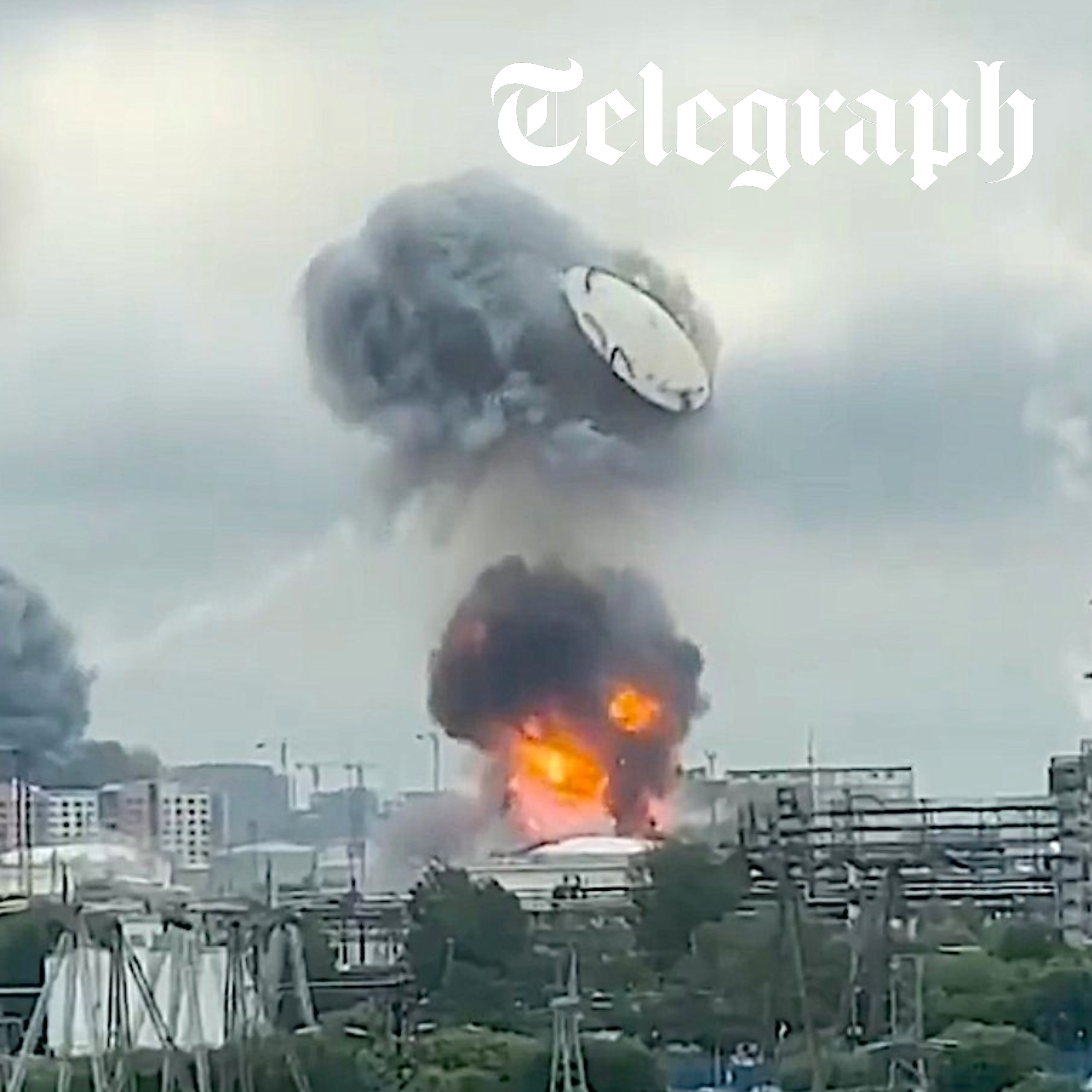
Loading summary
Transcript80 lines
- [00:04]
Dom Nichols
The telegraph.
- [00:09]
David Knowles
You're listening to this podcast, so I know you've got a curious mind. Here's a helpful fact you might not know yet. Drivers who switch and save with Progressive save over $900 on average. Pop over to progressive.com, answer some questions and you'll get a quick quote with discounts that are easy to come by. In fact, 99% of their auto customers earn at least one discount. Visit progressive.com and see if you can enjoy a little cash back. Progressive Casualty Insurance Company and affiliates national average 12 month savings by $946 by new customers surveyed who saved with Progressive between June 2024 and May 2025. Potential savings will vary.
- [00:45]
Host (possibly Tom or another main presenter)
Boost Mobile is now sending experts nationwide to deliver and set up customers new phones.
- [00:49]
Dom Nichols
Wait, we're going on tour?
- [00:50]
Host (possibly Tom or another main presenter)
We're delivering and setting up customers phones? It's not a tour. Not with that attitude.
- [00:54]
Dom Nichols
Introducing store to door switch and get
- [00:56]
Host (possibly Tom or another main presenter)
a new device with expert setup and delivery.
- [00:58]
Dom Nichols
Delivery available for select devices purchased@boost mobile.com
- [01:02]
Host (possibly Tom or another main presenter)
Acast powers the world's best podcasts.
- [01:06]
Dom Nichols
Here's a show that we recommend.
- [01:10]
Host (possibly Tom or another main presenter)
Hey everybody, I'm Naomi Ekparigan.
- [01:12]
Dom Nichols
And I'm Andy Beckerman.
- [01:13]
Host (possibly Tom or another main presenter)
We're a real life couple and a real life couple of comedians and we're the hosts of the podcast Couples Therapy.
- [01:18]
Francis Darnley
We're the only comedy relationship podcast ever. Yeah, I said it and we're so good.
- [01:23]
Dom Nichols
We've been ridden up in both the New York Times and we made Grindr's
- [01:27]
Host (possibly Tom or another main presenter)
list of top podcasts. Yes, we're giving you that high, low appeal trust on the show. We talk to guests like Bob the Drag Queen, Angelica Ross, Bowen Yang, Janelle James, Danny Pudi, Darcy Carden, Paul F. Tompkins and more. All about love, mental health and everything in between. And we answer your relationship questions. We are two unlicensed comedians just trying to help you out. So open your hearts, loosen your butts because we got a lot of laughs and a lot of real talk just for you. Download Cup Couples Therapy.
- [01:57]
David Knowles
Wherever you get your podcasts,
- [02:02]
Dom Nichols
ACAST helps
- [02:03]
Host (possibly Tom or another main presenter)
creators launch, grow and monetize their podcasts everywhere.
- [02:07]
Dom Nichols
Acast.com.
- [02:14]
Host (possibly Tom or another main presenter)
I'm Dom Nichols and this is Ukraine. The latest today, as President Zelensky says, if Ukraine burns, so will Moscow. We report on strikes in Russia that have produced some of the most dramatic images of the war. Then, after a ponent maga, Influenza admits she fell for Russian propaganda, we ask whether Putin's continued strikes on religious and cultural sites in Ukraine may finally be seen for what it is by the Christian right in the United States. And after Putin defies criticism that he is paranoid and scared of meeting the public, we watch out for Kremlin video editors leaning too far out of windows after a security guard was heard referring to background actors on the footage of an impromptu presidential walkabout. Throughout, we'll be getting reaction from and hanging onto the ankles of our friendly RAND analyst as he talks us through the latest technical developments in the war. Bravery takes you through the most unimaginable hardships to finally reward you with victory.
- [03:15]
Dom Nichols
The Russia does not want peace.
- [03:26]
Host (possibly Tom or another main presenter)
If I'm president, I will have that war settled in one day. 24 hours. We are with you. Not just today or tomorrow, but for 100 years.
- [03:39]
Francis Darnley
Nobody's going to break us.
- [03:41]
Host (possibly Tom or another main presenter)
We are strong. We are Ukrainians. It's Thursday the 18th of June, four years and 114 days since the full scale invasion began. And and today I'm joined by my co host Francis Darnley and RAND engineer Michael Bohnert who focuses on defense technology and the industrial base, who will be answering your questions. Now we have to start with the extraordinary scenes coming out of Russia producing some of the most dramatic images since the start of the full scale invasion. Moscow is on fire today after a Ukrainian attack that saw much of the capital's skyline obscured by thick black smoke. For the second time this week. The oil refinery in the Kopotna district, just to the southeast of Moscow city center was, was hit multiple times, resulting in widespread destruction with fires burning across the entire site. The sound is extraordinary and I urge you to seek out the full footage that we're showing and to hear the Russian capital under attack with air defences desperately trying to bring down the incoming munitions. As sirens wail and deep booms signal another impact. Just take a moment to listen to this. In possibly the most extraordinary footage we've seen so far, an oil tank exploded, sending the huge metal domed lid flying hundreds of feet into the air atop an expanding ball of flame and smoke. You'll be able to see that in the video version. Waves of Ukrainian drones hit the city, many visible against the bright orange flames and oily smoke of earlier strikes. Some are seen behind the smoke trails of the missiles sent up to destroy them. Russian defenders fired small arms and anti air missiles and whilst many drones were brought down, Moscow Mayor Sergei sobyanin claiming about 180. And there is footage of some being intercepted by missiles and cranes. Many got through. Let's play you another clip of seemingly chaotic air defense made up of machine guns and missiles trying and in many cases failing to shoot down the drones. Oil rain is already falling in Moscow and the strikes caused chaos at the airports. All four of Moscow's main airports were closed, with footage appearing to show that Domodedovo airport had been hit by something. State owned airline Aeroflot and its subsidiary Rossiya canceled more than 170 flights to and from Moscow and delayed over 110 others, the company said. Hundreds more flights have been cancelled. According to the Kyiv Post, Russia's MoD said 555 Ukrainian drones were shot down across the country as a whole, which gives you an idea of what else was going on. Last night, 17 people were wounded in the Moscow region, according to local governor Andrey Vorobyov. Ukraine's Unmanned Systems forces claimed responsibility for the strikes, saying that their units continue to apply sustained pressure on the enemy's fuel infrastructure. Every successful strike against such facilities reduces the enemy's ability to, to sustain its forces and wage war against Ukraine. President Zelensky said. If Putin does not want to end this war, we will not sit quietly. We will respond and the response must be strong. If Ukraine burns, your Moscow will burn. Now, this footage is incredible, but more important is the message. Putin's compact with Russian society was, first, this special military operation isn't going to take very long, and second, it's not going to impact you. Well, both of those claims now have been shown to be total fiction and there's nowhere for him to hide. The authorities will no doubt trumpet how many drones were shot down and how little these attacks will hurt the economy. But there are very few words that can make up for the loss of the feeling of being secure. Russians and especially Muscovites will be feeling vulnerable today, and there's not a lot Putin will be able to do about that. Just like the Moscow oil refinery this morning, Putin's compact with Russian society has exploded in spectacular fashion. Now, before I go on to the other updates, I just want to get some reaction here from the team. Frances, what did you think when you saw these images this morning?
- [08:08]
Francis Darnley
Well, it is extraordinary. I can't remember the last time that there was such excitement, broader than just those who are following the war to any attack in this conflict. It's quite incredible what we've seen. I think it's a full stop to the sentence that started at the beginning of the year carried through the G7 and that we've been commenting on for some time, which is that Ukraine has the momentum now in the political perception at least, if not also militarily. I don't think we can fall into the trap, that this is unsustainable for Moscow, but it does narrow Putin's options. I think if attacks like this continue, you either escalate the war, do a full mobilization, make it very, very clear with the amount of air defence that's going to be required on major cities that this war is ramping up, or you calculate that actually you need to de escalate. And of course the Ukrainians will be hoping that the latter may well be the course of action over the coming. I think it's also worth speculating, and I emphasise that word speculating, that this is possibly timed because the Iran deal, peace agreement has just been signed and more on that later, that perhaps because the oil is flowing again, there's less of a risk for that the Americans will be unhappy about an attack like this. But again, we just don't know. But fascinating, Dom, fascinating and potentially, as I say, underscoring the turning point in perceptions that we've seen now over the last few weeks.
- [09:28]
Host (possibly Tom or another main presenter)
Yeah. Now Michael, Michael Bonap from Rand. Delighted to have you with us here. We've spoken to you many, many times. First time we've ever actually met in four years of talking to you. We'll speak specifically later on about technical developments in the war, but I've got to get your reaction to this morning's strikes in Moscow. Be interested in your thoughts in general, but specifically some of the images we've seen of drones getting through. Now I accept that there's largely an element of it's a numbers game here, but we've seen ground based air defense firing at drones and missing now, I mean these are low, slow, noisy. How does that happen? How can a Premier League air defence system, if indeed that's what they are, we think they are around Moscow, fail to bring these things down?
- [10:07]
Dom Nichols
I've been asking the same question, Dom, for the past few weeks now, especially with the pictures we've seen. It's also definitely a decrement in capability from other video we've seen from the war over the past few months. So a question is, is it that they have less capable forces stationed, less trained, Is it that they're fatigue? Do we know these are the reservists that are being used? Another question is maybe they've resorted to older munitions, the shoulder fired rockets maybe from several decades ago. It's really hard to tell but I've been very surprised and I think a question to follow on with Francis here is yes, this was a very large strike. It is a Numbers game. But is there also a decrement in air defense capability? Because if Russia is having a quality quantity or both, Ukraine's standard strikes might actually start making a bigger impact each and every day. And that could be a change in trajectory.
- [11:04]
Host (possibly Tom or another main presenter)
Great. Right. We'll come back to you both later. Thanks, chaps. But continuing with the updates, there were strikes elsewhere across Russia. According to President Zelenskyy. The Gukovo oil depot in Rostov Oblast was also hit last night. The governor there claimed one person was killed and two injured. Now, we reported on Tuesday on the cautious cooling in the rhetoric between Ukraine and Belarus. President Alexander Lukashenko, you'll remember, apologized to President Zelenskyy for recent harsh comments and said that his country poses no military threat to Ukraine. He also said that both sides would need to compromise to achieve peace. It's worth considering how Moscow, if it wanted to get the word out that it was ready for a deal, might do so. Now. I reiterate that as the context for the next piece of news. Moscow is blaming Ukraine for an apparent strike on a passenger bus in Russia's Bryansk Oblast said to have been carrying Belarusian children on a football tour. One person was killed and six injured, four of them children, Russian authorities say. Now acting Bryansk Oblast Governor Yegor Kovalchuk said the bus had been hit by a drone. Ukraine vehemently denies the accusation, with the general staff, saying no drone strikes were conducted on Bryansk Oblast at the time of the alleged incident, adding the Russian claims are false and part of an information operation to discredit Ukraine. Belarusian leader Lukashenko reportedly said during a meeting earlier today that the drone was of Ukrainian origin. This is according to state news agency Belta. Lukashenko also said that he is waiting, quote, for truth or for a real fair and honest response from Ukrainian government officials, military personnel and the people. If someone is provoking us, he said, and trying to drag us into the war, I think it will backfire on whoever is trying to do that. Now, we have no way of verifying these allegations, and I'm not suggesting Russia stage the incident, if indeed it was a military blast, in order to stymie any potential warming of relations between Minsk and Kyiv. I bring it to you as it is a current talking point and should be noted in the context of Russia's habit of trying to justify attacks and by blaming Ukrainian outrages. Most recently, you'll remember, Russia said Ukraine attacked a college in occupied Luhansk Oblast, saying that their subsequent attacks on Ukrainian civilians was retaliation, a dishonest framing that was Unhelpfully picked up by a number of Western media outlets, including this paper, but not this podcast. Now into Ukraine, and there was no move on the front again, but still 1,370 Russian casualties yesterday. According to Ukraine's General Staff. Ukraine came under attack again last night with seven ballistic missiles and 239 drones fired mainly at Kyiv, but with the cities of Sumy and Poltava also specifically targeted. Three civilians were killed and several injured after Russia carried out over 90 attacks in the Sumy region alone. Overnight, Ukraine's air defenses shot down four Iskander M or S 400 ballistic missiles and 212 drones. Now, the Russian MOD published footage yesterday purportedly showing Russian forces raising flags in Konstantinivka, although as we've reported earlier this week, the Institute for the Study of War, the US based think tank, assesses that the footage is AI altered. Moscow says its forces took 96 buildings in Konstantinivka just on Tuesday and Wednesday, although what counts as a building in much of the city is now hard to gauge. Still, it's another statistic to shove up the chain of command in a bid to show progress. Whether that progress is real or not. The Institute for the Study of War continues to assess that the presence of Ukrainian forces in southern Konstantinivka, combined with the small number of Russian personnel reported within the city, thought to be no more than about 150, indicates Russian forces likely do not control many of the areas that they claim to have infiltrated. Now the Telegram Channel Crimea Wind is saying today that a key rail bridge in Russian occupied Crimea was hit in a drone attack early this morning. Local residents reported hearing around 20 blasts on the bridge over the North Crimean Canal near the village of Ryodne, a key rail route Russia uses to supply the southern front. This is all part of Ukraine's continued efforts to strangle occupied Crimea. Now looking wider. Next, unannounced publicly just in the last 15 minutes, Britain will provide a £750 million package to Ukraine in the form of 150,000 drones and over 350 air defense missiles and radars to be delivered by the end of this year. This will be funded by the UK's £2.26 billion extraordinary revenue acceleration Loan to Ukraine. The loan is backed by the proceeds from the frozen Russian assets announced by the Chancellor last year. These 150,000 drones are in addition to the 120,000 Britain's MOD pledged earlier this year. And the 2.26 billion pounds loan is separate from the UK's 3 billion pounds budget for Ukraine support that has continued this year as last year. The announcement came at today's meeting of NATO Defence Ministers in Brussels, which followed on from the G7 summit in France. Ministers and officials started arriving at 7am this morning making doorstep comments on the way in. They've also just started the latest Ukraine defense contact group, the Ramstein Group, which should put the flesh on the bones of the support voice for Ukraine over the last couple of days at the G7. There will be a press conference in a couple of hours time. This is the first big outing for Britain's new Defense Secretary, Dan Jarvis, and he spoke after President Zelensky and German Defense Minister Boris Pistorius at the opening of the meeting. Arriving at NATO headquarters this morning, Britain's Defence Secretary Dan Jarvis said it's an honor and a privilege to be here at NATO's headquarters as the new UK Defence Secretary. It was a huge honour to be appointed by the Prime Minister last week. It's very clear to me as the new Defence Secretary for the United Kingdom that this is a moment of challenge. The international security is incredibly challenging and that's why this gathering here today is so particularly important. Now a couple more for me. Poland has delayed transferring additional MiG 29 fighters to Ukraine because a separate agreement on sharing Ukrainian drone technology has not yet been completed. Poland's Deputy Defense Minister said the aircraft transfer would proceed once the outstanding technology arrangements, largely derived from battlefield experience and supporting data, are resolved. And finally, a new pilot program to expand financial incentives for military personnel has been rolled out by Kyiv. It includes performance based compensation, including rewards of up to 100,000 hryvna. That's just over US$2,000 for capturing Russians. We reported a couple of days ago on the new defense reforms, including new pay structures and terms of service and so on. Well, now we're getting a bit more detail. In some other areas, military personnel operating at closest points to Russian forces in can earn up to 170,000 horivna, nearly US$4,000. In addition, a month they can earn up to 20,000, nearly $500 per day for restoring positions seized by the enemy and double that for capturing enemy positions during assault operations. Now that's the military update. There's a lot else happening today on the diplomatic front. Straight after the G7, we've got the NATO Defence Minister meeting happening right now in Brussels. So Francis, what else have you been looking at today?
- [18:01]
Francis Darnley
Well, thanks very much, Tom. Welcome, Michael. And happy Waterloo Day everybody.
- [18:04]
Host (possibly Tom or another main presenter)
Hurrah.
- [18:04]
Francis Darnley
Hurrah indeed. But as the G7 may be over important meetings taking place today, breaking news within the past, well, 30 minutes or so, really. Belgium, Germany, Sweden and the Netherlands have announced new military assistance, including F16s. Zelenskyy said that around 10 countries have also expressed support for the new prioritized Ukraine requirements list, the pearl packages as well. Interesting. Germany has announced an additional $400 million for Ukraine's air defenses and as I say, several hundred million dollars packages from Sweden and the Netherlands as well. But the big meeting that took place this morning was of the NUC group, so the big NATO organization that deals with that area of policy. The NATO Secretary General, Mark Ritter, had this to. We discussed all the issues we always discuss, that is how the war is going. Of course, Ukraine is doing really well. We see the reports coming in of how many Russian losses there are each month, which are somewhere between the 30 and 35,000amonth now, which is really incredible. Then, of course, how can we help Ukraine to have the weapons systems, the air defence systems they need to be able to maintain the fight, but also to protect crucial infrastructure in Ukraine? So we've discussed all of these issues and I must say the President was in a good place. He just came back from the G7. I think it was a very good meeting. Also, when you look at the G7 final declaration, that's what we discussed with Joe in great detail yesterday. When it comes to Ukraine, there was a very good conversation. Now, he also reiterated his points about defence spending across NATO, something that might, to your point, Dom, lead to a little bit of awkwardness here in London when it comes to spending, what we are seeing is staggering amounts of money coming in Europe and Canada. Spending in 2025 is more than $90 billion extra compared to 2024, in which almost a 20% increase in defence spending took place. So that's really great and we need it on a path to get to the 5% defence spending to deliver our capabilities and our targets. Now, of course, many countries in Europe are nowhere near that and was one of the main reasons why the former Defence Secretary here in London, John Healey, resigned. And you will have heard in our final thoughts yesterday, his remark to the House of Commons on that very issue. Now, all of that largely eclipsed by the U. S Iran peace agreement, which was signed last night at the palace of Versailles, where President Trump was being treated to a lavish dinner by French President Emmanuel Macron. In quite an extraordinary clip, we hear Donald Trump say this, Cleo, the muse of history must be having another chuckle to herself, I think. But just staying on The US For a moment longer. Jo mentioned yesterday how Zelensky was killed. Keen to show Trump footage of the attack on the Keith Cathedral over the weekend. And I said on Monday that it might sway some of the Christian right in the US who have at times defended Moscow for its alleged Christian values. The most recent attacks do seem to have got some cut through. One of the most influential MAGA bloggers is Laura Looma. And on her podcast Luma Unleashed, she had this to say.
- [21:11]
Laura Looma
After 10 years of being told that there was Russia collusion and, you know, a. Like, a Russian interference scandal in our elections, and then we all got Russia fatigue, and we started to, like, get really sick and tired of people who would constantly attack Russia for everything. And a lot of us just became overly sympathetic to Russia, and we put the blinders on because we just thought that, oh, my God, anytime anybody mentions Russia, well, this means that, you know, they're trying to spew propaganda against Donald Trump and the conservative movement, and they're calling us Russian bots. They called us all Russian bots, remember? But now when I see them say things like, we need to denazify Ukraine and we need to continue our brutal war with Ukraine while they pretend to be, you know, some Orthodox Christian country, but they're slaughtering thousands, like, hundreds of thousands of young Christians in Ukraine, and then they're supporting actual neo Nazis in the United States of America by clipping their podcast, I'm like, wow, we fell for Russian propaganda, and I fell for Russian propaganda. And so when Loomer Unleashed had this opportunity to send a correspondent abroad to Ukraine to be embedded on the front lines of the war and meet with Ukrainian officials, and there were multiple US Senators there at the Odessa Security Conference. And Andrew asked me whether I would approve a correspondent to go to Ukraine. I thought about it for a while, and I was really hesitant to do so because I thought, what are people going to think of me? I've been. I've been so anti Ukraine for so long, and I have parroted these talking points, thinking that I was, you know, saying the right thing and not recognizing how, you know, as a conservative or as a Trump supporter or just as an American citizen, how I was being emotionally manipulated by propaganda online.
- [23:04]
Francis Darnley
And now I think that offers an insight into why so many on the MAGA right found themselves aligning with Russia in ways that we've talked about, but also how things might, as I say, be beginning to shift in that regard. But a couple of other quick bits of news. James Kilner said yesterday that one can always tell a lot about Putin's popularity or not by his staged walkabouts. Well, in an apparent blunder by the Russian state broadcaster, as Putin goes on a stroll around Kazan, southwest Russia, we hear one of his security guards refer to the crowd as background actors. Now, I wouldn't want to be the intern that let that slip through the broadcast. A fascinating story, that. And very revealing, as I say, about the reality of things. Yeah, I think we were quite staggered when we looked at that story this morning. But I just end with an interesting poll coming out of Ukraine today. Apparently, 67% of Ukrainians expect Zelensky to be replaced after the war ends. Now, of course, what war ends, means is open to interpretation. Do we mean ceasefire or a definitive end to the war? This is by the Kyiv International Institute for Sociology, highly regarded when doing polling in Ukraine. This represents a notable increase from 2023, when 23% of respondents held that view. They were asked whether they believe Ukraine needs to reset and replace the central government, including the president, cabinet and parliament. So all of this really does speak to a theme that we've come back to many, many times. There is an expectation that when this war ends, there will be a changing of the guard. Now, that shouldn't come as a surprise. That's very often the case in history, as most famously with Churchill after the Second World War. But nonetheless, that will, I think, lead to some concern in certain quarters in Ukraine that a drastic change of policy is possible after the war. And will that necessarily be a positive one? From some quarters, we don't know. But I thought I would mention it as an interesting story. But those are the major ones. Dom and I will keep an eye on whether anything else comes out of those meetings.
- [25:06]
Host (possibly Tom or another main presenter)
Well, thank you, Francis. Yeah. Interesting, those data points. Now then, Michael, let's have a proper chat. What a day for you to be here with us. So, my goodness.
- [25:15]
Francis Darnley
Maybe it's like you wrote it, Michael.
- [25:16]
Host (possibly Tom or another main presenter)
I didn't cast it.
- [25:17]
Dom Nichols
It wasn't hot.
- [25:18]
Francis Darnley
Right.
- [25:19]
Host (possibly Tom or another main presenter)
Before we look at the specifics, we've been talking recently and I see Mykhailo Fedorov, Ukraine's Defence Minister, made a comment about this earlier in the week about monetizing or operationalizing, you know, wonky word, apologies data that are coming out of this war both for training and also to work with allies, et cetera, et cetera. Can you just talk us through how that might work? And then probably leaning on from there to take us into AI. Where are we at the moment? And where's the line between autonomy and Artificial intelligence as we see it on the battlefield.
- [25:51]
Dom Nichols
First off, gentlemen, thank you again for having me on the pod. So when it comes to the data, everyone talks about using data for training and feeding it into AI models so they can learn, understand, and make rules. Another value of this data is to be able to test how AI work under the rules. So you don't want to have your test cases the same that you're learning from, because that can cause AI to only train to what it's watching. So normally in defense spheres, your data points are in the tens, hundreds, if you're lucky, thousands. We're talking millions upon millions of drones used, countless millions of hours of footage. So this allows defense firms to both train and test, which is very rare in our world. So moving this into the AI versus autonomy for listeners, there's actually a very big difference between the two. So autonomy is there is some set of rules where the system can act on their own, But a way to think about it is AI has an ability to write or change the rules as it operates and do some level of adaptation. So Ukraine is famous for their Delta system for command and control, so they can allocate forces. It takes in feeds from combat. It's able to learn. It looks like Ukraine is doing a much better job of focusing forces in different areas of the fight. That's a case where AI might be better at seeing patterns in Russian force movements, going back deeper into logistics or satellites and able to kind of rewrite the rules. That's a big level implication of AI. There's been a lot of discussion about all the logistics, drone strikes that are happening deep into the battle, 50, 100, 200 kilometers back. So there's discussion about those being AI enabled. Well, what does that mean? So there's route planning. So in general, there's always trying to plan for missiles to go through areas without being targeted by air defense. So you do that based on what you know, and you have some set of rules. Well, if you have an AI system doing command and control, if you see something pop up here that's a radar, based on the patterns, you might be able to predict and estimate where other areas will pop up before you get evidence. So not sure if we're seeing that, but given the volume that are getting through, that's one way where AI might be making a difference. Another place where AI plays a role here is having AI on the very end of the front end of a drone. It takes up a lot of space, so they would lose power or explosives. But what you can do is give a very fresh set of rules to the drone that makes it very efficient, but have AI and Delta or back making those rules. So getting very fresh rules to the missiles. So when they see a new decoy system, when they see that Russian tank truck, the tanker truck of fuel being disguised with wood, it can change those library files and the drones very quickly, possibly en route, making it much harder to decoy. So that's where the real power of when you can use AI to write rules for autonomy, getting kind of this advantage of learning, but then much longer range and much faster at the pointy end. And I think we've seen over the past two or three weeks dom, the effect of that on the battlefield, just how Ukraine is showing that fusion has been effective operationally and now strategically.
- [29:25]
Host (possibly Tom or another main presenter)
Yeah, I mean, you mentioned the last couple of weeks, we've said the last few months something has changed here. And we've speculated that Mykhailo Fedorov, 35 years old, he's not a military background, he's a kind of Silicon Valley tech whiz. His move fast break things. He's revamped the way the military does stuff and seemingly started a number of programs a year, 18 months ago. And they're coming online now. And that's why this was our theory. That's why we've seen such a, a dramatic change in the last two or three months. Is that fair or have there been other things going on? Is it just really good planning that you've got the Flamingos coming online at the same time as all the other bits and pieces and the interceptors?
- [30:05]
Dom Nichols
And what I mean, if you recall two years ago I brought up, you know, we're going to see AI enabled because about this time two years ago, anyone who had an iOS or an Android phone was seeing the autorecognition, the visual route planning through your phone, GPS free. All of these technologies that we're seeing on the battlefield, they're already used by Uber for allocating taxis and Google Photos for identifying people and crowds. So really it's. We're just seeing 18, 24 months later, the commercial technology finally be effective enough and reliable enough on the front end. So really I think that it's a bigger surprise is it's taken so long because normally the commercial adaptation is much faster, as we've seen elsewhere. So just to flip the question, I thought this is where we would be last summer and I was surprised, waiting and waiting and waiting to see. And it could be that Ukraine was waiting so they could get all the bits and bobs together to have the whole symphony work as one with AI now with the Flamingo and all. But really we're just seeing an extension of what we're already seeing in our pockets.
- [31:13]
Host (possibly Tom or another main presenter)
And we've said before that Ukraine seems to be much better at innovating. But then Russia take that idea, reverse engineer it and then scale it up. Do you think that's what we're going to see? So is there a six month window now that Ukraine can go hell for leather and we should expect the back end of this year that a lot more of these things being intercepted by Russia.
- [31:35]
Dom Nichols
So I think that's the case now because of how Ukraine has switched to their core versus their battalion and brigade structure, we are seeing a little more centralization of that. So Ukraine's able to scale a little faster than they used to be. At the same time, Russia has been changing how they procure their drone drones and how they allocate their drones, which it looks like there's been some frictions there. It's a little more centralized, a little more oligarch involved and the frontline units are getting fewer drones. It's Rubicon and those groups are getting more. So what is a little hard to tell is it looks like Ukraine is getting a little better at scaling faster and Russia's change hasn't been as smooth as intended. So Russia's doing worse, Ukraine's doing better. But I would expect in six months time, Russia will at least have strike capability for going after logistics the same way Ukraine is now.
- [32:26]
Host (possibly Tom or another main presenter)
Okay, we'll come to listener questions and some more of our questions in a moment. But before we do, Francis, now come on. What's your brainiest question for Michael?
- [32:36]
Francis Darnley
Well, he's sort of pinch mine on really, which I was going to ask also about Russia's capability to be able to adapt to these changes circumstances. I suppose my question is a little bit of a corollary to that, which is how much more can we expect on the innovation front over the coming weeks? Are we seeing the zenith here? Are we seeing the edge of the spear in innovation or is there going to be some other things that we can expect to see which might well change the calculus before Russia can adapt and change things?
- [33:03]
Dom Nichols
I wish I had a crystal ball for that one. I do think we've probably seen a critical mass of things at one time. So you'll probably see a 3, 6 month lag at the same time because these operations are still relatively early. We've only seen these deep strikes after one month. There is A lot of training, a lot of lessons learned. We haven't seen evidence of a strike on the Kerch Bridge which would be much further, a much more complicated strike because of the electronic warfare, all of those sorts of automation. We really haven't. We haven't seen strong targeting from the Flamingo. It's been a bit of a disappointment.
- [33:39]
Host (possibly Tom or another main presenter)
The FP5, the long range, okay.
- [33:41]
Dom Nichols
Yeah. And I'm not sure if it's. They're having trouble getting the GPS issues. We did see where they've signed some deals with German industry to get better front end seekers for targeting. So I think we might see better guidance for Ukraine's more capable munitions and longer range, larger explosives that will have an impact, more lasting damage to oil facilities. I think it's going to be a little more adaptive over the next six months versus innovative. But that's standard how you go. You get a big innovation, then you adapt to make it better. You run it as far as you can go, you scale up, you save that next innovation when you need it and move on. For any Star Trek fans out there, it's fighting the Borg. You know they're going to adapt. So you save something for when you need it.
- [34:27]
Host (possibly Tom or another main presenter)
Gotcha. Right.
- [34:27]
Francis Darnley
We did Star wars yesterday, so we've appeased the Trekkies.
- [34:30]
Host (possibly Tom or another main presenter)
Now today we have a question from Dr. Vitas, and apologies if I've mispronounced your. Your name. In a recent interview, the commander of Ukraine's 3rd Army Corps said he expects UGVs, unattended ground vehicles, ground drones, to reduce frontline infantry requirements by 30% by the end of 2026 and 80% in the future. A human soldier is probably a better fighting unit in most situations than any plausible near future or current ugv. But given the demographics of the UK and other Western nations and the economics of dragging workers out of the civilian economy to be soldiers, how applicable is the proposed Ukrainian model to NATO militaries? And are there serious steps being taken to implement it outside of Ukraine?
- [35:11]
Dom Nichols
So on the American side of the house, we always think of unmanned systems as taking dull, dangerous or dirty tasks. And so now that UGVs are showing the themselves capable in combat, one dull, dangerous and dirty task at the same time is air defense and drone defense. So those are heavy, those are high energy. You know, whether it's the jammers, it's very obvious the gun systems are much more than an individual can carry. So I do think where kind of that next iteration, and we might be seeing it now, are those jammers and drone Defenses being on drones. So not quite the exactly answering the question. But right now in NATO and Western forces, we don't have the same level of EW integration. You know, the 1 out of 10 of Ukrainians do EW, 1 out of 10 do air defense unmanned might just immediately fill that role and NATO militaries might just skip that whole step. So that would be an immediate augmentation and it would mean we wouldn't have to bring in more forces than we already have versus replacing those that we currently use.
- [36:16]
Host (possibly Tom or another main presenter)
Now I've got a question about how far are we from a fully autonomous or at least human, the loop battlefield. When I was in Zaporizhzhia, I saw, or it was explained to me how the current relationship for interceptor drones is one to one, one human to one interceptor drone on the cusp of one to many. So one. So the drones go off and fly to almost like a holding station and then the human intervenes and takes control to impact the incoming missile or, or drone. And in the future, whenever, whenever that's going to be, it'll be naught to many. So the fully autonomous, the system will be able to sense that something's coming and then fire the appropriate interceptor if given a free fire box. So is that the way things are going? Do you agree that we're on the cusp of one to many with zero to many downstream? And back to the question, how far are we from a fully autonomous or at least human in the loop battlefield?
- [37:06]
Dom Nichols
So I think from the perspective of air defense, that's much more mature. It's very easy if there is something moving a very particular speed and altitude where it shouldn't, that's very easy to autonomously target because it's a very low likelihood you'll have a, you know, a Cessna flying right over a battlefield. So there's certain areas, I think, where the comfort level is higher. I think what you might see is a risk calculus where in general, particularly in western nations, we will not be comfortable letting AI take over fully when there are civilians present, or the risk of damage to nuclear power plants or chemical plants, critical facilities that could cause a lot of damage. But I do think in areas that are very clearly combat only zones, some of the outskirts and lead up to cities where everything's been destroyed that might be viable. I think from a safety aspect that is possible right now. There are currently policies though in multiple countries that restrict that, but they're not risk calculus based right now. They're more generic written for the fact that we have experienced Low intensity conflict for so many years. Iraq, Afghanistan, where you have people everywhere and I don't think our policies have adjusted to when you're in a total war paradigm.
- [38:31]
Host (possibly Tom or another main presenter)
Yeah, Patriots. A lot of Talk at the G7 about President Zelenskyy asking if, if they could manufacture Patriots under license. Got a question. Does President Zelenskyy's request for a license to manufacture Patriot missiles mirror the license that the the questioner thinks is being granted to Poland and how hard is it to make a Patriot or something similar? Rst?
- [38:55]
Dom Nichols
So it's hard, I will say with Poland. They're already producing the UK CAM missile and they're standing up that production line. So I don't know exactly the details of the booster chemistry, but the actual rocket fuel chemistries, the materials you need to make sure the airframes aren't going to break. The requirements for the glass actually over the radomes is very, very hard to manufacture. So Poland is already in the process of building that infrastructure for license production from the European MDBA firm. So Ukraine does not actually have that sort of infrastructure across the board. So that's a whole additional supply chain that they'd be trying to build up under fire. So I don't want to say completely unrealistic, but the timeline for that would be significantly longer than for Poland. And I will be blunt, there's a tech transfer concern. Anytime weaponry shows up in the field, there's a risk of it being lost and technology lost. And Poland does have cybersecurity to NATO standards, Ukraine does not. So there is a risk that you could lose effectiveness of Patriots if that technology falls into the wrong hands.
- [40:15]
Host (possibly Tom or another main presenter)
And so sorry, as in, as in the firms being hacked and the right,
- [40:20]
Dom Nichols
okay, so NATO to be a part of the club. There's a whole set of standards that you have to follow to be trusted with that information. And so Poland has since paid the tax of getting there integrated into those systems systems and they're already in production of missiles within the network. So it's very easy to bring that broader infrastructure where Ukraine, not a treaty ally, at least not yet, and doesn't have that broader infrastructure. There is an industrial based risk there. And the last part is there's scaling up only in so many locations. A lot of these chemicals come from the same facilities and they would be coming from outside of Ukraine. So the risk you run if you start producing in too many locations is you actually might slow down production everywhere because the factory in Poland gets one piece, the factory in Ukraine gets another. The US facilities get a little bit, but they don't actually get all the pieces at the right time. So I think there's a lot of care that needs to be made when deciding is that the right move to do Now, I'm not saying yes or no. There's a lot of very deep industrial based questions that need to be asked and those are time consuming and painful. As someone who's had to talk to third tier suppliers before, it is not fun. They don't like talking, at least not to people like me.
- [41:39]
Host (possibly Tom or another main presenter)
Imagine how we feel now. Lastly, for me, Michael not not a question as such, but we have a listener or viewer written in saying I have no particular questions for Michael. Whatever he talks about is always incredibly interesting. I would love you to thank him for me for his brilliant work.
- [41:56]
Dom Nichols
Oh that's very sweet. Thank you to whoever that is.
- [42:00]
Host (possibly Tom or another main presenter)
Well, thanks everyone for for helping me through this. As I say, you've got to hang on to the ankles.
- [42:04]
Francis Darnley
He's got a great beard as well. By the way,
- [42:22]
David Knowles
You're listening to this podcast so I know you've got a curious mind. Here's a helpful fact you might not know yet. Drivers who switch and save with Progressive save over $900 on average. Pop over to progressive.com, answer some questions and you'll get a quick quote with discounts that are easy to come by. In fact, 99% of their auto customers earn at least one discount. Visit progressive.com and see if you can enjoy a little cash back. Progressive Casualty Insurance Company and affiliates national average 12 month savings by $946 by new customers surveyed who saved with Progressive between June 2024 and May 2025. Potential savings will vary.
- [42:58]
Host (possibly Tom or another main presenter)
Here's how to stay alive longer so you can enjoy Boost Mobile's unlimited plan with a price that never goes up. Do not mistake a wasp nest for a pinata. Stay alive and switch now at boost mobile. After 30 gigs, customers may experience lower speeds. Customers will pay $25 a month as long as they remain active on the Boost Mobile Unlimited plan. Let's go to final thoughts. Francis, where would you like to leave us with your final thoughts?
- [43:26]
Francis Darnley
Well, it is Waterloo Day. It is this time 211 years ago. Marshall Ney is gathering his cavalry ready for an assault on the main fortified farmhouse in the center of the battle line. It's also another. Yep, but another important day is Kai Callis birthday. Yeah, I was expecting a bit more of a, you know, happy birthday Kaya. I have also been monitoring the feeds. More importantly, Mr. Fedorov of course a subject, of course an individual we've been talking about. Today he said that he's just had a meeting with Secretary General of NATO, Dan Jarvis, new Defense Secretary of Britain, as you were just saying, and Boris Pistorius of Germany. He says we're working to increase both the quality and quantity of international aid for, for Ukraine. Our key priorities remain clear. Drones, air defence and artillery. Look forward to major announcements later today.
- [44:16]
Host (possibly Tom or another main presenter)
So, yeah, so at the time of recording, we are expecting the press conference for the defence ministers and the Ukraine Defence Contact Group. Same people, just different hats in about two or three hours time. So we won't be able to bring you the news now today, but we will on tomorrow's Paul, Michael as our guest. Delighted you're here at last. As I say, years we've been speaking to you. First time we've ever met. Delighted to have you with us. Where would you like to leave our audience today?
- [44:47]
Dom Nichols
I just think right now following the critical mass of when does Russia's fuel supply really start to hamper the economy? ISW is reporting they might be at a 30% refinery decrement from where they prefer to be. That's right at the edge where you should start really seeing effects on the economy. And so Putin will have to choose between prioritizing citizens, the industries and the war machine and war industries and if Ukraine can keep the pressure on the fuel industry. I think watching where Putin prioritizes is something that we really have to watch closely because that will affect the trajectory of, of the war both politically and at a tactical and operational level.
- [45:33]
Francis Darnley
Are you optimistic, Michael?
- [45:34]
Dom Nichols
At this moment I am more optimistic than I've been in a while. I think if, if Russia continues to show the lack of capability in their air defense, Russia could have some very difficult choices to make. Thank you.
- [45:49]
Host (possibly Tom or another main presenter)
Brilliant. Well, thank you chaps. Francis, Michael, thank you so much for today. What an extraordinary day, folks. I mean, please do now go and have a listen, especially a listen to some of these sounds that were coming out of Moscow this morning. Absolutely incredible stuff. We'll be back tomorrow. We'll have more from Brussels and we will have more reaction, I'm sure, overnight about these incredible attacks in Moscow. Do hope you can join us tomorrow.
- [46:19]
Francis Darnley
Ukraine. The latest is an original podcast from the Telegraph created by David Knowles. Every episode featuring us in the studio maps and battlefield footage is now available to watch on our YouTube channel. Subscribe at www.YouTube.com Crainethelatest. There's a link in the description. If you appreciate our work, please consider following Ukraine the latest on your preferred podcast app and leave us a review as it helps others find the show. Please also share it with those who may not be aware we exist. You can also get in touch directly to ask questions or give comments by emailing ukrainepodelegraph.co.uk we continue to read every message. You can also contact us directly on X. You'll find our handles in the description. As ever, we're especially interested to hear where you're listening from around the world. And finally, to support our work and stay on top of all of our Ukraine news, analysis and dispatches from the ground, please subscribe to the Telegraph. You can get one month for free, then two months for just one pound at www.telegraph.co.uk Ukraine the latest Ukraine the latest was today produced by Rachel Porter. Executive producers are Francis Dernley, Louisa Wells and David Knowles.
- [47:39]
David Knowles
My name is David Knowles.
- [47:41]
Host (possibly Tom or another main presenter)
Thank you all for listening.
- [47:42]
David Knowles
Goodbye. Insurance isn't one size fits all. That's why drivers have enjoyed Progressive's name your price tool for years now. With the name your price tool, you tell them what you want to pay and they'll show you options that fit your budget. So whether you're picking out your first policy or just looking for something that works better for you and your family, they make it easy to see your options. Visit progressive.com find a rate that works for you with the name your price tool Progressive Casualty Insurance Company and affiliates Price and Coverage match limited by state
- [48:21]
Host (possibly Tom or another main presenter)
law here's how to stay alive longer so you can enjoy Boost Mobile's unlimited plan with a price that never goes up. Do not mistake a wasp nest for a pinata. Stay alive and switch now at boost mobile, after 30 gigs, customers may experience lower speeds. Customers will pay $25 a month as long as they remain active on the Boost Mobile Unlimited plan. ACAST powers the world's best podcasts.
- [48:43]
Dom Nichols
Here's a show that we recommend.
- [48:49]
Host (possibly Tom or another main presenter)
Hello there, I'm James Richardson and I host the Tony Football Show. Now this summer, the biggest sporting event in the world, the Football Men's World cup, is heading to Canada, Mexico and especially the United States. We're going to be there too. We are packing up and heading to Los Angeles for the duration. Which means that every day straight after the last match has concluded, you can catch some hot takes, instant reaction and insightful analysis from ourselves sat around the pool in la. Sounds like we're gonna have a lot of fun doing it. I hope you're gonna be joining us too. It's from June 10th. All the way up to July 19th, the day of the final Just search for the Tony Football show wherever you get your podcast.
- [49:39]
Dom Nichols
ACAST helps creators launch, grow and monetize their podcasts everywhere. Acast.com.