← Ukraine: The Latest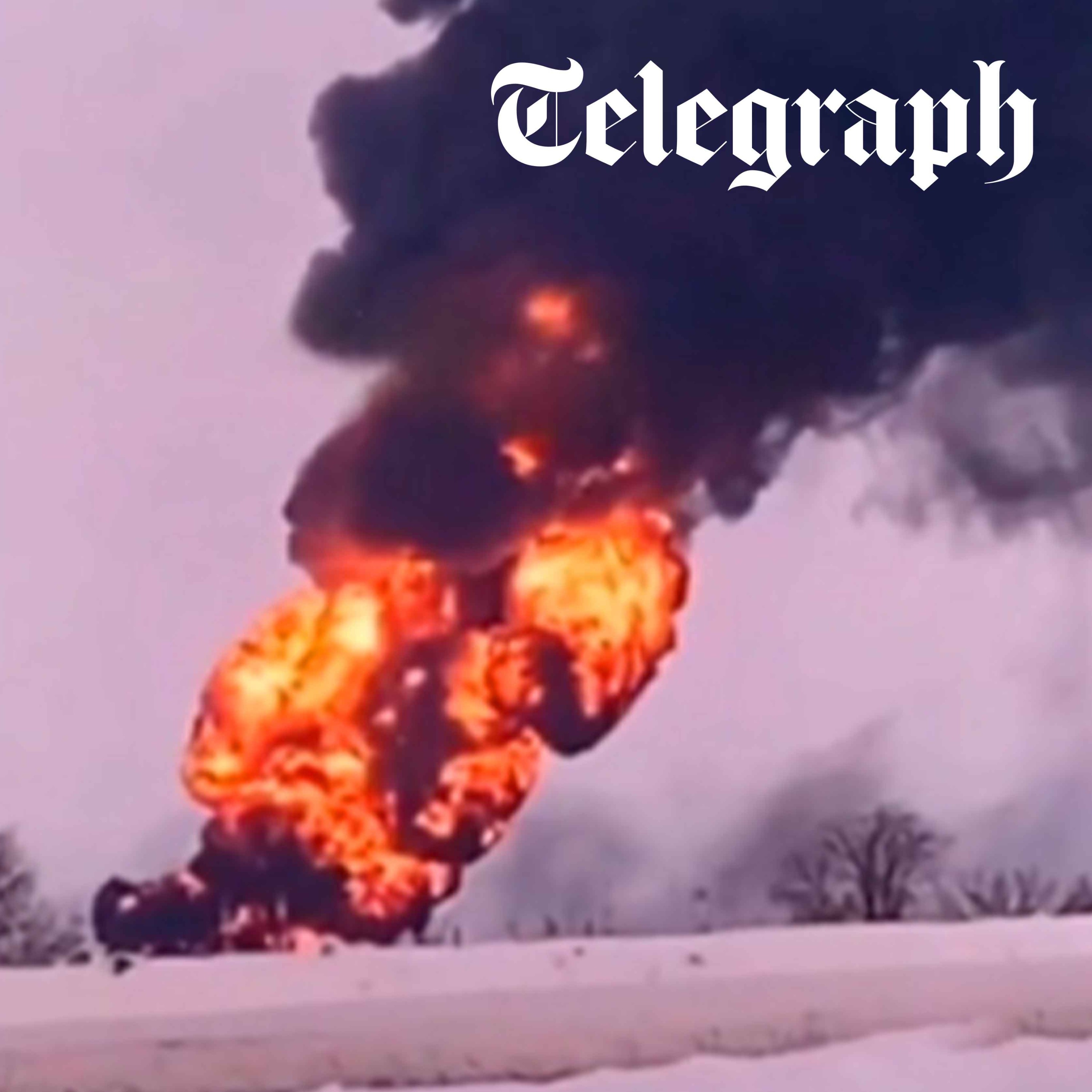
Ukraine: The Latest
Ukraine hits 'critical' Druzhba oil pipeline in Russia's Tatarstan & ‘I outran Putin’s blitzkrieg four years ago: he never caught up’
00:52:26
Loading summary
Transcript92 lines
- [00:04]
Francis Dernley
The telegraph.
- [00:10]
Stiles Mackenzie
We interrupt this program to bring you an important Wayfair message. Wayfair's got Style Tips for Every Home. This is Stiles Mackenzie helping you make those rooms sing. Today's Style Tip when it comes to making a statement, treat bold patterns like neutrals. Go wild like an untamed animal. Print area rug under a rustic farmhouse table. From wayfair.com this has been your Wayfair style tip to keep those interiors superior.
- [00:37]
Francis Dernley
Wayfair Every style, Every Home let's be completely honest.
- [00:41]
Podcast Advertiser
Are you happy with your job? The fact is, a huge number of people can't say yes to that. Too many of us are stuck in a job we've outgrown or one we never really wanted in the first place. But we stick it out and we give reasons like what if the next move is worse? And I've put years into this place and maybe the most common one. Isn't everyone miserable at work? But there's a difference between reasons for staying and excuses for not leaving. It's time to get unstuck. It's time for Strawberry Me. They match you with a certified career coach who helps you get from where you are to where you want to be, either at your existing job or by helping you find a new one. Your coach helps clarify your goals, creates a plan and keeps you accountable along the way. Go to Strawberry Me Career and get 50% off your first coaching session. That's Strawberry Me Career. Acast Powers the World's Best Podcasts Here's a show that we recommend.
- [01:43]
Patricia Aima Maldonado
You may have heard something somewhere about the crisis of recycling and the problem of microplastics, but have you heard about how scientists are discovering very cool and creative solutions to fight this problem?
- [01:53]
Adelie Bergman Ponte
There is so much fake news about everything. I think that it is quite dangerous to talk about this, but microplastics are one of the biggest silent pollutions of all time and they are getting everywhere. In the sea, in the soil, in the air and already inside our bodies.
- [02:09]
Patricia Aima Maldonado
That was scientist and self described bacteria trainer Patricia Aima Maldonado. Here a special interview for our fellow Friday series with her to find out the fascinating scientific and technological solutions she's working on to combat the invasive problem of microplastics. Listen only on TED Talks Daily.
- [02:33]
Podcast Advertiser
ACAST helps creators launch, grow and monetize their podcasts everywhere.
- [02:39]
James Rothwell
Acast.com.
- [02:46]
Francis Dernley
I'm Francis Dernley. I'm Adelie Bergman Ponte and this is Ukraine. The latest Today as Russia's full scale invasion of Ukraine enters its fifth year, we Report live from Kyiv the morning after world leaders gathered in the Ukrainian capital to reaffirm their support for President Zelensky. With a new round of Ukraine, Russia, US peace talks scheduled in Geneva and fresh Russian aerial attacks across the country, we ask whether there is any tangible movement aside from the continued Ukrainian advances in the south of the country. We also examine reports that Russia is sending migrants into Europe through covert routes as part of a hybrid strategy, and consider why Kyiv has not been targeted in the air war for several consecutive days.
- [03:31]
James Rothwell
Bravery takes you through the most unimaginable hardships to finally reward you with victory.
- [03:41]
Patricia Aima Maldonado
Russia does not want this.
- [03:51]
Roland Oliphant
If I'm president, I will have that
- [03:53]
Francis Dernley
war settled in one day. 24 hours.
- [03:55]
Roland Oliphant
We are with you.
- [03:56]
James Rothwell
Not just today or tomorrow, but for a hundred years.
- [04:04]
Francis Dernley
Nobody's going to break us. We are strong.
- [04:08]
Roland Oliphant
We are Ukrainians.
- [04:10]
Francis Dernley
It's Wednesday 25th February, four years and one day since the full scale invasion began. And today I'm joined by Adelaide Pojman Ponte in Kyiv, the Telegraph's Berlin correspondent James Rothwell dialing in from Germany. And in our London studio, Venetia Rainey and Roland Oliphant, co hosts of our sister podcast Battle Lines. Roland and James were in Ukraine this week four years ago and are going to share their memories about running what was expected to be a Russian blitzkrieg. Thanks again to the tens of thousands of you who watched the anniversary episode of on our YouTube channel. If you wish to do so today and see Adelaide in Kyiv, plus the maps and footage from the ground, you'll find a link in the show Notes. Now to the updates. Yesterday may have marked the fourth anniversary of the full scale invasion, but there was no respite from aerial bombardments on the country. Not that we expected there to be. At least three were killed and 28 others injured across Ukraine over the past 24 hours. With around 133 drones and an Iskander M ballistic missile fired overnight. The Ukrainian Air Force claims to have intercepted 111 of those drones, leaving 19 of them and the missile making it through striking 16 locations. Those included several oblasts. So if we go broadly clockwise around the country, starting in Kharkiv in the northeast, 11 people were injured in that region including two children. In Donetsk, five were injured with several residential buildings and civilian infrastructure damaged. In Zaporizhzhia, one person was killed and six others injured. In Kherson, one person was killed and five injured and two multi storey apartment buildings and 11 homes hit. In Dnipropetrovsk near the site of the Ukrainian counter push. At the moment, a 35 year old man was killed in Nikopol. Interestingly, once again, no strikes on Kyiv. That's something I talk about with Adelaide a little bit later on. There were commemorations around the world to mark the anniversary yesterday. Many European capitals lit up their most famous monuments, including the Eiffel Tower in Paris and the Brandenburg Gate in Berlin. There were also gatherings as far afield as Ontario, Canada and Cape Town, South Africa. I was at the Trafalgar Square commemoration last night. There were several thousand people there. There were several speeches that were given, including by the ambassador and former commander in chief of the Ukrainian Armed Forces, Valeri Zeruzny. And letters by several soldiers were read out by actors. The mood, I would say was somber with flashes of sadness, anger and defiance. Thank you to all of the listeners who came to say hello. A shout out to one in particular, Victoria, who said she'd also listen to every episode of Battle Lines. So Roland and Venetia, she was thrilled to hear that you would be on Ukraine, the latest today. But before we continue with the updates, let's just hear a short dispatch from Adle in Kyiv in Maidan Square, the key focal point for the commemorations yesterday.
- [07:25]
Patricia Aima Maldonado
Hi London. Hi Francis. I'm here on Maiden Square in Kyiv. I got here yesterday morning and I actually arrived on Maiden Square just as the commemorations, the official commemorations with Zelensky and European leaders were finishing. The whole area was closed off to cars and to pedestrians. Patreons I was able to come through because of my journalistic accreditation. The whole thing was completely cornered off from the population was very, very empty and very eerie. Actually. I've now come back on February 25, on Tuesday with the place where people commemorate fallen heroes of Ukraine with lots of flags and fresh flowers will be. We'll go there in a couple of minutes. And behind me, which I don't think were there yesterday, or at least they definitely weren't there the previous time I've been here in Ukraine. All of these candles lit up for the commemoration. They extend quite far away to the other side to at least halfway into the square. So I'm in front of the memorial for the fallen soldiers on Maiden Square. This is a memorial that started quite organically at the very beginning of the war. And every time I come back there are more, more photographs, more flags. Obviously because it's the anniversary. There are fresh, fresh flowers everywhere. So while we're talking about the commemoration of the anniversary, obviously here yesterday was the official commemorations with Zelensky and the European leaders. But there were memorial services everywhere in the country, country. In Lviv, for example, on Monday night, on Monday 23rd in the evening they did the rays of light, rays of memory, I think, commemoration, which they have done every year on the occasion of the anniversary where you've got big, big lights, big rays over the main cemetery and people gather to remember the fallen soldiers, the fallen heroes of Ukraine. Lviv is, as you know, a city in western Ukraine where every single day, every single morning, they have funeral services for soldiers, coffins covered in flag. They play the same song every morning. I believe it's Let me look it up Il Silencio by Nini Rosso. It's happening on Market Square every single day, almost at 11, when you have cars coming up in front of the Peter and Paul Church. So every single place has organized their own way of memorializing the fallen soldiers. And this, this on Maiden Square, obviously in the most, is the most well known one. We all constantly talk about how Ukraine is resisting, how brave and how courageous they are. And that is true, but it's also true that they don't have a choice to be brave. They don't have a choice to be courageous. That's the only option for, for them. And we talk constantly about their bravery and how their resources resisting, how they're putting up a fight. About the Ukrainian word mizlamnist, which means invincibility, unbreakability. Unbreakability is a word that you will see constantly in Ukraine. For example, the marathon that we reported on in October was called the marathon of the unbroken. The unbreakability being unbroken and the Ukrainian spirit of an Islamist is very important and it's very important. Four years on and people are fighting with so much bravery and courage. But also this place really reminds you of the cost of those who are fighting and dying in order for Ukraine to resist.
- [11:00]
Francis Dernley
Thanks Adli. And later on I plan to have a catch up with her. So do stay tuned for that. As Dom talked about yesterday, he's on a top secret mission elsewhere in the country. We'll hope he'll come up for air in time for tomorrow and be back on the podcast. In other military news, President Zelenskyy has said that about 80% of Ukrainian territory lacks protection against Russian ballistic missiles, highlighting Kyiv's continued need for additional air defenses. He also admitted that a strike on a defense manufacturing facility temporarily delayed the rollout of Ukraine's domestic long range missile, the Flamingo, which of course we've talked about on the podcast many times recently. In terms of Ukrainian attacks, we now have confirmation of an attack near Almatyevsk in Russia's Tatarstan region yesterday. Ukraine hit the Druzhba pipeline there, a major source of financing for the Russian war machine, igniting two huge tanks. Footage circulated on social media shows the fire still raging this morning. We don't know quite how old this footage is, but nonetheless there were air alerts there this morning. Ukraine's defence forces also claim to have used US Supplied atacms long range missiles in strikes targeting Russian command posts, ammunition depots and logistics facilities in the occupied territories overnight, including near Novopetrivka in Donetsk. We don't know if those ATACMs were stockpiled or if they've been a more recent donation from a Ukraine friendly country. Russian missile systems, including a Pantsir S1 and an S400 Triumph are also said to have been hit last night in occupied Crimea. It's interesting that Crimea has been the site of so many bombardments in the last week or so. I'll turn to the ground war very shortly, but the next major story in this historic week relates to peace talks. Benicio, you've been looking into this for us.
- [12:55]
Venetia Rainey
Yes. So we're going to have U.S. and Ukrainian officials holding peace talks tomorrow, Thursday in Geneva. The Ukrainian team is going to be headed up again by their lead negotiator Rustam UMAROV. And the U.S. team is going to be led by Trump special envoys Steve Witkoff and Trump's son in law, Jared Kushner. These are supposed to pave the way for more trilateral talks, we think sometime in early March with Russia, according to Zelenskyy. Other issues on the agenda are prisoner war exchanges and a prosperity package for the reconstruction of Ukraine. Wyckoff said earlier this week that the aim was to explore different iterations about how we might get to a peace deal. This comes on the back of two previous rounds, as our listeners know that haven't delivered that much. So expectations aren't super high. And there's another reason why expectations aren't high, because Umarov won't have Witkoff's and Kushner's full attention. They're both there to also hold talks with Iran over a potential nuclear deal, just like last week's Geneva peace talks. They're both going to be shuttling back and forth between these negotiations. And I think it's worth pausing here actually to reflect Trump's State of the Union speech which we had yesterday, because I think it gives a pretty clear sense of his foreign policy priorities. It was mainly about domestic issues, but he talked about a few foreign policy things and tellingly, Ukraine barely got a mention. It was just a punchline, really, to his oft repeated claim that we've covered on battle lines about him having solved eight wars. And just a side note, if you want a rundown of how much of that is true, Roland did a very good episode about that. But despite the fact that this was Trump's longest ever, in fact, it was the longest ever State of the Union speech. It was 1 hour and 47 minutes. He spent less than 30 seconds on the biggest land war in Europe since World War II. Here's what he said. And we're working very hard to end the ninth war, the killing and slaughter between Russia and Ukraine, where 25,000 soldiers are dying each and every month. Think of that, 25 soldiers are dying a month. A war which would have never happened if I were president, would never have happened. It's not exactly a full throated backing of Kyiv in the middle of these peace talks, but he did spend several minutes talking about Iran. He said he would prefer a diplomatic solution, but that he would never hesitate to confront threats to America and will never allow Iran to obtain nuclear weapons. He also spoke about the power of peace through strength. As we've reported on battle lines a lot, the US currently has its largest military buildup since the Iraq war in 2003 lined up in the Middle east ahead of a potential military confrontation with Iran if they don't agree to some sort of nuclear weapons deal. I think Ukraine and its European allies might be wondering what about applying some of this peace through strength strategy to Russia in the midst of all these talks.
- [15:18]
Francis Dernley
Interesting to think about Trump's speech in the context of yesterday's UN vote. What happened there?
- [15:24]
Venetia Rainey
Yeah, so the US abstained from the un. They've been doing every year since the war erupted, the full scale war erupted. They've been doing a resolution, you know, in support of Ukraine and condemning Russia, more or less. But the US abstained from the resolution yesterday. It was a short document. I've actually got it here. Fairly generic anodyne statements about the war, you know, Ukraine, Russia is bad, that kind of thing. But the US took umbrage with two paragraphs. I'm just going to read them out to you. And they tried to get these paragraphs taken out. One was about reaffirming the UN's strong commitment to the sovereignty, independence, unity and territorial integrity of Ukraine within its internationally recognised borders. And the other paragraph was about reiterating the UN's call for a comprehensive, just and lasting peace in line with international law, including the charter of the United Nations. Now, the Americans said that this language would distract from ongoing negotiations. I think that's pretty telling. The resolution did pass regardless, 107 votes. But the US joined 51 countries, including China and India to abstain. 12 countries, your usual suspects, your Russia, your Belarus, your North Korea. Your Honor voted against the resolution. It's not great. But just to put that in context, our listeners might remember, just after Trump had got into office, the US actually joined Russia in opposing a European drafted UN resolution condemning Moscow's actions. And then to add insult to injury, the US drafted and voted for a separate resolution that called for an end to the conflict, but had no criticism of Russia.
- [16:42]
Francis Dernley
What did Russia have to say about all of this and other matters going on at the moment?
- [16:47]
Venetia Rainey
Well, we got a bit of a statement from Kremlin spokesperson Dmitry Peskov, and interestingly, he acknowledged that four years after launch the full scale invasion, Russia still not achieved its objectives in Ukraine. He said the main goal was to ensure the safety of people who lived and live in eastern Ukraine. That's what he told reporters.
- [17:02]
Francis Dernley
That old chestnut.
- [17:03]
Venetia Rainey
Yeah, that old chestnut, exactly. But the goals have not been fully achieved, so the special military operation continues. He also said that Russia remains open to achieving its goals by political and diplomatic means. I think we can take all of that with a big pinch of salt. What he didn't mention was the fast changing picture on the battlefield or the troop replenishment problems. I'll leave that to you guys.
- [17:19]
Francis Dernley
Well, thanks very much, Venetia, for talking us through those quite significant diplomatic updates. Back to the battlefield then. Before I bring in Roland. To mark the fourth anniversary of the full scale invasion, Defence Minister Mykhailo Fedorov has outlined Ukraine's wartime strategy to force Moscow to sue for peace. In short, he says, by securing the skies, stopping Russian advances across all domains, and depriving Moscow of the economic resources that fund its war. No great shocks there, he said. That would be achieved by expanded international partnerships, technological superiority and the systematic use of battlefield data. I think that last one is the most interesting one, given Fedorov's former roles in terms of digital innovation. No major movements on the front lines, though. That's not to say that there hasn't been significant activity. Our main focus continues to be on that southern axis, the site of that alleged Ukrainian push, taking advantage of the loss of Starlink, which Ukraine's Commander in Chief yesterday said MEANT they'd taken 400 square kilometers in recent weeks. Geolocated footage published yesterday shows Ukrainian forces striking a Russian service member in northwest Ulyopol after what the ISW assesses was a Russian infiltration mission that did not change the control of terrain. There was also a Russian assault again against Pokrovsk. How many times have we said that in the past year, but without any registered movement? So slow progress indeed. And that feels like an appropriate moment to bring in, Roland, because of your recent article in the Telegraph. Four years ago, I outran what I thought was a blitzkrieg. The Russian army has still not caught up. This is a really great reflective piece on when you were on the ground in Ukraine, when the full scale invasion began. What's the first thing that strikes you when you think back on that time, Roland?
- [19:17]
Roland Oliphant
Oh, thank you very much, Frances. The first thing, I don't know, I can't get all those thoughts in order. I mean, I think for lots of people, I mean, for every Ukrainian and I guess for lots of us who were there in the country at the time, you know, that date comes around every year and you kind of. It kind of slipped my mind. And I woke up in the morning, it was the 24th, and, you know, I was getting the kids to school at Cracker Dawn. I realized where I was four years earlier and it's all, you know, a big day. And you, you run your mind through that. I suppose the thing that struck me as I ran through it this year and has struck me every year since the war began, you know, we woke up in Seversky, Donetsk, which is now occupied by the Russians. We stopped in Bakhmut, which is occupied by the Russians. There's a lot of that landscape, a landscape that I'd become very fond of over the years of reporting in Donbass that is now closed to me. And there are lots of people I met, I don't know what happened to them, all of that. So there is a sense of, there's sadness and there's tragedy and all of that. But then, yeah, the thing that occurred to me in which, because we have the privilege working here of being able to put pen to paper and bore people with our thoughts and reflections sometimes. Yeah, the thing that occurred to me is just that, actually, hold on a second, we legged it. We basically legged it and the Russians still haven't caught us the rate of the advance. And I know it's been harped on about at length by Ukraine boosters and it gets to the point where it's a Bit we get tired of people beating that drum. But, but it's a fact. I mean, the, the rate of advance of the Russians has been remarkably slow.
- [20:51]
Francis Dernley
You say in the piece, to understand our decisions at the time, you have to remember the long forgotten world in which the Russian war machine was considered invincible. Now I think that's a really key point when reflecting on that time. No wonder people were keen to get out of Donbas, because the expectation was that the country at the time might have fallen within days or at least weeks. Yeah, it feels like a different age.
- [21:13]
Roland Oliphant
It was. And over the past four years, we've become so accustomed to what we learned in the immediate aftermath of that, which was that, okay, the Russians were not invincible, the Ukrainians were full of fighting spirit and so on and so forth. We all know that, and we know that there was a big change in our own perceptions. But actually thinking back and performing that phenomenological reduction where you kind of put yourself back in the moment, where you sense that is quite difficult in a way. And, you know, that was what the moment was like. Then we'd spent. If you go back to the beginning of the war and the weeks long buildup to it, which is what had taken me and Julian Simmons down there in the first place. We'd been in Kiev for weeks beforehand and we were talking to everyone we could. There were military analyses going on. There were people publishing maps like this with arrows on them about what might happen. And there were several assumptions. One of the assumptions was, okay, if it happens, the Russians are going to win very, very quickly. And the second assumption was that one of the Russian objectives would be to encircle the very large Ukrainian force down here, because that was the strongest and most experienced Ukrainian force down here in the Donbass facing the old front line. So there we were, we woke up that morning and we thought, my God, okay, we are deep inside the soon to be encircled, you know, the pocket to be. I suppose we'd all. Also, it was a bit of kind of folk memory. I mean, I didn't report it. I was a bit young to actually I was still at uni, for Christ's sake. But, you know, the only full scale invasion I'd seen before really was the invasion of Iraq in 2002. That went very, very well for the attackers. So I suppose we kind of assumed that's what the Russians would model it on and that's what it would look like, that it would be like, you know, American shock and awe.
- [22:55]
Francis Dernley
I think also there was a residual memory of the second World War in Europe as well. There was an assumption that the Red army, once unleashed, will just roll its tanks across the steppe.
- [23:03]
Roland Oliphant
So that was. Yeah, yeah, yeah. I mean, that was Battle of France, all of that. And of course, you know anybody, you know, we were all men in that car who had volunteered to become war correspondents, were kind of self selecting. So we'd all read like Anthony Beaver's Stalingrad and stuff like that. We all knew about the great encircled battlements and, you know, the encirclement of Kyiv in 1941, blitzkrieg across the plains, all of that. So that was all in our heads. And I'd reported the 2014 war, right, where the thing the Ukraine, what Russians did a number of times was put the Ukrainians into encirclements. So I knew that they did that. I knew that was what they would try to do again. I felt like that's what they tried to do again. And I'd seen what they did when that happened, and it was brutal. I had no intention of being caught in what the Russians call a cauldron. Quite likely end up dead. If you didn't end up dead, very badly wounded, if not very badly wounded, then, you know, quite likely a prisoner in. I mean, you've covered it at length. What happens to prisoners of war and journalists.
- [24:02]
Venetia Rainey
Yeah, I was editing on the foreign desk on late shift the night before and then the early shift the morning before. And I remember messaging Memphis at midnight.
- [24:08]
Francis Dernley
I think we were both on that morning shift, if I remember, on the foreign desk. Not. Yes, I remember we had the morning meeting here at the Telegraph.
- [24:15]
Venetia Rainey
It was just. Yeah, everyone was. I guess there was a sense of sort of, okay, it's finally. It's actually happening now. But I just remember chatting with Memphis, who was the foreign editor at the time, Memphis Barker. And he was saying, I think it's actually happening. And when we got in in the morning, there was just this. This overriding sense of concern for the reporters that we had in the country. Roland was one, but James Rothwell was in Kiev and I remember was in bomb shelters. And we were like, I think we need to get him out. We think Kyiv is going to fall. And that was the feeling at the time.
- [24:39]
Francis Dernley
Yes, absolutely. I remember seeing photographs, rushes coming out of Ukraine, many of which were not publishable in that first week. And it just really struck me that this was on European soil. You were seeing photographs that seemed like something from the Second World War, except the clothes were not from the 1940s, they were from. From Today. And, yeah, really, really, very, very vivid memories of that time. And this does feel like a good moment to bring in James Rothwell. We've got some stories, James, that you've been working on. You're dialing in for us from Germany. Always appreciated to have you on the podcast. But before we go into those stories that you've written in the past week or two, what are your memories of that time and being in Kyiv?
- [25:17]
James Rothwell
Yes, well, I mean, I remember going to sleep with my boots on in the hotel that we were staying in in Kiev because I sort of assumed that the Russians, if they were going to invade that night, you know, it would all sort of move very quickly. So, yeah, and I never actually got to sleep because I had the TV on. And, you know, the, the moment that I remember is the CCTV footage of the Russian soldiers spilling over that border checkpoint. That was kind of the moment that it became very clear that it, that it happened. And I remember going downstairs to see what was going on. We were obviously staying in a hotel in Kyiv and I spoke to a hotel worker and I think we'd already made a plan for where we would go underground if there were airstrikes and things. But I asked how she was getting on and she seemed slightly kind of discombobulated. And I said, I think the Russians have just invaded. I think it's happening now. And she said, no, I don't think that's true. I don't think that's right. I haven't seen that. And then almost on cue, air raid sirens started going off and then there was this kind of general scramble to get to get down underground. And yeah, as Venetia said, you know, the early days of covering that story from Keith, you led this sort of bizarre subterranean mole like existence basically for kind of days at a time where you would just be stuck in an underground shelter. It's very, very difficult to know what was actually going on underground. I mean, I remember, I think possibly the first morning after the war had started. I think most of us had spent the entire night underground and so deep underground that you couldn't really tell what had happened overground. And, you know, you go up in the middle of the morning as the sun rose, and you really weren't sure what you were going to find once you got out into the, into the daylight. You really weren't sure whether you were going to see a sort of ravaged city or whether it would just be completely deserted. And of course it wasn't ravaged. But I remember coming out the next Morning into the daylight. And one of the first things I saw was these was just car after car after car shooting down, down this road, sort of narrow road outside the hotel, going at like 100, 120 miles per hour, just driving insanely fast and then going with some other correspondents, including our colleague from the Guardian, Luke Harding, out into Kyiv city itself and just kind of wandering around. And it was like something out of a zombie movie, you know, I mean, it was just completely, just these streets that just 24 hours earlier had been absolutely packed, were completely deserted. You know, air raid sirens going off, lots of cars. I remember cars that had been kind of just abandoned in the street, as if people had gotten out of them and then gone into sort of underground shelters and things and not actually come out yet, perhaps because they'd ended up spending, you know, a whole night sleeping in a metro station, which indeed was the case around that period. And just to echo what Roland was saying, there was a lot of confusion, I think, about what, what, what the Russians would do and what kind of Russian soldier was at that time on its way towards Kiev. I mean, I remember having a chat with Roland about a video that we'd seen on Twitter of some Chechen warriors doing sort of battle rituals, basically eve of battle rituals, who according to some reports, were not that far off Kiev because of course a lot of soldiers came, came from the north through Belarus. And I remember talking to Roland and trying to puzzle out between the two of us, you know, like, how, how bad is this? What are we expecting to happen when these soldiers arrive in Kyiv? Are we expecting the calm, cool headed professional soldiers of the Russian military or are we expecting something else, something much more ferocious and bloodthirsty? And you know, obviously Ukrainian communities in places like Bucha found out what was coming and it was not the cool headed professional soldiers of the Russian army that that era was over. And what was coming was unspeakable devastation. And we all saw the images from Bucha, we all know what happened there. And obviously colleagues of ours were there on the ground, like Danielle Sheridan in particular. And I think Roland was eventually in that area as well and others. And we all got Russia wrong fundamentally. We didn't know that it wasn't a professional army coming down that road. It was a war band, bas. It was like marauding orcs or something really, you know, and that is why of course, they are now described as orcs widely in Ukraine, these Russian conscripts and others who came down over the border from Belarus. So yeah, I just like, to echo what Roland said, I mean, it's just an enormous amount of uncertainty, an enormous amount of fog of war. And one of the immense difficulties as a reporter of covering a story like that is the fog of war. You just don't really know what's going on most of the time.
- [30:01]
Francis Dernley
Well, thank you very much for sharing those memories, James. Earlier on, Roland referenced Anthony Beevor's book Stalingrad. Of course, another one that Beevor wrote is highly, highly recommended is the Downfall. And in that book, it talks about what we all know as the rape of Berlin by the Soviet soldiers. And a way in which I think this war has changed perceptions of a past era as well, is that the assumption was, is that part of the reason what took place in Berlin was so horrific was because what the Germans had carried out during Operation Barbarossa on the Soviet Union. Now, seeing what has been carried out in Ukraine, in the way you describe, across the entire country by soldiers of every description and rank, shows that this actually, this has nothing to do with revenge. This is a culturally ingrained attitude almost within the Russian armed forces. And so it has led to reappraisal not only of our contemporary understanding, but also our historic understanding as well, of events in the past. But we're talking about. About the lack of Russian progress in some ways in the military sphere today. But of course, where they have expanded has been hybrid warfare, James, and this has been a story that you've been looking at in many different aspects over the last few months and indeed, years. And so I'm interested in your first story, which is about how Russia is sending migrants into Europe through secret tunnels.
- [31:23]
James Rothwell
Yes, that's right. So this is a rather bizarre story, but basically, Pavel Krechin, who's a reporter we work with in Poland, and I have spoken to the Polish government about this new tactic that Belarus and Russia are using to try and get migrants over Europe's borders in an attempt to destabilize border security on NATO's eastern flank. Now, as you know, Francis, for a long time this was happening overground over land crossings. In 2021, for example, there was that big wave of people trying to get across the Belarusian border into Poland. Roland will remember this because he was on the ground as Eye at the time. And we got some rather strange text messages from the Polish government that were being sent out to everybody who went near the border, including, you might remember this, Roland, the text message that said, do not take the pills that the Belarusian guards give you at the border. And we were never. We were never Quite able to get to the bottom of what those pills were.
- [32:18]
Francis Dernley
But I think Roland's scratching his head here, James.
- [32:21]
Roland Oliphant
I'm not sure, he doesn't, I don't remember that particular one, but no, this is, this is the funny thing. So that all kicked off, what was it? October 2021 or something. And I remember it being sent to the border and looking at what was happening and it looked very warlike, you know, the Poles had activated and so on. I remember end up sitting in a hotel with some colleagues from another part of Fleet Street. I can't remember which one. I think one of the tabs, I think they might have been from the sun or the Mail or something. But I remember we were talking about it and he said, well, what do you think you deal with this part of the world? And one of them leans across the table and goes, yes, but is it war? I said, well, yeah, in a manner of speaking, I suppose. It's amazing how that later turned out to have been probably part of the whole kind of the softening and the shaping operations for the invasion. And I do remember walking back from that bar in eastern Poland, got a phone call, got a phone call from the foreign desk here and they want me to write up this ridiculous Bloomberg story that says Russia's gonna invade Ukraine train. And I was like, what are you talking about? Like, well, they've got this, like, who's told them that? You know, this is just absurd. I told them, where have you got this stuff? They made me do it anyway, so I did it very quickly.
- [33:38]
Francis Dernley
Bet you're glad you did now.
- [33:39]
Roland Oliphant
Well, yeah, so that, that moment I, I just think they intimately linked but I think, I think that. Yeah, sorry, sorry to put that footnote in there.
- [33:48]
Francis Dernley
Yeah, sorry James, carry on there.
- [33:49]
James Rothwell
The reason I bring up the pills is I just want to sort of paint a picture of a slightly bizarre kind of paranoia infused environment on border. You've got a situation where you've got migrants being manipulated basically by Belarus into trying to cross the border over land. My colleague Pavel and I, you know, we've done some reporting in that region too and we've heard some, frankly some crazy stories about, you know, sort of people, these, these migrants and asylum seekers getting completely lost in the woods, drowning in bogs in some of the swampy parts of the forest. It's very, very dangerous, very sort of treacherous area of land to cross, you know, on your own without any guidance. But now it's getting even more dangero. That border is now so well securitized by Polish authorities, they've got, for example, drones and thermal imaging cameras and things there to catch you. The Belarusian regime, according to Poland, has brought in Middle Eastern specialists to dig underground tunnels which start quite deep inside Belarus and then go under the land border into Poland. And we have seen video footage of these tunnels. We've spoken to Polish officials who told us that about four such tunnels have been discovered so far. And it is their contention that, as they said, Middle Eastern specialists are responsible for digging them. In other words, this is not just something that's been done great escape style, perhaps by a couple of dudes with a trowel, you know, over many, many weeks. It's involved an element of sophistication. We're talking about tunnels where you can actually see what look like concrete kind of struts inside them to maintain their structural integr. And that means that there's two interesting ingredients to this story. The first is the idea of asylum seekers being used as a tool in hybrid war, not only being pushed over the land border, as was the case in 2021, but under the border through tunnels, which to some extent smacks perhaps of desperation. And the Poles are saying it's a sign that their border security is so good that now this hybrid war campaign is shifting to underground tunnels, which have been used, by the way, by a total of 180 migrants. So we're not talking about a negligible number of people crossing.
- [36:01]
Roland Oliphant
Wait, you say Middle Eastern specialists.
- [36:03]
James Rothwell
Yes.
- [36:04]
Roland Oliphant
And you talk about tunnels.
- [36:06]
James Rothwell
Yes.
- [36:06]
Francis Dernley
Right.
- [36:06]
Roland Oliphant
I mean, is anybody actually like, spelt out, like, drawn the very obvious line between those very obvious dots? Right. They just leaving that hanging there for everyone to kind of stroke their chins about.
- [36:19]
James Rothwell
Yes. Roland, I'm so glad you asked the question, because that is the big question. What did the Polish government mean when they said Middle Eastern specialists? And this was the other half of the story that we had to kind of investigate, Pavel and I. The Polish government refused to tell us what they meant by Middle Eastern specialists. But of course, anyone who follows the news will immediately be thinking, of course, of two organizations, both of them with links to Iran. One of them is Hezbollah, which, as we know, is capable of digging very, very big and sophisticated tunnels from southern Lebanon into northern Israel. And the other one, of course, is Hamas, which has a vast network of tunnels sometimes known as the Gaza, Gaza Metro. I spoke to some British and Israeli security and tunneling experts as part of this story. Interestingly, it was the Israeli expert who cast doubts on the idea that Middle Eastern specialists means Hamas or Hezbollah, they suggested that it could equally be tunnel diggers who belong to one of the Kurdish militias or possibly also from isis. And interestingly, it was the British experts who were slightly more leaning towards the idea that this is the kind of expertise that inevitably one would, one would kind of equate with Hamas or Hezbollah. On a technical point, when you look at a Hezbollah tunnel, and I've been inside one on the northern Israel side, these things are huge. You know, I mean that, you know, they look like it's, it's like a trip down one of the old mines in Wales. You know, it's a massive tunnel network and you can even drive cars through the tunnels that hezbol. Whereas these sort of very, very small kind of crawl space tunnels, basically, that we've seen in Belarus are just not really on the same scale. I think Roland is right to kind of cut in there and say, well, hang on a minute, what do you mean by a Middle Eastern specialist? Because that was kind of one of the answers that we wanted to get an answer to that when we were working on the story. Unfortunately, we weren't able to get a definitive answer. It is like many, many aspects of these militia groups in the Middle east, shrouded in mystery. I fear we may never get to the bo of it. But, but, but certainly the experts that we spoke to were pointing the finger at Iranian proxy groups or possibly militias in, in Syria and, and Kurdish militias.
- [38:36]
Francis Dernley
Very interesting. Well, thank you very much, James, for talking us through that story. We will link to it, of course, in the show notes, as we always do. Of course, you being in Germany, you are also very much heavily involved in our coverage of the Munich Security Conference. Now, we've done quite a lot of work with Rosina on this and some inter interviews that she did while she was out there. So do check those out last week. But you also were looking into the Baltic states and their response to what would happen if Putin were to strike at them. Interested in an interview that you did out there?
- [39:06]
James Rothwell
That's right. We did an interview with the Foreign Minister of Estonia, Marcus Sackner, who really wanted to speak to us about this emerging narrative in parts of Europe, particularly Germany, which suggests that if Russia were to attack a state on NATO's eastern flank, then they would do so successfully and that perhaps Germany and other NATO members would not come to their aid. And this is based on an exercise that was carried out by a DeWitt newspaper, a very, very sort of large advanced war game which tried to simulate a scenario where, for example, the Russians invade Lithuania. And the scenario was trying to test what the reaction of the Western NATO would be. And I wanted to interview the Estonian foreign minister about lots of things obvious, obviously, Munich security Conference, the Marco Rubio speech. But I did ask him, what do you make of these exercises, you know, these exercises which are suggesting, you know, that Russian soldiers would sweep into Baltic states like Estonia without resistance. And he was very forceful on that point. He said, they've got it completely wrong. Of course we would fight back. And he went a little bit further than that. And he also said, you know, that NATO would, of course, carry out strikes deep inside Russian territory. In response to that, you might say, well, of course, a foreign minister from a Baltic state would say that. What else are they going to say? But I think it's quite significant that the Estonians in the Baltic states are publicly pushing back against this narrative which is starting to take root in some parts of Europe, which almost takes us red the idea that Russia would be able to sweep in to a Baltic state and capture a strategically important town. They are pushing back on, on that. And of course, we're also talking about a scenario which would only happen, presumably after the war in Ukraine has ended and Russia is able to move troops that it has into Ukraine over to NATO's eastern flank as well. The second point that the minister made, which I think is worth alluding to, at least, is at Munich Security Conference, Marco Rubio was very, very critical of the United Nations. He said it was American leadership, not the United nations, which was finding solutions to the war in Ukraine and to the situation in Iran and to Gaza as well. And I did ask the Estonians whether they agreed with that assessment. And they said that they didn't agree with it entirely, but on the specific issue of the United nations and Russia and Ukraine, they did agree with that. They said that there was a dire need for reform. They pointed, of course, to the. The Security Council and the abuse, if you like, of the veto by Russia and other countries. And they kind of threw their weight behind Marco Rubio take on the United Nations. I thought that was a very significant part in the speech. I see that as a wider strategy by the Trump administration of trying to dismantle public confidence in the United Nations. We know that the Board of Peace is already being floated as a kind of rival to this. And I think although the Munich Security Conference speech got a standing ovation, which was maybe something we can touch on in a moment, because that was a bit of a surprise, I think there is concern that there is this attempt now to kind of dismantle some of these large institutions that we've kind of taken for granted in the west for a long time as being beneficial to us. Now the Trump administration is publicly questioning them. And I think that's a pretty significant moment.
- [42:32]
Francis Dernley
Absolutely. Well, thanks very much, James, and we'll of course link to that story as well in the show notes. And before we go to our final thoughts, a quick check in with Adli in Kyiv. Adley, before we start, it would be remiss of me not to comment on your woolly hat. Why not a beret?
- [42:52]
Adelie Bergman Ponte
You know what, it's funny you should mention this for two reasons. One, because I almost packed a beret to come here because we're launching on video, why shouldn't I be the French girl with the beret? And then I thought, ah, maybe it's a bit too on the nose. Do I really want to do that? But yesterday in Odessa, I was Talking to a 70 year old lady under a tent who hasn't had power, electricity, lives on the seventh floor. And she was wearing a very nice fuzzy beret on her head. And that's actually how I bonded with her and opened the conversation. I think I was like, I love your beret, it's really cool. And my granny's got a very similar one. So you know what, berets are not, never very far.
- [43:29]
Francis Dernley
Who would have thought it? Ali, before you go, I just wanted to ask you about something that struck several of us the last few days, which is there doesn't seem to have been a raid on Kyiv this week. Now that feels quite unusual. The last few times that we've been reporting on anniversaries, there has been usually at the very least an air raid siren. Why do you think that might be?
- [43:54]
Adelie Bergman Ponte
So it's interesting. So as we were leaving Odessa on the night train on Monday night, so Monday the 23rd, there was an alarm that rang as Jack and Dom were getting into their train. Train. And then the alert lasted for about 10 minutes literally. No one moved, no one went to the bomb shelter. It's very much business as usual here. I've just had my first night in Kyiv and yes, as you write, it's been incredibly quiet. Actually, I slept really well throughout the night. It's interesting you should say that because we know that Russia is really a big fan of anniversary dates and there have been strikes in the past on Kyiv, on anniversaries, and also on Christmas and on New Year's Eve day. I remember the first time we came here There had been a series of strikes around New Year's Day. But one thing that I seem to remember, and I've not had time to do any research on this, so, you know, if I'm wrong, I apologize. But I also think that Russia likes anniversaries, but can be sometimes surprising and not actually hit on the anniversary, but a couple of days before, a couple of days later. Just trying to create a bit of, I guess, a sense of surprise, but also so that people don't really know what to expect and to keep maybe people on their toes. Obviously, we're talking about strikes on Kyiv. There have been strikes in the rest of the country. There were strikes on the anniversary in Zaporizhzhia. So even though Keev hasn't been hit last night, it's important to not forget the rest of the country, because several people have died on strikes on the anniversary.
- [45:26]
Francis Dernley
Yeah, absolutely. And at the beginning of the episode, I was talking about some of those other locations. But as you say, I think it is interesting that Keith has not seemingly been a target this anniversary. And one wonders possibly whether that is a calculation from the Kremlin because of the ongoing peace talks. They don't want to be seen to. To be breaking that. So they can point and say, oh, we didn't attack Kyiv when all the world leaders were there. Things are not as serious now. Maybe they'll think that some of those world leaders will go back home and say, oh, it's not as bad as the last two years we were there. Maybe there might be a prospect of a breakthrough. It's just worth a us speculating on that, I think. But before you go, Adley, what else have you been up to today and what's on your radar for the next few days?
- [46:09]
Adelie Bergman Ponte
Yes, absolutely. This morning I met with our friends at the Kyiv Independent because we're going to do several interviews with some of the latest reporting. So watch out for that. What I found really interesting is they showed me how they've been coping with the energy crisis. So they were saying that for several weeks it was 9 degrees Celsius in the office. Office. And actually some people, some of the reporters came into the office to work because it was worse in their homes, especially when the weather was like minus 20 degrees. Some areas of the office, they've had to put foil and cardboard on the floor in order to try and insulate as much as they can. They've also been investing for the entire office in these little patches. They're sticky on one side, you can see. And you Basically just like flap them around and wait for them to heat up. And this is basically what you soldiers are using on the front line to keep warm. So then you can stick them on your back, you can stick them on your stomach to keep you warm under your clothes. So that's where they keep warm on the front line. And now people around Kyiv are using them to fight off the energy crisis. Now they've invested in a generator, but they still have the electricity coming on and off randomly throughout the day. So it's very much still touch and go. Even though everybody's joking that the temperature is, is tropical at the moment because we're close to zero degrees Celsius. You can see it's snowing around me. So compared to a couple of weeks ago, this is tropical weather. Really?
- [47:33]
Francis Dernley
God, yeah. When tropical is still including snow, it speaks to, to the famous Ukrainian winter, doesn't it? But before you go, Adli, speaking of that weather, I've got to ask, I hear there's an incident involving an accident on the ice.
- [47:48]
Adelie Bergman Ponte
Yes. Although it's starting to thaw here in Kyiv. A lot of patches are exposed, actually really icy, really slushy. And whoever decided to build Kyiv wherever it is and decided to build the city on like very hilly area. I'm sure it's great for defending your city in medieval times, but it is also an area that is frozen over half of the year, so that makes for some tricky walking around. And I did slip and fall on my bum in the very first hours of getting to Kyiv. And this morning I decided to walk to the Kyiv Independent from my hotel. It's about a 40 minute walk and I was like, oh, I'm going to get some pressure. It's going to be really nice. Ended up walking down a very steep street that goes around St. Andrew's Church. It's one of the very famous churches, very beautiful blue church in Kyiv. And it's incredibly steep and incredibly slippery. And I was texting our friends at the Kiev Indy being like, guys, I'm going to be a bit late because I need to go really slow here. I don't want to break my leg because I was really worried of doing a really repeat. So that's the danger of on the ground reporting for you.
- [48:51]
Francis Dernley
I was going to say the perils of being a foreign correspondent. Thanks very much for your time, Adlie. All the best with the rest of your reporting from all of us here in London and listening of course, around the world. We'll have you back on the podcast later this week. Good luck from us here for now.
- [49:07]
Adelie Bergman Ponte
It's a pleasure to see you, Francis. Talk soon. Bye bye everyone.
- [49:14]
Stiles Mackenzie
We interrupt this program to bring you an important Wayfare message.
- [49:17]
Adelie Bergman Ponte
Message.
- [49:17]
Stiles Mackenzie
Wayfair's got style tips for every home. This is Stiles Mackenzie helping you make those rooms sing. Today's style tip when it comes to making a statement, treat bold patterns like neutrals. Go wild like an untamed animal. Print area rug under a rustic farmhouse table. From wayfair.com fierce this has been your Wayfair style tip to keep those interiors superior.
- [49:41]
Adelie Bergman Ponte
Wayfair Every style, Every Rover makes it
- [49:44]
Podcast Advertiser
easy to book pet care whenever you need it. Connect with loving pet sitters in the Rover app today. Book your first stay on Rover.com or download the app today. Rover loving pet care in your neighborhood.
- [50:01]
Francis Dernley
Let's go to our final thoughts then. A historic week for all of the worst reasons. Venetia, any thoughts from you?
- [50:08]
Venetia Rainey
Well, I'd like to end on something that I guess is positive and also speaks to the sort of growing links between the UK and Ukraine in terms of our defence industry, something we cover a lot of battle lines. First, Ukrainian defence factory has just opened this week. It's producing drones. It's a complex of UKRASPEC systems. We've actually interviewed one of the staffers on battle lines before Ukraine's ambassador to the uk, Valery Zaluzhny, you were talking about, announced it on Telegram. He said, this is not about moving our center of gravity from Ukraine. It's about expanding our joint capabilities and creating a second resilience layer to guarantee uninterrupted production. I think it's a really interesting development from Ukraine and also here for the UK as we try to sort of ramp up our defence industries.
- [50:43]
Francis Dernley
Thanks very much, Venetia. Roland.
- [50:46]
Roland Oliphant
I mean, it's, you know, we've been through 1, 2, 3. Well, this is the fourth anniversary we've been through, so in the year five of the war, which is extraordinary. And, and I suppose the point I was trying to make in the piece I wrote earlier, like yesterday actually was, you know, it just seems to be carrying on and carrying on. You can be a pessimist or not optimist, obviously, about stuff. And, you know, lots of people have pointed out that Russia is still advancing and it has the weight of numbers and so on and so forth. And yet, and yet, you know, they're still not in Kramatorsk. They're about, according to the deep state map in Donbas, they are roughly halfway up the road from Bakhmut to Slavyansk. I crossed that point about 9:30 in the morning to two and a half hours after I left this point here. So they're literally four years behind me. They might get to the outskirts of Kramatorsk this year. So the demented thing is that Vladimir Putin still seems to believe in victory and is still pouring blood and treasure of this insane project. I don't see any reason to believe that the war is going to end this year. I see no reason to believe that the war will not continue until the next anniversary. Anniversary. On the one hand, I think that means probably Ukraine survives, which is good news. On the other hand, it means an awful lot more people are going to die. I just read one analysis from the center for Defense Strategies, a think tank I really respect in Kyiv. He said, maybe this summer's offensive is the last roll of the dice for the Russians. Those weren't the words they used, but I mean the kind of. Once they've done that, if that is exhausted, then they might just have to say, we've got to stop now. I don't know how true that is. There's a big debate at the moment about how many casualties the Russians are are actually saying and whether it's inflated and the reliability of the data that's going into that. You know, we don't know. But, you know, there is every reason to believe that the Ukraine will hang on also, sadly, every reason to believe this war will also continue.
- [52:50]
Francis Dernley
James Rothwell from Germany. Where would you like to leave listeners today?
- [52:54]
James Rothwell
I'd like to echo what Roland said from. From the darkness of my room here in Berlin, which by the way, has been because I forgot to turn the light on before we started the interview. So I do apologize for that. I would like to echo what Roland said. I mean, I think it's definitely the case that the Ukrainians will hold on, and I very much hope that they do. And you know, this podcast has been an opportunity to sort of reflect a little bit on what that awful day was like four years ago. And what we didn't know on day one was how the Ukrainian people were going to respond because they were quite understandably in a state of trauma and shock and paralysis at moment the actually many parts of Ukraine. And what. What else would you would expect from people who are expected to live like that? I'll end with just a brief little vignette, if you like, from Lviv, where I ended up a few days into the war. There was an air raid siren. I went down into the nearest bomb shelter I could find, can't remember off the top of my head where it was. We could hear the air raid sirens going overhead. It was quiet, it was dark, it was dank. It was not a pleasant place to be. And I just remember this woman about my age, age, so in her sort of late 20s, early 30s, sitting with her head in her hands and quietly sobbing as the, as the air raid sirens rang out. I don't know where that woman is today, but I hope and trust that she is in a much, much better place than where she was when I saw her in that, in that bomb shelter. And in fact, what I don't doubt is that like all Ukrainians, that would have been a moment that made her stronger, that made her more resilience. And I think about people like her actually most of all when I reflect on the anniversary of the Russian Invasion
- [54:31]
Francis Dernley
of Ukraine www.YouTube.com crane the latest there's a link in the description. You can also sign up to the Ukraine the Latest newsletter. Each week we answer your questions, provide recommended reading and give exclusive analysis and behind the scenes insights plus diagram of the front lines and weaponry to complement our reporting. It's free for everyone including non subscribers. You can find the link to sign up in the episode Description if you appreciate our work, please consider following Ukraine the Latest on your preferred podcast app and leave us a review as it helps others find the show. Please also share it with those who may not be aware we exist. You can also get in touch directly to ask questions or give comments by email. Emailing ukrainepodelegraph.co.uk we continue to read every message. You can also contact us directly on X. You'll find our handles in the description. As ever, we're especially interested to hear where you're listening from around the world. And finally, to support our work and stay on top of all of our Ukraine news, analysis and dispatches from the ground. Please subscribe to the Telegraph. You can get one more month for free, then two months for just one pound at www.telegraph.co.uk.
- [55:50]
Roland Oliphant
My name is David Knowles.
- [55:52]
James Rothwell
Thank you all for listening.
- [55:53]
Francis Dernley
Goodbye.
- [56:01]
Roland Oliphant
Every day as a small business owner feels like solving a puzzle. One moment you're cruising along along and the next there's a shipping snag that has you scrambling. But here's a surprise you will like with progressive Small business owners save 13% on their commercial auto insurance when they pay in full. So go ahead, surprise yourself. Get a quote in as little as 8 minutes@progressivecommercial.com progressive casualty insurance company and affiliates. Discounts not available in all states or situations.
- [56:31]
Podcast Advertiser
ACAST powers the world's best podcasts.
- [56:35]
Roland Oliphant
Here's the a show that we recommend.
- [56:39]
Podcast Advertiser
Howdy, howdy ho, and welcome to Fantasy Fan Fellas. I'm Hayden, producer of the Fantasy Fangirls podcast and your resident lover of all things Sanderson.
- [56:47]
Roland Oliphant
And I'm Stephen, your bookish Internet goofball. But you can call me the Smash Daddy.
- [56:51]
Podcast Advertiser
And we are currently deep diving Brandon Sanderson's fantasy epic Mistborn. But here's the catch. Stephen here has not read Mistborn before.
- [56:59]
Roland Oliphant
That's right. Hei hei. So each week you'll get my unfiltered raw reactions to every single chapter.
- [57:04]
Podcast Advertiser
And along the way we'll do character deep dives, magic explainers, and Steven will even try to guess what's next. Spoiler alert. He'll be wrong.
- [57:12]
Roland Oliphant
News flash. I'm never wrong. Episodes come out every Wednesday, and you can find Fantasy Fan Fellas wherever you get your podcasts.
- [57:20]
Podcast Advertiser
Acast helps creators launch, grow, and monetize their podcasts everywhere.
- [57:26]
James Rothwell
Acast.com.