← Ukraine: The Latest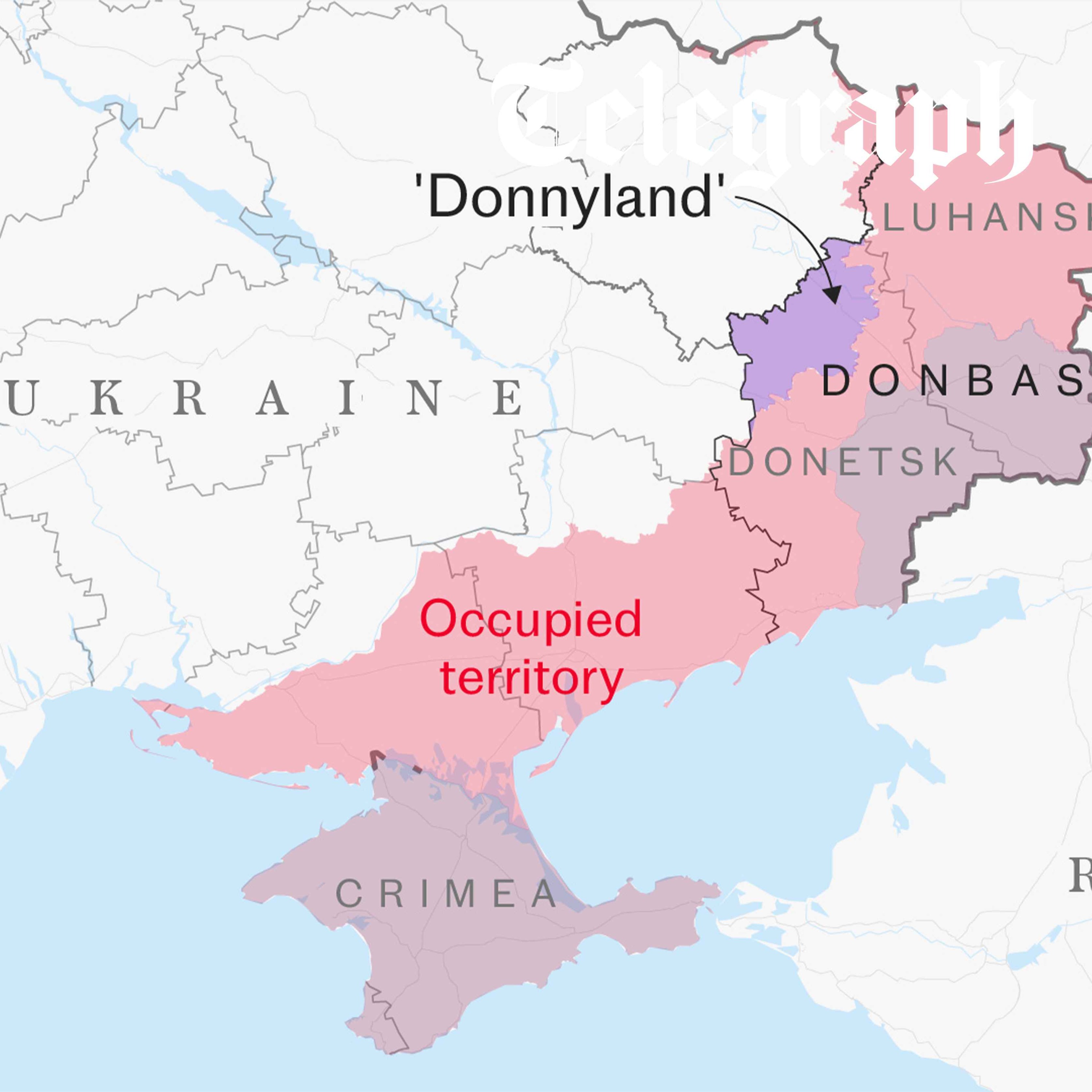
Ukraine: The Latest
Ukraine names territory ‘Donnyland’ to appease Trump & ‘breakthrough’ as EU approves €90bn loan for Zelensky
00:50:18
Loading summary
Transcript58 lines
- [00:04]
Joe Barnes
The telegraph.
- [00:09]
David Knowles
You're listening to this podcast, so I know you've got a curious mind. Here's a helpful fact you might not know yet. Drivers who switch and save with Progressive save over $900 on average. Pop over to progressive.com, answer some questions and you'll get a quick quote with discounts that are easy to come by. In fact, 99% of their auto customers earn at least one discount. Visit progressive.com and see if you can enjoy a little cash back. Progressive Casualty Insurance Company and affiliates national average 12 month savings by $946 by new customers surveyed who saved with Progressive between June 2024 and May 2025. Potential savings will vary what's the most
- [00:48]
Acast Advertiser
sustainable way to love fashion? It's changing the way you shop by shopping with the RealReal the RealReal is the world's largest and most trusted source for authenticated luxury resale. When you shop with the RealReal, you'll find the luxury brands you love like Prada, Celine and Loewe, all for up to 90% off retail. And when you're ready to refresh your wardrobe, you can sell the pieces you no longer wear to fund your next new to you finds. Buy. Sell. Repeat. Guilt free. The RealReal extends the lifecycle of luxury by by keeping coveted items in rotation. Sell to shop, Shop to sell with the RealReal. It's better for the planet and better for your closet. Plus, during Earth Month you can earn $100 extra when you sell with the RealReal. Go to therealreal.com to get started. Earn $100 extra during the entire month of April at therealreal.com that's therealreal.com terms apply.
- [01:46]
Dominic Nichols
Acast powers the world's best podcasts. Here's a show that we rec I'm
- [01:55]
Dr. Judy Ho
Dr. Judy Ho, clinical and forensic neuropsychologist, tenured professor, published author and your new host of Savvy Psychologists. I've built my career by putting psychology to work in private practice, the courtroom, the classroom, and in the public eye. Everything you loved about savvy psychologists is still here. An evidence based approach, a sympathetic ear, and zero judgment. We're going to share everyday mental health tips to keep you going, dig into the cultural moments everyone is talking about and deep dive into true crime through a forensic psychology lens. Search Savvy Psychologists on Apple Podcasts, Spotify or wherever you're listening and hit, Follow and subscribe.
- [02:37]
Joe Barnes
Acast helps creators launch, grow and monetize their podcasts everywhere.
- [02:43]
James Kilner
Acast.com.
- [02:49]
Francis Darnley
I'm Francis Darnley and this is Ukraine. The latest today. After months of backroom negotiations, delays and doubts, we go live to Brussels as the EU finally approves the 90 billion euro loan for Ukraine. How significant is this decision for Kyiv's war effort? And what happens now that the funding is secured? We also report on the proposal of Doniland, a suggested name for territory in Donbass, Ukraine, the May dedicate to the American president. And we round up the latest headlines from Russia to understand how developments are being portrayed in Moscow.
- [03:26]
Dominic Nichols
Bravery takes you through the most unimaginable hardships to finally reward you with victory.
- [03:36]
Francis Darnley
Russia does not want peace.
- [03:46]
Dominic Nichols
If I'm President, I will have that
- [03:48]
Francis Darnley
war settled in one day, 24 hours.
- [03:50]
Dominic Nichols
We are with you. Not just today or tomorrow, but for a hundred years.
- [04:00]
James Kilner
Nobody's going to break us. We are strong.
- [04:03]
Joe Barnes
We are Ukrainians.
- [04:05]
Francis Darnley
It's Wednesday 22 April, four years and 57 days since the full scale invasion began. And today I'm joined by our associate editor of Defence here at the Telegraph, Dominic Nichols, our Brussels correspondent, Joe Barnes and our Russia analyst, James Kilner. But before we go to Brussels to hear the latest from there in a very significant day indeed, first over to Dom for the military update. Dom, where are you? Are you in a brewery?
- [04:31]
Dominic Nichols
Yes, I am, Francis. I'm in the Ink Spot Brewery in Streatham in South London. One of the finest breweries I've ever been in, so do check it out. But yeah. So, Francis, you were talking yesterday about comments from the head of Russia's armed forces, General Valery Garasimov, about how successful his troops have been in recent weeks, retaking ground all over the place from Midway to D and B and Fu and Rorke's Drift and all the rest of it. Now, it looks like he might have been briefing from the wrong PowerPoint slide because the tempo of ops by Russian forces has basically slowed across the entire front and ground to a halt in most areas. Now, the reason for that, well, it's a combination the high casualty rate that we've been talking about for days, the relative low recruitment, that is they are still recruiting, Russia is still recruiting hundreds, you know, low thousands per day, but losing more than that every day for each day of this year so far. Also the increase in lethality of drones. And of course you have to remember when we talk about lethality, it's not just the drone itself, it's not just the aerial vehicle, the weapon. That is the sharp end, of course, but the effects that it's able to achieve on the battlefield are the culmination of all the technology behind the drone and the technology behind the wider system behind it, from procurement to targeting, training and everything in between. So put all those things together and that is why Russia is struggling on the front line now. Open Source Analysts Institute for the Study of war in the U.S. they say that the much vaunted Russian spring summer offensive of 2026 started no later than March 17th. But they say thus far it has failed to make any tactically significant gains. In fact, they say all that they've achieved is to have lost overall a net 10 square kilometers across the theater since it started. Now, 10 square kilometers isn't a huge amount. That just indicates how little the lines are moving, but also Russia's lost that. So this spring summer offensive that Gerasimov is trying to have us believe is, well, he's trying to have Putin believe is a huge success is demonstrably anything but. Now, the comical stupidity of his comments have not gone unnoticed by the Russian Milblock community. Many of them have been criticized in the practice of what they call claiming advances on credit. That is just rushing people forward with a flag infiltration events that we've been reporting every day, and then claiming they've taken this land, and then the commander of that unit has to back it up. We were told when we were last in Ukraine, when they hand over to another unit, they have to hand over the land that they say they've got. Therefore they're indulging in all these ridiculous assault to try and get that land. But I listen to all this craziness and I take heart. Now, there has been Russian innovation at ground level on the battlefield, mainly in technology. But the Russian culture throughout the chain of command is one of fabrication, corruption, lies, and just a complete refusal to provide an honest and accurate picture of the battlefield reality, which obviously is good for Ukraine. A system, a military system in contact with the enemy and in trouble like Russia is, needs brutal honesty in order to survive. Now, Putin has made three big bets. He bet on the U.S. let's say, be generous to say disinterest in Ukraine, if not outright support for Russia, would win him the politics. He bet the energy infrastructure attacks across Ukraine would turn society against Zelensky. And he bet that the meat assaults or the vegan alternative, these sort of infiltration events of two or three individuals would work on the battlefield. He's failed on all three of these things. We know now Ukraine considers Trump to be irrelevant. They smile sweetly, develop their own weapons, look elsewhere for the politics they've survived the winter and they'll do better next year or next winter. And we know Russian soldiers are dying in the Thousands each week. 1,140 casualties just yesterday. So Gerasimov in his words, when he's fostering this culture of inaccurate reporting, it just exacerbates Russia's problems here because they don't have the ground truth upon which they can have any chance of making a plan to maybe retake the ground or take any ground and take Kyiv three weeks after the start of the full scale offensive. So you know, I listen to Gerasimov and I think fine mate, you carry on fooling yourself, literally fooling your entire chain of command. That is only good for Ukraine. Now speaking at the front, keep continuing this theme. Unsurprisingly, very little movement at the front. Ukraine shot down OR brought down 189 of 215 drones yesterday. And there is some evidence that the recent increase in these Ukrainian mid range attacks. So there's no doctrinal number, but we think between 50 and 200 km. So not the immediate front line but not the big strategic long range attacks on the oil field. So in that sort of 50 to 200 kilometer ish area, Ukraine does seem to be having an effect. Voloshin, who's a spokesperson for Ukraine's Southern Defense Forces said that Russian troops have now been intensifying mining the coastline in Russian occupied Crimea to prevent a possible amphibious assault by Ukraine. Now speaking to the KYIV Independent yesterday, Mr. Bloschin said the beaches will now become minefields. You may remember Crimea's Coastline is huge, 760km, much of it already mined. The last time Ukraine was there in any significant force was in August 2023. So the fact that Russia is now having to concentrate on that just shows that they worry that Ukraine can get through continuing in the temporarily occupied territories. Russia has been accused of destroying a mass burial site near Mariupol and Mariupol City Council that are operating in exile since the start of the full scale invasion. Since they got out in 2022, they've been citing the center for the Study of Occupation. They say this area in Mangush, which is about 10 kilometers kind of west or west southwest of Mariupol, was one of the first mass graves. They say that area now appears to have been converted into what's described as a road repair site. They're looking at satellite imagery showing the change in the ground use there. Now the center has analyzed satellite imagery of the burial site taken between 2022 and and present day. And they estimate between 22,000 civilians were killed there during the 86 day Russian siege of Mariupol. This comes from, as I say, the. The city council in exile. They said in a statement the actual number of victims may be significantly higher. Russian occupiers are concealing the true scale of the losses as well as the war crimes committed during the encirclement, bombardment and occupation of the city. Russian authorities deny responsibility, as you may may expect, deny responsibility for any war crimes in Mariupol. Do not acknowledge any of those reported numbers. The death toll there. Now, speaking of Ukraine's coastline, the port of Odessa was hit last night by drones. The Odessa Regional State Administration said port infrastructure had been hit, damaged. There were fires that broke out. They were extinguished. No casualties reported. Sticking in Odessa, four draft officers were yesterday arrested on suspicion of abducting a man and demanding $30,000 in a bribe. This comes from the SBU, the security service of Ukraine, working in conjunction with the Prosecutor General's office. So in a statement, the SBU said the suspects extorted money from people. If the victims refused, the suspects resorted to violence and threatened to send them to the front lines as stormtroopers. On an expedited basis, the SBU says that these suspects have been acting on tip offs from another accomplice in an enlistment office who had been scouting out potential victims, gathering information about the financial position, tracking movements, that kind of thing. So an interesting and important arrest there. Now into Russia. The city of Syzron was hit again last night. There's no confirmation that I've seen yet this morning, but it's likely the oil refinery located in the city was the target. There are images on social media showing residential buildings that were said to have been hit during the attack. The Russian Ministry of Emergency situation says that 11 people were injured, including two children, following a partial building collapse during that attack. This is about 750 kilometers away from Ukraine. They say drones started to hit the city around 3am local time this morning. And also targets in. Well, you'll remember targets in the wider Samara Oblast were hit just overnight on Monday, Tuesday. That does seem to be an area that Ukraine's focusing on at the moment. Then just finally for me, you'll remember the oil part in Tapsi on Russia's Black Sea coast. It continues to burn three days after being hit for the second time. You'll remember it was hit last Thursday, burned for three days, was extinguished, we were told on Saturday. Then it was hit again on Sunday. That is still burning. It's Taking on a very opening scene of Blade Runner vibe. If you look at some of the images you'll find on, on social media, there's oil literally raining down on the city, covering houses, cars and people. And there's images of oil just running in streams down the roads. It looks, it looks absolutely apocalyptic. But that's the latest from the Frontline, Francis. And the latest from the Inkspot Brewery, I should say. More importantly, I'm doing important research, by the way. All this will become clear. I'm doing important research that you will find out about in the coming days.
- [13:37]
Francis Darnley
Yeah, there is a work reason for this, everyone, I promise you. Well, good luck with your research. Dom, thanks very much for your time. Go straight to Brussels then for the big news of the day. Kaya's only gone and done it. We've got the 90 billion past at last, Joe. A huge day, as I say. Bring us up to speed what's happened in the last 24 hours.
- [13:56]
Joe Barnes
Momentous. Momentous day indeed. So let's backtrack to yesterday. I think you probably would have covered it, but kaia Kallas, the EU's top diplomat, the Ukraine hawk, she basically touted the prospect of the EU finally agreeing to the deal to release the 90 billion euros loan to Ukraine, basically ending a long running Hungarian veto. So back in December, we spoke, I was on the podcast with you guys, we spoke about how Hungary had agreed to this loan. It had got itself an opt out, a carve out alongside Slovakia and the Czech Republic. But then came Viktor Orban's election campaign. It ramped up to the point where he was picturing Ukraine as the enemy, trying to drag Hungary into a war, starve its people, who of cheap fuel from Russia. All because the Druzhba pipeline, which runs through, partially through Ukraine into Central Europe, stopped delivering Russian crude oil after a strike, a Russian strike that is on the pipeline infrastructure. So at that point, Viktor Orban said, hang on, guys, I'm not involved in this loan, but I'm going to block it. I'm going to use the Hungarian veto, which technically and legally exists even though Budapest had an opt out.
- [15:18]
Francis Darnley
And that came as a huge shock, didn't it, Joe? There was an expectation that he would, as usual, pass it and he'd made promises to that effect and then he withdrew it because of the election campaign. And that's why we were in this position.
- [15:29]
Joe Barnes
Yeah, exactly. It was viewed as scandalous, a complete ripping up of the rules of good faith that exist within the EU's founding treaties. But after much wrangling four months to be precise. Ukraine this morning, that's Wednesday morning, told Hungarian oil refiners that flows of Russian crude oil would be arriving with them in hours. And as that news eventually went from Budapest to Brussels, that's when we got white smoke from the EU Council's Europa building where EU ambassadors were meeting in what's known as Co Repair 2 really boring techy stuff, but essentially that allowed them to sign off with Hungry's blessing on the loan and then they're doing like another techie step called written procedure, which essentially means that ministers don't have to come to Brussels and sign it off, they can do it in writing from their capitals via email. And that's only going to speed things up. So we expect the first tranche of this loan to arrive in Kyiv by the end of next month, which is really important because there's been all manner of warnings about Ukraine running out of money by arms to pump into its drone production infrastructure, which is crucial on the front lines and defending cities from shahed drones into buying things like artillery, ammunition, long range missiles. Because while Ukraine is developing its brilliant drone program, these missiles are still needed, more technologically advanced missiles still needed, like the Storm Shadow, like the Scout pg, potentially other missiles if, if Germany released the Taurus, but that's another story. And then more importantly, I think from a Ukrainian civilian population's perspective, these pearl packages that, that's that NATO scheme that buys American Patriot Pack 3 interceptors using European money to pay America for these weapons to take out ballistic missiles at massively important moment. This is going to give Ukraine 60 billion euros of weaponry over the next two years. That's an incredible amount which alongside other donations from other allies, individual from EU member states, from Britain, from Canada, from other countries, is fought to keep Ukraine in the fight for another two years. So massively significant moment. President Zelenskyy is having a moment of celebration while we're live on air, basically going along the lines of this is a really important moment. The deal is underway, we fulfilled our obligations, which is pumping oil. Now we expect the Europeans to also deliver what is needed for real protection of lives and for advancing Ukraine's full European integration. But I will go on to that a little bit later. Francis.
- [18:28]
Francis Darnley
Well, Joe, as you say, a huge day and you've written a piece summarizing what you were just talking about there, although going into more detail as well on some of these weapons systems that are likely to now be funneling through to Kyiv in short order. Before we come to the EU question about its membership. I just wanted to ask, I mean, we've been reporting on this podcast now for many weeks of the real fears in Brussels that countries were hiding behind the Hungarian veto and therefore this might be blocked by somebody else or at least delayed as they tried to get certain assurances. That hasn't happened, Joe. So what has happened to enable this to be possible?
- [19:04]
Joe Barnes
So if we cast our minds back to that December summit, I dialed in before the fantastic introduction of video every day from the Justice Lipsis building where EU leaders were meeting to decide on this loan. But initially this loan was going to be frozen. Russian assets being channeled, seized from European banks, mainly in Belgium, and given straight to the Ukrainians. That element was defeated due to very public opposition from Belgium, where the Belgian government, where most of the funds are held.
- [19:42]
Francis Darnley
And Germany, I believe, was also speculated to have been quite afraid of that, weren't they?
- [19:46]
Joe Barnes
I think not only Germany, the French, I think the British, if, if Britain were involved would have been concerned because the people who run these economic institutions would be telling governments, telling prime ministers, telling presidents that, hang on guys, this is going to mean, yes, it's great for Ukraine and it's what we believe in, but ultimately you are degrading your country's financial institutions and making them priors and it's bad for business. They were basically arguing. So EU leaders basically went and did something in tandem. They decided to loan money to Ukraine. Zero interest loan, probably never going to be paid back, to be realistic. But they also then agreed to freeze Russian assets indefinitely. And then some sort of language on the side that they would revisit the using Russian assets to pay for this loan in the future. But they clearly separated it. And I think over the last four months, while the Hungarian veto has been sort of the main element of the news, what has happened behind the scenes is it's enabled the people writing the legislation of this loan to basically explain, to say, look, at no point will this loan with this 90 billion euros actually involve anything to do with Russian assets that have been frozen in Europe. So basically building the confidence for countries who were concerned about that happening to say, look, guys, it's not connected. There are two separate decisions and that is the fact and it is the case. So that layer of expectation that money could be seized from Russia to pay for this loan has been sort of diminished and watered down, but it's ultimately enabled countries to vote it through in complete confidence without any concern. And we're not having sort of the ugly head of another veto coming from another direction. Rearing its head at such a crucial time. Look, and I think Ukraine would have liked the money earlier. It would have liked the certainty. But ultimately, people in Brussels who are speaking to the Ukrainians believe that it wasn't at that sort of point. Like, it came with the American supplemental where missiles and stuff were running out and money was running out. They sort of calculated it that Ukraine could last until maybe June with the help of other donations that have come in from allies, and it has done. Now it's going to get this massive rush of money and hopefully it's going to be spent on some really interesting things. And as Dom was speaking about, there's some new techniques being fostered on the front line, which is helping slow Russian advances and actually helping Ukraine claw back land. So I think we're in for quite an interesting time over the next six months before. Before next winter.
- [22:36]
Francis Darnley
Absolutely. Well, Joe, it all sounds so simple now, doesn't it? But this has been an ongoing issue, really, for so many months, since December and even before that because of the discussions that were taking place. So it does feel almost surreal that we finally crossed the Rubicon, as it were. But one final story before I go to a few other diplomatic updates and then bring in James. And this is about EU membership for Ukraine, another very, very significant one, and there's been some developments here as well, Joe. Yeah.
- [23:05]
Joe Barnes
So Vladimir Zelensky, Ukraine's president, is essentially buoyed and emboldened by Viktor Orban losing the election in Hungary and now dropping his veto on the loan. Viktor Orban, crucially, is using a veto to block another issue relating to Ukraine, and that is membership talks, whether Ukraine can actually open formal membership talks. And it's a very technical process, but so far Viktor Orban has been blocking that. So EU leaders are due to meet in Nicosia, Cyprus tomorrow, as part of the EU's rotating presidency. During a dinner, Vladimir Zelensky was meant to dial in remotely via video link, but he has now seen an opportunity and he's going to try and seize it. He's going to fly to Cyprus. I won't say he's going to gate crash the dinner, because he would have been invited if he had said he wanted to go, but he didn't really want to go. He only ever leaves Ukraine if he senses there's an opportunity for a victory of some sorts, because he doesn't want to leave his people behind at wartime unnecessarily. So he's going to land in Nicosia. And this was first reported by the Financial Times I've since had sources confirm it. And he is basically going to stare EU leaders in the eyes and challenge them to open proper negotiations over Ukraine's accession to the eu. He is going to argue that he has made a huge, huge concession to Brussels. And it was Brussels asking Volodymyr Zelensky to start pumping Russian oil, which, taking a step back, is funding Vladimir Putin's war machine into Hungary, into Slovakia, raising crucial cash for the Kremlin. So that's a huge concession for Ukraine to make. He is going to say, look, thanks for the 90 billion loan, that's fantastic. And I've done everything that you've asked of me to get this going. But I also think now is the time, with Viktor Orban's veto, a thing of the past, that we should actually take a step forward with EU membership. And is he going to have a chance? I think he might, he, he might get that actual moment, the formal negotiations where Ukraine can tick all of the boxes and say, look, we match this standard that you want us to match, we've matched this standard you want us to match. But crucially, what he's not going to get is what Ursula von der Leyen has pitched as a fast track membership process. Sort of out with the old bureaucracy and red tape, the lengthy tick lists, and just let's get Ukraine bundled in and we'll think about the technicalities later. EU countries are queuing up in their dozens. I don't think I have met any member state diplomat, official or leader who thinks the EU should get rid of its normal accession protocols and processes. So that's out the window. What Zelenskyy is going to argue for, though, is, and his foreign minister was giving a press conference, I believe, yesterday or so that's Tuesday or a Monday in Kiev, saying we won't go for half in, half out, sort of anything but full membership won't do. So Ukraine is going to try and get in as fast as possible, but it's going to have to recognize that actually nobody backs a quick fire recession which skips parts of the process. So France and Germany are interestingly brokering and putting forward proposals which would see Ukraine essentially become a associate member of the eu, where they would be allowed to attend meetings, their ministers would be in all of the ministerial meetings, Zelensky would go to summits, but crucially, they would be without voting rights and access to things like agricultural funds. But the Ukrainians don't seem to want that. They want the whole hog and they're going to fight for that. And that's what Zelensky is going to make the case for when he lands in Nicosia tomorrow night.
- [27:10]
Francis Darnley
Fascinating. Well, thanks for talking us through. It's a very complicated issue, Joe, so succinctly, we'll come back to you later on, but just a couple of other political updates for me to talk through before going to James for the latest from the Russian press. Speaking of the Druzhba pipeline, Putin is attempting to squeeze Europe's energy supplies further by temporarily severing the northern route, not to be confused with that one that goes through Ukraine into Hungary, which is on the south, within the next nine days. So cutting the continent off from oil as it faces supply disruption caused by the war in Iran, that matters, particularly for Germany, where that northern pipeline still supplies 17% of the crude oil, which reportedly provides around 90% of the fuel used by Berlin's cars. Now, if you're watching or listening to this in Europe and are wondering why the exorbitant oil price increase caused by the war hasn't actually entirely at least filtered down to your wallet yet, get ready. It's likely that companies will try to recoup their losses over the months and years ahead. So even if you're not feeling it in one sharp jolt, as it were, it will impact all of us. Now, my favourite story of the day is in the New York Times, where they report from inside the negotiation tracks still rumbling along in the background despite the lead US envoys Steve Witkoff and Jared Kushner focusing their attention on Iran because obviously a country with a population of 350 million people can only have two lead negotiators at any one time. Now, apparently in talks with the Americans, Kyiv's negotiators suggested that a slice of the country's Donbas, about 50 miles long and 40 miles wide, that Russia is still fighting for, could be named Doniland. An attempt to combine Donbas with Donald. See what they did there? We should be rolling our eyes, but it's this kind of stuff that, as we've seen multiple times, appeals to Emperor Trump. He still talks about him being called Daddy by Mark Rutter to this day. It's believed 950,000 people live in that territory Now. Others put the figure at around half of that. It's all part this strategy of the Ukrainians attempt to convince the Trump administration to push back against Russia's territorial demand demands. The term has apparently been used throughout the talks, though it's not known if it's been written down in any official documents. Negotiators have also floated the possibility of Trump's Board of Peace playing a role in administering that area, according to four people familiar with the talks. President Zelenskyy continues to point out that despite Wyckoff and Kushner's multiple visits to Moscow, they've still never been to Kyiv. There are hopes, as we've reported, that that will change over the coming weeks. But a source told the New York Times that the Americans were still waiting for enough progress to warrant such a trip and intend to make another visit to Russia, too. But let's take our minds to Russia properly now, if you can face it with our Russia analyst, James Kilner. This is Kilner calling, infamous creator of the Kilner Index, monitoring cucumber prices and Moscow's elevator health. Welcome, James. Always a pleasure to have you. Let's start with the Russian economy, a big subject at the moment. Where do you want to take us?
- [30:42]
James Kilner
Thank you, Frances. Yeah, it's all about the economy this week. There's been a lot of news coverage in the Western media and in the Russian media. Now, the interesting thing about the Russian media is reporting on the economy. And you have to remember that the Russian media is dominated by the Kremlin, but they have more leeway to talk more freely about the economy than they do about politics and the war in Ukraine, obviously. So they've really got their teeth into the Kremlin about the dire strait of the Russian economy. This week. It's been very noticeable, sort of the increase in negative headlines about the Russian economy in normally very pliant media. They're talking about crisis, a collapse. They're talking about how the managed decline that the Kremlin had tried to impose on the economy to fund its war in Ukraine has spiraled out of control and is far worse than forecast. I mean, the emotive language, if you're a Russian, you're used to these sort of mouthpieces praising Putin and the Kremlin all the time. This is going to be a shock. The important thing here, for instance, that it comes off the back of also quite a lot of negative headlines around censorship, which we'll come on to later in the program. Kremlin's attempt to ban Telegram to make VPNs, the piece of software that people use to skip around censorship, has also generated lots of negative headlines. So it's all coming together and creates this cacophony of anger towards the Kremlin, which is really important to take note of. There's also been some good reporting in the west about the. The dire strait of the Russian economy. The FT had an interview with Sweden's head of Sweden's military intelligence, and he had some interesting things to say. He said that although the Kremlin has benefited hugely in the short term from the war in Iran and the boost and the increase in oil prices, it's not going to have a sustained positive impact for the Russian economy. If the price of euros, that's the benchmark price for Russian crude oil, drops below $100 a barrel, which it did today, it's now 99.$98 a barrel. It's dropped because Trump has extended the ceasefire in Iran, et cetera. So already the sort of positive impact of the war in Iran on oil prices is coming to an end for Russia. He also made the point that Sweden's analysis is that the official rate of inflation in Russia is around 5.5%, 6%, that sort of thing. He reckons it's three times that. It's more about 15%. And, you know, I reference this a lot, but it is important. When I was in Russia in October 2024 for the Telegraph, one of the few British journalists have been there since the war started up, other than Steve Raisinboc and a handful of others. So based there, the overwhelming criticism of the Kremlin by people I spoke to was of increasingly high food prices, petrol prices, price of clothes, etc. This is a very serious economic issue for the Kremlin. You know, here we have the head of Sweden's miniature Intelligence basically confirming what we were reporting is probably likely to have been the case in the end of 2024. There's also a very good story in today's Telegraph about how Russia's banking sector, including a bank specifically set up to fund the war in Ukraine, Russia's defense systems from Sveyanzbank, they are basically running out of money. They need the government to print more money, they need to get bailed out or they're close to being asked to be bailed out. There's some data showing that Russian businesses have bad credit four times higher now than they did a year ago, and all this sort of thing. There was a quote from a former chairman of the bank of America who talks about how the Kremlin has watered down rules over lending and how it's created this whole system becomes too loose and the bank's control over credit has run out of control. And he said it's created a large pool of opaque, unmeasured and poorly managed default with risk at the heart of the Russian banking system. So a major warning there from someone who knows what they're talking about. Putin has admitted that Russia is going to likely face a recession this year. He's talked about 2 percentage points dropping off GDP in a year. Remarkable sort of omission there. Economists have pointed to even higher GDP retraction. Putin's also this week gone on record and sort of quoted the Great Patriotic War, that's Russia's name for World War II, and told people to work for the front to pull together for the Great Patriotic War. This sort of language now is becoming quite, not panicky, but it is becoming quite, well, very emotive. We've seen credit card issuance increase by 20% from last year. People are looking for credit. There's data showing that footfall in shopping malls is down again. It's 25% below pre Covid levels. Now, Sevastal, that's Russia's biggest steel manufacturer, seen its profit entirely wiped out last year, it's reported. And as for our elevator index, want of a better word, we've now had official confirmation and we've been reporting this for several years. We had official confirmation from the deputy chairman of the State Dumas Housing and construction committee that 55% all lifts in Russia. It's about 400,000 lifts are in disrepair because they can't afford to be maintained.
- [35:57]
Francis Darnley
Wow. That's a staggering, staggering number, isn't it? Well, as I say, it goes on the Kilner Index. So we're going to have to keep checking that you've got something now. You're going to have to consistently check for the coming months, James. So I don't know if you know what you've got yourself in for there. You mentioned censorship. And we actually had a question from a listener, which I'll come to in a moment, but perhaps you can just give us the latest on VPNs and telegrams first.
- [36:20]
James Kilner
Right, yeah. So the whole VPN saga, the fsb, Russia's fsb, has been given sort of carte blanche to crack down on the Internet and on any dissent and antiquity, Kremlin sort of campaigns that may or may not exist that, you know, they've decided that this is going to come through on the Internet on telegram, they've been ordered to crack down on it. But their VPN systems, they're trying to ban them. They're trying to ban people buying them. Trying to ban people from buying stuff using a vpn. They're hitting technical problems even. So it's created massive irritation in Russia, even sort of amongst the elite and amongst the presidential administration. There's been reports that Sergey Kuryenko, he's sort of Putin's go to man fixer. He goes around fixing problems in occupied Ukraine in frozen confidence. He was in Abkhazia earlier this year setting up a new airline, projecting Moscow's influence. And he's also the man that Putin's turn is to fix his elections. They've got an election coming up, regional elections, State Duma election coming up later this year. And Kidienko's guys have been complaining that they need the Internet operating, you know, relatively well, relatively openly and not crushed like, like the Kremlin and the FSB want, want it to be now to project their own propaganda. So we've got even sort of insiders complaining about this Kremlin crackdown on the Internet. And we know, and we were talking about this last week when we, for instance, how Putin's popularity has dipped because of his Crampdown on Telegram VPNs and general sort of, sort of social mobile Internet up and down again. This is generating bad headlines in normally pliant media. We've also had an interesting story about how Bulgakov, the great Russian, Ukrainian, Soviet writer over the first half of the 20th century, he wrote Master and Margarita, of course, a new biography of him, has fallen foul of the census. He was a doctor at one point in his life and became addicted to morphine. And that's fallen foul of new laws around the narcotics and sort of the quote, unquote, safeguarding of family values. We've seen this a lot in the publishing sector. You know, books by Virginia Woolf and even Stephen King. They've all been banned because they've had scenes. The census say they promote LGBT rights. What it is here is the Kremlin is trying to distance Russian family values from the west, trying to make out the west is a corrupt and morally sort of, sort of corroded place. You know, we referenced this already again. We've had more confirmation that Russians are now buying property in Minsk, in Belorussia, because they say the Internet is freer there than in Russia. Remarkable, really.
- [38:57]
Francis Darnley
Extraordinary. Well, Bulgarkov is a fascinating figure. He's somebody that we've done little miniature documentaries on in the past. I visited the Bulgakov Museum in Kyiv, which is a center in the. I hesitate to use the term, but you know what I mean when I say this culture war between Ukraine and Russia, because as you allude to James, he's a Russian speaking writer, but he wrote one of the four foremost books in Ukraine, lived in Ukraine, the White Guard, describing the Ukrainian revolution and as you say, Master and Margarita, another of his major novels. And so a really fascinating figure for seeing how Ukraine in particular is trying to navigate its relationship with great writers who've lived in the country in the past. So a figure worth us looking at. And I'll need to go back to the Bolgarhov Museum in Kyiv and see how they've been getting on because they've also come under attack, a lot of criticism for still existing by those who see Bulgakov as a figure of hatred because of his writing in Russian and being of Russian descent. But just staying on censorship. One moment, James, we had a question, as I say, from a listener, Tim from Australia. Thank you for writing in, Tim, longtime listener, first time caller. He says here I've heard you talk multiple times about Russian telegrams, bans and the push to get users onto Macs. You've raised many points as to the reasons. One reason I think you've missed is that the Duma passed a law last year allowing for call up papers to be sent via electronic means. I think the widespread use of Macs will allow for targeted mass conscription. So what do you think about that, James?
- [40:32]
James Kilner
Well, I think it's a good question from Tim, so thank you for the question. Since November 2024, Russia's had this digital conscription system. And the way it works is every person in Russia has a sort of digital inbox where the government, the state, sends them documents about tax road infringements, notices about work to their communal block which they might have to pay attention to. And also digital summons for the military, the conscription. They, you know, this can be this gen. This is normally accessed online. What Max has done, it won't deliver the summons to join the army, but it will give people an extra avenue through which to access their sort of inbox or want to another word. So Max is a super app, basically where the government wants to control who people talk to and where they move and, you know, understand what they buy. And they want Max to be that conduit. We know that students have to sign in for exams using Macs. Max is now mandatory for new phones bought in Russia. As we've reported quite heavily here on the podcast. Russians know that it's a form of censorship and they've been downloading Asian app messaging apps that skirt around it. So yes, I think the government wants people to access this sort of state inbox. Everyone's got state inbox to read their summons. But it's not the delivery mechanic.
- [41:54]
Francis Darnley
Well, thank you very much, Tim, for your question and James for your answer. Just before we go to our final thoughts with Joe again, a couple of other stories relating to foreign relations that caught your eye, James.
- [42:04]
James Kilner
Yeah, Frances, I'll rattle through these. So at the top, headline North Korea. There's a new road bridge, the first road bridge connecting North Korea and Russia over the Tuman River. It's 1km long. It's just open this week in time for the summer holidays. We know that Korea is desperately trying to lure Russian tourists onto the beaches in Korea and winter to the ski slopes. Apparently this bridge can take 300 kilos a day. Whether or not it's heavily used, we remain to be seen, but it is an important illustration of the increased partnership between North Korea and Russia. We know North Korea sent soldiers to back up Russia. So interesting story there in Armenia. The EU is promised to send another civilian mission to counter what it calls cyber attacks and illicit financial flows from Russia into Armenia ahead of an election there in June. I think this is the second or third specialist team that they've sent to counter propaganda. This team's going to be on the ground for two years, so they're expecting a long project there. Kaia Kallis, the European Commissioner for Foreign affairs, she announced this yesterday. So that gives a scale of the importance that the EU is putting behind this sort of thing. We know that this election in June is very much between Nicole Pashini and the standing prime minister who wants to join the EU and Russianists who want a closer alliance to the Kremlin. Kaia Kallis said Armenians are facing massive disinformation campaigns and cyber attack. We need to back them up. So, you know, the EU taking a strong line there in the US Senators there have also asked Meta, which owns Facebook, to counter Russian propaganda in Armenia. So it's really hotting up there. We keep talking about Armenia on this program. I think it's very important to keep it on the front burner. It is, as I've said previously, the sort of focus of the hearts and minds battle between the west and Russia. Currently in Georgia, we've had an interesting development there. We've had the prime minister of Georgia has had a phone call with Rubio, a US Secretary of State. This is the highest level communication between Georgia and the US since in Donald Trump's second term. Donald Trump sent JD Vance as vice president to south caucuses a few months ago. He didn't go to Georgia, went to Armenia and Azerbaijan, which are leaning more towards the U.S. georgia had been sort of increasingly thought to be siding with the Kremlin. The EU have dropped its secession plans. So this contact between the Prime Minister of Georgia Copperhede and Rubio is really important, sort of signify I think definitely worth watching. It's a bit early to fully understand what this means, but definitely keep an eye on that one. And then finally in Kyrgyzstan, Kremlin cryptocurrency exchange has been hacked. It's called Grinex. It suspended its operations and $13 million essentially stolen from it had to suspend its operations. It is a very important piece of Kremlin infrastructure. It's been used to basically support Russian export import trade. To skip around Western sanctions, they were trading a ruble peg. Cryptocurrency called A7A5. Greenex itself had been in operation since mid-2025 to replace a previous cryptocurrency exchange in Kirkzon, which had also been hacked and abandoned. Roughly. To put it into context, Frances Grinex was doing about a billion dollars worth of transactions a day.
- [45:19]
Francis Darnley
Wow. Well, thank you James. A really comprehensive overview of what's been going on in the last week or so with Russia and, and and those countries in in the Caucasus and Central Asia. So very much appreciated as ever.
- [45:31]
David Knowles
You're listening to this podcast, so I know you've got a curious mind. Here's a helpful fact you might not know yet. Drivers who switch and save with Progressive save over $900 on average. Pop over to progressive.com, answer some questions and you'll get a quick quote with discounts that are easy to come by. In fact, 99% of their auto customers earn at least one discount. Visit progressive.com and see if you can enjoy a little cash back. Progressive Casualty Insurance Company and affiliates national average 12 month savings by $946 by new customers surveyed who saved with Progressive between June 2024 and May 2025. Potential savings will vary.
- [46:08]
Acast Advertiser
What's the most sustainable way to love fashion? It's changing the way you shop by shopping with the RealReal. The RealReal is the world's largest, most trusted source for authenticated luxury resale. When you shop with the RealReal, you'll find the luxury brands you you love. Like Prada, Celine and Loewe. All for up to 90% off retail. And when you're ready to refresh your wardrobe, you can sell the pieces you no longer wear to fund your next new to you finds. Buy, sell. Repeat. Guilt free. The RealReal extends the life cycle of luxury by keeping coveted items in rotation Sell to shop. Shop to sell with the RealReal, it's better for the planet and better for your closet. Plus, during Earth Month you can earn $100 extra when you sell with the RealReal. Go to therealreal.com to get started. Earn $100 extra during the entire month of April at therealreal.com that's therealreal.com terms apply.
- [47:06]
David Knowles
Say hello to Samantha.
- [47:07]
Acast Advertiser
Hi there.
- [47:09]
David Knowles
Samantha built a SaaS platform that helps small businesses manage their workflow. But she needed a smarter way to reach decision making.
- [47:16]
Acast Advertiser
That's where ACAST came in. They helped me produce a professional audio ad which played to business owners and ops leads using their audience attributes targeting tools. Suddenly my platform was showing up in the ears of the exact people I needed to reach.
- [47:28]
David Knowles
Now that's streamlined marketing. Samantha, what's your tip for scaling smart?
- [47:31]
Acast Advertiser
Solve a real problem and make sure the right people hear about it.
- [47:35]
David Knowles
Promote your business with podcast ads on acast. Get started at Go Acast.
- [47:45]
Francis Darnley
Let's go to our final thoughts now then and come back to you, James, in a moment. But Joe, you've been very, very patient. I imagine you've been working away on your phone saying all the latest messages pinging in relating to the passing of the 90 billion, but you want to end with a story about a negotiator.
- [47:59]
Joe Barnes
You're right, I was on mute because I didn't want my phone to be pinging too much through the podcast. Great stuff, James, as always. Really fascinating stuff. Actually going to Armenia for the first time, which is going to host the European Political community meeting on May 4, I think so can report back from there for you. But yeah, I want to sort of speak for a sit down interview that I did actually quite a while ago now, but it got caught up in the Iran news. We're waiting for the perfect point to to drop it. And so in my job I often spend all of my time looking at the highest level of negotiations between the Russians, the Ukrainians and the Americans that drive by Donald Trump and his people to get a ceasefire between the Russians and the Ukrainians. That has shown, well, little to no progress whatsoever for various reasons, but there have been slight successes in talks between the Ukrainians and the Russian. So I dove in and was like, what are they? And it is essentially prisoner swaps. Both sides have had a steady stream of prisoner of war exchanges, whether it be 300, 175 quite frequent exchanges and going on. So I tracked down a guy who is behind these talks to facilitate the exchanges. There's A guy called Andrei Pasternak. He works for a division of the Ukrainian security services, and his job is essentially to help organize and facilitate these prisoners of war swaps. And it's what's really quite fascinating is how it is done. So I was speaking to him about how, like, how do you maintain relations with the relevant Russians? And he's like, well, sometimes we speak on the phone, and sometimes it's as simple as going on WhatsApp and sending a message or two. Other times is more treacherous and dangerous. And he described scenes of him traveling towards the front line where they had arranged a mini ceasefire, which sort of spread about 500 square meters so he could get to the front line, where he would meet his Russian opposite number, right in what he called the. The scene of the clash, as he called it. So right in the midst of things, he would arrange these mini ceasefires. And on one occasion, he said that they were coming under quite heavy mortar fire, that he had to go and contact the Russian he was meeting, going, excuse me, we need to get down to business here. We're not here to be fired at by your guys. And then suddenly the guns fell silent. I don't know if there are any Ukrainian negotiators who can convince the Russians to stop fighting like that other than Andrei Pasternak. And then I was like, sort of speaking to him through the process, and he was like, yep, look, I don't like these guys, but we've got a job to do. We've got all of these guys and women being held by Russia. We've got what Vladimir Zelensky calls the exchange pool or the exchange fund, so we can do these swaps and bring our guys back from captivity. He didn't say this, but other. Other Ukrainians have said this, that these Ukrainians have been held in Russian captivity, come back with signs of torture, signs of psychological distress. So physical torture and psychological torture. When, as we understand it, the Russians that are held in Ukraine are held in line with the Vienna Convention in relatively good conditions before their sort of swapped back. And then I was like, how do you also then convince the Russians and find these people to swap and get. How do you get in touch with these Russians? And one of the little anecdotes that Andre Pastak gave me was like, often we will speak to the Russian prisoners that we have. We will then go through their families in Russia who will get in touch with their original commanders, who will then get on to the higher authorities in Russia and help facilitate these swaps. So I urge you to have a read of the four stories. I don't want to take up too much time. I'm sure you'll put the link in the show notes, but I just think it's a really interesting look at one of the lesser discussed elements of negotiation, of diplomacy between Ukraine and Russia at a time when we are all focused on the bigger picture of ending the war. There are some successful deals being brokered between the two sides.
- [52:17]
Francis Darnley
Thanks, Joe. We certainly will add that link in the show notes and it's one of the most interesting pieces on this subject I've seen anywhere. So very, very much recommended that. It's fascinating. James, as our other guest today, where would you like to leave listeners? You've got the final word.
- [52:33]
James Kilner
Oh, thank you, Francis. Just a bit of news. Vladimir Putin today has renamed the FSB's Academy after Felix Dzhinski. He's the architect of the Red Terror, the Bolsheviks and then Stalin secret police who murdered millions of people. So his name is back on the, on the, you know, the front of the FSB's academy. It was taken off in 1992 after the collapse of the Soviet Union the year before during a period of more openness and sort of rebranding, general rebranding. But his name is back on it now. Putin said that Dzhinsky needed to be recognized for his outstanding contribution to ensuring state security. So I mean, I really think this is another colorful story which illustrates Putin's mentality and the censorship and the state control in Russian society.
- [53:24]
Francis Darnley
Yeah, colorful is one word for it, James. I mean, I remember studying him and I mean, during the civil war, the Cheka killed, it's estimated, hundreds of thousands of people in Russia. And the very fact that he's now being lauded as a, as a hero, as you say, in this fashion, in the same way that Stalin, of course, has seen his reputation recover immensely under Putin. Well, it says it all, doesn't it? As we always say on Ukraine the Latest, sometimes the metaphors write themselves. That's all we've got time for today. We'll be back same time, same place tomorrow. Goodbye for now from all of us. Ukraine the Latest is an original podcast from the Telegraph created by David Knowles. Every episode featuring us in the studio maps and battlefield footage is now available to watch on our YouTube channel. Subscribe@www.YouTube.com crane the latest there's a link in the description. If you appreciate our work, please consider following Ukraine the Latest on your preferred podcast app and leave us a review as it helps others find the show. Please also share it with those who may not be aware we exist. You can also get in touch directly to ask questions or give comments by emailing ukrainepodelegraph.co.uk we continue to read every message. You can also contact us directly on X. You'll find our handles in the description. As ever, we're especially interested to hear where you're listening from around the world. And finally, to support our work and stay on top of all of our Ukraine news, analysis and dispatches from the ground. Please subscribe to the Telegraph. You can get one month for free, then two months for just one pound at www.telegraph.co.uk Ukraine.
- [55:12]
David Knowles
The latest my name is David Knowles.
- [55:16]
Dominic Nichols
Thank you all for listening. Goodbye.
- [55:24]
David Knowles
You're listening to this podcast, so I know you've got a curious mind. Here's a helpful fact you might not know yet. Drivers who switch and save with Progressive save over $900 on average. Pop over to progressive.com, answer some questions and you'll get a quick quote with discounts that are easy to come by. In fact, 99% of their auto customers earn at least one discount. Visit progressive.com and see if you can enjoy a little cash back. Progressive Casualty Insurance Company and affiliates national average 12 month savings by $946 by new customers surveyed who saved with Progressive between June 2024 and May 2025. Potential savings will vary.
- [56:00]
Amyloid Advertiser
If you walk into a room and can't remember why, it could be nothing or something more. If you confuse a familiar recipe, it could be a slip up or or it could be associated with amyloid plaque buildup in the brain. Amyloid is a protein that your body produces naturally, but a buildup in the brain could lead to memory and thinking issues. To see what may be behind your memory and thinking issues, talk to your doctor about getting a full assessment. It's never too early to start the conversation. Visit amyloid.com to learn more.
- [56:32]
Dominic Nichols
ACAST powers the world's best podcasts. Here's a show that we recommend.
- [56:39]
Brooke Devard
Hello hello, it's Brooke Devard from Naked Beauty. Join me each week for unfiltered discussion about beauty trends, self care journeys, wellness tips and the products we absolutely love and cannot get enough of. If you are a skincare obsessive and you spend 20 plus minutes on your skincare routine, this podcast is for you. Or if you're a newbie at the beginning of your skincare journey, you'll love this podcast so as well. Because we go so much deeper than beauty. I talk to incredible and inspiring people from across industries about their relationship with beauty. You'll also hear from skincare experts. We break down lots of myths in the beauty industry. If this sounds like your thing, search for naked beauty on your podcast app and listen along. I hope you'll join us.
- [57:22]
Joe Barnes
ACAST helps creators launch, grow and monetize their podcasts everywhere.
- [57:28]
James Kilner
Acast.com.