← Ukraine: The Latest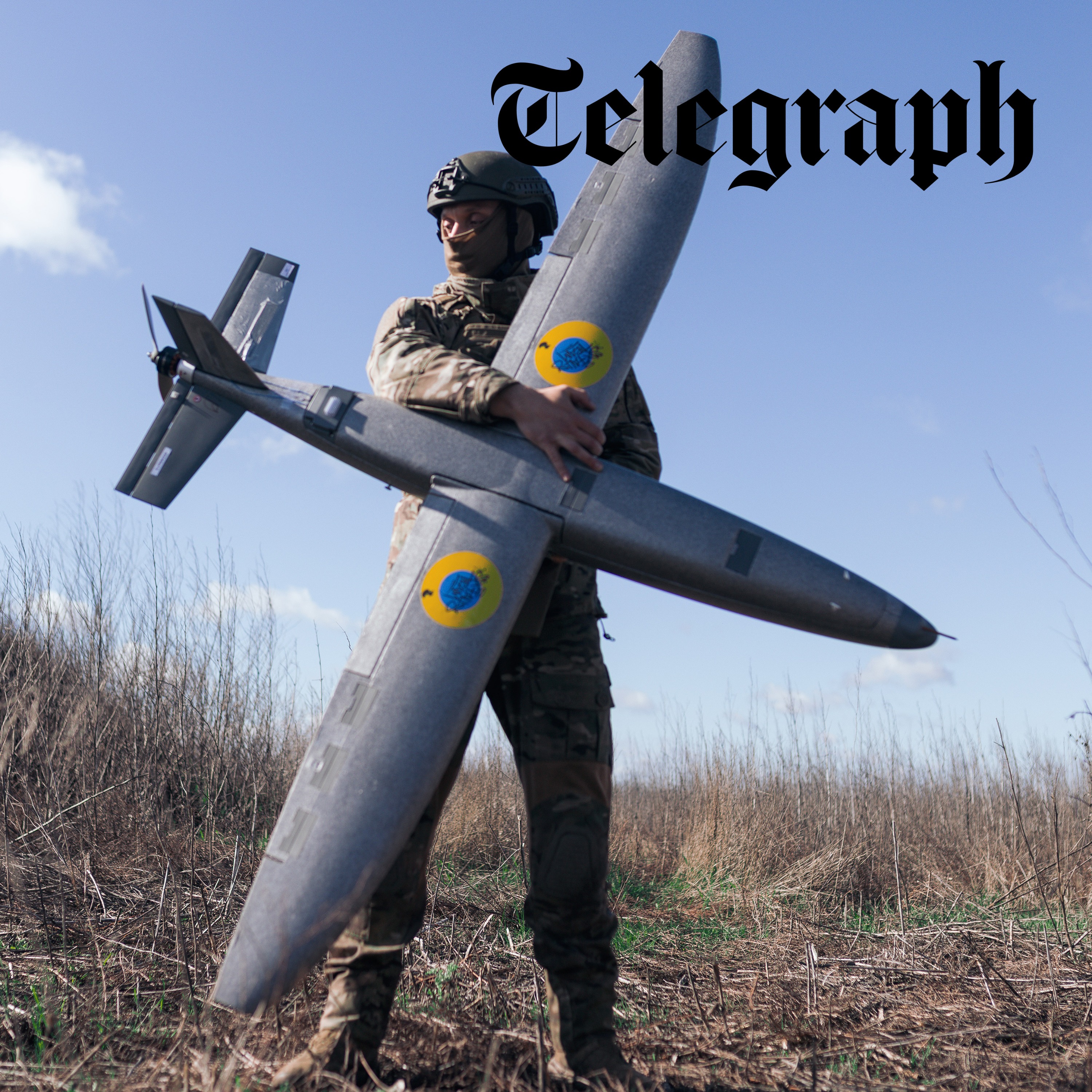
Ukraine: The Latest
Ukraine praises Trump Iran ceasefire: ‘now it’s Russia’s turn’ & Hungary election dispatch
00:39:10
Loading summary
Transcript122 lines
- [00:04]
Dom Nichols
The telegraph.
- [00:09]
Brooke Devard
Hello? Hello, it's Brooke Devard from Naked Beauty. Join me each week for unfiltered discussion about beauty trends, self care journeys, wellness tips and the products we absolutely love and cannot get enough of. If you are a skincare obsessive and you spend 20 plus minutes on your skincare routine, this podcast is for you. Or if you're a newbie at the beginning of your skincare journey, you'll love this podcast as well. Because we go so much deeper than beauty. I talk to incredible and inspiring people from across industries about their relationship with beauty. You'll also hear from skin care experts. We break down lots of myths in the beauty industry. If this sounds like your thing, search for naked beauty on your podcast app and listen along. I hope you'll join us.
- [00:53]
Acast Announcer
ACAST powers the world's best podcasts. Here's a show that we recommend.
- [01:01]
Henrik
Hi, I'm Henrik and I make a podcast called Fall Asleep with Henrik. It's for people who can't sleep and it's just me. I talk for about an hour. I improvise. No script, no music, no advice, nothing you really need to do. You don't even have to listen to be honest. Just put it on and let yourself drift. Fall Asleep with Henrik is available wherever you get your podcasts.
- [01:31]
Acast Announcer
ACAST helps creators launch, grow and monetize their podcasts everywhere. Acast.com.
- [01:43]
Dom Nichols
I'm Dom Nichols and this is Ukraine. The latest. Today, like many other countries, Ukraine responds to the news of an apparent but very opaque ceasefire between the us, Israel and Iran, with Foreign Minister Andrei Sibier saying, without a shred of irony, American decisiveness works. We report on an FBI operation to protect U.S. citizens from Russian cyberhackers and take in the aromas of a fishing port in northwest France, where Breton fishermen are donating their old nets to Ukraine to help build road tunnels to protect against drones. And later, we have the second part of Francis special report from Hungary.
- [02:21]
Hungarian Politician
Bravery takes you through the most unimaginable
- [02:26]
Hungarian Official
hardships to finally reward you with victory. Russia does not want peace. If I'm president, I will have that war settled in one day.
- [02:44]
Peter Satari
24 hours.
- [02:45]
Dom Nichols
We are with you. Not just today or tomorrow, but for 100 years.
- [02:55]
Jack Myers
Nobody's going to break us.
- [02:57]
Hungarian Politician
We are strong.
- [02:58]
Jack Myers
We are Ukrainians.
- [03:00]
Dom Nichols
It's Wednesday 8 April, four years and 43 days since the full scale invasion began. And today I'm joined by the Telegraph's Executive editor for audio, Francis Durnley. I'll start with the news from Ukraine. The death toll from the attack yesterday that we reported on a civilian passenger bus by Russian forces in Nikopol in Dnipropetrovsk Oblast, has increased to four, with at least 24 injured. A reminder, this was an attack by an FPV drone. First person view drone, meaning a human pilot, specifically selected that bus as a target. Dnitropetrovs Oblast military administration head Oleksandr Hansa G gave the update yesterday, adding that a second strike against a civilian bus about 5km east of Nikopol had injured a further five civilians. This area is just upriver from Kherson, where Russia has been conducting the drone safari, deliberately using drones to either drop munitions or directly strike civilians. There have been reports that this is a tactic to train or bed in new drone pilots. It is also clearly illegal and repeated acts of murder, a state of affairs willfully ignored by many world leaders right now. That took yesterday's toll of dead and injured across Ukraine to 13 and 77 injured. 24 of 176 drones fired by Russia got through. 60 were launched at Kharkiv, where authorities say an oil refinery in the city of Mareva was hit. That's just outside Kharkiv city to the southwest. It caused significant damage on the ground. There was no move on the front. There were some minor changes in both directions. 1,030 Russian casualties were caused yesterday, says the Ukrainian General Staff. They say Russia has now lost just over 1.3 million soldiers dead, wounded, taken prisoner and missing. That includes at least 16 Cameroonian nationals that officials in the African countries say have been killed fighting for Russia. It is very difficult, as we always say, to get statistics for Ukraine, but. But most recently, President zelensky told France TV on 4 February that at least 55,000 Ukrainian soldiers have been killed in action, with many more injured and missing. The Kyiv Independent are today quoting a report from January by the American think tank, the center for Strategic and International Studies, that said Ukraine has likely suffered between half a million and 600,000 casualties up to December last year, of which between 150 and 140,000 are thought to be killed in action. Just to add to that, there's an interesting note today from the International Institute of Strategic Studies, a think tank based here in London, that they say to try to address the low infantry staffing levels, Ukraine has been investing heavily in uninhabited systems. They use the phrase uninhabited. You'll see unmanned or drones, what have you. It's all very gender neutral. We just say drones here. Now the I double s say that Ukraine's Unmanned Systems Forces and that is the specific name for that group. Just to confuse things, the Unmanned Systems Forces has grown to a an estimated 20,000 strong. Every Ukrainian maneuver brigade so brigade being about 5,000 personnel split between infantry and armor or mechanized. Every maneuver brigade across the service has at least one dedicated aerial drone company, about 100 people or battalion, about 500 people. Maneuver battalions within these brigades also have a dedicated platoon sized drone unit, about 30 people we are told. Now in 2025 the IISSA Ukrainian Armed Forces created dedicated ground drone units as well and their use has significantly increased compared to the year before. Unmanned ground units or uninhabited ground units. Ground drones now conduct a significant share of supply runs to the zero line, the front line if you like. They do medical evacuations and even frontline reconnaissance and assault missions. Now the ISS say that both Russia and Ukraine are still capable of sustaining their military efforts throughout 2026 and a collapse by either side remains unlikely. Now sticking on drones and Ukrainian drones from the 414th separate unmanned systems Brigade hit a maritime oil facility in Feodosia in Russian occupied Crimea earlier today. Unmanned Systems Forces commander Robert Magyar Brovdi has said this is the first time this year that plant has been hit. It was last hit in October and November 2025. This is far southeast of Crimea, about 50K's southwest of the Kirch Bridge. It explosions in the city were reported by residents about 1am local time today. There are a number of videos showing that a fire is taking place at what's believed to be the local oil depot. Crimean Wind Telegram channel says at least two storage tanks at the oil terminal have gone up in flames. Now at sea, there's an odd little story from the Kyiv Independent that says Ukraine has detained a suspected Russian Shadow Fleet vessel in Odessa. Now the ship's owner is under Ukrainian sanctions and allegedly attempted to evade restrictions by repeatedly changing the ship's name and nominal own ownership through third countries. So far so normal with the Shadow fleet. However, the ship was detained in Odessa's commercial port after arriving under the flag of an African country reportedly to load a shipment of steel pipes. At the time of the SEIZURE There were 17 crew members on board, including the captain, all citizens of Middle Eastern countries. It is a very old captaincy decision if you know you're under sanctions to then actually go to the country you are sanctioned by and not expect your vessel to be impounded. But there we go. Now on the diplomatic front, Ukraine has welcomed the two week ceasefire between the United States and Iran, saying now's the time to pressure Russia into ending the war in Ukraine, too. Foreign Minister Andrei Sibir said American decisiveness works. We believe it is time for sufficient decisiveness to force Moscow to ceasefire and end its war against Ukraine. President Zelenskyy said the ceasefire was the right decision, taking the opportunity to highlight Ukraine's role in protecting Gulf states and from Iranian drones and reiterating his offer of a ceasefire, he said Ukraine has always called for a ceasefire in the war waged by Russia here in Europe against our state and our people. Ukraine tells Russia once again we are ready to respond in kind if the Russians stop their strikes now then today NATO Secretary General Mark Rutte is in the White House. He's going to meet Donald Trump. He's also going to see Secretary of State Marco Rubio and Pete Hegseth, the Secretary for Defense. He's going to give a speech tomorrow at the Ronald Reagan Presidential Foundation Institute. We should expect lots of questions from reporters about potential US Pulling out of the alliance and NATO support for ensuring security in the Strait Hormuz, especially in the wake of the total obliteration of Iran Slash they still control the Strait and need all the help we can get and the forthcoming NATO summit in Turkey in July. Another story from the U.S. the FBI and the U.S. justice Department have announced the launch of Operation Masquerade to disrupt Russian GRU attempts to steal government, military and critical infrastructure information. The GRU is Russia's military intelligence. Now, in a joint statement that we'll link to in the episode notes, they say that since at least 2024 a cyber unit within Russian military intelligence known AS Military Unit 26165, also known as APT 28 or Fancy Bear or Forest Blizzard or a host of other names they go by, have been conducting cyber attacks worldwide. The GRU compromised routers used in homes and businesses to steal emails, passwords and authentication tokens of high value intelligence targets, the FBI say in a statement. They said given the scale of the threat we needed to act. The FBI operation cut off GRU access to compromised routers in the US and prevented re exploitation. The FBI will continue to work with international and private sector partners to identify GRU cyber activity and impose costs on the state sponsored actors who target the American people. Assistant Attorney General for National Security John A. Eisenberg said the GRU's predatory use of networks in American homes and businesses for its malicious cyber operations remains a serious and persistent threat. U.S. attorney David Metcalf for the Eastern District of Pennsylvania said, in the face of continued aggression by our nation's state adversaries. The U.S. government will respond just as aggressively. Working with the FBI and our partners around the world. We are committed to disrupting and exposing such threats to our nation's cyber security. It's all very odd because I thought the US and Russia were pals now. Certainly post Alaska. Anyway, what do I know? Now another story you'll remember. We've reported on it numerous times over the last couple of years. The sale of Chelsea for football club. Just a reminder, back in May 2022, owner Roman Abramovich was sanctioned over alleged links to Vladimir Putin. He was forced to sell the football club, but the funds have been in limbo ever since. There's been a four year delay in releasing the money after a falling out between the government over the remit of the charity that's going to be set up to disperse the funds. The British government are insisting Mr. Abramovic uses the 2.35 billion pound proceeds for humanitarian support for Ukraine. But the charity that's going to be set up is thought to be acting on the wishes of Mr. Abramovich that says that humanitarian support will be provided everywhere, including Russia, obviously diluting the aid to Ukraine. Now, a British diplomat with ties to one of Prime Minister Sokhir Starmer's top advisers has been named as a trustee of the proposed charity. Martin Griffiths has ties to Jonathan Powell. Mr. Powell is Britons and the Prime Minister's national security advisor. Mr. Griffiths is going to sit on a board for the Abramovich backed global fund that wants the remit of the frozen cash to be widened. This is a decision that is going to test the government's refusal to allow the funds to be spent in places other than Ukraine. Does the Prime Minister lean on Jonathan Powell to lean on his old acquaintance Martin Griffiths? Or does Sir Keir Starmer come out of this looking a little bit toothless? We of course will keep you updated. Now let's go down to France where Breton ports have donated 932 miles of netting to Ukraine for drone nets protecting roads in eastern Ukraine. The Telegraph's Paris correspondent Henry Samuel says that in just the recent weeks, two consignments of nets measuring a total of around 200 kilometers left Brittany for Ukraine to be used to protect soldiers and civilians along the front line. Patrick Leroux, the mayor of Quiboron, stubbed out his GWA and said, here in France our values are liberty, equality and fraternity. And we cannot conceive of one people being attacked like that by another country. It puts old nets to good use. And for them it helps them defend their country. So it's actually a really wonderful project, 23 year old sailor Matis Prono said of the Ukrainian people. We have to show them solidarity because they didn't ask for any of this. Now the initiative is led by Tetiana Richter, a Ukrainian woman who is head of the Ukraine Breton Sud charity, who arranged the transfer with her Breton husband's haulage and logistics company. She said they protect schools, maternities, but also tanks and Starlink units which are the first to be targeted. She said the army particularly likes the transparent or green ones as drone pilots can't spot them easily. Even if they do, she says they get stuck in the nets, they can't get through, so they're very pleased. By way of thanks, she said one generous local French donor had received a Russian combat drone ensnared in a fishing net as a gift okay, now that's it for the updates. Now I note with interest a story in today's Guardian headlined JD Vance accuses EU of interference as he visits Hungary to help Orban win election. It's not exactly subtle, but it's very clever and I look forward to watching EU leaders campaigning for Democrats ahead of the midterm elections later this year if they so wish. And I also look forward to JD events having absolutely no problem with that whatsoever if such a thing were to happen. Anyway, today we bring you Francis second report from his recent visit to Hungary and thanks again to Elliot Daly for his recordings.
- [14:56]
Francis Durnley
Thanks, Dom. Peter Satari works in the Hungarian Foreign Office as State Secretary for Security Policy and Energy security, but from 2013 to 2018 he was Hungary's permanent representative to NATO in Brussels. A veteran diplomat, therefore he has a clear sense of the country's red lines in Ukraine, something I was keen to push him on.
- [15:18]
Peter Satari
Unfortunately, this war is going on in our neighborhood, but we don't think that the right thing to tackle this is to weaken our own defense and to continue supporting Ukraine in a way which does not help it to win the war. But we just prolongs the war and the result of this will be another 100,000 Ukrainians dying on the front and Russia making further military advances. And at the end of the day we will be at the same demarcation line. Very frankly this is the real politic, but the mainstream political debate and language is very different from that because people don't want to confront reality.
- [15:56]
Interviewer
Just one thing to pick up on something you said that in a year's time we'd be at the same Demarcation line. But the only reason that we're at the current demarcation line, which you're portraying here is quite favorable to Hungary, is because of the weapons that have been sent in by Western countries which you've just disavowed. So I'm just trying to. What is your stated peace objective for the war in Ukraine? Can you articulate how, for Hungary's interests, how you want this war to end?
- [16:22]
Peter Satari
There's no good solution anymore. We are in the middle of a situation. For us, what is important that there is a Ukraine which stays able to be a sovereign country on our eastern border. This is our interest. The longer the war lasts, the smaller the chance for that we have. Western Europe says that we have to close the communication with the Russians because they are not legitimate partners. What Trump says is that there's no peace without Russia. So we have to take them to the table, bring them to the table and treat them as a legitimate partner, because otherwise there is no solution to the conflict. It's very ugly, actually. But this is the reality here now. And it's really against Hungary's interest that the war continues in terms of economy, security, our minority community. You may have heard about it in Transcarpathia in every turn.
- [17:10]
Interviewer
You said that the outcome of the war is effectively guaranteed in terms of Ukrainian sovereignty, but it's not necessarily guaranteed. Because if, as Hungary argues, there were a rapid withdrawal of military support for Kyiv in the name of securing peace, then you can imagine worst case scenarios. And I just wonder, what are Hungary's red lines in Ukraine? Because there must be some for your own interest in the worst case scenarios.
- [17:35]
Peter Satari
It's not up to Hungary to solve the crisis. It's up to the people.
- [17:38]
Balash Orban
You must have interest.
- [17:39]
Francis Durnley
You must have red lines.
- [17:40]
Peter Satari
I told you what's our interest? To have a Ukraine as big as possible on our eastern border. We welcome any proposal which bring us closer to peace, but don't ask me to solve the conflict because I'm not able to do that. And Hungary would be too overambitious to to do that. Our interest is to stop it and have Ukraine as healthy and as big as possible. I don't know how we can get there. It's up to the big powers and to Ukraine what it can accept. President Zelensky, of course, positioned himself. He took a position which says that he doesn't give up on anything from the beginning of the war, which I understand because he's the leader of Ukraine. But now in the situation, he has to be realistic and he has to see how he can save the rest of Ukraine. That's what I'm talking about. But I don't have the solution for what will be the details of all this. And if Russia asks NATO to withdraw from its NATO members, I don't think that's a realistic demand.
- [18:33]
Francis Durnley
Balash Orban, who is not a relation of the Prime Minister, believe it or not, is a Hungarian lawyer, university professor and a politician who has been serving as political director for viktor Orban since 2021. In a podcast in 2024, he drew parallels between the invasion of Ukraine and the Hungarian resistance to Soviet rule in 1956. But during that discussion he remarked that based on the trauma of 1956 for Hungary, something I covered in the first documentary we produced on the country, the Hungarian government today probably, he said, would not have done what Zelenskyy did because it appears that he placed his country on the defensive, resulting in numerous casualties and and significant territorial losses. In other words, he would not have recommended resistance to the invasion. He since went back on those remarks, but I was keen to press him on what he believes Ukraine should have done then, when the full scale invasion
- [19:28]
Interviewer
began in 2024, you said it was irresponsible for Kyiv to resist the Russian attack, citing your experience in 1956. Are you therefore saying that the experience of 1956 is such that it was
- [19:46]
Balash Orban
a mistake the uprising?
- [19:48]
Interviewer
And what option did Kyiv have in your view? You think they should have just capitulated?
- [19:55]
Hungarian Politician
So I understand that there was a kind of a turbulence around the statement, but when I was saying it was very true. We Hungarians are attacked several times that because of 56 we should join the war camp and support military the Ukrainians. I don't think it's true. That's statement number one. That's a different story. That's a different issue. That's a different situation, that's a different life. The second one is about the Ukrainian strategies. So Ukrainians have the right to decide their own future, even the leaders, and they decide the future. But we have the right to ask questions. And there is one thing which comes immediately in my mind in 2022, the Ukrainians and the Europeans who were, and the Westerners back at the time use this general term, were saying that Ukraine with such a strategy will win that war. And this is why it's makes sense to follow that strategy and not going back to the negotiation tables. This was the promise. We heard it several times, European Council meetings, not just defending the country, but kicking and destroying the Russians regime. Change in, in Moscow, Putin must fail. I'm quoting, that was the strategy. And what happened since then? We are in war for four years. Hundreds of thousands of people died, millions injured. The country collapsed financially. It lost its completely its independence. And the Russians are controlling more territory than in 2022. So what I, what me as a Hungarian politicians are saying, not to the Ukrainians because I don't have anything to discuss with them, but to our European colleagues, is that what the hell we are doing? And I think we are following the path which is a. Or we are on the road which is. Which leads us nowhere. We are desperately trying to warn them and trying to ask for recalculation of failed plan. And this is what I said in 2040 and it is much more true now today in 2024, and I think it's much more true 2026.
- [22:17]
Interviewer
But irresponsible is a very strong word to use. What is your answer to what Ukraine should have done when the full scale invasion began?
- [22:26]
Hungarian Politician
I've been with the Prime Minister in Kyiv when they had the meeting with President Zelensky and courted them to other meetings with Russian officials. So what we see is there is a Russian propaganda which is saying that the Russians want peace, Ukrainians want to fight, they want war. And there is a Ukrainian propaganda many times distributed by Western US as well, which is saying that the Russians want war and the Ukrainians want peace. We Hungarians, we think that none of it is true.
- [23:05]
Interviewer
Respectfully though, that's not what I asked. I asked what should Kyiv have done on the day that the full scale invasion began?
- [23:13]
Francis Durnley
Should they have resisted?
- [23:13]
Interviewer
In your view, how can you negotiate when they start?
- [23:17]
Hungarian Politician
There were negotiations on the first day of the invasion.
- [23:19]
Francis Durnley
I'm talking about on the 1st.
- [23:20]
Dom Nichols
There were before and there were afterwards negotiations.
- [23:23]
Hungarian Politician
You all know Istanbul, you all know Istanbul were meetings Ukrainian, Russian officials. I'm just questioning the success of the strategy. And I think at the end we owe even the Europeans to be accountable. We were pushing and the Prime Minister United Kingdom was personally pushing the Ukrainians to start negotiation and to sign up for their strategy which led us to that desperate situation. What is going on right now in Ukraine, there is political responsibility. It was a fair strategy based on failed culprit which caused many likes for no reason.
- [24:04]
Interviewer
I understand the Hungarian position. I genuinely do understand what you are saying, but it's very simple. Do you think the Ukrainians should have fired back when they were attacked or not?
- [24:14]
Hungarian Politician
I'm Hungarian. I'm responsible for the Hungarian people, the Ukrainians.
- [24:18]
Francis Durnley
But it's fundamental.
- [24:19]
Hungarian Politician
The Ukrainians can decide freely what they do. But me, as a Hungarian, I have the responsibility to judge the consequences on my nation. And as an intellectual person, I have the responsibility to talk about this in the international Iranian to try to convince our European partners and NATO partners, with whom we are in the same aligning system, that what we're doing about the war from a strategical point of view is a failure. And this is what I'm expressing every time.
- [24:51]
Interviewer
Just one last question for me. Can you just describe for me your interpretation of the events of 1956 and its significance and justification?
- [25:01]
Hungarian Politician
1956 was the uprising against Soviet occupation and it was a very powerful moment
- [25:07]
Interviewer
of our nation and it was justified in your and a good thing.
- [25:10]
Dom Nichols
Yeah.
- [25:11]
Hungarian Politician
Ukraine. Ukraine is not part of NATO, not part of eu. They have every right to decide to fight, but it's not our fight. And they are not defending Hungarian interest and not defending Hungarian sovereignty. They are defending their interests and they are defending their sovereignty, which is completely different. So what we think is NATO is an important and useful tool and alliance structure. We should strengthen it if we can. Those sides are pro war. Both sides, Russians and the Ukrainians. The Russian propaganda says they are ready to peace. The Ukrainian and the Ukrainians are not. The Ukrainian propaganda, backed by the Western propaganda says Ukrainians are ready for peace. Russians not. Both of them are not telling the truth. Truth is ok. Experience is that they both have the argumentation why they continue the fight. This is what we have to change. I would be very proud if we can get some European allies on board with that. Unfortunately, now we are only together the United States and some other smaller base laborers.
- [26:23]
Francis Durnley
The last speaker you're about to hear is Lawrence Naska, the State Secretary for Hungarian communities living abroad. Now, while that may sound like a niche issue, the Hungarian community in Ukraine, who would once have been within Hungary's borders in the past century or more, is one of the key causes of friction with Kyiv. Despite them being Ukrainian citizens, Budapest sees them as dual citizens and therefore partially Hungary's responsibility. They are opposed, therefore, to Kyiv's efforts to recruit them in the Ukrainian armed forces and believe that the Ukrainian government is oppressing them by encouraging education in the Ukrainian language rather than the Hungarian. While little reported beyond Hungary within Orban's government, this is talked about frequently, which is why we're keen to hear this issue discussed on the podcast.
- [27:16]
Hungarian Official
So a little bit about Hungary and communities abroad and our national policy on that, because very short historical background as Hungary has lost two thirds of its territory after the First World War and one third of the Hungarian population. So that's the historical background. In 1920, the Strianon Peace Treaty, we didn't want to participate the First World War. And we didn't want to participate in the Second World War, even though we did so losing the First World War, that was our punishment that we lost 2/3 of our territories, almost 70% of our mines and forests. So the nation's wealth. And of course, that's why it's a historical reality from the last 100 years that we are surrounded with ourselves. So Hungarian communities living around the Hungarian border here in the Carpathian Basin, we have huge Hungarian communities in Slovakia, in Ukraine, in Romania, in Serbia, and smaller communities in Croatia and Slovenia. And after 2010, when we came into power, we legally speaking, reunited the nation. We adopted the double citizenship law. So we are allowing all these Hungarians with Hungarian roots to have their Hungarian citizenship. Sometimes the other country is not allowing them to have double citizenship. So for example, with Slovakia right now, it's not working. So the Hungarians in Slovakia, they are not Hungarian citizens. But most of the Hungarians in Romania, most of the Hungarians in Serbia, they are Hungarian citizens. And for example, in the Ukraine or in Serbia, who are not EU members. This is an EU passport as well, and an EU citizenship. And that's the case in Ukraine as well. Because we have a region there called Transcarpathia. It's the western part of Ukraine, the most western part of Ukraine. You know, when you see the map and you see the Carpathian Basin, the western part of Ukraine, there are big mountains, really big mountains. That's the Carpathian Mountains there of the part of the Carpathian basin and west from these mountains, this is Transcarpathia, originally belonged to Hungary. And all the Hungarians in Ukraine living in Transcarpathia before the war, it was a 150,000 community. So 150,000 Hungarians lived in Transcarpetia. Of course, after Russia attacked Ukraine, some of them are left. And here they are here in Hungary or in other states. We received a lot of refugees because they considered as refugees, of course, not like the southern borders. And what we experienced that a lot of them went back as well. After they spent here a couple months or maybe even a year, and they went back to Ukraine. So the Hungarian community in Transcarpatia, now it's not 150,000, but somewhere in 100,000 or something. They have schools, they have kindergartens, they have churches. They have very broad civil society in their historic land. And I want to go ahead and avoid your Question about our relationship with Ukraine. In 2014 and 15, Ukraine introduced two piece of legislation which is hurting the minority rights very much. Before that, we were the first one among the European countries who signed and supported the Ukrainian visa free program for European Union. So they don't need visa entering the European Union. We were the first one. We were among the first five signers to sign the EU Ukraine partnership agreement in 2014. So we were a big supporter of Ukraine getting closer to this kind of integration. All the citizens can come freely without a visa to Hungary and to the European Union. Of course, for a lot of them, the first border to coming to the European Union is the Hungarian border. Or they have the possibility of the Slovak border, the Polish border or Romanian border here, nearby. And then they introduced an education law and the language law, which redact a lot the minority language rights, the primary school and the high school education. So we have an ongoing minority issues debate about linguistic rights, about, for example, when you have a private radio, online or normal radio, whatever, if you have a minority radio like you speaking Hungarian, Hungarian topics, Hungarian music, Hungarian podcast, anything, you are allowed to speak in your own radio, like 10% of the time in your language and 90% of the time you have to speak in the state language, which is not public radio. We provide a lot of humanitarian aid and we always doubled the humanitarian aid. Like five trucks of food went to Transcarpatia. Then five trucks of food went to Ukraine, to the Ukrainian, very Ukrainian territories inside Ukraine, when we provided medicine for them. Two tracks of medicine to Transcarpathia, to the Hungarian committees, two tracts of medicine of the Ukrainian. And of course, for 10 years now, since the Crimea war, we every year have more than 1,000 Ukrainian children having their summer camps here. We are organizing and paying their summer camps here in Hungary.
- [33:03]
Interviewer
In your dream scenario, what would you want these Hungarian citizens, as you define them, to do? Would you want them to remain in Ukraine even after the war is over? Or would you want them to return to Hungary?
- [33:16]
Hungarian Official
Being in your motherland, on your motherland, it's a good thing. So building a life there.
- [33:20]
Interviewer
Can you just define what you mean by motherland?
- [33:22]
Francis Durnley
Do you mean here, within the national
- [33:24]
Interviewer
border, Hungary or born, where they're born?
- [33:26]
Balash Orban
Okay, sorry.
- [33:26]
Interviewer
That's an important distinction.
- [33:27]
Hungarian Official
Okay, where they born? Yep, their lands. I think what we support is to have a perfect full Hungarian life in another state, in Romania, in Serbia. It's not just Ukraine. We support Hungarian schools and Hungarian sports teams and Hungarian cultural association of folk dancers. Because the Hungarian folk dance is different. Than the Romanian folk dance. So you cannot unite two different folk dances. So that's why we support cultural associations in Ukraine, in Romania and Serbia to do Hungarian folk dances, because they preserving. When you look at the map of the ancient Hungary, it's very different regions, very different. They didn't do their dances as we did in our childhood here in Budapest. Different regions and different clauses, different traditions, different architecture, different landmarks, different cultural heritage. And we want to preserve that for the future. It's a piece of Hungarian cultural heritage and we want to preserve that.
- [34:31]
Interviewer
Is this a niche issue or is
- [34:33]
Francis Durnley
this a major issue of conversation with
- [34:35]
Interviewer
regards to Hungarian attitudes towards the war?
- [34:36]
Hungarian Official
To be honest, we didn't push this agenda since the war started. Before that, on every international forum, we wanted to fight this kind of discriminative laws of the Ukrainian parliament since the war started. We didn't push these topics because we want. They have bigger fish to fry, of course, sadly. And then we can come back to the table, we can come back to the negotiation room. Then we can have some kind of new deal about. That's my hope. The war would end soon and then we can meet the current with the new Ukrainian army session. I don't know can have this conversation about minority rights. I hope that it would be with good results.
- [35:19]
Francis Durnley
But just in terms of the public conversation, I mean about the war in
- [35:23]
Interviewer
Ukraine, does Hungarian people know this?
- [35:26]
Francis Durnley
They know about this and this is a major issue for them in terms
- [35:29]
Hungarian Official
of their attitude currently. I don't mention as a major issue, but they are absolutely clear about the past 10 years. So yet it's part of the.
- [35:40]
Interviewer
It's part of the conversation. But what is the major defining issue that shapes public opinion here with regards to war?
- [35:47]
Hungarian Official
Would you say to end it? You can see the good things and the bad things at the same time. Absolutely.
- [35:55]
Interviewer
What are the good things? What are the good things that Ukraine has done?
- [35:58]
Hungarian Official
I think that what I think Ukraine already won in one aspect because for now it's completely sure that there will be a sovereign in Ukraine after the war. Now it's. I'm 100% sure that there will be a sovereign country called Ukraine, even if
- [36:19]
Interviewer
they're receiving the financial.
- [36:21]
Hungarian Official
Now it's sure, okay, because I don't know its borders, its population, its government, its financial state. I don't know that. I think nobody can. But that's what you can state. So I think it's a heroic movement.
- [36:37]
Interviewer
Sorry, I'm just confused because you were just saying that it wouldn't be a sovereign state if it's being financed from its allies in Europe.
- [36:43]
Francis Durnley
But you're saying now it's not sovereign state.
- [36:46]
Hungarian Official
No, they are not in a sovereign status currently, but after the war they will be, of course.
- [36:51]
Interviewer
Okay, so that's a. And that's what.
- [36:55]
Hungarian Official
It's the Hungarian common sense and knowledge that it's a good thing having something between Russia and Hungary.
- [37:02]
Interviewer
Sure. No, forgive me though. That's a statement of analysis. That's not sort of some. A statement of they've done this. Well, criticizing the Ukrainian.
- [37:10]
Francis Durnley
What is.
- [37:11]
Interviewer
What have the Ukrainians done?
- [37:12]
Hungarian Official
It's their result because without their resist it wouldn't be like this.
- [37:16]
Interviewer
So it's their do you praise and you praise that. You praise their resistance.
- [37:20]
Hungarian Official
I never praise killing. I'm a Christian man. I never praise kill killing.
- [37:24]
Francis Durnley
Even in self defense praise.
- [37:25]
Hungarian Official
It's praise. But the praise is a very, very strong word.
- [37:28]
Interviewer
What word would you use?
- [37:32]
Hungarian Official
I think with military speaking I don't have to praise or compliment or criticize a military action. It's not my job. My job is to help their communities, Hungarian communities there. And my job is to. What I can see the situation. I don't know if you have been in Ukraine in the past six months, for example, what I think there, it's good. It would be good for the Ukraine to end this war. The people of Ukraine, it would be good for them to end this war. That's what I. Not just the Hungarians I talk about. I met with Ukrainians as well here in Budapest, there as well. It would be good for them to end this war.
- [38:18]
Tim Spangler
Leadership used to mean having all the answers. But today's best leaders embody a more human approach.
- [38:22]
Jack Myers
I'm Jack Myers.
- [38:23]
Tim Spangler
And I'm Tim Spangler.
- [38:24]
Jack Myers
Tim and I have spent our careers inside media, marketing and culture and we
- [38:29]
Tim Spangler
partnered with the ACAST Creator Network to start Lead Human to answer one simple question. What does it really look like to lead in this AI dominated world?
- [38:39]
Dom Nichols
The biggest tip for being a creator, it's a job. What I learned from Michael Jackson, here's a man who understands precision.
- [38:46]
Jack Myers
It's about answering the questions that are hard, not about answering a bunch of teed up questions that are fake.
- [38:51]
Tim Spangler
What we're looking for are real stories and practical advice that you can use with your teams right away.
- [38:57]
Jack Myers
Subscribe to Lead Human with Jack Myers and Tim Spengler wherever you get your podcasts.
- [39:02]
M Speaker (Unknown)
Lunch was great, but this traffic is awful.
- [39:06]
N Speaker (Unknown)
Can we stop at a bathroom?
- [39:07]
M Speaker (Unknown)
Are you all right?
- [39:08]
N Speaker (Unknown)
And keep having stomach issues after eating like diarrhea, gas and bloating, abdominal pain and sometimes oily stools.
- [39:15]
Creon Advertiser
Sound familiar? Those stomach issues may actually be a pancreas issue called exocrine pancreatic insufficiency, or epi. Creon may help manage epi. Creon is a prescription medicine used to treat people who can't digest food normally because their pancreas doesn't make enough enzymes.
- [39:31]
Creon may increase your chance of fibrosing colonopathy, a rare bowel disorder. Tell your doctor if you have a history of intestinal blockage or scarring or thickening of your bowel wall, if you are allergic to pork or if you have gout, kidney problems or worsening of painful swollen joints. Call your doctor if you have any unusual or severe gastrointestinal symptoms or allergic reactions. Take Creon's by your doctor and always with food. Do not chew capsules as this may cause mouth irritation. Other side effects may include blood sugar changes, gas, dizziness, sore throat and cough. These are not all the side effects of Creon. Call 800-633-9110 or visit creoninfo.com to learn more. That's C R E O-N-Info.com I'm asking
- [40:00]
N Speaker (Unknown)
my doctor about EPI and if Creon
- [40:02]
Acast Ads Academy Announcer
could help Want to upskill in one of the most effective ad channels out there? With Acast Ads Academy, you can learn everything you need to plan and run podcast advertising campaigns completely free. Whether you're new to audio or ready to sharpen your skills, our self paced courses fit your schedule and finish with an industry recognized certification. So if you want to grow your expertise and stand out in a competitive industry, head to go.acast.com forward/academy.
- [40:32]
Dom Nichols
Thanks Francis and now onto final thoughts. Only me today. Sorry about that, but I'll point you to the NATO website. We'll put a link in the episode notes where they are offering an internship under a banner that says Apply now for Internship at NATO Headquarters in Brussels starting in March or September 2027. It says the deadline to apply is 30 April 2026. The blurb then says that NATO offers six month internships to applicants in the third year of their university studies or recent graduates of a bachelor or Master's program. Internships apply to a broad range of expertise and skill sets, providing opportunities in areas like political affairs, defense and security, operations, communications, a load of other bits and pieces. These internships are going to be taking place at NATO headquarters in Brussels in Belgium, which the blurb says is an exciting city. I'm not so sure about that, but the beer is pretty good. They say it's a meeting point for many European and other international organizations and a hub of activity and networking for young professionals. As I say, we'll put the link in the episode notes. If you apply for that and you get it, do let us know what it's like or what the application process is. Be absolutely fascinating. Okay folks, that's it for today. Thanks for joining us. We'll be back again same time, same place tomorrow. Do hope you can join us. Thanks for your company.
- [41:50]
Balash Orban
Ukraine the Latest is an original podcast from the Telegraph created by David Knowles. Every episode featuring us in the studio maps and battlefield footage is now available to watch on our YouTube channel. Subscribe@www.YouTube.com crane the latest there's a link in the description. If you appreciate our work, please consider following Ukraine the Latest on your preferred podcast app and leave us a review as it helps others find the show. Please also share it with those who may not be aware we exist. You can also get in touch directly to ask questions or give comments by emailing ukrainepodelegraph.co.uk we continue to read every message. You can also contact us directly on X. You'll find our handles in the description. As ever, we're especially interested to hear where you're listening from around the world. And finally, to support our work and stay on top of all of our Ukraine news, analysis and dispatches from the ground, please subscribe to the Telegraph. You can get one month for free, then two months for just pound one at www.telegraph.co.uk Ukraine the latest my name is David Knowles.
- [43:03]
Hungarian Official
Thank you all for listening.
- [43:05]
Dom Nichols
Goodbye.
- [43:12]
Acast Announcer
Acast Powers the World's Best Podcasts Here's a show that we recommend.
- [43:20]
Knox
Do you like being educated on things that entertain but don't matter? Well then you need to be listening to the podcast with Knox and Jamie. Every Wednesday we put together an episode dedicated to delightful idiocy to give your brain a break from all the serious and important stuff.
- [43:33]
M Speaker (Unknown)
Whether we're deep diving a classic movie, dissecting the true meanings behind the newest slang, or dunking on our own listeners for their bad takes or cringy stories, we always approach our topics with humor and just a little bit of side eye. And we end every episode with recommendations on all the best new movies, books, TV shows or music.
- [43:49]
Knox
To find out more, just search up the podcast with Knox and Jamie. Wherever you listen to podcasts and prepare to make Wednesday your new favorite day
- [43:55]
Hungarian Official
of the week,
- [43:59]
Acast Announcer
ACAST helps creators launch, grow and monetize their podcasts everywhere acast.com
- [44:07]
M Speaker (Unknown)
Lunch was great, but this traffic is awful.
- [44:10]
N Speaker (Unknown)
Can we stop at a bathroom?
- [44:11]
M Speaker (Unknown)
Are you all right?
- [44:12]
N Speaker (Unknown)
And keep having stomach issues after eating like diarrhea, gas and bloating, abdominal pain and sometimes Oily stools.
- [44:19]
Creon Advertiser
Sound familiar? Those stomach issues may actually be a pancreas issue called exocrine pancreatic insufficiency, or ep. Creon may help manage EPI Creon is a prescription medicine used to treat people who can't digest food normally because their pancreas doesn't make enough enzymes.
- [44:35]
Creon may increase your chance of fibrosing colonopathy, a rare bowel disorder. Tell your doctor if you have a history of intestinal blockage or scarring or thickening of your bowel wall, if you are allergic to pork, or if you have gout, kidney problems or worsening of painful swollen joints. Call your doctor if you have any unusual or severe gastrointestinal symptoms or allergic reactions. Take Creon as directed by your doctor and always with food. Do not chew capsules as this may cause mouth irritation. Other side effects may include blood sugar changes, gas, dizziness, sore throat and cough. These are not all the side effects of Creon. Call 800-639110 or visit creoninfo.com to learn more. That's C-E-O ninfo.com I'm asking my doctor
- [45:05]
N Speaker (Unknown)
about EPI and if Creon could help
- [45:09]
Acast Announcer
ACAST powers the World's Best podcasts. Here's a show that we recommend.
- [45:16]
Farnoosh Tarabi
With so much uncertainty in the economy, we need to rely on experts we can trust. So Money, hosted by me, Farnoosh Tarabi, is a Webby Award winning podcast now in its 10th year. The new York Times calls it one of the most respected personal finance shows out there. As a financial journalist for more than 20 years and best selling author, let me tell you it is a privilege to produce this show and whether you want to save more, invest or negotiate a better salary, I've got you covered with fresh episodes three times a week. And here's something extra. I'm giving away a free money call to one lucky listener every week. A chance for you and I to talk one on one and create a personal plan for your goals. Listen and subscribe to Sew Money wherever you get your podcasts.
- [46:01]
Acast Announcer
ACAST helps creators launch, grow and monetize their podcasts everywhere. Acast.com.