← Ukraine: The Latest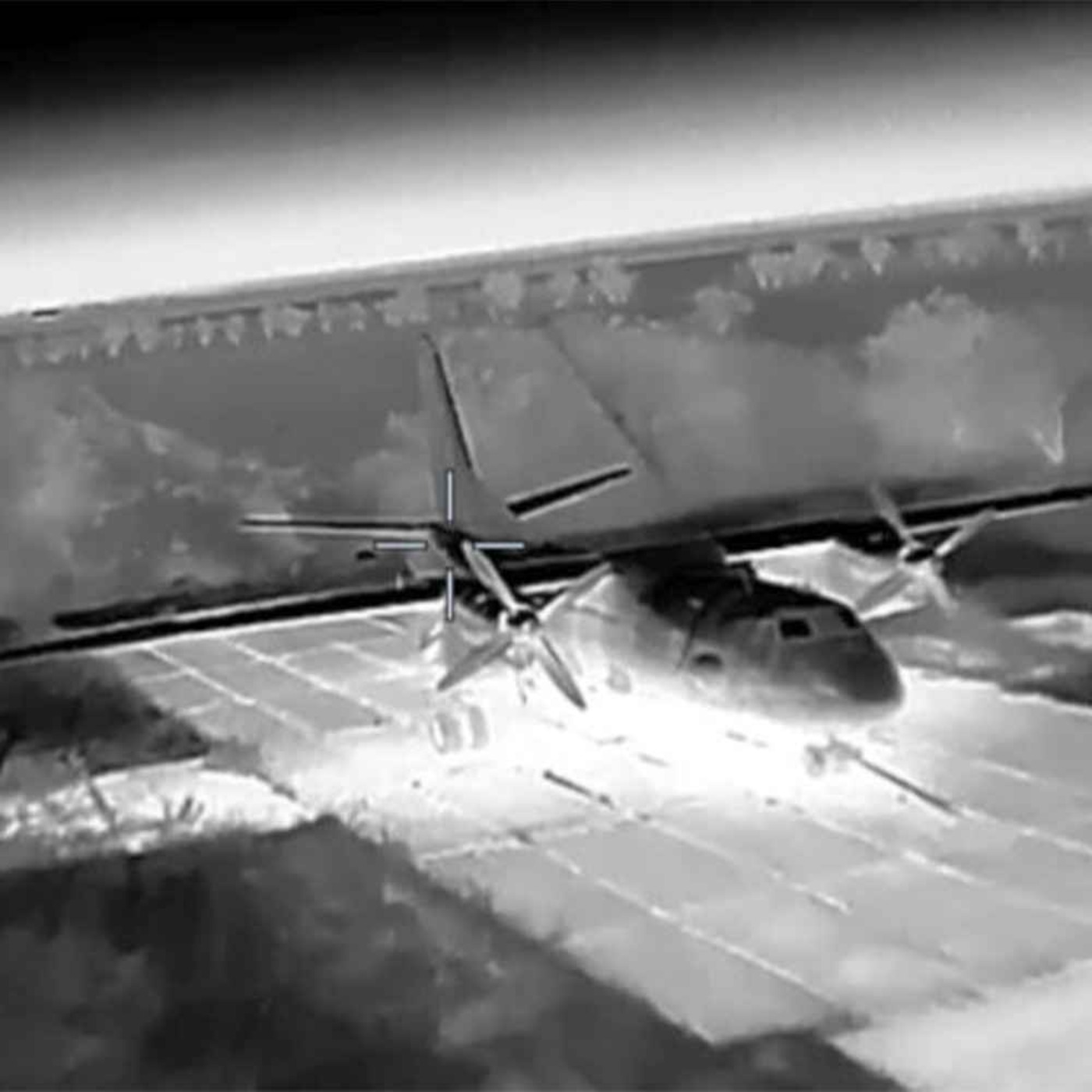
Ukraine: The Latest
Ukraine ravage Russian aircraft and radar stations in occupied Crimea & Denmark reports ‘hybrid attack’ on major airport
Loading summary
Transcript27 lines
- [00:04]
A
The telegraph.
- [00:10]
B
I'm Dom Nichols and this is Ukraine. The latest today as drones once again cause alarm in Denmark and Ukrainian strikes inside Russia add to Putin's fuel woes. We report on President Zelenskyy's speech yesterday at the United nations. And later we hear from Dr. Jay McGlynn for our regular update on resistance activities in the occupied territories. Bravery takes you through the most unimaginable.
- [00:37]
C
Hardships to finally reward you with victory.
- [00:42]
D
Russia does not want feast. If I'm president, I will have that.
- [00:54]
B
War settled in one day, 24 hours. We are with you. Not just today or tomorrow, but for 100 years.
- [01:06]
A
Nobody's going to break us.
- [01:07]
B
We're strong.
- [01:09]
A
We're Ukrainians.
- [01:12]
B
It's Thursday the 25th of September, three years and 215 days since the full scale invasion began. And today I'm joined by the Telegraph's Executive editor. For audio, Francis Darnley and Dr. Jay McGlynn of King's College, London. I started with the latest diplomatic activity in Europe. Let's go to Denmark. Drones have flown over multiple airports across Denmark last night, causing one of the airports to close for a number of hours. The incidents, which occurred late on Wednesday, two days after that so called drone attack forced Copenhagen airport to shut up, were a systematic and hybrid operation by a professional actor. Denmark's Defence Minister said earlier this morning. Trolslund Poulsen told a press conference there can be no doubt that everything points to this being the work of a professional actor when we are talking about such a systemic operation in so many locations at virtually the same time. This is what I would define as a hybrid attack using different types of drones. Now, Ms. Lon Paulsen said there was no evidence to suggest Russian involvement as of yet, but he did say the drones were launched locally. It's unclear where they were deployed from, but he said they've not come from a long distance. Peter Hornegaard, who's Denmark's Justice Minister, he said the Danish armed forces were looking to acquire enhanced capabilities to detect and neutralize such drones. They were spotted at Denmark's airports in Aalborg, Espjeurg, Sonderberg and at the Skridstrup air base. Just before leaving the airspace late on Wednesday, police said Aalborg Airport, which is one of the biggest ones, after Copenhagen was shut down for several hours, the country's armed forces were affected as Aarlborg is a joint military and civil base now. Speaking about that incident, North Jutland Chief police Inspector Jesper Boggyard Madsen said it's not possible to take down the drones which flew over a very large area over a couple of hours. Skridstrup, that's in southern Jutland, is also the base for Denmark's F16 and F35 fighter jets. Police there said they could not specify the type of drones or if they were the same ones that flew over Copenhagen Airport on Monday. Now, Mr. Paulson's comment there about they've not come from a long distance. Got many people in the open source intelligence community looking at maritime and air traffic, including me and Gaz, Gareth Caulfield here. And we noticed this morning, looking around, we saw a Finnish Coast Guard helicopter had a very close look at a Russian flagged vessel, Astral One, that's a Russian flagged general cargo ship. Now a couple of hours ago, Gaz and I were watching this flight, this Coast Guard vessel and we were checking the maritime tracking websites. I've seen a number of open source reports alleging the Astral One may have been connected to these drone flights, suggesting that perhaps the drones came out of containers, a bit like Operation Spiderweb. But maritime traffic goes through Danish waters and drones fly off. And that's the suggestion. The Astral One is sanctioned by the US if you have a look at the maritime tracking websites, you'll see from Monday north of Danish waters. It had a very, very odd track. It was very uneconomical with its use of fuel, put it that way. It was stooging around all over the place. Either that or the captain had been on the Medvedev again. The Finnish Coast Guard helicopter went out we think just did one pass of it looking at the track and is then back in Helsinki now linked to that. Turkey says it sent an E7 Peace Eagle airborne early warning aircraft to Lithuania on Monday in response to those drone incursions over Eastern Europe. This is Turkish officials talking to Bloomberg. So it's very, very hot at the moment on the drone incursion, testing airspace, etc. Etc. Unless it's all completely innocent and these are just hobbyists, but we will, we'll keep you updated. Right, let's go into Russia and Ukraine's military intelligence department said they'd struck Russia's oil terminals in Trapsee and Novorossiysk on Tuesday. Now Novorossiysk is about 70ks southeast down the Black Sea coast from the Kirch Bridge and and Tuapsi is about another 100ks or so further along. So a source in the Hua speaking to Kyiv Independent said naval drones targeted key logistics facilities belonging to the aggressor state on the Black Sea coast. Together the facilities have an export capacity of 2 million barrels of crude oil per day. Now the Caspian pipeline consortium confirmed that its Novorossiysk office was damaged in the strike. That consortium is a joint venture of Russian, Kazakh and international companies. They operate a pipeline carrying oil from Kazakhstan's western fields to Novorossiysk Sea terminal and then out to the world. You will find very dramatic footage online from the attack. You see a maritime drone, Ukrainian drone, inside the port infrastructure, maneuvering around in the calm water inside, being shot at and then veering to one side and exploding against one of the oil loading piers. Now other unverified footage that I've seen shows buildings reportedly on fire in central Novorossiysk. Russian authorities reported two deaths and six injuries in the city and say a local hotel about 2km away from the port and at least five other nearby buildings were damaged. No way of verifying that now still in Russia. And Ukrainian drone struck a chemical plant in Russia's Krasnodar Krai region last night. That's to the east of Crimea, sparking a fire and forcing an evacuation. This comes from Russian independent media outlet Astra reporting. Regional officials said debris from the attack ignited the blaze there. Local Russian authorities did not name the facility, but Astra says it was the Eurochem Belarusensk fertilizer site, one of the largest fertilizer producers in Russia that also produces components for ammunition manufacturing. Russia's Defense Ministry said it had intercepted 55 Ukrainian drones over Rostov Oblast, Krasnodar Krai and occupied Crimea, as well as the waters of the Black Sea and the Sea of Azov. Now regarding the ongoing Ukrainian campaign against Russia's oil sector. Russian pro government media outlet Kommersant reported Yesterday that around 50% of gas stations in occupied Crimea have stopped selling gasoline due to fuel supply disruptions. They're citing monitoring data from 17,000 Russian gas stations and said shortages were also recorded in other regions. But they said the situation was most acute on the peninsula in Crimea. I've seen other reporting alleging fuel restrictions have now reached Moscow and St. Petersburg. So it is really starting to be very obvious sticking on the peninsula Crimea. Back to reporting from the, from the Hur, from military intelligence, Ukraine's military intelligence. They said this morning they'd destroyed two Russian An26 transport aircraft. The big Antonov, well, they're propeller driven, but they're pretty big Antonov transport aircraft and two radar stations in a drone attack. In a post they put on social media, they said how well the Moscovites AN26 transport aircraft burn. Watch the video. So I did, I watched the video and I would say almost certainly one aircraft and one radar station definitely hit the footage from the attacks on the other aircraft and the other radar station less clear. Do go and have a look for yourself. Comes after last Sunday's attack in Crimea where three Russian Mi8 Hip helicopters and another radar station were hit in Crimea. And on Monday, remember those two BE12 Cheka amphibious aircraft were were hit. All points to a lack of Russian air defense in and around Crimea. The question of course is can Ukraine turn that local, perhaps very local, limited air superiority to their advantage. It's worth noting connected to all this that the Ukrainian Air force said earlier today they'd shot down a Russian Su34 fighter jet in Zaporizhzhia Oblast about 4am local time. They said the warplane had been attacking the city of Zaporizhzhya with guided aerial bombs at the time of the strike. Now into Ukraine and a lot of this reporting comes from freelance journalist Tim White. So Tim, thanks for this. Attacks across the country yesterday in Kurovrad region right in the center of Ukraine, he said three villages were without power after a number of drone strikes. The city of Alexandria, that's about 40K southwest of Kremenchuk, was heavily attacked. No casualties thankfully. But further west, a similar situation in Venezia. Part of the city was cut off from power and local train traffic was stopped as well. There were no reports of injuries according to the regional council there. But they did say that power and train operations were disrupted, although they've now been restored. Drones also said to have hit a communal enterprise in the village of Prokhotny. That's about 50 kilometers east of Kharkiv, about only about 20ks from the border with Russia, causing a huge blaze. A 59 year old man said to have been killed in that attack. Going slightly further to the west, well to north In Chernihiv region, 30,000 people said this morning to be without power and water in the town of nijin. That's about 80Ks northeast of Kyiv after a Russian strike there. Sticking in Chernohiv region going slightly west. Russia published a video of an alleged strike on a Ukrainian training ground and Honcharivska. This was supposedly took place yesterday, very close to the Belarusian border. They say two Iskander ballistic missiles hit there. If so, that would be the third strike on that training ground in six weeks. Ukraine has said that some soldiers died which depending on the circumstances, if it's the third Strike in six weeks. That shouldn't really still be happening. Overall last night, 176 drones fired by Russia across Ukraine. 26 got through air defence. Just one last story for me I'd like to point you to. I was chatting to Louis Goss, one of our business reporters here at the Telegraph this morning. He's written a story about how European defense stocks gained 8 billion pounds worth of value after Donald Trump made those comments at the UN that we reported yesterday. When he was talking, he was backing Ukraine to reclaim all of its territory from Russia. So on Wednesday, shares in top weapon makers, including BAE Systems, Thales, Safram and Rheinmetall were bolstered by the US President's comments offering potentially greater American support for Kyiv's war effort. So Airbus, Leonardo and Babcock also rose as investors piled in to buy shares. Speaking to Louis, he says they do fluctuate. So when it looks like there's not going to be a big splurge on defence spending, they can dip as well. But that little spike from Wednesday put on £8 billion worth of value. The stocks Europe Total Market Aerospace and Defence Index, which is which tracks the shares of EU military contractors, hit a record high of 2,821 points yesterday, up nearly 1%. I don't know if that includes BAE Systems. I don't know if they'd be registered in the eu, based in the eu, so that might not include BAE Systems. I'll actually, I'll ask Louis. And that's us up today, Francis. But another busy day on the diplomatic front. The UN General assembly is still ongoing, finishing today, I think. But what's the latest from the diplomatic side?
- [12:43]
A
Well, thanks very much, Dom. I'm going to start with President Zelenskyy's address to the UN General assembly in New York yesterday. A more interesting speech than one might think from some of the headlines. It was quite substantive. So I can only focus on a few aspects which caught my eye. But we'll link to the full version in the show Notes. The top line, perhaps unsurprisingly, was on the erosion of international law. He said, today, no one but ourselves can guarantee security. Only strong alliances, only strong partners, and only our own weapons. It's sick, but that's the reality. Not international law, not cooperation. Weapons decide who survives. You know perfectly well international law doesn't work fully unless you have powerful friends who are truly willing to, to stand up for it. And even that doesn't work. Without weapons, it's terrible, but without it, things would be even Worse, there are no security guarantees except friends and weapons. Now, I think few would disagree with that, given the past three and a half years, he went on. Nations can speak about their pain from stages like this, but even during bloodshed, there isn't a single international institution that can truly stop it. That's how weak these institutions have become. What can Sudan, Somalia or Palestine or any other people living through war really expect from the UN or the global system? For decades, just statements and statements and even everything happening in Gaza remains without a way out. Even now, Syria, after all the changes, still has to appeal to the world to ease the sanctions that are choking its economy. It has to ask and wait. Syria deserves stronger support from the international community. Now, just hold that thought about Syria. I think Zelenskyy's reference there is interesting. Likewise his reference to stolen Ukrainian children in the next bit, a subject, of course, of increased global attention. Russia abducted thousands, he said, and we've brought some of them back. And I thank everyone who's helped. But how long will it take to bring them all home? Childhood slips away faster than adults are able to help now. The rest of his speech focused on escalating risk around the world as a consequence of inaction to illegality. Estonia had to call a UN Security Council meeting for the first time in history because Russian fighter jets deliberately entered its airspace. Moldova is defending itself again from Russia's interference. And Russia's trying to do to Moldova what Iran once did to Lebanon. And the global response again, not enough. We've already lost Georgia in Europe. Human rights and the European nature of the state system are only shrinking there. Georgia is dependent on Russia now. Just a reminder, given his reference there, that the vital Moldovan election is this weekend. And for those who want to hear more detail about that, tomorrow's episode of our sister podcast, Battle Lines, will see Roland hearing the latest from one of the voices I interviewed while we were in Chisinau a few weeks ago. I think that'll be a really interesting listen, but, Zelenskyy went on. Yesterday, President Trump stood right here in this hall. God saved him from a murder attempt. During the campaign, a shot was fired from a rifle and just a fraction of an inch saved his life. Just days ago, the president, along with hundreds of thousands of Americans, honoured the memory of Charlie Kirk. Sadly, his life was cut short by a bullet. Once again, violence with a rifle in hand. We also mourn the Ukrainian woman, Irina Zarutska. She was brutally killed with a knife here in America, the very country where she was seeking refuge from Russia's war. And almost every day when we open the news, we see headlines about violent attacks. Most of it is done with weapons people are already used to, but weapons are evolving faster than our ability to defend ourselves. Now I think that reference there is really all about appealing to the American audience. But, he goes on, we are now living through the most destructive arms race in human history, because this time it includes artificial intelligence. And if there are no real security guarantees, will there be any place left on Earth that's still safe for people? We need global rules now for how AI can be used in weapons, and this is just as urgent as preventing the spread of nuclear weapons. Now I thought that was quite interesting, because one could argue AI is one of the areas that Kyiv and its allies have the edge on Russia. And just for more on that, I do recommend the panel I've mentioned a few times on drone evolution I moderated in Wiesbaden a few weeks ago. I'll link to it again in the show Notes it was a real deep dive on that subject and had the profound implications of AI in terms of the accuracy of drone weapons. But Zelenskyy concluded by zooming in specifically on Ukraine. The facts are simple. Stopping this war now and with it the global arms race is cheaper than building underground kindergartens or massive bunkers for critical infrastructure later. Stopping Putin now is cheaper than trying to protect every port and every ship from terrorists with sea drones. Stopping Russia now is cheaper than wondering who will be the first to create a simple drone carrying a nuclear warhead. So we must use everything we have together to force the aggressor to stop now. Zelensky's address seems to have been pretty warmly received in the hall, although the format of such an occasion, as I was mentioning before, with people constantly floating in and out and speeches being played across the whole site, not just in the room itself, means it's harder to register impact as one would a normal speech, and that's before one even considers the translations that are happening simultaneously around the whole venue. But broadly, the mood music from the Ukrainian delegation seems to be positive. One can just register that in the body language. Hardly surprising after the warmer words from President Trump we discussed in detail yesterday. We were speculating then what intelligence the president had received which seemingly led him to have this about turn in messaging, although not action, especially about the state of the Russian economy and the prospect of Ukraine taking back some of its territory that it's lost. Well, the Wall Street Journal say today that the meeting Zelenskyy and his team had with President Trump included an update on current battlefield conditions and according to two people familiar with the situation, noted that Russia had little progress on the battlefield and made Trump aware of a planned Ukrainian offensive which would require US Intelligence support. Now, we don't know anything more than that, but it could explain the so called vibe shift we are seeing. Vice President J.D. vance also said this yesterday. I believe the president is growing increasingly impatient with the Russians right now because he doesn't feel like they're putting enough on the table to end the war. But before we go to Jade, I just promised to return to Zelenskyy's reference to Syria. As you'll recall, the fall of the Assad regime there was seen as an example of Russia losing its influence over a country. It was a humiliation really for them. And so it makes sense for Kyiv to be more vocal than others in the support of the new regime that's taken over there. Its new leader, Ahmed Al Sharrar, actually met with Zelenskyy yesterday where they signed a joint communique on the restoration of diplomatic relations, calling it an important step and apparently discussed in detail promising sectors for developing cooperation, security threats faced by both countries and the importance of countering them. I think we can all guess what those security threats are. So Dom, those are the lead stories in the political realm today.
- [20:52]
B
Earlier, Francis spoke to Dr. J. McGlynn for the latest of our fortnightly segments dedicated to to the occupied territories, further to the latest resistance activities. It includes discussions of various war crimes that have reportedly taken place, so listener discretion is advised. Francis ends by asking about the reaction of people in the occupied territories to the suggestion by President Trump that Ukraine could take back all of its territory. This is their conversation.
- [21:21]
A
Well, Jade, it's always a pleasure to have you back on the podcast reflecting on the situation in the occupied territories and often relating as well to the resistance in them. First of all, we're just going to start by talking about a particular incident which has been quite widely discussed in the last few days across Ukrainian social media. And we knew that we were going to be talking to you this week, so that's why we've not mentioned it before now. Perhaps you can summarize that story, Jade, and its implications on the issues we often discuss together.
- [21:52]
D
Yes, of course. Thank you, Francis. Very horrible story or very horrible evidence, I suppose, has been doing the rounds at the moment. It's a video that has been married with SBU intercept which they've put over the video, which comes from drone footage up in the area around Lyman what it shows, and it still has to be verified by non Ukrainian sources, to my knowledge, is Russian soldiers killing a civilian family and being encouraged to do so. So in a premeditated way, to go in and to kill all of the family except for the little girl who they take hostage as a human shield. So I can share one link, for example, because this took place in the area of responsibility of the 3rd Army Corps. So it's near broader area of Lyman, but in particular a settlement called Chandrikholovo. According to the 3rd Army Corps, the enemy, what they describe as the enemy, is using her as a. As a cover, the little girl, as a cover for their sort of further advancement of their groups in this direction. There's a Russian commander who has the call sign Bali, who gives the order in the intercept to destroy the civilian population. He instructs his troops to act quickly and to kill everyone indiscriminately. As I said, the video is quite grim watching. It does appear to be the documentation of a war crime in real time by the units. And particularly when combined with the radio intercept, which are obviously currently in Russian, it would appear again to strongly suggest very premeditated nature of these actions. It's a very grim watch. It's quite widely available across Ukrainian social media, but I would warn anybody watching it that it is grisly content.
- [23:41]
A
We will certainly add a link to it in the show notes for those who wish to have this record for their own work. But yes, it is extremely graphic footage and so discretion is advised. But. Sorry, I interrupted you.
- [23:53]
D
J. No, I was just going to say that it reminded me of some conversations I've been having out here in Estonia, because it's Estonia's first defence week this week and there's been a conference going on and there's been various exhibitions and having a conversation with somebody who is not Estonian, I should hasten to add, about whether or not Russia is still committing war crimes, because this person who was from Western Europe said that they don't really hear so much about it, unlike at the start of the war, I suppose this is very good example, I think, you know, listeners of this podcast know very well that the Russians are still committing war crimes. But this is a very bleak example of just how, forgive me, but I think just morally depraved a state we are seeing. Important reminder that, you know, maybe sometimes just because things aren't always covered, it doesn't mean that they're not happening. But also, especially with so many other awful things happening in the world to always, for all of us, I think, to always remain sort of human beings and to not become desensitized to the awfulness and to the very criminal nature of what is happening.
- [24:57]
A
Why is it, jd, you think this particular incident has caught the attention so much of Ukrainians at the moment? We've talked about incidents that are similarly as terrible as this across the course of the war. Why do you think this one has got the cut through that it has?
- [25:12]
D
I think it ties into a range of ongoing horrors that are happening, such as the abduction of children. I think, you know, it almost feels like a concentrated version of many different patterns of Russian behavior at war. You know, the killing of civilians, the abduction of children, the use then of children to essentially disable Ukrainians ability to fight back innocent decoys that render it much harder for Ukraine to defend itself. It feels like just the sheer horror of this particular crime captures one's attention anyway. But I think there's also the fact that it does link into these broader patterns of behaviour that perhaps gives this crime beyond its immediate horror. Also a certain kind of symbolic element, that concentration of some of Russia's worst crimes during this war and indeed, as I said, patterns. So these, these are patterns you see in many other of Russia's wars over its history.
- [26:13]
A
Well, that brings us perhaps on to another subject, which is the broader issue of civilian detainees, which I know is something that you wanted to perhaps touch on a little bit more detail.
- [26:23]
D
Yes, thank you. So the issue of civilian detainees, I think we have spoken about it before on the podcast and there are some sort of nascent movements to draw much more attention to the minimum 16,000 detainees from the occupied territories who are currently languishing in Russia, Russian prisons. I have to say that this number of 16,000 is a wild underestimate. But it's just the closest figures we can verify it. And I would like to talk about one of the reasons why we believe that it's a wild underestimate what happens when a civilian is arrested. And some of the reasons they might be arrested are, for example, because they have signed up to a pro Ukrainian telegram channel, or indeed just a telegram channel that the Russians don't like. It might be because a neighbour has told on them that they were doing something that they shouldn't have been. It might be because they were genuinely sending coordinates to the armed forces of Ukraine, which many people do. It might simply be a broad roundup according to a quota, because let's say an FSB base or somewhere else in the occupied territories was hit and so they Sort of pick up anybody who they deem as suspicious, you know, and that could just be because they are a Ukrainian speaker rather than a Russian speaker. For example, I feel like if the Russians were categorising their reasons, there would be a huge miscellaneous section. That's how I would describe it. What then happens is that they are taken to SISO or sort of detention areas inside the occupied territories themselves, where they'll be kept, maybe if they're lucky, for a couple of weeks and then let out, perhaps under house arrest, or perhaps not, or if they're very unlucky, they will stay in and then perhaps even be moved. For example, There are various SISOs that are run by the police around Mariupol. But then if the FSB are very interested in you, then you will be taken to one of the larger CISOs or detention centers in Donetsk. These are sites of incredibly grim torture that I won't describe in this podcast, but again, I can provide links for those who would like to read through the various international and Ukrainian organizations that have documented and that have interviewed those who survived such tortures. Again, not cheery reading, to put it mildly. But once being moved to Donetsk, or even if they stay, for example, in a Mariupol or or in other cities in the occupied territories using, they're essentially undocumented a lot of the time. And so quite often if somebody goes missing, let's say your relative goes missing on the occupied territories, it's quite normal for you to not hear from them from between one to three years. And of course in that time, given the torture that is ongoing, they may just die. There are different efforts, in which case you will never hear from them again after one to three years. If there's going to be a sentence, the sentence is done it inside Russia, often in Rostov, though not only. And at that point it's easier to then start to trace people. And again, I mean, I'm giving sort of general discussion here. It's very hard to sit down statistically and explain, okay, this is the average amount of time. This is not the average amount of time because, because of the difficulty of getting this data bluntly, once they're moved into the court system, they are then sent, of course, to a prison inside of Russian Federation, particular sites that tend to hold Ukrainians, where the treatment is awful and the Ukrainians are still left in a lot of legal limbo. And whilst there have been some efforts on the Ukrainian side, certainly to identify, to trace the civilian detainees, and it's worth noting that there isn't much that can be done, but the lawyers and researchers involved argue that if you are able to trace them and provide them with legal support, of course they're not going to get a fair trial. But just the fact that the Russian authorities are aware that people know where these individuals are and that they are willing to provide them with legal support, it does provide some form of protection from the very worst atrocities. There's also the possibility of being able to send them parcels. Now, obviously, whether or not the Russians let through the parcels is a completely different question, but you have that opportunity of at least, I suppose, breaking through. Just the incredible isolation and I think the psychological terror of thinking that you're in one of these black sites and nobody knows where you are, that in itself has something to commend it. So, as ever, I'm not here to bring sunshine and light, but I did just want to draw attention to the plight of civilian detainees who are not POWs, who are therefore not covered and I think not understood as well by the international community, because you don't have sort of Geneva Convention, sort of different wars of law that regulate their treatment. I just wanted to use this opportunity to again bring attention to them and hopefully, as well as the start of maybe like a longer conversation that we could have as some of these efforts to help track, identify, and to the small, minuscule extent that it's possible, help these civilian detainees or at least somehow break through in even a smallest of possible ways, their isolation to perhaps keep you and your listeners aware of some of that work.
- [31:21]
A
Absolutely. Well, we certainly will return to that. And as you say, I think it underscores just how underreported this issue is. Let's go then into the. The regular updates as to what's been happening in the last fortnight or so relating to resistance in the occupied territories. Jade.
- [31:39]
D
Sure. So this is the period of 11 September through to 24 September, and we identified at least 14 confirmed operations. Interestingly, Crimea was the most active area during this period. The dominant tactics haven't really changed. Still a lot of arson against vehicles, against vehicles of Russian personnel, sabotage of railway signals in order to slow sort of resupply of Russian troops, particularly around the sort of Zaporizhzhia Polohi and going to Zaporizhzhia direction, and targeted attacks on small patrols of troops or intelligence officers. If we go to Crimea, where, as I mentioned, there was the highest activity over this period, most of those incidents were centred on quite quick, low signature, I suppose, arson against vehicles that were being used by Russian personnel and by collaborators. So on the 11th of September, for example, anti Smersh reported burning a Russian serviceman's car in Crimea and framed it as the start of a broader campaign to undermine the enemy's mobility and sense of safety on the same day. So also the 11th of September, the Crimean partisans mentioned their arson attack on a local deputy's car after they had provided him with earlier warnings. You have that combination of punishment, I suppose, with also intimidation and psychological intimidation of collaborators. On 16th September, Ansmer SH also conducted more car burnings which they framed as part of a series that would continue stressing their intent to keep on pressurising occupiers and also, I suppose as part of a recruitment, an ongoing recruitment campaign, asking locals for tips and for participation to a certain extent, or not participation as part of a movement, but to encourage them to perhaps be inspired to do the same. There was also, of course, a big strike in Phoros during the time period. Now that wasn't conducted by the resistance, though as always, it's pretty impossible to imagine that it was conducted without the resistance's human intelligence, you know, provision of information. And for a long time there were rumors that the head of Kherson, well, the Gauleiter of occupied Kherson region, Vladimir Saldo, was in the recreational base that was hit on for us. But recreational bases are a particular favourite for the resistance because it's an area where you know that soldiers or indeed collaborators and other authorities will be gathered in Kherson Oblaso just coming north of Crimea. Most of the operations there were focused, I suppose, on sabotaging logistics or interrupting logistics. So there were two anti Smerch operations in occupied Kherson region on 19 September. The group claims they destroyed a car used to deliver ammunition and provided some evidence of prior very close reconnaissance of the target's home and vehicle. So another example of blending sort of human with tactical strikes or attacks against ammunition delivery, even at the village level. So this was in a very small village called Abrikhoisivka, Little Apricot village, I suppose would be the best translation. And then on the 24th of September, and smash also reported destroying a railway relay cabinet. I have to say, until beginning to really research the sabotage operations, the resistance, I'm not sure I'd ever would have known what a railway relay cabinet was in quite the same level of detail. So I thank them for the new knowledge that I have learned. But yes. So that again was focused on disrupting deliveries of ammunition and provisions towards Kakhovka. So a classic attempt to slow resupply by breaking the railway, signaling into the east in Zaporizhzhia in Melitopol on 20th September, again, anti SMERSH, who are really getting into their own here, provide evidence of tracking two Russian servicemen across Melitopol and then burning their vehicle, which was actually hidden under camouflage netting. And this is quite common. So Russians hide the vehicles under netting, but because there is so much human intelligence coming from the occupied territories, the eyes, whatever you want to call them, are able to identify. Well, there actually is a vehicle underneath that net. And this vehicle that's been painted white has military number plates. Although it can in theory protect from drones, or it offers a level of protection against sort of drones in terms of the reconnaissance drones and imagery. It doesn't, of course, protect you from the human intelligence on the ground. So another sort of point about what is the role of the resistance? You know, what impact are they having? I think that's a pretty good example there. Finally, srok, the organization that means death to Russian occupiers and collaborators, also means time's up in Russian reported to what they describe as liquidations. It's not a very nice term. Means, means assassinations. On 11 September, eliminated a Russian patrol. They didn't specify the exact method, and they were using this to try to recruit as well. So there's. It seems like there's quite an open effort to recruit among different movements on the occupied territories at the moment. On 23rd September, they also reported that they assassinated two other members of the occupation forces. But in this case it was framed very much as a warning message. So we see a certain increase in tempo, not necessarily in the amount of incidents, but in tempo, and perhaps a more disciplined messaging coming out from the various resistance groups who often operate in their own silos and rather independently. We're now starting to see a focus on encouraging people to join or to assist, I think would be a better way of saying it, to assist the resistance, but also as well, warning the occupiers. It's three and a half years in and you're not safe and you're never going to be safe. So there's a huge psychological impact, especially when beyond psychological impact and messaging, you're also murdering, you know, you're also assassinating people, you know, assassinating occupiers, that's bound to increase the impact, I think, of any messaging campaign.
- [37:49]
A
Well, thank you very much, Jade, for talking us through that. And of course, Ilya your researcher, whose vital work brings all of this together every fortnight. I just have one final question, if I may, which is, of course, this week we've heard the remarks of President Trump after his statement at the UN where he talked about Ukraine taking back all of its land. And of course, that is the occupied territories. I just wonder if there's been any reaction to that inside the occupied territories in the past 24 hours or so.
- [38:20]
D
So in terms of reaction, let's say from, from the channels, of course people are very happy, though, I would say very, I would say wisely, very cautiously happy about the type of language because in some ways, you know, the fact that nobody ever talks about liberating the occupied territories, you know, and there are lots of military reasons why that is a very difficult task at the moment. But ultimately, you know, my belief is that this war can only end if it ends in Russia. And I think that only really Russia will ever be able to destroy this iteration of Russia. But that's, that's a slightly different conversation, I suppose. But in order to get to that point, in order to end the war, the occupied territories would need to be deocl occupied. Him is that is my reading. I'm not saying I can think of a way to achieve that if we truly want to end this war. I think that that would be a position that many Ukrainians would share as well. So not talking about pausing the war, but actually ending. So of course it's been welcomed as good news, nice change, been lots of bad news, particularly from some of the late night tweets or whatever they're called on, on Truth Social, but very cautious and also, I think, you know, an understandable incredulity. Lots of people who are in the occupied territories feel very abandoned and lots of people's faith, well, there is no faith in a quick liberation. I would say that's probably for the best in terms of managing expectations, because any liberation that comes will not be quick. So, yes, a positive move, but tempered by reality, caution and an overwhelming sense of abandonment. And also just how difficult it is to live day to day life in the occupied territories. There's still no water, you know.
- [39:54]
B
So we'll go to final thoughts I've just seen in the last, well, 30 minutes ago, Mark Rutter, NATO Secretary General, has tweeted, just spoke with Denmark's PM Mette Frederiksen about the drone situation, which we take very seriously. NATO allies in Denmark are working closely on how we can ensure the safety and security of our critical infrastructure structure. Okay, fairly bland, but we shall see. As as I often say now one thing I will point you to and I should say I will put the link in the show notes and the same to Louis Business story from earlier on. Put the link here as well. I was looking at this Memorandum of Understanding between Britain and the United States on the Technology Prosperity deal. Now just stay with me for a minute. This is a little bit wonkish, but this, this mou, it says the purpose is to enable collaboration towards joint opportunities of mutual interest in strategic science and technology disciplines, including artificial intelligence, civil nuclear fusion and quantum technologies. On a section about research security says this saying this MEU is going to support continuing collaborative activities to share effective practices and information on systems to identify and mitigate threats to the research enterprise, including supporting capacity building for universities, research organizations and industry strengthening collaboration in threat analysis, including in key technology areas and leading allies and partners to adopt similar rigorous practices to facilitate a trusted ecosystem of innovation. Now I say all this because I think it's particularly odd that it doesn't involve Australia in any way given the very heavy overlap with orcas, the Australia UK US Pact. There's two pillars to Orcus, don't forget. Pillar one is about nuclear submarines and that's all very exciting. And Virginia Class this and then US ssn, Orcas that, blah blah blah. Pillar two is all about niche technology. It's exactly these kind of things. It is AI, it is quantum, it is all the other bits and pieces that these five eyes partners, Australia, UK and US are supposed to be working very closely with each other about. But there's no mention, no mention of Australia or ORCUS in this Memorandum of understanding. There's a few mentions of nuclear nothing to do with submarines, but it does say on nuclear it says the MoU is about ensuring a secure and reliable supply chain for advanced nuclear fuels in both countries and achieving full independence from Russian nuclear fuel by the end of 2028. That got me thinking as well. I didn't even know we were reliant upon Russia for nuclear fuel. If anyone knows any more about that, please let me know. But it also then talked about exploring opportunities for novel applications of advanced nuclear energy, including civil maritime applications, and playing a leading role informing the establishment of international standards potential establishment of a maritime shipping corridor between the participants territories and and strengthening energy resilience for the participants defence facilities. So it does mention defence facilities there, even though it's spelled with an S which is obviously wrong. In the preamble to the whole MoU it says it's recognizing the complementarity of the work, the participants and their track record of joint research and innovation partnerships, their status as most trusted security and defence partners. So all of that is good diplomatic speak. That's how these things are written. But why no Australia? I am getting increasingly concerned about the viability of Aukus. I don't know, does this run alongside Orcas? Is this something specific for the UK and us? I don't know why this would not have a reference to Australia. And I'm getting very concerned about, as I say, five eyes partnership. Only three of them, clearly. But you know, it's not as if Australia is outside the gang, outside the tent when it comes to sharing the real nitty gritty stuff. So anybody know why that is? I would be delighted to learn more. Francis, what you got as a final thought?
- [43:54]
A
Thanks. I'm just wondering whether there was a beast with three eyes rather than five in Greek mythology. If you're a fellow ancient history buff, help me out on this one. Anyway, to end an interesting read by Mina Orlander of Chatham House on Professor Phillips o' Brien's substack, who argues the example of Turkey shooting down the jet in 2015 should be considered potentially differently than if the same were to happen today over Poland. So she writes. First, the Turkish downing took place in a different context. 2015 tensions had been rising over Syria and it wasn't the first time Russia violated Turkish airspace. Nevertheless, the Russian Turkish relations were back then and are even more so today, of a very different nature than the relations between countries around the Baltic Sea and Russia, including chummy relations between the two presidents, booming trade and tourism sanctions of Asia, building a new Russian nuclear power plant in Turkey, and Turkey buying Russian air defense systems. When Turkey shot down the Russian jet, it was like punching your annoying buddy in the face. If Poland shoots down a Russian jet, it may mean something very different and be interpreted very differently by Russia, given that the Polish Russian relations are not exactly chummy. Second, the decision to shoot down the Russian jet was made nationally by Turkey and did not automatically involve the rest of NATO. Estonia, like the other two Baltic states, Latvia and Lithuania, does not have its own air force and relies on NATO's air policing for the security of its skies. Third, even in the case of Baltic Sea NATO allies that have their own air forces such as Finland, Sweden or Norway, there are a number of considerations that differ. Finland has an 800 mile land border with Russia and is located close to important and sensitive Russian mainland military and civilian areas. It is therefore not unreasonable to consider the possibility that Russia would take it in a different way. A tit for tat response from Russia would be conceivable using the first suitable occasion to shoot down a Finnish plane, military or civilian, close to the Russian border, with some kind of an excuse that it allegedly was about to or already entered Russian airspace. Fourth, the Baltic Sea is an extremely congested space both at sea and in the air, with constant civilian traffic and frequent military activity. The rules of engagement therefore reserve shooting down foreign aircraft as the very last resort. The first reaction is always to intercept and escort intruders out, and only in case of unwillingness to cooperate are the next steps taken contacting to give warning, flying close to force exit, warning shot or flares, and finally use of force. Fifth, and finally, Russia's main interest in upping the ante in Europe is probably to test US reactions. It is entirely possible Russia will force a European country to shoot down a Russian jet if it feels confident that it would lead to a final and open abandonment of Europe by the us. Trump's latest statement recommending NATO to shoot down Russian intruders may cause some momentary concern in the Kremlin, but what really counts is whether the US follows up with action and participates in the NATO efforts in Europe. So she's effectively suggesting that if Moscow still thought it worth the risk to test the US response, they might still do so despite the European reaction. So an interesting insight, an interesting read, and we will of course link to that too in the show. Notes.
- [47:27]
C
Ukraine the Latest is an original podcast from the Telegraph created by David Knowles to support our work and stay on top of all of our Ukraine news, analysis and dispatches from the ground. Please subscribe to the Telegraph. You can get one one month free, then two months for just one pound at www.telegraph.co.uk the latest deploying cutting edge technology, we also release Ukrainian and Russian versions of this podcast. These translations retain our voices and delivery so that it can reach listeners in every region of Ukraine and those parts of Eastern Europe where Russian is still widely spoken. Links to those can be found in the podcast description to this episode. You can also now sign up to the New Ukraine, the latest weekly newsletter. Each week Francis and I answer your questions, provide recommended reading and give exclusive analysis and behind the scenes insights plus maps of the front lines and diagrams of weapons to complement our daily reporting. It's free for everyone including non subscribers. You can find the link to sign up in the descriptions for this episode. We regularly have a Ukraine Lifeblood on our website where you can follow updates as they come in throughout the day, including insights from regular contributors to this podcast. We also do the same for other breaking international stories. If you appreciate our work, please consider following Ukraine the latest on your preferred podcast app and leave us a review as it really helps others find the show. Please also share it with those who may not be aware we exist. You can listen to this conversation live at 1pm London time each weekday on X Spaces. Follow the Telegraph so that you don't miss it. You can also get in touch directly to ask questions or give comments by emailing ukrainepodelegraph.co.uk we continue to read every message. You can also contact us directly on X. You'll find our handles in the description for this episode. As ever, we're especially interested to hear where you're listening from around the world. Ukraine the latest was Today produced by Phil Atkins. Executive producers are Francis Durnley, Louisa Wells and David Knowles.
- [49:32]
B
My name is David Knowles. Thank you all for listening. Goodbye.