← Ukraine: The Latest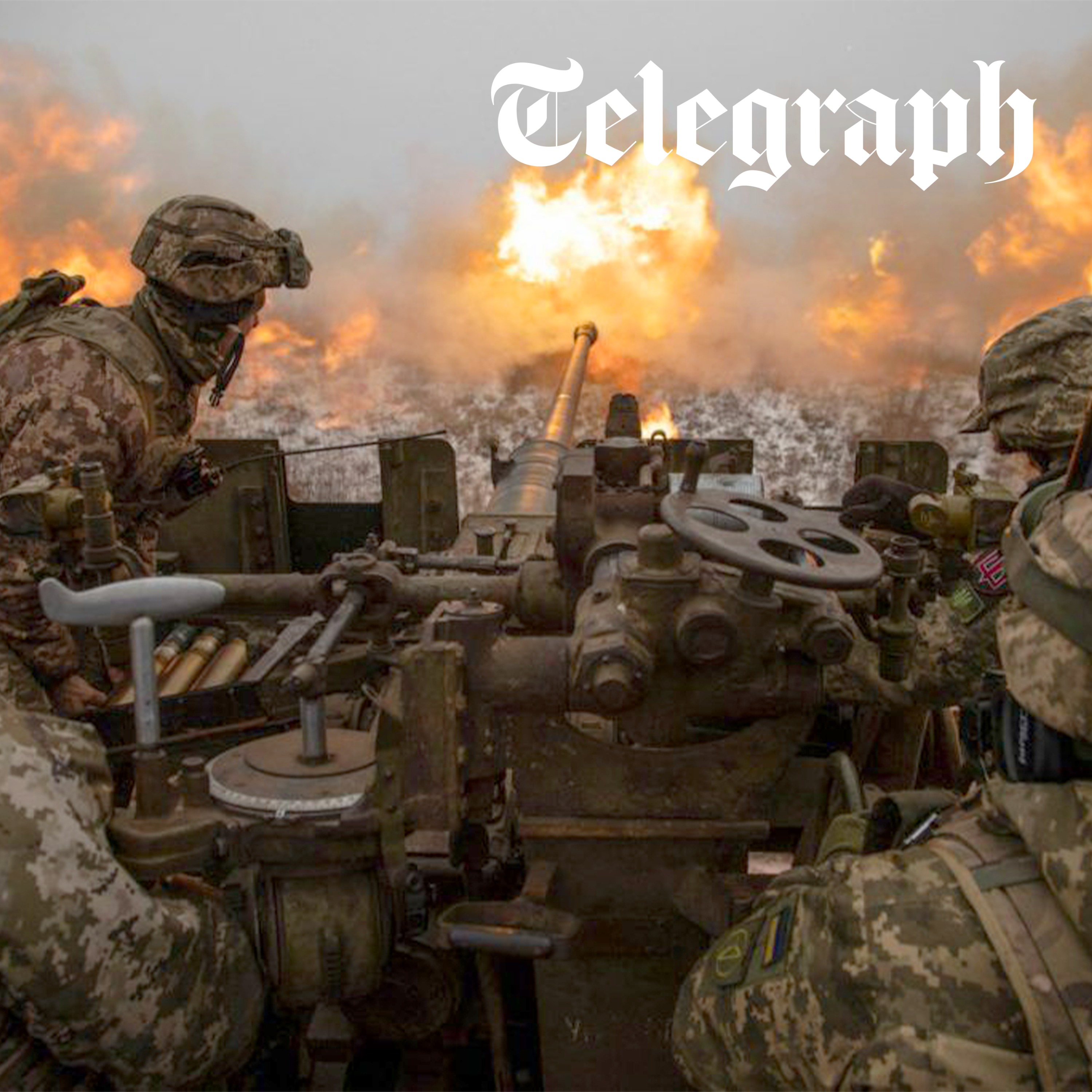
Ukraine: The Latest
Ukraine seizes more territory than Moscow in February amid 'extraordinary' Russian casualties & Zelensky offers to save Gulf states – if they stop Putin
00:47:15
Loading summary
Transcript76 lines
- [00:00]
Adli Pojman Ponte
Foreign.
- [00:09]
Dom Nichols
Howdy, howdy ho, and welcome to Fantasy Fan Fellas. I'm Hayden, producer of the Fantasy Fan Girls podcast and your resident lover of all things Sanderson.
- [00:17]
Francis Dernley
And I'm Stephen, your bookish Internet goofball. But you can call me the Smash Daddy.
- [00:21]
Dom Nichols
And we are currently deep diving Brandon Sanderson's fantasy epic Mistborn. But here's the catch. Steven here has not read Mistborn before.
- [00:30]
Francis Dernley
That's right.
- [00:30]
Dom Nichols
Hei, hei.
- [00:31]
Francis Dernley
So each week you'll get my unfiltered raw reactions to every single chapter.
- [00:35]
Dom Nichols
And along the way, we'll do character deep dives, magic explainers, and Steven will even try to guess what's next. Spoiler alert. He'll be wrong.
- [00:42]
Francis Dernley
News flash, I'm never wrong. Episodes come out every Wednesday and you can find Fantasy fanfellas wherever you get
- [00:48]
VRBoCare Advertiser
your podcasts, day or night. VRBoCare is here 247 to help make every part of your stay seamless. If anything comes up or you simply need a little guidance, support is ready whenever you reach out. From the moment you book to the moment you head home. We're here to help things run smoothly, because a great trip starts with the right support. And hey, a good playlist doesn't hurt either. With VRBoCare, help is always ready before, during and after your stay. We've planned for the plot twists, so support is always available because a great trip starts with peace of mind.
- [01:39]
Francis Dernley
I'm Francis Dernley and this is Ukraine. The latest. Today, as war in the Middle east escalates and Putin attempts to position Russia as a potential peace broker, we examine Zelenskyy's claim that if Gulf states pressure Moscow towards a ceasefire in Ukraine, Kyiv could offer air defence support in return. We then analyse claims that Kyiv captured more territory in February than Russia and assess France's extraordinary shift in nuclear posture and what it means for European security. Then we bring you a dispatch from Adelaide in Irpin and speak to an elections expert to debate whether Ukraine can realistically hold presidential elections in the event of a ceasefire.
- [02:21]
Dom Nichols
Bravery takes you through the most unimaginable hardships to finally reward you with victory.
- [02:31]
Adli Pojman Ponte
Russia does not want peace.
- [02:41]
Dom Nichols
If I'm president, I will have that
- [02:42]
Francis Dernley
war settled in one day.
- [02:44]
Dom Nichols
24 hours. We are with you. Not just today or tomorrow, but for a hundred years.
- [02:54]
Francis Dernley
Nobody's going to break us.
- [02:56]
Dom Nichols
We're strong. We're Ukrainians.
- [03:00]
Francis Dernley
It's Tuesday the 3rd of March, four years and seven days since the full scale invasion began. And today I'm joined by my co host, Dom Nichols. Adlie Pojman Ponte in Irpin and elections expert Ben Graham Jones. Just a reminder that if you want to see our faces, I wouldn't blame you if you didn't. But you do get maps and battlefield footage too. Do check out the link in the episode description to our full video version on our new YouTube channel. It's free and it's crainethelatest. There's a link in the show notes. But first, over to Dom for the military updates.
- [03:35]
Dom Nichols
Well, thanks, Francis. Let's start in Ukraine. No significant change on the ground again, although it's worth noting that in February, Ukraine reclaimed more land than Russia took. That comes from Ukraine's commander in chief, Alexander Syrsky, yesterday. Now, that land, mainly in the southeast in the vicinity of Hulipoli, that we've been speaking about for a number of years, months now. And it's largely as a result of this series of counterattacks, these local counterattacks that we've been talking about, they are partly as a result of the Starlink switch off. We are told when we saw last week when we were in Ukraine that Russia is trying to affect workarounds. So they are putting up WI fi bridges, little hotspots if you like. But that in itself is quite dangerous because they're having to build towers to get off the ground. They're exceptionally vulnerable. We've seen a lot of drone footage of the engineers being hit by drones as they're trying to build these things. And also we were told that Starlink can put up with a little bit of overhead cover. The signal will still get through a bit of foliage, so you can use it in kind of wood lines and what have you. Whereas the Russian bodge job workarounds cannot. They have to see the sky, they have to see the satellite. They can't put up with any foliage at all. So Russia is trying to make up for the loss of service after the Starlink switch off. They've not been able to effect a complete shift over yet. Now, Euromaidan press, they talked about this. They said, in Zaporizhzhia Oblast, as a result of counter attacks and assault operations, they say control was restored to more than 300 squ kilometers of territory. They cite the Air Assault Forces Command as saying units of the air assault forces continue to press the enemy, liberate Ukrainian territory, destroy occupiers and methodically cut their logistical arteries. Now, across the country yesterday, 127 of 136 drones made it through air defence. Six people were killed. All those deaths in the south of the country, mainly in Donetsk. Another 19 people injured. Russia hit another commuter passenger train. Regional officials said yesterday. One person was killed and and 10 injured when drones struck one of the cars on a moving suburban train in the vicinity of Krivy? Ri. That's down in Dnipropetrovsk Oblast. That's the second reported Russian attack on a passenger train after you remember January 27th when drones hit that train in Kharkiv Oblast, killing five people there. Now those injuries spread across the rest of the country. In Kharkiv Oblast, a 10 year old girl and an 80 year old woman were injured when residential buildings were a school and energy infrastructure were hit. In the regional center of Kharkiv, Governor Oli Subhanov saying they're reporting that on the ongoing issue around the impact on Ukraine militarily, about the ongoing campaign in Iran, the impact on military supplies, especially when it comes to the United States. President Zelenskyy was speaking yesterday. He said that while he is concerned for now, he does not see a shortage or the prospect of a shortage of air defence systems or missiles or supplies. He said of course this issue concerns us. So far there's been no such signal from the Americans or Europeans. Everyone understands that the right weapons are our lifeline. But of course we understand that a long war and the intensity of the fighting will affect the amount of air defence equipment we receive. He said that the Pearl, the prioritized Ukraine requirements list scheme is still working. There's been no suggestion that that is not working. That's the scheme whereby, well, anybody, but particularly European nations can put money into a pot which then goes to buy weapons from the United States. Whether or not the United States is going to prioritize weapons to the open market or replenishing their own stocks now yet to be seen. But Pearl is still working for now. President Zelensky also speaking to Bloomberg, he said that Ukraine could send as you report, its best drone interceptor operators to the Middle Eastern states if those states ask for help against the onslaught from Iran. But President Zelensky said that he in turn would ask those states to ask Russia to implement a short term ceasefire in Ukraine. He said, I would suggest the following leaders of the Middle east have great relations with Russians. They can ask Russians to implement a month long ceasefire. So far he said that he hadn't received any requests from European or Middle Eastern countries to send drone experts. Sort of kind of flies in the face of Prime Minister Keir Starmer's comments at the weekend that Ukrainian experts were going to be sent to the Middle East. But President Zelenskyy said we are ready to share this information, let our partners come to us. That's us up to date.
- [07:59]
Francis Dernley
Frances well, thanks very much Dom. With friends like Russia, who needs enemies? Instead of providing any material assistance to the Iranian regime, Putin is attempting to position himself as a peacemaker and a potential mediator between Iran and the Gulf states amid the ongoing US Israeli operation against Iran. Putin, we understand, spoke with several Gulf state leaders yesterday, including of Saudi Arabia, Bahrain, Qatar and the uae, emphasising Moscow's readiness to contribute to stabilising the situation and the need to resolve the conflict through diplomatic means. It's a pretty good rule of thumb that whenever Moscow cries diplomacy they're in trouble. And as we talked about in more detail yesterday, the consequences of this conflict in the Middle east could be profound for the Kremlin, not least on oil prices. In the short term, probably favourably, but in the long term, potentially disastrously if sanctions were to end on Iran and the country became an energy exporter to countries Moscow has traditionally supplied in the West. President Zelensky, as Dom says, is doubling down on the Ukrainian supremacy in air defence, offering to help Gulf states counter Iranian drones if they can convince Putin to offer a ceasefire. A major downside for Kyiv, however, further to the world turning away from Ukraine for the time being, is what this could mean for Ukraine's own missile supplies. As Dom raised, one has to ask, given this new war, how likely is it that Washington is going to part with any advanced missiles now? It feels unlikely, especially given this social media post by Trump which includes an insult to Zelenskyy. He said as follows. The US munitions stockpiles have at the medium and upper medium GR never been higher or better. As was stated to me today, we have a virtually unlimited supply of these weapons. Wars can be fought forever and very successfully using just these supplies which are better than other countries finest arms at the highest end we have a good supply but are not where we want to be. Much additional high grade weaponry is stored for us in outlying countries. Sleepy Joe Biden spent all of his time and our country's money giving everything to PT Barnum brackets Zelensky of Ukraine, hundreds of billions of dollars worth. And while he gave so much of the super high end away for free, he didn't bother to replace it. Fortunately I rebuilt the military in my first term and continue to do so. The United States is stocked and ready to win big. Thank you for your attention to this matter. President Donald J. Trump now P.T. barnum for those who aren't familiar, was a 19th century American showman, businessman and politician remembered for promoting hoaxes.
- [10:47]
Dom Nichols
Was he a property estate realtor?
- [10:50]
Francis Dernley
I'd have to do a bit more reading about him. It does seem rather curious, that, doesn't it?
- [10:54]
Dom Nichols
History rhymes and all that.
- [10:55]
Francis Dernley
Indeed. And while all this was going on, Trump asked his wife, First Lady Melania Trump, to preside over a UN Security Council meeting. The first time the spouse of any world leader has ever done so.
- [11:07]
Dom Nichols
I saw that. I thought that was AI. I thought that was like a cartoon.
- [11:11]
Francis Dernley
I'm pretty sure that it was a plot in the remake of House of Cards that was criticized at, at the time for being too contrived. It is extraordinary.
- [11:19]
Dom Nichols
Is that real? So Melania Trump chaired a meeting at the UN Security Council.
- [11:22]
Francis Dernley
The meeting was on education in conflict and children. I'll have to look at the manuscripts, but I don't think that she gave any significant contributions further to anything she's said before on the subject of the stolen children in Ukraine, which begs the question, what was the point in doing a major meeting of the UN Security Council on this issue? And suffice to say, in this extraordinary week, historically, it is a remarkable, remarkable decision to have gone ahead with that. But anyway, if you want to stay up to date on what's happening in Iran, our sister podcast, Battle Lines, hosted by Roland Oliphant and Venetia Rainey, has rebranded as Iran. The latest, giving detailed assessments of what's happening. Features, of course, regular contributors to Ukraine, the latest, including David Blair, James Rothwell and Sophia Yan. And who knows, Dom or I might be on it this week as well. They'll be releasing daily episodes all this week. Given the rapid speed in which everything is unfolding, it's almost like history is collapsing in on itself. Greece, I was reading earlier, has just deployed a frigate against Iran, named after an Athenian general in the Persian wars. So it's HS Simon. I think Simon was one of the admirals at the Battle of Salamis. So that's 4, 480 B.C. i'm checking my fats here. You have to whip out your Herodotus, Dom, and check.
- [12:49]
Dom Nichols
I'm not going to do that live on air.
- [12:51]
Francis Dernley
Now, everyone, it is time. He's back. Francophile Francis has returned. I should have bought a beret for this, shouldn't I? I have to borrow one of Adelaide's. France has really stuck its neck out in the last 24 hours with a hugely significant speech by President Macron announcing that Paris will increase its nuclear warhead. Stockpile for the first time in decades and may temporarily deploy capable aircraft to partner nations in what he called a necessary adaptation to a more dangerous security environment. Speaking at a military base in northwestern France, home to the country's ballistic missile submarines, Macron argued Europe must take greater responsibility for its own defence as Russia continues its war and uncertainty grows around US security commitments. To be free, one must be feared. Macron said, again a remarkably punchy statement for a French president. To be strong in our own nuclear deterrence, we must be strong in our conventional capabilities in all their dimensions. It is on these two pillars that our defence is based, and I emphasize their importance as early as as 2020. But recent years have clearly shown the glaring lack of support capabilities in Europe, and this situation is untenable now. Afterwards, they sang the Marseillaise. Turns out the acoustics of a submarine base beat even Notre Dame. Just listen to. Quite something now. This is the most significant update to French nuclear deterrence policy in 30 years. For context, France remains the EU's only nuclear power since the UK left the bloc in 2020, and the only one completely independent of the US now and long term, one of de Gaulle's wisest decisions. Now, Macron said France could temporarily deploy elements of its strategic air forces to allied states and invite partners to participate in deterrence exercises, adding that the discussions on closer coordination hall had already begun with the uk, Germany, Poland, the Netherlands, Belgium, Greece, Sweden and Denmark. France will also expand its number of warheads. Macron didn't specify how many, but said the country must maintain what he described as an assured destructive power. If we had to use our arsenal, no state, however powerful, could shield itself from it, he added. Now, European leaders, including Poland's Tusk and Germany's Merz, have welcomed this initiative, signalling even deeper coordination between these powers. This is a pig deal. Strong words have been very common from Macron, but deeds quite seldom. This will have huge consequences for Europe's wider defence posture. But questions remain just how reliable France will be long term, particularly if in a future election it pivots towards the National Front, which has on some of these issues, a rather different stance. But, Don, what are your thoughts on this?
- [16:31]
Dom Nichols
Well, I was somewhat conflicted. I think it's good that European nations are working closer together, including up to the highest levels of nuclear weapons. However, what does that do to the Nuclear Non Proliferation Treaty? Because surely it says to countries around the world that it's nuclear weapons. That's it. If you want your ultimate guarantee of your security, you need to develop nuclear weapons. So that's not ideal. And also what. I mean, what signal are the Europeans sending here that on the one hand, we're going to work together on nuclear stuff, France and Germany getting together and all the other nations that you mentioned. And yet we still can't do anything with the safe scheme, the pot, the 150 billion pot that they wouldn't allow Britain access to without too painful an entry price. So, you know, is Europe serious about stepping up on collective security? Arguably, yes, nuclear stuff, but actually with other bits and pieces you really can affect on a much lower level. You say it's nuclear weapons or bust. That's it. That's the only deterrent you have nothing up to then, surely something like the SAFE scheme you'd want to open to as many people as possible. You give an entry price of 10 million euro to Canada, you put an entry ticket of 2 billion euro on the United Kingdom. So we walk away. That doesn't say to me that you're serious about your collective security. So mixed messages, I would say.
- [17:49]
Francis Dernley
Yeah, absolutely. Well, it's a really interesting development and one, of course, will continue to monitor. But let's go to ADLI now in Irpin, northwest of Kyiv, site of, of course, one of the most significant battles in the opening weeks of the war, when Russia sought to encircle the capital. It was the site of numerous war crimes committed by Russian forces and saw intense urban fighting which destroyed about 70% of the city. But let's hear what's happened since.
- [18:18]
Adli Pojman Ponte
Hi, London. Today I'm reporting from Irpin. It's a city we've been to several times over the last few years. The first time I was here was almost exactly two years ago. The first time I came to Ukraine for the second anniversary of the invasion, we were here with David and we visited Erdpin, Bucha and Hostomel to look at how the rebuilding efforts were going and what were the signs of war and occupation two years on, and how the community was carrying on and recovering from the trauma. Well, two years ago, we had seen a lot of buildings that were still completely torched, a lot of car carcasses everywhere. The signs of occupation were very much there. Today we've been going around a little bit with my lovely producer Natalia, and I can say this, the city looks very, very different indeed. It's very full of life. A lot of things are completely new. A lot of new high rises and a lot of new buildings. You can see behind me the crane. There are quite a few of them. We passed a beautiful school A kindergarten, I believe, which was completely painted in bright green colors and red, with lovely flowers on the wall. It looked absolutely beautiful. The taxi driver we were with told us that up until a few months ago this school had been completely blown apart, a complete ruin. It had been recently rebuilt and renovated. Of course, there are still some signs on the law of walls. Alongside the streets you can see bullet holes, mortar halls. The university is still completely torched and a complete ruin. The lady we were with this morning, and you'll hear more about this interview in due course, she's a lady who works a lot with children, trying to evacuate them from the occupied territories. We met her at her flat and her flat was absolutely gorgeous, completely normal and nice. But she actually told us that when they returned after the occupation, there had been a mortar shell that had arrived in their flat and everything was blown apart. And she was really worried because she just bought it a year before. She was just really worried about her mortgage, really. But now it's completely renovated. It's very much what the feeling is walking around Irpin. The people we spoke with this morning also told us that Irpin has gained a lot of new population in the last two years. It's not people who lived in Irpin before who have come back. The people who went to like European countries have not necessarily come back. But however, it's a lot of new IDPs, people who are still fleeing the Eastern front, Kherson, Dnipro, all of these areas, new IDPs still moving westward four years on. But the city, everyone has described it to me, is very, very full of life. And yes, the taxi driver said there are holes left from the occupation, from guns and machine guns and mortar shells in some of the fences and some of the walls. But really what she is annoyed about are the potholes that are very, very visible and very much present with the snow melting everywhere. That said, not everything is being rebuilt. I'm standing in front of the Romanovsky Bridge. This is a bridge that you've probably heard of if you've been following the war since the very beginning. It was blown up by the Ukrainian army armed forces on 25th February, 2022. So just the day after the invasion, in order to stall the Russian advances towards Kyiv. So this was a very, very key place in order to defend Kyiv, to defend the capital. This has been kept as it was, with everything being blown up. You can see all the damages over there. You can even see a car that still upside down in the river. It's been kept as a place of memory. And actually, just behind me, you can see there is a big sign running along on the ground explaining what this bridge was and what happened. And what it also says is that this bridge and the road underneath it were known as the road to life by the local community. And it is one of the roads that were used for people to evacuate during the occupation in the early days. But also throughout, it became a vital point, point of communication and connection for people who are trying to flee after having found shelter in their basements without any utilities, any water, hiding from the Russian armed forces. So this has been really a key location both in the defense of Kyiv as well as in the survival of people from Irpin. For a lot of people around here, I imagine it will bring up some painful memories of a very, very difficult time indeed. They may have lost loved ones, as we know that the Russian forces were shooting down cars. They were trying to escape. We've reported on that in the podcast. And when we arrived, actually my fixer, Natalia and I, there was a family sat down facing the bridge, facing the river, who seemed deep in their thoughts, and I really wish we could speak with them, but unfortunately they left just as I arrived. So I think they just really didn't really want to talk. But what I think is very notable about this place is that Irpin is actually one of the cities in Ukraine that is at the forefront of memorializing the war, memorializing the occupation. There has been a very conscious effort from the local city council to create a memorialization unit and memorialization policy. And that's obviously something that is going to happen throughout Ukraine over the next few years. What do we keep of the occupation? What do we keep of the invasion? How do we embed it in the urban fabric without it being overwhelming? How do you create a sense of shared history and shared community? And on the road as we were arriving, there's a stack of rusting car carcasses, much like the ones I saw in my first trip here two years ago. And they've been painted over by artists with sunflowers and with Slava. Ukrainian, Ukrainian flags. I've read that this is a very thought through and deliberate artistic construction. I don't know if that's the right word, but it's definitely very deliberate to have this pile of rusting cars on the side of the road, passing by on a very busy main road in. In Irpin. So, yeah, I think that is incredibly interesting to me, how they're embedding it in the fabric of day to day. Life ever again, even though the city has come back to life and is now full of life. You know, my sources this morning were saying how the schools are full, classrooms are full, there's a lot of people. It is definitely a living and a breathing city four years onwards after the occupation. And so I'll definitely do some more digging and some more reporting on the memorialization aspect because I think that's really fascinating and it will definitely create a blueprint or a sort of playbook for the rest of Ukraine. So stay tuned. Thank you, London. Talk to you soon.
- [25:12]
Francis Dernley
Well, thanks very much, Adli. Stay safe out there. Let's bring in our guest now. For weeks, there has been a growing chorus of voices suggesting that if a ceasefire were declared in Ukraine, temporary or lasting, that democratic elections could swiftly follow. It's an idea publicly encouraged by both Russia and the United States. But is it really that simple? What does it actually take to organize a national election in a country at war? How long would it take to ensure voters can participate safely and that the result carries real legitimacy both at home and abroad? And perhaps the most uncomfortable question of all, can you pause a war just long enough to cast ballots and then simply press play again, as some have suggested might have to be the case? These are the questions that few seem to be asking. So today we're going to do just that. And delighted to welcome back to the podcast Ben Graham Jones, an expert on democratic resilience who's observed or provided support to 40 plus elections across the globe, including multiple Ukrainian ones for organizations like the Carter Centre, the European Union and the Westminster foundation for Democracy. Well, welcome, Ben, thank you very much for your time. First of all.
- [26:24]
Adli Pojman Ponte
Thank you.
- [26:25]
Francis Dernley
Let's just start with a very basic question of how difficult is it to hold elections at the moment in Ukraine?
- [26:31]
Well, Francis, I think some of the phrases I would use would be extremely challenging, highly risky, just about the most difficult electoral challenge I would have seen in any democracy. To organize a wartime election in Ukraine, an election is not something you can just rustle up quickly. And I think we need to actually think about what that would entail. First of all, you've got the legal challenges. So Ukraine, understandably, is under martial law, which enables Ukraine to take the measures to defend itself under the law as it stands. Of course, that means that Ukraine cannot hold elections under the current situation. Now, martial law is renewed by the democratically elected representatives every 90 days. But if we put those legal issues to one side, which we can't really do, we come to the logistical problems. You've got 20% of the country occupied. You've got 4 million IDPs, people who are internally displaced, a million Ukrainians in active service, millions of refugees abroad. The need to secure, if we go on the 2019 figures, about 30,000 polling stations, it would be probably more by now. And then you've got to transport the election materials and the ballots across infrastructure that has been, of course, subject to intense bombing. Now, on top of that, you're asking voters to go to the polling station in a hypothetical ceasefire. And I'm not sure that anybody trusts Russia to respect that ceasefire posing massive security challenges, really, at every level. So, look, you know, ultimately, elections will happen in Ukraine. There are seven parliamentary committees which are looking into the many complex issues right now. But I don't think when it comes to wartime elections, we should do anything here to minimise just how complex and challenging a task this would be.
- [28:30]
So if we were to hypothetically imagine a scenario, Ben, where, and I think this is extremely unlikely, but this is an argument that has been put forward, so we have to address it. There were a ceasefire that were temporarily arranged so that an election could take place. How long a run in would you need to prepare for an election of this complexity?
- [28:50]
It depends how good you want the election to be. What matters is not just holding elections. What matters is credible elections. There are so many chapters which would need to be addressed here, and Ukraine is addressing these. They are looking into all of the different intersecting challenges. But this isn't something that you could just do in months. And I think sometimes, really when an argument is made, we need to think about not only the argument, but why is it being put forward. And in essence, the idea that Ukraine now needs to immediately go to some sort of rushed elections, which would have all sorts of challenges, is really a trap. It's an attempt, in essence, I think, by Russia to make an argument that really resonates not just with its usual audiences for its information operations, but also to people who can hear that and go, well, actually, yes, Ukraine should have elections if it's a democracy. Maybe Russia's got a point there, but let's not fall into that trap. Russia has elections. Cameroon has elections. Burkina Faso has elections. What matters is not elections, but credible elections. And that's not something that you can do in weeks or months. Let's remember that the suspension of the election cycle was not Ukraine's choice. This was something that Russia did by invading, thus mandating the imposition of martial law. And in the meantime, hey, let's look at what's happening to Ukrainian democracy. Let's look at the fact that the opposition parties and voices frequently criticize the government and the media, the high profile anti corruption efforts that are underway, the civil society groups that are as active as as ever. So I think we need some moral clarity on this.
- [30:32]
You say this is a trap and I think we can. Well, we all know what Russia is seeking to do with this policy, but why do you think that the US Is so keen on this from your perspective?
- [30:45]
Well, that's a good question. I think the reasons why the US has promoted this narrative are perhaps not entirely clear. Maybe the day will come when it is a little bit more clear. But I think it's worth bearing in mind. If rushed elections are widely perceived as illegitimate, it does become easier for Russia to destabilize the Ukrainian state. Let's remember Russia has you failed to achieve its military goals here. The great military theorist Karvan Clausewitz once wrote that war is politics by other means. And I think we can guarantee that for Russia, Ukrainian elections would be war by other means. So I would be very careful about the idea of elections. And at the very least, we can't minimize just how serious a challenge that would be.
- [31:37]
Do you think President Trump wants to get rid of Zelenskyy and have somebody else who might be a little bit more amenable to his way of thinking?
- [31:44]
Certainly may well be an element of that. From Russia's perspective, of course, they definitely want rid of Zelenskyy. I think we have to see this from the perspective of Putin's inner circle, for whom Zelenskyy's very existence is a reminder that Putin doesn't always achieve his aims, a reminder that Russia can be pushed back on, that resistance against Putin is actually possible and can succeed. And for an autocrat, that's extremely dangerous. From the US Side, of course, I don't know. I can't look inside President Trump's head and see his motivations. But certainly I think we've all seen there doesn't seem to be any love lost between President Trump and President Zelenskyy.
- [32:32]
You've spoken about how challenging this would be. I think inconquerably challenging would be one way of putting it. In trying to arrange an election which you don't even have clarity on what the franchise is going to be. Are you going to try and include people in the occupied territories? In this, which Ukraine, of course, because of the, the argument that this is still sovereign Ukrainian territory, they might try and find some way in which people can Vote there. And that's been something that I've read raised in the Ukrainian press, which of course would be almost impossible to do. So I think you've underscored that aspect. But let's say that a day does come in short order where an election is possible in Ukraine. What does the west, what does Britain, what do countries that call themselves Ukraine's allies need to do to ensure that there is a safe election from Russian interference?
- [33:21]
Well, I think we need to remember that there was a time when Russia was known for chess and for its figure skating and for its classical music, was a world leader in all of these aspects. And right now, in 2026, Russia is a world leader in election interference. So we can imagine that when an election takes place, Russia will do everything possible to subvert Ukraine's democratic institutions to try to compromise the process. Now, for the west and for the uk, one thing to bear in mind is that at that election, this will be the very front line of the very latest tactics and techniques that Russia uses. And they don't just use these in Ukraine to subvert democracy. So one of the things that I see in my work is that if you want to secure an election, it's not just about looking inwards at your own vulnerabilities, but it's about looking at how other countries, the tactics that are used in those contexts, because that's how you learn about how the threat evolves. So whether these elections in Ukraine arrive in, in months or years, they will expose Russian electoral interference at its most well resourced, at its most ambitious, and yes, it may expose tactics that later get deployed here at home. One thing I would, I would add to that, Francis, is that I would draw inspiration from the way that across the Indo Pacific countries have looked to Taiwan to understand how the PRC's democratic interference works and to understand the very latest tactics, techniques, approaches that China deploys. Countries like the Philippines have tried to learn from that, and I think that we need to be doing the same when the Ukrainian elections come along. This is not just a matter of supporting our ally to hold a free and fair, incredible democratic process. It's also about helping the wider democratic community ensure that our own institutions and elections are free and fair in the long run.
- [35:25]
Dom Nichols
Hi, Ben, it's Dom here. Thanks so much for joining us today. Election interference, you just been mentioning there. How does that take place and how do monitors spot it? Because surely the days of having some hood outside the ballot box saying, make sure you vote for party X OR Y, here's $20 I don't know if that still goes on, but, I mean, it's a bit more sophisticated than that, I would imagine. So how do you spot it?
- [35:50]
Francis Dernley
Well, I have to say, Dom, I've definitely seen that sort of thing taking place in some of the places I've worked, but as you can imagine, nowadays it's a lot more advanced. And there's a great article I would encourage listeners to read by Andy Price at the center for European Policy Analysis, who says I can buy a UK election for $25 million. And he outlines a range of the tactics that Russia uses, whether it's funneling cryptocurrency to particular politicians, whether it's deploying bots across social media to promote certain narratives, whether it's payments to influencers in order that they can try to divide people. And sometimes it's not even about them trying to support a particular candidate. It can just be about trying to divide a society, trying to turn people against each other so that people have the sense that democracy doesn't work. And it's precisely because these, the strategy is so whole society, they can target, they try to target election commissions, political parties, the education system. It's precisely because of that that the right response must also be whole society. It involves institutions at every right now, learning from what's happening in Ukraine, learning from what's happening in other places like Moldova, where Russia has targeted for its interference and bringing those lessons back home.
- [37:15]
Dom Nichols
Yeah, there was that amazing footage from our colleague at the BBC, Sarah Rainsford, who was in Moldova a couple of years ago and she was, she just happened to be at a polling station and was with her camera team and they, they saw this woman wandering around saying, where, where do I get my money? And Sarah went up and spoke to her and said, what you do? What are you talking about, madam? And she said she'd been, she'd been given like $10 before the vote and she was told she'd get another $20 afterwards. And, and Sarah did this amazing story about Russian election interference in, in Moldova. So I think that's a sort of on the low end, the shallow water end of, of this kind of stuff. I mean, how, after the event, how do you, how can you see the results if it's, if it's all closed, if the ballot boxes are closed and the, the votes all taken away, how do you, how can you then get a view afterwards as to why constituency over there had a sweeping move in one party's favor? Because you don't actually get to see. That's the whole point about having a, having a sort of legitimate election is that you don't get to see, to see the vote. So how are you able to gather the data, the evidence to put these assertions afterwards?
- [38:17]
Francis Dernley
Right, so this is exactly why, Dom, it's so important to act early, okay. To be prepared. Because in election we tend to think of it as just a sort of a one day thing. We turn up, we vote, we put it in the ballot box and then there we go, we hear the result. But actually these types of techniques authoritarian countries deploy are much longer term than that. We need to be looking at the funding of political parties, we need to be looking at payments that are made to influencers, we need to be looking at online advertising, we need to be looking at all of these different aspects that actually help influence the way that an election goes. Because if we only start to act once the election's over, it's sort of too late very often. So this is why we really need to have that longer term perspective and why right now we need to be thinking about the long arch of democracy, not just in, in Ukraine, but in all of our democratic societies.
- [39:14]
Ben, zooming out a little bit from Ukraine and the European context, I know you're also an expert on what Russia and China have sought to do in Africa with regards to hybrid warfare and manipulating elections and the information space. I wonder if you can just comment on the kind of examples that you've seen, particularly of Russia, but China too, where relevant, of manipulating democracy in those countries.
- [39:35]
Yeah, it's really ambitious, insidious. You know, in multiple contexts you have, especially in, in Africa you have governments in place who were installed with the support of Russian arms, of Russian information operations. It varies depending on the country. But I'll give one example of a tactic that China uses and they do something that's often called constructive journalism. And they will send journalists in countries, not just in Africa, but across the globe, but especially on the African continent. And they will get these all expenses paid visits to China. And the aim of these visits really is so that people start to see journalism less about asking questions and more about relaying official information. Now these sort of long term processes of co optation which often comes alongside you buying up the media landscape through various fronts. And then of course you've got the influence on the telecommunications infrastructure, etc. Comes in very helpful when you need to impose an Internet shutdown during an election. You put that all together and you realize that the election interference didn't just appear overnight, but it took years and years to put together. So those are the sorts of tactics that we see. They are extremely ambitious. And we also see that Russia, China and authoritarian regimes are working ever more closely to undertake these operations.
- [41:02]
Well, the last time you were in London, Ben, you and I caught up and you showed me a video of the kind of information dissemination that Moscow carries out in Africa. And it sounds like I'm oversimplifying this and in a sense I am, but also I'm not because the narrative is literally, and this is, this is not an exaggeration, it was a video for children mainly and young people designed to have countries resembled by animals. So of course Russia is the bear. You'd have to remind me, Ben, which African country this was. But that was resembled by, I think the lion. And then the western countries were hyenas. And you can see where this is going, right, this idea that western countries have stripped Africa bare in its path, colonization, etc. Etc. And Russia, the bear comes literally in the video, comes across the world to help defend from the hyenas. And this is the kind of propaganda that is pushed into Russia. Perhaps you can talk a little bit more, Ben, about that and the audiences it's designed for and the impact that it has.
- [42:04]
Yes, Francis, that was a video from the Central African Republic targeted at children. Ultimately it's important to understand that because we wouldn't necessarily think of children as people who might be targeted with election interference. Right, because they can't vote. These, what we call hybrid threats are part of a broader package of trying to influence and co opt countries, these infringements on them, on their sovereignty. And so we need to understand elections interference as something that's going on over multi years. When you look at the, the particular strategies that, that both Russia and China use, they are thinking on these timescales, you know, very often, you know, of course Russia's disinformation, for example, to try to harm the Ukrainian Polish bilateral relationship, for example, has got a decades long history. China's operations in Africa, these aren't things that just emerge overnight. But these authoritarian regimes have the resources to invest over the long run. And unfortunately, too often democratic states don't invest in building that democratic resilience and we're left vulnerable when, when election day arrives.
- [43:23]
VRBoCare Advertiser
You know what's wild? Most people are still overpaying for car insurance just because it's a pain to switch. That's why there's Jerry. Jerry's the only app that compares rates from over 50 insurance in minutes and helps you switch fast with no spam calls or hidden fees. Drivers who save with Jerry could save over $1,300 a year. Before you renew your car insurance policy, do yourself a favor, download the Jerry app or head to Jerry AI Acast. Notice how some homes sell faster in your neighborhood. It's not luck, it's local. Know how RE Max agents know their streets, schools and communities inside and out. And with Re Max, those local pros are everywhere. Which means when you're ready to buy or sell, you'll get trusted neighborhood insight that puts you a step ahead. Reach out today RE Max the experts close to home. Each office independently owned and operated. With VRBoCare, help is always ready before, during and after your stay. We've planned for the plot twists, so support is always available because a great trip starts with peace of mind.
- [44:37]
Francis Dernley
But let's go to our final thoughts now then, and of course we'll end with you, Ben, and to touch on anything that we've not talked about. But Don, where would you like to leave?
- [44:45]
Dom Nichols
Listeners today might be a little bit UK centric, but we hear today that Britain is going to be sending a type 45 destroyer, probably HMS Duncan, I think one of the six type 45s we have to Cyprus. This comes after Sunday night's drone strike or RAF Akrotiri, the British air base and Cyprus. Surely that's a little bit too late. If you're going to send it now, you should have sent it before. What's Britain got in terms of air defense? Not a huge amount. We hear a lot about anti drone jammers and anti drone technology and lasers. There's going to be dragon fire on ships now, next, next year, laser to shoot down drones. So we hear a lot about all this stuff. But actually you've got one of Britain's premier air bases in one of the most volatile regions of the world, RAF Akrotiri on Cyprus. And a drone, a slow, low drone manages to get through whatever air defense there was and hits the ground. I mean, that's just extraordinary. And I just use as example, I'm quite pessimistic of late. And I think that is an example of European foot dragging. I mean, four years since the start of the full scale invasion, the huge investment, Britain and others, many others, Germany hugely into Ukraine. We've all talked about drones until it's bored us all to tears and then we start again. And yet Britain now has a drone landing at Ra Facter and going a week later, better send a boat. I mean, it's just, just extraordinary. We hear so much about lessons learned Lessons identified. What lessons did you need? You had four years to get ready for this, to prepare. I mean it's not as if Iran as a threat suddenly sprung up last week and yet we're unprepared. We don't have a, we don't have somebody that can bring down a drone. RAF Actoria. I just worry that Europeans are not really not taking this seriously. There's too many. I'm not saying Britain is here, but I think there's too many people across Europe just hoping this problem goes away and then we don't really have to worry about investing in defence and all the rest of it. It because we are left here four years after the start of the full scale invasion. A drone gets through, a single drone gets through whatever air defence there was at RAF Akrotiri and five days later, or whatever, it's four days later, we decide to send a boat.
- [46:55]
Francis Dernley
Ben, as our guest, where would you like to leave listeners today we should
- [46:58]
be under no illusions about how difficult it will be to hold early Ukrainian elections. Let's look back at history. We've only got a few examples of, of when something like this has been attempted. Right. When you had Greece's chaotic civil war election of 46, Iraq's sectarian election of 2005 which created all manner of problems. Repeated attempts to hold a democratic election without the preconditions in place in Somalia, the abandoned efforts, Palestinian elections in 2021. I've heard the example put of Lincoln's election in 1864 during the Civil war.
- [47:38]
Now, I don't know if I think I'm guilty of talking about that one
- [47:40]
be I don't know if the OSCE or the Carter center or the EU observers were there for that one. But I think with all respect to our American friends, it was a pretty disastrous election from a technical standpoint. So we need to be really careful about this. We need to note that it's highly, highly challenging to hold an election under the current conditions. And we need to think about who's making an argument and why they're making it.
- [48:07]
Thank you very much, Ben, for your time today. Thank you, Dom. Thank you. Adelaide in Ukraine. We'll be back same time, same place tomorrow. Ukraine. The latest is an original podcast from the Telegraph created by David Knowles. Every episode featuring us in the studio. Maps and battlefield footage is now available to watch on our YouTube channel. Subscribe at www.crane the latest. There's a link in the description. You can also sign up to the Ukraine, the latest newsletter. Each week we answer Your questions provide recommended reading and give exclusive analysis and behind the scenes insights plus diagrams of the front lines and weaponry to complement our reporting. It's free for everyone including non subscribers. You can find the link to sign up in the episode Description if you appreciate our work, please consider following Ukraine the latest on your preferred podcast app and leave us a review as it helps others find the show. Please also share it with those who may not be aware we exist. You can also get in touch directly to ask questions or give comments by emailing ukrainepodelegraph.co.uk we continue to read every message. You can also contact us directly on X. You'll find our handles in the description. As ever, we're especially interested to hear where you're listening from around the world. And finally, to support our work and stay on top of all of our Ukraine news, analysis and dispatches from the ground, please subscribe to the Telegraph. You can get one month for free, then two months for just one pound at www.telegraph.co.uk Ukraine the latest Ukraine the latest was today produced by Phil Atkins. Executive producers are Francis Dernley, Louisa Wells and David Knowles.
- [49:56]
My name is David Knowles. Thank you all for listening.
- [49:59]
Goodbye.
- [50:11]
Dreaming of getting the all new iPhone 17 Pro designed to be the most powerful iPhone ever.
- [50:16]
Adli Pojman Ponte
Then stay in bed and let a Boost Mobile expert deliver and set it up for you.
- [50:20]
Francis Dernley
Oh actually they will have to get up and open the door.
- [50:22]
VRBoCare Advertiser
Oh right.
- [50:23]
Francis Dernley
Delivery available for select devices purchased@boostmobile.com terms apply.
- [50:26]
Boost Mobile Advertiser
The longer you stay alive, the longer you can enjoy Boost Mobile's unlimited plan with a price that never goes up. So here are some tips. Do not parallel park on a cliff if you want to enjoy an unlimited plan with a price that never goes up, do not mistake a wasp nest for a pinata. If you want to enjoy an unlimited plan with a price that never goes up, do do not microwave a hard boiled egg. If you want to enjoy an unlimited plan with the price that never goes up, stay alive and enjoy Unlimited Wireless for $25 a month forever. With Boost Mobile after 30 gigs, customers may experience slower speeds. Customers will pay $25 a month as long as they remain active on the Boost Mobile unlimited plan.
- [50:56]
Adli Pojman Ponte
Boost Mobile is now sending experts nationwide to deliver and set up customers new phones.
- [51:00]
Francis Dernley
Wait, we're going on tour?
- [51:02]
Adli Pojman Ponte
We're delivering and setting up customers phones? It's not a tour.
- [51:05]
Dom Nichols
Not with that attitude.
- [51:06]
Adli Pojman Ponte
Introducing store to door switch and get a new device with expert setup and delivery.
- [51:09]
Francis Dernley
Delivery available for select devices purchased@boostmobile.com.