← Ukraine: The Latest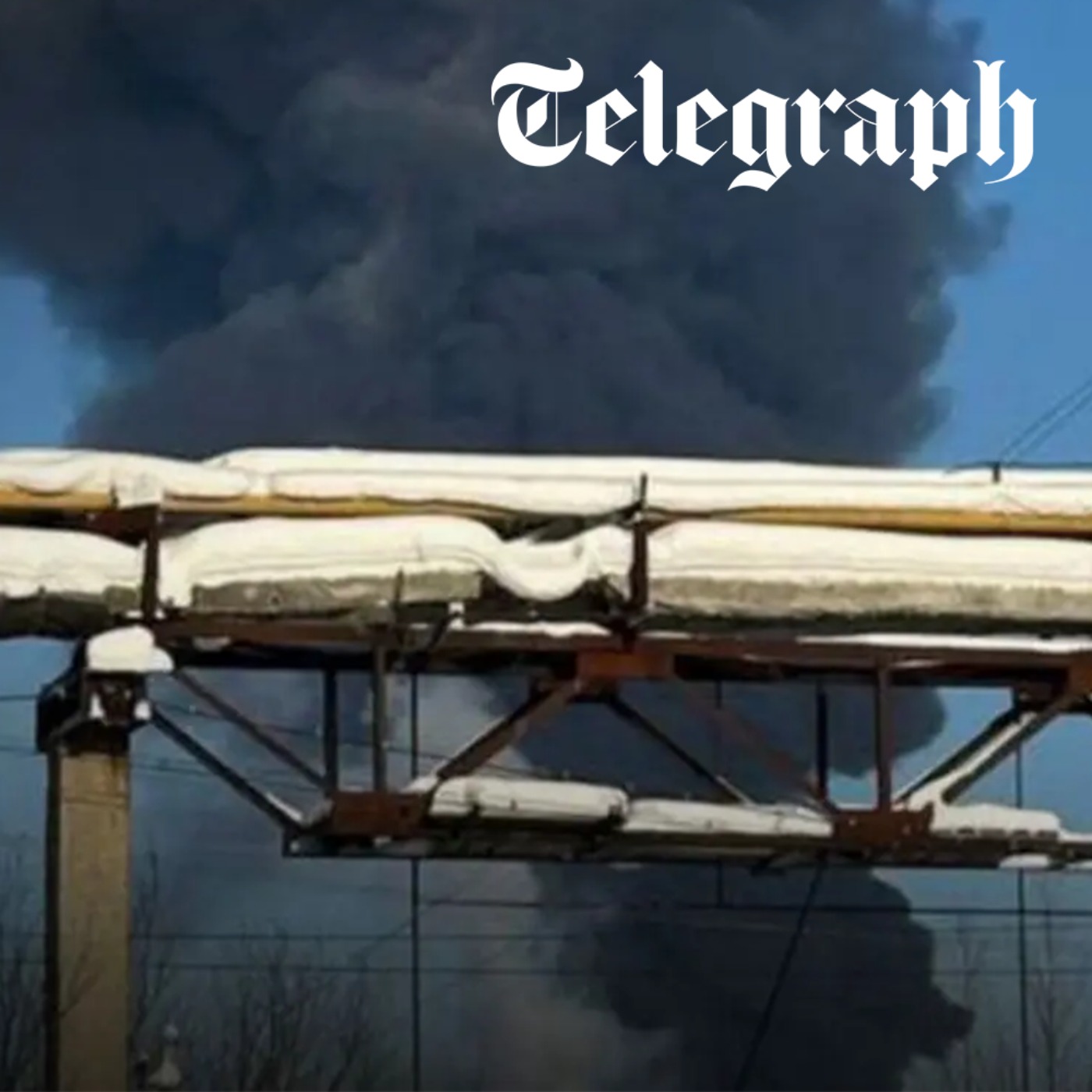
Ukraine: The Latest
Ukraine strikes 2,000km deep into Russia in 'longest range strike of the war' & Zelensky accuses Olympics of playing into Putin’s hands after Ukrainian athlete disqualified
00:40:05
Loading summary
Transcript57 lines
- [00:04]
Podcast Host/Announcer
The telegraph.
- [00:10]
VRBoCare Advertiser
Day or night, VRBoCare is here 247 to help make every part of your stay seamless. If anything comes up or you simply need a little guidance, support is ready whenever you reach out. From the moment you book to the moment you head home. We're here to help things run smoothly because a great trip starts with the right support. And hey, a good playlist doesn't hurt either.
- [00:41]
Acast Advertiser
ACAST powers the world's best podcasts. Here's a show that we recommend.
- [00:49]
Podcast Host/Announcer
Galactic Year 6967 420-428-0085 the War for the spark rages on. Yet one last hope remains. Four ancient warriors are about to take to the stars and take the galaxy by storm.
- [01:08]
Dominic Nicholls
Hey, so here's what you're gonna do. You're gonna go to HTTPs.
- [01:12]
Casual Commentator/Marketer
They added that colon.
- [01:14]
Dominic Nicholls
Yeah, gotta check on that. Oh, don't we all.
- [01:17]
Casual Commentator/Marketer
I wish I were dead colon.
- [01:19]
Dominic Nicholls
So do I.
- [01:22]
Podcast Host/Announcer
Dungeons and Daddies presents Grandpas and Galaxies, an improvised actual play senior star citizen space Opera adventure. Coming February 10th to our solar system.
- [01:35]
Acast Advertiser
Acast helps creators launch, grow and monetize their podcasts everywhere. Acast.com.
- [01:48]
Francis Dernley
I'm Francis Dernley and this is Ukraine. The latest today as Ukraine's security services claim responsibility for the longest range strike yet on Russian oil and gas infrastructure since the start of the war. We examine reports of a surge in Russian army casualties and ask what it could mean for Putin's war effort. Then we bring you the latest from the NATO summit in Brussels where allies are discussing military support for Ukraine before returning to the escalating controversy at the Winter Olympics where Ukrainian skeleton athlete Vladislav Herschevich has been disqualified over his helmet tribute to Ukrainian athletes killed in the war.
- [02:26]
Dominic Nicholls
Bravery takes you through the most unimaginable hardships to finally reward you with victory.
- [02:36]
Francis Dernley
Russia does not want feast.
- [02:46]
Dominic Nicholls
If I'm president, I will have that war settled in one day. 24 hours. We are with you. Not just today or tomorrow, but for a hundred years. Nobody's going to break us. We're strong. We're Ukrainians.
- [03:06]
Francis Dernley
It's Thursday 12th February, three years and 355 days since the full scale invasion began. And today I'm joined by our associate editor of Defence, Dominic Nicholls. And dialing in from Italy, the Telegraph's chief sports reporter at the Winter Olympics, Jeremy Wilson. But first, over to Dom for the latest in the military realm.
- [03:28]
Dominic Nicholls
Well, thanks, Francis. As you say. The sbu, the security service of Ukraine, is claiming the longest range strike against Russian oil and Gas infrastructure today after missiles went nearly 2,000 kilometers from Ukraine's borders. Now a source in the SBU's Alpha Special Operations Centre speaking to our colleagues at the Kyiv Independent said the strike on the Lukoil owned Ukta oil refinery in Russia's Komi Republic started a fire there. This marks the furthest strike yet by Ukrainian attack drones unless you then start a conversation about Operation Spiderweb. So we're going to have to have a new metric about how you claim the range. But anyway it's the furthest range I think a missile has fired. Been a bad week for Lukoil after somebody parked drones on their refinery in the Volgograd region on Wednesday. You'll remember we covered that on the pod. And sticking in the Volgograd region, Ukrainian long range Flamingo cruise missiles hit a major Russian arsenal. Storing missiles, ammunition, explosives in kotliban, that's about 50ks northwest of the city of Volgograd. That strike happened last night Ukraine's General Staff at saying this morning. Now that facility which belongs to Russia's Main Missile and Artillery Directorate is said to be one of the largest ammunition storage sites used by the Russian Army. Powerful explosions and secondary detonations were recorded at the site we are told. Governor Andrei Bosherov said there are no injured residents or damage to civilian objects in order to ensure the safety of the civilian population from the threat of detonation during firefighting. An evacuation of the population of the nearby settlement of Kotleban has been announced and is being carried out. I think it's good of him to make clear that there were no civilian casualties and no civilian property hit and only a military site struck. Nice to hear but I'm sure that Mr. Boshrov is not going to be appearing in front of the media anytime again soon. Now from there go 500km northwest. So we're now about 300k's or so south of Moscow. And Ukrainian forces also started a fire at the Progress plant in Merchantsk. That's in Tambov Oblast. This place produces high tech equipment for aviation and missile systems for the military. Now Tambov Oblast Governor Yevgeny Peshvarov didn't comment on any goings on at the weapons plant but said that two people had been injured in an attack that damaged several buildings and a grocery store. Now then into Ukraine, not much movement on the ground. Ukrainian forces say they cleared Russian troops out of Chunivka, that's in Karkiv Oblast, about 50 k's north of Kupyansk. That's a small border area that Russia had moved into some time ago. Ukraine also says they took back some pockets of land down in the southwest, just to the north of Huliapoli. That's thought to be mostly clearance of these sort of infiltration efforts by Russian groups of 2, 3, 5 individuals and these flag raising dashes, you know, rushing forward, stick a flag up, take a photo, job done. Gerasimov says we've taken the town, that kind of thing. So rather than any formal counter attack or counter offensive, it seems to be sort of more mopping up operations elsewhere in the northeast. Lyman is under pressure. Russia is pushing on all sectors from the city, basically from the north through the east down to south. Lyman is under great pressure there, but overall not a lot of movement and only in quotation marks. 770 Russian casualties yesterday reported by Ukraine's General Staff. Casualties being killed, wounded, missing and taken prisoner. But I do note, I mean they keep a daily tally on how many tanks have been hit and how many ships and submarines has been obviously submarines destroyed. They say 1,442 drones were brought down yesterday. It just gives you an idea of the amount of activity at the front, in particular with drones. I mean, startling numbers.
- [07:07]
Francis Dernley
Just on the numbers, Dom, there was the report that we were talking about last week that Ukraine now has the objective of killing 50,000 Russians a month. Now of course that's killing, that's not casualties. We're still a long way away from that. Do we know yet what the Ukrainian strategy would be to try and facilitate that shift?
- [07:25]
Dominic Nicholls
Well, they've talked about producing millions of drones per year. I mean the thing about a drone is it's a targeted weapon, especially FPV drones. They're driven into individuals, as we've seen. So if we think Russia's producing about 30 odd thousand a month, then it is now probably the first time in military history it's possible to produce enough ammunition to kill everybody that's on the front line. So it is possible, those numbers are possible whether those drones and also the artillery and mortars and all the rest of it. But if they can get through, and that's another question, but in simple numbers terms, yes, you're able to produce enough lethal munition and put them directly onto the target to have those kind of numbers provided you can get through the electronic warfare and all the drone nets and all the other countermeasures.
- [08:13]
Francis Dernley
It's just an extraordinary figure. And I thought I'd mention is.
- [08:16]
Dominic Nicholls
Well, I'm going to come on some figures actually because as I was saying, so a huge amount of violence up and down the line, but no significant movement in the lines, but possibly as a result of the lack of the quality of Russian soldiers. Because there's a report out by the center for Strategic and International Studies cited in today's Financial Times, they've got an article called Russian Army Casualties in Ukraine Surge, and they're citing this report by CSIS. They're saying at least 325,000 Russian soldiers have been killed, not casualties killed, since the start of the full scale invasion. They also say that the monthly enlistment target of about 35,000, this is Russian target, almost exactly matches the number of Russian monthly casualties at the moment. Hence the line's going nowhere. And all this means, they say, that Russia's most prominent offensives are only advancing at a rate of between 15, 15 and 70 meters a day since Russia sort of gained the upper hand on the battlefield in late 2024 after the big dash up in the north around Kharkiv. But that rate, they say, is slower than almost any war in the past 100 years. Now, Michael Kaufman, senior fellow at the Carnegie Endowment for International Peace, former guest on the pod, you'll remember he's quoted in the Financial Times piece as saying Putin's bet has been that sustained pressure across the broad front is going to eventually lead to a collapse on the Ukrainian side. But the way Russian forces are fighting simply won't generate operationally significant breakthroughs. We'll put a link to the FT article in the episode Notes now that lack of progress on the ground possibly explains why Russia continues to concentrate on aerial attacks. Last night they focused on the main cities in Ukraine. Kyiv, Dnipro, Desa, Kharkiv bore the brunt of an attack that saw 24 Iskand M or the S300 variant ballistic missile, one KH59 or 69 guided missile and 219 drones were launched by Russia. Now at least nine missiles and 19 drones got through. Ukraine's air force said. President Zelenskyy said the main target of the strike was once more Ukraine's energy sector. And dtec, that's Ukraine's biggest private energy firms, said that more than 100,000 residents in Kyiv were left without power. This morning, residential buildings were hit in the city. Police recovered a jet engine from a downed drone inside a top floor apartment on the east side. Across the river on the east side of Kyiv in Kharkiv, a man jumped from a third floor window to escape a fire in his apartment. He was Hospitalized with injuries in Dnipro attacks, cut off heating to 10,000 people and injured an infant and a four year old gun girl, thankfully only injured, meaning the total number of children killed since the start of the Winter Olympics remains at only five. Five infants killed, but yeah, hey, helmets, photos, memories. Yeah, whatever. Now, as you said at the start, there's a NATO ministerial meeting today in Brussels that's going to be followed by the latest Ukraine Defense Contact Group, otherwise known as the Ramstein series of meetings. That's the 33rd Ramstein meeting. These are all going to be held at NATO headquarters in Brussels, which now the UK and Germany are run. Now that the US has stepped back, Ukrainian Defense Minister Mykhailo Fedorov is going to be there. So will NATO Secretary General Mark Rutte and Australian Deputy Prime Minister Richard Marles. Now Australia, New Zealand, I think Japan and Republic of Korea also have observer status, I think in NATO. But yeah, they're there as well. Ahead of Both these meetings, U.S. ambassador to NATO Matthew Whitaker, he was heaping praise on Pearl, the prioritized Ukraine requirements list. He was heaping praise yesterday saying that 21 NATO member states plus Australia and New Zealand have now contributed four and a half billion US dollars to Pearl since the program's launch just in summer last year. Now we singled out Norway, the Netherlands and Germany, well done for having provided especially significant contributions. And then he hinted that other states would make new commitments to Pearl today. Guess what? Quick as a flash, British Defence Secretary John Healey who's turned up in Brussels, he made an announcement, unlike almost every other Defence Minister, that attending the meetings on the way in, John Healey just delivered some prepared remarks and then didn't take any questions. So he had no time for questions. But the mod did find the time to put out a very glossy press release this morning saying that Britain is going to put 150 million quid into Pearl. First time they've directly contributed into the fund. And they say this is going to send US air defence interceptors to Ukraine. I was a bit surprised by that because Pearl is just a pot of money that Ukraine can decide to do with whatever they like, you know, weapons wise. Plus we don't know what the backlog of orders is for. I know Patriot missiles or whatever they think, but anyway, 150 million quid, that's very good. And then at the same time, John Healey said the UK is going to deliver an additional thousand LMMs, lightweight multirole missiles, an air defense missile that alone, that pledge is worth nearly 400 million quid. So between the two, half a billion pounds for Ukraine before lunch. Not bad. Would have been nice to have been able to ask the Defence Secretary about these announcements. Anyway, he didn't have time for questions, but he did say, this is Britain being a force for good in the world, building a new deal for European security within NATO. Listen to this bit, and I'm proud of the armed forces, I'm proud of the UK's leadership, I'm proud of the UK's commitment to our allies. We will back you, we will defend you, we will fight with you in this new era of threat and hard power. Now he's at NATO, he's talking about NATO, but you can imagine Ukraine saying, all right, great, come and fight with us. Anyway, Mykhailo Fedorov, Ukraine's Defence Minister, As I said, he's there. And he said, thank you, John Healey and the United Kingdom for urgent air defence support worth over 500 million quid. It will help shield Ukrainian homes, energy sites and critical infrastructure from Russian attacks. NASA's up to date, Francis.
- [14:08]
Francis Dernley
Well, thanks very much, Dom, and we'll come to the Winter Olympics very shortly. But first, more from that summit in Brussels. Deborah Hayes of Sky News is there. She, first of all, was quoting one of the US allies as saying that Mr. Hegstaff is missing a good party. I think it was Iceland that said that others were more diplomatic. She says, playing down the no show, though, Germany's foreign minister underlied the need for the alliance to become more European, to remain transatlantic. Rather cryptic remark, but anyway, he also has rather got himself in hot water, because Boris Pistorius, this is of course, of Berlin, he seemed to suggest that Europe weapon stocks are low. He said that we check what's available and if there's nothing, we provide money so Ukraine can get what it needs. Now, that remark led to some rather hyperbolic headlines claiming that Berlin was admitting the continent's cupboards were bare. That isn't what he said exactly, although he is effectively admitting that there are shortages of certain things. Which begs the question, why, four years after Zeitenwende, is Europe still low on anything? If it had begun to rearm in the way that it promised, this would not be a problem. Now, I'm afraid I just don't buy the argument that these things take time. This war has now lasted more than the entire conflict on the Eastern Front in the Second World War, so, and the world's considerably sped up since the 1940s, we find ourselves in the absurd situation where European leaders are now on the one hand, saying that Ukraine's future is existential for the Europe and the continent and that Moscow is an expansionist power, while on the other hand delaying any rapid rearmament or remobilization, it is an illogical position.
- [15:57]
Dominic Nicholls
If, if I might just for a moment play Devil's Avocado. The difficulty for military procurement staff is when do you press print? So four years ago when we started this podcast, we hadn't even heard of first person view drones. The idea of fiber optic controlled drones was like science fiction. It was the future. We were talking at the time and still are about 152 and 155mil artillery rounds. And it was like, we need to ramp up, we need to produce more of these things because artillery is. Artillery is the biggest historically, before this war, artillery is the biggest killer on the battlefield, apart from disease and all that kind of stuff. But in terms of actual sort of man made stuff. So I mean, stand faster. They haven't actually produced a load more weapons factories to build artillery barrels and ammunition and they should do. But if they put all their chips into building artillery stuff at the time, then along come drones and we go, ah, blimey, right, drones. Drones is it? Let's get drones along with the electronic warfare system so that our drones can stop their drones and we can all that. And then along comes first person view and then along comes fiber optic cable. So at some point you have to stop and press print. And you'd like that to have happened some time ago. No, but these are all political decisions, they're political choices. And I think the penny hasn't dropped yet in still quite a few places around Europe, the corridors of power. They're hoping this problem will go away, they're hoping for a ceasefire and then they can kind of go, all right, we'll do a little bit of support for Ukraine, but we don't actually have to really bend ourselves out of shape and attack our welfare budgets and have a look at the transport and God knows what else and overseas footprint, blah, blah, and put it into defense. I think a lot of still see defence as a break glass in emergency department and you know, if you don't need it, why bother spending money on it? They don't realize that if it's good enough, you're using every day as a deterrent. And actually quite the reverse works as well if you don't have a credible military force, it is, it actively does not deter and brings forward the thing you're hoping doesn't occur. But yeah, I Think too many people see it as a, you know, stick it on the shelf. We don't really need it, therefore we don't have to invest in it.
- [17:58]
Francis Dernley
Well, hold that thought. As you mentioned, the White House has sent a representative nowhere near as substantive as we expected in previous years. That is US Under Secretary of State for Policy Elbridge Colby, a controversial figure in relation to this war. Given that he was blamed for the freezing of weapons deliveries and intelligence sharing shortly after President Trump took office, he is seen as one of the key drivers of the US pivoting to the Pacific away from Europe. Trump's actions over Greenland have compelled NATO to announce an enhanced mission to protect the high north called Arctic Century, intended, one assumes, to show Trump that the territory is well protected from threats from Russia and China. Not that I think that so called justification he gave had really had anything to do with his actions, but sticking with the eu, Brussels top diplomat and the most requested guest on Ukraine. The latest, though I can't think why, Kai Callis has said that the EU has identified two sites in Ukraine where Europe could train Ukrainian troops as part of the bloc's contribution to security guarantees for the country under a future peace deal. She said, we've been discussing the training of Ukrainian soldiers. Also on the soil of Ukraine, she said, we've identified two training centers that could be used for that purpose. Now, these are some of the first concrete proposals we've heard on this aspect of the peacekeeping mission for after the ceasefire. But again, how helpful is this when there's simply no evidence that peace is any closer? As Kaia Mitskallis said a couple of days ago.
- [19:34]
Dominic Nicholls
Well, far be it for me to criticize the future ex Mrs. Darnley, but I think. I think Kai Callas is. Well, I don't know if she's got it wrong. I mean, I could have identified two training areas. I've been to two training areas in Ukraine that they could. They use. I mean, what does that say?
- [19:50]
Francis Dernley
What?
- [19:50]
Dominic Nicholls
I mean, big what does that say? It doesn't say anything and I think it actually masks that they're not saying a lot of other stuff because there's no progress on the united front. Politics, ceasefire, being able to influence Donald Trump to push X, Y and Z. I think this is diplomatic word salad, a phrase I use far too many times. I apologize about that. I've mentioned onions for a long time, so I've moved on from onions to salad. Give me some credit. But yeah, I think it's diplomatic word salad that masks Europe's not got an Awful lot else to say, which is the tragedy of it all.
- [20:20]
Francis Dernley
Indeed. Well, just wrapping up the political updates. It's possible that there might be another round of peace talks this week, but we do now expect more realistically that they will be in Miami next week on Tuesday and Wednesday, assuming that Russia accepts. President Zelenskyy has said the American side has proposed a meeting. We've immediately confirmed it. We're waiting for a response from the Russians. So far as I understand it, Russia is hesitating. Ukraine is also waiting for a response to a proposed energy ceasefire suggested by the US during the recent peace talks in Abu Dhabi. Zelenskyy said, we haven't received any responses from the Russians regarding that. On the contrary, we received a response in the form of drone and missile attacks. Now, elsewhere in Ukraine, the parliament has been unable to hold a vote because at least 20 MPs are believed to have fallen ill, with some suggesting foul play. It is believed more likely, though, just to be a seasonal virus. Is it any wonder, given so many people in Kyiv are suffering the energy bombardments, which mean that people are sleeping in houses with 7 degrees. Of course more people are likely to get sick. Another interesting bit of domestic news is that, as the Kyiv Independent report, all holders of Ukrainian phone numbers, so millions of people received an SBU message yesterday that Russians are trying to recruit Ukrainians to register register Starlink terminals for use by Russian troops and that doing so is a criminal offence in Ukraine. That speaks to the story that Dom's been covering for the past few days relating to Ukraine's Defence Ministry agreeing with starLink's parent company, SpaceX, to introduce mandatory registration for the Internet terminals in Ukraine to prevent their use by Russian forces. That has been sowing chaos on the front lines which Ukrainian troops are allegedly trying to exploit. On Tuesday, Ukraine's coordination headquarters for the treatment of prisoners of war said Russia was coercing the families of prisoners of war to register Starlink terminals. Seeking to blackmail them speaks just to Moscow's desperation on this issue, if true. But let's turn to the story now that sees the headlines the world over. The latest on the helmet saga at the Winter Olympics. We left you yesterday with the International Olympic Committee, the IOC saying that it would be ban Ukrainian skeleton pilot Vladislav Herskevich for the helmet of memory he was wearing, which featured athletes killed in the war. Unless he stopped wearing it. Well, they have now disqualified him, sparking an even larger row. So to bring us up to speed, let's talk to the Telegraph's chief sports reporter at the Winter Olympics. Jeremy Wilson, live from Italy. Jeremy, welcome to the podcast. Great to have you. What's happened since we were reporting yesterday?
- [23:09]
Jeremy Wilson
Well, there was dramatic sort of talks early in the morning. The president of the International Olympic Committee, Kirsty Coventry, she's been based in Milan, which is where Olympic bosses are based, and she came into Cortina, which is the mountain range where the skeleton's taking place, to personally come and see Herskovic. I mean, it's been coming to this for days. Both sides have been pretty much certain of their positions. The IAC have been saying we can't allow gestures during competition. They say it's okay before, it's okay after. But during competition, we've. We've made these athlete guidelines. We can't make an exception. And obviously, the Ukraine skeleton team have very much backed him. They've. They've been absolutely adamant that they're going to wear. He's going to wear the helmet that it. He felt like it would be a betrayal of those athletes that he was paying tribute to, that he was honoring and is on. On the helmet. He didn't feel that it was in breach of the athlete guidelines. There was no backing down. He said this was a bigger issue than medals. He had every chance of winning a medal. He had been up in among the fastest qualifiers whilst wearing the helmet in recent days. And I think Kirsty commentary hoped that by personally visiting, by personally speaking to him, that there might be some room for compromise. But I just feel like they underestimated just how important this was to him. There was no sense at any point in the last few days that he was going to change his mind. He really obviously felt very strongly about it, and I think the IOC can box themselves into a corner. Perhaps they thought he would, at the last moment accept wearing a black armband, accept the compromises they'd suggested, which were to show his helmet before or after his run.
- [24:52]
Francis Dernley
Well, it's become a huge story around the world and particularly in Ukraine. And before we get into some discussion around this, I know Dom's got views. What's President Zelensky said in the last hour or so?
- [25:03]
Jeremy Wilson
Yeah, I mean, he's come out really strongly in support of the athlete. He's basically said that the IOC are playing into the hands of aggressors by what they're doing. He's also called on the IOC saying that if you should disqualify athletes, it should be the 13 Russians that are competing in Italy as neutrals. And I think the wider backdrop to all of this is Russia have been banned at different times in recent years from international sport, partly initially because of doping. Then straight after the invasion in 2022, the IOC recommended that they should be banned. This latest ban technically is a sporting ban because it's to do with them taking over Olympic committees of territories in Ukraine. IOC this morning actually argued that it wasn't due to directly a consequence of the war, why the Russian athletes are having to compete as neutrals. But I think the feeling since Kirsty Coventry's come in as IOC president, she replaced Thomas Bash last year, is very much that she keeps talking about the importance of that sport should be politically neutral. It should be this space away from conflicts, away from war, away from politics. The sense that you get from Ukraine and everything that Zelensky and the various ministers have said in recent days, I think they feel indications that the Russians could be back in, in a more formal sense, under the flag come 2028. Because although IOC haven't said that and they kind of haven't directly talked about Russia, they've emphasized this point about sport being free of politics repeatedly in recent months. And it feels like they're moving in that direction. So I just feel like bringing this to a head at this point is perhaps part of a wider story as well, wider narrative about where sport could be going.
- [26:55]
Francis Dernley
Yeah, well, this, this feels where the. The Ukrainians have the strongest argument in this case, because in a sense, the IFC has already made sport political when they decided to ban Belarus and decided to ban Russia following the full scale invasion. And so now to be aimed to try and sort of pull back and say, no, that these things are not political has of course upset a lot of people and we'll get it, I think, a bit, a bit later on into the subject of whether remembrance is itself a political statement. The Ukrainians are arguing not, but the IOC effectively is. But Dom, what are your thoughts on this?
- [27:25]
Dominic Nicholls
Yeah, well, I mean, I think I made my thoughts pretty clear yesterday about where I thought the IOC have got themselves into a massive pickle about this. They say that they don't allow gestures in the. Forgive me if Jim, if I got this wrong, they don't allow gestures in the arena, on the podium or in the athletes village. And they said that Mr. Eskovec could say what he liked elsewhere. Is that what it's come down to, that those are the sort of they wanted? They call them safe spaces? I think that that's. And they refuse to budge from that. Just seems surprising that they really went down to oh, if it only been a few meters away or 10 minutes later, it would have been fine. But, I mean, come on, they've picked a side here, haven't they?
- [28:01]
Jeremy Wilson
I think Herskovic, he was given these sort of outs because I think they could see that where it was leading. The point that they've made is that there's 130 conflicts going on. By having Russian athletes compete as neutrals, they are singling out Russia as a special case themselves. So it seems a bit odd that they will then group in when they don't want a gesture or a political expression or whatever we want to call it a remembrance expression. But their argument is the field of play could become a field of expression, and it could lead, in their words, to chaos if other athletes, other countries, other conflicts became part of it. And the other argument that they made was that you could have situations with other countries and other athletes where governments put them up effectively to make expressions that they themselves might not be comfortable with, that they're protecting athletes in that way. I can see some sort of coherence to that argument. But equally, even if they felt that this was in breach of it, and there's an argument whether it's political because it's honoring people, rather than anything more than that the disciplinary sanction is another step again, and they took the ultimate sanction. So my feeling is, why couldn't they, even if they felt that he'd stepped outside of their rules, why couldn't they have imposed a sanction that was much more proportionate, really, to what he was doing?
- [29:26]
Francis Dernley
I think you've touched on something, Jeremy, here that's really relevant, which is, should the war in Ukraine be treated as a special case, as it were? It is the largest war seen in Europe since the Second World War. The scale of it, the devastation, is such that many would argue it should be considered differently than those other conflicts, many of which are smaller in scale, particularly because, you know, you're reporting in Italy at this is in Europe. And I think the fact that it seems the IOC are not able to see it in those terms is revealing of what Don was talking about earlier on, which is that many countries fundamentally do not seem to have really woken up to the scale of the tragedy that's taking place on Europe's doorstep.
- [30:08]
Dominic Nicholls
Yeah, I mean, I don't think this is a special case. Personally. I don't think it needs to be treated as such. I don't think Ukrainians would want to be treated as a special case. But, Jeremy, you raise a really interesting point. Point there about the actions of, of the ioc because not only is there, they've said, right, you can't, you can't take part in this race, but they've also stripped him of his accreditation. So he's, he's got to go. He can't hang around the athlete's village. He can't do anything else. He can't take any further part as you say, that's a massive sanction. So who is on the ioc? How was that decision made?
- [30:38]
Jeremy Wilson
Well, that was the initial thing that they said his accreditation's gone and that was the first, the first decision this morning that has evolved through the morning. So the, I think there was a real backlash over the, just the severity of kicking him out of the Games comp completely at the behest of Kirsty Commentary, the IOC president in the last hour or two they've, they've actually said that they're not going to revoke his accreditation.
- [31:00]
Dominic Nicholls
Oh, interesting.
- [31:00]
Jeremy Wilson
He still can't compete. So he can stay, he can continue to speak to journalists, he can continue to obviously be a visible part of the Games. But he. The first two runs of the Skeleton have gone. The final two runs are tomorrow. So they, they did backtrack on that initial sanction.
- [31:18]
Dominic Nicholls
So I didn't know that. That's very interesting. You mentioned the 2028 Games earlier on. You said perhaps attention is drifting slightly and will it still be there in 2028? You know, with all the stuff that's happening in the, in the US at the moment and the cooling and I think that's being generous cooling towards the issue of Ukraine and the war. We'll see if the world feels invited to the United States for a major sporting event with the World cup later this year. Of course, one final one for me, if I may. You mentioned the 13 Russian athletes competing as is it individual neutral athletes? I think that's the term. But you know, as not as Russians. Not sure how many there are from Belarus. How have they been received in the village and around the bazaars and in these sort of interviews and what have you?
- [32:01]
Jeremy Wilson
I think there's seven from Belarus, 13 from Russia. If I'm honest, I've not heard of any adverse reaction apart from Ukrainian athletes raising it in a respectful way outside of competition. In terms of talking to journalists and questioning why they're here and members of the Ukrainian government doing the same. They don't seem to have been prominent in terms of being on the podium and they have been quite low key part of the Games, to be honest. I'VE not heard of any incidents, any problems, any fan reaction. The whole focus really has been on what's been happening at the Skeleton.
- [32:41]
Francis Dernley
Well, before you go, I think it is worth just underscoring that there are other Ukrainian athletes here who've been impacted by this, who were wearing commemorative helmets or gloves and they have been told that they cannot do that for the same reason. It seems that they have stood down perhaps because another, in a sense, has taken the flak for the team. We don't know that for certain, but there are other athletes who have been very, very angered by what's taken place here and have said that they feel that they've been stifled their right to commemorate their fallen comrades. I think also we should say that the athlete himself affected by this has expressed in devastating terms, as one can understand, given the infrequency of the Olymp. He said, it's hard to say or put into words, it's emptiness describing the verdict. This is the price of our dignity. So very, very strong words indeed. And it just brings me, I think, to the last point that we should discuss here, which is, is remembrance a political act? In this country we have in commemoration of remembrance of those fallen in war, it's permitted that people in sporting events are allowed to wear poppies. That is not the case in certain other countries and it is certainly not something that is encouraged by the ioc, that kind of commemoration. But I think it's a discussion that's worth having. I mean, Dom, what do you think on that?
- [33:59]
Dominic Nicholls
I don't think it's a political act or not. Big P, political act. I don't view it as when I. When I attend remembrance events or, you know, remember throughout, through the rest of the year. For any veteran, remembrance isn't a one day in a year type activity. I don't consider it political. It's cultural, it's personal. The Ukrainian team have said that this wasn't political, this was a personal act of remembrance. I think they might be pushing their luck a little bit there, in my own view, and I don't think they need shy away from what they are trying to do. I would question, if I was able to ask Mr. Esric, I would ask him if he thinks his cause of keeping the plight of his country in the world's front pages, if that's been furthered by this action, or whether him staying in and continuing to split speak away from the podium and away from the, the track and, and away from the athletes village, maybe that would have kept it in the public Eye for longer. I don't know. I mean, he's made his choice. It's a very principled choice. There are, there are repercussions. It'll be interesting to see if that does linger around these Games, if that becomes the story of the Games. The whole issue about politics and sport is, is enormous. And I, I think this is a moment to mark what do we want from sport? You can't invite the, the world to come and have a look at you and then say, oh, but you're not allowed to bring any pesky opinions with you. And you know, we're apolitical. I don't think that stands up to scrutiny any longer. So there's a lot more going on here. I think sports raising some really interesting questions about who we are humanity and what, what we believe in and who we choose to support and how we choose to, to judge ourselves.
- [35:28]
Jeremy Wilson
I agree with Dom. I think that it's just pretty naive. It sounds like a good, a good statement. And I think a lot of people in sport can sort of agree with it when there's no specific examples in front of their nose. But in real can, it's very political in terms of where things are hosted, the prestige that comes with it all the time, that it's sort of interspersed with politics. And it was interesting, that point about remembrance and politics. The irony is, had he just been allowed to do what he wanted to do, it would have felt more like an act of memorial remembrance. But by taking the action they have done and then been inviting obviously reaction from the Ukrainian government, us talking about it, debating what happens in a few years time, it's become way more political than it, than it, than it would have done if the IOC had treated it in a different way.
- [36:19]
Dominic Nicholls
And it invites total ridicule for the IOC because let's say the next athlete wears the same helmet, but without the photos. Imagine the silhouettes of the photos all blotted out and there's just white shapes. So we all know, oh, that's the photo of the weightlifter and that's the photo of so and so. So we know what they are, but they're blank spaces. They are white spaces on the helmet. Helmet. Does the IOC say, ah, we know what you're trying to do. We see you're trying to make a political statement that's banned as well. It's the same as the people we see arrested in Red Square for holding up a blank piece of paper because the authorities say, oh, you're trying to make a point about freedom of speech. I mean, the IOC have just invited this upon them. I wonder if a Ukrainian athlete wears a helmet throughout the rest of these games with things blotted out, whether they say, oh no, no, you're jumping on the bandwagon, off you go. So I mean, it's a ridiculous position and therefore worthy of ridicule.
- [37:15]
Paige Desorbo
This is Paige desorbo from Giggly Squad. Boost Mobile gives you the same network coverage, speed and service you're used to, just at a more affordable price. Why pay more if you don't have to? Offering reliable nationwide coverage backed by a 30 day money back guarantee. Love your service or get your money back, no questions asked. Visit your nearest Boost Mobile store or head to boostmobile.com to learn more. After 30 gigabytes, customers may experience slower speeds. Customers who cancel within 30 days of activation will have Boost service fees refunded, activation fees if applicable, and phone payments will not be refunded.
- [37:54]
Casual Commentator/Marketer
Hey marketers, here's something to 75% of listeners don't consider podcasters to be influencers, yet 84% say a podcaster has changed their mind about something they once believed. That's the paradox of podcast influence. It's built on credibility, not clout Trust, not trends. Acast's podcast Pulse 2025 report reveals how podcast creators are redefining influence through resonance, multi platform fandoms and their ability to shape culture. Get the full report free@podcastpulse2025.com.
- [38:30]
Francis Dernley
Well, thanks very much Jeremy for your time. And you've written a piece about what's been going on at the Winter Olympics in this row on our website. We'll link to that of course in the show notes. And for more from Germany, do check out the Telegraph website. To our final thoughts. Now then, Don, where do you want to leave listeners today?
- [38:47]
Dominic Nicholls
I want to say thanks to Stefan first of all, who works with the association of Ukrainians in Reading. They send regular aid shipments out to Ukraine and they also have one of the few Ukrainian libraries in the uk. Anyway, Stefan pointed me to the work of artist Helena Klepikowska, who has had her work published in the official brochure of the Winter Olympics. Now, I spoke to Helena last night. Her artwork called Keep Moving is part of the international art project called Athletes of Art, presented as part of the official cultural program to go alongside the Olympic and Paralympic Winter Games. It's fascinating piece of work. I put a link to Helena's work in the episode notes, including you'll see her piece Keep Moving there. But no really interesting to see her interpretation and I thought it was important to reference. And again, thank you Stefan, for pointing me in that direction. And thank you Helena, for, for listening and for, and for your work. After a day that's been dominated, as future days will, I'm sure, about the the issue of the helmet of memory, it's worth saying that there is a lot of Ukrainian culture at the Winter Olympics. Do go and have a look. Do go and have a look at the the brochure. But like I said, put the link in the episode notes.
- [39:53]
Francis Dernley
Perfect. Well, thanks very much Don and thanks Stefan and everybody, of course, who wr and this week in our newsletter we're answering Tim from Australia, Tom from Hawaii, Beth from Arizona, and Gordon from Australia, maybe a couple of others as well. Questions like would Russia be capable of expanding a war beyond Ukraine? What exactly is shadow about the Shadow fleet, given that we're constantly banging on about specific ships? Fair point. Animal support in Ukraine? What more can be done? And differences between the maps produced by the ISW and by Deep State. So we'll be answering those. For those who aren't aware, we do a weekly newsletter where we answer your questions that are sent into the inbox is completely free, including for non subscribers. So do check that out. There's always a link in the Show Notes and it's an opportunity as well for us to have more maps, more visual aids for some of the stories that we're talking about, as well as recommended reading as well. So do check that out in the Show Notes. We'll be back same time, same place tomorrow. Goodbye for now. Ukraine the Latest is an original podcast from the Telegraph created by David Knowles to support our work and stay on top of all of our Ukraine news, analysis and dispatches from the ground. Please subscribe to the Telegraph. You can get one month free, then two months for just one pound at www.telegraph.co.uk Ukraine the latest deploying cutting edge technology, we also release Ukrainian and Russian versions of this podcast. These translations retain our voices and delivery so that it can reach listeners in every region of Ukraine and those parts of Eastern Europe where Russian is still widely spoken. Links to those can be found in the podcast description to this episode. You can also now sign up to the New Ukraine, the latest weekly newsletter. Each week Dom Nichols and I answer your questions, provide recommended reading and give exclusive analysis and behind the scenes insights plus maps of the front lines and diagrams of weapons to complement our daily reporting. It's free for everyone, including non subscribers. You can find the link to sign up in the descriptions for this episode. We regularly have a Ukraine Live blog on our website where you can follow updates as they come in throughout the day, including insights from regular contributors to this podcast. We also do the same for other breaking international stories. If you appreciate our work, please consider following Ukraine the latest on your preferred podcast and app and leave us a review as it really helps others find the show. Please also share it with those who may not be aware we exist. You can also get in touch directly to ask questions or give comments by emailing ukrainepodelegraph.co.uk we continue to read every message. You can also contact us directly on X. You'll find our handles in the description for this episode. As ever, we're especially interested to hear where you're listening from around the world. Ukraine the latest was Today produced by Phil Atkins. Executive producers are Francis Dernley, Louisa Wells and David Knowles.
- [42:55]
Jeremy Wilson
My name is David Knowles. Thank you all for listening.
- [42:57]
Dominic Nicholls
Goodbye.
- [43:10]
Dr. Horton Advertiser
Your New home is now ready. Dr. Horton, America's Builder has new homes that are ready today. With new construction communities throughout the Puget Sound and Central Washington areas And more coming, Dr. Horton has the right home for you at Dr. Horton. We're still building, with more construction, more communities and more homes available every day. Tap your screen now or visit drhorton.com to find your new home now ready. Dr. Horton, America's builder and equal housing opportunity Builder.
- [43:42]
Acast Advertiser
ACAST powers the world's best podcasts. Here's a show that we recommend.
- [43:49]
Podcast Host/Announcer
Hi.
- [43:50]
Kara Berry
I'm Kara Berry, host of Everyone's Business But Mine. Think of me as your new friend and fellow busybody as I talk about everything under the pop culture sun, from the best way to detect a celebrity break or pregnancy to recapping your favorite reality TV shows from the Housewives cinematic universe. Welcome to Plattesville, Kardashians, and so much more. So check out Everyone's Business But Mine. Airing multiple times a week everywhere you listen to podcasts.
- [44:25]
Acast Advertiser
ACAST helps creators launch, grow and monetize their podcasts everywhere. Acast.com.