← Ukraine: The Latest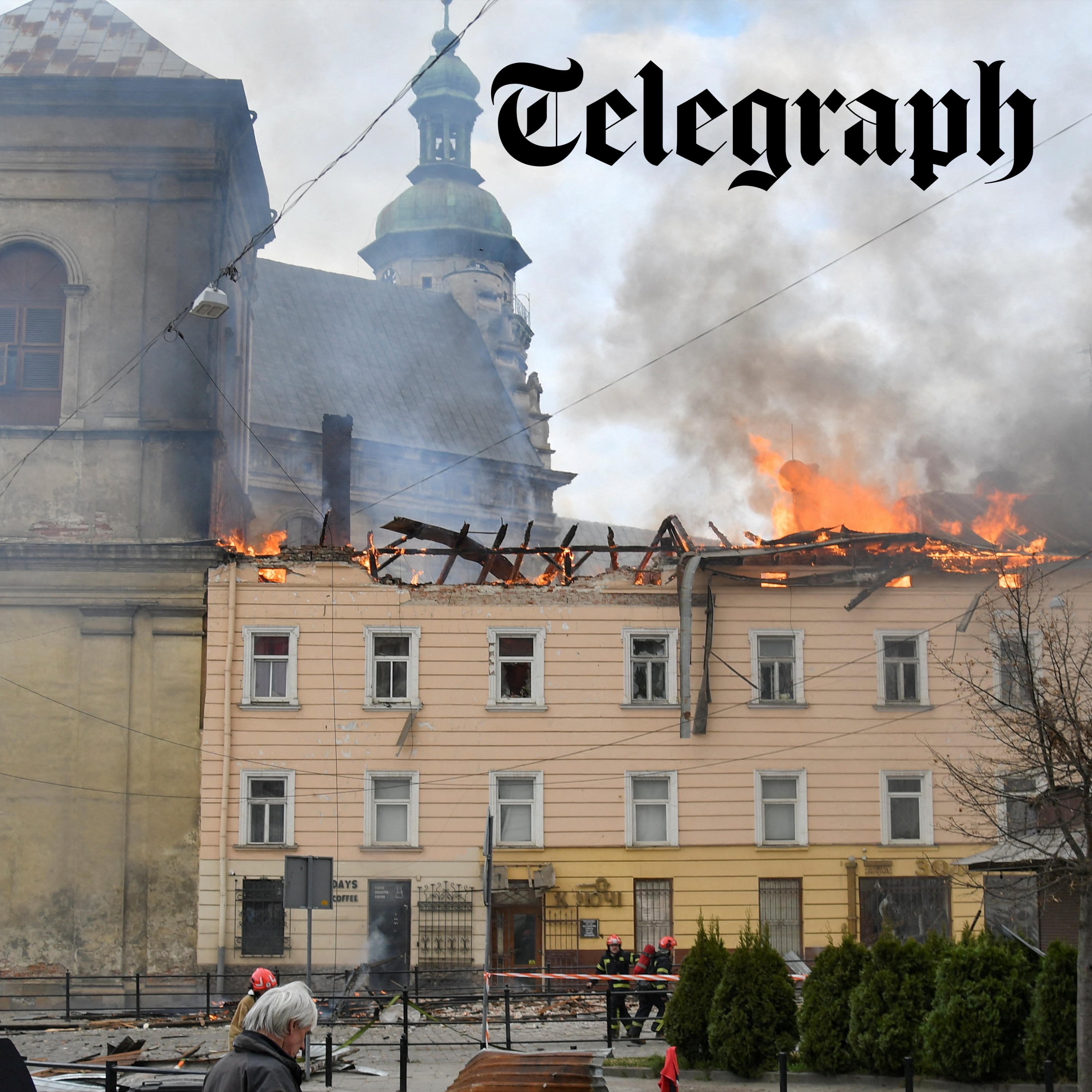
Ukraine: The Latest
Ukraine strikes Russia's Baltic ports after largest air assault of the war
00:44:31
Loading summary
Transcript72 lines
- [00:04]
Steve Crawshaw
The telegraph.
- [00:09]
Boost Mobile Advertiser
Here's how to stay alive longer so you can enjoy Boost Mobile's unlimited plan with a price that never goes up. Do not mistake a wasp nest for a pinata. Stay alive and switch now at boost mobile. After 30 gigs, customers may experience lower speeds. Customers will pay 25amonth as long as they remain active on the Boost Mobile unlimited plan.
- [00:24]
Paige from Giggly Squad
Hey, this is Paige from Giggly Squad. We all have way too many subscriptions and bills and no good way to manage or track all of them. But now we have Experian. It's the best place to manage your finances because you can connect all of your accounts in one place, track all your spending and you can let Experian do the work of finding ways to save you money. January is the perfect time to get your finances in order. It's the perfect New year resolution. Let your big financial friend Experian do the work for you. So get started today with the Experian app now.
- [00:56]
Adelie Pojman Ponte
Boost Mobile is now sending experts nationwide to deliver and set up customers new phones.
- [01:00]
Boost Mobile Advertiser
Wait, we're going on tour?
- [01:01]
Adelie Pojman Ponte
We're delivering and setting up customers phones.
- [01:03]
Boost Mobile Advertiser
It's not a tour, not with that attitude.
- [01:05]
Adelie Pojman Ponte
Introducing store to door switch and get a new device with expert setup and delivery.
- [01:09]
Steve Crawshaw
Delivery available for select devices purchased@boostmobile.com.
- [01:15]
Adelie Pojman Ponte
I'm Adelie Pojman Ponte and this is Ukraine. The latest today as Ukraine suffers the largest series of strikes of the entire war and a rare daytime attack across the entire country. We assess behind the scenes details of the talks held in Florida between the Ukrainians and the Americans as the first investment following the minerals deals. Then we explore the evolution of international law since the Nuremberg trials and how it plays into the post World War II Security Architecture. With the former director of Human Rights Watch. Bravery takes you through the most unimaginable hardships to finally reward you with victory. Russia does not want this.
- [02:08]
Steve Crawshaw
If I'm president, I will have that war settled in one day. 24 hours. We are with you. Not just today or tomorrow, but for a hundred years. Nobody's going to break us. We're strong. We're Ukrainians.
- [02:26]
Adelie Pojman Ponte
It's Wednesday the 25th of March. Four years and 29 days since the full scale invasion began. Today I'm joined by my co host Frances Darnley and author of Prosecuting the Powerful War Crimes and the Battle for Justice, Steve Krauschel. But first over to Francis for the latest in the military realm.
- [02:49]
Francis Darnley
Thanks very much, Adelaide. We reported yesterday that the Ukrainian intelligence services were warning of a major attack Being incoming. And that is exactly what's happened. So factoring in the bombardments we reported from overnight on Monday then through yesterday and last night, Russian forces launched nearly 1,000 drones and missiles making this, I've written this down. The largest Russian strike series against Ukraine of the war. Just let that sink in a moment. The largest of a 24 hour period and the largest daytime attack so far. And those are rare. These attacks were reported across the entire country, so 15 regions in total, north, south, east and west, Chernihiv, East, Dnipropetrovsk, Ivano, Francisk, Kharkiv, Kyiv, Lviv, Mykolaev, Odessa, Sumy, Vinnytsia and Zaporizhzhia Oblast were all struck mostly by shaheds, but Iskander ballistic missiles were also there as well as KH101s. Large numbers of all of those, obviously. Now, as it is rare for Moscow to strike during the daytime, 550 were reported yesterday in daylight hours, killing three and wounding several dozen in Lviv, two in Avalo Francisk and one in Vinnytsia. The number of civilians killed is lower than one might expect given these numbers. Perhaps that is due to the daytime nature of the raids, possibly people not in their beds. Also, there were, as we were talking about yesterday, lots of warnings about the prospect of this raid that may have made people more cautious. We just don't know. But nonetheless, I think we should be very thankful that numbers are not considerably higher now. Just listen to the sound of this drone recorded hitting Lviv yesterday.
- [04:38]
Adelie Pojman Ponte
Gosh, that definitely sounds like one of the worst attacks from what we've just heard. One thing I was really curious is, has there been a lot of push from the authorities to get Ukrainians in the shelters? Because we know how people don't really bother to go in the shelters anymore. Are they taking it more seriously?
- [04:52]
Francis Darnley
It was interesting because President Zelensky yesterday was urging people to take this seriously. He actually said that in his nightly address. That's rare. And so I think that we can almost certainly assess, and there have been reports of this on the ground, that people have been urged to be doing this much more and taking extra precautions when they normally would. As you say, Adli, when we're out there, people most of the time ignore the raids unless, and it is an important caveat, unless there is an expectation of something big or different coming. And this certainly was that. And Zelenskyy hasn't minced his words as a consequence. So he said that this spoke to Russia's absolute depravity. It Also, and he drew attention to this and I think for a particular reason, which I'll come to it also hit a UNESCO heritage site in Lviv, 17th century St Andrew's Church and the ensemble of the Bernardine Monastery in Lviv causing a fire. The extent of the damage is currently unknown. Residents have been seen sheltering inside the church at the time of the attack. Now, given that Moscow has recently been welcomed back, as we've been reporting it, to various cultural events around the world, the Olympics for one, the Biennale in Venice being another, the Ukrainians and President Zensky are very keen to emphasize the bitter irony of this and this strike in particular. The Foreign Minister said, don't look. This is the ugly face of barbaric Russia destroying UNESCO World Heritage in the protected center of Lviv. This is the barbarism you wish to normalize. Get real. And there's some very dramatic imagery from the VIV today, some of the worst, as I say, that we've seen for some time from the west of the country. Now, it's worth stressing that many of these projectiles were shot down, most notably by an operation against ground based missile launchers in Crimea. Ukraine's main military intelligence directorate posted geolocated footage showing Ukrainian forces striking a column of coastal missile system launchers that were apparently moving towards firing positions. The isw, our friends there believe that Russian forces have likely been stockpiling long range strike projectiles for some time, awaiting a bombardment like this to make a statement, or indeed just so that it would have more impact. Bear in mind, numbers matter when you're trying to disturb Ukraine's ability to deflect these missiles. They can't deflect all of them. So it's better that you fire all at once, in theory, strategically, because more and more likely to get through. Though of course that involves copious war crimes, which we'll come to earlier on. Let's not get used to this as being a strategy of war. Now, Zelenskyy also said the scale of this attack makes it abundantly clear that Russia has no intention of actually ending this war. We will retaliate. And on that score, for the second time in 72 hours, Ukrainian drones have traveled approximately 1,000 kilometers to strike Russia's Leningrad Oblast. Since the weekend, Ukraine has struck and damaged three ports in the Baltic Sea. So Usluga was hit last night with footage showing that site ablaze. Vyborg was also struck in the last 24 hours or so. And Primorsk, which Dom first covered a couple of days ago, apparently it's still ablaze and there's some footage that's been recorded from a Finnish helicopter showing the fumes still going up from that site. We've not been able to independently verify that, but if you're watching this on the video version of the podcast, you'll be able to see that now. Now, according to Estonia's Minister of Foreign Affairs, a drone struck the chimney of a power plant in the country with no substantial damages or injuries and no impact on Estonia's electricity system. It is believed that it was fired. Though widely speculated this has not come from the Estonians, but it is believed by many reports today that this was actually a Ukrainian drone striking those Baltic sites and that went off course, perhaps was disturbed by electronic warfare and grazed this chimney at this Estonian power plan. I actually was just at the Estonian Ambassador's residence here speaking to the Secretary General of Estonia. It was an off the record conversation, but lots of very interesting things are happening in relation to Estonia at the moment. And they're thinking about how to bring Europe together. And of course one of the primary reasons is incidents like this, whether it be from Russia or Ukraine. Now, in the ground war, there are reports of fierce fighting in the south and east of the country still. We've been reporting, of course on this being the launch of Putin's spring offensive, no confirmed movements on either side. It's possible that the information simply hasn't filtered through yet. Bear in mind, when Dom and I earlier this week were breaking this down in more detail, this was collating days worth of reports. And it may just be that we've not got the latest package, as it were, of this information to really be able to piece it together properly. It doesn't appear though to be limited just to that sector where the regions intersect with each other. This seems to be something that is broader than that. That's certainly what the Ukrainian military are saying. They've warned that Moscow's forces are trying to break through defensive lines at key points across the entire 640 mile front in that area. Now, they've also said that Russia has lost circa 1,280,960 troops since the beginning of the full scale invasion. Adding to that tally, 1220 casualties just over the past day alone. So furthermore, to that figure, they claim now 11,800 tanks, 24,000 armored combat vehicles, 85,000 vehicles and fuel tanks, 38,000 artillery systems, 1,600 multiple launch rocket systems, 1300 air defence systems, 430 aircraft, 350 helicopters, 196,000 drones, 33 ships, and boats and two submarines. Staggering numbers, staggering numbers. But one final story relating to the military sphere. According to the ISW and others, Russia recently launched satellites as part of efforts to develop their own replacement for SpaceX's Starlink. So the Aerospace Company Bureau 1440 strange name, announced yesterday that it launched the company's first communication satellite into low orbit. And this launch, they said, supports Russia's efforts to establish a low earth orbit satellite based broadband communication service for the entire world. It plans to launch hundreds more satel satellites over the coming months. But one Russian mill blogger has characterised this launch as a complete failure, claiming that the bureau was supposed to launch 16 satellites in December, so they're months late, and that it's also led to various other logistical issues further down the chain. So this is not just to be clear, going to transform the situation on the battlefield with regards to Starlink. For those Russian forces that have been cut off, although they have already started, it seems to have recalibrated so the impact is less severe. But nonetheless, don't expect there to be a big change as a consequence. Whether that mill blogger posted that from Starlink or another system remains to be seen. That's us up to date in the military realm.
- [11:39]
Adelie Pojman Ponte
Thanks, Frances. And now on the political and diplomatic realm, more is coming out of the talks that were held in Florida over the weekend between the Ukrainian and the American delegations. As Zelenskyy posted last night that he had been briefed by his team on the key points, the opportunities and the challenges of the conversations he also shared. Never seen before, photographs of these talks taking us inside the room for the very first time. Ukrainska Pravda One of the leading Ukrainian news sites is reporting that the U.S. along with Russia, is pressuring Ukraine to withdraw its troops from the Donetsk region. What an interesting turn of phrase. Maybe there's some nuance that Google lost in the translation, but it almost sounds as if the US and Russia are allies working together. Ukrainians are yet again, as they have been since last summer, fighting against the idea that the Foundation's first peace were established between President Trump and President Putin in Anchorage in August. If the Russians haven't managed to push ahead on the military front recently diplomatically, however, one can wonder whether Anchorage has indeed been a diplomatic success for Russia. So I'm just going to quote an unnamed source from Zelenskyy's team who talked to Ukrainska Pravda. Here's what they it seems like there are three parties at the meetings, but Ukraine is constantly debating with this Anchorage thing. So no matter what they talk about, it always comes down to the Americans saying something like, get out of Donbas and we'll build you a paradise, like we agreed on in Alaska. Again, what was agreed on in Alaska? A source involved in the negotiations went even further. Here's what they said. Our people are spending a lot of time trying to somehow pull the Americans away from the idea of withdrawal and toward creating some kind of economic zones or something else. But at some point, everything is abandoned and we hear again, we need to withdraw. And so it goes on in circles. With the war in Iran, Washington's attention has been fully on the Middle east. And Zelenskyy has warned time and time again how detrimental that was, not only for Ukraine, but for the wider world as well, going as far as saying yesterday that it was reinforcing and emboldening Russia in order to keep the eyes on Ukraine. Zelenskyy has been giving lots of interviews lately to the British media and to the French media as well. He was in the French Public Broadcasting Service just a couple of weeks ago, and I think he should give one to us as well. We should.
- [14:06]
Francis Darnley
If you're listening that team, it's about time. Come on.
- [14:10]
Adelie Pojman Ponte
We're more than happy to do that anyways. But it seems now that the US may be entirely abandoning mediation efforts between Ukraine and Russia in order to focus fully on Iran and later this year on the midterms elections. The government source on the Ukrainian side was clear. Americans don't see where we can reach agreement on the main issue. And I think that is very telling. I'm not sure any of us here were ever optimistic that these talks would come to something. But that assessment is pretty damning that at the end of the day, they don't think they can agree on the main problem and come to a conclusion on the main problem. But could it, however, open a space for Europe? Europe, who's been begging for a seat at the table of the negotiations for months now. Is that their chance?
- [14:57]
Francis Darnley
I just don't think Moscow are going to let them.
- [14:59]
Steve Crawshaw
Them.
- [14:59]
Francis Darnley
That's. I think that's it.
- [15:00]
Adelie Pojman Ponte
Probably not. But also they would have to overcome their own internal divisions, namely the Hungarian blockade that we've been talking about and you've been reporting on for days now. And whether that may change is very unlikely. We're still waiting for the 20th package of sanctions to come through, let alone all the disagreements on the duo pipeline.
- [15:18]
Francis Darnley
Just one thing on Hungary, I think that's also just worth emphasizing is that even if, and this is A huge if. But even if the opposition wins on April 12, the fact is it's going to take a long time for a government to form. That is still a delay of the 90 billion loan. And even then there's not a guarantee that's going to be something that Petya Magyar is going to want to then be as his opening gambit as I'm new leader is to give a big boon to Brussels that could weaken him politically. So I think personally Europe is going to have to find a different way of getting the 90 billion outside of the mechanisms of the EU, probably bilaterally.
- [15:55]
Adelie Pojman Ponte
We'll have to see in the next few months what comes on that front. But on Hungary, do you know what President Trump said about the upcoming elections in a couple of weeks? He truth socialed yesterday, coming out loudly and clearly in favor of Viktor Orban. He said that he was a strong and powerful leader and he urged Hungarians to support him in the polls, calling him a true friend, fighter and winner. Which brings us once again, Francis, to the overarching question we've been asking for the last year. Who is the US really allied with and whose game are they really playing on that front? We're just a year from the dramatic Oval Office clash that derailed the now infamous minerals deal and for several months we don't really know where that was going. We heard a lot about it in July. That was the last time we discussed it, I think. But some news is finally coming through because the fund that the minerals deal spawned, officially known as the US Ukraine Reconstruction Investment Fund, is making its first move this week as the US Development Finance Corporation, that is a lot of really long names, is currently in Kyiv to discuss the fund with the Ukrainian counterparts. It is jointly managed, a private equity style fund between the two sovereign nations and it will back Ukraine's defence tech sector as well as target energy and minerals. It is the first investment planned for this year out of three and it will go to Sign Engineering, a Ukrainian dual use military technology company. The size of the investment however, is still unknown. There was a portal that went live earlier this year to accept applications for the fund and apparently 130 projects have been submitted for the first 10 years. All of the profits from the funds are going to be reinvested in Ukraine's economy with Kyiv and Washington each allocating $75 million in seed capital. And then final update from me. Let's cast our eyes to the temporarily occupied territories because we've been compiling some updates for the last 10 days. There's a Pro Kremlin publication that that Russian authorities are aiming to relocate nearly 114,000 citizens to the occupied Ukrainian territories by 2045. Citing government plans for the development of Donetsk, Luhansk, Zaporizhzhia and Kherson oblasts. The Russian government has announced 15 master plans and 10 land use projects and aims to build around 13 million square meters of housing, 140 kindergartens, several dozen schools, and about 100 medical facilities in occupied Ukrainian territories. They're also seeking to develop tourism in that area, aiming to attract up to 9.4 million visitors by 2044. If you think of these plans for the occupied territories and you also think about the militarization of children and the deportation of children, it really tells you how far ahead Russia is thinking in terms of integrating them in the Russian system and in terms of repopulating and colonizing these territories. As a side note, I was in Latvia these last couple of days where I visited the fascinating Museum of Occupation in central Riga. And it was just mind blowing to see how the strategies for deportation, displacement of local populations, the following with the resettlement of Russians, the deportation of children, the indoctrination, the militarisation, all of that is a playbook that is so painfully the same. It was already there in the 40s and the 50s in Latvia, in the rest of the Baltic states. And it is exactly the same as what we're reporting on day in, day out in the temporarily occupied territories. Back to the final updates. Putin has also signed a decree that continues to make obtaining Russian citizenship easier for the people of the temporary occupied territories. It is consolidating Russia's strategy of mass transportation. And that process had been simplified in 2022. It's now become indefinite in Russia's law in order to make the integration of Donetsk, Luhansk and Zaporizhzhia easier into the wider Russian economic, financial and legal systems. And so that's now a permanent policy. And last point for me on the occupied territories. In the occupied parts of Zaporizhzhia region, there is intensifying force mobilization, especially in Berdyansk. Men are being detained during document checks and coerced into signing contracts to join Russia's military. And those who refuse are threatened with criminal prosecution in prolonged detention. So according to the National Resistance center, at least 17 people were forcibly mobilized over the past week. And now to our interview today. We're very pleased to welcome Steve Crawshaw. Welcome to the show.
- [20:29]
Steve Crawshaw
Thank you. Very pleased to be here.
- [20:30]
Adelie Pojman Ponte
We are here to discuss your book prosecuting the powerful war crimes and the battle for justice. I just want to frame this conversation with Ukraine because the two lawyers who define genocide and crimes against humanity, Lemkin and Lauterpaart, were both lawyers trained in Lviv. So that is the basis of international law Since World War II that went on to define the Nuremberg Trials. Can you go over, and I know this is a broad question, what has changed in the pivotal moments that bring us where we are today, where international law is so important and plays such a role in prosecuting potentially Putin down the line in Ukraine?
- [21:10]
Steve Crawshaw
Absolutely. So first, thanks so much for having me here. It's great to discuss with you guys. Ukraine is central when I started writing the book. So as you briefly mentioned, I was at Human Rights Watch, I was at Amnesty, I'd been a journalist before that, working on the Soviet Union, as them was, and then Russia and indeed Ukraine. And what was happening in Ukraine was central for my thinking when I was writing it about all the changes where we've got to the full scale invasion had not yet started when I was first thinking. By the time I properly started writing the book, the war was fully underway. And so how Ukraine is a symbol, both of the terrible things that are happening, but also of the possibilities of justice, which is the theme of the book. So to take your question directly, yes, Nuremberg, as we all know, is the foundation stone of pretty much everything. There were things that happened before that, but what happened in 1945 and a couple of years after was so important. And many of your listeners may be familiar with Philip Sands great book East west street, where those two characters, Raphael Lemkin on the one hand and Hersch Lauterpacht on the other, played such a key role. And as you say, both of them came from Lviv at that time, Lvov in Poland, but now western Ukraine. So it's tied in with Ukraine in so many ways. There's another very obvious way that international justice is tied in ways that bring very cruel ironies to the whole thing. In 2023, I visited Kharkiv for obvious reasons close to the front line and seeing what civil society organizations were doing in terms of documenting war crimes and so on and so forth. But one of the other things about Kharkiv, less known these days, is that even before the Nuremberg trial, there was a very important trial in 1943 in Kharkiv. And there was lots of vivid language from the Soviet prosecutor of the Nazis who put on trial there of these terrible bestial crimes that were being committed and these terrible crimes against civilians. And of course, by the time I got there, the opera house and theater where that trial had taken place was itself shuttered, damaged by shrapnel from the Russian attacks. And so we would really come full circle. So Ukraine is linked into these stories in many ways and the crimes are very obvious to all of us. But I think that we shouldn't underestimate how much has changed as well in the past eight years. So Nuremberg seemed to be a bit standalone. There were Tokyo trials as well, which were much more problematic in many ways. And then you had half a century of almost nothing until not completely by chance, the collapse of the Berlin Wall, which I covered as a journalist. And everything that was happening in Eastern Europe at that time was a time of opening up in the 1990s, which made possible the international collaboration which led to the creation of tribunals in the Hague on former Yugoslavia and Rwanda, and then leading the International Criminal Court agree in Rome in 98 and created fully in 2002. But even when that happened, they were still dancing around a little bit. So Democratic Republic of Congo is mostly militia leaders who were prosecuted didn't really get to the top at all. Or those senior leaders from Congolese perspective. Like, what about those guys who are actually running the whole place? There was and is an arrest warrant for Al Bashir, the priority president of former president of Sudan. But that was an exception. And in any case, geopolitically, he didn't hold that many cards globally. So when we saw the war in Ukraine begin, many people were saying to me, yes, we'll never see an arrest warrant for Putin. Like, grow up. Which world do you live in? This is the president of a country that has is a permanent member of the Security Council, holds that key veto at the Security Council. It's not going to happen. And as we all know, actually only a few months after I really got into writing the book, in other words, in May 2023, anyway, spring 2023, that arrest warrant happened, and even more dramatically in some ways and with significant relevance for Ukraine, indirectly, an arrest warrant for Benjamin Netanyahu and his defense minister in Israel, in other words, the Prime Minister of America's closest ally. That was really pushing it. And again, the people I was speaking to constantly said that's just not it should happen because you're supposed to follow the evidence, but it won't happen. So what we've seen is a real growth in the self confidence of the International Criminal Court and its prosecutors and its judges who've confirmed these warrants. Of course but at the same time, and for exactly that reason, hatred from the obvious places. So it was kind of that incredibly important crossroads. That's the international justice framework. There are other elements which we can perhaps come to. But the one that had most headlines, understandably, is that International Criminal Court and in a different way, the International Court of Justice. So those two to Hague institutions who are doing more, which are doing more important things today, I think, than at any point in history.
- [26:06]
Adelie Pojman Ponte
It's interesting because a lot of the conversation has been that international organizations, international law and the post World War II architecture may be inefficient in stopping genocides, in stopping war crimes, in stopping stopping crimes against humanity. And I'm not going to get into the definitions of what which terms applies to which war. But what you're saying is actually there is growing confidence in the institutions from inside, in what they can do.
- [26:37]
Steve Crawshaw
There is or there should be. So what we're seeing is a massive attack which absolutely could destroy. Again, to focus on the International Criminal Court specifically, which is under the greatest pressures, Trump makes absolutely no secret. He boasts of the fact that he's trying to destroy that court with which pretty much all European governments jointly created back in 1998 and came to existence four years later. Africa states, Latin America, Asia, across the world. So ones we didn't have was the United States, Russia, China, North Korea, and indeed Israel and Iran. But broadly, democracies around the world, with the exception of the United States, notably really supported this court and continued to say that they support it. But when you have the elected US President boasting about about the sanctions he's putting on, so that means that credit cards can't be used. It means that there are problems with email access. A court needs money to be able to run. It can't do its work unless its bank accounts are functioning. And even that is under pressure. So the threats are very real. But to take your point, yes, I find it dismaying or sometimes stronger words than that when we see a string of articles which say international law is dead. International law is only dead if we allow it to be dead dead. Actually, the institutions themselves are behaving very robustly and in ways that only 10, 15 years ago, in other words, after the ICC already existed, would have seemed like that's not going to happen. That's true to some extent of the International Court of Justice, which has also said very robust things. The icc, which deals with individuals being prosecuted, presidents, prime ministers and so on. The icj, which deals with state to state issues. But both of Them have been quite bold and basically said, this is where the evidence is and we don't really care whether a powerful government does or doesn't like what we're saying. And that brings us back a little back to the very beginning of your first question with Lauterpacht, who himself was a judge at the International Court of Justice. And he wrote that you cannot avoid where the evidence takes you as a court. That's your job. You're not interested in the political pressures coming, coming in. And I wish that his great nephew, so Isaac Herzog, the current president of Israel, is the great nephew of Lauterpach. I wish that he and his prime minister would listen a bit more to what his great uncle had said.
- [28:59]
Adelie Pojman Ponte
I did not know about that family.
- [29:00]
Steve Crawshaw
It's a fascinating little detail, isn't it? There's so many things tie up together. Yes.
- [29:06]
Adelie Pojman Ponte
Someone else who really believes in the power of international law is someone I've interviewed recently in Ukraine, and that interview has not come out. It's going to come out in a future project of mine. She's a very young international lawyer called Katerina Reshevska, and she's the person who's behind the incentive and the push from Ukraine, in Ukraine to get an arrest warrant for Putin. She's a fascinating lady. I can't wait for you to hear that interview. Can you tell us, what do you need to bring a leader like that on trial? What do you need for an arrest warrant and what do you need to put someone on trial? And why have some leaders like Milosevic been on trial and some others seem untouchable or at least.
- [29:46]
Steve Crawshaw
Yeah. So to. To start with Milosevic, the Serb leader at the time of the Yugoslav wars and responsible for horrendous crimes at that time, as was clearly very clear to me as a journalist covering it at the time, and to anyone else who was on the ground, first in Croatia and then in Bosnia, and it wasn't only the Serbs that were committing those war crimes, but it was very driven from Belgrade. He was very difficult to get to interview. Through various bits of coincidence. Good luck and a bit of sheer bluff, I suppose. I ended up managing to interview him in 1992, at the beginning of the Bosnian war, when he was here for a big London conference. And they just started to talk about the possibility of a war crimes tribunal at that time. And I said, what about you, Mr. President? He said, yes, I think it's a marvelous idea that we should have a tribunal. I said, what about you? Do you think you could end up there, me, he said, I am for peace. Of course I will not end up there. And it was a surreal interview, probably one of the most surreal I've ever done. But what I also took away from it was not just that he felt sure he wouldn't, but I at that time felt, you'll never end up. And the governments who'd created the tribunal didn't actually want it to go to the top. They thought it was for small fry. It was a bit of hand washing, to be honest, at those early years. But nine years later, he was in the Hague in the specially created tribunal. And the way that happened, which is very relevant for today, going to your question, was that in the year 2000, after an arrest warrant had been issued for him and publicized and partly connected with that, I talked to protesters who said, he has made us the worst country, by which they meant we've now got a war criminal, an indicted war criminal leading us. And he was overthrown by his own people in the year 2000. It was first an election which he denied. He stole the election, but the protests meant that he was overthrown. And I was very privileged to witness all of that. And then a few months after that, his own democratic elected government, they handed him over to the Hague. So that's the very big question of what comes next. The International Criminal Court doesn't have a police force. It can't send people out to put him in handcuffs. So you have two possibilities. Either somebody travels, be it Putin or Netanyahu or anybody else, and Putin had to cancel travels to South Africa a couple of years ago, had to cancel travels to Brazil last year, let alone
- [32:02]
Adelie Pojman Ponte
he has traveled to a couple of places.
- [32:03]
Steve Crawshaw
He's traveled to a lot of. Of places. I. Absolutely. As has Netanyahu. No, he's traveled to a lot of places, sadly, including those who are even members of the court. But I think it's fair to say that we are not going to be seeing him in a Western European capital. You know, Hungary, as you've discussed, is a kind of country apart in Europe at the moment.
- [32:21]
Francis Darnley
And they said they wouldn't arrest him and they went there.
- [32:23]
Steve Crawshaw
That's right.
- [32:24]
Francis Darnley
They had. They came out of the blocks.
- [32:26]
Steve Crawshaw
Exactly. So Orban likes to make these noises and it. But the fact is that travel plans are concerned now. That's not the same as handcuffs. So really, the key question is, how do you actually make it? Does it matter? Is the first question. Yes. Even without those handcuffs, it sends a certain signal. And I think that's true of Putin and You guys reported in recent days, that was interesting where we had a previously very strongly pro Putin blogger who himself came out and said he should be facing war crimes. Now that was an interesting signal. Quite difficult to interpret what it means. But in Israel, certainly we're hearing the same of those who care, saying in order for us to move forward, we need to have a kind of accountability coming. So really I think that the short answer to your question is the most important thing is changes within the society. But that needs to combine with the international pressures saying this actually matters, and when those two things can come together, then I think we have a chance of moving that forward. But what you were describing about the Ukrainian pressures for the ICC 2 Act I think is wonderful. And it was one of the things that most struck me during my travels. While writing the book, I traveled several times to Ukraine. And I was most interested not in myself documenting war crimes, which have been well documented, but seeing the brilliant organizations who are risking and sometimes losing their lives in order to ensure that there will be consequences for this. And I think that's so important.
- [33:53]
Adelie Pojman Ponte
I've been fascinated to meet them on the ground and understand how that process is being documented, because they do a very similar job to us journalists, in a way, but it's also quite different. But the methodology is fairly similar. And it is so important to understand that infrastructure of how you go from the ground to these courts.
- [34:12]
Steve Crawshaw
Exactly.
- [34:12]
Adelie Pojman Ponte
How does. How does a case travel all the way up? And I've been really interested in figuring that out.
- [34:17]
Steve Crawshaw
Exactly. So the technical framework is linkage evidence, because it's fairly easy. The guy who has pulled the trigger, if you manage to identify who it was who was torturing this person in a cellar in Bucha, that, you know, that's obvious, but that person isn't really the main person you want to get to. So then you're going up and you're using all sorts of them to say, okay, there's the Colonel, there's the general, there's the this. And then how does that go up to the Defense Minister and to the President? How do we pool a things together? And the. The linkage evidence, as it's called, that's the. Or command responsibility is the other phrase of kind of, which describes the overarchingness. That's the bit that's really interesting, I think, for ensuring that these things do
- [34:58]
Adelie Pojman Ponte
mean something in the years to come on that continuum. Another aspect of how justice is being rendered or how these people are being prosecuted that is very interesting is the fact that Ukraine is doing such an effort in prosecuting the local collaborators and the people at the lower end of the chain of command. And would you say there's an actual continuum between national justice being rendered mostly in abstentia, but not only all the way to the international courts?
- [35:27]
Steve Crawshaw
Yeah, I think there's definitely a continuum. And one of the things that I think all of us have learned more clearly over the years, there was so much focus on international justice and the Hague, but actually I spoke to a couple of the current chief prosecutor and his predecessor as well, and indeed the first one also had all said the same things. This should be a catalyst for change. It shouldn't all be in the Hague. So regional mechanisms and also national courts are really important. I get why collaborators are being prosecuted. I think that to some extent what we're seeing is Ukraine because it can't get its hands on the big people. Focus goes elsewhere and of course they would like to have the big people. The other stuff is not irrelevant. But the prosecutors I was talking to, let alone the non governmental organizations I was talking to, to all said what really matters is how can we push it further and further up the chain that will matter so much.
- [36:20]
Francis Darnley
Can I just ask your opinion on the special tribunal that's in the process of being set up? It depends on who you speak, whether it's already there or if it's. But certain countries, including Estonia, actually have been very vocal on, they say the importance of there being an established special tribunal that will always be working for presumably decades. This will take, take many, probably thousands of people to work on if they were to really try and prosecute the war crimes that have taken place in Ukraine. They want there to be a building, they want there to be a base. How far along are we with that and what would be the implications, do you think, of that existing relative to say, the international courts you've referenced to and entities on the ground in Ukraine
- [36:59]
Steve Crawshaw
say it's a really good question. So for the Ukrainians, as this is incredibly important and the Ukrainians, a bit like what you were describing with the icc, they've put incredible energy. Anton Koronevich in the Ukrainian government is particularly key on having pushed at a time, as he was telling me, complete skepticism when it started, complete and utter skepticism, said there's no point. One people round one European government's round won, the Biden government round. The Trump government, of course, doesn't care about justice in any shape or form. What we've now got is the Council of Europe, which is supporting that. But it still needs the money. It's all very well to say it's supported in principle, but as you rightly said, there is movement ahead on that. And that would be the first time since Nuremberg that the crime of aggression has separately been prosecuted. And that's specifically a leadership tribunal only. So if you're a colonel or a captain, that's not relevant. The crime of aggression, you may have crossed the border in your tank, but that's neither here nor there. What matters is those decisions at the top. And so in parallel to the icc, at Nuremberg, it was described as the crime of crimes, because without that crime of aggression, none of the other things that followed would have happened. So I think it is very important. But as you rightly say, it's still, to be honest, quite confused. You hear the Ukrainians always put a brave and optimistic spin on where it's going, but it's been a long time and it still isn't actually there.
- [38:20]
Adelie Pojman Ponte
One final question is there are a lot of different cases that you study in your book. From Latin America, Pinochet to Serbia. One of the key things about international justice is the fact that the voices of the victims are being heard. I just want to put at the center, back at the center, because we've not touched upon that. The voices and the stories and the suffering of the victims of war, humans at the center of that. How is that? How important have you found it? And how has it played out in different countries in terms of rebuilding society, society and rebuilding people and countries, that process of international justice?
- [38:57]
Steve Crawshaw
Thank you so much for the question. It's a really important one. It's one that I've learned about over the years as well. So if you're in a human rights organization, you're taking the survivors voices. Of course they tell you what has happened, but you'll then end up the danger is you're listening, quote, unquote, just to the lawyers. And the lawyers do amazing stuff. But to start with, those courts were slightly lawyer to lawyer and what can we do? And the survivors were add ons, really. You just bring them in as chess pieces almost. Now those survivor voices are central to the process. And what do we need is understood to be a central part. And that's obviously true in Ukraine. But I'll perhaps give the example which for me was so striking for the Trump era. Updated edition of the book which has just come out was therefore also after the fall of Assad. And so I traveled to Syria last year. The energy, the absolute energy of Syrians. I went to a community meeting in an area of complete rubble in a suburb of Damascus, packed room of people wanting justice and needing justice to happen, defined in different ways. And that's absolutely fine and as it should be. There are very many different ways that it can be seen. It's not just directly criminal justice, but restorative, reparative, all lots of different understandings of that, but that something needs to happen. And without that you don't get the stability. It matters morally, it matters for those people, but it really matters for the stability of the society. And I think the danger of leaving that to one side cannot be overestimated.
- [40:26]
Jerry Insurance Advertiser
Are you noticing your car insurance rate creep up even without tickets or claims? You're not alone. That's why there's Jerry, your proactive insurance assistant. Jerry handles the legwork by comparing quotes side by side from over 50 top insurance insurers so you can confidently hit buy. No spam calls, no hidden fees. Jerry even tracks rates and alerts you when it's best to shop. Drivers who save with Jerry could save over $1300 a year. Don't settle for higher rates. Download the Jerry app or visit Jerry AI Acast today.
- [40:59]
Cargurus Advertiser
Finally, Car shopping made for you. Meet Cargurus Discover, a new search feature where you can look for vehicles based on the way you think, using your own word words. No more being boxed in by filters. Whether you want great gas mileage for road trips or extra trunk space for the whole crew, simply type it in and Cargurus Discover will give you real shoppable listings that match. It's the smarter way to find the car that fits your life. With Cargurus Discover, you can skip the filters and describe what you're looking for in your own words. Simply type what you want and Cargurus Discover instantly surfaces real listings that match your exact number needs. It's no wonder Cargurus is the number one most visited car shopping site according to SimilarWeb's estimated traffic data. Buy or sell your next car today with cargurusargurus.com go to cargurus.com to make sure your big deal is the best deal. That's C-A-R G U R U S.com
- [41:55]
Steve Crawshaw
CarGurus.com Ryan Reynolds here from Mint Mobile
- [41:59]
Ryan Reynolds from Mint Mobile
with a message for everyone paying big wireless way too much. Please, for the love of everything good in this world, stop with Mint. You can get premium wireless for just $15 a month. Of course, if you enjoy overpaying. No judgments. But that's weird. Okay, one judgment anyway. Give it a try@mintmobile.com Switch upfront payment
- [42:19]
Adelie Pojman Ponte
of $45 for 3 month plan equivalent to $15 per month required intro rate first 3 months only, then full price plan options available, taxes and fees extra. See full terms@mintmobile.com Steve Crawshaw thank you very much. Let's go to our final thoughts. Francis, do you want to start?
- [42:34]
Francis Darnley
Thanks, Adli. Something a little bit lighter after a rather day, but fascinating and thank you for your time. Steve one for budding linguists among you in London, the Ukrainian Institute of London's Language school is now open for enrolment this spring. We'll add links in the show notes if you're interested in this. They've got a popular beginner intensive course that runs from 30 March to 14 April. Quite a brief and intense one. If you're looking to get the basics which can be very handy in Ukraine. Let me tell you, being able to order milk molecule handy as well as other key words and phrases. There's also a longer one that's 12 weeks long which runs from spring and summer summer and that opened on the 20th of March. So you can still enroll for that. I think you've got a few days to do so if you're interested in that, we'll have the links in the show notes. Jack or you, Adley.
- [43:18]
Adelie Pojman Ponte
You should see the face of the Ukrainians when Francis asks for milk in his tea. They really roll their eyes. Yes, we should sign up for that course.
- [43:26]
Francis Darnley
If only we had the time. I'm already trying to find excuses of
- [43:30]
Adelie Pojman Ponte
not being the entirety of Francis Ukrainian vocabulary Moloko and Jack there is mo.
- [43:36]
Francis Darnley
But I wish I could do it. I wish I could do it. But unfortunately that, that, that number of evenings I think I can't quite sacrifice. But I hope people do genuinely sign up. It's a great initiative.
- [43:44]
Steve Crawshaw
Long train journeys from Poland into Ukraine.
- [43:46]
Adelie Pojman Ponte
I'm six months into Duolingo for Ukraine and maybe I need to switch it up with.
- [43:49]
Francis Darnley
I heard your pronunciations earlier. Very good, thank you.
- [43:53]
Adelie Pojman Ponte
I just want to touch upon a story that has made the headlines in Ukraine over the weekend and that first came on my radar last month when I was in Kyiv because Patriarch Emeritus Filaret, and I hope I'm pronouncing this Duolingo didn't teach me how to say his name, was one of the leaders of the Orthodox Church of Ukraine and one of the leaders who separated from the Moscow patriarchate in the 1990s and he's just passed away over the weekend. He went into hospital While I was in Kyiv. So it made the headlines around the country. I just want to touch upon this because the Ukrainian Orthodox Church and its separation from the Moscow Patriarchate has been a very important tool of resistance morally, spiritually and politically for Ukraine since the beginning of the war. Patriarch Filaret was born in Donetsk, actually in 1929, an area that is now occupied. And he became the Metropolitan of Kyiv and then a leader of the Ukrainian Church at a time where we're still part of the Russian Orthodox Church. He was in that position until 1992, and he was even considered, considered to be the Patriarch in Moscow in 1990. But he decided to break away from that Russian entity and created the unrecognized kyiv Patriarchate in 1992, which he then was at the head of until 2018. So actually, really recently, despite he would have been really old at that point. He's been very vocal against the Russian aggression since 2014. And actually some people around him who knew him and who had worked with him in the Patriarch. It has also said that as early as 2015, 2016, there might be a full scale war. He had a bit of a prediction as it stands. I don't know how maybe spiritual, that is. He had said that there would be a great war and that Russia would lose it and that Russia would cease to exist as a State by 2030. So I don't know what to make of that prediction. I don't know if we'll have a daily show in 2030 about this war.
- [45:46]
Francis Darnley
Find out. Five years.
- [45:47]
Adelie Pojman Ponte
Find out. Steve, as our guest, you get to close the show with your final, final thoughts.
- [45:53]
Steve Crawshaw
Oh, mostly just thank you. Fascinating stuff there. Yes. When I was a journalist, I was covering some of that years ago and it's always been interesting that split and I guess it underlies all of those kind of imperial colonial identity thoughts, really, isn't it so interesting? But no, my thought is just hope for the Ukrainian people who are doing continue to do such extraordinary stuff in such difficult circumstances. Trump told Zelensky. So offensively you have no cards to play. And the Ukrainians are basically just saying, everyone. You may think we have no cards to, but actually we are still here. And I think that's. It's great that you guys are here documenting that every single day.
- [46:27]
Francis Darnley
Ukraine the latest is an original podcast from the Telegraph created by David Knowles. Every episode featuring us in the studio maps and battlefield footage is now available to watch on our YouTube channel. Subscribe@www.YouTube.com Ukraine the latest. There's a link in the description. If you appreciate our work, please consider following Ukraine the latest on your preferred podcast app and leave us a review as it helps others find the show. Please also share it with those who may not be aware we exist. You can also get in touch directly to ask questions or give comments by emailing ukrainepodelegraph.co.uk we continue to read every message message. You can also contact us directly on X. You'll find our handles in the description. As ever, we're especially interested to hear where you're listening from around the world. And finally, to support our work and stay on top of all of our Ukraine news, analysis and dispatches from the ground, please subscribe to the Telegraph. You can get one month for free, then two months for just one pound at www.telegraph.co.uk Ukraine the latest
- [47:40]
Steve Crawshaw
my name is David Knowles. Thank you all for listening.
- [47:43]
Francis Darnley
Goodbye.
- [47:52]
Experian Advertiser
My dad taught me a lot, including how easy it is to forget to cancel things. So I downloaded Experian, my bff. Big Financial Friend Experian could help me cancel my unused subscriptions and lower my back bills, saving me hundreds a year. Get started with the Experian app today. Your big financial friends here to help you save smarter. Results will vary. Not all bills are subscriptions eligible. Savings not guaranteed $631 a year average savings with one plus negotiations and one plus cancellations paid. Membership with connected payment account required. See experian.com for details.
- [48:21]
Adam Grant
Experian hey, this is Adam Grant, host of ted's podcast Rethinking with Adam Grant. Let me share with you why smart finance leaders turn to be they know that clarity isn't just helpful, it's strategic. As the intelligent finance platform, Bill uses AI to automate the busy work for nearly half a million businesses so they can focus on intentional growth, eliminate the friction and start scaling with the proven choice. Visit bill.compenven to talk with an expert about automating your business finances and get a $250 gift card as a thank you. That's bill.com proven terms and conditions apply. See Offer page for detail Else with
- [48:56]
Jerry Insurance Advertiser
verbo care help is always ready before, during and after your stay. We've planned for the plot twists, so support is always available because a great trip starts with peace of mind.