← Ukraine: The Latest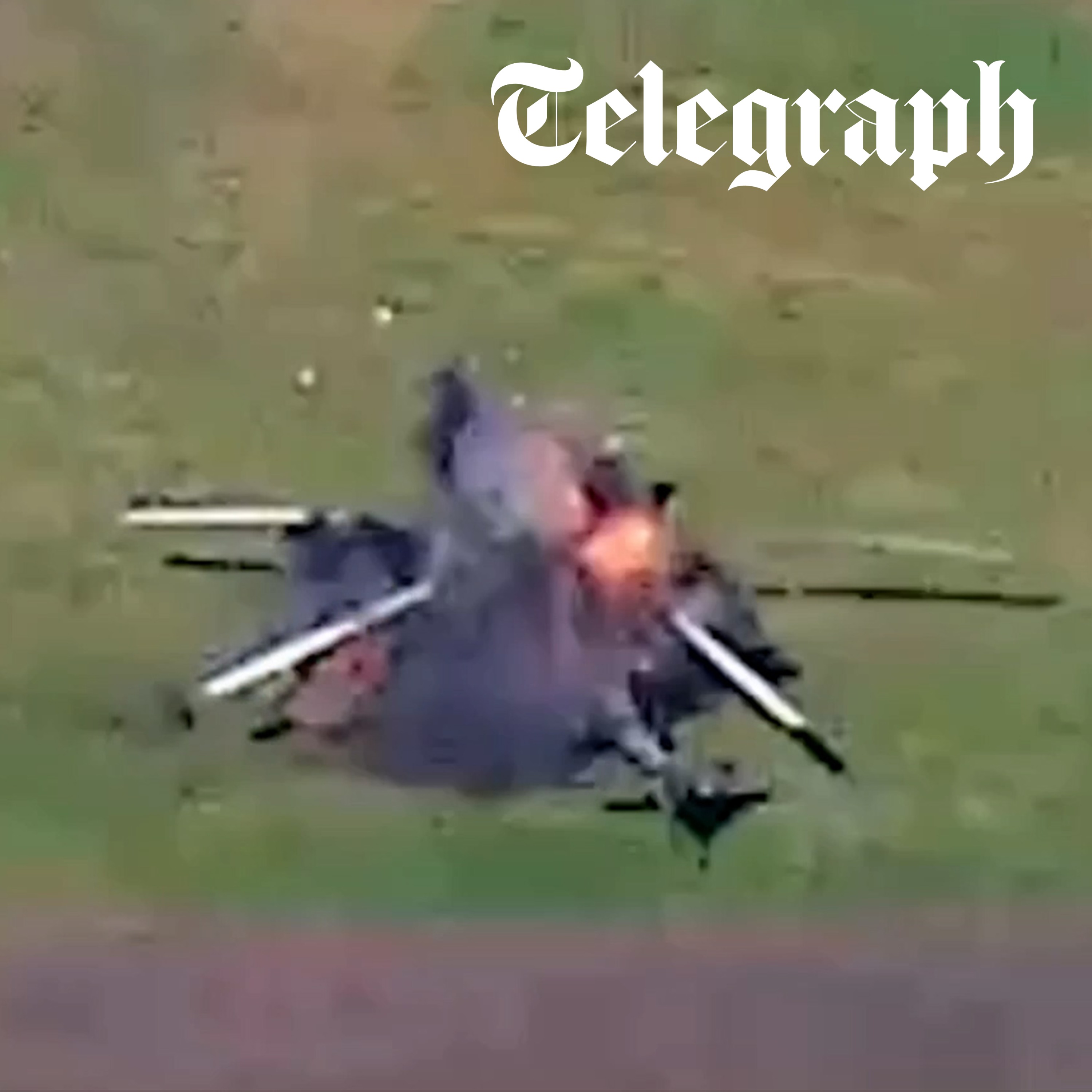
Ukraine: The Latest
Ukraine ‘vaporises’ Russian helicopters mid-flight behind enemy lines & Putin proposes ‘brief’ ceasefire in Trump call
00:47:40
Loading summary
Transcript86 lines
- [00:04]
Narrator/Host
The telegraph.
- [00:10]
Progressive Insurance Advertiser
Insurance isn't one size fits all. That's why drivers have enjoyed Progressive's Name your price tool for years now. With the name your price tool, you tell them what you want to pay and they'll show you options that fit your budget. So whether you're picking out your first policy or just looking for something that works better for you and your family, they make it easy to see your options. Visit progressive.com find a rate that works for you with the name your price tool. Progressive Casualty Insurance Company and affiliates Price and Coverage match limited by state law
- [00:40]
Narrator/Host
ACAST powers the world's best podcasts.
- [00:44]
Lily Shanaher
Here's a show that we recommend
- [00:48]
Brooke Devard
hello hello, it's Brooke Devard from Naked Beauty. Join me each week for unfiltered discussion about beauty trends, self care journeys, women, wellness tips and the products we absolutely love and cannot get enough of. If you are a skincare obsessive and you spend 20 plus minutes on your skincare routine, this podcast is for you. Or if you're a newbie at the beginning of your skincare journey, you'll love this podcast as well. Because we go so much deeper than beauty. I talk to incredible and inspiring people from across industries about their relationship with beauty. You'll also hear from skincare experts. We break down lots of myths in the beauty industry. If this sounds like your thing certain, search for Naked Beauty on your podcast app and listen along. I hope you'll join us.
- [01:31]
Narrator/Host
ACAST helps creators launch, grow and monetize their podcasts everywhere. Acast.com.
- [01:43]
Francis Dernley
I'm Francis Dernley and this is Ukraine. The latest Today, as President Putin once again dangles a ceasefire in front of President Trump to avoid any risk of disruption to his Victory Day commemorations. We discuss reports that the US President might be considering pulling American forces out of Germany, while at the same time the Pentagon finally unlocks a $400 million military aid package for Kyiv. Then we bring you the latest on Ukraine's strike campaign and how it's turned one of Russia's strengths, its size, into a weakness. Before hearing from a Ukrainian Olympian diver about the decision by World Aquatics to permit Russian athletes to compete under their national flag, Raymarine takes you through the
- [02:29]
Narrator/Host
most unimaginable hardships to finally reward you with victory.
- [02:36]
Francis Dernley
The Russians is not one.
- [02:46]
Brooke Devard
If I'm president, I will have that
- [02:48]
Narrator/Host
war settled in one day. 24 hours.
- [02:50]
Lily Shanaher
We are with you.
- [02:51]
Francis Dernley
Not just today or tomorrow, but for 100 years. Nobody's going to break us. We are strong.
- [03:03]
Narrator/Host
We are Ukrainians.
- [03:06]
Francis Dernley
It's Thursday the 30th of April, 4 years and 65 days since the full scale invasion began. And today I'm joined by my fellow Telegraph journalists Lily Shanaher and Elisa Butterwick. Later you'll hear Elisa's interview with diver Alexei Tsurida. But first, before we hear about the call between Presidents Trump and Putin from Lilly the military updates More analysis and footage has trickled down of the 1500km Ukrainian deep strike on Perm yesterday. Not to be confused with Tuapsi's eruption, which shows that it's not the refinery itself that was hit, but the oil and gas storage and pumping station nearby. Reports claim that either one or two or possibly even three of the tanks blew up, triggering the dramatic scenes being wildly circulated on social media of fierce blazes and thick black plumes of smoke swirling skyward. It's worth underscoring that the significant of these strikes is not just the material. It requires the redistribution of limited resources like air defence to targets further and further away from Ukraine. As we reported recently, there is visible anger from Russian business leaders at the lack of support from the Kremlin in response to these raids. There are simply not enough resources to go around and the problem is, as we've seen several times in just the past fortnight alone, fires can be put out and then repair work starts, only for Kyiv to strike. With drones again reigniting those same sites, it is a major headache for Moscow, to put it mildly. Another significant strike was on an explosive plant in Russia's Nizhny Novgorod Oblast, with local residents reporting explosions overnight there. That's approximately 770km from Ukraine's northeastern border with Russia. One could argue that Russia's size, often seen as one of its key strategic assets, is being used against in these attacks, as it's simply too large to be able to defend everywhere from drones effectively. Much closer to Ukraine is Russia's Voronezh oblast, a mere 150km from the front line, where drones are claimed to have just struck two Russian helicopters conducting rapid refuelling and technical checks. They were apparently Soviet designed Mi 28s and Mi 17s, according to the 414th Ukrainian Brigade, better known as Magyar's Birds, it's now been confirmed that kamikaze drones also hit a Shadow Fleet oil tanker sanctioned by Ukraine and other countries. It was flying under the Cameroonian flag and was approximately 210km southeast of Tuapsi in Krasnodar Krai, site of the volcano I just mentioned. Remarkably, President Zelensky claims that Ukraine is making a surplus of up to 50% in some types of weapons, with countries in the Middle east, the Gulf, the Europe, the Caucasus, all set to purchase the surplus. In what marks a historic shift, a Japanese drone firm called Terra Drone has just announced a second major investment in Ukrainian defense tech, just a week after Japan lifted that ban on weapons exports put in place after the Second World War. Following the historic move, Japanese producers can now Send arms to 17 countries approved by by Tokyo. As we've talked about before, this is a massive shift in the Pacific as Japan moves away from its post1945 restrictions that were literally part of the constitution following increased tensions with China and North Korea. The rearmament of Japan is one of the most important developments which could be interpreted as being at least partially a response to the war in Ukraine. But while Ukraine's aerial bombardment campaign continues, so do Moscow's attacks on Ukraine's regions, with an uptick of data time raids. This morning there were air raid sirens crying out across much of the country in Sumy, Kharkiv, Chernihiv, Dnipro, Petrovsk and Mykolaiv regions. Dnipro City has fared worse over the past 24 hours. In footage shared on social media, a drone hits what is reportedly a bus stop, killing one woman and 11 more have been injured in the ground war. According to our friends at the isw, Russian forces continue limited ground assaults, infiltrations, shelling and airstrikes in northern Sumy oblast, but didn't make confirmed advances as Ukrainian forces reportedly counterattack there. Kharkiv, where Dr. Jane McGlynn was reporting from for us on Friday, also continues to be active, where Ukrainian forces continue to control the left side of the Vovcha river, which Russian forces still try to periodically cross. As we've reported on before. Down near Konstantinivka, geolocated footage from this week shows Russian forces striking a Ukrainian position on the southwestern outskirts, indicating that Ukrainian forces recently advanced in the area. It will be seen as welcome news for many in the Ukrainian army that the Pentagon has at last released a $440 million military aid package for Ukraine after months of delays and mounting pressure from U.S. lawmakers. Speaking during a hearing before the U.S. house Armed Services Committee, Secretary of War Hegseth confirmed that the funding had been unlocked after bureaucratic hurdles were resolved. As we reported, that package had already been approved by Congress but remained stalled at the Pentagon for it's set to be distributed through the Ukraine Security Assistance Initiative that procures weapons directly from US defence contractors for Ukraine. This is essentially Congress forcing the hand of the Pentagon. It's probably not correlated, but the King's speech to Congress yesterday, which referenced the importance of supporting Ukraine, showed the strength of feeling among a majority of American politicians for support of Kyiv to continue. What will be especially interesting will be what will change if the Republicans lose big in the midterms in November. How might Congress assert itself further on Ukraine, if that is what it wills? But staying on the US Briefly for one more story before going to Lilly, I wanted to end with a military development reported by Connor Stringer and Benedict Smith for the Telegraph on Trump's claim that he is considering pulling American troops out of Germany. Yesterday, Trump wrote On Truth that the US Is studying and reviewing the possible reduction of troops in Germany with a determination to be made over the next short period of time. Now, these kind of threats are to a penny these days, but an insider claims that he was angered by German Chancellor Friedrich Merz's claim that the US had been humiliated by Iran. On Monday, Mehtz told students in Germany that the American delegation, which included of course JD V, had been embarrassed when they left the peace talks in Islamabad without a deal on April 12. The Iranians are obviously very skilled at negotiating, or rather very skillful at not negotiating, said Merz. Letting the Americans travel to Islamabad and then leaving them without any result. An entire nation is being humiliated by the Iranian leadership, especially by these so called Revolutionary Guards, and so I hope that this ends as quickly as as possible. A US Insider claimed that they might be looking to redeploy forces to Eastern Europe, the Middle east, or possibly Greenland instead. Now that last one will cause tremors among the Europeans because of course of the incidents that took place back in January where Trump repeatedly suggested that he could annex the island, part of course of the Kingdom of Denmark. It is remarkable that we no longer talk about this, but it was one of the most extraordinary developments within NATO since the Second World War. But let's go to Lilly now for more developments on what's been happening in the United States. We had a call, Lilly, between Trump and Putin yesterday. I think we can predict the kind of things that they were discussing, but what do we know was said.
- [11:12]
Lily Shanaher
Yes, so this was the first known call between Trump and Putin since around March 9, and during the call the pair discussed a temporary ceasefire which has been proposed by Putin just in time for the Victory day celebrations on May 9. Trump on his side told reporters that it was a very good talk and added that Putin had suggested a little bit of a ceasefire in the war right Russian state media in turn reported the call to be frank and businesslike and claimed that Trump said a deal to end the Ukraine war was already close. If we go into a bit more about what was said so according to Yuri Ishakov, who as we all know as a senior Putin aide, Trump actively supports this ceasefire initiative and he also noted that the holiday commemorates Russia and the U.S. s shared victory over Nazism in World War II. They also discussed Iran and broader instability in the Middle east and possible future economic and energy cooperation between Moscow and Washington. Putin also supported the US Decision to extend the ceasefire in Iran and claimed that he could help create space for negotiations and contribute to stabilizing that's very
- [12:21]
Francis Dernley
situation following that meeting of the Iranian Foreign Minister in Moscow only a few days ago. Speaks to them trying to apply some leverage in these calls.
- [12:30]
Lily Shanaher
Well, exactly. And Putin claimed that he could actually, according to Trump, Putin offered to help the issue around Iran's enriched uranium, which as we all know, has been a key sticking point between Washington and Tehran. And Trump told reporters that he responded, I said I'd much rather have you be involved with ending the war with Ukraine. I said, before you help me, I want to end your war. As we all know, Trump loves to end wars. Putin also, according to a Shakov, claimed that Russian forces continue to advance in Ukraine and can achieve victory even though Moscow, quote, prefers to do this through negotiations. Trump actually mentioned a bit about the war as well. He said, I think Putin was ready to make a deal a while ago. I think some people made it difficult for him to make a deal without explaining, of course, who had made it so difficult. But as we all know, Trump is trying to drive these deals forward and seems to claim quite regularly that they're very, very close to making a deal. Very, very close to making a deal. And it's always someone else's fault that that deal hasn't quite been made yet. In response to news of the call, it's worth noting that a call has not been set up so far between Kyiv and Washington, although Washington has said that that could be organized very, very quickly. Zelenskyy wrote on social media, quote, I've instructed our representatives to contact the team of the President of the United States and clarify the details of Russia's propos ceasefire. We will clarify what exactly this is about. A few hours of security for a parade in Moscow or something more. Our proposal is a long term ceasefire, reliable and guaranteed security for people and a lasting peace.
- [14:07]
Francis Dernley
I mean, this is textbook Putin, isn't it? He's Trying to have a call appear that he can be an asset and a help to Trump on his problems with relation to Iran, and in exchange, get a sort of a ceasefire, which will enable him to have, hopefully, a peaceful parade. Put the pressure on the Ukrainians, because. Because if they do anything, then he can blame them and this will look bad. So it's what we've come to expect, really. I don't think we should get our hopes up, Lily.
- [14:33]
Lily Shanaher
No. And I think the call just plays, as you say, directly into Putin's hand. Trump seems to fall for it hook, line and sinker every time. As you say, this is not the first time he's organized a temporary ceasefire during Victory Day so that he can have his parade. And if Ukraine were to breach the ceasefire, as both sides have accused the other of doing during their numerous temporary cease fires, it would look very, very bad, particularly on a day that they're celebrating, as they say, their victory over Nazism in World War II.
- [15:01]
Francis Dernley
Yeah, it plays into this narrative that Ukraine are Nazis. And so if there were some sort of strike or incident on that day or a breaking of a ceasefire, they can claim that this shows once again that Kyiv is made up of, I think it was drug addled. Neo Nazis was the term that was often used in the first year of the war. They've dropped some of that now, but then it occasionally rears its head again, so.
- [15:21]
Lily Shanaher
Absolutely. And as we know, Putin is rejecting lasting ceasefires along current frontline positions, as though he's able to organize a temporary one when he wishes to, meanwhile ignoring what Kyiv is asking for.
- [15:32]
Francis Dernley
Well, thanks for talking us through that, Lily. Let's go to our next story then, which is relating to something we were looking at in detail on Friday, which is the 40th anniversary of the Chernobyl disaster. One of the stories we were looking into relates to the damage on the site caused by the Russians. It's believed the concerns are that this will cost a lot to fix and they don't know where the money is going to come from. A positive development.
- [15:58]
Lily Shanaher
Yes, very positive development. As you've said, a watchdog at the time after the damage in February 2025 during a drone strike, said that the protective shield could no longer provide its main containment function after the 1986 disaster. Now, the US has announced that it's pledged up to $100 million for a G7 initiative to repair this new safe confinement arch at the power plant. So the US State Department announced this yesterday. The $100 million would make up around 20% of G7's estimated $500 million cost to rehabilitate the arch and ensure the safety and security of the reactors and nuclear material is what the department said in a statement. The arch had obviously been built with the intention it would last 100 years, but it was damaged and now it cannot provide adequate protection which could lead to a leak, although experts have said there's no need to. As such, the State Department has said that it's in line with its priority for containing nuclear power, which of course is relevant to Iran's and them being world leaders in the nuclear stage.
- [17:05]
Francis Dernley
Interesting. Well, a point listeners to the interview with Simon Evans that Adli did on Friday. He's at the European bank and he just talks about what an enormous job this is and the concerns related to it. But another development on a long running saga, Lilly is relating to the European Court persecuting Russian aggression. What's the latest on this?
- [17:26]
Lily Shanaher
Yeah, this is something we've been following a long time, the creation of a special tribunal, because of course Russia is not in the icc, so any charges levied against Putin in that court would be rendered useless. So now we have an update on the special tribunal. EU ambassadors agreed in a meeting yesterday that the bloc should sign up to a Council of Europe tribunal dedicated to essentially Nuremberg style prosecution. And this would be prosecuted Russia's leadership for the international crime of aggression against Ukraine. Now, this tribunal only actually needs 16 Council of Europe countries required for it to become operational and it now has 27. So this court will prosecute this specific international crime of aggression, which falls outside the jurisdiction of the ICC anyway. And as we've spoken about before, it was a crime first legally presented and prosecuted at the Nuremberg trials after World War II. The European Commission has pushed for the EU to sign up in its own right. And in return for offering financial and logistical support, the EU would get a say over how the tribunal operates, an initiative it's been committed to from the beginning and to which it has already provided 10 million euros to fund the preparatory work. So now it's had the final approval of the ambassadors, it will need to go to national ministers of the EU, 27 countries for a final vote. And this is expected to take place on May 5, during which there is a meeting of Econ, during which there is a meeting of the economy ministers. Foreign ministers of the 46 Council of Europe member states are set to meet on May 15 as well in the Moldovan capital of Chisanal. And there it's expected that they will conclude an agreement on this Management committee of this tribunal, and then they can start selecting judges to move this forward. We're also expecting to see today the European Parliament, voting through its own endorsement of the eu, signing onto the special special tribunal in its own right. It's work in progress, but it's moving quite quickly now, and the Ukrainian government actually expects the tribunal to be fully operational in 2027. So it'll be really interesting to see how things start moving against holding Russia accountable for the crimes it's committed.
- [19:31]
Francis Dernley
Yeah, this is a fascinating story because it's a major thorn in the side for the Russians, who seemingly want this war to end and then for, in a sense, it to return to business as usual. The idea of having this special tribunal is to underscore, with its own building that is immovable and fixed, that they never can, as it were, that people won't be able to leave the country because they'll be at risk of prosecution and arrests. And so it's a significant one. We have a sense, don't we, of the kind of people that would be being tried here. It would be potentially people who've committed war crimes, soldiers, commanders, etc. But also people at the very, very top.
- [20:06]
Lily Shanaher
Yes, this could be people like Sergey Lavrov, this could be, obviously, Putin. And we'll talk a bit later about how even Kirill Dmitriev eventually be ending up tried as well. We've seen how difficult it's been for Ukraine to prosecute everyday soldiers for war crimes. And so having it at a higher level, this is a big deal because it's obviously related to the Nuringburg trials. But these type of special tribunals have been used during the end of the Balkan wars and the 1994 Rwandan genocide. So this would be incredibly damaging to Russia's reputation on the world stage as well.
- [20:39]
Francis Dernley
Well, a great story for us to feature here because of the amount of coverage we've given into it over the years. And I'm sure that the Ukrainians were very, very pleased that it's finally, after literally years, this being on the agenda, but gone through in a positive manner. Speaking of the eu, a subject we've talked about a lot recently is the fact that in order to get the economic packages passed from Europe and other international bodies, Kyiv has been compelled to agree to reforms and to pass legislation that. That helps with the, I suppose, integration really, of Kyiv with Europe and to make sure that the money goes to where it's meant to be. Corruption, of course, has been a systemic problem in Ukraine. Historically, there's been some Developments from the Ukrainian Parliament on this.
- [21:26]
Lily Shanaher
There's been some developments, not many, unfortunately. Ukraine is going through a long list of economic reforms tied to funding packages from the imf, the EU and the World Bank. But the war, gridlock in Parliament, opposing parties and huge corruption scandals circulating Parliament are making it very, very difficult and potentially delaying billions of dollars which are conditional on the country implementing these changes. So far yesterday they passed two laws in the first reading connecting to funding from the Ukraine facility. These laws would make changes to the country's civil service and renewable energy investment permit, both of which have deadlines of December this year. Lawmakers, however, failed to pass the final version of the law on public procurement, which is tied $3.35 billion loan from the World bank yesterday. And Kyiv also has two other laws related to World bank funding before it will give them the money. They're also behind on around 20 indicators by the EU to unlock Ukraine facility funding, some of which had deadlines of December last year. And they have not included any of the new taxes required for the IMF's new $8.1 billion programme, which was announced in February. It's not a good time for Parliament. We can agree they're trying to push through these laws, but they're hampered by all these different, different scandals and obviously war. And they really, really need this money now. We're just going to have to wait till the next plenary session, which takes place in May, to see what updates we have then.
- [22:50]
Francis Dernley
Thank you. Well, one final story, Lily, for us to talk about is something that's been rumbling on for several days now, even had President Zelensky posting incredibly strong words in response to it. And this is the alleged Ukrainian grain which has been docked at an Israeli port. And of course, Ukraine has been claiming that this must not be. Sol, what's the latest on this?
- [23:13]
Lily Shanaher
Yes, so the Israeli Grain Importers association has now announced the company in question, which is a grain importer named Zenzipa. It will no longer accept the vessel, which is called Panamitis. And it's suggested that Russia finds an alternative for this grain. This has obviously created a massive diplomatic spat, including condemnation from Zelensky himself, threats that he would impose sanctions on carriers and companies involved in such shipments, and even the summoning of Israeli Ambassador Michael Brodski. It seems, though, that the company has now bowed to public pressure and obviously it's announced that it will not accept these grain packages. This would have been seen as a massive betrayal from Israel by Ukrainians, many of whom are pro Israel in its own wars against Iran. And another vessel, the Russian carrier Abinsk, allegedly also carrying stolen Ukrainian wheat, actually unloaded its cargo in Haifa early in April. So it's not even the first time. In light of the circumstances, the grain importing company Zenzipa has been forced to turn away the Russian vessel carrying a wheat shipment at the center of the dispute with Ukraine, the association has said in a statement. In response to this, Andrei Sibilla, which is Ukraine's foreign minister, has responded. This is also a clear signal to all other vessels. Captains, operators, insurers and governments do not buy stolen Ukrainian grain. Do not become part of this crime, he said. And he also added that Ukraine will continue to track this particular vessel and warn everyone against any operations with it.
- [24:40]
Francis Dernley
Well, Kyiv will be very pleased on this development. We've been reporting now for years the systematic seizure of grain from the occupied territories, illegal under international law, and then sold on to to other countries by Russia. So another positive example of where sometimes vocalizing this stuff, however niche the issue may be, can lead to positive results. But thank you very much Lee for talking us through those stories and I know you've got another for a final thought later on. So we'll come back to you. You let's go to Elisa now. Welcome to the podcast for the first time, Elisa. We're shortly going to be hearing your interview with a Ukrainian Olympian. But before we cover that story, a very quick update that you've been looking into for us relates to a subject we covered on the podcast a few months ago. Now about the Ukrainian GCSE. Now for those who aren't familiar, the GCSEs are what you do at high school here in the uk and many Ukrainian students who were forced to leave Ukraine after the full scale invasion were essentially being encouraged, encouraged to learn Russian because obviously many Ukrainians are bilingual in the hope that this will boost their grades and indeed the grades of the schools. Now this has been rumbling on for a while. Poppy Wood, the education editor here at the Telegraph, and I published an article about this. The government in response said that they would be looking into the issue and hopefully launching a Ukrainian gcse. And this is something that's relevant across Europe as well. There have been calls for the same to take place. So Elisa, you've been looking into this. Are there any updates from.
- [26:10]
Brooke Devard
Well, there have been some tiny updates, nothing major. Implementing a new GCSE into the British curriculum does take several years. There have been some small steps towards progress. So Joe Powell, the Labour MP for Kensington and Bayswater, he met with the Romanian ambassador to the UK, Laura Popescu, to discuss the introduction of new GSEs into the British curriculum, including Romanian and Ukrainian. Joe Powell actually spoke at an event to commemorate exactly four years since the full scale invasion started in February and he called for the introduction of a formal language qualification in Britain for Ukrainian children. The topic was also brought to the House of Commons twice this January, to which Georgia Gould, the Minister of State for School Standards, said that the issue was not something controlled by the government, but actually controlled by individual examination boards such as AQA, Pearson, TedXL. But she reiterated that the British government stood steadfast behind Ukraine.
- [27:13]
Francis Dernley
Interesting. Well, as I say, very much welcome feedback on this, whether in the UK or around Europe, because this was a problem that when we mentioned a bit last time, a lot of teachers and students wrote in to say that this was something that they were experiencing or knew about. So we thought we'd give you a quick update on this story and thank you very much for that Elisa, but as I say, want to hear more from you and we'll keep reporting on it because it matters a lot to Ukrainian students, understandably that they feel that they're being being forced essentially or strong armed at the very least to learn the language of the aggressor, sometimes killing members of their own family. And in many cases it seemed that teachers were just unaware of the issues that this would cause, mental and otherwise. But Elisa, can you give us the context please for your interview with the Ukrainian Olympian?
- [28:00]
Brooke Devard
So on 13 April, World Aquatics, which is the governing body for aquatic sports, which includes swimming, diving and water polo, they decided to lift sanctions on on Russian and Belarusian athletes in their competitions, which means that these athletes will be able to compete fully and have full participation rights under their national flags and national anthems. So back in Milan 2026, Winter Olympics, Russian athletes were permitted to compete under neutral status. They were also allowed to attend the closing and opening ceremonies, but from this decision by the World Aquatics, they will be able to compete fully. The Norwegian Swimming Federation has actually retaliated to this decision and will not be hosting international championships, a move that was actually followed by Poland as well. Ukrainian athletes have openly opposed efforts to allow Russian athletes to compete in World Championships. They've boycotted the Paralympic Games, the opening closing ceremonies after Russian athletes, as I mentioned, were allowed to compete under their national flag. The Ukrainian men's water polo team actually forfeited a match at the Malta World cup last week against Russia after they were allowed to compete under neutral status. Ukrainian athletes this year have experienced a few what we can call microaggressions. So at the Milan Winter Olympics, a Ukrainian skeleton athlete, I'm sure we all know the story very well. He was banned for wearing a helmet depicting his fellow countrymen killed in the Russian attacks. Elsewhere, a Russian silver medalist, Sophia Iltykova, she refused to turn around to face the Ukrainian flag to honor the Ukrainian national anthem at a medal ceremony at Bulgaria's Rhythmic Gymnastics World Cup. So obviously they faced numerous challenges in competitive sport this year.
- [29:52]
Francis Dernley
Well, it's creeping forward, isn't it, that more and more sports bodies are permitting Russian athletes to compete. We were talking about chess earlier on this week is an ongoing trend, as I say, including in the arts world as well. The Biennale in Venice has. Has permitted the Russian pavilion to open for the first time, much to people's anger. And we'll be reporting on that in the coming weeks. But tell us about Alexei, elisa.
- [30:16]
Brooke Devard
Alexei is 20 years old. He was actually the youngest European diving champion in history. At just 13 years old. He actually overtook our own national treasure, Tom Daly. So an incredible achievement. He's originally from Mykolaiev, which is a black seaport town just between Kherson and Odessa. His parents still live there, although I believe one of them actually lives abroad now. His father also served on the front lines for Ukraine. As. As well, we actually spoke a little bit about the loss that Alexei has suffered throughout his life. He's no stranger to loss. So tragically, his house in Mykolaev was bombed. He now lives and trains in Kyiv. But he has been forced to travel to Hungary and Poland for more stable facilities to train in. He lost his friend, his teammate, and a young coach, Mikita. He was killed back in May 2025 in a strike in his hometown of Mykolaiv. But he has told me that. That this has really motivated him to compete and to represent his country, you know, despite Russian aggression and also not to stay silent. I know Alexei is quite vocal on social media as well about the invasion and Ukrainian defiance through that. He's also modeled for Vogue Ukraine. So that's quite a guy. Can't do.
- [31:32]
Francis Dernley
Crikey. Well, let's hear that interview now.
- [31:35]
Brooke Devard
Thank you so much for joining me, Alexi. Today, World Aquatics announced that Russian and Belarusian athletes will now be permitted to compete under the national flag and their anthems alongside any other nation. What was your initial reaction to hearing this news?
- [31:54]
Narrator/Host
Thank you for having me here. So my first reaction was, I feel really unfair. And it was painful to realize all that because for me, this is not like just about sport that touches me personally, touches my family, my, my father, my mother, everyone I know, people I grew up with. So it's painful. Yes.
- [32:20]
Lily Shanaher
Yeah.
- [32:21]
Brooke Devard
Do you feel that wild aquatics has let you down as sort of the governing body that represents your sport?
- [32:29]
Narrator/Host
Talking honestly, I don't really understand why they made such a decision, because these people, they represent country that is killing my Ukrainian citizen, my friends, my guys. I know. And I don't really understand why they made this decision, honestly.
- [32:49]
Brooke Devard
World aquatics have said that Russian athletes will, you know, undergo doping tests and they can only participate if they do not actively support the war. Do these conditions make any difference at all or do they sort of miss the point in time?
- [33:07]
Narrator/Host
It doesn't matter because like I said before, it's not just about sport. These people from so called natural athletes, they had a chance while they participated like natural athletes to say something about war, to say that they are at least sorry for what's happening in Ukraine now. But they didn't say anything. So I'm not sure if they, they do not support the war. They just don't say anything.
- [33:38]
Brooke Devard
Yeah. So you've had no Russian athletes, no fellow competitors that have come out and shown support for Ukraine, even if they do oppose the war
- [33:52]
Narrator/Host
from diving? No.
- [33:54]
Brooke Devard
As an international diving champion, you are used to pressure, but. But you do face a different kind of pressure living and training in Kyiv. What is it like being a Ukrainian athlete during the invasion?
- [34:10]
Narrator/Host
Yeah, it's different. Absolutely different kinds of pressure. You being a Ukrainian athlete, it means constantly training under air alerts, hearing all these bombs, rockets flying around you, your apartment or hotel where you live, going every single day, going and hide somewhere to just to be alive. And you thinking differently. It's another pressure, because you always have a stress about your family, about your friends. You can't normally plan your future because you have no idea what can happen with you today or tomorrow, or what can happen with your family, with your home and stuff like this. So you're worrying not only about diving, you're worrying about everything about your life. You have no idea if you will be alive tomorrow. So it's completely different pressure. And it affects our training, affects everything. Affects my personal life also, Effy.
- [35:19]
Brooke Devard
Yeah, I can imagine that. Everything's just really centered around uncertainty. Now, I know you have personally experienced adversity since the invasion. The destruction of your home back in Mykolaiv, the tragic loss of your teammate Mikita. How have you managed to see the light in difficult times? How have you managed to overcome difficult times both in sport and personally.
- [35:45]
Narrator/Host
Yeah, there was really bad time. Like first time when the rocket hit my heart house when it was damaged. First thoughts was, is everyone okay? Is my father still alive? Because I knew that he was there. I knew that he should be at home at this moment. But luckily my father moved to his friend. And because of that he was okay. At the same time you're feeling a lot of different emotions. You like happy because your father is alive life. And at the same time you understand that this all happens. Your home is destroyed. But when you like comparing all these things, family and home, you you had because your father. Father is more important than your home. Home can be restored. Okay, but father is okay, pets are fine. And it was really stressful situation. My sister, sister was crying, my mother also. But I was trying to support them, to explain them that everything is still okay, everyone is alive. And this is not the worst what could happen at this time. So yes, about Mikita Kozubianko also this coach used to training me when I was young, 13 years old, 12 years old. When I heard the news that my coach, my friend Mikito Kozobianko died defending us, defending me, defending our country, I was really shocked. Because this is person I. I've been training with, I've been talking with, just having fun with. He was a great guy. He was all the time like smiling, supporting me, joking around. And this news that I he is that I couldn't even realize this. Normally I couldn't believe it. And yes, at all these conditions, like you said, I'm trying to see the light. I'm trying to skip all of these minds about what's happening. I'm trying to focus on my diving career, focus on good instead of focusing on bad things. What happens happen, of course, anyway, it affects me a lot because it's not, not possible just to forget about everything what's going on in your country, even when you're abroad. But I'm trying to support my family. I'm trying to support my father, my coaches. And we Ukrainians, we are all living in the same conditions. And we support each other every single day. Like my friends, my parents and guys I know and stuff like this. So we're supporting each other all, all the time.
- [38:49]
Brooke Devard
Yeah. This decision from World Aquatics, it could result in Russia's full return to the Olympic Games upcoming in 2028. How would it feel for a Ukrainian athlete to to get up on the building blocks, get up on the diving board knowing that Russian athletes are Also competing alongside them.
- [39:16]
Narrator/Host
My first emotions, it feels super unfair for me because we are not training at the equal conditions. Ukrainians training under alerts, under bombs. We can, we can't sleep normally, we can't recovery normally. And they're training in good conditions, I guess. And when I hear this news that they are allowed to participate under their nationals, anthems and flags, it feels unfair. It's unequal and painful and heartbreaking. I can't explain to myself why, why this is all happening. It seems like they're just trying to close their eyes on what's happening in Ukraine now. Just forget about this like nothing happened.
- [40:12]
Brooke Devard
I mean, we've seen Ukrainian athletes face quite a few challenges this year. I know Vladislav Kraskevich, who was famously banned for wearing his helmet that depicted his fellow countrymen. We have Russian gymnast Sophia Iltrekova. She refused to turn around to face the Ukrainian flag at a medal ceremony. Is there now a collective spirit of defiance and support amongst Ukrainians and specifically Ukrainian aquatic athletes?
- [40:44]
Narrator/Host
I guess we have this collective spirit now. It's getting bigger and stronger. When just war got started, we had this collective spirit. But now when we see, see Hraskevich, when we like all Ukrainians realizing that he didn't participate on Olympic Games, he refused on his dream just to support Ukrainians, support our nation. It's really upgrade and it helps to our collective Ukrainian spirit.
- [41:19]
Brooke Devard
Yeah. You were the youngest European diving champion in history at just 13 years old. It's a monumental achievement. At such an age. Do you see yourself as having a responsibility to inspire Ukrainians despite World Aquatic's decision?
- [41:40]
Narrator/Host
Yeah, I'm trying to inspire like young athletes. I see that sometimes I can inspire someone to training more, to diving more. I see all these young Ukrainian diversity. Some of them are following me, some of them trying to be like me. And it's great feelings when you motivate someone, inspire someone. And for me, yes, I feel responsibility to keep inspiring them, to keep showing them that everything is possible, no matter where you're from and no matter in what condition you live. So even in such a difficult for our country time, you can reach your goals, you can get all of these medals, you can represent your country on Olympic Games and big competitions. So yeah, I feel responsible. I'm trying to keep inspiring them. Yeah.
- [42:41]
Brooke Devard
Does this decision by the World Aquatics, has this motivated you to compete and represent Ukraine from one side?
- [42:50]
Narrator/Host
Side, yes, because I want to show to the whole world that we can fight even in such condition, but from the other side, I like I said it's unfair and I don't understand why they made such a decision.
- [43:03]
Brooke Devard
Effy, what would you like to see from the rest of the world? How can the rest of the world support Ukraine?
- [43:11]
Narrator/Host
Just talk more about it. Do not forget about that. That war is going on in Ukraine. Support our country financially of course because we need money to fight against this super big and large Russia. And yes, just remind everyone that the war is not over, it's still going and we need to fight.
- [43:37]
Brooke Devard
Alexei, thank you so much for speaking to me. I really appreciate it it thank you, thank you.
- [43:56]
Progressive Insurance Advertiser
Insurance isn't one size fits all. That's why drivers have enjoyed Progressive's Name your price tool for years now. With the name your price tool, you tell them what you want to pay and they'll show you options that fit your budget. So whether you're picking out your first policy or just looking for something that works better for you and your family, they make it easy to see your options. Visit progressive.com find a rate that works for you with the name your price tool Progressive Casualty Insurance Company and affiliates Price and Coverage match limited by state law Ever walk past a place for rent and wish you could just take a peek inside? Maybe even explore the layout? Envision the natural light streaming through the window windows or plan where your vinyl record collection would go. At apartments.com you can with tools like their 3D virtual tours, you can see the exact unit you could be living in. Really envision yourself in your new home with Apartments.com, the place to find a place.
- [44:50]
Brooke Devard
Quick question. When was the last time a display ad changed your mind? Now think about the last time a friend told you about something they loved. Different feeling, right? That's how podcasts Advertisement A host who's built real trust with their audience talks about your brand in their own words, in their own voice. It doesn't interrupt the experience, it's part of it. With acast, you can access the world's largest podcast marketplace. Choose the right shows, the right audiences, the right format, then watch the data tell you it worked. You're not buying impressions, you're buying influence. Learn more by visiting acast.com advertise.
- [45:38]
Francis Dernley
Let's go to our final thoughts. Now then, Lily, where do you want to leave listeners today?
- [45:42]
Lily Shanaher
I just wanted to finish on an excellent article by our very own Joe Barnes and Antonia Langford about patriarch Kirill, known as Putin's altar boy by the late Pope Francis. He may be facing EU sanctions now, and it's all thanks to Victor or Orban losing the Hungarian election recently. This is following on from Joe's interview with Vladislav Vlasyuk, the Ukrainian commissioner for sanctions Policy, in which he said, this is one of the issues I'm going to flesh out the oligarchs and the patriarchs who have been missing on the list for a while because of powerful government advocates. This is something I think should be reconsidered now that Orban is out. He has been the one that has been able to block any kind of sanction on on Kirill, who is a former KGB agent and well known Putin champion who's called the full scale invasion of Ukraine a holy war ending in Putin's rule a miracle of God. He's been able to avoid block sanctions thanks to the Hungarian government blocking them over concerns for religious freedoms. That could all change with Orban out and Ukraine is eyeing up a fresh opportunity to plant some punitive measures on this 79 year old over his support for this war. It's a great article and it has a lot of context and insight on the ways in which Kirill has manipulated the Orthodox Church during wartime. These include telling the World Russian people's council in 2025 that Russian soldiers fighting in Ukraine were not violating the Bible's commandment, thou shalt not kill, and allegedly turning the Orthodox Church into a pro Kremlin mouthpiece that has been spying for Russia abroad.
- [47:09]
Francis Dernley
Yes, we've been talking about that for a long time. We'll certainly link to that piece in the show notes. But Elisa, first time on the pod. Where do you want to leave us today?
- [47:18]
Brooke Devard
So I'll leave you with the fact that Russia's Youth army, which is sort of Putin's young cadet members that are frequently seen at events, probably Victory day, actually on May 9, they have been running content creation training camps for their young members, which aims to spread pro Russian propaganda that legitimizes the Russian invasion of Ukraine. So they are teaching children how to utilize the camera. They're teaching them how to do federal event coverage, cybersecurity, AI tools that will train them to be what they call upcoming journalists that are defined by victory. That is how they define Russian values. So all these sort of promotional videos on telegram and pictures, they feature all the cadet members filming talks given by heroes of Russia. The chief of staff, Sergei Golovin, was actually videoed engaging in a race against a young cadet member and how quickly they could reload a rifle. They've also undertaken drone training and all of this has been documented by these young members in their training. So it was this bid to create a new generation of young journalists who spread pro Kremlin propaganda.
- [48:38]
Francis Dernley
Yeah, an interesting story this and we were reporting, I think it was last week, on drones being used used in the Russian classroom and they claim it's just for pure educational purposes. But somehow one knowing what we know, I think we can guess that there are ulterior motives, shall we say. But thank you both very much for your time today. Thank you all very much for listening around the world. We'll be back same time, same place tomorrow and we'll have an update from Dom in Ukraine. Until then, goodbye for now. Ukraine the Latest is an original podcast from the Telegraph created by David Knowles. Every episode featuring us in the studio maps and battlefield footage is now available to watch on our YouTube channel. Subscribe@www.YouTube.com crane the latest there's a link in the description. You can also sign up to the Ukraine the Latest News newsletter. Each week we answer your questions, provide recommended reading and give exclusive analysis and behind the scenes insights plus diagrams of the front lines and weaponry to complement our reporting. It's free for everyone including non subscribers. You can find the link to sign up in the episode description. If you appreciate our work, please consider following Ukraine the Latest on your preferred podcast app and leave us a review as it helps others find the show. Please also share it with those who may not be aware aware we exist. You can also get in touch directly to ask questions or give comments by emailing ukrainepodelegraph.co.uk we continue to read every message. You can also contact us directly on X. You'll find our handles in the description. As ever, we're especially interested to hear where you're listening from around the world. And finally, to support our work and stay on top of all of our Ukraine news, analysis and dispatches from the ground, please subscribe to the Telegraph. You can get one month for free, then two months for just one pound at www.telegraph.co.uk Ukraine the latest Ukraine the Latest was Today produced by Rachel Porter. Executive producers are Francis Dernley, Louisa Wells and David Knowles.
- [50:52]
Lily Shanaher
My name is David Knowles.
- [50:53]
Narrator/Host
Thank you all for listening and goodbye.
- [51:01]
Progressive Insurance Advertiser
Insurance isn't one size fits all. That's why drivers have enjoyed Progressive's Name your Price tool for years now. With the name your price tool, you tell them what you want to pay and they'll show you options that fit your budget. So whether you're picking out your first policy or just looking for something that works better for you and your family, they make it easy to see your options, visit progressive.com find a rate that works for you with the name your price tool, Progressive Casualty Insurance Company and Affiliates Price and Coverage match, limited by
- [51:29]
Brooke Devard
state law Get a jump on next summer with vrbo's Early Booking Deals don't wait to claim your dream summer spot, whether that includes a good porch swing or a poolside lounger. When you book early, you get the best places at the best prices. But back to poolside loungers. With vrbo, you don't have to reserve any loungers. They're all yours. In fact, the whole private home is yours. Book with early booking deals and you can lounge around all summer long, however you please. Book with vrbo
- [52:02]
Narrator/Host
ACAST Powers the World's Best Podcasts Here's a show that we recommend.
- [52:09]
Lily Shanaher
I'm Dr. Judy Ho, clinical and forensic neuropsychologist, tenured professor, published author, and your
- [52:15]
Brooke Devard
new host of Savvy Psychologists. I've built my career by putting psychology
- [52:19]
Lily Shanaher
to work in private practice, the courtroom,
- [52:22]
Brooke Devard
the classroom, and in the public eye. Everything you loved about Savvy psychologists is still here. An evidence based approach, a sympathetic ear, and zero judgment.
- [52:32]
Lily Shanaher
We're going to share everyday mental health
- [52:34]
Brooke Devard
tips to keep you going.
- [52:36]
Lily Shanaher
Dig into the cultural moments everyone has
- [52:38]
Brooke Devard
talked about talking about, and deep dive
- [52:40]
Lily Shanaher
into true crime through a forensic psychology lens.
- [52:43]
Brooke Devard
Search Savvy Psychologists on Apple Podcasts, Spotify, or wherever you're listening and hit Follow and subscribe.
- [52:52]
Narrator/Host
Acast helps creators launch, grow and monetize their podcasts everywhere. Acast.com.