← Ukraine: The Latest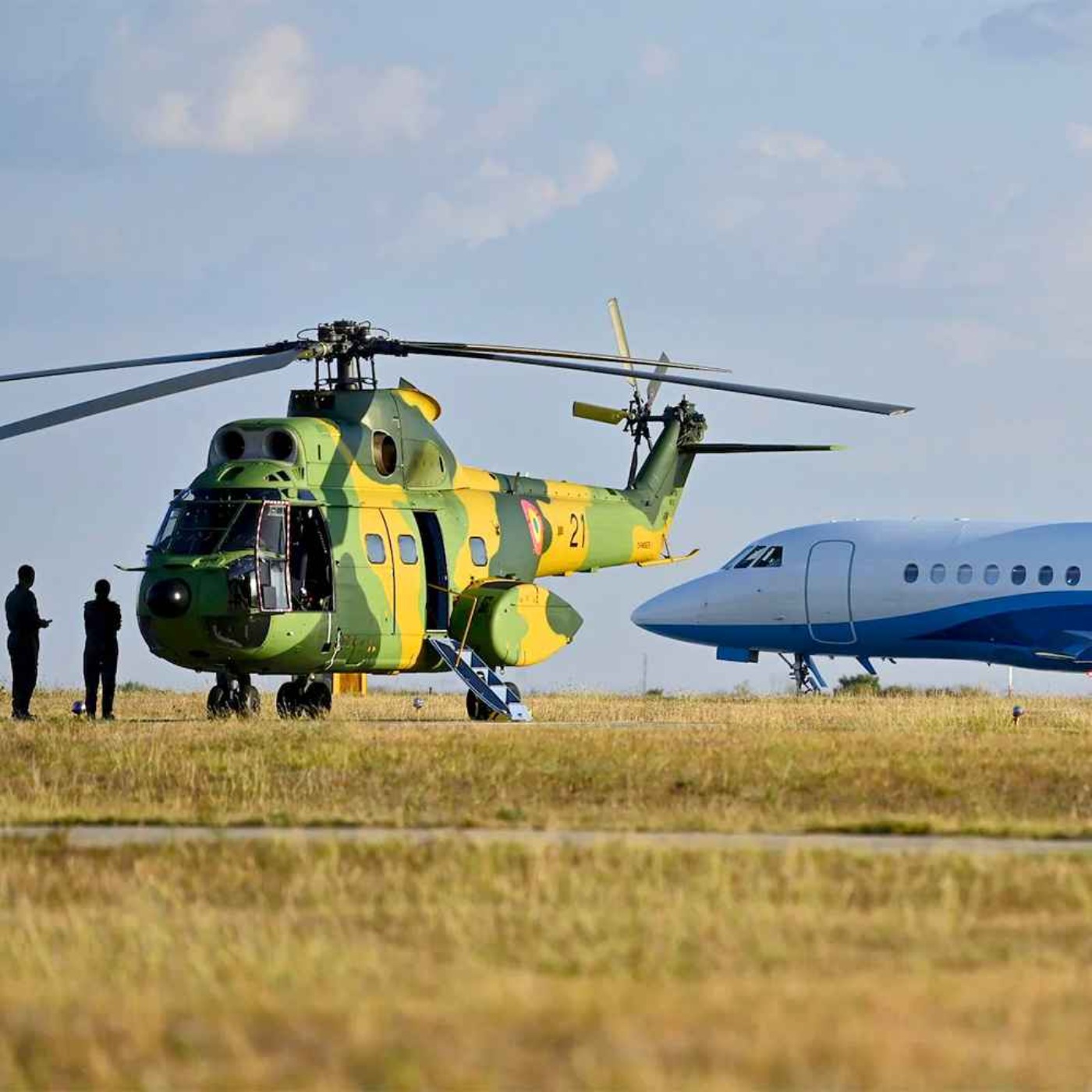
Ukraine: The Latest
Ukrainian troops destroy ‘all Russian positions’ to liberate town & EU chief's plane 'forced to land blind after Moscow jams GPS’
Loading summary
Transcript85 lines
- [00:04]
David Knowles
The telegraph.
- [00:10]
Gareth Caulfield
Close your eyes.
- [00:11]
David Knowles
Focus. Listen to work getting done with Monday.com relax as AI does the manual work while your teams are aligned on a single source of truth?
- [00:23]
Gareth Caulfield
Feel the sensation of an AI work platform so flexible and intuitive it feels like it was built just for you.
- [00:31]
David Knowles
Notice you're limitless. Now open your eyes, go to Monday.comstart for free and finally breathe.
- [00:39]
Raj
Hey, it's Raj and Noah and we're back with a new season of Am I Doing It Wrong? The show that explores the all too human anxieties we have about trying to get our lives right.
- [00:48]
Noah
Because we're still doing a lot of stuff wrong.
- [00:50]
Raj
But who isn't? That's why each week we're talking about the topics that we could all use a little helping hit with. Whether it's making new friends as an adult, managing our emotions, or even dreaming.
- [00:59]
Noah
We'Ll be talking to experts in their fields who are definitely doing things right so the rest of us can be a bit wiser and a lot better equipped to handle whatever life throws at us.
- [01:08]
Raj
Subscribe now and listen to new episodes of Am I Doing It Wrong? Dropping every Thursday starting January 1st, wherever you get your podcasts.
- [01:15]
Noah
And for the first time ever, we're going to have full video episodes on YouTube. Because as long as there are things to get wrong, we're going to be right here to help you do them better.
- [01:23]
David Knowles
Love y'.
- [01:24]
Noah
All.
- [01:27]
Gareth Caulfield
Acast Powers the world's best podcasts. Here's a show that we recommend.
- [01:34]
Raj
The Real Housewives is a guilty pleasure for most, but if you're looking to not feel guilty about that pleasure, tune in to Everything Iconic with me, Danny Pellegrino, where I break down all the messy moments and behind the scenes antics of Bravo's popular franchise. And on Everything Iconic, I also interview.
- [01:50]
Danny Pellegrino
Celebrity guests like Kelly Ripa, Keke Palmer.
- [01:52]
Raj
Drew Barrymore, Cameron Diaz and more about their guilty pleasures, their past work, and so much more. So if you're pop culture obsessed and find yourself watching way too much reality TV like me, tune in to Everything Iconic with Danny Pellegrino. Wherever you listen to podcasts.
- [02:09]
Gareth Caulfield
Acast helps.
- [02:10]
David Knowles
Creators launch, grow and monetize their podcasts everywhere.
- [02:14]
Gareth Caulfield
Acast.com. I'm Dom Nichols and this is Ukraine. The latest Today as a NATO leader meets with Putin while Ukraine is subjected to the latest wave of of Russian drone strikes, we look at the ongoing Shanghai Cooperation Organization summit in China that is attempting to rewrite the global security order. Plus, we examine quite what happened to Ursula von der Leyen's plane Yesterday after suspected Russian interference. Bravery takes you through the most unimaginable.
- [02:51]
David Knowles
Hardships to finally reward you with victory.
- [02:56]
Francis Durnley
Russia does not want peace.
- [03:01]
David Knowles
Auch unse Freiheit und unsre Europischen Wertel. If I'm president, I will have that war settled in one day.
- [03:09]
Gareth Caulfield
24 hours. We are with you. Not just today or tomorrow, but for 100 years.
- [03:20]
David Knowles
Nobody's going to break us. We're strong.
- [03:23]
Gareth Caulfield
We're Ukrainians. It's Tuesday 2 September, three years and 192 days since the full scale invasion began. And today I'm joined by the Telegraph's executive editor for audio, Francis Durnley and our transport correspondent Gareth Caulfield. I started with the latest military developments. So Odessa, Sumy and Kyiv oblasts have come under renewed drone and missile attacks in the last few hours. Local authorities say civilian infrastructure has been hit and there are casualties. In southern Odessa oblast, the Ismail district administration reported Russian drones had targeted port infrastructure there second day in a row, adding that significant destruction and casualties were prevented due to a timely response. There were no casualties reported, but Hombre Intelligence, the global maritime risk management firm says large fires and smoke rising in plumes above the site have been seen coming from the area of impact. Then up north in Sumy, Russian drones struck non residential buildings in the Zarichny district, triggering a large fire there. This comes from Regional Governor Ole Hiryvrov. And then later the head of the Sumy military administration said several people had been injured when a marketplace building was hit and destroyed along with four residential buildings nearby that were damaged. In Kyiv Oblast, a Russian drone strike on Bilo servka, that's about 50k south of Kyiv city itself, killed one person at a garage, wounding others in total. In the last 24 hours, 150 drones fired by Russia 30 got through air defenses hitting nine locations. Eight people were killed, many more injured on the ground. Next to no change at all. Ukraine's General Staff said this morning that their forces had liberated a village in Donetsk oblast. So the village of Odashny, which is about 10K's west southwest of Pokrovsky, been retaken we are told by soldiers of Ukraine's 425th Scala Regiment. They say they destroyed all Russian positions in the city and shared a video of a couple of their soldiers raising a flag on top of one of the buildings. But I mean that's if you look at the deep state map, that is a few hundred meters in the right direction, but there's almost no movement on the ground at all at the moment. Okay. Now, the Security Service of Ukraine, the sbu, said yesterday that it had charged Chechen leader Ramzan Kadyrov in absentia with war crimes against Ukrainian soldiers. This story comes from the Kyiv Independent. They're saying investigators said Kadyrov publicly admitted ordering his fighters to kill Ukrainian troops on the battlefield rather than take them prisoner. He also allegedly ordered that captured Ukrainian soldiers in Chechnya be placed on the rooftops of military sites in Grozny to serve as human shields against drone strikes. The sbu, putting out a statement on telegram said these statements are a violation of the laws and customs of war applicable in armed conflicts in accordance with the Rome Statute of the International Criminal Court. You may remember Ukraine became a member of the ICC, the International Criminal Court on January 1 this year. Next one for me. There's a story in United24 that says there's a significant oil spill that's occurred near Russia's black seaport of Novorossiysk. The slick of petroleum products now drifting towards Occupy Crimea. They're citing Russian media reports and satellite data. So apparently an incident took place last Friday during cargo operations involving a tanker at the Caspian Pipeline Consortium Marine terminal. Following the leak operations, one of the three remote mooring units was suspended. Initial estimates based on satellite imagery from Saturday had suggested the spill area was about 75 square kilometers. But those numbers have since been ramped up. Updated assessments now have that figure at about 350 square kilometers. Yet another ecological disaster. And then finally for me, Hartpunk, the German news website focusing on defense and security, says Germany and France are going to jointly build an early warning system against missile threats. This project, which is called Jewel, as in J E W e L. I don't know if it's joint electronic warfare or joint early warning. Something, something, something. The project jewel is comprise two pillars, we're told. A space based missile early warning system based on the Odin's Eye project and a network of ground based radars. We put a link in the episode notes to the article. Do go and have a look at that. So, as I say, very few military updates for today, let's turn to the more active diplomatic front, starting with Francis Francis. Slovak Prime Minister Robert Fico met Putin a couple of hours ago. All smiles I see on the social media. But he was grumbling about oil pipelines. What's Fico talking about?
- [08:09]
Francis Durnley
Thanks, Dom. He certainly did. Fico's back to his old tricks. It doesn't seem like the strong words of the EU's chief diplomat Kai Kallis some months ago when he attended Moscow's Victory Day parade, had any deterrent effect whatsoever? I mean, did they ever really do anything as a consequence of that? I mean, you can't talk it up, the consequences, and not do anything. Perhaps something did happen behind closed doors. I'd love to know. But it doesn't seem on the face of it that there were many ramifications of his decision to go there. It may well be that this is a case of, again, the fear that isolating Slovakia, like with Hungary, would just mean them moving even closer to Russia. And if so, that would be a case of, and I apologise for soiling the podcast with such crass language, the Lyndon Johnson quote, that it's better to have your enemies inside the tent pissing in than outside the tent pissing out. But I would say, to expand that analogy, what if they're inside the tent pissing in? Unpleasant image, but it seems that this is a really important point. Given the potential gravity of Hungary and Slovakia's veto powers on EU legislation, can you imagine a scenario in the years months ahead where some major legislation about defence needed to be passed? The eu? What if they vetoed it? What would we do then? Now, you could say that it would just need to happen outside of the eu, but again, so much of the processes have been taking place within that structure that it would have harmful effects, at least in terms of the timeline, and that would matter in a really dangerous situation anyway. According to Russian state media, the two leaders discussed Russia's war against Ukraine, relations with Western countries and economic ties. FICO said Slovakia sought to standardize relations with Moscow, saying the two countries should look for opportunities to deepen and broaden cooperation. Now, again, that flies in the face of the EU's approach. Slovakia is an EU member and a NATO member, and yet here we are in this situation. Now, if you're wondering why FICO is there in China, it's ostensibly to attend events marking the anniversary of Japan's surrender in World War II. That makes Slovakia the only EU country represented. He's expected to hold talks with President Zelenskyy later this week, where he's pledged to raise what he described as the inadmissibility of attacks on energy infrastructure. A reference, of course, to the recent Ukrainian strikes on the Duruzhba oil pipeline, which supplies Russian crude to Hungary and Slovakia and sparked that diplomatic row between the two countries, which even President Trump was asked his views on. As the Kyiv Independent reports, Putin used the talks to accuse Ukraine of Escalating strikes Russian energy facilities Claiming Moscow refrained from targeting Ukrainian infrastructure For a long time we did not take any actions concerning civilian infrastructure, especially during the winter period, and for a very long time we tolerated when Ukrainian troops were striking our energy facilities, he said. After that we started to respond and we are responding of course, seriously now. As our friends at the Indy point out, this remark contradicts The Record In 2024, Russia launched at least mass drone and missile attacks against Ukraine's energy grid, forcing blackouts nationwide. And just days earlier, Russian strikes on Odessa left more than 29,000 consumers without power. Now, speaking of energy, Russia's energy giant Gazprom and China's state owned CNPC signed a binding agreement yesterday to build the power of Siberia 2 pipeline set to deliver gas from Russia's Yamal fields to China via Mongolia for the next 30 years. This is a deal long in the offing, delayed by Beijing's hard bargaining over prices and volumes, but cements now Moscow's pivot to Asia as it loses access to European energy markets. Moscow and Beijing have agreed also to boost deliveries through the existing Power of Siberia line from 38 to 44 billion cubic meters per year. Now this was announced after trilateral talks in Beijing between the delegates from Russia, China and Mongolia this week. It followed those meetings we talked about yesterday with Xi and Putin, where the two countries, apparently we now learn, signed more than 20 cooperation deals in energy, technology and other sectors. One of the things is that Beijing will also introduce a visa free regime for Russian citizens, permitting stays of up to 30 days. Putin unsurprisingly lauded the relationship, saying they've reached an unprecedented level. Now bear in mind, we were told that part of the rapprochement with Moscow pursued by the Trump administration was to ensure that Moscow did not align itself more closely with Beijing, which some experts considered a graver danger long term. Look how that's turned out. Some will say this was inevitable, but I think there was an opportunity to cripple Russia militarily and economically while China still didn't dare to overtly deal with Putin because of uncertainty over his fate and the reputational damage of being too closely aligned with what was then a pariah state internationally. Instead, Western weakness led China to gradually fill the vacuum, apparently without consequence, and slowly cement the relationship to the detriment of the West. But it doesn't seem that that's going to stop the Trump administration seeking to pursue business deals with the Putin regime, as we learned was one of the conversations in Alaska. We spoke a lot with Phillips o' Brien yesterday about strategy. And I think what we're seeing here is first the absence of one, and then one that is perhaps far too late in pursuing a shift that, if it was ever going to happen, has certainly missed the opportunity. Now, one thing that has surprised me out of the summit, though, is just how explicitly India's Prime Minister Modi is emphasizing his close relationship with Putin. We've reported for years how India has purchased Russian energy at lower prices and abstained in UN votes condemning the invasion. But the sheer number of posts by Modi showing him shaking hands, sharing cars and just generally praising the Russian president is quite something to behold and suggests that the usually more cautious India, seeking to place itself as a country less ideologically aligned between east and west, is no longer seeing itself and positioning itself in that way that is perhaps a ramification of Trump's secondary sanctions, or simply a statement of what's been true for some time. The world's largest democracy cares little for the principles that underscore such a system. But then, neither does the US now, apparently. So why should India? And just connected to that, European Council President Antonio Costa appeared to concede this week that the war in Ukraine was, after all, a factor in the EU EU's accepting its much criticised trade deal with the US several months ago, which set a 15% base tariff on European exports with the United States. Now, his remarks are a major break from the official line taken by the EU executive, as Politico reports. In a speech in Slovenia on Monday, Costa said, we certainly do not celebrate the return of tariffs. But escalating tensions with a key ally over tariffs while our eastern border is under threat would have been an imprudent risk. Stabilising transatlantic relations and ensuring US engagement in Ukraine's security has been a top priority. That contradicts the stance of European Commission President Ursula von der Leyen, who insisted that the unbalanced pact had nothing to do with maintaining Trump's support for Ukraine. Now, Costa also said this. Our partners, including the us, must know that the EU will always defend its sovereignty, its citizens, its companies and its values. Diplomacy should never be mistaken for complacency. Now, I think taking all of that in, it sounds as if there is some quite significant disagreement within the EU about not only that deal that was struck, but also about the approach moving forward towards Washington. But returning to Ursula von der Leyen in wrapping up in quite an extraordinary and confusing story, the Commission president's plane was apparently targeted by suspected Russian interference. A very serious claim this a world leader's plane being deliberately put in a potentially dangerous situation by the Russian government, risking the loss of life. Gareth has been looking into this for us.
- [17:44]
Gareth Caulfield
Yeah, Gaz, thanks for joining us today. I mean, this is your absolute sweet spot, isn't it? You're our cyber expert and transport correspondent, so you must have been absolutely jumping through hoops yesterday when this story broke. I saw this thing about Ersta von der Leyen's plane burning holes in the sky and all the rest of it and the pilots having to go back to paper maps. I mean, as somebody who only ever flew with paper maps under a wonky coat hanger strapped to my leg, I did feel like saying, dry your eyes, lads, just get on with it. But you know, there's more to it than that, isn't there, guys? Welcome back.
- [18:11]
David Knowles
Thank you very much, Dom. Yes, I think there is quite a bit more to this. And the reference to falling back to paper maps. Well, you know, there's a. I have to be careful what I say here, Dom, but there's a certain generation of aviators for whom that was normal practice and it wasn't all that long ago really. So Russian GPS jamming is said by the EU to have affected an aircraft carrying Von der Leyen on Monday. This is baffling, as mentioned. So Von der Leyen was flying from Warsaw to Plovdiv in a city in the south of Bulgaria. It's seemed to be a routine flight as part of a pre planned diplomatic tour of the continent. Now the EU brief newspapers, including the Telegraph, that von der Leyen's aircraft was hit by Russian GPS jamming en route and that it was forced to circle for an hour while pilots pulled out the aforementioned paper charts to work out a way of safety landing. At the outset we should say she did land safely. Everything was outcomes point of view, everything was okay. What matters here though, is the detail. Now online flight tracking data picked up on the line's aircraft, civilian airplane, so it's broadcasting its location via GPS coordinates and I'll go into a bit more detail about that in a moment. But the data clearly shows that the airplane and Dassau Falcon 900 business jet did not circle at all in its journey from Warsaw to Plovdiv, let alone orbiting for an hour burning holes in the sky. Also, plane tracking website Flightradar24, one of the experts in the field, said on Twitter that the flight had in fact enjoyed good GPS reception throughout, which rather strongly suggests that even the claimed Russian GPS interference may not have occurred as described. So what do we know about this flight? Well, as mentioned, Flightradar24 has all of its data traces and such, so we can see from those duck the aeroplane. By the way, there is a map on the Telegraph's write up of the of the incident here. So I do encourage you all to go and have a look at that. Took off from Warsaw, it turned south, it went to Plovdiv. Few left and right turns, possibly non standard, possibly radar controllers at. Plovdiv was a rather quiet airport, normally having a bit of, you know, a bit of practice with an airplane actually in their sector for once and then it turned and then it landed. Now, Plovdiv is relatively unusual among airports in Europe in this day and age because it actually has an example of every single type of radio beacon you could possibly hope for to make a safe landing. So commercial aircraft can use one of, broadly speaking, four different types of approach. GPS or RNP as the aviation world calls it. This is where you use the, you know, the good GPS signal from the satellites in the sky to tell you exactly where you are. And it means you can then navigate from GPS waypoint to GPS waypoint and safely land. They also have an instrument landing system or an ils. This is a very oversimplified way of describing this. This is a pair of radio beacons on the ground that broadcast a signal that says Runway is here, follow this slope, come down and land safely and you will not bump into anything en route. They also have a vor. It's a VHF omnidirectional radio range beacon, VOR dme. So that's a beacon that says I am here, you are on this precise bearing from me and you're at this distance from it. So if you have your radio and your little NEIL indicator device in your cockpit, you tune the radio frequency of the VOR beacon and you basically say, I am here, I am going in this direction. Plovdiv also has a fourth very old technology called an ndb, a non directional bearing beacon. This is very simply an AM radio mask. It just broadcasts a signal on a known frequency, again similar to the vor. You can tune the radio frequency in and a little needle in your cockpit will point to it and say the beacons that away, it doesn't tell you how far away you are, it doesn't say precisely where you are in relation to it. But as a starting point for navigation, if there's nothing else available, it's great, it's there. So three ground based beacons of more or less interferability plus the GPS RMP approach. Now, one of the things with aviation is, and the open source intelligence guys have been through this in quite some depth on Twitter if you're into all that kind of thing. But the summary is you can look up the notices to Airmen published by Plovdiv Airport, which is a a series of things telling pilots coming or going from the airport, here's the stuff you need to know about. Are all the radio beacons working? Is there GPS interference, blah blah blah, you know, the ground refueler available, etc. To the best of my knowledge, having looked it up, I cannot see any notams from Plovdiv stating that any of the approaches I've just mentioned were disabled. That means the ils, the VOR and the NDB were all functioning. And as far as Plovdiv knew, at the time of von der Leyen's flight landing, the GPS system wasn't affected either. Now, there's a couple of notams in there about routine works being carried on later this month on the ILS and the vor, but those start, I think, about a week's time from now. So it seems possible that there was nothing directly affecting them. Now I say, seems we have to caveat this and say there may have been some kind of transient problem in the area where the air traffic control has simply told the flight's pilots over the radio. By the way chaps, this isn't working. You need to use a fallback option. I've mentioned that Flightradar24 said categorically there was no GPS interference of Von der Leyen's aircraft. This is because every commercial airplane broadcasts a radio signal that, among many other things, tells everybody listening to it how accurate its GPS data is. This is called ADS B. The ADS B broadcast from von der Leyen's Falcon 900, according to the Flight Radar guys indicated that at no point had they lost GPS signal. If the GPS signal drops out, what happens there is that sites like Flight Radar switch to a tracking method called MLAT multilateration. That's basically you've got a number of receivers you can triangulate where a broadcaster, a given airplane broadcasting a signal is. At no point, the OSINT guys say, did Von der Leyen's flight fall back to MLAT for them being able to track where it is, which is a very strong indicator that the GPS was probably a okay. And that is Indeed how Flight Radar 24 can state that there was no interference to that flight. So then the question becomes simply what happened? It's a great question, and it's one that I wish I had a nice, clean, easy answer to give you all, but the blunt truth is I don't. We do know that the EU said that von der Leyen's aircraft circled for an hour, and we equally know that that didn't happen. We do also know that the aircraft actually took off one hour later than its scheduled departure time from Warsaw. Is it the case that somebody has simply garbled a bit of information that's gone to a press officer and they've said circle instead of held on the ground? At this point, we don't have the information to state that as a categoric fact, but we do know that what is described as having happened to that aircraft and what appears to have actually transpired seem to be two different things. And that's not a very good thing for, I suggest, confidence in public institutions in EU and across the Western world more broadly.
- [25:10]
Gareth Caulfield
Well, and that's exactly why you're here, so thank you for that. It does sound more of a cock up. I mean, we sort of make light of it, but I mean, the EU did put out this statement saying that the flight had been interfered with, which is a very, very serious allegation. And there have been comment I've seen online, I forget where exactly, but it was a, it was an elected member, well, of a European nation saying, we've been attacked, this is an act of war. I mean, it was hyperbole and very overblown. But in this charged atmosphere at the moment, it's absolutely essential that we cut through and try and make sense of what's going on, because people will rush to judgment. So as far as you're concerned, we don't think anything happened. You don't know of anything that happened. Technically, there's just this perhaps incorrect press release from the EU that's got this whole story running. Is that where you'd put your money right now?
- [26:01]
David Knowles
That's effectively it, Dom. Yes, this press release from the eu, this briefing to the newspapers does seem to have been wide of the mark. Maybe there's some sort of diplomatic reason that they wanted to say that, to ramp up pressure against Russia. But there are a number of far better ways they could have done that. I mean, you speak to any airline that operates over Eastern Europe and they will happily talk until the cows come home about GPS interference from Russia over the Black Sea, for example.
- [26:23]
Gareth Caulfield
Yeah, I mean, we have talked of that before. That is known to have happened. So when it happens, we're very happy to report it and dig into it and equally if we're not sure that it's happened, then we will dig into that as well. So Gaz, thank you so much for making that clear and for getting us back in the. Back in the cockpit now whilst you're here. Not going to let you go away. Cyber updates. I remember at the start of this we were expecting this behemoth, this cyber behemoth of Russia and the trolls in St. Petersburg and all the rest of it to just roll over Ukraine, the west of Europe. It was going to be the end of days, blah, blah, blah and then quick as a flash, nothing happened. What's the latest on the cyber front?
- [27:01]
David Knowles
It's been an interesting one. We expected a great big onslaught at the beginning and well, you know, I'm not going to say it's all been smooth sailing, but certainly things have calmed down into what you might call a routine state of operation. So it's not all quite quiet on the cyber front, but we have seen a decline in number of different and eye catching things being deployed by the Russians, if I can put it that way. Now having just said that, we do know that the Ukrainian government is insisting very clearly that Russian hacking is still taking place. Latest update in July so that it was about 15 incidents, significant incidents per day, and they are tracking more than 150 separate cyber threat clusters, I.e. known groups of hackers who are picking out individual targets and having a pop at them. Now there are a couple of interesting things a little bit lower down in the technical tree, if I can put it that way. In July, Ukraine's CERT ua, and that's the Computer Emergency Response Team, sort of anti hacker unit, shared some public information regarding a new malware variant, malicious software and a phishing attack which they attributed with medium confidence to Russia's GRU spy agency. This malware has been dubbed lamehugh. Great name princely notable for its use of an external large language model. That's an AI chatbot to you and I that would generate a command that would fingerprint uniquely identify a victim's computer or mobile phone or iPad, tablet, whatever, and gather and extract files of interest. This Lame Hub campaign targeted Ukrainian government entities and also used AI themed lures to actually encourage people to click on it and open up. So I should paraphrase slightly here. The majority of hostile cyber operations are started by essentially tricking people into clicking on web links that they shouldn't or opening malicious booby trapped files that they shouldn't. Most malicious cyber activity is built around Convincing people, tricking people into doing either of those two things. So with that said, threat actors are constantly finding ways to incorporate AI into their operations. Nowadays they've been served using infamous ChatGPT and other such LLMs, large language models for research during reconnaissance. Or these are incorporated into AI themed phishing campaigns. Phishing being the practice of again tricking people into clicking on things that would be not a good idea to click on. But lame hug, I'm told by sophoskillworks is a unique case of them building AI calls directly into their malware. It's uncertain whether this technique made the Russian malware there any more effective than it would otherwise have been without the AI government. But we should expect to see more examples like this showing up in the arsenals of Russian and indeed other country threat actors, be they state sponsored or be they just gangs of cybercriminals. Returning to the Ukrainian cyber fronts, the Russian Federation, the CERT UA tells us, remains the primary source of cyber attacks directed against the country. Additionally, they've also seen activity targeted at them from Belarus, China, the People's Republic of North Korea, and regrettably from groups operating in the temporarily occupied territories of Ukraine. My contacts at Sophos tell me that this probably means Ukrainian IP address ranges are being used to launch cyber attacks against unoccupied Ukraine. They say, and I quote, the compromised chain remains relatively consistent. Phishing emails containing malicious attachments, malicious code that is malware that steals your files and exposes state secrets. Malicious code is disseminated via USB drives and Word documents, leading users to unwittingly propagate IT software SecureWorks. Tim Mitchell tells me that Russian cybercrime groups are now increasingly using English speaking affiliates, that is like minded cybercriminals, fluent English speakers, not Russians themselves, who take a cut of the illicit profit from these operations to launch their attacks against the West. Now that's interesting because an increase in English speaking threat actors could suggest, and this is a good thing, that cyber hardening measures initially developed for the outset of the latest Ukraine invasion back in 22, are actually making us all a harder target to attack. Now, back at the start and in my previous appearances on the Pod, we were talking about technical means of compromise. Hackers breaking into things, finding ways and means of defeating software controls and doing all that good hacker hoodie typing on the keyboard stuff. What we're actually seeing, though more recently is actually more of these compromises of Western organizations and indeed in Ukraine and elsewhere, are simply based on stealing somebody's phone. Perhaps it's a large criminal operation. You can commission a theft to order, or hacking into a laptop and then using that access to ring up a service provider. Maybe it's the outsourced email company, maybe it's some cloud host or something phoning their tech support line and saying, can you reset my password? I don't know why I've forgotten it. And once the password's reset, that generates an email. You click on the link to log in. We're all familiar with that process on here, and that enables that further access to go and carry out cyber espionage or to deploy ransomware and steal money or whatever it is. Examples of that recent history might be the MGM casinos hack a few years ago, where lots of high profile casinos in Las Vegas were targeted by cybercriminals. More recently in the uk, we've seen the scattered spider threat actors hacking Marks and Spencers and other UK retailers locking up their operations. Indeed, just before we came on air, we hear that Jaguar Land Rover, big UK car manufacturer, has also just been hit by a cyber incident of some sort. But SecureWorks tells me that they're also tracking a new threat actor they codename Goldblade. In the cyber world, everybody has a funny codename for reasons I won't bore you on with. So Goldblade. They are said by SecureWorks to be a financially motivated threat actor engaging in espionage for hire. They're a new and intriguing group that has also targeted Russia. And that does tend to suggest they might not be Russians themselves, because there is a long history of Russia cybercriminals not targeting their own country for fear of arrest by Putin's goons. So over the last sort of 10, 15 years or so, I've been looking at all this kind of thing. Traditionally, what happens is Russian cybercriminals were tacitly given the nod to go ahead and launch as many cyber attacks they liked against anywhere in the world. Provided you don't target the home country, you don't target the ex Soviet Union states. And the hacker gangs who did that very rapidly found themselves in the Google Ad or whatever modern equivalent might be. So as yet, there's nothing explicitly to suggest that the new Gold Blade threat actor group is Russia linked. But it does raise the question, am I using ttps that are traditionally associated with threat actors from that part of the world, but also have been explicitly targeting Russian companies, institutions, individuals? Who are they really? What are they up to? What's their M.O. and crucially, who's paying them?
- [33:57]
Raj
Hey, it's Raj and Noah. And we're back with a new season of Am I Doing It Wrong? The show that explores the all too human anxieties we have about trying to get our lives right.
- [34:06]
Noah
Because we're still doing a lot of stuff wrong.
- [34:08]
Raj
But who isn't? That's why each week we're talking about the topics that we could all use a little helping hit with. Whether it's making new friends as an adult, managing our emotions, or even dreaming.
- [34:16]
Noah
We'Ll be talking to experts in their fields who are definitely doing things right so the rest of us can be a bit wiser and a lot better equipped to handle whatever life throws at us.
- [34:25]
Raj
Subscribe now and listen to new episodes of Am I Doing It Wrong? Dropping every Thursday starting January 1st, wherever you get your podcasts.
- [34:33]
Noah
And for the first time ever, we're going to have full video episodes on YouTube. Because as long as there are things to get wrong, we're going to be right here to help you do them better.
- [34:41]
David Knowles
Love y'.
- [34:42]
Francis Durnley
All.
- [34:44]
Raj
We interrupt this program to bring you an important Wayfair message. Wayfair's got Style Tips for Every Home this is Stiles Mackenzie helping you make those rooms sing. Today's Style Tip when it comes to making a statement, treat bold patterns like neutrals. Go wild like an untamed animal. Print area rug under a rustic farmhouse table. From wayfair.com fierce this has been your Wayfair style tip to keep those interiors superior.
- [35:10]
David Knowles
Wayfair Every style, Every home Lunch was.
- [35:14]
Raj
Great, but this traffic is awful. Um, can we stop at a bathroom? Are you alright? And keep having stomach issues after eating.
- [35:21]
David Knowles
Like diarrhea, gas and bloating, abdominal pain.
- [35:23]
Raj
And sometimes oily stools. Sound familiar? Those stomach issues may actually be a pancreas issue called exocrine pancreatic insufficiency or epi. Creon pancrelipase may help manage epi. Creon is a prescription medicine used to treat people who can't digest food normal because their pancreas doesn't make enough enzymes.
- [35:42]
Danny Pellegrino
Creon may increase your chance of fibrosing colonopathy, a rare bowel disorder. Tell your doctor if you have a history of intestinal blockage or scarring or thickening of your bowel wall. If you are allergic to pork or if you have gout, kidney problems or worsening of painful swollen joints. Call your doctor if you have any unusual or severe gastrointestinal symptoms or allergic reactions. Take Creon as directed by your doctor and always with food. Do not chew capsules as this may cause mouth irritation. Other side effects May include blood sugar changes, gas, dizziness, sore throat and cough. These are not all the side effects of Creon. Call 800-633-9110 or visit creoninfo.com to learn more. That's C-E O-N-Info.com I'm asking my doctor.
- [36:11]
Raj
About EPI and if Creon could help.
- [36:16]
Gareth Caulfield
Cheers, guys. Jaguar Land Rover owned by China India.
- [36:20]
David Knowles
India JLR is owned by Tatar Motors.
- [36:23]
Gareth Caulfield
Okay, right. So whoever this is has hacked a.
- [36:26]
David Knowles
Hacked an Indian firm, hacked an Indian owned British company. And of course JLR has been owned by India Tatar Motors for quite some time now. So it's entirely likely that whoever's doing that, that might be looking for a way into Tatar Motors broader operations. And as a global multinational automotive manufacturer, that would be really rather bad for them.
- [36:48]
Gareth Caulfield
Just as Mr. Modi is in China shaking hands with Putin. Anyway, thank you guys, appreciate that. Let's move on to final thoughts. I will start if I may, and I'd like to point folks to a substack that's been written by a friend of mine, Andrew Fox, former Parachute Regiment officer. He wrote it back in April, he's pushed it again today and I've done likewise on Twitter. He's written about his experiences with ptsd, Post Traumatic stress disorder, and it's worth a look. You don't have to be living with PTSD or know anyone that has. It's a, it's a good read on mental health, I think. You know, three and a half years into this thing and counting is probably worth us all having a little look anyway. Andrew says PTSD itself is surrounded by misconceptions and myths. He says the development of it is often down to a traumatic event, plus other factors such as loss of responsibility or security or control or self image, I. E. Self regard. He says the loss of one or more of these four factors can make it more likely for PTSD to develop. It's not definite, but more likely. Then he says even with treatment, PTSD never really leaves you. Coping with it involves a combination of psychological strategies, lifestyle adjustments, and in many cases, professional support. He finishes by saying, I don't let PTSD define me. It's an inconvenience, like being short sighted. But while glasses may cure short sightedness whilst worn, it never goes away. However, the short sighted learn to live with it. The same goes for ptsd. I think it's a very well written article, very, very thought provoking, very helpful in many ways. We put the link in the episode notes do go and have A look at that, if you wish, and. And recommend it to others who might may find it helpful. Gaz, got any final thoughts?
- [38:28]
David Knowles
I have some final thoughts, thank you, Dom. Yes, I'm going to return briefly to the Von der Leyen GPS claimed interference. Open source intelligence teaches a lot about the world around us and how it works. In the case of Von der Leyen's flight, we can clearly see that an EU statement about hostile Russian activity was not accurate. Perhaps that was a case of a white lie, an untruth, deliberately told in service of some noble higher goal. But against an aggressor like Russia, which ruthlessly deploys false information to discredit Western and West line institutions, such an approach is frankly fraught with danger. The next time the EU speaks about Russian GPS interference or anything else of a lower level, not quite war fighting level, but something of that nature, the public is going to be less inclined to trust that EU statement and they're going to be more likely to treat it sceptically and potentially to listen to sceptical voices who reflect what they themselves are perhaps instinctively feeling at that moment. Moment. That kind of approach by the EU is fraught with problems. If you want to illustrate the scale of Russian GPS interference, it only takes a conversation with any airline operating over Eastern Europe to reveal the true scale of their interference and safety critical technologies. So all I can really say. Keep your eyes and ears open, folks.
- [39:42]
Gareth Caulfield
Thanks, Kaz. Yeah, and if you are from the EU involved in this and you want to come and talk to us about why actually it really did happen and we've got a assessment wrong there, please do likewise. If you want to come and say, perhaps you came out the blocks a bit quickly yesterday and for all the reasons Gaz has just articulated, it might be unhelpful to allow these rumours to still be going around. Please do get in touch with us, Francis. Got any final thoughts?
- [40:08]
Francis Durnley
Please? Sure. Well, thanks, Dom. Yesterday I mentioned how it was the first day back at school for Ukraine's school children, with the lucky ones in frontline cities like Kharkiv, able to continue learning even during the air raids because of the underground schools like the one in the metro we visited a few months ago. Well, because of the air raid on Kyiv that you described at the beginning of the episode. Of course, during daylight hours, which are less common, photographs have been shared on social media this morning of children hiding in the subway for over an hour and a half as a consequence. Now, we've reported many times how severe the ramifications for children's learning this war is. I'm not a parent myself, but it's often said how harmful the disrupted learning during the lockdowns was for children during the pandemic, especially younger children. Now extrapolate that over three and a half years in some cities and one can begin to get a sense of how dangerous this has potentially been. A generation scarred by the consequences of war, and it will take extraordinary efforts for them to recover if it's ever entirely possible. And as I said yesterday, it's something of a forgotten story, or at least an underreported story. I think when we look at the war coverage more broadly in the media, which is why I think it's important to draw attention to it when there's a story like today which just draws particular attention to it.
- [41:43]
Gareth Caulfield
Ukraine the Latest is an original podcast from the Telegraph created by David Knowles to support our work and stay on top of all of our Ukraine news, analysis and dispatches from the ground. Please subscribe to the Telegraph. You can get one month free, then two months for just one pound at www.telegraph.co.uk the latest deploying cutting edge technology, we also release Ukrainian and Russian versions of this podcast. These translations retain our voices and delivery so that it can reach listeners in every region of Ukraine and those parts of Eastern Europe where Russian is still widely spoken. Links to those can be found in the podcast description to this episode. You can also now sign up to the New Ukraine, the latest weekly newsletter. Each week Francis and I answer your questions, provide recommended reading and give exclusive analysis and behind the scenes insights, plus maps of the front lines and diagrams of weapons to complement our daily reporting. It's free for everyone including non subscribers. You can find the link to sign up in the descriptions for this episode. We regularly have a Ukraine Live blog on our on our website where you can follow updates as they come in throughout the day, including insights from regular contributors to this podcast. We also do the same for other breaking international stories. If you appreciate our work, please consider following Ukraine the latest on your preferred podcast app and leave us a review as it really helps others find the show. Please also share it with those who may not be aware we exist. You can listen to this conversation live at 1pm London time each each weekday on X Spaces. Follow the Telegraph so that you don't miss it. You can also get in touch directly to ask questions or give comments by emailing ukrainepodelegraph.co.uk we continue to read every message. You can also contact us directly on X. You'll find our handles in the description for this episode. As ever, we're especially interested to hear where you're listening from around the world. Ukraine. The latest was Today, produced by Phil Atkins, executive producers of Francis Dernley, Louisa Wells and David Knowles.
- [43:48]
David Knowles
My name is David Knowles. Thank you all for listening.
- [43:51]
Gareth Caulfield
Goodbye.
- [44:04]
Raj
Hey, it's Raj and Noah and we're back with a new season of Am I Doing It Wrong? The show that explores the all too human anxieties we have about trying to get our lives right.
- [44:12]
Noah
Because still doing a lot of stuff.
- [44:14]
Raj
Wrong, but who isn't? That's why each week we're talking about the topics that we could all use a little helping hit with. Whether it's making new friends as an adult, managing our emotions, or even dreaming.
- [44:23]
Noah
We'Ll be talking to experts in their fields who are definitely doing things right. So the rest of us can be a bit wiser and a lot better equipped to handle whatever life throws at us.
- [44:32]
Raj
Subscribe now and listen to new episodes of Am I Doing It Wrong? Dropping every Thursday starting January 1st, where every you get your podcasts.
- [44:40]
Noah
And for the first time ever, we're going to have full video episodes on YouTube. Because as long as there are things to get wrong, we're going to be right here to help you do them better.
- [44:48]
David Knowles
Love y'. All.
- [44:50]
Raj
Lunch was great, but this traffic is awful. Um, can we stop at a bathroom? Are you alright? I keep having stomach issues after eating.
- [44:57]
David Knowles
Like diarrhea, gas and bloating, abdominal pain.
- [45:00]
Raj
And sometimes oily stools. Sound familiar? Those stomach issues may actually be a pancreas issue called Exocrine Pancreatic Insufficiency or epi Creon. Pancrelip Pancreas may help manage EPI Creon.
- [45:13]
Francis Durnley
Is a prescription medicine used to treat.
- [45:14]
Raj
People who can't digest food normally because their pancreas doesn't make enough enzymes.
- [45:19]
Danny Pellegrino
Creon may increase your chance of fibrosing colonopathy, a rare bowel disorder. Tell your doctor if you have a history of intestinal blockage or scarring or thickening of your bowel wall, if you are allergic to port or if you have gout, kidney problems or worsening of painful swollen joints. Call your doctor if you have any unusual or severe gastrointestinal symptoms or allergic reactions. Take Creon as directed by your doctor and always with food. Do not chew capsules as this may cause mouth irritation. Other side effects may include blood sugar changes, gas, dizziness, sore throat and cough. These are not all the side effects of Creon. Call 869,110 or visit creoninfo.com to learn more. That's C R E O-ninfo.com I'm asking.
- [45:47]
Raj
My doctor about EPI and if Creon could help.
- [45:52]
Gareth Caulfield
ACAST Powers the World's Best.
- [45:54]
Raj
Podcasts here's the show that we recommend.
- [46:00]
Danny Pellegrino
Leadership used to mean having all the.
- [46:01]
Gareth Caulfield
Answers, but today's best leaders embody a more human approach. I'm Jack Myers. And I'm Tim Spangler. Tim and I have spent our careers inside media, marketing and culture and we partnered with the Acast Creator Network to.
- [46:13]
David Knowles
Start Lead Human to answer one simple question. What does it really look like to.
- [46:19]
Gareth Caulfield
Lead in this AI dominated world?
- [46:21]
David Knowles
The biggest tip for being a creator?
- [46:23]
Francis Durnley
It's a job.
- [46:23]
Noah
What I learned from Michael Jackson Here's.
- [46:26]
Gareth Caulfield
A man who understands precision. It's about answering the questions that are hard, not about answering a bunch of teed up questions that are fake. What we're looking for are real story.
- [46:36]
David Knowles
And practical advice that you can use.
- [46:37]
Gareth Caulfield
With your teams right away. Subscribe to Lead Human with Jack Myers and Tim Spengler wherever you get your podcasts. ACAST helps creators launch, grow and monetize their podcasts everywhere. Acast. Com.