← Ukraine: The Latest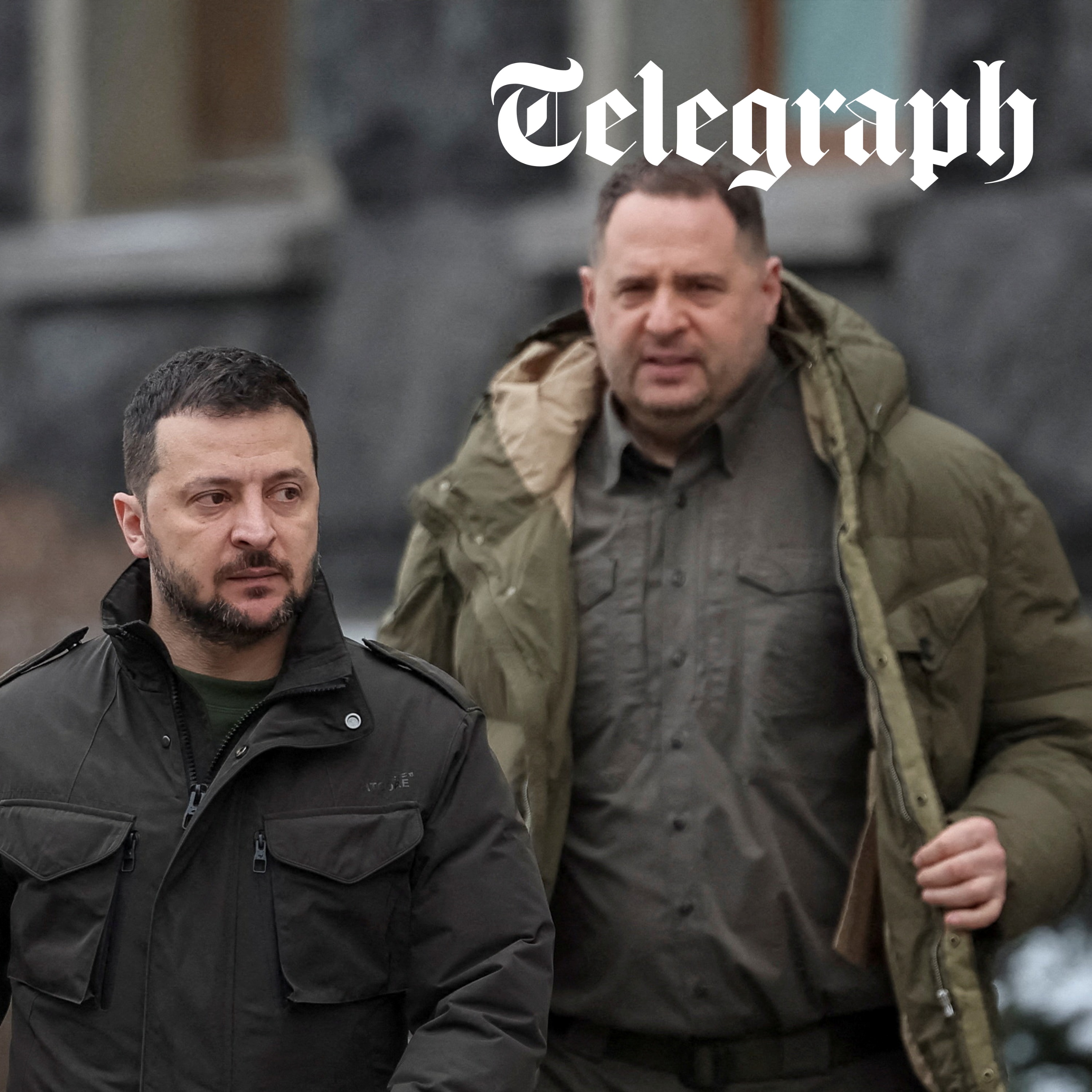
Loading summary
Transcript71 lines
- [00:04]
Dom Nichols
The telegraph.
- [00:11]
David Knowles
ACAST powers the World's Best Podcasts Here's a show that we recommend.
- [00:20]
Jameela Jamil
What if you laughed all through your commute? Or if you heard the funniest story while at the gym? Well, now you can I'm Jameela Jamil and guests on my new podcast Wrong Turns share their most mortal, mortifying and hilarious disaster stories. I'm talking people like May Martin, Bob the Drag Queen, Katherine Ryan, Jake Johnson, Margaret Cho, Simon Pegg, Penn Badgley, and so many more. So listen wherever you get your podcast. Wrong Turns Where Dignity Goes to Die
- [00:50]
David Knowles
ACAST helps creators launch, grow and monetize their podcasts everywhere acast.com dish has been
- [00:59]
Dom Nichols
connecting communities like yours for the last 45 years, providing the TV you love at a price you can trust. Watch live sports news and the latest movies, plus your favorite streaming apps all in one place. Switch to Dish today and lock in the lowest price in satellite TV, starting at $89.99 a month with our two year price guarantee. Call 888-add-H Dish or visit dish.com today.
- [01:30]
David Knowles
Acast powers the world's best podcasts here's a show that we recommend.
- [01:37]
Dom Nichols
A lot of work advice sounds good in theory, but falls apart when you actually try to use it. I'm on a mission to change that. I'm Molly Graham, a company builder and the new host of Work Life, a podcast from ted. I've spent my career inside fast growing companies and one thing I know for sure is that work is messy. In this new season, I'm excited to share my conversations with founders, operators and creatives about the real story behind their shiniest successes, the lessons that no one ever posts on LinkedIn. Listen now on Work Life wherever you get your podcasts.
- [02:12]
David Knowles
ACAST helps creators launch, grow and monetize their podcasts everywhere. Acast.com
- [02:22]
James Kilner
foreign
- [02:25]
Dom Nichols
I'm Dom Nichols and this is Ukraine. The latest today, as Andrei Yermak is charged with money laundering, we ask, should President Zelensky be disappointed in his former chief of staff or worried that the scandal is coming closer to him? We report that Poland has moved first and secured a third of the 150 billion euro safe funding. And we get our regular view from inside Russia, cucumber index and all. Plus, later we take a short foray into Africa, asking quite what Russia's ejection from Mali says about the Kremlin's international appeal. Bravery takes you through the most unimaginable hardships to finally reward you with victory.
- [03:08]
Jameela Jamil
Russia does not want fees.
- [03:15]
Dom Nichols
Und unsre europechen Werther, if I'm president,
- [03:19]
James Kilner
I will have that war settled in one day.
- [03:21]
Dom Nichols
24 hours. We are with you. Not just today or tomorrow, but for 100 years.
- [03:32]
James Kilner
Nobody's going to break us. We are strong. We are Ukrainians.
- [03:38]
Dom Nichols
It's Tuesday 12 May, four years and 77 days since the full scale invasion began. And today I'm joined by Telegraph journalist Alex Nickel and our Russia expert, James Kilner. Now, any perhaps fanciful hopes that Russia would continue. The weekend's scratchy ceasefire put in place to allow Putin to have his parade on Saturday were dashed last night as Russia returned to attacking Ukraine with gusto. Dozens of drones were fired at Ukraine in the early hours of this morning, many towards the city of Kyiv and the wider oblast across the country. Yesterday, four civilians were killed, 27 others injured. Hostilities had continued throughout yesterday, but at a much reduced rate. President Zelenskyy said Russia itself chose to end the partial silence that had lasted for several days. He said Russia fired more than 200 attack drones against Ukraine last night from Zhytomyr and basically from there to the east. There had been some activity on the ground, no great shift in the lines. Ukrainian Joint Forces Task Force spokesperson Colonel Viktor Trebov said yesterday that Ukrainian forces had repelled Russian efforts to attack Kupyansk from the north and the southeast. It was a very similar situation throughout the rest of the Donbas. Ukraine's Foreign Minister, Andrei Sibier said, we proposed Moscow to extend the partial ceasefire beyond May 11. Instead, this night, Russia launched over 200 drones against Ukraine, targeting civilian infrastructure, including a kindergarten, injuring at least six and killing at least one person. Putin's repeated rejection of peace, he said, must have consequences for him. Stronger pressure through Ukraine's effective long range sanctions and our partners strong decisions. It is time to strengthen our positions and force Moscow to end the war. Putin must realize it will only get worse for him. His only option must be to stop the terror. Mr. Sibir finished by saying, we call for Europe's bigger role in the peace process, complementary to the mainstream Europe. US led diplomatic track. Now Ukraine reciprocated as promised. There's footage this morning showing a suspected Ukrainian drone hitting the Russian city of Orenburg, about 1200 km from the border. Russian independent outlet Astra said a drone was down 4km short of the Strela production plant. That's a manufacturer of cruise missiles and components for Sukhoi and MiG aircraft. But the Ukrainian Telegram channel Supernova plus said that one of Russia's largest refineries in the southern Urals was hit during the attack on on the wider Orenburg Oblast, now sticking in Russia, and authorities there have finally extinguished the fire at the Transnef Perm Linea production dispatch station in perm krai, 12 days after a Ukrainian strike on the facility. Radio's Foboda says the fire had fully destroyed six oil storage tanks at the station. Now looking a little bit further afield, last Friday, Poland became the first country to sign an agreement under the European Union's Safe Poll programme securing access to 43.7 billion euro. That's just over US$50 billion in low interest loans to boost military procurement. Now, you'll remember the Security Action for Europe scheme will make available 150 billion euros to EU member states by 2030 in the form of preferential loans to finance joint projects in defence, the purchase of weapons and ammunition and for the development of critical infrastructure. The Polish government says that nearly 90% of the money will stay in Poland, supporting the defence industry there and infrastructure projects such as the Eastern Shield Border Defence Programme. It's very interesting to see who is moving on defence spending in Europe and who isn't. It's also worth noting that Poland is already NATO's largest spender in relative terms, allocating 4.8% of GDP to defence. Now, SAFE, you'll remember, is primarily an EU scheme, but is open to others for a fee. Canada paid 10 million euro, about 16 million Canadian dollars, to join the initiative last year. Britain is keen to join, but negotiations broke down last November when the EU failed to shift from its demand of around 4 billion euro to join and the UK refused to up the offer from a rumoured 2 billion. Now a couple more stories on weapons procurement. Swedish authorities have detained two people on suspicion of violating international sanctions in assisting Russia to procure advanced products. The Swedish Security Service issued in a statement yesterday. A Swedish national and a Turkish national both face up to six years in prison if convicted. Connected to that, a story in the Wall Street Journal today says that Chinese companies are still supplying drone factories in Russia and Iran despite US sanctions. They cite Chinese customs data that show hundreds of containers filled with goods such as engines, computer chips and fiber optic cables. For a time, they say, Chinese exporters intentionally mislabeled some shipments to skirt US and European sanctions. But in many instances, they no longer bother, according to former senior Treasury Department officials and weapon analysts. So perhaps with that in mind, it's no surprise that Russia is expanding the world's largest shahed style drone factory. Our colleague Antonia Langford in Kyiv says Moscow has expanded the Alabuga Special Economic Zone, home to Russia's main drone manufacturing hub, expanding it by 340 hectares in the past year alone. Satellite imagery shows freshly constructed hangars sprawling across the northern sector, while production facilities and residential quarters have been extended in the central complex. A separate 450 hectare construction site has been set up just south of the Special Economic Zone. Its purpose is unknown, but a road has been built to connect the two. Oleksandr Syrsky, Ukraine's most senior commander, said in January that Russia was planning to double production of suicide drones to up to a thousand a day. And U.S. officials have told the New York Times the Kremlin had been shipping drone components to Iran via the Caspian Sea to help rebuild Tehran's military capabilities during the current ceasefire. That's the ceasefire. Iran, us. I'll put a link to that in the episode notes. Now, just funny for me. Yesterday we reported that Greek fishermen had discovered a suspected Ukrainian sea drone, or unmanned surface vessel, as they are more correctly known, hidden inside a sea cave off Lefkada Island. It was thought to be a Magura drone. However, speaking to the company last night, a spokesperson for uforce, the only manufacturer globally of these things, told me the vessel in Greece was not a Magura. The spokesperson said those claims are categorically incorrect. While the vessel may bear a superficial resemblance to our design, it is not a Magura and and does not correspond to Magura's specifications as published on our website uforce.com okay, that's it for the military updates now, Alex, the biggest political story of the day, possibly of the year in Ukraine, relates to Andrei Yermak, Ukraine's or President Zelenskyy's former Chief of Staff. What's the latest with Mr. Yermak and what else has caught your eye on the diplomat front? Welcome to the pod.
- [10:34]
David Knowles
Thank you very much. Well, yes, Andriy Yermak, Zelensky's former chief of Staff is back in the headlines. This time he's being char with money laundering, corruption charges, and this is tied to the construction of luxury residential compounds outside of Kyiv. Reportedly is one of six suspects now. Excuse me, with these acronyms. So the Specialized Anti Corruption Prosecutor's Office.
- [10:57]
Dom Nichols
Sapo. Yeah, we know sapo.
- [10:59]
David Knowles
They put forward these details in a statement. And although under Ukrainian law they can't officially name the chief of staff at this stage, a source familiar with the case has told the Kyiv Independent that he is one of the group now. Naboo, Ukraine's National Anti Corruption Bureau. And SAPO have alleged that the equivalent of around $8.9 million was funneled through this construction project over several years using a network of shell companies, cash transactions and sort of fictitious financial documents. They're building these luxury homes with spa swimming pools and handing them out and clean to those within the group. Now Yermak, as I'm sure our listeners will be aware, was involved in an even bigger corruption scandal last year. $100 million to do with the state nuclear monopoly. And the probe which was launched last year was the biggest under Zelenskyy's tenure and clearly a huge issue. And he wasn't the only one to be named in those allegations. And the probe found Timur Mindich, a close Zelenskyy associate, and ex Deputy Prime Minister Alesky Chernyshev and, and the former Energy and Justice Minister Herman Hyushchenko were also involved. The immediate reaction, Yermak did speak to journalists on Monday, yesterday and he simply said, when the investigation is over, I will give comments. I have no mansions and I only have a flat and a car that you can see. I guess we'll see whether that's true or not. Now from the President himself, no comments or official statement, but one of his advisors, Dmytro Litvin, told journalists that it's too early to assess the ongoing procedural actions. So not much from them. But I guess why is this important? Now Clearly Yermak, who was once Zelenskyy's right hand man, consolidated an unprecedented amount of power in his time. And even though he was just a lawyer and a film producer originally with little prior experience, he made a lot of enemies and eventually was forced out during this initial probe. I guess the question that a lot of people will be asking is again, how much should the President know what it's up to? Were any ties personally to the scheme and what are the charges at the end going to be? You know, is he actually going to be found guilty and are they going to do something about it?
- [13:11]
Dom Nichols
Yeah, I mean we've been looking at this, these allegations for, for some time now. Obviously reported them as they've broken the news. It's interesting. I've not seen any Russian reaction to this yet. Be interesting. We'll speak to James in a minute, see if there has been anything in, in Russia. They will undoubtedly make great hay of this. They always do and say, oh here we go, this is evidence, evidence of this corrupt Nazi regime, drug dealers, all the rest of it. To which Ukraine says, well, you know, if they are taking action against corruption to better align Themselves with the eu, that's where they want to end up as well as NATO and other places. If you put effort into looking for it, you're going to find more of it. So they say this is, I'm not putting words in their mouth, but they say this is a good news story, that they're uncovering this corruption. But have you seen any, any reaction at all from the kind of Russian or Russian sympathetic voice pieces to this?
- [13:57]
David Knowles
Nothing from the Russians, but I think for the Ukrainian people this is going to be particularly important. As you said, like this could be a good news story. Now obviously Zelensky and his team will be doing damage control, but if they carry this out with transparency and you know the charges do go through, it will be sort of opposite to what happened last year, which when they sort of botched the handling of the NABOO and SAPO powers and then there was these huge widespread protests, you know, huge reaction in which they had to potentially u turn. And so I think they eventually spin this, it will be a positive thing and if they can carry it through. And for Ukrainians, clearly it's protection of democracy and essentially, you know, one of the things that they're fighting for and also vital for Ukraine's allies when thinking about things like NATO and EU recession, etc.
- [14:43]
Dom Nichols
And we should of course make it clear that before all the bots all go crazy that we are not saying that corruption is a good thing, we are saying uncovering corruption is a good thing. What else has crossed your radar today?
- [14:54]
David Knowles
So the other key story, and again I think a good news one is to do with the returning Ukrainian children who have been deported illegally to either Russian occupied territory or Russia itself. And On Monday the EU sanctioned 16 officials accused with helping Russia to abduct tens of thousands of children from Ukraine. And sanctions were also placed on seven centers suspect of indoctrinating the children or train them to serve in the armed forces either in Russia for Russia or with pro Russian militaries. Now more than 130 people and entities are now under EU travel bans with assets being frozen. So overall it seems like some pretty hard line actions have been taken. Now stat, again, many people will be familiar with but since the full scale invasion, it's thought that 20,500 children have been unlawfully deported or forcibly transferred to Russia or Russian held territories. So this is good progress. And simultaneously I saw less than an hour ago that over 60 international representatives met in Brussels to return stolen Ukrainian children and they committed over 86 million euros in financial Support. So that's the Ukraine, European Union, Canada essentially convened this meeting with which was officially called the International Coalition for the Return of Ukrainian Children. And that's where they sort of gathered the financial support. And that came largely from uk, US Lithuania, Germany and the EU itself. And I believe Adelaide is in Brussels at the moment, so I'm sure we will hear more on that topic in the next few days.
- [16:30]
Dom Nichols
Yeah, she's working on, obviously, we've been following the story about the stolen children for a long time. Adelaide's in Brussels today, as you say, and we will hear from her in the next few days. She had a very disappointing croissant earlier on, she told me. But yeah, she will come back and report on the progress there. Stay where you are if you, if you're able to, because I want to pick your brains in a bit about Africa. I have been, we're aware of Wagner Group, Africa Corps, whatever they're calling themselves at the moment, being unceremoniously kicked out of Mali. That happened a few weeks ago, which we marked at the time, but then moved on because we. Because it was. Because it was just crazy hectic, busy. But I know you have particular Africa experience from your former army life, so I want to, I want to pick your brains shortly. So warm up the old mental accelerator. We'll come back to you shortly. But James, James Kilner, delighted to welcome you Back to the pod. Mr. Russia Caucus's cucumber index. What have you been looking at, James?
- [17:25]
James Kilner
Dom High well, firstly, I'd like to take that to Saturday for this military parade. Not the parade itself, I know that that's where the focus was, but some comments that Putin made to Russian media immediately after the parade. He said that Armenia, which we'll be talking about a lot on the podcast recently, Armenia was facing his own Ukraine scenario if it continued to move further towards the eu. He extrapolated. He said that, and I paraphrase slightly, but he basically said that Ukraine's in the position it is now, I. E. Invaded by Russia in February 22nd because it moved towards the EU. The Maidan revolution in 2014. He's referring to there.
- [18:08]
Dom Nichols
So Putin actually called it a Ukraine scenario. Did he said Armenia is going to get the same treatment?
- [18:14]
James Kilner
Yeah, he said that. I mean, is facing its Ukraine moment. It's Ukraine scenario, however you want to translate it. He's moving down the path that Ukraine had moved down when it tried to move towards the EU in 2014. And he was drawing a complete analogy between the two situations. Now. This is the Most direct threat intervention by Putin we've seen in the run up to a parliamentary election next month in Armenia, which is really setting the west versus Russia. You've got the pro Western Prime Minister of Armenia, Nicole Pashinyan, who's pledged openly that he wants to join the eu. This time last week he was hosting the second of two back to back summits with dozens of European leaders in Yerevan, pledging increasingly forthright aid for Armenia to move out of the Russian sphere of influence, et cetera. The importance here is that Armenia had been considered one of Russia's most sort of allies in the former Soviet hegemony. But Prashinian fell out with Putin in 2022, 2023, and he has shifted massively over towards the Western camp. Kremlin and Putin have directly said they're going to try and influence this election next month. And we've seen various evidence of this. We've seen various arrests in Yerevan of pro Kremlin activists. Swedish newspaper over the weekend alleged that it found a document with a plan about how the Kremlin is going to target Pashinian. When I say target, I mean expose Pashinian to propaganda against him, etc, etc. And now we have Putin making this a very strong intervention. Only a few days after Pachinian was hosting all these European leaders in Yerevan. And one of the guests which really riled up the Kremlin and Putin to the max was Zelenskyy. It's the first time he'd been to Yerevan since the start of the war. And it really got under Putin's skin to the point where he's making these very incendiary threats towards Armenia.
- [20:14]
Dom Nichols
Two questions for you, please, James. How's Mr. Pashinyan doing in the polls up to the elections? And secondly, how did Zelensky. Zelensky get there? I'm wondering if he was given overflight permissions from Turkey. I mean, he's got to go past Azerbaijan, Georgia. I mean, taking, taking quite a bit of risk. There's some unfriendly airspace around there. Just wonder how he managed it. Or was he on his way back from the Middle East? Was he on his way back because he went down to see the Gulf nations? Maybe he just turned right instead of left.
- [20:42]
James Kilner
Yeah, I'm not 100 sure how well he'd been before. I think he did come from Kyiv. I mean, it's a short flight. We'd have to potentially fly over the Black Sea or around a long way around Turkey, like you say, across Georgia and into Armenia. So, yeah, it's sort of a tricky flight. But, you know, he does get around. Like you say, he just been to the Middle east selling drones and military know how down there, so. So he's obviously got a route. He obviously knows what he's doing. There might be an understanding between Kiev and Moscow that they have to allow Zelensky to travel. So, you know, gets a green light to go to these things. They can't shoot him down. That would be ridiculous.
- [21:20]
Dom Nichols
You don't think Russia would have a go if they could?
- [21:22]
James Kilner
I think it would be totally incendiary. I just don't see. I mean, maybe. Obviously there's risk with Zelensky traveling around, but I think if Putin assassinated Zelensky now, he'd have more than a crisis on his hands. So the polls. I haven't seen any particularly accurate polling out of Armenia, but speaking to people I know in Armenia and reading the newspapers, I do expect Pashinian to win and expect Pashinian to win easily. His civil contract political parties by far the biggest power in parliament. He's a revolutionary guy who came to power in a popular revolution in 2018, peaceful revolution. And he's generally considered to have done a pretty good job. He did lose a war to Azerbaijan for a previous leader would have been curtains. It would have been the end of his time in pav. He seems to have got through that and I think that sort of shows how successful he is. And he's changed the Armenian narrative. This is the important thing. They are now looking much more towards the west, much more towards the EU than they ever have done before. And that's all down, really down to Pashinian and his policies.
- [22:28]
Dom Nichols
All right, interesting. We'll keep an eye on that one. Now let's stay in the area. Dagestan had those terrible floods recently, but then they've just had another. Their luck is still not turned. So take us to Dagestan, please. And then Georgia, I think is new patriarchy in Georgia. But Dagestan first, please. What's happened down there?
- [22:44]
James Kilner
So, yeah, the reason I keep talking about dates on this podcast is because it's. We've identified it as a weakness in the Russian system. It's a restive, rebellious state in the south of the country. Borders Caspian Sea lies on the Caspian Sea and borders Azerbaijan. It's got a lot of people there. Rebellious street to it. There are 25,000 homes have been knocked off the paragraph. That's the capital on the Caspian. And this comes about a month after the worst floods in 100 years or so. Now, the importance of the 25,000 houses being knocked off the power grid a month or so after these floods is that the central government has increasingly appeared inept, corrupt, weak, second rate, unable to wield any power or improve the lives of ordinary people. In Dagestan after these calamities, after these disasters. We've seen major protests before in the region 2023, similar number of houses got knocked down, knocked off the Paraguay system, and it took weeks and weeks and weeks for them to be put back on. We saw thousands of people protesting. We've seen pogroms take over the airports. I think it was last week or 10 days ago, Putin actually sacked the governor he'd installed in Dagestan. In about 2021, he sacked her, which is quite a rare thing for Putin to do. So he understands there's a problem there. He's installing a former FSB officer in his place, so he understands there's a problem there. I think it's important for people interested in the stability of Russia and its ability to prosecute the war in Ukraine to keep an eye on Dagestar.
- [24:22]
Dom Nichols
So Dagestan is still disproportionately supplying manpower, soldiers for the war. I mean, that's why Putin's chosen to take it from as far away from Moscow and St. Petersburg as possible. And I think Dagestan was sort of top of the list, wasn't it, for having to supply the meat?
- [24:38]
James Kilner
Yeah, that's right, Dom. It was one of the sort of aura, outlying regions that the Russian Ministry was callously recruiting from. It's also a predominantly Muslim region, and it was one of the reasons why we had real, genuine protests by mothers and wives against the forced recruitment of men into the army, which really highlights its rebellious sort of fierce nature. I, I really, really think Dagusan is an important part of the Russian patchwork and sort of a weakness there now in Georgia.
- [25:13]
Dom Nichols
New Patriarch. Why is that important?
- [25:16]
James Kilner
Yeah, this is a, this is a story that, again, we, we've talked about in the pod, and it's just worth rounding off. They finally elected a new head of the Georgian Orthodox Church. It's called Shiro III, his patriarch III. He follows Ilya II, top dog there for 49 years. He died at the end of March. So Shiyur iii was elected 22 votes out of 39 yesterday at the Holy Synod in Tbilisi. He's been officially given the job today. The important thing here is that there was a lot of headlines between the west, the Kremlin about various influence campaigns going on and various underhand tricks, et cetera, to the point where the one of the Russian spy agencies actually released a public press release and accused Western actors of trying to get their men at the top of the Russian Orthodox Church. The Russian Orthodox Church is a very important institution in Georgia. Georgia conservative society essentially in the Georgian or church goes and the Georgian Orthodox Church is central to politics and society. There's and has basically generally supported the Georgian dream government which is thought although continue reassess this is thought to be increasingly pro Kremlin in its outlook. Shiro III actually spent quite a lot of time learning at the Theological Academy in Moscow and there had been some commentary that he would lend an increasingly Moscow centric pro Kremlin line to the Orthodox Church in Georgia. But having said that, there's also plenty of analysts out there saying that he will come into line as a centrist and just try and keep the Georgian and Orthodox Church on a central even keel.
- [27:12]
Dom Nichols
Interesting. Now, we can't let you go without talking about the economy. I note very boringly the Russian government has downgraded its growth to zero. Boring wonkish economist speak. Not a single mention of a cucumber. Can you actually put a bit of color onto this, please, James? What's happening in the Russian economy?
- [27:30]
James Kilner
Yeah, this is. You're right. This is Deputy Prime Minister Alexander Novak. Not quite zero. He said 0.4%.
- [27:38]
Dom Nichols
Blimey. I think we'd take that in the UK.
- [27:39]
James Kilner
Yeah, it'd be bumpy yet the Kremlin is doggedly trying to hang on to some growth rates, but this is a downgrade from 1.3% that it was claiming earlier in the year, which really shows the impact of the war on Ukraine. They're meant to have a bit of an uplift from the boost in oil prices next to the war in Iran, but that still hasn't given the economy much lift. The real number reading between the lines and reading other analyst notes is gdp. And Russia is actually going to contract. They're going to go into a recession, especially the civilian sector, which we know has been hollowed out by the Russian government's determination to spend all its money on the war in Ukraine. We keep talking about lifts and replacement lifts on this podcast. We know that they're not borrowing to replace these lifts anymore and that lift manufacturers are closing down, as I reported last week. Just one example of the lack of interest in the civilian economy, which is now playing out. Getting under the Kremlin's skin. It's increasingly important now to keep on about the economy because it is getting worse and worse and worse. New data shows that one in four Russian businesses are now laying off staff. Companies are also saying that there are now more petrol shortages at the pump. This is AI 95 petrol because of all these Ukrainian drone attacks on oil refineries in Russia. So, yeah, the economic outlook in Russia continues to sour. Continues to be an Achilles heel for peace and Kremlin.
- [29:15]
David Knowles
ACAST powers the world's best podcasts. Here's a show that we recommend.
- [29:24]
Jameela Jamil
What if you laughed all through your commute or if you heard the funniest story while at the gym? Well, now you can. I'm Jameela Jamil and guests on my new podcast Wrong Turns share their most mortifying and hilarious disaster stories. I'm talking people like May Martin, Bob the Drag Queen, Katherine Ryan, Jake Johnson, Margaret Cho, Simon Pegg, Penn Badgley and so many more. So listen wherever you get your podcast. Wrong Turns where dignity goes to die.
- [29:54]
David Knowles
ACAST helps creators launch, grow and monetize their podcasts everywhere. Acast.com
- [30:05]
Dom Nichols
thanks, James. Sour heels, not a mention of a vegetable anywhere. People are going to think I'm going mad. But never mind. I'm sure you can redeem yourself next week. Let's go to final thoughts and I will kick off if I may. You'll remember a few weeks ago I was in south and east of Ukraine with Jack Leather, videographer here. We spent a day, amongst other things, we spent a day with the HUR down in Zaporizhzhia, Ukraine's military intelligence on the southern front there. We were looking at what a war looks like in spring 2020. In particular, sort of drone warfare and the sheer stability or lack of movement on the lines. Why is that? We also had a look at Delta, Ukraine's battle management system, the big brain, the data fusion point. Absolutely fascinating to see it. Access codes for Delta. Every soldier has an access code and we were told that one of the priority requirements, information requirements from Russian interrogators was to get the access codes for Delta off Ukrainian prisoners. Anyway, we have got a report on that. We'll put a link in the episode notes. It's on our website right now. And on the website you'll see the, the report I wrote to go along with it. So if you have a look at the film on YouTube and I hope you do go and have a look at that, we'll, we'll link to it, have a look at the website and, and you'll actually see some of the hard labor and bashing the keyboard, you know Most of which had caps lock on. I was going to do it again, all that kind of stuff anyway, as a little tease, if you want to have a taste of what it's like, here is a short clip of the film. The pendulum of war swung in Ukraine's favor in February. That was when Elon Musk decided to deny Russian forces access to his satellite based Internet service known as Starlink. It left almost 90% of Russian units without a connection. They couldn't talk to each other, coordinate attacks or effectively exercise command. To see what impact it's having, I went to a secret command center of a unit of Ukraine's military intelligence, the hua. There I spoke to two commanders. We've hidden their identities and only use their call signs, Kuzma and Taggart.
- [32:06]
James Kilner
They have like WI fi bridges, some other stuff to have connections. It's harder to them. But with no Starlink, it's not, it's not end here. We destroyed a lot of Russians lately and with the Starlink ban, they almost stopped completely.
- [32:33]
Dom Nichols
To make up for the loss of Starlink, Taggart says the Russians are trying to build WI FI bridges, similar to the hotspots you or I might use on our mobile phones. But Ukrainian drone pilots can spot newly erected antennas or Russian signallers climbing up towers to install additional radio dishes. Unfortunately for Moscow, Starlink can work through foliage, but the Russian replacement has to have an uninterrupted view of the sky. The second reason why Ukraine has pushed back the enemy is drones. Ukraine currently produces 4 million annually and aims to increase that to 67 million by the end of this year. Ukrainian military chiefs with figures that are deemed accurate by Western officials, say they bring down between 1,000 and 2,000 Russian drones a day. That's just in the air. Land and sea drones are also proving hugely effective. It's not just about the numbers though, thanks to Jack Leather, as I say. For that you'll find the wider film at the links. Now, I know this is a bit unfair, Alex, because I've given you your final thought because I want to pick your brains about Africa. Firstly, please, if you may. Tell our folks, tell our listeners and viewers why I think you know your onions on Africa, and then take us back to Mali and the. The ejection of the Africa Corps, please, what it means for Russia's influence in the area.
- [33:56]
David Knowles
Right, the dangerous moment, claiming to be knowledgeable, anything. So in my sort of brief stint in the army, I was lucky enough to go serve in West Africa working with the Foreign Office and I was based in Ghana and we covered a number of the states there, mainly littoral states. But yeah, we were looking at the region as a whole and we were particularly interested in sort of transnational terrorism. But obviously we're interested in what other states were doing there. And what Russia's up to is always of interest. Why it's interesting now, I'm sure many of the listeners would have been aware of a story which I did think make it into the paper, an attack in Mali which has sent a country was already in chaos, into further chaos. And essentially you would have seen video clips of Russian soldiers and Malian troops battling out against an alliance of Tuareg sort of tribesmen and Al Qaeda linked affiliates, essentially militants. It was a bit of a humiliating defeat. And essentially the Russians about, I think there's about two and a half thousand of them in country were holed up in a town 1,000 miles north of the capital in Bamako. They got surrounded and essentially had to sort of beg a truce and be escorted out of the town. Now this is significant because this town itself, Kadel, was sort of captured by the Russians and the Malians to much fanfare, I think in 2023, after it had been under rule for I think nearly a decade, under rebel rule, really. It was one of the only significant achievements of the AFGHA Corps, formerly Wagner group, in country. And so all this footage of them being kicked out was a bit of a blow. Now they haven't been ejected from the country completely and they're still in Bamako and I think other locations. So it's not the end of the story. But really what it's sending is sort of concerns about what does Russia have to offer these governments if it can't keep hold of the territory that it's controlling. And because they are operating in a number of countries and in particular, really what is the long term strategy. Now they're in sort of simplest terms that it's pretty transactional. They're there offering protection to governments and then either receiving just money or resources now they're not doing. So they don't really abide human rights. They sort of free fire in what they do. But they're the sort of current choice for many of these states after years of what was also seen as ineffective contributions by Western countries. So the UN and clearly in Mali it was France, but now I think people are questioning is Russia doing any better? Do they have a long term plan?
- [36:36]
Dom Nichols
It's interesting not only because what it says is Russia only capable of providing a bit of muscle and Extracting a bit of gold and what have you from these places. But it's not gone unnoticed by Ukraine because there were, well, I think, pretty credible suggestions that the Ukrainian military intelligence were operating in West Africa against Russia. So not only is that interesting, they're taking the fight there, but also what's the offer, if you look through the lens of grain, what's the offer that Ukraine has for.
- [37:05]
David Knowles
Well, absolutely. So, yeah, Ukraine. So last year, and I think this has been confirmed now, I think by the Ukrainians themselves, was that there was this huge ambush of Russian forces in Mali. I think. I think around 80 of them were killed. And it was. It turned out that Ukrainians from Special Forces security services were providing direct help to them and were involved. Now in this current incident. Russia, without providing any evidence, has said that European and Ukrainian mercenaries have been involved in this recent spate of attacks in Mali. Whether that's true or not, I haven't seen any confirmation. There's sort of videos that circulate and there was one report that said that some of the drone tactics being used by the rebels looked awfully familiar to the way that Ukrainians operating. And that's the sort of tactical military contribution. But you're right, you know, one of these big things that Ukraine can do in the sort of soft diplomacy world is grain. And these grain initiatives now hugely important for countries in Africa which can suffer famine. You know, at the moment, we're seeing, obviously, issues with shipping, with what's happening in the Middle East. And so Ukraine, which recently opened a grain hub in Ghana, is making quite significant overtures in this department. And it looks sort of similar to a sort of Cold War dispute from. Well, not dispute, but competition between the Soviet Union and the United States or allied powers. And I'm not saying it's going to be on the same scale, but it is interesting to see whilst we fixate on what Ukraine's doing in Europe and its own country, actually they are working quite far outside the box and competing with Russia in places like Africa, which I think we sort of lose sight of occasionally.
- [38:47]
Dom Nichols
Fascinating stuff. Well, always keen to look outside the box, think outside the cliche, which is why we have our great guest James regularly on. So, James, where do you want to leave us today with your final thoughts?
- [38:59]
James Kilner
So, Jon, I've got a couple. I'm going to take you from high international politics to cucumbers.
- [39:04]
Dom Nichols
Brilliant. At last. Thank God. I thought I was going mad. I thought I'd made it up.
- [39:08]
James Kilner
I'm writing the ship here. So Peter made a Comment over another comment of the weekend towards Ukraine, when he said the matter is coming to an end. And this caused quite a lot of consternation in the Russian media. And they'd been picking over it today. Yesterday was a holiday in Russia linked to the Great Pantril War and the celebrations around that when defeating Nazi Germany, etc, so they got their chance to pick over it today. And basically, as we generally talk about on this podcast, Dom, the newspapers of Russia are. They're Kremlin mouthpieces and they've been rowing back on Putin's quotes. So these are not anything to get over excited about. He's not saying he's going to start negotiations to end the war. Instead, the newspapers, the Russian newspapers are very much saying, well, what does this really mean? This could mean it could end in the next few years. This could take any amount of time, sort of thing. So we're not saying. I thought it was important to clarify that we're not seeing from the Russian side a promise to start negotiating and winding things down in Ukraine. That being done and dusted, we can now move on to the cucumbers and what they're calling the Czar of all cucumbers. So this is a story from a village near Kazan in central Russia, where they claim perhaps the biggest cucumber in the world has been grown by a woman in her greenhouse. She claims, and there's photographs of her, and apparently this has been officiated by the Russian authorities to grow a cucumber measuring one meter in length and weighing three kilos. The point of the story is fortune. You know, I'm opening this up to the floor. Is this the biggest cucumber anyone's ever seen or hurdle? I can post the photo, I can send the photo in, but the point is here. This is again part of the Kremlin propaganda machine. We had all these stories at the beginning of the year about how there's such a shortage in cucumbers, it was being sliced up like meat because it becomes so expensive. And now they're saying, such a glut. You know, Russia is such a bounteous place, there's such a glut of cucumbers. So it's all part of the propeller machine. Whether or not it's true, it's difficult to know. There is a fatal. And I'll send it into you.
- [41:21]
Dom Nichols
Thanks. Thank you, James. Thank you, James. That's it, folks. That's us for today. We'll be back tomorrow. I'm off tonight with, with Joe Barnes. We're going to a 60s synth rock punk band, the Tectonic Knights. As you'll remember from yesterday. Don't worry if you didn't see it. Alex thank you so much for joining us today. James. A delight as ever. We'll be back same time, same place tomorrow. Folks do hope you can join us. Thanks very much. Cucumbers Out.
- [41:54]
Narrator
Ukraine the Latest is an original podcast from the Telegraph created by David Knowles. Every episode featuring us in the studio maps and battlefield footage is now available to watch on our YouTube channel. You can subscribe at www.YouTube.com Ukraine the latest. There's a link in the description. If you appreciate our work, please consider following Ukraine the Latest on your preferred podcast app and leave us a review as it helps others find the show. Please also share it with those who may not be aware we exist. You can also get in touch directly to ask questions or give comments by emailing ukrainepodelegraph.co.uk we continue to read every message even if we can't reply to all of them. You can also contact us on X. You'll find our handles in the description. As ever, we're especially interested to hear where you're listening from around the world. And finally, to support our work and stay on top of all of our Ukraine news, analysis and dispatches from the ground, please subscribe to the Telegraph. You can get one month for free, then two months for just one pound at www.telegraph.com.co.ukraineTest Ukraine the latest was today produced by Phil Atkins in audio and Sophie o' Sullivan in video. The Executive Editor is me, Francis Dernley. The series creator is David Knowles.
- [43:18]
David Knowles
My name is David Knowles. Thank you all for listening. Goodbye. ACAST Powers the World's Best Podcasts. Here's a show that we recommend.
- [43:44]
Jameela Jamil
What if you laughed all through your commute? Or if you heard the funniest story while at the gym? Well, now you can I'm Jameela Jamil and guests on my new podcast Wrong Turns share their most mortifying and hilarious disaster stories. I'm talking people like Mae Martin, Bob the Drag Queen, Katherine Ryan, Jake Johnson, Margaret Cho, Simon Pegg, Penn Badgley and so many more. So listen wherever you get your podcast. Wrong Turns where dignity goes to die.
- [44:14]
David Knowles
ACAST helps creators launch, grow and monetize their podcast everywhere acast.
- [44:21]
James Kilner
Com so good, so good, so good. Everything you want for summer is at Nordstrom Rack stores now and up to 60% off. Stock up and save on the brands you love like Vince, Sam, Edelman, Frame and Free People. Join the NordicLub to unlock exclusive discounts. Shop new arrivals first and more.
- [44:44]
David Knowles
Plus, buy online and pick up at
- [44:46]
James Kilner
your favorite rack store for free. Great brands, great prices. That's why you rack Premier hosts on vrbo.
- [44:54]
Dom Nichols
Deliver quality vacation rental stays with fast
- [44:56]
David Knowles
responses and clear instructions so you don't
- [44:59]
James Kilner
have to worry about surprises.
- [45:00]
Jameela Jamil
I asked our host a question about the house last night and he got back to me super quick.
- [45:05]
James Kilner
See, that's a Premier host move right there.
- [45:08]
Jameela Jamil
I wish I had a Premier group chat. I asked them where we should have dinner last night and they left me on red. I know you saw it.
- [45:14]
James Kilner
It says it Classic group chat move.
- [45:16]
David Knowles
Don't walk into a surprise.
- [45:18]
James Kilner
Book a top rated vrbo. Stay with a Premier host if you know you verbo.