← Ukraine: The Latest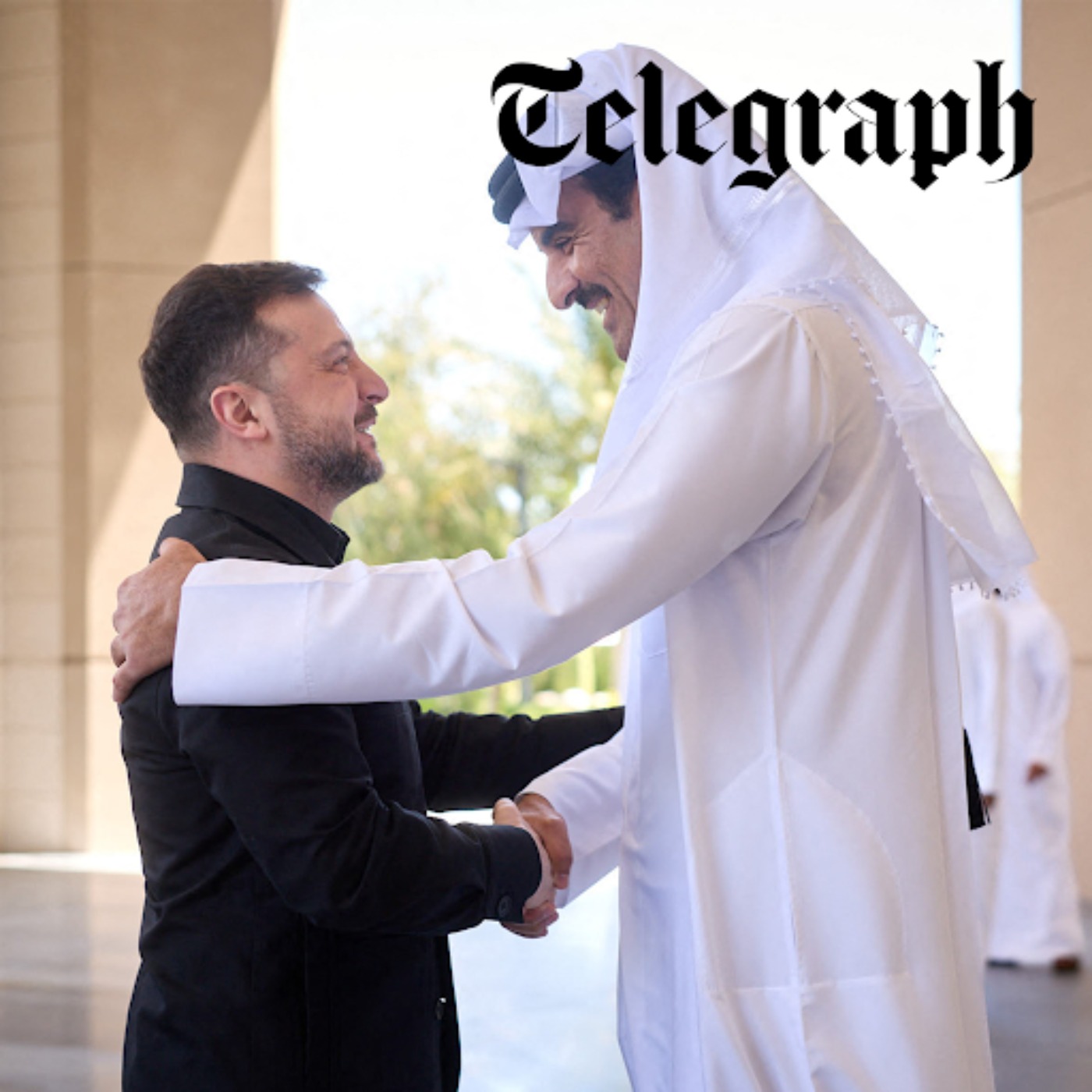
Ukraine: The Latest
Zelensky offers to help Trump unblock Strait of Hormuz & killing each Russian soldier costs Kyiv ‘under ‘$1,000’
00:56:25
Loading summary
Transcript86 lines
- [00:00]
Peter Szijjarto
Foreign.
- [00:09]
Hayden
Howdy, howdy ho, and welcome to Fantasy Fan Fellas. I'm Hayden, producer of the Fantasy Fan Girls podcast and your resident lover of all things Sanderson.
- [00:17]
Stephen
And I'm Stephen, your bookish Internet goofball. But you can call me the Smash Daddy.
- [00:21]
Hayden
And we are currently deep diving Brandon Sanderson's fantasy epic Mistborn. But here's the catch. Steven here has not read Mistborn before.
- [00:30]
Stephen
That's right.
- [00:30]
David Knowles
Hei, hei.
- [00:31]
Stephen
So each week, you'll get my unfiltered raw reactions to every single chapter.
- [00:35]
Hayden
And along the way, we'll do character deep dives, magic explainers, and Steven will even try to guess what's next. Spoiler alert. He'll be wrong.
- [00:42]
Stephen
News flash. I'm never wrong. Episodes come out every Wednesday, and you can find Fantasy fanfellas wherever you get your podcasts.
- [00:49]
Strawberry Me Advertiser
Let's be completely honest. Are you happy with your job? The fact is, a huge number of people can't say yes to that. Too many of us are stuck in a job we've outgrown or one we never really wanted in the first place. But we stick it out and we give reasons, like, what if the next move is worse? And I've put years into this place, and maybe the most common one. Isn't everyone miserable at work? But there's a difference between reasons for staying and excuses for not leaving. It's time to get unstuck. It's time for Strawberry Me. They match you with a certified career coach who helps you get from where you are to where you want to be, either at your existing job or by helping you find a new one. Your coach helps clarify your goals, creates a plan, and keeps you accountable along the way. Go to Strawberry Me Career and get 50% off your first coaching session. That's Strawberry Me Career.
- [01:45]
David Knowles
Acast Powers the world's best podcasts. Here's the show that we recommend.
- [01:53]
Francis Farrell
Hey, it's Christy.
- [01:54]
Francis Sternley
And I'm Kelly.
- [01:55]
Francis Farrell
You might remember us as the OG Partners in crime from Dance Moms. Well, this is Back to the Bar,
- [02:00]
Francis Sternley
the podcast where we drag out every
- [02:02]
Francis Farrell
insane, chaotic, and iconic moment from the show. We're spilling the tea, calling out all the BS and sharing stuff you definitely didn't see on tv. New episodes drop every week, and yes, we're laughing through the drama for once. Follow, grab a drink and join us as we go Back to the bar.
- [02:22]
David Knowles
ACAST helps creators launch, grow and monetize their podcasts everywhere. Acast.com.
- [02:35]
Francis Sternley
I'm Francis Sternley, and this is Ukraine, the latest today, as Ukraine offers to assist in reopening the Strait of Hormuz. We hear reports of the Ukrainians being warned off attacking oil energy infrastructure as the world continues to reel from the war in Iran. Then we examine leaked calls between the Russian and Hungarian foreign ministers that suggest an even closer relationship between Moscow and Budapest than previously understood. Finally, we reflect on the anniversary of the Bucha massacre, one of the most notorious atrocities of Russia's invasion. And then hear the view from the battlefield with frontline reporter Francis Farrell. Bravery takes you through the most unimaginable
- [03:18]
David Knowles
hardships to finally reward you with victory.
- [03:22]
Francis Farrell
Russia does not want peace.
- [03:33]
David Knowles
If I'm president, I will have that war settled in one day, 24 hours. We are with you.
- [03:38]
Francis Sternley
Not just today or tomorrow, but for 100 years.
- [03:46]
David Knowles
Nobody's going to break us. We are strong. We are Ukrainians.
- [03:52]
Francis Sternley
It's Tuesday 31 March, four years and 35 days since the full scale invasion began. And today I'm joined by my co host Adelie Pogbin Ponte. And later you'll hear the first of her interviews with our friends at the Kyiv Independent, starting off with frontline reporter Frances Farrell. But first, the major military and political developments from me. Over the past few days we've been reporting on the huge strikes on Russian oil export infrastructure in the Baltic. Ukraine's effort to impede Russian profits from the war in Iran as the world seeks to find alternative sources of energy. We speculated this might prove unpopular in some quarters. And so President Zelensky has confirmed today, saying that some allies have sent Kyiv back signals about the possibility of scaling back the country's long range strikes. In response, Zelensky's posted we are not just carrying out strikes on Russia, we are responding. I emphasize once again, if Russia is ready not to strike Ukraine's energy infrastructure, we will not retaliate to theirs. We are open to discussing any type of ceasefire. If the Russians are ready, let them suggest any time frame. We are ready to resolve this issue now. A Reuters source said U.S. officials were one of those countries that had conveyed their concerns about Ukraine's strikes as part of their regular conversations, adding that the initial signals appeared to have come from Moscow. Surprise, surprise. Now that's despite the fact that Kyiv is now claiming its new defense partnerships in the Gulf, as ADLI reported on in detail yesterday, will supply weapons and defense technology that could potentially help unblock the stratoformed news. Zelenskyy said Ukraine will offer sea drones as part of its defence of the shipping corridor in the Persian Gulf. We still don't know when or if the trilateral negotiations will resume. Zelenskyy was keen to stress yesterday that they had not reached a dead end, though he also claimed, we're much stronger today than we've been over the past six months. It was a relatively, and I emphasize that word, quiet night in bombardment terms. Russia issued a warning of flamingo missiles to various regions, but significant reports so far are of an accident in Nizmerchansk in Tatastan. In terms of Moscow's attacks on Ukraine, there was a big one in sumy region where 11 were hospitalized, the youngest just a 6 year old girl. Near the central city of Poltava, falling debris from drones reportedly killed one, injured three and damaged a high rise apartment building. Another died in drone attacks and artillery strikes in the adjacent Dnipropetrovsk region, near the town of Nikopol somewhere. We've reported on quite a lot now before we turn to the front lines and other stories, the biggest one in the political realm today is easily leaked recordings obtained by a consortium of investigative news outlets, including Front Story and the insider between Hungary's Foreign Minister Peter Sejato and his Russian counterpart Sergei Lavrov, in one They've released from August 30, 2024, just an hour after Sejater arrived in Budapest from St. Petersburg, we hear Lavrov call with a request to. To have Russian oligarch Alisha Usmanov's sister removed from EU sanctions list. Usmanov has been described as one of Putin's favorite businesspersons. Just listen to this.
- [07:17]
Peter Szijjarto
Hello? Hello, Sergey, this is Peter speaking. Yes, Are you in Saint Petersburg? Where are you? I landed in Budapest already. Just. Yeah, yeah. You were on all headlines in the Russian media today. Oh, did I say something wrong? No, no, no, no, no. They were just saying that you are pragmatically fighting for the interests of your country. Oh, well, well, that's a very, let's say, nice. Let's say analysis of the situation. Nice way to put it. And fair. And fair. And fair. And fair. Look, yeah, I am calling on the request of Alice and he just asked me to remind you that you were doing something about his sister, Mrs. Ismailova. Yes, yeah, absolutely. The thing is the following, that together with the Slovaks, we are submitting a proposal to the European Union to delist her. We will submit it next week and as the new review period is going to be started, it's going to be put on the agenda and we will do our best in order to get her off. Thank you very much. He would be really very pleased. He's seriously concerned about his history. Can understand this and we highly appreciate your support and your fight for equality in all spheres.
- [08:51]
Francis Sternley
Now, remember, Hungary is a NATO and EU member and wherever one stands on the idea that diplomats should have cordial relations with foes as well as friends, this seems to go far beyond that in terms of the closeness between the pair. But even if we were generous and not to read anything into what he actually says, this is politics after all. It's the actions that seem to condemn him in the eyes of many. In other recordings, he is alleged to give Moscow strategic information on critical EU issues, saying that he's doing his best, for instance, to block an EU sanctions package. He even talks about the new Gazprom headquarters he'd seen in Russia, adding, I'm always at your disposal now, on that same call from earlier, Sujato also revealed the details of the EU Foreign Affairs Council meeting that he participated in the day before, where he rebuked former Lithuanian Foreign Minister Gabrieles Lambergas, someone we've interviewed on the podcast previously for saying the EU should contribute 12% of rockets and missiles. Lambergus has now confirmed in the last 24 hours the behind the scenes details. He said, I can verify that this is a real exchange during one of the Foreign affairs councils. It seems that all this time Putin had and still has a mole in all European and NATO official meetings. If the integrity of these meetings is to be maintained, it would be appropriate to ban Hungary from all of them. Now, Sejato, unsurprisingly, has come out swinging. Replying on X It's long been known that foreign intelligence services, with the active involvement of Hungarian journalists, have been intercepting my phone calls. Today they've made a new major discovery. They proved that I say the same publicly as I do on the phone. Nice work. For years we've been saying that sanctions are a failure, causing more harm to the EU than Russia. Hungary will never agree to sanction individuals or companies essential for our energy security, for achieving peace, or those with no reason to be on a sanctions list. Now, it'll be very interesting to see what impact this has in Hungary itself. And for more on that country, do check out yesterday's discussion that we had with Joe Barnes on whether it is possible for the EU to stop Hungary's voting rights within the bloc. And of course, the documentary that we've talked about enough now. But I'm going to do it one more time from Friday, where I was in Hungary analysing The relationship between Orban's government, Russia and Ukraine. Now just turning to the ground war. No major developments. There are reports of heavy glide bomb strikes against Konstantinivka in Donetsk. The commander of a Ukrainian battalion there claimed Russian forces are completely destroying the city's infrastructure and periodically conducting occasional unsuccessful mechanized assaults while concealing artillery with wood and nets. Oleksandr Kamyshin, an advisor to zelenskyy, spoke to 60 Minutes yesterday saying that this is a data driven war in Ukraine. A numbers game. We count everything. Drones, efficiency, cost to kill. The cost of killing every Russian is less than $1,000. That's why they send so many people to die on the front line. Now just on that, Ukraine claims It's now identified 27,000 foreign nationals fighting for Russia as of March 30, up from more than 18,000 in November. They come from at least 135 countries. Those numbers tally with our reporting that have seen and suggested renewed recruitment drives, particularly in Africa, some of whom of course were treated as mere cannon fodder, as we reported at the time, with mines strapped to their chests. Now, Kamyshin also emphasised Ukrainian innovation. And just on that, Defence Minister Fedorov has said that a private company's air defence unit shot down several Russian Shahed and Zala drones in Kharkiv Oblast yesterday, demonstrating the first results of an experimental Defence Ministry project. We also learned today that one of Ukraine's largest drone makers, General Cherry, has signed a deal to produce UAVs in the US. But even more significant is that the European Commission approved a 1.5 billion euro work programme yesterday under the European Defence Industry Industry program, including funding to integrate Ukraine's defence industry into the EU's industrial base. That is a significant development, has been a long term trend. Now Zelenskyy also signed a 10 year security agreement with Bulgaria on the same day, detailing continued military support for Ukraine and plans for a direct rail link between the two nations. But to end the major updates, today marks the fourth anniversary of the liberation of Bucha, a place which lost 561 of its civilians, among them 43 children, one just one and a half years old. Over the time it was a war zone and occupied. Many were tortured, raped and killed by Russian forces directly. Bodies lay in the streets and against walls for weeks until Russia's defeat and the return of Ukrainian forces to the city. Along with the press, including our very own Danielle Sheridan, as long standing listeners may recall now, senior diplomats from across the EU have visited Bucha today for the commemorations it has rightly become synonym with Russian war crimes. But what keeps me awake at night is how many buchas there were, and possibly still are in the occupied territories, never discovered or recorded because they've not been liberated. It will take generations for the true scale of the horror to be revealed. We are only the first draft, but Adli, let's go to a few stories that have caught your eye in the last 24 hours, including a relevant interview with Mr. Lavrov himself on French TV.
- [14:36]
Francis Farrell
Yes, indeed. And actually, bucha was very much at the center of that interview, sadly, and I wish it were in different circumstances, really. Last Thursday, Sergei Lavrov, so Russia's foreign minister was interviewed on French public tv, France Television France Dieu. It's caused quite a lot of noise in France, so let's unpack it. So what was it? So the interview is an hour long and you can watch it and you can read the transcript. You can use Google Translate to translate it on the news website. I'll link to it in the show notes. And then 10 minutes of the interview were broadcast during the evening news on France Du. I believe the part that was broadcast was a part questioning Lavrov about Russia's support to Iran during the Iran war. And it followed a report from France de Levison about the support, as we've reported here on the podcast. So what is the ruckus? Well, really, it is about whether it's wise to interview Sergei Lavrov on primetime TV and to give him a platform to give a platform to someone who represents an aggressor country to Ukraine, who is potentially guilty of war crimes, and whether that is the right thing to do as a public broadcaster. The Ukrainian ambassador to France, Vadim Omelchenko, questioned that. He said, why are we offering an opportunity to speak to an ordinary fascist and a war criminal? It's even led to a response from the Ministry of Foreign Affairs. French Foreign Minister Jean Noel Barrot regretted that Lavrov could peacefully roll out his propaganda on a French TV channel. And on X, the official account of the French foreign Minist published an official response to the interview, adding, repeating lies does not make them truth. So amongst the claims made by Lavrov during the interview that to some extent went unchallenged by the interviewer.
- [16:23]
Francis Sternley
That's the key issue.
- [16:23]
Francis Farrell
That's the key. It was. I'll get into the details of that. Lavrov obviously spewed out the usual lies that we've seen several times and times again since the beginning of the war. So false Claims about specific events, for example that Bucha was staged or there was a genocide in the Donbass, or that there was a Nazi regime in Kyiv. He also accused the west of trampling international law and of Ukraine of starting the war, while claiming that Russia did respect international law. Several times he said that several times he also accused Ukraine of killing its own citizens. He claimed 40 citizens were killed in Odessa by Ukraine. The post on X by the French Foreign Ministry is quite interesting because they really take apart the rhetoric used by Lavrov and they point out to the strategy that he uses, call that an inversion accusatoire. So accusatory inversion. Russia accuses Ukraine of committing the crimes that Russia itself commits and therefore creates doubt and confusion on who is responsible for what. It also points out that there are proven instances of hybrid warfare, which Lavrov completely skims over when he's being asked about it in foreign countries, including interference in foreign countries political life, namely France, which there are many cases, as you've been talking about, as we've been talking about, there's an ongoing trial in France about the subject. And it concludes the post from the French Foreign Ministry that it is an organized manipulation of information. A lot of experts, geopolitical experts, including from Lifri, l' Institut Francaise des Relations International, we've had experts from there on the podcast before, have commented how dangerous and catastrophic the interview was, saying it was poorly prepared. Now France Television, the editors and the execs have published an article explaining the editorial decision to interview and broadcast the Russian foreign Minister. The piece acknowledges the Are we giving a platform to an aggressor and to potentially war criminal? What's the point of giving space to someone who's so well trained in government propaganda? To which the head of news at France Television responds, there's an obvious journalistic interest to this interview. He's a minister of a country very much in the news at the moment, especially with the war in Iran, where Russia plays a crucial role. The piece also clarifies that Lavrov's team did not ask for any requirements in terms of questions, in terms of reading the questions in advance. They also say they would have refused that the only thing he requested is that the interview be available in its entirety to viewers, which it is. It wasn't on primetime TV. That was just 10 minutes, but you can watch the entirety, the whole hour of it on the website. The article then concludes, citing over the 400 reports about Ukraine from France Television over the last four years and Leah Salami's the Presenter her recent interview with Zelenskyy to show the editorial balance of coverage. So what's going on in this interview? Well, the first observation is that the presenter, Leah Salemi, asks a question which Lavrov listens to with an earpiece, and then he takes out the earpiece when he's answering. So there is literally no way for presenter to interject, to cut him off and to be like, wait, what you've said is not true. He just takes it out, unrolls his answer for, you know, several minutes. He drones on and on and on and he shifts from one topic to another. That's actually quite clever because there's one question and then he kind of jumps from topic to topic. So there's so many things you need to take apart. While he's answering. Lea Salame does counter several claims. She asks point blank whether Russia is violating international law in Ukraine. Lavrov then goes on and on and on, on about Russia's respect for international law and the fact that Ukraine started the war and also that the US and Israel do not respect international law and that's how the war in Iran started. She also asks whether what the military objective of Russia is pointing to the recent claims from Russia that it had not met its military objectives. And she asks point blank, is it to raise Ukraine to the ground? So she's asking some real question there. There is, however, as I said, so many topics and so many things that need to be fact checked in real time and to be taken apart. And there just isn't that in the interview. And there just isn't that constant fact checking that needs to be done. I mean, he needed to be interrupted every other sentence, really. There are so many falsities in each of his answers. He evades most questions. A lot of that goes unchallenged, unfortunately. And the problem is that the audience can then take some of these allegations, for example, on Bucha for granted, you know, when he says butcher was staged, you know, which has been debunked time and time again. We're very cued into this story, obviously, so are our listeners. The average watcher and listener on primetime TV at 8 o' clock during the evening news isn't necessarily, you would hope, four years into the war that they would have heard about this. But equally, people have busy lives and not everybody is as clued in into geopolitical events as we are. So that's the interview. I highly encourage you watch it nonetheless, and you read the transcript because I think it's interesting. It's really A shame that this amount of falsities and all of these claims that we take so much time taking apart every day on the podcast made it through to the general public without being fact checked in real time. So I'll link to that in the show notes and you can make up your own mind.
- [21:54]
Francis Sternley
Well, we were talking before we came on air about whether we would interview Sergei Lavra, and I think we'd have to think about it very carefully because with these kind of stipulations that were put on this interview with him being able to take out the earpiece, that
- [22:06]
Francis Farrell
was negotiated in advance.
- [22:07]
Francis Sternley
Right. But even so, like, they've, they've. He's done that. And if we knew that that was even a possibility, then I don't think we would agree to the interview. And I think also the idea of. Whilst, you know, we would want to run it in full, I think the idea that you'd be unable to press back would not sit right with us, given the absolute importance, as you say, of actually being able to fact check what he is saying over the course of, of any discussion or interview. But somehow I have a funny feeling that he wouldn't want to sit down with us. I would love to be. And if you're listening to this in the Russian Embassy, which we know you do, and decide that you would like us to interview him, then do reach out. But somehow I think that we're not at the top of that list. I can think of many other outlets that might be badly. Let's go now to your first interview from our friends at the Kyiv Independent. Who's starting us off.
- [22:56]
Francis Farrell
So Francis Farrell, the other Francis, is starting us off. We chatted towards the end of February, thinking about what had happened over the winter and what the spring, a potential spring offensive could look like. It was a really fascina interview. Also about what it's like reporting from the frontlines as a journalist and how it's changed over the last few years, how much more dangerous it's become. So I hope you enjoy it. And we'll have several more interviews from our friends at the Kyiv Independent in the next few weeks. Frances, really good to see you in person.
- [23:26]
David Knowles
Yeah, good to be back. Well, good to have you here in Kyiv.
- [23:29]
Francis Farrell
We're at the end of a very long and harsh winter in Ukraine. How is the front line faring after these hard weeks?
- [23:36]
David Knowles
Yeah, so of course, over the winter, and for good reason, most of the attention has been on the humanitarian situation in the cities, the energy situation, people almost freezing in their apartment. Buildings, but on the front line in the meantime, we've seen more of the kind of traditional winter stabilization of the front line, pretty similar to what we saw a year ago, actually, when Russian gains, which were really speeding up, up over autumn, really died down over winter itself. And the reason for that is quite simple, and especially this year with the fact that this has been easily the coldest winter of the full scale war. Russia's offensive tactics rely on small group infantry assaults, and specifically with more and more of a focus on infiltration. So when it used to be maybe six people going forward at a time last year, now it's more like one or two. Sometimes you hear of even just one infantryman sneaking through very slowly. And their aim is not simply to assault the first Ukrainian positions, but more to sneak past and bypass them and try and move in as far as they can behind Ukrainian lines, to dig in together and then to move forward. And that has been necessitated by the extremely dense and efficient kill zone that Ukrainian drones have been created. This kill zone, of course, exists on the Russian side too, and that's why we're now in a position where 70 to 80% of casualties on both sides are actually caused mostly by drones. In winter, though, that's just really hard because first of all, I mean, I can't imagine what it's like to be a Russian assault infantryman, you know, kind of moving forward, sometimes for days at a time, without any logistical support, without any warmth. I do not doubt that dozens of them have simply died of exposure or frozen to death out in these fields when we're talking about -15, 20 degrees Celsius. But also traditionally, it's a lot more difficult for them to infiltrate because there's no leaves on the trees. Most of the battlefield in Ukraine is made up of fields and tree lines and fog forests. And without leaves on the trees, drones can spot them very easily and take them out. Of course, there are other factors, like the cold weather does make it more difficult for drones to operate. The battery doesn't last as long, fiber optic breaks. But those factors work for both sides. And overall we've seen that just like last year, this year the winter has been more favorable for the defensive side, for Ukraine, and has allowed them to stabilize. In the meantime, Ukraine has also taken this opportunity and it seems to maybe be coordinating, or if not coordinating, at least jumping on the opportunity created by the starlink cut off to go on the offensive in the southern front line. We're talking about areas in the east of Zaporizhzhia Oblast and in the south of Dnipropetrovsk Oblast. And that's where we've heard these headlines about counter offensives. And that's where we've seen Zelensky and Commander in Chief Syrsky talking about hundreds of kilometers of territory apparently liberated. And that in turn has led to a very happy statistic that this month, in February, last month, Ukraine actually liberated more territory than it lost, which is the first time since 2023 that we've seen such imbalance. The truth is a little bit more complicated because that territory, these hundreds of square kilometers that have apparently been liber, these are areas where Russia infiltrated far deeper and further than they really had any right to back in autumn. And that was caused by Ukrainian mistakes and a chaotic Ukrainian defense. But even then at this point, we're talking about this very wide gray zone. We're talking about positions overlapping and it's difficult to really call that a lot of that territory, like firmly in Russian controlled or now Ukrainian controlled. And so it makes for good headlines. But what we're seeing is more of an operation to kind of even out and clear these parts of the front lines and prepare them for what is definitely going to be a tough spring and summer campaign. And that's a good thing. That's a good thing that that's being done. And it's good that it's being done now at the time when the Russians are kind of slowing down in general where they've lost Starlink. But it's not quite the same as a big counter offensive that's really liberating a lot of territory.
- [28:52]
Francis Farrell
Speaking of Starlink, what have you been seeing?
- [28:55]
David Knowles
Yes, Starlink. I mean the Russians never became anywhere near as dependent on Starlink as Ukrainian forces were. So yeah know, going back to the beginning of the full scale invasion, Ukraine jumped on Starlink very quickly and it became the ubiquitous thing that almost any combat position would use to communicate with command posts. And then Starlink terminals were also put on unmanned systems, including UAVs and UGVs, unmanned ground vehicles. For the Russians, you know, they've, they've always had other options. Often just Starlink turned out to be the best in terms of this is the strongest signal, the best Internet connection. With the help of this, we can have basically instant high definition passing across of drone live streams from position to command post and then to the next command post. And of course then they actually started putting them on these longer range drones which triggered the urgent need to get those cut off. So now we did hear from Commanders and I heard from commanders about a lot of panic in the first few days after that happened. But they seem to say that very quickly, you know, they, they found alternatives. And often the alternatives were just going back to the, you know, the previous best option that they had, you know, wired connections, local LTE networks, kind of mesh radios. Depends on what use case. You know, there are some things, obviously these long range drones will have a harder time to operate in general. The whole command chain might be slower, there'll be less live streams. And what will be interesting to go to look at in the future is the Russians use of UGVs, which are now becoming super important for logistics on both sides.
- [30:49]
Francis Farrell
What are UGVs?
- [30:50]
David Knowles
These are the unmanned ground vehicles. So the big ground drones, which are now, because of the kill zone being so dense on both sides, are now taking up a lot of the burden of logistics. So on the Ukrainian side, For example, most UAV positions, most drone positions are being resupplied by UGVs because they're already in that kill zone and to a lesser extent. But the Russians are bringing them in too. And if they don't have that Starlink option for them to work because all Ukrainian ones are using Starlink, then that might be a more long term problem for them.
- [31:26]
Francis Farrell
What's the state of the Ukrainian fortifications at the moment and how has the infrastructure been affected by the winter?
- [31:33]
David Knowles
Ukrainian fortifications seem to have improved a lot since they really started building them in early 2024. I wrote about that, I asked Zelensky about that at the time. It was a real, I think, failure in strategic planning not to be building these in advance of Russian offensives. And Ukraine has paid a high price for that. But not only were the previous fortification lines often, you know, badly organized and not resourced properly, but they were also not designed for, for drone warfare. They, they had these, you know, big open trenches that infantry were expected to be manning, you know, big concrete bunkers that drones can just fly straight into. And, and this is on top of the fact that Ukraine has this manpower problem, you know, where. So they, they just literally can't man all of these, all of these fortifications. But over 2025, much I think more organized and smarter system. This is often led by the core command system. And they're focused on creating these really, you know, big, just physical barriers so that we're talking about layers of three anti tank ditches, barbed wire inside, outside, on either side, the dragon's teeth, basically huge physical obstacles that individual infantrymen, you know, let alone vehicles were just really going to struggle to get past. And what that does is it creates choke points because there might be only a tiny way through along the road. And that is always monitored by drones. It's always, you know, anyone that tries to go through there is going to be hit. And when it comes to the so called fortifications, you know, the prepared positions of Ukrainian troops themselves, instead of these huge brick concrete fortresses that we might think of, a lot more focus is put on concealment, on just small positions concealed really carefully inside tree lines. So, for example, a Ukrainian drone team can work out of there while being concealed, kind of safe. They have a lot of room. They can live comfortably for weeks or months at a time because. Because that's the new reality of the battlefield. And so then the other thing about fortifications is we need to wait till the Russians advance to these fortifications for them to actually start working in most cases. And so that's always a kind of toss up there. But in some areas we see the Russians have reached them and there have been some pretty insane footage coming out of just tens of Russians just lying dead in these fortified lines. So it's a good, so it's a good thing to have and they could be super important over this year of fighting. And just another reason why the idea of Ukraine just handing over so much fortified territory in exchange for a promise on a piece of paper is so silly.
- [34:46]
Francis Farrell
What are some of the better decisions that the Ukrainian command could have taken to keep Burkovsk?
- [34:51]
David Knowles
Well, ultimately, Ukraine's biggest issue is manpower. And so, so overall, we're talking about decisions that could be made to minimalize losses and improve the long term sustainability of a defensive fight rather than short term not losing a position. And I've written about this before that in general there's an issue with how commanders have this culture of being forced never to take a step back, never to retreat from positions. And they can even be prosecuted for that if they do, despite not having anyone to do that with. And then if they're pushed out anyway, sometimes because of this kind of culture in the command, they don't necessarily report truthfully to the higher command. And then you get a fake picture of what's going on and suddenly the neighboring unit unit is outflanked. I mean, this is something that happens all across the front line. But similarly, it was the problem in Perkrovsk now with the core reform that has gone on in the Ukrainian Army. This is since a year ago Syrsky announced basically the transfer from these previous temporary command structures to a Core system where brigades, five brigades or so are brought under the command of one corps. It's, you know, it's a topic of a whole discussion and it came too little, too late and it's, you know, not always implementable in, in reality, but, you know, for the better. For the last half of, of 2025, you know, de facto, Percrovsk has been run by the 7th Corps of Ukraine's air assault forces, which is a competent core command, you know, coming from a more elite part of the Ukrainian military. And, you know, a lot of the, the situations that they were in were, you know, it was too late to, to kind of fix it and maybe save the city. But since then, they have run a very orderly defense of Pokrovsk and now continue to defend the, the area behind it. If we remember the battle of Avdiivka two years ago, there was an issue that, you know, people thought that, okay, once this pocket is closed, there can be stabilized defense behind the city, and it wasn't the case. In fact, there was a lot of chaos and the Russians managed to push through onwards very quickly. And we're not seeing that in Perkrovsk, which is very good.
- [37:42]
Francis Farrell
We keep on hearing in negotiations and in headlines about potential territorial concessions. What do soldiers on the front line think about this?
- [37:52]
David Knowles
I mean, for soldiers on the front line, they treat that argument with ridicule and contempt, I'll be honest. And I think they appreciate that the Ukrainian leadership, specifically President Zelensky, is taking a hard line on that as well. There was a bit of, it was up in the air when it came to the 28 point peace plan. And obviously he wants to show Trump that he's ready to negotiate and compromise and so on, but this, I think it's clear that he, he's, he's showing and he's, he's come out with recently, strong recent statements that have been, you know, very clear that we're not doing this. But over the last few months since this has been on the agenda, of course soldiers have told me that, no, of course they're not going to follow such orders. This is, I mean, it, whether you look at it from an emotional side of, you know, so many people have, have lost their lives for this land. Whether we're talking about, you know, handing over tens of thousands of people into Russian occupation and everything that comes with that, or the basic strategic reality that we're dealing with, which rationally says that it makes no sense to hand over, you know, your most, your biggest fortified strongholds for the sake of a ceasefire with an actor who cannot be seen as negotiating in good faith. I mean, they understand all of that, I think often a lot better than even international relations intellectuals writing for certain publications about how Ukraine should just give this up for the sake of peace. There are so many aspects to it, but the simple part is that Russia is clearly still seeking broader political military capitulation from Ukraine. Ukraine, that's what the full scale invasion started with. An attempt on the Ukrainian capital, an attempt to take at least all of eastern Ukraine, including Odessa, and we don't know how much more. And since obviously the failure to take Kyiv, the simple strategy has been to achieve the same maximalist aims through attrition, through degrading the Ukrainian military's ability to defend along this very long front line against the Russian military. So we see absolutely no indication that they have given up on those ideas sometimes, including I think a few months ago, the ambassador to the uk, the Russian ambassador said that very openly, this is the only thing that we're negotiating is the Ukrainian capitulation. We know that in their constitution they've integrated all four Ukrainian regions, including Kherson and Zaporizhzhia, into, into Russia. So it's strange to, to, to think that they don't want the rest of that. And, and so, and of course they cannot be trusted. Right. So they, they do not exist in a, in, in a world where something written down on paper means anything. You know, I believe, you know, with 100% certainty that in, in such an event, even if it was technically a demilitarized zone where Russ weren't meant to come in, they, they would, whether it's little green men or separatists or the, the Russian military, because there, there's no hard power to stop them. And you know, when people talk about it being in exchange for security guarantees. Well, I'm of a quite radical, I think, but also common sense view that security guarantees cannot exist at all for so long as no country is ready to go to war with Russia over Ukraine. You know, let's realistically imagine, okay, this agreement is, is reached, Ukraine withdraws, then Russia breaks it, you know, immediately or a few months down the line. You know, what is anyone really going to do more than they're doing now? Nothing. So, so, and, and then when it comes down, yeah, so to Ukraine, Ukraine's theory of survival and, and of victory is breaking Russia's conviction that it can break Ukraine through attrition. And these cities in the Donbass, including the fortified lines, I mentioned that that run between them and also even behind them. They are key for, for breaking that Russian offensive potential which we know cannot last forever.
- [42:50]
Francis Farrell
So does that mean that the promise of boots on the ground from the coalition of the willing in the United Kingdom and France in particular, does it ring hollow then?
- [42:59]
David Knowles
Short answer. Yes, I would say we're so far, I mean, I appreciate the, I think, and Ukraine appreciates the effort to put some skin in the game in the future, but again, it's all. It's putting the carriage before the horse. I'm sure that specific idiom has been used on this podcast already to, to describe this exact thing, because you can't talk about how to make Russia not start the war again before the first one, before you answer the question of why and how are they going to stop first. And ironically, going back to what I said about knowing Russia's real, like, political aims, you know, they see the existence of a strong, independent, democratic Ukraine as an off. They want that Ukraine to capitulate, knowing that, that they still want that. And Russia has said this, Lavrov has said this very openly then, like that, that is a deal breaker for them under knowing that, that, that NATO troops would come in to Ukraine after a ceasefire. What that means is that is another reason for them not to stop in the meantime. And that's not even going into the question of what forces do these countries really have available to deploy. Maybe France is best positioned, maybe the UK in second place, but then they need all of their rules of engagement and so on and so on. And ultimately it comes back to the fact that, no, these countries are not ready and not interested in a hot war with Russia. And so if they're deployed in the middle of Ukraine, in the west again, if Russia breaks their agreement and enters the rest of Donbass or continues its offensive in the east in general, it's hard to imagine them actually doing anything.
- [45:05]
Francis Farrell
Do you see any changes in the government's relationship to the press in the last four years of war?
- [45:10]
David Knowles
Yeah, I mean, it's been a, it's been a bit of a roller coaster, I think, when we talk about, you know, specifically my work and my relationship with the military and how organizing access has been. It was very chaotic in a, almost in a, in a great way for journalists, I guess, at the, at the start, and then in 2023 when we had, you know, the war, the counteroffensive, and then in general the war taking a, a kind of more grim turn, we saw an attempt to really CL on access a lot of barriers A lot of walls, a lot of red tape and even attempts by units to censor the work that journalists do about them. But since then, I have to say there's been a lot more improvement in that relationship. A lot more professionalism from the Ukrainian military. Press officers often coming out of Ukrainian media and understand, understanding and respecting our work and you know, they have their own interests and you know, we have to find common ground. And often, you know, it's still important to talk about the uncomfortable topics, the issues in the Ukrainian military, otherwise they don't get fixed. But overall, you know, I think that the access part has gotten better, but the really difficult part has been the security. That the fact that, you know, working as a journalist on combat positions is now really, really dangerous and more and more difficult, whatever every month politically, when it comes to the government, I mean, I think you see an increasingly open dialogue between the President and journalists in this WhatsApp chat and more often we see press conferences. He still doesn't want to give interviews to Ukrainian media. There's a lot of things that could be improved. But at the same time, I, I think maybe Mr. Kim correctly stated that we are in an info war. And it's important to understand that the Ukrainian authorities have their own interests. You just hope that these interests are the interests of Ukraine and the state and the war effort and not so much individuals political interests at play.
- [47:39]
Francis Farrell
It's a tradition that when Francis D. Interviews you, he asks for your perspective on the war in the military, in the political realms, strategically and the most likely direction of travel. So it's a cruel question because you can't really predict the future. But I have to ask it. What are your predictions?
- [47:57]
David Knowles
I think obviously in spring and summer we're going to see offensive operations ramp up again. And it's from both sides, mostly on the Russian side. I think we've seen this stabilizing effort from Ukraine over winter, but then they'll be digging in and on the defense. I think on one hand positives for Ukraine is that Russia still cannot, is nowhere near being able to achieve an operational breakthrough. As many advantages as they might have. They will get close to Sloviansk, Vin Kramatorsk, to the point where, where those cities are infested by FPV drones, but they will take huge losses doing so. I think I'm very optimistic about all the changes that seem to be being driven by the new Minister of Defense, Mikhailo Fedorov. And hopefully he will be able to bring his philosophy and his data driven kind of strategy. Also to the General Staff as well. And that could vastly improve the efficiency of Ukraine's defense and save. Protect the lives of Ukrainian servicemen and really improve that attrition ratio for the Russian forces, which is Ukraine's theory of survival and of victory, ultimately. So I think that's very good news. The fortifications are good news. Ultimately. I think Ukraine's biggest challenge is still going to be manpower. We are dealing with a mobilized force. The new people coming in, whatever reforms we do are still not going to be super motivated. And the overall Ukrainian military remains overstretched. And on a strategic level, that means that Russia might look to open new fronts, might look to push more in Sungli Oblast, for example, to increase political pressure from a new direction. And it will be a big challenge for Ukraine, as it has been last year, to defend effectively everywhere. I think this Zaporizhzhia area where we have seen the counter attacks, could be key because if they do get close to Zaporizhzhia, that's an extra political lever that Russia could use. They say, well, now we've almost finished taking Zaporizhzhia Oblast. We've got FPV drones in the city as well. So now we want that as well in a peace deal. But I think Ukraine has every chance to really set up a rock solid defense over 2026, and then a lot of it will depend on what's going on inside Russia. It seems like they will struggle to keep recruiting people, as many as they lose per month on the battle field. On the other hand, you know, we talk a lot about the Russian economy and how, you know, it's. It's going to be struggling more and more, but then we have war in Iran and the oil price surging. So, you know, these things are very difficult to predict. The last thing I'll say is that, yeah, once again, if we can boil it down, predictions, there are no peace negotiations. It's just theater for Trump. There are no security guarantees. No one's ready to really step in for Ukraine. So what we're left with is just the hard balance of power. And so for that reason, we can expect, unfortunately, a lot more. A lot more fighting, a lot more tragedy, a lot more hardship. But, yeah, we'll be here to. And you'll be here. So thank you.
- [51:53]
Peter Szijjarto
I'll be here.
- [51:53]
David Knowles
Thank you. For you. To you as well. For, for, you know, not, not getting tired because, you know, we're tired here in Ukraine as well. But we all understand that there's no alternative to, to continuing. So here's to that. I guess.
- [52:10]
Francis Farrell
Here's to that. We're definitely not going anywhere and we'll keep going. And I mean, we definitely do not have any right to be tired. So we'll be there. Thanks, Francis.
- [52:20]
David Knowles
Thanks. So good to talk to you.
- [52:28]
Hayden
Howdy, howdy ho, and welcome to Fantasy Fan Fellas. I'm Hayden, producer of the Fantasy Fan Girls podcast and your resident lover of all things Sanderson.
- [52:36]
Stephen
And I'm Stephen, your bookish Internet goofball, but you can call me the Smash Daddy.
- [52:40]
Hayden
And we are currently deep diving Brandon Sanderson's fantasy epic Mistborn. But here's the catch. Stephen here has not read Mistborn before.
- [52:48]
Stephen
That's right. Hey hey. So each week you'll get my unfiltered raw reactions to Single Chapter.
- [52:54]
Hayden
And along the way we'll do character deep dives, magic explainers, and Steven will even try to guess what's next. Spoiler alert. He'll be wrong.
- [53:01]
Stephen
Newsflash. I'm never wrong. Episodes come out every Wednesday and you can find Fantasy fanfellas wherever you get your podcasts.
- [53:08]
Strawberry Me Advertiser
Let's be completely honest. Are you happy with your job? The fact is, a huge number of people can't say yes to that. Too many of us are stuck in a job we've outgrown or one we never really wanted in the first place.
- [53:19]
Francis Sternley
Place.
- [53:19]
Strawberry Me Advertiser
But we stick it out and we give reasons like what if the next move is worse? And I've put years into this place, and maybe the most common one. Isn't everyone miserable at work? But there's a difference between reasons for staying and excuses for not leaving. It's time to get unstuck. It's time for Strawberry Me. They match you with a certified career coach who helps you get from where you are to where you want to be, either at your existing job or by helping you find a new one. Your coach helps clarify your goals, creates a plan, and keeps you accountable along the way. Go to Strawberry Me Career and get 50% off your first coaching session. That's Strawberry Me Career Podcast Advertising works.
- [54:03]
David Knowles
And with ACAS Ads Academy, you'll learn exactly how. Our free on demand courses are built from more than a decade of podcasting experience, giving you practical tools to create campaigns that drop drive results. Complete the course and you'll earn a certification that proves your skills in one of the fastest growing channels in media. Get started today at go.acast.com forward/academy.
- [54:30]
Francis Sternley
And you'll hear more interviews from our friends at the Kyiv Independent in future episodes. But let's Go to final thoughts then. First, just a very quick one from me marking 40 years since the Chernobyl disaster. The Ukrainian Institute of London and the Royal Society of Arts are hosting an event tomorrow reflecting, reflecting on its legacy not just for Ukraine, but for Europe's environmental security as a whole. One of those on the panel is our friend, the historian Serhii Plocki. They've asked us to promote the event to listeners here in the city and of course we're very happy to do so. Maybe see you there. But Adlie, where would you like to leave listeners today?
- [55:03]
Francis Farrell
Yes, I just wanted to follow up on a story I mentioned on Friday. During our broadcast we were linking to a Spectator piece about the analysis on whether Russia is suffering from the war in Iran and from Ukrainian strikes on its oil infrastructure from Ukraine. So on the one hand, the argument was that Russia is losing a lot of its capacity to transform and export its oil, as we've said many times on the podcast. And on the other hand, the price of oil has skyrocketed in recent weeks. Trump has eased the sanctions on Russian oil as well. And India, as we've mentioned, is coming back into the picture as a major buyer of Russian energy, both liquefied gas and oil. So where does that leave Russia? Are the Ukrainian strikes as effective as they are really hurting Russia in that context? Now, the analysis from the Spectator dived into a specific point that we've briefly mentioned on this podcast before. It's the Met the mineral extraction tax, whereby the Kremlin taxes oil companies at the point of extraction rather than at the point of export, and how that could translate into actual benefits for the Russian war. War chests with skyrocketing prices.
- [56:12]
Francis Sternley
Stay with us at the back.
- [56:13]
Francis Farrell
Yeah, the article went quite hard on this take. It argued that the Ukrainian strategy could be backfiring. So a lot of you had counter analyses on that and I thought that was really interesting. So let's hear them from Andre in Canada. The article highlights a real short term effect in that higher oil prices can partially offset lost export volumes under Russia's current tax system. But it treats that as the whole story when it's really just one piece of a much broader macro economic equilibrium. First, it assumes Russia can keep extracting oil regardless of export disruption. If ports, pipelines, storage are damaged or saturated, producers are eventually forced to cut the output. At that point, tax revenues fall regardless of the international price of oil, simply due to physical constraints. The second point is that it ignores the importance of foreign earnings. Oil exports don't just fund the budget. More importantly, they bring in hard currencies like Euros, yuan dollars that stabilize the wider reduced export mean, less foreign exchange flows, more pressure on the ruble and potentially higher inflation for both the consumer and the producers, something we all know the Kremlin is politically sensitive to. That weakens the entire economic base the state is taxing. Thirdly, it overlooks the financial health of the oil companies themselves. If firms can't reliably sell what they produce, their revenues fall. Even if headline prices rise, that makes it harder to sustain production, invest and pay those extraction taxes in the first place. This creates the risk of a self reinforcing downward spiral for Russian oil companies, which may ultimately force the Kremlin to step in and allocate fiscal resources away from the war effort or the real economy, offsetting any fiscal gains. This isn't a simple price up, revenue up equation, but rather a macroeconomic system under strain, where disruptions are far more likely to erode Russia's capacity than strengthen it over the medium range. Long term, Ukraine is playing the economic long game, as it should. And a second point made by Jakob in Denmark, and I hope I'm pronouncing your name correctly, Jakob. More fundamentally, this seems to ignore the structure of the Russian economy. Losses in companies like Rosneft or Lukoil are not isolated from the state. They translate into lower tax revenues over time, reduced dividends to the state, declining investment and future production. In a system where state and major energy firms are deeply intertwined, it is hard to argue that corporate losses do not eventually become state losses. So while the shift in taxation may make revenues more resilient in the short term, it seems wrong to conclude that the Kremlin is insulated from the consequences of constrained oil exports. I think an analysis needs to take into consideration that Russia does not have a liberal market based economy and that it is a kleptocratic petro state. So thank you all for writing. These were amazing analysis. Thank you for taking the time and we always value your expertise.
- [59:12]
Francis Sternley
Yeah, absolutely. One for the economy. Economists in their final thought. But it's so important. I mean this is why we go into this granular detail. It really, really matters. That's all we've got time for today. We'll be back same time, same place tomorrow. Goodbye for now. Ukraine. The latest is an original podcast from the Telegraph created by David Knowles. Every episode featuring us in the studio maps and battlefield footage is now available to watch on our YouTube YouTube channel. Subscribe@www.YouTube.com CrainetheLast There's a link in the description. If you appreciate our work, please consider following Ukraine the Latest on your preferred podcast app and leave us a review as it helps others find the show. Please also share it with those who may not be aware we exist. You can also get in touch directly to ask questions or give comments by emailing Ukraine ukrainepodelegraph.co.uk We continue to read every message. You can also contact us directly on X. You'll find our handles in the description. As ever, we're especially interested to hear where you're listening from around the world. And finally, to support our work and stay on top of all of our Ukraine news, analysis and dispatches from the ground, please subscribe to the Telegraph. You can get one month for free, three then two months for just one pound at www.telegraph.co.uk Ukraine the latest Ukraine the Latest was Today, produced by Phil Atkins. Executive producers are Francis Dernley, Louisa Wells and David Knowles.
- [60:48]
David Knowles
My name is David Knowles. Thank you all for listening, goodbye foreign.
- [61:03]
Hayden
Howdy ho, and welcome to Fantasy Fan Fellas. I'm Hayden, producer of the Fantasy Fan Girls podcast and your resident lover of all things Sanderson.
- [61:11]
Stephen
And I'm Stephen, your bookish Internet goofball. But you can call me the Smash Daddy.
- [61:15]
Hayden
And we are currently deep diving Brandon Sanderson's fantasy epic Mistborn. But here's the catch. Stephen here has not read Mistborn before.
- [61:24]
Stephen
That's right.
- [61:24]
David Knowles
Hey hey.
- [61:25]
Stephen
So each week you'll get my unfiltered raw reactions to every single chapter.
- [61:29]
Hayden
And along the way we'll do character Deep dives, magic explainers, and Steven will even try to guess what's next. Spoiler alert. He'll be wrong.
- [61:36]
Stephen
News flash. I'm never wrong. Episodes come out every Wednesday, and you can find Fantasy Fan Fellows wherever you get your podcasts.
- [61:43]
Strawberry Me Advertiser
It's tax season, and at LifeLock, we know you're tired of numbers, but here's a big one you need to hear.
- [61:49]
David Knowles
Billions.
- [61:50]
Strawberry Me Advertiser
That's the amount of money and refunds the IRS has flagged for possible identity fraud. Now here's another big number. 100 million. That's how many data points LifeLock monitors every second. If your identity is stolen, we'll fix it. Guaranteed. One last big number. Save up to 40% your first year. Visit lifelock.com special offer for the threats you can't control, terms apply.
- [62:15]
David Knowles
Acast powers the world's best podcasts. Here's a show that we recommend.
- [62:23]
Francis Farrell
Hey guys. Welcome to Giggly Squad, a place where we make fun of everything but most importantly, ourselves. I'm Paige desorbo. I'm Hannah Berner. Welcome to the Squad. Giggly Squad started on Summer House when we were giggling during an inappropriate time. But of course, we can't be managed, so we decided to start this podcast to continue giggling. We will make fun of pop culture news. We're watching fashion trends pep talks where we give advice, mental health moments and games and guests. Listen to Giggly Squad on Acast or wherever you get your podcasts.
- [62:55]
David Knowles
ACAST helps creators launch, grow and monetize their podcasts everywhere. Acast.com.