← Unashamed with the Robertson Family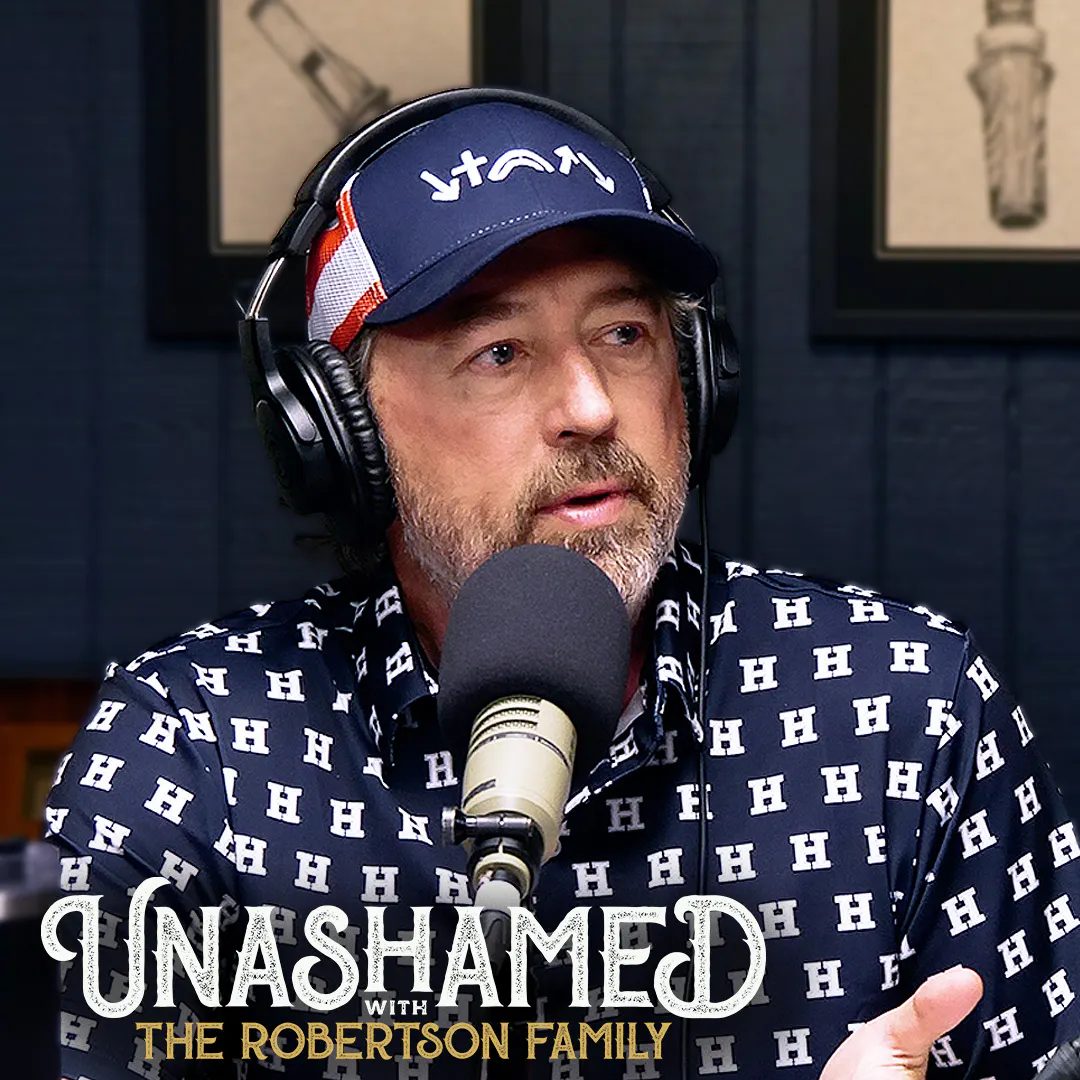
Unashamed with the Robertson Family
Ep 1304 | This Is Why So Many People Don’t Believe in God Today
00:49:34
Loading summary
Transcript169 lines
- [00:02]
Zach
I am unashamed. What about you? All right, ready?
- [00:07]
Christian
Yeah.
- [00:08]
Zach
Three, two, one.
- [00:10]
Christian
Welcome back.
- [00:10]
Zach
Welcome back to. Oh, I thought.
- [00:12]
Al
No, you're.
- [00:13]
Zach
Yeah, this is my show.
- [00:14]
Christian
I just went into Autumn.
- [00:16]
Zach
Yeah, you're 1, 3, 4. I'm Friday. Sorry, sorry, sorry. So welcome back to the Unashamed podcast. This is our Friday Unashamed for Hillsdale. And you guys can actually sign up. You can take this course for free with us@unashamedforhillsdale.com and here's the deal. Check this out. We're going to pick one listener to come down to West Monroe, Louisiana, and to watch a live recording of Unashamed. We're going to pay for travel and lodging for you and a guest up to $1,000. All you got to do is take the course we're on right now. It's called Ancient Christianity. Course. You take it with us. You got to finish all the quizzes, and then you send us your certificate of completion, very simple. And you can upload that certificate@watchunashamed.com and you'll be entered into the drawing. And we're going to pick a winner in June. So we're in that course. We're all going to complete it. Hopefully, we'll.
- [01:09]
Al
And all the quizzes have to be passed for it to. To account. Right. So.
- [01:13]
Zach
Well, you just have to have the certificate of completion. So I don't know. I. I guess you have to take the. I mean, I take the quizzes, so I'm assuming you have to take them. I'm not sure you.
- [01:22]
Christian
Yeah. Do these felt a little trickier to you? I've been missing a few questions. I don't normally miss questions because I take it right after the lecture, but they've been a little trickier.
- [01:31]
Al
They have been trickier.
- [01:32]
Christian
Yeah. That must have just.
- [01:33]
Zach
Wheelhouse. We're getting out of our wheelhouse now because we know the Bible, but this is like church history, some things like that, you know, and, you know, and we're. We're kind of treading the new waters here, so I think that's why.
- [01:45]
Al
But it's been really interesting.
- [01:47]
Zach
Yes, I did. What we're kind of. We were discussing. Where do we go with the beginning? Because typically we have what we call a cold opening. Just kind of break through the fourth wall here, and we don't know which way to go. We were going one direction and Al says something about a pedicure, and so we kind of stopped the conversation.
- [02:04]
Christian
Everybody. So here's. I'm secure enough in my masculinity.
- [02:08]
Al
I do love a good pedicure.
- [02:10]
Christian
Yeah.
- [02:10]
Al
But I. But I usually get one if. If it's like, Sadie invites me.
- [02:14]
Christian
Yeah.
- [02:14]
Al
I don't usually go, like, seek after it myself.
- [02:17]
Christian
Well, I never go without Lisa either. That would.
- [02:21]
Zach
I never have.
- [02:22]
Christian
It would be weird for me to go by myself. Plus, you don't want to be, like, the one CRE guy in there unless you're with your wife. And actually, yesterday it was me, Lisa, and two granddaughters. It was actually four of us. The problem with that was they only have four people working, so they went straight to my feet because they needed the most work, I guess. So then I had to wait, like, a long time, and. And I don't do well waiting, so it was a bit of an issue. But I did take my book with me, and I did some study for.
- [02:49]
Al
Do you laugh? I laugh whenever they get the scrubber
- [02:52]
Christian
thing out, the little cheese grater.
- [02:54]
Al
Oh, I don't. Yeah, I'm like, cackling.
- [02:56]
Christian
Oh, it's like underneath mine. It's like a little alpine village down there with what they're getting off my feet depending on.
- [03:03]
Zach
So what was. But what was your. You gave us the rationale, which I didn't see coming. What I'd say, tell us. Why did you start?
- [03:10]
Christian
It was actually. And it's kind of ironic because I'm going on a cruise next week. A Carnival cruise next week. And the first one I ever got was on a Carnival cruise.
- [03:17]
Al
Because getting a pedicure is ironic because you're going on a cruise.
- [03:21]
Christian
Well, it's ironic because I'm going again this week, and we're having this.
- [03:24]
Al
But you want your feet to look good for the cruise is what you're saying.
- [03:27]
Christian
No, not really. It was just time to clip them. So now what happens is when it's time to clip, that's when it's like, okay, when are we. When are we doing the feet? Because either I'm gonna have to do it myself, or we're gonna have to find one of these lovely ladies to do it. And I've noticed they always go women to men and men to women. They never go dude to dude on your feet. I don't know if that's just a thing. If that's a cultural thing. That's me. I'm sure one of our listene let me know. But Frank probably knows. Yeah, he probably knows. And so it was time. And so. And that's what she said. She said. She said, do you want me to clip these nails? And I said, oh, that's why I'm here. Because, Zach, when I used to be heavier version of myself, it was hard to clip my toenails without.
- [04:11]
Zach
And by heavy, you mean.
- [04:13]
Christian
I mean obese. I know. What was the word? Viscerally obese.
- [04:18]
Zach
Visceral fat.
- [04:20]
Christian
Visceral fat. That's. That's what. Which just makes it sound worse, Right?
- [04:24]
John Luke
Yeah.
- [04:24]
Christian
And you're not just obese, you're viscerally obese.
- [04:27]
Zach
Yeah.
- [04:28]
Christian
And so it makes it difficult. It's a potential back injury every time you clip your toenails or tie your shoes. Yeah. So I went like most men do at my age. I went Skechers, and then I went to pedicures.
- [04:42]
Al
Like this. Like the shape of safety. Yeah. Yeah.
- [04:44]
Christian
You got to have the slip bones and the. So that's what you do until you lose weight, of course. Which I did. There are good friends at PhD weight loss. And now I can do it myself, but I prefer it because my feet never have felt better than post.
- [04:58]
John Luke
Yeah.
- [04:59]
Christian
Pedicure.
- [05:00]
Zach
So there you go.
- [05:01]
Al
But. But you choose no nail color.
- [05:03]
Christian
No nail color. I mean, I have limits. Like, I won't go by myself. I hadn't thought about that. Grizzly. Never gone alone. And then. And I can't do that. They try to get you to put, like, the clear. And I said, I don't. I don't want shiny. I just can't.
- [05:16]
Al
For the cruise. You should get a color. Yeah, you get, like, a baby blue to match the water.
- [05:20]
Christian
Well, that was funny because my granddaughters yesterday, they had, like. Which took longer, by the way. They had them draw little designs on theirs, you know, and they're like, pap, you should get one of these. I was like, I mean, there's just only so far I can go. Are you taking a quiz now?
- [05:35]
John Luke
Yeah.
- [05:37]
Christian
John L's taking a quiz. John Luke. He wants the Cold Omen to finish his quiz.
- [05:45]
Zach
You don't have to submit. You don't have to submit your.
- [05:48]
Al
You could use hills on your left feet and then Dale on your right with, like, an exclamation.
- [05:53]
Christian
Yeah, that's what we need. Do have new Hillsdale merch on. Can we say that? Maddie, can we break down the fourth wall? Okay.
- [05:59]
Zach
Shout out.
- [06:00]
Christian
So they did send us some new merch, which.
- [06:02]
Al
It's really comfortable.
- [06:03]
Christian
It's very nice. Yeah. And John Luke, I actually get this
- [06:07]
Al
because my last name is Huff, so I could.
- [06:08]
Christian
Yeah, yeah, you could rock this.
- [06:10]
John Luke
I do have a. I do have a shirt, but I'll wear on the next episode.
- [06:13]
Christian
Okay.
- [06:13]
Al
All right.
- [06:14]
Christian
Excellent. Smart.
- [06:15]
John Luke
Yeah.
- [06:15]
Christian
So, Zach, have you never had a pedicure? Never.
- [06:17]
Zach
Not going to do it. I. You said you had limits. That my limit is a limit before your limit. Your limits. No nail polish. Mine's no pedicure.
- [06:25]
Al
Well, you would enjoy.
- [06:27]
Zach
I don't think I would.
- [06:28]
Christian
Some people don't like people messing with their feet.
- [06:30]
Zach
I don't even like the whole. I'll be honest with you. Even the massage thing, I'm like, it's. I mean, I've had one, but I'm
- [06:35]
Al
like, if you do like the hot stones, it. It feels good.
- [06:38]
Christian
Oh, yeah. Now if you want to bath the massage too.
- [06:42]
Zach
Well, I don't.
- [06:42]
Christian
Yeah, well, when you're. When you're muscular like Christian and I are. Yeah, you know, it feels a lot better. It's. Yeah, I understand if you're kind of bony.
- [06:51]
Zach
Yeah, I'm not bony. I'm. I'm on the other end of the spectrum. I'm a little fat. You know what I mean? But. But I used to. I used to be in. Babe. I was never like, Christian, you know, you're. You're. You're becoming a beast, man. I'm like watching your Instagram videos and I'm like, this guy.
- [07:05]
Al
I appreciate that.
- [07:06]
Zach
This guy. Every now and then you'll put something on there, I gotta. I gotta make a comment on, and then you. You'll. I'll let it sit with you for a little bit, then you'll call me.
- [07:14]
Al
Six hours later, you leave me a quasi confusing emoji.
- [07:19]
Zach
Well, yeah, that was. That was a great discussion. And then John Lick sends me a text the other day, which I thought was a kind of a deeper question about, hey, what do you think about this? And I sent something back that I thought, like, I took time to respond. It wasn't like it was. And then crickets. No response.
- [07:39]
John Luke
I was going to call you after because your response was so deep. I was like, I'm not going to write another book after you just wrote me a book of this response. I was like, I feel like. To explain why I asked this question. I needed. It needed to be a phone call. And then I just never had time for the phone call.
- [07:59]
Zach
When you get. Yeah, when you get a chance, call me.
- [08:01]
John Luke
Yeah, yeah.
- [08:02]
Christian
And as soon as you do, as. As you're starting into your point, he'll say, oh, I got to take this other call. Just call me later.
- [08:08]
Zach
I got to have it to that.
- [08:10]
John Luke
Well, what I liked about your response is it was so deep and so thorough to end with, yes, like as I was reading it, I thought you were like gonna say no, like you were disagreeing with me and then you ended with, yeah, I agree with you.
- [08:25]
Zach
Yeah, it was basically, yes. But here's the caveats about, you know,
- [08:29]
John Luke
now that we've talked about it, I'll ask the question here, but because it kind of will kind of get into, it's about Jesus's life. And my question was we see in, in the world that we live in right now a, I would say reservation of God to intervene in a way that we know is him or in worldwide events, like he's not coming through the clouds, speaking with a physical voice telling us stuff there. It's a, I don't want to use, I don't like to use the word hidden because I don't think, I think God wants us to know him and he's revealing himself to him. But there is a slow, quiet revelation of God, not this like out loud thing we see. And I was thinking about that as it relates to Jesus because we see the same thing with Jesus. It was a slow revelation.
- [09:36]
Christian
Like he didn't, you're saying like his teaching and his ministry.
- [09:39]
John Luke
Jesus didn't come out.
- [09:41]
Zach
Like he could have overwhelmed everybody.
- [09:42]
John Luke
He could have said, he could have said that 12 years old, I'm the Messiah and started it from there. But he waited till he was 30
- [09:51]
Christian
because you're right, he said in my Father's house. So obviously he knew at some level there, right?
- [09:56]
John Luke
But at 30, he started gathering his disciples. He often he would do a miracle and he would tell everyone, like, don't tell anyone about this. Like, the time is not right. The time is not right. And all the way up till the very end, he didn't have this big reveal of who he was. It was like a kind of a quiet, a quiet life that he lived. And I think we see that same thing with God now. And so to me that's not, that's what I would expect to see from God in the world. And yeah, the reason I thought about this in the first place is because there was, I was listening to this guy's atheist talking about like why he doesn't believe in God. And one of the things he said was if God was real, the God of the Bible, I think he would have revealed himself more openly. Like we would see him in the sky or whatever in an open way. And I was like, actually we wouldn't because that's not how Jesus was.
- [10:51]
Al
That's so interesting. I was just reading this book, talking about the Same thing. It was these two early historians, like first and second century, and they were saying they don't believe the gospel in Jesus because they're like, after the resurrection, why would he appear to women and to peasants? They were like, why would he not appear to Caesar and Pilate and like all these powerful people? And so they literally discredited the Bible because of who he chose not to appear to. Which.
- [11:18]
John Luke
Right.
- [11:18]
Al
I don't think we technically, I don't think we, we really know who he, you know, I don't think, I don't, I don't, I don't know if you can say he did not appear to someone like that. But their whole basis was on discrediting that because of who they don't think he appeared to.
- [11:32]
Christian
So it's interesting that there were moments in his, in the three year ministry, at least where you had a voice or, you know, at the transfiguration at his baptism. But even then, you know, I'm not sure what they were hearing because, you know, you're getting. That says, you know, they heard thunder or, you know, like it wasn't even meant for everybody in the moments of that, which I think the whole thing with the. His moment with the baptism was as much for John's John the Baptist, you know, recognition as anything. Oh, this is the guy, you know, because up until this point he's baptizing people, they're related. So he knew he was special. But until that moment, I don't think he knew he was the one until God told him, you know, in the moment. So there was a little direct. But like you say, it wasn't even meant for the masses then because it would kind of be covered.
- [12:24]
John Luke
Right.
- [12:24]
Christian
You know, or even like the. When Paul on the road to Damascus, you know, there was a group there, but like they didn't understand what had happened. They didn't hear what he was hearing either. I don't guess I mean is what it says. So it is interesting that he chose the subtle. And I think it was in the last episode when we were talking about that I had not thought about all the other people claiming to be messiahs of that century. So there was something definitely unique about it being, when it was under Roman rule, a prophecy fulfillment from Daniel, which we talk about a lot in the Son of Man that had been pointed to 600 years earlier. So in that moment there were a lot of people claiming to be the Messiah.
- [13:04]
Al
When you see that in Acts when. And the Pharisees are talking and they're saying, you know, like if this is from God, you won't be able to oppose it.
- [13:12]
Christian
Right.
- [13:14]
Al
So, yes, kind of giving credence to the fact that there were many people at that time claiming divinity and claiming to be messiahs. But obviously Jesus is the one that is still carrying along.
- [13:24]
Zach
If it's not from God, it'll die out. Which all those other false messiahs did that we don't even know their names. I mean like, we'd have to like, I mean we could go research them, but we can't even say them off the top of our head where the whole world just about knows the name of Jesus. And so it certainly Christianity did not die out. And so we're doing this episode on ancient Christianity. This is lecture five. So I thought this one was really good. It's. I will, I'll give a couple caveats though. And again, just for, you know, Frank and some of the guys out there, you got to remember, like, like we're getting different perspectives. And so, you know, this course is obviously taught. I think Dr. Calvert may be Catholic, so you can definitely sense some of the Catholic bent on some of the teaching of this. And. But I think that's healthy for us to like listen to other perspectives and other things as we move through this. I found this to be helpful. What's weird is because we're now going in, this is about the apostles, the creeds and then the scripture. It's essentially the history of the church from the ancient documents up to 80, I think 337. So that's this particular lecture. Al, do you know we grew up in a denomination that was. I think that we would have probably said, at least the way I grew up hearing this, we were, we were non creedal. Since then I've come to really appreciate a lot of the creeds and the. And when you understand them in their proper order. The creeds were written essentially to preserve some of the doctrine of the church. But it's just like simple ways of just understanding, you know, how to teach this and move it on. What I found to be so interesting about this lecture and I listened to it and it's so funny because I've been on another. I've been on the same exact discussion before. I even listened to it for probably the last week. You know, we had the girl on the podcast recently, I don't know if it'll air before this one or not. Melissa Doherty. Yeah, she had talked about coming out of the New Age movement and the New Thought movement, which a lot of people in the Church I go to have come out of that. And one of the things that she has said was kind of like, I'm kind of paraphrasing, but like one of the dividing lines between what she would call like a. A version of Christianity that's not actually Christianity, that's just borrowing from the language and real Christianity kind of that dividing line was this idea that Christ came in the flesh. And I was really appreciative of Dr. Calvert's emphasis on showing how that one thing seemed to be the dividing line even in the early church. Like all the heresies that really kind of entered in, that were. Most of those heresies that were addressed in some form or fashion, they had something to do with, did Christ actually have a body and was there a physical resurrection? And I thought, man, that's an interesting. It seems so simple, but right. You know, he read two John. Y' all have that, by the way, that second John open. I want to read that.
- [16:24]
Christian
While you're looking that up, let me remind you guys, we want you to take the course with us for free at unashamed for hillsdale.com and Zach mentioned this earlier. We're going to pick one listener to come down to West Monroe, watch a live recording of Unashamed. We're going to pay for your travel, your lodging, and a guest up to $1,000 each. All you have to do is take Ancient Christianity. All you have to do is take the Ancient Christianity course with us, finish all the quizzes, send us your certificate of completion, because I always print mine out so I can show Kristen. You can upload your certificate@watchunashamed.com and you'll be entered for the drawing. We're going to pick a winner in June.
- [17:01]
Al
Are you going to come in time for this, Zach?
- [17:03]
Zach
Oh, yeah, I'll be there.
- [17:04]
Al
Say, you can't be virtual for that.
- [17:06]
Zach
No, no, no. We'll come in town, we'll hang out, and, yeah, we'll have a good time.
- [17:11]
Christian
And then we find the text in second.
- [17:13]
Zach
I did. I'm going. I'm going to read two texts here. I think he read the second John, but I'm going to read First John four and then I'll move to second John. I literally just had this conversation with our house church a few nights ago. This is in First John 4. You know, Peter Thiel right now is traveling across the world doing lectures on the Antichrist, which I haven't got to listen to any of them yet. Very curious to what he's going to say on that. What he is saying probably not in agreement with what we would believe, but there's a whole lot of talk about what is the Antichrist? Who is the Antichrist? Listen to what John says in First John. He says that by this, you know, because a lot of. He says a lot of false prophets have gone out into the world. But here's how, you know, you got to test the spirits to see where they're from. By this, you know, the spirit of God, that's the Holy Spirit. Every spirit that confesses that Jesus Christ has come in the flesh is from God. And every spirit that does not confess Jesus is not from God. This is the spirit of the Antichrist which you heard was coming and now is in the world already. So according to the Apostle John, the spirit of the Antichrist is to literally say that Christ didn't come in the flesh. So then you go to the second John, and Second John says something very similar. He says, for many deceivers have gone out into our world, into the world, those who do not confess the coming of Jesus Christ in the flesh. Such a one is the deceiver and the Antichrist. So you think about, like, what is the most central thing about Christ, about Jesus? And I've sat there and wrestled with that. And I think the answer is a body. You know, a body. Because when you think about Jesus, Jesus was not in the Old Testament, you have the Son. But when Jesus comes on the scene, Jesus is the incarnation of the Son. It literally, it's God. He is God in flesh. And so when you. When you think about to be Antichrist, it really just means that you don't really believe that Jesus came in the flesh. You don't believe that God came in flesh. That is literally what Christ is. That is the Messiah that God came in the flesh. And so I just found that to be. So what's the word I'm looking for? It just confirmed. It confirmed everything that I had been looking at to see that. Man, this was kind of the core argument of the church at the very beginning. And any heresy that would try to drip into the church in some capacity, it was trying to diminish either the deity of Christ or the humanity or the. Or the body of Christ, one of the two. Trying to separate that out. I don't know if you guys picked up on that at all.
- [20:01]
Al
Yeah, I do have a quick question. I was talking to John Luke about this last night because it made me think of it while studying this and talking about, you know, you know, the incarnate and Jesus becoming flesh. And all those things. So my question was, and this might lead to a deeper discussion, but. So when Jesus is talking about Satan, he says, I saw Satan fall, fall like lightning from heaven. Would that. Because I was also Talking about Genesis 1, where it's, you know, God's walking in the garden in the cool of the day with Adam and Eve. Would that be like Jesus in his form, that he is now outside of time and space in Genesis 1? And like when he saw Satan fall like lightning or that be the deity of Christ before he's incarnated as a human?
- [20:50]
Zach
Yeah, that makes sense. Yeah, I think that's the. Bill Smith helped me with this years ago, that, that when you talk about Jesus, you are talking about the one who is born into a baby, right? And so Jesus doesn't come on the scene until Mary has a immaculate conception and gives birth to the Christ. Well, who is the Christ then? The question who is the Christ? Oh, well, he's the incarnated person of the God that you just mentioned in Genesis, who saw Satan fall like lightning, you know, who was there and the whole world was created. That's kind of John's teaching, right? John, in the beginning was the Word, The Word was with God, the Word was God. And then the Word became flesh. So Jesus is the Word becoming flesh. And so that idea of flesh is very earthy, it's very meaty. And that was the center of the teaching of who Christ was. And it's just funny that these ancient heresies have reformed and repackaged in different ways, but we're still dealing with the same basic four heresies that he mentioned, you know, in this lecture, and just different forms, but, you know, still dealing with that here, some 2,000 years later.
- [22:01]
Christian
It is interesting, Zach, in my notes here, my handwritten notes that I like to take, I wrote Melissa Doherty on unashamed New Age new thought, because I had exactly the same thought you had that. And she's, you know, I don't know, within the last few years, a convert from this mindset. And I thought, just like Zach did, I was like, wow, this. This thing just keeps coming back and back and back. I mean, is. And I guess it'll never end. And I don't know if that's just because the. How powerful Zach the Greek thought was because that seemed to be the birthplace of this idea. Maybe not. Maybe it's even before that, but it's so. It's so permeated, even 2,000 years later, the same concept that it's about. It's about Your thoughts. And it's about, you know, energy and, you know, the flesh is no good, and it's got to be above that. And. But what we came to the discussion with Melissa about when she was explaining it, because I never heard anybody really explain what they believed. And she did. And immediately I went to this idolatry. I mean, what she's describing is idolatry. And she said, yes, that's it. Because it's all about you, then. It's all about you. Your experiences, you know, you're the God, you look in the mirror. And all this positive stuff that people do, all this. Like Dale Carnegie, she mentioned all this stuff. It's built around this idea that it's all about you and Christianity, exact opposite, because it's all about Christ. And so it's just another form of idolatry. And that has been around since the beginning. I mean, no doubt about it. Before the Greeks, before everybody.
- [23:33]
Zach
Well, you have the Ebionites that denied that Jesus was divine and they claimed that he was only a human prophet. You had the Gnostics that denied that. We talk a lot about Gnosticism, mainly because we're in first John right now on the. On the broader landscape of the podcast. They denied that God became man, and so they rejected the material world. The material world is bad, and we need. And you need to escape that. You know, this world's going to hell in a hand basket. It's evil, and we got to get out of the meat suit and get into our spiritual state so that we can be made one. And some even claim that Jesus didn't die on a cross, which is, again, you see that over and over in Scripture. I mean, Paul talks about that. Some say that, you know, there's no resurrection of the dead. And he makes this incredible argument in First Corinthians 15. He's like, hey, look, if there's no resurrection from the dead, Paul says, then guess what? Then Christ wasn't raised from the dead. And if Christ wasn't raised from the dead, then you're dead in your sins. And if you're still dead in your sins, then those who have fallen asleep, they're just dead. And if only. If we only have hope for this life, he says, we're to be pitied more than all men. So the center of the whole thing is, one, that Christ took on a body. Two, that then that body actually walks on earth for 33 years, walks a Roman road and is crucified on a Roman cross, and then that body is resurrected from the Dead three days later. And that body ascends and now is sitting at the right hand of the Father, mediating for us. So Christianity alone has a very, very high view of the body. And Dr. Calvert pointed this out. He's. I mean, what does it. What does it basically say about God's view of the material universe? If. If. If Christ. If God himself took on the nature of that material universe in the form of the human body? It actually says that God has a very high view of the body. And it is one of the things. By the way, I do appreciate about some of the. Some of the other faith traditions, you know, outside the Protestant Reformation. We're. We're byproducts, and I'm certainly a Protestant, but I do appreciate a very earthy view of the kingdom. I think it's helpful, and I think that we've lost some of that in the church over the years. So some of that. Some of this lecture was very helpful for me.
- [25:54]
Christian
You brought up about the creeds, and you're right, I chose this hat on purpose today because of that. Because in essence, I mean, these are little symbols, hieroglyphics, we call them, that Bill Smith came up with, but it was a creed to describe the story of Jesus. I mean, this is a creed. I mean, that's one of ours, you know, and you mentioned about the group we grew up in, Zach. They claimed to be no creeds. And then there was list after list after list of stuff you can do and can't do. Right.
- [26:23]
John Luke
It just wasn't written down.
- [26:24]
Christian
It's just right. I mean, but everybody understood if you're going to be in this group, here's. You got to do this, you got to do this, you got to do this, you got to do this. So the creeds were there, whether you. Whether you had them written out, and everybody memorized them.
- [26:38]
Zach
Our creed was we have no creed. But that's a creed.
- [26:42]
Christian
Yeah, that's a creed. Yeah.
- [26:43]
Al
It's the first rule of Fight Club.
- [26:44]
John Luke
I wrote that. I wrote that down to my notes about the creeds, because whenever I married, Mary Kate, my wife, she grew up Presbyterian, and they had creeds. They have got creeds on creeds on creeds. They've got the whole book, the Greater and Lesser Catechisms. And when I read that, I was like, oh, wow, this is awesome. It's just like a list of, here's what we believe simplified. And I think that that's so good. It's so good. Like, and I read them to my kids and they Learned like the greater, less catechisms and all the different things. But I think the problem that. I think the Church of Christ and that people who are anti creed, the problem is they say it's too simple. And when I first started reading them, I would be like, oh, well, that's a little simplified. Like, oh, it's like more than that. And there is a problem with that. Yeah, but that's understanding it for what it is. And I think that's the problem that you saw they talked about in that early church. What would happen is they started making these creeds because people needed to learn the basics and they weren't learning them. So there's heresy. But then people started believing the creed over the scripture or over the story, and they got them mixed up.
- [27:57]
Christian
Well, and look, I mean, he gave a great example. I thought he was right on target when he went to 1 Corinthians 15, which the whole Corinthian letter. And then he. He made a great mention about even the second generation, they were still having trouble with the Corinthian church, with who's a clement of Rome, had to send letters. But he. But Paul's going along describing the problems they're having and tell them how to live better. And then he just has a little creed in there. In First Corinthians 15, you know, 1 through 8, he's like, now look, all this stuff, I'm telling you, but here's the fir. Don't forget the most important thing. And then he just goes through the Gospel with them, you know, and so
- [28:33]
Zach
which was an early creed, I mean, really, that verse in that text in 1 Corinthians 15, where Paul says, what I received, I passed on you as a first importance, that Christ died for our sins. He was buried, he was raised from the third day. That is an oral tradition that a lot of scholars believe that Paul received, I think within like 15 months of the actual resurrection of Jesus. So Christ raises from the dead. Then Paul, Saul has the radical encounter with. With Christ, the risen Christ on the road to Damascus. Then he goes to meet with Mark and I forgot who the other apostle was, and for basically training. And then during that training period, he received what that oral tradition. So when you hear that cadence, that Christ died, that he was buried, that he was raised, it almost has a cadence to it, right? That was a tradition that was passed down orally. And, and then we, we. It's hard for us to imagine that because we don't remember anything because we have everything on our iPhone. And now that we have Chat, GPT and Gronk and, and, and, and Plot, Claude, all the different bots. We don't remember anything. But there was a time in history, particularly in Jewish culture, where they would remember these things word for word and then pass them down hundreds and thousands of years. So Paul received from that oral tradition the earliest creed in the Gospel, which is that Christ died, he was buried, and he was raised on the third day. So it is.
- [30:01]
John Luke
Well.
- [30:01]
Al
And the reason that they had those creeds was because most of the population at the time was illiterate, which I thought he did a good job explaining, because I was not. I mean, I knew that, but I didn't fully understand. Giving credence, no pun intended, to the creeds of why it was the way it was was because most of the population at the time was illiterate. So they needed something verbally to be
- [30:23]
Christian
able to communicate, which would also describe probably some of the issues they got into in the second century. He mentioned with bishops and. Because like anything else, if everybody's not on board what we're doing here, a lot of times an authority can have their way of viewing things and then take it off course and you'll follow them right off the cliff. So you can see where that would begin to happen. And it still happened.
- [30:48]
Al
Was that his point when he was talking about why people started making their own cannons? Yes. Kind of changing, right?
- [30:53]
Christian
Exactly. And again, that's human nature, right? I mean, that's what people tend to do. We want you to sign up and take the course with us for free@unashamedforhillsdale.com Go ahead, Zach.
- [31:01]
Zach
Yeah, I mean, I think that where I land on this, and this is. I mean, look, we're open for a lot of diversity on this and diversity of thought. I think where I land on it is that the creeds are very helpful. I don't think they supplant the authority of Scripture, Obviously. I'm a Protestant, so I believe in solo scriptura, that that's your final authority. But I do think that the creeds are helpful. I mean, even the Nicene Creed, the Apostles Creed, I mean, all of these are. And then moving into the Reformation, then you have, like, you mentioned John, like the Greater and Shorter Catechisms, which are simplified versions of the Westminster Confession, and then you got the Heidelberg. I think all these are helpful, and I don't. I think we can take them, but they're not Scripture. You know, one of the things that I thought was interesting, too, in the early church, I don't know if you guys picked up on the whole concept of apostolic secession, that was interesting as well, to see how that. Because I've had lots of conversations on that recently with different people from different traditions, whether it be Eastern Orthodox or Catholic or even like what's called the new Apostolic Reformation. So there's a lot of, like, thought around apostolic secession, which is basically that that the authority that the authority the apostles had, that they laid hands on people and then they transferred that authority. And so that authority, you know, where does that end and how does that work and all that, that was, you know, that's certainly debatable. I think in the early church, though, you clearly do see in Scripture that, at least from the apostles in that second generation, that you do see an apostolic secession. Beyond that, I mean, I don't. I don't know. I don't know if you guys have thoughts on that.
- [32:41]
Christian
Yeah, and you mentioned that on the other. On the regular Unashamed podcast recently, Zach. And I agree. I didn't have a chance to that day, but I agree with what you said that I think there was something unique about the apostles, especially in relationship to miracles and the purpose of them and, you know, why they did what they did. And it seems to be that that was, I think, limited to that era versus today. Now, I know a lot of people disagree with that because they think that still goes on, but it seemed like it had its purpose. There was something unique about the time when Jesus came. Demonic activity was. It was probably from what you read in the Scriptures. It was so much more than we could ever even imagine. Not saying that still doesn't go on, but it certainly had a different effect when he was here. Even the other realm knew something big was happening because of what was going on. So I do think there were some unique things about that. I do think some of the practical things, you know, when you get into tongues and languages and you look in Acts, because he kind of went through Acts quickly, but, man, there's so much there when you think about the idea of the apostles and who they were. And so I think part of that's related to this idea that, you know, it was taking the people down, a simple message of salvation. So when you see that first sermon that Peter preached, and then you see him later repeat that in Acts 10 for the Gentiles, you do see a simple path for people to find Jesus. But as you were saying earlier, I think that it has to be seekers, right? I mean, it has to be people that want it, which is why I Think God did it the way he did it, in that more subtle vein. It's not, it's not out there to beat you over the head with it. You know, it's out there for you to find if you have the heart willing to look. And so I think that continues on to this very day.
- [34:34]
Al
Zach, quick question because I was kind of confused at what you said. So with the creeds, because of the Creed in 1st Corinthians 15 when you were talking about sola scriptura. So is that creed because it's in the scripture? That creed is different than other creeds would have been at that time because they're not in Scripture?
- [34:55]
Zach
Yeah, I mean I may not call it a creed technically. I mean, I think it's Scripture. Right. And so the creeds would have, the, technically the creeds would have came after. It is kind of a teaching though. It's a teaching method. Particularly that that thing that was a oral tradition that was passed down that made it into the canon. But the actual creeds themselves would have been non inspired. If you hold the position I hold, they're not inspired in the way that scripture is inspired. They're very helpful. And I think the Holy Spirit certainly the way, I mean, when I took this lecture, I thought this is what encouraged me, that it was like our faith is ancient, the Holy Spirit is real. And I think he did use these councils and these creeds to preserve the truth of the Church. And I do believe that there's a continual deconsolidation because you do, I mean, you have to see the deconsolidation even from the first century, you know, the first 300 years. You see, the Church is greatly deconsolidating over time on, on some of this stuff like an apostolic secession even. I mean, it's hard to trace that back. In my opinion. I could be wrong. So nobody get bent out of shape here. But it's hard for me to, I don't know who, who, who can truly claim to be the true, I guess, lineage of apostolic secession. Because you have, I know at least of three groups that claim to have like a direct lineage all the way back to the apostles. You have the Catholics, you have Eastern Orthodoxy and you have Oriental Orthodox Church as well. And so I don't know the answer how they parse that out. The new Apostolic Reformation guys, they're claiming that they get like private apostleship. I don't believe that. I don't think that one I would certainly be out on because I think that's the whole point. Like we're not getting private revelation that supersedes Scripture. You know what I mean? I think you have to be careful of that. But I think what's interesting though, what would encourage me in this course is that this, if you think of the center of heresy being some kind of denial of Christ having a body or some kind of denial of Jesus in flesh being deity, you kind of see how that goes both ways, right? That literally the way we would understand who the Christ is, He would be God incarnate. So all heresies, it seems like at some, at the, at the base level of them, they either deny the deity of Christ or they deny the humanity of Christ. And that's encouraging because I think what we've seen is, is the Holy Spirit has actually preserved that truth. And you see that, that, that seems to be the centerpiece of, of the whole Christian world. Protestant, Catholic, Orthodox, all of it. Like the real Christians in the world. What do they have in common? They believe that God came in the flesh and that his flesh was crucified on the cross and his flesh went into a tomb and his flesh was raised from the dead three days later and ascended to sit at the right hand of the Father, where He mediates for us. And he's going to come back and resurrect our bodies and we're going to, we're going to, we're going to live in unity with Him. That seems to be like the core, like the very core of the Christian faith. And so it's very, very encouraging to see that that's an ancient truth, that the Holy Spirit was using all of the, these different methods to preserve.
- [38:26]
Al
That's, that's how I, the thing, the thing to me that made no sense. And you talked about the Gnostics earlier, but when he was talking about, there was like a group of them that, that believed that it was actually Simon of Cyrene that was crucified and that Jesus projected his face onto him. And to me, like that, I'm just, that doesn't make any, it makes no sense to me. I'm like, how do you, like, how would you believe that? Because I feel like that would, that would just be so disproven early on through any historian, whether it's Josephus, whoever. But I thought that was interesting. Like I said, you talked about the Gnostics. They did not believe in the, the, the crucifixion of Jesus, but they also, a group of them thought that if, if the crucifixion was true, it wasn't Jesus. That was actually Crucified, it was Simon. But somehow Jesus just projected his face onto Simon, convincing the people that it was him being crucified, which I've never heard that.
- [39:21]
Christian
And there's no way you can read the Gospel narratives and come to that conclusion, because he said over and over again, I will go there. I will be killed.
- [39:28]
Al
Well, my point is, like. My point is, the thing that's so crazy about Jesus being crucified is that if he wasn't who he said he was, nobody would go through with the torture of doing that if it was just a hoax. I'm like, no matter what you say, if you're being nailed to a cross and it's not legitimate, every other person in human history would be like, okay, look, I was not being serious about this, you know? So I'm like, it's not possible to fake that. Which to me is the. To me, it just gives full proof of who Jesus was. Because how do you go through that and not. That's what I'm saying, like, not revile those who are doing that to you and not, you know, go back on your word. Like, how do you go through with the pain and the torture of that if, like, to me, there's no denial that he is who he said he was because of how he took the crucifixion?
- [40:22]
Christian
Well, and it's also the culmination, Zach, you said ancient Christianity and even think about an ancient Judaism. I mean, all the way back to the garden, we know that the whole point was that the son of God became man, which then made him the son of man, because that was. The two references to him to then be the new Adam is the way Paul describes it in Romans 5 through 8. And so that's the whole idea that that's exactly why he came. That's exactly why he died. That's exactly why he was resurrected. So you're right. That has to be at the core of who we are as Christians, as who we follow.
- [40:59]
Al
And. Sorry, last thing. I'm kind of rolling now, but he briefly mentioned this, and we were talking about Alex o' Connor last night, and he had said this, too. But why do people. He briefly mentioned this in the lecture. I can't remember who he was referring to, but how some people thought that. Some people believe that the serpent in Genesis 1 was actually Jesus. I don't understand.
- [41:21]
Christian
Yeah, he was the good guy.
- [41:22]
Al
Yeah, I don't understand that. Have you heard him talk about that?
- [41:25]
Christian
He talked about that the God that created the material world was actually evil because the Material world is bad. And so therefore the real change agent which was in the form of the serpent was Jesus.
- [41:39]
Al
Yeah, that makes no sense to me.
- [41:40]
Christian
Yeah, exactly. And so therefore, the death, the fake death, minor.
- [41:45]
John Luke
All of that type of thinking, like when it talked about the group who said Jesus wasn't God because God wouldn't do that. Any type of thinking like that, I think is like, that is us projecting our own morality and philosophy on to God in Scripture. And I've heard this in my life before, people would say, God, Jesus didn't turn the water into wine in John 2 because Jesus wouldn't do that. Like, the wine wasn't wine because Jesus wouldn't. God is against drunkenness. And I'm like. But he did. Like, like, you're.
- [42:27]
Christian
It would have been way more comfortable if he would have turned wine into water.
- [42:30]
Zach
Right, exactly.
- [42:32]
John Luke
Even that type of thinking is you projecting your morality onto God. Whenever I think as Christians, what God's called us to do is. And I'm all about finding the truth in Scripture, I think you can interpret something one way and then you find out, oh, that's not what that meant. I'm totally pro that. I'm saying we should be doing that. But when we get to the point where I think this is what it says, even if it disagrees with our own morality, we have to say, well, God did it. That's who he is.
- [43:01]
Christian
Which, by the way, that's the danger of any creed, whether marked or unmarked. Because then when you start building the case like that, then you'll come up with, well, you know, drunkenness is bad. So therefore no one can ever drink anything, because that way you can never get drunk. So there you go. There's your new creed. Unfortunately, that's not Scripture.
- [43:21]
Zach
Yeah, it's dangerous. It is dangerous. I mean, to read the creed, to try to read the Scripture through the lens of your creed. You probably want to construct your creed through the lens of Scripture.
- [43:30]
Christian
There you go.
- [43:31]
Zach
And to the point. I mean, particularly with some of the confessions that we hold, you know, the church has held. They haven't really prevented the church from moving into liberalism or heresies or things like that. I mean, you know, you. I mean, you can look at the. Maybe I shouldn't say this. I'll say it. I mean, you look at the Westminster Confession. I mean, I don't think that it preserved the Presbyterian Church from moving into liberalism. I mean, the PCUSA is very liberal. And, you know, now I know there's parts of that that the people that are in that that aren't. But I mean, as a whole, the denomination is. And that's why you have PCA churches now. That's why you have, you know, EPC churches. And so the creeds weren't enough to sustain or to preserve the church. And so I, to me, like, maybe this makes people uncomfortable, but the Holy Spirit preserves his church. I mean, I truly believe that he will preserve his church and the way. Because there's a lot of different spirits that are coming at us, right? So clearly the Spirit preserves the church because that's the whole point of what he's saying in first and Second John is that you test the spirits and the Spirit is the one that will protect the church. And, well, how do you know if it's the Spirit and not a spirit? And the way that you know that it's a, it's the Spirit is that the teaching and the testimony and the, the Word is, Christ came in the flesh, that he had a body. And it's not just a verbal confirmation of that. It's the reality of that Christ came in a body. And the reason why it matters is because when you read a verse like 1st Timothy 3:6 about our confession, 1st Timothy 3:6 says, Great, indeed we confess is the mystery of godliness. He was manifested in the flesh, vindicated by the Spirit, seen by the angels, proclaimed among the nations, believed on in the world, and then taken up the glory. Same thing I said earlier, that's the confession. And so we just test it out and we see. And so when Paul kind of talks about this again in Colossians, he says that the, that the mystery is that Christ is now in you. In what? In me? What do you mean, in me? He's in your body. Like literally your body. 1 Corinthians 6 is a temple of the Holy Spirit. And so you start to see how all this plays out. So to actually be antichrist is to disassociate Christ with a body. I mean, that literally is the core to the whole thing. And so, I mean, I know this is a much broader scope and there's probably a lot more to it than I'm saying. I don't mean to oversimplify it, but I do think that that's the core of it at least. And so the Spirit's going to preserve his church. We are. You know, we just got to test the spirits to see which ones are antichrist and which ones are pro Christ or which one is pro Christ.
- [46:21]
Christian
Well, and you have to realize that these things were established. I do appreciate the fact of him going into, obviously into this lecture in second, third century, and then we're going to, in the next lecture, talk about the persecutions that came about as a result of it. But I do, I do love the idea that God put forth a system by which generationally, we could still know this 2000 years later. You do need church leadership. You do need bishops and, you know, all the different names that there are for church leaders. You do need mentors like Paul was to Timothy. And so all these things you see from the first century still need to be going on today, because a lot of people now come along in the modern era and they just want to throw the baby out with the bathwater. It's all bad, you know, because people hadn't always loved, or this church believes that, or this group does this, and so they want to just burn it all down. It's like, well, wait a minute. God put a system in place for a reason. Now we have to find it and we have to be fair with it. But as long as we're, you know, preaching this and sticking with the word of God, that's what it's all about. So be sure and sign up to take the course with us for free at Hills, therefore, at unashamed for hillsdale.com
- [47:31]
Zach
and I'll end with this little funny story. Can I.
- [47:33]
Al
Can I say something before you say that? Yeah, just really, really quick. I was. Because you were talking about how what you took away from the lecture. And I was. The whole time I was thinking, it's so interesting how these things that were happening 2,000 years ago, you're seeing it still today, whether it's Gnosticism. He was talking about the, the Montanists who taught that you should actively pursue martyrdom. And I was thinking about even now on social media, like, you see, because he was talking about how you should not actively pursue martyrdom and persecution. Like, yes, it's going to happen and you welcome it when it does and you rejoice in it, but that's not something you actively pursue. And I think sometimes we see people that actively pursue that from a stance of boldness. I'm going to go be bold because I want to be persecuted because I post something.
- [48:19]
Christian
Yeah.
- [48:19]
John Luke
That they know they'll get hate on.
- [48:21]
Al
Yeah.
- [48:22]
John Luke
Because they'll get hate on.
- [48:23]
Al
Yeah.
- [48:23]
John Luke
Yeah.
- [48:24]
Al
And it's like, to me, that's disingenuous. And it's like. But you're pursuing that because of. This is what boldness looks like. But I thought. But it was just interesting. It was like, that was 2,000 years ago because they all thought he was Jesus was coming back. And like, you know, the hundred years, that's what they were talking about. But you still see that today. It's like people actively pursuing that. You see the Gnosticism, you see people denying the deity of Christ. And yes, I just thought it was, I thought it was interesting learning that the things we're seeing today kind of resurface in a sense. It's things they were dealing with 2,000 years ago.
- [48:55]
Zach
That's a good point. And let's all you sign us off. AL that's a great point.
- [49:01]
Al
Christian.
- [49:02]
Christian
Yeah, Christian, we always love seeing you on fire. So you bring this to the next lecture. You bring it with you. All right. We'll see you next time on Unashamed for Hillsdale.
- [49:11]
Zach
Join us every Friday for Unashamed Academy, powered by Hillsdale College. Make sure to go to unashamedforhillsdale.com and sign up. It's no cost to you. That's all unashamed for hillsdale.com and don't miss an episode of the Unashamed podcast by subscribing on YouTube. And be sure to click the little bell and choose all notifications to watch every episode.