← Unashamed with the Robertson Family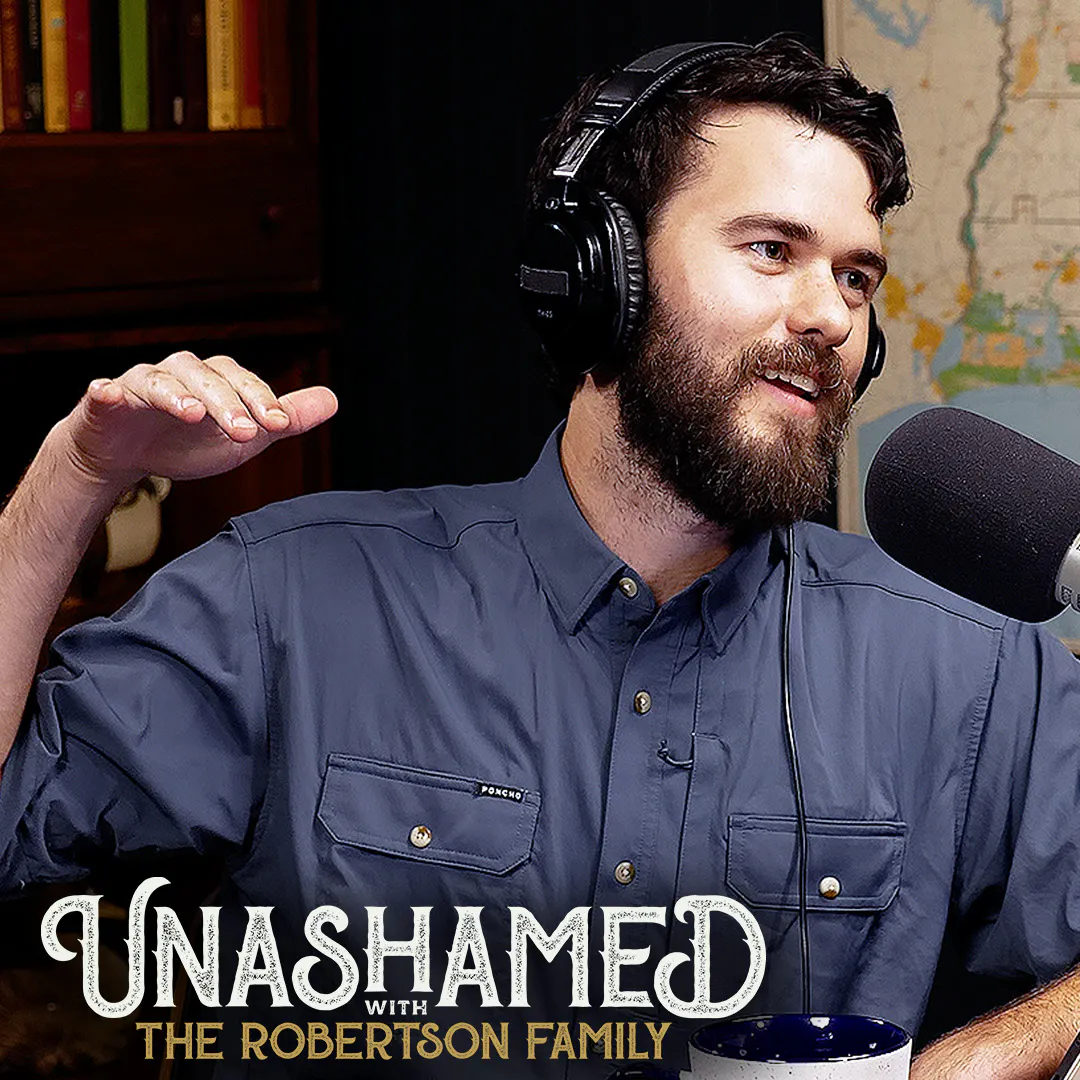
Unashamed with the Robertson Family
Ep 1334 | John Luke’s Sailboat Disaster Sparks a Debate Over Thrill-Seeking & Sin
00:50:07
Loading summary
Transcript193 lines
- [00:02]
Zach
I am unashamed. What about you? Welcome back to the Unashamed podcast on Fridays. This is our Hillsdale episode. We are in colonial America, and it's been. We're about to get into some serious wars. So I hope you guys are ready for a robust discussion.
- [00:21]
Al
Yeah, this is a lot. This is a. This is some heavy stuff.
- [00:24]
Zach
Yeah, it's.
- [00:25]
Al
It.
- [00:25]
Zach
It's heavy. Our friends at Hills. I want to remind everybody, by the way, our friends at Hillsville College have a new documentary coming out. It's going to be coming to theaters very soon. It's called Revolutionary America, narrated by Tom Selleck, which we have commented on his mustache every time we have talked about this because we're big on the mustache game, and it really does feel like the next chapter of what we're in right now. With colonial America, of course, we've been taking. It tells the story of how our country started and not some watered down version either. You can see how real, ordinary people risked everything, and against all odds, they actually pulled it off. They built something that's lasted nearly 250 years. Our birthday's coming up. Are you guys going to be celebrating, by the way?
- [01:06]
Christian
Of course.
- [01:06]
Al
Of course we're going to be celebrating it.
- [01:08]
Christian
I'm probably the only one that can remember, you know, back in 76 when we had the 200 celebration, because you weren't even born. Right.
- [01:17]
John Luke
Were you born even a thought.
- [01:19]
Al
Was I born 50 years ago?
- [01:21]
Christian
Well, sorry, I'm not great at math. Yeah, so I was around. I'm the only one at the table here who was around for the 200th celebration. So, yes, I'm super excited about 250. Zach, please continue.
- [01:34]
Zach
See you.
- [01:34]
Al
I can see you wearing some, like, American flag chubbies for the 250.
- [01:39]
Zach
Those are shorts. Chubbies are shorts. If you don't know. Yeah, I might buy me some American flag Chubbies. I can see you, dude. Yeah, I probably wouldn't wear Chubbies, but. But I will say this with. With the anniversary coming up, I. It is. I do think we need to understand our story and we need to pass it on. It's one of the reasons why you want to see this on the big screen, not just streaming from your couch, which you'll. We'll get there at some point. But this is a. This is an experience you need to see in the theaters, and it's only in theaters for a limited time, so you can get your tickets right now at Hillsdale. Edu Film. And that'll be linked in the show notes as well, so check that out. And I know we're going to be watching it. So, anyways, well, welcome back, everybody. It's good to see you guys again.
- [02:25]
Christian
Yeah. And if you. If you've been taking the course with us, you've already seen a lot of the things I think you're going to see in the film, which is the cinematography, even for this course has been amazing. It's kind of the typical way you learn by seeing old pictures and, you know, things like that. But then they have included, I'm assuming, some of the film stuff because it looks really, really cool. It looks epic, which is really good.
- [02:48]
John Luke
So almost real. How do they film it?
- [02:49]
Christian
Yeah, yeah, I said that last podcast. Did they have drones? They had footage.
- [02:55]
Al
I'm like, where did they get this footage from?
- [02:57]
John Luke
Very similar to my other favorite.
- [02:59]
Al
Me and Zach are still. We're still going to go together and share some popcor.
- [03:04]
Zach
We're going to reach our hands and popcorn bucket at the same time. It's going to be great.
- [03:07]
Christian
So, Zach, I've been thinking about this because this whole course has been about. I mean, you think about the ultimate adventure to cross the sea, and it was.
- [03:16]
John Luke
What was.
- [03:16]
Christian
It took over two months of travel for the original group to do it. So if you were guessing out of the four of us of who the greatest adventurer was, I wanted to split, throw that out there to our audience and let you think. You say out loud. Now you're listening. Who do you think out of the four of us would be the greatest adventurer? And so you got that in your mind. You know, our personalities, you listen to us talk, you know, all this time about the podcast, and then I'm going to tell you who it is out of the four of us. In my opinion, I feel like the
- [03:50]
Al
answer's pretty clear, but. Yeah, but maybe not.
- [03:54]
Christian
So what would you say? Who would you say? Christian, definitely.
- [03:56]
Al
John Luke.
- [03:57]
Christian
It is John Luke.
- [03:58]
Al
John Luke went barefoot every day for a year. Like, barefoot to church, barefoot to the grocery store.
- [04:05]
Christian
John Lewis is a young lad because he comes across. He's like, he's quiet, he's sophisticated, he's intellectual. He understood C.S. lewis, which Christian made him unique for the three of us. But the man is an adventurer and he was telling us recently. Tell us about your latest adventures.
- [04:26]
John Luke
Well, he was talking about sailing across our pond the other day because we were. I was looking at these sailing ships. I was like, I'm something of a sailor myself. Me and my cousin Maddox rigged up a sailboat that I bought the sailboat 13 years ago at Gulf Shores for like $800.
- [04:48]
Christian
Yeah, yeah.
- [04:49]
John Luke
In Gulf Shores, you did.
- [04:50]
Al
You. You put it on a trailer here?
- [04:52]
John Luke
It was. I came with the trailer. It came with the trailer and loaded it up, brought it back, sailed it on our little pond here, like, twice. Took it back to Gulf Shores, put it in the ocean. Me and Reed got on it. We got about 100 yards out, and the sail broke. One of the lines snapped off.
- [05:14]
Christian
Abort. Abort.
- [05:16]
John Luke
And we were like, well, I guess we're just going to sail out into Mexico. I like where we're gonna end up. Like, someone there called the Coast Guard. But the sail was up, and if we held it, it would stay up. We just couldn't turn left. We could just only turn right. And so we, like, got ourselves turned around and just pointed ourselves towards the beach and just sailed it right back in, then brought it back home. And it is set outside
- [05:47]
Al
ever since
- [05:48]
John Luke
I've known you for the last 13 years. And then the other day, my dad was like, you gotta get this out of the shed that I have. And so me and Matt, I went to the hardware store, got a bunch of parts, got some. Some. Well, you know, JB power weld. Glued it all up, threw some things, and then me and Maddox shoved it off the trailer. It was so, like. It was, like, stuck to the trailer. We couldn't get it off the trailer. So we just put the trailer in the water and just shoved the whole thing off and sailed it across the lake.
- [06:22]
Al
You made it 100 yards.
- [06:24]
John Luke
It did take about 30 minutes to go 100 yards.
- [06:27]
Al
It's no longer intact.
- [06:29]
Christian
The picture is on this little. It's not really. He says. He's saying lake. That's been very generous. It's a pond.
- [06:35]
John Luke
It's not even 100 yards across.
- [06:38]
Al
It's just there.
- [06:39]
Christian
There's no wind. You could tell because there's no wind on the water. And so I just got tickled. Only John Luke would sail on a steel pond.
- [06:46]
Al
But he did it. He did it. Paying homage to the. To the pilgrims.
- [06:51]
John Luke
Yes, I did.
- [06:52]
Christian
Which is what I like. And you also have. You have. Do you have your actual pilot's license, or you just.
- [06:57]
John Luke
I'm still in the process.
- [06:58]
Christian
Okay.
- [06:59]
Zach
So he's.
- [07:00]
Christian
He was doing that when he was very young.
- [07:01]
Zach
You were like, would you fly with him now if he. If. Would you let him.
- [07:05]
Christian
Never. No, because I'm the least adventurous. Probably have these four. Because I don't like the risk of. Yeah, I'm very much insecure. I don't even like to get on commercial flights, much less. I'm never going to fly with John Lewis, but I'm going to wish him well.
- [07:19]
Al
Unlike a single prop.
- [07:20]
Christian
Yeah, exactly. Yeah. I don't do that. And. But you also. When did you first skydive? How old were you?
- [07:26]
John Luke
I was actually. I Sky at 16.
- [07:28]
Christian
16 and then at 18 and none. Have you ever skydived before?
- [07:33]
Al
I don't think I'll ever skydive.
- [07:34]
Christian
I wouldn't either. Would you, Z?
- [07:36]
Zach
Absolutely not. To me, I think it's sinful. I wouldn't do it.
- [07:41]
Al
Sinful?
- [07:43]
Zach
Yeah, it's sinful.
- [07:44]
John Luke
Yeah.
- [07:45]
Zach
I think having a pet snake is sinful, too.
- [07:47]
Christian
What about. Also had that and he's got the bearded dragon. He brought him on the podcast again.
- [07:55]
Zach
Sinful. These are things that are. This is what we were talking about, natural law in the last podcast. These are things that are against nature. So we. We don't do that.
- [08:04]
John Luke
Having a pet snake. Skydiving. Dungeons and Dragons. Yeah, yeah. Flying it. Flying airplanes.
- [08:13]
Zach
Okay. Airplane's a little different because that's a. That's got. That's got a real function, a real purpose. Yeah, You're. Well, you're doing it for a reason. Like jumping out of a plane. Like, skydiving is like, I don't get. I mean, it's like, there's no reason. It's like, I. I literally, I'm doing this thing because it's dangerous. Danger.
- [08:35]
Christian
It's the thrill of it. It's the same reason. Right.
- [08:38]
Zach
I'm gonna. It's like, I would. I'm gonna go risk my life today so I can. I can feel something. The funny thing is, kill me.
- [08:45]
Al
If I were to ever skydive, though, it would have to be in some place like Hawaii or, like, you know, someplace far away. But I'm saying if I'm, like, locally in Rustin and I'm just, like, just going to skydive and look at, like, West Monroe, it's like, that's not. To me, there's not much excitement there. But if you're looking at, like, volcanoes and mountains, it's a little different.
- [09:07]
Christian
So in other words, in his death, he wants to have beauty.
- [09:13]
John Luke
I will say, though, skydiving, simple, if
- [09:15]
Zach
you do it for entertainment, but if you're like Chad Robichaux and you're. And you're like a warrior and you're jumping out of an airplane to go fight a war, like, yeah, makes sense. Right? But we're just doing this for funsies.
- [09:26]
John Luke
Well, okay, I will say now that I have five kids, it definitely changes the whole adrenaline rush idea. First, like, skydiving. I'm like, I don't know if I would do that. Because, like, when you're just a, you know, single 18 year old, like, that's like, you scout, sure, what do I have to lose? But when you're. We got five kids at 30, I'm like, yes, I don't want to be. Because now I don't want to be the guy who they make the documentary about. And he's like, he climbed the highest mountain. And then it's like the interview with them. And he's like, yeah, dude, climbing this mountain is. I can't. I forget everything else I have to do it. Definitely forget my firstborn son and my wife who's home with the three kids. And then they like, die in the cave. And you're like, what was the point of that, Zach?
- [10:18]
Al
Would you say that a shark cage diving is sinful?
- [10:24]
Christian
That's a gray area.
- [10:25]
Zach
That's a gray area. I don't think that's sinful because you're in a cage.
- [10:29]
Al
That's true. Because I. I do think it'd be cool to be in like, South Africa and see like a 20 foot great white shark right next.
- [10:35]
Zach
I think you could do that and not be. And not s. Yeah. But I will say this, though, that the. That the.
- [10:42]
Christian
The. The.
- [10:43]
Zach
There's a skydiving place in, I think, somewhere out west. And there was like. I read this article the other day. There's like 17 people have died in this one. I'm like, like, why would you go to that place? You look at them, look at the stats and set. It's like 17, 18 people. I've died at this one particular place. I'm like, this is. It's crazy. I won't ever.
- [11:06]
Al
Well, now they have like the indoor skydiving thing. So it's like, if you truly have. Yeah, it's different. It's like.
- [11:12]
John Luke
Yeah, it's like a wind.
- [11:13]
Al
It's like a wind thing. So you.
- [11:14]
Zach
Oh, yeah, perfectly.
- [11:15]
Christian
Yeah.
- [11:16]
Zach
That's righteous. That's righteous. That's right. Yeah. No issue with. No issue with the wind tunnel. So. Yeah, but the key is the distinction for me is what is the purpose of the risk? Now, when the American, these early guys in America, they were taking risks, but it was for a dream. It was for, you know, it was a purpose. It's not just to get their adrenaline on. So. Yeah, well, people still.
- [11:40]
Christian
People still like to, you know, get on boats and sail around the world and you know, like do it without a equipment. And, you know, people are still trying to test their metal, I guess is the way to put it. And like some of the ancient or people did in older times. So I think there's still something to be said about that. But, you know, people have Amelia Earhart says, you want to fly around the world. And you know, she didn't make it. But she's always kind of. She's always been held up as a. Like an icon. I mean, but, you know, she didn't. She didn't make it around the world. She's somewhere like in.
- [12:17]
Zach
Talk about the other direction. What about the submarine thing? Not. I'm not into that either, guys. That submarine, that homemade submarine.
- [12:25]
Christian
Yeah.
- [12:25]
Al
I watched that Netflix document the Ocean Gate.
- [12:28]
Zach
Yeah, Ocean Gate.
- [12:30]
Al
Yeah. That would be the last. I would skydive a hundred times before I would try to go see the. In a submarine.
- [12:36]
Zach
Yeah, 100%. That. That actually scares me. But I don't like being in.
- [12:39]
Al
That's the utmost sinful, right, Zach?
- [12:42]
Zach
Yeah, that's probably the most sinful thing.
- [12:43]
John Luke
Well, say my sailing days are over because when we landed on the. On the beach on the other side, I mean, we like Jack Black, I mean, Jack Sparrow, Pirates of the Caribbean, that thing as is sinking. And then we got to the end and Maddox pulled the wrong pin on the sail and it just like disintegrated.
- [13:05]
Zach
Yeah, my take on that is one. There was no beach on the other side. That was just a bank of a pond. There's no jack spare the way you've imagined this, John Luke. I've seen the pond. And you put your sailing nails. You weren't sailing. There's no Jacks.
- [13:23]
Christian
And then
- [13:26]
Al
they were paddling the sofa
- [13:28]
Christian
and then he had a 500 foot walk of shame back around to his house.
- [13:32]
Zach
He said, that beach on the other side. I'm like, oh, that's quite the picture you painted there, buddy.
- [13:37]
Christian
Well, I like it that we're painting our version of the American experience.
- [13:43]
John Luke
Well, Zach tried to transition us into the war. Then we went back.
- [13:47]
Christian
I know we went back. So let's go back, Zach.
- [13:50]
Zach
Yeah, I think I'll set it up and want to hear from you guys. But I think this is like, there's like a big idea of. Me and Al were talking about it when you guys walked out the big idea here. And I was trying to think of a way to say this that, you know, you don't have to. You know, if you look at the history of America this is the thing I think that I'm seeing here. It is. It's a nuanced, messy story. And I think so often we look back on, like, these wars and the things that happen, and we have. But we're, you know, we're. We're actually looking at a broken system. Like, I think everybody, it's. It's. The American system is not perfection. It's not what the claim is. And. And so I think it's like we. We still can learn and, and honor the past without saying everything was good. And there are complications. And to. To try to import that story, our story today into their story is you can't do that. And so there' tough wars that went on. And I think the bigger picture is not were these wars right or wrong? I mean, this was a fight to the finish. I mean, this was a. Have y' all seen the. Jay's talked about that, this show on Netflix, I think it was called American Primeval. Did y' all watch that?
- [15:05]
Al
I've seen it, but I haven't watched it.
- [15:07]
Zach
I mean, this is brutal. But you think about how brutal the west was. But even the founding of America, it was a. It was brutal terrain. There was lots of disease there. I mean, there was a lot going territorial dispute. I mean, it was.
- [15:18]
Christian
It.
- [15:18]
Zach
It was just a horror. Hard, hard part of human history.
- [15:22]
Christian
Yeah. And I think you have to view it, Zach, as we were talking earlier, through the lens of the biblical lens that we use, which is that the evil there was an idyllic. The only time there's really been an idyllic situation was at the very start of humanity. And that's because there was no sin there at the beginning. There was this influence that was there, you know, this other being that had fallen that then impacted us. And so from history of humanity coming forward, and we talked about that on past podcasts, you get this is biblically speaking. These wars you're mentioning are all throughout the Bible, Jewish history, the history of more modern for the last 2000 years as well. So none of that has changed. And so you're right. What the course surprised me is I didn't know a lot about these wars. You know, I just kind of always imagined I knew about the French Indian war, which we'll eventually get to. And then, of course, I knew about the revolution, but I didn't know about Queen Anne's war or King Philip's War. And I was like Christian when I thought King Philip was some European monarch. I didn't know it was an actual.
- [16:34]
Al
Also Known as Chief Metacom.
- [16:35]
Christian
Yeah, exactly.
- [16:36]
Al
Well, the interesting thing about King Philip's War, too, is that 5% of the English population died, which you talked about per capita. That was the most in any American history, like, in any war in American history. Yeah. We didn't even know about it.
- [16:49]
Christian
Right.
- [16:49]
Al
Which is crazy.
- [16:50]
Christian
Yeah. Because if you. If you put that in modern numbers for today, that would be 15 million Americans, you know, 5% of our population dying in one war.
- [17:00]
John Luke
Yeah, yeah.
- [17:01]
Zach
It'd be massive. I think that's the thing that I love, the way that Hillsdale approaches this is that it's not just about the early American wars. It's a. This is a story of what happens literally when two worlds collide, because that's what you have. So they're. They're just saying, okay, what. What is what happens to the human heart when it's just like, it is. We gotta survive. I mean, this is the ultimate. Like, it's not a game of survival. This is like the real life survival survivor. And. And that's how the. The course goes through these wars, is it? It's. It's just looking at the. At the facts of, like, this is what's. These are two different worlds colliding into one another and how that kind of. And they both kind of influenced the other.
- [17:46]
John Luke
You know, that's what I thought was really interesting. Well, just in general, in this episode, I. I liked how his all did it. And I thought. Because I thought the first episode, I thought, I don't think they're being super fair to the Indians. Like, it's a complex situation. They're kind of painting them as the bad guys. But this one, it kind of showed a little bit of both sides where, like, the Native American tribes who were here, some of them, for the most part in the beginning, they were like, welcoming of the pilgrims coming in and the people coming in. They were trading with them. They were helping them, doing different things. Some tribes were against them, some were for. And they. And you saw this conflict in these areas because the tribes would move. So you'd have new tribes coming in who were against, new tribes coming in who are for. And at the time, I think that kind of how they put it is like, the Indians saw the thought that they had kind of the same culture and the same idea of land as the colonizers come again, and we're like, yeah, we'll let you stay there. Like, you can just, like, we have. No one owns the land. We have this kind of.
- [19:05]
Christian
Because they were more nomadic. Right. I Mean, they moved around and they hunted during season at some other place.
- [19:11]
Al
Talked about how the Indians had no idea of, like, perpetuity.
- [19:14]
Christian
Right.
- [19:14]
John Luke
Yeah.
- [19:14]
Al
And like that. That was.
- [19:16]
John Luke
Yeah. Like, they had territory, but it wasn't like, you own this piece of land.
- [19:20]
Christian
Right.
- [19:21]
John Luke
And. But then once King Philip realized what was happening and like, oh, they're not leaving. They're like, defining these borders and not letting us back on them. We have to fight them or we're gonna, like, lose out on this territory that we've been traveling on for however many years. But it was too late.
- [19:47]
Christian
What's interesting, John Luke, is that based on that same thing, they still had to show you this is a bigger picture of human nature as opposed to just the European versus Native American, which is, you know, we try to simplify it like that, but it's really about human nature because these Indian tribes had territories that you couldn't go into. So they. So while they didn't have the same idea of ownership of a particular plot, they still had areas you wouldn't go because they. Somebody else was already there. And so what would happen? They would war with each other. And. And I find it interesting that these same folks, these. These people were savvy as. As savvy as the Europeans. People get their mind, oh, these are just savages. No, they were very smart. They would use the same alignments with different nations to then fight and wipe out their enemies.
- [20:40]
John Luke
Yeah.
- [20:40]
Christian
So they were. They were very savvy about how they were going about it. And so they wanted to wipe out this other. Which is the first war we said about. They want to wipe out this one particular group. So they're like, oh, yeah, we're with you guys. Yeah, let's go wipe them out. Because they're not like us. And so. But that's just human nature. That's what human nature does. It tends to want to rule and dominate over other people. And so they use whatever alliances to get them there. So I did find it really interesting that even though these were supposedly civilized people coming in with uncivilized people, everybody's fighting everybody.
- [21:14]
John Luke
Yeah. When you said that about the, like, they influence each other, it goes into the part where, like, the Indians are scalping and the Europeans were like, yep, we'll. We're going to do that too.
- [21:25]
Christian
Yeah.
- [21:25]
John Luke
They start scout, like, we start scalping.
- [21:27]
Christian
Right. Instead of just saying, who would do this?
- [21:28]
John Luke
Who would do this? Like, they started being. Is equally as savage as savages.
- [21:33]
Christian
Brutal. Brutal. Yeah. We want you to sign up and take this course with us for free@unashamedforhillsdale.com
- [21:40]
Al
but the issue there, because they talked about how a lot of the war started because of, like, just the differences of land ownership and those things. But would that be like. Would that be because. Language barrier? Because earlier in the lectures, we talked about who. I can't remember the Indian's name.
- [21:57]
John Luke
Who.
- [21:58]
Christian
Squanto.
- [21:58]
Al
Yeah, Squanto, who went to England, got civilized in the language, and they came back and was able to kind of help articulate those things to the Indians. But I wonder if these disputes were because of, like, language barriers. Because, I mean, just think about if these wars could have been eliminated because of just a fundamental understanding of, hey, this is what this means when we say we're going to purchase this land or we're going to be here. I'm not really sure.
- [22:25]
Christian
You know, I'm sure at this point now there's probably been enough time where probably language is working back and forth. I'm sure there's probably people of the early settlers that have learned dialect. They've learned early dialect that they could probably speak, you know, a lot of the Native American. But then I'm assuming, and I don't know this to be true because I'm not a historian of the different tribes, but they probably all had a different take on their languages as well. So I'm sure it was a whole learning curve for everybody involved. But they were very quick to learn. You know, but you think about, you had the French involved, you had the Spanish, and you had the Brits. And so you have three different languages even represented on the continent. So there are some Indians, I'm sure, that spoke fluent French that probably couldn't speak English or couldn't speak Spanish. And so it was probably an interesting mix. And yet everybody finds a way to communicate. That's one thing that we find.
- [23:18]
John Luke
Well, I think, like, the way they kind of put it, it was more of the clash of, like, the individualist of the Europeans and the Englishmen who were, like, when they came to America, they. There were groups, but their idea of the land was like, this is my individual land. And there's that quote in there talking about, like, you have. If you own a piece of land, you have the right to build it and improve upon, like, that plot as yours. Whereas Indians had more of, like, a communal idea of a large piece of territory that they were taking care of versus, like, an individual's, like, plot.
- [23:56]
Christian
Yeah, right. Yeah, go ahead, Zach. What were you gonna say?
- [23:59]
Zach
Yeah, I was gonna read this. This is From Easton. He said the men endeavored to inform them that it was an idle lad's words, but the Indians in haste went away and had not hearkened to them. The next day they were killed. So the war began. So one of the things he does mention in there is this idea of miscommunication being one of the key factors in how the, how these things escalate because they started off with skirmishes and then, and then they begin to escalate. So there was a language barrier and there was this, you know, things that were miscommunicated that then led to. Because there wasn't further clarification, they'd have an incident and then it wasn't properly communicated, it wasn't understood, misunderstood retaliation. And then once the retaliation happens, then they retaliate, go back and forth. So I think that that was a part of it for sure. It was a huge part of, you know, the chaos of it all. And I think it's key to what you pointed out that the battle lines were, I mean, there was enemies coming from every side, crazy alliances. It wasn't, it wasn't as black and white as, you know, the colonizers versus the Indians. It was way more. There was a lot of different, like political factions and, and groups and warring factions even inside, you know, the Native Americans. And so, yeah, I think that's a, that is a key to understand it because what you're seeing here is in some regard a lot of chaos. You're seeing just, it's just we have to survive. And when that type of, of disorder happens, you do see incredible brutality emerge. I mean, I, I think that's, this is what's in the human heart, right? When order is removed and it's, and we're, we're left our own vices and it's fear based, man. People will do some wild, you'll start scalping. You'll become the very thing that you, that you're calling a savage.
- [25:59]
Christian
Well, and they had the same sort of lines drawn because you had the Quakers who were, as we've been saying all along, were naturally pacifists. They were also probably much more in tune to the Native American rights, you know, to, and the lecture talked about paying them for property and paying them for territory. And so you had some of that same mindset you would have even today. Then you had other people, you know, more frontier. They were out there kind of on the leading edge, lost family. And again, people get desperate. Zach, you talked about when it comes down to survival or you lose your family in a raid, then all of a sudden, there's vengeance involved. So I think it goes back to that larger picture again. And I wanted to bring it up because they had invoked this idea when they were the Puritans, especially, because imagine the original ones that came. They came for mainly religious freedom. So now, all of a sudden, we're in these wars. Like, you know, we got all this stuff going on. It's like, man, I don't know that we really signed up for this. And it seems like we're getting just, like we're losing people. And so if you. If you strictly came for, like, this idea of religious freedom and spiritual renewal, then you're questioning the larger narrative as you're having to fight wars, people are dying that you love. So they naturally started saying, well, maybe we shouldn't be here, or maybe is God trying to teach us something? So they kind of went to two camps, and the idea was like, yeah, we're just being immoral, and, you know, God's punishing us because, you know. And again, I think they're going back to biblical ideas. And then other people are rising up and saying, no, this is God telling us we've got to be ready to fight, you know, because we're put here for a purpose. So I could see the natural debate that would be going on because you're just trying to figure out why we're doing what we're doing. And so they called upon. They called it the. Abraham in arms. Yeah, Abraham in arms. And I was telling Zach before he came on air, it is really interesting because when we read the Genesis account and we get to Genesis 12, it is then the beginning of what would be built into a nation of people that would bring about the Messiah, that would bring about our king. And that happens here in Genesis 12, when Abram is called to leave a country and go to another country. And so that starts a process. So this is like the first person of faith who hears this call and now starts the process. And he just barely gets there, and he takes some of his family with him, and they split up. And then all of a sudden, we're fighting a war. I mean, this is two chapters into the faith narrative story in the Bible. And we're fighting, which is what they brought up in this setting, because they're like, well, look, this has happened before. We feel like we're called to this place. We're here. And now we're faced with all these odds. And so Abraham rallies. I mean, he takes some of his men, and he was by Nature, just
- [29:05]
Zach
a herder and a farmer.
- [29:07]
Christian
I mean, that's how they built wealth back in his day. And he just took these guys and was like, well, we got to go up against these kings. And they won. They won the battle. And then, Zach, they wound up running up on Melchizedek, who was the king in Salem, which would be Jerusalem later. And he's a king and a priest. And Abraham, because he had formed this alliance with him, winds up giving him tithes. And we find out later that was almost a picture, an early picture of Christ, you know, from Hebrews 7. So you see all this happening, and he rescues his family, and then they go about their lives. What's interesting is then you go over three more chapters, and Lot is in Sodom and Gomorrah, and it's so vile and wicked the place he wound up settling that the whole thing gets wiped out. So now we see judgment. So I can understand from the early religious minds of our countrymen how they're trying to wrestle with this, because there's a biblical story and narrative where we see wars, we see judgment, we see immorality. And so they're just trying to figure all that out in their culture. And I just. I feel like, how are we any different? I do the same thing, Zach, we've been talking about on the other podcast. How are we fitting in a war in Iran with our bigger picture of trying to influence people? A lot of the people in Iran, the underground church is there, and so we're wanting the people to. They're our brothers and sisters. So we're trying to figure out how do we break a regime that our president and leadership wants to do at the same time, protect our brothers and sisters. So we're still having the same discussions all these years later. I mean, nothing seems to change in terms of. It does come down to good versus evil versus us, trying to figure out how to. How to work it.
- [30:50]
Zach
And the evil is always going to be a. Like. It's like a counterfeit right of the good. And so if you say, was it good that emerging in the colonies is the deconsolidation or the decentralization of power, is that good or bad? Well, I think it's really good. Right? I think it's good that men are getting out from under the power of the monarch, that they're. That rights are being bestowed on or will be soon bestowed on humans that don't come from a centralized government or a centralized monarchy. That's good. The counterfeit version of that is probably what you Even see kind of in the way they're engaging in warfare now. This is not like England would go to war, which we look back. It's funny how we look at that now. You ever watch Braveheart and you're like, that's the dumbest thing, to stand there in a line and take turns shooting at each other. Yeah. I mean, you're just like, why would. Why did we ever. Why did the world ever engage in that type of battle? It just seems so ridiculous. Like you're little. It's. But that was kind of like there was like a. An order to it. They come over here. The Native Americans aren't fighting that way. And so they're having to adapt. Right. So then it just gets super brutal. But it's kind of like a distorted version of the good. Right? The. It's the individualization. It's like the no accountability because there's. It's like. It's kind of the shadow, the dark shadow of what's happening on the good. And I think that's the truth of the story. And anybody that tries to go back and deny the good of the past or romanticize the evils of the past, you're missing the point. It is a broken system. But there's something that's emerging here. Even, you know, when. When we do get to the revolution, which is not going to be this course, but it will be in the documentary the American Revolution. One of the reasons why we won is because we didn't engage in the type of warfare that they engaged in and that England was accustomed to, and they weren't ready for that. And so you can kind of see, then it kind of comes back in more redemptive version. So it's just a lot. It's not as like, you can't just like, package it up, say, here it is. It's kind of like our experience, Al. As you said, we still are like battling between good and evil. And we're just trying to work through this, you know, together.
- [33:21]
Christian
Which we want you to sign up and take the course with us for free@unashamedforhillsdale.com so you can learn what we're learning, but also be a part of our discussion.
- [33:31]
Al
Yeah. So it was King Phillip's war that the 5% of the English population died. But it said that, yeah, the war caused a great debate among the Puritans, which is what you talked about, Al. But yeah, it was Cotton Mather and then Samuel Noel. So Cotton Mather believe that he and others argued that the war was God's punishment for the Puritans growing lax in their piety and their morals. And then Noel and others emphasized that Christians must be prepared for war to face bad things when they happen. What. What side do you think most Puritans like in that camp, in those two camps? Which way do you think they like more people sided?
- [34:11]
Christian
I mean, that's a great question that I don't really know the answer to. I know that some of the people that came here without necessarily for religious reasons probably had much less conscience issues with fighting these wars and being brutal, because they probably came from some broody situations in Europe because a lot of these wars wind up being fought for that as well. But there is, I think, Christians, that same reason we struggle with that now is like, because by nature we want to win people. Like, we don't want to kill people. We want to win people. I mean, you know, as the kingdom of God. As the kingdom of God, you know, we would rather convince people that it's better to not kill people, that we want to save people. And so I just have a real heart for what they were dealing with because as Zach said, they're in a survival mode and they're trying to figure out the will of God in the moment. And I think the Abraham story shows you that in the sense that Abraham goes through his whole life and he was a flawed man. He was a man of faith, but he was a flawed man. So it wasn't like he was just right about everything he did, but he's trying to work it out inside the will of God. But remember, God is the God of all. So the Native Americans that were here, he's their God as well. Now, I don't know how many of them recognized him as the Great Spirit or whatever, but he's dealing with them the same way he's dealing with the Europeans and everybody else. So it's not like his will doesn't apply to all people. And so I think therein lies the tension that you see, and that's why we still have it to this day. They mentioned a term I'd never heard of before. I actually missed it on the quiz. It was called martial virtue. And I didn't remember hearing it in the lecture.
- [36:00]
Al
Yeah, I missed that question.
- [36:01]
Christian
Yeah, I missed it because I didn't realize what it was. So I had to look it up and I realized it was a warrior's virtue. It was the idea. And when I think of men, Zach, like you mentioned Chad Robichaux earlier when we were talking about John Luke, about Jumping out of planes. I mean, that man's a warrior. He wouldn't have had to look up martial virtue. He would know it because he's a martial arts guy, too, but he's also a believer. And so he's the guy. I would love to get insight because I've never been that per. I wasn't trained as a warrior. So my heart goes out to this back and forth and trying to figure it out. How do you survive in a world that's damaged and destroyed and want to win people to Christ and not kill people, but realize that sometimes people want to kill you and then do you have right to defend yourself? Absolutely. And your nation?
- [36:57]
Al
Yeah. Because it probably was discombobulating. Because I'd imagine when. And I could be wrong, but I would imagine when this. When the first settlers came over. I don't know if they were expecting to be put in this position.
- [37:09]
Zach
I don't know.
- [37:10]
Christian
Right. I think they struggle.
- [37:12]
Zach
Yeah. Was your question, where did the. How about the Puritans? Where did they.
- [37:17]
Al
Well, I was saying, like, he's saying,
- [37:18]
Christian
how many do you think they would. Right.
- [37:19]
Al
But there's those two camps, like, be prepared to face the war, which you end up seeing. He kind of talked about Thomas Jefferson who ends up. Or, sorry, Ben Franklin, who ends up, you know, having more. He kind of has the whole militia for the Quakers. But, yeah, I was. Because it is an interesting, you know, idea of, like, you have these two camps, you have the Puritans. And I was just like thinking, do more people side with Mather, the more people side with Noah.
- [37:48]
John Luke
But I was.
- [37:49]
Al
I was also thinking, I doubt when the first settlers come over here and the Pilgrims and the Puritans and the Quakers that they were going to be put in this position to be having to face, you know, the native Indians.
- [38:01]
Christian
Yeah. And to fight wars and to fight wars against other Europeans.
- [38:05]
Al
Yeah, yeah. Which is what they were trying to escape.
- [38:07]
Christian
Yeah.
- [38:08]
Zach
Yeah. The third option would be. I mean, I think Easton was the third option. Probably the minority view that because you have three views. You have war is duty. You have. That would be that. Yeah, there are justified wars, and then you have maybe war as judgment. And we've heard this even today from people like that this is God's way of disciplining his people. And then that was probably not the predominant view. I think the predominant view among the Puritans would have been war as a duty. There is a justifiable war and we could be prepared for that. And then there's.
- [38:44]
Christian
Yeah.
- [38:45]
Zach
What's It's.
- [38:45]
Christian
But.
- [38:45]
Zach
And then when it comes, it's. It's God discipline, because people. That's more of a minority, and probably the most. The smallest view would have been Easton's view, which is something more like that war is judgment on. It's, It's. This is not judgment. Sorry. War would be like. War would be like a failure. So everything breaks down. The war equals chaos, pain. Like, it's not good at all. So I think they probably had a. I think that you had a diversity of thought. And obviously it was debated inside the Puritan community. And it's still. We still debate this. I mean, we're debating it right now, and we're in a war right now with Iran, and there's a lot of different views on what is a just war.
- [39:33]
Christian
Yeah.
- [39:33]
Zach
You know what I mean? And I think these are things we have to talk about and have to wrestle with. And I think there's an answer. You know what I mean? I think that it could be all three of those things, depending on the circumstance.
- [39:44]
Christian
And it's always timing. Right. Because we're in this mode of history, of talking about these early wars. These are British subjects, our forefathers. And then they're going to engage in a war which we'll get into in a couple of podcasts in the French Indian War. But it's interesting because I think the movie the Patriot with Mel Gibson, you mentioned Braveheart, but the Patriot is even closer to this concept that he was like a hero of, you know, the French Indian War. The character, the Mel Gibson character. Well, then he wounds up turning those same tactics against the Brits once we're fighting for our own independence. So it's another interesting thing, Chris, and you mentioned, I mean, there's no way that original group of settlers came over here ever thinking they would fight the Crown itself to maintain independence and freedom. And yet that's exactly what's going to happen. And most of us who are now alive, all these generations later and experience a lot of freedom without necessarily having to fight in individual wars ourselves, we look at it and think, well, man, aren't we blessed to live the way we live and get to raise our families? But. But there's no way they could have imagined that. And so I think that's all kind of this unfolding as the will of God. And sometimes you get things right, sometimes you don't. I was telling Zach, I remember preaching a sermon back in the early 90s because there was a lot of debate over the war after 9, 11, and the mindset was, are we doing the right thing? It felt like we were nation building in some Middle Eastern places we may not should be. But then there was this threat of WMDs and were they really there? And so that was the life I was living then when I'm just a young preacher. Well, I mean I go back and I can find plenty of biblical examples about when war was necessary. And so I was making that case. But now that I look back on it, I realized that they didn't find that and that probably was just doing some nation building and I would probably be against that war today where I was for it back then. So I just think as human beings we have to realize in the moment we're trying to deal with the facts of where we are. We could be wrong about things. This may be the evil one, doing something rather than God.
- [42:01]
Zach
Yeah, I think too that it's not just about being wrong. I think the way the, I think the best way to go through this course is, is to think about to get an understanding of how we enter into the American Revolution.
- [42:17]
Christian
Yeah.
- [42:17]
Zach
And so the American revolution started in 1775. And think about this. And then Jamestown was founded in 1608. So I don't know what the math is on that. 100 and whatever. What is it? 100.
- [42:34]
Al
It was 1607.
- [42:35]
Zach
Sorry, what was it? 1607? Yeah. 160. 168 years. So you have a hundred. So they. That's a lot. That's a long time. You have 168 years of a culture being developed that does that is going to like, I mean it is, it's the shaping of the American Revolution. So the way you interpret colonial America is it's the shaping of the American Revolution, which then is the shaping of the whole America that we live in now. So it's a shaping of it. And so you start to see these tactics when you fast forward, you think about like the Patriot for example, and you see how those tactics were employed. That all starts here. You know, that's, that starts early on, you know, in these types of wars that we're talking about right now.
- [43:24]
Christian
Yeah. And then, and then to your point, if you keep going forward in time, you go from 1776 and man, now we have our own country, we're self governing, we've got our own Constitution and we just go another what, 75 or 80 years and we're, we're at each other's throat. We got the American Civil War. And so again that culture led to that point and some of the Siege, we're seeing here. It was over slavery, it was over state rights, it was over economics. It was over a lot of different things. And so we have to learn from each step of the way how to be better. I mean, I think that's what we're trying to do as a people, and we wrestle with that. And ultimately we say that our Christian worldview should be the guiding influence. But then what happens when you have a secular worldview that comes along that's just as strong as your worldview? Then you do battle, which is what we're doing today.
- [44:19]
Al
Yeah, you kind of talked earlier about, you know, the killing and converting idea, which obviously we're at, you know, you know, where we fall into that. But no one's really talked about if the Puritans were ever trying to, like, convert or these Indians or, like, have faith conversations. But I mean, I would imagine.
- [44:37]
Christian
Oh, it was actually.
- [44:39]
John Luke
Actually in this one. I was just reading this in one of our sections here, the narratives of the Indian wars and one of this. One of these first, like, stories. It's like a collection of stories from the Indian war. One of these first stories was about how this Indian was murdered. And it says this line right here. He was a Christian and could read
- [45:01]
Al
and write this in the lecture. Or this was in the additional stuff.
- [45:05]
John Luke
This is in the additional reading. The dead Indian was called Somasoon and was a Christian and could read and write. So here's a Christian Indian right here. So they definitely were.
- [45:16]
Christian
Oh, they definitely were. And I'm sure they were like us Christian. Their thought process was we would. And you have a whole different feel about somebody, even from a different background, different country from you, and maybe even a different religion once you're on the same page, spiritually and religiously. So, I mean, that would have been a better way, obviously.
- [45:40]
Zach
Well, too, I think that even the conversion. Right. Even that term, think about it wasn't make disciples. It was sometimes conversion. And so the Puritans would have tried to. They did try to convert the Indians. The problem. And some of that was great, convert them to Christ. But sometimes it gets lumped in to also dress like us, be like us, leave your entire cultural identity. I think that was probably one of the casualty. It was a casualty, you know, that we have to account for. Because if you read the Bible, the picture you get in the Bible is not. It's not to take the nations and make them all the same. It's actually. You actually keep your diversity in the Kingdom. And so at the Tower of Babel, when nations were created, they all, you know, the language all got, they all had their different languages, if you remember that story. And then in Acts, chapter two, on the day of Pentecost, when the kingdom comes, you know, the, the, the Holy Spirit comes. And the way that that manifest is that you had a lot of different people from a lot of different nations that all spoke different tongues. Why? Because the Tower of Babel. Well, all of a sudden the miracle happens and every one of those people could hear each other in their native tongue. And the reason why I love that picture is because it tells us about how the kingdom is multi ethnic and it has different. There is a great diversification because the Holy Spirit doesn't give them all the same language. He just enables them to understand each other in their own native tongue. And so I think that this is how when the kingdom actually goes out and you actually see disciples being made among the nations, you don't lose your cultural identity in the process. You actually keep your cultural identity. But now your diversity and my diversity, now we can actually understand each other. And to your point earlier, Christian, about the miscommunication and the inability to understand each other, that was one of the big problems with the war, right? So the way that healing comes, it actually comes through understanding each other and not necessarily trying to get everybody to act and be the same. That's not the kingdom, that's not the ethic of the kingdom. But again, these are things that are like, I'm not going to bash the pilgrims or the Puritans, rather, I'm not going to bash the Puritans. I mean, we stand on their shoulders. Were they flawed? Yes. And you know what? 200 years from now, people will look back at, maybe they'll find these podcasts and be like, man, those guys were way off. And they'll probably be right about whatever they're saying. But we can only operate inside our current cultural moment and our current cultural context and what we know, you know, so we're, you know, I think that's the humility that we have to have.
- [48:28]
John Luke
And that's, I think, why it's so important to keep learning this. Like, I was reading about the Crusades the other day, and it was these nights we're talking about the Crusades, and it was the exact conversation that we're having that they were having in this time period about is it right for Christians to fight in war? And that was in the 1200s, 1100s, and now we're having that same conversation today. And we can only move forward if we build on the things that have come before us, take their arguments and learn from them and move forward. So we're not trying to make reinvent the wheel every time or starting over every time.
- [49:07]
Christian
Well, and this is why we love this study and we're glad you're along with us for the ride. Hillsdale, I think, is doing a great job by allowing us to study history, to wrestle with history, but also then how does that affect us now and what we're thinking in our current culture and our current climate and, you know, how does the will of God work out in that process? So thanks for joining us on the on the ride and we'll we're excited to keep this going. I think we have two more episodes that's going to get us to the French Indian War, so hope you saddle up and take the course with us. Unashamedforhillsdale.com See you next time.
- [49:44]
Zach
Join us every Friday for Unashamed Academy, powered by Hillsdale College. Make sure to go to unashamedforhillsdale.com and sign up. It's no cost to you. That's unashamedforhillsdale dot com and don't miss an episode of the Unashamed podcast by subscribing on YouTube. And be sure to click the little bell and choose all notifications Episode.