← Uncanny Valley | WIRED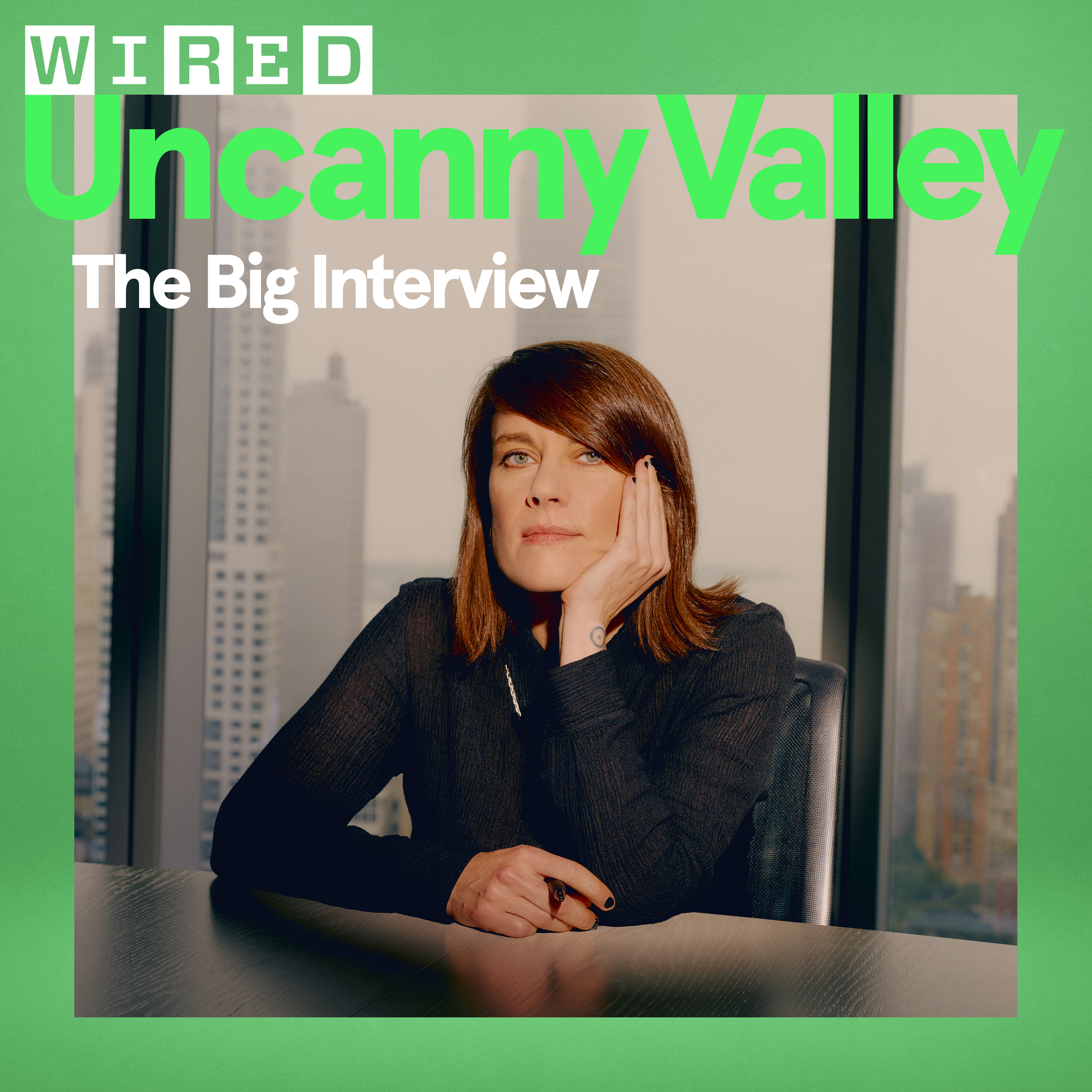
Uncanny Valley | WIRED
BIG INTV: Melinda French Gates on Secrets: ‘Live a Truthful Life, Then You Don’t Have Any’ (Re-Run)
00:47:11
Loading summary
Transcript129 lines
- [00:01]
Katie Drummond
Hi, listeners, it's Katie. Today I wanted to reshare a conversation I had last fall with Melinda French Gates, the philanthropist, technology veteran and author. It's a wide ranging discussion about her life, her attitudes on the titans of technology now, and how her focus has shifted since the Gates foundation started. It's one of my favorite conversations we've done on the big Interview so far, and I hope you enjoy it. From Wired, this is the big Interview. I'm Katie Drummond. Melinda French Gates wishes everyone understood that philanthropy doesn't solve everything. But it sure seems like nonprofits have fewer and fewer places to look these days. According to the center for American Progress, President Trump's doge has cut at least $3 billion in grants for research, education, and other programs that support women and girls. It's almost as if French Gates had started preparing for this possibility over a decade ago. In 2015, the co founder of the Gates foundation started Pivotal Ventures, an organization fully focused on the health and social progress of women and girls. She's said it many times on paper and out loud. Quote, I don't want my granddaughters to grow up with fewer rights than I did. We talked about all that along with workplace struggles, a public divorce, starting over, and lingering questions from her most revealing memoir yet. Here's that conversation. Melinda French Gates, welcome to the big Interview. Thank you so much for being here.
- [01:32]
Melinda French Gates
Thanks for having me, Katie.
- [01:34]
Katie Drummond
So we always start these conversations with some rapid fire questions. It's a warmup. Get your brain working, get your muscles working. Are you ready?
- [01:42]
Melinda French Gates
I'm ready.
- [01:43]
Katie Drummond
Okay. First thing you do when you wake up in the morning.
- [01:47]
Melinda French Gates
Get my coffee.
- [01:49]
Katie Drummond
One tech product you wish you could invent for women's health.
- [01:53]
Melinda French Gates
Self controlled reproductive tool.
- [01:55]
Katie Drummond
Ooh, I like that. I want to hear more about that one myth about philanthropy you wish people
- [02:01]
Melinda French Gates
would stop believing that it can solve everything.
- [02:06]
Katie Drummond
One book everyone should read.
- [02:09]
Melinda French Gates
The Book of Awakening by Mark Nepo.
- [02:12]
Katie Drummond
What's a habit you refuse to give up?
- [02:15]
Melinda French Gates
Having a Coke. A real Coke over ice. I just had one.
- [02:19]
Katie Drummond
The Coke with sugar. Real deal. Yes. All right. I love it. What is the best way for a public figure to keep a secret?
- [02:28]
Melinda French Gates
Just live a truthful life. Then you don't have any secrets.
- [02:32]
Katie Drummond
I like that answer. Yeah. Try to have fewer secrets you're trying to keep. What is the most surprising challenge in women's health that you've discovered?
- [02:40]
Melinda French Gates
The lack of funding.
- [02:42]
Katie Drummond
Yeah, we're going to talk about that. How could emerging tech so thinking about AI biotech make philanthropy easier?
- [02:50]
Melinda French Gates
Oh, it could solve things much more Quickly, when we get the right models for the human body, particularly in health.
- [02:59]
Katie Drummond
Best parenting hack you've used.
- [03:01]
Melinda French Gates
No one leaves the kitchen till mom leaves the kitchen.
- [03:04]
Katie Drummond
Nice. All right, let's rewind a little bit, because earlier this year, you published a very candid memoir. It was all about life transitions. I read it recently. It was great. You start the book with this great story about getting busted for wearing nude nail polish, of all things, in a Catholic school. And I really sort of thought it set the scene very nicely. And I hope it sets the scene for this conversation. Can you tell us that story? Sure.
- [03:29]
Melinda French Gates
I went to Catholic school K through 12, and the elementary school was run by the principal, who was a nun but was associated with the church. And. And the church was all male priests. And anyway, the male priests decided one day they wanted to come into our classrooms and check whether the girls had nail polish. Cause we weren't supposed to wear any. I happened to have on some clear nail polish that day that I'd worn to church the day before, thinking it looked nice. And when they asked us to put all our hands on the table, sure enough, I got tapped on the shoulder, went to the principal's office. And at the principal's office, we were told to call our moms to. To come and bring nail polish remover to the school. So my mom, who had my older sister and two younger brothers, had to pack up my two younger brothers in the car. They were at home, come to the school with nail polish remover, and that we were sent back to the classroom. But the thing that was so great was when my dad came home and my mom and I told him the story, he was outraged. He was outraged on behalf of the girls in the school. One, to have such a silly rule. But number two, outraged for my mom. He said, are you kidding? She's busy at home. She's running a small business. She's got two younger brothers. Like, why didn't they just give the girls a pink slip and send them home and tell them not to do it the next day? Right. Or use nail polish remover at the school? Why are they not valuing my wife's time? And that was such a powerful lesson for me, coming from my father.
- [05:03]
Katie Drummond
Yeah. I mean, it was an implicit commentary on the worth of women and women's work, essentially.
- [05:11]
Melinda French Gates
Absolutely.
- [05:12]
Katie Drummond
Yeah.
- [05:12]
Melinda French Gates
And I was lucky enough to grow up in a house where my father was the predominant breadwinner and he worked on the early Apollo missions. But he would come home and often talk about how much better his teams were when they had female mathematicians on them. And I got to meet those female mathematicians in the summers at the company picnics. Right. And I got to see these were, you know, strong, smart women. And my dad believed that teams were better when they were a mix of men and women. And he raised us that way as two girls and two boys in our house.
- [05:51]
Katie Drummond
Which brings me to your career. So you started your career in technology well before that was an easy or common path for women. I would argue that it's still not common enough or easy enough for women. But setting that aside, you studied computer science at Duke. It was the first time you had really been in a classroom with men. I'm curious to hear a little bit about that, that experience.
- [06:13]
Melinda French Gates
Yeah, so I went after my elementary school, I went to Catholic all girls school. So as you said, when I went off to college, Duke University, you know, there were lots of males in my classes, of course, and it was just such a different experience because, you know, I was taught that you wait your turn to answer the question or even raise your hand, and here are all these boys in my class just shouting out the answer and trying to get the most attention. I thought, God, that's what we're supposed to do.
- [06:43]
Katie Drummond
That's how you get ahead.
- [06:44]
Melinda French Gates
I will say college was a great training ground. I studied computer science at a time when it was on the rise. There weren't very many women. We thought we were on the rise, like what happened in medicine and law, where women have now become 50% or slightly more of the graduates. But computer science roughly right after the time I graduated, the late 1980s took a precipitous drop. And, and, but I learned by being a computer scientist in college how to code with men, how, how to be on teams of men, how to manage teams of men. It was fantastic. I, I loved it, I relished it. And it's what me set me on my way then to later have a
- [07:25]
Katie Drummond
career in tech and that career in tech. So you had a job offer from IBM, you didn't take it, you went to Microsoft instead, rose through the ranks at the company. I'm curious about those early days for you at Microsoft. I mean, what was that like, especially compared to IBM at the time. What was the dynamic at Microsoft?
- [07:44]
Melinda French Gates
Yeah, so I had worked at IBM for two summers in a row and I had this, this offer to go there, and I instead chose to go to Microsoft. At IBM, there were a lot of female managers when I was there in the summer. And I would say even the teams I worked on were pretty much equal number of men and women when I went to Microsoft, there just were far fewer women. It wasn't that they weren't trying to hire them, it's that there just weren't that many particularly technical women. Right. So I was in a much more male dominated culture. I enjoyed for sure working with a man. I knew how to play the game. I learned that in college. And you just learn about different personality types and it was exciting. We were changing the world, we were creating things. But it was very much a male debating society inside that company. And that is not what I learned in college, nor was it how I felt I could get the best out of the teams that I managed because I rose in the ranks because I was technical very quickly at Microsoft and I was very quickly managing teams of programmers. But even they weren't at their best if they had to go do the debate club, you know, with the, you know, executives in the company.
- [09:02]
Katie Drummond
And so you found yourself essentially managing people at Microsoft very differently maybe than your peers or than those men had ever been managed before.
- [09:12]
Melinda French Gates
Yeah, I tell a story in my book where I got to a point two years in my career at Microsoft where I loved, love, love what we were creating and doing. We were changing the world. I knew it. I was working with smart people, but I didn't like myself. I didn't like I had become or was becoming. And I noticed it when I would go out in the world, you know, at the grocery store with a friend, I was just much more harsh and hard edged and, and I thought, God, this is, this isn't who I want to be. And so I literally thought, okay. Well I had had some other job offers and one company had kept talking to me along the way and I thought, okay, I'll go work for them, but before I do that, I'll just try being myself at this company. And I was certain I would fail, like fall flat on my face. But I wasn't afraid to fail. And lo and behold, I started to realize that in being more myself, I could attract developers from all over the company who wanted to work in a different environment. They wanted to be supported, they wanted to do their best work, they wanted somebody else to stand up for them in the meeting in the debate club. And I could get amazing talent from around the company. And so I ended up, me and a few other people, we kind of created a culture of our own inside of that culture. And it was an amazing lesson for me about be yourself, be yourself. And if you can't, it's Worth going somewhere else.
- [10:39]
Katie Drummond
Yeah. And speaking of somewhere else, I'm curious about this because when I think about life transitions and sort of reading your book, something else that comes up for me is always thinking about sort of the road not taken. Right. It's like the sliding doors moments in your life. That decision, IBM or Microsoft choosing Microsoft, obviously charted the course for the rest of your life in some very consequential ways. But do you ever think about what your life might have looked like if you had made the other decision? You know what I mean?
- [11:06]
Melinda French Gates
Stay. What is the offer was at IBM in Dallas, at a specific place? Yeah, I have thought about that some. I've thought about. You know, I still keep up. I have a five great female friends from high school, my Catholic school days. It would have been very, very different for me had I lived that life. I think I would have definitely stayed and become a professional woman. But even some of cultural things, I'm really glad I grew up in Dallas, Texas. Really glad. But the cultural differences between the south and even Seattle are quite different. Right. It's probably why I'm such a centrist, actually.
- [11:48]
Katie Drummond
Interesting, interesting. I always wonder about that. And I'm curious, I mean, to think about a career that started at IBM and continued there, as opposed to where you ended up. Which brings me obviously to philanthropy. So you co founded and co chaired the Bill and Melinda Gates foundation for more than two decades. You helped make it one of the largest philanthropic organizations in history. No big deal. First of all, though, can you actually define philanthropy for me and for all of our listeners? What does it mean to you when you talk about philanthropy? And has that definition changed over the years?
- [12:21]
Melinda French Gates
Philanthropy to me means using your voice, your time, your skills or your money, your resources to change the world for the better. And my definition of that really has not changed over the years. Like, I learned that definition in high school because the nuns sent us out in the community to work. I worked at the local public school just a few miles down the road. And I saw that my time in that classroom over the course of three hours sitting in the back and tutoring kids while the teacher was trying to manage, you know, 30 kids who spoke some English, some Spanish was different. That my time and skills of tutoring those few kids in the back for her let her teach the rest of the classroom. And so the nuns taught us that one person, one person can make the difference in the life of someone else. And I was a high schooler and I could actually see that. And then I worked in the Dallas County Courthouse. I worked in the local hospital. And so the idea of using your skills or your time was always there. I just obviously never had any idea the resources I would have to give back.
- [13:43]
Katie Drummond
And those resources. I wanted to ask you about the Giving Pledge, right. Which pulled a lot of people with a lot of resources into this commitment, an effort that you and Bill Gates and Warren Buffett created to encourage essentially philanthropy by billionaires. And there was a study that came out this year from the Institute for Policy Studies about that pledge. And one of the elements of that study that I thought were so interesting is that a lot of these very wealthy people just keep getting richer and richer. Right. So 32 of the original giving pledgers are still billionaires and they have collectively gotten 283% wealthier since they signed. I'm curious, sort of looking back at what was, and I think still is such an optimistic commitment to make, does that disappoint you? Like, how do you look at the Giving Pledge now, sort of now that all these years have gone by?
- [14:40]
Melinda French Gates
Well, they're actually, to me, they're almost slightly two different things. So Warren had. This really is Warren's idea. We have to give him credit for that.
- [14:50]
Katie Drummond
Credit to Warren, Yes.
- [14:52]
Melinda French Gates
This big idea that, look, we should not be a country that has this generational wealth, that just because you're born into a wealthy family, you therefore are wealthy. Right. And he had seen it play out in Europe and, you know, in other places in the world. And so he had this big idea that as wealth was being, being created, let's change the norm around what is expected of people with great wealth. That was the big idea. And so by forming the Giving Pledge, that was the purpose. Now, have we. Then there's the second question, which is, okay, have those people actually been giving money?
- [15:32]
Katie Drummond
Right.
- [15:33]
Melinda French Gates
Some of them, yes. Some of them at massive scale. And we're trying to demonstrate that through the pledge that you can give at massive scale.
- [15:42]
Katie Drummond
That.
- [15:42]
Melinda French Gates
But have they given enough? No, no. And, and you know, some are doing it and some more are, are trying or aren't ready to, or they sign the pledge. But what we're trying to show them is that you can get started. There are a lot of barriers and they're different ones, but we kind of know what they are that keep people from starting, but that once you start, you can build a flywheel. And then we're trying to demonstrate them. Go big, you can go big, you can go bold. So we are working on it. I wish we had been even more successful with the pledge than we have been to date. But it's a, it's a problem to continue working. But I think the expectation in our country that wealth should not be amassed in great amounts in individuals hands, I think that idea is still out there and I think that's why you're seeing such pushback on some of these people who are amassing enormous amounts of wealth, right? They benefited from living in this country, being educated here, having, if they were educated here, having our regulatory environment, having our venture capital system. If you live in this country and started a business, you benefited from this country. And I believe to whom much is given, much is expected and they should be giving back more, far more than they are.
- [17:04]
Katie Drummond
I want to ask you about, about those individuals a little bit in a minute. I'm curious though, when you think about say, the billionaires in this CoH. Who are reluctant to go big, right, to give away vast sums of money, what's that about? You know what I mean? Like what holds people back who are worth billions and billions of dollars from starting to hand out hundreds of millions if not billions of those dollars? What, what is it? Because it's not as if they won't have the money to sustain their, their lifestyle, right? It can't possibly be that.
- [17:39]
Melinda French Gates
Well, think about it this way. First of all, a lot of people say, look, I already created something or I'm still raising my kids. Completely fair arguments, right? I don't want to create another organization, right? So there's that, which I get. So there are different ways of doing philanthropy and that's what we're trying to demonstrate. There are different ways. You don't have to have a big organization if you don't want, or you could have an organization if you want. There's also the concern about, gosh, if I'm going to create even a big or small organization, who do I hire that I can trust so that it stays with my values, my mission? Because right. When you start in this space, then somebody can make it more about them. We've seen that. So there's some fear there. And then there's also nobody wants to look dumb and nobody wants to spend their money poorly, right? You don't. And so it takes time. You are learning a different sector, you are learning what is possible. And then again, you need to kind of start doing to get used to it and start learning where you can be effective. So it does take time, right? And then of course, no one wants to give away their money and it be wasted. I don't even want to do that with a hundred dollars. You probably don't either.
- [18:55]
Katie Drummond
No, I do not. No.
- [18:57]
Melinda French Gates
So you want to know. And so, and it takes a while to know that you can trust which organizations you can trust to be effective with your money and, and how you want to do it.
- [19:06]
Katie Drummond
That makes sense. And, and that brings me to sort of this cohort of people you were referring to earlier, right. Who aren't even really trying to go down that road. They're not even exploring, as far as we know, what that might look like for them. I'm talking about the, the Peter Thiels, the Elon Musks of, of the world, let's call them billionaire activists, right? So people who use their power and wealth to shape politics, to shape opinion. You have Elon Musk who spent, you know, something like $300 million to help Donald Trump get elected to a second term. You've directly said that some of these people are not philanthropists. They've criticized you. You've gone back and forth about it. How do you think about that cohort? Sort of given your life's work and the Giving Pledge and everything that you do, you look at someone spending $300 million to elect a president and amassing unbelievable sums of money. Right. How do you respond to that? How do you think about that?
- [20:06]
Melinda French Gates
Well, I'm not going to name particular names here, but I'll say this. I have the value in me that to whom much is given, much is expected. But I can't speak for their values. They clearly have a different set of values or different system. And maybe some of those people, look, let's give a little grace to the situation. They're still, you know, building, building, building in their careers. So maybe they will get to it in five years and 10 years. What I do know though, is there are a lot of people who say, I will get to it. And then unfortunately, what happens is they get so elderly that oops, then it's kind of almost too late. So my hope for them is that they would get started sooner, that just like they've picked a good leader in business, pick a good leader in their philanthropy and get going with that person.
- [21:04]
Podcast Advertiser/Announcer
As a listener of Uncanny Valley, we know you want to stay on top of today's biggest stories in tech. And if you're curious about how tech and innovation are changing the healthcare landscape, check out Mayo Clinic's chart topping podcast, Tomorrow's Cure. Back for a brand new season, host and award winning journalist Kathy Werzer dives into the breakthroughs, challenges and human stories shaping the future of medicine, from advances in AI and cancer research to the rise of chronic disease and autoimmune disorders. Not sure where to start. We Recommend the season four premiere where dermatologist Dr. Saranya Wiles and biomedical engineer Dr. Adam Feinberg explore how 3D bioprinting is revolutionizing medical research and accelerating breakthroughs in healthcare. Whether you're a healthcare professional, patient, or simply curious about what's ahead, tomorrow's Cure invites you to imagine what healthcare could look like and shows you the future is already here. Find tomorrow's cure on Apple Podcasts, Spotify, or wherever you're listening now.
- [22:07]
Katie Drummond
How do we maintain a strong defense in a world that's rapidly changing? Join us on Strength in Numbers, a podcast from UVA's National Security Data and Policy Institute. I'm your host, Jennifer Strong. In each episode, we'll take a look at the materials powering today's most advanced technology, how it's being used on the battlefield, and ask how the United States can stay competitive against potential adversaries.
- [22:31]
Melinda French Gates
Voters should be concerned about all this.
- [22:32]
Katie Drummond
We want America to be strong, but
- [22:34]
Melinda French Gates
we've got to be strong and smart.
- [22:36]
Katie Drummond
That's all. Coming up this season of Strength in Numbers. Listen and follow wherever you get your podcasts. We are arguably in a very different universe today around money in politics, and a lot of that money, especially in the Trump administration, is tech money. Does, does that concern you? I mean, having spent time with a lot of leaders in the tech industry and now sort of seeing where, where they're tilting, where that money is going?
- [23:08]
Melinda French Gates
Well, again, I think we have to look back and say, how did we get in this situation, which is the supreme a decision about money in politics. Right. And that has led. I didn't agree with that opinion at the time, but that was the law of our land. We follow the law of the land. So it has allowed even more vast sums of wealth to go into politics. And as it so happens, when you say, where's wealth being created today? It's not the railroads. I mean, you still make money off railroads, but it's not the banks that you're creating a new J.P. morgan. It's in tech.
- [23:43]
Katie Drummond
Right.
- [23:43]
Melinda French Gates
And so in some ways, it's not surprising that they're trying to use those positions that they have to influence society or influence what they want for their business. So in some ways, it's not surprising, honestly, after the Supreme Court ruling. Start there and look at where we are now. One follows the other.
- [24:05]
Katie Drummond
Yeah. And I have to ask. And then I'll move On. I wanna spend time on some other issues. But, you know, you have these executives sitting with the president at these lavish dinners. You have. You have their companies pulling back on DEI initiatives, which I know is something you care about and invest in to a great extent. Is this about business to you? Is it about shareholder returns or was there this undercurrent sort of all along?
- [24:33]
Melinda French Gates
I don't know. I don't think anybody knows the full answer to that. I think this undercurrent was there. I think some things went too far in the public's mind in terms of diversity, equity and inclusion. And so where the line gets drawn, I think some people in society felt like it had gone too far. And that's probably a fair criticism. Right. So I think the undercurrent might have been there, but I think a lot of these people that you're sitting, as you said, sitting at that table, have different things that they want. And mostly what they want, it's for their business.
- [25:10]
Katie Drummond
Right.
- [25:11]
Melinda French Gates
And so they either join in the popularity party or they say, God, I never wanted to do that stuff in my company to begin with. It's nice, I don't have to anymore. So I think there are different motivations around that large table that we saw, but I think a lot of them are business driven.
- [25:28]
Katie Drummond
Yeah, of course. And I mean, what does this country look like in 10 years as those commitments to diversity and equity and inclusion fall by the wayside? What worries you about that?
- [25:41]
Melinda French Gates
Well, first of all, I hope that this too shall pass.
- [25:45]
Katie Drummond
Right. So do I.
- [25:48]
Melinda French Gates
And sometimes when you get these big whiplash changes, things do change over time. But what I do know to be true is they are affecting families. They are affecting people's opportunity to get the education they want. They are affecting people's ability to get the job that they want to get. So, you know, where we were making progress, even in the tech sector, where there was transparency at job level, about how many men versus how many women at job level. Right. Not having that transparency, the transparency, when you bring light of today of issue and you can measure it, and managers say, okay, I'm going to sign up to have more females on my team or more people of color, it changes things. And what I know to be true from my father, but seeing it even in my own job at Microsoft, the more diversity we had at the table when we were discussing product features and what to put in and what to leave out, the conversations were better. And what we put into the products was better or worse, depending on different points of view. And so to have a society where, you know, when you walk the streets of Seattle or D.C. or pick your favorite place, Dallas, Texas, I see a lot of different diversity, Right?
- [27:17]
Katie Drummond
Yeah.
- [27:17]
Melinda French Gates
And yet that diversity isn't fully reflected in our institutions. If it starts to not be as reflective. We were making strides, but not as reflected in our education system or not reflected on the Hill. We're seeing the policies that are coming out of Congress. Right. It's why I believe we need far more women in our state houses, far more Hispanic people in our state houses, so that our state houses then grow to Congress. Congress looks like our populace. That's where we need to get. And we just aren't there yet. And I think some of the initiatives were starting to help us get there. Not all of them. Some of them weren't good, you know, but it'll be interesting to see what happens.
- [28:03]
Katie Drummond
Well, as you said, let's hope that this too shall pass. I want to ask you, of course, about Pivotal ventures. So in 2024, you announced you would step away from the Gates foundation and fully focus on Pivotal. Last fall, you issued a $250 million global open call to support organizations focused on women's mental health, women's physical health. Now, this call, I think it's notable to say, was put out before, you know, USAID, for example, was essentially completely dissolved, and over 4,000 organizations applied even then, which is incredible. Now, earlier this year, you announced the winners. You have 80 plus organizations in 22 countries. Incredible. I'm curious, though, can you give us a lay of the land in terms of what these organizations are facing? What are they staring down politically, financially, in this moment as they try to do this obviously very vital work that they're doing.
- [29:00]
Melinda French Gates
Well, let me just first say why I made that call. And then maybe another thing we'll talk about in Women's Health, which is, if you step way back and you say of all the global funding, the research and development funding that goes into women's health, put cancer aside for a second. 1%.
- [29:19]
Katie Drummond
1%. Wow.
- [29:21]
Melinda French Gates
All R and D spending goes to women's health. Okay, so right there, you're like 50% of the population, 1% of global funding. So. And as I had done the work that we were doing at the foundation, one of the things I had stood up there was a whole division focused on some of these gender issues, but in particular, the vast bulk of the money was around women's health, because I could see when I was out in the communities, there were a vast number of things we weren't Addressing. And one of the saddest things to me, even in the global health work, is the statistics we collect about women are so sparse. We basically collect if they are alive or dead at the time of childbirth. Like how they have done, like those were our basic statistics. We'd been changing that over time. So I knew there were massive problems in women's health. And so one of the reasons I made this particular call, this $250 million call, is I wanted to see what was out there. I wanted to see on different continents, six different continents, where we're funding this work. What are people doing to address the inequities they see in society. So it turns out, you know, they're doing the full spectrum. They're doing mental health, they're doing nutritional health, they're doing reproductive health, and they're doing women's body health writ large. Right? And what my belief is that we can't begin to see sitting back, I don't care where you are, Seattle, New York, you know, Austin, you can't begin to see all the problems of the world, nor the solutions. And so what I wanted to do were find the solutions that were out there and figure out, with the right amount of funding and support, could we create these force multipliers out in the community. So we will be collecting data from them, we will be sharing what works. But it's also a signal to the world that women's health is important. Some of them are doing policy work in their countries. Women's health is important, and we need to be changing the narrative about women's health and we need to be funding it more. So those are the goals of that particular Women Action for Women's Health.
- [31:39]
Katie Drummond
Incredible.
- [31:40]
Melinda French Gates
In fact, I just met, I was on a call just this morning with 80 of the 80 leaders, and they're doing amazing work. And I can't wait to see what comes from it. Will everything work? No. Will a lot of it work? I sure hope so.
- [31:54]
Katie Drummond
I hope so too. I mean, what of the challenges? There's, there's just the sort of stark reality of this. This almost sort of like cultural disinterest in, in women's issues, right? In women's health that shows up in the sort of 1% of R& D spending. That's a challenge. But when you talk to these organizations and you get to know them, what are they up against? Like, what are they dealing with? I mean, even in the United States, I'm obviously curious about how that really important work of advancing women's well being has been challenged in the last few years, quite candidly. And I'm curious about what you're learning about what it means to be an organization trying to make progress in this space given sort of where we are.
- [32:41]
Melinda French Gates
It is hard.
- [32:42]
Katie Drummond
Yeah.
- [32:42]
Melinda French Gates
Like, just take the United States for a minute. I've been out visiting places like in Louisiana. And even what the doctors say they are up against, you know, they're saying, okay, this, this change in the law from the Supreme Court, the Dobbs decision, but now we're hearing that we may not be able to get access to certain contraceptives or are we even allowed to use these various tools, or we're not even allowed to train people now on how to use misoprostol. Like misoprostol is used, that's only one of the drugs in a medication abortion. Misoprostol is used to stop postpartum hemorrhaging, which is one of the number one things women die of after childbirth. And so when a doctor says, I don't know if I'm going to have access to these tools in the future, so what should I do? Should I be stocking up on them? Two, I'm not sure what I can do teach. And three, I'm not sure if I'll lose my medical license. You are creating fear in a system that is already trying, teetering and trying to help women. Right. And then you get things where patients don't know what they can get through the Affordable Care act anymore. Right. You are, you are sowing fear in the system and unnecessary health problems for women that were already there when the world already wasn't, sort of addressing some of the many of the problems in the right way. And so these 80 organizations that I've chosen, I'll give you an example of one. One is here in my backyard in Seattle, which is they walk the birth experience with the mother from the day she is pregnant all the way until the baby is two years old.
- [34:27]
Katie Drummond
Wow.
- [34:27]
Melinda French Gates
And why is that important? Because often women fall into a depression in those first few days. Two weeks, six weeks, a baby's born. And when a woman is depressed, she can't work, she can't breastfeed properly, she can't take care of the baby properly, and yet the medical system doesn't see her until the child's next appointment. So they are literally walking the system to help make sure that that woman and that baby are supported. And there are great services that are doing this around the United States. This one happens to be doing it a slightly different way again. There are ways we can support that kind of work, but people are up against a lot, you know, women in Africa. A lot of the organizations in Africa are saying, I can't get contraceptives. Are you kidding me? I've been doing this work for 20 years. How do I get, I can't literally get access to contraceptives now because of the pull back from usaid. What, am I supposed to counsel a woman to use a condom?
- [35:33]
Katie Drummond
Right?
- [35:34]
Melinda French Gates
I mean, a condom. She's threatening her own life because her husband will say, well, either you've been unfaithful or I've been unfaithful. And he'll often beat her. So, you know, that's the situation we are in today.
- [35:46]
Katie Drummond
I'm listening to you talk and it's incredibly compelling and it's so frustrating. I have an 8 year old daughter. It is so infuriating. So much of what you're describing, it makes me furious. And I channel some of that, at least through, I mean, obviously time with my child. I channel it through journalism. We try to do reporting and shed light on some of what's going on with usaid, for example. How do you channel the frustration that must come with just being so face to face with this all the time? Right. I mean, you have, you have not exactly picked an easy lane for your efforts. And there is sometimes, I think maybe just for me, I think for a lot of us right now though, a lot of women, a sense of futility that you hear about. Right. Doctors who aren't sure whether they will lose their medical license if they offer a woman counsel about her options. That's infuriating. How do you, how do you channel that?
- [36:54]
Melinda French Gates
Yeah, so I get, I definitely get frustrated. I definitely have been angry at times in the last many months. But what I do is one is I take time and quiet and I process my own emotions, which is really important, or I process them with a therapist or with a friend and then I figure out how to channel that into productive work. So you are, besides your daughter, which I also have three adult children and two granddaughters. I love to be with them. That just takes me away. We need that at times for sure, that joy. How do you find play? But then in my work, I take those emotions, once processed and try to funnel them directly into my work and say, I find where are the points of light, where are the fires that we can keep burning and we can keep alive during these times? And how do you take those things and demonstrate to the world what should get done, what can get Done. And guess what? I'm lucky enough that I can connect some of those projects if they prove out to other philanthropists, and I find hope. Because I actually have other philanthropists coming to me and saying, I'm ready. I'm 60 years old, I've raised my kids. I'm ready. What should I be working on? How can I learn? Where should I go? And so I find these points of light and hope in the community, whether it's in my backyard, whether it's somewhere else in the US Whether it's around the world. And I funnel my emotions and my resources into their work because they are on the front lines doing the hard, hard work. And they give me hope when they come back and say, okay, these are the obstacles I'm up against. But here's the change I was able to create. Here's the woman whose life I did save. Here's the woman I kept out of depression. Here's the kid I counseled who was having suicidal thoughts. Right. When you hear those stories, that humanity and that connection, I think that's where we find hope. And that's at least where I find hope. And my friends that I'm talking with about this too, quite a bit.
- [39:05]
Katie Drummond
And when you are looking at organizations to support, what are the most important things that you look for? You know, when you are sort of assessing an organization, obviously the merits of the idea, but also, you know, the ability to navigate and survive. The ups and downs of running a nonprofit. Right. The ups and downs of such a volatile societal environment, political environment, all of those things. What are you looking for? What do you want to see?
- [39:35]
Melinda French Gates
I look for leaders who are resilient, leaders who can be flexible of thought, leaders who are courageous, and leaders who have done the work like know what the specific work is and have built a team or an organization, even if it's tiny around them, to keep doing that work. Because I know they will need those other leaders on the hard days, and those leaders are going to need them. But when you see those kinds of leaders, those are the ones you lift up. And so part of, you know, when I came out of the foundation, I made a billion dollar commitment, a new billion dollar commitment on behalf of women we didn't even talk about. But one of the things I did is I used part of that to pick leaders that I saw that again, we went out and scoured, but that I saw who were working hard to create change in the world. Some of them are women, some of them are men, but they are really working deeply in their Society and those. The ones that I have a lot of hope for. And I'm seeing some of them take the gift I've given them and not only obviously use it. That's what they're supposed to do in their work. But I want. I challenge them. They can use a certain amount in their own work, but they have to find other leaders and fund them. But I'm also seeing them be able to use that to raise money from other people. Right. And that gives me hope. So, yeah, we have to look for it. We have to look. Look for the helpers. Some people would say, yeah, yeah.
- [41:08]
Katie Drummond
And the people who will pay it forward.
- [41:10]
Melinda French Gates
Yes.
- [41:11]
Katie Drummond
I wanted to ask you a little bit about work, workplace culture, the future of work, because you have criticized sort of this. This productivity culture that glorifies overwork. Right. You've talked about sleep. You've said sacrificing it for productivity is, in your words, quote, so dumb. I have to agree with you. I mean, I get eight or nine hours of sleep every night, and if I don't, I'm really in trouble. You know, do you feel out of step saying things like that or. Or do you think that we need to sort of counter this. This drive to survive mentality? I mean, do you want to see sort of systemic change, or are you happy to just be someone who disagrees with the status quo on this?
- [41:52]
Melinda French Gates
Well, I've disagreed with the status quo on this since I've been in high school, actually. So my mom. My parents were countercultural. Like, they actually taught us that you needed breaks. You know, maybe because we were Catholic, we certainly took Sunday as a family. And, you know, my dad has this huge career. My mom's running the household, and they have a small business, a real estate business that my mom and dad are running in their spare time, which they didn't have to put us four kids through college. But, you know, we took Sundays off as a family. And guess what else? My parents actually taught me the importance of rest, of taking a short nap every day. And they did, and I did quite often through high school, definitely in college. And even to this day, it's not every day, but just recharging your batteries. So I've been. I came from a family that was countercultural on this issue. I don't feel like it's mine to sort of change people's opinions, but. But even schools are figuring out the difference between. My oldest daughter and my youngest went through the same high school here in Seattle, but they were six years apart in school. Six years apart. In age? Actually, seven. In terms of classes, which class they graduated in, do you know? Freshman year, when my youngest daughter came into that school, they were teaching much more. They didn't teach it at all when my oldest daughter was in that school. About meditation, taking a nap, doing some yoga, doing some mindfulness. Right. It is becoming, I think, more part of the culture. And those who believe it will take it on, and those who don't, fine. They'll do what they do. And maybe it won't affect them now, but look at who they are when they get to be 70. Maybe.
- [43:32]
Katie Drummond
Yes, yes, those.
- [43:34]
Melinda French Gates
Let's check in with them.
- [43:35]
Katie Drummond
Then those years of exhaustion will catch up with them. I'm so curious. You had remarkable parents. I mean, you've brought them up several times. Clearly they left you with a lot. And when you think about your kids, what do you hope you are imbuing them with? What do you hope they, in an interview in 50 years are talking about when it comes to their mom?
- [44:03]
Melinda French Gates
Thank you for that question. I hope they say that they have thought a lot about their values and they know who they are because they learned that from their mom. How important it is to know who you are as a person and to live in that direction and in that own lane, even when the world calls you to move in different ways or buffers you, to do, you know, the headwinds, to do different things that, you know, they figured out over time who they were and then they worked deeply in that lane. And I hope they will also say that they knew the importance of being loved by family and friends, because at the end, it's not really about the work you do. Hopefully you got to do meaningful work and you leave something behind there. But it's really about, were you loved by your family and friends?
- [44:54]
Katie Drummond
We covered a lot of stuff there. A lot of it very heavy. So I hope you don't mind if I pivot you to a little game to wrap up. Probably great to end on a light note. So we have a game we created, we're very proud of it, called Control, Alt, Delete. So I want to know, what piece of tech would you love to control? What would you alt so alter or change? And what would you delete? What would you vanquish from the earth?
- [45:21]
Melinda French Gates
Oh, gosh. Okay. What would I control in terms of tech if I could control it? Where AI is headed?
- [45:29]
Katie Drummond
Oh, tell me about that. I want your take.
- [45:30]
Melinda French Gates
Well, I think. I think there are so many amazing possibilities with tech. Like, just amazing. And what it will bring forward in terms of our health and what we learn. And so I think there's so many upsides, but we also know their downsides. So if I could control the upside and keep the downside as low as possible, boy, would I love to be in control of that.
- [45:56]
Katie Drummond
I think. I think I. Putting. Putting Melinda French Gates in charge of AI actually sounds like a really good idea to me. I think we should do that.
- [46:03]
Melinda French Gates
No, no, no. I got another day job.
- [46:06]
Katie Drummond
What about. What about alt, alter or delete?
- [46:10]
Melinda French Gates
I would alter. When kids had the ability to have a phone in their hand, I really think that it should be. Honestly.
- [46:22]
Katie Drummond
Yeah. What's your age?
- [46:25]
Melinda French Gates
Not age. Ninth grade. Entering ninth grader. Entering ninth grader.
- [46:29]
Katie Drummond
So high school.
- [46:31]
Melinda French Gates
Yeah. It's just having profound effects on the mental health of young people. Profound. And I just think any time before that is just too young.
- [46:41]
Katie Drummond
Yeah. And delete.
- [46:44]
Melinda French Gates
I delete social media.
- [46:46]
Katie Drummond
Just wipe it all gone. Yeah.
- [46:48]
Melinda French Gates
I just don't think we get that much from it. We get some upside from it. You hear the one. One thing we do get is we get some pushback on certain voices or pushback on certain narratives in the news, and that. That comes to light. But I just think it's. Honestly, it's done more harm than it's done good in the world, so. And some people are choosing to just delete it. Right. You know, they are.
- [47:13]
Katie Drummond
And a lot of young people, interestingly, are. Are choosing not to participate, which I think is a. A hopeful sign.
- [47:19]
Melinda French Gates
Yeah, me too. They're seeing that being out in the physical world and experiencing things with their friends, that. That's more meaningful than following this stuff on your phone or wherever you're following it, and that it grabs you so easily. Right. Like, I loved when my youngest daughter and her friends got to. I don't remember what year of high school. I think it was sophomore year. And they're like, you know, when we go out for a meal together, we're going to do a phone stack. And they would just stack them all up at the end of the table, and that way nobody was tempted to, like, go to it. And they actually had a meal and had real conversation about things. And I was like, good on you all.
- [47:54]
Katie Drummond
Yeah, that's amazing.
- [47:56]
Melinda French Gates
Sometimes we can learn from our kids.
- [47:57]
Katie Drummond
I was gonna say these.
- [47:58]
Melinda French Gates
We can.
- [47:59]
Katie Drummond
These next generations really need to save us, because as you and I just discussed, we have some problems that need to be addressed. Well, thank you so much again. This was fantastic. I really, really appreciate your time.
- [48:11]
Melinda French Gates
Thank you. Thanks for doing this.
- [48:21]
Katie Drummond
This show is produced by Jessica Alpert, with help from Adriana Tapia and Sam Egan. Sound design, mix and original music by Pran Bandy Kate Osborne is our executive producer and I am of course, your host, Katie Drummond, Wired's global Editorial director. This week on the Political Scene from
- [48:54]
Melinda French Gates
the New Yorker, Trump's rupture in the world order Europe caught between two adversarial that's basically dialing back the clock to not only Pre World War II, but really it's a pre 20th century view of the world. And I would say it's a world of permanent insecurity that we're looking at. Join me, Evan Osnos and my colleagues
- [49:19]
Katie Drummond
Jane Mayer and Susan Glasser every Friday
- [49:21]
Melinda French Gates
on the Political Scene.
- [49:23]
Katie Drummond
Available wherever you get your podcasts.
- [49:30]
Melinda French Gates
From prx.