← Uncanny Valley | WIRED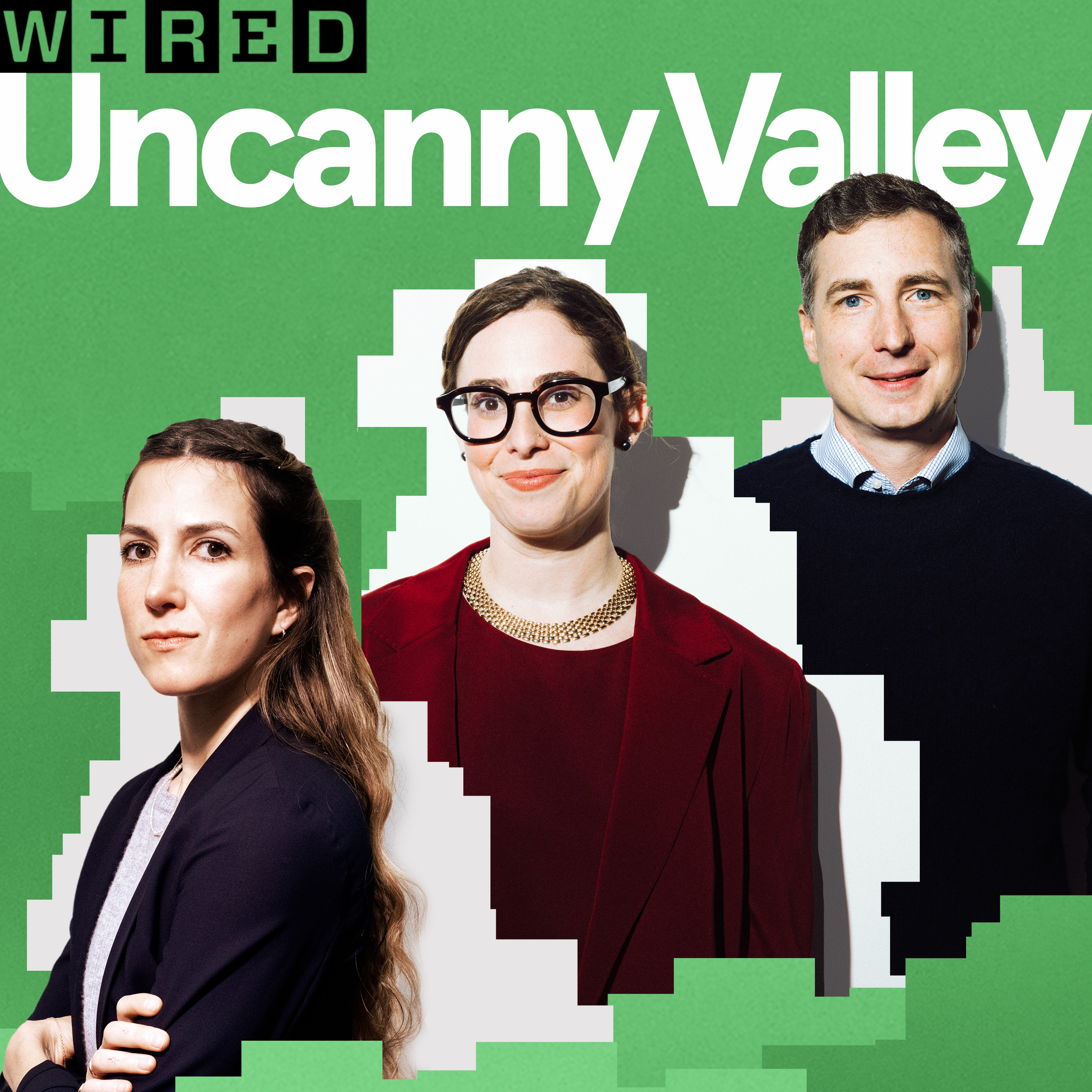
Uncanny Valley | WIRED
Why Is Meta In Crisis?; Google Search Is Over; AI Gets Booed by Graduates
00:39:59
Loading summary
Transcript178 lines
- [00:01]
Leah Figar
This show is supported by Outshift, Cisco's incubation engine. Today's AI agents operate in silos, limiting their true potential. We've been focused on building bigger, smarter models, but scaling up is just one approach. To reach superintelligence together, we need to do more, we need to scale out and we actually have a blueprint from 70,000 years ago. Humans didn't just get smarter individually, they the cognitive revolution transformed society. Because we began sharing knowledge, goals and innovation, agents are now at that same inflection point. They can connect, but they can't think together. That's why Outshift by Cisco is building the Internet of cognition, transforming AI from isolated systems into orchestrated superintelligence. By creating an open interoperable infrastructure, Outshift by Cisco is enabling agents and humans to share intent to context and reasoning. The cognitive evolution for agents is here. Explore the Internet of cognition@outshift.com that's outshift.com
- [01:06]
ProtonVPN Advertiser
Ever notice how the second you Google something, suddenly every ad you see is about it? Or you try to watch something while traveling and it's just blocked? Yeah, the Internet isn't as open as we think. That's why I started using ProtonVPN. ProtonVPN is a secure VPN service designed for people who want to prioritize their digital privacy and security. It keeps what you do online private and lets you access the Internet like it should work open, secure and on your terms. It all works seamlessly so you can be confident you're getting an extensive server network, high speed connections, integrated ad blockers and compatibility services without restrictions. In over 145 countries, it's easy to get started. Right now, ProtonVPN is offering our listeners 70% off a two year plan. When you go to ProtonVPN.com Uncanny. That's P-R-O-T-O-N-V-P-N.com Uncanny. For 70% off your two year plan, that's ProtonVPN.com Uncanny.
- [02:10]
Zoe Schiffer
Welcome to Wired's Uncanny Valley. I'm Zoe Schiffer, Director of Business and Industry.
- [02:14]
Brian Barrett
I'm Brian Barrett, Executive Editor.
- [02:16]
Leah Figar
And I'm Leah Figar, Director of Politics and Science.
- [02:19]
Brian Barrett
And we're all in the same room.
- [02:20]
Zoe Schiffer
Oh my God.
- [02:21]
Brian Barrett
For the first time, same room.
- [02:23]
Zoe Schiffer
Brian got invited to the group chat. He did.
- [02:25]
Alessandra Ram
Look at that.
- [02:26]
Zoe Schiffer
Today on the show, discussing the complete meltdown over mass layoffs at Meta, we spoke to more than a dozen employees and it turns out the job cuts are far from the only reason why Meta employees are really going through it.
- [02:39]
Brian Barrett
And of course, we wouldn't skip the Elon Musk verdict. He lost his lawsuit against Sam Altman and OpenAI in really as full a way as you can, as dramatically as possible. I know, Zoe, you're looking forward to talking about that. And I'm looking forward to talking about Google's annual developer conference I o where it debuted some dramatic changes to search.
- [03:00]
Leah Figar
And you might have seen that Google's former CEO Eric Schmidt recently got booed by graduating students after he praised AI in a commencement speech. We're going to get into why young adults might be using AI, but they have very complicated feelings about it. And later in the show, we're going to hear about why women married to AI bros have had enough.
- [03:24]
Zoe Schiffer
So first up, let's dive into what is happening at Meta. This week. The company is letting go of roughly 10% of its workforce, which is about 8,000 employees total. It's the latest round of job cuts, adding to the roughly 25,000 jobs that have been cut in the past few years as part of Mark Zuckerberg's kind of year of efficiency that started in 2023. And now the latest AI forward workplace, which he is trying to develop and impose. And while these latest cuts are not as big as some of the rounds of layoffs that have already happened, they're getting a ton of attention because Mark Zuckerberg, the CEO, has said that the reason they're happening, in part, at least in large part, is because the company is spending so much money on AI and data centers.
- [04:13]
Brian Barrett
So we record this on a Tuesday. But the reason we're able to talk so fully about this, confidently about this, is because Meta announced this a while ago.
- [04:20]
Zoe Schiffer
Oh, yeah, they didn't announce it.
- [04:22]
Brian Barrett
The news leaked, but then they acknowledged
- [04:25]
Zoe Schiffer
it weeks and weeks later.
- [04:26]
Brian Barrett
Yes, but still, it's been a long time that this has been out in the open, which has resulted in, I think, a little bit of chaos time inside of Meta because you've got like a, what, a 1 in 10 chance of not having your job anymore?
- [04:43]
Zoe Schiffer
Yeah, it's, I mean, suffice to say, impacting morale in really horrific ways. But it's not the only thing. Like we said, Mark Zuckerberg is also really encouraging employees to use AI. There have been all of these changes internally to that end. Some people really like it and are adopting it, some people are really pushing back on it. But I think for a lot of employees who joined Meta during this era of like, endless perks, lots of job security, kind of like a chiller atmosphere compared to some of the other startups invest.
- [05:13]
Leah Figar
They have that going kind of.
- [05:15]
Zoe Schiffer
It wasn't full Google, but I feel like it was somewhat there.
- [05:18]
Leah Figar
I think to me, someone so on the outside of this in every single way, I know about these layoffs because they've been A, so chaotic, but B, in some ways, like needlessly. So I'm not. Not to say that, like other tech companies aren't firing scores of workers all the time. That feels like something we discuss on this podcast frequently. But this is happening with such a large Runway and in a way that's making employees feel so terrible about themselves.
- [05:44]
Brian Barrett
Well, because it's. It's not just the layoffs, right? It's also, even if you stay there, if you're not culled from the herd, you are going to have to deal with this world in which you've got spyware on your laptops. Training AI to probably take your job at some point, right?
- [05:59]
Zoe Schiffer
I mean, explain that a little bit.
- [06:00]
Brian Barrett
Like they announced Meta announced and this was more public, that they were going to put software on employee laptops that would monitor, like, their keystrokes and how they move their cursors and basically how they do their job as Meta engineers and use that as training data for their own internal models to try to make their AI models better because they're running out of other sources.
- [06:22]
Zoe Schiffer
Could you opt out of that, Brian?
- [06:23]
Brian Barrett
You could not?
- [06:24]
Alessandra Ram
Absolutely.
- [06:24]
Brian Barrett
That's a great question. I'm so glad you asked.
- [06:26]
Leah Figar
You could feel like you didn't know the answer to that one.
- [06:28]
Brian Barrett
In fact, when an employee asked in a very public forum within Meta, hey, could we not do this, Zoe?
- [06:34]
Zoe Schiffer
The response was, oh, absolutely, you're going to do this. And shame on you for asking.
- [06:39]
Brian Barrett
How dare you.
- [06:40]
Zoe Schiffer
And some of the employees who are staying. Actually, thousands of the employees who are staying are getting drafted into the AI ranks. We published a piece today that was kind of about the morale inside the company, but also how there's been this mad dash to use up perks and stipends that employees have. But one of the things that said at the end was that remaining employees are being asked to, like, join AI teams. So whatever your job was previously, they're calling internally, like getting drafted. You're getting drafted into the AI ranks. Now your job is going to look quite different.
- [07:08]
Brian Barrett
That's like 7,000 people.
- [07:10]
Leah Figar
I've actually heard people use the word raptured. Oh, isn't that.
- [07:14]
Zoe Schiffer
And I wish we had that in the story.
- [07:16]
Leah Figar
I'm so sorry, but like Raptured into other teams. All of a sudden, one day, they've just disappeared. After this, after this layoff, has Zuckerberg and co proposed, like a sort of coherent leadership plan or proposal, like, what happens after this?
- [07:30]
Zoe Schiffer
This is the confusing thing, according to employees I have talked to, because the tough thing about what's happening right now is that Meta is actually experiencing record or near record profits and revenue growth. Like, the company is doing exceptionally well, but the company is not doing exceptionally well because of artificial intelligence. I talk to employees who are on Instagram and they say, look, our main competitor is TikTok. TikTok's not an AI company. So in fact, you're to index on this thing. That's really not at all why we're printing money. And now you're laying a bunch of us off because of that thing, when actually we're doing our jobs quite well because, again, the company's printing money.
- [08:03]
Brian Barrett
Yeah. And there seems to be sort of a little bit, I think, in our reporting has shown a little bit of like, mission drift within the company. Right. I think. And you've seen that, not just with AI, you've seen that, I think, for a long time when you see this $80 billion bet or whatever it was on the Metaverse, and then saying, oh, never mind, here's this new shiny thing. AI is not another Metaverse. AI, I think, has a better business case behind it, but at the same time, to your point, it's not. Right now, it's not making money.
- [08:28]
Zoe Schiffer
And I talked to. I talked to two people who were like, personally recruited by Mark Zuckerberg to join the kind of very fancy AI effort. And both of them said, look, the vision was AI generated slop for Instagram and the other Meta properties. Like, it just wasn't uninspiring. Meanwhile, you have OpenAI and anthropic, you know, not to say they've done it, but their mission is we're gonna completely change the economy and cure cancer.
- [08:52]
Leah Figar
And that's like, to make your grandmother's feed the most destructive sign you can ever see.
- [08:57]
Zoe Schiffer
So people were just like, not inspired.
- [08:59]
Brian Barrett
And even Meta has acknowledged that 10% ish of its ad revenue comes from scams. They're like, yes, we know there are scams. We know we make a lot of money off them. And there's a presume, like, we're on it, but not enough, probably.
- [09:13]
Leah Figar
And we're seeing layoffs or announcements of layoffs in a lot of places.
- [09:17]
Zoe Schiffer
Right.
- [09:17]
Leah Figar
Like Microsoft, Coinbase, Cisco announced it was laying off like 4,000 employees. Is this the spring of layoffs? What are we looking at here?
- [09:25]
Brian Barrett
Yeah, I think it's the same conversation. I think that is evolving a little bit where a lot of times it's cover for having overhired. But increasingly I think, Zoe, you've made this point. It actually is getting to be the point where AI can replace some engineers or not entirely, but at least you can have like a couple of engineers overseeing some agentic AI is as or more effective than 50 engineers.
- [09:47]
Zoe Schiffer
I have talked to a ton of people about this and my opinion, which I'm open to evolving over time, is that if you have really talented high level engineers, they can manage agents that will do the work of lower level engineers. And so what you're losing out on is like the entry level jobs. And we're seeing that in studies. So when we look at job loss and AI job replacement, what's happening is that entry level jobs are being replaced by artificial intelligence.
- [10:12]
Leah Figar
I feel like you have evolved on this in some ways. Like over, over the time that we've been talking about this. You really went from like, no, people aren't losing their jobs yet. We're now in like this is starting to happen, as Brian said. What's the next stage of this? Just like tons more layoffs. Is this going to happen in a bigger, faster way or are we just going to see hiring just stagnant across the board?
- [10:33]
Zoe Schiffer
You know, it's interesting Brian brought up Google I O which I am reluctant to talk about, but one this is crazy to me.
- [10:38]
Brian Barrett
Go ahead, we'll get it.
- [10:40]
Zoe Schiffer
Demis Hassavas talked to Will Knight, one of our reporters today and said, I don't think that we should be having layoffs. I think that AI should create more productivity and we should be doing more. And so I think you're going to see companies that are like, yeah, we can do even more than we could previously. We're just going to do more things, build more things, ship more product. But then I think you are going to see a lot of companies that say we can build and run shopify with a handful of engineers, not the team of hundreds that we had previously. That's just an example.
- [11:09]
Brian Barrett
Speaking of ways in which AI companies grow and change, Elon Musk officially lost his lawsuit to Sam Altman and OpenAI this year.
- [11:16]
Zoe Schiffer
Such a special moment it was.
- [11:17]
Brian Barrett
It was a special moment to get people caught up a little bit who have not been tracking this as obsessively as I know Zoe has and as Leah has too. Elon Musk had sued over claims that OpenAI illegally abandoned its nonprofit mission and turned into this for profit giant. It took a jury slightly less than two hours to say, no, go away.
- [11:36]
Zoe Schiffer
Incredible.
- [11:37]
Brian Barrett
But it was interesting, too, the reason that they said that they didn't even bother dealing with the merits. The statute of limitations had expired on this, basically. And they said, you cannot. It's too late to bring this. If you had wanted to do this, you should have done this a while ago. And even beyond the statute of limitations, maybe you have more credibility if you're doing this before you are building your own giant competitor to OpenAI and have such a clear monetary interest beyond whatever compensation you would get from the trial. When the decision was released on Monday, Judge Yvonne Gonzalez Rogers said that in her eyes, the trial had been worthwhile to bring clarity to the dispute.
- [12:11]
Leah Figar
And.
- [12:11]
Brian Barrett
And that there was, quote, a substantial amount of evidence to support the jury's findings. Which is why I was prepared to accept the jury's findings and dismiss on the spot.
- [12:19]
Alessandra Ram
Right.
- [12:20]
Brian Barrett
Which, just to clarify, the jury decision was only one step. We needed the judge to also make their own determination, which happened almost immediately.
- [12:30]
Zoe Schiffer
I was talking to someone about this yesterday, and I think that Elon Musk was trying to make the case that the clock should only have started when he realized there was a breach of the trust, basically when he realized that OpenAI was no longer a nonprofit and he was allowed to, like, make that case in court. I do think a lot of people were confused on this point because they were like a statute of limitations thing. Seems like something he could have been told before. But I think you are allowed to argue the point. But this is why the entire trial, we were like, he has to make a very compelling argument that he didn't find out that OpenAI was starting this for profit until 2023. And that's just the evidence did not back it up.
- [13:14]
Brian Barrett
No. I also should say, to no one's surprise, Elon Musk is going to appeal or says he's going to appeal. He does have infinite money.
- [13:20]
Zoe Schiffer
Mark Toborov had one word, one word leaving that courtroom. Elon Musk's lawyer, and he just said, appeal.
- [13:26]
Brian Barrett
Yeah. He also, unsurprisingly, posted about it on X, saying of the judge, she just handed out a free license to loot charities. If you can keep the looting quiet for a few years.
- [13:35]
Leah Figar
I like that he called her an activist judge. I think that that has taken on, like, a new realm of popularity in the Trump era of, like, determining that these judges in this, like, very specific branch of the government is in fact acting against one's best interest.
- [13:50]
Zoe Schiffer
And again, there were emails where Elon Musk was very aware that they were starting a for profit arm of the company, that they needed to do that to raise money. He even tried to start an AI lab within Tesla that he wanted to recruit Sam Altman to join. And then he wanted Tesla, a for profit company, famously to buy Open Air, like acquire it. I was editing the pre writes and Paresh Devay, one of our great reporters, had written three versions and the first version I edited was like, Elon Musk wins. And I was just like, there's no way this version has ever seen the light of daylight.
- [14:22]
Brian Barrett
I need to write that.
- [14:23]
Leah Figar
You know, what does this mean going forward for OpenAI?
- [14:26]
Zoe Schiffer
You know, it's interesting. I actually think it gives them a lot of momentum and now they're going to like go full speed ahead. I do think the image of OpenAI, and Sam Altman in particular, has been a bit tarnished throughout this trial. It came on the heels of like a series of reporting about his allegedly duplicitous behavior. And I don't think he looks necessarily better coming out of the trial. But I think the company, you know, is really bullish on its ipo, which could come as soon as this year. Like it's full steam ahead on enterprise code, which is kind of the phrase of Silicon Valley right now. And so I think people are feeling really, really good over there.
- [15:02]
Brian Barrett
I do think that to your point about, this was also a trial in the court of public opinion. Right. A lot of this was trying to embarrass the opponent, but it was just a mud fight where everybody got dirty. Right. Nobody came out of this looking great. Nobody came out of this. I don't think anyone changed anybody's minds about, oh no, you should be entrusted with the future of this powerful technology.
- [15:24]
Leah Figar
The maker of butt pillows for courtrooms, they're the real winners of my life.
- [15:27]
Brian Barrett
There's rampant butt pillow usage in the courtroom. And different brands of butt pillow too.
- [15:34]
Zoe Schiffer
Different brands of butt pillow? Yeah. Fancy ones, cheaper ones. Everyone's using a fancy butt cushion on those rock hard seats. Yeah. I mean, I think Elon Musk is a very litigious figure. I think he is willing to roll the dice and try for a lawsuit on the off chance that it could be successful. But I also think he knew that and he said this in text messages that were revealed as part of the trial when there was settlement conversations before it started. And he said, you being Sam Altman, and Greg Brockman are gonna be the most hated men in America by the end of this. And I think that was partially his.
- [16:10]
Brian Barrett
At least we think I'm about to be the most hated man on this podcast.
- [16:15]
Leah Figar
So ready?
- [16:15]
Brian Barrett
Couldn't be more ready because, and I don't know why this was contentious. I'm genuinely baffled. So again, we're recording this on Tuesday, Google had its I O conference. It's its big developer conference every year. And when we started playing with this podcast, I said, hey, we should probably talk about Google I O.
- [16:32]
Zoe Schiffer
And you both said, oh my God, yes, we love.
- [16:35]
Brian Barrett
Strongly disagreed. I acted like I had a head growing out of my neck. A second head growing out of my neck. Like I was suggesting the most insane thing in the world. Before we talk about Google I O. Why? Why?
- [16:49]
Leah Figar
I have my own reasons. I'm curious what Zoe's are.
- [16:53]
Zoe Schiffer
Yeah, it's boring.
- [16:54]
Brian Barrett
Okay.
- [16:55]
Leah Figar
Okay, good. Yes, Moving on. I feel funky sometimes when we're being spoon fed news by these tech companies or by the US government or by whatever entity we're reporting. Which isn't to say that like reporting on these very important changes to, I don't know, the world's largest and most impactful and powerful search engine isn't entirely valuable. But is it something that I want to speak about in this sacred space of the podcast?
- [17:24]
Zoe Schiffer
Sure.
- [17:24]
Brian Barrett
I guess what I would say is, as with anything, we don't transcribe what they say at these events. We put them in proper context and do the reporting to back it up. We have a great team of gear reporters, without a doubt, phenomenal work and did phenomenal work today, without a doubt,
- [17:38]
Leah Figar
in full love and support of them.
- [17:40]
Brian Barrett
So I appreciate where you come from, but you're both wrong.
- [17:45]
Zoe Schiffer
Wow. And he's our boss.
- [17:47]
Brian Barrett
So we're gonna say, wait, here's why Google search is changing more than it ever has.
- [17:52]
Zoe Schiffer
Okay.
- [17:52]
Brian Barrett
They are think of search now instead of as a search box. It's been drifting this way. Like it's no longer 10 links, but it's not even like even one link. Now Google search is now like a. Basically a chatbot. Like it's a conversational query. Like you. It'll expand when you put in, like, what do you, hey, what do you think, Google? Should I do this? Whatever. And it'll not just show you sort of text necessarily. It'll also show you an interactive graphic that it just cooked up. It'll show you different. Like it'll.
- [18:20]
Zoe Schiffer
It'll.
- [18:21]
Brian Barrett
Instead of saying, I want to go to Google images for this, it'll be like, here's your images and also here's this. That's phase one. Phase two is going to be agentic search. So here's what that means. You go to Google and you say, hey, let me know. The example they gave was something to the effect of let me know when my favorite celebrities are dropping new shoe collabs, and that's it and you're done. Google agents will then, AI agents will then monitor the web for you. They will do the searching for you, and they will send you a notification through your Google app that says, hey, this thing just dropped that you were looking for. The idea is not only that you're not going to visit websites anymore because it's all going to be within Google. You're not going to search anymore. You're not going to use the Internet anymore because agents are going to do it for you. Google is going to mediate every interaction you have with the web. It's a really, really significant change, and I think it's one that is definitely worth talking about.
- [19:16]
Leah Figar
What does it mean for us? What does it mean for wired.com it's not great. Not good.
- [19:22]
Brian Barrett
But I think we and other publishers have sort of been assuming that we can't rely on Google for a while now. That's why a direct relationship with our audience is so important. And we sort of invest in different things along those lines.
- [19:33]
Leah Figar
A really important moment to say, Please subscribe to Wired.com?
- [19:36]
Brian Barrett
please subscribe to Wired.com, please go. You can mark Wired as a preferred source in Google, all those things, but I think everybody's sort of embracing for this moment. It's just, it feels more like it's here than it has in a while because there's sort of this, like, general, like, AI overviews. But no, now AI overviews the whole thing.
- [19:52]
Zoe Schiffer
Yeah. And again, like, like you said, we've known that Google was headed in this direction, but I do think it's a really interesting moment for the company because search is such a big part of its business model and ads on search are such a big part of its business model. And so it feels a little bit like it's cannibalizing itself while at the same time preparing for a new future. Like, I'm curious. I mean, I assume they'll be stuffing ads in this thing and that will be how they make money, but like, you would imagine that they're also going to take an interim hit.
- [20:22]
Leah Figar
I mean, the branding of it aside of, like, what that's going to look like what your search experience is going forward, I have to assume there's going to be at least like some teething issues there.
- [20:32]
Brian Barrett
Yeah, I'm sure. I think that in the same way that a lot of people don't love AI overviews and have been begging for a way to turn it off and haven't really had an easy way to do it, I think that's going to be the same thing. But there's also not much you can do about it. Google's very clearly committed to this. It's clearly how they want the web to work. What I worry about even more than that and Google's bottom line is something again, it's the sort of same themes but accelerated the idea that once you sort of stop going to websites and once you stop once it's only agents, only bots are visiting websites, you're choking off the supply of information.
- [21:05]
Zoe Schiffer
Right.
- [21:05]
Brian Barrett
You are smaller publishers.
- [21:07]
Leah Figar
Well, you're going to run out at some point.
- [21:08]
Brian Barrett
Exactly. So the web itself kind shriveled up into a Google shaped hole.
- [21:14]
Zoe Schiffer
Yeah, I know. I feel, I feel like Sam Altman has been asked about this recently, like what happens to publishers in this world? And the answer is like micropayments. And I'm like, look, our industry is not going to be held up by like 10 cents or even, you know, point. I don't know.
- [21:29]
Brian Barrett
Every six years someone decides micropayments are going to save journalism.
- [21:32]
Leah Figar
Every time I hear that, I see red.
- [21:35]
Zoe Schiffer
Like I talk to people in the industry, they'll say like, you know, that's the future. And also I loved that this like, you know, 6,000 word story you did on the sand that makes the iPhone or whatever. And I'm like, guess how much that story cost to report. Like just the payment to the freelancer, like it's thousands.
- [21:53]
Brian Barrett
I'm going to pull us back from implications for us and focus again on the broader implications because there's one other part. There were a lot of announcements today. Search to me was the biggest one. I'll say too. Google has announced big changes before and then not actually gotten there and not gotten there in the way that they initially proposed. So there's a little bit of an asterisk next to a lot of this. I think it's probably mostly coming though. But they also announced something called Gemini Spark, which I just want to talk about very briefly. Gemini Spark is Google's answer to openclaw. We remember openclaw.
- [22:24]
Zoe Schiffer
We had openclaw.
- [22:25]
Leah Figar
Yeah, definitely delightful.
- [22:27]
Brian Barrett
Openclaw, a little agent that can Sort of just like run autonomously, has access to all your stuff. GeminiSpark is Google's answer to OpenClaw. It's the same sort of autonomous assistant that can do all the things, but because it's Google, it has access to everything that you do on Google or any app that you tie in. So you can see how that becomes really powerful and a real sort of, you know, openclaw was already kind of a privacy question mark. This even more so. It's like you have it, go give it access to your Gmail, give it access to your calendar, give it access to like everything that you touch online, all of your entire search history and just say, hey, go, do this, remind me of this, do that.
- [23:04]
Leah Figar
I couldn't be less interested in a product we know.
- [23:07]
Brian Barrett
But here's the thing. I agree, it's not for me, but it's the kind of thing where this is going to be presented eventually to billions of people. Right. The scale is the thing who don't necessarily know or understand or appreciate not talking down to anybody. But this is the way in which this thing will have access to your stuff can go wrong potentially.
- [23:28]
Zoe Schiffer
I would say that OpenClaw was kind of a one man project. The founder is now part of OpenAI, but this was kind of a bootleg kind of experiment. I would imagine that when Google does it, they're implementing more safety cards. I'm not saying it's nothing. I'm sure this is going to get
- [23:44]
Leah Figar
crossed up and down the line, but
- [23:45]
Zoe Schiffer
I would expect that if they're rolling it out to millions or billions of people, that we were going to see some additional checks and balances.
- [23:53]
Brian Barrett
Probably.
- [23:53]
Zoe Schiffer
Here's to hoping.
- [23:54]
Leah Figar
Well, speaking of the major AI players, I think that we all know that the reputation of AI in the public eye has taken a little bit of a nosedive, which I personally love. I am loving the backlash.
- [24:07]
Zoe Schiffer
Yeah, Lydia Leah's personally behind us. Yes. At Dark Money.
- [24:11]
Leah Figar
Every, every single little story and comment warms my AI Grinch heart. And we're continuing to see reports of people really not happy about data centers being built near their homes to power all of this AI raising their electricity bill while at it. And then there's the effect of AI in an increasingly tough workplace. We were just talking about the meta layoffs, et cetera. So it's not probably a huge surprise to everyone here that last week when former Google CEO Eric Schmidt took to the podium to spe to the graduating class at the University of Arizona, he brought up AI and things didn't Go particularly well.
- [24:48]
Brian Barrett
It will touch every profession, every classroom, every hospital, every laboratory, every person and every relationship you have. I know what many of you are feeling about that. I can hear you. There is a fear. There is a fear in your generation that the future has already been written, that the machines are coming. And I understand that fear.
- [25:20]
Leah Figar
And Schmidt's not even the only speaker who has received this kind of response from graduating students. The very people who are supposedly wholeheartedly embracing this technology. Real estate executive Gloria Caufield was also booed after she referred to AI as the next industrial revolution during a commencement address at the University of Central Florida. The rise of artificial intelligence is the next industrial revolution. What happened? Okay, I struck a chord. I am just beaming, you guys.
- [26:06]
Brian Barrett
How can you. Sorry. I suffer from secondhand embarrassment and can't handle it.
- [26:11]
Leah Figar
These are high profile, wealthy executives who are entirely insulated. Them, their families, their children, their grandchildren, from the effects of AI now and future on the workplace. These people are not concerned about AI taking their jobs. These people are not graduating into a market where everyone's going, I don't need an assistant. Have you heard of openclaw?
- [26:30]
Zoe Schiffer
I.
- [26:31]
Leah Figar
Of course, everyone's flipping out at them. There is an entire category of our population that doesn't know how they're gonna get work experience to all of a sudden not be considered irrelevant by our tech overlords. Of course they're booing.
- [26:44]
Brian Barrett
Here's the thing. I think there's an argument. Don't boo me. That they're not wrong that this could be the next industrial revolution, but it's sort of like saying, so get ready to head into those factories. Right? Like, it's the wrong message to the wrong set of people.
- [26:59]
Zoe Schiffer
It's the wrong tone, I would say. And what's interesting about this is that we know college students are using AI, but like you said, they're pissed because they are graduating into a job market where people aren't hiring. And there's a couple reasons for that. Like, I don't think it's just that AI is already taking entry level jobs. It's happening on some level, but not super, super widespread quite yet. It's also that people aren't leaving jobs because they're scared. And so there's just not a lot of movement in the market.
- [27:27]
Leah Figar
It's not an elastic market. And you're looking at the Iran war, and you're looking at rising gas prices. People aren't changing things up during an election year. Histor. There's so many reasons for that. So these People are graduating into a market that I do not envy them for so many reasons. To me, I'm a little bit like, I guess there's two parts to this where I'm very much confused as to why both Schmidt and Caulfield thought that this was like the appropriate message, but also, even as Zoe said, the appropriate tact. Like, I'm kind of wondering if it's like in this beautiful world of changing technologies, you can go out and create changing technologies. The world is your oyster.
- [28:02]
Zoe Schiffer
You're telling me a billionaire wasn't self aware about the people kill me madness.
- [28:07]
Brian Barrett
There's actual statistics, I'll say, behind just how bad Gen Z feels about AI. A recent study from Gallup showed the percentage of respondents ages 14 to 29 who said they felt hopeful about AI declined down from 27% last year to 18%. Wow, that's very, very, very few people.
- [28:29]
Zoe Schiffer
Yeah. And postings for entry level jobs in the US overall have declined about about 35% since January 2023. So it's real. I mean, there's an impact on the market. I mean, I actually think that this is going to be an issue in the next election, which is so interesting because I definitely wouldn't have said that a few months ago, but I think, I mean, and this is, you know, Maxwell Zaf, one of our great AI reporters, has reported about Greg Brockman's donations to Trump and other MAGA leaders. And he's talked to Greg Brockman, president of OpenAI, who said that he feels like it's really important to give money to politicians who are bullish on AI. And I think subtext there is that OpenAI and other companies are actually concerned about the lack of popularity for what they're building.
- [29:13]
Brian Barrett
Quick thing on Greg Brockman, I think we should mention too, he is putting, he is literally putting his money where his mouth is. He donated $25 million to Maga Inc. Which is the big Trump super PAC. There's real money in here, in the pro database side. There's less on the anti database side as these things tend to go. But it is like across party lines. The opposition is really interesting. You've got Democrats, you've got Republicans pushing back in a way that is going to make for some weird coalitions.
- [29:39]
Zoe Schiffer
It's going to be really interesting because I went down to abilene, Texas with OpenAI a few months ago and I was really struck. Ted Cruz was there, the mayor of the town was there. It seemed like there was so much political support for this initiative and I was immediately thinking, I think that this is going to turn at a certain point right now you're like, look, it's going to create all these jobs. It's going to be so great. We're going into these areas that didn't have a lot of economic opportunity and we're creating it. But the thing about data centers is not only do they spike the water bills of the people who live close by, energy bill, all of that, but even if they create a certain amount of jobs at the beginning, and many of those jobs are being brought in from other states, like, you don't need that many people to run a data center once it's up.
- [30:22]
Leah Figar
So lots of fun happening at the moment with AI World. Coming up after the break, we're going to dive into a fascinating story about why women in marriages to men obsessed with AI have just about had enough.
- [30:43]
ProtonVPN Advertiser
NPR believes in your right to be curious about the big questions and the unexpected ones. That's what Shortwave, their science podcast, is all about. When we stop to ask questions, the world gets more interesting. Shortwave spends each episode answering one big one like why do we have nightmares? How does AI affect my energy bill? And how can trash be good for the environment? It's science, but not the kind you remember from school. It's playful and full of wonder. Science is for everyone on Shortwave. The hosts take your questions very seriously without taking themselves too seriously. They follow your curiosity wherever it leads so you can discover something new right alongside them. I personally really love the episode about where the moon came from. That's something I'd always wondered about, and now I don't have to wonder anymore. Short Wave makes me curious and then gives me the answers. Follow NPR's Shortwave podcast and exercise your right to wonder. Hey, small business owners, let's talk about how Found can help you wrangle your finances once and for all. When was the last time you felt like you had your business finances totally under control? Every expense categorized, every receipt tracked, every invoice sent. Oh, and you were prepared for tax season. If the answer is never, you're not alone. And that's what Found is for. Found eliminates the clutter by giving you one platform that handles it. Banking, bookkeeping, invoices and taxes. No more paying for multiple subscriptions and dealing with clunky, outdated apps. Found is reimagining what business banking should be. By putting your bookkeeping invoices and tax tools directly into your business checking account, they make it easy to regain control of your business finances so you can get Back to doing what you love. Take back control of your business. Today, open a Found account for free@found.com that's f o u n d dot com. Found is a financial technology company, not a bank. Banking services are provided by lead bank member fdic. Join the hundreds of thousands who've already streamlined their finances with found Comprehensive, witty,
- [32:40]
Zoe Schiffer
speculative, critical, insightful, profound, wide ranging. Hopefully doesn't take itself too, too seriously.
- [32:47]
ProtonVPN Advertiser
David I'm David Remnick, and each week on the New Yorker Radio Hour, my colleagues and I try to make sense
- [32:52]
Brian Barrett
of what's happening in this chaotic world. I hope you'll join us for the New Yorker Radio Hour wherever you listen to podcasts.
- [33:00]
Zoe Schiffer
Thoughtful, exquisite, just, you know, real. So beyond the ever increasing spending on AI, the latest releases, the suspected IPOs, yada, yada, there is also a more more personal and strange side effect to the AI boom right now. What it is doing to family dynamics, particularly what it's doing to the wives of men who work in AI or would like to be working in AI, specifically the fact that these women are completely sick and tired of the whole damn thing. Wired contributor Alessandra Ram reported on how AI has taken over some women's home lives, and she's joining us now to talk about that piece.
- [33:46]
Alessandra Ram
Hi everyone. I'm excited to chat with you.
- [33:49]
Brian Barrett
Hello.
- [33:49]
Zoe Schiffer
Hey.
- [33:50]
Leah Figar
So happy you're here.
- [33:51]
Zoe Schiffer
I absolutely loved this piece. I laughed out loud multiple times. You refer to women who are married to AI pilled men as the quote, sad wives of AI and you include yourself in that group. So what do you all have in common? What do you share? And when did you first realize that this was not just something you were experiencing in your personal life, but was actually a pattern?
- [34:16]
Alessandra Ram
The sad wives of AI are a sort of symptom of the AI tech boom, especially here in the Bay Area. And I noticed this because it was happening in my own life, in my own house. So I recently had a baby, so I've been home a lot more. And my husband has taken on a very intense job where he's building AI for his company. So, you know, unfortunately he married a journalist. So I'm just noticing and studying things and thinking about, you know, if there's anything here to write about, because it started to really affect the dynamics of the household. You know, he was totally consumed by building this AI tool at this company where the demands just seemed out of control. You know, he's up all hours of the night, I'm up all hours of the night with the baby. So it was Just like, there was this tension in the house, and he was increasingly obsessed, and I was just sort of, like, pulling back, less interested in what he was doing, because I have to focus on everything else. Right. So I started noticing that this was also happening to friends of mine. You know, I live here in the Bay Area. A lot of people work in tech. And in my friend group, most of those people are actually the male partners, if we're talking about, you know, heterosexual relationships, which I did for the purposes of this piece. And some of those men work in AI or are trying to work in AI, and they sort of described the same thing that I was experiencing each day and night. Just like this sort of obsession, you know, even. Just like this passion they would say about Claude Code and every iteration of Claude Code, which, as we know, is every week just the excitement and sort of, like, my friends are, like, dying inside a little bit. Right.
- [36:19]
Leah Figar
Every week was their Super Bowl.
- [36:20]
Zoe Schiffer
Yeah. I loved how you framed it in the article of, like, we both have a baby to take care of. Mine is our literal human child, and his is an AI tool. We're both passionate about it, let me tell you.
- [36:32]
Alessandra Ram
And, you know, I noticed because it was happening to myself, but also friends and then friends of friends, culminating in. Really. When I spoke to my therapist, she had to sort of interrupt me during the session because she was like, oh, what does your partner do again? And, you know, I was like, well, you know, he's. He's an AI. He's building an AI tool for his company. And she was like, oh, this is. This is a phenomenon. Actually, she used the word phenomenon that she's. She's based here in the Bay Area, so a lot of her clients, you know, she has kind of a very specific clientele where it's. It's a postpartum therapist. So she works with women that are pregnant or postpartum. And of course, they're going through kind of this emotional rollercoaster themselves. But the majority of them are partnered with people in tech and particularly that work in AI or adjacent to AI is how she explained it to me. And she's just said it's causing them to be emotionally, mentally unavailable because they're totally consumed by what they're doing at work.
- [37:36]
Brian Barrett
One thing you mentioned, Alessandra, in this story that I thought was also. I hadn't thought through all the way. But it's not just people who are sort of being obsessed with this AI world and getting caught up in it. It's also people who've kind of washed out or not been able to get in and who are disappointed and feel like they've failed in some way. So there's emotional labor that goes with that along with the sort of actual literal labor that goes along with when they're working long hours. How endemic does that feel at this point? That's sort of just the many ways that people have to deal with this.
- [38:06]
Alessandra Ram
This. Right, that's a good point. And I think, you know, some people, like I've seen some comments that this is maybe like told from a more privileged perspective, but really like this is actually if you're living here in the Bay Area, like I think I can see that this is affecting people across kind of the economic spectrum. People and even like students, right, that are graduating or trying to get a job. And it's a very terrible job market. It's very volatile. So so is AI. Actually, the AI industry is very volatile. So people are losing their jobs or they're trying to get these jobs and it's very competitive because they're supposed to be high salaries and it's supposed to be sort of the unlock to economic success. So that's causing a lot of stress on people, on marriages, on families. When one person, say, for example, loses their job or is desperately trying to get a job in AI because they think that that's going to help them financially or make them rich. To be honest, that's also another component here.
- [39:14]
Zoe Schiffer
Right. That was the two part thing that I was thinking about when I was reading it, which is on one level there are people who are just so excited about the technological innovations and just really nerd out on the releases. Like you said, there's a new model. It's so cool. We can do all these things. You feel like you're using agents and suddenly you have superpowers. But then there's also this factor. And I also live in the Bay Area, so I see this a lot where like a not small number of people have made generational wealth in the last six years. And I think the idea that like, you know, someone who just happened to get in early to one of the labs, obviously maybe very smart, whatever, but like is now a multi, multi millionaire and like that could be me. I think that idea feels pretty pervasive, particularly if you're like an engineer of any sort.
- [39:58]
Alessandra Ram
No, it's fomo.
- [39:59]
Zoe Schiffer
Yeah, exactly.
- [40:01]
Leah Figar
And I think kind of to take this into like a more historical lens a little bit, you know, you spoke with an expert that told you that this is all really a continuation of how tech booms have happened in the past, right? Whether it's the Industrial revolution or the dot com boom. And mainstream figures around these movements have really often been white men, whether that's Steve Jobs, Larry Page, Tim Cook. And so they're the ones that are reaping most of the benefits here. How would you say that the AI boom compares? What did you find in your reporting?
- [40:30]
Alessandra Ram
Well, it's really interesting because when I spoke with the professor at Rutgers who really took me through sort of these iterations of the tech boom, which kind of a lot of this stuff happened in California, right? The gold rush, the dot com, and now here we are with the AI boom. This feels bigger is what she said. And it's sort of when I spoke with multiple people, that's kind of where everyone landed, is that this actually just feels, feels even more seismic. And maybe it could also be like the messaging that everybody is receiving probably from these AI companies that have these sort of enormous evaluations that we all have to adopt this technology or we're all going to just completely combust. So what was interesting here is that then, so for example, you're in a family unit, there's one person, this happened in the gold rush too, they go off west and that's usually the man, right? To sort of find his fortune, leaving the family behind. And that's kind of what we're seeing here with this new iteration of a boom, right? Is that someone else is leaving the household, whether maybe they're still working remotely at home, so they're in the household, but they're technically, mentally they're checked out, right? They're focused, they're tunnel visioned on this sort of quest to make it here?
- [41:55]
Leah Figar
I have to ask, has anything changed in your own relationship since you embarked upon this reporting? And I guess more broadly, what would you like for AI obsessed husbands or bros to take away from it?
- [42:09]
Alessandra Ram
You know, I think it's to be just present in the moment. I think we're like looking really far into the future. People are obviously getting excited, people are getting, people are afraid because again, this messaging that we have to adopt or die. But I think like myself included, like, I think we just all need to be a little bit more present. Even though it feels right now like things are really hard, especially it's hard to feel, it's hard to, it's hard to be present. You kind of want to escape. But I think that like relationships are the most important thing in our lives, right? Community and relationships. So I think not to lose sight of that. I will say, in my own household. You know, my husband knew I was writing this article, and I think he was just sort of genuinely curious what I was gonna say. I don't think he thought I was gonna hold back at all. But, you know, now he's probably just like, excited that I am talking about AI More. So there's actually, like, more things for
- [43:12]
Leah Figar
us to talk about.
- [43:13]
Zoe Schiffer
He's like, there's an upside here.
- [43:15]
Leah Figar
Incredible.
- [43:17]
Alessandra Ram
Yeah. But I have noticed he has been since this came out, which was, I think, not even a. He has been helping around the house more without being asked.
- [43:27]
Zoe Schiffer
Accountability journalism, baby. We love to see it.
- [43:31]
Alessandra Ram
Yep. So that's a lesson here. Just maybe write something for a national magazine and, you know, somebody's gonna just do that.
- [43:38]
Leah Figar
It's gonna help change things in your own life.
- [43:39]
Alessandra Ram
I mean, I saw him last night washing the dishes without being asked, and I think he might have been listening to a podcast about AI or the Knicks.
- [43:50]
Leah Figar
Yeah.
- [43:50]
Zoe Schiffer
Which. We'll take it. We'll take it.
- [43:52]
Alessandra Ram
As long as it's getting done.
- [43:53]
Leah Figar
Alessandra, thank you so much for joining us.
- [43:55]
Alessandra Ram
Thank you. This was fun.
- [43:58]
Zoe Schiffer
That's our show for today. We'll link to all the stories we spoke about in the show. Notes Uncanny Valley is produced by Kaleidoscope Content. Adriana Tapia produced this episode. It was mixed by Amar Lal at Macrosound. It was fact checked by Daniel Roman. Pram Bandy is our New York studio engineer. Mark Lehta is our San Francisco studio engineer. Kimberly Chua is our senior Digital Production manager. Kate Osborne is our executive producer. And Katie Dreven is Wired's Global Editorial director.
- [44:34]
Brian Barrett
For more than seven years, the Tech Brew Ride Home has been Silicon Valley's favorite podcast. Every afternoon in about 15 minutes, you get the top tech stories of the day. What happened, what people are saying about what happened, what Silicon Valley Valley is thinking about. What happened. The Tech Brew Ride Home is listened to by anyone who's anyone in Silicon Valley. From the C suite at Mag7 companies, to founders, to general partners at firms like A16Z, if you care about tech at all, you need the Tech Brew Ride Home in your life. Subscribe right now. Tech Brew Ride Home
- [45:05]
Zoe Schiffer
from prx.