Loading summary
Transcript40 lines
- [00:00]
A
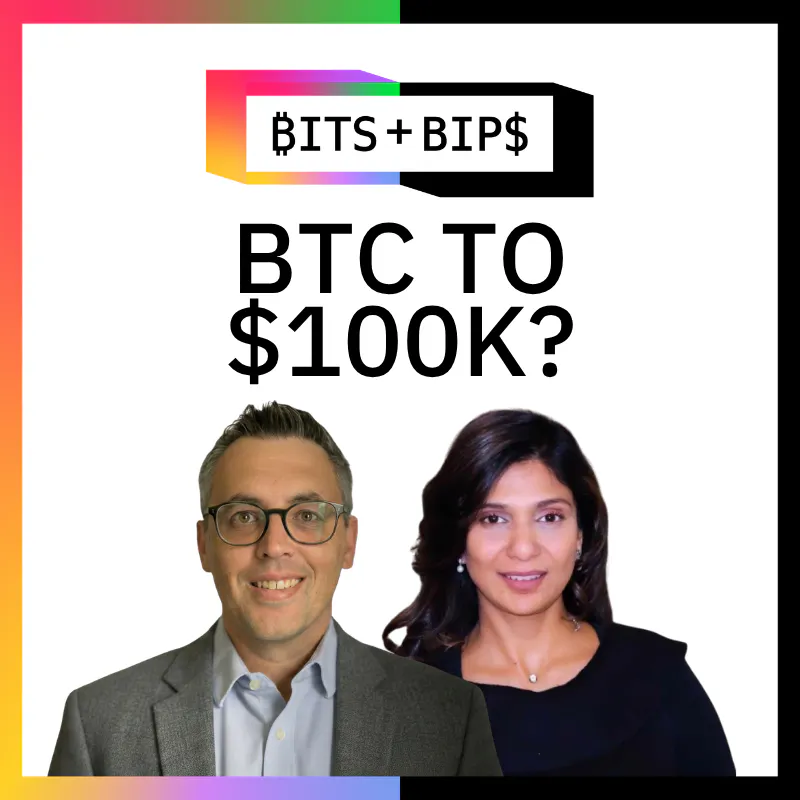
Hi, everyone. Welcome to another episode of Bits and the Interview, the show where we explore how crypto and macro collide. One basis point at your at a time. My name is Steve Ehrlich. I'm the head of research at Sharplink and also your host. And we've got a terrific show again for you today. But before we get started, just a little bit of housekeeping. One nothing that you hear on the show is financial or investment advice. For full disclosures, please see unchain crypto.com bitsandbips. And then finally, before we get started, let's take a very brief moment to hear from some of the sponsors who make the show possible.
- [00:37]
B
Etherfi is Giving Unchained listeners 15% cash back on food and ride apps. And that's on top of the 3% you get on everything else your bank is charging you to use your own money. I switched go to Ether Fi Unchained to claim your discount. Bitcoin changed how money works. Cetraya changes how Bitcoin scales with a trust minimized BTC and a native stablecoin, Bitcoin ctusd Citraria enables Bitcoin capital markets with lending privacy, Bitcoin yield and more. Get started at Citraya XYZ slash Unchained.
- [01:11]
A
All right, welcome back. So, as I mentioned before the break, we have a lot to talk about today. A very tenuous ceasefire was agreed to a couple days ago with regard to Iran and it's had ramifications all across crypto and the broader sort of macro economy. I've got a terrific guest to discuss all this today, Kavita Gupta. She is the founder and general partner at Delta Blockchain Fund. Welcome, Kavita.
- [01:36]
C
Hi, Steve.
- [01:38]
A
Yeah, yeah, great to have you back again. Always enjoy our conversations. So let's just kind of dive right in. I want to know what it's like for someone like you. You have VC fund, you also have a liquid token fund. What has it been like trading the last 48 to 72 hours with so much whipsawing back and forth rhetoric and will they, won't they agree to a ceasefire?
- [01:58]
C
You know, I, I was just talking to my team today morning and I was like, instead of trading, we should be on prediction markets and just like basically doing predictions on these. We would have made more money, to be honest. It's been like, it's okay. So first of all, the idea that everybody is now back to predicting bitcoin is going to cross 80 and Bitcoin is going to cross 100, that's exciting because we have been sort of in a winter for too, too long. Eth picking. ETH actually has outperformed in last 48 hours with around 6.7 to 7%. Then Bitcoin jump which is great because as you know I won't call myself Eth maxi but I'm a big ETH believer. Said that I feel like this particular cycle has been very different than in the past cycles of every time we have a world political situation or the economy situation moving in. We have seen crypto going down but right now we are in a sort of a ceasefire which based on President's truth social account can disappear anytime. Like it's not a permanent resolution. It doesn't feel we are out. Right. And, but still the first impact is on crypto market as soon as the oil prices went down or expected to go down. So that's very good. But I don't know how much of this is institutional waiting that they're putting money aside and let's bring in so much on etf which we saw like a huge amount of money coming into ETFs. I just really don't know how much was it wait and watch versus oh, this is, this is an asset we have to go in sort of a thing.
- [03:44]
A
Yeah, it's, it's really been a kind of an insane week. I wish I had a better, more eloquent word to describe it but I mean on one hand President Trump was threatening the destruction of a centuries old perhaps like civilization but at the same point in time, I mean I think many people, many industry watchers and if you look at what happened on polymarket and petition markets, I mean they anticipated some type of cease fire deal and I wouldn't necessarily call what Trump was doing a bluff, but it certainly seemed to, he certainly seemed to use rhetoric as a way to exact maximum leverage to try to agree to some, to some sort of deal. Because I guess theoretically if he took that step to attack all the civilian infrastructure, that's not really something that could be quite quote unquote taken back. And I'm sure we've both seen some of the reports of people making gargantuan profits on like shorting oil right before the ceasefire was announced. It's actually I was kind of curious and I was talking to some of my own colleagues and contacts like was that a case of insider trading or was that just people sort of betting on the taco? And it's hard to, it's hard to really know. I think it's hard to know for sure and perhaps the answer is a little bit of both, but we have.
- [05:01]
C
Can you take a pause there? I think. How do you define an insider's trading on prediction markets, which you don't even have regulations. I'm connecting it to, you know, we saw that famous early days of NFTs, what happened with OpenSea when like just for $6,000 somebody was like taken through the mud. I'm not saying that, you know, having a knowledge, oh, this NFT is going to get listed or this token is going to get listed, let's make money. That's a human behavior. But if there are rules, you know, you have to change that behavior. And that is the moral code. I am like, this is not the first time I feel like polymarkets has been. Polymarket has been highlighting that there are multiple times when it comes to Trump administration, from his VP pick to then going into this genius act to like multiple things like exactly. Before doing the first missile into Iran, etc. Etc. We have been seeing this so called insider trading and now Binance has prediction markets on for the rest of the world. So I mean, do you think like, can we qualify them as offensible? Something which is crime, insider trading or right now it's a wild wild west there.
- [06:21]
A
So. Good question. I mean, obviously good questions. I think actually one of our sister podcast, Decks in the City, which the three hosts are all lawyers, I think put a really good episode out on this. One of my writers at Unchained did a really good story on this, I would say, a few months ago, Jason Brett, because it really kind of comes down to how you're defining insider trading. And like, I'm not a lawyer, but U.S. securities laws, I mean there's a very, there's very like concrete definitions of what constitutes insider trading. Because in securities markets the whole idea is to sort of eliminate information asymmetry. So everyone's trading a level playing field. And in prediction markets which are regulated by the cftc, it doesn't have the same types of requirements and like sort of fiduciary duties, so on and so forth. And you can almost make an argument that people should trade on, quote, unquote, inside information for prediction markets. That's sort of the whole point. It really kind of comes down to then like what happens if someone at the White House, or not even just like a geopolitical one, but what happens if someone comes across information that maybe they shouldn't have? Are they allowed to trade on it? Well, sometimes it comes down to like, what's their role in the entity like, like if I quote, unquote, hear something and I trade on prediction market, that has nothing to do with my job. And I just come across it. Did I commit a crime? Probably not according to what securities laws are, but it's, it's really sort of a fascinating thing. So I wasn't actually going to get it into prediction markets later on because I didn't want to talk about more about Bitcoin east and other assets. But I mean, have. You're fun. I mean, are you looking to trade on prediction markets? They're getting wider, they're getting more liquid, but sometimes they can also be very adversarial. I'm sure you've seen the same reports. I have to suggest that it might seem easy to make money on those. But oftentimes the, the bets, I guess the, the odds are not necessarily in people's favor. And in a world where there are so many insiders, perhaps it is a lot more challenging than people think.
- [08:21]
C
I think it really depends what sort of bidding. So I started personally first of all from the fund. We don't do it, but I started personally also as a way of learning and seeing what exactly is happening in the space on hyperliquid. And I think hyperliquid really started with this really deep markets. And then from those per markets I basically started taking positions more comfortable on Coinbase, different stock pops and all. And then from there we had polymarket and I think polymarket went crazy about, hey, how many people are going to wear white tomorrow? You know, so it is like anything and everything. How many people are going to have Indian versus Chinese food tonight? Like, you know, and it started from there. And I feel like, you know, sometimes these prediction markets with like, if you list, if you look at the top 20 trending topics or the top 30 trending topics, I think you cannot have like, yes, you can have an insider. Like for an example, there was a big pool of like, what is Bad Bunny gonna sing at halftime? Right. Of course Bad Bunny can go or his manager can go, who has a whole list of what they're gonna sing and like participate in it. Right. So I think when you are doing predictions like this, there's always gonna be somebody who's gonna have more qualified information than you have. And especially even if you can do kyc, right? How do you justify that? An insider trading on a Bad Bunny thing? Like, of course, when are the bomb gonna drop? Are a much more serious international topic. Right. But I also heard, by the way that there are military defense all over the World who have now started looking at these prediction markets in this administration to see having defense analysis of expecting bombs. And like a lot of people in Israel I'm getting, I'm hearing are basically either banned or being asked to do a lot of random betting to confuse a lot of analysis. Have you heard any of these things?
- [10:25]
A
I have heard that the Israel sort of disinformation betting on Polymarket though is pretty fascinating that that's probably worth some doing a story on. But one thing, well actually one account I do try to follow sometimes, kind of just in a jocular way is there's this Twitter account, it's called like the Pentagon pizza account or something like that where yeah like it'll, it'll detect like huge uptakes and activity for this like pizza place right by the Pentagon. Actually I used to work in the Pentagon, but I didn't, I never went there. But it, sometimes people use it as a signal of, of incoming activity. So it is, it is pretty fascinating. All right, let's turn back, let's turn back to the markets because as you mentioned there's a lot of kind of unusual behavior. Maybe we even go back to April 6, Monday. There were huge inflows in Bitcoin, ETFs, etc. Etc. After obviously like months and months of withdrawals. I mean billions of dollars in withdrawals. I'd like to know kind of what you thought about what was happening there. I mean obviously the deadline was Tuesday, so this was at least 24 hours before some of those inflows that seem to have continued. Bitcoin is up to I think 72,000. As you mentioned, Eth has been outperforming bitcoin which I guess suggests there's a bit more of a risk on behavior. But like kind of just to the extent you can walk me through your week, like what were you seeing, what were you thinking? And like were you positioning yourself long, short? A little bit of both.
- [11:57]
C
So our fund is a long term. Right. So our trading fund is also not day to day active trading. It is more about let's get into the market at the right position and then let's hold. And then even if it takes six months or an year to get out on a certain positions, let's do. Some of our tokens are also which we have directly gone. They are public tokens that are already listed but we have gone with the foundations because another aspect of blockchain or companies which does their token is once you have done your token, people think that you are suddenly sitting on shitload of cash for 20 years to run your companies, which is not true anymore or for 99% of the companies. So a lot of these founders, if they have done decent in the market after launching their token, after a year or two, they still need to either sell their tokens in the market to raise money for the foundation to grow, etc. Etc. So we have also bought a lot of those foundation tokens from different companies and what we do is we don't want to put them a lot in the market in the same gospel if the market is not stable because it can really take their prices down. And from, from our position we do believe that the market is going to go much more long than this. And so going and selling is not even an option right now because I don't think that we would have successfully like made an exit. The thing the way we have looked at the market is two things. First, that means crypto is not completely dead which a lot of news media host started saying everything is done in crypto AI it is. So that has not happened. Thank God, the prices are moving, we are alive, we can survive. The second thing which we have started paying attention to is that as soon as the oil prices went up, crypto is one of the first asset which has moved without any other impact whether like on employment numbers, labor numbers or any of the like the White House announcements. Right. And the the and the second thing is if the institutional money coming back, which is a big volume as we as we talked about the etf then that institutional money is definitely going to take the blue chip tokens up. Now the two things which we are on the watch for which hasn't happened. One is digital asset treasuries. They are all still super negative. None of them have really, really moved. So I'm hoping the public equity is also going to slowly move up. And the second thing is the alt cycle movement hasn't happened. So if I go from like Bitcoin, bnc, bnb, eat so Solana, Solana has moved a little bit like come down to the next level, Apto, say Sui Monad, bunch of them. That hasn't really happened yet. So what I'm so what we are watching now is how the other tech tokens which are associated with different L1s or the alternate L1 is going to go and how the institutional ETF flow going to affect DATs.
- [15:10]
A
Okay, let's unpack that a little bit more. A lot there. I mean for one again as we're recording this on on Thursday afternoon The ceasefire I guess appears to be holding there. There have been reports of, of further strikes from Israel and Iran into the Gulf region. Etc. It also appears that the strait remains largely closed. Just a trickle of ships are, are going through. So and a lot's at stake I think with, at, at some high level diplomacy. I believe it's going to be in Pakistan this weekend. So all that notwithstanding, I'm curious like your sense like do you expect another V shaped recovery? Assuming that the ceasefire is able to hold and perhaps be extended like we saw after the tariffs, what type of duration would it take to kind of get there? How long would it last? And then I mean I think that leads directly into your your thought about like this, this new alt cycle and pulling up things like dats and other tokens like how long might it take to really kind of see that filter through? Because I've talked about on the show and I know you've seen in the past before there are some narratives out there that alt cycles maybe aren't necessarily a thing of the past but there are new ways for people to try to get high beta exposure to risk assets be it like AI plays or even now prediction markets, 247 perps on oil futures, other things. There are other ways to occupy your time rather than investing in alts.
- [16:44]
C
So I think there are two questions or three questions in it. Let me unpack it one by one. Right. So the first question is how do I see the market? Do I see the V shape recovery? I think we are in up and down, we going to be in waves because Lebanon Beirut just got bombed even during the ceasefire. So it's not like the conflict. There was a bomb in which I've heard in Qatar and Kuwait. So as a retaliation of the Lebanon bombing. So I don't think the conflict has really disappeared from the ground. Right. And I think it's a matter of fact that the gas prices have gone so crazy in US that the US is taking a little bit of like thinking through face of saying let get the oil go, let the business go. But do I trust, do I trust that US is out of the war or do I believe that? I don't think so. And so I feel like if we get stuck in this situation which is a very high possibility that we may then then I don't think we have like a proper like an upside recovery. I think we are in swings. That's one. Secondly, I think with respect to whether altcoins are dead or like what are the different ways of making money, I feel like there's always going to be options. Have you forgotten the whole meme coin phenomena which nobody is talking about anymore?
- [18:14]
A
And like one of my last big stories at Forbes was on Pump Fun, a big profile for the magazine. So I've been very much on the record. I think meme coins are mostly useless but I know there are smart people who disagree with me.
- [18:31]
C
I'm with you on this. I may be not that smart person who got it or made any money out of it, but just generally like, you know. So I feel like there's always going to be things which people are going to make alternatives or have fun. Basically any sort of gamifying system said that even in the past when Everybody thought in 2018 and 19 crypto was dead again and became 20 and then DeFi took the market and then NFTs came back. So you never know. I still feel like, like one of your sponsors just to point it out because I'm huge fan of that company. Erm, I mean they are still generating yields. They are generating yields more than my bank accounts or my saving accounts or my S and P accounts. And, and one of the reason the genius act is getting stopped by the banking lobby. So. So those are the connections and relations makes me feel like the institutional and conservative investor who may not go to a prediction market. Like you know, as a fund I am not going to go to a predict and put my institutional capital there. So I'm still going to go and play in these spaces where there is more. The, the base has a. It has a strong base. You know, I know the eels are coming. I know the business on chain said that if you look I was just reading chain analysis recent report that how not only Iran but lot of Middle east countries are doing trading in crypto now. Like the shipping trading, the movement of money because the banks are not working anymore. Like so we are going back to the core of why crypto was created. You know and so it's sad that it has come to that. But it also gives me a little bit pat on the thing that okay, this is the reason we all got into this space 10 years back.
- [20:27]
A
Yeah, really fascinating. Just last couple of questions on the current environment and then I want to after the break we're going to expand out a little bit. One I'd love to just kind of nail down your thoughts on on bitcoin and eth and in particular the way that they relate to each other. The bitcoin eth ratio had I guess the bitcoin's performance vis a Vis had been, even though they're both going down, had been Bitcoin had been doing better than beneath for most of the year and even go back into last year, that's reversed over the last couple of years of, of days or I would say like a week or so. I'd love to get a sense from you like if there's any undercurring thoughts as to why. And, and bitcoin really played a unique role here because while tech stocks went down during the conflict, et cetera, Bitcoin and went up and I've had debates on the show the last couple weeks. Is this a sign that it's a safe haven or, or not? I mean was it just a factor of gold sort of having such a high run up that people were going to sell out and they had to move money into somewhere else? And what does it mean now that like oil's tanking, bitcoin's going up? Like in the past it's sometimes been a hybrid safe haven risk asset and maybe it has that Jankel and Hyde quality again. But I'd love to just get your thoughts on how those two tokens in particular performed and how they relate to each other.
- [21:50]
C
So it's a very good question. Historically, bitcoin has always been the first one to move and then ETH is the second one who is trailing behind. And then we see altcoins slowly picking up and if everything is going great and it's just like a yield up market, then we would see like bitcoin going up and we would take three days to a four days delay of ETH going up. The percentage difference would be like 150, like half, half of it or 70% of it. And then we would see altcoins going up, but much faster with respect to the growth rate. Right. So I think if I just stick to bitcoin and connecting it back to what I was just talking about, we are seeing lot of transactions on bitcoin happening at the very big institutional level in supply and chain in the Middle East. So it is becoming or it is being used as some sort of a currency transactions by the big corporations, governments. I don't have that much clarity, but it's huge numbers. Right. And so suddenly we are seeing bitcoin being stabled or moving up like the demand increasing. Of course the gas prices are coming down and the gold. You are absolutely right. There was a time gold was high. People are getting liquidity when they are getting liquidity. Gold also traditionally has been thought of like if you get into trouble, you save gold, you sell gold and then you do the transaction. So I wouldn't be surprised if there's a percentage of those gold deposits are getting converted into Bitcoin to trade use Bitcoin as a currency. And those are the places which I'm seeing with respect to global market, with respect to the US market and the institutional spaces, I feel like there is a very strong feeling that the Bitcoin is about to cross 100k again. People are already predicting 80k in next week or so. And so that does make institutional flow and a lot of hedge funds flow. Like if you look at the order books in the market, whether on Binance or Coinbase, I haven't seen Kraken yet, but you suddenly see the price movements or people putting put calls, big volumes. Right. So and I haven't seen a big sell order. So in the past with ETH specifically what we saw that every time it would move up, especially after 4k, there would be a big sell order already in the queue which we would see. So which would give us an idea at Mako and then it's going to come back because there's a big sell there. We are not seeing a big Q of cells so far in any of the perps markets, in any of the centralized exchanges. And there are a bunch of buy orders at different, different, different levels for people who are probably like moving things together. So I think that is how I see Bitcoin. I do see bitcoin like not going significantly down to like let's say under 65k or something. It has really held itself strong. But I do see bitcoin going above 80k over next some time now with respect to ethical, I am actually very happy that during this whole year of like going up to 4.9k to coming down, ETH has actually not gone down to like last year's low of like 6 like $800 or $1200. Right. Eth has really held itself and you see a big movement in EAT because of institutional money. And especially when there was this big Google report which came out about the quantum computation can probably can create security issues with the Ethereum ecosystem. I think it did not completely crash out even with that news. There was some movement but it was not like oh, there's a 20% down like you know, so I feel like ETH as a technology token with respect to institution and ETF is probably going to have a good growth this time.
- [25:50]
A
Okay, all right, well that's a good place to take a quick break. So let's just take a moment and hear some hear from some more sponsors who make this show possible.
- [26:01]
B
Etherfy is giving Unchained listeners 15% cash back on rideshares, groceries and restaurants right now, which honestly is kind of wild for a card like this. On top of that, I'm getting 3% cash back on every single transaction using my actual crypto. No conversion fees, no nonsense. My bank never once did that. And it goes beyond just spending. You can borrow against your holdings at 4% or less, which is super useful if you don't want to sell your your assets. You can also earn on all major assets up to 8% APY just by holding. And moving money is just easy. No hidden transfer fees, no friction. It just works globally. If you want to check it out, go to Ether Fi Unchained to claim your offer. That's Ether Fi Unchained. Bitcoin changed how money works. Citraya changes how Bitcoin scales. Citraya uses Bitcoin as both the settlement and data availability layer. As Bitcoin's application layer, Citraya enables the first trust minimized BTC on a fully programmable platform and a native stablecoin for Bitcoin. CTUSD setraya offers Bitcoin capital markets with lending, privacy, payments, Bitcoin yield trading and predictions. Citraya expands Bitcoin's utility without sacrificing its security. Citraya mainnet is live. Get started at Citra XYZ Slash Unchained.
- [27:30]
A
All right, welcome back. So we were talking about kind of the immediate market reaction to the ceasefire and sort of, I guess, highlighting or forecasting what might happen next. I wanted to just get your thoughts, Kavita, on just some of the big shifts that we've seen in market structure over the last, I guess couple months or even years at this point because a lot of forces are converging at the time of these kind of acute geopolitical hotspots. You talked about hyper liquid and sort of how they've kind of come out of, I wouldn't say nowhere, but have really taken the world by storm, especially with the ability to launch markets focused on traditional commodities. I know that their oil futures markets were doing more than a billion dollars a day in volume, which is, which is massive. I think it became the second biggest market after, after Bitcoin. We're increasingly moving into a world of 24. 7 stock trading, either by just exchanges and regulators changing the laws, but then also through tokenized stock offerings from like likes of Coinbase, Kraken, Robin Hood, Etc and we're seeing more stable coins come on chain. We're seeing growth in other tokenized assets, treasuries, yield bearing instruments, et cetera. I'd like you to kind of just put your VC hat on a little bit or I guess maybe your, your VC hat, slash your liquid tokens one hat and just kind of talk about how that is changing the way that you look to, to invest and maybe highlight or discuss how some of those forces are going to grow in the, in the future.
- [29:09]
C
I think again Steve, your questions are so loaded across so many space. Let's take the institutional adoption one, right, which is great. Institutional adoption has. Institutional adoption on the liquid side has got huge flows into the space, right? You have the famous CEO of banks saying bitcoin is bullshit to those banks providing ETF services for those assets. So that has definitely on the liquid side have done really well. Now on the I think technology side we only see stablecoin adoption which is great for the technology of settlement and like on ramp and off ramp and like the company's cross ch, cross border transfers, etc. So those particular companies around it have done well. They have good acquisitions. They have like from web2 companies, they have like some volumes etc. But the core decentralized technologies, whether those are on eels or whether those are on you know, different type of products regarding storage etc. Hasn't been picked up up now some sort of a computation and storage. Like there's a core weave meta partnership with Nvidia which I think is going to be very interesting for decentralized storage spaces. Similarly, a lot of GPU, a lot of GPUs and chip mining companies within the space has moved into AI computational like one of our portfolio companies, gmi which started as a bitcoin, Bitcoin ether mining companies, now a prominent AI computational company and cloud storage company. So I think we're going to see a lot of that movement and that's where the money will start going. The money will start going. Have already started going actually into the infrastructure which has an overlap with the bigger institutional adoption and the AI adoption at the Web2 level. So these two, we are already seeing a huge change. Now there have been some surprises. For an example, for the longest time people within crypto have always assumed places like polymarkets to be very native game which is now becoming with Coin. Like I wouldn't be surprised if Robinhood and Coinbase at some point will start having their own prediction markets, right? Then there are, I think they do
- [31:48]
A
or they've started partnered with Kelsey and
- [31:51]
C
I think Robinhood they have started partnering. They do allow the accounts to be associated but they are not offering on their own platform like the way Binance has started. Right. You can put the pools right. Similarly like I feel like there are going to be other use cases which are going to slowly and slowly become mainstream. Now there are two things and I don't have exactly my finger on what is going to be but I feel like either it's going to be too big division where you are like you know in a typical Silicon Valley world building products for a big adoption or you are building it for a niche open source society sort of a thing which is like your native crypto society or over time this place which is a big institutional like the banking world is the only world which is going to survive. So I am still understanding but but the second part of it completely depends upon where the crypto prices go. Because if the tokens are not going to do well there's going to be less money in the space and less founders ability to be able to create and just chill in the space. That's how I see said that I think the next big institutional adoption if we can figure out the banking lobby is going to be the yield the decentralized yields on at the institutional level. Just imagine that's going to be like a big win win for even retail people, like conservative retail people. You know then instead of holding Treasuries you can just get 6% 7% yield on your cash which is available at any given point of time for you to use and then the yield bearing stable coins are a complete different story on top of it. I don't know when and how we're going to be okay with it but yeah that depends upon how the institution work, how the government works. And what if this government changes in 20 I think 28.
- [33:52]
A
Yeah.
- [33:52]
C
Election. Yeah that's going to be a very big part defined given a lot of conflict of interest of how the new administration if different gonna look at this
- [34:04]
A
space and let's kind of stay on that that that last thought that you had. I'd love to get your thoughts on what may or may not happen with the Clarity Act. I know Treasury Secretary Besson actually just published not bed in the Wall Street Journal sort of urging passage of this. How would you sort of what odds would you place on on passage and what might be the ramifications if it fails to get across the finish line.
- [34:31]
C
You know if they actually put it sort of like in the sand that you cannot have eels on stablecoin. I don't think with respect to technology or the retail which the government should watch out for is good because I actually have talked to a lot of those people who are in the rooms, I've been in those rooms myself just to understand with one simple question which is how is it bad? Like how yield bearing stable coins which you can control, you have a collateral, it's not failing, it is backed by U.S. treasuries auditings are happening how? By providing extra yield to local individual whose $1 is now worth a 1.06 instead of 1.02 or 1.03 is not good for normal people. And I do not have satisfactory answer to that.
- [35:28]
A
Just a devil's advocate. I'm not saying I have this position but I mean two things I hear. I mean for one, it'll suck liquidity out of the banking system, which I know you've heard and could disproportionately hurt smaller banks, not necessarily like the big G sibs. And then two stable coins, I mean they're not FDIC insured. They theoretically shouldn't need to be because they're not allowed to rehypothecate deposits. But at the same point not every stable coin is treated equally and has the same type of rigorous standards. And maybe genius act could standardize some of that. But those are just two things that I know are in the air supply. I would imagine some people listening might be thinking to themselves. So perhaps you could just quickly respond to those.
- [36:08]
C
Let's just go. Let's just go to them. The first point which you said, right, you are saying basically that you didn't set up the small business, small banks or the banks in a right great technical manner. So a regular Tim and Joe should not have more money in their bank account. I think that's a bullshit answer. I'm sorry, that's not my problem. That's your problem. You figure it out. That is basically saying hey, we're not going to use computers because the small banks would die, you know, so that should not be like the government should be thinking about a normal citizen. They should not be thinking about saving these big managers in the bank. That's one. The second one is a. Is a good legitimate question that every stablecoin is not same. So then please allow the people like a normal regular person who's putting their money in JP Morgan, bank of America Chase, any of these big banks, those banks should have those standards. So you have a choice to make it that if I'M putting my money in a Bank of America current account, which I am. I'm just generally getting more yields by trusting that bank. And that bank should be taking care of the quality of the collateral and the auditing around it. So again, that is like cannot be an excuse. That's a very doable problem.
- [37:25]
A
Can you handicap. Just stay on this topic. I mean but moving a bit beside our side from the yield stablecoin question, which is sort of hemming everything up. Can you handicap the odds of clarity based on what you know? And then two, crypto has a history of buying rumors and selling news. But clarity, it's hard for me to get a read on exactly what, what's going to happen. So if things come together quickly, clarity passes. What type of boost could we see in the market?
- [38:01]
C
I think honestly at this point of time it depends upon what pieces of it passes and what pieces of it doesn't pass. Right. So markets are like, if you take away creating regulations for every new type of technology which is getting built on the space, then you are basically just saying oh yeah, crypto is fine. Like which anyways is the way market is moving. If you have places like Kalshi getting investment from New York stock like eyes and all that, that stuff, you are already doing that right. So you are just basically saying okay fine, it is happening, let's accept it. So I feel like yes, it will help big pension funds to be able to hold probably, you know, so more institutional capital inflow onto this. And then SEC and CFT has to figure out if the government changes the regulate like the, if there is a change in the party system, then somebody else cannot come, they have to go through the Congress. So those two things are big and I completely understand, but it should not come with the constraint of saying outside any of this can is all illegal. I think for me that is the problem that you are going to hinder something which is already working and the, and the, and the progress in that innovation by saying you are in a legal box, but the legal box is this small and everything around this whole universe around the legal box can be now questioned and opened up. That scares, that scares me a little bit.
- [39:29]
A
Okay, we're just about out of time, but I just want to wrap up by asking you a few quick, quick fire questions. One, what are one or two charts or assets that you're really interested in paying and going to pay attention to over the next few months?
- [39:44]
C
Like with respect to currencies or technologies, anything.
- [39:47]
A
I mean digital assets or macro. I mean the Show's about how the two collide. What are you watching to kind of be a signal for what's to come.
- [39:56]
C
I think ETH has always been a good middle ground for me because if only bitcoin is moving and ETH is not moving then I am feeling like the rest of the crypto market is not going to move. So and when ETH moves I started watching altcoins moves right. So like the next top sell seven coins for me, Sei, solana, Aptos, Sui. I start watching that bucket very quickly and then a defi bucket and then nowadays more of like raw ETF buckets. So if those started showing positive sign then we are getting ready to basically a good jump up with respect to technology. I feel like of course we are waiting on bunch of IPOs, right. Everybody has been expert expecting Kraken IPO, Falcon X IPO, bunch of more IPOs and I think that more dependent upon overall the tech IPOs, whether SpaceX or. I don't know how open AI is going to be now, but like SpaceX or Anthropic or something and I think once that IPO markets open up that's also going to have a lot of liquidity moving into, back into the space. So those are the two I'm really waiting for. Now with respect to the political movement, I honestly do not think that we're going to have a very stable political space for a good decent amount of like short term, six months to an year. Now the only thing which I am trying to micro watch between that is, are the, are the oil prices going to be a problem? Because if the oil prices goes up again then that's not good for crypto.
- [41:32]
A
Yeah, and I mean just staying on oil, I mean everything you said I agree with but just because there's the ceasefire. I mean as I said before, the strait still remains largely closed and, and it's not like you can just flip a switch and all of a sudden oil flows can be back to where they were before the war and, and oils can be back into the 60s or $60, $70 a barrel. So we'll have to kind of see what, what that looks like just to wrap up anything that we, we did not get a chance to discuss. You'd like to share or do you have any other big expectations, predictions, things you're looking out for through the end of the year?
- [42:08]
C
I think the crypto AI game which is basically having, and robotics actually I think the big space that I am watching is how decentralized identity for different AI agents the settlements, the AI bots to use for crypto trading and different things. I think this, this overlap of this world, not the first generation which we saw like a big boom two years back within the crypto world where very random AI crypto companies were raising crazy amount of money and have all disappeared. I'm talking about the real use which is revenue driven day zero then to like VC driven is is being super, super fascinating. And I think especially in the robotic world where big, big like you know, infrastructure companies using robots for different services and their identifying if identification is on Ethereum as like a public blockchain, I think those use cases are making me much more excited and I think this is how going to be the evolution of blockchain into a blend infrastructural economy on a much bigger scale than what we are seeing only in the financial space. I think that's very exciting for me to watch.
- [43:19]
A
All right, well that's a great place to end it. So Kavita, thank you for joining. As always, we'll have to have you back and thank you to everybody for for watching and listening. That's the end of this episode of Bits and Bips, the interview. But don't go anywhere. In a few minutes, Lara is going to be here with another episode of Unchained. She's going to be talking with James Seifert, senior research analyst at Bloomberg Intelligence and a former host of Bits and Bips as well. And they're going to be discussing the big debut of Morgan Stanley's Bitcoin ETF and where the overall crypto crypto ETF space is going. So stick around and we'll we will be back after this short break.
- [44:16]
C
It. Sam.