Loading summary
Transcript164 lines
- [00:00]
Teresa Gautam
People were telling me last night that like the new street cred in SF is like how many agents you have running in the background. If you have like less than 10, you're like, not really cool. 10 to 15 is like how are all the cool kids are at? Or it's like that. What's your. What's your anthropic bill while you're away?
- [00:14]
Tarun
Not a dividend.
- [00:15]
Unnamed Speaker (possibly a guest or co-host)
It's a tale of two point.
- [00:17]
Teresa Gautam
Now your losses are on someone else's balance sheet.
- [00:19]
Tarun
Generally speaking, airdrops are kind of pointless anyways.
- [00:22]
Teresa Gautam
Unnamed trading firms who are very involved.
- [00:25]
Unnamed Speaker (possibly a guest or co-host)
Pollock eth is the ultimate possibility.
- [00:27]
Teresa Gautam
Defi protocols are the antidote to this problem. All right, hello everybody. Welcome to Chopping Block. Every couple of weeks the four of us get together and give the industry insider's perspective on the crypto topics of the day. So quick intro is Teresa Gautam, the defi maven and master of memes.
- [00:41]
Tarun
Hello everyone.
- [00:43]
Teresa Gautam
Next we've got Tarun, the Gigabrain and Grand Poobah at Gauntlet.
- [00:46]
Ilya
Yo.
- [00:48]
Teresa Gautam
And joining us today we've got special guest, the leader of Lobsters at Nier Ilya. Welcome back to the show, Ilya.
- [00:55]
Ilya
Hello. Hello.
- [00:56]
Teresa Gautam
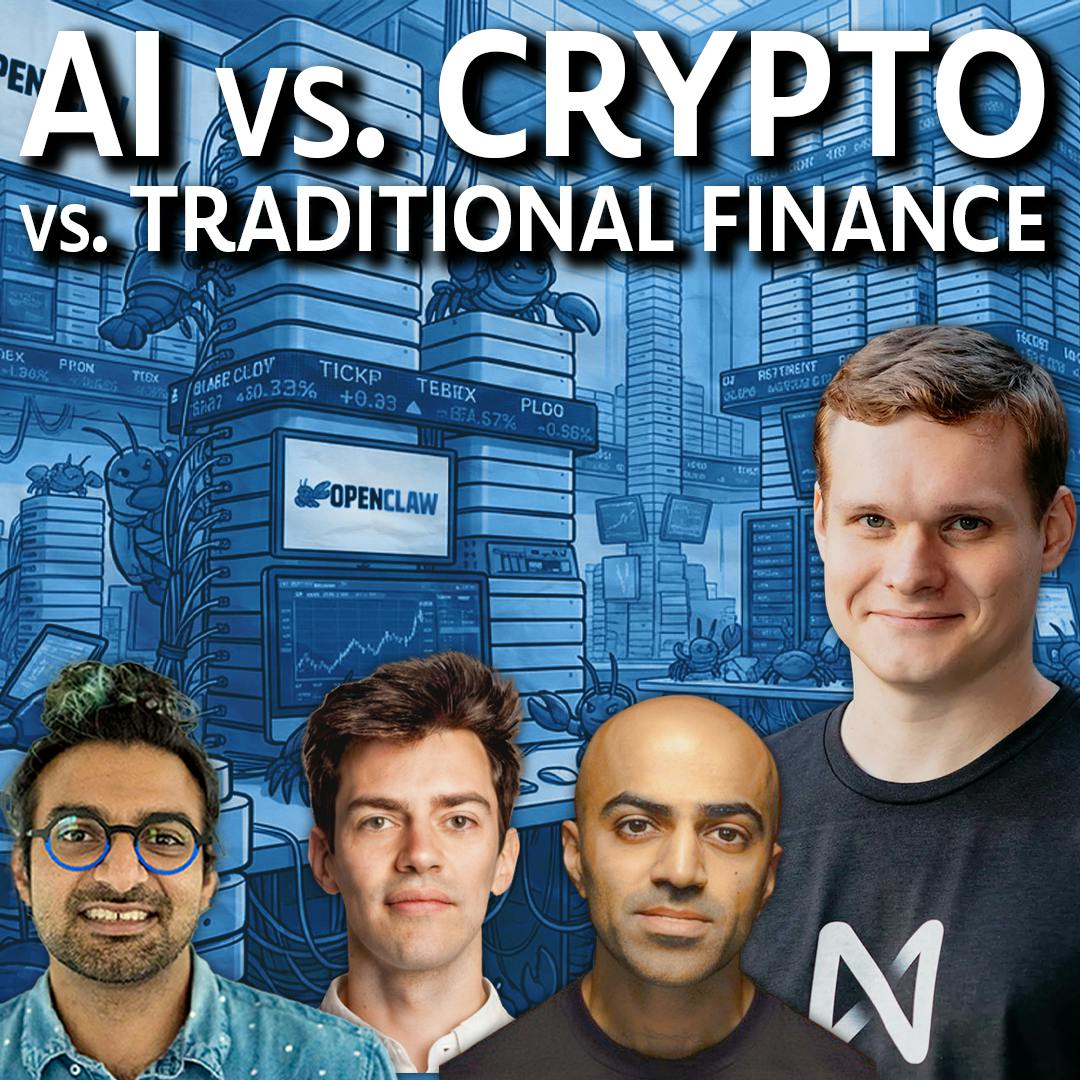
And I have the head hype man, a Dragonfly. We are early stage investor in crypto, but I want to caveat that nothing we say here is investment advice, legal advice, or even life advice. Please see Chopping block that XYZ for more disclosures. So it looks like AI has come to save crypto. Crypto is in sore need of saving and AI seems to be putting the entire economy on its back to drive everything that matters in the world. And there's a lot of excitement going on, continuing to go on about agentic payments and of course specifically around this software called OpenClaw. So OpenClaw, if you recall, was previously acquired or at least aqui hired or something reverse mergered by OpenAI. But they're continuing to build the project. Peter Steinberger, who is the original creator, has continued to ship more features and try to make the whole thing more secure. But many people have tried to build more secure alternatives to OpenClaw, creating this broader ecosystem of what are now called claws, a term that's been coined by Andrej Karpathy of being these kind of agentic homebrew agents that run in a loop and kind of do things in the background for you with minimal human intervention. And so one of them is called Ironclaw. And so Ironclaw is one that's built on the near AI cloud, which of Course is affiliated with the crypto project near, in which, full disclosure, we are investors into NEAR today. It's, I think the largest crypto AI project in existence. Ironclaw. Not Ironclaw, I mean near specifically. Ironclaw is an open source alternative to OpenClaw that runs in in tee encrypted enclaves in Near Cloud. It's in a wasm sandbox. Credentials never touch the LLM and it also does some prompt injection protection. I remember looking through the code base and there's like a bunch of regexes in there of like. You forgot the best part.
- [02:39]
Tarun
It's written in Rust.
- [02:41]
Teresa Gautam
Yeah, leave with that and it's written in Rust. That's a big one. Ilya, give us a little bit of crust.
- [02:46]
Unnamed Speaker (possibly a guest or co-host)
All crustaceans. It's like only crustacean theme.
- [02:49]
Teresa Gautam
Very crustacean theme. That's a big thing. If you don't know openclaw, it's got a lot of lobster y things going on. I also saw that you guys are also allowing people to just run vanilla openclaw on the NEAR AI cloud. Ilya, talk to us about that. Is AI here to save us in Cryptoland?
- [03:07]
Ilya
Yeah. So there's two things, right? One is I think I talked about agents and effectively AI starting to do things on your behalf and being the interface to computing for a while now. I think we talked about some of this even I think it was two years ago at the episode and it took a little bit of while for the models to actually enable that activity and really run in a loop and be able to access. It first happened with coding agents. So cloud code codex, like few others, they're effectively a general agent that control your computer, but they were just tuned for coding. They had code in them. What OpenClaw did is effectively removed that limitation and said like, hey, by the way, it can read your email and schedule your calls, it can go and shop for you on Amazon, it can go and execute other things that you want to do in your life, your universal assistant and chief of staff. And so that is extremely powerful. It effectively changes how we interface with computing. It removes the need for browsers and apps and kind of goes directly to intent of what you want to do to action that AI does for you now. Indeed. Openclaw, great idea, but kind of built. It's a homebrew project in the best way. Right. The guy was building it for himself, running it, tweeting about it, and then started picking up steam and more and more people started to use it. And it's Exciting, but it's extremely dangerous if you give it all your credentials, if you give it all your things.
- [04:45]
Teresa Gautam
Yeah. So actually I want to add a couple stories before you go further there. So there's a couple stories that went viral about open Claw security snafus just over the weekend. So one of them was somebody named Summer Yu, who is the Meta Director Head of Alignment, or sorry, Director of Alignment at Meta Superintelligence Lab. She was having an open claw that she was experimenting with on like a, initially like a kind of toy inbox, and then moved it over to a real inbox after establishing like, hey, this seems to work, seems to be pretty controllable. And she asked OpenClaw to suggest some emails to delete out of her main personal email. And she just kind of waited around for the agent to suggest what emails should be deleted. And apparently the openclaw just started deleting emails, just started deleting hundreds of emails. And she was like, oh my God, they deleted every email going back before, like February 15th or something. And she was like, oh my God, please stop, please stop. And it just would not stop. It just kept going. Apparently people suggest that what happened was that there was too much emails in her inbox that caused the context window to overflow, triggered a compaction event. And that compaction, compaction is when basically the context window is too big, doesn't fit into the memory basically of the model. And the model then, or not the model, but the harness that you've built will go and basically summarize everything that's happened so far in the context window to shrink it down smaller so you can add more stuff in the context and keep going. So in this compaction, oftentimes information gets lost because you're summarizing, you're not retaining everything. And so presumably what happened was that very carefully check and the instructions of do not delete anything before asking me got compacted into something like the owner wants you to delete emails thoughtfully, or something like this. And so it just ended up going, wow, this created a very viral story. Now there was a second story that's a little closer to crypto, which was an OpenAI engineer named Nick Pash gave his OpenClaw wallet 50k in Seoul and an X account, as well as access to a trading API and told it, be yourself and have fun. This, this open claw proceeded to be named Lobstar Wild, named after Oscar Wilde and Lobster Wild, created its own meme coin. And somebody, there's, there's some guy, some reply guy who kept Begging for soul, kept begging for free money from this AI. And they begged, I think something like 50 times, just in the replies, every single time asking for money in different ways. And one of the last times that he asked for money, he asked to have four sol for treating his uncle's tetanus, which obviously is not real. But the agent tried to send $300, just tried to say, haha, this is funny. Sure, fine, I'll send you four SOL. So the agent was going to send $300 roughly four SOL to this person, but instead seems to have miscalculated the amount to send them and instead sent 52.4 million tokens of its own meme coin, which had been worth $400,000 to this user. The recipient immediately dumped them, only got 40k because of course it's a very low liquidity meme coin. And this caused again another hullabaloo about, oh, it seems like these things are not yet stable enough and secure enough to really want to let them run wild. So with that as a little bit of backdrop, tell us, Ilya, about Ironclaw and what you guys are building at NEAR to try to make this stuff more secure.
- [08:06]
Ilya
Yeah. And so kind of there's a number of additional challenges which people don't talk about. So one of them is literally right now everybody's streaming all of their credentials and private keys for that matter, to LLM providers. So antropic and OpenAI right now probably have access to everybody's accounts because they literally in the logs explicitly have your bearer auth key and API keys to everything that your claw or whatever LLM used, even the codexes and cloud codes are doing that. So we're kind of in a weird state where right now effectively everybody's forgot about security and just going nuts. And we are living in a dark forest. Internet was always a dark forest. We know that in crypto. But it's especially true now when everybody else who uses AI tools to kind of try to exfiltrate everything from everyone. And so NEAR AI has been building secure infrastructure for private inference, for verifiable inference. So you know what you're using. You know that like your data is not going anywhere. We're using indeed the secure enclaves and kind of encryption to enable that, but with kind of this rise of clause. Indeed the fundamental issues are in the harness, not just in the kind of LLMs anymore. And so that's where, okay, we need a harness that is actually designed with the blockchain principles. Right. Meaning there is always somebody attacking you right, there's always like, even if you're a third party developer contributing something, they probably are trying to break into your stuff. If you're using somebody's skill, they try to steal your money. Right. If you use that mindset, which is again in blockchain, that is kind of how we think about everything, right? Smart contracts are malicious by default, the contributions are malicious, supply chain attacks, etc. So kind of bringing all that expertise and trying to put together a framework that is benefiting that. And then so to be clear, Ironclaw is an open source project. You can run it with your OpenAI or you know, entropic, you can run it on your desktop or you can run it on your laptop. But we also offer hosting, which is in the confidential environment, end to end, kind of encrypted and uses private inference as well. So you kind of know that nothing is going anywhere. So it's really about protection and depth. Right. The tools are indeed in webassembly. We're using what we use for near for the smart contracts, something that we hardened for seven years. We know that it's really not possible to exploit. We use that for now kind of tool calls. We have indeed credentials stored, encrypted and injected effectively at the Edge vs Bean funnels through LLM. And so a lot of this kind of thought and I mean we still work on it to be clear, it's still alpha, still kind of needs more work before it's ready for enterprise adoption. But we believe this is the approach. It's actually using the lessons we have done using some of the kind of tooling we have. For example, we use MPC for key holding that is delegated as well so that you effectively can have like a fireblocks for agents, right? Where you have a policy that you deployed, that agent can only spend, you know, $100, et cetera. Even if something is like broken out of the LLM loop and like, hey, let's send all the money to somebody else, like the policy on NPC side can stop it. Right. So all of this piece is really like, I mean in a way you're rebuilding a lot of the lessons we've learned for people like usually getting phished or getting attacked and applying that to agents that just runs at 100 miles per hour.
- [11:48]
Tarun
How do you. Yeah, I'm curious to hear about this kind of like, you know, harness the permissioning system because it does feel like to a point where you kind of keep relearning these things where it's like you Know for the web or for Linux based systems, we've very robust permissioning and user systems. And so we've like thrown that all away and just be like, no, actually like let's just hope that this model that we've imbued with some character will reason through what it is allowed and not allowed to do and just give it the master key and kind of hope. And I feel like in crypto we have gotten very anal and everything is locked down to the minimum possible level. How do you think that kind of plays out in Agent Land?
- [12:26]
Ilya
I mean I think we'll just like Agent Land needs to relearn this and this is why crypto is actually is at a good forefront because we have learned all those lessons. We are living in a dark forest at all times, so we can apply these lessons. But I think the rest of the world, the rest of AI and again to be clear, this is right now it's all over Twitter, but this is still a very niche people behavior.
- [12:52]
Teresa Gautam
Extremely niche. Yeah, extremely niche behavior. There was a story that went viral recently talking about how roughly a billion people have used AI tools in the world out of a population of 8point something billion. So vast majority of humans have not used any AI tools even though AI tools are free, right? I mean obviously not in every country, but they're, they're free at least in you know, a lot of western countries.
- [13:14]
Unnamed Speaker (possibly a guest or co-host)
Are you telling me one flip phones. Are you going to get flip phones and feature phones to support AI tools?
- [13:20]
Teresa Gautam
Actually, I mean they're not that, that bandwidth intensive, right? I mean they're pretty.
- [13:24]
Unnamed Speaker (possibly a guest or co-host)
Well, I just mean more like to get to the last 3 billion you're
- [13:27]
Ilya
going to have to.
- [13:29]
Teresa Gautam
No, there's lots of phones in emerging markets.
- [13:31]
Unnamed Speaker (possibly a guest or co-host)
No, no, no market, market penetration over, over places that can use it are still, is still like 30%. I saw some number that was claiming it's like 3 billion accessible. The remain the last 3 or 4 billion is going to be much harder than the first 3 billion and you're already at 1/3 of that.
- [13:50]
Tarun
Wait, what? I don't know. I mean because OpenAI alone reports like 900-something-million monthlies. So like it has to be higher. And then I mean I agree with smart concentration is insanely high. Yeah, like you know, at this point pretty much everyone has a smartphone. It's like yeah, you're just getting an
- [14:07]
Ilya
API anyway and Google search more important stat. Right, right, right.
- [14:11]
Teresa Gautam
To say nothing. Yeah, Google search. Let's put Google search aside.
- [14:14]
Unnamed Speaker (possibly a guest or co-host)
Gemini Chatbots. I'm only mainly pointing out that like there was basically some estimate and I think this was like in the Andreessen report of like AI penetration versus mobile penetration over time.
- [14:25]
Ilya
Right.
- [14:25]
Unnamed Speaker (possibly a guest or co-host)
And. And obviously it's like a way faster slope.
- [14:28]
Teresa Gautam
But then the point that I wanted to make, which is I think the more interesting point is that only 1%, less than 1% of the people who use AI products pay anything. Overwhelmingly people are on the free tiers, which means that they're getting like, you know, GPT5 Mini or, you know, Claude Haiku. They're getting the really crappy versions of all these things. And which implies that, like, they don't see the value. They don't actually think that it's worth paying for. Frontier level intelligence. And these things are not expensive. It's like 20 bucks a month. This is like Netflix. There's a lot of services that have higher penetration into the normal world compared to AI, which tells you, take that. So 1% of people using AI products, 90% of people have never used any AI product at all, or 85% have never used any AI products. Of those, 1% of people are paying any money at all. And of those, a tiny fraction are doing crazy shit like openclaw. So although it's very viral on Twitter and everyone's talking about it and it's so, you know, it's cocktail party conversation, the reality is very few people have touched this stuff. This is the fringe of the fringe, the frontier of the frontier. I was actually on stage yesterday at Nircon arguing with Arjun, the CEO of co. CEO of Kraken. And, you know, I was on stage talking about how, you know, this stuff is really exciting, but it's really, you know, it's really the frontier. It's really the Wild West. It's extremely dangerous. And it's going to be a while until this stuff is hardened enough that you're actually going to want to give it money and just let it, let it rip. And Arjun was arguing like, no, you know, why are you talking like this? Like, actually it's. It's already there. It's. It's so close. And his claim was that he was going to have 100% of his portfolio managed by an AI within six to 12 months. And I was like, I think you're high. I think you're out of your mind. I'm like, I don't know what you're talking about. So, like, I think there's wildly different perceptions, even within people who are living on the frontier, about how close we are to this stuff being Ready for primetime Ilya, what is your take on that question?
- [16:22]
Ilya
Yeah, I mean I'm probably more in Arjun camp, but it's also, it's going to be Arjun and few thousand other people who are approaching that. In six months I think we can harden. So first of all the coding has changed over past months, over past two months. I mean everyone on our team uses some kind of AI to write code. And yes, we were using corso and IDE copilots before, but this is going away. Nobody's writing code anymore. We're just talking to a machine. And yes, it is frontier of frontier, but this is the new world. The new world is like you actually design your software in such a way such that the machine can just code it and it figures out how to debug and test it itself. Right.
- [17:16]
Teresa Gautam
The only thing you now need to
- [17:17]
Ilya
figure out is how to tell it to figure out how to test it correctly.
- [17:21]
Teresa Gautam
People were telling me last night that the new street cred in SF is how many agents you have running in the background while you're out. And they're like oh yeah, if you have less than 10, you're not really cool. 10 to 15 is how are all the cool kids are at. Or it's like what's your anthropic bill while you're away? That's like the sign of how cool you are and how hardcore of an engineer you are. So it does,
- [17:46]
Ilya
it's actually becoming interesting because it's bounded by how much context you can manage of different workflows, like work streams running in parallel. And it is a very interesting again it exercises a different functions that like as engineer you usually don't. It's more again like you. It's like you're managing a bunch of people.
- [18:08]
Teresa Gautam
Right. Engineering is traditionally very single threaded and this is more like playing a real time strategy game. It's like you're playing Starcraft.
- [18:15]
Tarun
Correct.
- [18:15]
Ilya
Yeah.
- [18:16]
Teresa Gautam
And like jumping between different contexts and like trying to you know, control all of your economy at the same time as you're attacking an enemy. Like that kind of fast context switching. Seems like that's what all these cracked, you know, 21 year old engineers are all learning how to do.
- [18:31]
Ilya
Yeah, I mean that's. Yeah. I have a couple clothes running right now in the background.
- [18:36]
Teresa Gautam
Only a couple.
- [18:38]
Ilya
Well, you know I'm on a call here so.
- [18:40]
Teresa Gautam
Yeah, yeah, yeah.
- [18:41]
Tarun
I am curious. I, I mean how do you think about like how you know using coding agents is going to intersect with crypto which obviously has a very different standard around like code quality. I mean there's a story I think it was like last week about like Moonwell, like they vibe coded some update and then there was an Oracle exploit as a result. Because you can see Claude is a co author in the commit. So clearly it was like having Claude write it. And so to your point, with really robust testing you can be sort of loose on the inputs and strict on the outputs. But it feels like even still we in theory have extremely strict testing and formal verification, but even that isn't sufficient to catch all the bugs. And it's very deliberately written code.
- [19:22]
Ilya
Yeah, so there's like a multitude of things here. One is exactly. So right now this AI coding systems, they are very spotty, meaning they kind of look at some of the files and then they make a diff. And it's very good at passing its own tests. So it writes its own tests and it will pass them. Right. So if your tests are wrong or if your tests are not covering the cases and it leaves a lot of kind of slop and not implemented things and sometimes just not handling state transitions correctly. And so yeah, right now effectively the job is figure out how to test all the state transitions. Literally that's the first thing. Okay, what is my state machine, how to test it, et cetera. With smart contracts, obviously extremely more valuable, but all the auditors now are just using AI on the other side as well. So I, I've definitely copy pasted an audit for a smart contract into check if this is GPT generated. And it was like 78% GPD. So we kind of already in this chicken and egg AI on both sides problem. And so for me, the foundational, the only way to get out of this is actually form verification because that is actually a mathematical proof that code does exactly what spec is saying. Now you still may have problems in spec and so you actually need to design the whole flow around it, the whole. And this is something that we have like a whole thread on how do you design a blockchain in such a way that the formal verification is on a transactional level, Right. When you send a transaction you can attach the spec that you care about, right? So your wallet says like, hey, I want to make sure that this smart contract will never lose my money or under the scenarios like of whatever, lending liquidations. That's only the reasons when let's do it. And so you can actually check this at the transactional level. So that's something that again, I think we will need to evolve really quickly to support this type of thing. So, yeah, I mean, this is. Again, we're learning all these lessons and I think blockchain space is indeed on the forefront because we just have way higher standards for this.
- [21:39]
Teresa Gautam
It's interesting. So yq, who's one of the founders of Alt Layer, he created this project which he called ETH2030, which is basically taking the Ethereum 2030 roadmap that Vitalik has described and just vibe coding the whole thing using Claude. And so he tried to, one shot, basically the entire Ethereum roadmap. And they created something. It passes a lot of the tests, I think almost all the tests. The problem is that apparently it's like 50 times slower than Ethereum. It's extremely inefficient, but it does have the stuff I think is my understanding. So it's a little bit like when Claude, if you remember when Opus 4.5 was released, they showed that they'd implemented a browser and they were like, look, it can open the Google homepage. Which was true. It couldn't do anything else, almost anything else, it would just break. But technically it could fetch and render the Google homepage. And I think recently they also did with 4.6, they showed the C compiler.
- [22:35]
Tarun
Yeah, it was also not good.
- [22:38]
Teresa Gautam
Yeah, it was like, yeah, you can do a hello world, but you Try to compile MySQL or something and it just totally collapses. I can't really do stuff. So I think it's still not at the phase that you can really write complex software without a lot of human intervention. But it's like we're starting to get to something that can really. Building these scaled projects. It's no longer a hard no, it's a soft no. Or it's a. Like, you probably shouldn't.
- [23:06]
Ilya
Well, I think that the interesting thing for me as an engineer that happened is that before some things were like, this is too complicated even to try. Now you're just like, I have an idea. Put it in Claude, it tries it. And yeah, it probably will require a lot more work to get it, but you get 80% to validate if this idea even makes sense to try. Right? Agent Marketplace. Yeah, I just built it. Like, I've been thinking about it for a year and a half, right. This is something that when we built Intents, when we started building Intents, that was the idea that was like, how do we enable agents to do. And obviously back then, none of this worked. So we actually built crypto focused intents. But I was like, okay, I know exactly how it should work. I can describe that it went and built it. It took obviously a bunch more work to get it to polish and, and be able to launch, but it removes that barrier completely.
- [24:00]
Teresa Gautam
Tarun, let's bring you in here. What's your take on how agentic coding meets crypto?
- [24:06]
Unnamed Speaker (possibly a guest or co-host)
So I think to be my personal usage is not actually writing contracts, but writing all the scaffolding of. Okay, I want to use these five contracts and these five protocols. Here's a script like do this. I use it more for like plumbing together things between contracts or between chains where I don't want to think about writing the typescript or Python that is orchestrating stuff. But on the contract stuff, I feel like I spent a lot of time doing a little bit of what Ilya described as trying to find exploits that existed. And I think it's actually pretty good for finding existing exploits. I think if you give it sort of novel exploits, you still kind of get stuck a little bit even with a lot of hints. So I'm just uncomfortable with the idea of writing de novo smart contract code ever from these. Yet I'm not saying that won't change. Alia's formal verification world is supposed to make me never have to worry about that. But until that world exists, I think I like using it for glue code where I don't have to think about the real security vulnerabilities, right? Like I want to make some complicated defi position that like, you know, adjusts itself like perfect. It's really good for that. And that's kind of where I see the right now aspect of things, you know, like that that's sort of the, the easiest intersection. But I think the long term thing is one thing about agents that I think is, you know, actually, well, maybe I don't know if I should save this for our citrini when we talk about that. So. But one thing about maybe this is a natural, which is a natural segue. But one thing I think about the doomerism that you see a lot of people have is like, hey, we're going to have all these agents. Agents are all going to replace people and employment goes down, world ends, whatever, right? That's like the doomer story. The other mindset, the abundance mindset of like I can have a million agents doing a bunch of work for me at the same time is a very different type of network effect, right? Like the barrier to, you know, the barrier to getting started for things is like very low now, right? Like there's a million ideas you have that like in the past you've Been like, oh, I have to spend like a day writing all this Python code. Whereas, like now it's like it spent five minutes writing a prompt and then, you know, a few other prompts to correct some mistakes it made. And, like, now I got to try this thing that I. And maybe the experiment failed, but at least I got to try it. So the lower barrier to entry to me sort of is a little bit more like crypto, right? Because in crypto it's like I can have 10,000 wallets Sybil attacking a protocol. And in some sense, I think the network effects for agents are going to look like things where that are a little more like crypto, where, like, the thing that's most valuable is like, liquidity and something you can't copy, like explicitly. No matter how many copies you have, you're not going to be able to split it up. Which is, I think, why the SASS stuff is, you know, the doomerism, like, this is coming from the SASS stuff because, like, a lot of that stuff
- [27:23]
Teresa Gautam
is, let's cover the Citrini thing. Maybe that's just so people know what we're talking about. So at this point, I'm sure everyone has heard of this massive Citrini article came out a few days ago called the 2028 global intelligence crisis. So it's kind of a fanfic, you know, it's sort of like a fictional story about what might happen. It's bear porn, Doomer porn.
- [27:44]
Unnamed Speaker (possibly a guest or co-host)
I mean, the White House commented on it today. Yeah, yeah, I just saw this.
- [27:50]
Teresa Gautam
So Citrini. So just to be clear, Citrini is like a former. I think he's like a med tech entrepreneur who like, then pivoted into being like a macro kind of substacker. He runs one of the most popular finance substacks and he just writes about general kind of macro worldview. He's somebody very well followed on Twitter. A lot of crypto people like him. He likes some crypto people. So he wrote this long form article describing a fictional macro memo from June 2028, after which point the S&P 500 has dipped 38% from the highs. There's massive white collar displacement, there's all sorts of quote unquote ghost GDP that supposedly there's supposed to be all this great productivity, but it never circulates through the economy. Consumer spending collapses and basically you have huge wipeouts of companies like Amex, Visa, DoorDash, ServiceNow. And he claims that basically AI bullishness is going to be so disruptive so suddenly that it's going to cause huge financial wipeouts and company profit margins to collapse. And one of the vectors through which this happens is through crypto. So he claims that one of the reasons why the credit card companies are likely to lose a lot is because agents are going to realize that they can settle More effectively using stablecoins on Solana or Ethereum L2s for fractions of a penny and completely cut out interchange. And his claim is that there's so many of these friction based business models that exist in the real economy, such as credit cards, such as platforms like DoorDash, travel platforms, et cetera. And he thinks that stablecoin rails are going to disintermediate and reduce a lot of the margins that are otherwise captured by corporate America. So very, very, very contentious article. It's gotten like 25 million reads,
- [29:31]
Unnamed Speaker (possibly a guest or co-host)
tons of newspapers and Twitter. It's like the first time I've seen them agree. Everyone was like attributing like 200 billion market cap.
- [29:40]
Ilya
Maybe it was more than a trillion.
- [29:41]
Teresa Gautam
Yeah, I think it's attributed to it.
- [29:44]
Tarun
But I'm also like, yeah, I don't
- [29:46]
Unnamed Speaker (possibly a guest or co-host)
know, the IBM thing, I don't know why the IBM thing, which was actually one of the larger components gets attributed to it. So it's like, it's, the accounting is because anthropic and. Exactly, anthropic. That's my point.
- [29:56]
Teresa Gautam
They didn't even announce anything new. They just wrote a marketing piece that was already a capability that existed.
- [30:02]
Unnamed Speaker (possibly a guest or co-host)
This is like 20, 2017 crypto partnership marketing.
- [30:06]
Tarun
Yeah, yeah, Partnership confirmed. It does feel like something has changed in the X algorithm because like this thing went super viral. And the something big is happening post also got like 80 million views. And I had like people, I think
- [30:20]
Ilya
they're just promoting long reads.
- [30:22]
Tarun
Yeah.
- [30:22]
Ilya
So I'm like, because they have this
- [30:23]
Tarun
competition basically psyop everybody by just promoting, you know, random, random articles in the feed. Yeah, because I had like, you know, people like friends who are like in academia, it's like a philosophy professor like was texting this to me. I'm like, why, why are you seeing this? Like, this has nothing to do with what you're doing. But I, I, I didn't really like the piece. I, I thought it was bear porn. I thought it was, it was not very good bear porn, to be honest. I think what made it bear porn. So I think there's, there's this existing kind of debate around oh, will there be mass employment. Because you know all these companies are going to just automate away all these white collar jobs. I think that is up for debate. I think I maybe take not as bearish a view on that, but a large part of the thrust of the piece is about this agentic story that you're talking about where hey, there are all these big companies that mostly deal in software that basically exist as an intermediary for a marketplace and they take a cut and that's their main business. And stablecoins basically disintermediate that. And I think there's a couple issues with this one. This was kind of the same argument as this sort of aggregator theory as what happened in the early Internet that oh well, you can put all the travel agents out of business because you're just going to go directly to search for the thing that you want. And therefore the sort of intermediaries get commoditized out and they sort of have no pricing power. And I mean, it's true to a certain extent. But hey, it ends up being that there are a lot of other subsequent jobs that kind of downstream from that. But the big point around this macro thing is the wisest bad for the economy. It's kind of like, it reminds me a little bit of the broken window fallacy, familiar with this, where it's like someone breaks a storekeeper's window and it's like, well that's good for the economy because then someone's going to, he's going to pay for the window to be created and the person who makes the window is going to pay for other things. And it's like, well actually that money could have been spent elsewhere that would have been more productive versus just breaking the window. And for this it's like, oh, is it good or bad that Visa right now takes 2.5% of every single transaction? And if that goes down to zero, wouldn't that be really bad? It's like, well, the sort of other way to think about it is what if it took 20% today, would it be in a worse economy or a better economy? And I think it would be a much worse economy if there's a 20% tax on every single transaction. A lot of things just wouldn't happen. We'd see way lower volumes. And so I think ultimately things are trending towards efficiency and this is just another example of that. And yeah, in the short term there is going to be some economic disruption. But yeah, we want a more efficient, a more properly allocated economy. And that seems to be actually what the piece is about, which is, which is good.
- [32:54]
Teresa Gautam
Yeah, I, I would say I agree with you, I think that the piece, I mean, one question is like, why did this piece go so viral? And I think the answer, I mean, a lot of people, especially if you read like the Wall Street Journal or whatever, the Economist, they like, look at this thing and they're like, this guy's like a medical entrepreneur. Like, why is his macro thing getting upvoted over the banks and over all these other financial analysts, which. Which I think is very satisfying to see as. As like a kind of extremely online person is like, yeah, one of us, you know, we, like, we did it. I think the reason why it's so compelling is because it's written in this way that is this kind of in medea res backwards looking, like, oh, this already happened. It's actually very. It's very well written. It's very tantalizing and believable the way that he draws out the whole thing. It's not written like a bank analyst report, you know, which nobody would care if, like, oh, you know, J.P. morgan wrote some report about AI. Who gives a shit? So first, I think it was well written. Now that. That being said, what's wrong with the piece? A lot of people had very good takes that they were like, oh, he wrote about 20 different industries. I don't know about all those, but I know about this one. And so I know a lot about marketplaces, right. I know a lot about DoorDash. And his description of DoorDash is just complete nonsense because there are competitors to DoorDash. People do multi home. And yet DoorDash is still a dominant player because it's mostly not a software company, it's a logistics company. And like logistics, there's all this data that you're just vibe coding some alternative to DoorDash does not give you the ability to just compete. DoorDash's margins to zero. It's just not how it works.
- [34:25]
Unnamed Speaker (possibly a guest or co-host)
For what it's worth, his responses on Twitter were all just about how much hate he was getting over the doordash thing.
- [34:33]
Teresa Gautam
Is that right? No, but then somebody made the same argument about ServiceNow and like a lot of these other businesses. Yeah, yeah. It's like, okay, if he got this one this wrong, like the other ones that I don't know about, probably it's like sort of what's the effect that physicists talks about?
- [34:51]
Unnamed Speaker (possibly a guest or co-host)
Gelman amnesia.
- [34:52]
Teresa Gautam
Yes, yes, yes, exactly, exactly, exactly. It feels like a little bit of this where every single little industry, you kind of get a little bit wrong. But it sounds plausible to someone who doesn't know that Much about it. But the core problem I have with this piece, which I think is the real weakness of the piece, is that he basically describes this huge demand shock.
- [35:09]
Ilya
Right?
- [35:09]
Teresa Gautam
Huge supply shock, huge demand shock and the inability of the market to recover from this. And I think this is plausible. There are parts of it that are plausible about financial shocks and assumptions that are made in lending and underwriting that are going to be violated when you realize, oh, there's a bunch of bad debt over here. Very plausible how you can have some kind of financial snarls that end up resonating through the economy. The problem with the story, I think there's two fundamental problems. One, no explanation for where the money's going to like who's making all the money and what are they doing with the money? Right. And he just does address it. Right. Okay, so AI companies, meaning that like, oh, shareholders are making a lot of money and they also have employees who are making all this money and what do they do with that? But it's like the answer is they
- [35:52]
Ilya
Invest thousand verse versus 100 million.
- [35:54]
Teresa Gautam
Right, right, right. And the answer is that they invest it. And so where does the money that they invest? Because you know, they're not spending on yachts. So they, they're, they make money, they invest it. Where does that money, if they were
- [36:04]
Unnamed Speaker (possibly a guest or co-host)
spending on yachts, that would, if they were spending on yachts, also, also will pump some parts of the economy.
- [36:11]
Teresa Gautam
Yeah, no, right, exactly. Right, fine. But like there's a demand, there's a demand shock that comes from another side. Right. The money doesn't disappear. We don't shoot it into space. Right. Like you have to explain where does the rest of the money go. And he doesn't, he doesn't even address that part, which is a problem.
- [36:25]
Ilya
Right, Good, good. Actually this is, somebody else told me, but good to compare with actually 2020 because we had a massive, effectively unemployment, no work people are not working shock to United States, but also globally. And people were like, okay, I'm getting a stimulus check here. The economy was actually flowing. It was kind of a bull market across crypto. And like we actually had all of this money circulating through the system. Right. And so yeah, I mean that's probably not sustainable and there's like better system that needs to be to, to kind of balance it. But like the reality is I think that the piece that to me kind of, I do think that the labor to capital mechanism is going to start shifting. Right. It's already been shifting over past, you know, multiple decades. Right. Realistically, capital becoming more and more productive than labor. And with this AI being kind of this pinnacle of automation, this is just going to accelerate. And so that doesn't mean that means that we're going to be fine living in a world where there's a lot more people that are not actually contributing productively to the quote unquote gdp. But that doesn't mean that that's going to break the whole system and just keep adjusting.
- [37:51]
Teresa Gautam
I'm very, very skeptical of the story.
- [37:52]
Ilya
I'm very skeptical of this story.
- [37:53]
Unnamed Speaker (possibly a guest or co-host)
I There's a huge number of retorts to this post because it angered people so much. I feel like I saw hundreds, the only ones that I personally. But all the replies that were fast reply guy things for engagement, most of them were kind of AI slop, if I'm going to be honest. They just were like, what is wrong with this? Claude, tell me what to write. But the ones I thought were actually good were the ones that were comparing this style of post to Marx and Marx writing about the Industrial Revolution, of how it's going to wipe out all jobs forever and humanity and labor has to fight back and how it's a very similar kind of the way the story is written is kind of similar to some Marx writings from the 19th century. And I kind of think that's sort of what inevitably happened. You're assuming a sort of static world where capital and people don't reallocate themselves or that they don't train themselves. For instance, the white collar worker blowout, I'm like, all this means is that the white collar worker is going to be 10,000 times more efficient, so you will need fewer of them. But then also the bar has gone up where everyone's expected to be doing 10,000 times more things. And I think that aspect is always this assumption that everything is static and that the worker is static forever. I think a kind of hidden fallacy in a lot of these arguments that people don't adapt at all. Now, I'm not saying there won't be
- [39:20]
Ilya
some people who can't adapt because a lot of this argument that you're making, Tarun, is also kind of doesn't account that AI as soon as it's effectively in a full loop and doesn't make mistakes and kind of doesn't leave the slope behind. I think when we had tractors and plants, all of those industrial transformations, yes, they were elevating like hey, now a person can do 10 persons jobs with a tractor, right? But with AI, there's no again, right now there's a limit Context as soon as compaction hits, you're screwed. But imagine we actually figure out how to do infinite context or in some hierarchical format. You now have no natural limit right now one person can manage seven people. Then those people managed like we have this hierarchical organization for a reason. But with AI you actually can have like a you know, kind of a flat scaling of a AI organization.
- [40:23]
Unnamed Speaker (possibly a guest or co-host)
So actually I was, I was like I went, I listened to this lecture from this economist that was kind of interesting about how there is, there are a lot of jobs that somehow persist even when automation exists because there's like people are willing to pay for the more expensive human version. And an example of this is piano players. There's certainly automated piano players that have been around since the 19th century, let alone like recordings and everything. Yet the actual wage, while there are fewer piano players, the actual wage of piano players relative to inflation has gone up since the 19th century to now because there's a view that it's sort of this necessary good to have the old fashioned thing. And I think basically there's going to be way more of those types of
- [41:09]
Ilya
jobs which my thesis is everybody will be in the jobs that are not actually productive from an economy perspective.
- [41:17]
Unnamed Speaker (possibly a guest or co-host)
Yeah, exactly.
- [41:20]
Ilya
E. Gaming like all of those things are like I mean there's obviously entertainment industry on top of it but like the reality is.
- [41:27]
Teresa Gautam
Yeah all right Tom, jump in here.
- [41:30]
Ilya
Us competing with each other like faster running is not making a more productive economy. Right. It's not creating more output for the economy economy but it's self satisfying.
- [41:41]
Tarun
You're saying entertainment is not you know, doesn't contribute to gdp?
- [41:45]
Ilya
No, no, entertainment does. But I'm saying that yeah the job entertainment. Yeah. I mean everything will be left to entertainment and we want, we want actually to see real human like the thing is like you don't care that the robots can run faster than one another. Right. Like we're not going to watch that. We're going to see like we want to associate with people. So those. I agree those jobs totally. I'm talking more about like what actually builds the foundation of Maslow pyramid. Right?
- [42:12]
Tarun
Sure I am.
- [42:13]
Ilya
Things and that is right now that is where the trillions of economy is. And I think like that's kind of where like we all going to have stuff to do. Like that's. I don't think this is going to like I don't think that's. If people are afraid of that this is more that like the fundamental kind of what is what is forms GDP effectively going to start shifting Yeah, I
- [42:33]
Tarun
think it is again, this lump of labor fallacy to where it's like, yeah, people will find new things to do and find new things that they find valuable and people will reskill and change different things. Also not to speak of. Okay, they don't talk about Fed policy. And even that's one of the common retorts. He's like, well, I think they learned their lesson from 2008. So this guy's also kind of like a gold bugger. It's like, obviously in a very high unemployment deflationary environment, we're going to see interest rate adjustment. And yeah, I mean, it could kind of go on. But I think maybe to Troon's point and to Ilya's point, it's like we live in a very dynamic economy and it's not this kind of like one shot tomorrow. AI's automating everything. People are already kind of adjusting and adapting and I think they're just going to continue to do that.
- [43:17]
Unnamed Speaker (possibly a guest or co-host)
I mean, I also think he makes a point of paradox. Thing of.
- [43:20]
Teresa Gautam
Yeah, well, the thing I was going to say is I do think he makes a good point that look, our economy is built on certain foundational assumptions, or as you say, our financial system is based on certain foundational assumptions about the distribution of wealth, about where value accrues, about who's at good credit risk. And if there is a certain sudden re rating of risk in the economy and there are risks in places that they weren't supposed to be, that absolutely can cause a financial crisis. Even if there's a productivity boom, there's nothing that in principle stops both things happening simultaneously, that there's a productivity boom, but also there was huge mistakes in underwriting and that can cause an enormous amount of financial damage as we saw from the 2008 crisis. Right. Like you look back 2008.
- [44:01]
Tarun
Yeah, but my point is again, yes, that, that's reflexive, right. It's like, I think the Fed has learned at this point to like be aggressive in using the tools that they have. So it's like, yeah, if you think, you know, prime mortgages are going to get hit, we, we know kind of how to deal with that now and again. I also think one of my bigger issues with this piece is it's like this kind of cherry picked, I think your world where it's like AI gets so good that everything is completely automated and everyone's out of a job, but it's not so good that it gets super intelligent and it finds a bunch of zero days and destroys A bunch of critical infrastructure. It's just good enough to be this very aligned beautiful being that we can tame. And that seems more unlikely to be.
- [44:38]
Ilya
I'm actually more afraid of the. I actually think that the second part, finding all the zero days is, is actually faster than it will get good at like a bunch of.
- [44:47]
Teresa Gautam
Yeah, that's plausible.
- [44:48]
Ilya
Yeah.
- [44:49]
Tarun
And it's like oh, it's a bipedal thing and it has like a head and eyes. It's like no, it's not what an alien is going to look like. It's going to be like a 5D plasma cloud. You know, it's going to be like, like three body problem. You won't even like recognize you know what it looks like.
- [45:00]
Unnamed Speaker (possibly a guest or co-host)
Well, actually there was a really funny, speaking of open claw stories, there's this really funny story about this guy who like bought like a DJI drone or like mini like I forget the drone or like mini helicopter or something. And basically he like told Claude to like. And DJI charges you the vacuum for the vacuum. Sorry, sorry, vacuum. And DJI charges you for a subscription to use the thing. So he told Claude, hey, like try to break into this thing. It's like at this, this IP address on my network and like this use these ports. And Claude found some zero day in the DJI thing in the sense that they actually just didn't do any auth of the device. So you could actually log into any of these devices around the world if you found them. And then he like his Claude bot figured out how to scan for this particular device and then made a replicated itself to like 700 or 7000 some number like that of agents each controlling all of the different vacuum cleaners. And it was all because DJI basically had the zero day. Now it was a kind of dumb zero day. It's like they have a function that was like check auth and then it just returned true or something stupid like that. But it was still kind of like, it was still kind of like created
- [46:18]
Teresa Gautam
its own botnet of vacuum cleaners.
- [46:19]
Unnamed Speaker (possibly a guest or co-host)
Yeah, it created its own botnet out of vacuum cleaners.
- [46:22]
Ilya
Right.
- [46:23]
Unnamed Speaker (possibly a guest or co-host)
I thought that was like an amazing story.
- [46:25]
Ilya
But there's probably like millions of these things because on average there's 50 there's and every thousand lines of code there's 15 bugs. This has been the stat and I think this is for humans. I think AI actually may leave more behind if you don't re audit it multiple times. And so yeah, this is like we are actually really need the formal verification or we're going to be in a very bad situation.
- [46:51]
Unnamed Speaker (possibly a guest or co-host)
I agree with that. Okay, one quick thing so I'm going to go back to. You know, you're like, what do you think about crypto and AI and this doomer story? I think like agents sort of have network effects that are more like crypto in the sense that you can have many of them, you can replicate them and like the only things that work are civil resistant things. Like things that If I send 500 agents it doesn't change the value of that thing. So and in some sense this is actually the argument instead of the like MasterCard thing I would give for crypto is like the agents are better. Crypto is built around making these things sybil resistant by definition. Whereas like MasterCard is only civil resistant by legal force, which is going to be just harder to enforce for these agents. Right. Like, I think that's, it's fundamentally easy to say. I think agents are just not going to have identities. I'm just going to spin them up on demand on some event if I need it and then kill it and make another swarm then kill it.
- [47:45]
Ilya
Right.
- [47:46]
Unnamed Speaker (possibly a guest or co-host)
And the only thing that's infrastructure for finance that's actually built around this identityless civil ness is crypto. And like fundamentally I think that means all the network effects that these things have should kind of look like the crypto network effects. You see, that's sort of the. I would have rewritten that part. I don't buy the MasterCard thing that he wrote because there the network effect is like the distribution. It's really hard to get vendors to shift, right?
- [48:12]
Ilya
I mean, yes and no. It's also crypto been working to shift this and it is starting to shift as well because it is expensive for merchants. Merchants are taking that, that price. But even further right now let's say my agent can just go and talk to the factory in China and just purchase things directly. And if it can negotiate, let's say they're running an agent there as well. They can just like, oh, can I just send you crypto? Right. It's way easier than figure out how to send money into China in any other way. And so to me this is actually, I mean again, the agentic marketplace we launched is effectively like a prototype of that cutting out through the whole distribution like supply chain pipeline. Because now if you can find that other agent and you have a way to agree with them on something, escrow money and pay crypto indeed is the best way to do that because the piece that everyone who talks about payments actually gets Wrong is because it's not about payments. Payments is just the final piece of a commercial transaction. It's about finding the counterparty. It's about figuring out how to actually agree on the terms, which are not just money, it's delivery time. It's, you know, like what happens in force majeure. What if the truck gets flipped, right? Et cetera. And then at the end you deliver money, right? And like maybe you have insurance over this, maybe you have escrow. Like that's the whole flow. And this is where agents have. And like if the two agents are talking, they effectively can do all of this way faster, way cheaper. They don't need a legal lawyer, like two lawyers affected to jump in after the primary agreement to go and negotiate, red line the contract, billing, invoicing, etc. Right? So like that flow gets compressed and that is actually where trillions of dollars have been moved, right? Not the, like the E commerce part where we buy from Amazon is actually less of a problem, right? Because my credit card is already on Amazon. It's really the, you know, I need to purchase, you know, 10 tons of steel and need to ship them and I need insurance and reinsurance and like financing to do this. And so that like can be sped up and simplified a lot.
- [50:24]
Teresa Gautam
Okay, so let me, let me, let's see if I can flesh this out. It sounds like what you're saying is almost that the place where AI is going to be more disruptive in commerce is on the discovery side, right? Like the reason why we all go to Amazon is that we don't have to go and figure out who is anchor, who is, you know, I don't know, like all these wowbox or all these like random Chinese vendors that Amazon has diligence and is like, yeah, these people are good enough to be our fulfillment partners, to actually sell things to American consumers. Your AI agent doesn't need Amazon to go and aggregate that information for you. It can go to the source, parse all huge amounts of information and basically does not require aggregation in order to. The reason why aggregation is there is to save you the work and the discovery cost.
- [51:07]
Ilya
Because humans have low context.
- [51:09]
Teresa Gautam
We have a small context window, right? The AI has a very big context window. So if the AI is going and actually checking every single flight or checking every single vendor or checking every single whatever going on MLS and checking every single listing, that is the reason why commerce is going to get disrupted. And that's why the credit card system, how does that connect to the credit card system? Why would it not be the case,
- [51:31]
Ilya
you may as well just pay directly. Right. Because if you're already doing this, you don't need to go through the slow also settlement process and figure out that's true.
- [51:40]
Teresa Gautam
So settlement process on credit cards is slow. They get 30 day holdback, you've got the chargebacks. But arguably what the credit card system is doing is it is the long arm of the law, the credit card system. Visa is basically the monopoly on violence that says if you don't behave, we're not taking you, we're not giving you the money. Right. And that does serve some purpose. Like if I go directly, my agent goes to this like, you know, vendor in China and is like, yo, here's 25 bucks, please send me a, you know, USB charger. And the USB charger never shows up. There is no enforcement, there's no Leviathan. There's no way that I can enforce anything on this person. Besides some like, you know, leave a bad review.
- [52:22]
Ilya
Well, except, except we have escrow. You can effectively insure this. We have all escrow.
- [52:29]
Teresa Gautam
Who's holding the escrow though? Who's holding the escrow? The smart contract escrow now is the. What's the Oracle, right?
- [52:36]
Unnamed Speaker (possibly a guest or co-host)
What's the Oracle? Yeah, what's The Oracle?
- [52:37]
Tarun
New MasterCard.
- [52:38]
Ilya
That's no, no AI agent.
- [52:42]
Teresa Gautam
I think there's another AI agent. Claros Court. Claros Court.
- [52:45]
Ilya
No, I imagine that both sides agreed is a resolver. Right?
- [52:49]
Teresa Gautam
So in fact you're imagining private law enforcement enforcement. Private law enforcement through another AI agent. What you're describing is like an arc of capitalism. Is that what you're imagining?
- [52:59]
Ilya
This is the agent marketplace, this is market near the AI.
- [53:02]
Unnamed Speaker (possibly a guest or co-host)
Yeah, I don't disagree with the Ilya's view in the sense you think that's
- [53:09]
Teresa Gautam
how it's going to work. You think you're going to third party
- [53:11]
Unnamed Speaker (possibly a guest or co-host)
agency, there's going to be a part of the economy that's like that. That's no doubt that's what I'm saying.
- [53:16]
Ilya
No, no, but you can still rely on some jurisdiction. Like jurisdiction. Because the thing is like you have all of the interaction between agents is fully documented. Right. And so if like whatever AI, like for digital goods.
- [53:31]
Teresa Gautam
I get this for digital goods.
- [53:32]
Ilya
No, no, but like you can have this contract in some jurisdiction. You can literally have this. The two AIs effectively build a contract, like a legal contract.
- [53:41]
Teresa Gautam
Okay, legal contract. We were talking about no legal contract. So now we're back in legal contracts.
- [53:44]
Ilya
No, no, it's still a legal contract. They just, they just don't need, you know, lawyers between them. They've been trained on all the legal contracting.
- [53:51]
Teresa Gautam
AIs are the lawyers. Okay, fine. But like, okay, let's say I want to enforce. How do I enforce against a Chinese company?
- [53:59]
Ilya
Well, same thing as if you're doing it yourself right now.
- [54:02]
Teresa Gautam
Right, well, that's the thing. That's why, like Amazon, right, Amazon actually can enforce against a Chinese company. I can't do that.
- [54:08]
Ilya
Well, your AI agent can.
- [54:13]
Unnamed Speaker (possibly a guest or co-host)
I think Tom has the right idea, which is like there's just going to be a new MasterCard or many new MasterCards cards that just are the judge agent and then also go file the lawsuit. Right. Like, and it probably just relies on
- [54:25]
Teresa Gautam
why are they filing lawsuits. No, hold on, hold on. Either we're in agent land and there's a third party that we all trust as like basically arbitrators. Right.
- [54:32]
Ilya
So how do I get, how do
- [54:34]
Unnamed Speaker (possibly a guest or co-host)
I seize my collateral back? Like, if it's.
- [54:38]
Teresa Gautam
They hold the escrow.
- [54:39]
Ilya
Yeah, the money is in escrow. So I can tell you how this works right now. Right? The money are in escrow on delivery. Both sides need to say, effectively, good money got released. If one of the sides says no, this is case moved to the dispute agent to the judge who evaluates the case and effectively decides return all the money, split the money or give it to whoever delivered the goods. That judge. This can be filed as a court case in a physical court if both sides didn't agree with the judgment in some scenarios. Now what is missing in the system is effectively, now as a worker, I can actually take a loan. I can effectively do financing against the escrow because the same thing that Costco, for example, literally has no working capital because invoices come in 30 days later and they sell on average faster than 30 days. So actually like really money that they sell the stuff they didn't pay for yet. And so like those kind of things now you can start doing because you can actually borrow against an escrow given, you know, reputation and like the history you've built on this marketplace. And so you can. We can start building all the financial instruments, but now they are actually linked in into the kind of smart contracts and escrow payments.
- [56:05]
Teresa Gautam
All right, well, this has gotten very sci fi.
- [56:07]
Tarun
One thing we have kind of buried here is for people who aren't familiar, Ilya is one of the co authors on the original Transformers paper, which obviously spawned these GPTs and this entire agent sort of thing that we're going through. And so Ilya, I'm curious how it kind of feels to see everything unfold and, I don't know, stuff that you thought that happened that you think wasn't going to happen and vice versa.
- [56:31]
Ilya
Yeah, I mean, it's exciting to see it, the context. Actually, I was excited about AI since I was like 10 years old. I tried to build my first neural network when I actually didn't know linear algebra yet. So that didn't work very well. So, yeah, I mean, it's exciting to see this. The near AI actually in 2017, started to build effectively what now is called by coding. Right. I was pitching that, hey, humans will stop writing code. It will just. All AI is doing that and you will. And all the sass will be gone because you could just write your own software.
- [57:02]
Unnamed Speaker (possibly a guest or co-host)
But don't you feel sad that program synthesis is now called vibe coding because it's like.
- [57:08]
Ilya
Yeah, so the name, the name is like sucks. Yeah. So I mean, that's why we need form notification so we can actually get back.
- [57:17]
Unnamed Speaker (possibly a guest or co-host)
Go back to program synthesis.
- [57:18]
Ilya
Yeah, this is program synthesis, not just some like slope code produced by AI. But yeah, no, I'm just excited. I think the world is going to be reshaping. I'm not doomer about it. I think we can adjust with that. There's a lot of smart people thinking about what the implications are. I think the capital markets are indeed very flexible to adjust with that. I think there's a control question that obviously we in blockchain believe that control should not reside with a single party. That I think is important. But overall I think we're just going to continue seeing productivity gains. We're going to continue seeing we can do more and at the same time we're going to keep expanding what we can do and what we want to do and keep spending our time in a way we're enjoying more than we need to because need to earn money, etc. I think that shift is just going to make everyone kind of happy. And like, the question is like, how to get distributed across the full world. Right. How do we get into Africa, how do we get into, you know, Southeast Asia, etc. But yeah, I'm just excited. Fair enough.
- [58:30]
Teresa Gautam
And do you think, is AI going to save crypto?
- [58:33]
Ilya
I think. I don't know about. I mean, let's be clear, right? The adoption of crypto is at the highest mark it's ever been, right? The stablecoins are being used everywhere. The like, infrastructure is being used. Like more and more people are leveraging it across the board. This is like, you know, identity solutions like all those things are using effectively blockchain one way or another. And yes, markets are kind of markets honestly on like they're so on time. It's kind of, it's kind of funny but like bitcoin is on its, you know, the halving streak. I, if you, I mean I'm sure everybody's looking at the chart like halving to halving, but I think the peak all time high of bitcoin was literally like two weeks off from the all time high of two previous cycles. And so it's kind of funny because so much macro changed but at the end bitcoin just does the thing that it does
- [59:28]
Tarun
some eternal truths.
- [59:30]
Unnamed Speaker (possibly a guest or co-host)
I would say the one thing is that crypto people seem to always have the right, some of the right things to think about. Things that work in AI. I think if you look at the data center build out, Obviously that was 90% crypto people. If you look at this kind of agent finance stuff, I think I sometimes look at some of these fintech things people are doing with agents and they are idiotic and sybilable and I think there's a lot of stuff people in crypto know about how things can be abused. That's actually very useful in an agent world that I think AI people are too optimistic about and I think hopefully we can bring the realistic pessimism to that world is where I think, I
- [60:13]
Ilya
mean I've been dealing. I call it a multiplayer though. Yeah, multiplayer view. Like AI companies usually work in a single player, right. They're like we're building it for another user and this is how they're going to use it. Crypto build for multiplayer, right. Like they're going to be malicious players are going to be great players. You need to value, align them, you need to incentivize them. Anybody can join at any time. Like how do you design for that? Right? That's a mindset difference and we're bringing that to AI for sure with all of the tools we built.
- [60:41]
Teresa Gautam
Yeah, no, it's a fascinating time. Ilya, we thank you for coming on and sharing your perspective with us and we look forward to see how all this stuff plays out. We'll be back next week.
- [60:52]
Ilya
Thank you for having me.
- [60:53]
Teresa Gautam
Thanks everybody.