Loading summary
Transcript466 lines
- [00:01]
Tom
We're robber.
- [00:01]
Tarun
We're here. Yeah. This is actually ironically, the one time that there's something useful.
- [00:07]
Aseev
I know. That's true. That's true.
- [00:09]
Tarun
Well, this topic. Sorry, sorry. I'm trying to. Wow.
- [00:13]
Aseev
Are we not rolling? We should probably be rolling today.
- [00:15]
Tarun
I'm trying to bond.
- [00:17]
Aseev
Great. That's the intro. That's the intro.
- [00:19]
Tom
Not a dividend.
- [00:20]
Tarun
It's a tale of two Kwan.
- [00:21]
Aseev
Now your losses are on someone else's balance.
- [00:24]
Tom
Generally speaking, airdrops are kind of pointless anyways.
- [00:26]
Aseev
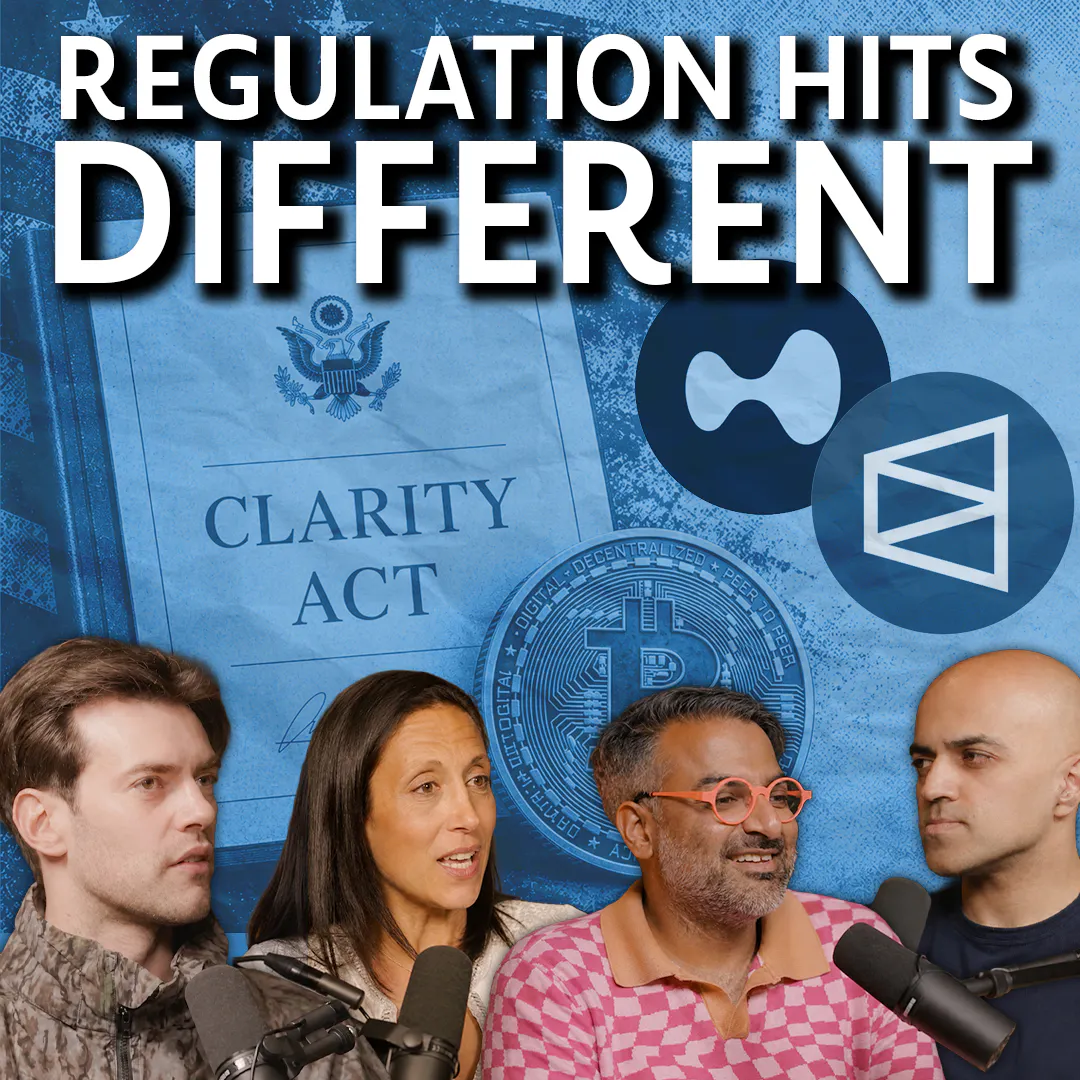
Unnamed trading firms who are very involved defi protocols are the antidote to this problem. Hello, everybody. Welcome to the chopping block. Every couple weeks, the four of us get together and give the industry insider perspective on the crypto topics of the day. So, quick intro. First we got Tom, the Defi maven and master of memes.
- [00:45]
Tom
Hello, everyone.
- [00:46]
Aseev
And then we got Tarun, the Ebrain and Grand Poobah at Gauntlet Yo. Joining us today once again, we've got special guest Rebecca, Jurisprudential genius at Jito Labs.
- [00:55]
Rebecca
Oh, that's a good one. Hey, everybody, thanks for having me.
- [00:58]
Aseev
Thanks for being here. And I'm Aseev, the head hype man at Dragonfly. We're early stage investors in crypto, but I want to caveat that nothing we say here is investment advice, legal advice, or even life advice. Please see chopping blocks at XYZ for more disclosures. So we've been out of pocket for a couple weeks. We decided that crypto was too depressing, and so we wanted to escape through. Well, that's not true. That's not true. We were just very busy and it's hard to coordinate schedules, but we are now the whole industry is busy because of what's happening in regulation. And so we thought, Rebecca, we ought to bring you on because we have no idea how to interpret everything that's happening on the regulatory side. There's so many things cooking all at the same time. And the centerpiece of all of that is the Clarity act. So we talked a lot about Clarity on the show. We talked a lot about 5th 21. I imagine a lot of people who are kind of listening to the show while they're working out or walking their dog or whatever they're like. I've heard these terms. I don't really understand where things are at or why you guys keep talking about it. When is this actually going to happen? So I kind of wanted to do a sort of episode, like mid season recap of where we are and what's the motivation of all the characters involved. So I'm going to. I'm trying to give a high level. And Rebecca, you can correct me if I get anything wrong. Okay, so predecessor to clarity was 21. That was bipartisan. Under Biden in 23. Okay. Trump gets elected. He's like, okay, that thing didn't get all the way to the Senate. I'm going to make sure that the future version of this now called Clarity is going to pass. That's a cornerstone of his crypto agenda for United States becoming the crypto capital of the world. Okay, we get the Genius Act.
- [02:30]
Rebecca
I don't think that happened under Biden. I think it happened under Trump when
- [02:33]
Aseev
it got out of that.
- [02:34]
Rebecca
When it got out of the House. But maybe I'm wrong.
- [02:36]
Aseev
I'm pretty sure it happened under Biden. I'm pretty sure it happened under Biden.
- [02:38]
Tarun
Okay.
- [02:39]
Aseev
I'm, like, very confident. Happened under Biden. Okay. Anyway, but. So Trump was like, okay, this is going to be a centerpiece. I'm actually going to get this thing passed. So he first gets Genius act done, Then comes Clarity. Now, the problem with clarity, there were a few sticking points for clarity. Getting, you know, get to. Getting to consensus. So it passed the House fairly early, went to the Senate, and then the Senate has just been a disaster. So just lots and lots of infighting and, you know, a lot of different iterations of markup on Clarity. The first and biggest fight has been over stablecoin yield. So stablecoin yield. The Genius act originally said stablecoin yield. Basically go for it. Right? There were some restrictions, but it's more or less very easy to circumvent the rules that were in Clarity. The banks caught onto this, and the banks were like, oh, no, you didn't. And they are trying to railroad in
- [03:29]
Tarun
the first passed bill. Does it. Does that count as cutting on or getting caught with your pants down?
- [03:35]
Aseev
I. I think the banks were just very unsophisticated, I think, when it came to genius. And I don't think they realize the infinite ingenuity of crypto companies to more or less figure out how to do exactly what they want, no matter what the law says. Like, the intention of Clarity was that, okay, these are not banks, so these are different products than banks, and so they shouldn't be allowed to pay yields. The banks realized like, oh, you can just like, find a way to make it a rewards program, and then basically it just pays yield. Right. So, Thomas, you're about to jump in.
- [04:04]
Tom
No, no, no, I. I agree. I mean, that's actually like how Coinbase frames it right now. Right. If you have like USDC on the platform, it's like, oh, here's your reward. It's not like, here's your loyalty reward. Yeah, yeah, yeah.
- [04:15]
Aseev
For being loyal to having your bank deposit here, you know, effectively to the point.
- [04:19]
Tom
It's like, this is only for people who have USDC on the platform. It's not like a global, you know, yield or something like that.
- [04:25]
Aseev
The banks saw that and they just raise hell. They screamed bloody murder. They said, oh my God, this is going to destroy the banking system. It's going to drain deposits, it's going to kill lending, it's going to kill small banks. They kind of found every story they could. The White House didn't buy it, the industry didn't buy it. Seems like nobody buys it, but the bank lobby is the bank lobby. They're very powerful. And so there was all this, you know, jockeying of like, oh, maybe Coinbase is going to kill the bill. Coinbase, I think they like kind of walked out in the middle of this thing and was like, no bill is better than a bad bill. We're not going to support this. You guys are killing stablecoins. Eventually, it seems that Coinbase was able to get to some kind of compromise. After a lot of politicking, they finally got to a compromise. And the compromise is largely that you can do transaction based rewards. So if you send usdc, you can get rewarded for that if you do stuff. But it can't look like a bank deposit, it can't look like bank yield. Right?
- [05:21]
Rebecca
Yeah, it's a do stuff yield.
- [05:22]
Aseev
Exactly. So as long as you do stuff now, do stuff is a pretty broad standard. And again, the infinite ingenuity of crypto companies. I'm assuming that do stuff is like log in and click a button. You know, it's like, it's like, you know, it's like Coinbase, learn and earn or something like that's, that's, that's technically doing stuff. So I don't know, we'll see how this evolves.
- [05:43]
Tarun
That's so funny actually, that like 21 and earn somehow are like.
- [05:48]
Aseev
Right.
- [05:48]
Tarun
Perfect for this bill, actually.
- [05:50]
Aseev
Totally, totally, totally. Look, I mean I, I'm happy to get educated along with getting my stablecoin yield.
- [05:55]
Rebecca
I mean, everything old is new again. I mean, I think the most interesting thing is there were these series of White House meetings. So in January, that's the time when Coinbase was like, I don't think we can get this onto the committee floor. Of the Senate. And so yield did not look good then. And so after that, that idea of a markup was dead in the water. Then they had the White House held a number of meetings with industry and with banking lobbyists or banking industry associations. And that's how they got to this compromise, which by the way is sort of bipartisan. It's with Tillis and also Brooks, so Republican and Democr Democrat and a very junior Democratic senator who's putting it forward. And all of a sudden, like last week before the markup, somebody from the, I think the Bank Policy Institute, but like a big bank association was like, we have to get to the table to talk about this. And the White House was like, we invited you to the table and you guys didn't come. So this is it. Untilis, who had been real, who was on the Republican side, and we really needed him to be able to get it to the floor and out of committee from the markup, but basically put his foot down and was like, no, this is a good compromise. Sorry, you're a little late. I don't know if that means yield is really dead between now and we got another Senate banking committee and when the entire bill gets to the Senate floor. So we may see another yield kerfuffle. But in theory that should be a dead issue. Like that should be a done.
- [07:18]
Aseev
Should be done. This is, this is the compromise is transaction based rewards. Okay, so Coinbase says they can live with this. It seems that the banks can live with this, probably, but they might not have a choice. Yeah, they might not have a choice. Yeah, fine. They might not have a choice.
- [07:31]
Rebecca
Still don't under. So what I don't really understand is the bank's argument and I never have. And there was this White House report that basically said it was wrong. But like all of these stablecoins are underpinned by reserves that are held in banks. So I don't know why everybody thinks there's going to be bank flight. What I actually think the issue is is that holding your deposit at a bank is not the bank's largest source of revenue. Right. It's all the other things you do at your bank. And so I actually think they're worried about it from customer acquisition and sort of getting customers onto all other parts of their platform perspective and less from an actual bank deposit flight perspective.
- [08:09]
Aseev
Yeah, I mean, look, I, I, I think their arguments are not crazy. I think they're wrong, but they're not crazy. Right. Because like, look, right now stable coins are tiny, like 300 billion in the context of the banking system is just nothing. It's just absolutely nothing totally relevant to what's happening. And most of these are not US depositors, most of these are international people who don't already have access to the US dollar. Right. That's why stablecoins are so popular internationally. That's why you don't see most retailer, you don't see people going to Walmart and buying stuff as stablecoins. But you do see this kind of behavior internationally all the time. That's why people talk about emerging markets adopting stablecoins and so on. So I think that part of the argument is obviously specious. But you have then Secretary Bessen saying that he believes that, you know, there's going to be 2.7 trillion in stablecoins by the end of the decade. That would imply something like, you know, 15% of the money supply is going to be just stable coins. That is big enough to have a distortive effect on the banking system. But it's not anywhere near that today.
- [09:09]
Rebecca
But where are you going to hold everything that underlies them?
- [09:11]
Aseev
I mean, but so, but they mostly hold them in Treasuries. Right. They don't hold them in just bank deposits. Bank deposits you can lend out and you know, continue activity. Right. Treasury you can't. But the presumption, and I think there's a reason why Bessant cares about this is that this is net doll demand. Right. This is net new demand. This is not just oh, somebody who has a bank deposit at JP Morgan moved their bank deposits over into stablecoins to get their transaction based yield. Right. Like that obviously would make no sense. That's not a credible story of where stablecoin demand is coming from. So it's the internationalization of the dollar that's likely to result in this huge increase in supply. And that's why Bessing wants it. If it's just shuffling around bank deposits, this is not strategic to the US Right. So that's why, that's why I think the argument is specious. But it is a little bit subtle because the scale right now makes it hard to, to quantify. But that's what the, that's what the White House basically came out and said. Yeah, is that these arguments are bullshit. You guys are kind of pandering with fake arguments. Like this is obviously not going to affect lending in the U.S. so anyway, the last piece, so it just got out of Senate banking, it's going to the floor soon is my understanding.
- [10:15]
Rebecca
Yeah, it has to get reconciled with what went through the Senate Ag Committee.
- [10:19]
Aseev
Oh, right.
- [10:20]
Rebecca
So there's going to be the whole process to reconcile those parts.
- [10:23]
Aseev
But so the last thing that seems to be the real sticking point for this bill is presidential ethics. That's the nice way of saying Trump corruption stuff. So the Democratic position very clearly is that there needs to be some kind of provision in this bill that prevents elected officials, I believe is the language that they're proposing to profit issues something. Right. And like, obviously their eyes are squarely on World Liberty Financial and the whole, you know, kerfuffle that's emerged around it. And I mean, Trump coined, I think, to a lesser extent, but I think Worldly Financial is the thing that gets people really worked up, especially after all the UAE reporting that the New York Times did. And this is clearly the Republicans are not buying it. The Democrats are digging their feet and this now feels like this is the really polarizing issue that's left. Now. They don't need Democrats necessarily to pass this, but it becomes a lot harder if the Democrats fully dig in their heels. Is that correct?
- [11:19]
Rebecca
They need the Democrats. I mean, you need 60 to get this out of the Senate.
- [11:23]
Aseev
Oh, right. Okay.
- [11:24]
Rebecca
So you definitely need Democrats.
- [11:26]
Aseev
How is this like totally dividing all the Democrats or are there people crossing the line?
- [11:29]
Rebecca
So before it went to markup in Senate banking, there was a closed door meeting where everybody was negotiating on ethics. There was no actual, I think, end game. Right. No compromise like we have on yield or anything like that. But people felt like things had moved or progressed in a positive way. So that's why we saw Senator Gallego and Senator also Brooks, who are Democrats. So we saw it come out of committee in a bipartisan way. And I think it's because they felt that progress had been made. They said more progress needs to be made. It doesn't guarantee that they'll vote for it on the floor of the Senate, but I think people had felt meaningful progress had been made on ethics. We don't know what it is specifically, but I think we definitely have to get that across the line.
- [12:08]
Aseev
So we expect there will be something in the bill about presidential ethics, elected official ethics, something like that. Okay.
- [12:14]
Rebecca
Yeah.
- [12:14]
Aseev
Okay. Okay, I see. But we haven't seen it yet.
- [12:17]
Rebecca
No.
- [12:17]
Aseev
So okay then.
- [12:18]
Rebecca
Well, I haven't seen it.
- [12:19]
Aseev
You haven't seen it personally, which means it doesn't exist. Okay, so the other element of getting this thing out. So right now, if you look at Polymarket, Polymarket's pricing, I think 61% last I saw that this thing passes, that's Significantly below the high, which was like 80 something percent in February, also above the low, which was like 40 something percent when things were falling apart, when Coinbase was walking out of the room. So it's fluctuating quite a bit. More likely than not that it passes, but wouldn't be surprised if this doesn't pass. If it doesn't pass this year, the expectation is that probably Dems would the midterms and then it's game over. Probably this thing is not going to pass and we're going to have to rely entirely on rulemaking and just the agencies going out and just saying, hey, here's the rules of the road. And then you know, the next president, if they're a Democrat, can just overturn them. So let's imagine, let's, let's assume that this does pass because I think what a lot of people want to know is that, okay, let's say this does pass. I've heard a lot about how important this bill is. I've heard a lot that this is like the king, this is the mother load. This is so great. Everything's gonna be wonderful. Like for most founders, for token markets, for whatever. What actually happens if this thing passes?
- [13:30]
Rebecca
Great question. So there are something like 45 rulemakings just on the Senate side of the bill, Senate banking side of the bill. So that's treasury, that's sec, stuff like that, which means you have some contours of the law, you know what you can do. But you still need a lot more guidance from the sec, from Treas and from the cftc. So we don't get immediate clarity, I think.
- [13:53]
Aseev
So the bill says, you know, sec, you have to come up with rules for this or you know, occ, you have to come with the rules for this, et cetera.
- [13:59]
Rebecca
Yeah, exactly. And rulemaking takes a long time. Then you get to do notice and comment, so the public all gets to weigh in. Then you will put out the actual end of the rule. Given what we've seen from TRADFI of late, there's likely going to be a challenge to a lot of these rules. So you might have to deal with it in court or the SEC and you know, whatever TRADFI industry association will have some lawsuit over how to, you know, whether the rules are appropriate or whatever. So we're not going to have like 100 clarity anytime soon. But what I think it does do is it future proofs the industry in the United States and a lot of time when you talk to TRADFI people or TRADFI institutions who Are like dipping their toes in and saying like, oh well, we've committed a little bit of money and a few people internally to it. You say like, what do you need? They're like, oh, but I, I need the Clarity act to pass me. But it's not going to touch anything that you do. Like you're not issuing a token or selling tokens.
- [14:49]
Tarun
Never underestimate someone at a big company finding to do no work for six months.
- [14:54]
Rebecca
So. So yeah, but they do, I think that people think this would future proof the industry in the United States.
- [15:00]
Aseev
Right. So it's on the checklist. And because it's on the checklist, we need to pass this baby.
- [15:05]
Rebecca
Yeah, that's right. But I will say Dodd Frank was 2010 and the rulemaking is still going on from Dodd Frank.
- [15:10]
Aseev
Fair enough. So you, you think, okay, let's say the Clarity passes. Okay. There's all this rulemaking needs to get done. There's going to be challenges, there's gonna be this, gonna be that. So it could be like honestly like 3 years and still nothing is actually required of you.
- [15:23]
Rebecca
I think you might get guidance or temporary rules or things like that. The SEC has been putting out guidance really quickly and faster than.
- [15:29]
Aseev
So, so obviously the, the agencies are separately doing a lot of rulemaking and giving a lot of guidance.
- [15:34]
Rebecca
They haven't done rulemaking yet in full. They've done a lot of guidance.
- [15:36]
Aseev
Okay. Okay. So they, they tell you, yo, just so you know, we probably won't bother you if you do this and this and this and this. Yeah, non binding. We can still bother you if we choose to. But like the law changing is going to take years. Even in the happy path.
- [15:50]
Rebecca
Well, you will have the contours. Right? Like, I mean Clarity doesn't say nothing. It's 309 pages, so it says a lot. And you will have.
- [16:00]
Aseev
So let's say, okay, let's say I'm a token founder. I've got my token.
- [16:03]
Rebecca
Yeah.
- [16:04]
Aseev
Clarity passed or not?
- [16:05]
Tarun
Launched.
- [16:06]
Aseev
Launched.
- [16:06]
Rebecca
Oh yeah.
- [16:06]
Aseev
I'm live. That's like I'm live. Let's say I'm live. Let's say I'm live. Let's say I'm live. Okay, what do I have to do because clarity passed in 2026.
- [16:15]
Rebecca
That's a great question. I mean I'd say the easiest thing is disclosures.
- [16:19]
Aseev
Okay. I have to do that immediately or I have to wait for the SEC to like do a bunch of stuff and come up with disclosure regime. So I do nothing. Okay. So 2027, I do nothing. I have to do nothing.
- [16:27]
Rebecca
Maybe the SEC will expedite it.
- [16:29]
Aseev
I mean, I mean, look, you guys have, you're, you're, you work with Jito.
- [16:32]
Rebecca
I do.
- [16:32]
Aseev
They have a token.
- [16:33]
Rebecca
Yeah.
- [16:33]
Aseev
You guys will be. You guys are watching closely.
- [16:36]
Rebecca
Yeah.
- [16:36]
Aseev
What are you telling Gito? Yo.
- [16:38]
Tarun
Disclosures.
- [16:38]
Rebecca
We do.
- [16:39]
Aseev
A lot of you do the blockbuster disclosures disclosures, which is great. Kudos to the block Works disclosure. Like, what else do you need to do? What, what is our. What's on the checklist of like the clarity 2027.
- [16:48]
Rebecca
So the strange thing is you only do disclosures. Circumstances you'd have to graduate out of being like in a super centralized world. And it's actually quite hard to do that under clarity. So you have to do longstanding, ongoing disclosures. Now query whether comes. I work at Jito Labs. We're heavily software engineering. Right. We're building. There's Jito foundation and query. Who does that. Right. Depending on how the rulemaking is done, does the foundation.
- [17:14]
Aseev
That's not clarified yet.
- [17:16]
Rebecca
Not really. You're still going to have, I mean, I'd assume some. The foundations are going to be the ones to do it because they're the stewards of the network. They, you know, have these large token holdings and things like that. But yeah, you're going to have a lot of.
- [17:27]
Aseev
And so, okay, let's say that post Clarity, you are a token project and you do not meet the decentralization threshold. And obviously right now in crypto, like the vibes have sort of shifted where it's like, why even decentralized, you know, like, isn't it great to have centralized leadership? So in that kind of environment, what does clarity change? What does it afford relative to what people are doing today? Which is like, yo, just, just whatever, just do it.
- [17:50]
Rebecca
You'll have, I mean, in a positive news and to this blockworks point, right, you're going to have mandatory disclosures, which is good. You want that, right? Like, I mean, I think the lack of clarity, all the rugs, all the things we've seen. Lack of clarity, no, you know, no pun intended. And all the rugs have I think caused a lot of flight out of here. And so I think having this future proofed, mature way that we're going to handle tokens is probably a net positive. Okay, you're looking at Tarun. Are you seeing if he sleeps?
- [18:20]
Aseev
I'm trying to pay. It's like Tarun is just like daydreaming
- [18:23]
Rebecca
while dying a little bit on the.
- [18:25]
Aseev
Yeah, I can sort of see his like his brain is going into defrag.
- [18:29]
Tarun
Yeah, no, you know, I have nothing.
- [18:33]
Aseev
Tarun really loves regulation.
- [18:35]
Rebecca
I was like, I'm so sorry.
- [18:36]
Aseev
Yeah. Tarun actually came early today because he was so excited for this episode.
- [18:40]
Tom
I'm curious where things are netting out on developer protection because I know this was also heavy point of debate and obviously.
- [18:48]
Rebecca
Yeah, so great question. So I would say that is going to remain another open item like ethics. I don't think developer protection since closed and I think that when we think about is this bill going to pass, the answer is more likely than not because it scopes in a lot of development activity and defi activity, which, you know, many prior iterations of the bill, there have been four or five, you know, iterations not of this particular bill, but kind of like this bill is a hybrid of RFIA, which was 2019 and fit. And so we've been seeing this come through for a very long time and it didn't touch defi every time. And now it does. Right. It touches front ends, it touches software developer developers. Under the BRCA there's a whole new section under 301 about controlling developers and treasury gets to define who has control over a protocol. And there were last minute changes because during the markup which took references to the BRCA and non controlling software developers out of 301. So it didn't contain that continued protection. So I don't think we're done on the developer protection side. I think we really have to hold the line if we want to make sure with this such a comprehensive bill, making sure that you can continue to innovate because like great that you can issue tokens in the United States. But if you don't feel like you can actually build a protocol here in a safe way without having to register as a money transmitter or something like that, I don't think we've done our jobs.
- [20:11]
Aseev
Yeah. Okay. Well, speaking of registering as a money transmitter, one of the other big stories was the CME and ICE apparently have been doing some lobbying on the Hill to try to get a crackdown on Hyper liquid. So Hyper liquid obviously is absolutely enormous. They've been growing dramatically in terms of their RWA perps. And this has caught the attention of the CME and of ice. Unsurprisingly, obviously they trade both stocks and commodities. The fact that hyperliquidity was basically in the news almost continuously during the opening salvos of the Iran war with all of the commodities trading that was happening there, maybe unsurprisingly, there's some what's been called concern lobbying from the CME and from ice. So it seems like a lot of this is kind of inside reporting about what they've been saying to different people on the Hill. But supposedly some of the claims are that they've been asking for Hyperliquid to be forced into a CFTC DCM registration, which is normally what you would need in order to trade commodities and to enforce KYC AML within Hyperliquid to have trade surveillance and position limits. Basically the same kind of stuff that happens in centralized venues. And the things that they are concerned lobbying over is market manipulation, sanctions evasion, price discovery, migrating on chain, which is maybe not appropriate, not fair, not taking into consideration some social concerns that normally are taken into consideration by commodities venues and the compliance asymmetry between centralized and decentralized venues. So hyperliquid issued something of rebuttal. They claim that, well actually on chain transparency is better than opaque order books. The fact that there's no central counterparty means that there's lower systemic risk relative to the venues that you have to do this kind of regulation for. And they claim that, look, we should really fall under clarity style defi regulatory frameworks, not under these forced tradfi compliance regimes. And this is basically protectionism. And these guys are the incumbents and they're trying to attack disruptors. So that's their. Their counterclaims. Obviously Twitter, very, very on the side of hyper liquid, unsurprisingly. But there is, you know, no question that this is going to become as hyper liquid gets bigger and as defi gets bigger and starts playing more in tradfi. You know, if you're just trading bitcoin perps and ethereum perps, like probably you'd be left alone. But once you start playing the big boy games, the big boy weapons start coming out. So curious what you guys think about. I mean t. Maybe you finally have an opinion today what you think about
- [22:38]
Tarun
this when you're a funding. I don't understand.
- [22:41]
Aseev
Why do you need. What?
- [22:42]
Tarun
Why do you need position limits when you have funding rate? The collateral is okay. It's like it basically is a natural throttling mechanism. Just because you don't have it in cme in like data futures, the position
- [22:54]
Aseev
limits are consumer protection. No. Are they not?
- [22:56]
Tarun
Yeah, but I'm just saying like there's also a sense in which there's an economic limit to the position.
- [23:01]
Aseev
Right? I mean if you want to go trade in the CME and you're just
- [23:03]
Tarun
like a random hunter funding. Right. So it's like they kind of have this saying there's a lot of stuff where I think actually there's a lot of loss in translation on purpose where it's like they don't want to read how a perp works. They just want to be like oh well this exact thing in our world doesn't exist there.
- [23:19]
Aseev
Right. But a lot of how tradfi derivatives venues work is like there's just this gigantic bureaucracy of consumer protection. Right. So like you know, you have to tell you I'm an accredited investor and I'm married and I've. I have this much risk profile and I love, I know how options work and I've traded these, these like you have to do all that if you want to get onto a new venue and in hyper liquid you're just like, you know, you click privy and you're in I.
- [23:43]
Rebecca
If you're outside of the US if you're.
- [23:45]
Tom
Yeah, I think it's.
- [23:46]
Aseev
If you're outside of the U.S. we
- [23:48]
Tom
were like talking about this before this because I'm like like why now are they raising such a stink? Because I'm like RWA perss and I
- [23:54]
Tarun
mean it's a pre IPO stuff like
- [23:57]
Aseev
10 minutes ago that just happened.
- [23:59]
Rebecca
I don't.
- [24:00]
Tarun
That's getting way more media coverage I think than the Iran.
- [24:02]
Aseev
No, the oil stuff definitely was more coverage.
- [24:04]
Tom
Yeah.
- [24:05]
Tarun
The SpaceX and the Cerebras thing I
- [24:07]
Tom
feel like have been like yes, but it's also been like the past what like couple days.
- [24:12]
Tarun
I mean three of us they were talking.
- [24:13]
Aseev
Three of us was.
- [24:14]
Tom
Yeah, yeah, yeah. But I agree like the oil and, and, and gold stuff was really blowing up when the Iran war was going off and but I was like again like I don't know there have been, you know, sex, RWA Perss. There was like ostium way before and so like I guess it just look
- [24:26]
Rebecca
anyway but I mean but we were sort of talking about this before it started. Like what was the volume on that.
- [24:30]
Aseev
Right.
- [24:31]
Rebecca
Versus when you see what Trade XYZ did when it launched on HIP3 and how enormous that was around the time of the Iran. I think the other reason that there is interest around this now to live a little inside baseball is that just like we're all waiting for the innovation exemption to come out on tokenized equities from the sec. Everybody is waiting for perps guidance from the cftc. They've been preparing it and they've been getting ready for it and I think, I don't know if some traditional financial players we can leave them nameless for now. Either saw it, caught wind of it, heard what it was going to be and maybe thought it was too permissive or something like that. And so I think that is why they are out there lobbying now. Because I think this administration and the agencies are seen as very innovation forward and open to other ideas. And to your point, there have been longtime incumbents, especially in the derivatives world and they haven't been challenged for a very long time. CME is unbelievably powerful. And to your question before, intermediation and what you're saying intermediation is like inherent in the cftc. It's actually not a consumer. CFTC is not a consumer protection regulator, it's a markets regulator. Because you don't have retail trading.
- [25:49]
Tarun
Well, you have clearing agents.
- [25:51]
Rebecca
Exactly.
- [25:51]
Tarun
The whole thing.
- [25:52]
Rebecca
Exactly. So you don't have, you know, normal people like who can get onto E trade and trade, you know, fractions of stocks or something like that. You don't have that in the commodities world in the same way. And so I think they're seeing this disruption coming and, and I'd say Hyper Liquid is more like on chain finance versus Defi. I think we have to start making that distinction in a meaningful way, especially in light of developer protections and clarity.
- [26:14]
Aseev
Sorry, can you, can you elucidate what you mean by that?
- [26:17]
Rebecca
Yeah, I.
- [26:18]
Aseev
Finance versus DeFi?
- [26:19]
Rebecca
Sure. I mean I think on chain finance has all the. On chain part a lot of the non custodial aspects that we'd expect in, you know, smart contract based protocols. But there are certain elements of. And people can deploy right. In three and other parts of Hyper Liquid with Apple permission or without permissioning. But I think you have a narrow set, you have closed source code, things like that. So different than like the hallmarks of what we long have talked about in the defi as defi. So you know, those terms are just getting really mixed right now and I think as we're thinking about developer protections and. Are you just like a coder, you know, committing, doing a GitHub commit versus are you creating like a much larger on chain transparent market market? Everyone's gonna hate on me on Twitter. I get it.
- [27:04]
Aseev
I mean they already do. It's fine. We got, we got Canton on you last time. Well, now we'll get the hyperlo guys.
- [27:09]
Rebecca
Okay.
- [27:10]
Tom
Yeah, yeah, I was gonna say I don't know if OPI is really gonna resonate with people or.
- [27:15]
Aseev
Sorry.
- [27:15]
Tom
On. On five.
- [27:17]
Aseev
On five.
- [27:17]
Tom
Yeah, yeah.
- [27:18]
Rebecca
People have been using on chain finance. I'm not like the person who has come up with.
- [27:21]
Aseev
I have not heard this.
- [27:22]
Tarun
I've not heard this. It really sounds like a dot com bubble company though. On fi.
- [27:27]
Tom
On fi.
- [27:32]
Aseev
This sounds like reg like lawyers are talking about. Nobody else in crypto is talking about on chain finance.
- [27:39]
Tom
Are the lawyers talking about on chain finance?
- [27:41]
Rebecca
I don't know. I mean maybe it's just a me thing because I've been having to deal with regulators for so long.
- [27:48]
Aseev
You've coined this term on chain finance.
- [27:50]
Rebecca
I don't think so.
- [27:50]
Aseev
And you're trying to get it to go viral by putting it on the show and in sepi. You're like, you guys haven't heard this. Everyone's talking about it.
- [27:57]
Tarun
I mean intern has a mean girls meme to make, I guess now trying to make on fire.
- [28:02]
Rebecca
Oh my God. I'm not going to be in a burn book.
- [28:05]
Aseev
Nice. Nice. Okay, Tom, what's your, what's your take?
- [28:09]
Tom
Yeah, I, I mean it makes sense. I think it kind of comports with maybe my guess which is yes, it's notable. There's you know, Bloomberg stories on regularly about yeah, these, these hyper liquid RWA markets kind of kind of blowing up. I think it's more like it feels like maybe there's this tension where to your point. We've all been waiting for this perps guidance. A lot of venues want to offer this in the US and so, so you see someone. I mean in some ways it's kind of like the like all the cryptocentral exchanges were like hating hyper liquid. There's a whole like oh, jelly, jelly conspiracy that like binance. And so it's like, oh, now this is happening. But just for like the you know, non crypto equivalent that the young up.
- [28:49]
Tarun
There's many, there's many of these centralized exchange conspiracies because there was, there was some other recent manipulation last week and everyone was like, oh, it was bitget. Because all the withdrawals were to Bitget.
- [28:59]
Rebecca
Yeah.
- [29:00]
Tom
Oh, interesting.
- [29:01]
Tarun
Yeah. It actually has happened a few times that like people have had this.
- [29:04]
Aseev
Yeah. I mean but it also reflects the fact that you know, Hyper Liquid at that time was purely crypto. Now it's like roughly half of rwas.
- [29:12]
Tarun
Well also the structure is different of the HIP3 markets. There's no kind of the backstop and liquidity provision is different. So there's like also some structural differences.
- [29:20]
Aseev
Yeah. But I think the main thing is just like the market share now is leaning into the big boy lanes and you're. It's a lot scarier to make the CME your enemy than to make Binance your enemy. Binance. I mean Binance is Binance. They're powerful but you know, what are they going to do? They're going to say oh we're going to push up a meme coin. But if CME is coming after you, CME has got much bigger guns than Binance does. Oh yeah, they can make your life very, very difficult. And that seems to be what they're trying to do now tvd if they will succeed in doing that. But it's very clear like yes, you've poked the hornet's nest because you're playing in the biggest game in the world.
- [29:54]
Tarun
World.
- [29:55]
Aseev
And the biggest game in the world is.
- [29:56]
Tarun
Okay, so I have a question for everyone here. Suppose we got some PERS guidance next week. There's a million people all trying to be centralized PERS Exchange in the US who've trying to get the licenses open for it. There's the existing ones, there's people offshore who want to come back onshore. Who do you think actually wins on a three year time horizon? Horizon in US Regulated getting a perp license? No. And like you volume like usage. Who do you actually think is like the dominant PER exchange that's regulated. That's regulated or like that US users can use?
- [30:35]
Aseev
I mean yeah, domestically I would assume Robinhood and Coinbase. I mean it's not a surprising.
- [30:40]
Rebecca
You think Coinbase?
- [30:41]
Aseev
I think Robinhood and Coinbase but the,
- [30:43]
Tarun
the Coinbase perps product has the offshore one that's been really abysmal. Right? Like no volume.
- [30:49]
Aseev
No, it's offshore right. US customers can't access it.
- [30:51]
Tarun
So I mean like you would think there'd even be more ARB volume but it's like the spreads are horrible. Like it really is like no one uses it comparatively but I mean again
- [30:59]
Tom
it's a different audience and like yeah, I agree, etc but like I think the thing we feel like we keep learning is just like you know, distribution is king and like I very much believe.
- [31:08]
Tarun
Yeah but there are other people of distribution, right?
- [31:11]
Aseev
Like domestically.
- [31:13]
Tarun
Imagine it was possible for interactive brokers to open perfectly Exchange.
- [31:18]
Aseev
I, I kind of think the way
- [31:19]
Tarun
that they open a prediction market.
- [31:20]
Aseev
Yeah I, I, I, I think people overestimate how much better perps are than the products that people already intuitively use. Like if you're you know punting, if you're like you know, Wall street bets like options trader, like yeah, you might not be able to do all the calculations about options but like you know how to punt on options and you already, you. There's already kind of socialized among the people who are in your group and like. So you're just going to keep hunting options.
- [31:46]
Tarun
No, but I think the.
- [31:47]
Aseev
These market stores are quite sticky.
- [31:48]
Tarun
I think reason the perp things were interesting is it. I'm sure the regulated ones will also be 247 immediately versus the lit market because kind of. It's not really.
- [31:58]
Aseev
I wouldn't so certain about that.
- [32:00]
Tarun
It's not really a per. Then if you're. If you're shutting it off at 4pm and restarting it.
- [32:05]
Aseev
I mean there are some, there are some RWA perps that do that.
- [32:09]
Tarun
Yeah but okay, but again which ones have the most liquidity?
- [32:12]
Aseev
Yeah, yeah, no, yeah, granted like I
- [32:13]
Tarun
don't think people want that. So my point is one reason advantage over the option stuff. It's like I don't have to think about it because can just be in my underwear at 4am and trade. Right. And I kind of think that's the whole. That's the market that it's going for.
- [32:27]
Aseev
Yeah, plausibly. But I, I still think like the people who I. I think it is probably going to be very hard to recreate the liquidity of what exists on futures market and options markets on perps for stocks and commodities. I think it's going to be a lot easier for crypto and so very likely. Okay. If we're. If it's going to be perps on crypto, then it's probably going to be Bitcoin eth. It's probably going to be Coinbase and Robinhood and the people who already have distribution in the U.S. that's my guess. I mean it could always be proven wrong. But I also think like.
- [32:56]
Tarun
So then you think the winner is existing?
- [32:58]
Aseev
I think, yeah, mostly. I mean but the other thing too is like that's what we've largely seen in the US is that over the last decade, basically it's been the people who already have distribution who've wanted crypto.
- [33:08]
Tarun
Well with Robinhood I agree. Right. They've seemingly adapted to a lot of this stuff pretty well.
- [33:14]
Aseev
Well, but also Coinbase. When has Coinbase not been in the lead for the last seven, eight years?
- [33:18]
Tarun
I mean the stock stuff, right. Their stock tokenized stock volumes pretty low prediction markets.
- [33:23]
Tom
But all the tokenized stock volume is low.
- [33:26]
Tarun
Yeah, but I'm just saying like Robinhood seems to like their perps at least when they launched actually got more traction. You know, like. Like they somehow have gotten their user base to move to these products, whereas Coinbase has a little bit of like, we're bitcoin Maxis or we love custard custody product or we love institutional, but these other things with more risk. I hate, Like, I, I feel like I, you constantly see people be like, oh, Coinbase, why are you offering me the, the betting on the NBA? Like, this is disgusting. I'm a bitcoin holder, I don't want to use this. Your product is encouraging gambling.
- [33:55]
Aseev
Yes.
- [33:56]
Tarun
I do think they have a cultural distinction where they're, they have some users who are like, this is where I keep HODL only like, why are you offering me gambling?
- [34:04]
Aseev
Yeah, no, I think that's absolutely right is that Coinbase is trying to cross the chasm that Robinhood has crossed in being this everything app, the everything store, blah, blah, blah. They talk about it, it's part of their story and obviously it's like long term, it is the right strategy. They kind of have to do that otherwise they're going to get pigeonholed, they're going to get out, competed, outcompeted, but everyone's going to be slowly chipping away.
- [34:24]
Tarun
I do think, you know, you're bucketing them as the same thing. I think they are kind of distinct. They being what Coinbase and Robinhood, like different customer basis. Like if tomorrow they're regulated perps, they could immediately.
- [34:35]
Aseev
But it's effectively a duopoly on crypto in the us, Right. So like if you're trading crypto in
- [34:39]
Tarun
the us, I don't know, look at the, look at the IBIT volume, look at cme. I, I feel like, honestly, the ETF options market just killed a lot of leverage trading in regulated form in the us. Like people don't care, they'd rather just go. I mean, just like looking at the ETF options stuff and just like the, how much the volume move there. I think like people are preferring to
- [34:59]
Tom
trade the ETFs, but they don't even have the alternative. Like you can't trade, trade bitcoin options, you're trading bitcoin ETF options. So it's like for sure, for sure, for sure.
- [35:08]
Tarun
I, I, I'm just saying that, like, I, I don't know if I would count out the, the traditional.
- [35:14]
Aseev
Yeah. So I, I don't know what the numbers are on the IIT options, but like if you look at IBIT spot, it's like less than 10% of the Bitcoin market on the whole. I don't know how that breaks out for us specifically, but obviously I think
- [35:26]
Tarun
you have to compare to us.
- [35:27]
Aseev
Yeah, but like the other thing is like of course a lot of the trading on, on IBIT is not ret retail.
- [35:31]
Tarun
Yeah, that's, that's true. So like I, I, I guess my point though is like I think there's an opening for someone who's not the existing demographic plausibly.
- [35:40]
Aseev
But if it's like the someone is like, okay, it's going to be interactive brokers or you know, one of these other venues that also has distribution, you know, like, do you think it's a, it's a wedge for a startup to come in and be like, yo, we're offering perps in the U.S. here we go. Is that the claim?
- [35:55]
Tarun
I don't know about startup, but I mean like look, Culture and Polymarket are both trying to do it.
- [36:01]
Aseev
Yes.
- [36:01]
Tarun
Right. I'm saying there's and the burden of
- [36:03]
Aseev
proof is on them that they can expand into crypto. Right. Same way that burden of proof is on Coinbase. They can expand their prediction markets.
- [36:08]
Tarun
Yeah, yeah. So I'm just saying like there are enough of these neo competitors who have some distribution that that's sort of what
- [36:14]
Rebecca
I'm and burden of proof on hyperliquid to now expand into prediction markets with 4.
- [36:19]
Aseev
That's right. That's right.
- [36:20]
Rebecca
That'll be really interesting though because you have one account for margin on, on Hyper Liquid, which you don't yet any on any other venue. So I think that'll change how everybody trades production market.
- [36:31]
Aseev
Yeah, I mean, look, it's interesting but right now Robinhood is the exception that proves a rule which is that it's very hard for anybody else to get into anyone else's vertical. Like almost every other attempt has failed. Robinhood is kind of special in that they have pulled it off.
- [36:44]
Rebecca
Yeah.
- [36:44]
Aseev
Like, I mean if you consider RWAs and crypto perps to be a totally different, different magisteria, then maybe Hyper Liquid has pulled that off. But even then, most of the Hyper Liquid products that have launched have not been super successful either. These are the 2 real standouts is the core product and then the hip 3 trade. XYZ markets. HyperVM has not done great. A lot of the other stuff that obviously USDH ended up recently sunsetting and they did this deal with Coinbase. So the reality is that it's hard to launch new products and even if you're really big, like, I mean, you know, we talk about this a lot internally is that like, you know, if you think about when Facebook launches a new product or Instagram launched A new product. Most of these products don't succeed. Even at megacorps, the base rate of new products succeeding is very low. Regardless of who you are.
- [37:34]
Tom
I yeah, we were talking before the show about hit four and I was like I think hyperloop just wants to one more group of people to piss off. They're like how do we piss up this? The native Americans and the state gaming boards and just like, you know, are
- [37:45]
Rebecca
you seeing it and the prediction market
- [37:47]
Tom
in company and the prediction market, yeah, yeah. Now I mean are you seeing interesting discussion around HIP4 specifically or.
- [37:53]
Rebecca
Not yet. I think it's just still so new. I don't think there's even like that much chatter about it. But I do think the idea of having this one margin account will change how people actually can do it. Because now if you want to go, you know, in the 15 minute Bitcoin markets you still have to go hedge yourself on hyper liquid or some other venue.
- [38:12]
Aseev
Yeah, I mean the one thing that has been getting a lot of attention which you alluded to previously is the pre IPO markets that just recently launched on hyper liquid. So there was Cerebrus which Of course blockbuster IPO. I think they're trading at what like 70 billion.
- [38:25]
Tarun
Well I think the main thing was that the prediction or sorry the hyper liquid price was very close to opening price.
- [38:30]
Aseev
Right. So they priced it much better than the bankers did. So the bankers I think price it at like 130 and then they pushed it up to like 180 or something. And the price on hyper liquid was something like 280 meaning that way, way, way underpriced and stock popped it hit the hyper liquid price went above it, then came back down. So basically hyper liquid was a much better indicator than the traditional book building happens in an IPO SpaceX.
- [38:56]
Tarun
Now I think the, the, this to me was probably the bigger threat. This is a bigger.
- [39:00]
Aseev
But this clearly can't explain what, what
- [39:03]
Rebecca
happened because it's what the statement was.
- [39:07]
Aseev
Right, but also it's not what the CME does. Right. This, why does this impair their business? Ice.
- [39:11]
Tarun
ICE on spot exchanges.
- [39:13]
Aseev
Right, right. But this is like, like investment banks are the ones who are threatened by this.
- [39:18]
Tarun
No, but the, the, the, the whole compendium of I'm a company and, and I have to choose an exchange and they offer me some deal and their deal is like oh like we'll get the banks to give you a cheaper discount on price. You know there's like, there's a, there's a whole sales fair enough.
- [39:31]
Aseev
Fair enough. I would think like Goldman and JP Morgan and these guys are going to
- [39:35]
Tarun
be the most so isolated. Like there's like a, there's a whole kind of package deal and like there's a ton of like trading of performance fees between the different entities to like be. To lock people in and like that. That's a large revenue source.
- [39:50]
Aseev
Okay, fair enough.
- [39:51]
Tom
There's this photo that went kind of viral of like someone taking a selfie from like the, was it the Morgan Stanley like trader, the benchmark partner who
- [39:59]
Tarun
invested in Cerebras, right?
- [40:00]
Tom
Oh, there was a benchmark. Okay, well anyway, and then you know, you could see C monitors on, behind him. And like on one of the monitors they had the Cerebrus like hyper liquid free IPO thing and there was also the banner at the top. Like, you know you're in restricted region. Yeah, yeah, yeah. It was the pricing data, you know, hey, the data.
- [40:16]
Tarun
Restricted.
- [40:17]
Aseev
Amazing. The data is not restricted. Restricted. The data must flow. That. Yeah, I mean it is, it is. I mean everybody in crypto as, as long as I remember being in crypto and also kind of everyone in tech is always skeptical of investment banking and like, you know these like the voodoo of book building and like, oh no, we know what it should be priced as and the IPO pops and stuff. You know, like tech is all like the direct listing stuff all came out of the tech industry where they're just like, screw these bankers. They're you know, know this is all just intermediation and it's bullshit and we don't need any of it. You know, Google, famously, they did their IPO running an auction because like, oh, we're the, we're the auction guys. Obviously we got to run an auction and you know, the, the direct listings that have happened were fine. You know, they, they went reasonably well and so they didn't, they didn't, you know, break. And once upon a time people I think on Wall street claimed that this was going to be the worst IPOs ever and they were all going to fall apart. Now obviously it's hard to do direct listing if you don't have demand and you're not a known stock. And so traditionally the IPO is a marketing event. It's a road show, it's a fundraising event for people who, you know, oftentimes they're, they need to raise money and they also need long term investors. So I don't know, how do you guys think? Let's, let's say that you've got a world where Hyper Liquid is playing this role or you know, other venues in Defi. Who knows, maybe they managed to headshot Hyper Liquid or something. But somebody is always going to be willing to do this, right? Cat's out of the bag. They can't put this back in the box even if they go after one player or another player. So what do you think this does to the IPO process or the book building process for investment bankers and IPOs?
- [41:51]
Tarun
There you go.
- [41:52]
Tom
I mean I, we, I talked about this on a previous show where like the process, book building is also like you want good long term holders, right? Depends on. I mean I feel like it's. The problem is like you have so many, many variables that you're trying to optimize for, right? It's like you do want like a little bit of a pop. You actually don't want to be priced perfectly as so they say, who knows? I think that hasn't really been battle tested. You obviously are trying to raise money for the, the company, but also like you do want your equity in the hands of people who are good stewards of it and they're long term holders. It's not like it's kind of like the art market too, right? It's like, you know, isn't just like highest clearing price, that's who it goes to. And so I mean maybe the answer is this is all bullshit and like you can't actually optimize for, for like three, four variables simultaneously and we just decide your best price is actually at the highest price and that's fine. But I don't know, I'm, I, I think, I think if anything it's, it's like, you know, I think it's kind of this trend of like, you know, markets for everything. And like this is just one, one of those things that has always been kind of opaque and now it's like, well, there's a market for it. It's getting like less and less opaque over time.
- [42:51]
Aseev
I mean it is a prediction market, right? And prediction markets are subversive because there's a lot of business processes that depend on who knows. And the bankers like who knows. And so if it pops, it's like, well, it was impossible to know that. So sometimes IPOs don't pop, sometimes they go down. So it's a good thing we made it pop because it would be a lot worse if it was otherwise. Now you can quantify your expected value when they tell you like, oh, whatever. Fidelity is willing to buy these shares at a 30% discount to the hyper Liquid per burp. Is that worth it to you? And now you have to make an economic decision as opposed to a vibes decision.
- [43:30]
Tarun
Well, it depends on the lockup obviously.
- [43:32]
Aseev
Right.
- [43:33]
Rebecca
I do think the cat is out of the bag though and like to in hyperliquids defense it has at least brought something to market that people want and not just retail. Yes, a lot of retail on there. But you know, now that plenty of traditional trading platforms have offshore entities that are trading on hyper liquid now, I think that may be some of what's motivating some of the traditional incumbents to have concerns over either bringing hyper liquid onshore in a regulated way or something like that. I do think you're also seeing this trend generally, including with like prediction markets and things like that, towards more transparency and information and a lot of frictionless interactions. Right. Like nobody wants to have a ton of friction in any of their financial transactions anymore. I think the median or mean age of people who are actually engaging these transactions is dropping fast. So everybody wants everything to move quickly and so, so I mean I'm not saying investment bankers will become obsolete, but I do think these models are going to change and there will be a lot more optionality. Like direct listings was probably one of the first innovations and we're going to see more things happen over time.
- [44:37]
Aseev
Right.
- [44:38]
Rebecca
Plus the SEC wants to take, wants to make IPOs great again. Right. Like you hear Paul Atkins talk about that a lot and so I do think he's going to change how some of it works to, to take the friction down out of IPOs.
- [44:49]
Tarun
I mean I think another portion of this that goes back to your point about distribution is like retail participation. Ipos has been strictly increasing in the last two years. So much so that the apps are basically doing lottery to allocate. They get allocation from users and they don't have enough capacity that they're allocated. And so I think it's direct to consumer IPO thing. Thing is like, you know, I know SpaceX was initially going to do it, then they canned it because they kind of got too big. It's too big now to handle that. But I do think there's going to be some aspect of that that interplays with the hyper liquid price more than the, or like onchain price, whatever it is more than the traditional investment banking price and like that that.
- [45:40]
Aseev
You mean, you mean retail getting X IPOs via hyper liquid or, or like
- [45:45]
Tarun
they'll, the Oracle price they use will be the hyper liquid price for like how much they're allocated per Unit dollar. Right. Like, like I, I, I, I sort of more think like there's going to be some investment banking price that's more about to meet certain regulations. We need to have like this many long term holders AKA some of our board members need to own more than X percent or you know, whatever they're. There's a ton of constraints.
- [46:08]
Aseev
Yeah.
- [46:09]
Tarun
That, that are kind of boring that are like some of the reasons I think like the long term holders have these issues but then there's going to be this like retail IPO participation and honestly like right now the retail IPO participation when there's more demand than supply, the apps just.
- [46:25]
Aseev
Oh, you're saying the price just has to float up for.
- [46:27]
Tarun
Yeah, exactly.
- [46:28]
Aseev
I, I basically so retail gets again
- [46:30]
Tarun
well, they'll get somewhere in the middle.
- [46:32]
Aseev
Okay.
- [46:32]
Tarun
Like and, and I think that's probably, that's the way to satisfy that much demand. Right. Like, and fundamentally I just think IPOs doing.
- [46:40]
Aseev
It's funny because I think most retail do not prefer that. I think most retail are like no, no, no, no. I want to play the lottery and maybe have a chance of making a lot of money. I don't want to just get the money.
- [46:53]
Tarun
Another thing that's very crypto forward that doesn't exist in traditional finance but is sort of how this happens on chain is the supply of the token is dynamic. It's not just, just like fixed. Right. Like I have a staking reward every block that's changing the supply. I have, you know, different mechanisms for adjusting the supply. I could totally imagine a world where you have the investment bank holders who have a certain size and then you have the retail participation which is elastic and like there might be actually more supply at the IPO that that based on how much retail demand there's and that gets priced higher and that. But that looks like, that looks like your normal onchain bonding curve type thing, right?
- [47:34]
Aseev
Yeah. But like okay, think about an ICO, right? So in most ICOs people really like, you know, I don't know, take the Mega ico, right. You can imagine a world where the Mega ICO they're like okay, we got a ton of demand, we're oversubscribed. So we're just going to basically make the market clear by raising the price until you know, whatever, all the demand clears. People really don't want that. They're actually like look, I'd rather get kicked out out. But the people who got in get a guaranteed yeah 2x or 3x.
- [48:01]
Tarun
I don't know. I don't know, I. I guarantee you if there was a anthropic IPO tomorrow, that would not. They people would not care.
- [48:10]
Aseev
Okay, that's maybe a little bit different because people assume that some socks go up only. People assume that tokens go down only. So it's a little bit of a different. It's a little bit of a different mechanic.
- [48:19]
Rebecca
Not under Clarity. Hopefully that.
- [48:20]
Aseev
True, true. Then they'll be able. Then they'll be up only so engaged until she says they will be up only if Clarity passes.
- [48:27]
Rebecca
Not financial advice.
- [48:28]
Tarun
Imagine if you do have Dynamically shares quantity IPOs. Right. Like direct listing is sort of was. Is like one way of kind of implicitly doing things.
- [48:36]
Aseev
Yeah. Yeah.
- [48:37]
Tarun
And I. I kind of think like we're going to end up with the thing that crypto has is that the programmability means you. You can do all of these things. And so you have that you learn the lessons from crypto and then hopefully those get imported into the market.
- [48:50]
Aseev
Sell into retail.
- [48:51]
Tarun
Yeah.
- [48:52]
Aseev
Okay.
- [48:53]
Tarun
No, as in just like you should stand your share count.
- [48:57]
Aseev
Right.
- [48:58]
Tarun
Especially if there is that much more demand.
- [49:00]
Aseev
Right.
- [49:01]
Tarun
I mean, a small amount of dilution for more accurate pricing is probably worth it. Right? Like, that's the real question. How much dilution you're willing to take to get a better price.
- [49:08]
Aseev
Yeah. Yeah, that makes sense. Okay, so let's switch gears because we are doing the regulation Bonanza episode.
- [49:16]
Rebecca
No, Tarun took over because he was like, I don't. I don't want to do.
- [49:18]
Aseev
No, no, no, no. He ultimately, that was also about regulation. Everything at the end of the day is about regulation one way or another. So prediction markets, we alluded to them talking about HIP4, but the main prediction market players, Kalshi and Polymarket, have been locking horns with state regulators and lawmakers all over the country, and it's been a bloodbath. So many of these states have been suing Kalshi and Polymarket and Crypto.com and Coinbase, they've been suing them back. They've been sent as preemptively suing them. Now the CFTC is getting in and suing them. It's basically like a WWE fight where the ref is getting in, is hitting someone with a chair. People from the crowd are jumping in. It's total pandemonium right now. It's hard for me to even summarize because there's so many cases that are flying around right now, but basically, for the most part, there's been a couple wins on behalf of the prediction markets, mostly losses so mostly what's happening is that when the cases are finally getting to some kind of judgment, the judge and. Or juries are basically like, kind of looks like gambling. And gambling traditionally. Sorry, not juries. Okay. Just judges. All right. So the judges mostly are saying like yo, this, this really looks like gambling. And gambling traditionally has been the ven. You know, the jurisdiction of states and these are state courts. So naturally the state courts are like yo belongs to the states. What are you going to do?
- [50:39]
Rebecca
Yeah, but there's a difference because in the federal courts there's been a big win in the third Circuit for Kalshi where the third Circuit said, no, no, we're not going to do this state by state patchwork. This is actually the CFTC was very clear. The SEA is very clear. The CFTC has exclusive jurisdiction. You don't also have to comply with state gaming laws. Just follow what the CFTC said. I think the ninth Circuit case, but
- [51:02]
Aseev
that one's also getting appealed, right? Well, Supreme Court.
- [51:04]
Rebecca
Well, it will go up to the Supreme Court and the question really Is will the 9th Circuit have their ruling? That's another Kalshi case. The CFTC is involved in that one in time for the way the Supreme Court decides whether to take cases is usually if there is a circuit court split at the federal court level. And so I assume that there may especially because the 9th Circuit is California and, and I don't know if it's Nevada, but definitely everything over on the West Coast.
- [51:30]
Aseev
Yeah.
- [51:31]
Rebecca
And so likely will come out in favor of the states, I would assume, or against prediction markets. And so you will have the Supreme Court looking at this probably in 2027.
- [51:39]
Aseev
So final showdown will be at the Supreme Court to decide do the states decide or does the CFTC decide? Part of the argument.
- [51:47]
Tarun
I've been telling a founding father that the separation of rights between states and the federal government. While you're writing this Constitution, just think about the prediction markets in the future. They have to separate.
- [51:59]
Aseev
They had gambling. They had gambling back then.
- [52:02]
Tarun
You can easily have explained it to them. That's the interesting thing about that is true. Actually, that doesn't seem like magic, right?
- [52:07]
Aseev
That is true.
- [52:07]
Rebecca
And prediction markets also were back on presidential elections in the 1800s and there was prediction back in the day.
- [52:15]
Tarun
Imagine you could go to the Declaration of Independence or the Constitution writing and you're just like, look, this is how this will be used in the future. You took the time machine back and you.
- [52:25]
Aseev
I mean to be clear, the Commerce clause was pretty clear that like if it's not interstate commerce now we've warped that concept so profoundly to basically touch everything.
- [52:35]
Tarun
Yeah, but I'm just saying like imagine it's one of the few Supreme Court cases I think that you could take of recent and go back and be like it's very easy to understand.
- [52:45]
Aseev
True, true. Yeah. So we'll get this final shutdown soon. Right now I guess there's a sliver of the country where prediction market's okay. Another sliver where not okay. A bunch of places where it's being duked out. Mostly these injunctions or restraining orders have been defeated or paused or whatever pending some kind of global federal final regulatory or legal adjudication by the Supreme Court. But how would you. I don't think there's a prediction working on it yet. Surprise, surprise. How would you handicap the odds if it goes to Supreme Court?
- [53:21]
Rebecca
Oh if handicapping the odds if it goes to the Supreme Court, I think a very high likelihood that they come out in favor of CFTC jurisdiction or jurisdiction.
- [53:30]
Aseev
Really? Why do you think that? Why do you think that?
- [53:32]
Rebecca
I do. I think there are going to be these structuring arguments. I think they're going to be these game of skill versus game of chance arguments. I think that federal.
- [53:40]
Aseev
So what do you mean by structuring? What's structuring?
- [53:41]
Rebecca
Oh, I think that the way prediction markets are actually set up is a little different than how state gaming is set up with the house and odds and who's setting it, things like that. I do think there's a game of skill versus game of chance distinction that has been made. I also think that the, I mean I think the 3rd Circuit opinion is actually very good in terms of looking at how broad the CEA is. I think the real big issue just to put it out there, although everybody has put it out out there. So I worry about my Twitter presence after this. But is a sports question right? Like if sports wasn't out there does unlikely the states would care. Right? Because of course markets, yeah, I mean
- [54:21]
Aseev
all the cases are ultimately about sports of course.
- [54:23]
Rebecca
And so the question really is is can the CFTC allow prediction markets to con on sports to continue? But we have even new small venues like we were talking about before in Rethera which is this JV between Susquehanna and Robinhood. They just self certified baseball contracts and the CFTC itself has all these MOUs with different sports organizations, MLB and the like. So I think that there is a high likelihood that it comes out in favor of the CFTC or federal.
- [54:51]
Aseev
So I, I'll actually Take the other side of that.
- [54:53]
Rebecca
Okay.
- [54:53]
Aseev
I think, I mean we're in every
- [54:56]
Rebecca
way on the show this.
- [54:57]
Aseev
No, no, no, that doesn't mean you're a loser. To be clear, you are much more qualified on this than I am. But I actually think this Supreme Court is very be suspicious of like federal power and I think they're largely in favor of states rights and largely in their sort of. I mean this is ultimately a federalism question and meaning that like you know, the question is do states decide or does the federal government decide?
- [55:19]
Rebecca
No, I don't agree with that framing because there's, there's legislation that says on these venues here is who has jurisdiction. It's not like do states get to decide? I'm trying to think of like a non controversial topic to bring up.
- [55:33]
Aseev
Yeah, I mean look, it's, it's obviously controversial because the fact that there's a long history of these state gaming laws.
- [55:38]
Rebecca
Right. Or marriage. Right. Marriage is a state question and not a federal question. There's no federal law that talks about marriage and things like that. So that goes to the states, but there's a federal law that talks about how these markets are regulated and which federal regulator has jurisdiction. The question is are these sports markets within that?
- [55:55]
Aseev
Correct. That, that, that is the question.
- [55:58]
Rebecca
Why not?
- [55:58]
Aseev
Well, I mean the, the, the clear argument, I mean this is why there's this big circus plan and so on. Right. Is like because I think the, the common sense view is that well, this is sports betting. You're betting on sports. Right. Like I think one of the quotes I, I saw from one of the judges was it's sort of like, you know, commodities are usually defined or you know, commodity derivatives are defined as having some effect on some commodity or like the price of real world things. What exactly is the outcome of the Orioles game? So have on anything?
- [56:28]
Rebecca
So what I was going to say is there may be some circumscription around it. Right. Because what you're talking about is the definition of swaps, which is extremely broad and is contingency based. Right. On the occurren non occurrence and it's of an, a particular event.
- [56:42]
Aseev
Yeah.
- [56:42]
Rebecca
And usually that has an economic impact. Right. And like that is the outcome in Orioles game having economic impact. Now I've seen all these arguments where it's like oh, who's going to win the super bowl and there's an economic impact. Right. On the hotels and things like that. And in theory that's very clever because if you think about one, why these event contracts, swaps, whatever you want to call them are under the CFTC's jurisdiction. Jurisdiction is largely way back in the day the CFTC was an agriculture regulator. Right. Because you're like corn futures and the like and farmers would take out insurance by the way of event contracts as a way to hedge against their crops getting wiped out and things like that. So that's sort of.
- [57:21]
Aseev
So yeah, even one of the states that banned prediction markets allowed for weather contracts on prediction markets for this reason. Because of the ag lobby.
- [57:28]
Rebecca
Yeah. So I do think that, that you may have to say that certain types of sports markets are not permissible. But I don't think you can.
- [57:37]
Aseev
If they're, if they're, if they're small enough that they don't have an economic impact on the tourism of a state, then there's not an economic downstream impact that could make it a.
- [57:46]
Rebecca
In fairness, the CFTC has put out guidance and rulemaking on prediction markets and they've said when you're self certifying these sports contracts, you should look at the economic impact question. Even the CFTC has that.
- [57:57]
Aseev
Right. Yeah, I didn't know that.
- [57:58]
Rebecca
Yeah.
- [57:59]
Aseev
Okay, so if it's a small, you know, if it's a little league game in your local neighborhood, you can't put production points.
- [58:05]
Tarun
Those, those are going to be harder to justify than like the exact.
- [58:09]
Aseev
Yeah, like if you're doing parlays and you're doing all. Yeah, exactly.
- [58:12]
Rebecca
Parlays. No, but yeah, but you know the CFTC guidance and rulemaking also says when you're self certifying a contract you should make sure it's not susceptible to manipulation or readily susceptible to manipulation. And they'd say the single player points ones probably I'm not self certifying contracts but maybe more subject to that. So there may be some ways there's some nuance here.
- [58:30]
Aseev
Okay, you think maybe Supreme Court splits the baby and says okay well there's this test and the test is like the economic impact and like look, if you're doing this, you know, three legged parlay, that's probably not a measure of any economic impact. Anything. But if it's like okay, who wins the game in you know, the playoffs the game.
- [58:49]
Tarun
Existing implies some economic impact. Someone's buying beer and popcorn. If it didn't exist, there wouldn't be a.
- [58:54]
Aseev
But it's not necessarily measurable. If it's like just beer and popcorn,
- [58:58]
Tarun
the home team owner could be hedging their popcorn. Popcorn.
- [59:03]
Tom
I mean you laugh but like it's clear that like yeah, for example, like when they go on panels they really, they do talk about this point. Not the popcorn thing, but they're like, what if I'm a, you know, player and I want to like hedge my salary and it's like.
- [59:16]
Aseev
And you can't bet on yourself. That's a. Explicitly rules.
- [59:20]
Tom
No, sorry, it was, it was maybe some other market participant. But they did, they did talk about like oh, someone who is involved is like hedging against the outcome of the game. Game in the sense of like, you know, again, someone would like hedge, corn future or something. Wedging is like just kind of implausible.
- [59:33]
Aseev
They run a hot dog stand out in front of the thing.
- [59:34]
Rebecca
Who wins the Super Bowl. I don't see how that would impact a hotel. But like will there be a hurricane if it's in New Orleans? That would wins.
- [59:44]
Tarun
Impacts the home city because the home city will be buying a bunch of beer. More beer. Like X percent more than.
- [59:50]
Tom
I don't know.
- [59:50]
Aseev
Yeah. Also increases the chance of riots, so.
- [59:53]
Tarun
Right, exactly.
- [59:53]
Aseev
There's a lot of property damage. Huge property insurance companies.
- [59:57]
Rebecca
I mean, mean, I mean look, I do think we'll see some, some also
- [60:01]
Aseev
like the outcome of a game because very often like there's a series, the series ends and the final game, which means that there's maybe not another week of tourism. So there's a lot of. There. There are, are a lot of reasons
- [60:13]
Tarun
I'm, I'm all about this. Whereas like the single player ones, I think, I do think that that's going to be the hardest one to like.
- [60:20]
Aseev
Yeah.
- [60:21]
Tarun
Say is not.
- [60:22]
Aseev
But.
- [60:22]
Tarun
But I will say that's what most
- [60:23]
Aseev
of the volume is anyway.
- [60:24]
Tarun
The big games favorite poly market of the last last year was the super bowl coin toss market. It's traded at 58 42.
- [60:34]
Aseev
What?
- [60:34]
Tom
Really?
- [60:35]
Tarun
Yeah, it was what.
- [60:37]
Aseev
That is incredible.
- [60:38]
Tarun
It was amazing. You got to go look at the chart of that market. It's amazing.
- [60:41]
Rebecca
Not to talk about another podcast on this podcast, but odd lots asked the chair of the cftc, Mike Selig, could you have event contracts on the coin toss? Is that permissible? And he sort of like hedged but basically said no. And they asked Vlad from Robin Hood too and he was like, no, that's. That's not real in that content.
- [60:59]
Tarun
This one was there and it was very funny to watch.
- [61:01]
Aseev
Okay, interesting.
- [61:02]
Rebecca
But on the defi. On the defi platform.
- [61:04]
Tarun
Yes.
- [61:05]
Aseev
Yeah, but so okay, what does this do to like the Bitcoin 5 minute up down markets?
- [61:11]
Rebecca
That has an economic impact.
- [61:13]
Aseev
Okay, so those are, those are fine economic impact.
- [61:16]
Rebecca
I Don't know.
- [61:16]
Aseev
I mean, when doesn't touch sports at least?
- [61:18]
Rebecca
Yeah. Yes. When? Yes. When we were talking about event contracts way back in the day. I don't think any of these types of markets, to the founding father's point, I don't think they were. I don't think they were contemplating these kind of event.
- [61:30]
Tarun
What happened if I was in the. The third layer wrapped anthropic SPV and then I just found out I got rug pulled. Whose economic impact did I impact there? Imagine.
- [61:39]
Aseev
Yeah. Yeah. Okay.
- [61:41]
Tarun
That's the parlay of.
- [61:42]
Rebecca
And then you got to.
- [61:43]
Tarun
That's the parlay of traditional.
- [61:46]
Aseev
Yeah, okay. Wow. That's very exciting. Okay, last story, last story. We're going to talk about tokenized securities. Everybody's favorite to wrap up the regulation Bonanza episode.
- [62:00]
Rebecca
It has been.
- [62:00]
Aseev
So there's been a lot of excitement going on on Twitter about this idea that the SEC is about to drop some tokenization guidance, I guess. Guidance.
- [62:10]
Rebecca
Can we, can we call guidance the innovation exemption?
- [62:12]
Aseev
Innovation exemption, right. So basically the idea that, look, you guys have been doing all this tokenization stuff, technically you've been kind of, you know, getting ahead of us a little bit. But we are, we, we want this to exist. We want to make it so that you can tokenize a stock without asking the person, the issuer. You can just go and do it and there's going to be clear rules about how it gets noted and whatever all the bureaucracy that goes into stock tokenization. Tell us about why this matters and why you're excited about it.
- [62:40]
Rebecca
Great question again. So there's been a lot of talk for, I'd say the better part of a year about that the SEC is going to issue an innovation exemption around tokenized securities. It's never been 100% clear. I think what we, we've gleaned is that they're going to be a couple different aspects to it. The one we thought was how are you going to get tokenized equities in AMMs? And that is what this was going to address. What has been going around on Twitter and otherwise is that somehow this is going to allow for what they keep calling third party tokens. And I was like, I don't even know what that is. But I think, think that it may address the models that don't have underlying securities that are being held right, in
- [63:20]
Aseev
which these are three layer anthropic SPVs.
- [63:22]
Tarun
No, I don't think some of those, I guess got tokenized.
- [63:26]
Rebecca
They did. And there was this whole thing that they weren't Right.
- [63:28]
Tarun
Yeah.
- [63:29]
Rebecca
And then everybody's like, they're not going to be.
- [63:31]
Tarun
And Salon X stocks.
- [63:33]
Aseev
Oh, no, no, it was some other thing. What was it?
- [63:36]
Rebecca
No, it was on Salana and they.
- [63:37]
Aseev
Pre Stocks. Pre stocks.
- [63:41]
Rebecca
But anyway, so supposedly they are going to address the various different ways that you can have these tokenized equities. Right. Some of it is, okay, somebody's holding an underlying security and then you tokenize it and you can trade it. But some of these. Right. Are just these like derivatives that are tracking the stocks. That would be very surprising. But that's what the Twitter hubbub is. I'm just excited to see it because
- [64:08]
Aseev
how does Twitter know. Are there like leaks coming out of the sec? What are we talking about?
- [64:12]
Rebecca
I could be wrong. This could be the episode where I'm wrong the whole time.
- [64:15]
Aseev
Yeah.
- [64:16]
Tarun
Bloomberg. Bloomberg had an article though.
- [64:17]
Rebecca
They did, but I. So I think the SEC has been very thoughtful about when they want to put out the innovation exemption in light of how clarity is moving. Right. They. They. There is a tokenized equities provision and clarity section 505. That also is what held up the last markup back in January. That has been negotiate and there's good language in there and people feel good about that. The Solana Policy Institute actually did a ton of great work on getting section 505 to a good place. So I think they've been wanting to be very careful around that. And I don't think getting the Senate banking draft out of markup would necessarily be like, oh cool, free for all. We'll do innovation exemption now. I think especially if people think that, you know, the White House said we want to get Clarity Signed by July 4th. I don't know why they'd rush the innovation exemption out, but again, a of couple be wrong. We'll find out.
- [65:03]
Aseev
So you think it's a flu. Like this is a juke and they're not actually going to drop it until they see what happens to Clarity.
- [65:09]
Rebecca
I think that's a better. I don't know if I'd polymarket it
- [65:12]
Aseev
bad using bad info.
- [65:14]
Rebecca
I just think it's surprising information because I don't know why they'd start my
- [65:17]
Aseev
sense of the SEC that they're like, look, we're going to do this shit anyway. Clarity is a cherry on top. But we're not waiting. And that's also what the CFTC has signaled is that, look, we're just going.
- [65:25]
Rebecca
I mean, we've heard the innovation exemption has come coming countless times. Like we could probably splice it in or like you know paste all the times from the speeches where they've said we'll get it out in a month but sure they're going to get it out. I have no doubt that it's ready. It's made its way through every single department or division within the SEC that it needs to. So I'm not questioning that it will come out right and that'll be very forward thinking and interesting and good for the industry, I think. I don't know if you guys talked about this at any point in time but you know there was this amazing guidance from trading in markets that you could have non custodial front ends where be sort of available for tokenized equities trading with. Yeah, like JTX just had to drop that on this podcast.
- [66:09]
Aseev
Yeah, yeah, okay.
- [66:10]
Rebecca
Coming July. But anyway you. So like you're going to have very forward thinking innovation exemption. I just, I don't know why it would come out this week but maybe. Maybe because it got through markup.
- [66:20]
Aseev
So. Okay, last thing. I think we're running up on time but for tokenized stocks so far they've been of a dud. Not a lot of volume. You know that everything is kind of. Everything's kind of sleepy. In tokenized stock land, all the action has been in pers so you can see trade XYZ and you know the, the stock trading especially the pre IPO stuff has been really explosive. Do we think that an innovation exemption is going to change that tun.
- [66:49]
Tarun
I don't know but all I know is that like this pe. The people fighting over whether the issuer needs to be in the room with you. I just think about the meme with the like people in the third one, you know.
- [67:03]
Aseev
Okay. Did you get everyone's consent?
- [67:05]
Rebecca
I think of it more like is the issuer in the room with us now?
- [67:08]
Tom
Oh yeah.
- [67:08]
Tarun
Or that.
- [67:09]
Tom
Yeah, yeah.
- [67:10]
Tarun
I just like the issuer does not give a probably for the most part about this type because it's so small relative to their.
- [67:17]
Aseev
I mean look at anthropic. A lot of
- [67:22]
Tarun
private. Private issue insurers but public equity companies that there's like oh, someone's trading some derivative. I'm like I don't. Do they really care that much?
- [67:32]
Rebecca
Yeah, it dep. I mean it depends on how they're being traded and maybe. Sure. The volume question.
- [67:36]
Aseev
Well the tokenized stocks will not have voting rights and they don't have dividends
- [67:41]
Rebecca
or like the derivative version but the ones with the underlyings should. Why not?
- [67:46]
Aseev
I. I don't know. But like, yeah, okay, so, so, so they may or may not have dividends based on how they're structured, but they don't have voting rights. Like in any case is my understanding
- [67:55]
Rebecca
under the innovation exemption, that's at least
- [67:57]
Aseev
the language that I saw.
- [67:58]
Rebecca
Oh, look at you.
- [68:01]
Aseev
No, no, no. I mean this is the notes that I have. I am not a dc. This is not the token. You know, the innovation exemption itself, I take it back. Sounds like I don't know the.
- [68:11]
Rebecca
I'm talking about maybe on the third party token. This, I don't know why they keep calling it third party tokens. Such a strange thing for it. So maybe that's in, maybe that's in the innovation exemption. Somebody saw it and that's why you're reading about it. So I. On the derivative version of it, sure you wouldn't have those things but if you have the underlying being held somewhere and you're holding a tokenized version of it.
- [68:29]
Tarun
But I, I guess like if we look at the current tokenized socks, the derivative ones seem to just have all the volume. Yeah, 80%. It's just like the ones where the issuer has to be involved. It seems like the issuers themselves are like this is too cumbersome. I don't care about these users whatsoever. And like you kind of are. The market is forcing you away from that. That's like kind of how I, I don't know.
- [68:51]
Tom
I, I mean it's hard to draw too many comp. Kind of think of what has happened with stablecoins post genius. Even though really not a lot actually has like happened from like a rulemaking perspective. But, but it's given this kind of like endorsement and this. Go ahead from large, normally risk averse companies that you can do stuff with stable coins even if you're not issuing. It's like stable coins are okay. I think I could see this where it's like, yeah, there's this weird sketchy kind of gray thing you could do if you're a company and it's like I'm not going to do that. But hey, maybe if this you comes out and there is like more of a path. Path forward, they're just willing to explore it and that's kind of what you need.
- [69:25]
Aseev
I, I guess the, the problem I have with that story is that like most companies are not sitting around thinking like man, how can I get my stock onto more trading venues? Like that's really
- [69:37]
Tarun
K. Hynix are the only.
- [69:38]
Aseev
Yeah, no, just like this is a very, this is a very like crypto way of thinking about like exactly.
- [69:42]
Tarun
I think the issuers really do not give a flying about these people.
- [69:46]
Aseev
Not how they're thinking about like how to make this stuff stock price. I'm like the answer is I need to.
- [69:49]
Tarun
You're getting on chainberg machine to like let the issuer be involved. And the issuer is like I don't care about, you know that I don't care about you meme. Like that's a little.
- [69:57]
Aseev
Yeah, I don't think about like I like this is not what I'm thinking about. I'm like I need to like lay off half my team and like do some write some press release about how I'm turning up. AI like that's, that's how I get my stock price to go up. Getting my token on a blockchain. Get my stock into a tokenized thing on a blockchain so that like the 12 people on chain can trade it who love tokenized stocks.
- [70:17]
Tom
I think if you just play ahead a few years. The people who are offshore who are buying stablecoins, that's incremental demand for US dollars. What do you think they're going to do with their dollars next?
- [70:28]
Aseev
Yeah, go on, go on. Hyper, you know, 40x long. My.
- [70:32]
Tom
But like I, I think if it's. We obviously crypto people are degens and they love volume and they love volatility. But like most people don't like, you know, you look at like, I mean,
- [70:39]
Aseev
I don't know look in India. Like look at all the trading volume there. That's in like you know, derivative.
- [70:43]
Tom
We're looking like, you know, seemingly bitcoin futures. Right. Like not super high volume but like huge. Oi. And that's like, there's like a different sort of class of person that way to think about and I think this is like basically building a long term holder base. That is.
- [70:55]
Aseev
But that doesn't, that doesn't make your point because that's also open interest in a futures market. That's a derivative.
- [70:59]
Tom
No, no, no. My point, my point is like holding spot actually like, like a spot tokenized version. Is it going to generate volume but like it is going to draw a long term holder base. So. And I think ultimately like perps are.
- [71:10]
Tarun
No, no, no. The conjecture is that it generates long. That's the thing. You're, you're, you're jumping and assuming that that's true. I'm, I'm not. That's where I'm, I don't know if that's true.
- [71:19]
Tom
Maybe, I mean again it's like if you did want to just trade it, like why would you not just do it?
- [71:23]
Aseev
I mean look, if we're talking about the great unwashed masses of like you know, the, the, I don't know the, like the, the, the, the, the, the, the Russian immigrant who escaped the war or the Chinese billionaire who's you know, put their money in Hong Kong or
- [71:37]
Tarun
whatever, like dude, they're buying Zepu, they're not buying tokenized Tesla. Let's be really.
- [71:42]
Aseev
No, this is thing is like they, they for one, like the, the, the virtue of the derivative is that they don't need a KYC and they're not going to pass KYC in the first place.
- [71:51]
Tom
But my point is like a derivative is not good for long term holding. Right. Like you're, you're paying funding.
- [71:55]
Aseev
Hey, like a future, a dated future is a perfect solution to that.
- [71:59]
Tom
Sure. I mean you still pay basis on it, right?
- [72:01]
Aseev
Sure.
- [72:01]
Tom
Look at like the drag on like a bitcoin futures ETF versus the spot. The vast majority of people do not want to trade. They want to put their money in a little thing there's think about. And in that case like yeah, I think this can be like an unlock for them, but it just, it looks different than the, the normal people who are trading.
- [72:16]
Tarun
But again, my point is like the drag cost from the derivative should be eaten by the arbitrage market and then the user should just basically be paying some small fixed carry costs.
- [72:30]
Tom
Yes.
- [72:30]
Tarun
It's not zero if the issuer was involved, but getting the issuer involved involves like getting, getting an issuer who to care about this type of person or you. There's a chicken and the egg problem. It feels like way harder to bootstrap.
- [72:44]
Aseev
Yeah. And all the tokenization startups, they also charge a carrying cost. Exactly. Business model. They gotta eat too, man.
- [72:50]
Tarun
No, no, no, that's my point. It's like it's not for this thing doesn't like, I don't, that's why I don't get. I'm like the derivatives seem fine because like the type of user you're targeting is already stunted in some way. They can't just like go to stunted.
- [73:03]
Aseev
They can't say more, say more. They can't.
- [73:06]
Rebecca
Derivative ones are also only available in the eu. So think about who you're talking about.
- [73:09]
Tarun
Sorry, only available.
- [73:11]
Aseev
That's right. That's right.
- [73:12]
Tom
That's what you mean by stunted.
- [73:13]
Tarun
Yeah.
- [73:17]
Aseev
Okay. All right, with that. We are up on time. Up on time. We gotta, we gotta let everybody go. But we will be back again soon. Thank you so much for coming on. This was very elucidating because we know nothing about regulation. I think Tarun was entranced.
- [73:31]
Tarun
The lion does not care about regulation.
- [73:33]
Aseev
No, the lion, that lion. Michael le looking very concerned about the regulations that are coming. Actually, I, I, I, I would dispute that. Anything else you want to plug besides JTX? That was a great next up drop
- [73:45]
Rebecca
no jtx.com go sign up.
- [73:48]
Aseev
You heard it here first. Okay. All right. Thank you, everybody. And we'll be back.