← The Expert Witness from Uncover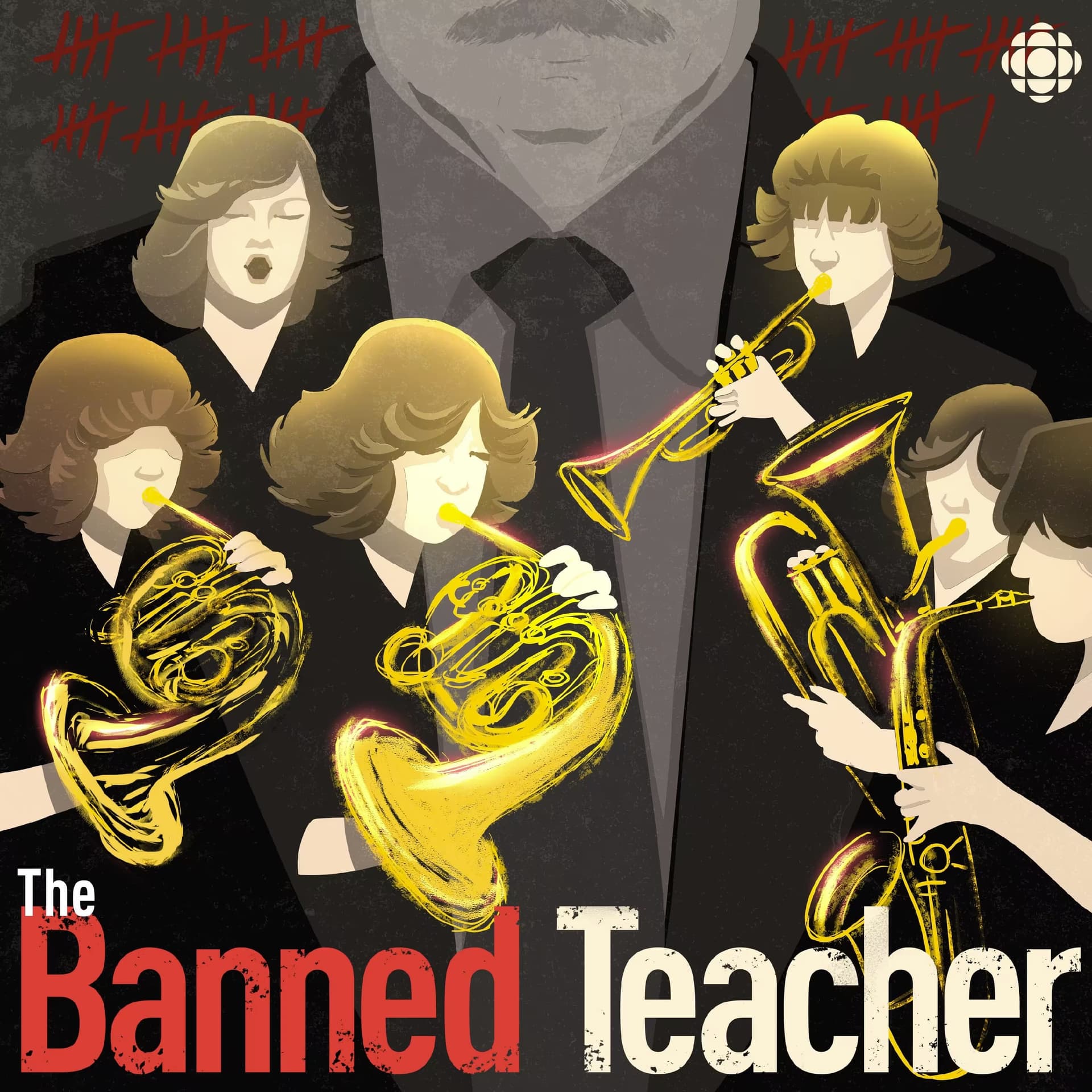
The Expert Witness from Uncover
S31 E3: Seeking justice | The Banned Teacher
00:34:59
<p>More than a year after Robinson went to police, William Douglas Walker was charged with a sex crime. She alleged he groomed and controlled her when she was 16. After four and half years in court, a judge said there wasn’t enough proof she hadn’t consented to sex. The case was dismissed.</p>
Loading summary
Transcript191 lines
- [00:00]
Jamie Poisson
Hi, I'm Jamie Poisson, and every weekday I host a news podcast called Front Burner. We do one story a day, and we try to give you a deep but not overwhelming amount of information and context. Lately, there has been a ton of political news to keep on top of. Canada is facing a pivotal election. There's a power struggle at the heart of the Liberal Party, and the uncertainty of Trump's second term looms over all of this. So if you want to keep up with what's happening, follow Frontbrerner.
- [00:30]
CBC
This is a CBC podcast.
- [00:34]
Detective Yarmoluk
I'm Detective Yarmoluk, badge number 813. We're in 55 Division in the interview room. And I am with. Could you just state your name for the camera?
- [00:45]
Jamie Poisson
Ann Marie Robinson.
- [00:46]
Julie Ireton
That camera is perched high in the corner of a small square room. It's inside a Toronto police station.
- [00:53]
Detective Yarmoluk
This is being videotaped and audiotaped. You have no problem with that?
- [00:56]
Jamie Poisson
No.
- [00:57]
Detective Yarmoluk
Okay.
- [00:57]
Julie Ireton
Ann Marie's hair is pulled back. Bangs characteristically fall onto her face. She sits across the table from the detective. She's dressed smartly in wool dress pants and a little jacket.
- [01:09]
Detective Yarmoluk
Come in today from Ottawa in relation to an occurrence. It's a historical sexual assault. Is that right?
- [01:20]
Jamie Poisson
I filmed on February 4th.
- [01:22]
Detective Yarmoluk
Okay. Oh, you remember that? Oh, really? Okay, so then you provided a statement, and I have reviewed that statement.
- [01:32]
Julie Ireton
And there's a small desk in the corner with a computer, a phone and a roll of toilet paper, presumably in case she tears up, but I know she won't. She's in robot mode, unemotional, detached. I think she has to be to get through this.
- [01:50]
Detective Yarmoluk
What do you think was the trigger that led you in this direction?
- [01:55]
Jamie Poisson
When I saw him. I saw him 36. 35, 36 years after.
- [02:02]
Detective Yarmoluk
Okay.
- [02:03]
Jamie Poisson
And it just. I don't know.
- [02:05]
Detective Yarmoluk
I know. It's in your other statement, too. Could you just briefly describe that again?
- [02:09]
Jamie Poisson
Well, when I. This is just when I first saw him, I thought. I guess I wanted reconciliation. When you're a child victim, you feel shame and remorse. Right. You feel. I felt it was my fault, even though I knew better, and so it was just easier to leave it buried.
- [02:32]
Detective Yarmoluk
Sure.
- [02:33]
Jamie Poisson
But when I actually physically came in contact with him, purely by accident.
- [02:37]
Detective Yarmoluk
Yeah.
- [02:38]
Jamie Poisson
Then I just. I couldn't breathe. I couldn't. I just couldn't.
- [02:48]
Julie Ireton
The band teacher. I'm Julie Ireton. This is season two of the Band Played on. Ann Marie Robinson is putting her faith in the criminal justice system, but it will be a difficult, lonely battle involving old sexist laws. We reenact what takes place in court.
- [03:08]
Defense Lawyer
I'm going to suggest to you, Ms. Robinson, that there was active participation in the intercourse. Is that correct?
- [03:14]
CBC
The argument ultimately from me will be that there was not consent.
- [03:19]
Jamie Poisson
It was my way of finally telling the world what had happened to me.
- [03:25]
Julie Ireton
But will the antiquated sex crime laws of the 1970s be able to deliver the justice she seeks? Sexual assault convictions are tough to win at any time. And a historical case involving just one victim is even tougher to prosecute. Episode 3 Seeking Justice There's a large police file in front of Ann Marie. She ordered it shortly after we got back from our trip to Toronto. She initially went to the police a few years before she first contacted me, so. So she's catching me up. The police file includes that videotaped police interview. There's also a pile of documents chronicling her interaction with detectives over the years. The first page is on Toronto Police Service letterhead. The file starts with her first call to police on her birthday in February 2017.
- [04:33]
Jamie Poisson
It was a birthday gift to myself, first of all, so I would remember the day.
- [04:39]
Julie Ireton
The case moved very slowly, so in hindsight, that was a smart move. It was easy to recall when her interaction with the police started.
- [04:48]
Jamie Poisson
They did see what had happened to me as something that was terribly problematic.
- [04:53]
Julie Ireton
Despite that, it took three months before a detective was assigned. It took about a year for the police to start consulting with a Crown lawyer, the Canadian equivalent of a district attorney.
- [05:04]
Jamie Poisson
I do understand that historic cases may not be their top priority.
- [05:09]
Detective Yarmoluk
Okay. It's roughly 2 2:40pm back in that.
- [05:14]
Julie Ireton
Tiny interview room at the Toronto police station. It's more than two years into the process. Anne Marie traveled there from Ottawa to get an update to meet the detective in person. She wanted to know if they were seriously pursuing her case.
- [05:30]
Detective Yarmoluk
You had come in initially just to come today for the purpose of kind of just getting a little bit of background on.
- [05:37]
Julie Ireton
They call this the soft interview room. The detective is wearing street clothes, no uniform. He's probably about Anne Marie's age at the time, late 50s.
- [05:47]
Detective Yarmoluk
And since you were here, I thought it would be a good idea for me since I wasn't involved, obviously, in the original statement in February, was in Ottawa that May. I could just maybe just clear up some things or maybe go into more detail or whatever. You have no problem with that, do you? Okay, good.
- [06:05]
Jamie Poisson
Yeah. And also, I am frustrated about the length of time that it takes and trying to understand better what to expect next and why it's taking a long time for him to turn himself in.
- [06:16]
Detective Yarmoluk
Right.
- [06:17]
Julie Ireton
At this point, spring 2019, charges were still pending against Doug Walker, but there was no arrest warrant. It had been a year since the police had politely asked him to come to the station, but so far, he was a no show. Ann Marie was growing impatient.
- [06:34]
Jamie Poisson
I asked for that interview because it. It felt like Mr. Walker was giving a whole bunch of reasons, excuses why he couldn't come.
- [06:46]
Julie Ireton
These police documents mention Walker's delays. He told police he was ill and had personal problems. There are notes the detective was giving him, quote, the benefit of the doubt. The official report also says Ann Marie asked police why Walker could not turn himself in. Yet she found photos of him golfing posted to social media.
- [07:09]
Jamie Poisson
This was just beyond the pale in terms of how long it was going on. And so I kind of started to feel like the police weren't taking it seriously. And so I went to Toronto and sat down and did the interview with him as a means of trying to compel him as to why this case was important and why it was important to me.
- [07:30]
Julie Ireton
The detective in the video, reading glasses perched on his bald head, doesn't discuss the delays, but he asks her to repeat her story again.
- [07:40]
Detective Yarmoluk
So then you're at Eastern Commerce. When did you meet up or have a relationship is the wrong word. When did you have dealings with Mr. Walker?
- [07:55]
Jamie Poisson
My grade 10 year. Yeah, I mean, he started his grooming process then. Right. He was trying to convince me that I was special and he was. You know, all of that stuff that I've since read about.
- [08:10]
Detective Yarmoluk
So now you had intercourse. How did that come about? Like, how did he. Did he convince you at any time did you say, stop, I want. I don't want to do with this?
- [08:25]
Jamie Poisson
No, I don't think so.
- [08:26]
Detective Yarmoluk
Okay. Okay, so now you had. The first time you had intercourse was in Belleville in the hotel room? Yes. Was it one time there in Belleville?
- [08:36]
Jamie Poisson
Yes.
- [08:36]
Detective Yarmoluk
Okay, so then obviously now you.
- [08:38]
Jamie Poisson
The.
- [08:39]
Detective Yarmoluk
The band trip is over. Everybody comes back to Toronto. Okay, so when was the next time you had some kind of interaction with him?
- [08:49]
Jamie Poisson
Well, I don't know how far after that. It was probably the next day. I was in his office, and this is when he told me the story about how he was a victim of being beaten up by a man. He had just arrived at Eastern Commerce.
- [09:08]
Detective Yarmoluk
Okay.
- [09:09]
Jamie Poisson
And he told me the reason why he was sent there was because he had been accused of having a relationship with a student, but it wasn't true. And then the father beat him up, and somehow he made me feel sorry for him. Which is why this kills me now.
- [09:29]
Julie Ireton
In June 2019, more than a year after police initially asked Walker to come in, and more than two years since Ann Marie first reported him to police, the former teacher finally walked into a police station in Toronto. Anne Marie turns to that page in the file.
- [09:46]
Jamie Poisson
June the third, turned himself in. Conditions include no contact.
- [09:52]
Julie Ireton
Police took mugshots and pressed charges.
- [09:56]
Jamie Poisson
Count one, William Douglas Walker, between the first day of September in the year 1976 and the 31st day of December in the year 1977 at the City of Toronto, did have sexual intercourse with Anne Marie Robinson, a female person who was not his wife, was a previous Chase character.
- [10:16]
Julie Ireton
Okay, and then there's a second count.
- [10:18]
Jamie Poisson
The second count was count two, and further, that William Douglas Walker seduced a female person, namely Anne Marie Robinson, of previous Chase character, who was 16 years old.
- [10:32]
Julie Ireton
So two charges. Count one, sex with a girl aged 4, 14 to 16, and count two, seduction. These are really old laws. They were actually repealed decades ago, but they were on the books in the 1970s, and that's when the alleged crimes took place. Looking back over the files, the police clearly were unsure about what charges applied here today. They wouldn't have that problem. New sexual assault laws are in force, but police had to work with the laws as they were in the 1970s. The former music teacher didn't have a lawyer. He would represent himself in court. About five months after the charges were laid in the fall of 2019, court documents show Doug Walker was prepared to plead guilty to one charge.
- [11:20]
Jamie Poisson
So I wasn't surprised when I found out he was going to plead guilty.
- [11:24]
Julie Ireton
Were you relieved?
- [11:25]
Jamie Poisson
Absolutely, yeah. I was happy because I thought, okay, I don't have to go to court. It seemed logical to me because I knew that I knew what he did and he knew what he did. And so I thought, okay, that makes sense.
- [11:40]
Julie Ireton
Normally, a case with a guilty plea goes straight to sentencing, but that's not what happened here. The Crown attorneys who worked on this file are not allowed to talk to me. What I've gleaned through reading the court files and transcripts is there was a plan to move the case from Toronto to Ottawa. But Ann Marie was in the dark. While she waited for the criminal case to proceed, she filed a civil lawsuit. It was against her former teacher and the Toronto District School Board, his former employer.
- [12:11]
Jamie Poisson
He did not have a lawyer, and I don't really know why. I know that he had acknowledged as part of my civil case that he did not deny what had happened.
- [12:22]
Julie Ireton
He told police and lawyers it was A consensual relationship, the result of a mutual attraction. He has also told me the same thing in an email. It's an assertion that still makes Ann Marie bristle. But she doesn't think he was the only one at fault.
- [12:38]
Jamie Poisson
I was as angry at the school as I was at him.
- [12:45]
Julie Ireton
Her lawsuit cited damages in the multiple millions of dollars. A psychologist spent hours with Ann Marie and wrote a 41 page report for her lawyers. Now, there's nothing in that document she hasn't already shared with me. Her story has always been consistent. One section of the report I think is worth mentioning. The psychologist wrote the sexual encounters with her teacher happened at the important psychological development stage of adolescence. Early adolescence is a particularly vulnerable time in the development of a girl and made some of the things she loved and were associated with her sense of self, such as music and academics, averse to her because of the association to trauma.
- [13:30]
Jamie Poisson
After I left school, because of Walker, I just kind of left the horn behind.
- [13:38]
Julie Ireton
The psychologist noted long term injuries also included in the civil lawsuit. Depression, debilitating panic attacks and anxiety disorder, PTSD and suicidal thoughts. Her statement of claim alleged the sexual abuse involved an exploitation of power and authority perpetrated by a grown man over a youth. And it claimed the school board, Walker's former employer, had been negligent and was therefore liable.
- [14:12]
Jamie Poisson
Criminal cases against the perpetrator, the person who committed a crime against you, but a civil case was against the institution. And I know from my experience in government that if institutions, like people, can get away with things, they will never change. And so part of the reason I think victims should come forward with civil cases is because then the school system and the governments will wake up and realize that there's a cost to this for them and that they need to, you know, work much, much harder on preventing this.
- [14:48]
Julie Ireton
The Toronto District School Board filed a statement of defense. It denied Walker abused Ann Marie in any way. And it said the board was not vicariously liable for Walker's alleged conduct or abuse. The board also filed a cross claim against Walker for all amounts paid or found owing by the board to Ann Marie Walker. But for his part, Walker didn't even acknowledge Anne Marie's civil case.
- [15:15]
Jamie Poisson
He did not file a defense.
- [15:17]
Julie Ireton
He was found in default. In other words, he decided not to fight the allegations. Anne Marie's civil court battle would be against the school board only. Actually it was between her and the school board's insurance firm. They soon came to a resolution.
- [15:33]
Jamie Poisson
But I am not allowed to say what the terms of the settlement are.
- [15:36]
Julie Ireton
I Can only assume the settlement involved money. But she can't confirm the civil case was started and finished before the criminal proceedings got any traction. At this point, she wasn't getting the answers she wanted. I ordered court files to better understand her case. Then there were new developments. Walker had hired a lawyer. Suddenly he changed his plea to not guilty.
- [16:02]
Jamie Poisson
I didn't understand why he had changed his mind about pleading guilty. Now I wasn't purview to any of those discussions.
- [16:11]
Julie Ireton
Then in November 2020, there was yet another surprise call from the courthouse.
- [16:16]
Jamie Poisson
So I was informed at some point close to the preliminary hearing that the charges were changed.
- [16:22]
Julie Ireton
The previous charges were dropped. The new charge, rape.
- [16:26]
Jamie Poisson
Let me read the new count to you. Count one, William Douglas Walker. Between the first day of September in the year 1976 and the 31st day of December in the year 1977 at the city of.
- [16:40]
Julie Ireton
The charge of rape is another historical charge that no longer exists in the Canadian criminal code. And to give a sense of how different laws are Today, in the 50s, 60s, 70s and even into the early 1980s, a man could not be convicted for raping his wife. We have new sexual assault laws, but again, they don't apply to crimes allegedly committed in the 1970s.
- [17:05]
Jamie Poisson
Did have sexual intercourse with Ann Marie Robinson, who was not his wife, without her consent, contrary to section 143 of the Criminal code.
- [17:17]
Julie Ireton
So the former teacher would now face one count of rape for just one alleged crime. The first incident on that banned trip to Belleville in 1977. Ann Marie knew what had happened to her, but she realized that might not be enough to convict. She wished she wasn't so alone.
- [17:37]
Jamie Poisson
What I'd really like is the police to. To look for other victims like they do in everyone else's case.
- [17:45]
Julie Ireton
I look through her police files. There's no evidence. Detectives notified the media to alert other potential victims. I have reported on sexual abuse cases for years. There's rarely just one survivor. And in every other case I've covered, the police released a statement after charges were laid. They include a note such as Police are concerned there may be more victims. We are asking them to contact their local police service for more information. I call the Toronto Police Service asking if it published a news release. In this case. The police confirm they did not. They don't say why.
- [18:25]
Jamie Poisson
Why wouldn't you look for other victims? I think it's a pretty standard practice. In this case, there was no news release at the time of his arrest and so no other victims came forward at that time, which would have been an opportune time for police to properly investigate his career. I think what the police need to understand is when you're a victim, when that notice is put out, it's like telling you there's a welcome mat. It's like telling you that you're worth something, that they want to hear from you and that what happened to you matters. The message they sent me by not putting it out was that, you know, if there's other victims, they're not important.
- [19:08]
Julie Ireton
If more victims had been alerted and had come forward, would this case have been treated differently? The lack of a news release is just one more item in a long list of strikes against Anne Marie's case. There were endless delays, changes in detectives, different crown attorneys, and different venues. And then charges were dropped and added Walker changed his plea. But finally, the case was moving ahead. In Toronto, when Derek Johnson was diagnosed with cerebral palsy, his family thought that he would never be able to speak. And then they met Professor Anna Stubblefield, and she believed that with the right technique, he could say what was on his mind. But what began as an opportunity turned into accusations of sexual assault. I'm Kathleen Goldhar, and this week on Crime Story, we dive into the complicated questions surrounding the doc. Tell Them youm Love Me. Find Crime Story wherever you get your podcasts. It's a Sunny Summer day, July 23, 2021. The preliminary hearing against Doug Walker gets under. The judge will hear from both sides. Then he will decide if there's enough evidence for this case to go to trial.
- [20:26]
Jamie Poisson
I had been adamant that I really wanted to be in a court, but apparently that wasn't possible due to Covid.
- [20:34]
Julie Ireton
The hearing was virtual. Ann Marie sat in front of her laptop in her home office. Walker appeared from his home, too. The judge was in a Toronto courtroom.
- [20:44]
Jamie Poisson
The camera, I think, moved around, depending.
- [20:46]
Julie Ireton
Who was talking, where others might be terrified. Ann Marie, a former top bureaucrat who appreciates process and order, actually felt some comfort. She had faith in the system.
- [20:58]
Jamie Poisson
It was my way of finally telling the world what had happened to me. I had always wanted to have gone and walked into the principal's office and reported what was going on with me at the time. And I didn't have the courage to do it then. So doing this as an adult was my way of walking into the principal's office. But I liked the setup in a way that, you know, in a court of law, there's a clear set of rules and there's procedure that's designed to be as fair as it can be. And there's a referee, which is the judge. And so I felt like it was actually a safer place for me to tell my story than it would have been in a school system where I, you know, would have had no control, no influence. And from what I've heard from other victims, would have been probably a really bad experience.
- [21:47]
Julie Ireton
In Canada, you can't publicly broadcast what goes on inside a courtroom. So I ordered the transcripts of the proceedings. We're going to reenact part of what happened in the court now. The words you will hear are taken directly from those transcripts. I've asked a few CBC colleagues to provide the voices of the judge. That's me, the defense lawyer.
- [22:08]
Defense Lawyer
Hello.
- [22:09]
Julie Ireton
And the crown attorney.
- [22:10]
CBC
Hi.
- [22:11]
Julie Ireton
Ann Marie will read her own words.
- [22:13]
Jamie Poisson
I will.
- [22:14]
Julie Ireton
She was the only witness to testify during this hearing.
- [22:18]
Crown Attorney
Good morning, everybody.
- [22:20]
CBC
Good morning, your honor.
- [22:21]
Julie Ireton
We'll start with Walker's lawyer.
- [22:24]
Defense Lawyer
Can you define consent for me, please? Miss Robinson?
- [22:28]
Jamie Poisson
When you. I guess when you freely agree to do something.
- [22:31]
Defense Lawyer
And is it your evidence that you were not free in this relationship?
- [22:36]
Jamie Poisson
Yes. I didn't feel free. I felt trapped and isolated because I had to keep it secret and I wasn't allowed to tell anybody.
- [22:43]
Defense Lawyer
So the secret nature of a relationship doesn't mean it's not a consensual relationship. Is that fair?
- [22:50]
Jamie Poisson
I would not agree with that in the context of a teacher and a student.
- [22:54]
Defense Lawyer
Okay.
- [22:56]
Jamie Poisson
Because the reason it's secret is because of the circumstances and the fact it's prohibited by the rules in the school.
- [23:05]
Defense Lawyer
And when did you learn that it was prohibited by the rules of the school?
- [23:09]
Jamie Poisson
Well, I was told by Mr. Walker that I couldn't tell anybody because he would get fired. And so I think that's a fair inference.
- [23:16]
Defense Lawyer
When was that conversation?
- [23:18]
Jamie Poisson
Right after the meeting I remember with him after Belleville.
- [23:22]
Defense Lawyer
So that was in.
- [23:24]
Jamie Poisson
He told me that what had happened? Well, he first started telling me a story about being punched in the face by the father of a student at a different school and that he had been wrongly accused of having a relationship with the student there. And then he went on to tell me about his background, and I had felt sorry for him. And then he, in that context, told me that if I had told someone what happened, he would get fired.
- [23:53]
Julie Ireton
The defense lawyer switches to a different line of questioning. Eventually, he goes back to what happened that night in Belleville, what Anne Marie describes as rape. The whole basis of the charge.
- [24:08]
Defense Lawyer
You went along with it. You didn't resist?
- [24:11]
Jamie Poisson
I did not resist, yes.
- [24:13]
Defense Lawyer
And you went along with it?
- [24:15]
Jamie Poisson
I don't remember. I Remember it happened and I remember like there was no active resistance in terms of fighting him off or something like that.
- [24:25]
Defense Lawyer
I'm going to suggest to you, Ms. Robinson, that there was active participation in the intercourse. Is that correct?
- [24:31]
CBC
Sorry, I don't know. What, what does that mean?
- [24:34]
Julie Ireton
The Crown attorney interjects. She represents the prosecution.
- [24:38]
CBC
Like, what does Mr. Frank mean?
- [24:40]
Defense Lawyer
Respectfully, this is cross examination. The question is simply whether or not there was active participation.
- [24:47]
Crown Attorney
Ms. Robinson, as best you can, could you please answer that question?
- [24:51]
Jamie Poisson
I. Yes, I physically went along with it. Mentally, I can't say mentally. I was confused and scared.
- [24:58]
Julie Ireton
Walker's lawyer asks Anne Marie if there was any physical force that night. She says there was not.
- [25:05]
Defense Lawyer
Anne, the only reason today that you say you were not capable of consenting was because he was your teacher and you were a student. Is that fair?
- [25:13]
Jamie Poisson
Well, that and because of the circumstances. I was intoxicated and that was. Yeah, because of the relationship. It was very confusing to me.
- [25:24]
Julie Ireton
Then Walker's lawyer asks her about her time with the Royal Regiment of Canada band. As a teen, she played with that military group. Her former music teacher drove her to and from the practices.
- [25:37]
Defense Lawyer
And the people in the band, were they all adults?
- [25:41]
Jamie Poisson
They were all adults. I was the only female and the only, as far as I know, the next youngest person were like three and four years older than me.
- [25:51]
Defense Lawyer
Okay. And so for you to be making money, you had a boyfriend, you were getting some semblance of stability. Is that fair?
- [25:58]
Jamie Poisson
No, that's not fair. There was nothing stable about my life then. I felt scared all the time. I felt at risk and I never knew what was going to happen. I couldn't make sense of the so called relationship.
- [26:10]
Defense Lawyer
I'll move on. All those sexual interactions that you had after Belleville, you and him thought. You thought he was your boyfriend, is that fair?
- [26:19]
Jamie Poisson
Yes.
- [26:20]
Defense Lawyer
And you willingly have sex with him, is that fair?
- [26:23]
Jamie Poisson
Yes. I mean willingly, but in the sense that I didn't protest. It wasn't like if I'd been with someone my own age. I felt very dependent on him.
- [26:35]
Defense Lawyer
Is it fair to say you think Mr. Walker is a bad person now?
- [26:39]
Jamie Poisson
Yes.
- [26:41]
Defense Lawyer
But at the time you didn't have these negative feelings towards him, Is that fair?
- [26:46]
Jamie Poisson
I eventually did at the time when he often lied to me and I would find things out. And then it was a process of slowly being worn down, disappointed, humiliated and all kinds of things.
- [26:59]
Julie Ireton
The hearing continues with discussions about process delays before ending for the day. The following week, on July 29, 2021, they all meet up in this virtual courtroom. Again, it's the last day of the pre trial hearing. These are the words of the crown attorney.
- [27:21]
CBC
So, your honor, the offense that is alleged against Mr. Walker is a single count of rape that comes from the 1976 criminal code. So whether or not there was a rape is going to turn very much in this case on whether or not there was consent. The argument ultimately from me will be that there was not consent.
- [27:42]
Julie Ireton
In the following pages of the transcript, the Crown presents case law to the court. She's challenging the assumptions around consent. The Crown describes Anne Marie's situation at the time.
- [27:53]
CBC
One of the things she said as an example is she felt she had to go along with it because he was her teacher. So that's the kind of analysis I would like your honor to engage in. Is really thinking about the extent to which her choice was free based on what she told the court about the circumstances of the offense in the Crown submission. Not only did she not consent, but any, any confusion she had only highlights that she could not have consented in these circumstances.
- [28:21]
Julie Ireton
The judge challenges the Crown.
- [28:24]
Crown Attorney
However, you've got to take your mind back to the time 1976 judges are. We weren't even thinking about that.
- [28:32]
Julie Ireton
It was a different time, laws were different.
- [28:35]
CBC
Consent was affected by circumstances. In these circumstances, where you have a teacher who is in his late 20s, early 30s, who is providing alcohol to a 16 year old who is in his care on a school trip, that would have really got, I think any judge on the issue of consent because it is clearly wrong and clearly not consensual on those facts.
- [28:56]
Crown Attorney
It seems to me that back in that era, unlike today, the Crown had to, in order to get a conviction, the Crown had to prove there was no consent. Now it's sort of gone the other way. The defendant has to prove or show that there was consent. So kind of the onus has been reversed, has it not? And her recollection of the event is that she doesn't recall whether she consented or not.
- [29:20]
CBC
Well, she doesn't recall in part because she was intoxicated from alcohol that was given to her by her teacher who subsequently had sex with her. That, that yes, these are kind of outrageous circumstances.
- [29:33]
Crown Attorney
Hey, I'm not disagreeing with you. It's in today's respect to the, the way the law is today and the legislative changes that they made. But we've got to go back to 1976.
- [29:44]
Defense Lawyer
Right?
- [29:45]
CBC
And your honor can do that, but you can do that with an informed view about what consent means and doesn't Mean, there is no question that Mr. Walker knew that what he had done was not consensual. Because he approached her and he told her not to discuss it with anybody and not to tell anybod he knew it was wrong.
- [30:02]
Crown Attorney
Okay. Thank you.
- [30:05]
Julie Ireton
It's back to the defense.
- [30:08]
Defense Lawyer
Thank you. So, in my submission, the laws that applied in 1976, 1977, are the ones that should be applied. There's a case law from the Supreme Court on the elements of the offense of rape.
- [30:20]
Julie Ireton
Walker's defense lawyer explains, back in the 1970s, rape was an offense involving physical violence. The law at the time said, by force, fear or fraud.
- [30:31]
Defense Lawyer
It talks about without her consent, which in my submission, is force. Ms. Robinson's evidence was that there was no force.
- [30:37]
Julie Ireton
The defense points out, while she did have alcohol and felt drunk, she was in no way incapacitated.
- [30:44]
Defense Lawyer
And in my respectful submission, the Crown has invited you to engage in conjecture and speculation as to what happened.
- [30:52]
Crown Attorney
Mr. Frank, anything else?
- [30:54]
Julie Ireton
Walker's defense lawyer makes his last submission. He says this case should not continue.
- [31:00]
Defense Lawyer
To trial even if the jury accepts the evidence that she was groomed. Even if the jury accepts that the teacher student relationship was relevant. Even if the jury accepts that she had two to three drinks. My friend is inviting you to rely on a speculative inference. And in my submission, that would be improper.
- [31:17]
Crown Attorney
Okay, so you've both had your last word.
- [31:20]
Defense Lawyer
Thank you, you, Honor.
- [31:21]
CBC
Great. Thank you, you, Honor.
- [31:28]
Julie Ireton
Weeks went by. Ann Marie waited to hear the outcome of the preliminary hearing, whether the case would go to full trial. But she was used to delays. By the summer of 2021, it had already been four and a half years since she first went to the police.
- [31:43]
Jamie Poisson
They did treat me with respect, and I felt listened. But having said that, you also feel like you're in the dark. There's not really any support for you.
- [31:53]
Julie Ireton
The kind of support Ann Marie craved could have come from other survivors. She knows there's at least one other victim. The woman who went to the Ontario College of Teachers to report Walker. It's a case I've mentioned before. I've been trying to find that woman, but no luck yet. Then Ann Marie gets a call from the Crown Attorney's office. She calls me to let me know.
- [32:17]
Jamie Poisson
I felt kind of shut out about the process at the end. So I'm just really trying to understand what's going on.
- [32:23]
Julie Ireton
The judge has made a decision.
- [32:28]
Crown Attorney
There is no evidence upon which a reasonable jury, properly instructed, could find Mr. Walker guilty of the offense of rape as it existed in 19.
- [32:39]
Julie Ireton
The judge has dismissed the charge against Doug Walker. After all these years, her case won't go to trial. Ann Marie is devastated.
- [32:49]
Jamie Poisson
I feel like the fact that he was my teacher is not a consideration.
- [32:53]
Julie Ireton
And it feels like all the cross examination she endured was for nothing.
- [32:58]
Jamie Poisson
There's no question in my mind that I was re victimized again during the process, feeling like nobody was there to protect me again.
- [33:10]
Julie Ireton
This one woman's journey through the criminal justice system has failed. She had expected different results, and I thought a trial would answer many of our questions. That isn't going to happen. But this story is far from over. This investigation is in our hands now, and we're just getting started. Next time on the Band Teacher. As one door closes, another is about to open wide. I got that message. I just sobbed and sobbed and my husband just held onto me while I cried.
- [33:49]
Jamie Poisson
I said, there's more of us. It was just this weird combination of anger, relief, not being alone, but also just like a gut punch. Needing her is the most important thing to me right now.
- [34:12]
Julie Ireton
And we dig into why the judge dismissed Ann Marie's case against Walker and what might have been done differently.
- [34:19]
CBC
I think what happened to you was.
- [34:20]
Crown Attorney
A complete miscarriage of justice.
- [34:24]
Julie Ireton
The Band Teacher is investigated, reported, written and hosted by me, Julie Ireton. Allison Cook is the story and script editor, producer, sound designer and mixer. Felice Chin is our Executive producer and story editor. Ev St. Laurent is our legal advisor. Thank you to Malcolm Campbell, Trevor Pritchard and Natalia Goodwin for lending their voices to the courtroom scene in this episode. Jennifer Chen, Amanda Pfeffer and Jen White provided valuable production advice. Special thanks to the folks at CBC Podcasts for their support and the Managing editor of CBC Ottawa is Drake Fenton. If you want to binge the whole series, subscribe to CBC True Crime Premium on Apple Podcasts. Just click on the link in the show show description or binge listen for free by logging in to CBC Listen. If you like this podcast, I have another original investigation that might interest you. That's the band played on Season one. All episodes are available right now. Wherever you get your podcasts, if you or someone you know has been sexually abused, community resources can help. Reach out to a trusted person sexual assault center or rape crisis center in your area. For more CBC Podcasts, go to CBC CA Podcasts.