← Uncover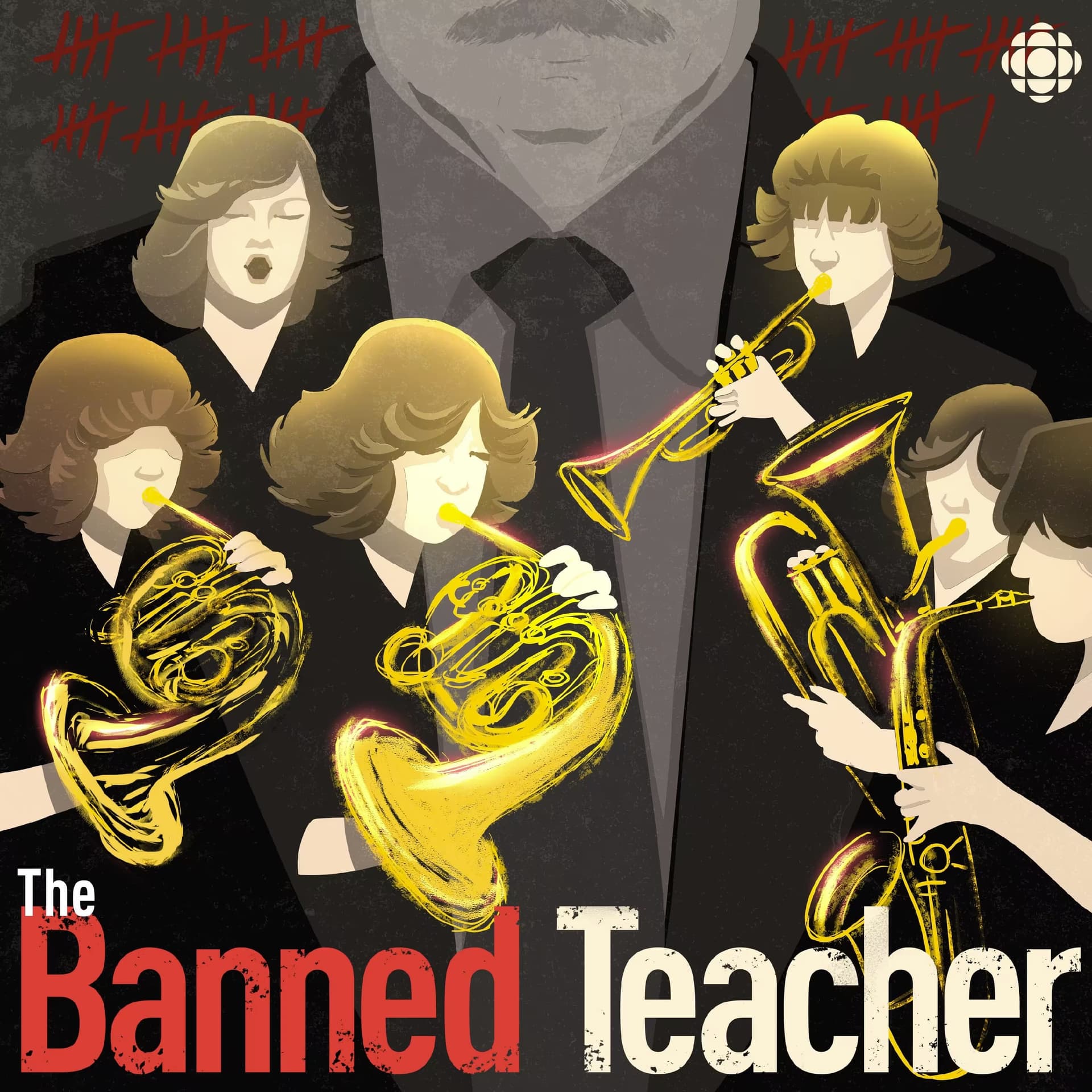
Uncover
S31 E5: The blip | The Banned Teacher
00:45:24
<p>The desk in Jeanie McKay’s teenage bedroom had 56 notches: one for every time she had sexual intercourse with her music teacher. It would become evidence years later, when Walker was found guilty of professional misconduct and banned from teaching. During his statement, he referred to his former student as a “blip.”</p>
Loading summary
Transcript178 lines
- [00:02]
Mattea Roach
Hi, I'm Mattea Roach and I like to think that I know a little bit about a lot of different things. You know, what's one thing I can never get enough of? Books. If you're anything like me, after you finish reading a great book, you probably have some burning questions for the author. You want to talk to all your friends about it. Every week I talk to the biggest, brightest and most interesting authors from Canada and around the world. You can find bookends wherever you get your podcasts.
- [00:37]
Julie Ireton
This is a CBC podcast.
- [00:40]
Jeannie McKay
It's exactly 56.
- [00:43]
Julie Ireton
56 notches etched into Jeannie McKay's desk in her teenage bedroom. There weren't more.
- [00:49]
Jeannie McKay
That was, that was just the entry course.
- [00:52]
Julie Ireton
56 we marks on her desk to track sexual intercourse with her music teacher after class or band practice.
- [01:00]
Jeannie McKay
And so I would just make a little notch, tiny little blue pen notch. And one, two, three, four, five. One, two, three, four, five. And I have all these little hash marks. So yeah, the desk is a real number. It was a real desk and a wooden top and I would do my homework on it. That's the desk they got me. Mom and dad got me for my.
- [01:24]
Julie Ireton
Bedroom when she was 16.
- [01:27]
Jeannie McKay
I came up with a very real ballpark of probably 150ish times for oral sex. Office, office, office, office, back. Music room, car, parking lot in the Dawn Valley we'd go parking. I knew that I couldn't keep records, really. I couldn't have a diary. I couldn't talk about it to anybody. And probably he was saying stuff like that too. And I still had the desk 20 years later because it was a solid desk and it traveled with me from house to house. And there was just something, there was something in me then I knew I needed to have it. And at the beginning it was probably a fond thought, but then it became a no, you can't get rid of this. You just can't get rid of this. And maybe I was self flagellating. Like maybe I was. Just because I was pretty hard on myself, I kept that squashed down so hard.
- [02:38]
Julie Ireton
That desk traveled with her from her family home in the Toronto area all the way to British Columbia. She threw plastic over the desk, stored it in her garage. Old paint cans sat on top of it.
- [02:51]
Jeannie McKay
I peeled off the plastic and there it was.
- [02:54]
Julie Ireton
Then it became evidence against the band teacher. I'm Julie Ireton. This is season two of the band played on. Jeannie McKay and Ann Marie Robinson have found each other, but they live on opposite sides of the country. More than 4,000 kilometers apart. In this episode, Jeannie will tell us her story, and the women discover their parallel paths.
- [03:20]
Jeannie McKay
I had to do something, and I was meant to be his Blip.
- [03:25]
Ann Marie Robinson
You're my hero because you did what I should have done. Like, I feel like in grade 10, I should have reported him, and I didn't.
- [03:34]
Jeannie McKay
You know, all around the world, every day, something big falls on the shoulders of someone. And they do it because they know they have to.
- [03:45]
Julie Ireton
The survivors are getting acquainted. Then they'll search for others. Episode 5 the Blip.
- [04:04]
Ann Marie Robinson
Hi, Ann Marie.
- [04:06]
Julie Ireton
Don't see her yet, but I think she's there. How are you, Jeannie?
- [04:14]
Jeannie McKay
I haven't even thought about that today. I've been so busy. I'm good.
- [04:19]
Julie Ireton
Yeah, we have those days, don't we?
- [04:21]
Jeannie McKay
Yeah. Yeah.
- [04:23]
Julie Ireton
Jeannie, Anne Marie and I now catch up regularly by video call.
- [04:27]
Jeannie McKay
I can't hear you.
- [04:28]
Julie Ireton
Annemarie, Are you there?
- [04:30]
Jeannie McKay
Annemarie?
- [04:31]
Ann Marie Robinson
Yeah, sorry.
- [04:33]
Julie Ireton
The two of them chat all the time, probably daily. They've been just a text or call away since we found you Genie a couple months ago.
- [04:41]
Jeannie McKay
Emery, I'm not sure if I ever told you this. When I first got the message that you were looking for me, and here's. Here's her name and here's her phone number, I just. I just lost it. I. I read it and I. You know the. The typical movie thing where your knees give out? And I just sat right down on the stairs. I just sat right down and started sobbing.
- [05:08]
Julie Ireton
It's April 2022. They're already talking about meeting up in the summer in Toronto. And Jeannie is betting there could be others at that gathering. She goes back to the day she got our first message.
- [05:21]
Jeannie McKay
The world got huge. And I said, cbc's got this. It's going to go national. I said, we're going to get them all. And I was thrilled. I was thrilled and horrified and saddened the whole oyster. And you know the Grinch story where at the end his heart sort of busts out of the X ray? It's like my heart and mind just bust open for all these girls who I know are going to be better now because I'm going to be able to help them. I'm going to be able to push this forward, and I'm going to be able to let them know that it's okay to talk about it. And I know how to find them some help if they need it.
- [06:10]
Julie Ireton
For now, Jeannie's ready to let us into her life. She's sharing her story.
- [06:18]
Jeannie McKay
There you go. Sit Sit, sit. Good girl. This is Ocean.
- [06:25]
Julie Ireton
Jeannie, her husband Dave and Ocean live on the west coast of Canada.
- [06:29]
Jeannie McKay
It was just the formal introduction of Ocean, the Portuguese water dog. Yeah, she's smart, but she's. She's chicken. She won't swim. Some water dog.
- [06:41]
Julie Ireton
A transplant to British Columbia, Jeannie spent her first 18 years in the greater Toronto area. At home, she was always surrounded by music.
- [06:51]
Jeannie McKay
Mm. Dad loved music and he had all the old 78s. Mercy it was. Our whole family was very musical. Grandma on my dad's side played piano and organ in church and sang, of course. And dad was raised in that tradition and sang. And so ever since I was young, I was singing in church and joined the church choirs.
- [07:21]
Julie Ireton
Jeannie also plays the piano and several other instruments. She's tall, has short, wavy hair. She wears metal framed glasses that are tinged with blue. In her late 50s, her hair still has more pepper than salt. Like Ann Marie in high school, she wore it feathered. And like most teenage girls, she was tough on herself.
- [07:43]
Jeannie McKay
I was okay looking. I wasn't dressed extra specially beautifully. I was pretty geeky looking at the start and probably still by the end, I was just an average kid.
- [07:56]
Julie Ireton
Jeannie smiles a lot, laughs easily. She's bright, strong willed. Yet there's a fragility just beneath the surface. There will be moments when I see her eyes. Well, she allows the tears to flow and.
- [08:10]
Jeannie McKay
Excuse me a sec, I need a Kleenex.
- [08:13]
Julie Ireton
Jeannie went to Markham District High School. That's where Doug Walker moved in January 1979, right after he left Anne Marie school he started. Partway through the year, he led choirs, bands, the entire music department at Markham. And like Anne Marie, a few years before Jeanne met the music teacher at 15, she remembers him acting like one of the kids.
- [08:36]
Jeannie McKay
I think he was sort of grooming everybody in a way. He was grooming them into his circle. He would have been grooming everybody into his crowd.
- [08:49]
Julie Ireton
For Anne Marie and me, much of Jeannie's story sounds like a rerun.
- [08:54]
Jeannie McKay
We would all go out for dinner between school and band practice. We would all have drinks. He would buy us drinks like crazy. Like I remember, you know, all the childish drinks, the really sweet wines, the Southern Comfort, the Baileys, the Singapore Sling kind of things. Nothing really sophisticated at all. And he'd be drinking alongside of us. And we'd all be rip roaring and driving, of course, back to band practice.
- [09:23]
Julie Ireton
At this point, the teacher was in his early 30s, twice Jeanne's age. His third school in four years.
- [09:29]
Jeannie McKay
He would then be sharing the rude literature in the back in the band room, like the storage room.
- [09:36]
Julie Ireton
He was showing them Penthouse magazine and.
- [09:40]
Jeannie McKay
It was just really, really risque. And so the inner circles got smaller and smaller until he was certain he could make moves on people and he'd be very, very touchy feely, huggy with all the girls and all buddy, buddy with the guys.
- [09:57]
Julie Ireton
One night after band practice, she remembers the teacher gave the girls a special send off.
- [10:03]
Jeannie McKay
We rolled the windows down, talk, talk, talk, and he actually leaned down and gave us all goodnight kisses with tongue. Our teacher. And afterwards. Did he do that to you too? Did he do that to you too? Yeah, and it was just so exciting. It was just so grown up and we were so young. It was so naive, so very innocent. And it was. You look back and you realize that's so inappropriate. And at the time, it was just so cool. He was able to really twist your thoughts.
- [10:44]
Julie Ireton
Jeanne now sees the progression. Drinking pornography, suggestive comments, French kisses, then sex.
- [10:54]
Jeannie McKay
I remember realizing that if I wanted that, it was possible. And so, yeah, that happened. Mm. It was after a band practice.
- [11:12]
Julie Ireton
The Royals, the Royal Regiment of Canada band. The same one he had taken Anne Marie to a couple years earlier.
- [11:20]
Jeannie McKay
And we went parking in his car down, I think it was, as the waterfront area was being developed, and we ended up making out in his backseat. And that's when it happened, the very first time. Yeah. What a hideous human to take advantage. Because there I was, a young, you know, hormonal kid.
- [11:47]
Julie Ireton
She wasn't equipped to see it then, but she now realizes she was groomed. He provided dinners, drinks. There was special treatment during class and after school. Sex often happened in the back of a car. It was routine and continued for two years. Genie now knows the teacher kept her away from those who might have condemned it or reported what was happening.
- [12:11]
Jeannie McKay
He would control people with absolute sarcasm. And it turned out, sadly, it turns out that he was controlling my brother that way too, to try and prevent him from telling anybody. I didn't really learn much about this until recently.
- [12:31]
Julie Ireton
Her younger brother was also in the Markham School band. He died a few years ago. Jeannie now sees it all so clearly.
- [12:40]
Jeannie McKay
It's creepy. It's really creepy. Yeah, I had a circle of people that I hung with that I was friends with, but I didn't have a bosom buddy by any stretch, didn't have a boyfriend, didn't have those kinds of relationships that would have maybe made it harder for him to get to me because we would have talked about it and maybe a parent would have found.
- [13:09]
Julie Ireton
Out she always suspected she was not the only student he introduced to the backseat of his car.
- [13:16]
Jeannie McKay
I remember at one point him saying something about, oh, so and so, so and so is on the pill. You could ask her about where you could go for that. Yeah. And so how would he know that if he hasn't already been working with her? And yeah, so Jeannie went on the pill.
- [13:37]
Julie Ireton
She remembers he normalized the whole situation.
- [13:41]
Jeannie McKay
I wasn't ashamed in high school. I was secret. I felt great because I was in the in crowd and I was doing cool things, really cool things. Like there were amazing musical experiences and times and trips and joy and happiness and laughs.
- [14:00]
Julie Ireton
For Jeannie, there was sexual activity on school and Royal Regimental band trips around the world in the uk, Germany, New York, Atlanta.
- [14:10]
Jeannie McKay
But the shame didn't really come until shortly after when I started realizing how wrong it was.
- [14:20]
Julie Ireton
And that started towards the end of high school when her dad got sick.
- [14:26]
Jeannie McKay
It really played into my brain when my dad became ill with cancer, because once we found out that it was terminal, all of a sudden my youthful understanding of religion became, dad's gonna find out when he dies. He's gonna know everything and I'm gonna go. And that began actually a 40 year fear of dying and going to hell because dad would find out. It wasn't even something I unpacked until I started getting professional help a year ago when this all started up again. And I think in the second session I had with her, we were talking about my religious beliefs at the time and how that impacted my day to day thoughts.
- [15:21]
Julie Ireton
As Jeannie grew up, became an adult, she needed to bury what had gone on with her teacher, just like Ann Marie had done. For survivors of abuse, this seems like a textbook coping mechanism.
- [15:34]
Jeannie McKay
Squashed it down into my psyche. And at night I would wake up sweating, thinking I was going to die. And I would wake up just in a panic. And the whole death thing was just some of that, you know, PTSD that I never knew about because I never put it together. And look at Ann Marie. She's always felt sad that someone came after her because she felt like she hadn't done enough. And that's heartbreaking because that's not her shame, that's not her guilt. It's all his.
- [16:17]
Julie Ireton
Jeannie goes back to the moment just months ago when she and Ann Marie connected.
- [16:22]
Jeannie McKay
And I felt. I felt validated because my story wasn't. I wasn't alone in the world anymore.
- [16:43]
Julie Ireton
Both Jeannie and Ann Marie described sexual abuse by the same teacher. Both women Married and had a baby at a very young age. Both divorced twice. Both went to university as mature students. Their paths ran parallel. Now they've merged.
- [17:01]
Ann Marie Robinson
Yeah. That is. Yeah. Our stories are so similar in so many ways.
- [17:07]
Julie Ireton
Ann Marie feels that same validation.
- [17:10]
Ann Marie Robinson
I mean, I've read a lot of literature about sexual assault, and you know what happens when the person's in a position of power. But he profoundly affected our. Our identities and our sense of self in a way that. I don't want to speak for Eugenie, but it never goes away. Like, I think you learn to thrive like you. You learn to turn it into something good intellectually and, you know, finally getting out the story and not feeling alone is amazing and helping get better. But it will never leave me.
- [17:48]
Jeannie McKay
No. I wholeheartedly concur.
- [17:51]
Julie Ireton
Genie makes a prediction.
- [17:53]
Jeannie McKay
Yet we're also going to hear once. Once word gets out. We're also going to hear from all the people who felt powerfully, positively impacted by his life and how absolutely wrong we are. It can't have happened because he had that charisma, that drive to make music, that whatever skills he brought to it that a lot of people really thrived under.
- [18:32]
Julie Ireton
Ms. Burnett called 231. Please call 23 1. Jeannie now teaches at this Vancouver area high school. Despite what happened with her own music teacher, she ended up back in the classroom. But she no longer holds a baton or leads a school band.
- [18:52]
Jeannie McKay
I think it was maybe even the first day I raised my baton and I saw him. It just went, whoa. And my brain instantly flashed onto the horror of it all, because by then I was 13 years post the abuse. And I all of a sudden had all the power in the room. And they were looking at me, and I was getting ready to do something powerful. And it was more than just music. Teachers have all this power. Our whole job is to get them to do amazing things. That's our superpower.
- [19:35]
Julie Ireton
And for some, they're kryptonite.
- [19:38]
Jeannie McKay
I would be planning my trips, thinking, how could he have done this?
- [19:42]
Julie Ireton
She felt haunted. How could a teacher even contemplate using his power over a student?
- [19:48]
Jeannie McKay
Why is he in my head when this is my band, this is my program, and most of the time it would be my stuff, my initiative, my thinking, my tours.
- [20:00]
Julie Ireton
She talks this through with Ann Marie.
- [20:03]
Ann Marie Robinson
I can imagine the conflict that you had at times.
- [20:06]
Jeannie McKay
I didn't start healing until I stepped away from teaching band. Right deep down inside of me, I just couldn't do it anymore. It just. It made me sick. It was. It was making Me sick. I kept squashing it.
- [20:21]
Ann Marie Robinson
That's very sad for me. Picking up my horn again, which is ironically, how I ran into him. The best thing I ever did because I just. Now I feel like I can play and that I can play without him being in my shadow. But it took me a long time. Yeah, I think that's amazing that you became a teacher.
- [20:45]
Julie Ireton
Annemarie tells her about volunteering with her daughter's high school band. It was the first time she realized 15 and 16 year olds are still children.
- [20:54]
Ann Marie Robinson
Yeah, I looked at those little girls and I just couldn't imagine.
- [20:58]
Jeannie McKay
Yeah.
- [21:01]
Ann Marie Robinson
Like, where the hell were all the adults? I'm quite.
- [21:03]
Julie Ireton
Jeannie now teaches social studies and English. But before she left music, she had her own chance encounter with the former music teacher. Another striking parallel with anne Marie. In October 1997, Jeannie set off on a California junket. She was 34. She'd only been teaching for two years.
- [21:27]
Jeannie McKay
It was a glorious day.
- [21:29]
Julie Ireton
A tour for music teachers at Disney. They would spend time in Hollywood.
- [21:34]
Jeannie McKay
I walked behind the group. There were, I don't know, 10 of us that came off that plane.
- [21:40]
Julie Ireton
They arrived at Los Angeles International Airport.
- [21:43]
Jeannie McKay
And walked out to where the bus was waiting at lax. Got on the bus, and there he was. And I froze.
- [21:57]
Julie Ireton
Walker, she hadn't seen him in years.
- [22:01]
Jeannie McKay
Just stared at him. And his hand had come up to shake hands. And my hand came halfway up to shake hands. And you know, things are going through your head like, what's he doing here? Is he going to try something? All that. It's just flashing through your head at, you know, light speed. And I just put my hand down. And someone behind me said, come on, move on. And I just sort of blinked and shoved right past. I went right to the back row. Thank God it was empty. I couldn't breathe. I just trembled and trembled. I couldn't see. I couldn't see anything. I knew they were talking. The world was sort of black. And eventually the tour hostess, she sat down beside me. Hello. And I said. I didn't even say hello. I said, there's a guy on this bus. He molested me in high school. Like something, words to that effect. He shouldn't be here. He shouldn't be around students. You can't have him around kids. She just, okay, can you point out which one? And I pointed out which one. She said, what do you want me to do? And I said, just let me out here. I'll be fine. I'll get back to the airport in time. I have my ticket. And they let me out at that place, that theater with all the stars, hands in concrete. They let me out there.
- [23:30]
Julie Ireton
Her Disney tour was over before it even started. She stayed with friends in the area before it was time to leave.
- [23:37]
Jeannie McKay
That was it. I sat in the sun, went for walks, swam a little bit, got back on the plane, came home and knew I had to do something if that could affect me. Fifteen years later, I knew that if it did that to me, perfectly competent adult, I had to do something about it. But what I knew he was still.
- [23:59]
Julie Ireton
At it, still teaching high school students.
- [24:03]
Jeannie McKay
I knew he was. If he was still getting, you know, kids to go to Disneyland with him.
- [24:09]
Julie Ireton
At that point, he had moved schools seven times. Jeannie doesn't think it was an accident. She ran into him.
- [24:16]
Jeannie McKay
Yep. It was meant to happen.
- [24:18]
Julie Ireton
The stars had aligned in Los Angeles.
- [24:22]
Kathleen Goldhar
When Derek Johnson was diagnosed with cerebral palsy, his family thought that he would never be able to speak. And then they met Professor Anna Stubblefield. And she believed that with the right technique, he could say what was on his mind. But what began as an opportunity to turned into accusations of sexual assault. I'm Kathleen Goldhar, and this week on Crime Story, we dive into the complicated questions surrounding the doc. Tell Them youm Love Me. Find Crime Story wherever you get your podcasts.
- [24:56]
Jeannie McKay
And so I phoned the Delta police.
- [24:58]
Julie Ireton
Initially, she contacted the police in Delta, British Columbia. They referred her to a division in the Toronto area close to her. Jeannie had an interview with an officer.
- [25:09]
Jeannie McKay
And so she took me into it, said the soft room. So this was the kind interview room. And it had couches. And I remember looking around. I think there was a camera in the ceiling. And so she just started asking me the questions in a very quiet, calming way.
- [25:30]
Julie Ireton
Ann Marie. And I know exactly the kind of room she's referring to. It's similar to Anne Marie's interview with the police. But as far as these women know, the police forces never connected their allegations against the same former music teacher. Jeannie shares her police file with me. It includes a video of that interview with the officer. It's from almost 25 years ago. The audio is old, the quality isn't great, but it's definitely Genie telling her story. She launches right in detailing her concerns about other girls who may have been abused.
- [26:06]
Unnamed Officer
There's a whole list of kids that I think are probably involved. You mentioned that you ran into Walker, so why don't you tell me who Walker is? He was my music teacher at Markham District High School. I don't remember if he came there. When I was in grade 9 or 10. But I know that I started full sexual relations with him as a willing partner. And I'm positive I wasn't the only one before or after. And everything was just so huggy, touchy feely. Looking back, I just felt absolutely amazed and horrified that all this was going on. And he was in a military band, which I later joined the Royal Regiment. And I wasn't old enough to drive yet. And Walker. So he would drive.
- [27:03]
Jeannie McKay
I think.
- [27:03]
Unnamed Officer
I don't.
- [27:04]
Julie Ireton
Jeannie revealed what happened in the back of the teacher's little green Dodge. Then she told the officer about the 56 notches on the desk in her garage.
- [27:13]
Unnamed Officer
And it happened so many times. I actually, for some strange reason, my desk that I worked on my homework every night, I put a little hash mark every time. So I even know it's 56 times. So when you say it happened 56 times, what are you referring to when you say it?
- [27:31]
Jeannie McKay
Sex.
- [27:34]
Julie Ireton
Jeannie talks about the grooming. She mentions the other teen students she suspects also had sex with him.
- [27:40]
Unnamed Officer
Oh, and another person, Rita. I'm positive she was the girl that he was having an affair with right before me. How do you think now, when you think about it now, what do you think you mean about him, about what he did? I think that as a member of the teaching profession, he really abused the situation and bias booze. As a teacher, I'm horrified. As an adult, I'm horrified. I mean, I look at these kids and they're kids. They're not an adult toy. I'm just angry that the system bumped him around from school to school.
- [28:22]
Julie Ireton
I notice a typed note on Jeannie's police report. It says, quote, no injuries. Suspect is an acquaintance of the victim, former schoolteacher, not living together. No injuries. A police investigation got underway in 1998. The files reveal the detectives spoke to school board officials.
- [28:46]
Jeannie McKay
They talked with the superintendent. They talked with the librarian to get the yearbooks.
- [28:55]
Julie Ireton
A detective visited Jeannie's former school, spoke to a teacher who said she did witness a questionable relationship between a student and the accused music teacher.
- [29:04]
Jeannie McKay
There was a lot of smoke, but no evidence for them to feel that they could move forward other than my word, which should be good enough. And that's where it all falls apart for so many women. And so nothing happened.
- [29:25]
Julie Ireton
It looks like. In 1998, the police initially took Jeannie's allegations seriously. A brief was presented to the Crown Attorney's office to see if there was reasonable prospect for a conviction. The police report notes the victim relayed Various incidents of highly inappropriate but not necessarily criminal behavior at the time. When Jeanne reported In the late 1990s, Walker was still teaching. So police had an obligation, a duty, to contact the school board and the local children's aid society. But the document notes, further evidence will be required in order for either agency to take action. The music teacher remained in the classroom. No charges were laid. Nothing was done.
- [30:11]
Jeannie McKay
They said that we can't do anything for you under those laws.
- [30:17]
Julie Ireton
It feels like we've been here before.
- [30:20]
Jeannie McKay
What I recall is that they said the laws. Back when I was that age, the laws were different. They'd been changed since that old rape law.
- [30:32]
Julie Ireton
The crime that offended a girl's father, not the girl. It has been changed, but it's still shocking. It applied to what happened to Jeannie in the early 1980s, but the laws.
- [30:44]
Jeannie McKay
Essentially made it that I was almost property of my father. And if my father thought I'd been wronged, he would have to bring charges. But my father was dead and couldn't bring charges. Ironic that even my mother couldn't.
- [31:00]
Julie Ireton
And just like in Ann Marie's case, no one discussed other potential charges. At least they don't discuss it with the alleged victim again. I think of the men, the survivors in the last season of the Band Played on. In that case, boys were propositioned, touched over their clothes by a teacher. That was also in the 1970s and 80s. A man was convicted for those crimes. Why were authorities not listening to this woman? Why was he still in the classroom? Jeannie's complaint to police hadn't changed anything. And I think of that note on the file. No injuries. There was seemingly no impact on this girl, but Jeannie hadn't exhausted all avenues.
- [31:43]
Jeannie McKay
I just kept going because I needed to. I just wanted him away from children. So much of this has come just by me bluntly keeping going.
- [31:57]
Ann Marie Robinson
Right.
- [31:58]
Jeannie McKay
And being fortunate enough to be so entitled that I can, you know, have psychiatric care when I need it. I can have a good job and with good benefits. And I've made it past his victimization of me when so many don't. And I've had the ability to just keep going.
- [32:20]
Julie Ireton
She notified the Ontario College of Teachers, the professional regulator and licensing body for teachers. Files show the college and police were communicating and sharing information. As a teacher herself, Jeannie was fairly sure the regulator could. Could not ignore her claims.
- [32:38]
Jeannie McKay
I thought they had the power to advertise this predator across the land, but they barely had the power to get rid of him. It took forever to just get him to talk.
- [32:52]
Julie Ireton
It was a slow process. Years went by and he kept teaching.
- [32:57]
Jeannie McKay
There were a number of people assigned to my case over the a couple of years.
- [33:02]
Julie Ireton
Jeannie sent investigators photos of the teacher drinking with students, hugging them. High school friends provided affidavits detailing what they knew. One woman, an old friend, had a diary from back in the 1980s. It provided times, places and a teenage perspective on what was happening between kids and the teacher. Jeannie's desk, with its 56 notches, was still in her garage then when that happened.
- [33:30]
Jeannie McKay
Yeah, I peeled off the plastic and there it was. And so I took pictures.
- [33:34]
Julie Ireton
That specific number, 56, would be repeated in the regulator's official decision and in media reports that followed. More than three years after Jeannie initially got in touch with the regulator, a hearing was held in Toronto.
- [33:48]
Jeannie McKay
I was not at that hearing.
- [33:51]
Julie Ireton
Jeanne sent the College of Teachers a victim impact statement. It was read into evidence. SHE READS AN EXCERPT.
- [33:59]
Jeannie McKay
I attended Markham District high school, where Mr. Walker taught me music. Today I write with a sense of deep sorrow at the loss of my youth and my trust as a mother. I shudder at the callousness of a system that would pass this man from school to school. In high school, Doug Walker's actions led me towards adulthood before I had even experienced adolescence. I gave him all of my innocent first love and adoration and he took everything. He took away my youth and my trust. Walker never used physical force. He used the force of his position of power over me. Every day I am embarrassed at how I was taken in by this twisted man. Doug Walker has tainted my deep love of music. Sometimes I wish I was deaf.
- [34:53]
Julie Ireton
Walker didn't want the public to hear this statement or anything else about the case. He asked for the hearing to be held behind closed doors, but the regulator said it was in the public interest to remain open.
- [35:06]
Jeannie McKay
Two days before it was to happen, they phoned and said, you don't have to come. He's agreed to stop teaching. That was it. It was so anticlimactic.
- [35:22]
Julie Ireton
I asked the Ontario College of Teachers for any documents relating to this case. The staff sent me a file. It includes Walker's cv, his resignation letter and a certificate of recognition. This last document surprised me. It awards Walker for dedication, commitment and professionalism in the service of teaching. And this certificate was sent to him while the college was looking into his alleged sexual abuse of a student. I'm guessing this award was the result of a bureaucratic oversight. The college also sent along four character references for Doug Walker. A fellow teacher wrote, throughout these years, I have observed Mr. Walker's level of commitment and dedication to education in general. No other teacher cared more about the quality of education that our students received. Another friend wrote, I understand that Doug has admitted his participation in an affair with a female student those many years ago and has willingly resigned his teaching position. I feel that Doug has been extremely mistreated in this matter. I admit that the original affair, although consensual, was wrong. But to bring it to light 20 years after the fact and to cost Doug his teaching career seems overly punitive. The assertion that it was an affair is particularly galling to Jeannie, but then that's likely how it was described to these friends. On February 13, 2001, the Ontario College of Teachers found William Douglas Walker guilty of professional misconduct. Walker was verbally reprimanded and fined $2,000. He was never to teach again in any jurisdiction. The decision says he bought alcohol for and showed pornography to four students. But there was no mention of any other victims of sexual abuse. I recently discovered the college had tried to contact other victims from her school. All the names of students, including Genies, are blacked out in official documents and no names were published in media reports. The headline in the Toronto Star read, ex teacher abused pupil for two years. Reprimanded for for sex drinking with students. The article notes. During his 25 year career, Walker was given an award for excellence in teaching. The reporter wrote, quote, during his testimony, he quietly sobbed when he talked about his achievements, unquote. Walker told the panel he realized what he had done was wrong and he had a need to be their friend, not just their teacher. He explained he'd received informal counseling through his family doctor and a prayer group. Walker said, quote, it's been an honour to be a teacher and except for this blip, I think I did a good job. I'm sorry to have let the profession down. Not abuse, not an affair, a blip.
- [38:32]
Jeannie McKay
And if it wasn't for this blip, I would still be teaching. And so I'm the blip. Just to say, hey buddy, we're not blips, we are your shame.
- [38:45]
Julie Ireton
The Ontario College of teachers posted a 10 page decision on its website. That's the document Ann Marie found when she googled her teacher's name decades after she quit school. There was a black rectangle where Jeannie's name should have been.
- [39:00]
Ann Marie Robinson
When I read her story, you could just put my name on hers and it's the same story.
- [39:14]
Julie Ireton
Just ten days after the teacher was found guilty of professional misconduct, he went on a trip to Europe. It's captured on YouTube. A traveling choir called Men of All Men, All Adults. Walker was its director because between 1999 and 2005, this particular trip took the singers to France, Belgium and the uk. On the last night, Walker gave a speech. It's captured on a grainy video, probably on a Handycam.
- [39:48]
Ann Marie Robinson
When he gives his speech in 2001, right after he loses his right to teach, he says something like, as you all know, this is the only music in my life right now.
- [40:03]
Doug Walker
This is all the music I have in my life right now. And it's great music.
- [40:09]
Julie Ireton
He gets emotional, has to stop for a few breaths. Walker was 52 at the time. He's wearing a taupe colored suit. He still has a bushy mustache.
- [40:20]
Doug Walker
I know sometimes I don't say the right things, and I know I'm not always complimentary, but I think you all know deep down how I feel. My desire is to make you as good as I can be. My desire is that you'll go beyond me. You'll get so good that you want somebody better.
- [40:40]
Julie Ireton
He's speaking to the men in the choir and their wives. Walker has declined my request for an interview, but he acknowledges what he calls consensual relationships with both Anne Marie and Jeannie.
- [40:53]
Doug Walker
But for us to walk in there.
- [40:55]
Julie Ireton
And have this is the only time we hear his voice. It's a good reminder he's a real person with friends and family.
- [41:05]
Doug Walker
Pardon this expression, ladies. For us to have the balls to perform with one of the top milk choirs in the world is something we can all remember forever. We did it. We held our own, and we came out and saw it.
- [41:23]
Julie Ireton
The crowd gives him, their leader, a standing ovation as he wraps up.
- [41:27]
Jeannie McKay
And he was crying and the audience was clapping.
- [41:30]
Ann Marie Robinson
What do they know? Like, do they know he was fired for abusing a student and that's okay? Or are they just, you know, do they have. Have a different story of what happened? I mean, I'm not saying you shouldn't have another life.
- [41:45]
Julie Ireton
To Ann Marie Jeanne's determination to get him out of teaching was nothing short of heroic.
- [41:51]
Ann Marie Robinson
Jeannie, you're my hero. Because you did. You did what I should have done. Like, I feel like in grade 10, I should have reported him, and I didn't. But you are the one. You got him out of the system.
- [42:03]
Jeannie McKay
But I've never seen myself that way. I've just seen myself as having to fight this fight and fight it again and just because it's right. It's right. It's the thing to do, and. And no one was able to do it. And so it fell to me. And, you know, all around the world, every day, something big falls on the shoulders of someone, and they do it because they know they have to. And Anne Marie, you've. You've fought for all these years, fought yourself first, like, why didn't I do something? And that's so sad because it wasn't, like I said the first time, it wasn't your fault. I'm so sorry you felt that way. I know that I have this sister that I will always have as a sister, but I don't know what that means yet. I know that our lives continue on the way our lives continue. I just know that you exist and you're part of me now.
- [43:05]
Ann Marie Robinson
And likewise, I love the way you said that.
- [43:07]
Julie Ireton
The two women who were strangers just a short time ago are now like sisters. And this family is going to grow together. Jeannie and Ann Marie plan to reach out to others. So do you have any thoughts or expectations about who and who we might hear from?
- [43:25]
Jeannie McKay
I guess I want to hear from the kids at right after me because I want to let them know that they were really seriously wronged by the system. I want to hear from the girl whose dad punched him.
- [43:40]
Julie Ireton
That punch story is something Ann Marie wants to hear, too.
- [43:44]
Ann Marie Robinson
He told me himself about a victim. This is serious stuff, and. And I really want to find these women and. And support them and help them because it meant so much to me to find Jeannie. I'm sure it would mean even if they never contact us, they know they're not alone.
- [44:05]
Jeannie McKay
I was meant to be his Blip, Blip the Conqueror.
- [44:11]
Julie Ireton
Next time on the Band Teacher. Another former student documented what went on with the music teacher. Wednesday, May 14, 1980. Mr. Walker is coming on strong. He keeps saying stuff like, oh, you should hear about the dream I had about you. Or sometimes it's really hard to hold back. Some of the stuff he says really scares me, though. This gets bigger than either Ann Marie or Jeanne ever imagined.
- [44:44]
Jeannie McKay
I think his whole teaching career was.
- [44:46]
Ann Marie Robinson
Blipping he blip, blip, blip after another, right?
- [44:50]
Jeannie McKay
And then he said to me, I.
- [44:51]
Ann Marie Robinson
Don'T care what anybody thinks. And he kissed me in front of.
- [44:54]
Jeannie McKay
Like, all the rest of the band members that were there.
- [44:58]
Ann Marie Robinson
I think that's one of the many things I learned after finding other victims is how out in the open it was. Everybody knew everything that was going on, but nobody did anything.
- [45:11]
Julie Ireton
The band teacher is investigated, reported, recorded, written and hosted by me, Julie Ireton. Allison Cook is the story and script editor, producer, sound designer and mixer. Felice Chin is our executive producer and story editor. Ev St. Laurent is our legal advisor. Thanks to CBC Senior Producer Liz Hoth for recording the interview of Jeannie McKay and helping with logistics in British Columbia. Jennifer Chen, Amanda Pfeffer, and Jen White provided valuable production advice. Special thanks to the folks at CBC Podcasts for their support, and the Managing Editor of CBC Ottawa is Drake Fenton. If you want to binge the whole series, subscribe to CBC True Crime Premium on Apple Podcasts. Just click on the link in the show description or binge listen for free by logging in to CBC List. If you or someone you know has been sexually abused, community resources can help. Reach out to a trusted person sexual assault center or rape crisis center in your area. For more CBC Podcasts, go to CBC CA Podcasts.