← The Expert Witness from Uncover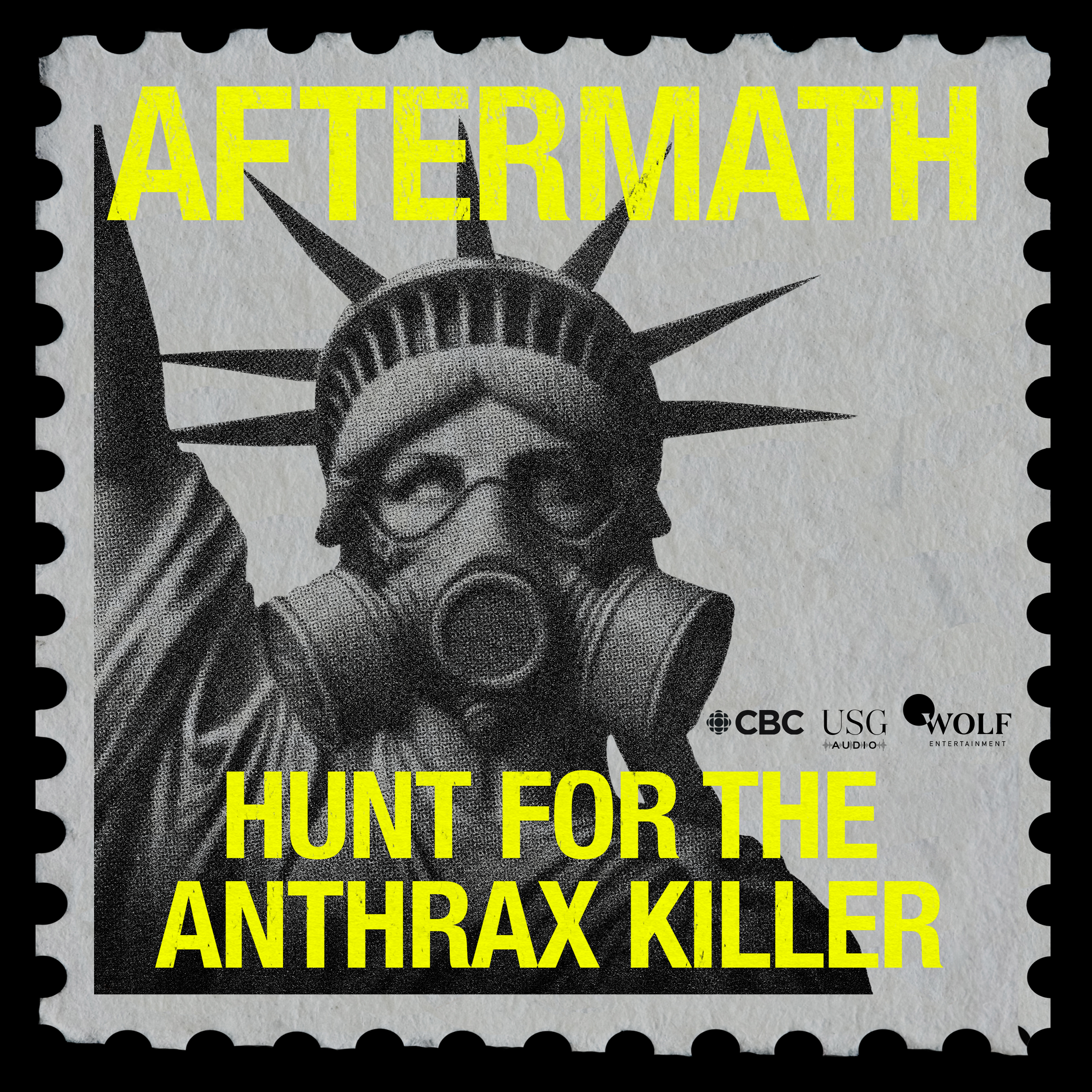;Resize=(3000).jpg)
The Expert Witness from Uncover
Uncover Introduces | Aftermath: Hunt for the Anthrax Killer
00:38:07
<p>In the wake of 9/11, anthrax-laced letters unleashed a new wave of terror across the nation. But who was behind the attacks — and why has America nearly forgotten this story?</p><p>As government buildings shut down and law enforcement scrambled to track the perpetrator, the FBI launched one of the largest and most complex investigations in its history. Untangling a web of scientific evidence and false leads, the case took unexpected turns with lasting consequences.</p><p>From Wolf Entertainment, USG Audio, Dig Studios and CBC, this eight-part series grants unprecedented access to declassified materials and firsthand accounts, revealing how the anthrax attacks reshaped America—and the hidden impact that still lingers today.</p><p> </p><p>More episodes of Aftermath: Hunt for the Anthrax Killer are available at: <a href="https://link.mgln.ai/JRKpUZ" rel="noopener noreferrer" target="_blank">https://link.mgln.ai/JRKpUZ</a></p>
Loading summary
Transcript183 lines
- [00:00]
Kathryn Cullen
It's on. A federal election is here and party leaders are racing around Canada to convince you to give them your vote. We're seeing a lot of spin, a lot of promises and a lot of accusations swirling around. And we are here to filter through the noise. I'm Kathryn Cullen, host of the House, and every Saturday, we want to slow you down and make sure you're getting the big picture and deep context and everything you need to make politics make sense. Because democracy is a conversation and we're here for it.
- [00:33]
Narrator
This is a CBC podcast.
- [00:38]
Jeremiah Kroll
In the fall of 2001, while Americans were still grappling with the horror of 9 11, another terror was quietly brewing. Soon, envelopes filled with white powder started showing up at media outlets and government buildings. The letters dominated the news cycle, created mass panic, and killed innocent people just opening their mail. But what's strange is if you ask people now what happened with the anthrax case, almost no one knows. It's like the whole story just disappeared. Who mailed those letters? Do you know? I'm Jeremiah Kroll. I'm a documentary filmmaker and host of Hunt for the Anthrax Killer. In this series, I'll take you inside one of the largest, twistiest investigations in FBI history with the agents, scientists and experts who were there. From the science that cracked it to the mistakes that almost derailed it, to the lives nearly ruined by it. This eight part series reveals how the attacks and this sometimes controversial investigation reshaped America and the surprising hidden consequences that still linger today. You're about to hear episode one. If you like it, you'll find more by searching Hunt for the Anthrax Killer. Wherever you get your podcasts.
- [01:45]
Narrator
Okay, here we go.
- [01:54]
Scott Decker
I mean, this was a huge crime scene. Most people don't think about it as a crime scene, but it was a crime scene. Of seven blocks, the unthinkable happened today. The World Trade center, both towers gone. Thousands are dead and injured. The skyline of New York and the psyche of the American population has been forever changed. Now it's obvious. I think, I think we have a.
- [02:18]
Dr. Larry Bush
Terrorist act of proportions that we cannot.
- [02:21]
Narrator
Begin to imagine at this juncture. It was the evening of September 11, about 12 hours after the terrorist attacks. And Scott Decker, a special agent with the FBI, was already on the move. He'd packed his bags and said goodbye to his family in Virginia.
- [02:42]
Scott Decker
I was told to grab four of the guys, load up our Suburbans with evidence collection equipment, Hazmat gear, Tyvek suits, masks, gloves. We loaded up the trucks that evening. Oh, dark 30 September 12th, we started heading up to New York, I think five black suburbans in a row.
- [03:02]
Narrator
While everyone else was trying like hell to get out of New York City, Decker drove all night to get in.
- [03:09]
Scott Decker
As we went through Maryland, we went through Delaware on Route 95, the main corridor. We got to the Delaware Memorial Bridge, and big alert sign above the traffic. And usually the. The letters are in yellow, but in my memory, it was orange. I don't know why, but I remember orange. And it just said in bold letters, new York City closed.
- [03:30]
Narrator
They arrived outside Manhattan near dawn. But those orange letters were right. New York City was closed even to the FBI. Bridges were shut down, landlines were out, and cell phones weren't working well. So Decker went to an FBI field office in New Jersey, just across the river.
- [03:48]
Scott Decker
I saw a Black Hawk helicopter sitting on the grass, the office and the Passaic River. And I said, yeah, I need a lift over to New York. So he said, jump in. And we flew over Manhattan, and we flew over ground zero. Doors opened on the Blackhawk, and as we flew over through the smoke, we just looked down and was. It was just ashes. Buildings were in ashes. They were just big piles on the ground.
- [04:18]
Narrator
He landed near ground zero. And like everyone there, struggled to make sense of what had just happened.
- [04:25]
Scott Decker
The morning of the 12th, September, things were a little up in the air. I don't think any of us knew what to really expect.
- [04:33]
Narrator
But Decker isn't looking at the scene the same way as most first responders. In fact, he's there for something else. What the public didn't know at the time is that there was another looming threat.
- [04:45]
Scott Decker
We expected a secondary attack. There was rumors of a biological attack. The country took steps to get ready for it.
- [04:53]
Narrator
Unbeknownst to the public, there was reliable intelligence from the weeks right before 9, 11 that Al Qaeda was planning a different kind of attack in addition to September 11, one involving the release of biotoxins into the air.
- [05:07]
Scott Decker
A second attack was going to be coming at any moment.
- [05:11]
Narrator
Decker was part of the FBI's new hazardous response Team. So while everyone else was looking at the wreckage, he was on high alert, searching for signs like unusual illnesses, that this second attack, this time biological, was already underway. What no one knew at the time is that they were looking in the wrong city.
- [05:36]
Scott Decker
The Florida man has contracted a very rare and potentially deadly form of anthrax.
- [05:42]
Narrator
As all Americans know, recent weeks have.
- [05:44]
Scott Decker
Brought a second wave of terrorist attacks upon our country. The deadly bacteria have now turned up in the American capital.
- [05:51]
Narrator
Deadly anthrax. Spores sent through the U.S. mail, one of the most lethal weapons of all time comes from an almost indestructible bacteria called anthrax. And in the fall of 2001, envelopes laced with powdered anthrax started showing up in the mail. The latest letter to have been discovered is thought to contain literally billions of spores. The letters sent to NBC on the.
- [06:14]
Scott Decker
New York Post were the same.
- [06:16]
Narrator
There's a warning. Take penicillin.
- [06:17]
Dr. Jean Malecki
Take penicillin now. You cannot stop us. We have this Anthrax.
- [06:21]
Scott Decker
Die now.
- [06:22]
Narrator
Anthrax. Anthrax.
- [06:23]
Colleen Rowley
Anthrax.
- [06:24]
Dr. Jean Malecki
Are you afraid?
- [06:30]
Narrator
The anthrax attacks created chaos. The US Capitol and the Supreme Court were contaminated and shut down. Thousands of buildings across the country were evacuated, and innocent people died just from opening their mail.
- [06:46]
Scott Decker
The US House of Representatives is closing.
- [06:49]
Narrator
Offices today until 2pm what is perhaps.
- [06:52]
Scott Decker
Worrying Americans the most is that they still have no idea who is behind these attacks.
- [06:58]
Narrator
What's weird is that almost 25 years later, most Americans still have no idea who was behind these attacks. Anthrax was on the nightly news for months, and then it's like the story just disappeared. I've talked to hundreds of people about it, and no one, it seems, remembers what happened with this case. Who mailed those letters, do you know? My name's Jeremiah Kroll. I'm a documentary filmmaker, and I was living and working in New York when all this happened, in those weeks, right after 9, 11. I remember the stillness of the streets and the collective sense of raw outrage and sadness in the city. And then anthrax. I felt the fear those letters created, the terrifying way they just kept coming, one after another.
- [07:48]
Scott Decker
Another day of germ warfare, and still no sign. The worst case of bioterrorism in this country is close to being solved.
- [07:56]
Narrator
Almost two decades later, when the pandemic hit, I felt that same sense of unpredictable terror in the air. It reminded me of the anthrax story, and I wondered, whatever happened with that? So my team and I started digging into it. We tracked down people who were involved, either affected by the attacks or part of the investigation. FBI agents, victims, wrongly accused suspects. And the stories they shared, many for the first time, surprised me. They painted a picture of these events and their aftermath that revealed how, at its core, this was all so personal. Like stories about investigative mistakes right from the start, about civil liberties trampled and about lives destroyed. They broke the front door and there.
- [08:43]
Scott Decker
Are agents with Uzis and Moon suits.
- [08:46]
Narrator
It's one of the most devastating things that's ever happened to me.
- [08:49]
Robert Stevens
It'll follow me forever.
- [08:51]
Scott Decker
I want to look my fellow Americans directly in the eye and declare to them, I am not the anthrax killer.
- [09:01]
Narrator
And even after all of that, after the seven year odyssey the FBI went on to try to solve this case, some people still wonder if the FBI got it right.
- [09:11]
Dr. Larry Bush
I would not consider the case to be closed.
- [09:14]
Narrator
In my mind, it certainly is not solved.
- [09:16]
Scott Decker
I believe there are others who can be charged with murder.
- [09:21]
Narrator
This is a story about people who have to look at chaos and try to make sense of it while it's still happening and how hard it is to get that right.
- [09:29]
Scott Decker
The worst thing that can happen to an FBI agent working a criminal investigation is to solve it in your mind before you really have the evidence.
- [09:37]
Narrator
It's about the stories we tell ourselves and the price we pay when we tell the wrong ones. We're going to go inside one of the largest FBI investigations in history to figure out why we all lost track of this case and to explore the aftershocks we still feel today. From Wolf Entertainment, this is Aftermath the Hunt for the Anthrax Killer. Episode one Isolated Incident. I want to go back to the beginning of this story to a time when most Americans never gave much thought to face masks or deadly particles in the air. It's October 2, 2001, three weeks after the attacks of 9 11, and we're in suburban Florida. It's the middle of the night and a man named Robert Stevens wakes up feeling sick. He has chills and a fever. Robert Stevens is 63. He's a newspaper photo editor who lives in Lantana, Florida. That's a coastal town about an hour north of Miami. He's raised a few kids and is getting close to retirement. But when he wakes up that night, he feels disoriented, dizzy, and things seem to be getting worse. His wife Maureen is worried.
- [10:53]
Dr. Jean Malecki
She found him awake in the bathroom, vomiting over the toilet bowl, confused.
- [10:58]
Narrator
Dr. Larry Bush was chairman of infectious diseases and chief of staff at the JFK Medical center in West Palm beach, the hospital closest to Robert and Maureen Stevens house.
- [11:08]
Dr. Jean Malecki
She drove him to the hospital. He walked into JFK emergency room at around 2 in the morning. And after they put him on a ventilator and got a chest radiograph, they sent him for a spinal fluid examination, looking for bacteria.
- [11:22]
Narrator
Robert's condition gets worse. He goes into a coma. Larry and his team suspect that he has meningitis, an infection that makes the brain swell. So he looks at Robert's spinal fluid.
- [11:35]
Dr. Jean Malecki
When I look at the microscope, I'm looking to see if I could see what type of bacteria this is because that's important for how I'm going to treat him.
- [11:43]
Narrator
In a healthy patient, Larry shouldn't see much of anything.
- [11:46]
Dr. Jean Malecki
You're lucky if you can see one or two bacteria that help you determine what type of bacterial process this may be. His was overwhelming. I saw an overwhelming amount of pus cells. That's a bad sign. That means there's havoc going on in your nervous system.
- [12:04]
Narrator
These bacteria suggest a cause of infection that shocks Larry.
- [12:08]
Dr. Jean Malecki
They almost never, ever cause spinal fluid infection, meningitis. But one does. Anthrax.
- [12:17]
Narrator
Larry can't get his head around this. Most of us are now familiar with anthrax, largely because of this case. But back then, in 2001, this was nuts. Most people didn't think about anthrax at all. And for doctors, it was something you read about in textbooks, not something you expected to see in a patient.
- [12:36]
Dr. Jean Malecki
There were a lot of things going through my mind. There's nothing else that explains it, but.
- [12:41]
Narrator
It just doesn't make sense. Anthrax is a natural bacteria that usually only infects livestock. Cattle tend to catch it in dry rural areas. They eat or breathe in anthrax cells called spores while they're grazing. So it's not like a guy in suburban Florida is going to just accidentally breathe this stuff in while going about his life. And if he did, somehow he'd be the first person in the entire US in almost 25 years. And that person had gotten it from inhaling anthrax spores off of wool shipped over from Pakistan. Larry runs more tests.
- [13:16]
Dr. Jean Malecki
He had an overwhelming amount of bacteria, but what struck me was the shape and the color of these bacteria.
- [13:23]
Narrator
He sees tiny blue stained bacterial rectangles all in a line. Imagine looking down on a train from high in the air.
- [13:31]
Dr. Jean Malecki
I'm an infectious disease person. I lecture, I write on infectious diseases. I look at bacteria under a microscope every day. I knew what I was looking at in retrospect.
- [13:41]
Narrator
Now, knowing how everything would play out, this is the moment that it all began. Right here. For the first time in 25 years, it seems that someone in America has anthrax in their lungs.
- [13:55]
Dr. Jean Malecki
I'm convinced this is anthrax. I don't have 100% proof.
- [13:59]
Narrator
Imagine you're him right now. You're the chief of staff for the whole hospital. And you're very sure that what you see is one thing. But that one thing is so rare and so deadly that when you tell people about it, they'll either not believe you or panic.
- [14:17]
Dr. Jean Malecki
My fear Was creating chaos in the hospital.
- [14:20]
Narrator
Chaos not just in his hospital, but also likely all of Florida and probably the nation. After 9 11, the whole country was bracing for another attack. Larry's afraid that this could be it.
- [14:35]
Dr. Jean Malecki
He can't be the only one exposed. That's my concern. My fear was missing bioterrorism. And being the person who could blow.
- [14:43]
Narrator
The whistle, he has to risk creating that chaos. So he does. Larry calls Dr. Jean Malecki, a friend and colleague who's the health director for all of palm beach county. But she was busy at that moment.
- [14:59]
Robert Stevens
I was giving an actual seminar on bioterrorism at the time the phone call came in. And so we were in the middle of that when my secretary rushed over to hand me a note from Dr. Bush. So I left the seminar and went to my office, and I got the call from. And he said, oh, gene, I need to talk to you. He said, make sure your door's closed.
- [15:22]
Narrator
Larry tells Gene he thinks Robert Stevens has anthrax. They both know more tests need to be done to prove it. So Gene calls up the centers for disease control. But the CDC pushes back. They refuse to believe anyone could catch anthrax in suburban Florida.
- [15:39]
Robert Stevens
I was told by the state of Florida, the public health laboratory and the cdc, you don't have enough information. And I said, wait a minute. I have a potential anthrax event occurring in my backyard here. I am the chief health officer here, and you're telling me not to act on this. And that's exactly what they were telling me. And I said, well, too bad. You're getting specimens in the mail. You will have them within 12 hours.
- [16:06]
Narrator
Despite the cdc's hesitancy and the testing that still needs to be done, Larry and Jean have little doubt that it's anthrax. The real worry on their minds is that this could be the beginning of another attack by al Qaeda. And what they don't know is that the FBI is worried about another attack, too.
- [16:25]
Scott Decker
The underlying current among government and scientists was a second wave of attack is coming, and it very well likely be a biological or chemical bomb. Anthrax at the top of the list is a biological threat Agent number one.
- [16:44]
Narrator
FBI special agent Scott decker, is one of only a few agents to have investigated nearly the entire case. And he's got skills few other FBI agents have. A PhD in genetics with a postdoc from Harvard. So that's why he's on the FBI's new hazmat team that was deployed at ground zero.
- [17:01]
Scott Decker
We would be there ready to help in case there was a biological attack, a chemical attack, or even a radiological release.
- [17:10]
Narrator
And one reason they even had Decker and his team on site is because of something odd that had happened earlier that summer. In August of 2001, weeks before the Twin Towers fell or anyone got sick in Florida, the FBI uncovered something in Minnesota. And that discovery would ultimately set the stage for the entire anthrax investigation. One of Decker's FBI colleagues was right in the middle of it.
- [17:35]
Colleen Rowley
The two flight instructor whistleblowers from a suburban flight school had called our office to tell the duty agent that they were very concerned that there was the most suspicious flight student they had ever come across.
- [17:53]
Narrator
Colleen Rowley was an FBI agent in Minnesota at the time.
- [17:57]
Colleen Rowley
He was first of all asking questions that would never be asked by a normal flight student who was trying to actually learn how to fly. There were things about, you know, communications with the ground, things like that that had nothing to do with what he said was an ego boosting trip in order to learn how to fly a 747.
- [18:18]
Narrator
The flight student's name was Zacharias Moussaoui. He was a Muslim French national. When FBI agents interviewed him, they learned his visa had lapsed, so they had him detained on an immigration violation. Agents suspected he was up to something, but they couldn't prove it. And remember, this is all before 9 11. So he's just one strange guy asking strange questions at a flight school. They couldn't even get a search warrant for his computer. Then September 11th happened.
- [18:48]
Colleen Rowley
The day of 9 11, we got word from the jail that he was kind of jumping up gleefully when the towers were coming down, looking at a television or something.
- [18:59]
Narrator
Now they get the search warrant and search his computer.
- [19:02]
Colleen Rowley
The only thing that was eventually found on his laptop was a lot of information about wind and wind directions and how to fly like a crop duster, things like that.
- [19:14]
Narrator
A crop duster? A crop duster is a small plane used in agriculture to spray pesticides.
- [19:20]
Colleen Rowley
He initially says, well, I was involved in other plots, but not the 911 one. So if he's not involved in the 911 one and he's in a second wave, he actually kind of admitted I was going to be a second wave.
- [19:34]
Narrator
What he's saying is that he is a member of Al Qaeda and that they were planning a second attack. The FBI already know the 911 hijackers were studying at flight schools around the U.S. so now agents worry that Moussaoui was part of a bigger plot still to come, that he was studying wind direction and Crop dusters. Because he and maybe the others were planning to spray some kind of poison from the air. With all of this info in mind, President Bush and the Department of Justice take action, hoping to prevent whatever that second wave might be.
- [20:04]
Scott Decker
Yesterday, the FBI issued a nationwide alert based on information they received indicating the possibility of attacks using crop dusting aircraft.
- [20:15]
Narrator
They ground all crop dusters across the country. That solves the immediate problem. But they still have a larger issue. Are there other extremist pilots out there waiting to launch an attack?
- [20:28]
Scott Decker
Director Mueller and Attorney General Ashcroft gave press conferences announcing the names of all 19 hijackers. The director of the FBI and I.
- [20:38]
Dr. Larry Bush
Just returned from a memorial service at the National Cathedral and wanted to take this time to give you a report.
- [20:45]
Narrator
Announcing the names was a call for help to the public. If you'd seen something, say something.
- [20:50]
Dr. Larry Bush
The FBI requests that anyone who may have information about these individuals immediately contact an FBI field office or call the toll free hotline.
- [21:03]
Narrator
And someone did. In the fall of 2001, while Americans were still grappling with the horror of September 11, envelopes started showing up at media outlets and government buildings filled with a white lethal powder, anthrax. But what's strange is if you ask people now what happened with that story, almost no one knows. It's like the whole thing just disappeared. Who mailed those letters, do you know? From Wolf Entertainment, USG Audio, and CBC podcasts, this is. Is the hunt for the anthrax killer available now?
- [21:43]
Scott Decker
They didn't want to learn how to land. They just wanted to learn how to fly.
- [21:47]
Narrator
Willie Lee is a crop dusting pilot who had an eerily similar story to the one in Minnesota. Suspicious acting men from the Middle east asking unusual questions about planes.
- [21:59]
Scott Decker
You know, that would tip me off right off the bat.
- [22:02]
Narrator
But Willie isn't in Minnesota. He's halfway across the country at a different crop dusting business. He'd been flying crop dusting planes for decades. On any given day during his regular job, he'd pack as much as 500 gallons of pesticides into his Air Tractor 502 crop plane. He'd fly incredibly low to the ground to avoid spraying homes and people.
- [22:23]
Scott Decker
We'd fly two or three feet off the ground whenever we're spraying. It takes some experience to do it.
- [22:29]
Narrator
But these men didn't sound like they wanted that experience. They were asking about tank capacity and flight distances. It sounded off. So six weeks before September 11, Willie called the police.
- [22:42]
Scott Decker
I told them, I said, these people, something's up here. I said, these people asking questions that people don't ask.
- [22:49]
Narrator
But the police didn't do anything about it. They couldn't really. No one had done anything illegal after 9 11. When Willie saw the names and pictures of the hijackers on television, he knew he'd been right to be suspicious. Because some of the men who'd visited him were the same men who flew the planes into the twin towers. In fact, one of them was Mohammed Atta, the chief US Operative who directed the attack. Willy and his team called the FBI. This time they took action. So now the FBI has a question to answer. Why were Al Qaeda members in at least two different places around the country trying to learn how to fly crop dusters? And meanwhile, there's another team with a question the FBI hasn't heard about yet. Dr. Bush and his colleagues who are trying to figure out how a man in suburban Florida has anthrax. And now those two mysteries are about to collide. Because the airfield that the 911 terrorists visited, Willys Airfield, it's less than an hour away from the home of anthrax patient Robert Stevens. Back in that hospital, Robert Stevens health is deteriorating and Dr. Bush still doesn't know for certain what he's dealing with.
- [24:07]
Dr. Jean Malecki
8:00 the next morning, I call Jacksonville Reference Lab and I say, what was the result? And he said to me, I shouldn't tell you that. I said, wow, that's a bold answer. I said, well, there's two things with that answer. I said, first of all, I'm the treating doctor. I'm taking care of this patient. I'm responsible for him. I sent the lab to you. I said, and by you telling me you shouldn't tell me that, you just told me that. He said, I gotta go. I said, where are you going? He says, I have to call the people I work for. He hung up.
- [24:40]
Narrator
The people he works for are high up on the chain. In an instant, the CDC calls the National Department of Health, who calls the White House, who calls the Department of Justice. And now, finally, the FBI learns anthrax is in Florida. Because of his background in science, Agent Scott Decker knows an anthrax infection shouldn't have happened in Florida. So for the FBI, who'd been worried for weeks about some kind of biological attack likely from the air, maybe involving crop dusters, if this isn't the work of the same 911 terrorists who they now know took flight lessons at an airfield only an hour away, it's an awful lot of coincidences.
- [25:21]
Scott Decker
We didn't know if it was an act of terrorism. So that Was the first thing we had to do is prove one way or t'other.
- [25:28]
Narrator
And in order to do this, prove it's terrorism. Decker and the FBI need to know what kind of anthrax this is, because anthrax comes in strains like the flu, and if they can figure out the strain that might tell agents where or how Stevens got infected.
- [25:43]
Scott Decker
He had been up in North Carolina when he got sick, visiting his daughter, and they had gone to a state park. There was a thought that he had got infected up there, one of the plants or the bad water or something.
- [25:58]
Narrator
FBI agents head to the state park to look for any signs that Stevens could have been infected in nature. But the scarier scenario is that the anthrax came from a laboratory, because if it's from a laboratory, there's a good chance somebody spread it on purpose. To figure this out, the FBI knows exactly who to turn to.
- [26:16]
Scott Decker
We agreed to call up Dr. Paul Keim in Arizona, Northern Arizona University. He was the unquestioned expert in the country.
- [26:25]
Dr. Larry Bush
Yeah, so I was doing my normal college professor stuff at the beginning of a fall semester here in Flagstaff, Arizona, and out of the blue, acquaintance of mine from the FBI called me up and said, said, hey, we have an unusual case of anthrax down in Florida.
- [26:43]
Narrator
Dr. Paul Keim hoped to find the source of the anthrax in a biological database he'd been creating for decades.
- [26:51]
Dr. Larry Bush
For the last 30 years, I've been involved in trying to develop DNA methods for precisely identifying strains of dangerous pathogens so that we can identify where they came from, link them together with outbreaks, and in particular, how they're related to biological weapons.
- [27:11]
Narrator
So as Robert Stephens is lying in a coma, investigators put a sample of his spinal fluid on a private jet and fly it halfway across the country directly to Paul.
- [27:22]
Dr. Larry Bush
And so it was like, wow, it felt like all the, all the blood was leaving my body at that point, because it's like, this isn't an academic exercise anymore. This is the real thing. So after I hung up, I quickly went around and found all the anthrax DNA fingerprinting people. I told them I expected to have the anthrax back in the lab by about 8:00 in the evening. So I said, you know, take care of whatever you need, but be back here around 8 o'clock and be prepared to start doing the analysis.
- [27:51]
Narrator
A few hours later, Paul gets in his truck and heads to the small local airport in Flagstaff. He doesn't know quite what to expect.
- [28:00]
Dr. Larry Bush
The general aviation guy just went and opened up the gate and let me drive out on the tarmac, you know, And Gulfstream is a pretty impressive plane. And so it landed right around sunset. Then this woman, this blonde woman, came walking down the stairs with a box. And as she stepped onto the tarmac, all I could think about was the movie Casablanca where Humphrey Bogart is on the tarmac with Ingrid Bergman. And I thought that'd make me Humphrey Bogart. Then I kind of slapped my face and said, get your head back in the game.
- [28:32]
Narrator
You know, Paul may not be in a Hollywood movie right now, but in a way, he is a detective. And in this very moment, the fate of American biosecurity is quite literally in his hands. So he takes that package and drives it back to his lab. And there he goes into the biosafety suite and opens the box.
- [28:53]
Dr. Larry Bush
And it's a box, you know, like, I don't know, 18 inches by 18 inches by 18 inches, a cardboard box. And inside of it was a styrofoam pack and then a crush proof pack.
- [29:02]
Narrator
And inside that is a vial with the spores found in Robert Stevens spinal fluid.
- [29:08]
Dr. Larry Bush
When you're looking at it by eye on a culture, it's kind of this white, creamy stuff, kind of like mayonnaise smeared on top of jello. We knew for sure it was anthrax because it had a DNA fingerprint pattern that was very consistent with, with bacillus anthracis.
- [29:23]
Narrator
It's anthrax 100%. Once Paul knows that, he needs to figure out what strain it is.
- [29:32]
Dr. Larry Bush
And my laboratory had been developing DNA fingerprinting methods to identify the different strains from around the world. And if it was a laboratory strain, this wasn't an accident. In the wake of 9 11, Paul.
- [29:46]
Narrator
And his team work through the night. By morning, they have an answer.
- [29:50]
Dr. Larry Bush
It was a laboratory strain, you know, and so how does a laboratory strain end up infecting a gentleman in Florida?
- [29:58]
Narrator
Think about this. Here's a college science professor, an expert in theoretical bioterrorism, and now he's seeing right up close anthrax from what appears to be an actual bioterrorist.
- [30:11]
Dr. Larry Bush
Instantly we knew that this was a, a biological weapons event because it had to be an intentional act. And in the wake of 9 11, al Qaeda was the number one suspect.
- [30:22]
Narrator
Paul's lab is the only place in the world that now knows the very threat weighing on Agent Scott Decker and the FBI is the real deal.
- [30:31]
Dr. Larry Bush
At that point, if there were any doubts that this was a bioterrorism event, they were gone.
- [30:41]
Narrator
For the moment. The story hasn't spread to the media. Paul Keim and the FBI have only a short window to try to get answers before the bad news spreads. And they're all wondering the same thing. Was it the 911 hijackers who deployed this anthrax gene? Malecki, the health director in Florida, worries about that too.
- [31:02]
Robert Stevens
In Palm beach county, we use crop dusters all the time. They go up and down all the time spraying our vegetables and our fruits.
- [31:10]
Narrator
If there was an aerial attack, is it possible the 911 hijackers or people working with them had dropped anthrax in an area that included Robert Stevens backyard? Is that how it ended up in his system? Steven's home was less than a mile from an airstrip, so his house could have easily been in the path of travel.
- [31:29]
Robert Stevens
My focus was to go to the home to speak to everybody there to take samples, to investigate the entire outside of the home, inside the home to look at potential sources for anthrax gene.
- [31:44]
Narrator
Takes a biohazard crew to scour the property from top to bottom.
- [31:47]
Robert Stevens
The home itself was a three bedrooms, probably two baths, Nice little kitchen and living room.
- [31:54]
Narrator
The powder is so fine that if it was sprayed from the sky, it could be anywhere.
- [31:59]
Robert Stevens
In the backyard they had lots of plants and lots of trees. We looked for any type of white powder substances that could have been in the trees or on the ground. I remember distinctly bending down and taking samples off of various bushes that were in the backyard.
- [32:17]
Narrator
On the surface, nothing looks suspicious. There's no obvious white powder anywhere. But Jean sends samples, she's taken to her lab. She then heads back to the hospital to check on Robert Stevens and discovers.
- [32:29]
Colleen Rowley
A deadly disease putting a Lantana man in the hospital.
- [32:32]
Narrator
The story was out. Mohammed Atta, who was the lead terrorist on board one of the flights that.
- [32:38]
Robert Stevens
Crashed into the World Trade center, apparently.
- [32:41]
Narrator
Took flight lessons in Palm beach county at a flight school.
- [32:44]
Colleen Rowley
Anthrax can enter the body in three ways.
- [32:46]
Narrator
It can be swallowed, seeped through, cuts.
- [32:48]
Colleen Rowley
In the skin, and the most deadly way, inhaled.
- [32:52]
Narrator
State and federal health officials hurry to put together press conferences to address everyone's concerns. This individual is being cared for by a very well trained and expert team of physicians from within the hospital in Palm Beach. As one of those well trained physicians, Dr. Larry Bush is called upon to answer some tough questions.
- [33:12]
Dr. Jean Malecki
The difficult part for me in that press conference was Maureen Stevens was sitting in the front and they said to me, is Bob Stevens going to die?
- [33:21]
Narrator
Larry knows that historically inhalation anthrax is likely fatal, but he's conflicted about Sharing the worst case scenario.
- [33:28]
Dr. Jean Malecki
But I'm looking at Maureen Stevens, and I said, well, you know, he's seriously ill. He's on the right medication, and we have hope that he could survive.
- [33:37]
Narrator
Meanwhile, the press keep on with their questions, and the CDC seems entirely focused on hitting the same reassuring note over and over again.
- [33:45]
Scott Decker
I want to stress two things. First of all, that this is an isolated case, and second, that this is not contagious.
- [33:54]
Narrator
This is a very serious illness. But once again, it's an isolated case.
- [33:59]
Scott Decker
But I do want to stress again.
- [34:00]
Narrator
I want to reiterate, this is an isolated case.
- [34:03]
Scott Decker
This is an isolated case.
- [34:05]
Narrator
The disease is not contagious. If the hope was to keep people calm, to reassure the media that this situation was nothing to worry about, it didn't work.
- [34:15]
Scott Decker
The Centers for Disease Control has just confirmed the diagnosis of anthrax in a patient in a Florida hospital.
- [34:23]
Dr. Jean Malecki
There's more media in the area because things are leaking out than you can imagine. The parking lot's full of every type of media. There is.
- [34:31]
Narrator
The chaos Dr. Larry Bush was afraid of is here.
- [34:36]
Scott Decker
All this coming just a day after the FBI warned Americans that another terrorist attack could be imminent.
- [34:44]
Dr. Jean Malecki
The hospital is going crazy. People are calling the hospital and want their loved ones transferred because we have anthrax in the hospital.
- [34:51]
Scott Decker
The Florida man has contracted a very rare and potentially deadly form of anthrax.
- [34:57]
Dr. Jean Malecki
The outside of the hospital was one of those things like you see when, you know, somebody's coming out of a courthouse and everybody's rushing in with a microphone to get some type of sound bite. It was, you know, really chaotic.
- [35:08]
Narrator
Everyone is now watching Larry's team closely to understand what this one case of anthrax might mean for the rest of the world. And the news he has is not looking good.
- [35:19]
Dr. Jean Malecki
Bob Stevens is in the icu. He's not doing well.
- [35:23]
Narrator
Robert Stevens health is failing quickly. And Larry, fear's the worst. With the story out in the world, panic is going to grow, and the public wouldn't be wrong to worry. It seems Robert Stevens may be patient zero of a colossal new attack. Agent Decker and the FBI now face what could be the largest bioterror threat in American history. So the question on their minds is, if Al Qaeda does have anthrax, what will they do with it next?
- [35:54]
Scott Decker
The worst case is if somebody had succeeded in making a pound of powder that would float into the air and drift over a population. Hundreds, thousands of people would breathe this in and probably die.
- [36:08]
Narrator
But it seems that agents are closing in on their suspects fast. The Confirmation of a plan for a second wave attack, the pilots learning about crop dusters, the airstrip near Steven's house. It's all adding up. The FBI just needs a little hard evidence, a link that proves who did this so they can stop more deaths.
- [36:28]
Dr. Jean Malecki
I get a call to come down and see this woman, and I said to the emergency room doctor, you know, this is getting a little overwhelming. You're calling me for every cough that's walking in there. I said, why this one? They said, this woman's got an interesting story.
- [36:43]
Narrator
But of course, it's not going to be that easy. The information they're about to get will send the FBI down a rabbit hole of false suspects. Shocking twists and damning revelations, including a liar in their midst. This season on the Hunt for the Anthrax Killer.
- [37:03]
Dr. Jean Malecki
No witnesses, no fingerprints or personal DNA.
- [37:06]
Dr. Larry Bush
And then there's another case, and then another and another.
- [37:10]
Colleen Rowley
There was such enthusiasm over a conspiracy.
- [37:13]
Narrator
Theory that had no basis.
- [37:16]
Scott Decker
I felt betrayed.
- [37:17]
Narrator
It'll haunt me for the rest of my life. American and coalition forces are in the early stages of military operations to disarm Iraq. That Saddam Hussein could have produced 25,000.
- [37:28]
Dr. Jean Malecki
Liters of this deadly material. Do you think they're going to submit evidence that implicates them?
- [37:33]
Narrator
This is United States. Half of the FBI field office from Washington is at your home.
- [37:38]
Scott Decker
This is not a joke. What is everybody?
- [37:40]
Dr. Jean Malecki
A dead man walking?
- [37:51]
Narrator
The Hunt for the Anthrax Killer is a production of Wolf Entertainment, USG Audio and Digg Studios in collaboration with CBC Podcasts. The series is hosted by me, Jeremiah Kroll. It's created, written and executive produced by Scott Tiffany and me at Digg Studios. Aftermath is executive producer produced by Dick Wolf, Elliot Wolf and Steven Michael at Wolf Entertainment, Josh Block at USG Audio and Jonielle Kastner at Spoke Media. The series is produced by Kelly Kolf, story editing by Janiel Kastner, sound design and mix by Evan Arnett. Original Composition by John O'Hara. Production by Spoke Media. Production support for USG audio by Josh Lalonghi. Tanya Springer is the senior manager of CBC Podcasts. Arif Narrani is the director of CBC Podcasts. Thank you for listening. Tune in next week for an all new episode of the Hunt for the Anthrax Killer. Or you can binge the whole series ad free by subscribing to CBC True Crime Premium on Apple Podcasts.
- [38:57]
Jeremiah Kroll
That was the first episode of Hunt for the Anthrax Killer. If you like what you heard, episode two is waiting for you right now. Find and follow aftermath, wherever you get your podcasts.
- [39:07]
Narrator
For more CBC Podcasts, go to CBC CA Podcasts.