← Under the Influence with Terry O'Reilly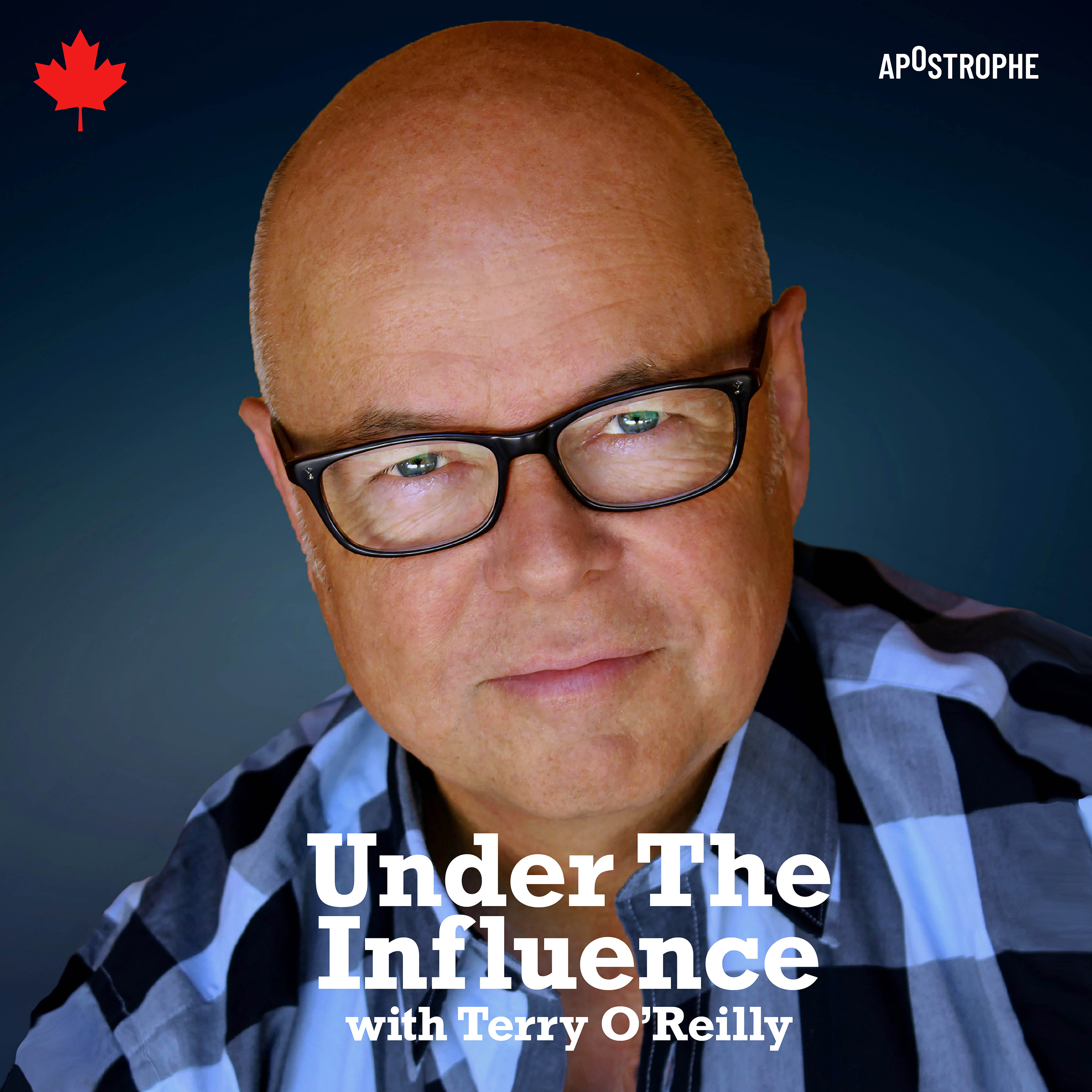
Under the Influence with Terry O'Reilly
Allure of Bad-Ass Advertising: Anti Heroes
00:28:27
20th century movies and TV shows were dominated by the traditional “hero.” With high morals and an ethical code of honour. The 21st century has a dif…
Loading summary
Transcript44 lines
- [00:02]
Terry O'Reilly
Did you know that if you subscribe to our But Wait, There's More option, you get a bonus story in every episode of under the Influence. But Wait, There's More. For the price of a cup of coffee every month, you get early access so you hear every episode a full week before everybody else. Plus, you enjoy that episode ad free. Tsk tsk. And by subscribing, you support our podcast. Just go to Apple Podcasts and subscribe to under the Influences. But Wait, There's More.
- [00:40]
Commercial Announcer (Zyn Nicotine Pouches)
If you're a smoker or vaper ready to make a change, you really only need one good reason. But with Zyn Nicotine Pouches, you'll discover many good reasons. Zynn is America's number one nicotine pouch brand, plus Zynn offers a robust rewards program. There are lots of options when it comes to nicot satisfaction, but there's only one Zen. Check out zyn.com find to find Zinn at a store near you Warning. This product contains nicotine. Nicotine is an addictive chemical.
- [01:10]
Commercial Announcer (Bluehost)
I'm no tech genius, but I knew if I wanted my business to crush it, I needed a website. Now. Thankfully, Bluehost made it easy. I customized, optimized and monetized everything exactly how I wanted with AI. In minutes my site was up. I couldn't believe it. The search engine tools even helped me get more site visitors. Whatever your passion project is, you can set it up with Bluehost with their 30 day money back guarantee. What have you got to lose? Head to bluehost.com to start now.
- [01:39]
Kim and Penn Holderness
Hi, this is Kim and Penn Holderness from the Laugh Lines Podcast. Boost Mobile offers the same nationwide coverage, network speed and service consumers are used to, but at more affordable prices. Why pay more if you don't have to?
- [01:52]
Boost Mobile Announcer
Boost Mobile offering reliable nationwide coverage backed by a 30 day money back guaranteed. Love your service or get your money back, no questions asked.
- [02:00]
Kim and Penn Holderness
While other carriers blow millions on super bowl ads, we put that money to work for you. Delivering reliable 99% nationwide coverage at affordable prices.
- [02:10]
Boost Mobile Announcer
Start saving on wireless today with Boost Mobile's Unlimited plans. Starting at just $25 a month, the.
- [02:16]
Kim and Penn Holderness
Boost Mobile network, together with their roaming partners, cover 99% of the US population. 5G speeds not available in all areas.
- [02:24]
Boost Mobile Announcer
Visit your nearest Boost Mobile store. Find us online@boost mobile.com Customers who cancel.
- [02:29]
Kim and Penn Holderness
Within 30 days of activation will have Boost service fees refunded, activation fees if applicable, and phone payments will not be refunded.
- [02:42]
Terry O'Reilly
This is an apostrophe podcast production you soaking in it, your teeth look whiter than. No, no, no, you're not you. When you're hungry, you're in good hands with Austin.
- [03:21]
Commercial Announcer (Zyn Nicotine Pouches)
You're under the influence with Terry O'Reilly.
- [03:40]
Terry O'Reilly
As the 20th century was drawing to a close, a new television series hit the air. Created by TV veteran David Chase, the Sopranos would change television for all time. The subject wasn't new. It focused on a mob family in New Jersey. But the character at the head of the family was new. Tony Soprano was big, tough, profane, and suffered from anxiety attacks. The other tiny wrinkle was the fact his mother was plotting to kill him. So Tony Soprano was a very different kind of crime boss. He went to therapy sessions every week. The casting in the Sopranos was superb. James Gandolfini played Tony Soprano. He was a powerful presence, decisive, scary, and didn't suffer fools. He was only afraid of his wife. When David Chase visualized the Sopranos, he thought of each episode as a tiny movie, not an ongoing soap opera. And it was one episode in particular that changed the television landscape. It was episode five in the first season, titled College, where Tony Soprano takes his daughter to Maine to visit three colleges she is thinking of attending. But when they get to Maine, something happens. While at a gas station, Tony spots a guy who entered the witness relocation program. After turning state's evidence against Tony's mob family, David Chase wanted Tony to kill him and strangle the rat with his bare hands. In extreme close up, the CEO of HBO begged David Chase not to film the scene. He felt the graphic murder would turn viewers off and set them against Tony Soprano. He told Chase he had created one of the most compelling lead characters in television history, but he was risking flushing it all down the toilet with this one scene. Chase disagreed, saying that if Tony didn't kill the snitch in this episode, he would look weak and the show would be over. Chase saw the scene as crucial to the character's development. It was the first time Tony Soprano had killed anyone in the series. And it was the first and only time HBO would ask David Chase to change something. In the Sopranos. David Chase won the argument. Tony Soprano murdered the snitch. And College has been cited as one of the best episodes in television history. The best episode of the entire Soprano series. And that's saying something. And Chase cites it as his favorite. The episode also cemented a very important aspect of Tony Soprano. It made him an antihero. He was a lead character capable of horrific acts. It was the one thing HBO feared that audiences couldn't accept. An antihero but they were wrong. Despite Tony Soprano's methods and actions and brutality, the Sopranos would go on to be heralded as one of the greatest television series of all time and Tony Soprano as one of television's greatest characters. It kicked open the doors to the 21st century era of the antihero. The advertising industry is in the business of adopting current pop culture into the commercials it makes. Advertising is the great mirror. As a matter of fact, one of the most quoted books about the ad industry is titled the Mirror Makers. Commercials reflect the current music, the current fashions, the current hairstyles, and the zeitgeist at large. Madison Avenue also positioned products as heroes, reflecting the 20th century fondness for heroes on TV and in movies. But all that has changed because audiences in the 21st century have gone from applauding the hero to cheering the anti hero.
- [08:25]
Commercial Announcer (Zyn Nicotine Pouches)
You're under the influence.
- [08:44]
Terry O'Reilly
I read a very thought provoking article recently. It was titled Kill the Competition A guide to becoming an Antihero Brand. It was written by Trevor Thomas, Vice president of strategy at advertising agency Vlmyr Toronto. The premise of the article was advertising is the great mirror of society. In other words, whatever the prevailing pop culture zeitgeist is, advertising will jump on that wagon. Adopt that attitude and reflect it back to its customers. If you can recognize yourself in the ads, you might just buy the products. For most of the 20th century, the prevailing pop culture icon was the notion of the hero. Think John Wayne and James Bond movies. Think Captain Kirk in Star Trek. Think Lucille Ball and Mary Tyler Moore in Columbo. These heroes existed in different worlds, some serious, some comedic. Each was flawed, but all of them always ended up doing the right thing for the right reason before the credits rolled. Since the dawn of modern advertising, brands play the role of the traditional hero. You could see it in their very slogans. Dirt can't hide from intensified Tide, Wheaties, the Breakfast of Champions, Budweiser, the King of Beers, BMW, the ultimate driving machine, Gillette, the best a man can get and so on. Most commercials are based on the premise of problem solution, jeopardy Hero. As a matter of fact, in ad industry lingo, the product seen in a commercial is referred to as the the hero shot. And the load bearing wall of all marketing states. People will only support a brand that is seen as positive and good. But here's the central premise of Trevor Thomas. The prevailing archetype of the 21st century is not the hero. It's the antihero. Thanks to Tony Soprano. Think Dexter, the serial killer who kills serial killers. Created and produced, by the way, by the co writer of the Sopranos College episode. Think Walter White, the crystal meth making chemistry teacher from Breaking Bad. Don Draper, the ambitious womanizer with no moral compass from Mad Men. John Dutton, the murderous patriarch played by Kevin Costner in Yellowstone. Larry David, the cantankerous antisocial curmudgeon. Think Vic Mackey, the unethical cop from the Shield. Jackie Peyton, played by Edie Falco, the drug addicted avenging angel in Nurse Jackie. Think the entire cast of Succession. It's a long list of popular antiheroes that is getting longer. Let's define the antihero. An antihero is a character who has traits that are antithetical to a hero. Where a traditional hero will jeopardize his or her own safety to rescue others, an antihero will jeopardize others to rescue themselves. Antiheroes aren't strictly bad guys. They aren't locked in a mythic battle with heroes like the Joker versus Batman. The antihero is driven to succeed by breaking the rules and often the law, and is completely comfortable doing horrible things. They reject social constraints. They are liberated from that line in the sand that holds the rest of us back. They do things we are afraid to do and do it unapologetically. Media critic Eric Deggans puts it this way. In a world filled with war, recession and cynicism, straight up heroes feel fake as a three dollar bill. So the confused guy who does bad things for the right reasons just might be the best reflection of where we are today. Forbes simply calls it the allure of the badass. So if audiences are cheering for these characters, it only makes sense that brands would try to mirror that trend. In the anti hero world, there are several archetypes, each identified by one main defining characteristic. One is the damaged archetype. These characters have past emotional trauma. People need to understand a deep secret about these antiheroes in order to accept their questionable actions. When I think about an antihero brand that breaks the rules and is governed by past trauma, I think of the Hans Brinker budget hotel in Amsterdam. According to a book titled the Worst Hotel in the World, if Hell owned a hotel, it would be this one. Except Hell would have better heating. As we mentioned in a past episode, the Hans Brincker budget hotel aspires to not just be a bad hotel, it wants to be known as the worst hotel in the world. Being bad is relatively easy. Being the worst requires skill and determination. The rooms are prison bare. They may or may not have toilet Paper. The linens are stained, the walls are full of graffiti, guests smell weird things in the halls, the reception area is filthy, the runny food is barely edible and the staff is grumpy. It's not just bad, it's terrible. So what do you do when your product has no benefits, no features and nothing more than the barest of essentials? Well, you do the unthinkable. You tell the truth. One of the defining characteristics of the antihero is a non apologetic authenticity. They are who they are and they do as they want. No filters. This is the Hans Brinker budget Hotel and it all started with trauma in the early 90s. The hotel's manager said he was tired of hearing complaints from guests about how bad the hotel was. It was an endless litany of whining and outrage. The manager said he didn't want to hear one more complaint for the rest of his life. He wanted to manage expectations. His rationale? If guests expected nothing, they couldn't complain when they got it. So the hotel hired an advertising agency called Kessel's Kramer. The first campaign the ad agency created involved dog poop. The ad agency says Amsterdam is the world capital of dog poop. So they walked around the city and every time they spotted some doggie doo, they would plant a tiny flag in it that said, now even more of this near our main entrance along with the hotel's logo. That dog poop campaign was so outrageous, it went viral and was mentioned on cnn, mtv, abc, CBC and everywhere. With that, the hotel was sold out in less than a week. That weird honesty led to a series of simple posters for the hotel that said things like now more rooms without a window, now even less service and our maids now work twice as hard since we only have one. It even joked about bed bugs. The hotel literally dared you to stay there. The Hansbrinker actually considers itself a no tell, not a hotel. Most hotels answer your questions with the word yes. Yes, we can get you another towel. Yes, we would be happy to extend your stay another night. Yes, your room has a jacuzzi. The Hans Brinker uses a more cost effective word. No, no, you can't have an extra towel. No, you can't stay longer. No, we can't fix the light. The phrase not included some assembly required and batteries sold separately have angered people since the early days of advertising. Those words are usually hidden in small print at the bottom of the page. The Hans Brincker budget hotel puts them front and center in the largest type possible. When a study came out saying the general public's immune systems were becoming compromised by our increased use of PUR and that we need contact with dirt to build up natural resistance. The Hans Brincker Hotel jumped on the opportunity. It ran a full page newspaper ad boasting that its hotel carried a wide variety of bacteria and implored people to stay at the hotel to boost their immune systems before it's too late. While there are many regulations attached to advertising that claims to be the best, there are virtually no rules when a company claims to be the worst, the least successful, the slowest, the least popular, least preferred, or least favored. The Hans Brinker Budget Hotel is a damaged anti hero brand. It doesn't play by the usual hotel rules. It doesn't pretend to be something it isn't. It's proud of its flaws and refuses to fix them. Before the campaign started running, the occupancy rate hovered around 45%. It's over 80% today. While some antihero brands roam the earth, others take their cynicism to the skies. God help us.
- [19:40]
Boost Mobile Announcer
But Canada has never been more interesting.
- [19:43]
Terry O'Reilly
What is happening now is urgent and important, and you need to stay on top of it. Every day on Canadaland, we bring you the information you need about Canadian politics.
- [19:53]
Boost Mobile Announcer
And Canadian media through smart conversations and original investigations.
- [19:59]
Terry O'Reilly
This is Canada like you've never heard it before. Listen to Canadaland wherever you get your podcasts only Boost Mobile Boost Mobile will give you a free year of service. Free year when you buy a new 5G phone new 5G phone? Enough, but I'm your hype man.
- [20:22]
Boost Mobile Announcer
When you purchase an eligible device, you.
- [20:23]
Terry O'Reilly
Get $25 off every month for 12 months, with credits totaling one year of free service. Taxes extra for the device and service plan online only.
- [20:29]
Commercial Announcer (Zyn Nicotine Pouches)
If you're a smoker or vaper ready to make a change, you really only need one good reason. But with Zynn Nicotine Pouches, you'll discover many good reasons. Zyn is a America's number one nicotine pouch brand. Plus Zynn offers a robust rewards program. There are lots of options when it comes to nicotine satisfaction, but there's only one Zyn. Check out zynn.com find to find Zyn at a store near you. Warning this product contains nicotine. Nicotine is an addictive ch.
- [21:11]
Terry O'Reilly
Another antihero category is the cynic. Rich on sarcasm, low on patience, this brand doesn't handle customers with kid gloves and doesn't subscribe to the customer is always right marketing philosophy. As a matter of fact, these antihero brands take every opportunity to flip you the bird while they take your money. Like Ryanair, it's a low budget airline in Europe. You can fly to another country for as low as €25. Yes, the tickets are cheap, but literally anything else can involve an upcharge. When you purchase your tickets online, the airline will try multiple times to get you to purchase added amenities. And when customers push back, Ryanair gives as good as it gets. Ryanair's social media is a hot hotbed of verbal sparring. For example, one customer tweeted that although they understand random seat selection, he was disappointed when he and his girlfriend bought tickets but were separated. Ryanair's response? You don't understand random seat allocation. When someone tweeted, ryanair is trying to make me pay for seats. With the threat my family and I might have to sit separately. Well, the joke's on them because I'd pay extra to not sit with them. Ryanair tweeted back booking confirmed and showed a seating diagram with the entire family sitting together. Someone else tweeted, what are your rules for tall people sitting on the planes where the legs don't fit in normal seats? Ryanair responded with three words, bend your knees. Another person tweeted a photo of the emergency door with the tiny round porthole window saying, seriously, Ryanair, I paid for a window seat. Ryanair tweeted the same photo back with no words, but circled the tiny porthole window. Ryanair aspires to the anti hero brand. It doesn't pretend to be a luxury airline. You may not like its methods or its tone of voice, but you want the ticket price. And if you want to complain, buckle up, buttercup. Another category is the pragmatic antihero. With this antihero as someone or something needs to be sacrificed for the greater good, so be it. Pragmatic antiheroes don't second guess their motives, don't lie awake in bed worrying about it and won't hesitate to do it again. That sounds like Paddy Power. Paddy Power is a UK based sports betting brand and it's known for going where other brands dare not tread. One of the best examples of Paddy Power's marketing involved a guy named Rodri Giggs. Rodri is a spokesperson for Paddy Power. Specifically, he advertises a message that says, loyalty gets you nowhere.
- [24:31]
Rodri Giggs
I'm Rodri Giggs and I want to talk to you about loyalty. I've always lived a loyal life. Always drinking the same pub.
- [24:38]
Terry O'Reilly
How you gotta say you do, mate?
- [24:39]
Shree Deville
Bitter?
- [24:39]
Rodri Giggs
Not anymore. Pam, champagne please. Always support my country. Problem is, loyalty gets you nowhere. Live for rewards instead. That's why I'm Paddy's Rewards Club Ambassador.
- [24:53]
Terry O'Reilly
Thanks Paddy.
- [24:55]
Rodri Giggs
Paddy Powers Rewards Club Loyalty's dead.
- [24:58]
Terry O'Reilly
Live for Rewards now that commercial is pretty straight ahead in its messaging, but there is a big subtext that Brits instantly get Roger Yiggs brother Ryan, who is a famous soccer player and team manager, had a scandalous affair with Rodri's wife. So when Rodri talks about loyalty getting you nowhere, that's what he's referring to. Not many brands would use the fact a brother slept with his brother's wife as the creative leverage in a commercial, but antihero Patti Power would maybe the most overt category is the ruthless antihero. There are no half measures for this archetype. Once a rich target is in place, it will bulldoze its way to the goal and take no prisoners. Enter Liquid Death Liquid Death is a mountain water brand that comes in tallboy cans. Its mission? To rid the world of plastic water bottles. Their Tallboy cans can be recycled infinitely, Whereas only about 5% of plastic actually gets recycled. In other words, death to plastic. Liquid Death has a gothic heavy metal vibe. It dares you to hate it. As we mentioned in a past episode, Liquid Death made a 10 minute horror film where the cans killed customers who littered by throwing plastic. It created a 10 song playlist on Spotify. Out of all the hate mail it gets. The album was called Greatest Hates and featured songs with titles like this Crap is Pure Evil and Fire. Your marketing guy Liquid Death teamed up with Martha Stewart to sell candles that look like dismembered hands. I've got to admit, I've probably enjoyed making these a little too much. Nothing's more realistic than my limited edition Dismembered Moments luxury candle. So be sure to visit martha.com to get your very own before they sell out. The brand also teamed up with a porn star.
- [27:25]
Shree Deville
Hey, I'm Shree Deville, adult film star and stepmom to the Internet. And when I want to murder my thirst, I reach for a can of Liquid Death Mountain Water. This aluminum can is infinitely recyclable, but plastic bottles are not. Why? Because recycling plastic isn't profitable. Most just end up in our landfills and oceans.
- [27:47]
Terry O'Reilly
Then she steps onto the set of one of her films. Mr. Bill, your stepson is ready. Thank you.
- [27:53]
Shree Deville
So join me in Liquid Death and our mission to bring death to Plastic. Come on, don't the planet.
- [28:01]
Terry O'Reilly
When two Internet haters said Liquid Death was the worst water they had ever tasted, Liquid Death flew them both to Los Angeles to do a blind taste test. If they could pick out Liquid Death water from a series of hidden water brands, they would win $1,000. If they couldn't, they would get Tasered. Liquid Death called it a blind tase test. The video began with the two haters reading their original tweets. Liquid Death Water took over the as the worst water. Literally the worst water I have ever tasted. The two haters were wired up, then began the blind taste test looking to pick the worst tasting one. Neither picked Liquid Death and both got Tasered. Liquid Death officially not the worst water two guys from the Internet have ever tasted. Liquid Death is not like other brands. It dares to taser its haters, it mock kills its own customers, it sells dismembered hand candles with Martha Stewart, it teams up with porn stars, and it creates songs out of the hate mail it receives. You may not like its methods, you may not like its heavy metal vibe or its horror themes. You may not even like its name. But Liquid Death doesn't care. It's a ruthless antihero brand on a mission to kill plastic water bottles. When you think of all the antihero programs on our screens today, it's a rogues gallery in a post 911 world. While on paper it seems strange to cheer for morally ambiguous anti heroes, there is an underlying attraction. Antiheroes give our resentments a voice. We cheer the fact they ignore the red tape and get stuff done, even though their methods are highly questionable. Maybe in the end we forgive antiheroes because we recognize ourselves when we watch them. We are the good, the bad and the ugly. We are all flawed. Interesting to note those flaws don't scare away advertisers. The Sopranos, Mad Men, Dexter and Breaking Bad all attracted product placement from high profile brands like Cadillac, Heineken, Canadian Club, Whiskey, Sony, Hilton Hotels and many more. The Hans Brincker Budget Hotel has never done more business than it does today. Liquid Death is valued around $525 million today and has only been around since 2018. Paddy Power has been voted the best betting shop in the UK two years in a row, and Ryanair flies more passengers every year than any other European airline. As Trevor Thomas says in his article, these are early days in the arc of antihero brands. Companies like Liquid Death are just dipping their toes, but the water's warm when you're under the influence. I'm Terry O'Reilly. This episode was recorded in the Tear Stream Mobile recording studio producer Debbie O'Reilly, sound engineer Jeff Devine under the Influence Theme by Ari Posner and Ian LeFever Tune provided by APM Music Follow me on Social erryoinfluence this is season 12. If you liked this episode, you might also enjoy To Bleep or Not to Vulgar Trademarks Season 8 Episode 20. You'll find it in our archives. You can also find our podcasts on the New Apostrophe YouTube channel. And if you think there are too many ads in a show about advertising, if you're anti advertising, you can now listen to our podcasts Ad free on Amazon Music. See you next time. Fun Fact Tony Soprano's wife shared the same name as Vito Corleone's wife in the Godfather. Both are named Carmela.
- [32:35]
Trimble Commercial Announcer
Every day there's a new challenge to face, so meet Trimble, the technology company that connects your physical and digital worlds, allowing you to make decisions and take intelligent action to get the hard work done. And the best part? You can do it all faster than you've ever thought possible. Check them out@trimble.com you ready to turn data points into decision points or turn deadlines into finish lines? How about turning possibilities into profits? Then turn to Trimble.
- [33:01]
Kim and Penn Holderness
Hi, this is Kim and Penn Holderness from the Laugh Lines podcast. Boost Mobile offers the same nationwide coverage, network, speed and service consumers are used to, but at more affordable prices. Why pay more if you don't have to?
- [33:14]
Boost Mobile Announcer
Boost Mobile offering reliable nationwide coverage backed by a 30 day money back guarantee. Love your service or get your money back, no questions asked.
- [33:22]
Kim and Penn Holderness
While other carriers blow millions on super bowl ads, we put that money to work for you, delivering reliable 99 nationwide coverage at affordable prices.
- [33:32]
Boost Mobile Announcer
Start saving on wireless today with Boost Mobile's Unlimited plans. Starting at just 25amonth, the Boost Mobile.
- [33:39]
Kim and Penn Holderness
Network, together with their Roaming partners cover 99% of the US population. 5G speeds not available in all areas.
- [33:47]
Boost Mobile Announcer
Visit your nearest Boost Mobile store. Find us online@boost mobile.com Customers who cancel.
- [33:52]
Kim and Penn Holderness
Within 30 days of activation will have Boost service fees refunded, activation fees if applicable, and phone payments will not be refunded.
- [34:03]
Elise Hu
Hey, I'm Elise Hu, host of the podcast TED Talks Daily. Did you know Paylocity offers one platform for hr, finance and it. That means innovative solutions like on demand payment which offers employees access to wages prior to payday, flexible time tracking features which enables staff to clock in through their mobile device and numerous other cutting edge integrations are available to all your teams in one single place. Learn more about how Paylocity can help streamline work and bring teams together@paylocity.com 1.
- [34:34]
Boll & Branch Commercial Announcer
Imagine a world of extraordinary comfort where Bolin Branch Bedding wraps you in the softest Embrace the coziest experience made from the world's finest 100% organic cotton, all so you can sleep better. Start building your fall sanctuary with Bolin Branch's iconic Signature Sheets sheets made with a buttery, breathable weave that gets softer with every wash. Enjoy 15% off your first set of sheets with free shipping and returns at B O L L& Branch.com with code BUTTERY. See site for details and exclusive.