← Under the Influence with Terry O'Reilly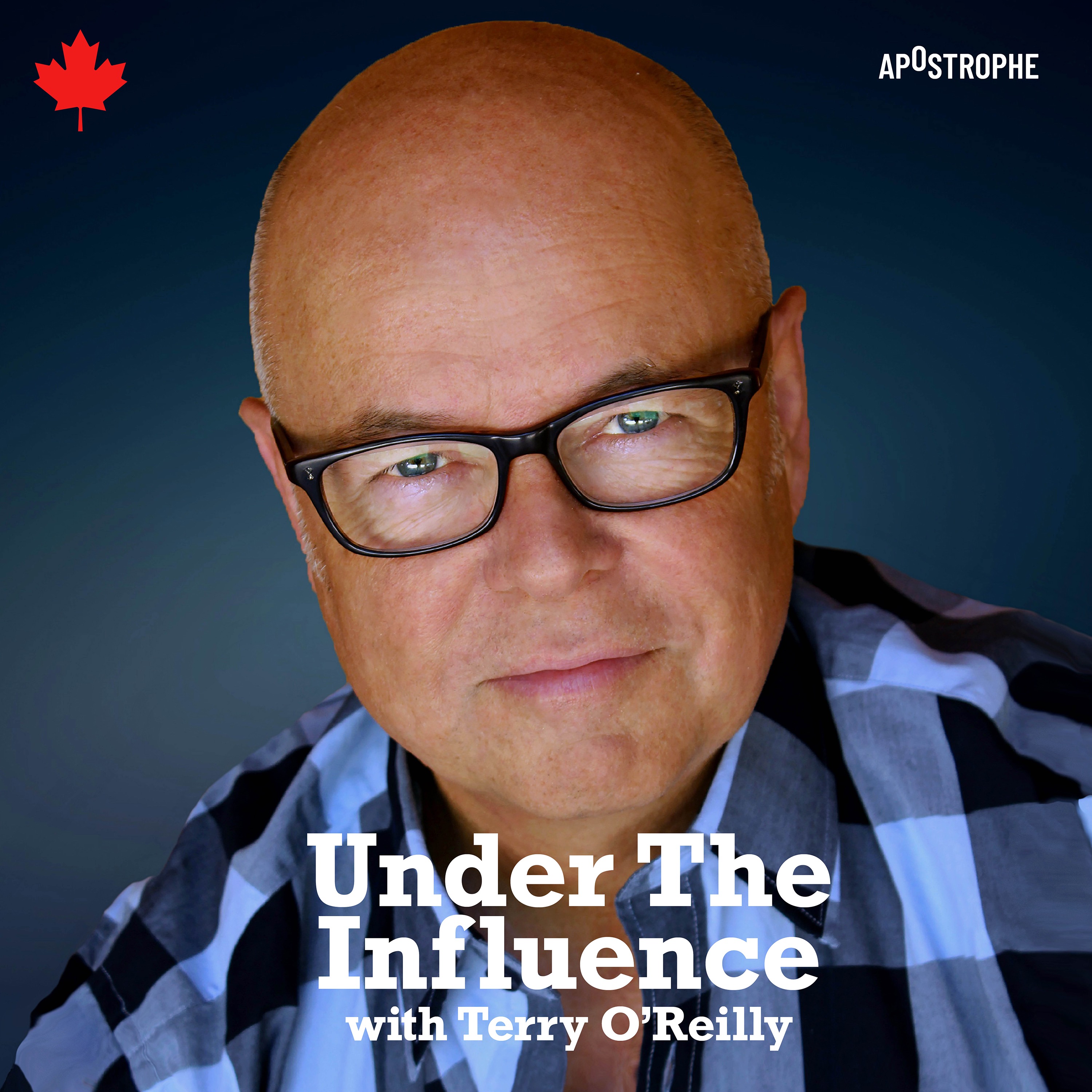
Under the Influence with Terry O'Reilly
Ask Terry 2026
00:27:45
This week, we open the show up to our listeners, and answer your very interesting questions.Ever wonder why gas station prices always include decimal points? Well, we’ll tell you why.We’ll listen to …
Loading summary
Transcript51 lines
- [00:04]
Jeff Devine
Hi, this is Jeff Devine, audio engineer for the Apostrophe Podcast Network. And this is Margo.
- [00:09]
Margo
Hello.
- [00:09]
Jeff Devine
And you're listening to the Apostrophe Podcast Podcast Network Network.
- [00:16]
Chris Guillebeau
Enjoy.
- [00:17]
Margo
Enjoy.
- [00:27]
Terry O'Reilly
Our trip up the coast was perfection. With my Sapphire Preferred card, we earned three times the points on gas, online grocery and dining.
- [00:33]
Commercial Voice
It was amazing.
- [00:34]
Terry O'Reilly
Chase Sapphire preferred the card that's preferred for a reason. Cards issued by JP Morgan, Chase bank and a member FDIC subject to credit approval terms apply. Could AI help you do more of what you love? Workday is the AI platform for HR and finance that actually knows your business. We help you handle the have to dos so you can focus on the can't wait to do's. It's a new workday.
- [00:58]
Acast Announcer
Acast powers the world's best podcasts. Here's a show that we recommend.
- [01:06]
Chris Guillebeau
A photographer in Texas earns an extra $47,000 a year shooting Star wars cosplay portraits. A teacher in Maryland turns her woodworking hobby into a five figure side income without leaving the classroom. And a couple in Pennsylvania will rent you backyard chickens for the season so you can try the egg laying life without commitment. My name is Chris Guillebeau. I'm the host of side Hustle School. I share these kinds of stories every single day in detail, with full transparency about the numbers. The point isn't just to inspire you, it's to show you what's possible. Proof that ordinary people are quietly building extra income in surprising ways, including a few ideas. You can borrow less than 10 minutes a day every day. Subscribe or follow side Hustle School wherever you get your podcasts or find us
- [01:49]
Acast Announcer
directly@sidehustleschool.com Acast helps creators launch, grow and monetize their podcasts everywhere. Acast.com
- [02:04]
Narrator/Host
this is an Apostrophe podcast production.
- [02:13]
Jay (McCain Super Fries kid)
We're going to show you our big new Studebaker.
- [02:16]
Margo
Start the car. Hey, that's a spicy meatball.
- [02:26]
Jay (McCain Super Fries kid)
What love doesn't conquer, Alka sells her will.
- [02:29]
Margo
What a relief.
- [02:38]
Terry O'Reilly
You're under the influence with Terry O'Reilly.
- [02:49]
Narrator/Host
Well, it's near the end of June and if you're a loyal listener, you know that means this is the episode where we turn the show over to you as we do every year at this time. We put out the call for questions and you responded with some very insightful and fun ones and we've tried to squeeze as many as possible into this episode. Today we'll talk about why gas prices are always advertised with decimal points. We'll listen to some commercials starring kids and play Where Are They Now? And we'll talk about a famous luxury brand that is actually owned by a charity. And that luxury brand will surprise you.
- [03:43]
Terry O'Reilly
You're under the influence
- [03:48]
Commercial Voice
Foreign.
- [03:53]
Narrator/Host
Let's go to our first question of the day on Facebook. Nelson Nelson asks why is gas sold at gas stations priced with a decimal point like a $88 and 9/10 of a cent per liter? Well, that's a very good and interesting question, Nelson. Nelson it has been that way since the 1930s by the way, and we all just accept it now. And that 0.9 cent pricing continues even though Canada has phased out the penny. The explosion of car sales in the 1920s also triggered an immense demand for gasoline, which led to the rapid growth of gas stations in both Canada and the U.S. throughout the 1920s, gas prices averaged between 20 and 30 cents per gallon. During that period, the government implemented a 1/10 of a cent per gallon gas tax, using that revenue for road construction and infrastructure improvements. Not long after, that gas tax increased to a penny a gallon. But then the depression hit. Suddenly the demand for gas plummeted and gas stations found themselves competing intensely for customers. As the crippling decade unfolded, gas prices fell to 10 cents per gallon. that price, it was difficult for gas retailers to add the $0.01 gas tax as it was a massive 10% increase, a budget buster for families struggling to put food on the table. So to make that penny gas tax feel less of a hit on the pocketbook, gas retailers employed some age old marketing psychology. Walk into any store and you see prices spend in 99 cents. You'll find items priced for $5.99 or products priced at $89.99 and so forth. That is called left digit pricing, which exploits a left digit bias, meaning most people process numbers left to right. When we do that, something that costs $89.99 feels mentally closer to $80 then 90. By the 1950s, gas prices were high enough to easily hide the gas tax. But gas retailers kept the fractional pricing because the left digit pricing strategy meant millions in additional profits. So $1.88 $0.09 feels more like $1.80 than $1.90. When Canada adopted the metric system in the 1970s, gas retailers kept the fractional pricing when gallon switched to and by the way, there is no law in Canada requiring fractional gas prices. It is strictly a marketing and revenue strategy today. Our next Facebook question comes from Phyllis Waite Franklin. She asks kids in advertising, where are they now? Well, there's a golden rule in Advertising. You can't lose if you've got kids or animals in your commercial. Yes, cute, adorable kids make for powerful advertising. One of the very first print ads I ever wrote was for Eastern Airlines. The ad was promoting a special airfare package to visit Disney World in Florida. We cast the cutest little girl to be in the ad wearing Mickey Mouse ears. The headline said, use an 8 year old excuse to go to Disney World. The ad won a big award that year. The reason that ad won, I'm convinced, was that the 8 year old girl in the ad was just so adorable. I don't know where she is now. But there have been many other memorable commercials with kid actors. A few seasons ago, we did a behind the scenes story on the McCain TV commercial that showed a little kid with glasses putting ketchup on his french fries while reading a comic book. You probably remember that McCain commercial. Everybody seems to, which is remarkable considering there are no words for 21 full seconds as the kid eats his fries. Then an announcer says, super fries from McCain for the strong silent type. That kid would be in his 40s now with a mortgage. Here's something you may not remember. He did make another commercial for McCain 20 years later. In this ad he says his name is Jay. And it begins with footage from the original commercial.
- [08:46]
Jay (McCain Super Fries kid)
That's me, Jay, over 20 years ago enjoying my McCain Super Fries. Still do today. Didn't say much back then. And look at all these different varieties of McCain Premium Super Fries. Spicy, extra crispy, great tasting potatoes with all the flavor and crispiness we love. It's also good to know that they're all made with 100% non hydrogenated canola oil.
- [09:06]
Narrator/Host
McCain Premium Super Fries. All the flavor and crispness you love with 100% non hydrogenated pure canola oil. Consider it the next generation. As the commercial ends, we see Jay eating French fries with his own son, who looks to be about 8 years old and is a spitting image of his dad when he was that age. Do you remember another famous commercial from 1971 where two young brothers are suspicious of a new cereal called Life? So they get their three year old brother Mikey to try it.
- [09:41]
Margo
Look at this stuff. Some cereal supposed to be good for you. I'm not gonna try it. Let's get Mikey. Yeah, he won't eat it. He hates everything. He likes it. Hey, Mikey.
- [09:55]
Jay (McCain Super Fries kid)
Regular cinnamon and raisin. Nutritious, delicious.
- [09:59]
Narrator/Host
That commercial ran for 13 years. So rare in the world of advertising for a commercial to run for that long. But it was so popular, Life cereal stuck with has been named one of the top 10 best commercials of all time. Mikey's actual name was John Gilchrist and those really were his brothers in that original 1971 commercial. And like Jay did for McCain's Super Fries, a grown up Mikey did a follow up commercial for Life cereal. 5th 16 years later, be nice.
- [10:32]
Margo
Mom's gone. So Uncle Mikey, our favorite babysitter, got any plans for making it through the morning breakfast? Life Cereal. We won't like it. We don't like anything.
- [10:44]
Narrator/Host
Aw, I used to be the same way.
- [10:46]
Jay (McCain Super Fries kid)
Life Cereal. One taste of that lightly sweet toasted oat goodness and you'll say I liked it. I told you.
- [10:52]
Narrator/Host
Gilchris went on to make over 250 commercials in his career, although none as popular as the first one he starred in. And Today, according to LinkedIn, John is the director of media sales for Madison Square Garden. He's married and has three kids of his own and says there is always a box of Life cereal in the house. See if you can identify the 13 year old kid in this Bubble Yum commercial.
- [11:20]
Margo
This is a chunk of super soft bubble yum bubblegum. This is a loud thumping tube pumping boombox. Both are known for blast.
- [11:27]
Narrator/Host
He would eventually win an Academy Award in 2016 for a movie titled the Revenant. His name Leonardo DiCaprio. Then there's this 13 year old kid who starred in a commercial for a video game called Pitfall.
- [11:43]
Margo
Just last night I was lost in the jungle with Pitfall Harry surrounded by giant scorpions and man eating crocodiles.
- [11:50]
Narrator/Host
His name is Jack Black. It was his very first acting gig. Then there's this teenager in a McDonald's commercial.
- [11:58]
Terry O'Reilly
We've brought McDonald's value home.
- [12:01]
Margo
Hey, what's this?
- [12:02]
Terry O'Reilly
It's in your mailbox. Great savings on the McDonald's favorites you love. Six great. Buy one, get one free coupons over $10 in savings.
- [12:09]
Narrator/Host
That's Nev Campbell in one of her first acting jobs. And I worked on a commercial starring Nev for crunchy chocolate bars before she was famous. Commercials have given a lot of good actors their start in the business. Liisgreat asks a question that really made me stop and think. Have any of your opinions on advertising changed since starting this show? Hmm. Since Starting the show 21 years ago, we have received a mountain of emails from listeners and this may sound odd, but I have fully come to appreciate how much people hate bad advertising. I always knew there was bad advertising, of course, but I've come to realize how damaging bad ads are to first the advertiser and second to the industry. So many people write us saying they will never buy the product that is advertised in bad commercials. They don't just hate the ad, they now hate the advertiser. Honestly, before doing this show, I thought people just ignored bad advertising, but I never truly understood how deep that hatred goes. I've always believed there is no excuse for bad advertising, and I can tell you firsthand, the advertising is only as good as the client. Put another way, clients have the final word and if they're approving bad work or if they're not demanding great creativity from their advertising agencies, they are to blame. The ironic thing is that clients feel bold work is too risky when the real truth is that boring, mundane advertising is the biggest risk of all. It's not just annoying, it actually creates anti customers and it reflects on the entire industry. There is some incredible advertising out there which I talk about on this show every week. It's just in the minority. We have a question here from Jeff Devine, our very own chief Sound engineer.
- [14:23]
Jeff Devine
Hey Terry the Countdown announcer at the
- [14:25]
Narrator/Host
end of our episodes, Terry's top slogans of all time.
- [14:28]
Jeff Devine
I recognize that voice. I just can't put my finger on it.
- [14:31]
Narrator/Host
Well, Jeff Devine, meet Tony Daniels. I gave Tony one of his first acting jobs many years ago. Tony is a top voiceover actor and has performed in countless animation shows including X Men and the Avengers. He is also an incredible impressionist and has filled in movie dialogue for everyone from Sean Penn and Alec Baldwin to Hugh Jackman and Jackie Chan. Tony was also the longtime voice of Tony the T. When we come back, a famous slogan fuels a 20 year advertising campaign.
- [15:14]
Terry O'Reilly
If you're enjoying this episode, you might also like take a licking and keeps on ticking Advertising Torture tests from our 2020 season. We tell the story of a live Timex torture test where the camera zooms in to discover the tortured watch has gone missing. You'll find the episode on your favorite podcast app. This year's girls trip to Telluride was the best. We one upped ourselves with my Sapphire Preferred card and with 5 times points on Chase Travel plus 3 times points on vacation homes with top brands, we got this incredible cabin. It was a mansion and with three times the points on dining, we ordered a Wagyu steak dinner and that pistachio gelato was too good. So where should we go next year? I've got ideas. Chase Sapphire preferred the card that's preferred for a reason. Cards issued by JP Morgan Chase bank and a member FDIC subject to credit approval terms apply. Could AI help you do more of what you love. Workday is the AI platform for HR and finance that actually knows your business. We help you handle the have to DOS so you can focus on the can't wait to dos. It's a new work day.
- [16:28]
Oregon Lottery Announcer
Oregon Parks make an Oregon Summer but what makes an Oregon Park? Well, Oregon Lottery Gameplay helps no matter the game Megabucks, video Lottery or Keno funds from lottery games help support parks projects across the state, ensuring they stay safe, accessible and open for all. In fact, Discover State Park Scratches are in stores now. It's the perfect way to put a little bit of Oregon's parks in your pocket. The Oregon Lottery Together we do good things. Must be 18 or older to play. Lottery games are based on chance and should be played for entertainment only.
- [17:05]
Narrator/Host
Here's an interesting question from Robert Pavlasek. My father and two uncles worked at defasco for decades and until the company was bought out, its radio campaign ads always ended with the slogan Our product is steel, Our strength is people. What was the origin of that slogan and what was the ad agency that put it forward? Well, for those of you who didn't live or grow up in Ontario, defasco is a big steel manufacturer based in Hamilton. It was founded in 1912 as the Dominion Foundries and Steel Company. Soon the company gained the acronym nickname D.O. fASCO and the name stuck. DEFASCO ran a corporate advertising campaign for years and the slogan became famous. It was developed by a Hamilton based advertising agency called RT Kelly. My friend Mike Jacock was there at the birth of the slogan. Mike tells me his advertising agency was tasked with doing a research study in 1969 to find out what the awareness and attitudes were towards its client defasco. They surveyed employees, business leaders, government staff and politicians. From that research, the ad agency was to develop a corporate communication strategy to lift the awareness of defasco. One day in the boardroom, a number of potential slogan ideas were presented. None really hit the mark. Then a quiet spoken ad writer named Dave Adney offered up another option. Our product is steel. Our strength is people. There was dead silence in the room and then everybody jumped up and said, that's it. ADNI had managed to squeeze down everything about the company and the people into one powerful idea. An advertising campaign was developed around the new slogan. In each commercial, a defasco employee would talk about the pride they took in their job and what Defasco was striving for. The campaign ran for 20 years and Mike Jacox ad agency produced close to 1100 different commercials. That campaign had a big impact by featuring the passionate people who worked at defasco, awareness of the company reached record levels. Employees said that when they told people they worked for defasco they would be greeted with oh, you're the Our product is Steel, Our strength is people. People. Mike says the slogan was true to the company in every way as defasco treated its employees well and was one of the first big corporations to institute profit sharing. Marketing magazine calls Our Product is Steel, Our strength is People one Of the top 100 Canadian marketing campaigns of all time, saying it was one of the most clearly defined corporate images in the country. So there you go Robert. Jennifer H. Badger has a question about our podcasts. She says, I love your show and listen to it faithfully. I am living abroad now and I am always surprised when I am listening to an under the Influence podcast and the commercial is in a language of the country I am in and about a local product, be it French, Dutch or German, for example. How are the advertisements managed to enable this? I've been waiting to ask this question for a few months. Well, I have an answer for you, Jennifer. Not too long ago, a new technology was introduced to podcast advertising. It's called dynamic insertion. Essentially, it works like this. Every podcast has allotted spaces for ads. A pre roll at the beginning of a podcast, two mid rolls that occur at the mid and three quarter marks, and a post roll at the end of the podcast. The amazing thing about dynamic insertion is that ads can be placed into podcasts and taken out. And it's all done via software. In other words, when an ad has run its course, it is automatically taken out and a new ad is automatically put in. And these new ads are also dynamically inserted into all of our archived podcasts. So even if you're listening to a show from 2013, you'll hear a current ad inside it. And here's another technical advantage. Dynamic insertion allows for geo fencing, so we can control where an ad is heard. It could be a New Brunswick only ad, or it could be a national ad. And when the podcast is heard internationally, commercials are inserted in that country's language. And again, it all happens automatically with dynamic insertion software. It's completely changed the podcast advertising world because previous to this innovation, any commercials placed into a podcast stayed there unless the creator wanted to personally edit them in and out by hand, which is a huge undertaking, especially if you have hundreds of episodes, as under the Influence does. Comprendez vous Jennifer Wunderbar. Kevin Radcliffe has a question about deceptive advertising. He wants to know if networks or media companies are liable for misleading ads. So if a misleading ad runs on CBC tv, for example, is CBC liable? Generally speaking, Kevin, the answer is no. Liability for misleading ads rests with the originating advertiser or marketer first and foremost. That said, if a network or media company actively participates in creating the deceptive ad, then they would be liable. If online media companies are notified that a deceptive ad is running on their platform and they refuse to take it down, they could be liable. Broadcasters and digital publishers adhere to industry mandated codes of conduct as administered by Ad Standards Canada. If an ad violates these standards, media companies can be required by the regulatory body to pull the ad or insist on modifications to the ad. And in many cases, deceptive advertisers are also heavily fined. Megan Danbrook asks a fun what's your favorite Beatles song? Well, I could list about 300 Megan, but I would have to say it's Here Comes the Sun, followed closely by Norwegian Wood. Thanks for asking. When we come back, a famous luxury brand that is actually owned by a charity foundation.
- [24:32]
Commercial Voice
Before we had AT and T Business Wireless coverage, our delivery GPS wasn't the most reliable. Once our driver had to do a 14 point turn to get back on route. A 14 point turn. An influencer even livestream the whole thing. Not good for business. Now with AT&T business Wireless, routes are updating on the fly and deliveries are on time. And the influencer did get us 53 new followers though.
- [24:57]
Jeff Devine
AT&T business Wireless connecting changes everything. A morning walk, Some bird watching. It's another easy Sunday. UnitedHealth Group makes these ordinary days possible, with partners like the University of Tennessee Health Sciences helping communities manage their health closer to home. 54% of participants have lowered their blood pressure, meaning fewer heart attacks and more Sundays at the park. This might feel like an ordinary day to UnitedHealth Group. It's the healthcare system working better for everyone. Learn more@unitedhealthgroup.com commitment never bet against American Grit or American Energy through innovation, Venture Global is not only building some of the largest energy facilities in the world right here in the United States, but delivering American energy at a fraction of the cost and a fraction of the time. So while others are busy talking, we're busy building. That's Venture Global. That's unstoppable energy.
- [26:14]
Narrator/Host
On X. Max Hurst asks this question, are there any huge brands that are fully owned by charities? The answer to this one might surprise you. Rolex. It's one of the most prestigious watch brands in the world. The Rolex company produces over 1 million watches per year and its estimated Rolex earns between 12 and 15 billion US dollars annually. Why is that only an estimation? Because Rolex is privately held and is not required to publish its financials. And believe it or not, Rolex is 100% controlled by a charitable trust. The Rolex company in many ways is structured like any successful commercial corporation. It produces, sells and markets watches. It has operating costs. It also has estimated profit margins of between 20 and 30%, which translates to around $3 billion per year. Back in 1905, Hans Wilsdorf founded the Rolex Company. He called it Rolex because he wanted a word that could be pronounced in any language and he wanted the word to be an onomatopoeia. In other words, he wanted the name to sound like a watch being wound. When his wife passed away in 1945 and because he had no direct descendants, he established the Hans Wilsdorf foundation to preserve the company and its mission. When he died in 1960, Wilsdorf bequeathed all of his shares to his non profit foundation. This foundation doesn't answer to shareholders or public markets. In other words, Rolex SA is a for profit commercial manufacturer, but its sole shareholder is a non profit foundation. Running Rolex requires substantial operating costs. Thousands of watchmakers, engineers and support staff keep the operation functioning. The company maintains four major manufacturing facilities in Switzerland and is currently building another billion dollar plant there. Rolex runs expensive advertising campaigns around the world. It also sponsors high end sporting events like the Masters golf tournament and is the official timekeeper at Wimbledon. But all of Rolex profits flow into the Hans Wilsdorf Foundation. No one outside of Rolex knows how much or to which causes it donates to. But the Foundation's philanthropic activity is visible through its partnerships and award programs. The Rolex awards for enterprise, for example, fund projects in environmental research, medicine and humanitarian innovation. Past recipients have worked on malaria treatments, accessible health care in underserved regions and neurotechnology, which helps paralyzed patients regain movement. The foundation's primary focus is individualized support. It provides financial assistance to numerous people often referred by social services. It awards many scholarships to students through ad hoc foundations. It is also active in debt relief and the integration of young people into the workforce. The foundation receives nearly 4,000 applications for funding a year. To process them, a small team of barely 10 people handles the paperwork. Applications are reviewed quickly and without excessive bureaucracy. Rolex is clear on principles without setting overly strict lines. In addition to social works, mutual aid associations, cultural organizations and medicine, Rolex provides numerous forms of assistance in other areas such as student housing, cinemas and churches, it purchases instruments for the Swiss Orchestra and it gives support for asylums and nurseries. This support takes the form of one off grants as well as long term assistance and remarkably, this monetary aid is granted without any conditions attached. So the next time you see a Rolex on a wealthy person's wrist, remember the money that was paid for that watch is actually going to good causes. Surprising and amazing. Thank you for all those great questions today. Who knew gas station decimal prices were a holdover from the 1930s? And who knew Rolex is one big charity? The world is full of interesting surprises. And above all, thank you for listening. We really appreciate our audience. I want to take this opportunity to thank all the amazing people who worked their hearts out on this show every week. You'll hear their names in a moment. Couldn't do it without them. And check out our sister show titled We Regret to Inform youm which will be airing on CBC this summer and it's on your favorite podcast app. I'm Terry O'Reilly. This episode was recorded in the Tear Stream Mobile Recording studio. Producer Debbie O'Reilly Chief Sound Engineer Jeff Devine Researchers Patrick James Aslan, Allison Pinchus, Shay Grinton and Angus Mary Social media Team Sydney O'Reilly and Callie O'Reilly under the influence theme by Casey Pick, Jeremiah Pick and James Ayton Tunes provided by APM Music. Follow me on social at Terry oinfluence this podcast is powered by acast, Terry's top slogans of all time. Number one Nike. Just do it.
- [32:48]
Acast Announcer
Acast powers the world's best podcasts. Here's a show that we recommend.
- [32:55]
Monica Reinagle
I'm Monica Reinagle, nutritionist, author and host of the Nutrition Diva podcast. We dig into the questions that you are actually asking. If it's okay to drink coffee on an empty stomach. Whether it's possible to retrain your sweet tooth which ultra processed foods you might actually want to include in your diet. We take a closer look at diet trends, fact check sketchy claims and track down the science so that you can feel more confident about what's on your plate. New episodes are released every Wednesday. Find Nutrition Diva on Apple Podcasts, Spotify or wherever you're listening and be sure to follow or subscribe so you don't miss a single episode.
- [33:41]
Acast Announcer
ACAST helps creators launch, grow and monetize their podcasts everywhere. Acast. Com.