← Under the Influence with Terry O'Reilly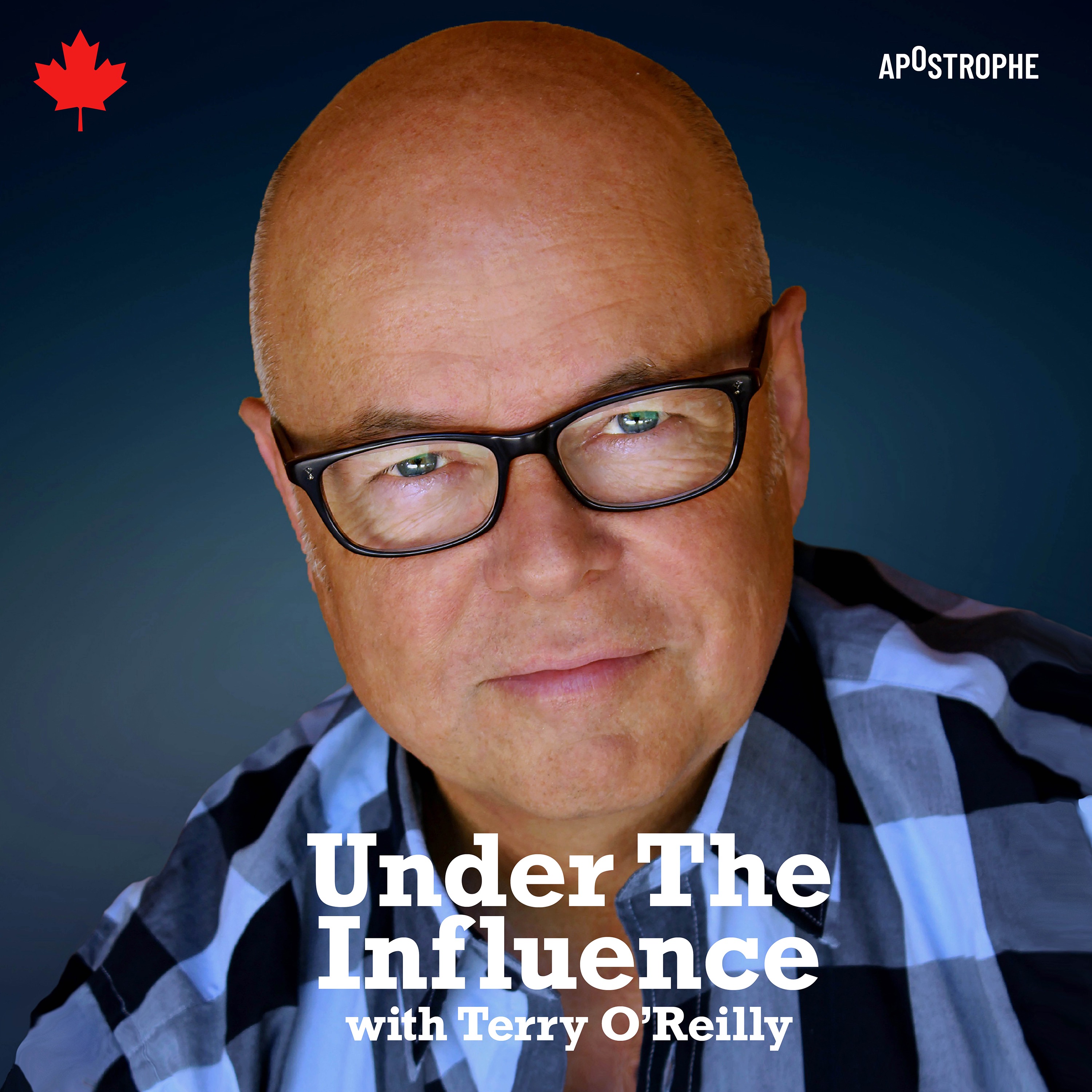
Under the Influence with Terry O'Reilly
Interview with Author & Arkells Frontman Max Kerman
00:46:17
Arkells frontman Max Kerman has written his first book, “Try Hard: Creative Work in Progress.” Max talks about what a lead singer for a band does all day, the nuts and bolts of song wri…
Loading summary
Transcript113 lines
- [00:02]
Terry O'Reilly
Hi there, Sydney O'Reilly here. We regret to inform you that the Rejection Podcast is back for its sixth.
- [00:09]
Max Kerman
Season and Terry and I have some.
- [00:11]
Terry O'Reilly
Fun episodes to share with you. This year we'll be telling the stories of Yellowstone, Josh Allen, Bill Hader, Monty Python, Billie Holiday, and Canada's own Alanis Morissette. It's jagged little Rejections this year on We Regret to Inform you.
- [00:27]
Max Kerman
Hope you'll join us.
- [00:32]
Verizon Representative
Now at Verizon, we have some big news for your peace of mind for all our customers, existing and new, we're locking in low prices for three years guaranteed on MyPlan and MyHome. That's future youe peace of mind and everyone can save on a brand new phone on MyPlan. When you trade in any phone from one of our top brands, that's new phone piece of mind. Because at Verizon, whether you're already a customer or you're just joining us, we got you. Visit Verizon today. Price guarantee applies to then current base monthly rate. Additional terms and conditions apply for all offers.
- [01:03]
Max Kerman
Instacart is on a mission to have you not leave the couch this basketball season because between the pre game rituals and the post game interviews, it can be difficult to find time for everything else. So let Instacart take care of your game day snacks or weekly restocks and get delivery in as fast as 30 minutes because we hear it's bad luck to be hungry on game day. So download the Instacart app today and enjoy. $0 delivery fees on your first 3 orders. Service fees apply for 3 orders in 14 days. Excludes restaurants.
- [01:33]
Paige DeSorbo
This is Paige, the co host of Giggly Squad. I use Uber Eats for everything and I feel like people forget that you can truly order anything, especially living in New York City. It's why I love it. You can get Chinese food at any time of night, but it's not just for food. I order from CVS all the time. I'm always ordering from the grocery store and a friend stops over. I have to order champagne. I also have this thing that whenever I travel, if I'm ever in a hotel room, I never feel like I'm missing something because I'll just Uber eats it. The amount of times I've had to Uber eats hair items like hairspray, deodorant, you name it, I've ordered it. On Uber Eats you can get grocery alcohol everyday essentials in addition to restaurants and food you love. So in other words, get almost every anything. With Uber Eats order now for alcohol you must be legal drinking age. Please enjoy responsibly. Product availability varies by region. See app for details.
- [02:36]
Podcast Producer
This is an Apostrophe Podcast production. We're going to show you our big new Studebaker.
- [02:55]
Terry O'Reilly
Mama Mia. That's a spicy meatball.
- [02:58]
Podcast Producer
What Love Doesn't Conquer, Alka Seltzer will.
- [03:02]
Paige DeSorbo
What a relief.
- [03:11]
Terry O'Reilly
You'Re under the influence with Terry O'Reilly.
- [03:36]
Podcast Producer
Max Kerman is the lead singer and frontman for the band R. Kells. Recently, Max has written his first book titled Try Hard Creative Work in Progress. If you've ever wondered what the lead singer of a globetrotting band does all day, what that job really entails, and how he goes about it, you just might be surprised at Max's answers. In this book, he talks about the nuts and bolts of songwriting, the joy of collaboration, the day to day business of running a band, and how R. Kells go about marketing their music. The book is funny, conversational, and incredibly insightful, and he offers you a framework to bring more creativity into your work. I began by asking Max what sparked the idea to turn his thoughts on the subject of creativity into a book.
- [04:30]
Terry O'Reilly
Well, over the years people have said you should write a book because people like rock and roll autobiographies, people like the stories of being on tour, sex, drugs, rock and roll, all that stuff. I don't particularly like those kinds of books. You know, I know we share a love of the Beatles. I'm into Beatles history.
- [04:46]
Podcast Producer
Yes.
- [04:47]
Terry O'Reilly
But beyond Beatles history, I don't know if I care that much about rock and roll lore. I just don't.
- [04:51]
Podcast Producer
Oh, interesting.
- [04:52]
Terry O'Reilly
Yeah. But I do love talking about the nuts and bolts of the job. So whenever the conversation turns to like, oh, how did the band get together? Or how do you guys think about money? Or how did you guys start playing shows? How did you get better at playing shows? Like, those are questions that I love to talk about. And people's eyes always light up more than I expect when I really get into the day to day of what my life looks like. And so that's where I started. I said, oh, you know, if I could just like have a bunch of essays about the nature of my day to day life and things I've lear, then that might be a place to start the book.
- [05:27]
Podcast Producer
Were you ever wary of analyzing your creative process that by dissecting it you might alter the magic, you know?
- [05:35]
Terry O'Reilly
No, because I'm always analyzing it happily and I don't really believe in magic. See, I even talk about that in the book where people when they think about like, oh, how Were those great songs written? Or how did you pull this thing off? And they think about Paul McCartney, you know, how did you write yesterday? It's like, well, it came to me in a dream. Like, well, that's not particularly helpful, you know, if you were to ask Paul McCartney how did you actually think of that chord change or what inspired that song? If you actually asked him, he'd go, well, you know, I was listening to Brian Wilson, and Brian Wilson wrote God Only Knows, and, you know, he did this really clever thing, and I tried to rip that off, you know what I mean? Like, that's what the answer actually would be. So I'm constantly analyzing what is working and what is feeling good and what's not feeling good anymore. And maybe something that was working in the past has gone stale. And I get into that in the songwriting chapter. The first three records with the band, it was written like an indie rock band where it's just the five of us in a room figuring out the songs together. But we'd done that for eight years. And after eight years of doing the same thing, you kind of got to figure out, okay, are we going to do this for the rest of our lives or can we reinvent ourselves in some way? And I realized, like, oh, maybe if we had a voice outside the band that helped reimagine what songwriting could look like, that might be a good skill to learn and to acquire and then to bring back to the fold, to bring back to the band. And I get into that in one of the chapters, how I made this trip to la and in one day with one producer, I've only met that one day, his name's John Fields. We wrote a song, My Heart so Is Yours, or we started it and I learned, like, oh, you know what? I don't have to sing in a vocal booth. Terry, I don't know if you know this, but you don't always have to do the vocals in a vocal booth. Bono, when he sings, he sings right there in the control room with his bandmates hanging around with the monitors blasting back out at him. And I wouldn't have known that if not for John Fields. I suppose if I had read a YouTube biography, I would have known that maybe I should read more rock and roll biographies. So a big part of the book is like, how do you evolve? How do you kind of analyze where you're at and get better?
- [07:34]
Podcast Producer
You know, it's interesting that you bring up the fact that you've had these blind date writing sessions or working with a brand new producer. In my field of work. So I spent my career in advertising agencies. And you were always paired with somebody, so a writer with an art director. So I was a writer paired with an art director. And you develop a relationship, and from that relationship, you know, you would create stuff. The sparks would fly. If you shared the same sense of humor, even though you were different in other aspects, it would work. But whenever I was paired with somebody new, let's say my art director was ill or on holiday, and then I get paired with somebody, it was really hard, I found, to get the sparks of creativity happening. Cause there was no relationship there. So you say that you can walk into a room and work with somebody new and really have a great experience. So explain that to me how you get over the non relationship aspect of that.
- [08:23]
Terry O'Reilly
Oh, good question. Well, I mean, it doesn't always go as smoothly. And of course, there's like a comfort to working with people that you're very familiar with. And I do think it requires in a songwriting session, you to really let your guard down and be vulnerable and think about, am I really gonna say the thing that's bothering me today?
- [08:40]
Podcast Producer
Hard to do with a new.
- [08:41]
Terry O'Reilly
It is hard to do with a new person. And I think maybe that's one of my skills, is that I'm just able to let my guard down a little bit and be vulnerable. But that said, I think it's up to everybody who's working on a team to bring back new information to the group. Because I do really love group work. And I want all my partners to go out there having conversations and learning from other people. Otherwise, we just all become predictable. I talk about our manager, Ash in the book, and she's a huge creative partner in my life. And I love when she says, oh, I had. I was talking to so and so, and they told me this thing, and it made me think about how we can market the band a little differently now. I want her to be consuming information that's not just my stupid voice all the time. And then same thing goes with the band. Like, I want everybody that I'm working with to do continuing education. And it's so funny because my dad, you know, I talk about this in the book. My dad is a social worker, but he puts on these continuing education conferences for social workers and mental health professionals. And it's a big part of his life is just continuing to learn. So I think it makes the group stronger if we're just collecting more information from outside of the group.
- [09:41]
Podcast Producer
George St. Pierre, my favorite UFC fighter, has this great Line that he calls it a white belt mentality, that even though he is a 4th degree black belt, he has a white belt mentality, meaning he's always willing to learn.
- [09:53]
Terry O'Reilly
Oh, I love that. I'm going to steal that. That's a great line.
- [10:00]
Podcast Producer
Every writer has a process. I was interested to know how Max tackled writing this book. Did he like to write alone in a quiet space? Does he like to write somewhere busy? Does he prefer mornings or evenings?
- [10:13]
Terry O'Reilly
I really like working in the morning at a coffee shop. I like the hustle and bustle. I like that it provides just a little bit of distraction. I think that stimuli does a lot for me. I know there's some writers that need to be in their own apartment or in their own writing space in the woods. I hate that. I've always kind of hated that stuff. And I like to be able to get up and when I'm ready to be done, be in the middle of a neighborhood and go for a walk. So I'd say, again, what business do I have writing a book? It's my first book. I feel very much like an amateur. But the way I did it, I can say is I would work on an essay. I'd get to 1500, 2000 words, and that would take me a few hours. And it would be sloppy and it would be bad, but I'd enjoy it. The flow state and the excitement of getting new ideas down to paper was very fun for me. And then I'd call Ash. I say, ash, let's go for a walk. And I just read her a bit of what I had. And in reading out loud, I could pretty quickly identify what parts were meandering, what parts were funny, what parts seemed redundant. And I can also get real time reaction from Ash. And also she's so creative, she would go, oh, you forgot to mention this other part of the thing that happened that day. So for me, and again, everybody is different. And not everybody needs an audience immediately in the way that I need an audience or like an audience. But having feedback quickly gave me a lot of momentum. And I think momentum is so important in a creative project. And people can find momentum in different ways. You don't have to do it the way I did it, but for me, that ongoing conversation just spurned more work.
- [11:49]
Podcast Producer
Let's talk about the flow state you mentioned, because I get into that as a writer too. When I'm writing my show, I'll get into that slipstream, that flow state and time will disappear. Like I'll look up at the clock and I'LL have been at it for five hours and it feels like 90 minutes. But that flow state is so important to creativity, isn't it?
- [12:08]
Terry O'Reilly
Oh, yeah, it's so good. It's much different than editing. Editing requires a different kind of patience. But, yeah, I think if you've been ruminating on an idea for a long time, and in this case, like my entire life, just these ideas that consume me every day, more comes out of you than you think. And also by writing, you learn about yourself. Right. There's nothing like it. The experience of educating yourself as you write down your own ideas and you go, oh, that's actually kind of what I think. You know, it's like trying to articulate it just right.
- [12:34]
Podcast Producer
To see it articulated.
- [12:35]
Terry O'Reilly
Yeah, yeah. But I think for me, because the book is kind of a collection of essays, it's sort of in chronological order, I did sit down with a theme in mind. A lot of each chapter revolves around just a story I wanted to tell. And if you're reading just for the story, hopefully it's just an entertaining story. But if you're reading closely, there's a lesson in there. And also, I hope you see yourself in the story in some way. For instance, like in a chapter about my dad, talk about his work as a social worker, and then he kind of started his own business doing these continuing education conferences. And the lesson there is, it's like what exists in your family that you might be able to take from. And it doesn't mean that your dad had to be an entrepreneur. Is there something about your dad's work ethic or his lack of work ethic that inspired you? You know, it's like we're shaped by our families, we're shaped by our friends, we're shaped by our communities. And that's what a lot of book is about. It's just like kind of taking from all those things around us.
- [13:37]
Podcast Producer
In his book, Max mentioned one of my favorite books, Stephen King's On A Memoir of the Craft. In King's book, he talks about his writing process, his experiences writing novels, and his advice for other writers. It was, interestingly, the first book King wrote after he had that horrific car accident. I liked his book because, believe it or not, the way he approaches novel writing shares so much in common with the way I wrote advertisements. I wondered what Max took away from King's book.
- [14:11]
Terry O'Reilly
Well, I mentioned this in my book is he's so matter of fact about it. You know, I think a goal for my book is to demystify creativity and the arts and just understand that. It's just. It starts with a curiosity to do it and to learn more, and then it's just the act of doing it. And Stephen King says, you know, if you just try to get down 1500, 2000 words a day, and you do that for four months, you got a.
- [14:35]
Podcast Producer
Book, you got a book.
- [14:36]
Terry O'Reilly
How complicated is it? And it's true, because people go, how did you write a book? How did you possibly do it? You know, it's way harder than writing a book. To me, assembling IKEA furniture, I couldn't. Like, that seems so much harder. I'm not kidding. I couldn't do one piece of IKEA furniture, but I couldn't. But writing a book, that's actually kind of a nice time.
- [14:56]
Podcast Producer
I agree with you on that. I have a book coming out in the fall, and my book contract said I had to deliver 80,000 words. So literally what I did was figured out how many words per week I had to generate to meet that deadline. And it was really the discipline of creative.
- [15:11]
Terry O'Reilly
Totally.
- [15:12]
Podcast Producer
Right. It takes a lot of discipline. Tell me about the need to find creative co conspirators. And you touched on that already today. But why is that so important? Because a lot of creativity is a solo act.
- [15:28]
Terry O'Reilly
Yeah, but I do think of creativity like a team sport. My first love is sports. I played on team sports. And no interest in solo sports like swimming or running, those things would have stressed me out. But being part of a team always made me feel so alive. Right. Like basketball, baseball, volleyball, those were the sports I played the most. But I played ball hockey, I played flag football. And what I love about sports is that there's a different role for each player on the team. You know, on a basketball court, there's the guy who brings up the ball. There's the guy responsible for rebounding. There's the guy responsible for setting a pick. There's the guy responsible for, like, defending the other team's best player. And I love that because that's sort of like what being in a band is. You know, it's like, not everybody can be the high score, not everybody can be the singer, but not everybody wants to be that. That's not everybody's talent. Some people's talent is drumming, some people's talent is rebounding. I think creativity can be a team sport, and that's why I really like it. And that's why finding co conspirators is so satisfying to me. Here's the other thing is I know what I'm bad at, which is most things. I can't edit anything in Pro Tools. I'm a terrible guitar player. I can't drum. But I have ideas. I have ideas. And there's some people who just really want to be great at executing their part and want to talk about ideas, but somebody may not know where to begin. And then that's where my job is, to come in and go, what if we did this? I think there's so much pleasure to be found in working with people who have skills that you don't. And the only way you build an enterprise that is a band which has turned into a big apparatus, right? Like, it's not just us in a studio recording songs. It's us making merch. It's us going on tour, selling tickets. It's us designing what the production is going to look like. You need to be able to communicate with people and value what they do.
- [17:09]
Podcast Producer
Because everybody has a superpower, right, Max? I'm a big believer in that. And you say in the book, and you're touching on this now, and this is important, I think you have to learn to delight in other people's skills. Like, you have to welcome that. You can't be offended by it or made insecure by it. You have to actually welcome that.
- [17:27]
Terry O'Reilly
I think I take extra delight in other people's skills because they often feel so foreign to me, that someone would have the patience to figure something out or someone has the ability. When I see Anthony play at the piano in our band, I go, oh, my God. God, the way his fingers move, it's breathtaking. It's really breathtaking. And I just think, oh, God. He's been practicing since he was five years old, and if he can't figure out a lick, he takes the time to figure out the lick. And he can also do things with both of his hands. Like on stage, he's playing one keyboard with his left hand, another keyboard with his other. He's triggering sounds. And I go, oh, my God. How does he possibly do that? And it's funny because people might compliment me on something I do on stage. And I go, oh, that's just whatever I happen to be able to know how to do. I'm not impressed with that at all. Just what I happen to be able to know and care about. But that's not interesting to me. What's interesting to me is, like, what other people have figured out how to do.
- [18:21]
Podcast Producer
Let's talk about being an entrepreneur, because being in a band is a business. You're running a business when you are the Boss and you touch on this in your book. You do not have a boss telling you how hard to work or when to work. So you have to be disciplined and you have to provide that, drive yourself. Talk to me about that.
- [18:38]
Terry O'Reilly
Well, there's a few parts to it. One, I really enjoy the job. It gives me purpose, right? Every day I wake up and I have a to do list and things I need to figure out. And right now I'm in the middle of a bunch of items on my to do list. It's Monday morning, it's sunny outside. I went for a walk with Ash. There's stuff to do today, which is great. And I did some writing in the morning. I'm doing another podcast later. I'm going to be calling the band. We got to work over some mixes. So it's all provides purpose. I think the other thing is, is that I recognize how precious the job is and how unique it is and how lucky we are that we get to only work this job because most creatives, talented creatives, like awesomely talented creatives, often have to work their own 9 to 5 job just to make rent. They have a side hustle and that's 99% of people in the creative fields. And that is just like a reality of the world that we live in. So understanding that, I also operate slightly in a place of fear where I go, I can never go back. I don't want to go back because I just appreciate what I have so deeply that it takes real work to hold onto it. Because if you don't, if you're not precious about it, if you don't recognize how special it is that you have this job that pays the bills, it could go away. So I think we work in service of making sure that we can make the next record, that we can go on the next tour, that we can continue the fun that we have. That's one of the reasons why we work so hard.
- [20:00]
Podcast Producer
One of the main themes of Max's book is that success is really built brick by brick, as his title, Try Hard suggests. And that you really have to learn to enjoy that process because it really is a ton of hard work.
- [20:16]
Terry O'Reilly
It really is. Our first record came out in 2008 and I think about our peer group from that time, who are some of the like most amazing songwriters that I know, some of the most amazing performers that I know, some of the most amazing musicians that I know, but many aren't doing that job anymore. They've had to transition into something else. And it's not because they're not amazing. They are. But I think the longevity comes with keeping that spark alive. And you have to figure out how to regenerate that spark every day. Because the second you start resenting the job or resenting your colleagues, that's when the work slows down because you have more creative conversations when you're getting along with the people that you're working alongside. The second you look at your phone and go, do I want to call that person? Whether that's a bandmate or whether that's your label, the second that starts to happen, the work slows down, you lose that momentum. And I mentioned this earlier, you can't lose the momentum. You have to keep that energy alive within your projects.
- [21:13]
Podcast Producer
And you said also on that subject, that hard work equals luck. I think it was that famous golfer Gary Player, maybe, that said, the harder I practice, the luckier I get, because hard work does then also beget luck, right?
- [21:26]
Terry O'Reilly
Yeah. But I do think that when people ask us about, what are the lucky moments that you had? And I can talk about it, you know, there's a chapter in the book where in 2007, we played north by Northeast, the music festival in Toronto. And we played at Yonge and Dundas Square, a town square that has seen crowds of 15,000 people. We played for 25 people.
- [21:45]
Podcast Producer
Right.
- [21:45]
Terry O'Reilly
My grandmother was there, the first and last show she ever saw. She sat on her walker, and someone happened to walk by that day. His name's Shawn Creamer. He was a little bit hungover. He liked what he heard from the back of the square. He purchased six eps that we had just made. And making that EP was hard. You know, it's like we were in the middle of classes. We were driving to Scarborough every night and then getting home and writing an essay to hand in the next day at McMaster University. And we paid with it with our own money. We sold six copies. And I remember at that end of the afternoon, I said, oh, my God, we sold some eps. That's fantastic. Turns out Shawn Creamer was the owner and operator of this bar, the Dakota Tavern, which is in Toronto's West End, which is a real music hangout. It just actually closed down, RIP but he took it upon himself just to give our EP to different managers, and it ended up in the hands of Joel at Dynalone Records. And Joel liked what he heard, and then Joel signed us. So it's like, for us, getting to that point at Young And NSquare took three years of working as a band media McMaster, practicing rehearsing what are we going to wear that show? How are we going to get to the show? Sometimes we take the go bus or the Greyhound to get to other cities to make the gig. So it took a lot of work. But then we got very lucky that Sean was walking by that day.
- [22:57]
Podcast Producer
That's right. And that luck wouldn't have happened without all that hard work. You say you learned several important lessons watching Bruce Springsteen, which I thought was very interesting. Give me a sense of what a couple of those lessons were.
- [23:12]
Terry O'Reilly
So, yeah, I went to the show at The SkyDome in 2012, Rogers Centre in downtown Toronto. I mean, I could go on. This could be a three hour conversation, but I'll try to keep it short. He walked on stage to take me out to the ball game. The organ player was playing. And I go, that's such a funny, thoughtful little detail. He's in a baseball stadium. He's walking onto like a kind of a song that has a bit of a chuckle and a wink to the crowd. So he gets on stage and immediately the band kicks off. You know, there's no tuning your instruments and letting the buzz die off. And it's funny because I've been to so many club shows over the years with some of my favorite bands and you know, they walk on the stage. And one of my favorite moments of any concert is when the band walks on the stage. I always never want to miss the first song because I just love that feeling. There's no feeling like it when a man walks on the stage. And then I've seen so many shows though, where the band walks on the stage and then proceeds to tune their instruments for the first 45 seconds.
- [24:00]
Podcast Producer
So true.
- [24:01]
Terry O'Reilly
And it's brutal. And it's such a small detail that really means a lot to me. So anyways, sing Springsteen, walk onto a thoughtful song and then launching right into him. Okay, I took that note. Then he looked up at the crowd, he said, how's it going up there? I remember thinking, because I've seen Springsteen up in the. Cause I was close to that show. But I've seen him when I've been up in the cheap seats and I always go, oh, he's looking at us, he's thinking about us. I'm like, okay, I'm gonna clock that. Then he was actually looking in the crowd and looking for signs. And because people bring these homemade signs, he goes, oh, maybe we should play that one. And the band is such a well oiled machine.
- [24:31]
Podcast Producer
Yeah.
- [24:31]
Terry O'Reilly
That he pulls the sign up from the crowd towards the end of one song and then on a dime, they just launch into the next one. And that comes with the band being really prepared. But all these things are very simple. None of it's rocket science, but it made the show feel amazing. Anybody can make that show if you're prepared. So again, not rocket science, but it's just about being prepared and these little gestures that show to the audience that you care. And then it feels like magic. Then the whole thing feels like magic. So that was a masterclass for me in what any band can do. And that's what I tell young bands. I'm like, when you walk on stage, just have your instruments tuned up and go, you know, that's a small thing that separates good bands from great bands.
- [25:15]
Podcast Producer
When we come back, Max talks about the need to be brave for just five minutes.
- [25:22]
Verizon Representative
Now at Verizon, we have some big news for your peace of mind. For all our customers, existing and new, we're locking in low prices for three years guaranteed on MyPlan and my home. That's future, you peace of mind and everyone can save on a brand new phone. On MyPlan, when you trade in any phone from one of our top brands, that's new phone peace of mind. Because at Verizon, whether you're already a customer or you're just joining us, we got you. Visit Verizon today. Price guarantee applies to then current base monthly rate. Additional terms and conditions apply for all offers.
- [25:53]
Podcast Producer
Race the rudders. Raise the sails. Race the sails.
- [25:57]
Terry O'Reilly
Captain, an unidentified ship is approaching. Over.
- [26:00]
Podcast Producer
Roger, wait. Is that an enterprise sales solution?
- [26:04]
Terry O'Reilly
Reach sales professionals, not professional sailors. With LinkedIn ads, you can target the right people by industry, job title and more. We'll even give you a $100 credit on your next campaign. Get started today at LinkedIn.com results, terms and conditions apply.
- [26:22]
Max Kerman
This Mother's Day, show the moms in your life just how much they mean to you with a stunning bouquet from 1-800-flowers.com for almost 50 years, 1-800-flowers has set the standard for high quality bouquets. Right now, order early from 1-800-FLOWERS and save up to 40% on gorgeous bouquets. And one of a kind arrangements guaranteed to make her day. Save up to 40% today at 1-800-flowers.com acast. That's 1-800-flowers. Com acast, the official florist of Mother's Day.
- [27:01]
Podcast Producer
I saw a film a number of years ago and the basic premise was that sometimes in life you just need to be brave for five minutes. In his book, Max talks about the importance of being Brave.
- [27:15]
Terry O'Reilly
Well, I'll add to that. It also the importance of having the memory of a goldfish because. Because I happen to have a bad memory and people remind me of things all the time that didn't necessarily work out as I planned. I'm like, oh, yeah, that didn't work out. And I think if I had a better memory, I'd probably harbor those bad feelings more deeply. So I just happen to be born that way, and I'm grateful for it. But, you know, I think we spend a lot of time in our heads thinking about how other people might react to an idea. And I think so often we stop ourselves from even asking a question because we worry about how somebody might receive it, if someone might think we're lame, if someone might think it's a stupid question, if somebody thinks we're being a pest or a try hard. But what I've learned over the years is that, you know, this is obvious, but it's like, it doesn't hurt to ask, you know, people aren't thinking about you in the way that you think they're thinking about you. And I talk about working with this producer on our third record, Tony Hoffer. Tony Hoffer is this, like, LA producer. He worked on all these great indie rock records who work with, like, Beck and M83 and the thrills. This Irishman that I love, he's worked with so many great artists. And we emailed him and we never heard back from him. And we said, okay, I guess Tony Hoffer thinks we suck. I guess we're below his level of musician that he wants to work with. And then a year later, we got a DM from Tony on MySpace saying, Hey, I really like what you guys are doing. I saw this live session you did. What are you guys working on? And we're like, what the hell is going on? We tried to reach out to you. Turns out the email address on his website was just a dated email address. It wasn't in commission anyway. It just goes to show that we had built up this idea of Tony Hoffer and who he was and what he thought of us because he never got back to us. And it turns out none of it was true. And that happens to be the case so often, I found. So I think, yeah, summoning the courage to be brave for five minutes is.
- [29:06]
Podcast Producer
Always a good idea because it leads to opportunities. Right? Briefly, tell me about the story about knocking at the door and how that evolved into this amazing opportunity for you.
- [29:17]
Terry O'Reilly
So the song started from a very heartfelt place. We were touring in America, January 2017. We started the tour in D.C. so it was around Trump 1's inauguration and we were in Philadelphia the next day when the Women's March happened. The previous few months had been very depressing. Oh, my God, like, Donald Trump's gonna be the President of America. Like, what world are we living in? But then we were in Americ and there's all these great protests happening, like peaceful protests. And I was reminded, I was like, you know, when people come together, you realize you have a few more friends than you might realize or a few more like minded people than you realize. We finished the tour. We were promoting Morning Report, that had just come out a few months before. And Tim, our drummer, sent a bunch of beats for me to just listen to. And one of them was really interesting. One was a little different. It was a sort of militaristic kind of snare beat. And I started the beginnings of Knocking at the Door. Got the North Star got me it's the fire burning inside of me no, I don't need a miracle I got something far more powerful. And in this collective, I've got a brand new perspective to use that might break the tension can't walk on water But I'm walking through an intersection all aboard. I heard my brother say all aboard. Like it's on parade that's me. I wrote it on my piano and I played Tim's drum beat coming out of my laptop and then I just like made a little voice note. It was very simple. A few weeks after that, we had heard through the grapevine that the Blue Jays and Budweiser were looking for a new song to kick off their season starting in early April. We got the email in March and we pitched a bunch of songs that had come out on Morning Report. They said nothing was a fit. And then I said, oh, just for fun, let's send them this demo of Knocking at the Door. It was like a 90 second demo and they loved it. And they said, let's go for lunch. And then they showed us at the lunch, Andrew Oosterhaus, who's the head of marketing at Budweiser, he showed us the spot set to the demo of the song. And I said, andrew, this is not even a real song yet. This is just a 90 second. He said, oh, this is great. We're like, well, when do you need the finished song by? Well, the commercial comes out in three weeks. We left the lunch, I called the band, I said, guys, we're going to the studio tomorrow. And then the next three days we recorded Knocking on the Door, which is sort of a complex song. There's all sorts of interesting, unusual sections from the ground up, from the people. Turn the sound up like we mean it. Rise up, rise up. And we made an official music video at the end of March, and then the song came out a few days ahead of the commercial. And that song ended up, you know, being number one for 14 weeks in Canada. We went to the Olympics on the back of that song. We went to the NHL Awards on the back of that song. It's been used in countless places over the years. And it happened kind of because there's a deadline, you know?
- [32:43]
Podcast Producer
Right.
- [32:43]
Terry O'Reilly
You know, that song wouldn't have seen the light of day for another year and a half if it weren't for us sort of keeping our ears to the ground and our eyes peeled on, like, what opportunities were out there. So it was an interesting combination of, like, a creative spark, a deadline conversation. And there you have it.
- [32:58]
Podcast Producer
Leonard Bernstein had that great line I always remembered when he's talking about creativity. He goes, what you need are two things. A really great idea and not enough time.
- [33:06]
Terry O'Reilly
Yeah, I couldn't agree more.
- [33:08]
Podcast Producer
I always look at. At that max, like playoff hockey. There's an intensity to playoff hockey that you don't see generally during this season. And it's because there's this looming deadline. Right. There's this looming, sudden death aspect to it that fuels the creativity.
- [33:20]
Terry O'Reilly
Yeah.
- [33:25]
Podcast Producer
Talk to me about the concept of gradual improvement, which you talk about in your book, and that creativity is really about iteration.
- [33:34]
Terry O'Reilly
Yeah. I mean, I think gradual improvement comes with, like, being engaged every day and reflecting on what's working, what's not working, what feels right for the moment. And I think specifically, when we go on tour, we're rehearsed for the show, and we have a sense of what the show ought to feel like when we go to each town. But the work doesn't stop after the first show. After the first show, we're taking notes. Okay. Did that part of the set list work? What song should we swap out? Was that transition? Okay. Should we add another cover? Because we're playing in Kingston tonight. Maybe we should do a hip song in Kingston. It's an ongoing conversation. Do I like the way I look that night? Maybe I'll buy another T shirt for the next show. It's an ongoing reflection of what feels right, what feels exciting, and what is asking for more. And those conversations make make touring fun, because if it was just the same thing every day, it would be boring. And, you know, I talk about meeting Shania Twain. She works on her outfits with her seamstress for every night of the tour. She wants to have a different outfit for every night of the course. She keeps it spontaneous.
- [34:38]
Podcast Producer
Wow.
- [34:38]
Terry O'Reilly
She did 80 dates and every show she wanted a different outfit for each audience. And that was her gesture to the audience, that you're special. To me, this date will be different than the rest. And I tell another story about being on tour with the Tragically Hip and Gordon Downey telling me a story about driving around Prince Edward county with his son and showing him the who and the power of the who, and how you have to listen to the who at a 11, you know, to really feel it. And I was so charmed by the story. And then later that night on stage, he starts telling that story again as the band is playing underneath him. And I was like, oh, he was just sort of workshopping a bit on me.
- [35:11]
Podcast Producer
Right.
- [35:12]
Terry O'Reilly
So I think gradual improvement comes with, again, being immersed in it, really living and breathing the work and figuring out, okay, how do I make today feel good?
- [35:25]
Podcast Producer
When you put yourself out there like you do, like I do, even as a CBC host, it inevitably means you're going to get comments from the public. And with social media, there's a lot of trolling that happens.
- [35:36]
Terry O'Reilly
Sure.
- [35:36]
Podcast Producer
And I know that aspect keeps a lot of creative people away or stops them from putting themselves out there because they're afraid of dealing with that. How do you deal with the negative Internet feedback that is inevitable to anybody who puts themselves out there?
- [35:50]
Terry O'Reilly
Well, I mean, one strategy is just not be online as much, not to get too involved in the online comment section to begin with. I have a lot of friends that aren't in my line of work, so being around them always grounds things in a really healthy way because they could kind of care less about whatever minor spat might be happening in your own industry. So I think there's a healthy balance to be had there. And I think when it comes to the art itself, our booking agent, Jack Ross, told me something one time where he said, you know, some bands play for the band standing side stage, and some bands play for the crowd in front of them. And he said, I've seen so many bands over the year just really care about the other bands that were standing sidestage. And they didn't really care that much about the audience. They were worried about what their peers thought of them. And he's like, and Max, your band's always played for the crowd. Your band has cared about what the crowd feels and what the crowd wants. And what the crowd needs, and you're not so concerned about, like, whoever might be standing side stage. So I think that's such a good lesson, is to play for the crowd and not for anybody else.
- [36:56]
Podcast Producer
You know, One lesson that we've learned on our radio show, which was an epiphany to me, was we would occasionally get a really terrible email from somebody. She just hates my voice. They hate what I talk about. They hate everything about the show. My first instinct, of course, was to fire off an angry email right back at them. And my wife said to me one day, you know what? Don't do that. Do the opposite. Try to engage that person in a conversation and see what happens. So he sent me an email that. That began with Dear Idiot comma. That's how his email started. So I just emailed him back and said something like, you know what? I got your email. You're clearly very passionate about this subject. Let's talk a little bit more. Here's a little bit more about what I was feeling. Let me hear what your thoughts are now. The next email I got was, I can't believe you responded. I love your show. So it was a big lesson to me that sometimes the biggest critics are your biggest fans. That's an interesting thing to keep in mind, I think, for creative people.
- [37:52]
Terry O'Reilly
Yeah, totally. I mean, yeah, people have many different reasons for firing off something on Twitter or personal email, and often it reflects some issue that's happening in their own life that has little to do with you. But I do find that strategy of just being curious about when somebody else is upset about something beyond my work as a public person is interesting. It's like, what is the root cause of this thing that that is making somebody feel so angry or so bothered just being curious about it. That's always way more interesting than going f you. You know.
- [38:31]
Podcast Producer
In the writers room. At the production company I co founded, we would start almost every creative idea session by asking one great question. What if? And I noticed that Max also subscribes to that same notion. The power of what if.
- [38:50]
Terry O'Reilly
I love what if. We did what if. You know, what if we what if we did the what if? And I also usually preface my what if with, okay, here's the bad idea, but what if? I was here's the bad idea. Because the thing is, it's like bad ideas can generate really good ideas quickly, too.
- [39:04]
Podcast Producer
Totally.
- [39:04]
Terry O'Reilly
But you need to be able to start somewhere, you know, it's like you need to be able to have something for the next person to bounce off it's sort of like improv. I say this in the book, and you want your partners to be your improv partners. And the golden rule in improv is yes and Right. If you're working with somebody who doesn't. Yes. And you. Then that person isn't a creative partner that you should be working with. You know, it needs to go, okay, well, what about. Yes, and you need that back and forth. And I think the volume is important. The volume of ideas is important because it does allow you to get to a few that are good. If you get dead set on two ideas, you're selling yourself short. Your mind isn't opening up as much as it should.
- [39:44]
Podcast Producer
And that gets back to what you were saying earlier, I think, too, Max, it has to feel like a safe space. You have to be able to be vulnerable with the other people to play what if? Because as you said, here's a bad idea, and you don't want to be judged by it. You just want to throw it out into the ether. Right. Because I'll tell you, in my experience, some of the biggest ideas I've ever been a part of came as a direct result of the worst idea of the day.
- [40:06]
Terry O'Reilly
Totally. And so as a result, that bad idea deserves a lot of love and credit.
- [40:11]
Podcast Producer
Yeah. You wouldn't have got there. It's a stepping stone, Right?
- [40:14]
Terry O'Reilly
Yeah.
- [40:17]
Podcast Producer
You write in your book also, Max, that you have to be protective of your brand. Explain what you mean by that.
- [40:24]
Terry O'Reilly
So in this particular instance, I'm talking about our collaborations with other brands.
- [40:30]
Podcast Producer
Right.
- [40:31]
Terry O'Reilly
You know, I talk about this amazing experience of getting to go to the Olympics on the back of knocking at the door and how Air Canada asked if we'd like to head on over there and the Canadian Olympic Committee. And it felt so good. And we've done stuff over the years with different brands, and when we do it, it has to be on our own terms. Because the second you get sucked into some deck from an advertising agency where it has little to do with you, they just said, we need a band or we need a musician to do this activation. And if it's not your band, it'll be another band. And I feel like it takes away the authenticity and the trust you've built with your own audience. Because people come to musicians because it's sort of the opposite of a commercial branding exercise. We're a collective of people that are writing heartfelt songs and putting on original performances. And it is different than if you're a toilet paper company or something, you know, and there is crossover don't get me wrong. So when I say we have to be protective, it's just like if we're going to do something, we have to respect the goodwill that we've built up over the years and we have to be able to do it on our own terms. I can give you a specific example that something happened recently to us is Mazda reached out and they said, we want to work with you because, you know, you're a quintessential Canadian band. And we want to offer something interesting and different to Canadians and we want to throw a concert in a garage, the garage of someone who owns a Mazda. I said, okay, that's kind of interesting. Okay, we're in the middle of a tour, we're playing these, all these major markets. What if we went somewhere off the beaten path and we played in some small community that doesn't always get a concert? Oh, okay. We kind of like that. Okay, cool. But I want them to be R. Kells fans. I don't want them to just be random people in the neighborhood because I want this to be for R. Kells fans. Okay, we can do that. So we started to kind of build out this experience with Mazda. And also we went as far as when we announce it, I don't even want to mention the name Mazda. Can we just like mention that we're gonna play in a garage for 100 people? Okay, yeah, we can do that. And so then we ended up picking a bunch of contest winners. We did it outside of Irelia in this small suburban community and it was a riot. All the Arkels fans who came said, oh my God, I can't believe I get to see this band in a garage. Mazda got to document the entire thing and they turned it into a commercial. And it's a legit experience. It's a real experience. But they didn't do the thing. And this is to their credit. And this is a thing where a lot of brands, I think, make a big mistake, where they didn't overdo it. They didn't say, well, can you say like on stage, Mazda and Arkels are happy to present, you know, right. Or can you say like, thanks to our friends at Mazda, but like, we're not going to do that. It's like people are smart. People know that this will be a Mazda activation when they arrive and when they get the email that they've been chosen and we don't have to be so heavy handed about it. Can we sing this last chorus together from the bottom of our hearts? Thank you very much for being with us here on a beautiful November night, all together. Here we go. I pulled out of it when. So anyway, it was a win, win in that, like, we got to provide an amazing experience for our fans. Mazda got to document it and collaborate with a great Canadian band, you know, as they hope to. And we got to do something genuinely special, genuinely something that we could hang our hat on. And I feel like kudos to them. And I feel like we have been stuck in the middle of many pitches over the years, where I go, well, what if we, like, change this to that? And they go, ooh, that's not in the deck. Like, who cares about the deck? Who cares about your stupid deck? Like, let's have a conversation. Like, you know, the reason why you're working with an artist is that you're leaning on some of the artist's instincts and, like, what makes something special and what makes a good experience. So when I say we have to be protective of a brand, is that, like, we say no to most things, Right? But that's not just because we're more righteous than anybody else. It's just because we want to be able to, like, maintain the thing that makes it special. We want to do the things that make it make us feel special.
- [44:45]
Podcast Producer
When we come back. Max says you should use your creativity to be useful. Hey, this is Jonathan Fields, host of the Good Life Project podcast. Boost Mobile reminds me of what I love when someone reimagines what's possible. They have invested billions in building America's newest 5G network, becoming the country's fourth major carrier. They are doing things differently, offering a $25 monthly unlimited plan that increases in price and letting you try their service risk free for 30 days. With blazing fast 5G and plans for all the latest devices, they're changing the game. Visit your nearest Boost Mobile store or find them online@boost mobile.com the Boost Mobile network, together with their roaming partners, covers 99% of the US population. 5G speeds not available in all areas. Race the rudders. Raise the sails. Race the sails.
- [45:39]
Terry O'Reilly
Captain and unidentified ship is approaching. Over.
- [45:43]
Podcast Producer
Roger, wait. Is that an enterprise sales solution?
- [45:47]
Terry O'Reilly
Reach sales professionals, not professional sailors. With LinkedIn ads, you can target the right people by industry, job title, and more. We'll even give you a $100 credit on your next campaign. Get started today at LinkedIn.com results, terms and conditions apply. Ryan Reynolds here from Mint Mobile with a message for everyone paying big wireless way too much. Please, for the love of everything good in this world, stop with Mint. You can get premium wireless for just $15 a month. Of course, if you enjoy overpaying, no judgments. But that's weird. Okay, one judgment anyway. Give it a try@mintmobile.com Switch upfront payment.
- [46:27]
Max Kerman
Of $45 for 3 month plan equivalent to $15 per month required intro rate first 3 months only, then full price plan options available, taxes and fees extra. See full terms@mintmobile.com.
- [46:43]
Podcast Producer
You say use your creativity to be useful. What do you mean by that?
- [46:47]
Terry O'Reilly
That chapter is about my mom. My mom is a retired high school teacher. She taught at a inner city downtown high school, Central Tech in Toronto. She taught special ed department. And my dad's a social worker. As I mentioned, I'm surrounded by many people in the helping professions and I have so much respect for people in that world. It really grounds everything I do because whatever I do just seems like fun and games. And I think we have this amazing privilege of being a part of people's lives. You know, our songs have been first dances at people's weddings. The songs that people listen to when they're going to write their final exam or when they're going to chemotherapy or when they're protesting budget cuts at the government in front of Queen's Park. You know, it's like we play the soundtrack in such a surprising way. And it's funny though, because I have a hard time accepting that our music could be that for anybody. I'm like us, really. Still to this day, I'm always a little shocked when people reach out with a story about how our music has been helpful to them in their life. And I think it's our duty really to be useful because what else are we doing in this world here if we're not looking out for each other? And I really mean that. And I know that the real heavy lifting is done by teachers and nurses and social workers and people that are civil servants. That is like where the real work is being done. And if we can lend a hand in some way, we should. You know, I talk about one particular story is this really thoughtful social worker who worked at McMaster Children's Hospital. She was working with some parents who were going to lose their baby who had an inoperable brain tumor. And this social worker reached out and said, just on the side, Sam, these parents are big fans of you. Is there any way they could come to a show and maybe bring the baby to soundcheck? Because they listen to R. Kells and this might be a meaningful night for them before they have to say goodbye. And they came to the show down the road in Kitchener. And we got to meet the family. We got to meet the little baby. You know, every song we played that night meant something different. You know? All roads will lead me back to you My heart's always yours there's no quitting. You, like, all these, like, love songs kind of just became about that family anyway. I just think about my mom. Cause it's like she went to work every day just trying to make difference in the lives of kids. And yes, the least we can do is just try to be useful.
- [49:14]
Podcast Producer
Last question for you. If there was one thing you wanted people to take away from your book, what do you think that would be? Hmm.
- [49:23]
Terry O'Reilly
That's a great question. I think the thing I'd like people to take away from the book is a question they have to ask themselves, which is, how do you. Your personality and your skill set. How do you come to enjoy the work? How do you enjoy the work? Because my whole book is an exercise in finding ways to enjoy the work because none of it is inherently enjoyable. Do you know what I mean? It's like. Like you can be in a very combative band. It's like you can hate social media, all the things I talk about. It is very easy and understandable if you have a real difficult relationship with. And I'm working it out myself every day. And it's not like a set it and forget it. It is like an exercise in trying to find out, can I enjoy this? Can I enjoy this work? How do I enjoy this work? Because if you enjoy it, you will do more of it and your life will be more fun.
- [50:14]
Podcast Producer
I agree 100%.
- [50:16]
Terry O'Reilly
So that's what I hope people, like, are reading between the lines a little bit. They go, can I see myself in this? And what's my version of this?
- [50:35]
Podcast Producer
You may have noticed that this conversation wasn't about talent, but rather it was about the fact that being a creative person is not a mystery. It's about exploring ideas with enthusiasm and determined curiosity. And it's about hard work and the importance of learning to relish and enjoy every minute of that hard work. Talking with Max is always enjoyable because he analyzes life and his vantage point is so interesting. His new book, Try Hard Creative Work in Progress, is out now and it is a terrific read. A big thank you to Max Kerman and a special thank you to Ashley pointaven. I'm Terry O'Reilly. This this episode was recorded in the Tear Stream Mobile recording studio. Director Callie O'Reilly Producer Debbie O'Reilly Chief Sound Engineer Jeff Devine under the Influence themed by Casey Pick, Jeremiah Pick and James Ayton. Tunes provided by APM Music. Follow Me errioinfluence this podcast is powered by Acast and did you know you can now listen to our podcasts on YouTube just search apostrophe Podcast Network. See you next time.
- [52:15]
Paige DeSorbo
This is Paige desorbo from Giggly Squad. Boost Mobile is no longer that prepaid wireless company you remember they've invested billions into building their own 5G towers across America. With Boost Mobile's networks, customers enjoy the speed and service they'd expect from the Big three, plus groundbreaking benefits you'd only get from a true challenger of the industry. Boost Mobile will let you try the network risk free for 30 days. So visit your nearest Boost Mobile store or find us online@boostmobile.com today.
- [52:45]
Verizon Representative
Now at Verizon we have some big news for your peace of mind for all our customers, existing and new, we're locking in low prices for three years guaranteed on my plan and my home. That's future you peace of mind and everyone can save on a brand new phone on my plan. When you trade in any phone from one of our top brands, that's new phone peace of mind. Because at Verizon, whether you're already a customer or you're just joining us, we got you. Visit Verizon today. Price guarantee applies to then current base monthly rate. Additional terms and conditions apply for all offers.
- [53:15]
Paige DeSorbo
This is Paige, the co host of Giggly Squad. I use Uber Eats for everything and and I feel like people forget that you can truly order anything, especially living in New York City. It's why I love it. You can get Chinese food at any time of night, but it's not just for food. I order from CVS all the time. I'm always ordering from the grocery store. If a friend stops over, I have to order champagne. I also have this thing that whenever I travel, if I'm ever in a hotel room, I never feel like I'm missing something because I'll just just Uber eats it. The amount of times I've had to Uber eats hair items like hairspray, deodorant, you name it, I've ordered it. On Uber Eats you can get grocery alcohol everyday essentials in addition to restaurants and food you love. So in other words, get almost anything with Ubereats. Order now for alcohol, you must be legal drinking age. Please enjoy responsibly. Product availability varies by region. See app for details.
- [54:15]
Max Kerman
This Mother's Day show the moms in your life just how much they mean to you with a stunning bouquet from 1-800-flowers.com for almost 50 years, 1-800-flowers has set the standard for high quality bouquets. Right now, order early from 1-800-FLOWERS and save up to 40% on gorgeous bouquets and one of a kind arrangements guaranteed to make her day. Save up to 40% today at 1-800-FLowers.com. acastra. That's 1-800-FLowers.COM Acast, the official florist of Mother's Day.