← Under the Influence with Terry O'Reilly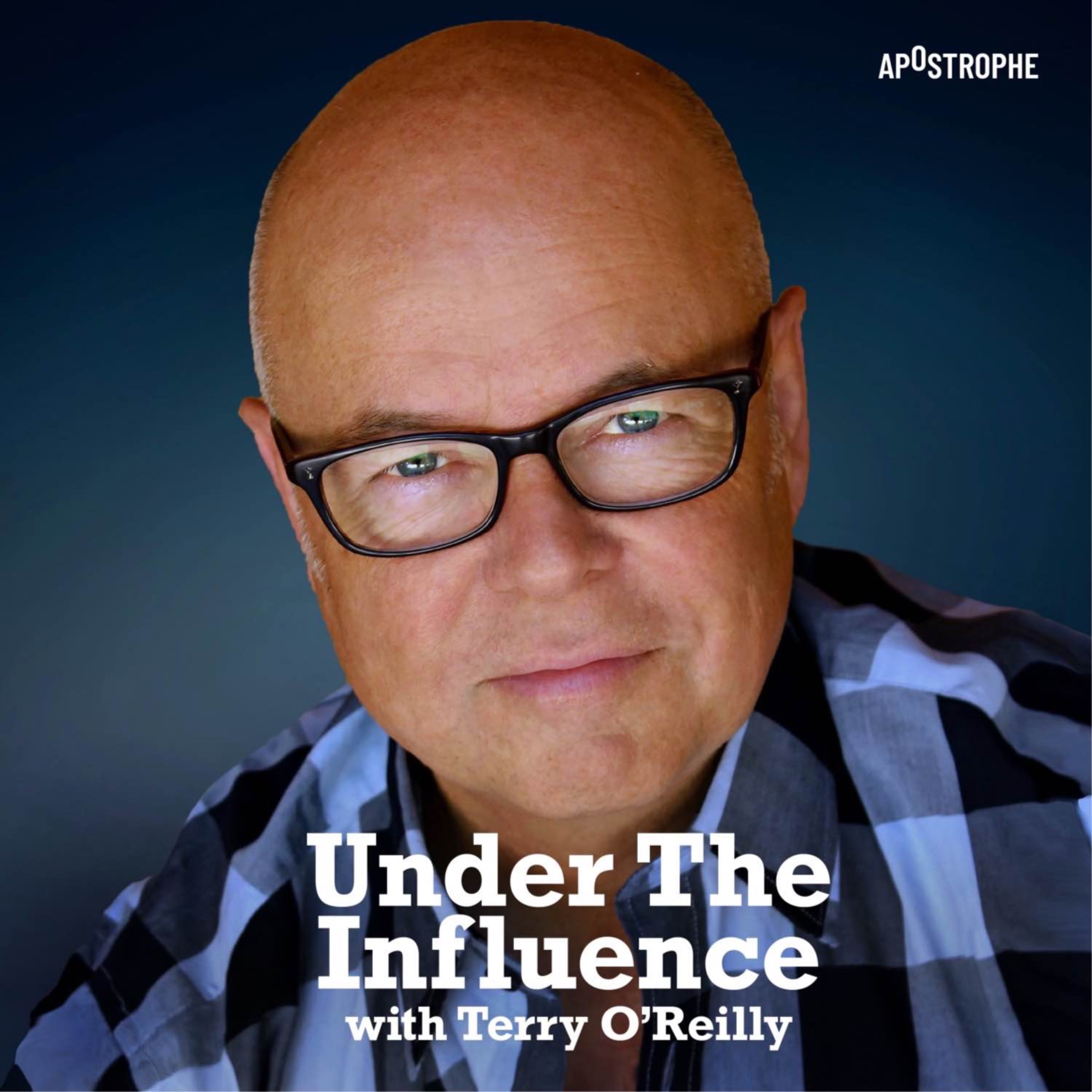
Under the Influence with Terry O'Reilly
S9E19 - Flip, Flop or Fly: The World of Test Markets
00:27:31
80 to 90% of new product launches fail. So to lower the risk, companies do trial runs. This week, we explore Test Markets - where companies launch new…
Loading summary
Transcript47 lines
- [00:01]
Terry O'Reilly
You don't like ads on this a podcast about advertising. Listen ad free at the link in the description.
- [00:13]
Progressive Insurance Announcer
This episode is brought to you by Progressive Insurance. Do you ever find yourself playing the budgeting game? Well, with the Name your price tool from Progressive, you can find options that fit your budget and potentially lower your bills. Try it@progressive.com Progressive Casualty Insurance Company and affiliates Price and coverage match limited by state law not available in all states.
- [00:32]
Farnoosh Tarabi
Hi, this is Farnoosh Tarabi from so Money with Farnoosh Tarabi and today I want to talk to you about Boost Mobile Quick Money Tip Stop paying a carrier tax if your phone bill feels trapped in a pricey plan, this is your sign to Unlock Savings. Boost Mobile helps you reset your spending with the $25 Unlimited Forever plan. You can bring your own phone, pay $25 and get unlimited wireless forever. And that simple switch can unlock up to $600 in savings a year. That's money you could put to down debt, investing or something that actually brings you joy. Those savings are based on average annual single line payment of AT&T, Verizon and T Mobile customers, compared to 12 months on the Boost Mobile Unlimited plan as of January 2026. For full offer details, visit boostmobile.com Every
- [01:22]
Warby Parker Announcer
idea starts with a problem. Warby Parker's was simple. Glasses are too expensive. So they set out to change that. By designing glasses in house and selling directly to customers, they're able to offer prescription eyewear that's expertly crafted and unexpectedly affordable. Warby Parker glasses are made from premium materials like impact resistant polycarbonate and custom acetate, and they start at just $95, including prescription lenses. Get glasses made from the good stuff. Stop by a Warby Parker store near you.
- [01:56]
Terry O'Reilly
This is an Apostrophe podcast production. He's so keen in it,
- [02:12]
McDonald's Customer
Your teeth look whiter than no, no, no,
- [02:21]
Canada Trust Announcer
You're not you.
- [02:22]
Terry O'Reilly
When you're hungry, you're in good.
- [02:33]
Podcast Trailer Narrator
You're under the influence of Terry O'Reilly.
- [02:50]
Terry O'Reilly
An unusual museum opened in Sweden a few years ago. It didn't contain art or sculptures or rare artifacts. Instead, it houses a collection of failed products. It is the Museum of Failure. The growing collection is made up of over 100 failed product stories, mostly from big companies. Strolling through the Museum of Failure, you would find flops like the Apple Newton, New Coke, Harley Davidson cologne and the Ford Edsel. The museum's mission is not just to showcase failed products, but to teach the world and organizations that it's okay to learn from failure. The Museum of Failure was Created by an organizational psychologist named Dr. Samuel West. The museum slogan come fail with us. Dr. West said he got tired of glorifying all the successes in the business world, and instead he wanted to glorify failure. He wanted to prove that innovation requires failure, and if you're afraid to fail, then you'll never innovate. Whether it is the failed Donald Trump board game or blue ketchup or crystal Pepsi, west feels there's an important insight to be found in every failure. The exhibit also has a confessional where you can write down your own failure on a post it note and stick it onto a giant board. While the museum started in Sweden, it has a traveling show that has popped up in France, Shanghai and Toronto. The museum attracted so much attention in Los Angeles, a permanent location was installed there. The Museum of Failure celebrates marketing missteps in all their glory. And considering 80 to 90% of all new products fail, you can say one thing about the collection. They are certainly not rare artifacts. With an 80 to 90% failure rate, getting a new product off the ground is a treacherous and costly task. To mitigate that risk, companies use intensive research tactics. One of the most interesting is is the test market. This is where companies test drive a new product in an isolated town to see whether shoppers like it or not. Test markets are chosen very carefully, and you might be surprised to know which cities they are because those test markets are determining what you buy and what you eat. Will it flip, flop or fly? That is is the test market question.
- [05:42]
Warby Parker Announcer
You're under the influence.
- [05:59]
Terry O'Reilly
Launching a new product is a very expensive proposition. There are raw material costs, manufacturing costs, distribution and marketing costs. The risk is sky high. So to try and alleviate that risk, companies employ test markets. It's a very interesting aspect of marketing. Before a new product is rolled out nationally, it is tested in carefully selected towns to see if the product can survive out in the cold, cruel world. Companies want to know how much interest there is in the new product, and more importantly, if people are willing to purchase it and repurchase it. That's one of the big differences between test markets and focus groups. In a focus group, people are brought into a room and everyone focuses on the product at hand. The group samples the product and a moderator probes them with questions. In a test market, the product is advertised and placed into stores with thousands of other brands and the product has to fend for itself. Then, after a period of time, the company analyzes the results. Test markets are chosen very carefully. For starters, the city has to represent the broader market, meaning the population should have the same characteristics as the potential national audience for the product. It needs to be a Goldilocks city. Not too big, not too small. It must have a healthy mix of industries, an ethnically diverse population and a mix of blue and white collar occupations. It should be geographically isolated so the test can be contained. Advertisers want to be sure shoppers aren't exposed to additional or conflicting information from other sources during the trial run. And the media costs in the test city have to be low to medium. Nobody wants to break the bank in a test market. Here's the interesting part. The test city needs to be conservative with a small C. Not politically, but rather in their shopping habits. In other words, not highbrow, not lowbrow, and not easily charmed into trying a new product. The city needs to be beautifully average. It also needs to be product neutral. You don't want to be testing potato chips in a town where corn chips rule or in a town that prefers pretzels. So do such cities exist? The answer is yes. Two cities in particular are the true guinea pigs of Canada. The first is London, Ontario. London fulfills virtually all the criteria. It is a mid sized city with a population under 500,000. 1/5 of the populace is made up of new Canadians and 140 languages are spoken there. There is a good mix of white and blue collar workers. And when it comes to shopping, the city is cautious and reserved. Other cities may have some of the criteria, but not all of them together in a tidy package. London is one of those towns making it a perfect proving ground. And it has a long history of test marketing products. The first McDonald's in Eastern Canada was test marketed there in 1968. McDonald's tests many of its new products in London. Recently it tested its new plant based Beyond Meat Burgers there. When Tim Horton started to feel pressure from Starbucks, it tested its new dark roast coffee in London, which was the first new coffee blend in its history. Timmy's also tested the now popular iced cap there before it was rolled out nationally. And in the early 80s, Canada Trust tested these machines there.
- [10:00]
Canada Trust Announcer
You know friends waiting in line for your money isn't funny. Canada Trust has a better idea. Their Johnny Cash Money machines are open 24 hours a day, seven days a week.
- [10:11]
Terry O'Reilly
After a successful test, Johnny Cash ATMs were rolled out across Canada.
- [10:17]
Canada Trust Announcer
Close friends. Life's too short to walk the line.
- [10:21]
Terry O'Reilly
London has been the test market for hundreds of new products over the years, from debit cards to tea bags to fiber optic infrastructure and everything in between. The second highly prized test market in Canada is Winnipeg. Winnipeg, Manitoba is similar to London, Ontario in many respects. It has a population of 750,000 and is isolated in distance from other big cities. The nearest urban centers are Regina, 570 kilometers or 350 miles to the west and Minneapolis, 739 kilometers or 450 miles to the south. Media costs in Winnipeg are moderate. It is ethnically and occupationally diverse with a fair number of French speaking people living there. And Winnipeg is extremely conservative in its shopping habits. It won't just jump onto a new product. That's why Winnipeg is a great stress test for product trials. Cherry Pepsi was first test marketed in Winnipeg. Pepsi had caught wind that Coke was developing Cherry Coke. So it quickly went into test market in Winnipeg with a secret launch codenamed Project Rambo. As the name suggests, the quiet and stealth test was successful and Cherry Pepsi beat Cherry Coke to the punch. Back in the late 70s, Procter Gamble chose to test market a new product called Love's Diapers in the peg. It also tested the viability of secret solid antiperspirant there. Like London, dozens of other products have been tested in Winnipeg, from potato chips and cooking magazines to orthopedic pillows. But one of the most famous products tested in Winnipeg was this.
- [12:17]
McDonald's Customer
Have you tried McDonald's newest one of a kind.
- [12:19]
Terry O'Reilly
They're great. No bones.
- [12:21]
McDonald's Customer
I love it.
- [12:22]
Terry O'Reilly
I dug it.
- [12:23]
McDonald's Customer
Ooh, new chicken. McNuggets.
- [12:25]
Terry O'Reilly
McNuggets.
- [12:26]
McDonald's Customer
McNuggets.
- [12:27]
Terry O'Reilly
Back in 1979, the Heart association started warning people about cholesterol, saturated fat and heart disease. The report called for people to eat less beef and more fish and poultry. This was not Good news for McDonald's. So McDonald's CEO Ray Kroc asked his company to come up with a new menu item. He suggested deep fried onion chunks, but his staff had a better idea. A boneless chicken meal. Kroc was wary because McDonald's had tried chicken items before without any success. The first was a deep fried chicken pot pie that failed in a test market. And it had contemplated a bone in fried chicken product but decided it couldn't compete with KFC, then McDonald's head chef. And yes, the company has a head chef. And this particular European head chef back in 1979 who had cooked for Queen Elizabeth, came up with a novel recipe. Crispy bite sized chicken pieces to be eaten with a sauce. The idea was test marketed in Winnipeg. At first it was bundled with a bun and french fries and was called chicken and chips. Results showed Winnipeggers liked the chicken and sauce, but preferred it without a bun or fries. Out of that test market came the chicken McNugget. They weren't just popular. They set sales records at the test market stores. Same thing happened in American test markets. Word of the new Chicken McNugget spread so quickly among franchisees that McDonald's convinced a supplier to build a processing plant in just 100 days to deal with the demand. When they finally rolled out nationally, Chicken McNuggets became not just a new product, but a sales juggernaut. A test market lets companies experiment and learn. It also allows for feedback from the real world, which can lead to tweaks and iterations. But test markets can occasionally give a false positive. Back in the 80s, a friend of mine at a rival advertising agency was working on a new product called an air ecologizer. It was an air extractor with a changeable filter and was developed to remove cooking smells from homes. The product did well in an Ontario test market, so it was rolled out nationally. But in Quebec, it totally flopped, was removed from the shelves and banished, never to return. The reason was simple. In French Quebec, cooking aromas are welcome evidence of a happy home covering up cooking smells. There was a foreign and unwelcome concept. The test market provided feedback, just not with a French accent. Many years ago, a company did test marketing in three different towns. In the first town, the new product was only advertised in newspapers. In the second town, the new product was only advertised on radio. In the third town, the new product was given no advertising at all as a control group. When the results were analyzed, it puzzled the company. The third town sold the most product with no advertising whatsoever. It was a complete mystery to the company. They were just trying to figure out which medium to use to launch this new product. Then, slowly, the reason for the third town's success came into focus. As it turned out, the company's salesman in that third town was so angry that he got no advertising support. He kicked into overdrive and went around town selling the product like mad. Sometimes test markets are not only instructive, they can also be motivating. And we'll be right back.
- [16:49]
Progressive Insurance Announcer
This episode is brought to you by Progressive Insurance. Fiscally responsible financial geniuses. Monetary magicians. These are things people say about drivers who switch their car insurance to Progressive and save hundreds. Visit progressive.com to see if you could save Progressive Casualty Insurance Company and affiliates. Potential savings will vary. Not available in all states or situations.
- [17:12]
Warby Parker Announcer
Taking care of your eyes shouldn't be a hassle. That's why Warby Parker is a one stop shop for all your vision needs. Our prescription glasses and sunglasses are expertly crafted and unexpectedly affordable. Stop by a nearby store or use our app to virtually try on frames and get personalized recommendations. Did we mention we offer eye exams and take vision insurance too? For everything you need to see, head to your nearest Warby Parker store or visit warbyparker.com today. That's warbyparker.com the Bleacher Report app is
- [17:43]
Bleacher Report Announcer
your destination for sports right now. The NBA is heating up, March Madness is here and MLB is almost back. Every day there's a new headline, a new highlight, a new moment you've got to see for yourself. That's why I stay locked in with the Bleacher Report app. For me, it's about staying connected to my sports. I can follow the teams I care about, get real time scores, breaking news and highlights all in one place. Download the Bleacher Report app today so you never miss a moment.
- [18:17]
Terry O'Reilly
If you're enjoying this episode, why not dip into our archives, available wherever you download your pods?
- [18:23]
Podcast Trailer Narrator
Go to terryoriley CA for a master episode List.
- [18:38]
Terry O'Reilly
One of the reasons companies prefer test markets is that it eliminates the Hawthorne Effect. Essentially, the Hawthorne Effect is the name given to the way people behave when they know they're being observed. Put another way, people will modify their behavior when they are aware they are being watched. The term was first coined in 1958 by sociologist Henry Landsberger. He was analyzing an experiment that had been undertaken at a Western Electric plant outside Hawthorne, Illinois called Hawthorne Works. The company had commissioned a study to see if its workers would become more productive in higher or lower levels of light. Tests showed the productivity improved when lighting was increased, but it also improved when lighting was decreased. Then productivity slumped completely. When the study ended, Landsberger realized the workers simply became more productive when they knew they were being observed. The variables of light didn't make a difference, being watched did. Hence he labeled this phenomenon the Hawthorne Effect. The Hawthorne Effect is an ever present danger with focus groups. People are brought into a windowless room and grilled about a new product. It's an artificial situation and the results can be skewed when people know they are being observed through a one way glass. It's the same with so called reality shows. The participants know they are being filmed. Advertising legend David Ogilvy put a finer point on it when he said customers don't know what they feel, don't say what they know, and don't do what they say. That's why focus groups are three steps Removed from real behavior. A test market eliminates the Hawthorne effect. The product is advertised like any other product and put on the shelves like any other product. How shoppers react to it is completely up in the air. The product has to prove its value out in the wild in a test market. Companies win when they win. If shoppers love the new product, chances are it's got a profitable future. Companies also win when they lose. If the new product is a dud in the test market, the company has probably saved millions in wasted manufacturing and advertising dollars. Yet most products fail. A bathroom tissue named Banner, a toothpaste named Pace, a bleach named Vibrant, a liquid detergent called Solo, and a paper towel called Fling. All failed product launches, all from Procter and Gamble. Which is surprising considering P and G spends $1 million a day on consumer research. It's a staggering amount of money. And still we get Fling. Even with exhaustive research, there is still a slippery, elusive X factor when it comes to launching a new product. Back in the early 90s, General Mills wanted to develop a new product that might inch them closer to rival Kellogg's. At that time, Kellogg's dominated 37% of the cereal market. General Mills had just under 30%. The breakfast cereal category was packed with options. Over 250, to be precise. Each cereal positioned within a couple of degrees of the other. General Mills wanted a new product that kicked the category wide open. It came up with a product called Fingos. It was a cereal that was meant to be eaten with your fingers. Fingos fingers. They were bigger than a corn flake, but smaller than a potato chip. Even the Fingo's box top was made wider to accommodate hands reaching inside. And here was the important distinction. You didn't need a spoon, milk or even a bowl, just your Fingos. The goal was to expand what the marketing industry calls use occasions. In other words, General Mills wanted to position Fingos as an all day cereal, not just for breakfast. And if Fingos could capture just 1% of the cereal market, it would be an $80 million success story that could leapfrog General Mills over Kellogg's. It was going to be a tricky task. While 97% of households buy cereals, only 7% eat them past breakfast time. They were also asking people to go into the cereal aisle to buy a snack. But there was a reason for that. General Mills held considerable clout in grocery store cereal aisles, more so than in the snack aisles. And the company wanted major shelf presents for Fingos. The product had tested well in focus groups and taste trials. When people were given samples of Fingos, they said they liked the taste, and when questioned, they said they liked the no bowl, no spoon all day snack aspect. When asked if they intended on buying Fingos, people gave it one of the highest ratings ever. General Mills was feeling confident and allotted a marketing budget of $34 million, making it one of the biggest cereal launches the company had ever undertaken.
- [24:28]
McDonald's Customer
Introducing me Bingo. The wholesome new cereal made to eat with your fingers. How wholesome am I? Read my hips I'm low and fat and so nutritious so bye bye bowl go on spoon now all you need to enjoy cereal anytime you want Are these good? Hey, am I good or what?
- [24:52]
Terry O'Reilly
New Fingos, the wholesome cereal made to eat with your fingers in cinnamon and honey toasted up. Nobody bought Fingos. I guess people just thought any cereal can be eaten by hand without milk at any time of the day. There was simply nothing that special about Fingos. One more thing. Fing was the Hungarian word for passing gas, and Fingos translated to passes gas a lot. Pair that with the slogan Anytime, anywhere and over 1 million Hungarian Americans stayed away. So there was that. A lot of other Americans stayed away too. Fingos were put on the shelves in 1993 and shelved completely in 1994. It appears General Mills did focus group testing, but no actual test marketing. In towns, when people were handed Fingos and asked what they thought, they said they liked them. When Fingos were put out into the real world, people went meh.
- [25:58]
Instacart Announcer
Instacart makes grocery shopping easier. And just because you're not doing the shopping yourself doesn't mean you don't care how it's done. With Instacart Shopper notes, you can get particular about what you want right in the app. Like rotisserie chicken. That's extra crispy steak with marbling the Romans would have loved, and lettuce you'd actually pick yourself. Just leave a note for your shopper so that they can get it right for you without having to ask. That way you can get groceries just how you like. Download the Instacart app and shop today.
- [26:29]
Progressive Insurance Announcer
This episode is brought to you by Progressive Insurance. Do you ever think about switching your insurance companies to see if you could save some cash? Progressive makes it easy. Just drop in some details about yourself and see if you're eligible to save money when you bundle your home and auto policies. The process only takes minutes and it could mean hundreds more in your pocket. Visit progressive.com after this episode to see if you could save Progressive Casualty Insurance Company and affiliates. Potential savings will vary. Not available in all states.
- [26:56]
Warby Parker Announcer
Taking care of your eyes shouldn't be a hassle. That's why Warby Parker is a one stop shop for all your vision needs. Our prescription glasses and sunglasses are expertly crafted and unexpectedly affordable. Stop by a nearby store or use our app to virtually try on frames and get personalized recommendations. Did we mention we offer eye exams and take vision insurance too? For everything you need to see, head to your nearest Warby Parker store or visit warbyparker.com today. That's warbyparker.com.
- [27:38]
Terry O'Reilly
There is one other place Pesky Fly in the test market Ointment it seems there is a large swath of people out there who have terminally bad taste. In a recent study of 130,000 customers of a national convenience store chain, 25% of them consistently took home products that bombed. According to an article in the New York Times, there are people out there who are automatically attracted to duds and they will buy these bad products repeatedly while the larger population stays away. An MIT study actually discovered there are entire geographical neighborhoods that consistently choose unsuccessful new products. In other words, the irregular drumbeat these people march to while browsing the supermarket aisles also guides their decisions on where to live. As a matter of fact, property values in those neighborhoods consistently underperformed the broader market. These simply were people who excelled at bad decisions. MIT also discovered that their disaster prone taste didn't rub off on their neighbors when they moved. Their curious trait was transported but not transmitted. It wasn't contagious, it was just an inherent characteristic. Further exploration found these same people also donated to and voted for losing political candidates. The study results were so consistent that advertisers could tell if a product was doomed to fail if this group bought it. As one economist said, these people like odd houses. They vote for the politician everyone else finds off putting, and they like fling paper towels. These anti influencers can also throw off test market results. As the study revealed, if companies want to predict which new products are going to be successful, they can't just look at total sales, they have to look at who's buying them. I read recently that the Museum of Failure closed its doors in Los Angeles and the founder filed for bankruptcy. It's a tough world out there. The only thing standing between a new product and unrivaled fortune is risk. Trying to pole vault over that quicksand has led to exhaustive focus groups, behavioral science, research and endless test marketing, all in an attempt to understand the irrationality of shoppers. Marshall Mcluhan once called marketers frogmen of the mind. And it's true. Marketing is without a doubt a deep plunge into the study of human nature. Which is why advertisers use test markets so often. It's the closest they can get to reading the minds of the potential customers. A new product is put on shelves of the retail Serengeti and has to fend for itself. Customers either buy it or ignore it. The herd will be heard. And little did you know that many of the products you buy and eat are all because someone in London liked it or someone in Winnipeg ate it first. And who knew there is a sizable contingent of there in the world with a laser like heat seeking gift of being drawn to doomed products. If no one buys a new product it's doomed. But if anti influencers buy it, it's really doomed. It's a crazy new Coke Edsel Blue Ketchup World when you're under the influence I'm Terry O'Reilly. This episode was recorded in the Terrastream Mobile recording studio. Producer Debbie O'Reilly Sound Engineer Keith Ullman Theme music by Ari Posner and Ian lefever Research Patrick James Aslan if you liked this episode, you might also enjoy the Psychology of Price Season 3, Episode 2. You'll find it in our archives. Wherever you download your podcasts, follow me on Twitter and Instagram errioinfluence. See you next week. Hey, if you like fingos with blue
- [32:17]
Chase Sapphire Announcer
ketchup too, let's connect on Friendster.
- [32:25]
Progressive Insurance Announcer
This episode is brought to you by Progressive Insurance. Fiscally responsible financial geniuses, Monetary magicians. These are things people say about drivers who switch their car insurance to Progressive and save hundreds. Visit progressive.com to see if you could save Progressive Casualty Insurance Company and affiliates. Potential savings will vary. Not available in all states or situations.
- [32:47]
Chase Sapphire Announcer
The day begins at the Chase Sapphire Lounge by the club At Boston Logan Airport you get the clam chowder. In San Diego, it's Tostadas New York. Espresso martini. It's 10am why not? It's the quiet before your next flight. The shower that resets your day. The menu that lets you know where you are. This is access to over 1300 airport lounges and every Sapphire Lounge by the club. And one card that gets you in Chase Sapphire Reserve now even more rewarding.
- [33:12]
Progressive Insurance Announcer
Learn more@chase.com Sapphire Reserve cards issued by JPMorgan Chase bank and a member FDIC subject to credit approval.
- [33:20]
Terry O'Reilly
Acast Powers the world's best podcasts. Here's a show that we recommend.
- [33:28]
Podcast Trailer Narrator
Chicago 2011 a cop is murdered. Police and prosecutors swear they have the trigger man. He swears he didn't do it. How far will each side go to prove their right?
- [33:40]
Farnoosh Tarabi
Like it's just one bombshell after another.
- [33:43]
Terry O'Reilly
You know, you're like, what? What?
- [33:45]
Podcast Trailer Narrator
The story of a PlayStation, a brain eating amoeba, and the relentless pursuit of justice. Off duty. Out now. Listen wherever you get your podcasts.
- [33:59]
Terry O'Reilly
ACAST helps creators launch, grow and monetize their podcasts everywhere.
- [34:05]
Chase Sapphire Announcer
Acast.com.