← Under the Influence with Terry O'Reilly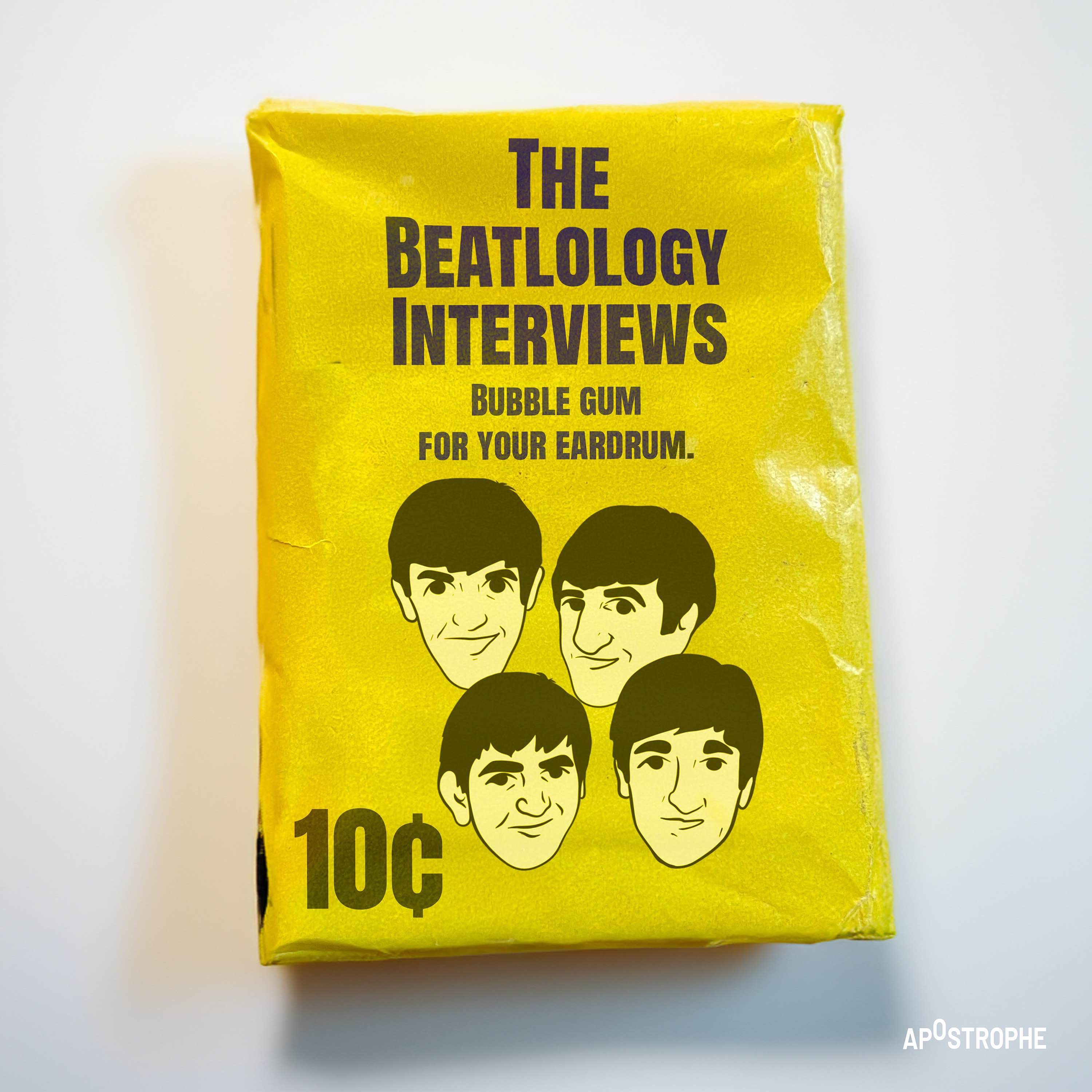
Under the Influence with Terry O'Reilly
The Beatlology Interviews: Astrid Kirchherr
00:26:07
Astrid Kirchherr holds a special place in the history of the Beatles. She took the famous Hamburg-era photos of the Beatles in their formative years, she inspired their “moptop” hairstyle, and she ha…
Loading summary
Transcript53 lines
- [00:01]
Terry O'Reilly
Hey, you could be listening to next week's episode right now. Subscribers too. But wait, there's more. Get early access every week. They enjoy Ad Free episodes. Ad Free archives and they get bonus episodes every month. Just go to Apple Podcasts and enjoy your 7 day free trial now.
- [00:23]
Unknown Speaker 1
My dad works in B2B marketing. He came by my school for Career Day and said he was a big roas man. Then he told everyone how much he loved calculating his return on ad spend. My friends still laugh at me to this day.
- [00:38]
Unknown Speaker 2
Not everyone gets B2B, but with LinkedIn you'll be able to reach people who do. Get a $100 credit on your next ad campaign. Go to LinkedIn.com results to claim your credit. That's LinkedIn.com results. Terms and conditions apply. LinkedIn the place to Be to be.
- [00:54]
Unknown Speaker 1
Hey guys, have you heard of Gold Belly? It's this amazing site where they ship the most iconic famous foods from restaurants across the country, anywhere nationwide. I've never found a more perfect gift than food. They ship Chicago Deep dish pizza, New York bagels, Maine lobster rolls, and even Ina Garten's famous cakes. So if you're looking for a gift for the food lover in your Life, head to goldbelly.com and get 20% off your first order with promo code Gift.
- [01:24]
Unknown Speaker 2
This episode is brought to you by Progressive Insurance. Fiscally responsible financial geniuses, Monetary magicians. These are things people say about drivers who switch their car insurance to Progressive and save hundreds. Visit progressive.com to see if you could save Progressive Casualty Insurance Company and affiliates. Potential savings will vary. Not available in all states or situations.
- [01:48]
Terry O'Reilly
This is an apostrophe podcast production.
- [02:10]
Astrid Kircher
Beetleology.
- [02:13]
Terry O'Reilly
Back in the late 90s I was the co founder of a magazine called Beetleology. It was a magazine dedicated to collectors of Beetles memorabilia. Because beetle collectibles can be so expensive, costing anything from hundreds of dollars to hundreds of thousands of dollars. And collectors like me never knew what anything was really worth at any given time. So the magazine talked to top collectors and auction houses as well as celebrity collectors and people who knew and worked with the Beatles. And we told stories about those people, the things they collected, and what they were worth. Those interviews stayed in my office drawer for 25 years, so we thought it would be interesting to dust them off. We met Astrid Kersher back in 1999. She was on a tour to promote her new book. It was a big two volume set titled Hamburg Days containing her stories and photographs of the Beatles from their earliest days playing in Hamburg, Germany. It's an extremely beautiful book and it was published by Genesis Publications who produced gorgeous collectible coffee table quality books. Die Hard Beatle fans know all about Astrid Kircher, but if you're just a casual Beatles fan, you may not know just how important she was to the early Beatles and how she shaped their image. Astrid was just 22 years old when she met the Beatles in Hamburg, Germany. There was a demand for British rock and roll groups in the bars there and the Beatles then manager Alan Williams booked them long term gigs in a couple of bars in the notorious Reeperbahn red light district of Hamburg where they sometimes played for eight hours a night for months at a time. Hamburg was where the Beatles paid their dues and gelled as a tight band. Malcolm Gladwell calls it the 10,000 hour principle that in order to master any craft you must spend 10,000 hours doing it. It was there at the Kaiser Keller Club that a young photographer named Astrid Kircher first saw the Beatles. And it was all because of an argument. She had quarreled with her then boyfriend Klaus Voorman, a fellow art student. Klaus had stormed out of her house in a huff and ended up walking past the Kaiser Keller. He heard rock and roll blasting through its doors, so he wandered in and sat down. The rough looking five man band on the stage was the Beatles. Klaus said John was screaming with all his heart and soul. Paul bounced around like a rubber ball. Pete Best hammered on his drum kit. George grinned his cheeky crooked boyish grin. And a bass player named Stuart Sutcliffe seemed cool and sophisticated. They had an infectious energy. They knew how to rock and they were very funny on stage. Klaus says they were irresistible and not just for the girls. The next night he dragged Astrid and a friend named Jurgen Vollmer back to see the band. Between sets, the three of them cautiously approached the Beatles and started a conversation. While Astrid and her friends became fascinated with the band, the Beatles became equally fascinated by them. Astrid, Klaus and Jurgen were Germans influenced by French culture. They dressed all in black, but with incredible style. The Beatles thought they were exotic. Astrid was particularly attracted to Stuart Sutcliffe. She broke off with Klaus and started seeing Stuart and photographing him. Not long after they got engaged. The Beatles loved Astrid's photography and asked her to photograph them. Thus began the only known photography from those formative years. In the Beatles timeline, they're considered the definitive images of the group. Before they attained massive worldwide fame. Astrid also taught them how to dress on stage. As mentioned in the fabulous new book Fashioning the Beatles by Deirdre Kelly Astrid had a feminizing influence on them. She took them to shops and showed them clothes they should wear. Sometimes the clothes were less masculine and more interesting, more stylish. Astrid did one more thing. She inspired their Beatle hairstyle. Before meeting Astrid, the band had a brill cream slick back hairstyle mimicking their idols Elvis Presley and Tony Curtis. But they loved Astrid's hairstyle. It was different, there was no grease involved and she combed her hair down over her forehead. She gave Stuart the same hairstyle. George loved it and asked for the same cut. Soon all the Beatles except Pete Best adopted the look. They also let their hair grow over their collars. In the brush cut era of the early 1960s it was radical. When the Beatles got back to the tough streets of Liverpool, their new clothes and hairstyle attracted some dangerous looks. So much so, the band momentarily considered going back to their old style. But they stuck with it. It would become their signature look. As George Harrison later said, Astrid was totally responsible for our whole image. Suffice it to say Astrid Kircher is a very important chapter in the beetle's history. Her photographs chronicle the early days of the world's most famous band. She influenced their style and her love of the Beatles showed through in everything she said. We sat down with astrid Back in 1999 in New Jersey just as her new book was launching. I asked her how the book came about.
- [09:07]
Astrid Kircher
Well, it's a long, long time ago, about 10 years that Brian Roylands and Ulf Kruger, who was my agent in Hamburg and a very, very good friend had the idea to get a book together from the days the Beatles came to Hamburg first and they were unknown and just good friends and we were all very excited.
- [09:31]
Terry O'Reilly
The book is a two volume set. The first book features Astrid's incredible photography from that period. The second volume contains Klaus paintings of recreat that were never captured by photography but fun and interesting moments as remembered by Astrid, Klaus and Paul McCartney.
- [09:52]
Astrid Kircher
Well, that is why I'm so pleased about the Hamburg days because Klaus and I were sitting together thinking of situations where it would have been great having a camera, you know, like in the club when it was nearly morning and the light was all nearly sunshine and people were sitting round in the dark asleep and they were sitting on stage half asleep, playing and you saw it in the book. These situations were absolutely wonderful but of course I didn't took my camera with me and that was the whole idea that Klaus did pictures of situations. We have been with the boys where we didn't have A camera, like when John went to sleep in his breakfast, you know. So that is what makes me so happy that at least situations which we both remember even now are on paper to see for people.
- [11:00]
Terry O'Reilly
George Harrison wrote the foreword to the book. I asked Astrid how that came about.
- [11:06]
Astrid Kircher
Well, as simple as that. We asked him, and he's our friend, he's one of my best friends, and he said, yeah, why not?
- [11:15]
Terry O'Reilly
George was the Beatle Astrid was closest to when she was first considering doing this book. She reached out to George, Paul and Yoko to ask for their blessing.
- [11:26]
Astrid Kircher
So I asked George and Paul, what do you think? And Yoko, can I do that? And George just wrote me a letter. Do whatever you want, sweetheart. You know, at least they pay you for it this time. So George always took care of me as far as money is concerned because he knows I'm such a silly idiot, you know.
- [11:51]
Terry O'Reilly
Astrid loved the Beatles. They were her friends. So she took photos of them just for fun, just for them. They were never really used for publicity purposes back then, with one exception.
- [12:06]
Astrid Kircher
Well, you know, that's so strange because I did it because I loved their faces and I loved them as friends. So I just did them for fun and gave them to them. And they thought, oh yeah, great, maybe we get in the papers, you know, with pictures like that, that size, they will be all impressed. And of course it happened. If you remember, there was a little paper called Mercy Beat and also a friend of Stewart's and John was the editor, Bill Harry, and he saw the pictures and just did it, you know.
- [12:43]
Terry O'Reilly
So in the Beatles Anthology series, George Harrison notes that the famous Robert Freeman black and white photo on the COVID of the LP with the Beatles was actually inspired by Astrid's photography.
- [12:57]
Astrid Kircher
I didn't know that until I saw the Anthology and George was talking about it. I always wondered because Freeman, I always admired his work, you know, I think he did fantastic pictures. And when I saw the COVID I thought, what's that all about? That's not Bob Freeman. That is weird. You know, it looks like I've done them, but I never thought about it again. And then I saw the Anthology and George was talking about how these pictures came together. So now I know. You know, the album with the Beatles contains a first for the Fab Four. What was it?
- [13:49]
Terry O'Reilly
Answer after this break.
- [13:57]
Unknown Speaker 1
My dad works in B2B marketing. He came by my school for career day and said he was a big roas man. Then he told everyone how much he loved calculating his return on ad spend. My friends still laugh at me to this day.
- [14:11]
Unknown Speaker 2
Not everyone gets B2B, but with LinkedIn you'll be able to reach people who do get a $100 credit on your next ad campaign. Go to LinkedIn.com results to claim your credit. That's LinkedIn.com results. Terms and conditions apply. LinkedIn the place to Be To Be.
- [14:27]
Unknown Speaker 1
Hey guys, have you heard of Goldbelly? It's this amazing site where they ship the most iconic famous foods from restaurants across the country, anywhere nationwide. I've never found a more perfect gift than food. They ship Chicago deep dish pizza, New York bagels, Maine lobster rolls, and even Ina Garten's famous cakes. So if you're looking for a gift for the food lover in your Life, head to goldbelly.com and get 20% off your first order with promo code Gift.
- [14:57]
Terry O'Reilly
This episode is brought to you by Progressive Insurance. You chose to hit play on this podcast today. Smart Choice make another smart choice with Auto Quote Explorer to compare rates from multiple car insurance companies all at once. Try it@progressive.com Progressive Casualty Insurance Company and affiliates. Not available in all states or situations. Prices vary based on how you buy.
- [15:32]
Astrid Kircher
The album with the Beatles contained three George Harrison vocals, including his very first.
- [15:38]
Terry O'Reilly
Released solo composition, Don't Bother Me. Astrid's photos of the Beatles are all in stunning black and white, which was always her preference.
- [15:51]
Astrid Kircher
I think you can experiment much more with a black and white picture, especially when you do develop the negatives yourself. So that's a fact, number one. Number two is you can play with shadow and light much easier and much nicer in a more dramatic way, which in the 60s or when I started to become a photographer, I was influenced by French photographers and French movies, for example, Jean Cocteau's movie, who were really extremely black and white. And I thought it gave a face, for example, a kind of different dramatic atmosphere. And you could play with light and darkness and create a situation within a face. For me, much easier to handle. And in the 60s, color photography wasn't like it is now, you know, and even though if I would take pictures now, I always would prefer black and white.
- [17:08]
Terry O'Reilly
There are other photos in the book taken a little while later with the Beatles wearing suits, a very different look from the leather they wore in Astrid's earlier shots. Beatles manager Brian Epstein contracted Astrid to take those pictures.
- [17:23]
Astrid Kircher
Well, he was a very good friend of mine and he just said we need some decent pictures, you know, because then they changed their image into suits and looking smart. And he said, well, they're going to come to Hamburg. Would you do me a favor and do some decent ones, you know. So I did, and I never really liked them, you know, the studio ones, to me, there's nothing behind it. If you compare these pictures with a portrait of John and George I did in my attic at home or on the fairground, there's power and strength and sadness in their faces and the whole rock and roll, what it meant to me, you know. But these pictures, just to me, they are flat. There is a face of Paul McCartney, but there is not a face of my friend Paul on it. So it's okay as being put in the book to maybe let people see the difference, but they were never, ever my favorite pictures.
- [18:41]
Terry O'Reilly
The photos Astrid took of the early Beatles were missing one important later ingredient, namely Ringo Starr. Pete Best was the drummer then. Astrid knew Ringo, but he was with another band at the time.
- [18:56]
Astrid Kircher
I knew Ringo when he was playing with Rory Storm and the Hurricanes. And because it went like Rory was on for three quarters of an hour and then the Beatles were on. So it kept going on and on and on. So when Ringo was not playing, he used to sit with us, and Rory, of course, because I liked him very much. And so we just became friendly. But I was never close to Ringo as I was to.
- [19:30]
Terry O'Reilly
It's a funny thing, Beatle fans want to know every single detail about the band. Every small critical and pedestrian thing. It seems that everywhere the Beatles lived or played or streets they walked across are considered holy ground. Yet in Hamburg, where the Beatles had their most important formative time, it barely registers on the radar.
- [19:56]
Astrid Kircher
Well, there is a museum in Germany, in Bremen. They bought some of my work. But, you know, it's strange, the need of people to know about the Beatles. It's much more over here than in Germany and my own town, Hamburg, where the Beatles, you know, started. It doesn't interest them at all. No, they didn't even have an exhibition of the Beatles in Hamburg, which would be great, you know, but there's just a little sign outside the former Kaiserkeller where it says the Beatles used to play here. And when George was in Hamburg, he of course drove through the Riverbahn and said, there it is, the sign that we played here. But that's about all.
- [20:52]
Terry O'Reilly
Paul McCartney had a small hand in the book as well. Klaus asked Paul to help him reminisce about those early days and even sketch a few memories that Klaus would later paint.
- [21:04]
Astrid Kircher
Well, Klaus asked him to do that. If you've seen it in the back of this book. And Paul wrote about how he admired Klaus work, you Saw the drawing in there when Klaus went to see him a couple of months ago or before they got the book together maybe six months ago. And they were both reminiscing. How was that? And Paul helped him and said, well, give me a pencil. And I think I remember it was like that, you know.
- [21:35]
Terry O'Reilly
Remarkably, Astrid never thought to sell her work back then. Many of her photos were used without her knowledge or permission on bootleg albums. She did it all for love, not money.
- [21:47]
Astrid Kircher
I never sold anything of that. That was a lot of my negatives being stolen. I was such a silly girl, you know, if you would have came up about 30 years and said, I need the negative to print, I would say, yeah, here it is. And all my drawings I had of John, you know, I just gave it to people because I was so innocent and thought, no, they wouldn't do anything with it, you know. So that is why there's a lot of my stuff being stolen.
- [22:22]
Terry O'Reilly
Astrid was fond of the photos she took of the band and especially of the time they spent together. But she never thought much of the photos and didn't think anyone would be particularly interested in them. As a matter of fact, how Astrid stored them says it all.
- [22:39]
Astrid Kircher
Well, I had them under my bed, or I had them on a shelf and my cat had a little go at it, you know. But then Ulf met me and said, well, where are your negatives? Which bank? And all that? And I said, what do you mean, which bank safe? And I just went under my bed and grabbed a little paper bag and I said, here you are, or plastic bag. And he got the shock of his life.
- [23:09]
Terry O'Reilly
I asked Astrid which one of all her amazing photos is her personal favorite. She didn't hesitate for a second.
- [23:17]
Astrid Kircher
There's one shot of Stuart, which it's shown on the book, Stuart. It's the front page where he's got all the hair done, his face and all freckles. That is one of my favorite shots. And from George and John standing in the attic where Stuart used to work. And John is sitting down and George is standing behind him because that means so much to me because George was always the little one, you know, the. We've got to protect George. He was only 70. And then when I took that picture, you can see the strength in his eyes and the way John just looked sad and lonely. And George is standing behind him, you know, like, I'm the grown up now. I look after you whenever I see that picture, because I do love George dearly. It gives me the shivers in such a short time. This boy has grown like, unbelievable.
- [24:21]
Terry O'Reilly
As I mentioned earlier, Astrid fell in love with Stuart Sutcliffe. They became engaged and Stuart left the Beatles to be with her. He was a painter and enrolled in the Hamburg College of Art. In February of 1962, he collapsed in the middle of an art class, complaining of a severe headache. After collapsing again in April, he was rushed to hospital but died in the ambulance. The cause of death was a brain hemorrhage. Astrid was devastated. John Lennon, Stewart's best friend, was shattered.
- [25:03]
Unknown Speaker 1
Hey guys, have you heard of Goldbelly? It's this amazing site where they ship the most iconic famous foods from restaurants across the country, anywhere nationwide. I've never found a more perfect gift than food. They ship Chicago deep dish pizza, New York bagels, Maine lobster rolls, and even Ina Garten's famous cakes. So if you're looking for a gift for the food lover in your Life, head to goldbelly.com and get 20% off your first order with promo code Gift.
- [25:33]
Unknown Speaker 3
Every idea starts with a problem. Warby Parker's was simple. Glasses are too expensive. So they set out to change that. By designing glasses in house and selling directly to customers, they're able to offer prescription eyewear that's expertly crafted and unexpectedly affordable. Warby Parker glasses are made from premium materials like impact resistant polycarbonate and custom acetate. And they start at just $95, including prescription lenses. Get glasses made from the good stuff. Stop by a Warby Parker store near you.
- [26:03]
Terry O'Reilly
This episode is brought to you by Progressive Insurance. You chose to hit play on this podcast today. Smart Choice make another smart choice with Auto Quote Explorer to compare rates from multiple car insurance companies all at once. Try it@progressive.com Progressive Casualty Insurance Company and affiliates not available in all states or situations. Prices vary based on how you buy. I asked Astrid if Stewart's work as a painter had influenced her work as a photographer or vice versa.
- [26:42]
Astrid Kircher
Stewart was amazed and very interested in the black and white things I did and when I explained it, why. And so because he was always searching for new things. You know, he was a real fanatic when we met first and he started painting in my house. He did the real colors, you know, the red and the blue and the yellow. And then the last pictures he did before he died, they were black and silver. So in a way, we did influence one another.
- [27:19]
Terry O'Reilly
Earlier we mentioned that Astrid's photos were never used on any Beatle albums, which seems so odd in hindsight, but there were two exceptions. Besides the photo that appeared in the Mercy Beat newspaper she did the inner sleeve for George Harrison's solo Wonderwall Music LP in 1968. And years later, in 1995 and 96, when Klaus Voormann designed the covers of the Beatles Anthology albums, he used some of Astrid's photography. Surprisingly, it would be the first and only time her photos were ever used on an official Beatle album. When Astrid Kersher looked back on that time so many years later, she didn't talk about the famous Beatles. She talked about them as her friends, people she loved, and what she was grateful for.
- [28:21]
Astrid Kircher
Well, most of all, I'd be thankful for their friendship, for the things they taught me. What it's like to be disciplined, what it's like to play or work for 12 hours every day. And being that young, without mom and dad in a different country, and things we share together, you know, sharing to grow up, that is the most important thing to me. And the love we shared between us and the giving and taking, the inspiring one another, that is what counts for me. And of course, that beautiful music, the way they grew up, even though I wasn't with them all the time, but from a distance, I saw the change they made when I listened to the music of George, for example, or John. And that's what I'm thankful for.
- [29:29]
Terry O'Reilly
Astrid Kircher passed away in 2020 at the age of 81. She played such an important role in the lives of the early Beatles. Her unique photography of the band is historic, her influence on their image indelible. Yet she lived a quiet, humble life. Operating a small photography shop in Hamburg. George Harrison kept in touch with her until his passing in 1999. When we met, Astrid was in her 60s, still beautiful, still stylish. Her love of John, Paul, George, Ringo, Pete and Stewart was still so palpable from all those years ago. I'm Terry O'Reilly. This special bonus episode was recorded in the Terrastream mobile recording studio. Director Callie O'Reilly Producer Debbie O'Reilly Chief Sound Engineer Jeff Devine Tunes provided by APM Music Follow me on social @Terry Oinfluence. This podcast is powered by Acast.
- [30:53]
Unknown Speaker 1
Hey guys, have you heard of Gold Belly? It's this amazing site where they ship the most iconic famous foods from restaurants across the country, anywhere, nationwide. I've never found a more perfect gift than food. They ship Chicago deep dish pizza, New York bagels, Maine lobster rolls and even Ina Garten's famous cakes. So if you're looking for a gift for the food lover in your Life, head to goldbelly.com and get 20% off your first order with promo code Gift.
- [31:23]
Unknown Speaker 2
This episode is brought to you by Progressive Insurance. Fiscally responsible financial geniuses, Monetary magicians. These are things people say about drivers who switch their car insurance to Progressive and save hundreds. Visit progressive.com to see if you could save Progressive Casualty Insurance Company and affiliates. Potential savings will vary. Not available in all states or situations.
- [31:45]
Unknown Speaker 3
Every idea starts with a problem. Morby Parker's was simple. Glasses are too expensive, so they set out to change that. By designing glasses in house and selling directly to customers, they're able to offer prescription eyewear that's expertly crafted and unexpectedly affordable. Warby Parker glasses are made from premium materials like impact resistant polycarbonate and custom acetate and they start at just $95 including prescription lenses. Get glasses made from the good stuff. Stop by a Warby Parker store near you.
- [32:15]
Unknown Speaker 2
This podcast is brought to you by Aura 2024 has seen a surge in high profile data breaches, raising serious concerns about the security of personal information. Dell's breach exposed 3.9 million customer records. That's why we're thrilled to partner with Aura. Aura monitors the dark web for users phone numbers, emails and Social Security numbers, delivering real time alerts if any suspicious activity is detected. Additionally, Aura provides up to $5 million in identity theft insurance, offering a robust safety net in the event of a worst case scenario. For a limited time, Aura is offering our listeners a 14 day trial plus a check of your data to see if your personal information has been leaked online, all for free. When you visit aura.comsafety, that's aura.comsafety to sign up for a 14 day free trial and start protecting you and your loved ones. That's aura.com safety certain terms apply, so be sure to check the site for details.