← Under the Influence with Terry O'Reilly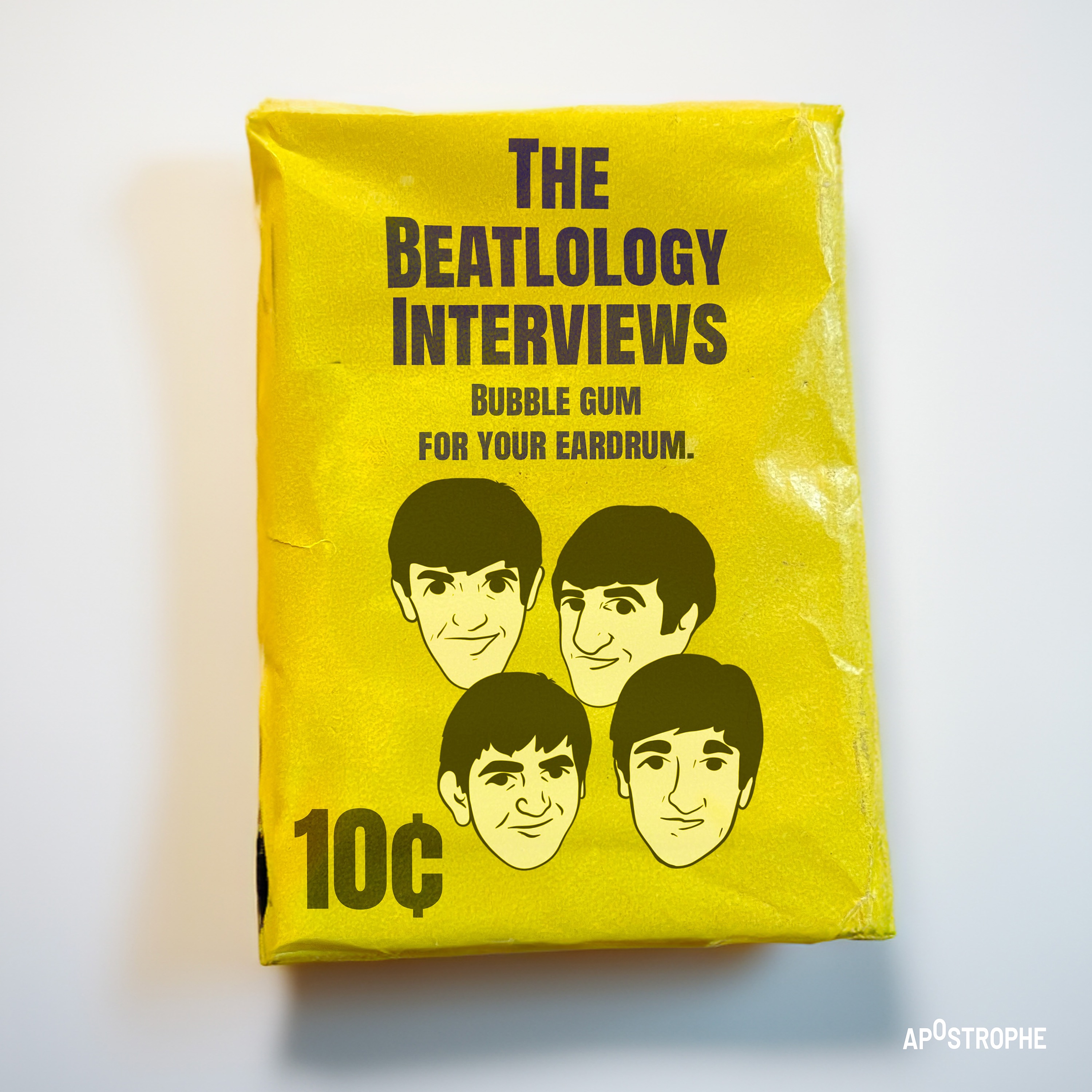
Under the Influence with Terry O'Reilly
The Beatlology Interviews: "Beatles ’64” director David Tedeschi
00:42:45
I talk to director David Tedeschi about his new Beatles film. Produced by Martin Scorsese, it captures the mania of Beatlemania when the Fab Four land in New York for the first time in 1964,…
Loading summary
Transcript155 lines
- [00:01]
Terry O'Reilly
Hey, you could be listening to next week's episode right now. Subscribers too. But wait, there's more. Get early Access every week. They enjoy ad free Episodes ad free archives and they get bonus episodes every month. Just go to Apple Podcasts and enjoy your 7 day free trial now.
- [00:24]
Busy Mom
You know, as a busy mom, there are lots of ways you can help yourself fall asleep. You could stare blankly at the ceiling and replay every conversation you've ever had. Count sheep, have a debate with your pillow, give up caffeine, try acupuncture and buy a weighted blanket that will make you sweat profusely. Or you could try some milk, which has nutrients that support healthy sleep. Visit gonnaneadmilk.com for more info. And for everyone's sake, please don't give up caffeine.
- [00:54]
State Farm Representative
Let's talk about something that's not always top of mind, but still really important. Life insurance. Why? Because it offers financial protection for your loved ones and can help them pay for things like a mortgage, credit card debt. It can even help fund an education. And guess what? Life insurance is probably a lot more affordable than you think. In fact, most people think life insurance is three times more expensive than it is. So with State Farm life insurance, you can protect your loved ones without breaking the bank. Not sure where to start? State farm has over 19,000 local agents that can help you choose an option to fit your needs and budget. Get started today and contact a State Farm agent or go to statepharm.com Ryan.
- [01:38]
Ryan Reynolds
Reynolds here from Mint Mobile. With the price of just about everything going up during inflation, we thought we'd bring our prices down. So to help us, we brought in a reverse auctioneer, which is apparently a.
- [01:49]
Reverse Auctioneer
Thing Mint Mobile Unlimited Premium Wireless how many get 30. 30. Better get 30. Get 20. 2020. Better get 20. 20. Better to get 15. 15.
- [01:55]
Terry O'Reilly
15, 15.
- [01:56]
Reverse Auctioneer
Just 15 bucks a month.
- [01:57]
Busy Mom
Sold.
- [01:58]
Ryan Reynolds
Give it a try@mintmobile.com Switch $45 upfront.
- [02:02]
Mint Mobile Representative
Payment equivalent to $15 per month. New customers on first three month plan only taxes and fees, extra speed slower above 40 gigabytes. Edtail.
- [02:11]
Terry O'Reilly
This is an apostroph. On February 7, 1964, Pan Am Flight 101 from Heathrow landed at the newly named JFK Airport in New York. Over 4,000 fans were waiting for that plane. They were waiting for four specific passengers who would change pop culture forever. Ringo Starr and John Lennon were just 23 years old. Paul was 22 and George Harrison was 20. As one reporter noted, George was so young he still had pimples only six days earlier, the Beatles song I Want to hold you'd hand had reached number one on the charts. It was the reason the Fab Four were arriving in New York. Manager Brian Epstein refused to bring the band to America until they had a number one. And it was time. Two days after landing in New York, they were to make their historic appearance on the Ed Sullivan Show. But the day they landed, February 7, 1964, would be the start of Beatlemania. Recently a brand new film came out titled Beatles 64. Directed by David Tedeschi, the film is produced by Martin Scorsese and is executive Produced by Paul McCartney and Ringo Starr. It tells the story of the Beatles first short historic trip to America in 1964. Landing in New York, playing their first gig in Washington, appearing on Ed Sullivan, playing Carnegie hall, then moving on to Miami before flying back to England. And how all that set off the mania of Beatlemania. Buckle up, here's the trailer.
- [04:43]
David Tedeschi
Are you filming now? Oh, they're imperfect. Synchronization I'll do, but you can hear your own voice.
- [04:50]
Harry Benson
Hello.
- [04:51]
David Tedeschi
How you doing, Ringo? I'm all right. We were just like, we're in America, America. It's great being here in New York. Okay, questions? Oh, is that the place? I don't know. Washington. I'm just moving so fast. They wanted to know everything about America.
- [05:15]
Harry Benson
The food, the groups, the dancing. And they loved it.
- [05:20]
David Tedeschi
It was like being in the eye of a hurricane. It was happening to us and it was hard to see. They were the first white group that.
- [05:27]
Interviewee
I had ever heard in my life.
- [05:29]
Harry Benson
Say, yeah, we grew up listening to black music. We think they're just great, especially their hands on. I think there's something very strange about it. At the same time, something very sick. My sister had rad and I heard the Beatles. It's like total darkness and then the light comes on. I was like, oh my God, something for us.
- [05:50]
David Tedeschi
We could get the camera down on this mic and be a real. How about God?
- [05:53]
Terry O'Reilly
Go on.
- [05:54]
David Tedeschi
Defy conventions. I think the craziness was going on in the world and in the band, you know, we were kind of normal and the rest of the world was crazy. Everybody got into the mania. Whenever the Beatles came to town. When we came, it was quite shortly after, after Kennedy being assassinated. Maybe America needed something like the Beatles to be lifted out of sorrow.
- [06:19]
Harry Benson
The elixir that they put together is so profound. It wasn't just about the songs.
- [06:23]
State Farm Representative
It was the power of music to transform lives.
- [06:26]
Terry O'Reilly
The girls crying and they ain't falling out. What they crying for?
- [06:31]
David Tedeschi
What do you like about the Beatles? We just like the Beatles because they're English. Do you think they're very English? I think we're jolly English, actually.
- [07:04]
Terry O'Reilly
The film contains a lot of new footage and it has all been restored by Peter Jackson's remarkable technology. The soundtrack has been restored by Giles Martin. David Tedeschi is an Emmy nominated filmmaker who has collaborated with Scorsese for over 20 years. David served as producer and editor on the Bob Dylan documentary the Rolling Thunder Revue. He was editor on the Rolling Stones film Shine a Light and was nominated for an Emmy for editing George Living in the Material World, among many other credits. We had a chance to talk to David about Beatles 64, how the project came about and the surprising things he discovered about the Beatles.
- [07:58]
Interviewee
So to begin with, tell me how the Beatles 64 came about. Where did the idea come from and how long was it in the making?
- [08:05]
Harry Benson
I first heard about it about two years ago. Apple came to me. I think that they had had it for a while. They know what footage they have and what stories there are to tell. And I think they had it in their mind for a while that this was a treasure trove of material and they sent it to Park Road to be restored. And Peter Jackson's company, Park Road, did this spectacular restoration and when they were trying to figure out what to do with it, I think because we're from New York, because we knew Al Maisel's of the Maisel brothers, they gave me a call.
- [08:39]
Interviewee
Ah, so it emanated from Apple. Very interesting. How did you meet Martin Scorsese and how many projects have you done together now?
- [08:45]
Harry Benson
Okay, I don't know how many we've done together. It's a lot. There was a nonfiction series of Martin Scorsese at the Film Forum and at that point I think there were nine films. But do you count part one and Part two? Like no Direction Home and Living in the material world are two parts. Is that one or two? It's over 20 years of work essentially. I met him because they were working on a project they needed an editor for called the Blues. It was an episode of the Blues and I got one of the other producers, got my name somehow. I flew in to interview for it and they hired me. They liked me more than that, I can't say. And we did no Direction Home Next. And I think, you know, a real bond was formed then between the producer Margaret Bodie Scorsese and myself, you know, and after that we've done many projects together and there's a trust and an Enthusiasm, a shared passion.
- [09:48]
Interviewee
And Martin is clearly a big music fan with all the music films he's done. The Last Waltz, the Stones, Dylan, as you were saying. But am I right to assume that he's in particular a big Beatles fan, having done the Harrison documentary with you as editor?
- [10:02]
Harry Benson
I mean, who isn't a Beatles fan.
- [10:04]
Interviewee
But a huge Beatles fan?
- [10:05]
Harry Benson
Yeah, a huge Beatles fan. He talks about that Cousin Brucie purported to be the first time the Beatles were played in New York City.
- [10:15]
Terry O'Reilly
Side note, Cousin Brucie was a famous disc jockey who spun records on WABC in New York. The first time he played I want to hold you'd hand on the air, he played it eight times in a row that night. WABC had one of the most powerful radio signals in the US with 50,000 watts and could be heard in 40 states. That helped push I want to hold you'd hand to number one on the charts.
- [10:43]
Harry Benson
Marty happened to have cousin Brucie on at that point, and he announced that there was this new band called the Beatles. They'd never been played in the United States. And he played the piece, it was I want to hold your hand. And it flipped Marty out, you know, like, wow, this is. This is something. And he went to class at NYU right away. It made him late to class, and he told everybody about it.
- [11:06]
Interviewee
So a visceral connection to that first airing of I want to hold your hand.
- [11:10]
Harry Benson
Yeah.
- [11:14]
Interviewee
Tell me, David, what are the challenges of telling a story that has been so well told already?
- [11:20]
Harry Benson
Well, that was one of the big challenges. When I heard about the project, I thought, can we really bring something new to it? Because what we're interested, what we're always interested in is doing something new. But something that seemed like an intimidating challenge that actually gave us a real advantage was a limited time in terms of the amount of time that passed within the film. So, in other words, the Beatles arrived on February 9th. It might have been the 8th, I don't remember. And they weren't here for that long. So it's a very determinate amount of time. And I think that helped because it's not the touring years or it's not the studio years. It's a very specific moment. I also. When we rolled the dice saying, yeah, we could do something interesting, part of it is because it is a New York story from our point of view, at least, New York was. I don't know how to put it exactly, because it was so long ago. In a way, it was the center of the world. It was the center of the entertainment industry in the United States. And the Ed Sullivan show was out of New York City. Those DJs, cousin Brucie Marie, the K, had a huge impact everywhere and they were tastemakers. In fact, Murray the K had a show, a live show that he put on at the. I think it was the Brooklyn Fox, that might have been the Brooklyn Paramount. So they were in the wake of Alan Freed, when Alan Freed could no longer do it. So I thought that worked to our advantage. And of course, the Maisels are not from New York City, but they're really associated with New York City. You know, when I was starting out, I worked as a PA at Maisel's off and on.
- [12:56]
Terry O'Reilly
Born in Boston, brothers David and Albert maisels made over 30 films together, including Gimme Shelter, the documentary of The Rolling Stones 1969 tour that culminated with the infamous Altamont concert. The brothers had a style known as direct cinema. They would just let the story unfold as the camera rolled. They believed a documentarian's role was to be an observer, not a controller. They documented the Beatles first visit to New York. And much of Beatles 64 is built with their remarkable footage.
- [13:34]
Harry Benson
Well, there weren't in those days, it's not like today. There were not 10,000 channels on the television right where I grew up, there were three channels. In New York, there were five or six. And what they did was pretty limited and felt, at least to me, there were four or five established documentary companies in New York City. And the Maisels was, you know, the best. They had done Great Gardens, they had done Gimme Shelter, but of course Pennebaker and Cabot Creek with Barbara Koppel. They were all fantastic. You know, they were doing really exciting work. And then Scorsese hired Al Maisels to shoot some behind the scenes rehearsal stuff for Shine Light. So I got to trail him a little bit and see him at work. And it was fascinating. And you see it in the footage, the 64 footage, that both David and Al had this energy that put people to ease and allowed them to talk about whatever they wanted to talk about. And somehow they were able to project themselves more like they have charisma on camera. I don't know if it's a lack of nervousness or he let them assert themselves. So it's one thing for the Beatles, who are all performers and they're amazing in the footage, but the young girls and the young boys also really come through strongly, you know, the fans. And once I saw the footage, I thought, well, I don't know that I'VE ever seen fans like this before. You know, they have a lot to say.
- [15:05]
Interviewee
That was one of the best parts of your film, I thought, was hearing from the fans both in the moment and then many years later when they were grandmothers.
- [15:13]
Harry Benson
Yeah, right. Yeah. I mean, we recruited, as best we could, people who could articulate the experience of what the Beatles meant to them. And of course, each of these people, it was life changing for them when they first encountered the Beatles. Most of them first encountered it in 1964.
- [15:38]
Interviewee
You begin your film with a bit of context. The JFK assassination. History truly conspired to create a perfect.
- [15:45]
Terry O'Reilly
Storm for the Beatles, even in the.
- [15:47]
Interviewee
Uk, where they were scheduled to be on the biggest television show there. And that day there was a freak snowstorm in Britain. Everybody was cooped up in their homes and everybody watched them that night, which, you know, made them a phenomenon. Then in the us there was the Cuban Missile Crisis, followed by the Kennedy assassination, then Ed Sullivan. Give me your thoughts on that.
- [16:08]
Harry Benson
Sometimes it seems like it's scripted. There was a horrific moment in the United States. Each of our people described the fans, at least as a gloom that from November on, worst Christmas ever. One of our participants. It's not in the film, said that his girlfriend locked herself in her room for four days and won't come out. It was a different time. You look at the footage, it feels like the 50s or the 40s. It was a world where the assassination of the President within the United States had this enormous broad impact. The Beatles brought such joy. The music is so joyful that it had this extraordinary reaction. I think that's a good reason. Beatlemania happened all over the world, but in New York, it seemed to have an edge to it. I don't know if that edge is more joy or more happiness. And of course, in New York, we're a little bit more aggressive in general, and that might be part of it, too. More in your face.
- [17:11]
Interviewee
Joe Queenan, I thought, had such a great insight in your film. He said parents never recovered from JFK's assassination, but the kids did. I thought that was an amazing line.
- [17:21]
Harry Benson
Me too. He's a very insightful guy. He doesn't mince words. And I don't even mean he doesn't mince words. He's a straight talker.
- [17:30]
Interviewee
Right.
- [17:31]
Harry Benson
And he had something to say. And hearing she loves you for the first time had this extraordinary impact on him. As he says, it's like a light went on. Everything was dark after the assassination and a light went on, you know, and in General, I would say, not just all the fans, but that was the thing about interviewing Ringo and Paul, is that they're very straightforward. They, you know, what they remember, they talk about in very straightforward terms. George from his anthology interviews, John from different pieces of archival. They're not saying these heady things, and yet somehow these simple observations add into these incredible insights and really give us a sense of what it was like in February 1964.
- [18:23]
Interviewee
As a director putting together a historical nonfiction film like this. How does your editing mind work? David, take me inside that process. How do you tell an emotional story without making it sound just like a great lecture on the Beatles?
- [18:38]
Harry Benson
Oh, I don't. I don't. Those are the secrets of the alchemy of the edit room. First of all, I hired an editor, Mariah Remitt. She's a wonderful, wonderful editor. And I don't know how specific I can get it because it's a little intangible. But you figure out in terms of just traditional storytelling terms, which is what the maisels did with direct cinema, you know, there's a conflict, there's protagonists and there are antagonists, and you let the conflict play out. That's how I would put it. In terms of emotional, why, I hope that film is laden with emotion, because the conflicts are real.
- [19:15]
Interviewee
Yeah.
- [19:16]
Terry O'Reilly
And it is.
- [19:16]
Interviewee
It is an emotional film. I wanted to ask you something. When I'm writing, for example, an expansive story on our CBC show or podcast, I'm often really surprised that the story ends up being completely different than what I imagined it to be, that the story tells you what it wants to be. Does that ever happen to you? And did it happen on this film?
- [19:37]
Harry Benson
It always happens. Every single film is a huge discovery. And that's why, whether I'm editing or whether I'm directing, it does tend to take us longer than it takes maybe any given behind the Music or a lot of formulaic shows that are and were on television. In this case, the thing that surprised me the most was the people who were there and who had contact with the Beatles and their memories. I didn't expect their story to be told the way it was. So Harry Benson, Smokey Robinson and Ronnie Spector were all very connected to the Beatles one way or another, and they had something to say. They had a great memory, but also within that great memory, they had a point of view that was very interesting, Particularly Harry Benson, who was with the whole tour. I mean, the whole trip. It wasn't a tour, it was just a trip.
- [20:35]
Terry O'Reilly
Right.
- [20:36]
Harry Benson
And he was a bit Of a provocateur, I would say. You know, the famous pillow fight picture in Paris. He would get them to do stuff. I believe even Muhammad Ali. That photo was his idea. It was also interesting, the whole story of the British Embassy that Harry Benson and John Lennon tells of being treated badly, looked down on because of their class. At this posh party at the British Embassy, I couldn't have been more surprised. And in fact, how the establishment in general in New York was against them. Eric Severide at the very beginning describes them as the German measles. It's like an epidemic of the German measles, right? There's a Newsweek review that John Lennon reads that calls them Edwardian fops or something of that sort. Their promoter, Sid Bernstein, which that's archival, has never been seen before. I thought it was pretty great. Talking about how he was banned from Carnegie hall for booking the Beatles at Carnegie Hall.
- [21:39]
Terry O'Reilly
Syd Bernstein booking the Beatles into Carnegie hall is an interesting story. Bernstein was taking a course on democracy at a school in Greenwich Village in 1963. The reading list included newspapers from England. He picked up a British tabloid called the Daily Mirror and spotted a tiny five line story about a band called the Beatles who are attracting big crowds and causing some hysteria. The word hysteria caught his eye. The next week he picked up the Daily Mirror again and there was another tiny article saying the Beatles were creating hysteria in Liverpool. The only other time Bernstein had seen the word hysteria being used in the entertainment world was with Sinatra and Elvis. The next week, Bernstein picks up a few more British papers and they all had stories on the Beatles saying they were going to explode all over England. So Bernstein manages to get hold of Brian Epstein's home phone number in Liverpool. Epstein's mother answers and passes the phone to Brian. Bernstein tells the Beatles manager he wants to bring the Beatles to America. Epstein asks, where would you present them? Without thinking, Bernstein blurts out, carnegie Hall. Epstein is thrilled, but warns Bernstein that the Beatles charge top dollar. How much? Asks a worried Bernstein. Epstein demands $2,000 per show. Bernstein can't believe his ears. He's used to paying performers $25,000 per show. He offers Epstein $6,500 for two shows to be performed on one day at Carnegie Hall. Epstein quickly agrees the shows would sell out in 40 minutes. And here's the best part. Sid Bernstein booked the Beatles without ever hearing one single note of their music. The fans were so wild at those two performances, the conservative Carnegie hall management didn't know what hit them. When Bernstein booked the Rolling Stones next The same thing happened Carnegie hall then banned Bernstein from ever booking anything there.
- [24:06]
Harry Benson
Again, it was a different world. And I hope that people get a feeling watching the film of what a huge, you know, literally, it's a term that's used a lot, but I think literally in this case it's true. There's a paradigm shift after 1964 where everything changed and that's sort of what I felt like the 50s or the 40s. When you look at the footage, even the Beatles hair themselves looks very short to me. You know, everyone's talking about their long, their scandalously long hair, right? And you can see all of their ears.
- [24:45]
Terry O'Reilly
And keep your ears right here. We'll be back in a moment.
- [24:54]
Instacart Representative
The holidays are all about sharing with family meals, couches, stories, Grandma's secret pecan pie recipe. And now you can also share a cart. With Instacart's family carts, everyone can add what they want to one group cart from wherever they are. So you don't have to go from room to room to find out who wants cranberry sauce or whether you should get mini marshmallows for the yams or collecting votes for sugar cookies versus shortbread. Just share a cartoon and then share the meals and the moments. Download the Instacart app and get delivery in as fast as 30 minutes. Plus enjoy free delivery on your first three orders. Service fees and terms apply.
- [25:38]
Harry Benson
My dad works in B2B marketing. He came by my school for career day and said he was a big roas man. Then he told everyone how much he loved calculating his return on ad spend. My friends still laugh at me to this day.
- [25:52]
State Farm Representative
Not everyone gets B2B, but with LinkedIn you'll be able to reach people who do. Get $100 credit on your next ad campaign. Go to LinkedIn.com results to claim your credit. That's LinkedIn.com results. Terms and conditions apply. LinkedIn the place to be to be.
- [26:08]
Ryan Reynolds
Ryan Reynolds here from Mint Mobile. With the price of just about everything going up during inflation, we thought we'd bring our prices down. So to help us, we brought in a reverse auctioneer, which is apparently a thing.
- [26:20]
Reverse Auctioneer
Mint Mobile Unlimited Premium Wireless 30 30B to get 30, better get 202020 better get 2020 get 151515 15. Just 15 bucks a month.
- [26:28]
Ryan Reynolds
So give it a try@mintmobile.com Switch $45.
- [26:32]
Mint Mobile Representative
Upfront payment equivalent to $15 per month. New customers on first three month plan only taxes and fees. Extra Speed slower above 40g. Detailed trivia question Question the Ed Sullivan show was not the first time the Beatles were on television in America. What Was their first TV appearance? Answer after this answer. On November 18, 1963, NBC's Hundley Brinkley Reports aired a four minute segment on the Beatlemania sweeping the UK. A few days later, on November 22, CBS Morning News ran a five minute story on Beatlemania. It was to be repeated that night but was preempted due to JFK's assassination.
- [27:41]
Terry O'Reilly
I was struck by three things in particular while watching Beatles 64. The first was the film showed how important the Beatles sense of humor was to their early popularity.
- [27:53]
Harry Benson
I mean, they were very funny, they were very charming. I think that it helped them everywhere, but particularly in New York. I think that New York press corps was just ready to eat their lunch when they arrived. And I think between New York being very blunt and the humor of the Beatles, how comfortable they were and really how funny they were, the story became something else. I think also the humor really helped people, older people, the establishment parents accept them.
- [28:26]
Interviewee
That's a great insight I think too, I think because they needed that acceptance, didn't they? David, from the Gatekeepers.
- [28:33]
Harry Benson
I mean, they got on Sullivan, you know, and it was interesting that Sullivan himself on the air was like, these are some of the finest young men I've ever met. And I'm sure he was pleased on how wonderful their performances were and the ratings.
- [28:51]
Interviewee
The second thing that struck me in your film was the mania of Beatlemania. And I know we all know that, but I don't know if you ever read Larry Kane's book A Ticket to Ride as part of your research or not. David, have you read that book? Yeah, he was embedded on the entire Tour, the 64 Tour, the actual tour.
- [29:09]
Harry Benson
I read the book. He's a really insightful.
- [29:13]
Interviewee
I know. I wanted to ask you because he says in that book, which I thought was interesting. He said after a while, maybe halfway through the 64 tour that he came to believe that the kids were in a trance like state, that it was more than just an excited fan moment, that it was something else entirely. And I thought you captured that in your film.
- [29:36]
Harry Benson
Well, I personally have never seen anything like it. It does appear like in the footage at least because I know it can't literally be true, but it looks like everybody in New York City had lost their minds. And George Harrison describes it in the film as everybody like the police had to do their thing. It was a wave of adrenaline or emotion or hysteria that everyone seemed to become a part of. And you see it Best. I mean, Al Maisels was such a great cameraman. And that shot where they're trying to get into the Sullivan rehearsal and the girls are coming towards the car and the car moves forward a little bit and you see someone shooting subarade footage and then you see the horse. I mean, it was a spectacle. There were thousands of people in the streets. At least it looked like that. Like I said, I've never seen anything like that before, personally. And Larry Kane, in the book, he describes individual young women, girls who just overcome with emotion. You do see that girls being unable to talk. Or in George Harrison, living in the material world, you see a couple of people faint during the Beatlemania. It was very heightened emotion.
- [30:57]
Interviewee
Larry also said he thought it was the first time he had ever seen teenagers defy authority. You see them in your film when they're running through the halls of the Plaza Hotel. Like just incredibly brazen things.
- [31:09]
Harry Benson
Yeah, I don't know. The policeman, and he wasn't even a policeman. He was a security guard, I think, at the Plasma Hotel. I'm not sure which he is, but at the end he says he doesn't seem shy about saying, do this or I'm going to throw you down the stairs. And that's what I mean. It was a slightly different time. Maybe that still happens, but in the age of the cell phone, it happens less. Right, right.
- [31:34]
Interviewee
The third thing I was struck with watching your film was how great they sounded live. The sound of their live performances in the film is so clear and so clean. I don't know if that was Giles Martin Magic or was that Peter Jackson's people, but they sound so good.
- [31:51]
Harry Benson
It's all of the above. Wingnut has a process that they call the Mal Team at Wingnut, where they demix. And of course, it can't be demixed to the degree that studio tracks can be. But they did a great job and Giles was able to remix it and you hear the results. I mean, yes. To me, it takes me back to that moment. It's a real document of who the Beatles were in 1964 and what they sounded like, you know, when the sound systems worked, what it sounded like in those theaters, those clubs.
- [32:23]
Terry O'Reilly
But they sounded so great as a band with all the screaming.
- [32:26]
Interviewee
They probably didn't even have any feedback monitors, but their harmonies are just right on the mark.
- [32:31]
Terry O'Reilly
Extraordinary.
- [32:32]
Harry Benson
They were a tight band. I mean, people forget because they stopped touring and because the conditions in which they were touring were so miserable later on that the Beatles started out as a live band and I don't know if it was 10,000 hours or 100,000 hours in Hamburg and the Cavern. But they were a great live band.
- [32:58]
Interviewee
In your film, the Beatles seemed to be continuously surprised at how popular they were. Paul keeps listening to that little transistor radio, listening for Beatle news. And John says they were in the eye of the Hurricane. George says he marveled at the insanity that would unfold in every town they visited. But there's a moment in your film where a reporter asks Paul what effect the band will have on Western culture. And he kind of laughs because he thinks this.
- [33:25]
Terry O'Reilly
The question is absurd.
- [33:27]
Interviewee
But in hindsight, they did have that big impact. Which is what you're capturing in your film.
- [33:33]
Harry Benson
Thank you. Listen, we try to avoid certain kinds of generalities. I can't say what happened or how it happened, really. But we do have a document of their time in New York, Washington and Miami. You know, John Lennon is such an insightful guy. And what he says at the end of we weren't the leaders. It's that we saw what was going to happen before anybody else. And he didn't mean just the Beatles. He meant the Stones. He meant all the people, you know, Dylan. All the people, you know. Well, by 1968 or 1969, they knew what was coming. I don't know how they knew, but they knew.
- [34:20]
Interviewee
I thought it was interesting that Smokey Robinson said that the Beatles were very meaningful to a black audience. Because they were the first huge white band that publicly announced that they love Motown and R and B. Yeah, that was important.
- [34:34]
Harry Benson
Yeah. I couldn't have been more surprised by that. And that's part of it. We wanted to talk to Smokey because the Beatles had recorded some of his songs and other Motown songs. And because he had gone to the Cavern before they were famous.
- [34:48]
Interviewee
Right.
- [34:48]
Harry Benson
But I was quite surprised at many, many of the things he said. And I thought he put it really beautifully, which is part of the point of the film. That their music, Smokey Robinson and the Miracles. It gave kids a shared love. So that in these segregated audiences and these difficult times. The music allowed the humanity of the audience to come out. And I think he describes beautifully the back and forth. That the Beatles recorded his music and then he recorded their music. And there's, like a beautiful interchange there. And one of my favorite moments in the film is his version of Yesterday. Yeah, I mean, the Miracles version of Yesterday, live on tv, is just breathtaking.
- [35:40]
Interviewee
It is. I've never seen that before, either.
- [35:45]
Terry O'Reilly
Coming up next, John Lennon mentions in 1964 that he is wary of gun violence in the U.S.
- [35:58]
Busy Mom
You know, as a busy mom, there are lots of ways you can help yourself fall asleep. You could stare blankly at the ceiling and replay every conversation you've ever had. Count sheep, have a debate with your pillow, give up caffeine, try acupuncture and buy a weighted blanket that will make you sweat profusely. Or you could try some milk, which has nutrients that support healthy sleep. Visit gonnaneedmilk.com for more info. And for everyone's sake, please don't give up caffeine.
- [36:28]
State Farm Representative
Let's talk about something that's not always top of mind, but still really important. Life insurance. Why? Because it offers financial protection for your loved ones and can help them pay for things like a mortgage, credit card debt. It can even help fund an education. And guess what? Life insurance is probably a lot more affordable than you think. In fact, most people think life insurance is three times more expensive than it is. So with State Farm life insurance, you can protect your loved ones without breaking the bank. Not sure where to start? State farm has over 19,000 local agents that can help you choose an option to fit your needs and budget. Get started today and contact a State Farm agent or go to statefarm.com Ryan.
- [37:12]
Ryan Reynolds
Reynolds here from Mint Mobile with the price of just about everything going up during inflation, we thought we'd bring our prices down. So to help us, we brought in a reverse auctioneer, which is apparently a.
- [37:23]
Reverse Auctioneer
Thing Mint Mobile Unlimited Premium Wireless 3030 bid to get 202020 better get 2020 better to get 151515 15. Just 15 bucks a month.
- [37:31]
Ryan Reynolds
So give it a try@mintmobile.com Switch $45.
- [37:36]
Mint Mobile Representative
Upfront payment equivalent to $15 per month New customers on first three month plan only taxes and fees, extra speed slower above 40 gigabytes edtail.
- [37:54]
Interviewee
I thought Jack Douglas story was fantastic in the film too, which I had never heard before of his stint in Liverpool without a visa.
- [38:02]
Harry Benson
Jack mixed the music for Personality Crisis, the concert film we did with David Johansson. But I got to know him and he actually told me that story probably two months before I heard from Apple. So it was in my mind. I'm like, wow, that's an extraordinary story.
- [38:19]
Terry O'Reilly
A little context When Jack Douglas was 20 years old in the summer of 1965, he and a friend were fascinated by the Beatles. So they hopped a freighter over to Liverpool. They get in a little trouble when they land and it makes the front page news there. Douglas meets Lennon 15 years later and Lennon actually remembered the incident. But you have to hear Jack tell the full story, you know.
- [38:46]
Harry Benson
And of course, Jack is a real character, and in a way, he personifies the idea of personal freedom in the 60s because he did not live a conventional life. He made many unconventional choices, but he ended up being a very successful music producer.
- [39:01]
Interviewee
And what a full circle moment. I mean, he produced Lennon's last album, Double Fantasy, right at the end of the day.
- [39:07]
Harry Benson
Exactly.
- [39:11]
Terry O'Reilly
Photographer Harry Benson, also in the film, as mentioned earlier, documented a lot of that 1964 Beatles tour. He remembered that on the flight over, John Lennon said he was wary of the gun violence in the us specifically referencing Lee Harvey Oswald, that the frenzy around the Beatles could also be scary.
- [39:35]
Harry Benson
On the plane over, he said that Lennon had talked to him, you know, commented on that. How this extreme emotion can turn bad, like from one moment to the next. It's chilling.
- [39:53]
Interviewee
How would you say your film differs from Ron Howard's film, Eight Days a the Touring Years? I know that you're in a compressed time period where his was more broad, but.
- [40:02]
Harry Benson
Well, that's the thing. We have a very specific point of view. It's a very short amount of time. It's not really about any tour because, yes, they arrive. The first 60% of the film is just in New York City. And the basis of the film is the direct cinema footage that the Maisels filmed. Maisels being these young filmmakers, this is really the second film of this kind that they're attempting to make. So they're also bringing a lot to the table. And by the way, they were hired to shoot the Beatles in New York, but on their own dime, they shot them in Washington and in Miami because they were so passionate about it. They were still feeling out what the film could be.
- [40:49]
Interviewee
So much of that footage I had never seen before. And you're talking to somebody, David, who has done multiple audio documentaries on the Beatles. I was a co founder of Beatology magazine. There are over 100 books on the Beatles in my library. There was a lot of footage I had never seen. And I think, how is that possible at this stage of the game? The most scrutinized band of all time? That there's new footage out there.
- [41:11]
Harry Benson
Yeah. That nobody knows about. I know. I'm very pleased that there's a lot of stuff you haven't seen. And as I said, Park Road, Peter Jackson's company, did an amazing job with the restoration. To my eye, because when I started out, there were a lot of documentary filmmakers working in 16 millimeter, including the Maisels. To my eye, it looks better than 16 millimeter look projected in those days.
- [41:34]
Interviewee
Yeah, agreed.
- [41:35]
Harry Benson
You know, it's clean and, you know, it's just wonderful.
- [41:42]
Interviewee
What was the first Beatle album you ever bought?
- [41:44]
Harry Benson
Personally, I don't really know the answer to that, but what I will tell you is my sister was the music person and she had the Red and the Blue album. So I would listen to those over and over again before I ever bought an album.
- [42:00]
Interviewee
Your favorite Beatle movie?
- [42:01]
Harry Benson
Well, it's very hard to say, but the first one I saw was Hard Day's Night. And I'm at the Martin Scorsese production company right now. We are cinephiles and they did many good movies, but Hard Day's Night is just a wonderful, refreshing, exhilarating film. I watch it like once a year.
- [42:29]
Interviewee
I interviewed May Pang yesterday. She has a new documentary out, as you may know, about her time with John Lennon, and she's currently touring her photography exhibition around the U.S. why do you think there's still such intense interest in the band all these years later?
- [42:46]
Harry Benson
Well, it's hard to say. I mean, the easy answer is their music is beautiful and it reaches your heart and your soul. And people want to know more about the people who created this music.
- [42:59]
Interviewee
You could say that about the Stones, too, though. But there's not the same intense interest, don't you think?
- [43:04]
Harry Benson
I don't know about that, to be honest with you. But in the case of the Beatles and the Stones, I would say that their impact in some way goes beyond the music. The easiest observation is, oh, part of why they were so successful is they were so funny. Their charisma and their humor and their, in all honesty, their fearlessness in just being themselves. I think part of that is being from Liverpool and not being what was supposed to be successful. Capitol Records waited, I think, a year before they released their music in the United States. And it was initially released under the VJ and different labels. Some of them were R and B labels, but they weren't really promoted. And it's not just the Beatles. It's that rock and roll was over, guitar groups were done, you know. So I think there's something in their story that defies expectations to such a degree and that the four of them are so incredibly realized as human beings and so different from each other and yet found each other and found a brotherhood with each other that it's a very appealing story.
- [44:19]
Interviewee
Larry Kane said they were not phonies.
- [44:21]
Harry Benson
Yeah.
- [44:22]
Interviewee
That they were genuine, down to earth, very humble guys in the middle of that hurricane.
- [44:27]
Harry Benson
Yeah. You see it in all the interviews, because whether they're together or whether they're separate, their stories match.
- [44:33]
Interviewee
Yeah. Do you think when the boomers are gone that that intense interest will go with them?
- [44:43]
Harry Benson
I don't know, but I don't think so. I think part of it is that the music and the movies live on, that it resonates. And I think, in the words of Smokey Robinson, who doesn't love music? What kind of human being doesn't love music?
- [44:59]
Interviewee
Right. Do you ever stop to think that in the next 10 years we'll lose the entire first generation of rock and rollers?
- [45:08]
Harry Benson
I mean, what can I say? I have a lot of friends from later than the very first generation of rock and rollers who we've lost. You know, the poets and the songwriters and the philosophers have. You know, that's been a primary subject for them from the beginning of time. But that's part of, you know, the legacy, ultimately, the legacy of the Beatles is their music. And the music doesn't really change. It might get remastered, you know, but it's still the heart of that beautiful music that they created. And that was part of the joy for me on this is, as we said, say, those performances at the Washington Coliseum. I had never heard or seen the Beatles like that before. They're so infused with energy and they're having such a good time, all of them, even though they're in the middle of a wrestling rink with a stage that's turning.
- [46:07]
David Tedeschi
Right.
- [46:08]
Interviewee
I know. And if you watch that performance, they are flat out. They are playing their hearts out at that show.
- [46:14]
Harry Benson
Yeah, exactly.
- [46:21]
Interviewee
Do you think that tour and 1964, David, was the greatest rock and roll tour in history?
- [46:27]
Harry Benson
Well, the thing is, this trip is very special, I think, because they were surprised by the success. Nobody really knew how they would do in America, and very shrewd people like Frank Sinatra thought they're not going to play in New York City. You know, this ends here. They're so happy, which you don't really see them touring later on with that degree of happiness, you know, and that's part of what's really refreshing about the film is at the center of the film, there's these four young men. You know, George is 20 and I think Ringo is 23. They're kids and they're great musicians and they've really, in the last year, they've really started to write their own material, but they're still playing, you know, the R and B and the rock and roll that they've always been playing and it's uplifting, it's exhilarating.
- [47:36]
Terry O'Reilly
Well, that sums it up. The Beatles first trip to New York was exhilarating. It was a paradigm shift. And this film truly captures that magical time. Be sure to catch Beatles 64 if you can. A big thank you to director David Tedeschi and special thanks to Meghan herrod. I'm Terry O'Reilly. This episode was recorded in the Tearstream Mobile recording studio. Director Callie O'Reilly, producer Debbie O'Reilly. Chief sound engineer Jeff Devine. Tunes provided by APM Music. Follow me on social at Terry Oinfluence. This podcast is powered by Acast and stay tuned for more beatology interviews coming up.
- [48:35]
Busy Mom
Only Boost Mobile will give you a free year of service when you buy a new 5G phone.
- [48:39]
State Farm Representative
Oh, like a BOGO.
- [48:40]
Busy Mom
A BOGO.
- [48:41]
State Farm Representative
Buy one, get one BOGO.
- [48:43]
Busy Mom
Well, technically, basically it's buy one phone, get one year. So BOP goy.
- [48:48]
State Farm Representative
Ah bop goy. Get the Boost Mobile. Bop goy.
- [48:52]
Busy Mom
Deal bop goy with Boost Mobile.
- [48:54]
David Tedeschi
Bop goy, bop goy, bop goy.
- [48:57]
Harry Benson
This is the best idea we've ever had.
- [48:59]
State Farm Representative
When you purchase an eligible device, you get $25 off every month for 12 months with credits totaling one year of free service, taxes extra for the device and service plan online only. So good, so good, so good.
- [49:08]
Busy Mom
Perfect gifts.
- [49:09]
Harry Benson
We've got them at Nordstrom Rack stores now.
- [49:12]
Busy Mom
Ugg, Nike, Barefoot Dreams, Kate Spade, New York and more. Finds everything on their wishlist all in one place. Steve Madden.
- [49:20]
Harry Benson
Yes, please. It's perfect. Did we just score the greatest gifts of all time? Yeah. Head to your Nordstrom Rack store to.
- [49:28]
Busy Mom
Score great brands, great prices, the greatest.
- [49:32]
Harry Benson
Gifts of all time.
- [49:33]
State Farm Representative
Let's talk about something that's not always top of mind, but still really important. Life insurance. Why? Because it offers financial protection for your loved ones and can help them pay for things like a mortgage, credit card debt. It can even help fund an education. And guess what? Life insurance is probably a lot more affordable than you think. In fact, most people think life insurance is three times more expensive than it is. So with State Farm life insurance, you can protect your loved ones without breaking the bank. Not sure where to start. State farm has over 19,000 local agents that can help you choose an option to fit your needs and budget. Get started today and contact a State Farm agent or go to statefarm.com. hey guys, have you heard of Goldbelly? It's this amazing site where they ship the most iconic, famous foods from restaurants across the country, anywhere nationwide. I've never found a more perfect gift than food. They ship Chicago Deep Dish Pizza, New York bagels, Maine Lobster Roll, and even Ina Garten's famous cakes. So if you're looking for a gift for the food lover in your Life, head to goldbelly.com and get 20% off your first order with promo code Gift.