← Under the Influence with Terry O'Reilly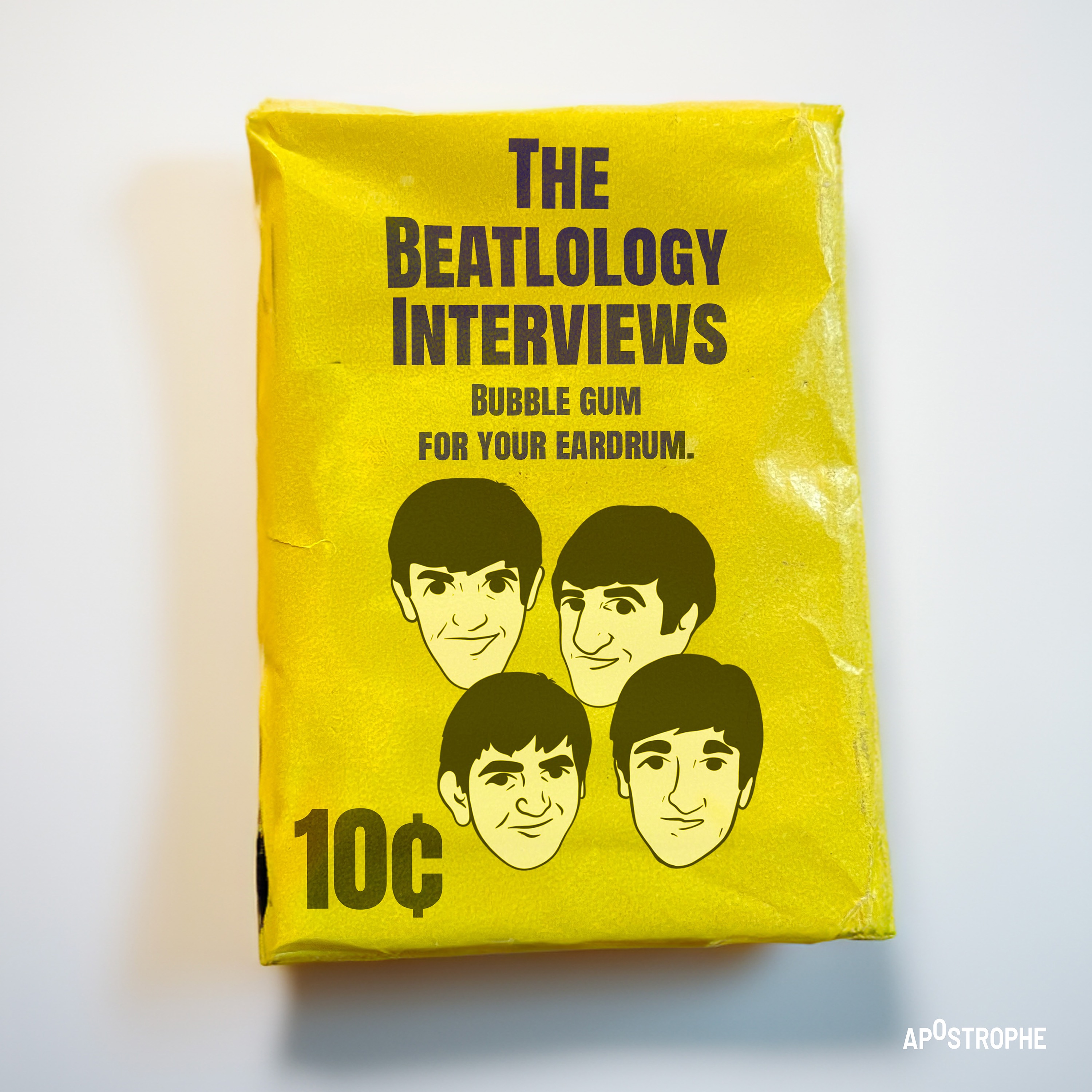
Under the Influence with Terry O'Reilly
The Beatlology Interviews: David Sheff
00:35:24
David Sheff conducted the last major interview with John Lennon. Just as Double Fantasy was being released, Sheff interviewed John & Yoko for Playboy magazine. It was the famous interview…
Loading summary
Transcript103 lines
- [00:01]
Terry O'Reilly
Hey, you could be listening to next week's episode right now. Subscribers too. But wait, there's more. Get early access every week. They enjoy Ad Free episodes Ad Free archives and they get bonus episodes every month. Just go to Apple Podcasts and enjoy your 7 day free trial now.
- [00:23]
David Scheff
My dad works in B2B marketing. He came by my school for Career Day and said he was a big roas man. Then he told everyone how much he loved calculating his return on ad spend. My friends still laugh at me to this day.
- [00:38]
LinkedIn Representative
Not everyone gets B2B, but with LinkedIn you'll be able to reach people who do. Get a $100 credit on your next ad campaign. Go to LinkedIn.com results to claim your credit. That's LinkedIn.com results. Terms and conditions apply. LinkedIn the place to be to be.
- [00:54]
David Scheff
To make switching to the new Boost Mobile risk free, we're offering a 30 day money back guarantee.
- [00:58]
LinkedIn Representative
So why wouldn't you switch from Verizon or T Mobile?
- [01:01]
David Scheff
Because you have nothing to lo. Boost Mobile is offering a 30 day money back guarantee.
- [01:05]
Yoko Ono
No, I asked.
- [01:05]
LinkedIn Representative
Why wouldn't you switch from Verizon or T Mobile?
- [01:08]
David Scheff
Oh, wouldn't because you love wasting money as a way to punish yourself because your mother never showed you enough love as a child.
- [01:15]
LinkedIn Representative
Whoa, easy there.
- [01:17]
David Scheff
Yeah.
- [01:17]
LinkedIn Representative
Applies to online activations, requires port in and autopay.
- [01:20]
Yoko Ono
Customers activating in stores may be charged.
- [01:22]
LinkedIn Representative
Non refundable activation fees. Let's talk about something that's not always top of mind but still really important. Life insurance. Why? Because it offers financial protection for your loved ones and can help them pay for things like a mortgage, credit card debt. It can even help fund an education. And guess what? Life insurance is probably a lot more affordable than you think. In fact, most people think life insurance is three times more expensive than it is. So with State Farm life insurance, you can protect your loved ones without breaking the bank. Not sure where to start? State farm has over 19,000 local agents that can help you choose an option to fit your needs and budget. Get started today and contact a State Farm agent or go to statefarm.com.
- [02:11]
Terry O'Reilly
This is an apostrophe podcast production.
- [02:32]
David Scheff
Beetleology.
- [02:36]
Terry O'Reilly
Back in the late 90s I was the co founder of a magazine called Beetleology. It was a magazine dedicated to fans and collectors of Beatles memorabilia. We talked to top collectors and auction houses as well as celebrity collectors and people who knew and worked with the Beatles. Those interviews stayed in my office drawer for 25 years, so we thought it would be interesting to dust them off in September of the year 2000, I interviewed journalist and author David Scheff. He has conducted interviews for Rolling Stone, Playboy, the New York Times and Fortune. He's interviewed people like Steve Jobs, Jack Nicholson and Frank Zappa, to name but a few as well. The movie Beautiful Boy was based on his memoir titled Beautiful A Father's Journey Through His Son's Addiction. In the film, David was portrayed by Steve Carell. The reason I interviewed David Sheff back then was because it was the 20th anniversary of another very famous interview he had conducted. David had done the last major interview with John Lennon in late 1980, just before Lennon was killed. That interview had been published in Playboy magazine. It has been called the most revealing self portrait of John Lennon's career. I agree. As David Scheff will later explain, the interview was split into two parts in two separate Playboy issues. The first was an interview with John and Nyoko. They had a new album coming out titled Double Fantasy. They were excited about it and wanted to promote it. The album was big news because Lennon had not released any new music since 1975. The title double Fantasy gave hint to its contents as the record contained both Lennon songs and Yoko songs alternating back and forth. I suspect that was John's way of making sure people listened to Yoko's music instead of relegating Yoko to side B of the lp. Then the unimaginable happened. Just as the magazine was hitting the stands, John Lennon was assassinated on December 8, 1980. As the ensuing shock rippled throughout the world, Playboy made a decision to run an extended version of the interview where John had talked about every song in the Beatles catalog one by one. Originally the interview didn't have the song by song section. But something happened and Lennon offered to do it. And now there was a compelling reason to release it. It would be the final word on the Beatles legacy from John Lennon himself. Unbeknownst to both David and I, the very day I interviewed David Scheff was the very same day he began the Lennon interviews. The first thing I wanted to know was this. How did a young 26 year old David Scheff land this very big interview?
- [06:26]
Yoko Ono
It was a memorable time. I was a very young and very inexperienced journalist. I'd done a lot of music stories for California magazines and People and maybe my first piece for Rolling Stone or something, but nothing much. And was pursuing the editor of Playboy for some reason. I just inundated him with letters, with ideas. He never responded at all. And finally I happened to be in New York, called up his office, pretended like, you know, I had a right to be incensed. And Barry Goldstone's never called me back. I'm in New York, I'm only going to be here for a day. Can I come by to see him? And for some reason he said, sure, come in. I went in. Before the conversation was over, he'd given me an assignment to interview John Belushi and Dan Aykroyd. And just as I was walking out the door, since I'd mentioned that I'd done a lot of music writing, he said, by the way, do you have any contacts to get to John Lennon? And I said, I don't, but I'll try. And that was it. I left, took that as a challenge, began making some phone calls. I called people at various record companies that I knew, and I called some producers. Pretty soon I'd heard the rumor that John and Yoko were either back in the studio or coming back in the studio. I called everybody that you could think of. I mean, I just made phone calls and sent letters. And one of the calls I remember was to somebody told me that they thought the guy who had been hired to produce the album was Jack Douglas. Called up, hit Jack got him on the phone. He was really nice, but, you know, he wouldn't say anything because secret project at the time. Then I ended up getting a call back from someone publicist who claimed that he was working with the Lennons. And I didn't know if he was because he sounded a little bit naive or unprofessional or something. I sent him a copy of my letter and told him the pitch. And then the next thing that happened was a phone call from someone who asked me when I was born and where I was born. You know, I thought the guy was probably a quack.
- [08:08]
Terry O'Reilly
As it turned out, it wasn't a quack. It was someone from Yoko's office. Yoko often made decisions based on astrology, and that's why she wanted to know when and where David was born. Luckily for David, the stars aligned.
- [08:26]
Yoko Ono
The next thing I knew, I was on a plane to New York, sitting with her in her office. And the next thing I knew after that, the next morning, was having coffee with John.
- [08:39]
Terry O'Reilly
When David arrived at their apartment in the Dakota, he was instructed to meet John and Yoko at their favorite coffee shop around the corner, La Fortuna. Walking into the shop, David was understandably nervous.
- [08:56]
Yoko Ono
So I went over there and that's where they were. Yoko introduced me to John. A little bit of get to know you chit chat. I was nervous and was made to feel comfortable In a way that was almost disarming. They were so easy and so sort of warm in ways that you wouldn't expect of any big star, that I was caught off guard occasionally because I would forget that, you know, there was, you know, John fucking wanted. And I would remember it only when he would say, oh, by the way, when I was there, I wrote Strawberry Fields Forever. And then he would continue the story and it would be, oh, God, yeah. That was the song that I listened to for, with headphones on. You know, when I was locked in my room for six months of my childhood, my only contact with the outside world.
- [09:31]
Terry O'Reilly
That had to be a pretty big moment for David. Sitting across from John Lennon, I asked him what his very first impression was of the famous Beatle, because I was nervous.
- [09:42]
Yoko Ono
I was struck by an instant warmth, which is not necessarily the thing you expect of John Lennon of anybody in that position. And the warmth came through in words, I mean, in sort of, you know, how are you? I hear you from California. How was your flight out? You know, that kind of stuff to something else that's a little bit hard to describe. It was just his presence, and he didn't have any of the air of a lot of the far less significant superstars that I interviewed. He just was a normal guy and he came across that way, and he was sort of gracious. And we just come to expect so little grace from people in that position that when you find it, it's a shock. And I remember, you know, he, not some assistant or something, made sure I got my cup of coffee and, you know, that kind of thing. And then later in the Dakota, in the kitchen, he'd be up making tea, and I would say, can I do that? No, no.
- [10:32]
Terry O'Reilly
Nobody had really seen Lennon since 1975 because he had withdrawn from public life for five full years. In his own words, he had become a house husband, making bread and raising his son, Sean.
- [10:48]
Yoko Ono
If you look at pictures of John through the ages, you see complete transformation of a person. And I guess the thing I also felt, and this was part of the. Making me feel at ease, part of the story, I guess, was that he looked sort of serene in a certain way, as if he'd been through the hard stuff and had come out the other side and was feeling pretty. There's a French word for it, but comfortable in his skin, and you got a real strong sense of that. And he just looked sharp. He was thin, and I know he felt good about that. And he had this great haircut, and it was not trying to be Anybody other than exactly who he was.
- [11:28]
Terry O'Reilly
As I was listening to David describe sitting with John Lennon in that coffee shop, I had to think that seeing Lennon sitting there in a coffee shop would attract a lot of attention. Even walking to the shop had to be a fan obstacle course for the ex Beatle.
- [11:45]
Yoko Ono
No, you know, it's a big surprise. It was one of the surprises for me and also even a little bit for him because he remarked on it a few times how people left him alone. The most you get would be somebody asking for an autograph or something. But that was less often than either sort of polite, sort of nod or hey, John, how you doing? Or something like that. And he'd respond with a nod or how you doing back. He wasn't harassed at all. He wasn't hassled. There was a couple times, certainly, when the car would show up at the end of the day, pull up right in front of the Dakota, there'd be a small gaggle of fans, and he'd indulge them and give autographs and was very kind to them and gracious, and he'd answer a question or two. And they'd be the typical young guy or girl who'd yell out, hey, John, when are you getting back to the Beatles? And the only time that he snapped back at one of them, which wasn't so much a snap, but it was kind of a little quip, was, hey, when are you going back to high school?
- [12:41]
Terry O'Reilly
As John and Yoko sipped their tea with David at La Fortuna, Yoko eventually left to attend other business that left David alone with John. David then explained the kind of topics he was interested in asking John about. And John explained why he agreed to do the interview.
- [13:00]
Yoko Ono
And it was partly because, you know, you gotta promote your work. I mean, it was business. And he told me that they'd done a plan that they were gonna do one monthly magazine and one weekly magazine and won, I know, some radio interviews. But he also was obviously a real fan of Playboy, and the Playboy interview meant something to him, to the point that he'd done it once before. He'd been part of a Beatles interview, and he knew the Playboy interview tradition. You know, interviews with everybody from Martin Luther King to Albert Schweitzer. And he took it seriously in that way. And he said that he was looking at this opportunity as a time to set the record straight. I remember him saying something like, you know, we'll keep going until you're. And then he stopped and said, until we're all satisfied. Which I think meant to him that you know, he really wanted to get his say out there. So it wasn't just a question of me going through my list of questions, but he had his agenda, too, and it was really to clear up, you know, five or seven years or maybe even a lifetime of misinterpretations of things he'd said and done.
- [13:57]
Terry O'Reilly
Often when you do interviews with celebrities, their publicists very quickly give you a list of no fly zones. I was interested to know if John or Yoko had imposed any parameters on David's interview.
- [14:11]
Yoko Ono
Not a peep. No. It was extraordinary. Yeah. They're one of the few people who can get away with it and they didn't. No. I think, you know, this is part of the philosophy, and it certainly was practiced in every way, which was, you know, warts and all. Honesty is the way that we all kind of learn and grow and they practice what they preach.
- [14:27]
Terry O'Reilly
So that was the first meeting with Lennon at the coffee shop. The very next day, David went to the Lennon's apartment at the Dakota to continue the interview.
- [14:37]
Yoko Ono
That began an amazing sort of pattern. Sometimes the call time, in other words, the time that I was supposed to meet him was different. Sometimes it would be early in the morning, 9 or 10, or sometimes if they worked super late at night, it would be a little bit later, maybe noon or 1:00. But I'd come to the apartment. At first it was the formal entry to the front of the Dakota and go up the front elevator after they announced me. But after I got comfortable there, the guards knew me. And John once showed me how to get up to the back elevator and arrived directly at their kitchen.
- [15:08]
Terry O'Reilly
The Lennons were very busy during this time. They were mixing an album at the Hit Factory. So David worked around their schedule, sometimes meeting at the Dakota or riding with them in their limo to the recording studio. He also had the amazing experience of sitting in the studio watching Lennon at work.
- [15:30]
Yoko Ono
And either they would be ready to leave and I'd just, you know, hang on and head out with them, or we'd sit there for a while and have. If they. If they weren't quite ready to leave, I'd sit down and have a cup of coffee or tea with them and start the conversation. The tape was rolling whenever there was conversations going on, and then John would duck out, say, I got to get a couple things away. I don't want to go say goodbye to Sean because he's going off to be with a nanny or whatever. And then at some point, either right away or later, I jump in the car with Them. And it would take us to the Hit Factory. And there were a couple times when it went to other studios, which I wrote about. But mostly we'd go to the Hit Factory and they'd work on the music. And I had a chair in the back, which was sort of my chair, director's chair, sitting in the back, where I could watch everything going on, which I. Which I look back on as just an opportunity of a lifetime to sit and watch John and Yoko make those two amazing records. And then there was a quiet room nearby where sometimes Yoko would go to take a nap, or occasionally John would go just to be by himself. But which also was the place where we would duck in for interview time. And sometimes John would say, oh, they don't need me now. Let's go talk. And we'd go talk for 20 minutes. And sometimes it would actually be a couple hours. Same with Yoko. It would be, okay, let's continue from where we left off. Let's go in the other room.
- [16:42]
Terry O'Reilly
Because the Playboy interview interview was so extensive, covering so much ground, I asked David how long it took to conduct the interview, how much time the Lennons actually gave him.
- [16:53]
Yoko Ono
I'd say about 10, 11 days. And there would be some days where I wouldn't record a moment because there just wasn't the opportunity. They were too busy. Or maybe I'd have the tape recorder on in the car between two studios for 10 minutes, but I still would just sort of hang out and watch them work and watch a track be laid down. And you'd think that they would leave the producer to do a lot of the busy work and making a record, but they didn't. You know, John would be behind the control and Oroko, when the guy would come in to do, you know, a trumpet track that would be three notes in the middle of a song, they'd sit there and patiently ask the guy to do it again, you know, 40 times or whatever it took. And that'd be John himself, you know, behind the control panel, saying, you know, another take, please.
- [17:35]
Terry O'Reilly
I was interested to know if John was a different guy in the studio compared to the guy who sat across from David at the coffee shop. Did he click into a super Beatle work mode?
- [17:47]
Yoko Ono
He was not different in the way that he treated people. He was still warm and gentle to everybody, really grateful. I mean, he seemed to, you know, the engineers who were putting in all the hard hours and the musicians who came in. I mean, he was as kind and grateful and gracious as he was to me or anybody. But the times when he would appear differently was when he actually was inside the glass in the booth, either with his guitar or just with the headphones on, singing. And then, you know, Lenin, the. I don't know. I don't know what the word is, just the visceral. You know, Lennon would come out and it was singing and playing where you'd see him transform. And it was a different kind of person who was standing up there behind the glass making music. He said someplace in there that his soul comes out when he plays the guitar. And I absolutely felt that and saw it. And similarly, when he would sing, he closed his eyes, the rest of the world would disappear and, you know, there'd be some power. That was astounding. And I remember that pretty vividly.
- [18:50]
1-800-Flowers Representative
Trivia Question what inspired John Lennon to name the album Double Fantasy? Answer after this this holiday season, when you can't be there, let 1-800-Flowers com deliver at 1-800-Flowers. Every gift is crafted with care and designed to make spirits bright. From classic holiday bouquets and unique one of a kind designs to gift bundles you can't find anywhere else, 1-800-FLowers makes it easy to stay connected no matter the distance. Just a few clicks and your thoughtful gift is on its way. Visit 1-800-flowers.com acast to deliver joy, beauty and celebration this holiday season.
- [19:35]
LinkedIn Representative
Hey guys, have you heard of Gold Belly? It's this amazing site where they ship the most iconic famous foods from restaurants across the country anywhere nationwide. I've never found a more perfect gift than food. They ship Chicago deep dish pizza, New York bagels, Maine lobster rolls, and even Ina Garten's famous cake. So if you're looking for a gift for the food lover in your life, head to goldbelly.com and get 20% off your first order with promo code GIFT.
- [20:05]
David Scheff
My dad works in B2B marketing. He came by my school for Career Day and said he was a big roas man. Then he told everyone how much he loved calculating his return on ad spend. My friends still laugh at me to this day.
- [20:19]
LinkedIn Representative
Not everyone gets B2B, but with LinkedIn you'll be able to reach people who do get $100 credit on your next ad campaign. Go to LinkedIn.com results to claim your credit. That's LinkedIn.com results. Terms and conditions apply. LinkedIn the place to Be To Be.
- [20:45]
1-800-Flowers Representative
John took the title Double Fantasy from the name of a flower he had seen in the Bermuda Botanical Gardens while vacationing there in 1980.
- [21:03]
Terry O'Reilly
The Playboy interview would eventually come out in two separate parts in two different issues. But that wasn't the original plan. The first part in the January issue, which was to be the only part, was a joint interview with John and Yoko, talking about the new album, talking about his time with the Beatles and his life with Yoko. But after Lennon's death, a decision was made to release the extended interview in April of 1981, where Lennon went through the entire Beatles catalog song by song.
- [21:37]
Yoko Ono
The understanding was that the interview would come out to sort of help with the launch of their records. The Double fantasy. But also Playboy had its own agenda. Which is their most ready. What they view as the most important issue of the year is the holiday issue, which comes out in December, the January issue. So they. So both Playboy and John and Yoko wanted the interview to come out beginning of December. But I was ready to keep going. I could have kept going for another week. John and Yoko were absolutely open to me. Continue. But there was a certain point where I had 20 or 22 hours of conversations on tape. They were being transcribed as I was getting them. And the deadline had hit. You know, it was way, way late. The magazine needed the copy. And so in my hotel room with a borrowed typewriter, and in those days, literally scissors and tape and paste, you know, no computer, I put the interview together. And Barry Golfen, the editor, would come over and work with me sometimes and, you know, a few days of 24 hours a day to get it ready. And so it was no thought of a second part. It was trying to get the essence of the experience and the conversation in what turned out to be, I don't even know how many words, 12,000 words, maybe, which was long for an interview magazine, but it didn't reflect anywhere near the whole experience. And so in there, we were making decisions that, oh, it was just heartbreaking to have to cut out John talking for a really long time about something that was really important to him or something that was really inspiring to me about relationships, about philosophy, about some of the songs that he wrote with the Beatles, some of his own work. A lot of stuff had to go. We tried to pick and choose and make a really exciting and compelling interview and had to do it unbelievably, quickly. Time frame.
- [23:10]
Terry O'Reilly
Then on December 8, tragedy struck.
- [23:18]
Yoko Ono
The magazine came out, of course, and then John. Everybody has their own version of this story, but I was in la, really excited that the interview was going to come out. I talked to them on the day before, on Sunday, I talked to them. It was Sunday. They were pretty excited. They'd seen a copy of it. And they were really pleased about it, I think. And I was watching football that evening. I never do that, but I. I was watching it that way.
- [23:38]
Terry O'Reilly
An unspeakable tragedy confirmed to us by ABC News in New York City. John Lennon outside of his apartment building on the west side of New York City. The most famous, perhaps of all of the Beatles. Shot twice in the back, rushed to Roosevelt Hospital, dead on arrival. John Lennon's death shocked the world. But to David, who had spent so much recent time with him, it must have seemed surreal.
- [24:13]
Yoko Ono
By the way, the last time I did talk to him, but I called a Dakota, and he picked up the phone. He never picked up the phone. So I always expect an assistant to answer. Or, you know, if it somehow was late at night or something, Yoko would answer. John would never answer. But he picked up the phone this last time I called, and I think he didn't, you know, he seemed to know if some crackpot was calling or some. He didn't know who it was. He just whistled just to hear the reaction, and instantly I knew it was his whistle. And that was our last conversation. But anyway, you were basically asking me sort of how I, you know, what the reaction to that night. I mean, there's no words for it, you know, there's just nothing to say. I was completely and utterly blown away by it, and I still am. You know, there was no way to be prepared for anything as unbelievable, outrageous, horrible as that. I was flipped out, you know, just like all the other fans were. But then I had this other just horror because I got to see the relationship between Sean and John. The first thing I thought of, they just adored each other, you know, I mean, it's a cliche. It's sort of a sappy sort of image, I suppose. But, you know, I'm a parent. And I mean, he had the role that most mothers have with their kids when they're young. He really did. And so that was my first thought. That was the thing that I just couldn't shake, was as much as it was incomprehensible, as much as sort of the fury about that something like this could happen. That was little boy's father being murdered, and I couldn't shake that.
- [25:31]
Terry O'Reilly
After John died, David tried to reach out to Yoko first.
- [25:35]
Yoko Ono
I tried to get through instantly and was unable to. The phones were busy and busy and busy and flew instantly to New York. I was in Central park with everybody else the next day in tears, and I kept trying to call her. And to tell you the truth, my mind is Real foggy, long ago. So I don't know how many days it was, but finally I got through and she told me to come over. And I did. And it was a real quick meeting. That was the only time I saw her during that trip. I came back to California and maybe went back to New York a month later and saw her in January. And that's when I spent some real time with her.
- [26:08]
Terry O'Reilly
John's death had big implications for the Playboy interview, too.
- [26:13]
Yoko Ono
But one of the things it led to was after things had calmed down, after the shock of the murder, one of the obvious things was we had so much more material. It was so brilliant in so many different ways. What was a way to do a follow up that was meaningful and the quickest and simplest was to do something that we just never had been able to take advantage of in the first interview, which was to go down song by song with John. And it was really an exciting and sort of, oh, I don't know, obviously historic, brilliant time with him. And also had with it sort of this bittersweet irony that there was this understanding that we had not gotten through all of his music and we were going to keep going to perhaps do part two, to have perhaps, you know, it was undefined what would happen with it. But he was into it.
- [27:00]
Terry O'Reilly
That Song by Song analysis has gone down in history as one of the most fascinating and insightful John Lennon interviews of all time. As he said to David, you're asking me about my life's work. Interestingly, the very reason it exists was due to an apology.
- [27:21]
Yoko Ono
And it was probably about the 15th of September or something like that of that year when Newsweek magazine came out. And I'd said at the very beginning that John told me they were going to do one monthly, one weekly, whatever. But there was also an understanding that Golfen, the editor, had had with the publicist, who turned out to be the guy who called up and asked me for the information about my birthday and all that stuff, and that this was going to be an exclusive, that we'd have the first print interview with John and Yoko. Newsweek came out. So the editor was, you know, disappointed and he came with me that day, or he showed up later, actually arrived at Yoko's office and came in and sort of was playing bad cop to my, you know, my good cop kind of waving Newsweek, what was this? What about our exclusive? And John was. He sure didn't have to apologize to anybody. But he did. He sort of shrugged and said, listen, what can I say? You know, we promise we did this with Newsweek, and. And they went for it. And then he complained about Newsweek because he said that they had, in a sense, been a little bit devious only in the way that they presented the interview. You know, John was passionately committed to Yoko and to Yoko's equal billing as an artist. And in the Newsweek piece, I remember their headline was something like, john and Yoko interview. His first interview since whatever. And he was just pissed off about the way that they had sort of twisted it. But anyway, sort of in John's burst of apology and in the conversation that followed, he said something like, how can I make it up to you boys?
- [28:41]
Terry O'Reilly
And that was the perfect opportunity to say, let's go song by song.
- [28:46]
Yoko Ono
Yeah. Because in that process, I realized that he was totally into it. It was sort of the first time he'd done a very, very small version of that, maybe 10 years before. But he had to sit there with him on the floor of the bathroom in Studio one, or else, you know, in the kitchen with a stack of records. He'd pick up the records and look at them, and, you know, he was living his life, you know, as he talked about, he was raising Sean, taking care of the family, baking bread and stuff like that. He wasn't thinking about the Beatles, listening to old Beatles. But here I was there with him with all those records, and he got into it. It was a way for him to not only sum up, but to take some pride in his accomplishments. And you really got a sense of that.
- [29:30]
Terry O'Reilly
Can you imagine sitting on the floor of the Dakota with John Lennon, surrounded by Beatles records, as John talks about each song in chronological order, album by album. Wow. John was incredibly candid about the songs, revealing whether he even liked certain songs or not, which ones he was proud of and which ones he felt were, quote, rubbish. Lennon's appraisal of the Beatles catalog would resonate for years and years. Most importantly, it seemed to have a big effect on Paul McCartney, because in many ways, Paul was hounded or maybe even haunted by that interview and felt he had to defend himself in subsequent years or defend his contributions to certain songs. It was probably the reason McCartney eventually did his own version of the Song by Song analysis in the book many years from now, and more recently in the A Life in Lyrics podcast and book. In all of them, he challenges some of the things Lennon said in Playboy.
- [30:44]
Yoko Ono
Ryan Reynolds here for, I guess, my hundredth mint commercial. No, no, no, no, no, no, no, no, no. Honestly, when I started this, I thought, I only have to do, like, four of these. I mean, it's unlimited to Premium Wireless.
- [30:55]
Terry O'Reilly
For $15 a month. How are there still people paying two.
- [30:58]
LinkedIn Representative
Or three times that much? I'm sorry I shouldn't be victim blaming.
- [31:01]
Yoko Ono
Here give it a try@mint mobile.com Switch whenever you're ready.
- [31:06]
1-800-Flowers Representative
$45 upfront payment equivalent to $15 per month new customers on first three month plan only taxes and fees extra speed slower above 40 gigabytes CD tails it.
- [31:14]
LinkedIn Representative
Took a lifetime to find the person you want to marry. Finding the perfect engagement ring is a lot easier. @bluenile.com you can find or design the ring you've always dreamed of with help from Blue Nile's jewelry experts who are on hand 24. 7 to answer questions and the ease and convenience of shopping online. For a limited time, get $50 off your purchase of $500 or more with code. Listen. That's $50 off with code LISTEN. Let's talk about something that's not always top of mind but still really important. Life insurance. Why? Because it offers financial protection for your loved ones and can help them pay for things like a mortgage, credit card debt. It can even help fund an education. And guess what? Life insurance is probably a lot more affordable than you think. In fact, most people think life insurance is three times more expensive than it is. So with State Farm life insurance, you can protect your loved ones without breaking the bank. Not sure where to start? State farm has over 19,000 local agents that can help you choose an option to fit your needs and budget. Get started today and contact a State Farm agent or go to statefarm.com.
- [32:31]
Terry O'Reilly
Paul probably didn't know how John really felt about certain McCartney compositions. And I'm sure it was hurtful.
- [32:39]
Yoko Ono
Yeah, John was honest and he was completely honest at the moment. You know, 10 years later he might have given a completely different sort of look back, but at the time he was honest in a way that some people thought was fairly brutal. It was just damn honest about exactly how he felt about everything and everybody. And I think that some people were hurt by the interview. I've always, you know, I've cared less about feel like McCartney can take care of himself. I felt that it was an honest but harsh though also in a certain way forward looking, somewhat optimistic even. Look at his relationship with, you know, with his first son with Julian. There was a certain sadness about that being sort of the last words on that subject.
- [33:15]
Terry O'Reilly
Right.
- [33:15]
Yoko Ono
But it was also, you know, it was both because he also talked about, you know, he didn't just talk about the lack of a deep and loving relationship that he had with Julian. But he also talked about the hope for a better relationship in the future, which I think I hope that in some ways that was consoling to Julian. But the great line, I don't believe in yesterday, his not very subtle put down of McCartney, both the way that he lived his life and McCartney as a songwriter, even as he acknowledged that the song was a beautiful song that he never wished he'd written. Yeah, it absolutely sort of set a bar and set sort of a stage for conversation to follow. It was unfair to John in some ways because everybody else got to keep talking about it. He didn't get to clarify and he didn't get to be a participant in the dialogue that followed.
- [34:04]
Terry O'Reilly
The song by song analysis that Lennon provided was utterly fascinating because it let us all in on the Lennon McCartney songwriting dynamic, looking behind the song to see what each brought to the process, the surprising ways they inspired each other or offset each other.
- [34:24]
Yoko Ono
The big point I was going to make was the coolest part about the song by song thing to me was besides the historical record was the true picture of a sort of genius at work. This is acknowledging McCartney as well as Lennon, the way that they work together to construct songs like We Can Work it out, with Paul telling the story and John, you know, being the philosopher. Another example is Eleanor Rigby. Paul told the story of Eleanor Rigby being in a church where a wedding had been, but John always looking at the deeper side of a picture. All the lonely people, where do they all come from? And understanding the way that those masterpieces were constructed was a rare glimpse to that level of genius, I guess. And it worked not just when he talked about the lyrics, but when he talked about the music. How he would always come in with the minor chords and the discords, whereas McCartney would be sort of like the primary colors versus the sort of the darker and more complex colors. And somehow the combination of that made the Beatles and, you know, Lennon, in a very beautifully eloquent way, since he was such a beautiful talker, said it as well as I've ever heard it said about, you know, anybody, any artist, forget in any field, whether it was a painter or a musician.
- [35:35]
Terry O'Reilly
When the Playboy holiday issue came out with part one of the John and Yoko interview in it, Ringo's wife, Barbara Bach, was on the COVID and posed nude inside. I asked David if he knew she was going to be on the COVID And did John know?
- [35:53]
Yoko Ono
I did not. Neither did John. Nobody knew. I mean, my boss may have known, but I didn't know.
- [35:56]
Terry O'Reilly
Ah, so that Was a surprise to everybody.
- [35:58]
Yoko Ono
Yeah, I think it was a complete coincidence of timing. I think they got her, you know, they decided all of a sudden they had something there in a combination package, I suppose.
- [36:05]
Terry O'Reilly
What was your reaction from John on that?
- [36:07]
Yoko Ono
Not a peep. The answer is that neither of them ever mentioned it. But later I know that Yoko and Barbara had a fairly close relationship, I think, much later.
- [36:14]
Terry O'Reilly
Did John die before it hit the stands?
- [36:17]
Yoko Ono
No. Well, he died, I think, before it actually hit the newsstands, but not everywhere. The subscribers had the issue in their hands, many of them. It had just started to be dropped onto the newsstands. By December 8, it was out there and available for people.
- [36:36]
Terry O'Reilly
While so much focus was on John in this remarkable interview, it's easy to forget Yoko was also there. And David had many interactions with her. I asked him for his firsthand impression of Yoko.
- [36:50]
Yoko Ono
One of the most extraordinary people I've ever met. I think that there is a long history of misunderstanding Yoko. And that's putting it sort of probably too lightly and gently or something. But I think it started off with what John said, which was a. A resentment that she'd come in and sort of stolen him away from and broken up the Beatles. Wasn't true, but she was blamed for it. There was racism. If she'd been a blonde Brit, if she'd been Barbara Bach, I don't think anybody would. So therefore it didn't have to be blond. But if she'd been sort of the idea of a girlfriend to a rock star, people probably would have forgiven him and her. But I guess the main thing is that she is a very, very brilliant and complex person. Whereas John could come into a room, I think, and within two seconds you kind of get it. Who he was is right there on his sleeve. Yoka is more complicated, and it takes a while to get her. And certainly John got her more than anybody ever did. But it didn't take long for me to get her and for me to get exactly what their relationship was all about. And to get the depth of their relationship, the depth of their love, and to get her just as both an intellect and as an artist. And I guess the one thing that has been pretty satisfying over the last few years is to see some vindication of that. Her art has been, you know, by the art world, has been taken pretty seriously. She had a retrospective at the Whitney, and she was part of the Venice Biennale. And she's been taken seriously by critics who reviewed her work not as Mrs. Lennon, but as, you know, an important member of the flexus movement and all that kind of stuff. And I think that that was what I've always felt, I've always gotten from her artwork. And I've also always felt it is really funny. People don't get it, but she has a very, very subtle but brilliant sense of humor. I'll tell you, you know, the things that people don't. I mean, I mean this is maybe a self indulgent story and I won't go into detail about it, but when my marriage was breaking up, there was nobody on the planet who was more. First of all, I should preface this by saying that, you know, I've interviewed people for about now 25 or so years, from big movie stars to big writers. The only person maybe I could say there are a couple people in those years of hundreds and hundreds of people who I've. I stayed in touch with him and in fact became friends with. And Yoko was one of them. And partly it was because I think, you know, we connected at a time that was just. It just brought us together, you know, with John being shot then. My point is that for the so called, you know, quote unquote self indulgent artist who's sort of in her own world and is unconcerned about other people, there was nobody in my extended group of friends and family who was more present as a friend for me or for my ex wife. I think my ex wife would probably say the same thing. And I guess the only reason I'm telling you that is not to go on about my own story, but to say that it's a much more subtle, complex and ultimately I think a much more respectable and admirable kind of person.
- [39:43]
Terry O'Reilly
That was my fascinating talk with David Sheff back in the year 2000. The Lennon Playboy interview was issued as a book in 1981 titled All We Are saying. The Last Major Interview with John Lennon and Yoko Ono. When I interviewed David, it was the 20th anniversary of his famous interview and book a 40th anniversary issue. HitBook stands back in 2021. I don't think that remarkable book will ever go out of print thanks to the always interesting David Scheff. Stay tuned for more of the Beatleology interviews. I'm Terry O'Reilly. This special bonus episode was recorded in the Terrastream Mobile recording studio. Director Callie O'Reilly producer Debbie O'Reilly. Chief sound engineer Jeff Devine tunes provided by APM Music. Follow me on social at Terry Oinfluence. This podcast is powered by ACAST.
- [41:00]
Yoko Ono
To.
- [41:00]
David Scheff
Make switching to the new Boost Mobile risk free. We're offering a 30 day money back guarantee.
- [41:05]
LinkedIn Representative
So why wouldn't you switch from Verizon or T Mobile?
- [41:07]
David Scheff
Because you have nothing to lose. Boost Mobile is offering a 30 day money back guarantee.
- [41:11]
Yoko Ono
No, I asked.
- [41:12]
LinkedIn Representative
Why wouldn't you switch from Verizon or T Mobile?
- [41:15]
David Scheff
Oh, wouldn't because you love wasting money as a way to punish yourself because your mother never showed you enough love as a child.
- [41:22]
LinkedIn Representative
Whoa, easy there.
- [41:23]
David Scheff
Yeah.
- [41:23]
LinkedIn Representative
Applies to online activations, requires poured in and auto pay.
- [41:27]
Yoko Ono
Customers activating in stores may be charged.
- [41:28]
LinkedIn Representative
Non refundable activation fees.
- [41:31]
Yoko Ono
So good, so good, so good.
- [41:33]
David Scheff
New markdowns up to 70% off are.
- [41:36]
Yoko Ono
At Nordstrom Rack stores. Now.
- [41:38]
David Scheff
From fresh kicks to perfect gifts, there's always a find Levi's, Paige Frame.
- [41:44]
Yoko Ono
All the best denim. Why do I rack?
- [41:46]
David Scheff
Because check out these boots I always score at Rack. Head to your Nordstrom Racks store to find amazing deals on all things winter. Great brands, great prices. That's why you rack.
- [41:58]
1-800-Flowers Representative
Sharing all the joy that the holiday season brings has never been easier with celebrations passport from 1-800-flowers.com my one stop shopping site for even those hard to gift people. With Celebrations Passport, I get free shipping on thousands of amazing holiday gifts like festive flowers and arrangements and fresh fruit and gourmet gift baskets from Harry and David. Make the holidays merrier by gifting smarter at 1-800-FLowers.com acast. That's 1-800-FLowers. Com acast.
- [42:27]
David Scheff
Oh my God. It's the coolest thing ever. Hey guys, have you heard of Gold Belly? Well, check this out. It's this amazing site where they ship the most iconic famous foods from restaurants across the country anywhere nationwide. I've never found a more perfect gift than food. They ship Chicago deep dish pizza, New York bagels, Maine lobster rolls, and even Ina Garten's famous cakes. Seriously. So if you're looking for a gift for the food lover in your Life, head to goldbelly.com and get 20% off your first order with promo code gift.