← Undo – How history's outliers got stuff done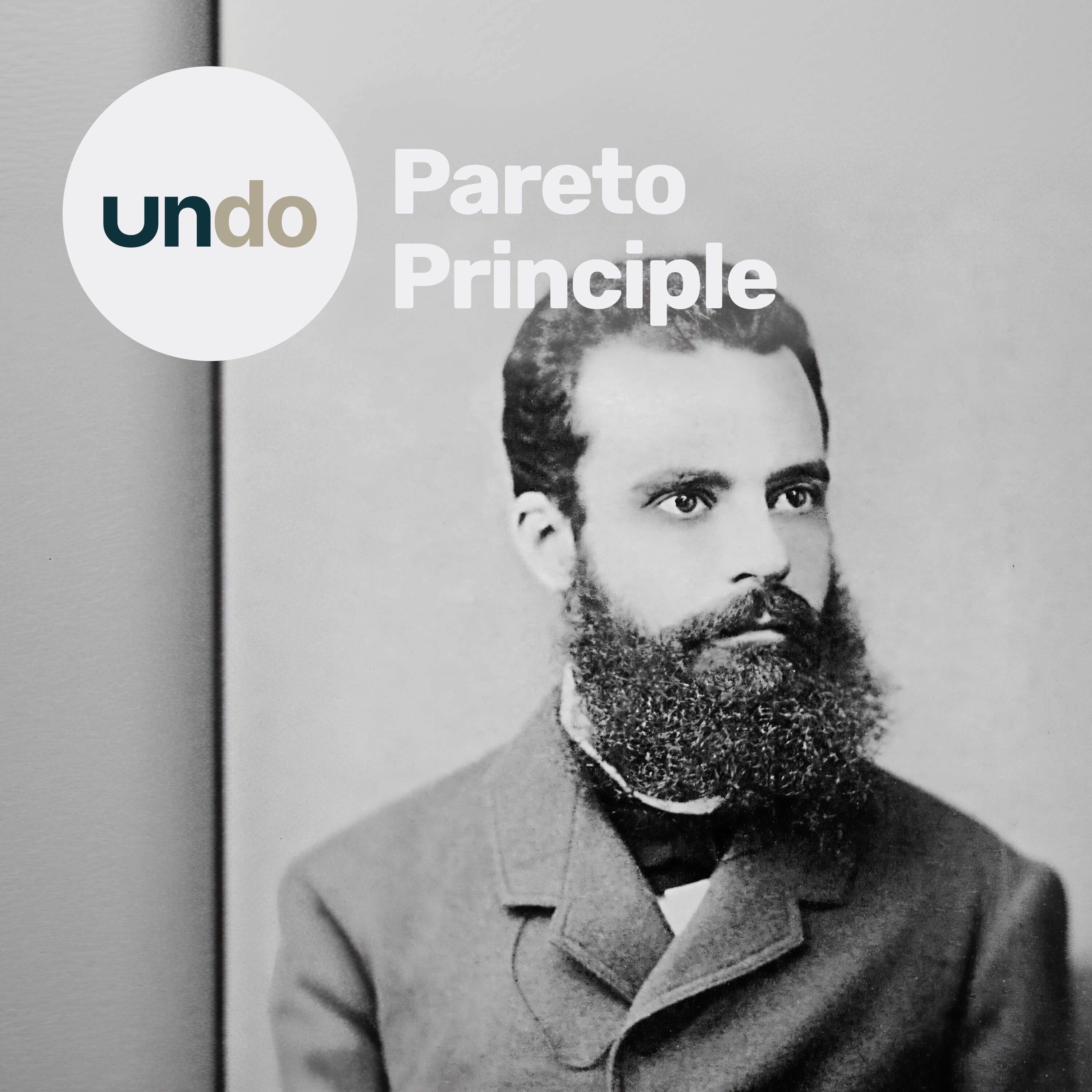
Undo – How history's outliers got stuff done
20% of your effort makes up 80% of your success — The Pareto principle
00:25:13
Loading summary
Transcript35 lines
- [00:00]
Mark Stedman
I've never felt fear quite like that crisp spring day over 30 years ago. This is that proper white knuckle face as pale as milk. Fear that you're about to be killed to death by a hungry Tiger. Fear. It's 1996. I'm in my year eight geography class and today is the day our group presentations are due. We've had a week or so to work on them and I'd not checked in with my two group mates. I don't know what had happened, but we never synced up. I spot them as we're waiting to get into the classroom and ask them what's the deal? They close ranks and insist I have no part to play in their project. I've contributed no work, so they're hanging me out to dry. We saw each other every day, so why one of them didn't ask, hey, aren't we supposed to be working on this project together? I don't know, but I'll take the responsibility. For the next hour, I watch as each group is called up to give their talk. With every announcement of the next group, the knots in my gut get tighter and my blood pressure rises. Until finally our group is last to go. My counterparts stand up, do their thing, sit down, and that's that. I'd got away with it. Like Zack Morris in Saved by the Bell, I'd ridden low in my chair and somehow escaped the eye of Sauron. That was my geography teacher, who was also my form tutor and one of the stupidest people I've ever met. But that's beside the point. From that moment on, I vowed that I would always put the maximum effort into my group projects. So much so that I became one of those people we'll meet later on who do 80% of the work while the other 20% relax. I am Mark Stedman and this is undo. Investigating productivity methods, myths and the people behind them so you can build a system that works for you.
- [02:25]
Warby Parker
What makes a great pair of glasses? At Warby Parker, it's all the invisible extras without the extra cost. Their designer quality frames start at $95 including prescription lenses plus scratch resistant, smudge resistant and anti reflective coatings and UV protection and for free adjustments for life. To find your next pair of glasses, sunglasses or contact lenses, or to find the Warby Parker store nearest you, head over to warbyparker.com that's warbyparker.com a real.
- [02:56]
Mark Stedman
Lemonade pet Insurance Review by Madison H.
- [02:59]
Madison H.
You know, I thought it was a little ridiculous to get pet insurance, but I really didn't want to not take my little kitten to the vet because of money. In the last eight months, I've taken him in six times because of ear infections and saved literally hundreds of dollars. You may even need to get surgery and I couldn't consider it without Lemonade's help. I recommend Lemonade to all my friends constantly and now I'm recommending it to you.
- [03:22]
Lemonade
Check it out@lemonade.com pet.
- [03:28]
Acast
Acast powers the world's best podcasts. Here's a show that we recommend.
- [03:35]
Paige Desorbo
Hey guys, welcome to Giggly Squad, a place.
- [03:38]
Hannah
Where we make fun of everything, but most importantly ourselves.
- [03:41]
Paige Desorbo
I'm Paige Desorbo.
- [03:42]
Hannah
I'm Han.
- [03:43]
Paige Desorbo
Welcome to the Squad.
- [03:44]
Hannah
Giggly Squad started on Summer House when we were giggling during an inappropriate time.
- [03:48]
Paige Desorbo
But of course we can't be managed.
- [03:50]
Hannah
So we decided to start this podcast to continue giggling.
- [03:53]
Paige Desorbo
We will make fun of pop culture news. We're watching Fashion Trends Pep talks where we give advice, mental health moments and games and guests.
- [04:02]
Hannah
Listen to Giggly Squad on Acast or wherever you get your podcasts.
- [04:07]
Acast
Acast helps creators launch, grow and monetize their podcasts everywhere. Acast.com.
- [04:17]
Mark Stedman
Rory Sutherland has an idea for a coffee shop called Flat White or Off.
- [04:24]
Rory Sutherland
The Starbucks experience is great if you've got 45 minutes to spare, but at a railway station, it's completely wrong because you want to get a coffee pay and get the hell out of there so you can catch your tray. So my idea is you only serve flat whites. You make them in advance. People pick one up, they tap with their card, they pay, they go off. And if you ask for anything other than the flat white, the answer is in the name.
- [04:44]
Mark Stedman
This idea isn't entirely insane. I have a harebrained scheme to start a food truck that sells chili by the cup. You ask for a cup of meat or veggie chili to which you can add cheese or not add cheese. There are dispensers for guac and sour cream and you get a little bag of tortilla chips on the side and maybe a spoon. You tap to pay and go on about your day. In N Out Burger, the famous California fast food drive thru chain, offers a hamburger, a cheeseburger, and their version of a Big Mac, which they call a double double. You can add fries and a shake and that's it. To the uninitiated, In N Out offers no modifications to its menu. You go there because you like what they offer and you want fast and polite service. But of course, over time, regulars have made certain requests that have formed a sort of secret menu. So if a double double doesn't quite hit the spot, you can order up a 4x4 and get twice the meats and twice the cheeses. These are all based on some variation of the 80:20 rule, otherwise known as the Pareto principle, which states in this case, that 80% of a company's revenue comes from around 20% of the product line. If we flip back to my chili in a cup food van, if I only have two basic products, meat chili or veggie chili, you might assume I'd make equal batches of both. But I know from my research that roughly 80% of my customers will want the meat option, so I'll make more of that. I can take it a step further, using the principle to decide whether or not to buy vegan cheese. It wouldn't be right to charge a vegan more for the fake cheese, but it costs me more to procure. So I can risk disappointing 20% of customers on this one modification, knowing that 80% will be unaffected. The Pareto principle can tell us all sorts of things, from the micro level of a small creative practice to the macro level of an entire nation's economy. But it all starts in a garden in Florence, and it has nothing to do with food. Vilfredo Pareto fancies an omelette. Oh, okay, so I guess it does have something to do with food. Anyway, he wants some peas to go in it. Damn it. He thinks, I don't have any frozen peas because the freezer won't be invented for another 50 years. So he swaps his indoor slippers for his gardening shoes and heads out to check his pea pods. What he sees is surprising. In his little garden, Vilfredo has five pea plants, each with around 20 pods, making a neat total of 100 pea pods. Trust an economist to cultivate a mathematically manageable garden. Now, you and I might expect the pods to have roughly equal yields, around five peas per pod. But what Pareto found was that 20 pods were producing far more peas than the rest. In fact, 80 of the peas from his omelette came from a fifth of his plants. As the story goes, this phenomenon intrigued him, so he started delving further into it, and he discovered this ratio everywhere, even in the Italian economy, which is a discovery that still holds true today. 80% of the stuff, it turns out, is owned by just 20% of the people. That was true of 19th century Italy, and it's true of most developed economies now. And it goes further. 20% of hazards in construction result in 80% of injuries and 80% of crime is done by the top 20% of criminals. In software, the top 20% of bugs are responsible for 80% of crashes, and in business, 80% of complaints are generated by 20% of customers. Another way to frame this discovery is with the phrase the vital few and the trivial many. And it's that idea, not so much the number itself, that we need to focus on. So here I am in my kitchen making chilli. In our hypothetical example, I'm going to make a big batch this this morning and sell it off to customers from my little cart in the middle of New Street Station, Right? Let's let that bubble away while I explain the rest of the plan. I'm having my cups specially printed with a logo and a QR code where people can give me feedback on the chili. Just a few questions. How nice did it taste? Was it too spicy? Was the balance of meat and beans okay? As the weeks go on, I can use that survey data to inform how I improve my chili recipe. My aim isn't to please everyone but the top 80%. If 8 out of 10 people tell me my chili's too spicy, I know I need to dial it down. If I add cinnamon and only 20% of people tell me the flavor's improved, I know not to bother next time. But the principle can work in other ways, too. It takes me just as long to make a veggie chili than it does to make a meat one. Maybe even longer. So although I'm not losing money or wasting ingredients making too much, I'm spending 50% of my cooking time on something that only 20% of people buy. That gives me an opportunity to optimize. Either I can say no more veggie chilli, or I can say I only make veggie chilli from now on, knowing that most meat eaters are still likely to buy from me because it tastes good and no one else is selling chilli in a cup because honestly, who wants to sit on a train next to someone who's eating chili? Not to mention what it might do to the bathroom situation. Another way I can use this principle is in noticing who I sell to. I'm probably not selling chili to morning commuters, but if I start tracking my busiest times and what my customers look like, are they suited and booted or are they more touristy? I can match my signage so it sends a clearer signal. Instead of having a big sign that just says hot chili by the cup, I could change it to fuel up before the big meeting or grab your five a day before the next train. By appealing to the 80% of people most likely to buy my product, I can optimize my marketing and sell more to that niche. And and and once I start noticing the same 20% of people coming back every week for their chili fix, I can give them a loyalty card to encourage them to to pop in again and again. What you choose to optimize is, of course, up to you. You can use the principle to determine how you spend your free time or who you spend it with at the top of this episode, I unearthed some minor childhood trauma in order to demonstrate how group dynamics often work. I'm sure you can remember being in some kind of group presentation scenario where one of the group probably you, let's face it, did the lion's share of the work while everybody else kind of just coasted. If you're not sure whether that was you, think back to some group projects and try and determine whether anyone ever asked you questions like is there anything we should be doing? Or Are you sure you're not taking on too much? Over the years, I would repay many times over that slip up from my geography class. But I mentioned all of this not just to air out old grievances, but to demonstrate how the Pareto principle shows up in different ways. And if you spot it, it can help you make decisions about how you're showing up. If we stick with the social aspect for a second, the Pareto principle holds a mirror up to the mistaken notion that the world is in some way balanced. I have two cats, right? Both are from the same litter. Roscoe is genuinely big boned, while his sister Bailey is a little bit plumper. She was the runt of the litter, so she is, as my vet describes her, food motivated. Whereas Roscoe is built physically bigger and so needs more food, but often doesn't get it because his sister is quicker and frankly, she wants it more. Many of us who are in some way neurospicy can struggle with fairness because we expect the world to be just and we get upset when it isn't, especially for others. Now, a 2014 study by the University of Plymouth found that the richest 20% own over half of the world's money, and that over 90% of the world's wealth is distributed among 20% of the countries. It's in this very medium too. Did you know around only 1% of podcasts actually make money? That's a somewhat disputed number, but patreon.com undo podcast is all I'm saying. Wink. The tricky thing is we often assume that the effort we put into a thing should result in an equal amount of output. But as I hope I've shown so far, that isn't the case. So how can we use this to our advantage? Let's say around 80% of your output in work is generated by 20% of your effort. For a programmer, that might mean the amount of time they spend actually writing code versus the time they spend in meetings, writing documentation, googling error messages, liating with clients, reviewing other people's code, and so on and so on. For someone who writes music, 80% of their time is probably not spent writing music. It's finding clients, negotiating rights or tracking down royalties, invoicing, networking, and so on. And as a quick side note, the 8020 rule can help us with negotiation too. If you've got a list of things you want to get out of a negotiation, focusing on the 20% that matter most will likely give you better results than if you tried to spread your focus and win back every line item. Sticking with music then if you're a library composer, that is, you make the sort of music that I use in this podcast, you might find that 80% of your income is generated from a certain genre of track. It's probably this kind of corporate wank for which U2 has a hell of a lot to answer for. Sure, that work might make 80% of our musicians profits, but I doubt it contributes to 80% of their creative fulfilment. So that's another way we can use this principle to help us focus on the work. We're really good at the stuff only we can do and push the rest off on someone else. Imagine what would happen how much you could achieve if 80% of your time was spent doing the stuff you're really great at now. For most of us, this isn't attainable right now, but it doesn't mean it isn't something we should aim for. Brandon Sanderson is a fantasy author. That's what he was put on this earth to do. He wasn't made to negotiate with publishers, or to proofread or to liaise with beta readers. He wasn't made to go back and forth with COVID designers or to audition audiobook narrators. He's designed his work life so he can spend as much time as possible doing the thing. In this case, writing fiction.
- [16:36]
Lemonade
Everything in our company is built around Let Brandon cook and take away from Brandon anything that he doesn't have to think about or, you know, doesn't strictly need to. My water bottle. I don't have to worry about refilling it and having ice in the morning. I've set up a system where somebody does that and I just pick it up and go.
- [16:56]
Mark Stedman
This is maybe something of an extreme example, but it's a place to aim for right when you identify the thing you're uniquely gifted at and can make money from, what the Japanese call your ikigai. The next step is to figure out how you can outsource everything in your life that isn't that thing, or at least as much of it as is humanly possible. This brings us back to a past beef around self help books of course, that assume there's always someone else to take care of the boring bits. But like I said, this isn't necessarily something we can go out and achieve right now, but it's a North Star worth walking towards. The Pareto Principle can even stretch into relationships. Now, we're in danger of getting a little over analytical here, but it's worth spending a few minutes thinking about the 20% of relationships that mean the most to you. Now I'm obviously not suggesting you turn up to your next pickleball game with a clipboard and a stopwatch, but you can start to think about whether the time you're spending is with the people you value the most. And there's another way. Mr. Pareto has got your back. If you've ever sat on the couch with a full Sunday stretching ahead of you, a whole list of jobs you're supposed to be doing around the house, and no idea where to begin, Try this. Look through your list of stuff and focus on the 20% of jobs that'll have the biggest impact on you, your family, your pets, or your home. What makes this list will be different for each of us. So a good way to think about it is what are the 20% of jobs that'll give us the most joy when they're done? For me, that means cleaning up my kitchen after my last batch of chili. The last thing I need is to be confronted with several bowls full of guilt every time I go in for a coffee. If you're procrastinating on something, think about the impact it'll have once that job is done. Okay, so you've got a newsletter to write, but suddenly clearing the fridge seems far more important. But how good will you feel knowing you've done your bit of marketing for the week? And will it feel better than opening up to a sparkling salad drawer? Now, one important note here, and listen, you're smart. You'll have figured this out already, but let's be explicit about it. These 8020 numbers are not set in stone. In fact, Pareto himself offered this pearl of wisdom as a caution against taking these things too seriously.
- [19:29]
Vilfredo Pareto
Men follow their sentiments and their self interest, but it pleases them to imagine that they follow reason. And so they look for and always find some theory which a posteriori makes their actions appear to be logical. If that theory were to be demolished scientifically, the only result would be that another theory would be submitted for the first one and for the same purpose.
- [19:56]
Mark Stedman
It's more of a generalized law of nature, which is chaotic and random, than a mathematical certainty. Try not to take it too seriously, but use it as a guiding principle. Find the things you do in work and life that result in the greatest improvement to your situation. Then find ways to make it easier for you to do more of them. If the world needs what you've got, you won't win any prizes for doing a bunch of admin. Go forth, find your 20% and build your life around it. Undo is written and produced by me, Mark Stedman. I'm indebted to Richard Koch, the author of the 8020 principle, among other resources, all of which you can find at Undo FM Pareto that's P A R E T O And while you're there, please consider hitting the support button or heading over to patreon.com undo podcast and pledging $3 or more to keep this show going. After this quick break, you can join me in the shed to discuss how I'm using the 8020 rule and why I need to shake my booty every morning.
- [21:16]
Warby Parker
What makes a great pair of glasses? At Warby Parker, it's all the invisible extras without the extra cost. Their designer quality frames start at $95 including prescription lenses plus scratch resistant, smudge resistant and anti reflective coatings and UV protection and free adjustments for life. To find your next pair of glasses, sunglasses or contact lenses, or to find the Warby Parker store nearest you, head over to warbyparker.com that's warbyparker.com It's a.
- [21:47]
Lemonade Pet Insurance
Cold day here in Alaska, but there's one animal seemingly unaffected, bright eyed and determined, enters the husky. Observe as they go up the mountain, guided by pure instinct. They are truly amazing masters of this wilderness. But even these amazing pets can't sign up for Lemonade Pet Insurance. You can sign up now@lemonade.com amazing.
- [22:20]
Mark Stedman
So you join me in the shed and yeah, so the 8020 rule. This is something that I'M thinking about in my life, especially for those kinds of jobs that, like, they're in my task list. They've been sat there for ages, they've been put off for time immemorial. Using the 820 principle is, is really helpful here because I've got all these tasks. Why don't I just focus on the ones that are going to give me the most joy once they're done? So what's going to give me that really good feeling to know, you know what? I knocked that out of the park today. I'm really happy with that. I got that job job done. Because that's going to make you feel so much more productive, I think, getting those. Those big things off your plate than all the extra little fiddly bits that make up the tasks of a day. I think another way to look at this is what are the 20% of the jobs that may constitute your frogs that you've got to eat? Right. If we go back to the eating the frog episode, what are those 20% of jobs that you least want to do? Because, again, I think those jobs will come with the greatest sense of satisfaction once they're done. And sometimes that is just as simple as picking up the phone and making a phone call. Right. So often there's a thing you've got to cancel or you've got to inquire about, or a bill you've got to pay and you can't pay it online. You've got to navigate a phone tree and speak to a human and the whole thing's a ghastly nightmare for the most part. Actually, just having that phone call will solve the problem. Every now and again it might lead to another thing, but at least you can tick it off your list and you know that you did the thing and you will feel a real sense, I think, of relief, of physical relief once that thing is done. So I think that's. It's a genuinely really good sort of way to. To think about it. So that is sort of what. Where I'm thinking about this particular principle. And I mentioned J my booty. So I've been sort of fairly big on evening routines and I dare say that is something that we are going to come back to because I think a good evening routine can set you up for the next day. I haven't been walking that particular talk, as the coaches say, for a while and it is something that I'm keen to. To sort of get back into because it. I think it does set you up really well. But what happens when you're sat on the sofa, maybe it's a Saturday, maybe it's a Sunday and there's a whole stretch of day in front of you and maybe there's a bunch of stuff that you actually want to do, but you just can't seem to drag your ass off the sofa. That has been my condition, if you like, for a while. I've noticed that. And that's when I often turn to TikTok and tick tock is not the cause of this. But it isn't. Isn't helping, right? I just sit there and I scroll and after a while I have to sort of tear myself away and go, no, it's time to get up and do a thing. And so for me, I'm actually thinking about what I can add to my morning ritual that is encouraging me to get up and move. So once I've had my breakfast and my morning coffee and I've played my Wordle and I've done the Mini that I'm having a. I'm having a run at the moment where the Mini is doing my head in, by the way, that's the New York Times Mini. I usually do very well. And over the last few days I really hope that there isn't something wrong with my brain, but I do seem to be struggling with that one a lot. But anyway, I do those couple of word games and then I'm figuring out the way to actually make this a proper sort of automatable routine that I can shout to one of my Amazon ladies in a tube and say, hey, let's start the boot up routine. The idea is we get a song on. That is something that I can move my body to, something that is fun, that is maybe a little bit dancy, or that I can just do some stretches to just something to start moving again and just to let the body know, hey, we're getting ready and we're gonna start moving. We're gonna get up and we're gonna go in the shower and we're gonna go and do all the things and start our day. So just that little thing. Because sometimes there is, there can be a barrier. I've. I've had all sorts of conversations with people that they're like, I hate getting in the shower. And it's not because I don't want to have a shower, it's not because I don't want to be clean, it's not because I don't enjoy. Enjoy it afterwards. But the transition is doing my head in. And so I think there's there's multiple classes of person who can get this. There's just something about moving from one state or one type of activity to another. That's the bit that seems to have this, this barrier and once you're doing it, and that's what I found today that sort of inspired me to look into this is like once I got up and started doing stuff, I was like, this is fine. Like I'm, I'm having a good old time, but I just didn't want to get off the sofa. And so having this sort of little boot up ritual where you, you put on a song that you like, preferably something you know, a bit random, and you start moving your body, then I think that makes the next task of getting up and starting your day a lot easier. So those are my thoughts. Take, take them as you will, do with them what you shall. And thank you for joining me here in the shed. And I will say one last time, if you want to help support the show, this is the way that we are doing things going forwards. Patreon.com undo podcast is the place to go and I will be very grateful for you to do that as I'm grateful for your company. So thank you. And if you can't do that, absolutely no worries. If you consider leaving the show a review, that would mean the world to me as well. You've come this far, you've made it all the way to the end of the episode and so you have, you have my gratitude. But if you'd like to do that a little bit more, then leaving this review is also hugely appreciated. Mate. Have a wonderful week and chat to you again next Monday.
- [28:14]
Warby Parker
If you wear glasses, you know how hard it is to find the perfect pair. But step into a Warby Parker store and you'll see it doesn't have to be. Not only will you find a great selection of frames, you'll also meet helpful advisors and friendly optometrists. Yep, many Warby Parker locations also offer eye exams. So the next time you need glasses, sunglasses, contact lenses or a new prescription, you know where to look. To find a Warby Parker store near you. Or to book an eye exam, head over to warbyparker.com retail.
- [28:47]
Acast
Acast powers the world's best podcasts. Here's a show that we recommend.
- [28:55]
Mark Stedman
They said over and over and over again and we just ignored it.
- [29:00]
Lemonade Pet Insurance
What if a warning siren sound?
- [29:02]
Mark Stedman
Look for cover from Lawfare and Goat Rodeo. This is Escalation, a podcast about the United States and Ukraine. We were all living in a bureaucratic process and Putin's living in the world of hard power. And the word escalation, everyone just says it. This latest escalation, paralyzed because of nuclear escalation. And you know what is interesting about the war? When you don't want to understand the.
- [29:27]
Vilfredo Pareto
War from the distance, it come closer and closer.
- [29:33]
Mark Stedman
Escalation is out now. Wherever you get your podcasts.
- [29:40]
Acast
ACAST helps creators launch, grow and monetize their podcasts everywhere. Acast.com.