← Undo – How history's outliers got stuff done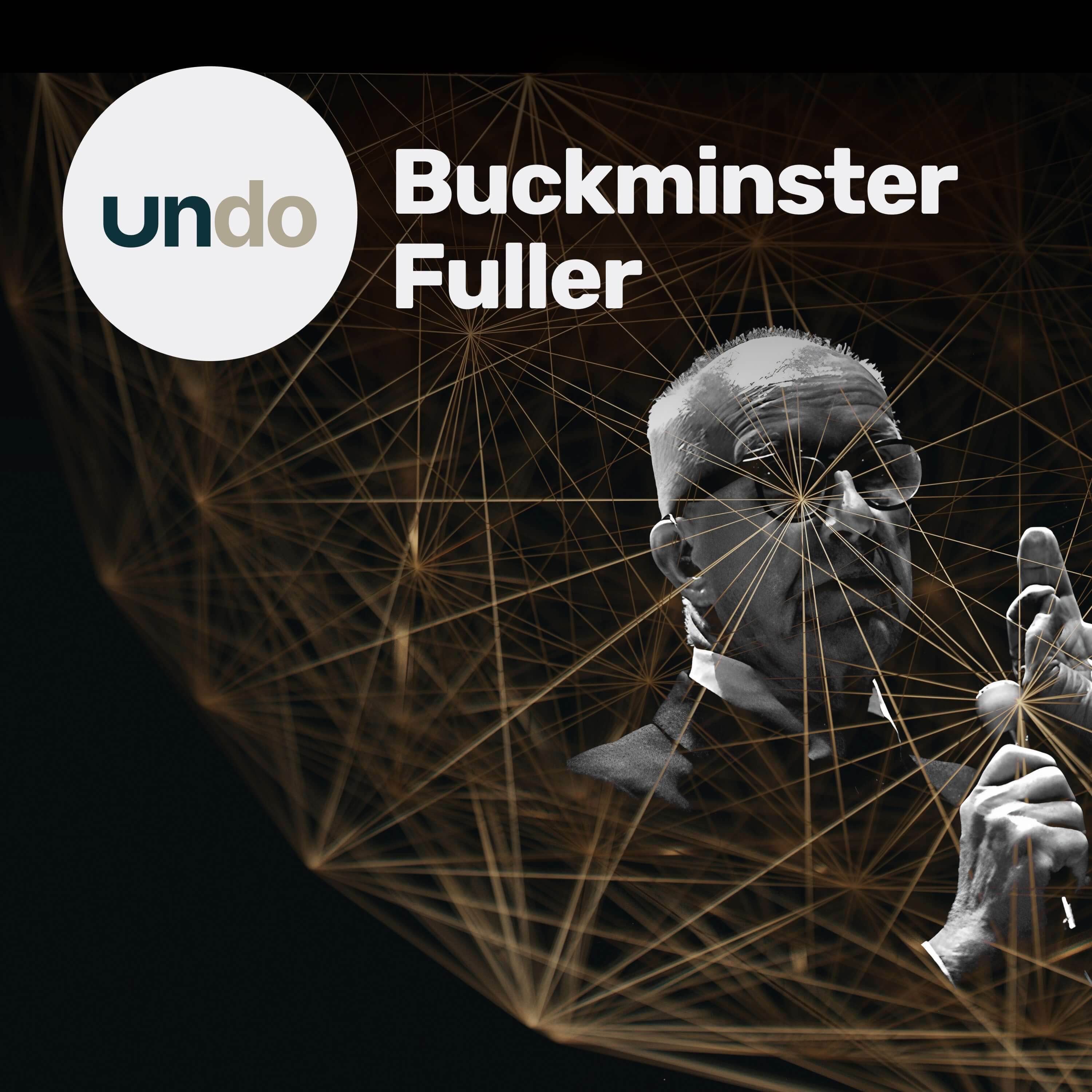
Loading summary
Transcript18 lines
- [00:01]
Mark Stedman
It's been many years since I've played the Sims, but one of my friends has built an elaborate world full of drama and intrigue inside the game. I mean, for me, most of my amusement came from locking my Sims in a bathroom and building a wall between them and the toilet so they got bladder failure and wet themselves. Each sim is a complex assortment of pixels and code. They have meters for various needs and skills, and their behavior affects other characters in the game. We, and I've checked this, are more complex than characters in the Sims. Yet we often give ourselves a hard time when we're not achieving our best or working at our most efficient pace. But just like one of those little adorable isometric meeples, we can dial up the things that make us more productive and watch what happens when our resources are depleted and we can notice how we're affected by the world around us and and how we in turn affect others. I'm Mark Stedman and this is undo lifting the lid on productivity methods through the ages and helping you separate the brilliant from the bullshit so you can build a system that works for you and avoid any nasty little accidents.
- [01:19]
Whole Foods Market
Only the best will do for mom so make Whole Foods Market your Mother's Day destination. Shop the floral department for vibrant blooms like tulips, orchids, peonies and expert crafted bouquets. Then head to the wellness and beauty department and give Mom a spa like experience with scented candles and more. And if you're hosting brunch or dinner, order flavorful Whole Foods market catering by May 9. Celebrate Mother's Day with Whole Foods Market in store and online.
- [01:49]
Mazda
Mazda crafts cars for those who choose to do more because every day is a chance to explore, to experience, to feel. And in the Mazda CX50 Hybrid, you'll spend less time refueling and more time discovering.
- [02:06]
ACAST
ACAST powers. The World's Best Podcasts Here's a show that we recommend.
- [02:14]
Brooke Devard
Hello hello, it's Brooke Devard from Naked Beauty. Join me each week for unfiltered discussion about beauty trends, self care journeys, wellness tips and the products we absolutely love and cannot get enough of. If you are a skincare obsessive and you spend 20 plus minutes on your skincare routine, this podcast is for you. Or if you're a newbie at the beginning of your skincare journey, you'll love this podcast as well. Because we go so much deeper than beauty. I talk to incredible and inspiring, inspiring people from across industries about their relationship with beauty. You'll also hear from skincare experts. We break down lots of myths in the beauty industry. If this sounds like your thing, search for naked beauty on your podcast app and listen along. I hope you'll join us.
- [02:57]
ACAST
ACAST helps creators launch, grow and monetize their podcasts everywhere. Acast.com.
- [03:07]
Mark Stedman
Now quick note before we continue, I'm going to be talking briefly about a suicide attempt that led to an epiphany. Before I start telling the story, you'll hear this sound and if you don't want to hear the story, hit the 30 second skip button. Idea comes in, something happens, then creativity comes out. Similarly, the harder and more effectively you work, the faster you can churn out high quality product, right? Eh, maybe in the 50s when it was thought that raw beef plus unskilled labor could deliver a delicious cheeseburger in a minute. But the world and the people who inhabit it are far more complex, and the work we do is, for most of us, far more complex than slapping a patty in a bun and being professionally indifferent to your customers. Modern work needs a more modern approach. Enter systems theory and one of its greatest proponents, Richard Buckminster Fuller, was born in Massachusetts in 1895, just three years before the world first met last week's focus, Sherlock Holmes. He was designing and inventing by the age of 12 and was expelled from Harvard for going broke, partying with a vaudeville troupe, and again for his quote, irresponsibility and lack of interest. What an absolute lad. After uni, he joined the Navy and worked in the meatpacking industry. He married in 1917 and a year later had a daughter who died of complications from polio and spinal meningitis just before her fourth birthday. He suspected his damp and drafty house was a contributing factor to his daughter's death, so started work on designing a new kind of affordable housing which would eventually give rise to the geodesic dome he's so famous for. If you've seen the big golf ball looking thing in Disney's Epcot center, you'll know what I mean. Incidentally, the attraction housed in the golf ball is called Spaceship Earth, which is a term also coined by Buckminster Fuller. Bucky, as he'd come to be affectionately known, had a pretty rough go of it, going broke, experiencing depression, heavy drinking, and on one particularly dark day, contemplating drowning himself in a lake so his wife and newly born daughter could benefit from the life insurance. But he was stopped at the lakeside by a voice and a sensation of being lifted into the air and suspended in a white sphere of light. The voice said to him, from now.
- [05:50]
Richard Buckminster Fuller
On, you need never await temporal attestation to your thought, you think the truth. You do not have the right to eliminate yourself. You do not belong to you. You belong to the universe. Your significance will remain forever obscure to you, but you may assume that you are fulfilling your role if you apply yourself to converting your experiences to the highest advantage of others.
- [06:19]
Mark Stedman
The day episode one of this show came out, I was up a mountain taking magic mushrooms. I didn't receive quite that eloquent a talking to, but I did discover that I was tremendous company and that the world was kind of like a big screw and that you just had to keep following the thread down anyway. I don't know if Bucky was on shrooms when he heard this voice, but it kicked off a journey of discovery into the many and varied ways he might benefit mankind again. What absolute lad. The late 40s and 50s saw him work on the geodesic dome designs he's probably most famous for. He didn't invent the structure, but popularized it and was contracted by the US military to build small geodesic buildings which are more energy efficient than square ones. Fuller was an environmentalist and saw the Earth as a system. He coined the term Spaceship Earth to describe such a system and how mankind needed to club together to conserve the planet's finite resources. He also coined the term synergetics, a method for trying to understand the ways nature organizes itself. And it's this theory of systems that we're going to get into. So please pull down on the lap bar, secure your belongings, and keep your hands and arms inside the car at all times. If you look to your left, you'll see a working scale model of a mysterious machine. We don't know what the machine does, but it has three important components, an input, a process and an output. Now we can see the inputs going into the machine. There's the energy needed to keep the machine running, the people shoveling the raw materials into the furnace, and the materials themselves. These are all necessary parts of the input. And they're all complex machines of their own that work independently but come together to make this bigger machine work. Now we move on to the process. That's the shoveling of the materials, the grinding of the gears, the humming of the valves, and the mangles that wring out all of the reclaimable matter from the raw materials. And finally, at the back end of the machine, we have the output. Tiny cubes pooped out of the machine, shrink wrapped and ready for consumption. If you'd like to pick up a sample of the end product, you'll find it in the gift shop. Okay, so how does any of this apply to us? Well, we are like that machine, a system, and our work comprises inputs, processes and outputs. If you start to divide yourself and your work up in this way, it becomes a lot easier to understand how we keep the whole thing running. So let's start with inputs. If you do creative work, you can't do that. If you're completely knackered and lacking any kind of inspiration, you can't, as they say, pour from an empty cup. When you start to see yourself as a system, you can recognize that this isn't just just Instagram self care bollocks, but something necessary for the machine, that is you, to function. Energy and ideas are really the two biggest inputs you need, but time is also a factor. And all of these inputs come from other systems which are themselves a collection of inputs, processes and outputs. That's why I've been wanging on about how people matter in your productivity story too, because how you work with them affects how your own system functions. One of the ways Julia Cameron, author of the book the Artist's Way, recommends you keep your inspiration topped up is by going on what she calls artists dates. These are things you ideally do on your own and that are solely there to help you fill up on inspo. It could be going to a film or to see some stand up, grabbing a dirty burger at the food truck you've been meaning to check out, or wandering around your local art center or gallery. The film doesn't have to be good, the standup doesn't have to be award winning, and the art doesn't need to make you scratch your chin and look all wistful. What matters is you're taking stuff in for your own machine to chuck around like forgotten socks in a dryer. But as I've said before, dedicated time to work in your craft is also an important input. If you're looking to create something outside of your day job, you need to carve out some time where you can do that. If you've got a partner and you can work on your project while you're both in front of the tv, that's much better than cloistering yourself off in another room. Again, the other people in your life are systems, and you might be part of their input too. If you don't have enough of the right inputs, you can't move on to the next stage, which is the process, the actual doing of the doing. Here you'll turn those raw materials, your time, your energy and your inspiration into. Into something. Remember, though, that these materials are finite. If I want a coffee from my little Dolce Gusto pod machine, it's not enough to put the pod in and turn on the machine. I also have to make sure the water tank is topped up. Otherwise the thing is going to cough and splutter and I'll probably end up with a cup full of frothy smoke. This, hopefully, though, is the fun bit. This is where you're actually doing your art, where you're in flow and where the work doesn't necessarily feel like work. That's not always the case, of course, so if you're not feeling it on one particular day, you might end up using more energy than usual. So if you find your process isn't running smoothly, try and think of your inputs as little glass tubes full of different colored liquids. A red one for time, a green one for energy, and a blue one for inspiration. Delete as appropriate. If your color block. If the process is stalling or something's gumming up the works, check your tubes to see if something's running low. That process will make it easier for you to diagnose what's wrong. One of the components of systems theory is that of equifinality. You see, this theory came up as a response to the prevailing management style at the time, which was essentially Taylorism. We covered Taylorism a bit in our discussion on Table 2 of the Forgotten Women of Productivity History. So I won't go into it in detail. Suffice it to say that equifinality is the idea that there is actually no one right way to do something, which is in direct contradiction to Taylor's idea that every little task has at its core one correct method. Let's say you live in the city and you need to take a trip to the beach. However far away you are, you need to plan how you're going to get there. Under Taylorism, there should be only one correct route, because everything's been broken down into its simplest parts. Systems theory, on the other hand, recognizes that the conditions for the ideal route might not be conducive. So you might have to pick an alternative option. That adaptability is pretty useful for us when it comes to our own productivity. If you don't get to choose your optimal work working environment, are there some reasonable adjustments you can make? If you're in an open plan office and you need to concentrate on summarizing a report, but the hobbit from it is flirting with Janet from Accounts Receivable. That'll never work, by the way. They're just not compatible. Then maybe you can pop on some noise canceling headphones for a bit. If your boss insists everyone's ear flaps remain open, no amount of scrunching up your face and huffing and puffing is going to make your job any easier, however simple the process of putting one word in front of the other might seem. And what might sound like a chaotic office environment is actually the result of lots and lots of interconnected systems, each with their own inputs, processes and outputs. Chaos theory is inextricably linked to systems thinking. So because I can't afford that clip of Jeff Goldblum from Jurassic Park I'm going to demonstrate the idea of the seemingly unconnected being very much connected by explaining why it's harder to buy gummy bears when people stop buying cars. Remember the Suez canal debacle from 2021? That plus Covid led to a lack of demand and then a shortage in semiconductors. Most of the parts of a car that are in in any way advanced are controlled by microprocessors. Even the key that unlocks your car has a teeny tiny computer in it. So when car manufacturers began ramping down production due to a lack of semiconductors, something else was reduced too. The slaughtering of cows for leather. If you're not making any new fancy cars with luxurious leather interiors, you don't need to buy the leather. Which means these cows don't need to meet the business end of a cleaver. Now, a byproduct of the slaughtering of cows is gelatin. It's too expensive to kill cows just to harvest it. So manufacturers of gummy bears and other sweets buy this waste byproduct from the companies that slaughter cows for meat and leather. And thus, because fewer people were buying cars and a 224,000 ton vessel got wedged in a canal, fewer cows were being slaughtered, which made gummy bears too expensive to manufacture. To the output of your creative and knowledge, work might not just be the thing itself, the song or the painting or the recipe, but the stuff you've learned in the process. Maybe you were fiddling with the reverb setting on your guitar amp and you discovered a sound that didn't fit this particular song, but would probably work in another one. Or you mistook salt for sugar when making your morning latte and you inadvertently invented salted caramel, in which case you deserve a knighthood. Back in episode five, we discussed the seesaw between boredom and anxiety and that our brain is constantly seeking a state of homeostasis or equilibrium systems operate in much the same way with positive and negative feedback pulling and pushing us on and off track. Positive feedback helps a system grow. You do a great gig, more people check you out on Spotify, your numbers go up, you release more music, people follow you online and bring their mates to your next live gig. And while negative feedback can compound, just like positive feedback can, one type can turn into another. For example, your boss might get short term rewards by screaming at her employees. This has a positive effect on output, but not for very long. After a while, the team become more and more resentful and they get burned out. Which of course knocks the whole thing off course. So if we think of our machine more as a cycle, we can see how input goes in, work happens, we get an output and then from that output we get feedback. That feedback then goes back into the machine and the cycle begins again. This is one reason it's so important that you get your creative work out into the world. If you write beautiful poetry but you never perform it and you're too afraid of judgment to let anyone read it, you'll never get the feedback that might add some fuel to your next attempt. If I make a dodgy meal and my guest doesn't like it, I might be momentarily hurt. But it's not like I'm never going to cook for them again. I'll either make accommodations for that person in the future, or if their critique had merit, I'll adjust my ratios next time I cook something similar. It's all just feedback. So this notion I've been talking about since episode seven, about how we're all just people, man, isn't just my hippie showing. And like Matthew and I talked about in last week's episode, the systems we come up with for doing our best work have to work for other people too, not just for ourselves. And I know it might feel a bit cold and utilitarian to see each of us just as a machine. But remember, everything from the atoms that make up the platelet in our blood to the planets that we wind their way around the sun are each part of a system. Systems are organic. They're natural. They're how a plant can turn photons of light into chemical energy. Each one needs careful maintenance, but with the right conditions can result in pretty amazing things. Undo is written and produced by me, Mark Stedman. You can find more resources at Undo FM Systems, which is where you can also sign up to support the show and get ad free episodes from just $3 a month. Stick around after this quick break and I'll tell you my dirty little secret about this podcast.
- [19:03]
Ford
Introducing the new 2025 Ford Maverick truck with in bed power up to £4,000 of towing capability and elevated off roading capability. The new 2025 Ford Maverick truck with a standard hybrid engine and available all wheel drive Ford make it with Maverick Max Towing on all wheel drive models with available Max trailer tow package excludes Maverick, Lobo and Tremor models when properly equipped. Max Towing varies based on cargo vehicle configuration, accessories and number of passengers. Always consult the owner's manual before off roading. Know your terrain and trail difficulty and use appropriate safety gear. Your customers are scrolling past your social ads using ad blockers and paying for ad free streaming. But when they're listening to a podcast, they're hearing Acast Ash ads which are 4.4 times more engaging than with display ads. So if you want real attention, start advertising on podcasts with Acast. Start today at go.acast.com ads.
- [20:01]
Mark Stedman
So you join me in the shed I'm going to be completely honest with you. I have not been this ahead in my podcast in weeks and it's absolutely brilliant. I have a designated day that I'm supposed to write and record episodes of Undo. It's a Tuesday, by the way. It's the day after episodes come out and that gives me just enough time to make sure that if something happens that day, like I've got a bit of time and a bit of leeway and whatever. And so for most of the current existence of this podcast, I've been recording them on weekends and in some instances writing them and recording them in two sittings over my weekend, which is perfectly fine. But today I don't know what happened, but I was just like, you know what, I'm on it. I'm on the spot, I'm doing it. And I just wanted to tell you that because I'm very proud of myself. Because yeah, it's one of those, it's one of those days where it seems to be going, okay, I don't have that much more to tell you other than when I started looking into systems thinking or systems theory. I thought I actually got quite excited. So I started looking at this, this fellow with a big geodesic head thinking, you know, trying to find out a little bit more about him and find out what was useful and went down the rabbit hole of systems theory. And straight away I was like, oh my God, this is so much of what we need to think about and ties in so well with some of the stuff that I've been talking about recently, about how this is all interconnected with other people. You know, it's all very well and get good having this auto reply that says I only check my emails three times a month. If you know someone needs to get a hold of you really urgently and that doesn't fit in with your system. That's the whole thing. We have to recognize that our systems form an interconnection with other people's systems and yada yada. So it was like yeah, a lot of this I thought was really interesting. And if you want to know more, if you want to dive more into it, there's plenty more you can read up about and learn more about and undo FM systems that's got resources and stuff there as well for you to check out. So go and do that. That is kind of pretty much it. Patreon.com/do podcast if you would like to support the show, it gets rid of the ads. You get into a little community, you can come and suggest episode titles. Last week you got a whole hour's worth of extra content, which is the interview that I did, at least 40 minutes of extra content, which is the interview that I did with Matthew Bellringer. There'll be more of that kind of stuff coming up. By the way, I've got more guest interviews coming, so if you want to get involved and maybe suggest episode subject for future episodes and that kind of thing, then the place to do that is. Patreon.com undo podcast. You can sign up for just $3 a month and at that basic level you will remove the ads so that we'll just about do it. Thank you so much for joining me and I look forward to speaking with you again next Monday. Have a great week.
- [23:06]
Mazda
Mazda crafts cars for those who choose to do more and the Mazda CX50 Hybrid will take you farther. What you choose to do with all those extra miles is up to you. Mazda move and be moved.
- [23:23]
ACAST
ACAST powers the world's best podcasts. Here's a show that we rec.
- [23:31]
Whole Foods Market
Daniel I can't tell you how integrated into my life Taylor Swift is. I use all Too Wells, my 10 minute timer. When I drive into New York, I listen to welcome to New York.
- [23:42]
Taylor Swift Podcast Hosts
I mean, she just has a song for everything. It kind of fits into every part of our lives.
- [23:47]
Whole Foods Market
Yes, and that premise is the basis of our podcast. Let's ask Taylor Swift. We are going to ask Taylor Taylor Swift to speak to our lives.
- [23:57]
Taylor Swift Podcast Hosts
Every episode we're going to be choosing a Taylor Swift song and bringing a question to it. Questions like how do we want our exes to remember us? Or do we believe in love at first sight? So join us for our new show, let's Ask Taylor Swift. And make sure to subscribe so you never miss an episode.
- [24:16]
ACAST
ACAST helps creators launch, grow, and monetize their podcasts everywhere. Acast.com.