← Undo – How history's outliers got stuff done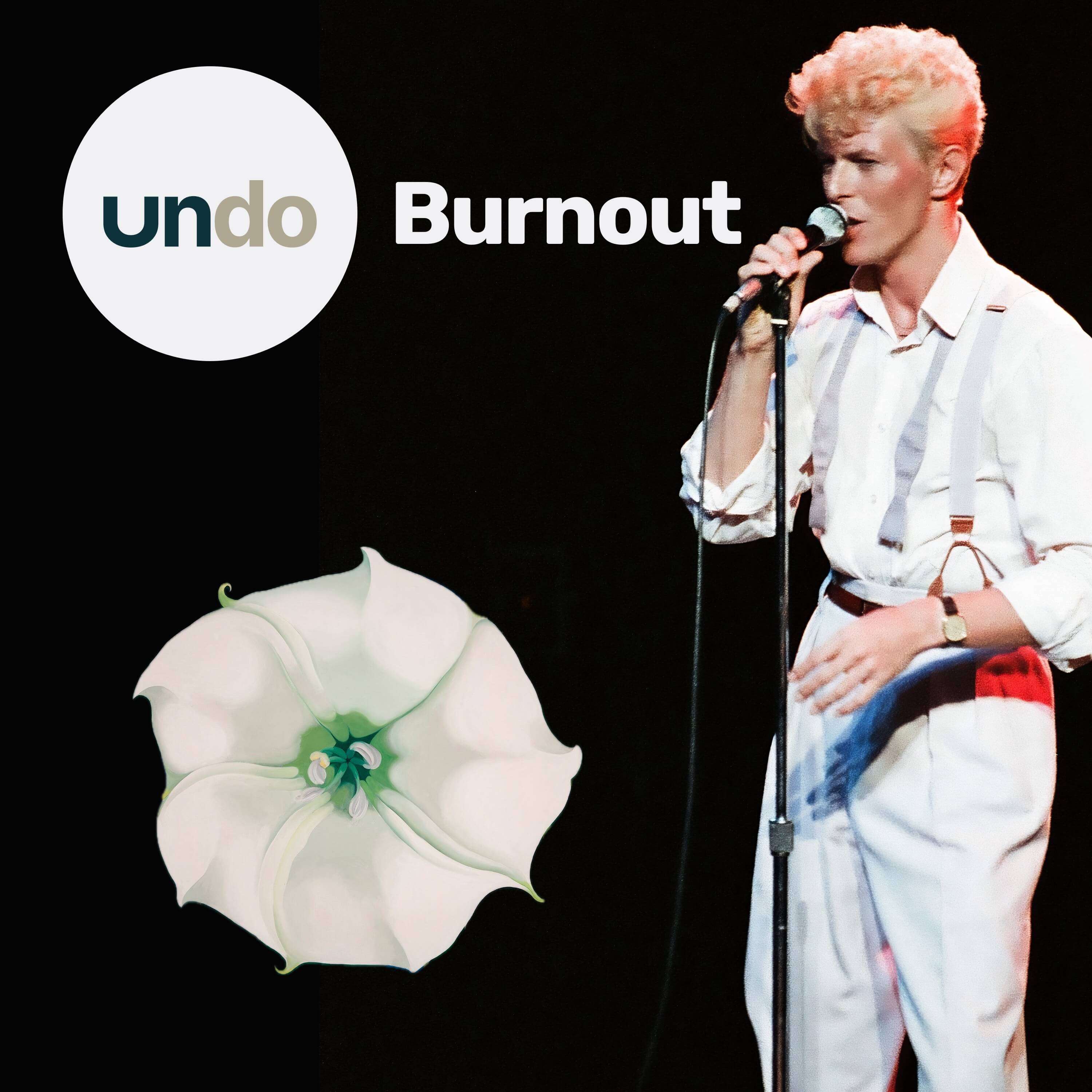
Undo – How history's outliers got stuff done
Congrats, you’re burned out! Here’s what to do next
00:23:27
Loading summary
Transcript14 lines
- [00:00]
Unknown Speaker
Are you burned out? Have you been burned out? I feel like I'm burning out. Am I burned out? What is burnout?
- [00:04]
Mark Stedman
That's Jessica McCabe, one of my favorite communicators on the topic of ADHD. Burnout is something that affects neurotypicals and neuro spices alike. So today we're going to find out what it looks like so you can spot it, whether it's in the distance or right up in your grill. And more importantly, we'll look at what we can do about it. Now, as the kids say, I'm not gonna gatekeep the answer, by the way. That's not at all what that means, but let's move on. So the short version is you've got to stop. But the difficult thing is, okay, but I still have to feed and clothe myself. So what do you do after you've stopped? How do you restart what from your pre burnout life do you keep and what do you drop like a bag of hammers? To find out, we're cranking up the old time machine and visiting some influential and prolific minds from the recent to see how they not only rescued themselves from burnout, but how they created something even more meaningful. I'm Mark Stedman, and this is undo reaching back through history to find its greatest creative minds and giving their bodies a really big hug.
- [01:21]
Dr. Rachel Morris
Burnout actually isn't an illness. It's not illness like you'd say rheumatoid arthritis is. Illness is a disease. Burnout is a. Is actually a syndrome.
- [01:31]
Mark Stedman
This is Dr. Rachel Morris, former GP and host of the youe Are Not a Frog podcast, joining us one last time to help us understand burnout. And as Rachel explained to me, syndrome is essentially a collection of symptoms. So if you have a bad back, it could be caused by inflammatory arthritis, a fractured or collapsed vertebrae, by osteoporosis, or a prolapsed disc. So before you go treating someone for back pain, unless you want your patient to end up with an opioid addiction, which I know is all the rage in some parts of the world, you actually want to understand what's causing it. And the same goes for burnout. So what causes it? For that, we turn to the World Health Organization.
- [02:17]
Dr. Rachel Morris
The WHO say it's caused by workplace stress. Fine, but that's like workplace stress. Well, stress comes in so many different ways, shapes or forms, and then that produces different symptoms. So I'm just starting to understand a little bit more about it, you know, through the interviews I'm doing with people on the podcast, and through talking to some of our listeners and the people on our courses and realizing that, gosh, it's far more prevalent than we think it is preventable, but we're given totally the wrong advice about what to do.
- [02:49]
Mark Stedman
Okay, so before we get into what we can do about it, let's first take a look at how it feels. This will help you get a grasp on whether you're going through burnout or if maybe you're just a bit stressed out. And listen, I'm an old man now, but I came up listening to a lot of American stand ups in my bedroom back when we used to use Winamp to tune into different radio stations run by other kids in their bedrooms. So I'm fighting every urge in my body to present this list like a Jeff Foxworthy bit. You know, if you stare long and hard at a carton of orange juice because it says concentrate, you might be a redneck. So if you find yourself getting tired in a way that isn't made any better by sleeping, you might be experiencing burnout. If you're getting the sense you're not doing your job all that well, or you lose confidence in your work, you might be experiencing burnout. If you get the sense you're surrounded by morons who just won't do the simplest things for themselves, or people just keep sending you emails to wind you up, you might be experiencing burnout. Some of this stuff can overlap with depression. Stuff like low mood, anxiety, irritability, cynicism, a sense of numbness or detachment, or a loss of motivation. If you're feeling one or more of any of those, it might be worth seeing if you can get some help. There's a link to some resources in the show notes, but the fact is, and you probably already know this, you're far from alone. Creative people, especially those of us who think and care deeply, are prone to burnout. Here are a few legends that spring to mind. Georgia o' Keeffe was the mother of American modernism. Her painting of paternal New Mexico is an epic study in perspective and shade, while Summer Days is a mix of foggy grays with snatches of floral color. I'm not an art critic, so I did my best with these descriptions, and I didn't even copy and paste them from Wikipedia or anything. Anyway, she painted good, and she lived to the age of 98, but in her 40s she had a breakdown and was hospitalized after having abandoned a project to paint a mural in New York's Rock Radio City Music Hall. Quoting from a piece in the Guardian.
- [05:02]
Unknown Speaker
She couldn't eat and wept for days on end. New York's crowded streets were suddenly appalling and she became agoraphobic. While her white flowers hung in Stieglitz's gallery, she was hospitalized for psychoneurosis.
- [05:18]
Mark Stedman
Stieglitz, you see, was her husband and a 24 carat piece of shit. Not only did he have a side piece who was full of 40 years his junior, he also demanded his wife be nicer to her. And then when he found out Georgia wasn't going to be paid all that much for a piece of public art, something he detested his mates and he set out to convince her otherwise. She ended up pulling out of the project because the plaster of the powder room wouldn't take the paint. But you can imagine what a strain that can put on someone thinking, planning, coming up with ideas and making a start, only to find there's no way to continue. A year later, she returned to New Mexico, a place she'd fallen in love with. She found a house on a ranch and the landscape inspired some of her most famous paintings. Apparently, David Bowie didn't remember much from his Thin White Duke era. For a time he subsisted on a diet of red peppers, milk and cocaine, of which he took an astonishing amount. He became fascinated with satanic symbols and would stay awake for days. This all came off the back of his Station to Station album release and the subsequent tour. Bowie began to feel like he could never give his audience enough of himself. I guess an immense talent creates immense internal pressure. And my God, the man was talented. The list of instruments he plays reads like the end of the first side of Tubular Bells. And if you don't get that reference, it's probably because you were born in this century and God love you, but ask your dad or probably your granddad at this point. Anyway, his burnout didn't see him stop entirely. He just took a back seat and only sang, co produced and mixed the tracks on let's Dance. It went off okay, but his next effort was was far more lacklustre, leading him to take a longer break and re emerge in the 90s. So we're picking up a theme here. Rest is clearly the key to dealing with burnout, and there is no pushing through. But before we look at what else we can do about it, and maybe how to catch stress before it turns to burnout, there's one more stop I want us to make. Nowadays, Arianna Huffington is a sort of professional rich person. She's written some books and she sits on some boards, but Back in the day, she was the name and the face behind one of the first blogs to hit the mainstream. The Huffington Post, or HuffPo, if you're nasty, began its life in 2005 as a reaction to right wing rags like the Drudge Report. Her former husband, Michael Huffington, was a Republican politician and later became an LGBT activist. Back in the days when you could be on different sides of the political aisle and not be labelled a monster if you didn't do monstrous things. Ariana obviously went pretty hard in those first two years, because in 2007 she collapsed at her desk from exhaustion, smashing a cheekbone in the process. But even though much of my life has changed, she wrote, what's amazing as I look back over those 10 years is how much the world has also changed. Burnout and awareness about its dangers is now a front burner topic, both collectively and. And individually. It's part of our everyday conversation, and collectively, it's finally coming to be regarded as the public health issue. It is. Ariana's burnout led her to leave the Huffington Post, which is now owned by BuzzFeed and has become borderline unusable as a website. And in 2015, she formed Thrive, a consultancy working with big companies to try and improve the health and well being of its employees. So here are three people who've thrown themselves headlong into their work, hit the wall and found a way to make something from it. And as we've seen, the key, or at least the starting point, is rest. But that's not the whole story. As Dr. Rachel Morris can tell us.
- [09:30]
Dr. Rachel Morris
Not only do you need to just take time off and rest, you need to recover with some sort of, I would say, therapy, you know, some talking therapies. There's lots of group therapies around as well. You need to really talk about what's been going on. So some. And counseling. But then you need to reset. You need to actually change something in your life or your work, because if you go back into exactly the same situation, well, guess what's gonna happen? It's gonna happen again. And I think as medical professionals, we're quite good at telling people to rest and recover, but we're not very good at telling people how to reset.
- [10:02]
Mark Stedman
What we saw with Bowie is that you can't just push through burnout. Now, he was someone who constantly reinvented himself, so sloughing off one skin and adopting another wasn't new. And of course, you don't have to go to that extreme to change something. Georgia o' Keeffe moved from New York to New Mexico, swapping the tall buildings for wide vistas. And Huffington, much like Rachel, in fact, swapped her busy and demanding day to day with something that would prevent other people from experiencing what she did. What o' Keefe, Bowie and Huffington have in common is their public Personas. O' Keeffe wasn't exactly an Instagram influencer, but her work has sold for millions. Ariana wasn't on stage every night playing in front of thousands, but her writing and her platform were at the forefront of a new era in Internet publishing. So if you're listening to this thinking, yeah, that's all well and good and congrats to them. You and I are thinking along similar lines. But the thing is, burnout isn't really about how much pressure you're under. You can burn out on writing, you can burn out on caring for a sick relative, and you can definitely burn out on bullshit work.
- [11:12]
Unknown Speaker
I'm bored of this. I'm so bored.
- [11:15]
Mark Stedman
Yeah, so am I.
- [11:17]
Unknown Speaker
No, so I don't mean this. I mean everything. The job. I'm bored of the job. Sorry, Ryan, no disrespect. This is a waste of time. Let's get on with this. I can't take any more of this nonsense. I can't take another boring call about spa White index board at 230 a ton. So 260. No, you're a twat. Okay, shut up. Shut up. I will. I'll give him my. Let's do it after. We'll work out my notice. Okay. Right now, I'm going to. Goodbye.
- [11:40]
Mark Stedman
Be honest. How often has a scenario like that played out in your head? Now, for Tim in the office, things played out a little differently. It is a half hour sitcom at the end of the day. Burnout is not the same as boredom. But if you find yourself getting cynical and maybe a bit bitter, and you still feel like that after coming back from holiday, it might be worth thinking about what's next for you if you feel like options exist. And I get it, options don't exist for many of us. Work is not easy to come by. And I'm meeting more and more people right now who are either in between jobs or just can't get back in. So I'm not out here saying you should quit your job and become an alpaca farmer. When I think of burnout, I think of an empty kettle. If you boil a kettle without water, you're going to break the heating element and maybe damage other parts of the kettle beyond repair. Now, some kettles have a mechanism to detect when the element's heating up but there's no water inside. They can automatically turn off the kettle and keep the element from overheating. Imagine you're boiling a kettle, not because you want the water as such, but you want the steam. You still need to put something in the kettle in order to get something out. When you're in burnout, you're trying to get steam out of an empty kettle. You turn the thing on, it hisses for a bit, and then if you're lucky, it shuts off automatically. If not, you could end up picking bits of kettle out of your kitchen cabinets. I think that's why rest isn't enough on its own. If you had a job you felt called to, you probably had enough water to fill that kettle for years. But over time, that water has boiled away and no one stopped to refill the kettle. But you're thinking, this is the job I've always wanted, or this is the job I'm supposed to be doing, as if that alone will top the water back up. It won't. So it's time to look at what will. If you can't leave your job, then think about ways you can change your environment so you can top up the water supply. If you've got an understanding boss, now might be the time to have a chat to say, listen, if I have to spend one more day sitting opposite the hobbit from it, then I am not going to be responsible for my actions. Now, if your boss is a piece of shit, the trick is to reframe your needs as the company's needs, or ways to boost productivity, or even better ways to make your boss look amazing. Some people just don't want to hear about the needs of others, probably because they're burned out themselves and haven't had the wherewithal to listen to this podcast. So presenting your idea in a way that makes it look like theirs will probably yield better results. The key is you've got to take responsibility and advocate for yourself. You've got to make the change you want rather than wait for an undesirable change to happen to you. Easier said than done, I know, but it's way better than fantasizing about whose head you're going to flush down the toilet at the next company away day. Undo is written and produced by me, Mark Stedman. You can find more resources at Undo FM Burnout now. This is going to be the last regular episode of Undo for the foreseeable future. Next week, I'm going to be chatting with My good friend and confidant, Anya Pearce, about how we can build systems that help us do our best work and match our energy levels. But if you want to know more about why I'm hitting pause on the show, stick with me after this last brief message. I am indebted this week to Becky for becoming our latest supporter over@patreon.com undo podcast. Your support helps keep the show going, so thank you. So it's very rare for me to re record or to stop and restart these shed segments because I, you know, I spend a lot of time with the crafting of the writing of the actual episodes. I don't want to necessarily then have to craft a whole new thing. So I'm going to try and do my best with this. This is a third, third attempt at speaking to you now, but I am putting pause on this kind of, of out of output purely because I, and, and we're going to get a little bit personal. So if you're not down for that, then feel free to alight here and we'll have a chat next week. The best way I can put it is our friend Anya, who we're going to meet next week, was talking to me yesterday on the phone about essentially like going into a pizza shop and trying to find a curry. I've been doing that for, I don't know, 20 years maybe with the Internet. Is, is sort of walking up to the Internet and asking it for things that the Internet can't give me. And I have thought that the problem therein lay with me. I've seen other people seem to be able to put a, put something into the Internet and get the thing that they want out of it. And for me it's, you know, I've put my thing in, I've put my, you know, I've inserted my card into the Internet and instead of getting the thing I suspected back, I would either get nothing back or get something different back or it would come in fits and spurts. And it never felt like enough. It never felt like the nourishing thing that other people were getting. And I realized where I can get that elsewhere. And it's by. It's in communion, it's in working with people, it's in being in the real physical world using the Internet. Because I'm always going to be a digital boy. I am a digital boy. First, I'm an indoor kid. I love the Internet, I love making things on the Internet. But when I've had this realization that I am at my best and it's Something that I sort of have played around with for years. And I think the pandemic in many ways kind of put that on its ass. But I am at my best when I use the Internet to get people off the Internet, you know, at least for a night, creating things that then we can come together and have a chat about or spend some time together. And that's where I'm moving my focus. That's where I'm actually. The company that I started, that I mentioned a couple of times, that's the focus of the company, is to use digital to get people off screens. Not forever, and it's not demonizing screens, but definitely demonizing, you know, or poking fingers at the sort of the divisiveness and the manipulation that the Internet can give us. But also for me, it's reminding myself that I can't keep putting my card, feeding my card into the Internet and hoping to get back a nourishing meal and instead getting something else back. And, you know, that's probably about as deep as I'm going to go into it, because, you know, you don't. You don't need me to offload on you. What I will say is, if that sounds like in gratitude for the love and appreciation that I've received for Undo, then that is not the case. I'm incredibly gratified. This is the most successful podcast I've made. And I don't think what's interesting is I don't think it's the best, but it's probably the thing I've put the most effort into. And maybe there's a correlation there, but I am in a place where if I'm going to, you know, we're all looking to get, you know, nourishment is the best word that I. You know, we're all looking to get our needs met. We're all looking to sort of feel okay in the universe and feel like we belong. And for me, realizing that running a local singing group where a bunch of people can come together and some of whom are at work, some of whom are anxious, some of whom are depressed or have accessibility needs or have they feel invisible or that like all of these different reasons, and some who are just like, yeah, it's fun thing to do on a Friday, all of those things, getting a bunch of people in a room together to sing 90 songs and then go for a drink afterwards and have a chat, that for me is belonging. That for me is something that I have looked for for a long time and haven't been able to find and if I'm going to be blunt and completely honest with you, if that, if I can feel that and it doesn't feel like filling a bucket with a hole in it, if I can feel that way and I don't have to write a TED Talk every week and then, you know, sort of make an audio drama, then that's the way I've got to go. Because we're all out here trying to find our happy. We're all out here trying to find our way in the world, and I'm no different. I am not going to be the person who's going to burn himself out telling other people how to avoid burnout. I'm not going to be the person who, like Merlin man is going to flame out. And I don't mean that in a, in a pejorative way. You know, someone who's, who's gonna sort of have a, have a, have a crash because he spent all his time helping other people manage theirs. Like, I'm not going to be that guy because I've seen what happens. We talked about Merlin man, we've talked about other people. And that's not where I want to be, because I'm not, I'm not a martyr. You know what I mean? I'm a, I'm a guy who makes podcasts and websites for a living. It's, you know, we, we don't have to, we shouldn't have to try that hard. Life should be easier. So, you know, and for you, you're just like, listen, this is just something I listen to for 25 minutes every Monday. Like, it's not that big a deal, you know, and so I get it. But for others, like, you know, shows like this can mean a lot and they can be really helpful. So I, I, I see all the, all the areas of the spectrum. If you've got thoughts, if you've got questions, you've got comments on this, then please do drop me an email. Hello, do fm. I will happily receive them and maybe we'll do like a Q and A or something. So if you do want to do something like that, whether it's a practical question about one of the methods that we've discussed or something else, then do drop me a line. Yes, again, hello@ undo fm. And next week I will be chatting to my friend and yours, soon to be, Anya Pearce, who is an expert in an idea office that we call soft living, which is essentially this sort of way of being able to, to survive in the world and not have to feel like you're beating yourself up or having to give it 120% when it feels like everybody else is giving 80. And so we're going to talk about ways that we can design our own productivity systems, which is something that I've had in my head since day one of this podcast. So we're going to talk about designing systems that match your own energy levels. So I hope you'll join me for that. And then, yeah, who knows? We may do. We may do the odd thing here and there. We may do some. Some Q and A's. And obviously the. The Patreon is now on pause. I'm not going to take people's money, but I thank you and I thank every single person who has contributed, who has written a message, who's, you know, like I am. So I feel so happy with. With the love and the warmth that this show has received. But, yeah, I think that is. That is about it. Listen, this is in danger of dragging on longer than the actual episode itself, so I'm gonna let you get on. Have a wonderful week. We will chat again next week, so I will look forward to seeing you then. But in the meantime, if you do want to reach out and if you've got anything to say, then hello, Dot FM is the place to do it. Thank you so much. And I'll speak to you next week.