← Undo – How history's outliers got stuff done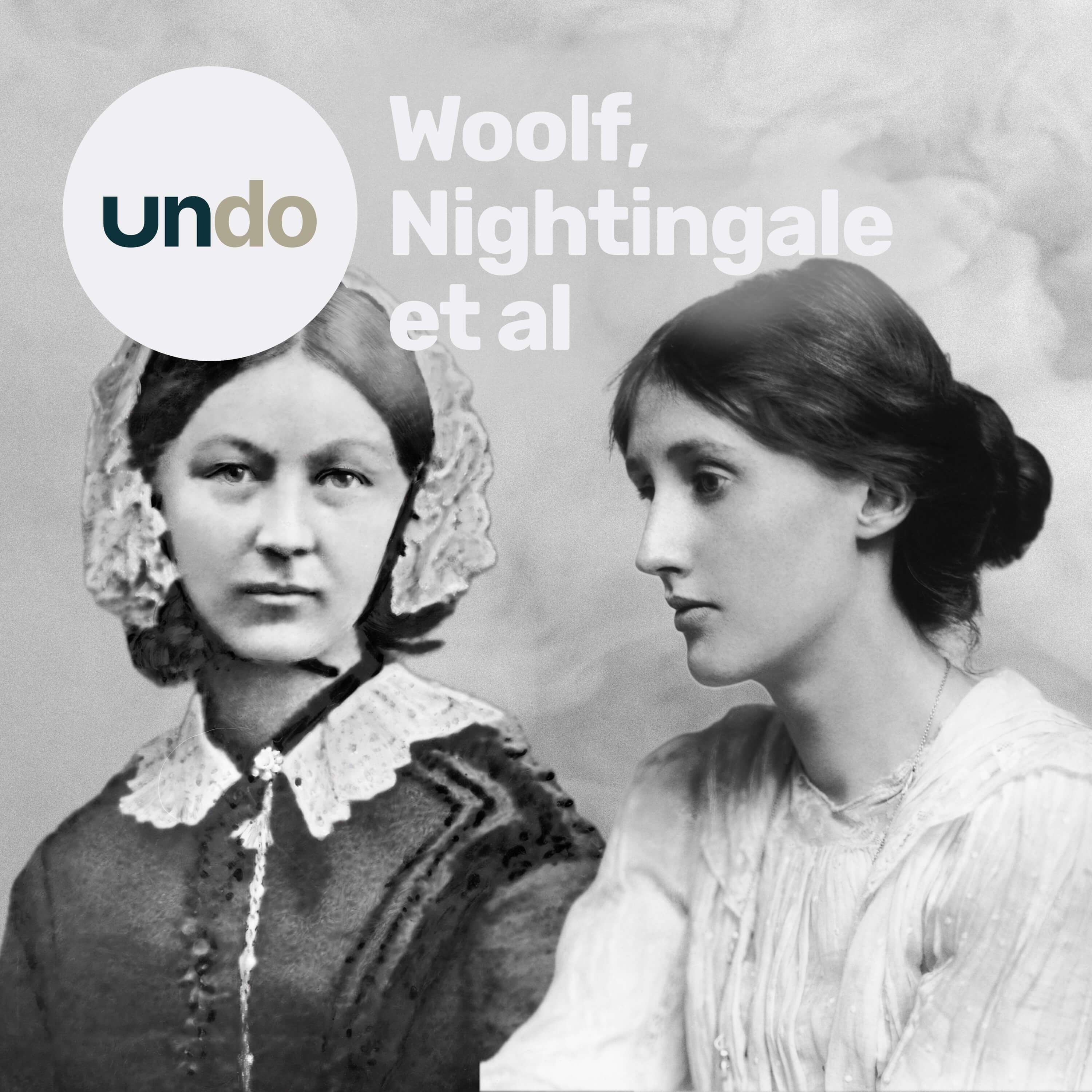
Undo – How history's outliers got stuff done
The super-productive women missing from time management history
00:22:00
Loading summary
Transcript5 lines
- [00:00]
Mark Stedman
Oh, hey, if you're seeing this episode again, but you've already listened to it, my apologies. I made a technical error today that caused a bunch of episodes to show up twice. So sorry for the inconvenience. If you've heard this episode, feel free to move on. But if you haven't, I hope you like it. Eisenhower, Franklin, Brian Tracy, Parkinson, Merlin, Manchit, Setney High, Churchill and Churillo, James Clear, Lincoln Newport, Allen Rider, Carol Maslow and Atul Gawande. These people all have we, which is kinda heinous. Just a sea of penises. Okay, that's enough. You get the idea. Let's spend a little bit of time today with some of the women of productivity history, some of whom you will know, some will meet for the first time. I'm Mark Stedman and this is undo profiling. The people behind the processes that make us more productive. So let's address the elephant in the room, shall we? It sucks that we're 11 episodes in and I'm only now putting the spotlight on women. It sucks further that I'm lumping a whole bunch of them into one episode rather than making each one the star of their own show. Of course, I'll be digging deeper into some of the people we talk about today, and there's one notable exception from my list that I want to give the full undo treatment. But the reality is we know less about these women than we do a lot of the others I've covered. So at risk of belabouring the point, I'm not doing a Women's History Month episode and calling it a day. The more I learn about the amazing women who got stuff done throughout history, the more I'll share their stories with you. And with all that prevarication done, we now have to talk about women and the home. Christine Frederic was a teacher. She had a thing for efficiency and an interest in advertising. She was born in 1883 and married in 1907, giving birth to four kids and co founding the Advertising Women of New York in response to the fact the men's one wouldn't let her in. She studied Taylorism and wanted to adapt this scientific method of productivity to the home. Here we're talking about productivity in the capitalist sense. And if you're unfamiliar tailor, Taylorism is how places like McDonald's can churn out the same food to the same standard wherever you go in the world. Because each step in the assemblage of your burger is a low skilled task that doesn't take much training. Frederick wanted to make kitchens more efficient and took a scientific approach to household jobs. Publishing papers and journal articles on saving time and reducing repetition in the home. She opened the Applecroft Home Experiment Station in her house in New York where she tested nearly 2,000 different appliances. Bearing in mind this lady had four kids and this was the early 20th century. I'm trying to figure out whether those kids ate really well because she was constantly chopping and frying and chilling and baking. Or if she got home from a hard day in the test kitchen, basically threw down a ham and said fend for yourselves. Either way, we've a lot to thank her for. For one thing, she's kind of the reason most kitchen countertops are the same height. And she's also the grandmother of the galley kitchen, a style of kitchen you'll have seen if you've ever live in a small apartment or a terraced house. The tailorist approach she took meant finding the one best way of doing a particular task. She kept experimenting with various methods to break tasks down into their smallest component parts so something that felt tricky could be made simple. This puts me in mind of the English comedian Jimmy Carr, who for a while spent time looking into the shortest joke possible. His four word joke, Venison's Dear isn't It? Is his best example a four word pun that delivers with max efficiency. He then followed that up with the more efficient but less effective dwarf shortage proof perhaps that some things can be too efficient. Now let us meet Lillian Moller Gilbreth. Like Christine Frederick, who I was talking about before you distracted me with Jimmy Carpons, Gilbreth was a home economist. She was also a psychologist and was described as a genius in the art of. Of living. Like her slightly younger counterpart, Gilbreath took her work home with her, conducting time and motion studies to keep their busy household on track. But if Frederick was somewhat ruthless in her pursuit of scientific management, Gilbreth took a slightly more humane approach. The problem with Taylorism, as she saw it, was that it did a pretty shit job of looking after the human behind the labour. Taylor believed in paying workers well for their work because he assumed that was pretty much the only thing that was important to them. He also believed that if you didn't do a great job, you were either fired or paid so poorly that you'd want to quit. Passive aggressive much. Gilbreth, pioneer that she was, believed that workers needed things like breaks and decent lighting. She and her husband created their own form of Taylorism and advocated for workers to have free books to read. They also rigged up cameras so they could watch workers performing tasks, looking for signs of fatigue, and finding ways to improve systems. What we can learn from these two ladies and their contemporary Mary Parker Follett, who we'll meet later, is quite simply that when we break complex tasks down into smaller ones, we make them dirt simple to accomplish, and when we take breaks, we can go for longer. That idea of breaking tasks down is great if you're cooking or coding, but what do you do if you're a writer? Well, Dorothea Brand and Virginia Woolf have got your back. Dorothea Brand wrote essays, short stories and books from 1917 to 1944. In 1934, she wrote a book for aspiring writers called Becoming a Writer, of which there are still a few copies knocking about. She rejected the myth of the born writer and believed that in order to make creative work happen, you had to put the time in, literally put it into your calendar. Just like our discussion on time. Blocking from last week, Brand advocated for setting a specific time of the day to get your writing done and turning up. No matter whether you're overflowing with inspiration or you're creatively constipated. If you've done any kind of writing, you'll know that some days it's like you've been gifted the energy of a thousand artists and great ideas tumble forth like water cascading down a lush and verdant waterfall, while on others, it's like trying to come up with a really good metaphor for why something is very, very hard. The point is, she was strict about her writing time. She shares this philosophy with writers like Jack London, Stephen King, and Sarah Waters, all of whom can committed to some sort of daily writing goal of at least a thousand words a day, even if those words were shit. Another proponent of Protecting youg Time was Virginia Woolf. Hailing from kensington in the UK's fashionable London, Woolf was a pioneer of the stream of consciousness writing style. English students of a certain age would have been made to read books like to the Lighthouse or the Voyage Out. When I was at college, it was Ian McEwan's the Child in Time. Nowadays, I suspect it's Zendaya's Instagram caption or some such bunker. Yes, we get it.
- [07:34]
Natalie Dormer
I'm old thought to call it by a prouder name than it deserved, had let its line down into the stream. It swayed, minute after minute, hither and thither among the reflections in the weeds, letting the water lift it and sink it until, you know, the little tug, the sudden conglomeration of an idea at the end of one's line, and then the cautious hauling of it in and the careful laying of it out, alas, laid on the grass. How small, how insignificant this thought of mine looked. The sort of fish that a good fisherman puts back into the water so that it may grow fatter and be one day worth cooking and eating. I will not trouble you with that thought now, though if you look carefully, you may find it for yourselves. In the course of what I am.
- [08:28]
Mark Stedman
Going to say, Damn, I need to up my writing game that There is a short segment of Virginia Woolf's famous essay A Room of One's Own, which itself was based on some lectures she gave in the late 20s. I want us to park our bums here for a bit because there's something very specific, woolf says in her essay that relates to a lot of self help and productivity literature we come across today. Books like Atomic Habits and even the much lauded 7 Habits of Highly Effective People have a tacit sexist underpinning that assumes that while the men are off achieving and mastering and thrusting out into the world, there's someone at home, probably a woman, taking care of the kids, cooking the meals, doing the dishes, and generally taking care of all the life stuff. I'm being a little disingenuous here, but honestly, not by much. It's like that thing they say about jazz, in that you have to listen to the notes they're not playing. Self help books on time management and productivity show you the notes to play when it comes to how you spend your time, but they're oddly silent on the topic of how one fits this into their daily life if they don't have someone else to pick up the slack. I would love someone to have told Virginia Woolf she has the same number of hours in the day as Beyonce. I doubt that person would have escaped excoriation anyway. Woolf pressed upon writers, women writer writers especially, the need to have time for themselves if they were to write fiction somewhere away from the ongoing demands of daily life. And of course this is useful whether you're writing fiction or not and regardless of your pronoun. So these women can help show us there's a time and a place to do productive work. But it's something we have to find for ourselves. Frederick and Gilbreth show us the importance of breaking bigger jobs down into smaller ones. That takes care of the doing. But what about the doers who are doing the actual doing? Florence Nightingale was a nurse, a holistic health advocate, and a great big nerd. You probably already know the headlines. Pioneered nursing, Improved hospital standards in general, advocated for patients, open, the first nursing training program, yada yada. But did you know she was a big data geek? So much so, in fact, that she kind of invented the pie chart. She got her knack for numbers from her dad and as a kid would make notes on the plants she was growing in her garden, which gave rise to her love of statistics. As someone who has a notion database to keep track of his vinyl collection, which, to be fair, is pretty meager, I can dig it. When the Crimean War broke out, Flonai was on the front lines as a nurse. When she first rocked up a at a hospital in Germany, she was appalled by the state of the data as much as the state of the place itself. She made a pact to improve the standards of the hospital, using statistics to prove that poor conditions led to higher mortality rates. It's insane to think that before then people had no sense that living your life covered in shit could lead to disease. Who's that, then? I don't know. That's Big King.
- [11:35]
Natalie Dormer
Why?
- [11:36]
Mark Stedman
He hasn't got shit all over him. To be fair, the idea of germ theory was still relatively new. This being the mid 19th century and all, there's a couple of things we can learn from Ms. Nightingale. I think one of them being she was a stone cold badass. A wealthy Victorian woman who chose not to marry and dedicated her life to helping others. Actually, that was just a bonus. What we really get is twofold. One, the importance of using data for decision making, and two, the need to look at the problem, or in her case, the patient as a whole, not just a sum of disparate parts. Let's look at the data first. Not only did Florence keep track of important numbers, she also made them easily readable for anyone. We'll probably do an episode on time tracking at some point. It's a little like eating your broccoli before you can start on the chocolate cake. But the point is that meticulous data gathering helps you see patterns and trends you never knew were there. And when you visualize them, you can make them so much more tangible and understandable. And as a nurse working in a war zone, Florence saw firsthand, using her data, how caring for the whole person was vital. She took good care of her own mind and body, wrote regularly in her journal, got enough sleep and took regular walks in nature. To be honest, I could probably do a whole episode on Florence Nightingale and I dare say I will further down the line, but for now, let's leave her and our focus on the self and finally turn to working with other people. Emily Warren Roebling was a New Yorker born in 1843. Her husband, Washington, put the Roebling into Emily Warren Roebling and was the chief engineer of the Brooklyn Bridge. When he became bedridden from decompression disease, Emily took over the project, liaising with with the construction workers and relaying messages back to her husband. But she wasn't no mere go between, no siree bob, every inch the engineer herself. Emily dealt with politicians, fended off other engineers, and built up such a good rep that people started to assume she designed the damn bridge herself. After the bridge project was finished, she studied law and campaigned for women's rights. Those of us who've had project managers in our careers can only dream of working with someone with such a steel trap for a mind and such a wealth of curiosity. She was an early STEM legend and I salute her. And while we're saluting, you may remember I mentioned one Mary Parker Follett earlier. Let's finish up by meeting this so called invisible leader. If Mary Parker Follett had been around when Michael Scott was running the Scranton branch of Dunder Mifflin, he would have had quotations from her pinned up on his words wall. For it was she who brought us the idea that compromise is a great way for everyone to not get what they want and instead we should look for integration where each party sitting around a table is equally in charge of the problem and has an equal stake in co creating the solution. Oh God, just use the word solution and now I feel sick. Anyway, her credit is notably absent from the seven Habits of Highly Effective People, which, given the low level sexism in that book, is hardly surpr. But her idea that people's differences actively contribute to projects rather than hinder them is a lesson we're still trying to learn now, even as parts of the Western world are scrubbing from walls the achievements of women, transgender people, the disabled, and indigenous folk. We have here hard evidence that when we bring disparate people together to achieve a goal, we end up achieving that goal with greater success. So in this all too brief whistle stop tour, we've looked at productivity through four goals time, the self, and collaboration. We learned that we can break big goals down into small, repeatable tasks, and that we need to dedicate space and time to get our important work done, even at the cost of other commitments. We've seen the importance of using data to tackle a systemic problem, of looking after yourself, and of bringing people together to create something bigger than the sum of its parts and you've let me wang on about sexism and spout off the odd cliche like greater than the sum of its parts, an indulgence for which I remain supremely grateful. We're living in strange times, times where history is literally being erased, at least in public property. And you and I and every every other right thinking person knows that when we share knowledge like this, we're able to store those pieces of knowledge somewhere no one, not even the most ardent fascist, can erase. Undo is written and produced by me, Mark Stedman. The quote from Virginia Woolf's essay was read by Natalie Dormer, and you can find the whole thing on Audible. I used a lot of energy to research this episode, so to put some of that carbon foot back into the atmosphere, I'm going to plant a Tree for every 50 downloads this episode gets over the next 30 days. The more people you encourage to check out the show, the more trees I'll plant. And I'll update you on my progress @ undo fm trees after this next brief pause, you can join me backstage to talk about how I put this episode together, and I'll tell you how I plan for us to sleep together next week. That's my impression of the acast ad noise, and I'm glad to let you know that that is the last you'll be hearing of it, at least from this podcast. From now on, the only commercial messages you'll hear will come from my voice, and there won't be like five minutes of them per episode. If you know anyone who was listening to the show and who bailed because the ads got too annoying, please do let them know that we've righted the ship. As you can gather, writing a TED Talk every week takes its toll, and while I'm never going to guilt you about listening for free, some level of remuneration for the effort is always appreciated. So if you'd like to show your support for the show, you can do so@patreon.com undo podcast I don't have a team. I don't hand work off to an editor. Everything you hear is made by me in my home studio. So if you can support me via Patreon, that'd be amazing. So this was a bit of a difficult episode to put together, not because of the subject matter. As soon as I thought this is what I wanted to do, I was really excited to make it happen. But it was a bit of a challenge, and it's one of the reasons I mentioned it every now and again. And I sort of made mention of it there in the outro. I use a lot of AI because a lot of the stuff that I'm trying to do is difficult to Google and it would mean me reading more books than there is time enough in the universe. That's the difficult thing. So what we have is, you know, I'm indebted to certain AI tools that I use a combination of chatgpt and Perplexity. I don't get any AI to write any of the content. That has never been the case and it never will be. So, you know, none of the words that I've said have ever been written by AI or in any way. You know, none of the scripts have ever gone into AI and come out again. But I use it essentially as a power Google because it's really good and really helpful at us being able to take a concept like what can Mary Parker Follett teach us about productivity, for example? And then I can get a bunch of sources that I can go and investigate myself. So I'm not sort of reading from ChatGPT and passing that off as fact. I'm going and investigating the sources. And so it's really fun to do. But it's also, you know, it does take quite, quite a lot of work and it does use a considerable amount of energy, which is why I'm doing the tree planting thing. So I kind of just wanted to give you a little bit of a behind the scenes really of how this is an episode like this is put together, which is slightly different from a lot of the other episodes. And next week we're going to be talking about sleep, which will be similar in this regard. I'm going to be gathering as many different sources as I can about people who advocated for sleep, who pioneered in the idea of sleep. Because one of my beliefs is that a good night's sleep sets us up really well for the next day and makes us more productive. So I kind of wanted to make mention of that. But you know, we'll go back to doing sort of one shot profiles of specific people as well. So if there's anyone that you're thinking of, I've had a chat with a friend last week. We, and I've got a whole bunch of new names, many of whom are women to go and investigate. So we, we will be doing more of those in the future. Some of them will be very much on the sort of capital P productivity idea. Some of them will be a little bit more on how our brains work and how we can sort of make them work a little bit more efficiently, which is all, I think, part of the undo umbrella. So there you go. A bit of a brief one for you this week. I didn't want to ramble on at you because some of these can get a little bit long and a little bit boring. So I wanted to take you briefly behind the scenes of how an episode like this gets made. Any questions, any thoughts? As ever, I love hearing from you. I've had some lovely emails over the last couple of weeks about the episode on Merlin man, some great discussions about time blocking. So it's. Do please keep those coming, keep your reviews in. It means the world to me. It really, really does. You know, to know that you're getting in touch and you're finding useful stuff or, you know, you're finding less useful stuff and you're letting people know about it. Because if you don't like this episode and you tell people, that's a really, really good signal to other people who won't like this podcast. Like, you know, genuinely, if you leave a, you know, a two star review because you haven't enjoyed your time in this, in this podcast, then if you let other people know why you didn't, that's probably a good signal that other people who think the same way as you, they're probably not going to enjoy the podcast either. So it's, it's, it's very useful. Um, so there you go. Thank you so much for your time and I look forward to chatting to you again next week.