← Undo – How history's outliers got stuff done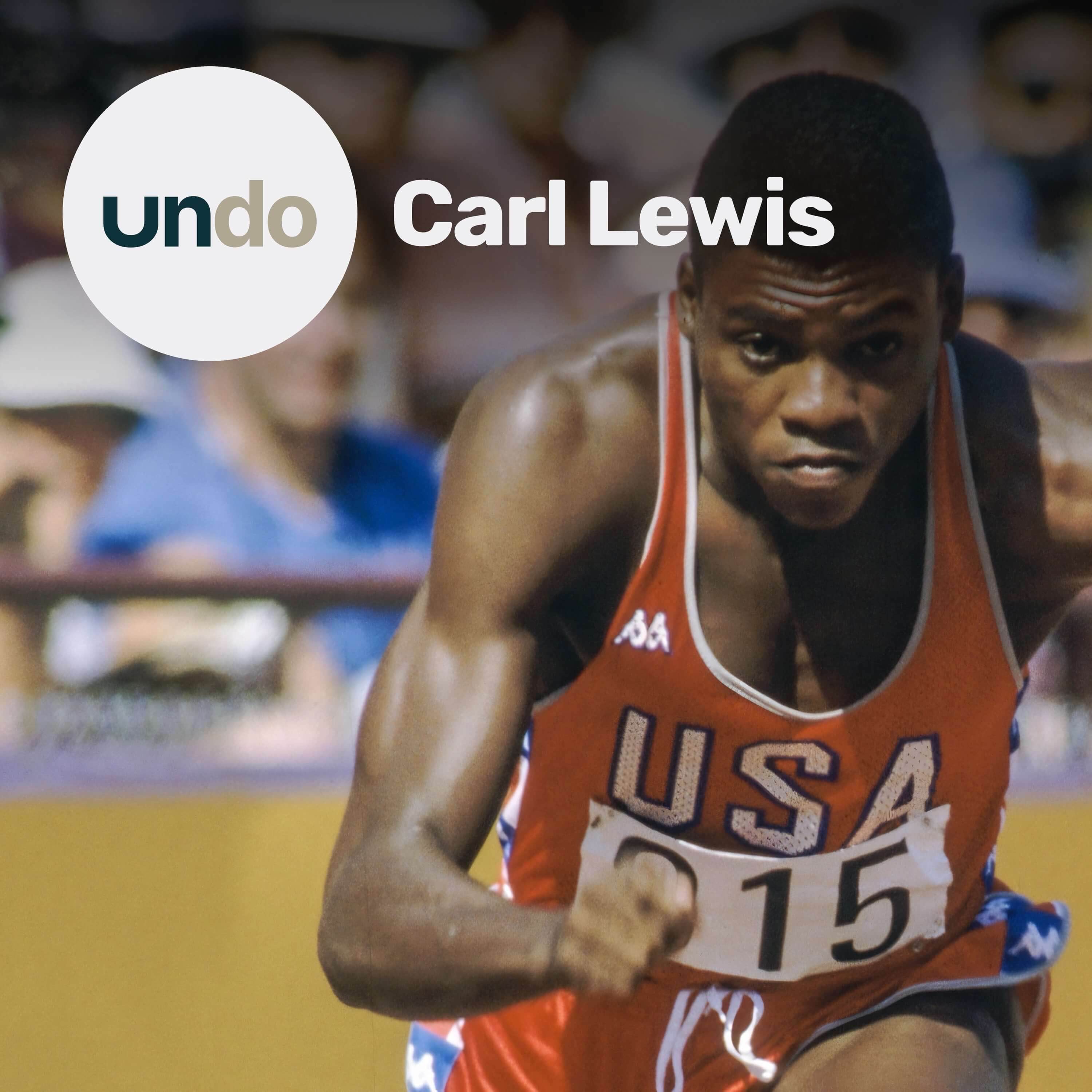
Undo – How history's outliers got stuff done
Why giving less than 100% is better for your health
00:16:49
Loading summary
Transcript16 lines
- [00:01]
Mark Stedman
If you're not giving it 110%, maxing the envelope, tilting the paradigm and shifting into ninth gear, you're in the wrong job and you should quit and do something you're truly passionate about. After all, there's always going to be someone else who can take your place if you're not willing to give it your all. If you're like most of us, you'll have heard some variation of this bullshit either at work or from some vacuous influencer. And the thing is, that sort of whip cracking business bro bullshit isn't just insensitive, it's actually wrong. And if you're thinking, here comes more of that soft plain milk toast, you're brilliant just the way you are, snowflake nonsense. A I think you might need to calm down and have a nice cup of tea as you've clearly wandered into the wrong podcast and B this isn't coming from me. This is coming from one of the world's most accomplished athletes. I'm Mark Stedman and this is Undo Speed Dating Productivity Methods, listening to them, showing them a really good time, and then definitely texting them the next morning.
- [01:08]
US Cellular
Sometimes you have to choose between a great deal or a great experience. Other prepaid providers sticky with slow networks and price hikes. But with US Cellular Prepaid, getting a great deal doesn't mean sacrificing a great experience. US Cellular Prepaid offers great nationwide 5G coverage without any gimmicks or hidden fees. And now you can get a free Samsung Galaxy A16.5G to make a great experience. Even better, stay connected without making sacrifices. Terms. Visit uscellular.com for details.
- [01:37]
Greenlight
Did you know that parents rank financial literacy as the number one most difficult life skill to teach? Meet Greenlight, the debit card and money app for families. With Greenlight, you can send money to kids quickly, set up chores automate allowance, and keep an eye on your kids spending with real time notifications, kids learn to earn, save and spend wisely. And parents can rest easy knowing their kids are learning about money with guardrails in place. Try Greenlight Risk free today@greenlight.com Listen.
- [02:12]
Acast
Acast powers the world's best podcasts. Here's a show that we recommend.
- [02:20]
Paige Desorbo and Hannah Berner
Hey guys. Welcome to Giggly Squad, a place where we make fun of everything, but most importantly ourselves. I'm Paige Desorbo. I'm Hannah Berner. Welcome to the squad. Giggly Squad started on Summerhouse when we were giggling during an inappropriate time. But of course we can't be managed, so we decided to start this podc continue giggling. We will make fun of pop culture news. We're watching Fashion Trends Pep Talks where we give advice, mental health moments and games and guests. Listen to Giggly Squad on Acast or wherever you get your podcasts.
- [02:51]
Acast
ACAST helps creators launch, grow and monetize their podcasts everywhere.
- [02:57]
Mark Stedman
Acast.com burnout is real and it's measurable a report in early 2022 showed that one in workers were experiencing symptoms like fatigue, difficulty concentrating, loss of motivation, headaches, tummy aches, and difficulty concentrating. As behavioral scientist Thomas Curran discovered through a decade of research, the give it all you got mentality horrible bosses perpetrate is capitalism at its darkest and least humane. Now I can talk up a whole game about the cruelty behind capitalism and how companies like Amazon drive people to the brink of physical exhaustion and beyond. But right now, the sun's shining and my therapist says I should probably stop reading Grace Blakely. Suffice it to say, we have evidence to show that giving your work 100% of your energy leads to burnout. But there's a sweet spot, a magic number that allows you to give it some welly but leave some headroom. Let me introduce you to Carl Lewis and they get away for the third time of asking. Alan Wells had a good start, but Carl Lewis is going well and Emmett King's ahead of him. Emmett King is streaking ahead. Carl Lewis, he's got a lot of and Lewis comes. Carl Lewis, known to some as the master finisher, is an American track and field athlete. He's basically the track and field athlete with nine Olympic gold, one silver and 10 World Championship medals to his name. He was a sprinter and long jumper who competed on the world stage from 1979 to 1996. He set world records in the 100 meters, the 4x100 meters and 4x200 meter relays, and he still holds the indoor long jump record, has done so for 40 years. Now, I'm not an overactive man, but imagine doing something so well that no one has done it better in 40 years. Thing is, if you watch the start of one of his races, he's by no means the first out of the block. It often looks like he's speeding up to make up for lost ground, but in fact, everyone else is slowing down and he's just running at the same consistent pace. That pace frequently saw him best. Other sprinters who'd come out the traps like a bullet and this approach has become known as the 85% rule or the Carl Lewis Approach Turns out it's all in the body. Other athletes scrunch up their fists and their faces and get all tensed up, while the likes of Lewis are visibly more relaxed. So much so that pretty much any description of his running style talks about that relaxed fluidity. We can all agree, I think, that putting in 100% effort in sprinting just slows you down. You're just too tight. That's Andy Kidd, a sports therapist who specializes in helping sprinters stay relaxed. For him, it comes down to trust. Can you trust yourself to start off at the back of the pack, knowing you'll be able to sustain that pace and ultimately triumph over those that went off like a rocket? A couple of days ago, I watched a video of two people stacking cups. The object was to collect each cup and place it on a stack on a specific spot. One player started with the cups closest to him, while the other started with the cups furthest away. Each time they grabbed a cup, they had to run back to the starting point and place the cup on the stack. As you watch them, you think, surely the guy on the left is going to win. He's clearly ahead. He started off by collecting the cups closest to him, so for the first half of the race, he makes incredible progress. But as the race continues, he gets more and more fatigued and gradually slows down as his job is getting harder and harder. Meanwhile, the other guy is only now getting warmed up as he's done the hard yards of running all the way from one end of the line to the other, back and forth in gradually decreasing amounts, keeping his energy consistent. He wins. The reason why this method works has some of its roots in flow, which we covered in episode five. Flow is about ease, not going full throttle, balls out, guns blazing. When you're in flow, what you're doing feels natural, not strained, unlike, say, tunnel vision or hyper focus. You're aware of your surroundings. You have what we call headroom. And that headroom is what counts. It's what allows you to think, to take in the world around you, to track your surroundings and watch your exits. The rule doesn't just apply to your work, but to other aspects of your life. Obviously, we can see how it impacts exercise, but you can apply this to your diet, too. If you've ever struggled with making any kind of big life improvement, you'll know that sticking to it is hard. We talked about that a couple of weeks ago. And one of the things that can be tricky, especially if you're neurodivergent, is having something of an all or nothing mindset. Which may be partly why habits you want to stick to are still proving themselves elusive. So instead of aiming to eat nothing but healthy food for every meal, why not give yourself a day off? Turns out if you eat three healthy meals a day to help you achieve a calorie deficit, having a cheat day once a week runs to just over 85%. Saturday is treat day. For 24 hours, you can literally eat anything. Pizza, birthday pie, pints of cream. How you actually structure this is of course, up to you. The point is to build in some slack. And while we're on the subject, anyone who tells you they don't need slack or that it's just an excuse or you're not fully committed is dancing with different demons. Or they're just flat out kidding themselves because they're not comfortable with admitting they're human. Now, remember, we're talking about high performing people here. Lewis isn't the sole outlier. Hugh Jackman has also talked about giving it 85%, and people often see fellow sprinter Usain Bolt as an exemplar. The key is in the relaxed attitude before the race, because if your coach tells you to give it 100%, you're more likely to tense up and do a worse job. So last year I did a stand up course which culminated in me doing a five minute set in front of a warm crowd of friends and family. There was one act that stood out, not for their incredible material, but for how much fun they were having. They'd brought half their street with them, so when they came up to the mic, they were essentially just riffing in front of mates and it showed. Meanwhile, there were other comics who'd sweated every beat and were visibly performing at their capacity. And they were fantastic to watch, but you knew that level of intensity was just not sustainable. An American entrepreneur by the name of Sunil Gupta wrote a fair bit about how we can calibrate the amount of effort we need to give in any situation.
- [09:57]
Greenlight
For example, if you're walking into a.
- [09:59]
Mark Stedman
Presentation or a meeting with your team.
- [10:01]
Greenlight
You may decide to be effective. It's not 100% you need, it's actually 70%.
- [10:07]
Mark Stedman
Think about it this way, if you're on stage giving a talk and you elect to give it 100%, that means 100% of your focus is on the slides, your script, whether the click is working and how much time you've got left. That leaves you absolutely no room to assess whether people are engaged with what you're saying. If they're a bit confused, or if they're planning what to grab from the buffet or who they want to swap LinkedIn details with. Another problem is that leaving it all on the field to continue with the sporting parlance means you might have scant energy left to shake hands with people eager to connect with you after your presentation, which is probably the reason you were on stage in the first place, when you'd rather be at home doing anything else. Now you might have noticed I tend to refer back to previous episodes of this podcast. I'm not doing that to increase more listening time, but to show you how interconnected so many of these concepts are, and that in some ways they're all just different expressions of the same underlying ideas. In episode two, I briefly mentioned the Yerkes Dodson stress curve when I probably did just as great a job at pronouncing those names as I did just now. The stress curve is in the shape of a bell, with optimum right up the top, boredom to the left, and stress to the right. The 85% rule is that sweet spot, that Goldilocks zone, where the work is just hard enough that it keeps you engaged but not too hard that it stresses you out. We can see this all in nature, too. A study in 2019 drew on work from Law and Gold that showed how perceptual learning of visual motion direction in monkeys was correlated with changes in neural responses in the lateral intraparietal area involved in attentional control, rather than the middle temporal area, which encodes motion direction. Yeah, essentially what the study found was that we learn the fastest when we're allowed to get things wrong around 15% of the time rather than being expected to get it right every time. What this tells us is that our brains work better when they're challenged but not overwhelmed. And this study, by the way, is completely unconnected with the whole Car Lewis of it all. This is just another way in which the number shows up, and I think we can draw an easy line between productivity and behavior change. Okay, so how do you tell you're giving it 85% and not just slacking off? Well, the key is in the amount of challenge. If you're relishing the challenge, chances are you're going at the right clip. If it's boring, you need more stimulation. If it's doing your head in, then it's time to back off. And what if you don't know how to dial it down or it doesn't feel like the thing you do has that kind of dial? Our man Sunil has some good advice here too. He suggests burning off some of that energy before you need it. If you've ever spoken in public or looked for advice around it, you'll probably have heard about shaking out the nerves or likewise moving your body in some way that not only helps you channel some of that adrenaline so it doesn't just course through your veins, but it can also help you reduce what you've got in the tank so you don't come off with too much intensity. I discovered the band Blues Traveller around the early 2000s. Their lead singer, John Popper, used to clock in at over 430 pounds, which for British listeners is over 30 stone, or nearly 200 kilograms. I remember seeing an interview with him describing how he would repeatedly need oxygen after coming off stage because he was putting so much into his performances. His amazing vocal gymnastics plus prodigious harmonica playing plus the extra weight put a huge strain on his body night after night. Thankfully, he was able to make some changes and we still get to hear him make music. The Blues Brothers sequel movie would have been a very different film without him, but it still would have been shit. I get the desire to give it all you've got when the work you do involves passion. By the way, I still see singers straining until they're red in the face and their veins pop so far out of their heads they look like a road atlas. And I'm not out here saying they should dial it back if that's how they get their sound. Moments of peak performance are absolutely part of the deal, and some work is about peak performance, but it has to come in controlled bursts. But sometimes All I'm saying is that sometimes you've got to look at yourself and go, does this spreadsheet really need me to be at 100% right now? Or could I maybe dial it back a notch? Undo is written and produced by me, Mark Stedman. There's a whole rabbit hole of links you can go down if you head to Undo fm. Carl, that's C A R L. If you would like ad free episodes or to hang out with other listeners and suggest ideas for future episodes, you can join our Patreon over over at patreon.com undopodcast stick around after this brief break and I'll tell you about the new podcast I started last week and how I tried to take it to 100% and then dialed it back.
- [15:21]
Greenlight
If you're a parent or share a fridge with someone, Instacart is about to make grocery shopping so much easier because with family carts you can share a cart with your partner and each add the items you want, since between the two of you, odds are you'll both remember everything you need. And this way you'll never have to eat milkless cereal again. So minimize the stress of the weekly shop with family carts. Download the Instacart app and get delivery in as fast as 30 minutes. Plus enjoy. $0 delivery fees on your first three orders. Service fees apply for three orders in 14 days. Excludes restaurants.
- [15:56]
Hotels.com
Hotels.com knows that planning your book club's annual field trip can get chaotic. Rhea, the romance reader wants to stay in Prince Charming's castle. Self improvement. Steve needs a hotel gym. Leila and Jeff, the horror fans ghosted the group chat about budget and you've read enough true crime to know that murdering them isn't a real option. With the Hotels.com app, invite all your friends to collaborate and find the perfect hotel together. Share properties, vote on your favorites, and book all in one place. Find your Perfect somewhere with Hotels.com.
- [16:30]
Mark Stedman
Hi. So you join me in the shed. This is only going to be a short one because it's a fairly short episode so I'm not going to keep you too long. So I mentioned podcast. Basically it's just an audio version of a newsletter that I've started for my day job which is helping small organizations like communities, charities, cultural venues, places like that do more colorful comms stuff. And so it's a very short newsletter and I thought, you know, let's get a few bites at the cherry. It's covers cover more surface area. I'll record it in video and and then I can take the audio, put that out as a podcast and the video can go on YouTube and lovely. And I did that and I recorded the first one and I just thought I do not like this. This is not good. I am not someone who is. Well, I am someone who is far more comfortable behind a mic talking to you now than I am trying to do it on video. It's just not a skill I have. I'm not like overly shy or anything, but I am somewhat self conscious and self critical when it comes to the camera. You know, I'm all too aware of my appearance and so that because I'm not natural like I am talking to you now, just looking out in the distance, sometimes closing my eyes, it's a lot more easy for me to do this. And so what I ended up doing is yeah, I could have gone 100%. So the, the 100 version of this is you put out the YouTube version and then Maybe even you can take little shorts from it and like you get loads of bites at the cherry. That's a hundred percent. That's, that's great. But it wouldn't have been so good. It would have been more of a challenge. I would have had to have made sure that my hair was completely in place and my background was right and I was wearing the right kind of shirt and it fit okay and there wasn't any fluff or a cat dander on the microphone, all that stuff. Whereas if I just dialed it back a little bit, I went to 85% and just made the audio nice and crisp and warm and inviting. Like, I hope that our discussions are as they are now. Then it would just be a lot easier and you would feel less of a, or more of a lack of effort. If you like, you would feel that it was less effortful. And I think that's a big thing, a big thing that we can learn from. The idea of the 85% rule is that it's all about that sense of effortlessness. If you can hear the effort in something, it becomes less enjoyable. That's kind of why I put the stand up thing in there. Because when you see the effort, when you see someone's really trying, it makes you a little less comfortable. So that's why I thought I'd bring that up. Right. There you go. I said I'm gonna keep you long and that's it. Last quick mention. Patreon.com/ undo podcast if you would like to get ad free episodes of the show. If you'd like to suggest topics, if you want to get bonus content, we have, when I do interviews, we put the full interview up there. There's loads of stuff that you can get access to as well as having a chat, getting some behind the scenes stuff and helping to support the show and keep the lights on, as they say. Then patreon.com undo podcast is the place to go and you can get started for just $3 a month, which is nothing. Thank you so much for your time. I will look forward. I already look forward to speaking to you again next week.
- [19:58]
US Cellular
Sometimes you have to choose between a great deal or a great experience. Other prepaid providers sticky with slow networks and price hikes. But with US Cellular Prepaid, getting a great deal doesn't mean sacrificing a great experience. US Cellular Prepaid offers great nationwide 5G coverage without any gimmicks or hidden fees. And now you can get a free Samsung Galaxy A16.5G to make a great experience. Even better stay connected, making sacrifices. Terms apply. Visit uscellular.com for details.
- [20:30]
Acast
Acast powers the world's best podcasts Here's a show that we recommend Remember blowing into a video game cartridge or taping songs off the radio? How about Saturday morning cartoons? Hey, AOL chat rooms. Did we just age ourselves? Yep. We're Mike Fenuia and Charles McBee, two comedians getting nostalgic and asking that nagging question, Are we old? Relive the laughs, the cringes, and the nostalgia. Are we old? Podcast right here on acast. ACAST helps creators launch, grow, and monetize their podcasts everywhere. Acast.com.