← Undo – How history's outliers got stuff done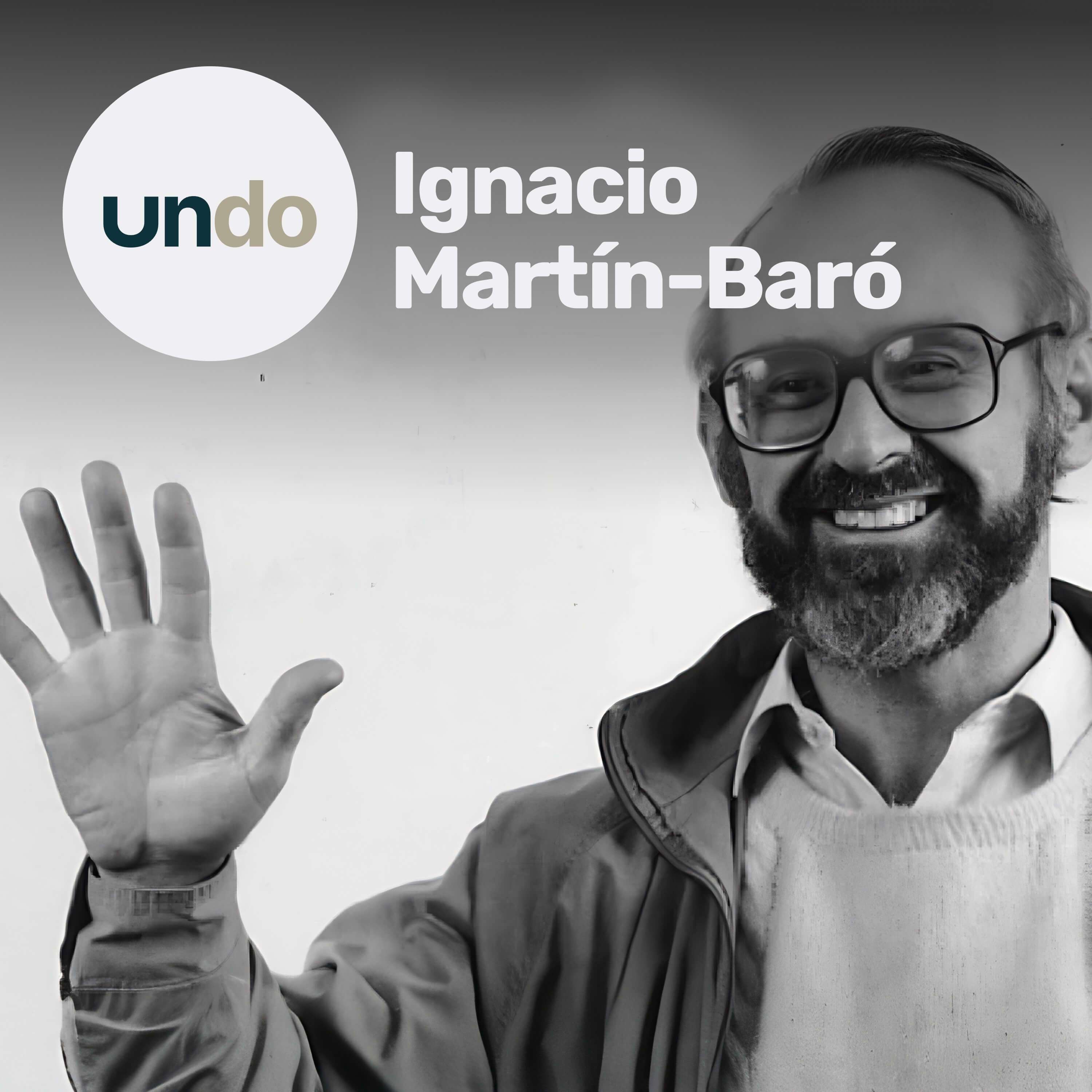
Undo – How history's outliers got stuff done
You aren’t lazy; you’re fighting a broken system – Ignacio Martín-Baró
00:23:56
Loading summary
Transcript16 lines
- [00:00]
Ben Askins
Hi, Ben. So I have a hearing aid. And when I was working my first ever job as a waiter, my manager called me into his office complaining that I'd been listening to music during shift. No, he's not going to do. No one's this stupid. When I asked him what he meant, he pointed to my hearing aids. But when I tried to tell him it was a hearing aid, his response was, but you're 17. No 17 year old requires a hearing aid.
- [00:26]
Mark Stedman
That's Ben Askins, a serial entrepreneur and now content creator, reading a message from one of his followers. That's because today we're talking about the people and the systems that make us think we're not pulling our weight, that we're not enough. What this calls for is some radical resistance. And we're going to look for it where resistance is needed most. The frontline battle against oppression. I'm Mark Stedman and this is Undo. Taking a hard look at society and the obligations it presents to us. Cocking our head to the side and going, really? I am indebted this week to Becky for becoming our latest supporter over@patreon.com undopodcast your support helps keep the show going. So thank you.
- [01:20]
Dr. Rachel Morris
When you are stressed and you went to a doctor and said, I'm really, really stressed, what can I do? And they say to you, well, the only thing I can do is sign you off sick. How does that feel?
- [01:28]
Mark Stedman
This is Dr. Rachel Morris, host of the podcast you are not a fr, which helps healthcare professionals beat burnout. And I'm gonna be honest with you, if I went to a doctor to help me through a stressful patch at work, and she said, here's a sick note. The first thing I'm thinking is, ah, crap. Turns out I don't have what it takes. Whatever it is. You know the thing all those people in the Apprentice or Dragon's Den seem to have. Quick note. For the Americans here in the uk, the Apprentice is hosted by a pickled business walnut called Alan Sugar, who hasn't been relevant since the amstrad computer in 1984. And Dragon's Den is what you call Shark T for some reason, which is still a better name than the original Japanese one, which translates to the tigers of money. Anyway, if I'm getting a sick note from a doctor because I'm stressed at work, the first thing I'm thinking is that the problem lies with me.
- [02:19]
Dr. Rachel Morris
If that doctor just got out this stress curve and go, look, of course you're stressed. Look what you're coping with, the pressure has massively gone up. But then, not only has the pressure gone up from external stuff, now the pressure's gone up from the internal stuff. I'm not good enough. What's wrong with me?
- [02:33]
Mark Stedman
That stress curve Rachel's talking about is something we've brought up before. It's called the Yerkes Dodson curve, and it's a good way of visualizing how we can move from bored to burnout via stressed. If you find yourself prone to procrastination or easily distracted, struggling with motivation or just not wanting to get out of bed even for the stuff you want to do, you might have a bunch of stories in your head that pretty much all amount to the same thing. There's something wrong with me. This is by design. The carbon footprint movement was co opted and popularized by fossil fuel companies like BP to shift the burden of responsibility off their shoulders and onto ours. As Sana Asan wrote in her Guardian piece back in 2022, we're essentially being gaslighted into believing our struggles with mental health are due to bad wiring rather than, you know, the whole screwed up nature of the world right now. And to quote from her TED Talk, what does the voice in your head sound like? Is it truly your voice? Or can you sometimes smell your mother's words? Catch the scent of your father's disapproval? Notice headlines from the media stamped across your mind, suggesting you are not enough. This concept that fixing what's wrong with the world means mending something broken in ourselves is not new, and it's going to take some time to dismantle. Luckily, we have an expert we can call on. The government denies that its troops have lost control of any part of San Salvador, but officials concede that the guerrillas have created strongholds in at least seven neighborhoods. Ignacio Martin Barro was a Spanish psychologist. He was born in Valencia in 1942 and in 1989 was murdered in part for his opposition against the civil war taking place in El Salvador at the time. During his working life, Martin Barro developed a theory of psychology that posited we either react abnormally to normal circumstances or. Or we react normally to abnormal circumstances. Meaning that, yes, some of us may struggle to cope due to the way we're wired, but that others are having a perfectly normal reaction to something that's difficult to bear. This theory is known as liberation psychology, and it was developed as a response to oppression. Now, you might not think of yourself as being oppressed, and I don't want to make this whole thing weightier than it already is, but exploitation is just one thing form of oppression and exploitation is kind of at the root of capitalism. It's sort of the oil that makes the gears run smoothly. If you think I'm laying it on thick, think back to any time you were asked to stay late or pull in an extra shift, cancel or delay your plans, pick up the phone while you were on holiday or reply to a late night WhatsApp message all because you're part of a family. Or even worse, that if you don't, you'll be labelled as a difficult employee and your chances to advance will plummet. By no means am I saying that fighting a civil war or dismantling systemic injustice is in any way comparable to dealing with Janet from Accounts Receivable. I know they feel the same, but they are different.
- [05:56]
Ben Askins
Warning. You are experiencing dangerous levels of cynicism and disillusionment. In order to mollify these feelings, we will now play a short piece of soothing music. You have been soothed. Your feelings of resentment and frustration have been mollified.
- [06:15]
Mark Stedman
Let's break down the idea of liberation psychology and see how the pieces fit together for us. Joe Lunchpales and Jane Punch Clocks Psychology must serve the oppressed Martin Borough's take is that rather than try to fit everyone into the same box, we should create containers that better fit us. To echo what I was saying last week, this is kind of what undo is all about. So much productivity advice is about trying to F your ways of working into rigid systems because the authors of those systems are convinced it's the only way you're going to maximize your time. I haven't brought up Oliver Berkman for a while, so if you're playing the drinking game, now's the time to slam one down. But this show is in some degrees treading in his footsteps, as he spent much of his Guardian column trying on different productivity and self help hats to figure out which ones would fit. And what he found was that none of them are going to solve the fundamental problem that there are just too many things and not enough time in which to get them done. That means we need to build systems that recognize where we're at right now. Applying a productivity hack from the chief exec of a Fortune 500 company isn't going to help when you're waist deep in researching a report nobody's going to read while the hobbit from IT is leaking dubstep from his headphones and Microsoft Teams keeps tugging at your sleeve with notific notifications you're not allowed to turn off and you're Measuring out your time in trips to the toilet. Modern productivity, if there is such a thing, is about building flexible systems that match the way you work and think and respect the constraints you're working under. And for some of us, that might mean building structures that are more supportive than those other people need. Just like some people need crutches, walking frames or wheelchairs to get around, some of us need infrastructure to hold us up when we're at work so we don't use up all of our energy just trying to get through the day. Stop ideologizing common sense Hands down, one of the greatest gifts you can give yourself is a lunch that consists of a bowl of tomato soup and a cheese sandwich. It's unpretentious and comforting. Last weekend I saw some family and one of them remarked on how weird she thought it was that you'd have a sandwich with soup. And when I remarked that there were high end restaurants in New York that pretty much only served soup and a sandwich, her levels of incredulity remained. The point is, what's normal or common sense to you is exotic or maybe arcane to someone else. My dad's one of those people who can do pretty much anything in the way that only boomer dads can, and my mum's not far behind either. I marvel at their ability to redecorate a whole house, fix a broken fuse and repair clothes, just as they marvel at my ability to write songs before, perform improv, and name pretty much any song from the 90s in under a second. We're a product of our culture, our surroundings, our upbringings and the innate gifts or challenges we're given. To assume that one set of knowledge is something everyone should know if it isn't taught to us. It's kind of arrogant, not to mention judgy as hell. The very notion that we should derive our worth from our labor is an ideology, and a pretty poisonous one. I'm all for making positive contributions to the world, but you didn't choose to be pulled headfirst into the world. So the idea that you arrive and suddenly everyone's like, where's your contribution? If you ask me, that's a bit much. Collective experience matters more than individual pathology. For a brief period, my TikTok feed was full of grifters in Indian call centres getting absolutely shafted by people pretending to be tech illiterate or in some cases actually scamming the scammers. Then I thought about some of those call centre operators, extreme reactions and the lack of empathy they have for their victims. And sure, there's the line that we in the west are all rich and we should be turned upside down and shaken until all the money falls out. But there's a far more sinister system underpinning the con. The fact is, if scammers in these windowless Indian call centres don't meet their quotas, they and their family will get the shit beaten out of them. They will actually get beaten up, or in some cases, worse. That's why they're pretty good at noticing when you're wasting their time or pulling their leg. For many of them, this isn't a fun game where they get to shake down the dumb rich person. It's a real life squid game. So Captain Buzzkill, why bring this up? Because we so often think people are being mean to us or taking advantage when they're simply operating under a different structure, a different system with its own set of constraints. We don't have to be white knights with savior complexes about it all, but we can at least acknowledge that someone might be a douche to you because they were taught that's how you get results. It doesn't excuse their bad behaviour, but maybe makes it easier to understand consciousness raising is a psychological act. I don't know if you've ever really paid attention to the lyrics of Smashed Mouth Walking on the sun, but they're surprisingly smart. It was a song that defined the band's sound into their next album, but that deceptive bubblegum tune takes potshots at division. Commercialization, cynicism and the idea that peace, love and harmony were packaged up and sold back to us. Much in the same way our childhoods are constantly rebadged, remastered and upscaled every 10 to 15 years. Calling out bullshit is how we start to climb out from under it. The Emperor's New Clothes is still a powerful fable because it shows us what happens when we all slump into groupthink. If you can be the person at work who says hang on, I don't think this is fair. You're doing the brave job of calling out some systemic bullshit the rest of your co workers are struggling with but have maybe learned to accept. It's not easy and it's definitely not fun. But being the squeaky wheel in your organization, the one who calls out the nonsense, who restates a new policy in actual English rather than corporate jargon, being that guy might just be the first step to bringing about some change.
- [12:43]
Ben Askins
Hey, I'm sorry to do this so late, but there has been a mistake with the annual leave. Oh, here we go. And I'm going to have to cancel the second half of your annual leave this week. You will need to be in the office Thursday and Friday. But I'm already in Mexico. You will have to move your flights around. I've just checked and there is one on Wednesday evening that you can get. This is a joke, right? You aren't seriously asking me this? Definitely not a joke and I am not asking, I am telling you the situation. I appreciate it isn't ideal, but too many people are off Thursday and Friday and so you are going to have to be back here by then.
- [13:16]
Mark Stedman
That's Ben Askins again doing a dramatic reenactment of real, actual honest to goodness, real, actual WhatsApp conversation between an employee and a boss. And he's got loads of them. If you're into this sort of stuff, you might have already come across his TikToks or his new long form YouTube series. There are countless examples of bosses who think workers should be grateful for every hour they get in their zero hours contract. Now Ben's already fighting that good fight, so I'm not going to tread on his toes. But clips like this show just how far up their asses many managers heads seem to be. That was a confusing sentence, so let me take another stab at it. You're not lazy, you're not asking too much of your job. If you're young and you've only been in the workforce for five years, your relationship with employment is already knackered because everything got tipped upside down and dipped in shit when Covid struck. And yes, there are stories of so called work shy gen zers who make all sorts of demands on their workplaces. But most of what I see is younger people getting a bit better about defining their boundaries and pushing back when their line managers take the piss. And of course when you do push back, what are you given? As Dr. Rachel Morris discovered when she started trying to help other doctors beat burnout.
- [14:36]
Dr. Rachel Morris
There is nothing between stress and burnout in terms of help for people. Apart from being told to go meditate, do some yoga, focus on your well being, focus on your well being. That's great. But how can you focus on your well being when you're doing three people's jobs?
- [14:50]
Mark Stedman
What even is my well being? You know, it's a word that we use. What is it?
- [14:54]
Dr. Rachel Morris
Yeah, well what is your wellbeing? And that is the problem as well. Like well being for you probably looks very different to well being for me. Then what happens? Organizations go, oh, everyone's really stressed, let's do a wellbeing program. So let's put in some lunchtime sessions where people can go into yoga. Now, FYI, I love yoga. For me, it's really important, important thing. But not in the middle of the day when I've got a million different things to do, probably better in in the evening, but then I need to turn my laptop off and have the time to do it. So the biggest problem for well being is getting the time to do well. To do well being. So if we want to quickly run through what wellbeing is, we have eight ways to well being. Include the five government ways to well being that they developed in 2008 as a bit of like five fruit and veg for the mind.
- [15:37]
Mark Stedman
Those five ways to well being are connecting with other people, getting some exercise or just moving your body, being present in the moment, continual learning and giving back to others. Those form part of a government initiative that Rachel's built on in her work to help people find a path towards feeling better. So if you're not ready to smash the system and go all Jason Bateman and plot the murder of your boss and side note, please don't do that. He'll reflect very badly on this podcast. Then start by taking a good long walk to a pub where you can have a drink with some friends. And while you're there, take advice from a former subject of this podcast, Merlin Mann, and look up at the chimneys of the houses you pass. It gets the sun on your face, but it also gives your mind something else to focus on. Try and read or listen to something that'll expand your outlook a little. Or maybe just work on honing your hobby. And if you can, spend a bit of time every now and again looking out for someone else, it all helps. And look, I know that's a bit cheesy and maybe it feels twee, but like any good cliche, they exist because on some level there's some truth. And if Trisha Hersey is right and rest is really resistance, consider me the leader of our little rebel alliance. Sleep well, my friends, for we rise at dawn and then have brunch for about 11. Catch up on our box sets and then. Then we march up the stairs to Bedfordshire and then to victory. Now bring me my tomato soup of justice and the cheese sandwich of destiny.
- [17:21]
Ben Askins
Undo is written and produced by Mark Stadman with help from Aperture Science. You can find more resources at Undo FM Gaslight.
- [17:31]
Mark Stedman
Thanks GLaDOS. I'll take you from here. If you liked this episode and would like to prod me in the back with money to keep me making more. You can do that@patreon.com undopodcast after this brief interruption, I'll join you in the Shed and I'll tell you about how I'm making use of those five ways to well being and having a bloody brilliant time of it. Our latest five star Apple Podcasts review comes from TWS8, whose wife introduced him to the show. Every episode is a fun entree of useful stuff and the comic asides are a dipping sauce that offers a little more flavor, he says and adds, don't act like you've never drizzled a slice of pizza with ranch dressing. I'm not judging you, TWS8. You are a dirty, dirty boy and I love it. If you would like to leave a review, you can do so from the Apple Podcast app or you can leave a comment on Spotify. Do so and I'll read it out next week and potentially make my own saucy comment and extend to you as I do to TWS8, my heartfelt thanks. So you join me here in the shed and if my voice is a little low in the register today, that's because I've had a couple of decent nights being out and socializing. The Friday just gone. I ran the first sort of installment, if you like, the first meetup of my community singing group that I founded earlier in the year. Well, it's been in the planning since February ish, I think and we got it off the ground on Friday and it was absolutely wonderful. This is one of those sort of ways to well being. It's become more important to me and maybe you can hear it in the sort of tenor of the podcast and the sorts of things that I talk about here that the idea of trying to make some kinds of positive contributions, they are important to me and they're also important that I do them in a non digital, analog, real IRL kind of way. So I think I've mentioned it briefly before, but I formed a company in about March I think this year that makes its money doing digital things, helping people do digital things, but then takes the money that it generates and puts it into community projects. And so that's literally what's happening at the moment is I'm building a large website for a client and then some of the money that he pays me is then going to subsidize this project. And we did the first one and I, you know, I just, I rocked up with my little keyboard and we sang some songs from the 90s and it was Absolutely exquisite. It was really, really, really wonderful. And so I kind of just wanted to very quickly or briefly make the case for trying to look at those, look at those five ways. So, you know, looking back again, we're talking about connecting with other people. So just being, I think, in human contact. I know again, like this might all come off a little bit. Not woo woo, but you know, whatever. It's a far cry from the very sort of data driven, almost digital thing that we talk about a lot with productivity. But as we have talked about since episode five or six, people are what matters because it's the people what run the systems. So getting together with people I think is really good. Moving your body, it's not something I do enough, but it's something I'm trying to do more because it does make a difference. You know, we are not just brains on sticks being present in the moment. I think noticing is, I think what the official term is. But you know, noticing what? And it sort of is noticing anything. Looking around. That's why I mentioned looking at the chimneys. It's surprisingly effective if you're walking out somewhere and you start looking up, you're noticing the world around you and not just sort of looking at your feet or zoning out. It's nice to actually be present. You can do the same thing when you're cooking or eating. You know, when you're engaging all of your senses, you're filling yourself up and not just like get on to the next thing, next thing, next thing. And I think that's really, really good continual learning. You know, I'm always popping something in my ears. Very unusual for me to be walking around in silence. I'm always listening to something and that's either a podcast or an audiobook. And you're like, I'm not like, you know, there's plenty of times where I will just put some pulp on and there's a pulp pulpy kind of series that I'm enjoying at the moment, you know, but then there's other times where I'm like, yeah, I want to be enriched. And podcasts and audiobooks are such a great way to do that and such a low friction ways. I'm a big fan of it. And then giving back. And like, I think one of the things that can be tricky here is I can feel judgy, that can feel like there's a lot of pressure to give back, as if you've taken a load of stuff. It's just doing little things, paying it forward. Even if that might mean going to a coffee shop. And there are some places that actually formalize this system. Go into a coffee shop and saying, can I pay for the next person's coffee? Or picking up your neighbor shopping or whatever it is. You know, I think many of us did that during COVID and I hope that those kinds of things haven't necessarily died out, you know, because we need each other. All right, that's about enough. It's about a saccharine as we're gonna get today. Thank you so much for listening again. Patreon.com/developo podcast it's also where you can hear the full interview that I did with with Rachel. We've got one more episode coming up again. I mean, there's a link in the show notes to. To her burnout toolkit to help you diagnose whether you're just stressed or you might be burning out. So definitely check that out. But if you do want to hear the whole interview, and there is lots that we covered, it was like, you know, over an hour. I think it's just under an hour edited, very, very lightly edited it down just to make it tolerable. And so that that's the only place you can get that. So if you're curious, then, and if you want to support the show and tell me that I'm a good boy, then. Patreon.com undo podcast you can start from just $3 a month. Thank you very much. And I will be here with you next week.