Podcast
Unfinished
Hosted by Steve · EN
4episodes
Episodes
Newest firstAll episodes
Class Is In Session
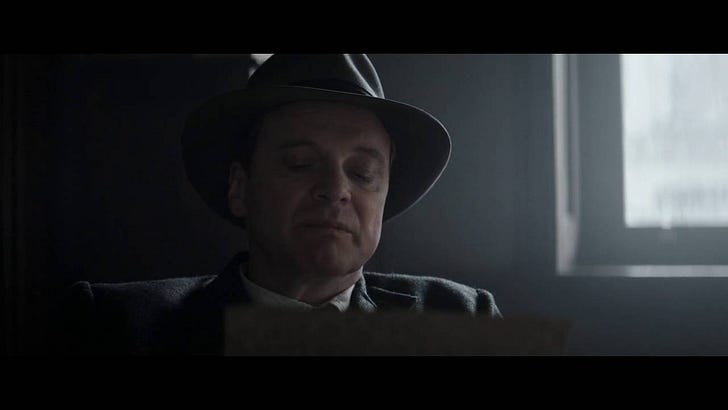
Aug 23, 202100:18:27Tap to summarizeI hope everyone is enjoying their summer so far, I have been out and about a lot throughout the month of July and early August. It’s the primary reason I haven’t written a new letter for a while. I needed a refresh. —Welcome to the season of LIMBO. The pandemic is making a resurgence, many people are drastically transforming their lives, and the future is even more uncertain these days. How do we handle this? How can we live our lives in a way that actually makes us feel alive (while also being safe)?Here are the facts as we enter this new phase of the pandemic where variants threaten us:* Not everyone has been vaccinated. Many have chosen not to, many more (globally) still don’t have the choice.* We don’t know how isolation has weakened us in our war against other germs, viruses, and diseases.* Guidance is always evolving. We’re all learning here, especially for people in the medical and scientific communities. They change guidance because they learn new things. Only time will be able to improve their guidance and since this pandemic is still raging globally, worst-case guidance must have a proper place in our daily lives.There is a bold line between caution and panic. Let’s stick to that bold line by listening to the professionals and assessing our current circumstances. We can be respectful of the current crisis and still live our lives. It doesn’t have to be a pissing contest. We can do both.This doesn’t mean that you need to stop living life, just be a little more aware of the consequences. Wash your hands more often. Wear a mask if you’re sick or around sickness. Wear a mask at the doctors and on confined public transport. Take advantage of the summer weather to socialize and social distance. Be safe out there.—Onto today’s newsletter:Sometimes I chase away the demons that haunt me while they hold the flaws of my character over my head, and sometimes they chase me. Most of the time, they chase me. Today’s letter is about some of the lessons I’ve learned while being chased by these demons. BrevityI struggle. I struggle with being a poised man of few words. Instead, I’m the kid that keeps pulling onto your pant leg from the knee every two seconds with something new to say or ask. I shared in a previous blog post that I am a verbose man.One such flaw of my character has been this verbosity. This incessant need to speak may seem to some as an overbearing effort to expunge the incompetence from my record. That might be accurate, I often think so myself… If I say enough words, maybe some of them will ring true.Thomas Wolfe, the renowned author from the twentieth century, was well known for his own challenge with verbosity. when I am reminded of some of his greatest writing I wonder if the character trait we seem to share is less of a flaw and more of a strength.In the movie, Genius - Collin Firth reads the draft of a forthcoming book by Mr. Wolfe aloud: If you haven’t seen the movie, I would recommend it. It’s a little heady and the pacing is imperfect, but moments like the clip above make it worth it. Collin Firth plays Scribner editor Maxwell Perkins who had already made a name for himself among authors, new and old. He is sought out by the intrepid and outstanding Mr. Wolfe (played by Jude Law) and through the receipt of Thomas’ draft of what would become Look Homeward, Angel; he takes Thomas on. The challenge of brevity is sometimes I find it lacks context. I find it also often lacks emotion and empathy. Furthermore, it leaves “connecting the dots” to the listener. Something that can lead to unforeseen complications.I don’t know if I’ll ever be able to tell a 6-word story, but over time I hope that my ability to understand my audience and my own self is strong enough that I can master the ability to manipulate the line between verbosity and brevity to keep them engaged and myself in control.The Tarzan MethodI have goals and dreams that many say are too lofty. They look at me and they judge me harshly for the things I am doing now and the things I am planning to do tomorrow. For me, this is not a big deal because I am hyper-aware of my current state and what needs to happen for me to get to my desired future state. And this awareness has led me to the adoption of the Tarzan Method, introduced by Casey Neistat.I’m a big fan of Casey. He’s an extremely creative and energetic human being that embodies the concept of “just do it”. In this video above, he provides many valuable lessons but the one I’ve timestamped is about how the common path to your goals and dreams is more like a zigzag instead of a straight line.When you adopt this method you save yourself the struggle of carving through the forest floor and you enable yourself to embrace the concept of course correction.The Concept Of Course Correction* Too little, too late* Too much, too soon* Too late, too much* Too soon, too littleHitting the bullseye, aka achieving perfection, is nearly impossible.Using the Tarzan Method as the frame of reference for how we all walk through life: you can use course correction to grab onto new vines faster, to create additional vines, to avoid weak vines, and to hold onto strong vines longer. Awareness is the first step to being able to take advantage of your circumstances and capabilities so that you can swing through the jungle of life towards your grand aspirations.Problem AdoptionIf everyone you know were to sit in a circle and put all of their problems into a pile and then you got to choose which problems you want, what would you do?I heard this question get asked and the person responded that if given the choice they would take back their own. I was very confused by this. I don’t understand why anyone wouldn’t use this opportunity to adopt the right problems.If they could put all of their problems on a table and cherry-pick which problems they would have, this person is saying that they would pick all their own again? I don't think I would. Problems are a huge deal in my life. They’re a huge deal in everyone’s life… We have big and small problems surface every damn day of the week to remind us how fragile this human experience is. Here’s the thing: there are problems that disable me and the problems that enable me. There are problems created by the LACK of resources and there are problems created by the ABUNDANCE of resources. If you are like me, you would take the opportunity to redesign your entire life through the optimization of problems that you’re best suited to manage and the problems that are solved through resource reduction. You’d give yourself the boat that breaks down every other week, because its better than not having a boat at all. You’d give yourself problems that only you can solve. You’d throw away all the problems that you struggle with. When you understand that problems, and subsequently their solutions, are key to the human experience, you’ll be able to unlock one of the greatest lessons I’ve ever learned. My Father Is a Tinkerer. For all the years I lived with my parents, my father would often be outside or in the garage spending hours making junk fit his latest needs. I never understood why he’d spend so much of his life out there doing these silly little projects to make something a tiny bit easier, a tiny bit more efficient, or a tiny bit more useful.I never understood why he’d buy a used machine that’d he have to fix every other weekend. He’d spend 100s of dollars on a thing that didn’t even work and pour weeks and months of his time into it. Why not just buy it new and save that time so he could spend it elsewhere?Then it dawned on me. He likes doing it, he likes tinkering. My father is suited for tinkering. He can make a broken thing work a lot longer than it was supposed to. He can solve mechanical and electrical problems with some of the strangest methods, tools, and spare parts I’ve ever seen in my life. He can work on cars, construction equipment, household appliances, and so many other things that I am just not suited for.If my father could cherry-pick the problems that’d mark his life; I’m sure he’d rather have a piece of equipment break than a big financial burden, or a health concern, or a family issue. The Greatest Lesson I’ve Ever Learned Has Two Parts:* Pick the problems that you’re best suited to solve and build your life around them.* Pick the people that are best suited to solve all the other problems you might encounter.Aggressively FrugalI am so cheap that I know it affects the quality of my life. I know this because I often pick the cheap but worst (for me) option.Financially responsible people splurge on things that provide a positive ROI.They invest, experience life, take risks and don’t fear the doctor or repair bill. They do these things with purpose and within reason. They define the line and go from there. It’s easy to not spend money, it's so much harder to be financially responsible.Being financially responsible doesn't equal being cheap. This is a lesson I am still struggling to learn.One Final ThingDealing with loss is hard, and this show After Life on Netflix provides a sobering glimpse into how people try, fail, and succeed at managing that loss.“Happiness is amazing. It’s so amazing, it doesn’t matter if it’s yours or not.” This is a public episode. If you would like to discuss this with other subscribers or get access...
Transcribe →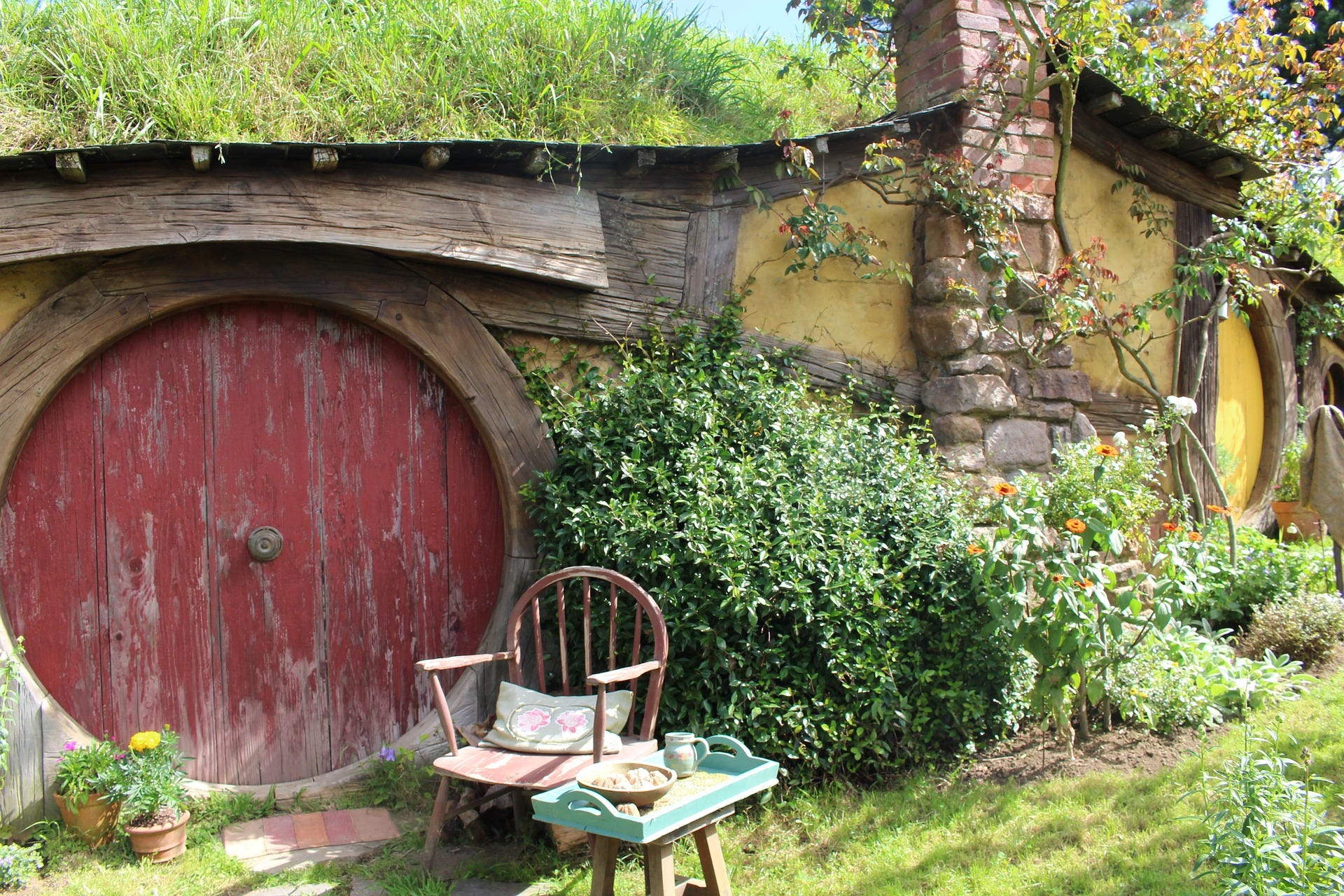
Stuck In The Shire
Jul 12, 202100:08:27Tap to summarizeGandalf the Grey arrives in the Shire to recruit a Hobbit burglar.Dwarves, men, elves… all manner of folk immediately discount the little Hobbit, even Gandalf is unsure about the adventure in store. But soon they all discover just how brave this little Hobbit is and how far he’s willing to go for relative strangers:“I have a home. You don’t have one,” Bilbo tells the dwarves who have been turned into refugees by a rampaging dragon. “It was taken from you and I will help you take it back if I can.”I’ve always liked the Hobbits the most. So too, did Gandalf: “I've found it is the small things, everyday deeds of ordinary folk that keeps the darkness at bay. Simple acts of kindness and love. Why Bilbo Baggins? Perhaps it is because I am afraid... and he gives me courage.” All the Hobbits knew one another, they treated normalcy with an irreverence that made everything a spectacle, and they loved eating so much that they required seven meals a day: breakfast, second breakfast, elevensies, luncheon, afternoon tea, dinner, and supper. I could thrive as a Hobbit, I’m sure. Ignoring the fact that I am 6’4”, I resonated with them and their more simplistic way of life because of where I was born and raised. Growing up in the Upper Peninsula of Michigan (UP) has been a blessing and a curse in many ways. Much like the Shire, the UP is a quiet and rural swath of land. 16,377 square miles make up the only land I’ve ever truly known as home. I always wished that a Gandalf would arrive outside my door and whisk me off on a grand adventure of my own. If you know me at all, you’ll know that I often joke that I’m “a city slicker who’s been stuck in the country his whole life.”Obviously, that’s a statement meant to be entertaining more than it’s meant to be accurate; but it does shed a light into the world I find more enticing.I am a guy who likes symphonies, theatre, musicals, exploring museums and libraries, and having vast restaurant options. Some of the happiest weeks of my life were the weeks I stayed in Green Bay, Grand Rapids, Milwaukee, Chicago, Boston, Orlando, and Dallas (to name a few). The exposure to a more varied and lively life gave me jolts of energy that’s naturally harder for me to find in my current, comfortable environment. I discovered in those wonderful weeks that my extroverted self would benefit from a lengthy sentence spent in a big city.—I still remember the day I learned that the Business Professionals of America (BPA) chapter I was president of had won first place in Michigan for the Video Production competition.As a result of our victory, we had earned the right to go to Boston for the 50th BPA National Leadership Conference.I was ecstatic. I was so giddy with excitement as I spent the next couple of months with the rest of the club fundraising and planning out our week in Boston which was set to happen in early May of 2016. The time just flew right on by!We’d get to go to Fenway Park. We’d take a historic haunted tour around Boston proper. We’d go out whale watching. We’d get a special BPA member-only concert with fabled band X Ambassadors (consequently one of my favorite bands ever). We’d get to test our mettle against the best and brightest from all over the country. We’d get to network and explore life in a city. We’d get to eat lots of AWESOME FOOD!! I’d even get to have my first-ever lobster dinner.It was almost perfect…—My grandfather passed away a few days before I was set to leave. It was sudden. I was torn, and unsure if I should leave. Then I looked at the little note he gave me a few weeks prior and the hundred dollars. “Good luck in Boston, Steven.” he wrote.So I wrote a eulogy on Facebook:Grandpa Roger was a ‘one of a kind’ character, and he taught me a lot.One of the greatest lessons I learned from my grandfather was to never lose your sense of humor.I don’t remember a time that he was not full of smiles and laughs. He had a lewd (yes, lewd) and sarcastic sense of humor that cracked everyone up.Whenever my ma would take my grandparents to town, I was often there. My ma would be busy with Grandma (a story for another time) while Gramps and I would chill in the car, at McDonald’s, or go for an adventure of our own.He would tell me stories, make remarks about others (often quite comically), and/or complain about the women (My ma and Grandma) taking too long. “They must be buying the whole damn store!” he’d say with mock anger.I will miss those moments, but most of all, I am just going to miss my Grandpa.Then I got on a plane and flew to Boston.It was everything I dreamed of. I loved every second of it. I just wish I would’ve been able to share stories of what I’d experienced with my beloved Gramps.After that trip, I realized that I could thrive in a place like that. A city with a million things to do and a world of energy for me to tap into, I could really find my best self out there. I endeavored to take advantage of any college opportunities to get out into the wider world and prepare myself (mentally, financially, and physically) for a potential journey into the concrete jungle someday soon (my original target year was 2024). I had been working towards renewing those experiences ever since.Then Covid-19 hit.—All the experiences I had mean nothing in a Covid & Post-Covid world.My desire for comfort was fading before Covid, but it’s not fading anymore.Now I am grateful I’ve had the shelter and security of the Yoop. I am grateful that I am employed in an industry currently enduring the Coronavirus. I am grateful for the fact that my family has only felt moderate economic and virtually no medical impact from this pandemic (so far). Furthermore, those were all experiences:I had as a straight, white man, which allowed me the power of the Ring.I had a strong family and friend support group around me, which was like having my own Fellowship around to protect me.I had been granted purpose through official college club activities, which gave me a Quest to make the most of my time there.I’d say I’m still intended to be a city slicker someday but maybe I wasn’t exactly “stuck” in the country this whole time.Maybe there was a little more “luck” involved in the environment I was born in.Maybe I’m right where I am supposed to be now, and as long as I keep pushing myself then I think my path will reveal itself in time.Maybe I am a Hobbit because I was born in the Shire…P.S. I wrote this story originally on Medium but I can’t keep up with a million different platforms so I decided to share this masterpiece on here.The rundown will be back next week. Thank you for reading (and/or listening)! This is a public episode. If you would like to discuss this with other subscribers or get access to bonus episodes, visit stevenlippold.substack.com
Transcribe →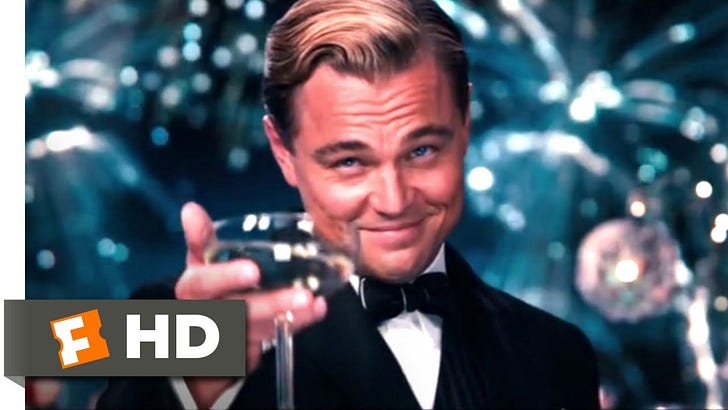
Are The Roaring Twenties Back?
Jun 14, 202100:19:15Tap to summarizeBefore we get into today’s episode, I wanted to share a story:It’s a Monday morning in December in the Upper Peninsula of Michigan. The year is 2019, and I am sitting in my car that’s laying sideways in the ditch as snow pours in from the broken windows and my glasses are nowhere to be found.I am in shock. I start to frantically look around for my glasses and my phone. My car is still running. The seconds seem to drag on for hours as I focus on all the wrong things. Eventually, after about a minute in reality but a lifetime in my head, I take a deep breath. 1st: Shut off the car. Let’s not get blown up or set on fire Steven.2nd: Feel around for any signs of injury. Am I bleeding? Am I hurting? If so, where? How badly?3rd: Talk to the lady that came running down to help. Feel your faith in humanity swell inside a small part of your brain that’s still thinking about all of these dumb things during a time like this. She’s wearing fucking leggings and she came running into twelve inches of snow to check on me.4th: Call work. Not going to be able to come in today as I’ve been in a car accident.5th: Call 911? Already done by the nice lady that’s letting me use her phone. 6th: Call my mom. She’s always ready to save me and that day was no exception. 7th: Wait for rescue, since I’m a big guy and I can’t just climb out the window willy-nilly. It took about an hour to get rescued by my mom, the firefighters, the police officer, and the ambulance crew. One moment for my life to change, one hour for it to be resolved. I was lucky. I walked away with one scratch on my left hand as the price I had to pay for the stupidity I exercised that day. I still have that scar, though it’s faded a lot in recent months. It was an accident of one person, it involved my car and my car alone. It didn’t involve anyone else or any other property. Thank God, or whatever was watching over me that day.I’ve struggled driving since then. I took an online course to sharpen my skills (would’ve been in person if not for Covid). I’ve gone to a therapist. I’ve spent a lot of time thinking about the mistakes I made that day and focused hard on rectifying them. Regaining respect for driving these death machines was a critical first step for me to resolve my struggle (or at least start to). I’d gotten complacent. No more.I share this because it was a critical pivot point in my life. Things changed significantly for me because of that rollover. I moved to the town I worked. This gave me 24/7 access to the internet (for the first time in my life). Also living right next to work would save 3 hours of driving time every day. This free time allowed me to start learning about all sorts of things that I now share here such as the stock market. I didn’t have an interest in it before, but now I had time and access. I saw the writing on the wall, I moved money into Fidelity to prepare for the impending doom in the market that was recognized by the inverting of the Yield Curve Indicator. In early 2020, I thought for sure that the student debt would blow up as mortgages did in the late 2000s. When the market dropped, I was ready. I didn’t know what Covid-19 meant for the world, but I knew that this event would discount my own stupidity. Fear and greed would shift from long-term time horizons to the short-term. I would be able to take advantage and secure a foothold for my future. Since then, my life has gotten better. I’ve seen progress in countless areas of my life due to that nearly deadly experience that still haunts me on occasion. -That’s what this decade can do for all of humanity. The growth projections from many global organizations all point towards the 2020s being a critical pivot point for humanity. Lots of bad things are going to happen, lots of bad things already have happened… But these bad things do not preclude the overall positive trend of humanity.For more about the specific mistakes I made during this fateful day, check out my newsletter titled “Accepting Our Opportunities.”The Return of The Great GatsbyThe story of the Great Gatsby tells the tale of a wealthy man (Gatsby) who is mysterious, charming, and handsome. A man who has more rumors than truths and is mostly known for the lavish parties he hosts regularly. It’s through these parties that events unfold into a more personal and romantic nature. Here, Gatsby finds himself tangled up in a lover’s quarrel, and eventually, he meets his maker in a most unfortunate way.This story may be the most significant cultural reference to the Roaring 20s and all that it represents, but the story is nowhere near complete. It focuses mostly on grandeur and love. It glamourizes the past and ignores many of the horrible events that happened in this uproarious decade in order to maintain its glamourous spectacle.There’s a lot more to the real history of the 1920s that’s worth remembering, via History:The Roaring Twenties were a historic period of dramatic social and political change that emerged as a seemingly natural response to a global pandemic and the first World War. Women could vote. Mass communication (radio and telephone) connected people from coast to coast. Cars were becoming commonplace. Prohobition, the Red Scare, and a cultural Civil War caused much socioeconomic strife within this uproarous decade.For the first time, more Americans lived in cities than on farms. The nation’s total wealth more than doubled between 1920 and 1929, and this economic growth swept many Americans into an affluent but unfamiliar “consumer society.” People from coast to coast bought the same goods (thanks to nationwide advertising and the spread of chain stores), listened to the same music, did the same dances, and even used the same slang.Many Americans were uncomfortable with this new, urban, sometimes racy “mass culture;” in fact, for many–even most–people in the United States, the 1920s brought more conflict than celebration.When accounting for this bigger picture, it becomes clear that we are on a parallel path that Americans experienced a century ago. Let’s take a look at the parallels in closer detail:World War? We’ve been in a world war for over two decades now, and not against any one enemy but against the enabled extremists of many various demographics. Terrorism has plagued most of the globe in three distinct ways: Global security, cultural response, and rising nationalism. Many of the most powerful nations have attempted to tighten their grip over their own populace and their foreign interests in the last couple of decades. These “squeezes” have led to a cultural response that becomes opposed to the ideals of these powerful nations. The more foreign powers try to forcibly influence local culture, the more likely it is for that culture to turn xenophobic. And obviously, with rising distrust comes a rising “need” for nationalism. Pandemic? Covid-19. Need I say more?Mass Communication? The internet, smartphones, and social media all have given rise to a new human experience that allows everyone to grab ahold of the megaphone. With this megaphone, human beings (individually and collectively) become more powerful than ever before. Sometimes that power creates a Meme stock, other times a Meme president. Socioeconomic Strife? In the 1920s, there was rising strife between city-dwellers and small-town residents, Protestants and Catholics, Blacks and whites, “New Women” and advocates of old-fashioned family values. Today we continue to see urban and rural residents, the faithful of any two religions, and people of many different ethnic/cultural backgrounds battle it out. We also have rising strife between straight and LGBTQIA orientations, the economic classes, political preferences, and the young and the old. All in all, we’re seeing tensions rise once again to dangerous levels due to the millions and millions of things that have happened in recent human history. Coming off of the heels of a global pandemic, there seems to be a renewed vigor for fun in many different demographic segments. This has manifested itself into the returning concept of the Roaring 20s. But what does that mean for us, today?The Wild West of The Internet Will Soon Be TamedI believe that the Roaring 20s were roaring because of two reasons: the pain of the 1900s & 1910s and the drastic boom in the American lifestyle during the 1920s due to infrastructure developments. I talked at length about the first one above, now I would like to focus on the second.But first, a quote: “Privilege is like oxygen. You don't realize it's there until it's gone.”I think about this quote a lot, especially when I’m feeling particularly gloomy. It can be painted onto many of the creations that dot our daily lives.Cars, mass manufacturing, the radio, electricity… These were all brand new creations for mankind in the late 1800s - early 1900s that finally became practically useful in the 1920s-1930s. By becoming practically useful, these things eventually gained as much importance in our lives as the existence of oxygen. Practical utility turns something ridiculous into something critical.The internet was an amazing idea back in the 1970s but didn’t really have anything of purpose until the 19...
Transcribe →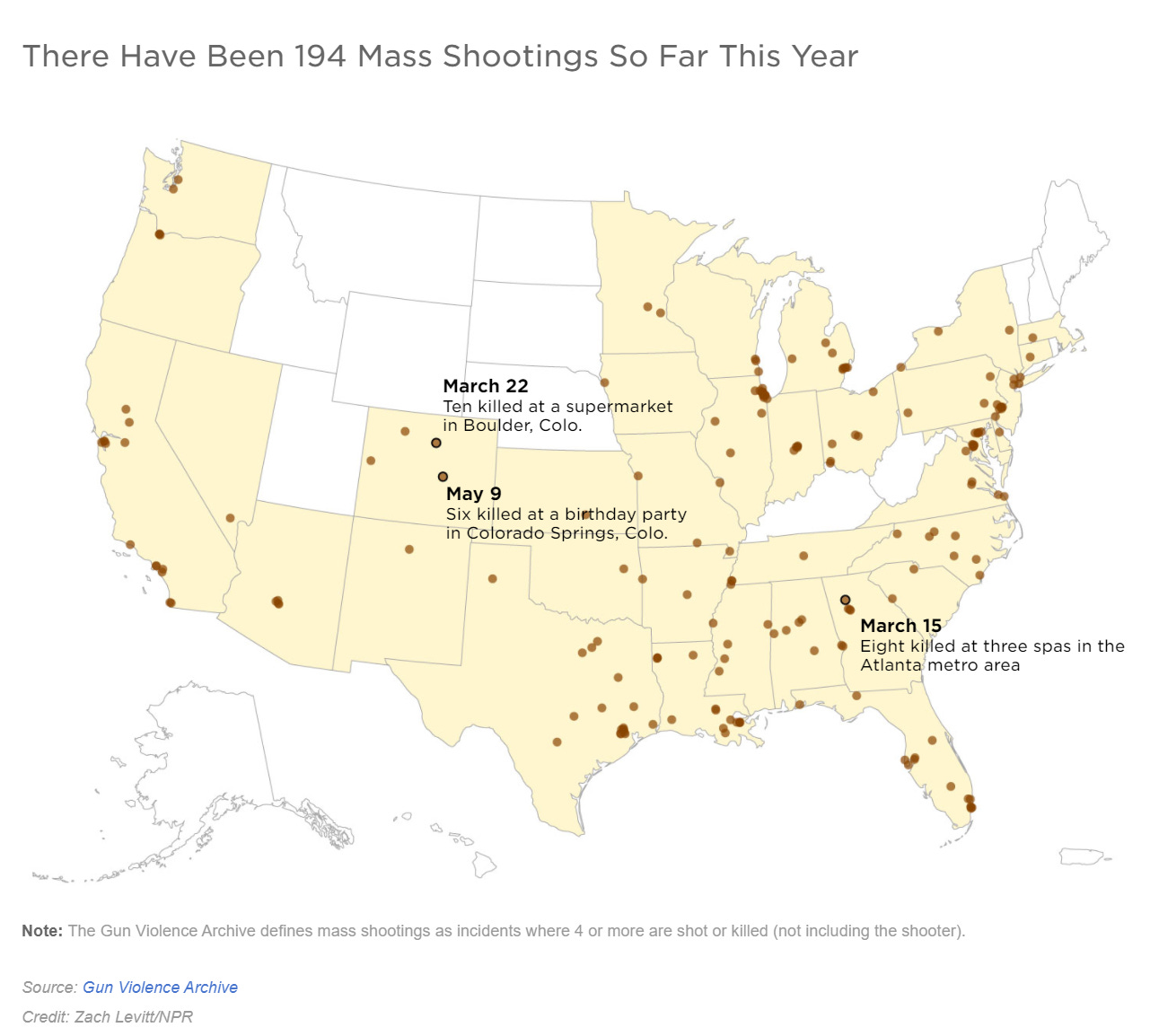
Life & Business
May 30, 202100:16:35Tap to summarizeI’ve been away for a couple of weeks, as I have been wont to do lately, but it was for a good reason. I’m starting something new to coincide with my newsletter.It’s a podcast: A podcast that features me reading off these letters to you.I may go off on mini tangents in my audio version but I’ll try my best to keep it close to the original intent of these letters.I rarely stick to the script so we’ll see how good I am at staying on-topic but it’ll be an exciting learning process for me nonetheless.I hope you enjoy it.Mental CrutchesI see myself as a noob, a rookie, and I don’t hesitate to tell everyone that I am “new to this” *gestures broadly*.I was challenged recently by a colleague (whom I admire and aspire to emulate) to consider what he sees. He sees me as an expert, not as a noob like I do. I tell myself this mentality is a bit of Imposter Syndrome mixed with lacking life's experiences.He said it's more like a crutch. I am using my new-ness as a shield to defend myself from discomfort. I have value already, I'm just hiding it because I don't want to face criticism or pressure. I want the benefits of being a “noob” while still trying to offer expert advice and opinion.He's totally right.I'm being safe. I'm protecting myself with the facts of my environment instead of stepping up fully to the plate. I need to be better.The Law of Diminishing Marginal UtilityMarginal utility is the added satisfaction a consumer gets from having one more unit of a good or service. The Law of Diminishing Marginal Utility states that the amount of added satisfaction that we receive from that good or service declines as its available supply increases.This concept is easily explained within the context of food. Let’s imagine you have one Oreo (not sponsored, I just like them a lot).How much joy does that one Oreo bring you?What about having two Oreos? How much joy does that bring you?Now, how many Oreos are too many? I guarantee there’s a specific number where things turn ugly for you.From an economic perspective, what we want to do with this concept of Marginal Utility and the Law of Diminishing Marginal Utility is to find the perfect number of “units” of Oreos that is we’d pay the most money and makes us the most satisfied.Obviously, this number is nearly impossible to find for ourselves, let alone for an entire populace. Additionally, pricing and satisfaction also differ dramatically between various population demographics which further complicates this attempt. The greatest flaw of the economists, as a profession, is their inability to separate the real world from their magical world of unicorns and butterflies. This is why, even in capitalism, there are people who are abused and people who do the abuse.Bring Me The HinesMy college mentor has imparted me with many valuable lessons and nuggets of wisdom that I endeavor to share.Here’s one lesson that he learned during his time at UPS:Hines Management StoryMr. Hines, the owner of the Hines Lumber Company recently had to fill a top executive position. Two of his managers with equal experience, Bob & Rob, were considered but the choice ultimately went to Rob who’s only notable difference was that he had fewer years with the company compared to Bob. Upon learning that he didn’t get the promotion, Bob was confused and disappointed, so he went to Mr. Hines’ office to ask why he wasn't the one selected. Instead of answering him, Mr. Hines asked Bob if any lumber had come in: Bob said he would check and a few minutes later reported that a carload had arrived that morning. Mr. Hines then wanted to know the type of lumber: After checking again, Bob told him it was number 3 pine. Mr. Hines then asked the man how many board feet were in the order. Again leaving the room to check, he returned shortly with the answer of 2000 board feet.This type of questioning went on for over an hour until finally Mr. Hines had had enough and asked the man to sit in the next room, leaving the door ajar so he could still hear.Mr. Hines then called Rob and asked him if any lumber had arrived. Rob said he would check and in a half-hour (which was longer than it took Bob to get the first answer, but shorter than all of Bob’s searching combined) he returned with the following answer: A carload of number 3 pine had come in on track three at 6:30 A.M. and totaled 2000 board feet. The lumber was unloaded by 12:00 P.M. and stored in warehouse D. It was order number 15-03 for the Carter Construction Company and its total value was $18,750.00. Mr. Hines thanked Rob and said he could go. After Rob left, Mr. Hines called in Bob. Bob just shook his head in approval of the decision, thanked Mr. Hines, and left.The lesson from this story is that leadership is made up of the following building blocks:* Exhibiting initiative and enduring tenacity.* Being thoroughly prepared, willing to go above & beyond what’s expected.* Be willing to communicate freely.* Owning your mistakes, integrity is the key to creating personal authority.Beating the MarketIf you’re an investor in the stock market, you probably have heard financial advisors, brokers, and your fellow peers talk about “beating the market”. Maybe you’ve thought you could beat the market too. And maybe you are; if you just joined during the March 2020 dip. But is that sustainable? Can you consistently beat the market over the long term?The S&P Dow Jones Indices often report on how actively managed mutual funds perform compared to the S&P 500 index. The report referenced here was published in April 2020 and included data for the full year of 2019:According to this report, supplied by stockanalysis.com, 88.99% of large-cap US funds have underperformed the S&P 500 index over ten years. Nearly 9 out of 10 active managers in these large-cap US funds, who buy and sell stocks for a living, underperform against the S&P 500.Are you going to be able to do any better?Spoiler: You’re not. Not unless you’re extremely lucky or extremely criminal.But it’s a good thing to know that the S&P 500 is such a strong index. You can put your faith in that basket. Finding an ETF, like Vanguard’s VOO, that tracks the S&P 500 with very small fees, will give you moderate risk exposure in the short to mid-terms but promises pretty significant returns given longer time horizons that have historically beaten most active investors.So, should I just invest in the S&P 500 then?It depends. In general, yes. The S&P 500 has proven very valuable for most investors. However, like everything, there are up and down periods that should be considered. You can’t time the market, but you can make some determinations based on the current circumstances that may lead you to a different outcome. What are some of those determinations? Fundamentals and Technicals: When assessing market activity, there are two types of analysis. Fundamental analysis focuses on the merits and metrics of the business/sector/asset in question. Technical analysis focuses on price action within the applicable marketplace. These two analyses can guide you towards more specific actions given your interests, inclinations, and timeframe. It’s worth knowing that technical analysis usually works better for shorter-term timeframes while fundamentals matter more over the longer term. Dollar-Cost Averaging (DCA): Over a long period of time, DCA is a wonderful tactic that allows you to participate in the various timeframes of this quarter, this year, and this decade all at the same time. It’s a great way to play in multiple different arenas and gradually adjust to the market while avoiding overexposure by jumping in gradually instead of all at once. You’ll buy less when the price is high, but you’ll buy more when the price is low. Stock Picking: I don’t suggest doing this with the vast majority of your investible assets, but it can be very beneficial to participate with direct ownership of various company stocks that you believe in or are excited about. Indices trim off a lot of risks, but that also means they absorb a lot of the upside. because an index is a basket of stocks, there are some businesses that will thrive and others that will flounder and they absorb each other’s gains/losses accordingly. This is GREAT for wealth preservation, but not so much for wealth creation. This Month In News: May 2021In a new monthly series, I wanted to share some of the biggest news stories that hit my radar and my thoughts about them.Shootings: As of May 10th, 2021 we’ve seen nearly 200 mass shootings in America. The Second Amendment of the United States Constitution reads: "A well regulated Militia, being necessary to the security of a free State, the right of the people to keep and bear Arms, shall not be infringed."Clearly, we need to update regulations to match the new environment we live in where mass shootings are so common that no one seems to bat an eye. Doing this will do more to honor the 2nd Amendment than what we’re currently doing as a society.Covid-19: America appears to have put Covid-19 in the rearv...
Transcribe →