← UnHerd with Freddie Sayers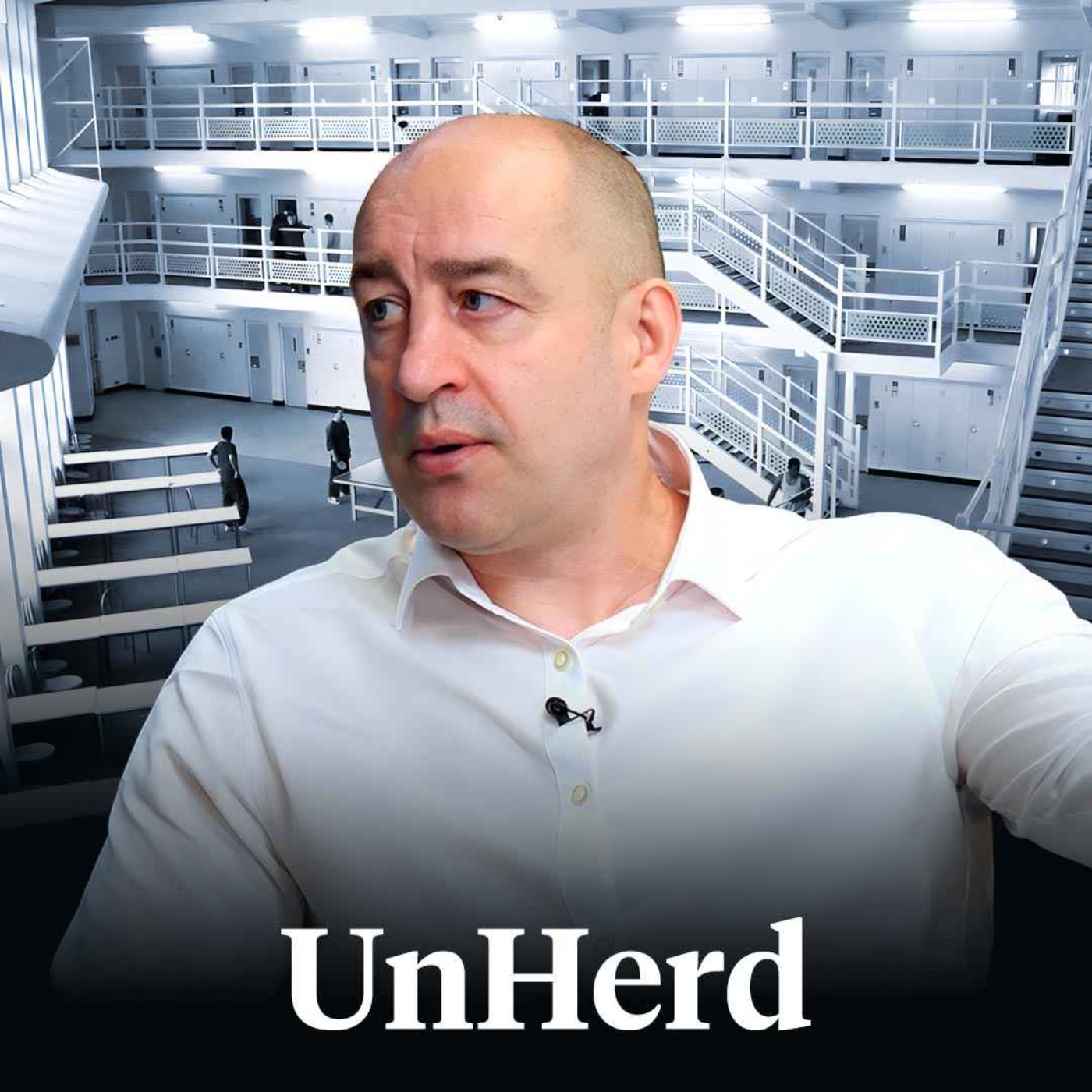
Loading summary
Transcript141 lines
- [00:00]
iHerb Advertiser
Let's be real. When it comes to your health, authenticity matters. For nearly 30 years, Iherb has quietly built one of the world's leading online wellness destinations trusted by millions of customers in 180 countries. At iHerb, every product comes from verified top rated brands stored, handled and shipped directly from our own climate controlled, state of the art facilities. No third party sellers, no shortcuts, just the highest standards of quality and transparency from cart to doorstep. That's why more and more people are turning to iHerb where wellness and integrity meet. Visit iHerb.com trusted wellness delivered worldwide.
- [00:45]
Paige Desorbo
Hi, it's Paige Desorbo from Giggly Squad. You ever stand in front of your closet and just say I have nothing to wear while you're literally surrounded by clothes? And because same so I started listing pieces I'm over on Depop and honestly it's been amazing. You can sell what you're done with and someone out there will love it. And the best part about it is there's no seller fee so the money you make actually stays in your pocket, which feels very chic. It's also insanely easy. I listed something while watching TV and it sold before the episode even ended. So download the Depop app and list your first item today because your old outfit could could be someone else's new favorite. Depop where taste recognizes taste. Payment processing fees, boosting fees still apply. For more info, visit depop.com.
- [01:38]
Unherd Host
Hello and welcome back to Unherd. Can a convicted murderer be rehabilitated? Can a convicted Islamist terrorist be rehabilitated? These are the questions we're going to be talking about today, and we've got the perfect person to really dig into them with. His name is Steve Gallant. He himself was convicted of murder back in 2005 and served 17 years in various prisons and saw what life was like on the inside of those prisons. Then in 2019, he was accidentally caught up in the London Bridge terror atrocity, the Islamist terror atrocity that you may remember that ended up with the perpetrator being arrested by three bystanders on London Bridge, one of whom was wielding a narwhal tusk, one of whom was wielding a fire extinguisher, and the third of whom was Steve Gallant, who happened to be on day release from prison that day and was involved in this, ironically enough, discussion of rehabilitation with Usman Khan, who was the perpetrator. Steve was then given the Medal of Gallantry. He was given a royal Pardon for the remainder of his prison sentence and is now writing and talking about the concept of rehabilitation and telling people about what life was like in prison. He's here with us in unhertal. Welcome.
- [03:08]
Charles Stanley Wealth Management Advertiser
Before we start this episode, a brief word from our sponsor, Charles Stanley Wealth Management. The economic tumult of the past month has forced many people to take another look at their finances and whether their retirement plans are on track. This is where having an experienced wealth manager can make all the difference, because it's not just trying to hit a number, it's about planning the life and lifestyle that you want to lead. Charles Stanley Wealth Management can help you chart your financial course, guiding you on when you can retire comfortably, as well as how best to pass on your wealth to the next generation. Unless you're planning to spend it all, discover how partnering with a dedicated wealth manager can let you focus on what matters most. For more information, visit charles-stanley.co.uk today to schedule a free, no obligation call to discuss your situation. And remember, investment involves risk.
- [03:54]
Unherd Host
I think we should start with your story so that our audience knows who they're hearing from. So you were convicted of murder in 2005 and I got that right, spent 17 years inside.
- [04:07]
Steve Gallant
It ended up 16 year free months. So my initial tariff was, my minimum tariff was 17 years. So I was given a life sentence with a minimum tariff of 17 years. It was reduced by Royal Prerogative of Mercy by 10 months on my tariff. That minimum tariff was reduced to 16 year 2 months, all because of this.
- [04:26]
Unherd Host
Kind of heroic action in 2019. So just tell us about that.
- [04:30]
Steve Gallant
Yeah, I went to prison and I made some quite powerful decisions very early on, thankfully, to change my ways, to not engage in violence and to educate myself. We can come to why I did that later on. So I set off on my prison journey like that and I ended up sort of going through the education system and ended up leaving with a business degree and some really good relationships. And one of those relationships I formed right at the back end of my sentence was with a project called Learning Together, which was ran from Cambridge University. And it was basically a group of people used to come in from Cambridge, they'd bring students in with them and they would work with guys like me who were in the prison. One of those chaps was called Jack Merritt. So because I got to know some of these people and I'd done quite well with them, I ended up moving to an open prison after about 14 and a half years in prison. So I'd done really well and got the chance to move to an open prison where I could. You can leave the prison for de release you can go to university as I did and stuff like that. And after about a few weeks of being there I received an invite through my door from Learning Together saying there's an event at Fishmongers hall on London Bridge. It's our five year celebration, would you like to attend? So I put an application in and that succeeded in the end and I ended up, my first day out of prison was on a minibus driving to the centre of London to Fishmongers Hall.
- [05:49]
Unherd Host
Was that your first ever day out?
- [05:50]
Steve Gallant
My first ever day out, yeah. First ever. So I wasn't released, I was just on a day release and when I got there I saw all the people that I knew I'd been working with in prison and you know, it was packed out and the event went underway. So we was all in the banquet and hall and then there was a little break and I remember someone saying, where's Usman? This guy called Usman and Jack going off to find him.
- [06:11]
Unherd Host
This is spoiler alert the terrorist who then committed the atrocity. But I didn't realize he actually was speaking at this event or he was participating in something.
- [06:21]
Steve Gallant
He was just in the, he was just sat there in the audience. He'd been invited there himself by Learning Together because Learn Together had also done some work in HMP Whitemore, a Katia prison where Uthman Khan had been residing for the last eight years. We come back into the banqueting hall, we sat down and then suddenly I heard screams cut through the air and I thought maybe it's a couple arguing or some kids or something like that. But they continued and it was obvious that somebody was, it wasn't, it was something was going wrong. So obviously when you hear screams you have this urgency to jump up and go and investigate. But I was on my, I was on day release and I'd been escorted there by a prison officer too. So I had somebody with me, the officer with me said to me, stay there while he went to go and investigate. So off he goes and these screams continued. Suddenly one of the co founders of Learn Together come rushing back into the hall. She went, everybody stare there, she's dialing her phone. She went, it's Usman. I thought, well obviously whoever's causing these screams is this Usman guy. So I just thought, sorry. I just jumped up, made my way to the door, went down these big winding staircases and as I got to the bottom I saw a young lady on the floor. She girl was cut, she was bleeding quite badly and the officer who'd escorted Me there he was holding, holding the neck, trying to stem the floor blood. She was clearly in a, you know, a really bad situation. I looked a bit further up and there was another lady on the floor in a fetal position, lots of blood coming from her. She seemed to be unconscious. Then I looked up and I saw who I now know as Usman Khan. He was stood there with two 8 inch razor sharp knife strapped to his hands. So immediately I just, there's a big chunk of wood on the floor, must have been from the skirmish beforehand. So I picked up this chunk of wood and I threw it at him and it just missed and he come towards me and he opened his jacket and showed me this bomb strapped to his waist. And I just remember telling myself it's fake but I was unarmed at the time. And then I looked to my side and there's someone stood next to me holding out a Norweg tusk and I just took it and I thought, right, let me take this guy on. I thought I just need to stop him by any means possible or hold him until the police come. So I went into this sort of room where he was and he'd seen me coming so he's now trying to swing his knife at me. I've got this narwhale Tuscan. It's quite a long thing and we're moving backwards and forwards and I managed to stab him in his chest or his neck here quite hard. I picked up a chair, smashed that over him and then suddenly he's gone. I'm waiting for the police, I'm waiting for the police and he's tried to shut the door to stop me getting at him. He ends up running out the building, opens the door and runs out of the building and someone shuts the door and there's like this sense of relief because he's gone. But obviously there's people outside there who haven't got a clue about what's about to hit him. This was a really busy day, traffic was almost to a standstill and there he was outside. So I just went right, somebody shut the door. So I said move. I said there's people out there. I've gone out onto the top steps and there's like these steps that go down onto London Bridge and then if you go a bit further up you've got London Bridge. And I remember seeing these women walking towards him, oblivious. So I've gone, get back, get back. He's a terrorist waving my hands and they've seen him and they've run off and then Picked up the broken Norwell tusk. I've gone back out. We've had another skirmish on the street. I just remember my hands reaching out, grabbing him, taking him to the ground. Now he's down on the floor and I. The police, the armed police, they come skidding up, they jump out with their guns, and as soon as they'd seen the bomb, someone said, it's got a bomb.
- [09:37]
Unherd Host
It's the first time you saw the police?
- [09:39]
Steve Gallant
That was the first time I saw the police. And, yeah, they saw the bomb. And as soon as they'd seen that, they were shouting, fucking get back. Fucking get back. And I thought, well, I can't move because there's so many people on me. So I just let people peel away, peel away. And then it just ended up me and this guy called Darren Frost holding Usman Khan. I thought, if we don't move, we're gonna get shot ourselves. So I remember trying to pull him. He wouldn't move. So I just backed away. And by the time I'd stepped away, I heard two or three shots. And then they shot him again and Tasered him in the head. And he's dropped back down and he's pretty much stayed there.
- [10:11]
Unherd Host
And for that, we all saw images of that. You were awarded a medal of gallantry. As you told us, your prison term was commuted a little bit shorter than it might have been. So in that sense, it must have felt a bit like fate. I mean, it actually did sort of complete your rehabilitation.
- [10:31]
Steve Gallant
Yeah, it was strange because, you know, I went to prison for violence. My index offence was a random event. Someone walked into my house and attacked my partner for nothing. I didn't know this guy. Someone attacked my partner. I shouldn't have reacted the way that I did. I used violence to resolve that issue and I was rightly sent to prison for it. But London Bridge was another random event of violence, but yet I was freed earlier for it. It was obviously nice to get the. To get released a bit earlier and to get the Queen's Gallentry Medal. But, of course, you know, I can't forget that two people lost their lives. Jack Merritt was killed. He died just before I got downstairs to Usman Khan. He was killed. And Saskia Jones obviously died of injuries, too. I'm done with subscriptions, streaming, fitness, razors, vitamins.
- [11:16]
iHerb Advertiser
I've got subscriptions for everything in my life.
- [11:18]
Paige Desorbo
They lock you in, and half the time I can't figure out how to unsubscribe. That's why I'm so excited about the new Blue Apron.
- [11:25]
iHerb Advertiser
Now you can get delicious meals delivered with no subscription needed including new pre made options. Keep the FL flavor.
- [11:32]
Steve Gallant
Ditch the subscription.
- [11:34]
Paige Desorbo
Get 20% off your first two orders.
- [11:36]
iHerb Advertiser
With code APRON20 Terms and conditions apply.
- [11:38]
Paige Desorbo
Visit blueapron.com terms for more.
- [11:41]
iHerb Advertiser
Let's be real. When it comes to your health, authenticity matters. For nearly 30 years, Iherb has quietly built one of the world's leading online wellness destinations trusted by millions of customers in 180 countries. At iHerb, every product comes from verified top rated brands stored, handled and shipped directly from our own climate controlled state of the art facilities. No third party sellers, no shortcuts, just the highest standards of quality and transparency from cart to doorstep. That's why more and more people are turning to iHerb, where wellness and integrity meet. Visit iHerb.com trusted wellness delivered worldwide hey.
- [12:27]
Ryan Reynolds (Mint Mobile Advertiser)
Ryan Reynolds here for Mint Mobile. You know one of the perks about having four kids that you know about is actually getting a direct line to the big man up north. And this year he wants you to know the best gift that you can give someone is the gift of Mint Mobile's unlimited wireless for $15 a month. Now you don't even need to wrap it. Give it a try@mintmobile.com Switch upfront payment.
- [12:48]
iHerb Advertiser
Of $45 for three month plan equivalent to $15 per month required new customer offer for first three months only. SP speed slow after 35 gigabytes of networks busy taxes and fees extra.
- [12:55]
Sherrell Dorsey
See mintmobile.com hi, this is Sherrell Dorsey from TedTech and this episode is brought to you by Solidigm. The World Runs on data and data relies on storage, but most businesses rarely think about how crucial that storage really is. The truth is it's no longer just a commodity with new demands and constraints, especially from AI. The old ways of managing data are holding innovation back. Sol Solid State Storage from solidigm is changing that. It helps reduce energy use, shrink physical footprints and accelerate data at the edge, unlocking more from your AI infrastructure. Learn more at whatsthestateofyourstorage.com.
- [13:35]
Unherd Host
This sort of connects to a broader theme that you've written for us about, which is the concept of rehabilitation, but also specifically Islamist terrorist criminals and how we should deal with them. Because what you experienced on and off over that 17 years on the inside was that those kind of politicized criminals behave a bit differently to the rest and they almost form networks. Tell us about that. Tell us what you saw of the people. A little bit like Usman Khan when you were on the inside.
- [14:11]
Steve Gallant
Yeah. Well, it's another unusual aspect of my sentence and my time in prison is that obviously I didn't know what I was going to see when I went to prison. In 2005, we had the London bus bombings. I think it was on the 7th of July 2005, 52 people killed. I remember seeing the images, those flashing across the screens when I was on remand awaiting trial. But of course I didn't really think much of it because I was fighting for my life. Two years later, some of the people convicted of terrorist offences from that era and following started to filter into the system and of course came into the Cat air prison system. And I was there when one of.
- [14:48]
Unherd Host
The first Act A means the maximum security prison.
- [14:51]
Steve Gallant
Yeah. Well, we call it high security. There's no such thing as a maximum. It's called high security, but it's the highest level. The high security state brought them in and dropped them in amongst the general population. Right. Which is already a disturbed population. Some of the most violent and dangerous men in the country are in those prisons. So I remember the first guy who came, he was involved in the Shepherd's Bush terrorist attack, which failed. But he gets arrested, brought back from Italy, and then he's on my wing, straight opposite me. And I remember some of the guys there saying, you know, who does this guy think he is, killing out people? As if these guys had great morals anyway. Right. But unfortunately they decided to sort of take it on themselves to make his life difficult. And eventually they ended up setting fire to his cell and he got burned out and he left.
- [15:36]
Unherd Host
So he was the cell opposite you?
- [15:38]
Steve Gallant
He was in the cell right opposite me, yeah.
- [15:39]
Unherd Host
Does that mean you talk? I mean, how does that work?
- [15:42]
Steve Gallant
He didn't really interact. I mean, of course, you're on the same wing together, you're standing in a queue together. You do get moments to interact, of course.
- [15:47]
Unherd Host
Did you?
- [15:48]
Steve Gallant
Well, I was polite with everybody, you know, for me, I always made sure that I was polite, respected everybody and spoke to people on a normal level because I wanted to get through my own sentence in a normal way. Right. And I didn't want to get into conflict. Yeah, I spoke to him. I don't remember much about. There's no depth in the conversation. She just brief, brief encounters. And he didn't leave his cell much anyway because he knew that it was a hostile place for him.
- [16:10]
Unherd Host
You can't see into his cell.
- [16:12]
Steve Gallant
Yeah, I could see. I know he was doing a lot of praying. He was obviously devout, but, like, I Say he wasn't moving away from that place because the officers could see his cell too. So I think he stayed there for his own safety. It didn't take long for his cell to get burnt out and he, he was then moved from the wing. But of course other men convicted of terrorist offences started to filter in and be dropped on the wing and started to grow in number and they started to merge with other prisoners who were already, you know, who were already defined as Muslim prisoners. And I think in other prisons as well, across the Cat Air system there was growing in number much quicker because the demographic had already changed. I was in the north, in Franklin, which is a northern prison, and although it's a dispersal system, people get moved around the country quite a lot. There was less, I would say, Muslim prisoners who could support those sort of prisoners. But as the demographic started to change and people more and more started to get convicted, the power balance started to change and some of these guys who were convicted of terrorist related offenses started to band together and do retaliatory attacks on some of the people.
- [17:16]
Unherd Host
So there were multiple people in your prison in Franklin convicted of terrorism related offences and they formed a kind of group?
- [17:24]
Steve Gallant
Yeah, they formed a group and this group was forming across the system, across the Cartier system. So they stuck together. Yeah, I mean, in some ways it made sense to them because I think if they were separated, they would have been more vulnerable and I think the conditions meant that if they didn't, they would have been in trouble. But as they grew in number, they became stronger and of course started to retaliate.
- [17:44]
Unherd Host
So just to understand then, so when a new prisoner arrives, does everyone know about what they've done?
- [17:49]
Steve Gallant
It depends how high profile it is. I mean, terrorist offenders. Yes, because it's all over the news.
- [17:53]
Unherd Host
And what kind of reception do they get? I mean, what, what is life like if you come into that sort of system?
- [17:58]
Steve Gallant
Yeah, I mean if you don't know anybody, you'll come in, you'll just settle, you know, you. It can be scary because you haven't got friends, it can be intimidating. So if you're convicted of a terrorist related offense, for example, and you, you know, and someone comes to the prison, they are immediately invited into that group because they've got shared ideas, they've got a shared identity. So immediately they will ban, they will get food, they will get looked after. Right, so.
- [18:21]
Unherd Host
And did you find Muslim prisoners more generally would band together or was it just terrorist related criminals?
- [18:26]
Steve Gallant
Predominantly white prisoners are the main part of the population. So they'll have their own groups. There's a hierarchy that exists within the system anyway. You've got the gangster, the armed robber at the top of the hierarchy. You've got the sex case, the grass was at the bottom. Right. And these at the bottom are universally reviled. So that hierarchy means it's a very.
- [18:43]
Unherd Host
Who else is in that hierarchy? It's interesting just to understand. So the kind of gangsters have the highest prestige inside the.
- [18:50]
Steve Gallant
Yeah. For example.
- [18:51]
Unherd Host
And then nobody likes the sex criminals. Obviously, you know, if you're convicted of rape or some, I guess, particularly if children are involved.
- [18:59]
Steve Gallant
Yeah, exactly. Yeah.
- [19:00]
Unherd Host
No one will. You're gonna have a very tough time.
- [19:02]
Steve Gallant
You're gonna have a tough time. Yeah.
- [19:04]
Unherd Host
The Islamist terrorists, let's get back to them for a sec. So they not only formed a gang or some kind of mutual support network within the prison you were in, you felt that it was connected to other prisons. So there was the ability to retaliate across the prison system.
- [19:20]
Steve Gallant
There's four main prisons. It's not a lot of space. So if someone gets in trouble in one prison, they get moved to another prison and they go around. So everybody knows everybody. Right. And it's very easy to build up networks and friendships. But so some of these is the mustache. So for example, there's one guy who came to Franklin, he had eight co defendants who were convicted of terrorist related offences and they're in the other prisons. Right. So the one guy who came to the prison is very, very well respected. He came into the prison and it wasn't long before he was put on the hit list, which meant someone was going to attack him because he was a convicted terrorist.
- [19:52]
Unherd Host
And does everyone know he's on a hit list or how do you know he's on a hit list?
- [19:56]
Steve Gallant
Because a number of them were put on the. Well, I knew he must have been on the hit list after what happened. Yeah. So these things are quite. They just move around. People just know this guy is coming to prison, he's on the hit list and he ends up getting attacked in one of the kitchens. He gets some hot oil thrown over his head and to get scolded. Now, he was a big, big player.
- [20:14]
Unherd Host
Big player in what sense?
- [20:16]
Steve Gallant
In the sense that he was very well respected because of his ideology. So he was quite elite, a big leader in terms of the Islamist ideology.
- [20:21]
Unherd Host
Right.
- [20:22]
Steve Gallant
He'd been convicted of plotting the Blue Water shopping center attack. He was an ex Al Qaeda member and enjoying the Muhajideen in Afghanistan and stuff like that.
- [20:30]
Unherd Host
So in this case it's someone from one of the other gangs or.
- [20:34]
Steve Gallant
Yeah.
- [20:34]
Unherd Host
Who decided, we don't want this Muslim terrorist in our prison or, you know, let's attack.
- [20:40]
Steve Gallant
I think there was also the fear that once they grew in numbers, they would start to retaliate more. Right. So get rid of them while you can, sort of thing. So a bit of both. So he was attacked and there was a news blackout because, you know, these things generally go into the news, but with the dispersal so small, it just spreads. Spreads like wildfire. And it wasn't long before Franklin developed a racist sort of label. Because of these attacks that were going on, people Islamophobic didn't like Muslims in general. And to be fair, there was some bullying going on against people who weren't involved.
- [21:10]
Unherd Host
I mean, it's reasonable to be phobic of a convicted Islamist terrorist, I would have thought, you know.
- [21:15]
Steve Gallant
Exactly, exactly. But some of that was. I mean, there were Muslim prisoners in the prison who were not involved in that sort of stuff and were being attacked. So, you know, there was a bit of stuff going and some of it was just bullying. Right. But like I said, the growing number started to retaliate and merged with other Muslim prisoners who took offense to that sort of stuff. So a few days later, there was another guy convicted of a terrorist offence who then got revenge on behalf of one of his brothers and threw a pan of hot oil over this white guy. You can imagine what that's like. It must be a horrific thing to go through.
- [21:43]
Unherd Host
So this was an example of a kind of attack and counter attack between the kind of white majority prisoners and the Brotherhood of Islamists who are now forming inside the prison.
- [21:56]
Steve Gallant
Yes. And it was growing bigger because as they were growing stronger, people realized, actually there was quite a dangerous element here within the system. So people were offered to convert to Islam to join these groups. And we spoke a moment ago about this hierarchy within the prison system. So you've got people who convicted of, I don't know, killing a child, for example. Even they were offered the opportunity to convert. And there's a thing in Islam where if you. Once you convert, all your previous sins are washed away. Right. So this meant that these guys could convert to Islam, join these groups and they wouldn't ostracize them because they're no longer the old person, they were a new person. So they would.
- [22:34]
Unherd Host
So you knew white prisoners who converted to Islam in prison.
- [22:39]
Steve Gallant
Yes.
- [22:39]
Unherd Host
To join these Islamist brotherhoods.
- [22:42]
Steve Gallant
Yep.
- [22:43]
Unherd Host
Was that one example. Did you see multiple.
- [22:45]
Steve Gallant
There's multiple like that. It goes on all the time. I mean, it's a growing number. Yeah, it's growing and growing and growing. I mean, when I started off, it was every now and then some of these guys were involved in attacking the Muslim prison in the first place, but then conveyed.
- [22:56]
Unherd Host
So they're doing it, you would say, for two reasons, and partly because it's a sort of new start and an opportunity to, you know, lose the label.
- [23:05]
Steve Gallant
Yep.
- [23:05]
Unherd Host
But it's also self protection in a way. Cause they're joining a powerful gang.
- [23:09]
Steve Gallant
The most powerful gang. Yeah, the most powerful and dangerous gang. I mean, some of these guys are only alive because their bombs have failed to detonate. Right. I mean, some of these are really dangerous individuals and very well organized because, you know, they come from existing networks that are organized anywhere. So it was easy for them to be more organized and they have people with them who, if they say, go and attack this man now, they'll go and do it. Right.
- [23:31]
Unherd Host
So do you think they were external terror networks, relationships they already had that they sort of imported into prison?
- [23:39]
Steve Gallant
Yeah, of course. I mean, it made sense. I mean, you've got the chap there with eight co defendants. Obviously they are already part of their network. Right. They're already joined together doing certain things. So it makes sense for that to continue, especially in what must have seemed like a hostile environment to them at first. Suddenly you had people who were at the bottom of the pile, at the top of the pile. They were untouchable because their Muslim brothers would protect them. Right. So you imagine what that did to the fabric of the prison system for years. You've got this culture of them being at the bottom and now they're at.
- [24:08]
Unherd Host
The top because they're dangerous and they're well organised.
- [24:10]
Steve Gallant
Well, they're protected, they're protected. There's the difference. These people are convicted of sex offences. They're protected. So before, you know, they would be sort of reviled. Now you can't touch them. So that created a massive split in what has been always been the culture of the prison system. Now, you might disagree with the hierarchy system anyway, but to those who live.
- [24:29]
Unherd Host
There, did you ever have any contact with these Muslim groups? Are you just observing from afar or did they ever either threaten you or try to get you to join them or.
- [24:41]
Steve Gallant
So I was, I, like I said, I was always myself. I was, I was hanging around with some guys who were, you know, quite stable, quite solid in their views and trained well, looked after themselves. I always trained well myself. You know, I kept myself fit, healthy, looking strong. So, you know, make people think twice about it. Even though I would never use violence, it was a protective factor. So I always had a good. You know, people would talk to me about Islam and say how nice it was, but I wouldn't let it go anywhere, you know, I mean, I'm not saying anything bad about Islam in itself, but that's where it starts, you know, about how much better it is, about the values, about, you know, eating better food, all that sort of thing.
- [25:14]
Unherd Host
Eating better food?
- [25:15]
Steve Gallant
Yeah. Well, I mean, people in prison, you know, they can. They eat non halal food, they say it's better. You know, bacon is seen as sinful for you.
- [25:22]
Unherd Host
So if you're in prison and you're Muslim, you get halal food, you get a different.
- [25:27]
Steve Gallant
Yeah, I mean, you get a different set of food. I mean, you get. I mean, you can't. If it's a religious base, then they're entitled to have food that is suitable for their religious needs.
- [25:36]
Unherd Host
I see. So that's another factor of making it attractive because you kind of get special.
- [25:41]
Steve Gallant
Special meals and it creates a separation because they're eating differently. You know, they're saying they're eating better. They're also looking down on the food that other people are eating, like bacon, for example. And that was another area of conflict in the kitchen. So you've got the kitchen now, you've got someone making a bacon sandwich next to someone who's cooking halal food. Now, obviously it's gonna contaminate the food. And that created conflict too. So you imagine some of the trouble that's been caused just in the kitchens alone. You had a cultural clash on the prison landings amongst people who've got some very dangerous traits, you know, so obviously.
- [26:14]
Unherd Host
You'Ve now been out for more than five years, six years. Do you have any information about whether these kind of tendencies have carried on?
- [26:22]
Steve Gallant
Well, I do know people who are still, you know, still in the system, and I, you know, I hear from them and, yeah, I think the. Let's call it the brotherhood is very well embedded now within the Cascaria prison system. They essentially have control, not control of the prison in the sense of that. Obviously the staff have that level of control, but in terms of the population, they are the highest authority and the most problematic one, without a doubt.
- [26:51]
Unherd Host
What do you think should be done differently to stop this happening? Because I think this will unsettle a lot of people. Why should there be an Islamist network that has power within our prison system? It feels pretty urgent to do something about it. What can you do years ago, when.
- [27:08]
Steve Gallant
I saw these people come even I saw it was going to turn into something much worse. It was so obvious. And I think, you know, managers, staff, stuff like, just took a backward step, didn't go near it and let it flourish. Of course they would deal with an incident after the event, but they would never step into, to preempt or negotiate or just deal with the opposing fractions. Because ultimately what happened was when people are scared, fearful and not going, you know, not educating themselves, not thinking about their offences, they're not rehabilitating, you know, so it has a massive impact. And all those people are going to come out one day. So what do you do about it? What they should have done years ago and what they are sort of doing now is we have what's called separation centres. So there are places where some of the hardcore elements have been separated. But it's a slow process. It should have been. They should have done it a lot quicker. They should be doing a lot more. I know that Jonathan hall kc, the independent reviewer of counterterrorism legislation, is doing a review right now on separation centres.
- [28:04]
Unherd Host
Those separation centres. But the thing is, you don't want to put all of the Islamist terrorists in, together in some special prison, because then that's really going to network them well.
- [28:13]
Steve Gallant
And that's the issue, isn't it? What do you do? But I think there has to be places where those who are spreading the ideology have to be isolated. Now, I have been informed that even on these separation centers, they're allowed to interact, which for me is a bit crazy anyway. But there are obviously different layers. There are the hardcore elements, there are those who are probably susceptible to their influence, but if you separated them, maybe allowed them to remain within the main population so they could normalize and not be influenced by those people, you could probably get a better result out of that.
- [28:44]
Unherd Host
So something needs to be done to break up those networks and make sure that people who are proselytizing and trying to convert people are kept safely isolated.
- [28:54]
Steve Gallant
Yeah, and not just proselytizing, you know, using violence against other groups, you know. Cause there are some people within those groups who are extremely violent individuals. They're the informants. So they need to be removed too. They need to be kept away. You have to bring violence down to a minimum because once you do that, then you can start to do much more with people.
- [29:10]
Unherd Host
Did you see people be released who were still dangerous from these Islamist groups?
- [29:17]
Steve Gallant
Uthman Khan was obviously still dangerous. I mean, the problem with Uthman Khan was that initially he was given an eight year IPP sentence which meant that at the end of his sentence he would have been, would have had to go to parole, sit in front of a parole board and convince them that he was safe enough to be released. But that was replaced with a, I think a 16 year normal sentence where he didn't have to go to and sit in front of the parole. So he was released after eight years.
- [29:39]
Unherd Host
Because he appealed, I believe, and got his original sentence was softened and.
- [29:43]
Steve Gallant
Which he did. Right. But he got it softened.
- [29:45]
Ryan Reynolds (Mint Mobile Advertiser)
Yeah.
- [29:45]
Steve Gallant
And he was able to relieve the prison system because he had.
- [29:48]
Unherd Host
Just to be clear, he committed some kind of Islamist related crime.
- [29:52]
Steve Gallant
Yeah. It was a terrorist. Terrorist incident. Yeah.
- [29:54]
Unherd Host
It's not like there's a suspicion around him. He's actually a convicted terrorist.
- [29:58]
Steve Gallant
Exactly. Yeah.
- [29:59]
Unherd Host
They were still released after eight years. The question is, how would they have known? And this is where it gets hard. Were the kinds of people who you're talking about good at persuading the prison authorities that they were behaving well even while they were remaining radicalized and potentially in these kind of gangs?
- [30:22]
Ryan Reynolds (Mint Mobile Advertiser)
Hey, Ryan Reynolds here for Mint Mobile. You know, one of the perks about having four kids that you know about is actually getting a direct line to the big man up north. And this year he wants you to know the best gift that you can give someone is the gift of Mint Mobile's unlimited wireless for $15 a month. Now you don't even need to wrap it. Give it a try@mintmobile.com Switch upfront payment.
- [30:43]
iHerb Advertiser
Of $45 for three month plan equivalent to $15 per month required new customer offer for first three months only. Speed slow after 35 gigabytes if network's busy, taxes and fees extra.
- [30:50]
Sherrell Dorsey
See mintmobile.com hi, this is Sherrell Dorsey from Ted Tech and this episode is brought to you by Solidigm. The World Runs on data and data relies on storage. But most businesses rarely think about how crucial that storage really is. The truth is it's no longer just a commodity with new demands and constraints, especially from AI. The old ways of managing data are holding innovation back. Solid state storage from solidigm is changing that. It helps reduce energy use, shrink physical footprints and accelerate data at the edge, unlocking more from your AI infrastructure. Learn more at whatsthestateofyourstorage.com.
- [31:30]
Steve Gallant
Well, that's the problem. It's an easy thing to do. You can look if you want to change. Some of the courses that you can go on are very, very good. You know, I wanted to change So I was able to engage with those courses, learn the concepts, learn about myself, and learn some ways to just, you know, live a better life. Right, but you can also, if you don't want to change and you are, you know, you are set on a certain path, then there's nothing in those courses to compel you to change. You can just learn the keywords, you know, learn what to say, and you can use that against the system. It's very easy to do if you're that way inclined. And I think that's what Usman Khan did, or that's what the evidence shows that he did. There was evidence to suggest that he was going to do some more. He hadn't changed his ways. That wasn't shared properly. And that was part of the reason why he went on to do what he did. But it was clear that he was playing that same game. And it just shows how easy it is to do, despite the fact that he'd. He'd sat the H1 1 course, he'd done all those different things and engaged and stuff like that in certain ways, but had pulled the wool over everybody's eyes.
- [32:27]
Unherd Host
So do you think different rules should be applied to prisoners who are involved in terrorism? I mean, it makes a lot of sense, doesn't it? There needs to be some kind of additional checks that they have actually changed before you release them onto the vulnerable public.
- [32:43]
Steve Gallant
I think there is, but what are those checks? You can't read people's minds. The problem is, and I keep going back to the actual system itself, you know, Usman Khan was living in a system which was dominated by people who fought just like him that allowed that to be created. So there was nothing to challenge him. There was no cognitive dissonance, nothing. He was living very comfortable with his brothers with no challenge at all to those ideas. That's why I believe he was able to leave. I mean, he may never have changed. Who knows? But you have to deal with the conditions in which they are living and give people some form of stimulation, something else to, I don't know, take their mind away from those ideas.
- [33:21]
Unherd Host
Do you believe that other kinds of prisoners actually rehabilitate? I mean, this is a really difficult question that is highly political at the moment. I would say the mood is much more skeptical that rehabilitation is a real thing and people are much more interested in keeping the public safe and keeping violent criminals inside for longer. Do you think most people are just going through the motions and learning different things, kind of ticking boxes and learning these words you talk about to try and persuade the authorities. Or do you see people during your 17 years inside who genuinely changed?
- [33:54]
Steve Gallant
I have, actually, and I'm not the only success. I know lots of people have succeeded, and there's some common factors in that. It's people who have taken ownership for what they've done. They've educated themselves, they've hung around with the right people. They're the people who tend to succeed. And the way I see it is, you know, I went to prison with some bad ideas. Really going away from me was like facing my demons. You have to face your demons. The problem with the prison system, they'll let someone sit in their cell all day and play a video game. Or there's a lot of drugs in prison too, so someone will take drugs. And when you're doing those sort of things or you're engaged in violence or whatever, you're not able to face your demons. You're hiding from them. For me, it's just, how do you get people to face those demons that they have and understand that they are on the wrong path and change? And like I just said to you, the problem is the system is not designed in that way. It doesn't allow people to face up to their problems. It has things that just distract, you know, and allow people to get buried into anything they want, basically.
- [34:52]
Unherd Host
You have known a lot of prisoners over the years, obviously. What kind of percentage? I mean, this is a hard question, but you can give a. Just guess what percentage of the people you met in prison do actually kind of reform or change their ways of thinking about the world. And what percentage do you think end up either being released or reaching the end of their sentence? Pretty much the same person they were when they went in.
- [35:15]
Steve Gallant
Yeah, you're right. It's a really difficult thing to put a percentage on. But the longer the sentence, the more impact it seems to have. So guys who do life sentences, although they might go away for really dangerous crimes because of the length of time that they're spending in prison, it generally has a. You know, it's more likely to have an effect because you're there for so long. Some people just get fed up of it and just think, I'm done with it, I want out. So long sentences tend to work better. That's not an argument just to make sentences longer for that state.
- [35:43]
Unherd Host
Because, I mean, it's quite interesting that you. Someone who spent 70 years inside, still would advocate long sentences. Do you think they work?
- [35:50]
Steve Gallant
The reason why is because when you've got people going and doing these really short sentences, they don't have time to fix up. You know, you might have somebody who's, for example, you know, persistent offenders who go shoplifting stuff. Like they'll go in, they'll spend a few weeks in prison, they're out, and those go back to normal. It's a lifestyle thing. But short sentences just don't work. So for me, some of them are just pointless the longer the sentence. So there's something in that longer sentences do. I mean, that's. I wouldn't have wanted to spend longer in prison myself. Of course, I didn't need to. But when you look at. So for example, I mean, people who come out on life license, I think it's less than 1% reoffend. I think it's 55% as well. Short sentences, something like that. Who re offends.
- [36:28]
Unherd Host
Do you think our prison system is too soft? Because that's what you read a lot in newspapers. A lot of people would think that there's this kind of idea that they're sort of luxurious, almost our prisons. And, you know, people get too many rights. You told us how Muslim people get special food. You know, they get too much access to communications, too much access to special things. And it's kind of a bit of a luxury to sit in prison. Is that true?
- [36:52]
Steve Gallant
I don't think prisons are necessarily soft and they're certainly not luxurious. I've been to some horrific places. Horrific. Look, I think you have to feed people. Of course, you've got to give people some decency, you know, warmth, a shower, fresh air. I think those things are really important. I don't think taking them away do anything beneficial to help in that. Ultimately, you want people to rehabilitate. You want people. Cause most people, when they leave. Most people who go to prison do leave at some point. How do you want them to be? So I think those things are standard and I think we should retain those. But for me, I would. I would come down much harder on the violence. I would. Things like playing music loud all day, I would just stop that. I wouldn't let nobody have a sound system in their cell because it just distracts people. What good is that doing people blasting the music all day? They should be educating themselves. I would expand education centers. I would expand courses. Yeah, there's a lot more I would do, I think, to sort of change the system. I think soft and hard. I don't think it really matters. I think give people the basics. Yes, of course you do. Make sure they can be healthy, but just get rid of those. Get rid of the gangs. Get rid of the phones, you know, improve prison security. Because phones just allow people to circumvent security. They can talk to people outside, they can organise all sorts of things. You know, criminal stuff.
- [38:09]
Unherd Host
Everyone's got a mobile phone.
- [38:11]
Steve Gallant
Not everyone's got one. I mean, if you get caught with one, you get shipped out, you get moved wrong. There are many, many phones within the prison system. And when you think about the type of people who are in there, you know, you've got convicted terrorist that can go and communicate with somebody.
- [38:22]
Unherd Host
You're not allowed a phone in your cell.
- [38:23]
Steve Gallant
No, of course you're not, no.
- [38:24]
Unherd Host
But you can get hold of them.
- [38:26]
Steve Gallant
You can smuggle one in, you can hide it. There's places you can hide it in the gym, in the laundry. There's just thousands of ways you can do that. You know, we've got drones now, haven't we? Drones can just fly over and drop something in. Yeah, some prisons have got nets or you've got corrupt officers. You know, there are so many different ways, relationships. For example, if someone builds a relationship with a member of staff, they can generate something there. So there's so many different ways and yeah, there's plenty of forms.
- [38:53]
Unherd Host
You're now out. You've written a book. You're on this podcast. You're gonna start your own podcast in time. Do you feel like recovered? Do you feel like you're getting real full life back? You will always be introduced as convicted murderer Steve Gallant.
- [39:13]
Paige Desorbo
Hi, it's Paige Desorbo from Giggly Squad. You ever stand in front of your closet and just say, I have nothing to wear, While you're literally surrounded by clothes? Because same. So I started listing pieces. I'm over on Depop and honestly, it's been amazing. You can sell what you're done with and someone out there will love it. And the best part about it is there's no seller fee, so the money you make actually stays in your pocket, which feels very chic. It's also insanely easy. I listed something while watching TV and it sold before the episode even ended. So download the Depop app and list your first item today because your old outfit could be someone else's new favorite. Depop where taste recognizes taste. Payment processing fees, boosting fees still apply. For more info, visit depop.com hi, this.
- [40:00]
Sherrell Dorsey
Is Sherrell Dorsey from TedTech and this episode is brought to you by Solidigm. The world runs on data, and data relies on storage. But most businesses rarely think about how crucial that storage really is. The truth is it's no longer just a commodity with new demands and constraints, especially from AI. The old ways of managing data are holding innovation back. Solid State Storage from solidigm is changing that. It helps reduce energy use, shrink physical footprints and accelerate data at the edge, unlocking more from your AI infrastructure. Learn more at whatsthestateofyourstorage.com hi, it's Paige.
- [40:36]
Paige Desorbo
Desorbo from Giggly Squad. You ever stand in front of your closet and just say, I have nothing to wear while you're literally surrounded by clothes? Because same so I started listing pieces. I'm over on Depop and honestly, it's been amazing. You can sell what you're done with and someone out there will love it. And the best part about it is there's no seller fee, so the money you make actually stays in your pocket, which feels very chic. It's also insanely easy. I listed something while watching TV and it sold before the episode even ended. So download the Depop app and list your first item today because your old outfit could be someone else's new favorite. Depop where taste recognizes taste. Payment processing fees boosting fees still apply. For more info, visit depop.com.
- [41:24]
Unherd Host
Do you feel that you can live in a kind of full way now? How fully rehabilitated in society do you now feel?
- [41:31]
Steve Gallant
Well, I will never be free in the normal sense. I will be subject to a life licence for the rest of my life because I was sentenced to life so I can be recalled to prison at any time. I'm subject to license conditions. They can get cancelled after 10 years, but the license, the life license will never disappear. So it will be with me the rest of my life. And when I look at the fact that I've taken somebody's life, of course, I mean, at least I'm still alive. At least I can still breathe, you know, at least I can still eat food and stuff. So when you compare it to that, do I feel rehabilitated? Yeah, I mean, the key thing for me was overcoming violence. You know, when I went to prison, I made a vow not to use violence again. And London Bridge wasn't just my first day out of prison, it was also my first act of violence. So I'd navigate my way through all of that sentence, all that violence I'd seen and stayed out of trouble all that way. So for me, my key thing was overcoming the violence and I did that. So in that sense, I'm rehabilitated. Nobody's perfect, right? No one's perfect. But I think I've got myself in a really good position now where I'm living a good life, I'm contributing, I'm healthy, I'm happy, you know, and I've got something to give.
- [42:42]
Unherd Host
So in some ways, you're an example of the system actually working.
- [42:46]
Steve Gallant
The system can work in the right way. I made some profound decisions very early on, and I was able to tap into certain parts of the system to improve my life. Education, doing courses, all this sort of stuff. But we need more of that, unfortunately, at the moment. Even when people want to change, the system is designed in such a way that it makes it harder. It shouldn't be harder. It should be as easy as possible to change. And the system doesn't allow that. And that can't be right.
- [43:11]
Unherd Host
Steve Gallant, thanks for coming into Unherd today.
- [43:14]
Steve Gallant
You're welcome.
- [43:15]
Unherd Host
That was Steve Gallant, someone who himself was convicted of murder in 2005, served 17 years in prison, and then had this strange heroic experience where he brought down Usman Khan, the London Bridge attacker, reflecting on the strange and worrying Islamist networks that now exist within our prisons, across the different prisons in the system, and also just on the concept of rehabilitation and whether we can have hope that people who spend a long time in prison, as apparently is the case with Steve, can truly get back to a good and productive life thanks to him. Thanks to you for tuning in. This was Unherd.