← UnHerd with Freddie Sayers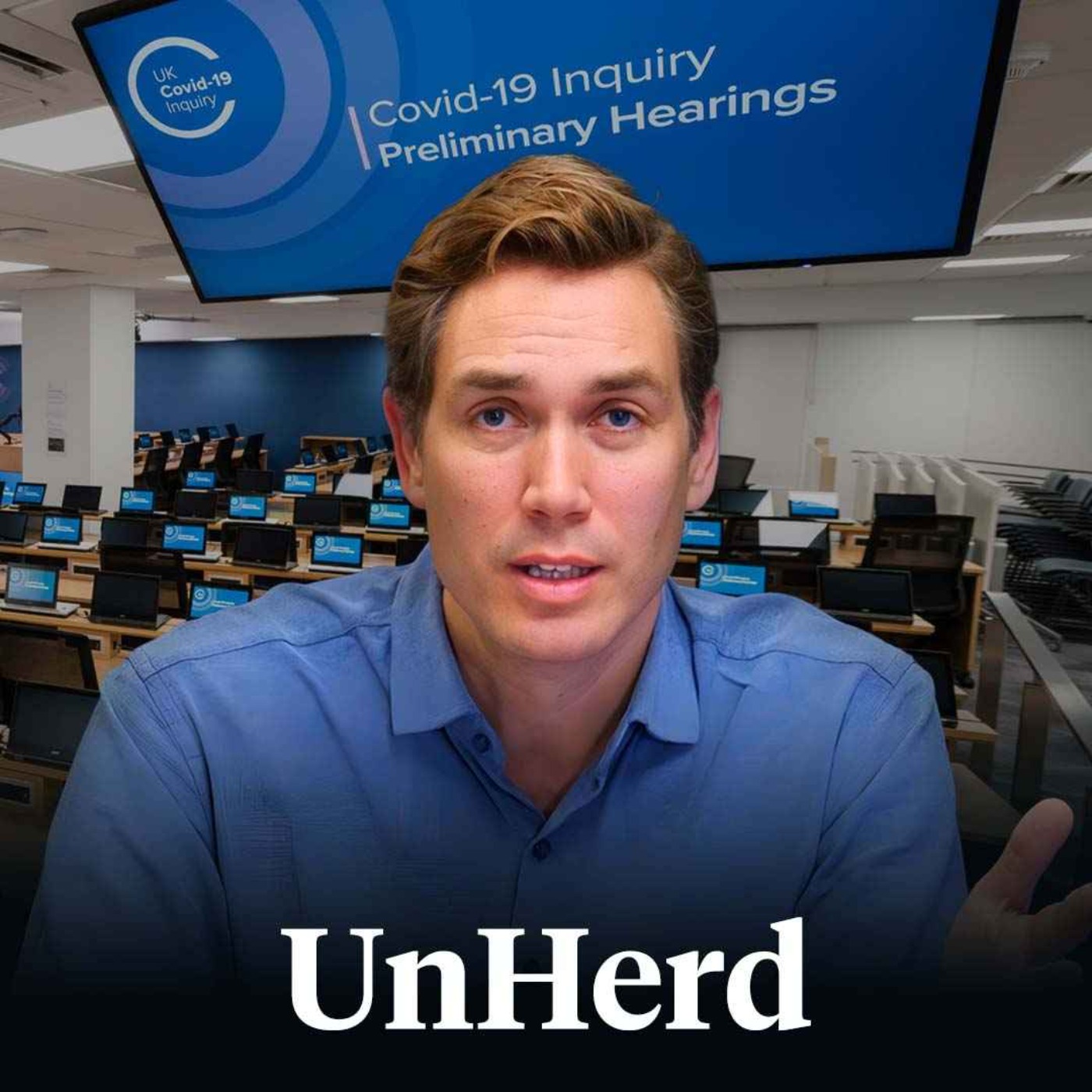
Loading summary
Transcript17 lines
- [00:00]
iHerb Advertiser
Let's be real. When it comes to your health, authenticity matters. For nearly 30 years, Iherb has quietly built one of the world's leading online wellness destinations, trusted by millions of customers in 180 countries. At iHerb, every product comes from verified top rated brands, stored, handled and shipped directly from our own climate controlled, state of the art facilities. No third party sellers, no shortcuts, just the highest standards of quality and transparency from cart to doorstep. That's why more and more people are turning to iHerb, where wellness and integrity meet. Visit iHerb.com trusted wellness delivered worldwide.
- [00:45]
Sherrell Dorsey
Hi, this is Sherrell Dorsey from TedTech and this episode is brought to you by Solidigm. The world runs on data and data relies on storage. But most businesses rarely think about how crucial that storage really is. The truth is it's no longer just a commodity with new demands and constraints, especially from AI. The old ways of managing data are holding innovation back. Solid state storage from solidigm is changing that. It helps reduce energy use, shrink physical footprints and accelerate data at the edge, unlocking more from your AI infrastructure. Learn more at whatsthestateofyourstorage.com.
- [01:23]
UnHerd Host (possibly Freddie Sayers)
Foreign. Welcome back to UnHerd. We're going to do a bit of a special double episode this week because the enormous report into the UK's response to COVID 19 has dropped. 800 and something pages of it dropped yesterday and I've spent much of last night wading through its disappointing, might even say catastrophic conclusions. And first of all, in part one, I want to do the unusual thing for this channel of sharing my own reflections because there's quite a lot to say. And then in part two, I'm going to bring on an old friend of the show, Professor Sunetra Gupta, who was very much part of that Covid experience with us. So this is a two parter and we'll start with my reflections and then we'll be joined by Sunetra Gupta to look in some more detail at some of the findings.
- [02:24]
Charles Stanley Wealth Management Advertiser
Before we start this episode, a brief word from our sponsor, Charles Stanley Wealth Management. The economic tumult of the past month has forced many people to take another look at their finances and whether their retirement plans are on track. This is where having an experienced wealth manager can make all the difference, because it's not just trying to hit a number, it's about planning the life and lifestyle that you want to lead. Charles Stanley Wealth Management can help you chart your financial course, guiding you on when you can retire comfortably, as well as how best to pass on your wealth to the next generation. Unless you're planning to spend it all, discover how partnering with a dedicated wealth manager can let you focus on what matters most. For more information, visit charles-stanley.co.uk today to schedule a free no obligation call to discuss your situation. And remember, investment involves risk.
- [03:10]
UnHerd Host (possibly Freddie Sayers)
If you've been following the news, you will have seen that yesterday the British government published the biggest central chunk of its COVID 19 inquiry report. Over 800 pages. The cost was over 200 million pounds. There were hundreds of witnesses called over multiple years. This is the big verdict. This is the British state examining itself, looking for failures, trying to work out what it should do in a similar scenario next time. And I'm sorry to say, the conclusion to me is completely bewildering. If you've been following this channel for a while, you will know that the COVID 19 pandemic, those horrible years of 2020 and 2021, were really a core part of this channel's evolution. We brought on experts from across the fields, we brought on people who were extremely in favour of the lockdowns. We had, in fact, the last ever interview that Professor Lockdown Neil Ferguson ever did was with us, that was in March of 2020. I think if you go to his Twitter profile, you will see that it's his very last tweet. Hanging there like a kind of ghostly presence is the interview he did with me. This was just as the country was going into lockdowns and I was quizzing him and saying, well, professor, how are we going to get out of this? Have we really thought about it? What are the implications? What are the secondary effects? And I didn't feel that impressed, I must confess, with his ANSWERS Back in 2020, we had Devi Sridhar, the now famous professor of global public health at Edinburgh University, Susan Mickey. All of these characters who were absolutely core to the lockdown argument, they all came on unheard. But we also had the principal opponents. We had Carl Hennigan, Sunetra Gupta, Jonathan Sumption, Anders Tegnell, Johan Giesecker, Anders Tegnel, who was the Swedish head of the health agency, his boss. In fact, that video we did with him in, I think it was, yeah, spring of 2020 blew up. It did nearly 2 million views and suddenly we had at that moment a real discussion. And I will always be proud of the work we did during that weird time, because it feels like people like the BBC, mainstream newspapers, pretty much the legacy media all around the world just bought into a kind of single narrative and felt it would be somehow irresponsible to question it during those frightening times whilst we kept our sanity and we had people from all sides of the argument and we interrogated them. By no means, by the way, was I an anti lockdown campaigner or, you know, fundamentalist. During COVID I was very tough with Johan Giesecke. We brought him back. This is the Swedish agency chief. We brought him back a year later and quizzed him on the second wave in Sweden and how bad that was and what failures they had done. And I've been really, really careful to constantly self inspect, reassess, make sure that I wasn't joining a new anti lockdown herd and that I was staying intellectually open about what the wise course of action would have been during that horrific period. But I've got to tell you that after the five years we've had since, I have come to a pretty firm view and I'm not hiding it. And I think very frankly that lockdowns were a huge mistake, that they may come to be viewed in the longer arc of history as one of the great self destructive errors of civilization. When we look at the results of this inquiry, I just find it incredibly depressing and really disgraceful that we should spend £200 million and go through all of this and come up with such a timid and group think based conclusion as yes, it's all over the front pages. If only we'd locked down earlier. That is basically the headline finding of this pandemic. I'm looking here at the Times front page. It says Inexcusable pandemic delays cost 23,000 lives. We'll be coming back to that claim. The Guardian. Too little too late. Tory response to Covid crisis damned in report and so on. So that is the finding after all of that time and all of that money. And yet the biggest, most important questions were not asked. The intellectual arguments underpinning that conclusion are weak. And we're going to bring on in the second part of this show Professor Sunetra Gupta, one of the original dissidents from within the scientific community and see what she has to say, because her name crops up a couple of times in this report. But first I just want to share some of my thoughts with you. The first thing missing from this whole investigation, this inquiry, this report, is any attempt to calculate what the negative impact of so called lockdowns was on our society. It is basically missing, there are a few sentences and I stayed up late last night reading through as many of those 800 pages as I could but all I could find were a few SOPs, a few sentences here and there talking about the pain of lockdown, the impact it had on children. But basically the central finding is we should have had more of it. So the underlying direction, the underlying energy is all in favor of lockdown. Nowhere in this huge exercise, with all of those witness statements and experts and time and money spent, nowhere is there an attempt to calculate the other side of the equation. What did we lose by inventing for the first time in world history, an attempt to shut down all of society for a prolonged period of time? There were very few attempts at the time to work out what the secondary effects of that would be. And it seems like even now, five years later, we can't bring ourselves to do it. My suspicion is that the conclusion, were we to take that exercise, would be so horrific and it would show such a unnecessary and self defeating mistake that we couldn't kind of handle it. The errors, the unanimity at the time was so widespread. We had the government, which was conservative at the time, the opposition, Labour, everybody just arguing for more and more lockdowns, all of the media pretty much in unison, in lockstep. So to reach a conclusion now that they had all collectively made a disastrous error of judgment is just too big. They cannot get their heads around it. And so instead we get this face saving, basically fake conclusion that actually is really dangerous because it sets us up for similar mistakes in the future. Where is the attempt to calculate the impact on children of closing schools and ruining young people's education and whole life for over a year, year and a half, on and off the swathes of children who left the school system and never returned estimates, between 100 and 200,000 children in the UK just went missing from the state school system. Where's the cost of that measured in all of this? Where is the cost of the destroyed lives that may technically have been prolonged, but older people who formerly, before lockdown, had vigorous, full, meaningful lives, and then after that having been shut in their homes and repeatedly told they were vulnerable people for a year and a half, then either died subsequently or just never managed to rediscover their vitality, where's the cost of that that doesn't feature in this report. Where is the cost of people missing from work? The charts of numbers of out of work people claiming benefits for illness, mental health difficulties, those kinds of things are staggering because hundreds and hundreds of thousands of of people never came back to work. So the injury on that whole generation, not just children, is really very hard to Quantify not only the economic cost of those people not being part of the workforce, but the cost to their sense of dignity, the cost to society generally of just telling so many people that they were ill, that they never managed to come back. I mean, where is the cost of that? Where is the cost of the societal change? I mean, think about the fast forwarding effects of encasing, entombing an entire generation of people in their homes for over a year. Pretty much think of the effects of that on society. It fast forwarded people's addiction to technology. People started meeting by zoom and not coming in together, not being human beings together in the same room. People left the office. They decided that working from home was actually the way to conduct society. And cities have never been the same. I visited San Francisco. There are all sorts of cities across the United States that have really never recovered from the hollowing out that happened during lockdowns and all. I believe the political tensions that we're experiencing at the moment, that widespread sense of distrust, the alienation, the sense that somehow the authorities are not on your side, all of that was fast forwarded, doubled, tripled through the lockdowns because suddenly the people who were supposed to be in charge, the people who were supposed to be responsible and looking out for us, the people who, who we were told were the well credentialed, sensible experts who would take prudent and cautious decisions collectively and in a space of weeks invented a whole new policy, this thing called lockdown. It came out of China. We know that this is a communist centralized state which has an extraordinary amount of control over its people. They invented this concept called national lockdown. There were reports that people were even welded into their homes. I don't know how true that is, but certainly cages were built. People were not allowed to leave their buildings. It was an extraordinary mass incarceration of people. And I remember very clearly thinking at the time that could never happen. Here we have liberalism and freedom baked into our bones. We are a mature, sophisticated, confident society with hundreds of years of freedoms that we will not surrender. So I looked at what happened in China in February of 2020, and I thought, not a chance that will come to Europe or the West. How wrong I was. Because Italy, where they had a bad outbreak of COVID 19, suddenly set the tone. They decided that they were going to lock down this province in northern Italy. And then it spread to the whole country. And suddenly it became this competitive, almost virtue signaling exercise where different governments that were being endlessly compared against each other in the pages of the Financial Times and other kinds of newspapers were competing to see who could be most stringent, who could go the furthest on lockdowns. And somehow that was a sign of virtue, that was a sign of being responsible. Whilst actually I believe we now know for sure that the opposite is true. And what about the effects on the public finances? I mean the sheer cost of paying people to stay at home of hundreds upon hundreds of billions of pounds in the UK that are now added to our national debt, that are saddling future generations with almost impossible to repay debts. There was actually a quite hopeful political moment at the end of 2019. It feels like a lifetime ago now, where Boris Johnson had won that election. He had pulled together an unusual political coalition in December of 2019. There were the so called Red Wall voters that had decided to lend their votes to the Conservatives. He was going to finally move on from the Brexit impasse that had been kind of locking the country for years. And his big idea that he had promised the electorate was to spend more money on things like infrastructure. He called himself Brexity. Hessa. That was a joke, referring to Michael Heseltine, who was basically a left wing Tory who wanted to spend more government money rebuilding cities, building trains, building infrastructure. It was the so called levelling up program that now feels almost absurd to use because it happened in the before times, before COVID But there was that hopeful moment and it could have led to really good things. This country could be in a much better place had the disasters of 2020 not taken place in the way that they did. And chief among them is that between 300 and 400 billion pounds sterling was spent on countering Covid, which just dwarfs any kind of public policy that anyone has ever attempted in the history of the country. The number is bewildering. It adds a big chunk onto our permanent national debt. And suddenly after that the there was no money. So any hope to invest in the country, to fix problems, to bring people together, was instead squandered. And the trust that people had placed in that government was completely destroyed by the disasters that followed in 2020. So what are the costs of all these things? How can we have a public inquiry that is supposed to answer the most important questions of what went wrong during that fateful year and not include within its terms, within the scope, the questions that matter most to the future of the country? In other words, was it actually a good decision to shut down all of society for the first time in world history, or was that actually an incredibly reckless, made up, never before tried policy that has now produced secondary effects that have meaningfully weakened the west, our country, countries across Europe and have made our futures less hopeful. That is the inquiry that I think we actually need and that is completely missing from these pages. There's another thing that is missing from this so called Covid inquiry report and that is any serious discussion of Sweden. Now if you are a long term fan of this channel, you will know that I am half Swedish and part of the reason during that fateful year of 2020 that I was alert to a different possibility is that I have family and friends in Sweden who I was talking to and I knew that that we were in this strange eerie lockdown where society had stopped and businesses were shuttered and everybody was staying at home and we were just kind of freewheeling week after week and Sweden had not done that and yet it was fine.
- [19:54]
iHerb Advertiser
Let's be real. When it comes to your health, authenticity matters. For nearly 30 years, Iherb has quietly built one of the world's leading online wellness destinations trusted by millions of customers in 180 countries. At iHerb, every product comes from verified top rated brands, stored, handled and shipped directly from our own climate controlled, state of the art facilities. No third party sellers, no shortcuts, just the highest standards of quality and transparency from cart to doorstep. That's why more and more people are turning to Iherb, where wellness and integrity meet. Visit iherb.com, trusted wellness delivered worldwide.
- [20:40]
Sherrell Dorsey
Hi, this is Sherrell Dorsey from TED Tech and this episode is brought to you by solidigm. The world runs on data and data relies on storage. But most businesses rarely think about how crucial that storage really is. The truth is it's no longer just a commodity with new demands and constraints, especially from AI. The old ways of managing data are holding innovation back. Solid state storage from solidigm is changing that. It helps reduce energy use, shrink physical footprints and accelerate data at the edge, unlocking more from your AI infrastructure. Learn more at whatsthestateofyourstorage.com hey, Ryan Reynolds.
- [21:16]
UnHerd Host (possibly Freddie Sayers)
Here wishing you a very happy half off holiday because right now Mint Mobile is offering you the gift of 50% off unlimited. To be clear, that's half price, not half the service. Mint is still premium unlimited wireless for a great price. So that means a half day. Yeah, give it a try@mintmobile.com Switch upfront.
- [21:38]
iHerb Advertiser
Payment of $45 for three month plan equivalent to $15 per month required new customer offer for first three months only. Speed flow after 35 gigabytes of networks busy taxes and fees extra.
- [21:44]
Martha Stewart
See mint mobile.com the holidays are about giving something truly special. I'm Martha Stewart and I believe the best gifts aren't just beautiful, they're useful every single day. Lennox has brought timeless beauty and lasting quality to our tables for generations. And their Lenox Spice Village is the perfect holiday gift for someone you love or for yourself. It's more than a spice rack. It's a charming collection of hand painted houses that turn ordinary spices into extraordinary experiences. Imagine cinnamon from a tiny Victorian cottage or oregano from a pastel townhouse. Suddenly a simple meal becomes a moment to savor. Because spices can be more than ingredients. They can inspire memories, warmth and joy all year long. Give a gift that lasts beyond the holidays. Discover the collection@lenox.com SpiceVillage.
- [22:47]
UnHerd Host (possibly Freddie Sayers)
So I saw the counterexample and then I went. As soon as we were able to get on an airplane to Sweden in the very early summer, late spring of 2020, and it was like going to a parallel universe, leaving this very fearful place where people were obsessed with track and trace widgets and how many people were allowed to gather and bubbles and all of that horrific nonsense that we endured through that period. And then I went to Sweden and none of that was happening. There were various restrictions, it's true, and there was a general sense that caution was advisable, but people were free to make their own decisions. At no stage did Sweden impose a lockdown and it's actually one of the only countries in Europe that never did that. So when people say, oh, we don't have evidence of a counterfactual, we don't know what might have happened had we taken a different course. That's actually not true because those lockdown policies during 2020 and 2021 really resembled something like a scientific experiment between different countries. All of them had different versions and different kind of different stories, but similar or different policies. They were all very carefully compared by the media all the time. And there were controls, the control group, as it were. The counter example was Sweden because uniquely in Europe it never imposed a lockdown. Now we're five years later and the numbers are in. I'm going to put a chart if you're watching on the YouTube on the screen. This is the excess death numbers for Sweden and comparable European countries. If anything matters, surely it is deaths we don't even need to include. The things that I was talking about earlier, the destruction of quality of life, the introduction of paranoia, the destroying of centuries held cherished liberties, put all of that to one side and only focus on deaths. And the fact that as you can see, Sweden comes at the very bottom of the mortality chart after that two or three year period has elapsed is the single most important table. This is the only chart really that matters and it is absent from the British government's Covid inquiry. It's not there. Can you think of a single more impactful or persuasive data point? You have all the countries in Europe and only one of them never does a lockdown. And then by total coincidence, three years later, it has fewer dead people per capita than any other country in Europe. I mean, I can't think of a rationally, logically, more persuasive single data point than that. Because you can argue about, oh, societies are different or cultures are different, or the viruses were introduced at different times or whatever. Add them all together in aggregate and what you get is that fewer people died in Sweden relative to normal than in any other country in Europe. Now that's one hell of a coincidence if it also happens to be the only country in Europe that never had a mandatory lockdown. And the fact that that piece of information is missing from the 800 page Covid inquiry that cost 200 million pounds is frankly a disgrace. It amounts to a kind of gaslighting of the British people that we are not allowed to talk about. The single most important counter example that is just across the North Sea from here, there's another chart that you can look at which basically says a very similar story. Cumulative age, standardized excess mortality. So that means similarly, how many people more than usual died? Add them up over time and does the line go up or go down? And here on this chart that I'm looking at, we've plot Sweden against England and Wales, Scotland and Northern Ireland, the different nations, each of which had their own slightly different regimes during COVID And the story is very clear. From 2020 to 2025, the year we're still in cumulative age, standardized excess mortality gradually went up in England and Wales and in Scotland and in Northern Ireland and in Sweden, it gradually went down. So five years later, the story is stronger and more compelling than ever that those secondary effects, those long tail effects of those lockdowns which clearly represented themselves in the years after Covid. People missing treatments in hospitals, people's quality of life having deteriorated, their maybe even wish to stay alive having been removed from such a long period of incarceration, all of those complex factors, they basically wash out in this chart and it's not there, it's not Even in the report, it's worse than that, actually, because not only is the key information missing about Sweden as this incredibly powerful and important counterexample, but the bit within this report that does cover Sweden tries to tell the opposite story. There was so much motivated reasoning during the pandemic, so many clever people trying to cover their tracks, trying to find kind of opposite rhetorically confusing strategies to hide the fact that some of their pro lockdown fundamentalism was a mistake. And that's completely seeped into this report because one of the key things people like to say about Sweden is, oh no, they did have a lockdown. They like to say, ah, well, the anti lockdown crowd like to say that Sweden never did have a lockdown, but actually, if you look at mobility data, people were moving around a lot less. So their lockdown was still there, but it just wasn't mandatory. Okay, well, actually the conclusion of those pieces of data should be that you didn't need to make it mandatory and we should never have done that. I'm saying that by the by, but that's what one intelligent conclusion of, of that fact would be. But the more important one is that it's just not true. I mean, I was there, I went there. I can tell you it was a completely different environment. Restaurants were busy, people were out and about, society was continuing in Sweden in a way that it was not in the UK. And the only quotes from Dr. Anders Tegnell, the head of the Swedish Health Authority, who is to my mind a hero for sticking to the line despite incredible pressures during that period. The only line they include in this report is a very convenient one where he says, quote, the myth that Sweden did nothing during the pandemic is false. This report is actually joining the group that want to try to pretend that Sweden had some kind of lockdown and therefore we should dismiss it as a counter example by seizing on those quotes from Anders Tegnel. To me, that's a real, it's a low trick and it's depressing to see in this report. There's a few passages that I want to pull out from these 800 pages. I've done my best to wade through it for you. There's a lot more that could be said about it. I mean, in particular, the hundreds of pages dedicated to the sequence of events and decisions that led to lockdown. And, you know, the characters that emerged from that story, including people like Dominic Cummings, are really quite something and we could devote a whole episode to that. But the, the extracts that I want to share with you today are really just to give you a sense of the mentality behind the authors of this report, I want to start with the actual introduction, the very first paragraphs in the report, and as I was reading them last night, my heart sank. It killed millions of people. This is talking of the COVID pandemic. It killed millions of people worldwide and infected many millions more. As at March 2024, the World Health Organization stated that there had been more than 774 million confirmed cases and over 7 million deaths reported globally, although the true numbers are likely to be far higher. So statement of fact you may say, but quite notable in those very first sentences of the report, that the World Health Organization is the organization they defer to for unambiguous or unquestionable facts was actually the record of the World Health Organization throughout the COVID pandemic is very poor. Most people who were paying close attention during that period would agree with that, I think. So it doesn't feel right just to refer to them as an authority just because they stated something. And the fact then that they say although the true numbers are likely to be far higher, it also completely ignores the debate that was raging throughout 2020, 2021, 2022. This whole question of deaths from deaths with how many people were recorded as dying from COVID who actually died of other causes? We know that they were included in the official statistics. If they had Covid at the time of death, they then counted as dying from COVID 19. This was a big confusion. Whole hospitals were infected with COVID and anyone who died in them were then recorded as a COVID death. So I'm not claiming to know the extent of that effect, but to state in the very first sentence of a report, although the true numbers are likely to be far higher without any evidence or without any reference to that raging controversy that was talked about among the top experts for years shows just how narrow minded and motivated this report is. Because it's only interested in one direction. The next paragraph. The impact of the disease did not fall equally. Research suggests that in the UK mortality rates were significantly higher among people with a physical or learning disability and people with pre existing conditions such as dementia and Alzheimer's disease, heart disease, high blood pressure and diabetes, people from some ethnic minority groups and those living in deprived areas had a significantly higher risk of being infected by COVID 19 and dying from it. What about the age differential? Is that not quite a strange thing for the second paragraph of your 800 page report to talk about how the impact of the disease did not fall equally and and to focus on people with physical or learning disabilities and ethnic minority group differentials, which I'm sure were observable. But the overwhelming the only differential that really made a huge difference, the one that was just incredibly dramatic and should have driven our sense of how to respond to this disease, was the fact that people were 10,000 times more likely to die of COVID if they were old than if they were young. Deaths from COVID among young people were very, very, very, very rare, while deaths among the very oldest people were much more common. That should have been the founding differential when we talked about how as a society to respond to this. And yet it doesn't even get a mention in that paragraph. This kind of obsession with ethnic minority group differences and those living in deprived areas. Yeah, that's interesting and it's important, but that's not the factor that to me indicated already in the first two paragraphs that this is a report absolutely marinated in a sense of what the kind of high status group think orthodoxies were and that the author was not planning to deviate from them. When we get to the as it were business end of the of this report, the really important bit where the author is saying what do we do wrong? What should we do differently? The direction of travel is really, really worrying and you feel like we're about to reach the wrong conclusion, which in the end we do. There's a lot of talk about how the 2011 strategy, which is the previous government plan for how to deal with a pandemic, very similar by the way, to what the plan was in Sweden. They stuck to theirs, we didn't stick to ours.
- [36:17]
Sherrell Dorsey
Hi, this is Sherrell Dorsey from TedTech and this episode is brought to you by Solidigm. The world runs on data and data relies on storage. But most businesses rarely think about how crucial that storage really is. The truth is it's no longer just a commodity with new demands and constraints, especially from AI. The old ways of managing data are holding innovation back. Solid state storage from solidigm is changing that. It helps reduce energy use, shrink physical footprints and accelerate data at the edge, unlocking more from your AI infrastructure. Learn more at whatsthestateofyourstorage.com A lot of.
- [36:52]
Momentous Supplement Advertiser
Supplement brands chase trends, but if you're serious about your health, we know research backed science is what actually moves the needle. Momentous works with the best brains in human science to create every formula and and every batch is made of pure ingredients tested for safety and does not contain fillers. So you get the best long term results possible. Creatine isn't just for muscle gains. It's essential daily fuel for your brain, body and long term performance. Momentous Creapure Creatine is backed by leading performance experts like Dr. Andrew Huberman and Dr. Stacey Sims. Sourced exclusively in Germany, Creapure sets the gold standard for creatine, delivering the purest form creatine monohydrate that's rigorously washed and and never cut with fillers. With over 2,000 five star reviews, over 112,000 customers have seen the results firsthand with Momentous. The fundamentals are done right. Right now Momentous is offering our listeners up to 35% off your first subscription order with promo code Acast. Go to livemomentous.com and use promo code Acast for up to 35% off your first Subscription Order. That's livemomentous.com promo code Acast.
- [38:03]
UnHerd Host (possibly Freddie Sayers)
The critique of that strategy is that it didn't include the option of trying to prevent the pandemic completely. In other words, it was inadequately ambitious. It was insufficiently draconian in its scope. That is the conclusion of this report. So it says I reading here that mitigation, which is as it defines it here, the use of limited but effective interventions, that word if you remember, from 2020, to delay the peak of an epidemic wave and reduce its size, that is trying to control society to try to stop the spread of a virus suppression as it describes it here, one stage further, it is a strategy to bear down so hard on the incidence of a virus that it's exponential spread can be reversed, keeping a large proportion of the population from being infected, at least temporarily, that is Lockdowns. In other words, these were things that this report says were missing from the earlier strategy and therefore should be included in future strategies. So instead of rejecting the idea of these so called non pharmaceutical interventions and things like lockdowns, this report actually endorses them and says we want more of them. Quote One of the potential answers was non pharmaceutical interventions. These ranged from advice to wash hands regularly to at the most extreme what are now referred to as lockdowns. Legal prohibitions against what otherwise would be lawful activity for the purpose of limiting the spread of the virus. We then get to the absolutely crucial section. This is item number 4. 22. The inquiry accepts that the imposition of a lockdown should be a measure of last resort. Indeed, there are those who would argue that a lockdown should never be imposed. Sort of acknowledgement there that there is a different view but those who would argue are obviously not the authors of this report. However, for as long as they remain a possibility, lockdowns should be considered properly in advance of a novel infectious disease outbreak. There should be consideration of the interventions that can and should be deployed to prevent a lockdown, but also of the circumstances in which a lockdown may become necessary. There should be adequate planning as to which aspects of legal coercion to protect the public may be used and transparency about what the government intends to do in the event of a health emergency. This is endorsement and an attempt to formally wire in lockdowns as a normal continued strategy when dealing with health emergencies. This is incredibly dangerous and to me incredibly disappointing that that is the conclusion. We then come to a passage that you may have read quoted already because it led to a lot of the front pages. The inquiry recognises that the lockdown decision was as difficult a decision as any UK government or devolved administration has ever had to make. However, the inquiry accepts the consensus of the evidence before it that the mandatory lockdown should have been imposed one week earlier. Had a mandatory lockdown been imposed on or immediately after 16th of March 2020, modelling has established that the number of deaths in England in the first wave up until 1st of July 2020 would have been reduced by 48%, equating to approximately 23,000 fewer deaths. Now that paragraph to me is a real head in hands moment. The credulous simplistic reference to models right down to a percentage point accuracy, 48% difference, had we done lockdown a week earlier is a kind of. It's just a kind of sophomoric mistake. And you can't believe that after all this work, that's the thing that is producing the headlines, 23,000 fewer people would have died. Says who? A few modellers who made absolutely catastrophic errors in all other attempts to model during that period. Those same people we're now going to believe to the nearest thousand to the nearest percentage point. And we're going to use that as the basis to decide our future pandemic policy. And then of course there's the fundamental underlying logic of what would we have gained by going into lockdown one week earlier? If you believe as I do, and as our guest Sunetra Gupta does even more so, that the virus was well established in the population before lockdowns were introduced. It was too late to eliminate the virus, it was too late to try and do a New Zealand. By the way, that didn't work out so well come the reopening. But there was no option. For the uk, with its largest transport hub in Europe and its diverse, very mobile population, there was no option to be a virus free zone. It was already too late. It was too late by the time we knew about it. So the idea that actually the wise course of action back in those early days was to rip up our previous pandemic policy quicker and rushed to a mandatory lockdown and closing the borders at the very first news out of China that there was a virus. It's just a fantasy and it's incredibly dangerous because it inverts the so called precautionary principle. You hear this a lot. Oh, we should have followed the precautionary principle and therefore locked down harder, sooner. Well, we didn't know very much. The opposite is surely true, which is that if you believe in the precautionary principle, don't rush to a new policy lockdown that has never been tried before, which involves shutting down all of society, keeping people in their homes, closing businesses, schools, institutions, places of worship and destroying your society, because probably there'll be very grave secondary effects of doing that. In other words, that's the reckless option. That is the one that tears up the precautionary principle. Not waiting to see and seeing what a more light touch approach would have been. There's one more section of this Covid report that I want to share with you before we welcome Sunetra Gupta to the show. And it's a passage entitled Groupthink and this one actually made me laugh out loud. There were quite a few moments as I was reading this 800 page report that I sighed or put my head in my hands or groaned and thought, oh my gosh, we've learned nothing in the last five years. But there was only one that actually made me laugh and that was a section called Groupthink. And it starts like when asked to identify what might have caused some of the flawed thinking behind the UK's pandemic planning and preparedness and therefore the advice offered many witnesses who gave evidence to the inquiry blamed groupthink. This is a phenomenon by which people in a group tend to think about the same things in the same way. Then goes on to detail how we should try to combat group think by including so called red teams to challenge consensus. And by the way, that's actually a good idea. One of the very few good ideas in this report. But what is so hilarious here is that the implicit suggestion is that the groupthink led to the error. The error was that we didn't lock down sooner and therefore we were suffering from a kind of anti lockdown groupthink. Yeah. This report genuinely implies that during the COVID period, the herd mentality that was dominating the discourse was insufficiently pro lockdown, that the group was kind of anti lockdown. That was where the mainstream was and they didn't have enough dissenting views that might have helped kick the country into lockdown sooner. I mean, to me this is. It's so far from reality that it's just staggering. I mean, if only there had been a few brave souls who had spoken up against the groupthink and said, no, lockdowns are a good idea. I mean, the entirety of the establishment was pro lockdown. There was a competition between different political parties, including all the mainstream parties, between different parts of the media, including the BBC, all of the newspapers and most of the television channels. Pretty much everybody was strongly in favour of it. And the only question that was asked throughout that pandemic period was why are we not locking down sooner? Why are you not going harder? Why are we not still in lockdown? Why are you releasing us? That was the groupthink. And it's completely evident on every page of this report. There was a sort of slavish adherence to the idea that shutting down society was a good policy. That was the group think. And yet the report criticizes groupthink as part of the reason why we made the mistake of not locking down sooner. And you just. It's almost hard to comprehend how the authors of this report could have reached that conclusion. But that is where we are. And that, I think, is a good moment to end part one of this broadcast about the COVID 19 report that dropped this week from the British government. That is enough from just me if you've got to this point in the program. Thanks for coming with me on this journey. It's a bit like a kind of therapy session to go over these horrible points that we spent so much time arguing about. I feel like there's a surging PTSD here of rediscovering the traumas of 2020, but it does feel worthwhile because the conclusions that are being reached to me are so dangerous and so wrong. In part two, we'll be joined by Professor Sunetragupta. Please join us there. But for now, thanks for joining. And this was unheard of.
- [48:31]
Sherrell Dorsey
Hi, this is Sherrell Dorsey from TED Tech and this episode is brought to you by solidigm. The world runs on data and data relies on storage. But most businesses rarely think about how crucial that storage really is. The truth is it's no longer just a commodity with new demands and constraints, especially from AI. The old ways of managing data are holding innovation back. Solid state storage from solidigm is changing that. It helps reduce energy use, shrink physical footprints and accelerate data at the edge, unlocking more from your AI infrastructure. Learn more at whatsthestateofyourstorage.com Indulge in holiday.
- [49:07]
iHerb Advertiser
Cravings with the nutrition you need from Cachava's all in One Whole Body Shake. It's 25 grams of protein, 6 grams of fiber, greens and so much more. Try their newest flavors, like the limited edition Chocolate Mint with Kachava. You're getting the highest quality ingredients. No fillers, no nonsense. Holiday nutrition has never been this easy or delicious. Go to kachava k-a C-H-A-V-A.com and use code NEWS for 15% off.
- [49:38]
Charles Stanley Wealth Management Advertiser
Treat a freethinker in your life to one year of unlimited digital access to UnHerd. For just $48.50 with a digital subscription, they can read any every unmissable article from our star columnists, watch all of our amazing events and video interviews, and join the debate with other subscribers. They can also download the Unherd app to get the whole world of Unherd from wherever they are. I think that beats the old pair of socks, don't you? Go to unherd.com gift to claim this very special offer.