← UnHerd with Freddie Sayers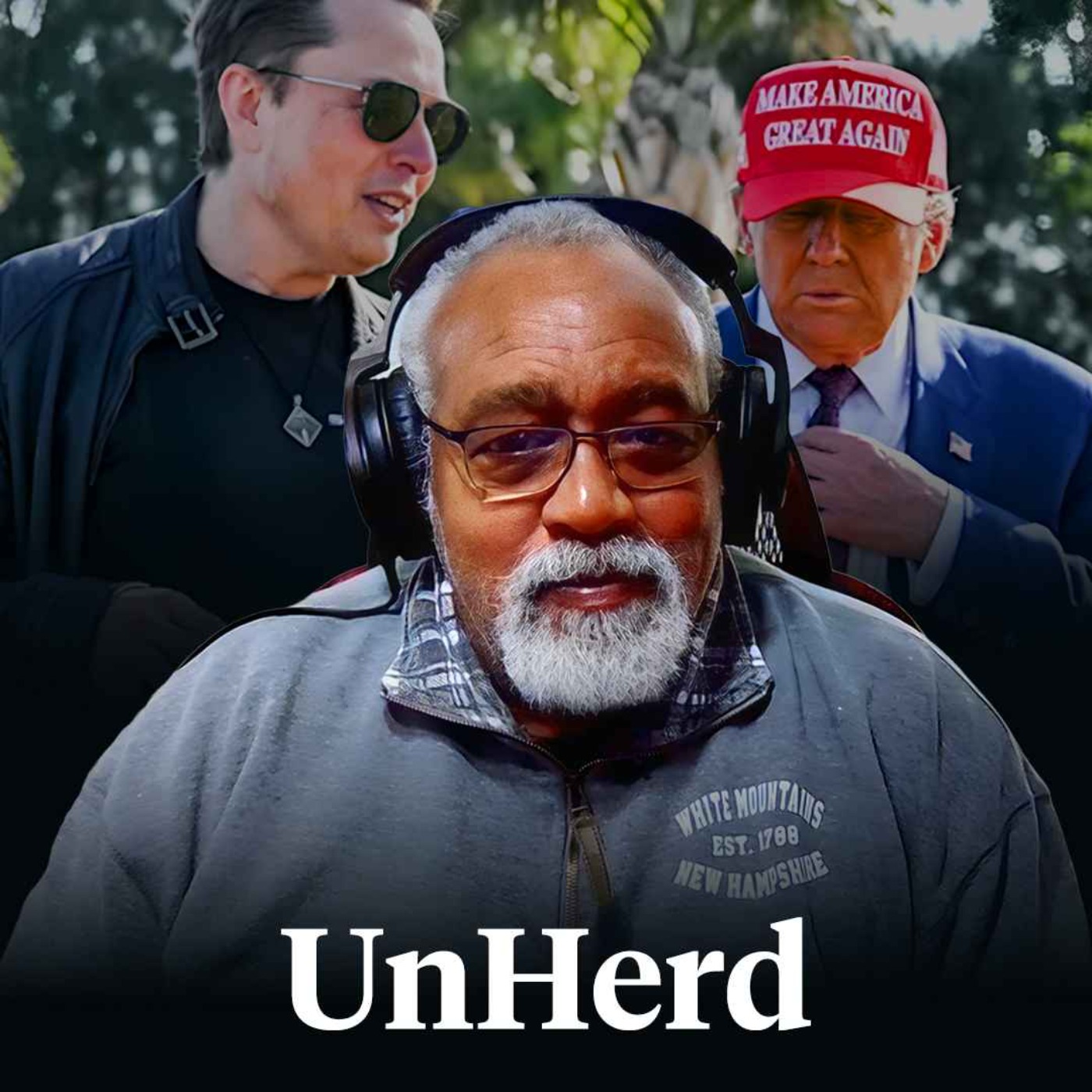
Loading summary
Transcript90 lines
- [00:00]
Raj
Hey, it's Raj and Noah.
- [00:02]
Noah
And we're back with a new season of Am I Doing It Wrong? The show that explores the all too human anxieties we have about trying to get our lives right.
- [00:08]
Raj
Because we're still doing a lot of stuff wrong.
- [00:11]
Noah
But who isn't? That's why each week we're talking about the topics that we could all use a little helping hit with. Whether it's making new friends as an adult, managing our emotions, or even dreaming.
- [00:19]
Raj
We'Ll be talking to experts in their fields who are definitely doing things right. So the rest of us can be a bit wiser and a lot better equipped to handle whatever life throws at us.
- [00:28]
Noah
Subscribe now and listen to new episodes of Am I Doing It Wrong? Dropping every Thursday starting January 1st, wherever you get your podcasts.
- [00:36]
Raj
And for the first time ever, we're gonna have full video episodes on YouTube. Because as long as there are things to get wrong, we're gonna be right here to help you do them better.
- [00:44]
Mint Mobile Advertiser
Love y'.
- [00:45]
Freddie
All.
- [00:46]
Mint Mobile Advertiser
Well, the holidays have come and gone once again, but if you've forgotten to get that special someone in your life a gift. Well, Mint Mobile is extending their holiday offer of half off unlimited wireless. So here's the idea. You get it now, you call it an early present for next year.
- [01:01]
Freddie
What do you have to lose?
- [01:02]
Mint Mobile Advertiser
Give it a try at mintmobile. Do/switch.
- [01:05]
Mint Mobile Terms Announcer
Limited time, 50% off regular price for new customers. Upfront payment required $45 for 3 months, $90 for 6 months or $180 for 12 month plan taxes and fees. Extra speeds may slow after 50 gigabytes per month when network is busy see terms.
- [01:23]
Freddie
Hello and welcome back to Unherd. Professor Glenn Lowry is one of the United States most eminent professors of economics and and social science. He was the first tenured black professor at Harvard University at the tender age of 33. Was famous throughout the late 80s 90s, 2000s. Thought often as a conservative minded a commentator on matters of economics and social science. Since what we've been calling the Great Awokening of 2020. He's also been very vocal calling out identity politics. He was considered by the New York Times as conservative leaning even just a couple of years ago on that basis. And yet today in a really important intervention, he is talking about what he's seeing as the new identity politics of the right, in particular encapsulated by the world's richest man, Elon Musk. He joins us right now to talk us through it. Professor LARRY welcome to Unhers.
- [02:22]
Professor Glenn Lowry
Thank you Freddie. Good to be with you.
- [02:25]
Freddie
You also have a fantastic YouTube show, the Glen show, which if people enjoy this conversation, they should check out.
- [02:31]
Professor Glenn Lowry
I'm glad you told them.
- [02:32]
Freddie
Let's just start by reading a couple of these tweets and then you can tell me what your thoughts were. Just to put our audience in the picture. So this is from Elon Musk, the proprietor, the 100% owner of the world's largest speech platform, and this is what he chooses to put on it. That is what will happen to America, he says, quoting someone who is saying that the South African scenario is our future if we don't start remigration, which is sending immigrants home. Another tweet. Yes, he says, commenting on someone who is saying what they've managed to accomplish in South Africa is what they want to inflict on all of us. The race communism that destroyed Rhodesia and South Africa, they are bringing to America to turn us into the global favela. Some other guy says, guys, they just want to eradicate white people. It's that simple. Some people really do, says Elon Musk. And this one really most striking. An anonymous commenter says the following. If white men become a minority, we will be slaughtered. Remember, if non whites openly hate white men while white men hold a collective majority, then they will be a thousand times more hostile and cruel when they are a majority over whites, they presumably being non white people, White solidarity is the only way to survive. Mr. Musk quotes that with 100% saying he agrees with it, endorses it 100%. What do you think, Glenn? Larry, when you read those kind of.
- [04:02]
Professor Glenn Lowry
Tweets, well, if I may say so, they are very alarming. I mean, first of all, it's Elon Musk. He's the world's wealthiest man. He has, as you point out, an enormously influential platform. People listen to him. He has influence. He is a pacesetter of our time. So there's that. Secondly, Western Europe and immigration and multiculturalism. Canada, the United States, Australia, these are not South Africa. These are well ordered constitutional republics with a tradition of mediating political conflict in peaceable ways and so on and so forth. So I think there's a kind of category mistake that's being made. And looking at the unhappy, I will acknowledge post apartheid sojourn of the South African society, identifying that with race and then importing the trepidations associated therewith into an assessment of what's going on in the West. But thirdly, race is not the driving factor even in the problems in the west, the problems of crime, welfare, and so on. These are not racial problems. So there's a kind of essentialization that's going on where you identify a problem in the society, you see the demography of the society, and you attribute the root of the problem to the demographics, when in fact, broad institutions of governance and policy administration are at hand, which are not racial, which apply across the board to all of the citizens. You know, that's the kind of sentiment that I tried to bring to bear in my article of criticizing Elon Musk, who is an estimable figure, to be sure, meaning I'm not saying he's a dummy by any means, but I think this he's getting badly wrong.
- [05:54]
Freddie
Let's try and unpick that, because there's a lot in that. The first is this idea that somehow, if we're trying to understand the genealogy of how we got here, the right, instead of rejecting the identitarian politics of the left, that the movement called WOKE instead seemed to have adopted it. There's a kind of convergence that you talk about that explain that idea to us. So what you're seeing here is it's weirdly a kind of exact inverse of the WOKE left.
- [06:27]
Professor Glenn Lowry
I think I got it wrong originally in looking at the rhetoric on the right. I thought of it as a backlash. I thought of it as the identity mongers on the left overplayed their hand. The summer of 2020 here in the United States, the George Floyd riots and so on, the racial reckoning that everyone was celebrating on the left. Talk about systemic racism and white supremacy and 1619 projects, wanting to reinterpret American history through the lens of slavery and so on and so for the celebration of certain pseudo intellectuals like Ibram X Kendi, you know, anti racism being the Bible seminars and diversity training indoctrinations and so on and so forth. And I thought, well, if I were a white person and I were being subjected to that kind of thing, I might well react negatively against it. What I didn't see is the extent to which there was a real potential for many white people to not only react against the excesses of identity mongering on the left, but to embrace identity mongering on their own account, to see it as a tool of politics to normalize the emphasis on identity. And I might just add here, I think in the post October 7, 2023 environment where there's been a good deal of concern about anti Semitism, the people who are Jewish and concerned about Jewish rights are also embracing a kind of identity politics and in a robust way that is independent of a reaction against the anti racist identity politics. And I just wanted to put that on the table that we are normalizing in our politics. Identitarianism and the right, far from being an obstacle to that, are in fact joining the party with the use of this politically destructive, in my opinion, liberal political order, this politically destructive tool.
- [08:32]
Freddie
Because there was or there could have been a kind of good backlash to some of that 2020 and beyond stuff, couldn't there? I mean, you might call it a classical liberal reaction or basically a philosophical rejection of identity as the way to judge people. There could have been, in theory, it hasn't really happened, an administration coming in and saying, no, we are going to be absolutely meritocratic in the way we think about our institutions. We're not going to be choosing things based on skin color, all the rest of it. That would have been, I think, a positive development, but it didn't happen. It got sort of very quickly bypassed by this more edgy, race inflected movement. Why do you think that was? Why did the good backlash not happen?
- [09:18]
Professor Glenn Lowry
That's a good question and I'm not sure I know. I think adhering to principle, to high principle is not the first order of day to day politics, regardless of your ideological coloration. And I think the temptation to get people's juices flowing, to get them off their seats and out of their chairs, to have them feel threat, is a powerfully attractive motivation for getting people to the polls, getting them to donate money, keeping their attention. So there was a need for high minded, visionary, public spirited leadership. And with respect to the current leader of the Republican Party and the right wing politics in the United States, which I know better than I do Western Europe, we don't have that kind of leadership.
- [10:08]
Freddie
In your essay for us, you describe the reach to racial identity as a political tool as emotionally energizing and cognitively cheap. In other words, it's kind of stupid almost, but it produces, it's titillating and it gets people going.
- [10:24]
Professor Glenn Lowry
Yeah, it's on the cheap. I should say here though that I can't only blame the current political leadership on the right of American politics for the situation we find ourselves in. A person could say, and I have said on other occasions, that an opportunity was missed by President Obama, the first African American to hold the highest political office in the country, who in his very DNA embodied a kind of transracial, humanistic posture and who might have adhered to a higher ground than in fact he did adhere to in his administration of the country's political culture. Over the years from 2008 to 2016, when the seeds of 2020 were being sown, he could have taken a higher transracial posture himself. And he didn't do that. And I think that's not to his credit. So just to be fair, I think.
- [11:19]
Freddie
That'S a really important point. And also the years beyond 2016, when President Obama was very quiet, the kind of woke wave, he ducked it, he did not say, this is wrong. This is going to provoke a backlash. Although you sense from some of his interventions that he kind of saw what was coming. He didn't speak out.
- [11:39]
Professor Glenn Lowry
I've said this, and it may not be fair to Barack Obama that he was a young man when he left office with a post presidential career ahead of him that he hoped to enjoy quietly with his lovely wife Michelle, and that taking the tack that you've just hinted at would have cost him plenty in terms of his reputational standing with the constituency that he perhaps is most interested in cultivating.
- [12:03]
Freddie
Let's get back to Elon Musk then, because the thought that you've shared with us is such an interesting one. I think we need to really understand it, which is that Elon Musk is actually, let's not forget, an immigrant to the United States. He was born in Pretoria in South Africa. And in a sense, he is importing the culture of his birth country with its very particular view of race, which is very much a South African way of seeing things. He's importing it into the United States by his own kind of rhetoric. You could say he is failing to assimilate as an immigrant.
- [12:41]
Professor Glenn Lowry
So it seems to me, I hadn't quite thought of it in terms of Musk assimilation, but I do see the importation problem. And, you know, South Africa is a historical phenomenon of its own more or less unique character. And, you know, there was a racial fight over the control of the state, which was resolved to the disadvantage of white South Africans. And the consequences of that, as I said already said, could be judged to have been less than entirely desirable and positive. That's a fact about South Africa, but it's not a fact about the United States. And I believe Musk is making that category error.
- [13:25]
Raj
Hey, it's Raj and Noah.
- [13:27]
Noah
And we're back with a new season of Am I Doing It Wrong? The show that explores the all too human anxieties we have about trying to get our lives right.
- [13:33]
Raj
Because we're still doing a lot of stuff wrong.
- [13:36]
Noah
But who isn't? That's why each week we're talking about the topics that we could all use a little helping hit with. Whether it's making new friends as an adult, managing our emotions, or even dreaming.
- [13:44]
Raj
We'Ll be talking to experts in their fields who are definitely doing things right. So the rest of us can be a bit wiser and a lot better equipped to handle whatever life throws at us.
- [13:53]
Noah
Subscribe now and listen to new episodes of Am I Doing It Wrong? Dropping every Thursday starting January 1st, wherever you get your podcasts.
- [14:01]
Raj
And for the first time ever, we're gonna have full video episodes on YouTube because as long as there are things to get wrong, we're gonna be right here to help you do.
- [14:09]
Mint Mobile Advertiser
Love y'. All. Well, the holidays have come and gone once again, but if you've forgotten to get that special someone in your life a gift, well, Mint Mobile is extending their holiday offer of half off unlimited wireless. So here's the idea. You get it now, you call it an early present for next year.
- [14:26]
Freddie
What do you have to lose?
- [14:27]
Mint Mobile Advertiser
Give it a try@mintmobile.com Switch limited time.
- [14:31]
Mint Mobile Terms Announcer
50 off regular price for new customers. Upfront payment required $45 for 3 months, $90 for 6 month or $180 for 12 month plan taxes and fees. Extra speeds may slow after 50 gigabytes per month when network is busy.
- [14:40]
Grow Therapy Advertiser
See terms everywhere you turn. It's New Year, new Me. But growth isn't a glow up trend, it's a practice. Grow Therapy helps you do the real work with licensed therapists who meet you where you are, not where anyone else says you should be. Whether it's your first time in therapy or your 50th, grow makes it easier to find a therapist who fits you, not the other way around. They connect you with thousands of independent licensed therapists across the US offering both virtual and in person sessions, nights and weekends. You can search by what matters like insurance, specialty, identity or availability and get started in as little as two days. And if something comes up, you can Cancel up to 24 hours in advance at no cost. There are no subscriptions, no long term commitments, you just pay per session. Grow helps you find therapy on your time. Whatever challenges you're facing. Grow Therapy is here to help. Sessions average about $21 with insurance and some pay as little as $0 depending on their plan. Grow accepts over 100 insurance plans, including Medicaid in some states. Visit growththerapy.com acast today to get started. That's growththerapy.com acast growtherapy.com acasta availability and coverage by state and insurance plan the.
- [16:05]
LifeLock Advertiser
New Year brings new health goals and wealth goals. Protecting your identity is an important step. Your info is in endless places that could expose you to identity theft leading to lost funds. LifeLock monitors millions of data points per second. If your identity is stolen, our restoration specialists will fix it, guaranteed or your money back. Resolve to make identity, health and wealth part of your New year's goals. With LifeLock, save up to 40% your first year. Visit LifeLock.com SpecialOffer terms apply.
- [16:37]
Freddie
In South Africa, it's a different story. There was apartheid for decades upon decades, everything was literally decided based on skin color. And so we've now seen an unfortunate backlash to that after a temporary period with Mandela where things were kind of held slightly differently. And that's a very South African problem. So the United States has had African Americans there, initially as slaves and subsequently as citizens for a very long time, and it has a very different history. And what you're suggesting is that the institutions and the Constitution of the US Are stronger and less kind of existentially linked to race than South Africa. So Musk is basically confused.
- [17:27]
Professor Glenn Lowry
I think that puts it very well. The United States is not South Africa. There's no chance, in my humble opinion, that the course of events that transpired in South Africa would be seen to transpire here in the United States. We do have the Constitution, we do have the courts, we have the traditions and customs. We have gone through a civil rights movement, which is a rather successful transition in American politics, establishing norms and so forth and so on. So I don't think it really requires a lot of effort to refute the association or identification of the United States racial history with South Africa's racial history.
- [18:06]
Freddie
And it is, you could say, kind of ironic that what Musk is giving us is almost like a post colonial reading of American history and the American moment, which is exactly what the right wingers have been so upset about that the left has been doing for decades. It's a sort of obsession with these kind of race struggles in a particularly colonial context. And he's committing the kind of neat inverse of it for us here.
- [18:36]
Professor Glenn Lowry
Well said.
- [18:38]
Freddie
His unique position is that he owns and also dominates X, formerly Twitter. He has more followers than anyone else. When he puts out messages, they create ripples. Tell us about that aspect of this, because this isn't just any old person who is reaching to race rhetoric. You could argue he's one of the most influential people in the world. What effect in the real world do you think it might have?
- [19:05]
Professor Glenn Lowry
Well, I think it insinuates itself into people's thinking. I think ideas are the precursor to movements and politics, policies and politics that actually hit the ground. And, and I think it's subtle. There's a question of, you know, like whatever you want to call it, Overton window or kind of tacit understandings. The overt embrace of white solidarity ought to make our hair stand on end. It ought to be gravely alarming. The advent of such ought to be gravely alarming to our sensibilities. And over time, and by degrees, the cultivated resistance to that kind of thinking, the delegitimization of that kind of thinking fades and it opens the door for a different kind of politics, a more chauvinistic white supremacist, frankly, politics. I don't like censorship. I'm not saying people should be overtly prevented from making arguments, but I'm saying we can be aware of cultural trends and we can comment culture, those trends when we regard them as deleterious. And that's what I'm doing.
- [20:13]
Freddie
So in your unherd essay, you situate this tendency in a kind of bigger political crack up, which is that the right of centre has until recently been a collection of different strands, as you see it, that have now are separating. And so there's a kind of vulnerability on the right for these kind of worse ideas to come in. Talk us through that.
- [20:37]
Professor Glenn Lowry
It's clear that Donald Trump's advent and his success and his seizing the high ground of leadership of the right of American politics is historically significant. And while this is not my field of expertise, I'm an observer who has been following political affairs in the United States for a half century. I remember the old fusionist, William F. Buckley esque conservatism, which was kind of a blend of hawkish foreign policy, libertarian economic policy, and a kind of pro religion, traditional values sentiment. Those three strands being held together. You know, there were tensions and so on, but they were held together until we get to the turn of the 21st century where we see the forever wars discrediting neoconservatism and we see the financial crises and drama of economic problems. Discrediting. No, I wouldn't say discrediting, but certainly holding in some relief embrace of libertarian economics. And we see the advent of the Trumpian populism of maga. Now, what is maga? It's not easy to say exactly what it is, given that Trump doesn't project a coherent ideological argument, but part of what it seems to be becoming, if you follow Tucker Carlson or Elon Musk for that matter, is a kind of white IDENTITARIAN reaction against diversity, equity and inclusion type thinking and anti racist sentiments coming from progressives. And that is filling a vacuum, it seems to me that has needed to be filled in terms of giving a analytical framework to conservatism. And while this card has yet to be fully played, I'm alarmed at the direction that it's taking.
- [22:29]
Freddie
It's partly a philosophical kind of confusion then what used to be the conservative movement has kind of broken up in the chaos that ensues. Some of these quite ugly ideas can find purchase.
- [22:42]
Professor Glenn Lowry
Correct. And we don't know where it's going to sort out. And it really matters how it sorts itself out because this is a very important strand of the American political system that will be with us for a while, I think.
- [22:55]
Freddie
Okay, Glenn, I'm now going to just for a moment argue against you because we promised to kick the tires on these things unherd. We don't belong to a herd. And I don't think Elon is going to engage with this article on X. We've put it out there. It's been mysteriously quiet. The response on his own network. I can't think why the algorithm would disfavor something so overtly critical of the proprietor, but we'll see. I think he might say if he was sitting listening to us, you guys are being kind of weak, overly paranoid. And all he is suggesting is that the Woke Mind virus, as he calls it, is so powerful and has drenched so deep into our institutions that a really robust response is required in order to keep it at bay. And that means that just as the rights of minorities have been obsessed about over recent decades, it is time to speak up for the majority and make sure that the power of the majority has some sway and doesn't get eaten up by all of these communists and wokies and all of the rest of it. If he said that, what would he say back?
- [24:17]
Raj
Hey, it's Raj and Noah.
- [24:18]
Noah
And we're back with a new season of Am I Doing It Wrong? The show that explores the all too human anxieties we have about trying to get our lives right.
- [24:25]
Raj
Because we're still doing a lot of stuff wrong.
- [24:27]
Noah
But who isn't? That's why each week we're talking about the topics that we could all use a little helping hit with. Whether it's making new friends as an adult, managing our emotions, or even dreaming.
- [24:36]
Raj
We'll be talking to experts in their fields who are definitely doing things right. So the rest of us can be a bit wiser and a lot better equipped to handle whatever life throws at us.
- [24:45]
Noah
Subscribe now and listen to new episodes of Am I Doing It Wrong? Dropping every Thursday starting January 1st, wherever you get your podcasts.
- [24:52]
Raj
And for the first time ever, we're going to have full video episodes on YouTube. Because as long as there are things to get wrong, we're going to be right here to help you do them better.
- [25:01]
Mint Mobile Advertiser
Love y'.
- [25:01]
Grow Therapy Advertiser
All.
- [25:02]
Mint Mobile Advertiser
Well, the holidays have come and gone once again, but if you've forgotten to get that special someone in your life a gift. Well, Mint Mobile is extending their holiday offer of half off unlimited wireless. So here's the idea. You get it now, you call it an early present for next year.
- [25:17]
Freddie
What do you have to lose?
- [25:19]
Mint Mobile Advertiser
Give it a try@mintmobile.com Switch limited time.
- [25:23]
Mint Mobile Terms Announcer
50% off regular price for new customers. Upfront payment required $45 for 3 months, $90 for 6 month or $180 for 12 month plan taxes and fees. Extra speeds may slow after 50 gigabytes per month when network is busy See Terms.
- [25:35]
Professor Glenn Lowry
I'd say why is it racial? Why are we parsing the population and dividing the polity in terms of race? I agree that normies, that is people who are not left radicals who are not manic advocates of a certain diversity mania deserve to be argued with. But why are we putting it in terms of white people? White people are not a culture group. They are a race. And if we thought that the liberal principles of universality and so on were worth defending, then we should be reluctant to go against them in reaction to political trends that we don't like. I agree, and I mean, I've said it in, you know, throughout my career, that the affirmative action regime was problematic. It was problematic even for those for whom it was said to be beneficial. But it was certainly problematic for people who were displaced, placed, and discriminated against on behalf of its objectives. I agree with that. That's true. Independently of the fact that whites were hurt at the expense of blacks, I think that it's possible to make the arguments without essentializing the race of the.
- [26:49]
Freddie
People who are involved, to which I'm predicting here. He might say, I wish it did not have to be racial, Glenn. He didn't want it to be racial. The other side made it racial. They are mass importing migrants from cultures that are not friendly to us and don't share our values in order to get a political advantage and usher in a permanent democratic presidency. And, you know, only a racial response will suffice.
- [27:19]
Professor Glenn Lowry
And I would reject that. And I would say that the Institutions are supple and malleable enough to manage the problems of immigration or urban governance or economic inequality without reverting to crude racial rhetoric. I would say two wrongs don't add up to a right here. I would say if you are worried about who's coming into the country, let's vet who's coming into the country not based on the color of their skin, but based on whether or not they know the English language, they understand the U.S. constitution, they affirm the principles of a liberal democratic order. I'm not objecting to being discriminating with respect to how it is that we govern ourselves and emphasizing dimensions of social value that we regard to be credible. I'm objecting to racially essentializing that project. There are white people, by the way, white, quote, unquote, people who have despicable values and who are not helpful to the project that we hope to promote here in the United States. And we're generally in the west as well. Their whiteness doesn't inoculate them against the habits of mind and the social practices that you might abhor.
- [28:27]
Freddie
You mentioned there that the institutions are strong enough. Do you think they are? It feels now more than. I don't know. You might even say any time in your lifetime that those institutions, the checks and balances, the independence of the judiciary, the strength of the good quality media, et cetera, are weaker than they need to be in order to uphold the order we've all been used to for so long. I mean, do you worry about that? That somehow we're cracking up as a system of government?
- [28:59]
Professor Glenn Lowry
We're under strain, that's for sure. Yes, I do worry about it. When the executive starts to tell the judiciary you want your orders enforced, you enforce them. I'm not doing it. Go to hell. I'll be worried when administrative discretion of legal prosecution starts to be used in a way that is vengeful and politically partisan. I will be worried. Which is to say I am worried when state authorities and federal authorities can't get on the same page about the enforcement of federal law in the local jurisdictions and work in opposition to each other. I'll be worried. And I am worried when resistance to a policy takes the form of a violent or nearly violent protest and the protests take the form of obstruction and so on, and attacks on law enforcement personnel and so on, I'll be worried. And I am worried. We're under strain, that's for sure, but we're the best bet we've got going. We've got here in The United States, 250 years of experience with a constitutional order, order that, all things considered, have weathered the storm, including civil war and eradication of slavery as a practice in the country, and so on, the civil rights movement, which I've mentioned, and so on. So I think we're the best bet, these institutions for the management of these kind of problems going in world history. I'm worried, but I'm not in despair, and I'm certainly not at the point of giving up on them.
- [30:27]
Freddie
And in your heart of hearts, do you think that in, let's say, 10 years from now, we will be looking back on this period as turbulent period that we got through and the system held up and some kind of more healthy democracy came out of it? Or do you think in 10 years time things will be more fraught, tensions will be harder, and there'll be no end in sight? I mean, what. You can't predict the future, of course, but I'm just wondering emotionally where you think this might play out.
- [31:01]
Professor Glenn Lowry
Well, the reason that I elected to use my platform at Unher to write, as I have written about Elon Musk's tweets, is because I can't say with confidence that 10 years from now everything's going to be okay. I'm really worried about where the country is going, and in my own small little way, I'm trying to, you know, sound an alarm and hope to rally again with modesty. Some more positive responses.
- [31:26]
Freddie
Professor Glenn Larry, thank you for your time today.
- [31:29]
Professor Glenn Lowry
Thank you very much, Freddie.
- [31:32]
Freddie
That was Glenn Lowry, professor at Brown University, formerly of Harvard. And as I said at the start, this is someone who, despite being the first tenured black professor at Harvard back in the 80s, has never in his long career lent into race as a way of seeing the world. He has always downplayed it. He's interested in merit, in systems of government that provide the greatest affluence and flourishing for the most people. He's a genuine intellectual with a sanity that is very hard to dismiss. And so to have him apparently so worried about what he's seeing on the American right. The American right, by the way, which he is usually associated with, should, I think, give us all pause. Thanks to Glenn and thanks to you, this was unheard.
- [32:26]
Raj
Hey, it's Raj and Noah.
- [32:28]
Noah
And we're back with a new season of Am I Doing It Wrong? The show that explores the all too human anxieties we have about trying to get our lives right.
- [32:35]
Raj
Because we're still doing a lot of stuff wrong.
- [32:37]
Noah
Who isn't? That's why each week we're talking about the topics that we could all use a little helping hit with. Whether it's making new friends as an adult, managing our emotions, or even dreaming.
- [32:46]
Raj
We'Ll be talking to experts in their fields who are definitely doing things right, so the rest of us can be a bit wiser and a lot better equipped to handle whatever life throws at us.
- [32:54]
Noah
Subscribe now and listen to new episodes of Am I Doing It Wrong? Dropping every Thursday starting January 1st, wherever you get your podcasts.
- [33:02]
Raj
And for the first time ever, we're going to have full video episodes on YouTube. Because as long as there are things to get wrong, we're we're going to be right here to help you do them better.
- [33:10]
Mint Mobile Advertiser
Love y'.
- [33:11]
Professor Glenn Lowry
All.
- [33:12]
LifeLock Advertiser
The new year brings new health goals and wealth goals. Protecting your identity is an important step. Your info is in endless places that could expose you to identity theft leading to lost funds. LifeLock monitors millions of data points per second. If your identity is stolen, our restoration specialists will fix it, guaranteed or your money back. Resolve to make identity, health and wealth wealth part of your New year's goals with LifeLok. Save up to 40% your first year. Visit LifeLock.com SpecialOffer Terms Apply Lunch was.
- [33:43]
Noah
Great, but this traffic is awful.
- [33:45]
Grow Therapy Advertiser
Can we stop at a bathroom? Are you alright? I keep having stomach issues after eating like diarrhea, gas and bloating, abdominal pain and sometimes oily stools. Sound familiar? Those stomach issues may actually be a pancreas issue called exocrine pancreatic insufficiency, or epi. Creon pancrelipase may help manage epi. Creon is a prescription medicine used to treat people who can't digest food normally because their pancreas doesn't make enough enzymes.
- [34:11]
Creon Advertiser
Creon may increase your chance of fibrosing colonopathy, a rare bowel disorder. Tell your doctor if you have a history of intestinal blockage or scarring or thickening of your bowel wall, if you are allergic to pork or if you have gout, kidney problems or worsening of painful swollen joints. Call your doctor if you have any unusual or severe gastrointestinal symptoms or allergic reactions. Take Creon as directed by your doctor and always with food. Do not chew capsules as this may cause mouth irritation. Other side effects may include blood sugar changes, gas, dizziness, sore throat and cough. These are not all the side effects of Creon. Call 800-633-9110 or visit creoninfo.com to learn more. That's CreonInfo com.
- [34:39]
Grow Therapy Advertiser
I'm asking my doctor about epi and if Creon could help.