← UnHerd with Freddie Sayers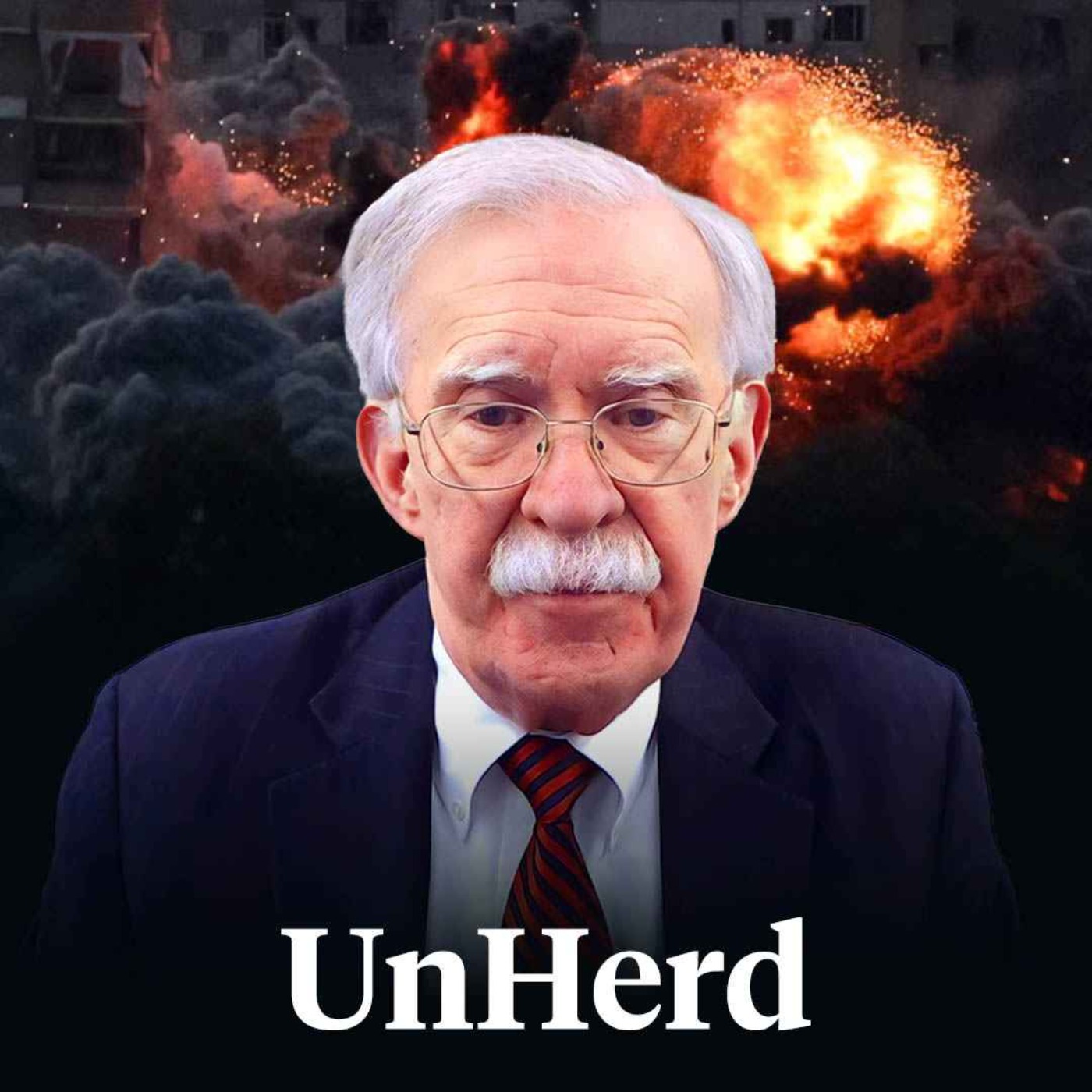
Loading summary
Transcript84 lines
- [00:00]
James Billo
AI is transforming customer service. It's real and it works. And with fin, we've built the number
- [00:06]
John Bolton
one AI agent for customer service.
- [00:07]
James Billo
We're seeing lots of cases where it's solving up to 90% of real queries for real businesses.
- [00:13]
John Bolton
This includes the real world, complex stuff like issuing a refund or canceling an order.
- [00:17]
James Billo
And we also see it when FIN
- [00:19]
John Bolton
goes up against competitors.
- [00:20]
James Billo
It's top of all the performance benchmarks, top of the G2 leaderboard. And if you're not happy, we'll refund you up to a million dollars, which, which I think says it all. Check it out for yourself at fin.AI.
- [00:33]
UnHerd Advertiser
let me ask a simple question. What happens if the market drops sharply just a few years before retirement? For many people, that would mean 30 years of work and saving suddenly exposed to a single market cycle. Yet most retirement portfolios remain almost entirely tied to paper assets, stocks, bonds and funds. What many investors don't realize is that physical gold can actually be held inside certain retirement accounts. That's something I recently learned more about through Augusta Precious Metals. Their educators explain how gold IRAs work, how funds can move from an existing IRA or 401k, and how physical gold is stored and regulated within the system. If you'd like to understand how that works, Augusta has created a free guide explaining the structure of gold IRAs. You can visit learngoldira.com to download the guide or text unherd to 35052 and they'll send it to you.
- [01:27]
James Billo
Hello and welcome back to UnHerd. We've heard a lot of critics of the Iran campaign on this show recently, people who feel it was unwise and net NET is making the United States weaker. Are there still voices making the other case that in fact President Trump has not gone far enough, should be hitting Iran harder, should be investing more military in the area, should be raising the sights of this campaign up to and including good old fashioned regime change in Iran. The answer is yes, there are. Those voices absolutely still exist. And perhaps chief among them is Ambassador John Bolton. He's been inside every Republican administration since Reagan. He was famously the US Ambassador to the United nations for George W. Bush. He returned as as the national security adviser to Donald Trump in Trump 1, although they fell out. And that relationship has, as so many others, not ended well. But we thought if we could get hold of John Bolton and hear what he thought about the Iran campaign, this is someone who has been arguing for regime change in Iran for 30 years, we might get a different kind of perspective to the ones we've been bringing you recently. He's agreed to speak to us and and joins us now. Ambassador John Bolton, thank you so much for joining us.
- [02:47]
John Bolton
Glad to be with you.
- [02:49]
James Billo
Before we get into the detail of exactly what's taking place in Iran now, I just wanted to zoom out for a moment. I mean, you're one of the names that has been most associated with the policy of being more hawkish on Iran for decades, basically. I mean, inside most, if not all Republican administrations since the 1980s. How does it feel to you to finally have that direct attack happen?
- [03:14]
John Bolton
This is not what I envisioned at all. And it's not a question of an attack. That's a tool in your toolbox. The question is what's the objective? And I know what my objective has been for over 20 years. That because I don't think anything is going to change the behavior of the regime of the Islamic Revolution of 1979. We've tried repeatedly and failed on several key issues that the only solution is regime change. It's not at all clear to me that for Donald Trump and his administration that that's what the objective has been, or at least if it has been, it's changed and changed and changed again. It wasn't thought through in advance. We can go through all the reasons for it, but simply attacking Iran is what the Israelis sometimes call mowing the lawn. And we have mowed the lawn before, as recently as last summer in the attack on the Iranian nuclear weapons program, the 12 day. And here we are mowing the lawn again. So the issue is not are we using military force, but for what objectives, for what purpose and with what preparation.
- [04:22]
James Billo
But to be clear, you're satisfied that it was legitimate to begin that bombing campaign. It's really that you feel he hasn't gone far enough, he hasn't completed the job and achieved regime change. Is that a fair characterization?
- [04:36]
John Bolton
If you're looking for a justification under international law, yes. In the George W. Bush administration, we made it US Policy that we didn't think we had to wait until the last possible moment before acting in self defense, that preventative self defense, particularly against the threat of nuclear, chemical and biological weapons, was appropriate. The issue, though, in contemplating any use of force is do you know what your objective is? Have you considered what's necessary to achieve it? Have you laid the necessary foundation and is the moment correct to strike? And those are all issues that it's not clear to me were really considered at any depth by the Trump administration.
- [05:19]
James Billo
There's been some controversy over whether there was an Imminent threat to the US Joe Kent was one of the people who resigned over his sense that there wasn't. We had him on the show, in fact, I mean, what would you say to those people who aren't convinced the threat was imminent and therefore don't feel that this particular moment was the right one?
- [05:36]
John Bolton
I don't myself know that you could say there was an imminent threat, but that's what the point of the national security strategy of the George W. Bush administration was all about. You don't have to wait. Number one, your intelligence may be inadequate. You may wait too long. How'd you like to see an American city under a mushroom cloud? Not a present proposition, especially when you're dealing with a regime of religious fanatics seeking to acquire nuclear weapons, the ability to, to act in self defense, which is an inherent right of any nation. Obviously you have to justify it. I think there's ample justification here. The fact that Trump's claiming imminent threat is one of many pieces of evidence that he hasn't really thought through what this is all about at the moment.
- [06:21]
James Billo
Where do you think we are? There have been these initial wave of attacks. Do you think the whole operation can currently be classified a failure?
- [06:30]
John Bolton
No, I think it was incomplete. I think it was a mistake to stop. But that assumes that there is a clear objective. I think the use of military force to date has caused substantial damage to the instruments of Iranian state power that threaten its neighbors and that threaten its own population. And I think that that damage has also caused major problems, major cracks in the regime at the top that make it susceptible to internal collapse and therefore potentially regime change. But clearly not enough has taken place. And if anything, the pause is only a few days now, but if it goes on two weeks or even longer will allow the regime to regroup. There are reports that are still sketchy. I will acknowledge that in the past few days there's been considerable increased repression inside Iran. That is to say, the ayatollahs, the besieged militia in particular, are executing prisoners that they already have and rounding up more. And you'll recall if you go back to January, I know that's a long time ago, when Trump said if the ayatollahs continue to execute people who were demonstrating who were opposed to the regime, that would be a red line for him. That was one of the reasons I took as a potential that his objective was regime change. Although, as I say, he seems multiple times to have backed away from that many people in Iran. I think it's absolutely fair to say did take that as American support for regime change.
- [08:03]
James Billo
So just to be clear, because I want to get into the idea of regime change and how that might happen, but in terms of where we are now, I mean, we haven't had at least real regime change. It's been claimed by the president, but it's the same regime with just fewer senior people in it. The Strait of Hormuz is now apparently more controlled by Iran than it was three weeks ago. The uranium stockpiles, the nuclear facilities that may be degraded, but there's no saying that they can't come back. Do you think we're in a safer or more dangerous situation than we would have been had he done nothing at all?
- [08:35]
John Bolton
Well, I think we're safer in certain senses because I do think there have been substantial degradation of many of Iran's conventional military capabilities, and I think the nuclear program is in even more disarray than it was after the attacks last summer. It's certainly true that the Strait of Hormuz is closed, but let's be clear for about 100 years. Anybody who's looked at the geography of the region knows that the Strait of Hormuz is a choke point. So there was always a potential that some power or another. It doesn't have to be a Gulf power. It could have been the Soviet Union during the Cold War, after it pushed into Afghanistan in 1979. It could have been the Islamic Revolution after 1979. It could have been Saddam Hussein after he invaded Kuwait in 1990, could have swept the eastern province of Saudi Arabia and taken control of their oil production facilities. This was always a threat that, frankly, the whole world discounted, didn't pay enough attention to it. I don't think we'll discount it anymore. It was always a potential that the Iranians now have made plain. And from my perspective, it adds a third major threat that justifies regime change. Along with the nuclear threat, along with the terrorism threat, there's now the economic threat to the global economy that they have materialized by their actions. If your goal is regime change, and again, I'm not saying it was Trump's because I don't know what his goal is. There's still a way to go, but it's obviously still the only thing that's going to remove the threat that currently exists.
- [10:09]
James Billo
So you're not very impressed with the idea of negotiating of these apparent truces and the like. You think a military solution in the strata for moose and ultimately regime change is the only long term answer?
- [10:22]
John Bolton
Sure. And take a look at what Trump has now said. That he argues he has achieved regime change. He said it wasn't my objective, but I've killed a lot of the first and second level. Now I'm dealing with more intelligent, more reasonable people at the third level. I think that's completely false. I think the ideology of the Islamic revolution permeates the structures of the ayatollahs and the Revolutionary Guard. And the faces may be different, but he's negotiating with the same regime. And what we've seen on the nuclear program, what we have seen on the terrorist threat, is that they're prepared to negotiate. They're not prepared to change their behavior. So just as they stuck with their nuclear program, just as they stuck with their terrorist proxies, they now see the potential to gain whole revenue from ships passing in and out of the Gulf. They're not voluntarily going to change their behavior and give that up.
- [11:15]
James Billo
How exactly could they achieve regime change, do you think? Because most people, I think listening, will have terrible memories of Iraq, Afghanistan. Your name is obviously associated with the Iraq campaign. And just the sheer difficulty of actually messing in the internal affairs of these faraway countries and trying to organize some kind of alternative government. It's just so difficult. How can you be confident it would be possible in the case of Iran?
- [11:44]
John Bolton
Today, the objective is to prevent Iran from threatening the rest of the world via nuclear weapons and terrorism and now control of the Strait of Hormuz. We achieve that in Iraq. Saddam Hussein's regime is gone. The current regime is not pursuing a nuclear weapons program. At least as long as this regime in Iraq is in place, it's not engaging in international terrorism.
- [12:08]
James Billo
I should say it's not clear that the Saddam Hussein regime was very successfully pursuing a nuclear weapon either.
- [12:15]
John Bolton
The question there is, what would have happened had Saddam escaped the UN sanctions under which it was still operating, and the UN weapons inspectors had declared an absence of a nuclear program and left? Because what Saddam did was keep together what he called his nuclear mujahideen, a cadre of some 3,000 scientists and technicians who had the capability to recreate the nuclear program. In fact, it's very interesting. Many critics of using force against Iran's nuclear weapons program say, well, you can bomb Fordo and you can bomb Esfahan and you can bomb the Tanz, but the intellectual capability of the regime to rebuild the nuclear program still exists. That's correct. That's why regime change was necessary in Iraq, and it's why regime change is necessary in Iran.
- [13:04]
James Billo
But how would you take out the intellectual capability to produce a nuclear weapon? I Don't know what that means in practice. How would you do that?
- [13:13]
John Bolton
I can tell you what was done in the case of Iraq, that after Saddam fell, there was an active American program. Some other countries participated basically to find places to go for the nuclear mujahideen out of Iraq to other areas to find them livelihoods and productive work somewhere else, while at the same time doing what we could to make sure that the successor Iraqi regime had no intention of pursuing nuclear weapons. And as the scientists and technicians who were part of the program, part of the nuclear mujahideen realized it wasn't coming back, they themselves wanted to find something else to do. So that's what we're talking about now, Israel over the years.
- [13:54]
James Billo
Could I just ask. Sorry to interrupt, Ambassador, but does that mean almost taking Iraq as a model for what the US should think about in Iran?
- [14:02]
John Bolton
No, I don't think so at all. I think what I'm talking about is how to remove the regime. The mistake the US made in Iraq was becoming and the UK becoming a political player ourselves by creating the Coalition Provisional Authority. I didn't think at the time that was the right thing to do. I think it was done with the best of intention. But that's not the essence of what you is concerning to us. It's the threat that the regime poses externally and its utter ideological unwillingness in the case of Iran to give up the things that are threatening.
- [14:35]
James Billo
I guess what most observers seem to be saying is there is no credible opposition in Iran. I mean, there were protests, yes, they were repressed, but it never coalesced around a credible alternative leader. There are various factions from different ethnic groups. There are parts of civil society that we think are opposed to the regime. They're probably less opposed than they were three weeks ago. But what kind of American led program could there possibly be to stitch those together into a credible alternative government?
- [15:07]
John Bolton
That's what I'm trying to say. There's not going to be an American led program as this regime collapses in Iran. I think the most likely benign outcome is that members of the conventional military, not the Revolutionary Guard, but the conventional military, take power in a military government and restore order and then hopefully have the good sense to give the Iranian people the opportunity through whatever consultative process they put together to decide what their future is going to be. The idea that if we just have an alternative, that that's required before we overthrow the existing regime is just wrong. We didn't have an alternative government for Nazi Germany or Imperial Japan for that matter.
- [15:50]
James Billo
You do think we should be supporting opposition components, arming them, talking to the Kurds, talking to various civil society groups.
- [15:59]
John Bolton
Sure. I would support pretty much anybody inside Iran who's opposed to the regime. What happens afterward, I don't think, is for the US or any external power to say that's part of the mistake that we made in good faith, but the mistake we made in Iran. That's not to say it's pretty. We're not talking about Switzerland here. And after 47 years of the brutality of the ayatollahs, I have no doubt there are plenty of scores to be settled. The question is, what's the alternative? If you leave the ayatollahs in power, they continue to pursue their nuclear program, they continue to pursue acts of terrorism, and now they continue to pursue economic control over the Strait of Hormuz. You're just going to sit there and accept that forever?
- [16:41]
James Billo
Well, they didn't have at least they didn't exert control over the Strait of Hormuz until three weeks ago when this latest bombing campaign started.
- [16:50]
John Bolton
Yes, but I think the evidence is clear that they were getting ready to do that. And they had fortified, they have fortified many islands in the lower Gulf and the Strait of Hormuz. They had built up their drone capabilities, their fast boat capabilities. All of these threats were in process. And the real question then is if they're acting this badly now with respect to the Strait, how are they going to act when they have nuclear weapons? Better? I don't think so.
- [17:18]
UnHerd Advertiser
Let me ask a simple question. What happens if the market drops sharply just a few years before retirement? For many people, that would mean 30 years of work and saving suddenly exposed to a single market cycle. Yet most retirement portfolios remain almost entirely tied to paper assets, stocks, bonds and funds. What many investors don't realize is that physical gold can actually be held inside certain retirement accounts. That's something I recently learned more about through Augusta Precious Metals. Their educators explain how gold IRAs work, how funds can move from an existing IRA or 401k, and how physical gold is stored and regulated within the system. If you'd like to understand how that works, Augusta has created a free guide explaining the structure of gold IRAs. You can visit learngoldira.com to download the guide or text unherd to 35052 and they'll send it to you.
- [18:10]
Progressive Insurance Advertiser
Insurance isn't one size fits all. That's why drivers have enjoyed Progressives Name youe Price Tool for years. Now, with the Name youe Price Tool, you tell them what you want to pay, and they'll show you options that fit your budget. So whether you're picking out your first policy or just looking for something that works better for you and your family, they make it easy to see your options. Visit progressive.com find a rate that works for you with the name your price tool Progressive Casualty Insurance Company and affiliates Price and coverage match limited by state
- [18:39]
Grow Therapy Advertiser
law not feeling the spring energy yet? You're not behind. With Grow Therapy, you can start small, like talking to someone who gets it covered by insurance. Built for Real progress Whether it's your first time in therapy or your 50th, grow makes it easier to find a therapist who fits you, not the other way around. You can search by what matters like insurance, specialty, identity or availability and get started in as little as two days. And if something comes up, you can Cancel up to 24 hours in advance at no cost. Grow helps you find therapy on your time. Whatever challenges you're facing, Grow Therapy is here to help. Grow accepts over 100 insurance plans. Sessions average about $21 with insurance and some pay as little as $0 depending on their plan. Visit growtherapy.com acast today to get started. That's growththerapy.com acast growtherapy.com acast acast availability and coverage vary by state and insurance plan, so you're running out of closet space. The good news? You don't need to stop shopping. You just need to start selling with the RealReal. The RealReal is the world's largest and most trusted resource for authenticated luxury resale. Whether it's that mini bag that can't even fit your phone or those boots you never fully broke in, the RealReal handles everything from photography and copywriting to shipping and pricing. So you can just sit back, get paid, and make room for things that actually feel like you. And with 10,000 new arrivals every single day from top designers like Prada, Celine, Louis Vuitton and Loewe, all for up to 90% off retail, you're bound to find something perfectly on brand to fill that extra closet space with. Plus, right now you can get an extra $100 to shop when you sell for the first time, make room for what feels like you go to therealreal.com to start selling and get your extra hundred dollars to keep shopping@therealreal.com that's therealreal.com terms apply.
- [20:43]
James Billo
The idea of arming opposition or anti revolution groups. I mean, where would you even start? I think so many people would be worried like you just pick alternative bad guys The United States history in terms of supporting opposition groups is checkered to say the least. And quite often those groups turn out to be just as bad as the people that you are replacing. How would you know that you're sending arms to people that will be any better to deal with?
- [21:10]
John Bolton
The issue is what are they going to be like to deal with once they assume power if we can get control of the nuclear weapons program? And I think it's a clear condition of American support that we wouldn't support any internal group that said we want an Iranian nuclear weapon and we wouldn't support anybody who said, and by the way, we intend to conduct external terrorist activities. And now I'd add a third condition made palpable by what's happening, that they wouldn't close the Strait of Hormuz. I don't have any problem with imposing those three conditions.
- [21:40]
James Billo
So how do we, in the kind of John Bolton program, how do we get closer to that regime change moment? I guess the idea is to exert more pressure by stepping up bombing. Or is it attacking the oil facilities? Or what do you think the next steps should be?
- [21:56]
John Bolton
Well, I think there are a lot of alternatives. You know, some critics of the war have said you haven't nearly destroyed enough of the Ayatollah's instruments of state power. Then there are people on the other hand who say, what's the point of any further military activity? You've hit most of the targets. Well, those are two inconsistent arguments used by opponents. I think there is still a lot more to do over a period of 47 years. It reminds me of Hamas in the Gaza Strip having built this enormous underground network of tunnels to protect Hamas and protect their control over the Gaza Strip. We see that the product of 47 years of rule by the Ayatollahs and really the Revolutionary Guard, who have been the functional real authority in Iran for quite some time, they have spent enormous amounts of money building up their military capabilities while the economy of Iran, for the civilians, has dropped into the cellar.
- [22:53]
James Billo
Point one then is to degrade further the military capability of the IRGC to
- [22:58]
John Bolton
continue to do that. That's right. And I'm sure there are locations that we haven't found out. They've spent a lot of time burrowing underground, as did Hamas, as they both have been taught by North Korea.
- [23:09]
James Billo
And how else do you kind of increase the likelihood of a spontaneous or organic regime change? I mean, there's taking out the IRGC more. Would you go after the oil producing facilities? Would you try to cripple that country's power supply?
- [23:24]
John Bolton
Well, I would blockade the Strait of Hormuz. I certainly would reimpose sanctions on Iranian oil. And I'd basically say to the regime, you're not collecting tolls for ships to come out. Nobody's getting in or out unless everybody gets in or out. And that doesn't mean we need to take Carg Island. It means that we do to the Iranians what they have done to the Gulf Arabs. Until oil from the Gulf Arabs can come out, oil from Iran can just sit there as well.
- [23:48]
James Billo
Well, what they're doing to Western ships is shooting missiles at them. Is that what you think the US Military should do at cargo ships?
- [23:55]
John Bolton
We should impound ships that come out of the Strait of Hormuz and just store them somewhere, or offload the oil and sell it and put it in a fund that we would control for the reconstruction of Iran once there's a new regime in place. People also say, oh, well, they're still attacking targets in the Gulf countries. That's true. But the rate of fire is way down from the opening weeks of the campaign, which is an indication of how much damage we've already done. We have reporters in every country, every city along the Gulf and across the Middle east who report on each and every Iranian drone and missile that comes across. There are very few reporters inside Iran to say how much damage our attacks have done. And I think it's been extremely effective. It's not complete, but nobody should underestimate how far back we've set their military capabilities.
- [24:49]
James Billo
You've written a little bit about the other strait on the other side of the peninsula, which the Houthis so successfully pretty much blockaded in very recent times. Does that experience not just show how asymmetric this challenge is? Because any group of militia, basically, with a few missiles can raise the threat level to such an extent that insurance companies aren't comfortable and cargo companies don't want to send their ships there and pretty much stop the Strait. It would be so difficult to remove any missile capability for the hundreds of kilometers inbound from that shoreline. Do you really think that's a military achievable target?
- [25:29]
John Bolton
Sure, because the Houthis wouldn't have two rocks to rub together if they weren't being equipped by the Iranians. That has continued maybe not over the past five or six weeks, but it's continued over a substantial amount of time. I think it was a mistake for the US to give up the campaign it was conducting against the Houthis in 2025 and it was a bigger mistake years before that in 2015, 16 and 17, to tell the Saudis and the Emiratis to stop their attacks on the Houthis. I think if we had let them continue, you might have actually brought peace and stability to Yemen, which would be extremely helpful. Across the Arabian Peninsula, the Houthis functioned as a surrogate for the Revolutionary Guard in the backyard of the Gulf Arab countries. And that is itself incredibly destabilizing for them.
- [26:19]
James Billo
You see the headlines every day, but do they actually tell you what's going on? We don't just look at the front pages. We look at what's moving beneath the surface. That's Undercurrents, the new daily newsletter from Unherd. It lands in your inbox every morning at 8am EST or 1pm GMT. Get the perspective that really matters. Get Undercurrents by me. James Billo in the U.S. newsroom. Sign up today@unherd.com undercurrents newsletter. Okay, so if the President follows your advice now we get a renewed set of attacks on the IRGC trying to degrade their military capability further. We get some kind of arms and support for internal opposition groups, and then we get the Strait of Hormuz blockaded, which will kind of, I suppose, exert an economic or oil based chokehold on them. If all of those three things happen, you believe that regime change would then be inevitable?
- [27:16]
John Bolton
I don't know. I think it would be highly likely. I would also say that we should continue military efforts to open the Strait of Hormuz. I think our military believes they have the capability of doing it. And I think if we could, if we could do it to the point where the maritime insurance companies are confident, that would be something that would be important to do as well. Because if we can't open it now, or we don't open it now, it will leave it indefinitely in Iranian control. The Gulf Arabs at this point are beseeching the United States to continue those efforts. And as I said before, it was part of American national security priority not to let any one power get control over the Gulf. It's been that way for close to 100 years and certainly since 1945 or since World War II and Franklin Roosevelt's famous meeting with the king of Saudi Arabia. And what has happened now is that that contingency, which we very much wanted to avoid, the Iranians have tried to pull off, I'm very dubious about what their effective control over the Strait is. And by that I also mean the Gulf. It's a Small body of water. The carriers, the tankers have to be protected, obviously across the entire route, not just in the strait. But I'm not at all sure what Iran's real military capabilities are. And I think if there's still more degrading of those capabilities, the more we do, the harder it will be for them to pose any kind of measurable threat.
- [28:41]
James Billo
Would that include United States Navy ships escorting cargo freight through the strait? Because the worry, of course, would be there'd be sitting ducks and all you need is one missile.
- [28:52]
John Bolton
And the purpose of the escort is to provide defense for the ships, whether their defense is provided by destroyers in the water with the tankers or by aerial cover. Probably it's more important from the sky than on the sea, but by whatever means. Yeah. And that could include boots on the ground on the Iranian side of the Gulf.
- [29:14]
James Billo
You've mentioned destroying or degrading Iran's oil production facilities. We haven't yet talked about that. Is that also part of what you think a stepping up should involve?
- [29:23]
John Bolton
I wouldn't do that. First, the idea, for example, of taking Carg island or destroying it, I think that would have long term consequences. We want to look for the circumstances that would allow a new regime, if one came into power, to begin exporting oil to try and do something for the desperately needy economy that exists in Iran now. We don't want to make it impossible for a new regime. The depths of the economic problems in Iran now from the present regime are so great that it's going to be hard enough to recover just from their mismanagement. I mean, down to the point where groundwater in Iran is in danger of running out. A phenomenal point that their agricultural irrigation plans have harmed the capacity to provide water for the civilian population. Almost unthinkable. So we don't want to make it harder over the long term if we could get a new regime in place. That's why it seems to me that blockading the strait rather than taking Carg island makes more sense.
- [30:24]
UnHerd Advertiser
Let me ask a simple question. What happens if the market drops sharply just a few years before retirement? For many people, that would mean 30 years of work and saving suddenly exposed to a single market cycle. Yet most retirement portfolios remain almost entirely tied to paper assets, stocks, bonds and funds. What many investors don't realise is that physical gold can actually be held inside certain retirement accounts. That's something I recently learned more about through Augusta Precious Metals. Their educators explain how gold IRAs work, how funds can move from an existing IRA or 401 and how physical gold is stored and regulated within the system. If you'd like to understand how that works, Augusta has created a free guide explaining the structure of gold IRAs. You can visit learngoldira.com to download the guide or text unherd to 35052 and they'll send it to you.
- [31:16]
Progressive Insurance Advertiser
You're listening to this podcast, so I know you've got a curious mind. Here's a helpful fact you might not know yet. Drivers who switch and save with Progressive save over $900 on average. Pop over to progressive.com, answer some questions and you'll get a quick quote with discounts that are easy to come by. In fact, 99% of their auto customers earn at least one discount. Visit progressive.com and see if you can enjoy a little cash back Progressive Casualty Insurance Company and affiliates national average 12 month savings by $946 by new customers surveyed who saved with Progressive between June 2024 and May 2025. Potential savings will vary
- [31:54]
James Billo
do you think there is the political support to undertake the kind of program you're describing? I mean, it would be a massive increased risk. It would be increased investment. It's sort of the opposite of President Trump's preferred in and out operations. The Europeans are very anti and very upset. The Western alliance seems weak and even in the Republican Party there are very powerful voices against now that would have been unthinkable in recent years. Do you think Trump has the political strength to carry out the kind of program you would like to see?
- [32:28]
John Bolton
Well, if he doesn't, it's his own fault for not having prepared the country, the party and the Congress before going in. That's sort of basic. It's what George H.W. bush did very successfully before the first Gulf War when we expelled Iraqi forces from Kuwait. Trump hasn't done any of that. But the real issue is whether we're just going to do this mowing the lawn operation over and over again. And I don't think we can do that at a minimum until we've taken control of the Strait of Hormuz and maritime traffic is moving. Prime Minister Starmer said that he's opposed to Iran imposing a toll on ships coming in and out of the Strait. I completely agree with that. How does he propose to do that?
- [33:09]
James Billo
Well, he definitely, I can say, does not have support within the UK to start sending British servicemen and women to do that job. I think I can say that correctly.
- [33:17]
John Bolton
This is something the west needs to take into account. It wants a lot of things. It just doesn't want to do anything about them.
- [33:24]
James Billo
You've obviously, it's fair to say, fallen out with President Trump. You served in his first administration. You didn't like what you saw, you resigned and you wrote a book about him. There's now a whole attempt to prosecute you, which is a story for another day. But it's fair to say you've fallen out. And yet it's kind of amazing watching from afar that a president who led a movement that was almost in opposition to the Iraq war, a lot of his political energy came from opposing foreign adventures. A lot of his support was supposed to be much more isolationist and skeptical of these faraway campaigns. Talk to us about that remarkable turnaround that even though you have your severe disagreements with him, President Trump still came much closer to the John Bolton point of view than anyone might have predicted. He did attack Iran.
- [34:12]
John Bolton
I don't think that's right. Trump doesn't have a philosophy. He doesn't have a national security grand strategy. He doesn't do policy the way most people understand that term. I'm the last person to ask why he decided to launch military operations against Iran. I tried to persuade him in the first term to accept regime change as the objective in Iran and failed. And I might say in the first term, Bibi Netanyahu tried to persuade him as well, and he didn't succeed either.
- [34:39]
James Billo
Bibi Netanyahu seems to have succeeded this time.
- [34:42]
John Bolton
I don't know why he would have. If you look at what variables have changed, Netanyahu was saying A in the first term and it didn't work. And he was saying A in the second term and it did. I can't understand why Trump would change, other than the lack of any ideology leaves him with any basis on which to judge the merits of different arguments. I don't think the idea that somehow Bibi Netanyahu conned him into attacking Iran makes any sense at all. It didn't. If he that's what he was trying to do in the first term, it didn't work. Why it worked in the second term, nobody's got an answer for that yet.
- [35:15]
James Billo
Well, you've worked for him. You've seen him up close. You've been involved in this argument for many decades. You must have a theory as to why this happened. Do you think he was just watching Fox News and talking to Lindsey Graham and decided to go for it? Or what's the most plausible theory, do you think?
- [35:31]
John Bolton
Well, as I've said many times, his decisions are based on neuron flashes. They're not based on grand strategy. So I don't know, maybe one of those neurons fired and unexpectedly, away they went.
- [35:42]
James Billo
How dangerous a situation do you feel like the United States is in right now? If we think about the kind of language the president is using on his daily missives that everyone wakes up in Europe to read, you know, what's he going to say next? The relationship with key allies across the West. How dangerous do you think the situation for the United States has become under Trump, too?
- [36:05]
John Bolton
I don't think it's dangerous. I think it's unsatisfactory. And he could end up with the worst of all worlds. Having used military force and failed. That would be a mortal blow to his presidency, and its effect on the United States would be negative. But I don't think it's existential by any stretch of the imagination. It's unfortunately the price of electing Donald Trump to a second term.
- [36:25]
James Billo
And if he stops where he is, if the United States doesn't proceed to affect regime change, would you count this operation a failure?
- [36:34]
John Bolton
I count it as a failure in part. I do think the damage inflicted on Iran, which, again, I don't think people have a full appreciation of, but the damage inflicted, I think has been substantial but incomplete.
- [36:47]
James Billo
Final question for you, Ambassador. Zooming out again, like we did at the start of this conversation. Many people might describe you as a neoconservative. I'm sure you reject that label. Most people do these days. But there was that sense and a kind of liberal interventionist idealism that bubbled up around the time of the first Iraq War, that the United States led world order should be much more forceful at trying to spread liberal democracy. Where do you stand now on that? It's now the opposite of fashionable. It's sort of gone completely the other way. But do you still feel like those ideas were good ones and should be resurrected?
- [37:23]
John Bolton
I never argued it in the first place. That's why I'm not a neo conservative. I'm a Barry Goldwater conservative.
- [37:28]
James Billo
What ideas should we be resurrecting, then? If I said you probably reject the label of neoconservative, but how would you characterize Barry Goldwater conservative with relation to foreign policy?
- [37:39]
John Bolton
Well, I think that was in the context of the Cold War. But one of the books that he wrote, I think is instructive on national security policy. It was called why Not Victory. And indeed, we did achieve victory in the Cold War. And it's one reason we should strive to achieve victory over Iran. It's a theory that you Solve problems, you don't massage them. The neoconservative approach was much more idealistic. And what I'm talking about is stricter defense and advancement of core American national security interest of the old fashioned kind rather than philosophical crusades.
- [38:15]
James Billo
Even with an ascendant China, an ascendant other powers around the world, even with the so called multipolar world order looking like it might happen around the corner, you still feel that kind of more assertive foreign policy is the right way for the U.S. absolutely.
- [38:32]
John Bolton
I think without a strong American presence in the world, anarchy will spread or the influence of regimes that aren't going to do us any favor. As Donald Rumsfeld used to say, it's not American strength that's provocative. It's American weakness that's provocative.
- [38:46]
James Billo
Ambassador John Bolton, thank you so much for talking to us today.
- [38:49]
John Bolton
Glad to be with you.
- [38:50]
James Billo
That was Ambassador John Bolton, someone who, as I've said, was inside every Republican White house since the 1980s making the same case, which is that the United States needs to bomb, needs to directly attack Iran in order to achieve regime change. And nothing short of that would be safe and good for the world. And he said that very consistently. You cannot say that he has not been consistent on this point. Well, finally, after 30 or more 35 years of making that argument, it happened. And what is so interesting to hear from him is that it hasn't happened in the way he wanted. It wasn't done properly, the bombing campaign was inadequate, the objectives were not clear enough. And so you then get John Bolton, whose name is kind of synonymous with the idea of seeking regime change in Iran, looking on from the sidelines and saying, Donald Trump has not gone far enough. And I even pushed him on Iraq, which I confess I thought he would be much more keen to distance himself from. And actually he pretty much said that a lot of good things were achieved in Iraq and if they could repeat them in Iran, that would be better. For example, the nuclear scientists, getting them out of there, finding alternative jobs for them and getting them out of the country. That level of intervention, that kind of micromanagement inside another country is something that is so unfashionable and so pretty much abhorrent to many observers these days who feel so stung by the wars in Iraq and Afghanistan. But John Bolton there sticking to his guns and saying that right now this is a partial failure and that Donald Trump needs to go further, go harder militarily, secure the Straits of Hormuz, possibly attack and degrade Iran's oil facilities, actively support opposition components inside Iran, whether they be Kurds or civil society components, and further attack the irgc, the Iranian Revolution Guard Corps until they are completely obliterated. So that is the John Bolton message to President Trump. Do more. Go harder, Finish the job. As always, let us know what you think in the comments. This was unheard.
- [41:15]
UnHerd Advertiser
Let me ask a simple question. What happens if the market drops sharply just a few years before retirement? For many people, that would mean 30 years of work and saving suddenly exposed to a single market cycle. Yet most retirement portfolios remain almost entirely tied to paper assets, stocks, bonds and funds. What many investors don't realise is that physical gold can actually be held inside certain retirement accounts. That's something I recently learned more about through Augusta Precious Metals. Their educators explain how gold IRAs work, how funds can move from an existing IRA or 401, and how physical gold is stored and regulated within the system. If you'd like to understand how that works, Augusta has created a free guide explaining the structure of gold IRAs. You can visit learngoldira.com to download the guide or text unherd to 35052 and they'll send it to you.
- [42:08]
Progressive Insurance Advertiser
Insurance isn't one size fits all. That's why drivers have enjoyed Progressive's Name your price tool for years now. With the name your price tool, you tell them what you want to pay and they'll show you options that fit your budget. So whether you're picking out your first policy or just looking for something that works better for you and your family, they make it easy to see your options. Visit progressive.com find a rate that works for you with the Name your price tool Progressive Casualty Insurance Company and Affiliates Price and Coverage Match limited by state law now is your time to get into a new Dr. Horton home by taking advantage of its national Red Tag sales event going on right now through Sunday, May 3rd. Stop by any of its participating communities and find select red tag homes at Incredible Pricing. So whether you're buying your first home or looking for an upgrade, you don't want to miss the red tag sales event going on right now. Discover the Dr. Horton difference. Visit Dr. Horton.com Dr. Horton, America's builder and equal Housing Opportunity Builder.