← UnHerd with Freddie Sayers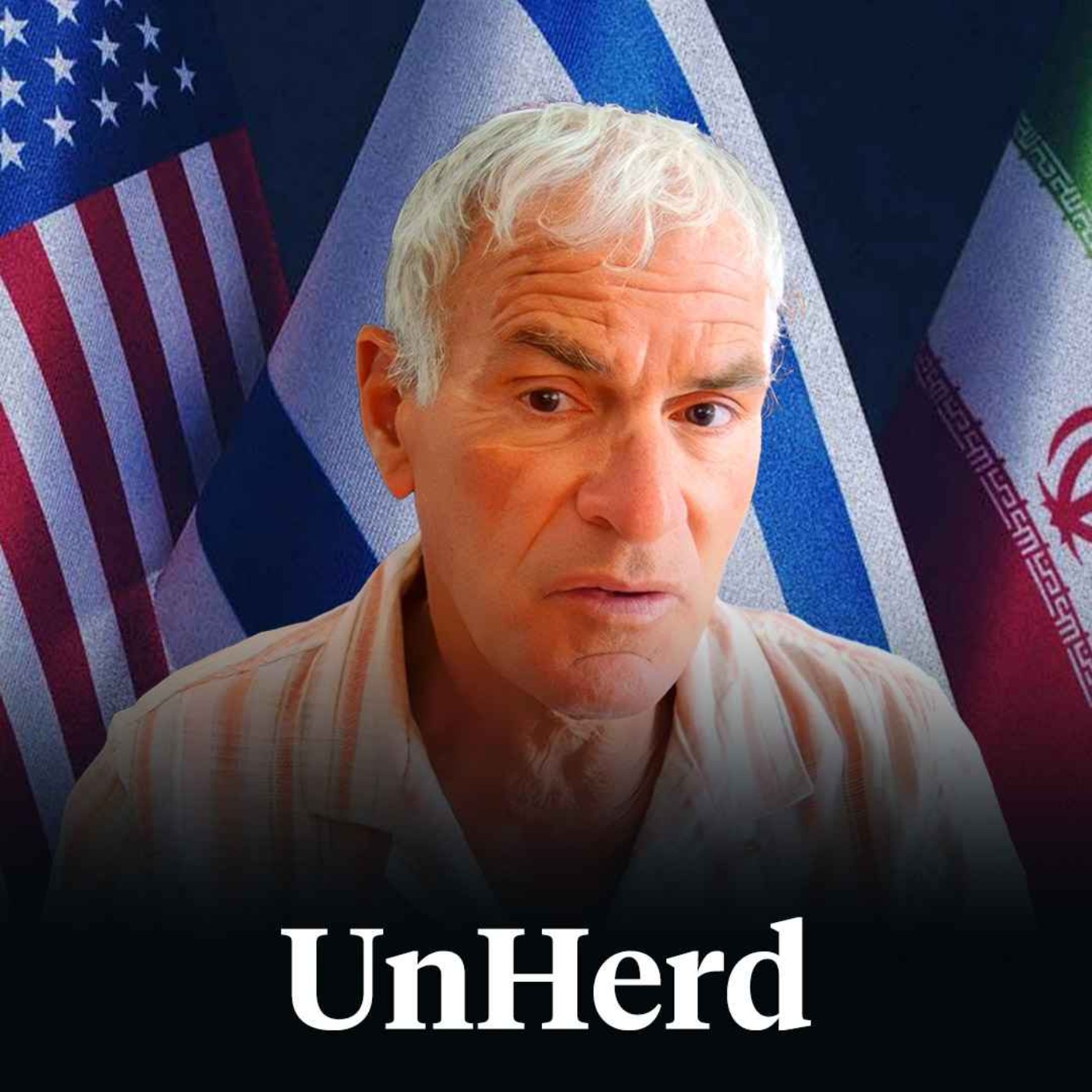
Loading summary
Transcript45 lines
- [00:00]
Progressive Insurance Announcer
You're listening to this podcast, so I know you've got a curious mind. Here's a helpful fact you might not know yet. Drivers who switch and save with Progressive save over $900 on average. Pop over to progressive.com, answer some questions and you'll get a quick quote with discounts that are easy to come by. In fact, 99% of their auto customers earn at least one discount. Visit progressive.com and see if you can enjoy a little cash back. Progressive Casualty Insurance Company and affiliates national average 12 month savings by $946 by new customers surveyed who saved with progr between June 2024 and May 2025.
- [00:35]
Grow Therapy Announcer
Potential savings will vary Everyone treats summer like it owes you happiness. Long days, pool parties, your best life on a loop. So what does it mean when you feel worse? The summer blues are real. It's why summer is one of the busiest stretches of the year for people starting Therapy Grow Therapy is here for all the moments when you decide you want more. More support, more clarity, more tools. Grow connects you with thousands of high quality licensed therapists across the US Offering both virtual and in person sessions, nights and weekends. The therapist you want takes your insurance on Grow grow accepts over 125 insurance plans. Sessions average $21 with insurance and some pay as little as $0 depending on their plan. Visit growtherapy.com acast today to get started. That's growtherapy.com acast growtherapy.com acast availability and coverage vary by state and insurance plan.
- [01:42]
Podcast Host (UnHerd)
Hello and welcome back to UnHerd. What is the state of Israel's relationship with America today? In particular, what is its relationship to with the political right in America? The Iran war was seen as the decisive moment when the Trump administration picked a side and decided that ultimately it was Team Israel. And yet, just weeks or short numbers of months later, that war has entered a fragile truce. Where does it leave the relationship? J.D. vance, the Vice president is using very strong, almost aggressive language towards Israel. You have fringe figures like Tucker Carlson with huge audiences talking about starting a new political party, in part animated by anxiety about the relationship with Israel. So the relationship between Israel and the American right seems to be as fractured and fragile as it ever was. How did that happen? There are basically two theories. One is that antisemitism is driving it and that ugly strain has returned on the political right. The other is that Israel has simply overplayed its hand and can no longer rely on unquestioning support from its former political allies. Norman Finkelstein is an American political scientist and activist, one of the most famous voices that are critical of Israel has been for decades, through many postings at universities and books that he has written on the subject. And yet what you're about to hear may surprise you. I spoke to him from his home in Brooklyn, New York, to find out his analysis of how Israel lost the American right. Welcome to Unherd, Professor.
- [03:24]
Norman Finkelstein
Well, thank you for having me.
- [03:26]
Podcast Host (UnHerd)
What, in a few words, I guess, is your initial take on what is going on on the political right, that apparently ironclad partnership between Israel and the conservative side of politics seems to be breaking down.
- [03:40]
Norman Finkelstein
Obviously, there are multiple reasons. There's not one single causal factor. One has to credit the factor that President Trump did run on a platform of no more foreign wars and put America first and so forth. And there are members of his original coalition, prominent members of his original coalition that began to dissent over time vociferously, and climaxed in the US Israeli aggression against Iran in expressing their discontent and feeling of betrayal. And that's clearly a factor, and I'm not going to be polemical about this and deny good intentions or good faith tensions, I'm not sure, but good faith.
- [04:32]
Podcast Host (UnHerd)
So that I guess is the kind of more straightforward ostensible reason, which is that they don't like wars, they don't like entanglement in the Middle east, and as far as they're concerned, Israel is the vector by which the US Gets back entrenched in Middle Eastern wars and they're trying to resist it. That's what they say. And you believe that to some extent.
- [04:51]
Norman Finkelstein
Yeah, there's no reason to doubt good faith there. Second factor is, as we live in the podcast universe, likes, shares and views, those are the three priorities. And there's a lot of mileage to be got, web mileage to be got from being against Israel. Now, it takes exactly zero courage at this point in time to be critical of Israel. In fact, it takes zero courage to be harshly critical of Israel. It does take a certain amount of courage to be pro Israel. Right now you are going to be laughed off the web or suffer the consequences, as apparently than Shapiro did in terms of his likes, shares and views for supporting Israel. So there's what you might just call
- [05:43]
Podcast Host (UnHerd)
a, like a retail. A retail factor there.
- [05:47]
Norman Finkelstein
Yeah, yeah, there's the retail factor.
- [05:50]
Podcast Host (UnHerd)
And just to ask on that, Norman, do you think the sort of podcast universe, YouTube universe, the kinds of people from whom they're chasing those likes, clicks and views are representative of the broader population, or do you feel like the sentiment around Israel is particularly intense among that group.
- [06:08]
Norman Finkelstein
It's obviously a very big issue out there. There is obviously a large resonance at the popular level in our country. For the first time in living memory and actually in dead memory, it's the first time in our country we're at the grassroots level. I'm not saying at the senatorial level, let alone presidential level, but a grassroots level. The Palestine issue does not only. It does not only not sink your ship, it buoys your ship. You can win a lot of contests now on cornering your opponent on the question of Israel and Palestine. So there is a lot of momentum there. It's not just the pod, you know, the weird podcast universe, I should say the distorted podcast universe there is in public opinion now. There's a kind of what you might call the French call it reglay les Cong, a settling of accounts. Now, the Jewish American billionaire supremacist class simply carried out in an outrageous way in the past, since the Gaza massacre, even before the Gaza massacre, Gaza genocide, they carried on in this kind of really reckless, brazen way. It was kind of in your face, you know, in the past, the Jewish supremacist billionaire class, they operated behind closed doors. They made phone calls to university presidents. Don't let Finkelstein get tenure. And mine was just a typical case. It was not the only case. I just happened to have been high profile, but it was routine. With a few phone calls, you got your way. After October 7, 2023, it was no longer behind the scenes. It was no longer behind closed doors. In effect, there's no academic freedom any longer in our college campuses. It has ceased to exist.
- [08:15]
Progressive Insurance Announcer
This episode is brought to you by Progressive Insurance. Do you ever think about switching insurance companies to see if you could save some cash? Progressive makes it easy to see if you could save when you bundle your home and auto policies. Try it@progressive.com Progressive Casualty Insurance Company and affiliates. Potential savings will vary. Not available in all states.
- [08:34]
Grow Therapy Announcer
Everyone treats summer like it owes you happiness. Long days, pool parties, your best life on a loop. So what does it mean when you feel worse? The summer blues are real. It's why summer is one of the busiest stretches of the year for people starting therapy. Grow Therapy is here for all the moments when you decide you want more. More support, more clarity, more tools. Grow connects you with thousands of high quality licensed therapists across the US offering both virtual and in person sessions, nights and weekends. The therapist you want takes your insurance on. Grow grow accepts over 125 insurance plans. Sessions average $21 with insurance and some pay as little as $0 depending on their plan. Visit growtherapy.com acast today to get started. That's growththerapy.com acast growtherapy.com acast availability and coverage vary by state and insurance plan.
- [09:34]
Progressive Insurance Announcer
What would you do if you could get more More dinner parties with friends, more gear for your garageband, more places to discover. What would you do if you could get more at Shell this summer with the Phil Lucky Sweepstakes? Stop by Shell, scan the QR code at the pump, and enter for a chance to win $100,000 or free fuel for a year. No purchase necessary. Ends 11:59pm Central Time, August 28th open to USDC residents. 21 visit Shell US Phil Lucky for rules and entry details.
- [10:06]
Podcast Host (UnHerd)
Your analysis is that they overplayed their hand. Essentially the pro Israel lobby overplayed their
- [10:12]
Norman Finkelstein
hand out rage, outrageous, brazen, flagrant way. And it created a lot of hostility. There's always been a simmering kind of resentment of Jews. It's a classic case of Nietzsche's raison dimens. Because Jews have been fantastically successful in the US and globally in the 20th century, there's no question about that. And it creates a kind of, you know, a kind of, let's just call it low key resistance.
- [10:44]
Podcast Host (UnHerd)
Would you call it antisemitism, for example?
- [10:47]
Norman Finkelstein
No, I really wouldn't call it antisemitism. Because any definition of antisemitism you pick up if you go to your dictionary, standard dictionary, or any institutional definition of antisemitism, it always includes in the definition that this animus towards Jews, this whatever you want to call it, they always call it irrational. It's an irrational feeling about Jews. The problem with the current moment is the kinds of prejudices that have surfaced and as I say, have given a certain amount of momentum to people on the right who want to capitalize on it. What was the word that you used? Retail. Wanted to capitalize on this. There's a, there's a rational basis. After October 7, Jews carried on in such a way as to, let's not call it invite, let's quote, trigger a certain amount of hostility. I think it's warranted. I can't call that irrational.
- [11:49]
Podcast Host (UnHerd)
It's not rational to exert hostility across a whole religious or cultural or ethnic group. You can be hostile towards a foreign government, fair enough.
- [11:59]
Norman Finkelstein
It's not a foreign government. I wasn't talking about Israel. I was talking about the Jewish supremacist billionaire class. That's something altogether different.
- [12:07]
Podcast Host (UnHerd)
That's even smaller in terms of the numbers of human beings.
- [12:11]
Norman Finkelstein
There are two aspects. There is the fact that Israel calls itself the state of the Jewish people. And that of course invites generalization about Jews. If you wanted to diminish antisemitism by probably around 90%, all Israel has to do is rename itself. And the matter we closed, what we're
- [12:33]
Podcast Host (UnHerd)
particularly keen to kind of investigate is what is happening on the political right. And I just want to draw you back to that because what you've said is much more of a broad your analysis that in your view what you're calling the billionaire Jewish class, et cetera, overreached and pressurized too much and there was natural hostility, et cetera. But there's something else happening, isn't there, which is quite separate to that, which is you went on Candace Owens podcast, for example, and some of the things she's saying about Jewish people are kind of very different. They really do call into play ancient weird tropes about Jews. There's a whole new very strange thing going on. Tell us what you observed there. You went on our podcast.
- [13:16]
Norman Finkelstein
The right is not known for its support for national liberation struggles. It's not known for its support for self determination of peoples. It doesn't have a particularly happy record on compassion for the poor or compassion for Muslims. So it is a point of, let's call it curiosity. Why is it that we're no longer talking about opposition to foreign wars, we're not talking about just like shares and views, but we've suddenly discovered this huge outpouring of compassion for poor brown skinned Muslims in Gaza and outrage at this genocide that Israel has perpetrated there. Now that doesn't sound like the profile of the right. It's not the right that I know of. I mean, you're old and you're not old enough to remember, but during the apartheid era, the last holdouts in support of South Africa were Margaret Thatcher and Ronald Reagan. That was the right. That's the right that I know. And I don't think the leper has changed its rocks.
- [14:33]
Podcast Host (UnHerd)
So what do you think is going on then?
- [14:35]
Norman Finkelstein
First of all, there has to be a perplexity. You can't pretend as if something odd is not happening here. Something odd is is happening here. And then the question is, what exactly is happening? Why this sudden outpouring of compassion for the people of Gaza? Now, before I answer the question, one caveat. Of course I'm happy when they say it. I think about 60 to 70% of what Tucker Carlson says is True. I don't quarrel with facts. I wish it had been a person of the left who were saying it to the audience of his size. People of the left are saying it, but to audiences there are much smaller quantity, maybe more quality, but much smaller quantity. And I wish a person of the left had his outreach, but I'm not going to dispute that. About 60 to 70% of what he
- [15:33]
Podcast Host (UnHerd)
said, I feel I have to comment that 60% true. It doesn't seem like a very high score. It implies 40% untrue. Which if your whole shtick is that you are a truth teller, is pretty weak.
- [15:46]
Norman Finkelstein
Okay, let me amend that. Not because I want to score a debating point. I'll amend it to 70% is true. But the 30% still does remain problematic. Now, we'll take the most recent case to show where the lines get so blurry. And then I'm going to answer your question. Where is it coming from? The most recent case was the war in Iran. Tucker Carlson from the get go, and then everybody else said it was Israel's war. There was no basis for that, that Israel wanted the war. Of course it wanted the war. There's no doubt about that. In 2003, Vice President Cheney and Defense Secretary Rumsfeld, they wanted the war with Iraq. Now, back then, everybody was saying that was Israel's war. That's the central thesis of the book by Mearsheimer and Walt. There was no basis for that. It was Cheney and Rumsfeld's war. They saw American national interest to topple the regime in Iraq. They then hoped to topple the regime in Syria, and they then hoped to topple the Iranian regime. That was their game plan to exploit to the maximum 9, 11. The notion that Cheney and Rumsfeld, who are extremely smart, extremely competent and 110% looking after US interests, didn't give a flying fig or hoot about Israel. The notion that they were somehow duped or tricked by Israel is just nonsense. And I believe the same thing is true. Now, Trump operates within the framework of US national interests, but there's obviously an aspect of Trump which is historically unprecedented. It's an extremely personalized presidency in which whereas Trump in general doesn't go outside US Interests, he basically pursues what's in his own interest. But you remember all the claims that were being made by the right wing and the center and the left, that the Israelis had the Epstein files and that they were blackmailing Trump and that's why he went into the war. And Tucker Carlson had a sequence about how Trump poor Trump, he said, poor Trump. I feel so sorry for him. He's up at night and he's squirming. He's so tormented. He's so tortured because the Israelis have the goods on him and he doesn't know what to do. No. When Trump decided this war is destroying his presidency and destroying his public image and was on the verge, the cutoff date was supposed to be July. On destroying the US economy, the predictions were, if the blockade continue, July, there are going to be huge economic ramifications. What did he do? He ended the war. He signed a memorandum of understanding. He didn't even let Netanyahu see the memorandum of understanding. He then began to attack Israel publicly at the G7 in France. What happened to the Epstein tapes? What happened to poor, tortured Trump who was up at night sweating and squirming because the Israelis were blackmailing him? It was all complete nonsense.
- [19:04]
Podcast Host (UnHerd)
So why was it being said then? I mean, where is it coming from, this whole mood on the right?
- [19:10]
Norman Finkelstein
I think it comes from several places on the right wing. It comes from the place of they want to preserve the US's virginal good. So whoever is doing evil must be some foreign wire puller who's distorting, you know, U.S. national interests. I think a lot of people just don't have a firm historical knowledge of the situation. But even people who do have a very good knowledge, like Chas Freeman, extremely smart fellow. So knowledgeable even. He was, you know, the Zionist. The Zionists were behind this whole thing? Well, in 2003, were Cheney and Rumsfeld Zionists? No. Not very plausible. Not very believable in any event. So where is it coming from now? One caveat. A second caveat. I already entered one. A second caveat. I am not a podcast universe type of person. That's not my thing. I'm old fashioned. I read books and documents. Having said that, I had to do several interviews where I felt I had to binge for a weekend on just sitting down and listening to Tucker Carlson and Nick Fuentes hear what they're having to say. In any event, I did sit down. Listen carefully what Tucker Carlson is saying. Now, 70% of what he's saying is true. I know that. I don't quarrel with facts. But then I start hearing things like this. He's talking about Ben Shapiro, obviously a loathsome reptile. There's a broad consensus on that. And he says Ben Shapiro. Ben Shapiro boasts about sleeping on a bed of money. Shapiro at one point boasted about his wealth and sleeping. He put it on the cushion or on the mattress of money. So then Tucker calls and says, well, you know, I'm a Christian. Christians aren't so materialistic. They're not just about money. We have spiritual values. So now we have Ben Shapiro, the self described avatar of Judaism, being the worshiper of Mammon. Then I listened to another broadcast and Tucker Carlson says, I was at a Trump rally when Trump was elected president and there was this diminutive woman who I saw beside me and even though I don't know her, he said it was Miriam Adelson. She's the wife of the billionaire Sheldon Adelson, the casino fortune, and she gave Trump $100 million. And then he says the following. He said, miriam Edelson, she pushed herself to the front of the line. And he said, I hope that's not an omen for the future. So then I thought to myself, okay, the pushy Jew. So now we have the worshiper of Mammon, Ben Shapiro, and Mariam Adelson, who self describes herself as more loyal to Israel than to the United States. So now we have the pushy joke. And then I listened to another broadcast of Tucker Carlson and it was a kind of strange broadcast because Tucker Carlson says, I disagree with Ben Shapiro about Maduro in Venezuela. Ben Shapiro denounces Maduro as being a totalitarian, this, that and the other. But Tucker Carlson says, no, he is those things for sure. But he says, I kind of like Maduro's social policies. He's anti gay, he's anti trans, he's anti same sex marriage. And then, okay, those are traditional social policies. And you could see the intersection between Tucker Carlson and Maduro. That makes perfect sense. Though it's odd to hear Tucker Carlson defend Maduro, that's for sure. But then he throws in a fourth one, you might call it the monkey wrench. He says, and Maduro is against usury. So I'm thinking to myself, gay marriage, trans, the trans phenomenon, gay rights. I said, where does usury come into this mix? He says, unlike Ben Shapiro, I'm against usury. So I'm thinking, okay, now we have the Mammon worshiping Jew, the pushy Jew, and now we have the usurious Jew, the shylock. And then I'm listening to some of his broadcasts and I'm hearing him say completely true things about how Israel pushed for the war in Iran, no question about that, and persuaded Trump to launch the attack. I think that's correct. I think that Trump knew he assembled a cabinet of buffoons, subpar morons, and he didn't trust him because he knew that's why he chose them, because they're stupid. And so. And because Trump, you know, is a big high IQ guy. You know, he likes to say Somalis are low IQ and he's high iq. And then, you know, the stereotype Jews are high iq and they, people like Benjamin Netanyahu boast of it. So I think they did persuade him he's not going to be smart Jews. They say it's going to be a cakewalk. The country's going to rise up and we have all our operatives in place and remember what we did with Hezboll. That part all sounded right. But then he said things like Israel and its supporters in the U.S. he said they purposely dragged the United States into the war in Iran because they wanted to destroy the United States. That's what he said. Because they secretly are hoping for an alliance with Modi's India to replace the United States. Thinking Modi's India. Where the F did you come up with that? But now we have the Mammon worshiping Jew, the pushy Jew, the usurist Jewish. And now we have the Jews trying, if you read Hitler's Mein Kampf, trying to destroy the country from within. They have an agenda. They have to destroy the United States to bring it down. I admit Mr. Carlson is subtle. He is adept at his craft. I will not deny that. And I've received many angry phone calls and angry emails from people who say that I have now become revealed to be a loyalist to my tribe and unfairly tarring these people. As I said, three elements, feelings of betrayal over America. First, just economics. But then the third element is, I
- [27:25]
Podcast Host (UnHerd)
believe it's problematic is this antisemitism then?
- [27:29]
Norman Finkelstein
It is a kind of exploitation of classical stereotypes about Jews, which I find problematic. Now people say, what difference does it make as long as he's saying what's true? So my view is, say you're back in the 1930s, you're a person of the left. You have your platform. The platform is an anti capitalist, pro socialist platform. And then along comes this far right party, this far right party. But strangely, it packages itself in all the language of the left. It calls itself the National Socialist German Workers Party. So it's now suddenly the far right is packaging itself as socialist. The National Socialist, it's packaging itself as a workers party. Wait, I thought it was the communists and the socialists which were the Workers Party, not the far right. I think it would be strange if a person of the left were not both perplexed and concerned that a far right party was now packaging itself as a leftist organization.
- [29:02]
Grow Therapy Announcer
Everyone treats summer like it owes you happiness. Long days, pool parties, your best life on a loop. So what does it mean when you feel worse? The summer blues are real. It's why summer is one of the busiest stretches of the year for people starting therapy. GROW Therapy is here for all the moments when you decide you want more. More support, more clarity, more tools. GROW connects you with thousands of high quality licensed therapists across the US offering both virtual and in person sessions, nights and weekends. The therapist you want takes your insurance on Grow grow accepts over 125 insurance plans. Sessions average $21 with insurance and some pay as little as $0 depending on their plan. Visit growtherapy.com acast today to get started. That's growtherapy.com acast growtherapy.com acast availability and coverage vary by state and insurance plan
- [30:05]
Podcast Host (UnHerd)
do you think that those characters are doing this? They are invoking these concerning stereotypes in order to win power. Do you think they think it's a root that there is sufficiently widespread what most people will call anti Semitism for it to be a vector to political power?
- [30:26]
Norman Finkelstein
You have to remember I don't know how well versed you are in the history of the rise of Hitlerism. Up until 1929, the Nazis weren't polling more than 3 to 5% in German elections. 1929, the next election, its support goes up to 18%, then 30%. The antisemitic factor. As E.M. kershaw, a senior British historian, wrote the monumental two volume biography of Hitler. He said the antisemitism was basically an add on. That's how he called it that what accounted for the Nazi rise to power was clearly the economy and the seeming that it had an answer, the appearance that had an answer. In the same way right now I would say this undercurrent would maybe attract 5% of voters. The undercurrent. But if, and I recognize it's a big if, if the economy were to crash and that's not beyond possibility, I recognize it's a big if. I do believe this could become a problem. Will it become the major problem? Hard to say. Could it become a problem? Yes, I believe it could become a problem. It could get out of hand and it won't be just podcasters, but it could be a phenomenon. And that to me should be a grounds for concern for me as big a problem. There's a political problem, but there's a kind of what I would say a kind of refusal to acknowledge that something weird is happening. I'm 72 years old. I got started in the Israel Palestine conflict in 1982 where Israel invaded Lebanon. Palestinians were not a left wing cause. And now if you take the top, say 20 podcasters, the only non right wing person represented in the top 20 is Mahdi Hassan. But all the other ones, the right wing, have latched onto it. Now, with all due regard, am I supposed to believe that Megyn Kelly is up at night worrying about the plight of people in Gaza? That strikes me as so far fetched.
- [33:02]
Podcast Host (UnHerd)
You've answered our question very well. So thank you so much and it was great talking to you.
- [33:08]
Norman Finkelstein
You're welcome.
- [33:09]
Podcast Host (UnHerd)
That was Norman Finkelstein. Quite a sobering assessment in a way, because he is someone who you would expect to be straightforwardly harshly critical of Israel and normally quite dismissive of claims that those Israel critics are anti Semitic. And yet what he's starting to say is that he's noticing this new strain, something really quite concerning, particularly on the American right. That was Norman Finkelstein. Thanks to him and thanks to you for tuning in. This was unheard.
- [33:48]
Norman Finkelstein
ACAST powers the world's best podcasts. Here's a show that we recommend world
- [33:55]
Podcast Host (UnHerd)
hello American podcast listeners. Max Rushton here from the Guardian Football Weekly, which I think you should give a listen. It is good. It comes out three times a week and the podcast delivers you analysis, news, both the good and the bad from the beautiful game and maybe even the occasional laugh. He's angry about everything.
- [34:09]
Norman Finkelstein
He doesn't have a great poker face, does he? I would like to play cards with Bruno Fernando.
- [34:17]
Podcast Host (UnHerd)
You can listen to to the Guardian Football Weekly wherever you get your podcasts. Hopefully see you soon.
- [34:26]
Norman Finkelstein
ACAST helps creators launch, grow and monetize their podcasts everywhere. Acast.
- [34:33]
Podcast Host (UnHerd)
Com.