← UnHerd with Freddie Sayers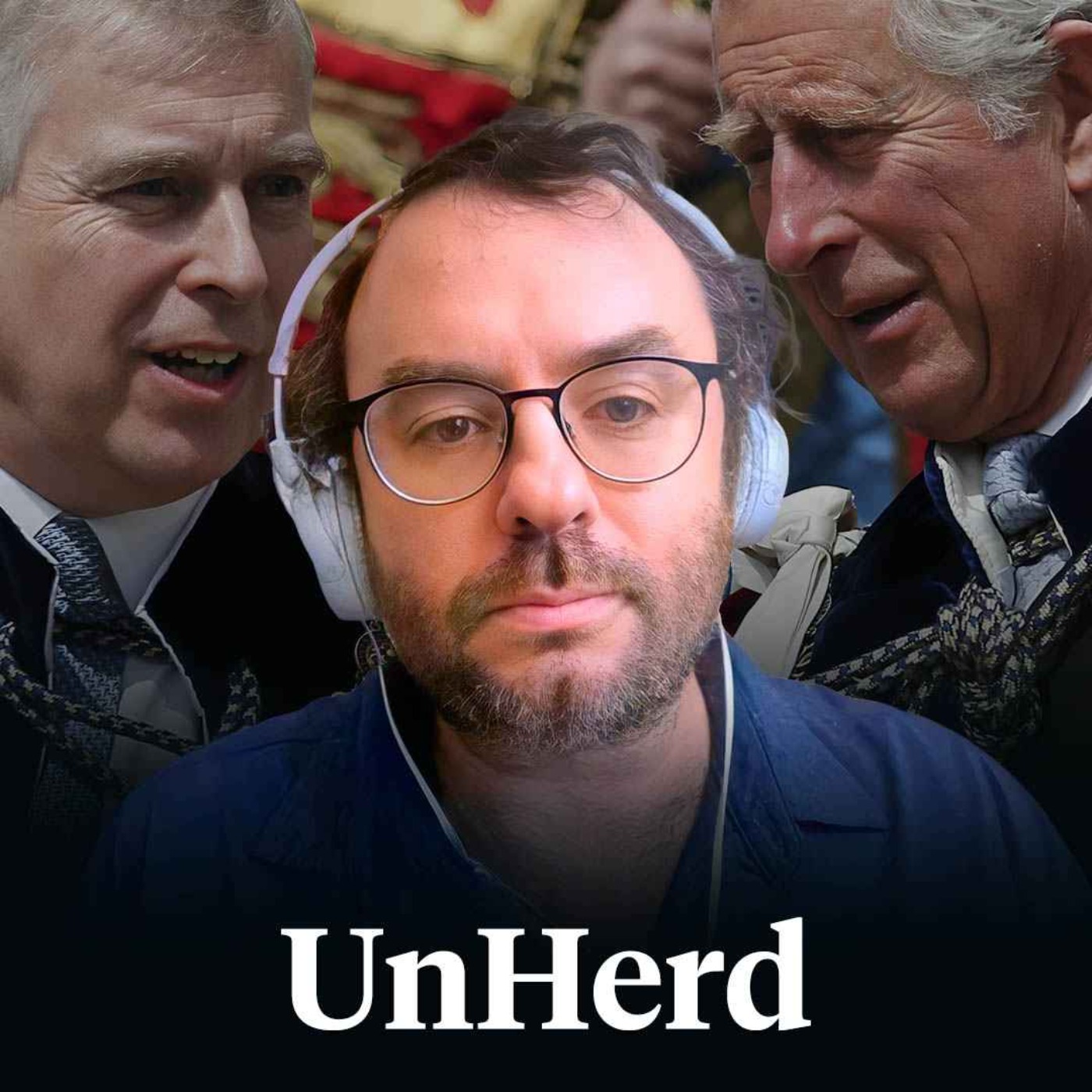
Loading summary
Transcript77 lines
- [00:00]
A
Was January supposed to be your big fresh start? Well, sometimes the pressure to fix everything at once just can leave you feeling stuck. Grow Therapy makes it easier to reset at your own pace. With therapy that's covered by insurance and built around your life, you can search by what matters like insurance, specialty, identity or availability and get started in as little as two days. And if something comes up, you can Cancel up to 24 hours in advance at no cost. Whatever challenges you're facing facing Grow Therapy is here to help. Grow accepts over 100 insurance plans, including Medicaid in some states. Sessions average about $21 with insurance and some pay as little as $0 depending on their plan. Visit growththerapy.com acast to get started. That's growththerapy.com acast growthherapy.com acast availability and coverage vary by state and insurance plan.
- [01:02]
B
Hi, I'm Darina, co founder of Quo. You might know us as OpenPhone. My dad is a business owner and growing up, he always kept his ringtone super loud so he'd never miss a customer call. That stuck with me. When we started Quo, our mission was to help businesses not just stay in touch, but make every customer feel valued, no matter when they might call. Quo gives your team business phone numbers to call and text on your phone or computer. Your calls, messages and contacts live in one workspace so your team can stay fully aligned and reply faster. And with our AI agent answering 24. Seven, you'll really never miss a customer. Over 90,000 businesses use Quo. Get 20% off@quo.com tech that's Q-U-O.com tech and we can port your existing numbers over for free. Quo, no missed calls, no missed customers.
- [02:04]
C
Hello. Welcome back to Unherd. There's only one story here in the UK this week, which is that the brother of the King, formerly Prince, now Andrew Mountbatten Windsor has been arrested. There are terrifying photographs of him emerging from the police station looking almost deranged in the back of a vehicle. They're on the front cover of every newspaper. If you follow the BBC, the flagship channel here in the uk, which actually is very involved in the Andrew story, because a famous Newsnight interview with him that they put on is a key part of the public memory of what Andrew Hauser hasn't done. You would think after watching the BBC this week that basically it's case proven. Andrew is guilty of some kind of sex offence, possibly a paedophilic sex offence in connection with Epstein Island. He has somehow been busted as part of this either paedophilic or sexual ring that encompasses so many prominent people. And it's no exaggeration to say this is leading to a constitutional crisis here in the uk. The King, his brother has put out a statement that not even referring to him as my brother refers to him as Andrew Mountbatten Windsor, the title which he's had for months, not even years, he's completely cut him off. The Prime Minister is very keen to shuffle the attention away from him. So he seems to be playing ball and is saying severe things about how no one is above the law. Referring to former Prince Andrew. The BBC obviously has its own agenda. The police are very themselves keen on kind of public showy things that might alleviate the pressure on them. So they have now done this arrest. Whether or not that would normally have happened, we'll get into. But what you don't seem to be finding anywhere, not from the left media, not from the right wing press, is anyone defending him. So I'm afraid we're going to have to come to that task. Not that I have any special knowledge of what did or didn't happen on Epstein island, but. But it feels like there needs to be some voice in a liberal democracy looking at the other side of a case. This is, after all, an individual, someone who two decades ago was remembered for heroic service in the Falklands War and was something of a public hero, now being completely annihilated, destroyed, unpersoned. And it feels like this won't stop until he's either in prison or has done something even worse. So let's just take a moment to pause and let's examine what evidence there is against him, what crimes he's actually accused of, and whether it really stacks up as the constitutional crisis it is becoming in searching for someone who could give us that other side of the case, there's only one name that comes to mind because Michael Tracy, who joins us now, has been from early on, pretty much the only voice questioning some of the allegations around the Epstein story. He himself has been piled on on social media, accused of all sorts of things because he took up this cause. And it feels like some more prominent voices are now joining him. But Michael Tracy, you've been ahead of this on the other side of the case for some time now. Before we go into the evidence around Prince Andrew, what has it been like to be on the other side of this kind of overwhelming moral tidal wave?
- [05:34]
D
Well, to me it's been very consuming because I found that the more one digs into this subject, the more threads that one pulls, the more the whole edifice unravels. And it was really astonishing to me that no one had really bothered to take a properly critical perspective on some of the underlying premises of this whole issue. And so much is just taken for granted, like it's taken for granted that there must have been this sprawling pedophilic trafficking ring. It's only a matter of just forcing the government to produce the files that would shine light on the scope of the trafficking ring. So the existence of the pedophilic trafficking ring is just presupposed. And I find that to be the case for so many dimensions of this strange mythology. Just one example that always constantly comes up is people assume, I find literally that Jeffrey Epstein must have personally referred to his plane as the Lolita Express. So he was flying around saying, all aboard the Lolita Express, everybody. And then Noam Chomsky and Steve Bannon hopped on and there were a bunch of scantily clad 12 year olds and they just flew around and proclaimed that they were on the Waliti Express together. I mean, this is just like farcical, but people believe an aggregation of these bizarre myths. And I find that I have to dispel them. Not because I'm interested in, quote, defending Jeffrey Epstein per se, or even defending Prince Andrew per se. I don't have any particular affinity for the British Royal family as an institution, but if there's such distortions that are allowed to be rampantly proliferated here without anybody doing the slightest bit of checking, then it's fomenting what I do genuinely think is a destructive mass hysteria and moral panic that's been highly deleterious, at least in the United States. Tell me if the same can be said for Britain. I haven't followed it as closely. Highly deleterious to core civil liberties in all manner of ways. So that's oftentimes what I'm motivated by and what I cover. And that's definitely something that's become a problem on steroids with this story.
- [07:45]
A
Right?
- [07:45]
C
I mean, the Prime Minister says no one is above the law, referring to Prince Andrew. I mean, that presumably also means that no one should be above the normal rights and protections of a democracy, like a presumption of innocence until proven guilty, like a right to privacy, like a right to a family life. All of these things are human rights according to the law. But I'm not sure that former Prince Andrew is being afforded them. Let's just bring it back to Prince Andrew now. What do we know? Let's just say a few things that we do know. About Prince Andrew, first of all, it seems fair to say that he's not an especially intelligent person. And my evidence for that is the disastrous interview he did with Emily Maitlis. Moreover, he's not an especially.
- [08:30]
D
I took him to be unintelligent there, though. I took him to be aloof or oblivious. I don't know that I would watch that interview and just automatically assume that he has, like, a low iq. If you gave him an IQ test, it was more like this obliviousness or aloofness that was emblematic of what I would imagine life would have to be like in the insular world of, like, the senior royals.
- [08:47]
C
Yeah. So at the very least, strategically catastrophic. And, you know, that interview was the beginning of the end for former Prince Andrew, as you say, accompanied by a kind of hauteur, a pomposity that you would expect from someone who was the second son of Queen Elizabeth and grew up in Buckingham Palace. But to see it there in front of everyone really just apparently gave everyone the creeps. It's probably also fair to say that in order to sustain his lifestyle as this strange second son of the Queen, he became habituated to surrounding himself with very rich, in often cases, insalubrious characters, you know, leaders of strange countries, very rich businessmen with checkered pasts that in aggregate, somehow helped sustain his lifestyle. And he and his wife Fergie, were, at the very least, unwise, possibly venal in the way that they did that to try and get some money through the door. That is also, I think, a fair allegation against Prince Andrew. It's probably also true, you can stop me if you think I'm being overly harsh, but that during the multiple decades of his famously unsuccessful marriage to Sarah Ferguson, he most likely had sexual encounters and sexual relationships. And some of them may not have passed the public taste test had they been conducted in public. I don't know. I'm just saying that is entirely possible.
- [10:23]
D
In what percentage of the population might that be said?
- [10:26]
C
Well, indeed. And it's also worth reminding people that that is not in itself a crime. So that's what we do know about Andrew. And for that reason, I think not very many people. In fact, pretty much nobody is prepared to defend him in terms. But let's talk about what he's actually accused of. So if you had watched Newsnight two nights ago, which I know you did, the brother and sister of Virginia Giuffre were the prime guests, and they claimed that his arrest was a vindication of Virginia Giuffre. So she is the main claimant against him, but they failed to notice that actually the arrest was not for that. The arrest was in connection with this other crime, ostensibly not for that, ostensibly not for that. The arrest was made in connection with malfeasance or misconduct in.
- [11:16]
D
Misconduct in public office, I think was
- [11:18]
C
the claim, which is a strange.
- [11:20]
D
Which I mean, could mean to me as a non Britain who hasn't studied the statute, if there even is one, seems like it could be very capacious in terms of what that might.
- [11:30]
C
I think it's a famously woolly offence that is not well described and the lawyers I've spoken to at least are not convinced that it would be successful in a normal trial because first of all you've got to prove willfulness or recklessness, which it's not clear that that was proven, and you've got to actually have an office that involves public trust. And his quite ceremonial role as UK trade envoy probably doesn't even stack up to that. So it doesn't feel like I wouldn't
- [11:59]
D
even consider these monarchical roles to be public office in that sense prior to this. It seems like it's almost like a new category or a new, I don't know, layer of. I don't even know how to describe it exactly because I guess it's so novel. It's the first time in hundreds of years that this has happened right in terms of a royal being arrested. But it seems like they're obviously trying to retrofit something so they can, quote, hold him accountable for the association with Epstein and vis a vis that the presumed sex criminality against Virginia Roberts Giuffre. So I don't think anybody should buy that on its face. We should accept that some kind of public misconduct around an email that he might have sent 23 years ago to Jeffrey Epstein would on its own be sufficient grounds to trigger the first arrest of a Senior Royal since, what, 16 something something. I mean, what's the year? So, yeah, it's all part and parcel with this moral panic that is fueled by this notion that there's a mass pedophilia crisis, mass child rape atrocities that have been covered up at the highest levels of government and somehow Prince Andrew is complicit in it. Just a BBC interview with Maitlis. I really think the whole narrative around that should be revisited or reframed because that's treated as this dramatic triumph in the annals of intrepid investigative journalism. But if you go back and watch it as one should, I think, especially given these developments, it really is just Emily Maitlis speaking as though she's a surrogate for the profit seeking lawyers representing this Virginia Roberts Giuffre character who were fishing for some material that they could get on Prince Andrew or virtually anybody because they sued anybody they possibly could, using her as a vehicle. And, and the questions that Maitlis posed were indistinguishable from what Bradley Edwards or David Boies or any of these other lawyers in that cabal would have asked for pure profit seeking purposes. So I think it's not really intrepid to simply just repeat the claims of a person whose credibility is now just in tatters and was found in so many formats to have made up so much stuff or confabulated or otherwise told falsehoods like why should Emily Maitlish just have been a proxy for that person? I don't know why that was so.
- [14:16]
C
And it's worth saying Emily Maitlis is now kind of touring the television studios, including American networks, claiming to have been vindicated with very kind of grave statements about the importance of her journalistic work. But as you say, it's fair to ask how much help she did for the country by conducting that interview. Before we get into the central evidential controversy, let's just finish on this supposed charge, which is this misconduct in public office, because if he is charged, and he hasn't actually been charged yet, if he is charged and if it ever came to trial, we'd see what his defence would be. I'm speculating here, but my guess is he would say that as UK Trade Envoy, he deliberately fostered relationships with senior business people around the world and when he was being sent to particular places, he would try and line up senior meetings with important people to try and do the good work of UK Trade Envoy.
- [15:16]
D
So I'm not sure, in fact he would be criticized if he hadn't done that.
- [15:20]
C
The particular kind of smoking gun is that the details of his forthcoming trips to places like Beijing as UK Trade Envoy, he forwarded to people like Epstein, who subsequently arranged meetings on the back of them. You know, I don't think that is intrinsically either a crime or even a misdemeanor because they could have been useful. It may well be, by the way. It may well be that he was also using those trade missions to do private business dealings and allowed for there to be a kind of blending of the two to make himself personal profit. That may have happened. I have no idea exactly where you draw the line would be a very hard thing for a court to do. But besides, no one really cares about that. That's not what this is about. Because Michael Tracy, this is really about the testimony of Virginia Robinson.
- [16:06]
D
Do you really think for one second that if the same exact emails verbatim were found to have been sent by Andrew to Joe Smith or somebody who was not named Jeffrey Epstein, that anybody would have given it a second thought? Of course not. They're so banal, at least the ones that I've seen. I mean, nothing stands out as explosively scandalous. It's only because of the context and because of the toxicity of the association with Jeffrey Epstein, who is stated ad nauseam in the British media, the American media everywhere, to be like the most notorious pedophile in human history, which is just factually untrue. I know people get really upset if you ever bring up how we can precisely define what or what does not constitute pedophilia. And believe me, it's not like a topic that I would otherwise really be that thrilled to delve into too deeply and debate on the Internet, but because it has become a central component of the promulgation of this mass hysteria, like at a certain point somebody has to look at it with a little bit more rigor, right? So I don't know. I mean, I know colloquially people think that you can call anybody a pedophile for anything and has nothing to do with the clinical definition. That you can go to the dsm, like the Clinical Handbook for Various Pathologies and read what has been the definition in all the medical literature for as long as this has been a coinage, which is that it entails pathological sexual attraction to or activity with prepubescent children. Okay, so look, if you want to say that Jeffrey Epstein was a pedophile, because when he had to plead guilty to two state level charges in Florida pursuant to his federal non prosecution agreement, the one purported victim or the one designated victim that was identified as the person, a minor whom he had victimized, although she didn't claim victimization and she didn't even want to prosecute him at all. But in any event, she was 17 at the time of the claimed offenses. And she said herself to the police investigator that she had sexual intercourse with Epstein one time. Literally, she said, the eve before her 18th birthday. And had there been some incrementally escalating sexual contact prior to that, at age 17, but it culminated in her having intercourse on this one occasion, which was kind of unusual for Epstein, and believe me, I know way too much about that guy's sexual contact proclivity. So that's the sum Total of what we know in terms of what he was convicted of, that has given everybody around the world total license to just declare that he's a proven convicted pedophile. Meanwhile, we have millions and millions of Epstein files at this point and everybody and their mothers going through them with a fine tooth comb. And there's not one indicia of evidence that I've ever seen that shows with any certainty whatsoever. Obviously people mischaracterize stuff and hysterically shriek about certain things or read code words into emails based on food items that they find. But there's never any legitimate evidence in any of this that he had pedophilic sexual attraction to underage to prepubescent children. So isn't that notable if we're going to have this massive pedophilia crisis that's going to take down the Royal Family and cause all these mass resignations and moral censures at a certain point. I know it's not the most pleasant topic, but shouldn't there be a little precision?
- [19:27]
C
It's also quite notable that every photograph that emerges in the so called Epstein files is immediately analyzed through a lens that is looking for paedophilia. So for example, there is a photograph of then Prince Andrew on all fours with a young boy. I don't know if it's subsequently been proven that that was a grandchild or relative of his. But in any case it's just clearly,
- [19:53]
D
it's clearly innocent, like actual playing on the ground with a toddler boy. I mean, but the idea that, see this is one of the most, I think kind of repellent parts of the whole mass hysteria that an image like that would be presented and the immediate assumption that everybody's supposed to make it, it's supposed to signify some kind of pedophilic predation took place against the toddler boy by Andrew. Like based on what? It's insane. Even if he did have sexual contact with Virginia Roberts Giuffre when it was claimed to have taken place in Belgravia, London In March of 2001, what could that possibly have to do with him like molesting a two year old boy? I mean, this is just outrageous.
- [20:31]
C
There is worth saying another photograph that has made a lot of front pages over here which is Prince Andrew on all fours on top of what appears to be a young girl. I don't know who that is. A teenager or girl in her 20s. You know, it's not a great image if you're in the middle of this story. I have no idea. We don't like context, though, about the context, and no one seems to understand.
- [20:51]
D
And also Freddie, the DOJ proclaimed both in court filings before this latest round of record production, but also when Todd Blanche, the deputy attorney general, gave a press conference on January 30, he underscored that the DoJ's criteria for these redactions includes presumptively redacting the facial imagery, they say, of any woman with the exception of Ghislaine Maxwell, even if there's never even been a claim of any victimization whatsoever, much less a claim to victimization being tested or corroborated in any way. So that gives the impression to the average Joe that when these images come fluttering out and a woman's face has been presumptively redacted, that she must have therefore have been a victim. And because Andrew is in some maybe scenario with her, it looks rather playful to me. But whatever it might have been, it just presumed that that must have been something predatory, which is by no means necessarily the case
- [21:53]
A
Was January supposed to be your big fresh start? Well, sometimes the pressure to fix everything at once just can leave you feeling stuck. Grow Therapy makes it easier to reset at your own pace with therapy that's covered by insurance and built around your life, you can search by what matters like insurance, specialty, identity or availability and get started in as little as two days. And if something comes up, you can Cancel up to 24 hours in advance at no cost. Whatever challenges you're facing, Grow Therapy is here to help. Grow accepts over 100 insurance plans, including Medicaid in some states. Sessions average about $21 with insurance and some pay as little as $0 depending on their plan. Visit growtherapy.com acast to get started. That's growtherapy.com acast growththerapy.com acast availability and coverage vary by state and insurance plan.
- [22:55]
B
Hi, I'm Darina, co founder of Quo. You might know us as OpenPhone. My dad is a business owner and growing up he always kept his ringtone super loud so he'd never miss a customer call. That stuck with me. When we started quo, our mission was to help businesses not just stay in touch, but make every customer feel valued no matter when they might call. Quo gives your team business phone numbers to call and text on your phone or computer. Your calls, messages and contacts live in one workspace so your team can stay fully aligned and reply faster. And with our AI agent answering 24. Seven, you'll really never miss a customer. Over 90,000 businesses use quo get 20% off@quo.com tech that's Q-U-O.com tech and we can port your existing numbers over for free. Quo no missed calls, no missed customers this winter.
- [23:51]
D
Know what your vehicle needs before it needs it. Visit your GMC Certified service center and ask for a multi point vehicle inspection and take advantage of stackable rebates. See Dealer for complete details. Multi Point Vehicle inspections video by participating dealer. Did you know? 39% of teen drivers admit to texting while driving. Even scarier, those who text are more likely to speed and run red lights. Shockingly, 94% know it's dangerous, but do it anyway. As a parent, you can't always be in the car, but you can stay connected to their safety with Greenlight Infinity's driving reports. Monitor their driving habits, see if they're using their phone, speeding and more. These reports provide real data for meaningful conversations about safety. Plus, with weekly updates, you can track their progress over time. Help keep your teens safe. Sign up for Greenlight Infinity@Greenlight.com podcast
- [24:38]
C
so let's get back to the claims. What is it that this person, sadly now deceased, Virginia Roberts Giuffre, claimed about Prince Andrew and what did he do in response to those claims? Let's lay that out for people when
- [24:53]
D
she first made any kind of claims at all about Prince Andrew and her interactions with him? This was in 2011 when Sharon Churcher, a journalist at the Daily Mail, tracked her down in Australia and enticed her with $160,000 to sit for an interview and then provide the now notorious photo of herself, or purported photo of herself with Prince Andrew. And she ended up collecting almost $200,000 based on additional serialization revenue. I mean, I in 2011 had some random photo that I took years before and somebody offered me $200,000 for it. I mean, these people are always all these alleged victims are supposed to be the most benighted people on the face of the earth. As though they're so downtrodden. And yet especially Virginia Roberts Giuffre. She was incredibly wealthy. There's a huge dispute going right now in Australian probate court over her highly, highly lucrative estate. Valued at something like estimates range, but $20 million, something maybe north of that.
- [25:59]
C
In that interview, she then claimed that she had had some kind of sexual contact with misandry.
- [26:05]
D
No, no, no. There was no claim of any sexual contact whatsoever in that initial 2011 interview. Which is amazing, right? It's actually disclaimed. Sharon Churchill writes, there is no claim. Or like I'm paraphrasing But she writes, you know, as a conduit for Virginia, there was no claim of any sexual contact with Prince Andrew. But the premise of that initial series of articles is that, oh, look, this Virginia Roberts Giuffre person, she was associated with Epstein. Epstein is known to be bad, not like the world historic megavillain that he is today, but bad enough that they can then use her apparent interaction with Andrew at one point to tarnish Andrew and the royal family and make this like, you know, two degrees of separation connection between.
- [26:50]
C
So she then Epstein and the Royal family. She then subsequently continued to make those allegations because at some point Prince Andrew settled with her out of court. Now this is in the, in the long litany of a long listening of bad decisions. That's got to be pretty high up there because apparently now settling out of court is just taken as a presumption of guilt. So my strong advice to anyone is never again settle out of court because it will be taken as admission of guilt. But talk us through the chronology.
- [27:17]
D
Okay, so the chronology is that initial series of claims were made in 2011. No overt claims of any kind of sexual wrongdoing at that point. Then by 2014, December, the formative court filing is made that really set the groundwork for what we now have come to know as the common Epstein mythology. Right. So in this motion for joinder, it's called, in which Virginia Robert Giuffre attempted to join ongoing litigation around something called the Crime Victims Rights Act. It's kind of an arcane legislative thing in the United States, so I won't get too in depth into it, but it required her to submit this motion for joinder and make a whole series. And she made a whole series of sensational allegations, specifically about having been child sex trafficked. She claimed to Prince Andrew, Alan Dershowitz and Jean Luc Brunel. And also she claimed that she had been child sex trafficked and or raped by a unspecified cross section of other high profile people. Like she just gestured at prime ministers and princes and presidents and politicians without naming anybody in particular other than those three. And in that motion for Joinder, she introduces like the core tenets of the mythology. So that child sex trafficking ring, blackmail operation, surreptitiously recorded videos by Epstein in sensitive areas, et cetera, and like kind of alluding to a potential intelligence component or intelligence agencies being involved, but like not saying it outright. And so this is what people have come to believe about the nature of the Epstein tale. Right. It originates with her.
- [28:53]
C
What happened to those three specific Allegations because her allegation against Alan Dershowitz, she subsequently retracted, the one with Andrew, led to this settlement in some way.
- [29:04]
D
One reason why it was so amazingly and historically foolish for the Royal Family to have settled is because of those three, in that initial motion for joinder of the three named persons whom she was making sex crime claims against, Dershowitz, Andrew and Jean Luke Brunel, she had to retract her claims against two of the three. It's not as well known that she retracted claims against Jean Luke Brunel as well. And it's virtually never even been covered in the English speaking or English language media. But I did a deep dive, like, I don't know, two months ago, and I was shocked to discover as much as I thought I already knew about this story, reading through French media, it turned out that when she was summoned to Paris in 2021 to give evidence in this kind of colloquy setting with both the prosecutors and the defense attorneys, she ended up having to recant her claims against Jean Luke Brunel as well. And then he actually filed a criminal complaint against her for defamation or wrongful accusations or something to that effect. Playing the odds, Prince Andrew had a pretty good chance of obtaining a recantation eventually, right? Instead, what did the Royal Family do? They stupidly think that in order to exhibit their sensitivity towards sex trafficking victims, they'll give this generous contribution or donation to this phony quote charity that Virginia Roberts Giuffre's lawyers had set up on her behalf. They had set it up some years ago, but then they renamed it in anticipation of receiving the new Andrew settlement. It was first called Victims Refuse Silence and they did a pre brand and then it was called soar. I can't even remember the name of the acronym now. It's so stupid. But it doesn't do anything. It was just like a little platform for her to just collect her media appearances and so forth. And I would like to know, I mean, if we're going to talk about public corruption or if we're going to investigate any potential misconduct among public officials, where did that money go? What happened with the millions of dollars or pounds, including the £2.7 million that it was said that Queen Elizabeth herself had deposited into the coffers of this fake sex trafficking awareness NGO that, by the way, a year after it received the settlement monies in 2022, was delinquent on even filing its basic registration forms with the irs. So what went on with that? Why is the media so incurious about all These so many aspects of this story. But they're ready to defame anybody who like sent a chortling email to Jeffrey Epstein 17 years ago.
- [31:40]
C
So back to Andrew, sorry, that was
- [31:43]
D
a little bit of a rant.
- [31:44]
C
So he settles, or the royal family settles, they think unwisely that that's gonna be the end of the story. She then publishes, or it's published partially posthumously, a long book, which itself is a somewhat revisited version of a former draft of a book which I reviewed
- [32:02]
D
for Unheard in October of last year,
- [32:03]
C
which you reviewed for Unheard. And just quickly remind us of the facts around that book. Because that in this chronology is the thing that kept that story alive throughout last year.
- [32:12]
D
The whole circumstances around the publication of that book, it still boggles the mind. Sometimes I feel like I'm being, quote, gaslit because like, nobody else finds this as crazy as I do. She wrote, or she purported to have authored, there might have been a co author of various stages, but she purported to have been the principal author of a memoir manuscript in 2011, 2012, where she was going to, it was called the Billionaires Playboy Club, where she was going to give everybody a bird's eye view into what it was like to be consorting with Jeffrey Epstein and Ghislaine and all these high powered people. So she name drops everybody she possibly can. It's not even clear if she ever interacted with any of them. She might have just been made aware that they might have been known to Jeffrey Epstein or met with him once. Bill Clinton, Prince Andrew. Obviously she mentions Dershowitz, she mentions all kinds of people. She makes up that she saw Al Gore, which is just a lie or what it came to be conceded it was was it was a fictionalized account of her purported experiences because over the course of litigation with Dershowitz, it was a defamation lawsuit that she brought against Dershowitz. When he denied her false claims against her, it turn accurately. She sued him for defamation because he said that the claims against him weren't true. And then eight years later she ends up having to recant. But in the meantime she was suing him for defamation. He countersues.
- [33:37]
C
So she formally withdrew her allegations against Dershowitz and she recast the original draft of the memoir as a fictionalized or semi fictionalized memoir after the fact.
- [33:47]
D
Her lawyers had to rationalize it as a fictionalized account, but it was initially presented as nonfiction. It was pitched to literary agents and potential publishers as a non fictional account. But because the claims in it were so untenable and unsubstantiated and oftentimes just outright false. Then the lawyers had to come up with some kind of rationalization for it because otherwise it had all this defamatory material.
- [34:12]
C
Then a new version of it finally makes it to publication, right?
- [34:15]
D
So then a new version. So then, yeah, she's declared deceased in April of last year. By October, by around July, August, the publisher announces that they're going to be finally putting out this long awaited memoir, which had been in the works in terms of revamped version for I think, some time. But they expedite the publication process to capitalize on the wave of interest around Epstein, and it comes out, I read it, and because I'm a maniac on this stuff and I can know what to look for, I just know instantly that it's essentially, with a few new adjustments or cosmetic sort of repackaging, it's essentially just a pilfered version of the 20112012 manuscript that her own lawyers conceded was fictionalized, but they just kind of changed some of the wording around to insulate the publisher maybe from some legal liability. They only really accuse, it seems, by name, people of things who are deceased. So obviously they can't bring any kind of libel lawsuits, especially the uk, but otherwise, I mean, it's substantively identical as this admittedly fictionalized memoir. Like nobody pointed this out ever. It was an international bestseller in England and the United States and Australia.
- [35:30]
C
So this matters because this book is the single encapsulation of the testimony of the main witness on whose evidence we're basically having a constitutional crisis. And what you're saying is that the book itself is a partially copy and pasted collection from a book that she, in her own words, Virginia Roberts Giuffre, describes as a partially fictionalised memoir. So as evidence on which to base a constitutional crisis, it's flimsy at best and may not have even made it through much of a court process.
- [36:04]
D
I attempted to ask the ghostwriter Amy Wallace about her simple importation of a fictionalized memoir into this purportedly new memoir when we were both on the Piers Morgan show together, a few, you know, she very conspicuously refused to address it when King Charles rescinded formally Andrew's title. What was that prompted by? It was prompted by nothing other than the hyper credulous, wall to wall 247 coverage of that book in October. That's what created the pressure, or at least the perceived pressure on the king to take some kind of remedial action. So what did he do? Once again, just like when they settled under the Queen, who I guess maybe would have a bit more of an excuse cause frail and ailing. And they didn't want the PR nightmare of during her jubilee year when she is clearly near death having her son being shipped out to the United States for this feeding frenzy trial around sex abuse. Right. So at least there was some rationale for why you could imagine they might see it as in their interest to want to settle, even if it ended up being incredibly counterproductive from their standpoint. But. But by October 2025, King Charles, if he had any sense, which I guess he doesn't, or nobody around him understands how the trajectory of this issue was going at that point, he just adds additional fuel to the fire by capitulating to a faulty, phony, bogus, hysterical premise, which is that somehow he's under an obligation to punish his brother. For what exactly? Punish him on the basis of nothing other than than the demonstrably confabulated claims of one person. And nobody in the British media pointed this out. Really. I'm the only one that I know of who put out even the most slightly critical or skeptical review at all of that book. Otherwise it's just wall to wall credulity. I just, I'm constantly amazed by it.
- [38:01]
C
You see the headlines every day, but do they actually tell you what's going on?
- [38:05]
D
We don't just look at the front pages. We look at what's moving beneath the surface.
- [38:09]
C
That's Undercurrents, the new daily newsletter from Unherd.
- [38:12]
D
It lands in your inbox every morning at 8am EST or 1pm GMT.
- [38:17]
C
Get the perspective that really matters.
- [38:19]
D
Get Undercurrents by me, James Billo in the U.S. newsroom.
- [38:23]
C
Sign up today@unherd.com undercurrents newsletter. Since that book's publication, obviously the main slew of so called Epstein files was published in the us. Basically his entire kind of email inbox was just made public for anyone to search whenever they wanted. And a whole slew of very private as they thought correspondence came out. It took down Peter Mandelson and many others. What is the new evidence that emerged in that that is related to Prince Andrew? And what is it that everyone is so excited about?
- [38:58]
D
I still don't know. Just as an aside, what Peter Mandelson is really even accused of doing. We're told it was maybe some sensitive insider trading type information, but I don't know that that's Ruben. But it's the same principle as what's happened with Andrew. Obviously, if in a vacuum, Peter Mandelson were to have sent whatever fleeting emails he sent to Epstein to anybody else in the world, no one would have thought twice about it. It's only by virtue of the radioactive association with Epstein that anybody cares at all. And it's all the more absurd with Mandelson, because isn't he gay? Like, what female children would he have possibly victimized here?
- [39:32]
C
But so what is there about Andrew in the Epstein files? And why has it led to this resurgence?
- [39:41]
A
Was January supposed to be your big fresh start? Well, sometimes the pressure to fix everything at once just can leave you feeling stuck. Grow Therapy makes it easier to reset at your own pace with therapy that's covered by insurance and built around your life, you can search by what matters like insurance, specialty, identity or availability and get started in as little as two days. And if something comes up, you can Cancel up to 24 hours in advance at no cost. Whatever challenges you're facing, Grow Therapy is here to help. Grow accepts over 100 insurance plans, including Medicaid in some states. Sessions average about $21 with insurance, and some pay as little as $0 depending on their plan. Visit GrowTherapy.com Acast to get started. That's GrowthTherapy.com Acast GrowthTherapy.com Acast availability and coverage vary by state and insurance plan
- [40:46]
D
Are you still running your business? With one creaky old phone system, missing calls, losing track of messages, and scrambling to keep up with your team, it's time to break up with the past and say hello to Kuo. Kuo is the number one business phone system with 4.7 stars across 3,000 reviews on G2. Quo brings all your business phone calls and texts into one app for your team. No more juggling devices or being tied to a landline. Huo's built in AI logs calls, creates summaries, automates follow ups, and can even answer and route calls so you never miss an opportunity. Whether you're a solo operator or leading a growing team, Quo keeps you connected and helps you deliver standout customer experiences. Join over 90,000 businesses using Quo and see why it's the number one business phone system for customer satisfaction. Level up your workflow with quo get started free plus get 20% off your first 6 months@quo.com tech that's quo spelled q u o.com tech and if you have existing numbers with another service, quo will port them over for free. Quo no missed calls, no missed customers. I mean, the thing that really should be emphasized if we had a rational media like in any continent, I mean, I guess It's a lost cause in the UK and the US I don't know, I'll go to Fiji and maybe see if they're interested. But the.
- [42:11]
C
There are pockets of rational media still in the uk. I should say.
- [42:14]
D
Okay, yeah, I shouldn't paint with too broad a brush. There was a memo that came out that was incredibly revelatory. I mean, people are always in search for the most revelatory Epstein files, right? And most of the time that means honing in on some snippet of an email where they can, like, claim that they can know what the code words are because, like, it mentions pizza or grape soda or something. I mean, these people are hallucinatory. But if you're actually acquainted with the source material and you came across this memo that I did, it's from December 19, 2019. It basically memorializes the investigatory progress of the Southern District of New York in conjunction with the FBI at that point in their investigation of Maxwell. They had been investigating Epstein before, but then he dies. So then their target shifts to Maxwell as the chief accomplice, allegedly of Epstein. And in a prospective trial of Maxwell, the number one witness that would be a slam dunk if her evidence could be at all corroborated or was all credible would have been Virginia Roberts Giuffre. Because Virginia Roberts Giuffre is the first person who claimed that she had been trafficked by Maxwell to Epstein. So had she been found credible by the investigators in 2019 after preparing for a prosecution of Maxwell, then she would have been the most valuable asset they could have had.
- [43:32]
C
So you found the transcript or the record of that interview in the Epstein files.
- [43:38]
D
The document I'm referencing here is them summarizing their findings as to their assessment of Virginia Roberts Giuffre after they had interviewed her privately. We never knew that this interview took place until just until January 30th. But they found, when they almost seem shocked because they recount that even over the course of the one interview that they conducted with her, she could not maintain a consistent narrative of her own victimization within the confines of that one singular interview. And they also found that her central claim, the claim that if you can point to any claim at all as having been integral in spurring the wider Epstein mythology, meaning that she was lent out. This is what she put in that motion for Joinder in 2014, that she was lent out to high profile people, namely Andrew Dershowitz, Brunel, but then also this constellation of other people, some of whom she named, some of whom she would Allude to. But that was her core claim. Because then the idea is, oh, all these prominent people were actually implicated or ensnared in something by Epstein by virtue of Giuffre, and then he secretly recorded them and then did blackmail. That was the genesis of the whole thing. They dispelled that core mythology. In this memo. They say they could not corroborate at all that she had ever been lent out to anyone. And furthermore, that none of these, no other Epstein victim of whom we're told there's like, potentially thousands or millions, they always shift the number. None of them ever made a claim comparable to hers in terms of having been, quote, lent out or trafficked to anyone. So this is dispelled, and here's why. It's related to Andrew.
- [45:12]
A
Okay?
- [45:13]
D
So his accuser, the only accuser who he ever had, turns out, according to the most thorough, rigorous investigation that we ever know, to have been conducted of the veracity of her claims, was found to have no credibility in terms of that central claim that implicated Andrew. So if anybody should be running around claiming vindication, it's not the siblings of Virginia Roberts Giuffre or anybody else trumpeting the bravery of, quote, survivors. It's Prince Andrew himself. He should be on the BBC being applauded and cheered, because after all this time and after all these years of defamatory accusations, it turns out that he was right all along and his chief accuser really did just make stuff up. As far as anybody can tell, and based on all available evidence, I think
- [45:55]
C
we're gonna have to put the link to this document at the bottom of this video so people can go and look at it themselves.
- [46:00]
D
I linked to it in the forthcoming article.
- [46:03]
C
So how should we conclude then? Michael, your assessment of the evidence is just so at variance with 99% of the world media. I think many people watching this will be like, who is this guy? How come he has a parallel version of reality in which Andrew is vindicated and should be being applauded on the BBC instead of being banged up in the overnight prison in the local police station. How should intelligent people who are following this and just want to have a sane conclusion, how should they try and address that enormous gap?
- [46:36]
D
I just want to declare that I am hereby willing to journey to whatever, like Secondary Royal Lodge they've stuck them in and stand outside and just give a solo standing ovation, and maybe I'll be joined by some birds and deer or something, but there will be no humans joining me, most likely. But I'm being earnest about this in that I do think if there's an impartial examination of the evidence done, this would be the unassailable conclusion. It's just that nobody really does an impartial examination of the actual evidence. And for, for one thing, because there's so much superfluous redactions in these Epstein files, not of, like, potential perpetrators, which is always everybody's immediate suspicion, but of material that's tied to victims. And then the standards for who even constitutes a victim are so expansive that it necessarily sweeps up this giant percentage of the available material. So in order to read a document like the one I'm referencing and to understand what's being stated or what's being reported, you have to have, like, a lot of background knowledge so that you're not inhibited by the excessive redaction. So I have the requisite background knowledge. I know what I'm looking at. I know who's being referenced. If Virginia Roberts Giuffre is being referenced, even if her name is technically redacted. If you've done the deep dive that I've done on this story, you know what is being referred to, despite the unnecessary redactions. But that's one of the impediments for the average either news consumer or even journalist, because it really does require a. A ton of legwork to be able to become even just fluent on this issue in a way that I think conveys the proper impression to people. So, yeah, I mean, it is a lonely ordeal. But I'm always begging anybody out there who has a countervailing perspective to me and thinks I'm just dead wrong, okay, let's have at it. And all the top Epstein researchers who are more toward the conspiracy tinged, let's say, part of the spectrum, they invariably, they run away or they make up some excuse or they attack me personally. They don't want to engage. So that just kind of talk about vindication. I would say, at least from my perspective, that vindicates my confidence in that, in my being at least directionally correct on this. Obviously, everybody can screw up a date or something marginal, but directionally speaking, I'm confident that I'm correct.
- [48:48]
C
Do you think that it's something more broad that is going on where people are looking for an answer to why the world doesn't feel right, or they feel that somehow things are askew and that in a way it's an easy answer to say, okay, the elites, quote unquote, are not only just bad, which I think a lot of people would agree with have made crappy decisions in recent decades, have enriched themselves while most ordinary people have been struggling. All of those legitimate grievances that people have with the very wealthy, somehow the attachment of this pedophile sex ring scandal, it kind of legitimizes that. And it's a way to hang the woes of the world onto a comprehensible story. Do you think that's one explanation?
- [49:37]
D
The woes of the world? Get over it, you schmucks. When has everything in the world ever gone well? I think during the Blitz in World War II, like all the Londoners with bombs raining down on them didn't think, gee, maybe there might be a better solution. Maybe different circumstances would be preferable here or during the Great Depression. And I don't know, I just don't like this idea that because there are misfortunes that beset people living on earth, that therefore it's perfectly understandable to just concoct a totally fictitious hallucinatory, mass pedophile and blackmail theory that's driving people, I think, into lunacy. I actually think it's a bit dangerous, and I'm not usually too hyperbolic about political developments or even political speech at all necessarily being justifiably connectable to any kind of instance of violence. But it's not, not that difficult at all to imagine that if there's any issue that actually would potentially catalyze an already mentally unwell person to potentially be driven to homicidal mania, I think it's telling them over and over again that there was a mass child rape atrocity that's been covered up and the perpetrators are still getting away with it. And somebody has to do something to take care of this problem. Just because there are problems in the world, it doesn't give anybody or shouldn't give anybody license, especially if you conceive of yourself as having anything to do with the media or journalism to just give over to the algorithmic slop machine and feed into this frenzy that just kind of gets everybody so scintillated because they think that finally the master narrative is going to be unveiled about this pedo blackmail op. And it's just absurd. So, no, I don't buy these rationalizations. That's no excuse to be so aggressively irrational when there is plenty of opportunity, if you would like to. To actually rationally delve into the material, develop a accurate understanding of the facts and evidence and proceed from there. But nobody does it. And I'm still astonished every single day.
- [51:37]
C
Michael Tracy, you've laid out in strong terms your opposition to the mainstream narrative on this. Thanks for doing that and thanks for being on Unherd.
- [51:46]
D
Yep, it's the worst cover story of my lifetime, and that's saying a lot.
- [51:51]
C
That was Michael Tracy. You can also read his piece up at Unherd this weekend. Setting out the alternative, Setting out the case for the defense of Prince Andrew, or former Prince Andrew. If you're interested. Check it out. It's on unherd.com and it's available from Saturday.
- [52:15]
D
Big news. Boost Mobile is now sending experts nationwide to deliver and set up customers new phones at home or work. Wait, we're going on tour? Not a tour. We're delivering and setting up customers phones so it's easier to upgrade. Let's get in the tour bus and hit the road. No, not a tour bus. It's a regular car we use to deliver and set up customers phones at home or work. Are you a groupie on this tour? We deliver and set up phones. It's not a tour. Oh, you're definitely a groupie. Introducing store to door switch and get a new device with expert setup and delivery wherever you're at. Delivery available for select devices purchased@boostmobile.com Boost Mobile is now sending experts nationwide to deliver and set up customers new phones. Wait, we're going on tour? We're delivering and setting up customers phones? It's not a tour.
- [52:53]
C
Not with that attitude.
- [52:54]
D
Introducing store to door switch and get a new device with expert setup and delivery. Delivery available for select devices purchased@boostmobile.com dreaming of getting the all new iPhone 17 Pro designed to be the most powerful iPhone ever. Then stay in bed and let a Boost Mobile expert deliver and set it up for you. Oh actually they will have to get
- [53:10]
C
up and open the door.
- [53:11]
D
Oh right. Delivery available for select devices purchased@boost mobile.com terms apply.