← UnHerd with Freddie Sayers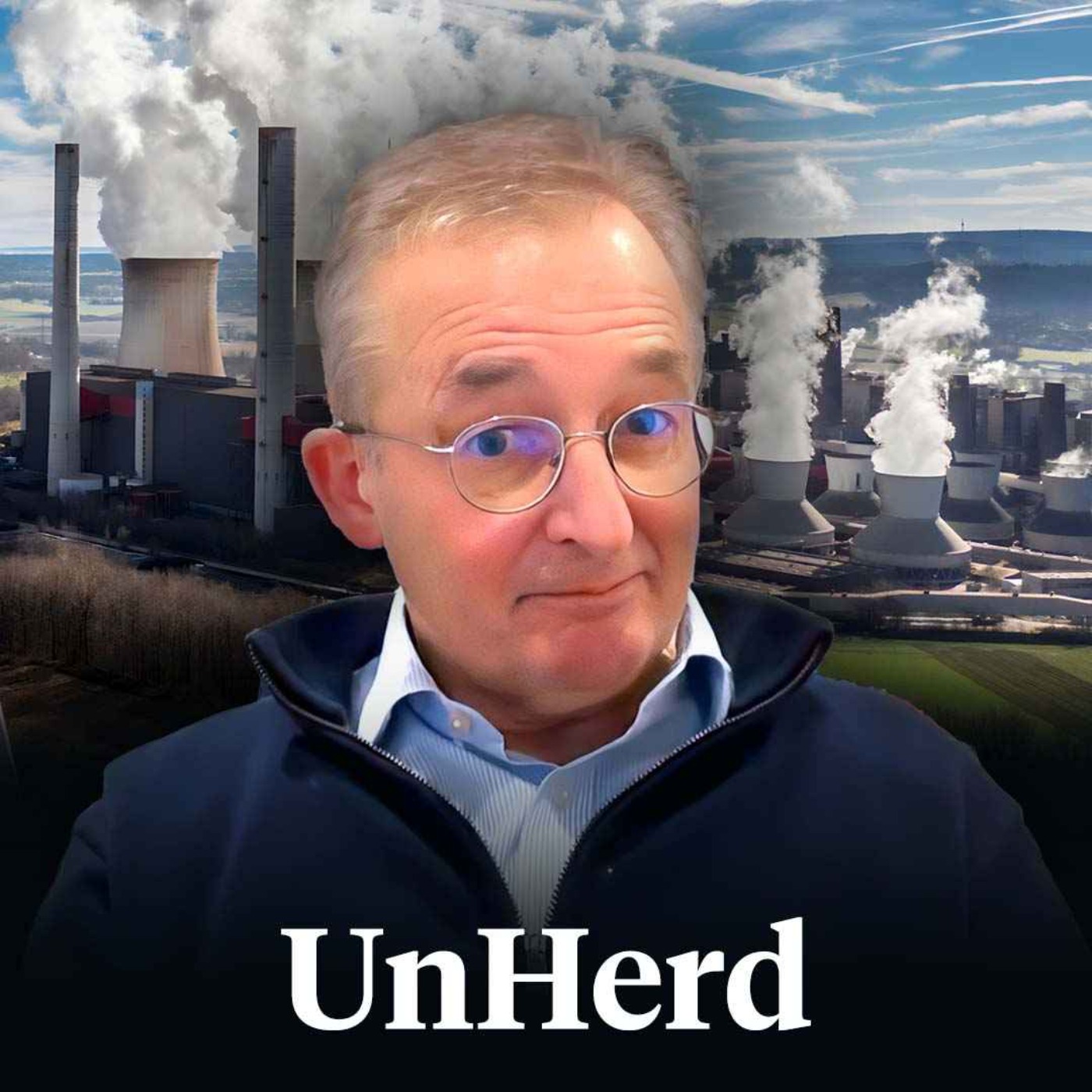
Loading summary
Transcript63 lines
- [00:00]
iHerb Advertiser
Let's be real. When it comes to your health, authenticity matters. For nearly 30 years, Iherb has quietly built one of the world's leading online wellness destinations, trusted by millions of customers in 180 countries. At iHerb, every product comes from verified top rated brands, stored, handled and shipped directly from our own climate controlled, state of the art facilities. No third party sellers, no shortcuts, just the highest standards of quality and transparency from cart to doorstep. That's why more and more people are turning to iHerb where wellness and integrity meet. Visit iHerb.com trusted wellness delivered worldwide.
- [00:45]
Sherrell Dorsey
Hi, this is Sherrell Dorsey from TedTech and this episode is brought to you by Solidigm. The world runs on data in data relies on storage. But most businesses rarely think about how crucial that storage really is. The truth is it's no longer just a commodity with new demands and constraints, especially from AI. The old ways of managing data are holding innovation back. Solid state storage from solidigm is changing that. It helps reduce energy use, shrink physical footprints and accelerate data at the edge, unlocking more from your AI infrastructure. Learn more at whatsthestateofyourstorage.com.
- [01:27]
Interviewer (Unherd Host)
Hello and welcome back to Unherd and happy COP Week. Yes, this is the week where members of the elites from around the world, we're talking about members of governments, top business people, think tanks and all the rest of it gather, usually by a private jet in a far away warm and sunny location. In this case it's Rio de Janeiro. And talk about how they're going to save the world with new climate targets. This is actually the 30th such summit that has happened. It's called COP 30. We've already had lovely pictures of Prince William posing in front of Christ the Redeemer statue above Rio de Janeiro. That's a famous image recreating something his mother did. He was presenting something called the Earthshot Prize, which is another green prize that they've kind of tacked on to the COP Summit. Keir Starmer, our Prime Minister, will also be headed out there to make some grand announcements. But meanwhile, in the real world, voters across Europe, the United Kingdom and certainly United States are basically fed up with the direction of travel of these climate policies. They feel they're being impoverished by them. They don't feel they are being effective. And it feels a little bit now like there's a parallel world. The summits carry on, the targets carry on and the politics is almost unmentioned. Well, we found someone I think today who can help bridge that Divide. Professor Sir Dieter Helm is the rarest of creatures. He is inside the climate movement. In fact, he's about as high ranking as you can get. Not only is he a professor and a sir, he is the Economics professor at Oxford, based out of New College. He has written multiple incredibly influential and best selling books including the Carbon Crunch and Net Zero. So he speaks from inside the movement and yet, as you're about to hear, he is fed up. He's fed up with the way the movement at that level just carries on the same kinds of targets in his view. Disingenuous, badly thought through and ineffective. And as you're about to hear, he has some quite robust things to say about where it's all gone wrong. So as the leaders gather in Rio de Janeiro, we thought we'd invite Professor Dieter Helm here to unherd to speak some home truths about how the movement went wrong. Welcome to Unherd, Professor.
- [03:50]
Professor Sir Dieter Helm
Thank you for having me on.
- [03:53]
Charles Stanley Wealth Management Advertiser
Before we start this episode, a brief word from our sponsor, Charles Stanley Wealth Management. The economic tumult of the past month has forced many people to take another look at their finances and whether their retirement plans are on track. This is where having an experienced wealth manager can make all the difference because it's not just trying to hit a number, it's about planning the life and lifestyle that you want to lead. Charles Stanley Wealth Management can help you chart your financial course, guiding you on when you can retire comfortably, as well as how best to pass on your wealth to the next generation. Unless you're planning to spend it all, discover how partnering with a dedicated wealth manager can let you focus on what matters most. For more information, visit charles-stanley.co.uk today to schedule a free no obligation call to discuss your your situation. And remember, investment involves risk.
- [04:38]
Interviewer (Unherd Host)
First of all, before I really want to get into your latest blog that appeared on your website, which was really stunningly clear about the failures of the British energy policy. But before we get into that, do you share the sense I just gave at the intro there that there is a bit of a change of mood?
- [04:54]
Professor Sir Dieter Helm
It's certainly the case that in a number of countries the consensus about climate change and what to do about climate change is breaking down or has already broken down. That's true of the UK in particular, but it's true right across Europe and in the United States. That's the first thing. The second thing is amongst that breakdown, there are really two groups who question what's happening at the moment. There are people like me who look at alarm at the continued increase in the concentration of carbon in the atmosphere, which has been going up at 2 parts per million ever since 1990. And ask ourselves, what's the. Why the hell have we achieved so little over such a long period of time at such cost? And how could we do this better? And there's another group who really don't want to do anything about it at all. And they may or may not be as far as Trump in saying it's a hoax, but they stick their heads in the sand and say, not our problem, can't do anything about it. Someone else should deal with it. And Bill Gates is quite interesting in this regard because when he wrote his book about climate change, he went on and on about how technology was going to solve it without explaining how. And then put right up front, well, I do have a private jet, but you know what? I buy offsets. And that's really not coherent. Either he cares about climate change and takes the view that we can do better and faster, or he takes the view that actually, you know, malaria is a more important problem. And hey, it doesn't really much matter if we backtrack. I'm not in that camp.
- [06:24]
Interviewer (Unherd Host)
Let me just read you the quote that has got everyone so either excited or appalled in recent weeks. This is on Bill Gates blog. So he says, quote, the doomsday outlook is causing much of the climate community to focus too much on near term emissions goals. We are diverting resources from the most effective things we should be doing to improve life in a warming world. Although climate change will have serious consequences, particularly for people in the poorest countries, it will not lead to humanity's demise. I'm sure he will find examples where he has said similar things in the past. But to most people that feels like a very substantial change of tone to downplay the immediacy and the kind of end of world nature of the risk, rather than playing it up, which seems to be what he's done for decades.
- [07:09]
Professor Sir Dieter Helm
Bill Gates is one of the tech billionaires and I'm sure their opinions matter. Musk thinks we should just go and start a colony on Mars. You know, these people have opinions. But the fundamental point here is that some of what he says is just blindingly obvious, right? It's not going to be the end of humanity this century if the temperature goes up 2 or 3 degrees. We're not all going to be terribly badly affected, but some will be very badly affected. Okay, now the second question is a question of urgency. You know, how many parts per million do you want? We've gone from 275 to 428 while we've been pursuing these policies, which have made not much difference. Do you want to go to 500? When was the last time that the concentration of carbon in the atmosphere is at 500 parts per million? And what was the climate like now? The world will go off on. Nature will handle these things. We've had big variations in the geological past, but never so quickly. And that's the bit that worries me, that we have a whole set of people who think the existing policies are going to solve this problem, and they're clearly not. In a country like the UK has the highest electricity prices in the world for the industrial sector, for the developed countries, who's going to follow that pattern? And which of these policies are actually going to work? But you can then have two reactions. One is to say, let's just give up, or it's not that important, or we just focus on adaptation. Or you can say, could we do it better? And could we do it substantially better? And could we address this fundamental challenge alongside the loss of biodiversity, or are we just in a hopeless position? And I think the onus is on first, which causes me a lot of grief from people in the climate community, that it's worth pointing out that many of the existing policies are really badly designed. And then secondly, it's beholden to say, could you do it better? My view is it's quite hard to do it worse. Right. And I have suggestions of how to go forward or take the, you know, the excitement about the COP in Brazil. Right. So 84% of the world's energy is oil, gas and coal. 2 or 3% is wind or solar. People don't seem to recognize how far out we are from this frame. And there's Brazil. Brazil wants as much money as possible to pay it, not to cut down the rainforest. And its main energy policy is to be in the top 10 oil producers in the world, preferably slot number four. Now, we should be honest about. And there's a road being cut through the rainforest to get people to this conference. Do people really think that's the way to go about addressing global warming?
- [09:58]
Interviewer (Unherd Host)
I mean, I guess why? I think what you're saying will resonate with a lot of viewers and listeners because this conference cop, it's basically the annual kind of climate jamboree where everyone gets together, takes a lot of airplanes to a particular place and makes supposedly decisions that are going to save the world that never seem to. What you're suggesting is a lot of that is hypocritical. And a lot of it is about bargaining and countries talking in one way and doing deals in exactly the opposite way. I mean, the most recent Gulf based cop, there was talk that there were oil deals being struck on the sidelines of cop. I mean, how hypocritical do you think that kind of elite global climate summitry really is?
- [10:40]
Professor Sir Dieter Helm
Well, I wouldn't use the word hypocritical. Right. But I would say ineffective. So we've had 29 of these cops so far. This is number 30. Right. And you have to ask yourself, what's the impact been? If you go back to 1990 when this process started, or the baseline is actually 92, if I told you that every single year the concentration of carbon in the atmosphere would go up two parts per million, you wouldn't stand today and say what a great success this has been. And by the way, the only number that matters is the concentration of carbon in the atmosphere. It's net of emissions going in and sequestration going out. And the problem is not just about controlling emissions, it's about stopping, destroying the natural world's ability to absorb carbon. That's half the problem. And nobody talks about that. Now what's this COP going to do? Well, there's going to be grandstanding. Our Prime Minister in the UK is going to stand up there and tell us we're leading the world. Boris Johnson told the Glasgow lot that Britain was leading the world and the leaders of China and Russia were looking to us to find out how to do it. It's smoke and mirrors. We've been de. Industrializing, right? We've in recent, recent, very recent past, we've getting rid of our big petrochemical plant at Grangemouth. The steel industry's virtually closed down. At one point the car industry production had gone back to the 1948, the cement used in the economy is back to 63 number, the fertilizer industry is closed, et cetera. Well, of course the emissions fall, but we haven't stopped in the UK consuming steel, petrochemicals, fertilizers, et cetera, we just import them from somewhere else. And that's why the Europeans think they're doing so well in carbon territorial production terms. But in carbon consumption, which is the only thing that matters to measure your and my input what, how much carbon is in what we use. That's where that 84% of fossil fuels counts. You take the cost. So, you know, 90,000 people flew to one of these things, right? I don't fly, but they all fly there, they go through the cleared rainforest to get there. And what's the outcome? It isn't an outcome which is consistent with 2 degrees warming or, you know, 1.5 or whatever the aspiration is. It's just more of the same. And the climate can't survive more of the same. And the really dangerous thing is people come away and think they're doing something. They think, oh, we can forget about climate change now because we've had our COP and we've agreed all these wonderful things and the world leaders have told us, as they do every time, that they're saving the planet. They're not.
- [13:20]
Interviewer (Unherd Host)
Well, so a better word might be deluded then you didn't want to use the word hypocritical. You're more generous reading is they might sincerely believe they're saving the world, but they're not because they're going about it in the wrong way. Let's talk about the UK for a moment because that's something you have been focusing on and just laying out really how almost self sabotaging our policies have been in recent decades. You talk about the deindustrialization, this has happened across the Western world and seems like it is in no small part responsible for a big part of the political upheaval. A lot of voters that used to be employed in those industries are very upset and very angry and are looking for all sorts of political solutions. So it's really, if not effective, climate wise, it has had a huge effect on the politics. And what you're saying is just a really terrible lesson to take in, which is that all of that pain and all of that disturbance hasn't actually helped the climate at all.
- [14:18]
Professor Sir Dieter Helm
I focus on the UK because it's supposed to be the poster child of addressing climate change. And that's where the illusion is really very, very stark. So our politicians tell us renewables are nine times cheaper than fossil fuels. They tell us we're going to have cheap energy. They tell us it's homegrown and they tell us it's secure. They tell us it's clean. By the way, there are no clean energies in the world. They're all dirty. Just some are more dirty than others. Look at the supply chain, look at the mining to make the batteries, the critical minerals, all those component parts. It's not that that's an argument against renewables, it's just you have to be a little bit nuanced to see where this fits together. So it's not clean. It may be more clean than the alternatives but there's a lot of pollution in the supply chains. Supply chains are almost entirely Chinese. 80% of the world's solar panels are Chinese. Most of the critical minerals are Chinese. Most of the rare earths are Chinese. 50, 60% of the batteries and EVs are Chinese. You can go on. Right. And we are importing foreign stuff into our economy to assemble, to put into these technologies.
- [15:33]
Interviewer (Unherd Host)
So just to make that clear to the audience, that means that every windmill, every electric car, every kind of new technology that makes you feel good that we are somehow making progress in the fight against climate change, inbuilt in that is a hell of a lot of could well be coal fired power stations, mining, all sorts of things that are happening mainly in China, but all around the world that are happening just as much to produce those technologies as if we had carried on doing our more primitive energy supplies here at home.
- [16:06]
Professor Sir Dieter Helm
Well, there may be more or less polluting, but they're not zero pollution, they're not clean energy, they're not zero emissions. Right? That's the important thing. So you should pay attention to those component parts. But the second point is it's not homegrown, right? That's one of the phrases our politicians use. It certainly isn't. It's almost entirely an imported supply chain. And if you look at the claim that it's cheap. Okay, let me just give you just one little insight into how deluded that is. It's true that the solar panel is getting ever cheaper, but that's not the system cost of the solar panel. So in the uk, we need twice the capacity to produce the same amount of electricity. We need twice the grid to produce the same amount of electricity, and we need all the batteries and storage that goes with it that cannot be cheaper than the old system. It may be better because it may be cleaner, but we shouldn't delude ourselves that we're on the cusp of really cheap energy. And why does this matter? Because we're told a story in the UK that we're going to be the clean energy superpower of the world. You couldn't make this stuff up, right? So presumably all these energy intensive industries saying, you know, we better get out of the United States as quick as possible because they're stuck with fossil fuels and they're all going to be expensive in the future, where we're going into a nirvana of fantastic cheap energy, quite the opposite is happening. America is the energy superpower in this world. Alongside China, America has fantastically cheap fossil fuels. It is the largest producer of oil in the world. And it has lots of the technologies to deal with the new forms of making energy and tons of space for solar and wind, et cetera. The idea that Europe is going to be the powerhouse, not only uk, of future energy intensive industries is laughable. But that's what's implied in the assumption we're going to be a cheap energy superpower. We are not.
- [18:12]
Interviewer (Unherd Host)
They say it's clean, which it's not. They say it's homegrown, that it's not. They say it's cheap and it's not. You're an economist. Fundamentally. Lay out for us what the economic cost of much of this has been for Western countries like the uk, like other European countries like Germany, for example. I mean, that deindustrialization has weakened us, has it not?
- [18:37]
Professor Sir Dieter Helm
The fundamental that lies behind all of this is that you're never going to address climate change unless you pay the cost of the pollution that's being caused. Okay? And what that means is it's going to cost to do this. And it's a complete delusion to say you can decarbonize. And by the way, it's all going to be cheaper. Indeed. If that was true, we don't need any policy. We didn't need a policy to get my iPhone right. It's just better than everything else and relative to what it delivers, it's cheaper. That's not true in the particular case. Now, what's really difficult in this frame is that if you want to decarbonise, if you claim that you no longer want to cause climate change and other people don't follow that path, you create a competitive disadvantage, okay? And so it becomes absolutely critical that you must around you impose those carbon costs on the imports that come in, so they're treated exactly the same as home production. That's going to be a bit of the case in Europe, but it's miles away. So the consequence and the Drahi report on Europe to have a little bit to do with came out a year or so ago, which suggests that Europe is like 2 to 3% more expensive in energy than the US. Well, ours is four times more expensive. Now, you can try anything you like about arguments. You can tell us it's all going to be cheaper in the future. But the fundamental reality is that our world is driven by energy. Marx should never have written about the labor theory of value. He should have written about the energy theory of value. It percolates everything we do. And if you have really expensive energy, you are not going to be competitive in the world economy. Now that may be a price people.
- [20:22]
Interviewer (Unherd Host)
Want to pay, but how much of Britain's relative economic decline is explained by our insanely high energy costs? I mean, how closely coupled are they?
- [20:34]
Professor Sir Dieter Helm
It's pretty hard to disentangle because we have a sclerotic labor market. We've increased the taxes on labor very substantially, we've ramped up the minimum wage, we have extremely low productivity and we're pushing a lot of the economy towards the public sector where productivity is actually declining. Now if you put on top of that really expensive energy as well, it ain't going to help. But to give you an insight, we are building the most expensive nuclear power stations in the world, right? We have the most expensive high speed rail in the world, we're going to have the most expensive runways in the world. You know, we have very high costs across the energy sector which pervade our economy. And in those circumstances where you're already extremely vulnerable, putting on the top, the icing on the top of this, that we're going to have very, very high industrial energy prices. But what do you think's going to happen? Right, it's fairly obvious now exactly how much I don't know. But what is alarming is the speed with which the exit of energy intensive industries is accelerating. And even more frightening is the fact that there are no energy intensive industries coming our way apart from a few data centers. Nobody wants to come here even if it takes time for people here to leave. That is not an economic prospect which any government can entertain if the rest of the world is following different policies.
- [22:05]
Interviewer (Unherd Host)
So it really, it sounds a little bit like self sabotage when you put it like that.
- [22:09]
Professor Sir Dieter Helm
Well, I wouldn't call it self sabotage. It's not. I mean that's too hostile. I think it's self delusion, right, that it starts from if you assume all this stuff is going to be cheaper, then you assume it's all fine and you're going to win the competitive race. The problem comes in the face of the evidence which looks to be going in the opposite direction. Do you a say, oh, I better rethink my fundamentals, I better rethink what I'm doing. Or do you say ah, that's not true and you just say, well, you don't know what it's going to be like in 235, it's going to be very expensive now, but we're on the cusp of a world in which it's all going to suddenly become cheaper. It's always possible to promise that the future is going to be cheaper. But the reality, and one of the reasons I wrote my recent paper, is that we've actually locked in the costs of energy in the UK through the regime that we have in place, particularly for the renewables and nuclear till 245. Right? And so the next time that you hear someone tell you, don't worry, this is getting over the hill and it's going to get cheaper in the future, well, they're really talking about the 240s, and who knows, we can't survive the period from now to 240 waiting for that happen. And what really annoys me is that we could do it so much better. We could make more progress on climate change. We could start to address this problem if we'd get out of the straitjacket of a series of assumptions and policies which are basically just digging an ever bigger hole.
- [23:40]
Interviewer (Unherd Host)
Well, I want to come on to what we might do better in a moment, but before we do that, the promises that are still being made by the British government, this Labour government, inheriting most of them from the former Tory government, net zero 2050 is still there. It feels increasingly fragile, but it's still there as a promise. And there's something called Clean Power 2030, which is the promise that 95% of the UK's electricity will be generated by clean sources by 2030. Now, by my watch, it's nearly Christmas 2025, and that looks like it's coming quite soon. But what do you make of those two targets, which are really the kind of core articles of faith of many people in the climate community here? Are they realistic at all?
- [24:25]
Professor Sir Dieter Helm
Well, let me premise my reply with the observation that net zero as it's currently measured would not be a great achievement in respect to climate change. It's only territorial carbon emissions. And by the way, we don't even include the most, I think, one of the most polluting power stations in the whole of Europe, Dracs in their numbers at all, which is the wood pellet power station, because of the accounting rules. So just to premise that, okay, so the two targets, and we're just about to announce our 235 target, and that's going to be one of our great achievements at the Brazil Cop, that we're going to be one of the first to announce what we're going to do by 235, the 230 target. Not a hope in hell. And indeed it's counterproductive, because if you want to go absolutely flat out to achieve this target in what, 50 months or whatever, you're going to have to pay top price for everything. You know, you want a transformer to do a bit of the grid. Well, sorry, you know the order books are full abroad. Well no, no, we must have it because we must achieve 230. Well, how much do you want to buy out the other customers in the supply chain? You know, it's just elementary that if you in a rush to get from A to B and it is the overriding priority, it just costs what it costs and it's going to cost a great deal. And we have this very difficult position that's going to cost a lot because we're trying to rush to get there and we're not going to get there.
- [25:51]
iHerb Advertiser
Let's be real. When it comes to your health, authenticity matters. For nearly 30 years, Iherb has quietly built one of the world's leading online wellness destinations, trusted by millions of customers in 180 countries. At IHERB, every product comes from verified, top rated brands, stored, handled and shipped directly from our own climate controlled, state of the art facilities. No third party sellers, no shortcuts, just the highest standards of quality and transparency from cart to doorstep. That's why more and more people are turning to iHerb, where wellness and integrity meet. Visit iHerb.com, trusted wellness delivered worldwide.
- [26:36]
Sherrell Dorsey
Hi, this is Sherrell Dorsey from Ted Tech and this episode is brought to you by Solidigm. The world runs on data and data relies on storage. But most businesses rarely think about how crucial that storage really is. The truth is it's no longer just a commodity with new demands and constraints, especially from AI. The old ways of managing data are holding innovation back. Solid State storage from solidigm is changing that. It helps reduce energy use, shrink physical footprints and accelerate data at the edge, unlocking more from your AI infrastructure. Learn more at whatsthestateofyourstorage.com we all remember.
- [27:12]
Podcast Advertiser (Sequoia Capital / Knox)
The choices that shaped the course of our lives in business. World renowned venture capital firm Sequoia Capital calls them Crucible Moments. Their podcast brings you inside the pivotal decisions that define some of today's most influential companies. Hosted by Sequoia's Roelof Botha Crucible Moments, Season three pulls back the curtain on the untold stories behind companies like Zipline, Palo Alto Networks, Supercell and more. Hear about the make or break decisions, early stumbles and leaps of faith that turn scrappy startups into market defining forces. Once you're caught up on season three, check out some of the episodes from seasons one and two with guests like Steven Chen of YouTube, Tony Xu of DoorDash, Steve Huffman of Reddit, Brian Chetzky of Airbnb, and more. Tune in to Sequoia's new season of Crucible Moments to discover how some of the most tragic, transformational companies of the modern era were built. Crucible Moments is available everywhere you get your podcasts and@CrucibleMoments.com go listen to Crucible Moments today. Are you still running your business? With one creaky old phone system, missing calls, losing track of messages and scrambling to keep up with your team, it's time to break up with the past and say hello to Kuo. Kuo is the number one business phone system with 4.7 stars across 3,000 reviews on G2. Quo brings all your business phone calls and texts into one app for your team. No more juggling devices or being tied to a landline. Quo's built in AI logs calls, creates summaries, automates follow ups and can even answer and route calls, so you never miss an opportunity. Whether you're a solo operator or leading a growing team, Quo keeps you connected and helps you deliver standout customer experiences. Join over 90,000 businesses using Quo and see why it's the one business phone system for customer satisfaction. Level up your workflow with quo. Get started free plus get 20% off your first 6 months at quo.com business that's quo spelled q u o.com business and if you have existing numbers with another service, quo will port them over for free. Quo no missed calls, no missed customers.
- [29:26]
Interviewer (Unherd Host)
On 230 as you're calling it. Do you think most people inside government realise this? Do you think even Ed Miliband, we've said his name. Even inside the head of Ed Miliband, is there a kind of cognitive dissonance or does he accept this, do you think?
- [29:39]
Professor Sir Dieter Helm
I just cannot comprehend the idea that anyone who's thought about this subject could genuinely think they're going to meet it. I think it's going to be political spin. You know, it's going to be, well, we tried our best. Of course it was always just an aspiration, but give us another five years in power and we'll sure make it right. You can see the spin already that comes out of this. I'm not a political person, but I'm sure they've thought about how to spin themselves out, but I don't think they can really be in much doubt that it isn't actually going to be achieved. Now in other bits of the government, they're much clearer. It's not going to be achieved. So I think the Treasury, I think the Prime Minister's in that particular space. But the politics are very difficult. And Starmer tried to move Miliband in the summer and he refused to go. And now we're in a position where, because of the left of the party, because of the growth of the Greens, et cetera, all of this is part of the normal political world. Basically, Starmer's going to stand up in Brazil and support the existing policy and then he's married to the policy going forward and he's going to have to keep talking that process through.
- [30:45]
Interviewer (Unherd Host)
Let me just ask about 2050, though. Is that equally unlikely, the full net.
- [30:49]
Professor Sir Dieter Helm
Zero edge, the whole point about 250? It is beyond the political life of most of the people making decisions today, and probably beyond their life too. It's almost certainly beyond mine. Right. But it's a quarter of a century away and you might think, well, you know. Well, we already know. I mean, I'd say we're committed to a lot of the costs of this framework, but all sorts of things could happen. There's a cornucopia of stuff going on in science. I mean, the iPhone is only 2007, 2008, and that's a computer in my pocket is more powerful than Oxford University had in 1980. Right. You know, and we've got quantum computing, got AI, we've got all those technologies coming down the track, we've got all the synthetic biologies, et cetera, et cetera. So who knows? The question is really rather a different one, which is that if you think that 250 is mid century, a point that the world should try to aim at and deal with global warming, you should ask yourself the following question. What is it that we can do which has the most impact on global warming? And that is not the same question as what can we do to get the territorial emissions down? Now, the UK has certain advantages. That's what we should spend our money on if we care about global warming. It's not Oxford warming or English warming, it's global warming. And the determination of future global warming through to 250 are Nigeria, which will go from 250 million to 500 million people in that period, Indonesia, India, with a growth rate of 6 to 8% per annum, Latin America, Brazil, et cetera, et cetera. These are where the great emissions growths of the future are. And this is where the natural capital and the sequestration potential is being most.
- [32:35]
Interviewer (Unherd Host)
Damaged because of population Growth?
- [32:37]
Professor Sir Dieter Helm
No, and economic development. I mean, the Energy Minister of India said at a previous cop, and actually the Brazilian ones have said this time, you know, pretty honestly, okay, so you guys in the developed countries burnt all this oil and gas and coal and you now want us not to develop using that stuff because you don't want to suffer the global warming as a result of that. Pay us not to do it.
- [33:02]
Interviewer (Unherd Host)
But professor, we can't afford it. That's the answer to that question. Those economies are actually growing, ours aren't. It's just completely impossible that we can start paying India.
- [33:12]
Professor Sir Dieter Helm
Okay, so be honest. Okay, I agree with you that we're not going to pay them. You have to be realistic. And the COP process, by the way, is the UN process of North South. It's actually about trying to extract money from the north and give it to the South. That's what it's always been about. Back to Brundtland. So if we're not prepared to do that, then you have to accept certain consequences. We're not prepared to pay for the environmental damage we're doing. We're not prepared to address climate change and the destruction of ecosystems and therefore they're going to happen. But my punchline has always been what we're doing is not sustainable. I've never met anybody who thinks what we're doing is sustainable. If something is not sustainable, it will not be sustained. You can't escape the consequences because you're not willing to address the causes. And the consequences are with us. And this is where people reasonably differ. You know, I think 3 degrees warming is pretty damn nasty, right? There may be people like Mr. Musk who don't really care about these things or think that it's okay because we can go to Mars now, that is part and parcel of confronting the issues we have. I wrote a book called the Legacy, setting out what a sustainable economy would look like. It's perfectly straightforward to apply and say nobody's going to do that. But then you have to draw the conclusion nobody's going to address these environmental problems. And then you draw the conclusion. Therefore, we face a very unsustained future.
- [34:43]
Interviewer (Unherd Host)
I think what a lot of people are probably thinking, and the political turns of the last few years are proof of this, are that they mean well. They would like the environment to be sustained. They don't want to move into some ghastly future where, you know, habitats are going to be destroyed and life's going to get harder. But given everything you've said, which I think people intuitively understand, which is that our ability to change that is so relatively small. The cost of destroying our own economy, not having, you know, any kind of means to progress in our own industries and businesses and jobs and lives and is too high a price. And they're not prepared to sustain it anymore. And that's why there is something approaching a revolution against these climate policies. And we'll see in the coming years how successful the political opponents of them are. But right now, it certainly feels like the wind is at their back.
- [35:41]
Professor Sir Dieter Helm
Yes. So I think the core deceit in all of this is politicians telling us that it wasn't going to cost us anything to address climate change. If you ask people and climate activists trot this out all the time, everyone wants to address climate change. Yeah. Now tell them it's going to cost you ten pounds a week. Not interested. Right. And that's the fundamental point. We claim to care about the environment, we claim to care about future generations, but we don't. We're not prepared to face the cost. And frankly, if you've been told by politicians repeatedly isn't going to cost you anything, and then you find out it really is, you find out that far from the nirvana of cheap energy, you have some of the most expensive electricity in the world. Well, it's not surprising how people react to that. But the fundamental point, and you can't escape it, is climate change and environmental destruction more generally is a result of us living beyond our environmental means. There's no escape from that. Okay. And if we're not prepared to live within our environmental means because we want to sustain the lifestyles and economies and the GDP and all the stuff we have at the moment, well, then you're not going to solve it. It's not going to be sustained. Right. And then you face that unsustainable future going forward. You can't get out of jail. There's no get out of jail card here at all. This is fundamentally happening. And the question is, do you want to do anything about it and what.
- [37:08]
Interviewer (Unherd Host)
That means, what you're sort of bumping up against, There is a, is a reduction in the amount of energy each of us consumes, basically, isn't it? It's, it's saying we need to do. Do less or do.
- [37:19]
Professor Sir Dieter Helm
There's no shortage of energy whatsoever. The sun comes up every day. An hour of sunlight is worth, I think, the world's total electricity consumption for a year. There is not a shortage of energy. There is a shortage of non fossil fuel energy, which is cost achievable. Okay. So you could power the world many times over. It's a complete delusion that we have to use less energy. We just have to use less of the wrong kind of energy. But the trouble with the get out of the fossil fuels is they're actually fabulous fuels. Oil is fantastic. It's energy dense, it's easy to transport, it's really abundant. Gas is like that too. Coal comes in vast heaps. They're really cheap. That's why the 20th century happened. That's how we got from 2 billion people to 8 billion people. Fossil fuel. Fossil fuel, Fossil fuel. Incredibly cheap. What we found is the consequences of that for the planet as a whole are really challenging. But we don't want to face up to the challenges and instead we kid ourselves and pursue these policies which actually are quite often quite close to counterproductive and pretend those are going to be cheap when there's really no evidence to support that. That. And that's the position we find ourselves in now.
- [38:43]
Interviewer (Unherd Host)
So the British government and many European governments, Germany comes to mind, are just continuing in the same trajectory they've been in for recent decades. It seems some of the rhetoric has changed. It feels like even the two of us having this conversation in the language we're using might have been harder to do five years ago because of the kind of taboo atmosphere around raising any of these questions. So I feel like the mood may have changed and the rhetoric's changed. But a lot of Western governments, with the exception of the United States, are just carrying on, aren't they?
- [39:16]
Professor Sir Dieter Helm
Not. Not quite so. If you look at what they're actually doing, as opposed to what they say they're doing, it's a lot more nuanced. And also you have to look back, you know, what did Germany do? Well, it closed its nuclear reactors, good reactors, which were safely maintained because it was too dangerous to have nuclear power, particularly after Fukushima. And they import the nuclear power. France, you couldn't make it up, really. The French put nuclear power stations on their border. They built 13 gigawatts of new coal. They went from nuclear to coal. This isn't a proper environmental policy. The real reason in Europe was to do with the electoral geography. You don't have this in the United States. Green parties became vital to the formation of coalitions, especially in Germany. And green parties were anti nuclear and pro renewables. And that's the price that came forward. And with it came a whole rhetoric about how they're all going to be cheaper, et cetera. I mean, Germany, the energiewender, was going to create the new global renewables companies. It was an industrial strategy. We still have the same stuff trotted out as the argument uk. So where are the global German companies a quarter of a century later? None of them are in this field. The idea that Britain is going to be a clean power superpower, sorry, a clean superpower, whatever it's called, and cheap energy, etc. I mean, really, where are the mineral refineries, the lithium, the cobalt, the nickel, the copper? Where is the battery manufacturer? Where is the solar panel manufacturer? It's not here. Indeed, even in the United States, they were wiped out by the Chinese. We created a wonderful market for the Chinese, particularly the Germans, with all those solar panels at the beginning for the nice sunny skies of Germany. Not okay now. The reality is, you know, politicians find it very hard to say, you know what, we got it wrong. This wasn't the right way to go about this. That only happens when you have cathartic changes in the political world. We had it in our country between the politics of the 1970s and when Thatcher came into power in the 1980s. What you've got going on now is instead of a reasoned argument and debate about the best way of doing energy policy, which is always long term, always requires consensus, we now have this huge split in which the right, the Conservatives and the Reform Party want to abandon the climate change policies and the targets and the Climate Change act, and the left, and particularly now the very successful Green Party, want to double down upon it. It's now clear political blue, or red water, you like to call it. And that's how the argument is now being taken forward into a much more dangerous, polarized argument about climate change. But it's caused by the way it's been gone about so far.
- [42:19]
Interviewer (Unherd Host)
But if someone had been listening to you now for the last half an hour, explain all of the frankly stupidity of the energy policies we've had in recent decades, you might well be inclined to go for the reform or right wing of the Tory party that express that frustration. Just fed up with it, don't want more milibandism, can't be bothered with it, chuck it out. Why are they wrong to want to vote like that?
- [42:43]
Professor Sir Dieter Helm
I think the problem from the form side, and it's a challenge for the Conservatives too, is they don't really have anything to put in its place. So they know what they're against, but they need to sort out what they're for and they need to think about whether they want to just abandoned, abandon addressing climate change, or they want a more nuanced policy. Now, I think that's probably where the conservatives are, but it's not where reform is. Okay, now will this help us out of our current mess? No. Okay. What we need in energy, the great successes in energy policy around the world, in France, in Japan, in China, are based on long term policies behind which there is a good deal of political consensus. What I think is incredibly dangerous is when politicians deliberately try and draw very sharp lines. And that's what this government's been doing. And the reaction is obvious from the other side. And the net result will be that the next election it will be very hard for investors to look at the market and say, do I invest or I don't? Well, who's going to be in power? Because they're completely different frameworks. I mean, Reform Party has said they will not honor contracts or they're considering not honoring contracts that this government will enter into in the energy market. Now, I understand why they don't want to do that. But this is very, very hard to run a long term investment world for. So I don't find this at all helpful that it's broken down. And I'm not supportive of, I think, any of the party's energy policies. What I am supportive of is not digging the current hole any deeper. But think about positively what you actually could do. And if you take the amount of money we're currently spending on the current policies, it will be not that difficult to do it a lot better and have a much bigger impact on climate change than we're currently having, at least economically.
- [44:44]
Interviewer (Unherd Host)
Do you think the more Trumpy route. Drill, baby, drill. You know, let's have as cheap energy as possible, basically, because data centers as well as new industries rely on it. And that will be good for the economy, whatever it does to the climate. Which seems to be a fair summary of the Trump position. I mean, is that good economics, even if it's not good climate science?
- [45:06]
Professor Sir Dieter Helm
Well, first of all, let's put Trump in perspective. Trump's energy policy and George W. Bush's energy policy and Obama's policy and Biden's policy have all fundamentally had behind them the substantial expansion of the American oil and gas industry. So Obama presided over the greatest expansion of fossil fuels in America that America has ever seen. The rhetoric's completely different, right, between these people. But even in the Biden administration, the oil and gas industry did very well. And fundamentals lie behind that, which is that shale gas in America in particular is fantastically cheap. You know, it's four times cheaper or more than in Europe, okay, that's the great blessing Americans have. Now, in that context, does that give them a competitive advantage? Yes. Right. And it gives them an even better advantage if, while Biden and Obama might talk nice things about climate change and make great speeches, that cops, et cetera, both of them did, by the way, actually, behind the scenes, they're letting quote markets work, and that's what they've done. And remember, the reason oil and gas companies produce oil and gas is not because they sit around the boardroom and say, you know what, let's pollute the world a bit more. They sit around and say, what's the demand for? And we buy the oil and gas, and if people want to just stop oil, it's very simple, stop buying it. But of course, people don't want to do that. They want to consume it. And what the American industry has done is provide for that. But it's also done quite a lot of wind, quite a lot of solar, and it is getting serious about the mineral supply chains, which Europeans aren't.
- [46:58]
Interviewer (Unherd Host)
Should Europe try to take a leaf out of that playbook? I mean, we don't have the same vast reserves, obviously, but is there anything we can learn from America?
- [47:08]
Professor Sir Dieter Helm
America is blessed with the most incredible endowment of natural resources, what I'd call natural capital. It has virtually everything, and it's a big country with less people than Europe. It's got wide open spaces. It's got huge technological depth. Europe has very few of those things. It's more densely populated. It has very few natural resources left. And its scientific and technological basis has largely been supplanted by the American tech codes, et cetera. And it doesn't have cheap labor like the developing countries countries have. It really doesn't have many of the cards which will be played forward. Now. What I wouldn't do in those circumstances, do silly things like, say, tell you what, let's stop as fast as possibly can oil and gas in the British North Sea and import it from the Norwegian North Sea instead, which is what we've done. Yeah, and let's import LNG from America. I mean, it's vastly more polluting. To import LNG by ship, you've got to compress it, decompress it. The environmental footprint is much bigger. Let's do that instead.
- [48:24]
Sherrell Dorsey
Hi, this is Sherrell Dorsey from TedTech, and this episode is brought to you by Solidigm. The world runs on data, and data relies on storage. But most businesses rarely think about how crucial that storage really is. The truth is, it's no longer just a commodity with new demands and constraints, especially from AI. The old ways of managing data are holding innovation back. Solid state storage from solidigm is changing that. It helps reduce energy use, shrink physical footprints and accelerate data at the edge, unlocking more from your AI infrastructure. Learn more at whatsthestateofyourstorage.com A lot of.
- [49:00]
Podcast Advertiser (Sequoia Capital / Knox)
Supplement brands chase trends, but if you're serious about your health, we know research backed science is what actually moves the needle. Momentous works with the best brains in human science to create every formula and every batch is made of pure ingredients tested for safety and does not contain fillers so you get the best long term results possible. Creatine isn't just for muscle gains. It's essential daily fuel for your brain, body and long term performance. Momentous Creapure Creatine is backed by leading performance experts like Dr. Andrew Huberman and Dr. Stacey Sims. Sourced exclusively in Germany, Creapure sets the gold standard for creatine, delivering the purest form creatine monohydrate that's rigorously washed and never cut with fillers. With over 2,000 five star reviews, over 112,000 customers have seen the results firsthand with Momentous. The fundamentals are done right. Right now Momentous is offering our listeners up to 35% off your first subscription order with promo code Acast. Go to livemomentous.com and use promo code Acast for up to 35% off your first Subscription Order. That's livemomentous.com promo code Acast.
- [50:09]
Interviewer (Unherd Host)
So it sounds from that that we should be firing up our own North Sea reserves as much as we can because at least it will be less polluting and cheaper than bringing it from across the other side of the Atlantic.
- [50:20]
Professor Sir Dieter Helm
Well, I'd say it's not sensible to try to quickly stop it. You need a more nuanced policy for that. And our North Sea policy is not nuanced. It's playing to the Just Stop Oil brigade. And the Just Stop Oil activists are environmentally very dangerous because if we just stopped oil, the world's economy would stop and the environmental consequence of that and the mayhem that would follow would be really horrible. We got to be nuanced about the so called transition and that's so on the North Sea. Let's have a more practical position and actually quietly the government's doing that while talking the rhetoric in public, so relaxing their position a bit, talking about near neighbour fields and so on and so forth. But the reality is that Norway is going flat out in its North Sea, discovering new resources, and those pipelines are flowing across from them to us through our balance of payments.
- [51:16]
Interviewer (Unherd Host)
We've brought you into the House of Lords. You're already a Knight of the Realm. We've now made you an emergency peer and Energy Minister in some new kind of wartime cabinet. So you don't need to be political. What does the Dieter Helm administration do to get us into something more of a sane position?
- [51:34]
Professor Sir Dieter Helm
What I would do is I would immediately rebalance electricity prices between industry and domestic consumers. The industrial energy price should be set in the competitive markets. What makes us competitive, not just bumping through all these fixed and sunk costs in the system. Secondly, I wouldn't expand offshore wind any further. We've done a lot. We've demonstrated the world how to do it. We've got the best site in the world to do it, by the way. But most of those lessons are now learned. So I wouldn't do that in a hurry. I wouldn't build any more wind offshore, and particularly in Scotland, because that's fantastically expensive to get it all the way to the south and build all the infrastructure code. So there's a hole I'd stop digging. I'd probably get very serious about nuclear power. But you either do nuclear or you don't. And if you do it, you have to do it properly. You have to a program. You have to order lots of them. You can't organize like we do. Let's try one and see if it works. That isn't good enough. It doesn't work. You end up in the most expensive nuclear in the world. Okay. And then on climate change.
- [52:38]
Interviewer (Unherd Host)
So we should be seeing five or 10 new nuclear power stations, not one or two.
- [52:42]
Professor Sir Dieter Helm
If we're going to do the SMRs, we need to order 10, not one or two, and see if they work. Last time around, we were going to try four different PWRs and see which one works. We built two and they're the most expensive in the world with a big gap between them. So then on climate change, I would ask for every pound that's being spent, what is the maximum climate change bucks we could get for spending this money, given climate change is global? And I'd focus on those things that we can do in the UK which genuinely contribute to the world addressing climate change. We're really good at R and D. We have developed the North Sea bit and we've transferred that technology. We have the best sites in the world to try out. Ccs, carbon capture and storage may not work, but we've got the best sites in the North Sea to try to do that. These would be the areas where I would spend the money and that would be the focus and I would really address the carbon border adjustment issue. If we're going to make our industry face the costs of the carbon it's emitting, and I'm in favor of that, we have to make sure that imports are on the same basis.
- [53:47]
Interviewer (Unherd Host)
But would you cut out some of the penal levies essentially that are put on companies and private individuals for you say penal?
- [53:56]
Professor Sir Dieter Helm
I'm saying that industrial electricity prices should be internationally competitive and the costs don't go away. When you take price down for industrial customers, you're rearranging the debt shares because the cost of energy don't go down because somebody doesn't pay so much. But you are at least protecting your industries and allowing them to compete in that context.
- [54:19]
Interviewer (Unherd Host)
Thank you so much for joining us and thanks for coming and talking to Unherd.
- [54:24]
Professor Sir Dieter Helm
Thank you.
- [54:25]
Interviewer (Unherd Host)
That was Professor Sir Dieter Helm, someone who carries a huge amount of influence within the climate community, has always been an independent thinker, but expressing really naked frustration there. I mean, this is someone who's thought about a and written about these things for a very long time and he can tell, I think by talking to him there, that he's fed up with hearing so much nonsense. I thought it was refreshing. And thanks to him for joining us. Thanks also to you for tuning in. As always. Let us know what you thought down in the comments. This was unheard.
- [55:06]
Sherrell Dorsey
Hi, this is Sherrell Dorsey from TedTech and this episode is brought to you by Solidigm. The world runs on data and data relies on storage. But most businesses rarely think about how crucial that storage really is. The truth is, it's no longer just a commodity with new demands and constraints, especially from AI. The old ways of managing data are holding innovation back. Solid state storage from solidigm is changing that. It helps reduce energy use, shrink physical footprints, and accelerate data at the edge, unlocking more from your AI infrastructure. Learn more at whatsthestateofyourstorage.com hi, this is.
- [55:42]
Podcast Advertiser (Sequoia Capital / Knox)
Knox from the podcast with Knox and Jamie. What are you reaching for? If you're a smoker or a vaper, you're reaching for nicotine satisfaction and all the problems that come with smoking or vaping. But you could be reaching for Zyn nicotine pouches. Let's talk about what Zyn helps you reach for first. It helps with variety. 10 flavored and unflavored Zen varieties in either 3 milligram or 6 milligram strengths. And also because Zyn is smoke free, you don't have to think about lingering smells or clunky devices. Whatever you're reaching for, reach for it with America's number one nicotine pouch brand. Find your zen@zyn.com that's z y n.com warning. This product contains nicotine. Nicotine is an addictive chemical.
- [56:16]
Sherrell Dorsey
Treat.
- [56:16]
Charles Stanley Wealth Management Advertiser
A free thinker in your life to one year of unlimited digital access to UnHerd. For just $48.50 with a digital subscription, they can read every unmissable article from our star columnists, watch all of our amazing events and video interviews, and join the debate with other subscribers. They can also download the Unherd app to get the whole world of Unherd from wherever they are. I think that beats the old pair of socks, don't you? Go to unherd.com gift to claim this very special offer.