← UnHerd with Freddie Sayers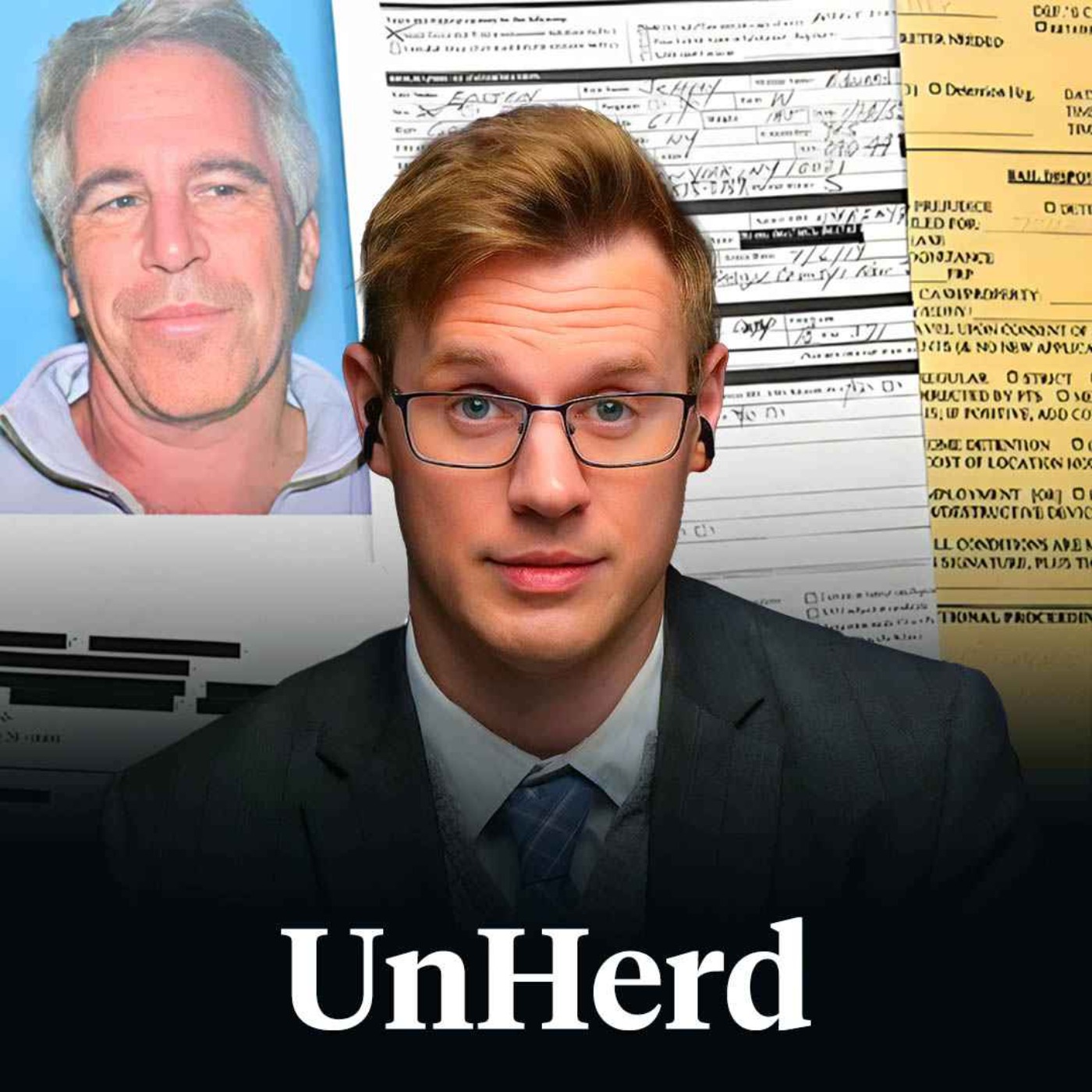
Loading summary
Transcript65 lines
- [00:00]
Grow Therapy Advertiser
Was January supposed to be your big fresh start? Well, sometimes the pressure to fix everything at once just can leave you feeling stuck. Grow Therapy makes it easier to reset at your own pace. With therapy that's covered by insurance and built around your life, you can search by what matters like insurance, specialty, identity or availability and get started in as little as two days. And if something comes up, you can Cancel up to 24 hours in advance at no cost. Whatever challenges you're facing facing, Grow Therapy is here to help. Grow accepts over 100 insurance plans, including Medicaid in some states. Sessions average about $21 with insurance and some pay as little as $0 depending on their plan. Visit growththerapy.com acast to get started. That's growththerapy.com acast growththerapy.com acast availability and coverage vary by state and insurance plan.
- [01:02]
Sarah Gibson Tuttle
Who here loves when their nails are done perfectly? Me. I'm Sarah Gibson Tuttle and I started Olive in June because, let's be real, we all deserve to have gorgeous nails. But who wants to spend a fortune or half their day at the nail salon? That's why I created the Gel Mani system. So you can have that salon quality gel manicure right at home. And guess what? The best part, each mani only costs $2. Yep, you heard me. $2. No more 60, 70, $80. Salon trips that eat up your day. Now you can paint your nails whenever you want, wherever you want. And trust me, you're going to be obsessed with your nails and everyone is gonna ask you where you got them done. And here's a little something extra. Head over to OliveAndJune.com and get 20% off your first gel mani system with code DIYGEL20. That's code DIYGEL20 for 20% off your first mani system at OliveAndJune.com DIYGEL20 foreign.
- [02:03]
Unherd Host
Hello and welcome back to Unherd. If you're watching on the YouTube, you will be able to see that I'm not in our London studio. I'm actually in our New York office where I'm here for a few days. And you'll never guess the story that is gripping everyone here is pretty much the same one that is gripping everyone in London and that is the Epstein files. The effects of it have been so profound that we're now into a kind of third generation of ripple effects in the uk the ambassador to Washington, Peter Mandelson, was sacked for having been an associate of Jeffrey Epstein. The staffer who recommended appointing Peter Mandelson as ambassador has now been sacked for that crime. And it may well be that by the time this video goes out or by the time you're hearing this, that the Prime Minister himself has lost his job through that connection somehow to Jeffrey Epstein. The story seems unconquerable. It is all encompassing. Those very few people who've raised questions about the manner of this story being reported have themselves faced questions. If you raise a question on social media saying you're not entirely happy with the way it's being reported, pretty soon you will receive incoming messages accusing you of somehow being a paedophile or defending paedophiles. So I found someone who is prepared not to do that, but to try to help us chart a sane course through these choppy waters. That person is Robbie Suavey. You will recognise him from earlier visits to Unherd. He's senior editor at Reason and he wrote a great piece for the Free Press and has been out there on social media trying to not exactly combat the hysteria, but just put some perspective, some boundaries around it. Welcome to the show and thanks for tackling this quite perilous task with us today.
- [03:54]
Robbie Suavey
Thank you so much. Good to talk to you about it.
- [03:58]
Unherd Host
So the first issue that you raise in this Free Press article is the question of privacy. So setting aside, and we'll come back to them, the actual crimes and misdemeanors surrounding Jeffrey Epstein, the questions of those people who continue to be associated with him after conviction and so on, your first kind of complaint or query is around the manner of the release of these files because it's quite unusual, isn't it, to just dump huge troves of private correspondence in the public domain like this. Normally they would be kept behind some kind of investigators files. What is your issue with that?
- [04:36]
Robbie Suavey
Yeah, it's, as you said, incredibly unusual to release not just the raw information. But you know, by the way, I remain in support of transparency and clarity around Epstein and how the Justice Department handled this issue. I understand why the public is not satisfied, has questions and wants more information. I feel the same way. I also wanted to see these emails and I was in favor of transparency, but I have to admit that perhaps I did not think it through fully. And Congress, which voted 350 to 1 to release it, or however many members there are of Congress, also didn't think it through because it's not just the emails. The emails are very interesting. They're in the public interest, privacy be damned. But this is also investigative files. These are files that reports that police officers, law enforcement, the FBI, they got tips from people who knew something or claimed to know something about Epstein and who was involved with him. These are their interview notes that we're now out there for everyone to see. They are not corroborated. They could be crazy people. They could be random accusations that have nothing to do with Epstein. There's already on social media, screenshots of these documents are out there informing what people think about Epstein and who is guilty or who he associated with. In some cases, these are debunked ideas, including against Donald Trump, who has no shred of credible Epstein connections whatsoever past the initial unpersoning of him that occurred in the Trump network at Mar A Lago well before any of his crimes came to light. So that is interesting and worrisome to me is a place I began to come at it from skepticism.
- [06:19]
Unherd Host
Yeah, you mentioned that one congressman voted against releasing the files. This is Mr. Clay Higgins from Louisiana, and he said he's voting against releasing the Epstein files because, quote, if enacted in its current form, this type of broad reveal of criminal investigative files released to a rabid media will absolutely result in innocent people being hurt. Not by my vote. Do you think he's been proven right in that worry?
- [06:47]
Robbie Suavey
Yes. I would challenge anyone to argue that he's wrong. I have seen headline after headline person had some correspondence with Epstein. There was another attempt to cancel J.K. rowling. This is a periodic thing. People are using this to grind axes against their enemies in a very reminiscent of cancel culture sort of way. To me, they were trying to prove that J.K. rowling had had Epstein at the premiere of the Harry Potter musical. And actually the files demonstrated that that was not the case. He tried to gain. He tried to be admitted, but was not. But I mean, what if he had? What does it matter? I mean, that is so far removed of any serious accusation of wrongdoing on her part or anyone else's. This is a man, a criminal, a sexual predator. My contrarianism or my skepticism has nothing to do with Epstein himself. He is absolutely guilty of appalling crimes. He was a monster. But this is a man who tried to associate himself with wealthy and powerful people for the purposes of collecting information on them and then blackmailing them to do his bidding. And that is evident in the files. So, anyway, some of these people named are victims of him. And then that effort, despite him undertaking that effort, what I don't think we see, frankly, in these millions of pages of documents is much evidence of what I was promised, which was that he was procuring underage victims for an elite of global Pedophiles that just. That has not found much evidence.
- [08:15]
Unherd Host
Yeah, I think we need to come to that because that is the substance of it. But first, I just want to lay out the principles here because it can be quite hard to think through these things. You think, okay, bad guy. People are understandably upset. There was obviously a kind of unattractive scene around this criminal. And why should we care if various principles are set aside in order to reveal this evil cabal? You know, that is the mood at the moment. But I just want to remind people what those principles are. The first is this idea that you don't share private investigations or incomplete police work or investigative work precisely for the reasons you've outlined. And actually, in your piece, you highlight kind of a neat example of that, which is that one of the images found in these millions of pages was a financier called Glenn Dubin. He's a hedge fund guy, and there's a picture of him reclining, looking quite kind of decadent on a sofa. And there are three young ladies around him, and his hand appears to be on one of their knee. It looks extremely incriminating. And those young people have been like, redacted. There are black squares over their faces. Of course, social media was abuzz with like, release the names. Who is this person? This is pedophilia incarnate. And it turned out to be who exactly? Rabbi.
- [09:30]
Grow Therapy Advertiser
Right.
- [09:30]
Robbie Suavey
It was his own children. His own children.
- [09:34]
Unherd Host
That's a neat example. But that is a real world example. And if you just put this stuff out there, it's going to damage a lot of people in a way that doesn't seem sensible, doesn't seem right.
- [09:45]
Robbie Suavey
Yes. And it demonstrates the kind of slippery slope accusation thing at work where for all I. This was a longtime friend of Epstein. And for all I know, there is something bad that he did or some complicity or some awareness. But you can't just show show me evidence and say, this is evidence, this proves it. Look, here are more kids who were assaulted. He assaulted them. And then I find out after googling it for five seconds that those are his own children. And then you'll say, okay, well, look at something else. But wait a minute. We are talking about accusing people of really of the most disgusting kind of crime there is. We're now just casually throwing out all these examples. It is reminiscent, frankly to me, of other examples of a witch hunt mentality taking over of cancel culture. I've done coverage of people accused of making racial hand gestures. And then you find out that was an illusion or Having a racial tattoo or all the reporting that myself and others have done on, for instance, free speech and sexual assault on college campuses. Was there sexual assault? Absolutely. But we don't throw our principles of due process out to your point about maintaining principles. We don't just say because there are bad people that we're suddenly going to believe every accusation and treat it as fact without additional evidence and in violation of our principles of due process. I'm seeing remarkable parallels to that category of stories.
- [11:11]
Unherd Host
The other principle here is privacy. Like people don't think clearly enough about how grave it is to suddenly put millions of private emails out there in the open. Like which of us. Anyone's private correspondence will have things that are embarrassing to them. Even just the way you talk to your close friends or your loved ones or your family. We've reached the stage with this Epstein story that just a screen grab of an email between him and anyone which appears to show any kind of intimacy or friendship if it ends with an X for example, or if there is some kind of in joke is, I don't know, evidence of guilt. It's literally the dictionary definition of guilt by association.
- [11:53]
Robbie Suavey
Yes. And there was another example. There was an email that appeared to reference a nine year old, which would be a shocking and scary thing that a nine year old was in any proximity to Epstein. But it turned out that was a formatting error. So it was actually supposed to be a 19. 19 year old. Which reflect whatever moral judgment you. Again, it was not even alleged that there was a sexual thing going on, but people saw a nine year old in an email, freaked out about it, but it was 19. And that email I saw referenced by a congressman just the other day as if it was a nine year old. And I'm like okay, but that has been dealt with. That has been debunked. That that's not what it said. So we can't. How can we have the truth if we're now operating off of debunked ideas? And that worries me.
- [12:38]
Unherd Host
It feels like everybody when reading these kind of personal correspondences should fear for themselves. Because if the, if the principle is now established that privacy is no longer a thing, we don't care about it, we're going to be in a much more scary world. And it's the opposite of a free speech society. If there is no rule of privacy and some of the stories that are coming out are just kind of any old thing that is revealed by the emails, casual exchanges that have nothing to do with crimes that might be titillating or interesting why that is in the public interest, in the technical sense of the word, I don't understand. But I don't hear a lot of people talking about any of that because. And we may find that if this video or audio goes out, we may find the same reaction that you kind of, what are you defending the pedophile? Are you kind of part of the global elitist conspiracy? Were you yourself a signatory? Are you on the manifest in some kind of Epstein island monstrosity?
- [13:37]
Robbie Suavey
Yeah. In the same way they'll say to me, when I used to say, well, we still need standards of due process if you're accused of sexual misconduct on campuses. They would say to me, back then, it was usually progressive feminists would say, well, you must be a rapist then, or you're apologizing for rapists, or if it's about a racial episode, you must be a racist. You're apologizing for racist. That's the kind of hysteria and shrieking I'm accustomed to from some in the progressive woke, whatever you want to call them. And now those of us who have questioned this at all have faced this from at one point, MAGA people, I think it was MAGA most interested in this story because they thought it would prove that their enemies, Democratic elites, the Clintons themselves, were complicit in sex crimes with children. And then Democrats latched onto the idea that it would demonstrate Donald Trump was guilty of that. And neither of those ideas, I must emphasize, has found a shred of evidence whatsoever in any of the files that are released. And I think that should prompt some kind of reckoning of the theory. If your theory was that this was going to demonstrate past presidents of the US and other significant political figures were having children trafficked to them for sexual purposes, that was what we were told. There is not a shred of evidence of that. And some people will then say, well, that's still being withheld. I think at some point you have to, I guess you have to go all the way there, say it's still being fiercely guarded, or I have to revisit my assumptions about this and conclude that while there is bad and unseemly and perhaps immoral behavior among these people adjacent to Epstein, the theory that was advanced, we have not found support for.
- [15:25]
Unherd Host
The politics of it is interesting because it's gotta be the first time that Bill Clinton and Donald Trump are on the same side of a controversy. When it was geared towards the Clinton end, and we were told that there were going to be revelations around Bill and Hillary Clinton. The story was downplayed by CNN and the liberal media as a kind of conspiracy theory that should be squished. Then they found the note purportedly written by Donald Trump to Jeffrey Epstein with the supposed drawing. I have no idea about the authenticity that then flipped it and suddenly CNN was like absolutely leading with the Epstein scandal. And it was a huge story that they can't believe. They didn't report more. And now we're finding that Bill and Hillary Clinton are going to testify in some kind of closed or open hearing. And there are new documents I think, coming out today and yesterday suggesting that Donald Trump did speak to some local law enforcement officer in Florida saying that Epstein was a bad guy. What's your assessment of the kind of Clinton versus Trump political dimension of this story?
- [16:28]
Robbie Suavey
I think it demonstrates the pathetic aesthetic side taking nature of our current political media landscape that a story is only interesting to the mainstream media if it can somehow relate to and hopefully damage Donald Trump. Damn the relevant facts. And you know, and of course alternative media or conservative media certainly was interested in this to begin with because it was going to damage the Clintons. And I think that's a limited way to think. Look, I certainly believe that you can revisit your judgment of figures in light of what we've seen in these files. I think Bill Gates looks like a more appalling figure. I think Steve Bannon looks like a more appalling figure. I think it is why noteworthy their judgment in continuing to correspond with him, I think after the abuses had come to light does not reflect well on them. And also that they, that Steve Bannon in particular was determined to get these out there, it seems. But you were taking advice from Epstein to the end, so we can still judge. But we haven't turned up anything criminal about them or anything involving sex crimes on their behalf. And that's the slipperiness that I can't stand. That it's because they foolishly remained friendly with him or foolishly still sought to curry favor with him or had some attachment that that's the same as saying they were having they were sexually assaulting kids. No evidence of that.
- [18:01]
Unherd Host
I'm gonna disagree with you slightly here, Robbie, and maybe put myself in an even more perilous position because I'm not.
- [18:09]
Robbie Suavey
Check for your social media mentions. Go ahead.
- [18:12]
Unherd Host
I'm not convinced by the principle that, that you need to cease all correspondence with or friendship with someone convicted of a crime. First of all, the ethics of that I think are dubious. You know, there's a lot of religious Christians are joining the fray in this argument. But friendship is supposed to be a virtue. Loyalty. You're supposed to look after people in trouble. I certainly feel like members of my family or close friends who were convicted of terrible crimes, I would still want to stay in touch with, if only to help them and make sure that they were surviving and going through the ordeal as best they could. So I think it's quite a dangerous new principle that is coming out, which is that if you are friends with or know someone convicted of a bad crime, you are somehow culpable or guilty of said crime by continuing to have any kind of connection to them. It's a new thing around this Epstein story, and I. I guess I'm not convinced by it. What do you say to that?
- [19:11]
Robbie Suavey
I mean, I think that's fair enough, but I basically just. I don't. I don't take a position on how other people form their moral or philosophical judgments or views of others. If people are repelled by, for instance, Steve Bannon or Noam Chomsky or whoever it is continuing to email with Epstein up until the end, that is their right to have that verdict if they want. If this is a political person and they think that political person should not be in government as a result of that judgment, that's fine by me. Where I don't have anything to say about that. I only come in when you then start saying they're part of this sinister cabal which is not supported by the evidence and flies in the face of due process. So there's three categories, right? If someone is guilty of sex crimes, then we need to do something about it. If the Justice Department failed to act on that, we need accountability for that. And then there's all the way. On the other side is people who are just tangentially referenced in the Epstein files who really have nothing to do with Epstein. J.K. rowling, for instance, where we've gone totally witch hunt mode and that should be disregarded. I think there is a narrow category of people, like the couple names I've mentioned, who, how you think about this figure might change based on the information we got. But that was not the reason to release them. The reason to release them was that we were going to uncover evidence that had been suppressed of crimes against children. We don't usually say, I have a hunch that Bill Gates is not totally moral in some way. Let's, in an unprecedented fashion, release damaging investigative files about him to prove he was still friends with someone who was creepy. That is not a usual way we operate right it would be, we suspect, have serious reason to suspect criminal behavior. And then we'll, you know, you'll get a warrant and you'll look at his emails. So it's very backward. In that case, we're learning this information and I don't maybe I disagree with you. I think it is noteworthy and I think people can change their impressions because of it. But that was not the reason we did this unprecedented Epstein files release that was to make whole children who had been sexually assaulted by other people than Epstein. That was what I was told and I feel like I was sold a lot.
- [21:32]
Jerry Insurance Advertiser
Most drivers overpay for car insurance, not because they're careless, but because the system is needlessly complicated. Jerry fixes that. Traditional comparison sites give you quotes once, then disappear. But Jerry can handle all the insurance shopping legwork and never stops working. Compare 50 plus insurers side by side and purchase directly in the app. No spam calls, no hidden fees. They'll even monitor price trends and can alert you to better rates. Drivers who save with Jerry could save over $1,300 a year. Download the Jerry app or visit Jeri.
- [22:03]
Grow Therapy Advertiser
AI Acast Today was January supposed to be your big fresh start? Well, sometimes the pressure to fix everything at once just can leave you feeling stuck. Grow Therapy makes it easier to reset at your own pace. With therapy that's covered by insurance and built around your life, you you can search by what matters like insurance, specialty, identity, or availability and get started in as little as two days. And if something comes up, you can Cancel up to 24 hours in advance at no cost. Whatever challenges you're facing, Grow Therapy is here to help. Grow accepts over 100 insurance plans, including Medicaid in some states. Sessions average about $21 with insurance, and some pay as little as $0 depending on their plan. It's visit growththerapy.com acast to get started. That's growththerapy.com acast growtherapy.com acast availability and coverage vary by state and insurance plan.
- [23:08]
Sarah Gibson Tuttle
Hi. Who here loves when their nails are perfectly done?
- [23:12]
Robbie Suavey
Me.
- [23:13]
Sarah Gibson Tuttle
I'm Sarah Gibson Tuttle and I started Olive in June because let's be real, we all deserve to have gorgeous nails. But who wants to spend a fortune or half their day at the salon?
- [23:21]
Grow Therapy Advertiser
And.
- [23:22]
Sarah Gibson Tuttle
And that's why I created the Mani system. So you can have that salon perfect manicure right at home. And guess what? The best part? Each mani only costs $2. Yup, you heard me. $2. No more 30, 40, $50. Salon trips that eat up your day. Now you can paint your nails whenever you want, wherever you want. And trust me, you're gonna be obsessed with your nails and everyone is gonna ask you where did you get your nails done? And here's a little something extra. And head over to oliveandjune.com and get 20% off your first mani system with code perfectmanny20@oliveandjune.com perfectmanny20. That's code perfectmanny20 for 20% off@oliveandjeune.com perfectmanny 20. You're all set for a nail glow up. Let's get those nails looking fabulous, shall we?
- [24:07]
Jerry Insurance Advertiser
Lunch was great, but this traffic is awful.
- [24:10]
Grow Therapy Advertiser
Um, can we stop at a bathroom? Are you alright? And keep having stomach issues after eating like this. Diarrhea, gas and bloating, abdominal pain and sometimes oily stools.
- [24:20]
Sarah Gibson Tuttle
Sound familiar? Those stomach issues may actually be a.
- [24:22]
Robbie Suavey
Pancreas issue called exocrine pancreatic insufficiency or epi.
- [24:27]
Sarah Gibson Tuttle
Creon pancrelipase may help manage epi. Creon is a prescription medicine used to treat people who can't digest food normally because their pancreas doesn't make enough enzymes.
- [24:36]
Creon Medication Advertiser
Creon may increase your chance of fibrosing colonopathy, a rare bowel disorder. Tell your doctor if you have a history of intestinal blockage or scarring or thickening of your bowel wall, if you are allergic to port, or if you have gout, kidney problems or worsening of painful swollen joints. Call your doctor if any unusual or severe gastrointestinal symptoms or allergic reactions. Take Creon as directed by your doctor and always with food. Do not chew capsules as this may cause mouth irritation. Other side effects may include blood sugar changes, gas, dizziness, sore throat and cough. These are not all the side effects of Creon. Call 800-639110 or visit creoninfo.com to learn more. That's C R E O N info.com.
- [25:04]
Grow Therapy Advertiser
I'm asking my doctor about EPI and if Creon could help.
- [25:10]
Unherd Host
And so actually I think the mechanism is that the presence in the background of a genuine abuse scandal somehow legitimizes this other quest, which is to uncover the way that rich and powerful people talk to each other and associate in a kind of what appears to be transactional, superficial nudge, nudge, wink wink, cross, political, somehow above it all way that really pisses people off. None of that intrinsically is a crime, but I feel like the energy that is propelling this story is a widespread disgust at this sort of stratosphere of people who are keen to knowingly be somewhat used or use other people exchange too much information. In the case of Peter Mandelson, the former British ambassador, to prove your kind of use to this connector character to go to the island to get the free holidays. It all just kind of icky. It's gross to people. It's not how most people's relationships are conducted. And that is really, is it not the kind of juice in this scandal. And somehow the presence of the abuse scandal is leant upon to justify it and lend it more legitimacy.
- [26:32]
Robbie Suavey
We dislike in America particularly, we're very divided on party lines, very politically partisan times. And it is easier to imagine your political enemies as one dimensional cartoon villains. Not even cartoon villains, but like Lord of the Rings villains. Like they're orcs or something. That there is nothing good or redeeming. They can't be right. They are so disgusting. They are abusing sexually children at the highest level. That's how evil they are and thus how justified I am in hating them and trying to fight them in the political arena. And that is what has driven this story in recent years is a desire to portray the other. Regardless of which side you're on. Both sides have taken advantage of this. My enemies rape children. That is what has driven this story. And I think that is damaging to our politics. To say that everyone on the other side is, you know, is that evil and wrong? If that is the case, if that is the truth, then that is the truth and we should deal with that. But it is not the truth. It is not that simple. It is not that easy to just deride everyone who disagrees with you as the worst sort of monster. And that's an important part of it. And then the other important part of it. I wanna outdo you in terms of the controversial remarks you just made.
- [27:47]
Unherd Host
Please.
- [27:47]
Robbie Suavey
There is an automatic good faith or belief being extended to people who describe themselves as victims. That is more complicated. If you look at the long case file of how these supposed victims behaved. One of the reasons you hear constantly it's so fishy that Epstein's sentence was so light in the first place. But it is not fishy at all. It is the result of the evidence against him at the time not being super useful to the prosecutors. Because so many of these victims at the time would not testify against him, would not say that they were abused by him. That came out later after they were offered financial reason to do so. Because the Epstein estate was going to pay out millions of dollars to victims. And they had attorneys who were gonna help get them payment. That does not mean they're all liars, but it means they revised their story after they had significant financial incentive to do so. What I just said is all true. It was all known before any of these most recent files came out. This has been known to people who closely followed this story for years and years and years. And it is a relevant fact as we parse these accusations.
- [28:57]
Unherd Host
We published a piece on Unheard by Michael Tracy just pointing out that the testimony of Virginia Giuffre, who is a key witness in the whole story and in the concept of a trafficking circle and the rest of it was dubious. There are lots of holes and contradictions in her evidence and her testimony. She's not around to defend herself and of course, nor is Epstein. So we're in this dangerous situation where simply to point out what is actually proven versus what is wild speculation is somehow considered a defense of the indefensible. Yeah, I guess I just don't know where we go from here because the two big political parties in the US Appear to be egging it on to some extent because they feel like there's enough to. To gain in one direction or the other. Where are the voices of sanity in this story? Have you noticed any. Are there any plausible people out there saying, okay, well, yes, this is true, but this really isn't. And maybe there isn't a vast international network of pedophile billionaires after all.
- [30:01]
Robbie Suavey
This is a very odd case as well in that the two political figures who have been pressing most strongly for the release of the files, Thomas Massie and Ro Khanna, Republican and Democrat, are two political figures that in virtually every other context are two of the people I personally admire the most. Thomas Massie is certainly the member of the House who fits my own politics most closely. That is not something I say very lightly. I'm a weird libertarian. There are very few political figures that I agree with on even like, half of all issues. I think Massie and Ro Khanna are good faith actors who want sincere transparency about this issue. I am not. I am maligning the motives of a lot of people involved in this story. I am not maligning theirs whatsoever. I think it is good faith what they are doing. Truly. There are members of the alternate media. I mean, I wrote the piece. I wrote for the Free Press. I also write for reason. I do a show for Rising. Michael Tracy and others. First things Unheard. There are. Claire Layman. There are people who are independent thinkers who are coming forward now and saying, we are not saying there were no crimes that happened or that you should be down with pedophilia or something. That is not at all what's going on. We are just the people who urged caution in so many other examples of witch hunts and moral panic, and we are now sounding that same alarm bell, and I hope that idea gathers steam. No amount of definitive proof that Trump has nothing to do with this, I think will satisfy the likes of cnn. Personally, I hope I'm wrong about that, but I doubt it.
- [31:38]
Grow Therapy Advertiser
Was January supposed to be your big fresh start? Well, sometimes the pressure to fix everything at once just can leave you feeling stuck. Grow Therapy makes it easier to reset at your own pace with therapy that's covered by insurance and built around your life, you can search by what matters like insurance, specialty, identity or availability and get started in as little as two days. And if something comes up, you can Cancel up to 24 hours in advance at no cost. Whatever challenges you're facing, Grow Therapy is here to help. Grow accepts over 100 insurance plans, including Medicaid in some states. Sessions average about $21 with insurance and some pay as little as $0 depending on their plan. Visit growtherapy.com acast to get started. That's growtherapy.com acast growththerapy.com acast availability and coverage vary by state and insurance plan.
- [32:40]
Jerry Insurance Advertiser
You know what's wild? Most people are still overpaying for car insurance just because it's a pain to switch. That's why there's Jerry. Jerry's the only app that compares rates from over 50 insurance in minutes and helps you switch fast with no spam calls or hidden fees. Drivers who save with Jerry could save over $1,300 a year. Before you renew your car insurance policy, do yourself a favor, download the Jerry app or head to Jerry AI Acast.
- [33:09]
Unherd Host
How do you think it plays out? Because in the UK it's a long way from Jeffrey Epstein. But the effects have already been incredibly profound. I mean, it's no exaggeration to say we may not have the same prime minister a few weeks from now in no small part because of this story. What do you think the potential final effects of this could be in the.
- [33:31]
Robbie Suavey
U.S. i think there will be very little political fallout. Howard Lutnick right now is the person under the spotlight who could plausibly resign due to some Epstein connection. Again, this is actually a very textbook case of he had said he had very little to do with Epstein. And now as a result of the files, there is more evidence of meeting or involvement not Some deep decades long friendship. And again, not any complicity whatsoever in criminal wrongdoing, let alone sexual wrongdoing, but because he said he really didn't know him at all. And maybe that looks, that was an exaggeration or not quite correct, he could plausibly resign. Although in the US our leaders don't really resign over scandal the way they do in the way they used to, frankly, or the way they do in your country. So I don't think there will be political fallout very much so. But I think the media will continue to pursue this. And I think private individuals who are not in the government, they are suffering consequences. People are losing. Professors who corresponded with Epstein once because he emailed them expressing interest in their work and asked them a question. There are people like that who are falling. And I think that is a scandal. And there are more names because Ro Khanna, just today, just before we began speaking, he said there are six individuals who he thinks are incriminated, he and Massie thinks are incriminated by the unredacted files that members of Congress got to see in the last 48 or 72 hours. And he listed them on the House floor where you are immune from a kind of defamation being brought against you. Now he said incriminated. What does that mean? What is the. So to my mind, that's saying, you're saying evidence of again, the sexual abuse thing, which we've not seen a shred of evidence before. So I hope that it's put up. I keep saying put up or shut up. We should see evidence of that and then react accordingly if there is any. If not, I think this will be another kind of fitting into the cabal idea that I haven't seen evidence of yet. Just because I haven't seen evidence of it yet doesn't mean none exists. But at some point when you keep saying we're about to get. This happens with so many other, with the endless aliens disclosures or JFK or the moon. And at some point it takes on that level of I am willing to believe a conspiracy theory will turn out to be true. I absolutely believe Covid came out of a lab. We saw subsequent documents about that that changed the impression of our government investigators. Ideas that are portrayed as fringe by the mainstream media can turn out to be accurate. I am someone who believes that firmly. But you have to show evidence of that. It can't just be that the fringe idea is right every time because the mainstream media is bad. And I don't have to show you evidence. It's just the mainstream media is bad. The mainstream media is into the fringe idea at this point because it maligns Trump. Do you know what I'm saying? I need evidence and then I will adjust my thinking and more people should be in that category.
- [36:36]
Unherd Host
Final question. What for you is the line? Do you think that of the hundreds of prominent individuals who continued some kind of correspondence with Jeffrey Epstein after his initial conviction for soliciting prostitution, including from an underage person, do you think that everyone on that list, if you have maintained any kind of correspondence with that man after that date, you are in some way unfit for public office, unfit for a senior position in a corporation anywhere near the political world? Or do you take a more tolerant view? What is the line for you?
- [37:13]
Robbie Suavey
I would certainly not take the position that every single person who continued to interact with him should be unpersoned from social life. I guess I don't take that position. That goes a little bit to what you were saying earlier. I don't really take that position on anyone. There could be legitimate reasons to maintain, including from journalists. There's such an anti Barrywater Weiss thing in US media these days because of her taking over of cbs. And there was an indication that Nellie Bowles, who is a co founder of the Free Press, she had a meeting with Jeffrey Epstein for a legitimate journalistic purpose that I would deem a correct curiosity about getting to the bottom of the Epstein mythos. So if that's true of her, that could be true of other people who interacted with him as well. So I, the pitchfork leading mobs here, have a long history of getting it wrong. As Stacy Plaskett, the delegate to the Virgin Islands is still taking his call right before his downfall and seeking money from him in the Virgin Islands. And it seems like he wanted to rewrite the sex offender laws of the Virgin Islands. Yeah, I would probably not vote for her in that case. But frankly, I wouldn't have voted for her anyway. So maybe that's not a huge difference.
- [38:28]
Unherd Host
Are you in the files, Robbie? You can tell us because there's something about the way you're talking that makes me think you might be.
- [38:36]
Robbie Suavey
I am and half of all journalists I know because there are bibliographies in the investigative documents where they refer to articles written in the Hill or articles written in Reason or articles written wherever else. So my name literally appears just like virtually every journalist I know. And that shows you how meaningless the term in the Epstein files is. Has become in my view.
- [38:56]
Unherd Host
Methinks for Robbie doth protest too much. Thank you for joining us today, Robbie.
- [39:01]
Robbie Suavey
My pleasure. Thank you.
- [39:03]
Unherd Host
That was Robbie Suave, senior editor at Reason, trying to chart with me a course between hysteria and sanity. Up to you whether we got the balance right. I'm sure you'll let us know in the comments. This was unheard of.
- [39:25]
Brooke Devard
Are you really buying a car online.
- [39:26]
Unherd Host
On autotrader right now?
- [39:28]
Grow Therapy Advertiser
Really?
- [39:28]
Brooke Devard
I can get super specific with dealer.
- [39:30]
Grow Therapy Advertiser
Listings and see cars based on my budget.
- [39:32]
Brooke Devard
You can really have it delivered or pick it up.
- [39:35]
Robbie Suavey
I think kid is walking up the slide. Really? Autotrader, Buy your car online.
- [39:39]
Jerry Insurance Advertiser
Really?
- [39:40]
Unherd Host
Your new home is now ready Dr. Horton, America's builder has new homes that are ready today. With new construction communities throughout the Puget Sound and Central Washington areas And more coming, Dr. Horton has the right home for you at Dr. Horton. We're still building with more construction, more communities and more homes available every day. Tap your screen now or visit drhorton.com to find your new home. Now ready. Dr. Horton, America's builder and equal housing opportunity Builder. ACAST powers the world's best podcasts. Here's a show that we recommend. Hello.
- [40:20]
Brooke Devard
Hello, it's Brooke Devard from Naked Beauty. Join me each week for unfiltered discussion about beauty trends, self care, journeys, wellness tips and the products we absolutely love and cannot get enough of. If you are a skincare obsessive and you spend 20 plus minutes on your skincare routine, this podcast is for you. Or if you're a newbie at the beginning of your skincare journey, you'll love this podcast as well. Because we go so, so much deeper than beauty. I talk to incredible and inspiring people from across industries about their relationship with beauty. You'll also hear from skincare experts. We break down lots of myths in the beauty industry. If this sounds like your thing, search for Naked Beauty on your podcast app and listen along. I hope you'll join us.
- [41:03]
Unherd Host
ACAST helps creators launch, grow and monetize their podcasts everywhere. Acast.com.