← UnHerd with Freddie Sayers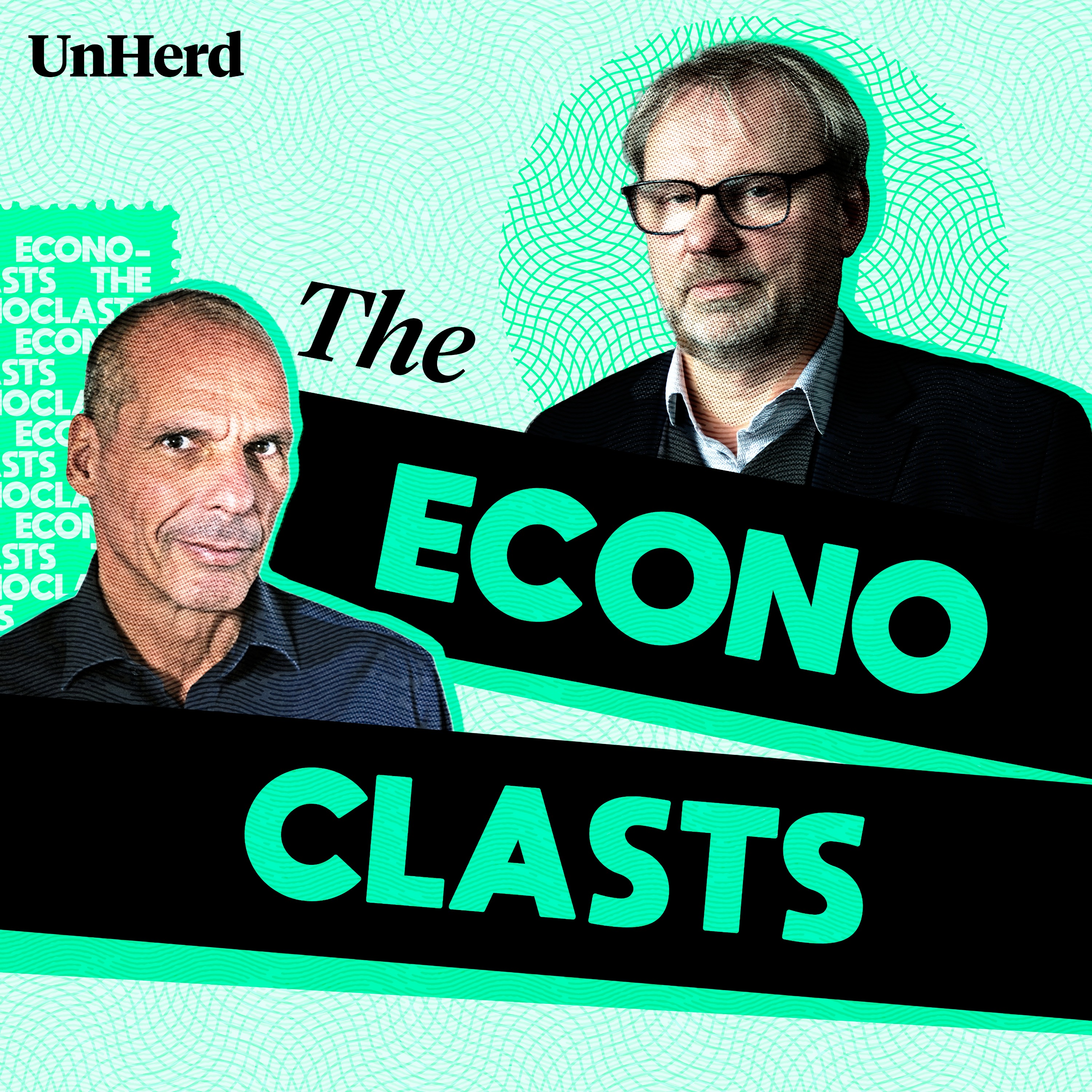
Loading summary
Transcript61 lines
- [00:00]
Instacart/iHerb/Mint Mobile/Momentous Advertiser
This holiday season, Instacart is bringing magic to the people who make it magic for others. Get delivery and deals on everything you need this season. Whether it's a last minute holiday decor, emergency coverage for the holiday party, or just avoiding going out in the cold, Instacart is here. Plus November 24th to December 23rd is deal month with savings from your favorite retailers and deals on grocery, electronics, beauty, toys and more. Download the Instacart app to get a little magic delivered today.
- [00:30]
Sherrell Dorsey
Hi, this is Sherrell Dorsey from TedTech and this episode is brought to you by Solidigm. The world runs on data, and data relies on storage. But most businesses rarely think about how crucial that storage really is. The truth is it's no longer just a commodity with new demands and constraints, especially from AI. The old ways of managing data are holding innovation back. Solid State storage from solidigm is changing that. It helps reduce energy use, shrink physical footprints, and accelerate data at the edge, unlocking more from your AI infrastructure. Learn more at whatsthestateofyourstorage.com.
- [01:09]
Yanis Varoufakis
Hello and welcome to the econoclass, the new podcast from Unherd that cuts through the spin to shatter the failed economic orthodoxies that are shaping our world. I'm Yanis Velofakis, economist, authority, still active politician who very Briefly served in 2015 as Greece's Finance Minister during a period of immense tumult across Europe.
- [01:33]
Wolfgang Münchau
And I'm Wolfgang Munschau, journalist, author and Director of Euro Intelligence. I've covered Europe's most defining moments over the last 30 years. Now, Yiannis and I don't always agree politically, but we've started this podcast because we have a shared conviction that the consensus is wrong and that the modes of established thinking are outdated.
- [01:55]
Yanis Varoufakis
So our mission folks, is simple. Each week, Wolfgang and I will each choose one supposedly settled fact, one part of the conventional wisdom of the orthodoxy, and we're going to debunk it. This week we chose two topics which could be more pertinent for today.
- [02:13]
Wolfgang Münchau
My conventional wisdom today is the narrative where widely held in Brussels and Western capitals, that Europe is helping Ukraine and striking a powerful blow against Russia by sequestering Russia's assets held in Europe. I'm going to argue that this is not only legally questionable, but economically and geopolitically self defeating.
- [02:36]
Yanis Varoufakis
And my chosen orthodox faith in urgent need of being debunked is that crypto democratizes our money and makes it safe from debasement. That crypto was a bulwark against the big banks, big finance and of course, our central banks, the Federal Reserve, the Bank of England, the European Central Bank. But my point would be that it has ended up the latest rules to persuade the public to surrender whatever democratic sovereignty it has over our money. Two oligarchs, big tech and big banks.
- [03:12]
Wolfgang Münchau
But first, let's dismantle the consensus on Russia's assets. The narrative is that it's a good thing Russia committed an illegal act by invading Ukraine and will have to pay reparations at some point in the future. And we can use the assets that Russia has in Europe, frozen at this point, as a sort of a down payment on those reparations. This is a big consensus in Europe, and I think it is wrong. This. Now, these assets lie dormant in vaults in Brussels, deep in the vaults of a company called Euroclear. Most of these assets, we're talking about 200 billion euros worth. It's about $230 billion worth. And the Europeans have now decided that they want to sequester those funds. Now, I want to talk about details later, but the politics behind this is that Donald Trump, when he became president, ended the support for Ukraine. This has been phasing out this year. He's still using some of the old money that were agreed by Joe Biden. But going forward, there will be no US Support left. And the US Was by far, by far the biggest supporter of Ukraine. And the Europeans do not have enough money to make up for the US Support, both military and financial. So the Russian money that was lying dormant in those safes was now an inviting, exciting prospect. And for the Europeans, it was basically the solution, the solution to a problem that how do we find the money? We have limits in our ability to raise more debt. So the money was lying there. They haven't done so because a small country, Belgium, has raised objection. The Prime Minister of Belgium is obviously the host of Euroclear, because Euroclear is a company that's based in Brussels, right in the center of Brussels. And this is where all the money lies dormant. It's not a bank. Euroclear is a. You know, you can think of it as something part of the plumbing of the financial sector. It's a depository. So this is where foreign banks, foreign sovereign wealth funds hold their money that they have invested in Europe. It's considered to be the safest deposit box in the world until the European Council last week decided to raid it. The method that they've chosen, and they've spent a lot of time devising a method that they think will be legally clear, and we're going to discuss this later in the podcast in some detail. The point I would like to make, the overriding point, is that what appears to be a solution to a financial problem will ultimately come to haunt the Europeans, both politically and economically. Because what is happening is that the Europeans are funding the war in Ukraine with means that are legally uncertain, for which they are ultimately. The European taxpayer is ultimately liable. And as was the case during the subprime crisis, the taxpayer was never asked. This was basically a risk governments and political leaders have engaged in, for which ultimately the taxpayers will be responsible. It will also mean that the support for Ukraine will ultimately falter because it is based on dodgy finances. And the reason we are in this situation is because European countries, for all their eagerness to help Ukraine, are not willing to fund their support properly. So what I see here is, you know, virtue cycling. We're sitting there and saying Ukraine must be helped. And I would actually agree with that statement that Ukraine must be helped and the west should help Ukraine. Where I disagree, where my disagreement comes in, is that the help should come from real money, that we should raise real money, that we should shift expenditures from one part of our spending to another. If we were serious about this, what it signals to me is that they are not serious.
- [07:13]
Yanis Varoufakis
When they talk about the Russian Central Bank's money, the Europeans, and you challenge them on the question of the legality, they immediately turn around with a kind of moralism and they say, yes, but we need to make sure that Putin pays a price for his aggression. In other words, they use the language of reparations. Now, I'm not going to judge that. All I'm going to do, Wolfgang, and I think we agree on this, is that I'm going to pinpoint a basic truth that to exact reparations from any aggressor, from any combatant, first you need to force them to surrender by insisting on reparations when nothing is suggesting that Putin will be forced to surrender. I mean, they're not even putting boots on the ground. If they were serious about treating him as the new Hitler, they would have done that. By insisting, however, on reparations when there is no prospect of forcing him into bunker where he will start enter Europe is essentially working against any realistic peace plan or peace deal and when the war will end, because the war will end one way or the other, despite the Europeans, effectively the Europeans, the European Union will have deprived itself a seat at the table because Putin is never going to agree with them if they have already spent the money. So this is precisely, I think the point that you're making that what they're doing now is this. They want to take 140 billion and use it to buy weapons from Donald Trump, who's quite happy to sell the weaponry to them. They are not prepared to put the money up themselves. So they are using supposedly the Russian central bank money as collateral to raise the European Commission will issue bonds. They will borrow from privateers, who expect to make their money back with interest. And then, of course, Ukraine is never going to be able to repay this money, which means that you have to seize the collateral and the collateral will be the central bank of Russia's money. But if you are going to have a peace deal and Donald Trump insists on one, then you have to give it back. Essentially, what I suspect you're saying, Vulcan, correct me if I'm wrong, is that the European Union is yet again lying to its citizens. That they will have in the end, if there is going to be a peace deal, to pay the money, that's.
- [09:38]
Wolfgang Münchau
Exactly what's going to happen. Now, we probably have disagreements on certain aspects of this story, and we'll probably come to those at some point. But my point is not here whether it's a good thing or bad thing. My point is not whether we should help Ukraine or not. In fact, I believe we should. But my gripe here is about that we're doing it in a dishonest way. And in a dishonest way that is self defeating. The way they do this, you know, is quite, quite adventurous. They actually spent quite a long time thinking about how can we make this legal? Because the way they originally wanted it just basically grab the money and give it to Ukraine was clearly illegal and international courts would have declared it to be illegal. And Euroclear is a global company. It has offices everywhere in the world. It would have had to pay damages. It would have had to be recapitalized. Billions like the way the banks had to be recapitalized in the global financial crisis. It would have been extremely unpopular and extremely expensive. So they devised a scheme very similar, by the way, to the subprime scheme back in the, you know, back 20 years ago. They created a special purpose vehicle, or they will want to create a special purpose vehicle which issues bonds and these bonds.
- [10:51]
Yanis Varoufakis
I'm sorry for interrupting, but I need to throw another dimension in this. Remember when Greece went bankrupt in 2010, what they did was they created a special purpose vehicle.
- [11:02]
Wolfgang Münchau
Yeah, indeed.
- [11:03]
Yanis Varoufakis
Bypassing the rules of the European Union in order to lend money that they were not allowed to lend by the European treaties. And then of course, in the end, this money will constantly be rolled over. You know, the can will be kicked down the road. It will never be repaid. So this is what Europe does, essentially. It lies to its cities, citizens, through using Lehman Brother like special purpose vehicles for hiding the true liabilities.
- [11:29]
Wolfgang Münchau
That's exactly what happened here. This SPV is actually not backed directly by Russian money. The SPV is actually formally backed by the member states. So if this thing, if Ukraine doesn't repay back, and you're right, it won't, Ukraine won't be able to repay the money. This is a loan that will default, like a subprime loan.
- [11:51]
Yanis Varoufakis
It shouldn't repay the money because I agree with you, Ukraine should be helped.
- [11:54]
Wolfgang Münchau
But that's another question. But it's a loan. So if you issue a loan to somebody of whom you know won't repay, then you're not really issuing a loan, you're actually giving them the money. It's a grant, it's a gift. But that's not what this is supposed to be because under the EU mode of thinking, it is a loan and it is guaranteed by the member states, bit like the recovery fund in the pandemic. So it's the member states that will have to pay and Russia could guarantee the member states, but that will never happen. And I agree with you, Yanis, the most likely scenario is, you know, we are not looking at a Ukrainian victory here. We may look at some kind of a peace settlement based on current battle lines. What Trump supposed. What I've been writing for two years.
- [12:40]
Yanis Varoufakis
Now, and Zelenskyy agreed to that Only last week, Zelensky agreed to that Only.
- [12:45]
Wolfgang Münchau
Last year he agreed to this. This is a big shift, by the way, for Zelenskyy to agree to agree. And I think.
- [12:49]
Yanis Varoufakis
Which leaves the Europeans hanging in midair.
- [12:52]
Wolfgang Münchau
The Europeans were mostly opposed to this idea. I remember the shocked reaction in the German media when someone suggested that the peace plan should be based on ground battle lines. They thought Ukraine would get all the land back. That cannot be the result of a peace deal. That can only be the result of a military victory. So we are in the situation where most likely there will be a peace deal. At some point, Russia will prob. And Putin will find he thinks he is advancing at the moment his soldiers have set foot in the strategically important town of Prokrovsk, which is one of the three main parts of the Donbass that he hasn't got yet. It is strategically quite important for Ukraine's defense strategy. So if Prokrovsk falls, it will be a very big setback for Ukraine, but Ukraine is fighting back. This is not going to be settled anytime soon. So it could take Putin another year or two to occupy the entirety of Donbass. He has about 88%. He has the entirety of the region of Luhansk, but he doesn't have all of the other one, which is Donetsk and Pokrovsk ISK and Donetsk are two other cities. He is trying to push further into this. He may come to the realization is that the costs of obtaining the remaining 12% of the entire region might be too high and there's actually not much in it in terms of raw material wealth or industrial wealth. So he's got most of the good stuff anyway. So he may, I know, but he may not be there yet. And he may also not do it anyways because of the kind of guy he is. He just wants victory and that might just be suit his goals. He's got a military machinery now built up, so this might take a while. But I agree eventually this will end with a peace settlement. And that peace settlement will. The borders will be discussed quite quickly because you start with the current military situation. It's not actually a line. Think of it as a strip of land like 20 kilometers deep. And you know, people can, you know, people will swap lands and Russia might swap lands here and get some lands there. All that stuff will happen during peace talks. It's going to be very technical, but ultimately not controversial because we are running.
- [15:08]
Yanis Varoufakis
The risk of agreeing on almost everything so far. Let me try to explore our disagreement because you said before that we may disagree on whether and how Ukraine should be helped. I don't disagree that Ukraine should be helped. What I'm saying is that NATO and the European Union are not helping Ukraine. They are leading it down the garden path. They've been doing this now for a very long time. So allow me to say what I think is important. Europe will have to pay for Ukraine one way or the other, especially after a ceasefire and a peace deal, because the country is devastated. And the United States has a very long track record of making Europeans or the Saudis pay for wars that they were very keen to support initially and then they abandoned. Right. Iraq and so on. They will definitely make the Europeans pay for Ukraine. And I think that we should pay for reconstructing Ukraine, throwing this money now after bad in order to keep sending them weapons and to prolong a conflict from which they will only lose more land. I don't think this is help, but allow me to make two points which I think will provoke you to disagree with me. First, the idea, which is an orthodoxy, that it is up to Ukraine to decide whether they want to join NATO or not, to me sounds preposterous, Wolfgang. And to see that. Imagine if Mexico, if you know, Scheinbaum, my friend, who is the president of Mexico, decides to join some kind of military alliance with the Chinese or the Russians. Let's stick to China. And the idea is that Chinese intermediary intermediate nuclear missiles stationed in Tijuana and in Juarez, a stone's thrown from throw from El Paso and from San Diego. I don't think that Mexico has the right to do that to jeopardize world peace. There is no greater positive externality than world peace. The rest of humanity have a right to say no. This is madness. And the second point, which I think is very important is another orthodoxy which I want to challenge and to debunk, is that you can only be a liberal democracy within NATO. I grew up in a country which was in NATO, but it was a fascist dictatorship. And similarly, I used to, with my family, take refuge in Austria, as my father and mother used to say, to breathe democratic air, which is a country, liberal, social democratic, that was not part of NATO and was neutral. So the idea that a neutral Ukraine will necessarily not be liberal and democratic and sovereign is absurd.
- [17:47]
Wolfgang Münchau
No, I think we agree on. I actually agree with you on NATO. Where I disagree with you is on the idea that we should not send weapons. It's really hard to make peace, as Donald Trump has found out. In order to make peace, he made the big mistake of stopping weapons deliveries. I think that was a mistake because it encouraged Putin to continue. Had he not done so, had he, you know, he would have been a more credible peacemaker by creating a position where both sides have an incentive to cut a deal. I think Ukraine is at that point now. I don't think Ukraine was at that point, you know, when Zelenskyy was famously in the Oval Office and had his bus stop with Trump, it was clear that the peace deal that Trump was discussing was something that, that Zelenskyy at that point did not agree with. Today, this is different. Today our problem is Putin. Putin is not ready for a deal, and that is because he smells victory. So it's a complicated. It's a complicated formula where we agree, where we strongly agree is the fact that basically defrauding our taxpayer and pretending we have money, we're using somebody else's money. When in fact, we're using our own money, and that money will eventually run out because Putin will still outspend us. If you do the maths, the military spending maths, he's spending more, and he is spending more. Even with the frozen, the sequestered assets, he's still spending more. One reason is why he's outspending us is not the actual headline. This is where Western analysts get it wrong when they always translate everything into dollars. And that makes us look very strong. I mean, you know, people compared the Russian economy with Spain, which is idiotic because Russia isn't Spain. Russia is bigger than Germany on what it buys, on purchasing power parity, which is the measure used by the World bank to compare global economies. And Russia is bigger than any other European countries. It's the fourth biggest country in the world. And we keep on overestimating ourselves and underestimating both the size, the physical size of Russia, and also the economic power that country has, and underestimating the China Russia alliance, which is much deeper than also Western analysts had generally assumed it would be. Russian money in terms of military procurement is about two to four times more effective than our own. In other words, it costs Russia a lot less to build ammunition than it costs like Germany, for example. It's about a factor of four times for ammunition and different ratios for other defense categories. This is why Russia is so successful in Ukraine. We didn't see this coming.
- [20:20]
Yanis Varoufakis
One last point, if I may, on this, and I'm sure we will come back to Ukraine in another podcast. Look, the European Union has been guilty of essentially robbing the Ukrainians of any arguments that they can put forward in order to corner Putin diplomatically. Think of Kaya Kallas, the former Estonian prime minister who a few weeks before she became the foreign policy chief of the European Union, in a video podcast, in an interview that was widely publicized, actually said that our incentive should be to break up Russia. Now, that is an extremist view. If you combine Kayakalas's extremism, sheer provocation, which strengthens Putin within Russia and makes the life of democrats, anti Putin politicians and activists in Russia exceptionally difficult. The combination of the extremism of people like Kaia Kallas and the manner in which they are lying to Europeans about who is going to bear the costs of these loans, this combination is essentially a great gift to Vladimir Putin, don't you think?
- [21:31]
Wolfgang Münchau
I agree. And she is now the high representative for the EU's foreign policy, the mouthpiece of European foreign policy. And she keeps on saying these extreme things in the process. The EU also has a very bad relationship with China. The way I look at European diplomacy, Europeans never had to think strategically. They let the Americans do that for them. And there isn't a lot of strategic thinking, you know, capacity in Europe. They always remind me of chess players who just, you know, look at the next move and always surprise and get offended when the, you know, when the opponent hits back. And that's where Europe is. We see this in China, we see this in, you know, the Dutch nationalize the Chinese companies and the Chinese hit back with sanctions and the economy collapses. And basically you have these sort of, these short sighted, extremely short sighted moves. The sequestering of the assets is one of these short sighted moves. It's not going to help, it's not going to solve the conflict. There is no pathway to victory. I have yet to hear any European official or any proponent, anyone on Twitter with a Ukrainian flag in their profile. I've yet to hear anybody explain to me how Ukraine, what is the pathway for Ukrainian victory or what they consider a good outcome. I haven't heard of it. It's always about we can do this the best we can do and we have to keep the show on the road, etc. It's always about procedure, process. It's never about strategic objectives. And that's where I think we are failing.
- [23:02]
Yanis Varoufakis
Well, they are talking about strategic autonomy, the Europeans. But in the end, if you look at the last 50, 60 years, we have subcontracted as Europe as a continent to the IT states, both our strategic thinking, geostrategic thinking and indeed our aggregate demand. But I'm sure we'll come back to that in a variety of ways. In other podcasts after the break, we're going to discuss crypto and whether it is true, as the orthodox view would have it, that crypto is a liberating, democratizing technology, liberating us from the power of big banks, central banks and so on, and democratizing our money. So don't you dare go away.
- [23:48]
Instacart/iHerb/Mint Mobile/Momentous Advertiser
Let's be real. When it comes to your health, authenticity matters. For nearly 30 years, Iherb has quietly built one of the world's leading online wellness destinations trusted by millions of customers in 180 countries. At iHerb, every product comes from verified, top rated brands, stored, handled and shipped directly from our own climate controlled, state of the art facilities. No third party sellers, no shortcuts, just the highest standards of quality and transparency from cart to doorstep. That's why more and more people are turning to iHerb where wellness and integrity. Meet visit iHerb.com trusted wellness delivered worldwide.
- [24:33]
Sherrell Dorsey
Hi, this is Sherrell Dorsey from Ted Tech and this episode is brought to you by Solidigm. The world runs on data and data relies on storage. But most businesses rarely think about how crucial that storage really is. The truth is it's no longer just a commodity with new demands and constraints, especially from AI. The old ways of managing data are holding innovation back. Solid State Storage from solidigm is changing that. It helps reduce energy use, shrink physical footprints and accelerate data at the edge, unlocking more from your AI infrastructure. Learn more at whatsthestateofyourstorage.com hey, Ryan Reynolds.
- [25:09]
Mint Mobile Advertiser
Here wishing you a very happy half off holiday because right now Mint Mobile is offering you the gift of 50% off unlimited. To be clear, that's half price, not half the service. Mint is still premium unlimited wireless for a great price. So that means a half day. Yeah, give it a try@mintmobile.com Switch upfront.
- [25:32]
Instacart/iHerb/Mint Mobile/Momentous Advertiser
Payment of $45 for 3 month plan equivalent to $15 per month required New.
- [25:34]
Wolfgang Münchau
Customer offer for first 3 months only.
- [25:35]
Yanis Varoufakis
Speed flow after 35 gigabytes of network.
- [25:37]
Instacart/iHerb/Mint Mobile/Momentous Advertiser
Spizy taxes and fees Extra CMintmobile.com what.
- [25:39]
Zyn Nicotine Pouches Advertiser
Are you reaching for? If you're a smoker or vaper, you could be reaching for so much more with sin nicotine pouches. When you reach for Zyn, you're reaching for 10 satisfying varieties and two strengths for a smoke free experience that lets you lean in for chances to break free from your routine and a unique nationwide community. Whatever you're reaching for, reach for it with America's number one nicotine pouch brand. Find yours in wherever nicotine products are sold near you. Warning. This product contains nicotine. Nicotine is an addictive chemical.
- [26:11]
Yanis Varoufakis
Welcome back to the Econo Class. In this segment we discuss crypto and in particular what I consider to be the fallacy of the orthodoxy that crypto democratizes and safeguards our money. Now, Bitcoin was invented. It is true. It was invented as a decentralized blockchain based financial technology that promised to empower individuals to rest power away from the big banks and from central banks and to stop the state, the central banks from debasing our money. That's all true. But my point would be that it has ended up the latest rules to persuade the public to surrender whatever democratic sovereignty it has over our money to oligarchs, big tech and big banks and to do so in a manner that turbocharges financial instability. Let me take you Back to early 2009, I studied Nakamoto's famous paper outlining the blockchain technology a month or so before, immediately after he had come out. And I remember Wired magazine was interviewing me at the time, asking me what I thought about blockchain. And my response was, it's a brilliant answer to a problem we have not discovered yet. What I was intimating was that I don't think, I didn't think, and I still don't think that it was an answer to the problem of money. And suddenly I wanted to warn against the dangerous. The dangerous illusion that money can be removed from the political sphere and can be rendered unapolitical. Now folks, fast forward to today. Bitcoin's original goal of usurping big finance has been turned on its head. Big Finance has usurped crypto, turning it into its latest weapon for extracting rents from the rest of the economy. It all began with, you may have heard of them, exchange traded funds. Then came the so called stablecoins, blockchain cryptocurrencies that promises you a one to one exchange ratio between those tokens and the US dollar. Primarily, it is as if humanity never learned its lesson that these fixed exchange rate regimes end up in tears. The Gold standard, the fixed exchange rate mechanism of the European Union, all those dollar pegs in Southeast Asia as well as in Latin America. The list is endless. But if I'm right, you may very well then ask why are stablecoins all the rage? Why are they so much in vogue? And my answer will be that it's all about power. Let me put it in a metaphorical way. Stablecoins are to the original crypto mission what Napoleon was to the French Revolution. A despotism hiding behind beautiful cries for liberty, equality and fraternity. What has rendered stablecoins truly terrifying, at least to me, and I'm really looking forward to finding out what Vulcan thinks about that are three pieces of legislation ascertained by Donald Trump. The Genius act, the Clarity act, and the Anti Central Bank Digital Currency Surveillance State Act. To cut a long story short, I'm not going to go into the legalities or the technicalities. What I think is this. These three pieces of legislation turn stablecoins into the American government's secret enabler of more deficit spending. While at the same time these pieces of legislation deny their central bank, the Fed, the tools that will be essential when the stablecoins go belly up, as I'm sure they will. In the same way that Wall Street's CDOs and CDSs or stocks, derivatives went belly up in 2007, 2008. And here is my concluding parting shot. Like Napoleon, this portrayal of absolutism as liberty will not end well.
- [30:23]
Wolfgang Münchau
I, I would agree with you on the ultimate outlook, but we have to sort of distinguish between the various parts of the crypto industry. The crypto universe is not like one thing. I mean, you were right, it started off differently and it emerged into something completely alien to what it started off. But these early guys, these early people are still around and the crypto universe is as divided about these things as the rest of us are. And we have to distinguish really between vanilla crypto, like the stuff that Nakamoto it in his white paper that's still around. The bitcoin is still around now. It's still, you know, it's becoming more part of the financial system with the ETFs and all the other sort of vehicles that use it and people, you know, streaming into it. It's getting very expensive. And asset backed crypto, like stablecoins now, I completely agree that asset backed crypto is dangerous. It's another way of borrowing money. And one of the history of finance is that there's always, we're always trying to cover up the way that we are borrow. We talked about Ukraine, the Ukraine asset rate, that's the same thing. But in crypto we have now the stablecoin. And that's another way, as you said, US government is going to go massively into debt. It will sell this debt in forms of crypto tokens and people will see this as sort of an asset class in its own right until they realize, oh my God, behind all these tokens just lies a lot of debt as there was with subprime mortgages. And this will collapse. I completely agree that stablecoins constitute a massive financial stability risks. But at the same time, even if that were to collapse, the blockchain on which bitcoin is based and the blockchain on which tether, which is an alternative system is based in several other cryptocurrencies. These blockchains will still be there. And it is quite possible that these investments or that these asset classes will survive a complete meltdown of the stablecoin systems. And I also believe that, and here we have a slight disagreement about this. I think it will put pressure on central banks. It is a debasement strategy and I still think that it is. When people invest in crypto today, it is a debasement bet. That's the reason, that's the reason people invest in gold. It's not like they want gold back as a currency. I don't think that's the situation anymore. But it is a debasement bet.
- [32:52]
Yanis Varoufakis
I will agree with you that we need to decompose the crypto space to begin with. There is blockchain. Now, I consider blockchain to be one of the great successes of the human spirit. When I first looked at the way in which you can have, you know, you can construct a ledger whose keeping and upkeep is utterly decentralized, I was. I shared the enthusiasm of the early bitcoiners. I didn't see it as a potential money money, and I don't want it to be a potential money. But already we have ways of using blockchain for other things other than money, which, you know, are extremely empowering for whole communities. I know of communities of cooperatives, of people who are sharing assets, and they're doing it using blockchain, which allows them a truly democratic control over the joint assets or the assets that they are creating and distributing between them. So this blockchain is brilliant. Then there is something like Bitcoin or ether or any of those wildly fluctuating in dollars cryptocurrencies. Now, I don't mind them. You know, I'm a. I have termed myself a Marxist libertarian to confuse everyone and to be hated by both Marxists and libertarians. But, you know, let them be, you know, let a billion different such cryptocurrencies bloom. If people want to, instead of hedging or investing or putting money into gold, if they want to put money into Bitcoin, good luck to them, that's fine. But that world is macroeconomically insignificant, Wolfgang, and it will always be macroeconomically insignificant. So people can do whatever they want as long as they know that they're taking risks and they don't need to be bailed out by you and me or anybody else. So there's blockchain. There are the original cryptocurrencies, and then there are stablecoins. Now, stablecoins are a clear and present danger for humanity. They are becoming increasingly macroeconomically significant. Donald Trump is essentially. I read when I was reading Stephen Meeran's Mar A Lago paper, which outlined the very coherent strategy of the Trump administration vis a vis tariffs and trade? And how will the United States maintain its hegemony in a world in which its industry, its interest, is becoming insignificant? That is the question of that paper. Now, you don't have to agree or disagree with it, but in that paper, it was clear there was A role for stablecoins. Because when for instance Washington under Trump is bullying Japan to get rid of 500, 600, $800 billion and they don't want them to buy one or euros because they want to maintain the hegemony of the American dollar. So what they are doing is they're pushing them towards buying US denominated stablecoins knowing that when tether one of the companies that issues one of these US dollar denominated stablecoins will take the money from the Japanese, let's say, or from the Germans or from whoever, take the dollars and use them to buy Treasuries in order to put them in the bank. That's how stablecoin companies, that's their business model. You give them a dollar, they buy a dollar's worth of treasury, they collect the yield, the interest rate on the treasury and they're laughing all the way to the bank. So the idea is that essentially they are pushing down the value of the dollar because they are forcing the Japanese to unload dollars. But no other currency is competing for the hegemony of the dollar and the money lowers the yields of the American government. This therefore allows them to give more tax cuts to their mates, spend more money on weaponry, I don't know, whatever, or ice, whatever Donald Trump wants to do deficit spending. That is a system designed as if in order to enhance and turbocharge financial instability. And the worst part of it is that they are introducing legislation that clips the wings of the Federal Reserve, stops them from competing in that digital currency space and gives them absolutely no tools for refloating some of the stablecoin companies when they will go belly up. So essentially it's a bit like taking the shock absorbers out of your car and driving it into a pothole.
- [37:23]
Xero Advertiser
Take control of the numbers and supercharge your small business with Xero. That's Xero. With our easy to use accounting software with automation and and reporting features, you'll spend less time on manual tasks and more time understanding how your business is doing. 87% of surveyed US customers agree Xero helps improve financial visibility. Search Xero with an x or visit xero.comacast to start your 30 day free trial. Conditions apply.
- [37:53]
Momentous Advertiser
A lot of supplement brands chase trends. But if you're serious about your health, we know research backed science is what actually moves the needle. Momenta is works with the best brains in human science to create every formula. And every batch is made of pure ingredients tested for safety and does not contain fillers. So you get the best long term result possible. Creatine isn't just for muscle gains. It's essential daily fuel for your brain, body and long term performance. Momentous Creapure Creatine is backed by leading performance experts like Dr. Andrew Huberman and Dr. Stacey Sims. Sourced exclusively in Germany, Creapure sets the gold standard for creatine, delivering the purest form, creatine monohydrate that's rigorously washed and never cut with fillers. With over 2,000 five star reviews, over 112,000 customers have seen the results firsthand with Momentous. The fundamentals are done right. Right now, Momentous is offering our listeners up to 35% off your first subscription order with promo code Acast. Go to livemomentous.com and use promo code Acast for up to 35% off your first Subscription Order. That's livemomentous.com, promo code Acast.
- [39:03]
Wolfgang Münchau
No, I agree. I very much agree with your characterization of stablecoins. That is indeed the danger. It is a vehicle to load up with debt and to do so at the expense of other countries. The question that I have is why do other countries allow that to happen? I mean the European. I mean, you know, I always say weakness, you know, military weakness is a choice, political choice. And dependency is a political choice. We don't have to be dependent. The EU is a market of 500 million people. It's rich. It could have created the euro as a rival to the dollar. The EU chose not to do that because it was convenient not to do that because being a global currency costs money. Of course it means it's not just costs money, but it actually costs political capital.
- [39:49]
Yanis Varoufakis
The trade surplus. You can't have a huge trade surplus. That's right.
- [39:52]
Wolfgang Münchau
You can't have a. True. That would have been a cost. Absolutely. We couldn't have a persistent by the story that you have to have a deficit. That's what America did. That is not necessary for the system. But at least you can't run persistent trade surplus against the rest of the world. That's what the Europeans did. So I completely agree. We have the choice to defend ourselves against this madness. And if America wants to basically get on a pathway of financial instability, it can do so without wrecking the entire global economy. But that's what's going to happen now because the Europeans are weaker. As we've seen this with what happened in NATO, we've seen the scenes about these European leaders sitting around the desk of Donald Trump. They are clearly the vassals. They have now accepted that role. And they will clearly not establish the Euro as a competitor to the US dollar, which I remember that was the purpose of the euro when it was created. It wasn't really just to have a single currency. And it was really. The people had bigger ideas and these ideas were frustrated and frustrated by the way the EU works, by the way member states envisage the future of this, of this project. So we are basically in a situation of our own making. So if this sort of Armageddon breaks over us, it's, you know, we have nobody to blame. So, you know, and this is our sort of instinct that we always blame America because, you know, something goes wrong, it's, it's America's fault, it's our choice.
- [41:20]
Yanis Varoufakis
I have a theory, and it's actually a little bit more than a theory, I have some information as well, which I'm not going to source regarding why Europe is behaving that way in the face of the threat that's coming from US dollar denominated stablecoins. I am convinced that within the building of the European Central bank in Frankfurt, people are freaking out about Tether Circle and all these US dollar denominated stablecoins. They don't want them. They would like to see them curtailed from the financial circuits of the European Union opinion. They know that they are so convenient, these stablecoins. They are so convenient compared to the clunky plumbing of the European Central Bank's own payment system or Swift or any of these systems which are extremely tedious and costly for people to make payments, especially across border. They know in Frankfurt that the only way of effectively shutting out US dollar denominated stablecoins is by creating a digital euro. And the people in the European Central bank have been talking about it for a long time and they really want to do it. But it is the Frankfurt and the Paris banks that do not want them to do it. They consider that to be a direct competitor for their deposits, which they are now. I'm all in favor of more competition for the Frankfurt and the Paris banks. They deserve it. We would all be better off if you and I could download a digital wallet from the ECB and use it as a digital bank account. And if Ben Peparibao or Deutsche bank want to offer me or you a better service, let them offer it. Greater competition would have been a good thing. But of course this is not a competitive market. We know there's exorbitant concentrated power in the hands of these bankers and they are terrorizing the people in the ECB and so there is a clash between what the ECB would like and what it is permitted to do.
- [43:17]
Wolfgang Münchau
And there's a clash with the European Parliament as well. The European Parliament is also frustrating this project and it's kind of crippling this project. I mean, the idea here, you're right about the ECB and the central bankers, they're worried about that and that's the reason they're planning the digital currency. But for the digital currency to be a competitor against the stablecoin, the stablecoin would be kind of the stuff that Amazon would offer as a means of payment. It could easily become our normal means of payment and oust our national currencies if we are not careful. So the digital euro was a good idea, but the ecb, first of all, the thing goes through the banks and also it will be crippled in terms of the number of transactions you can make, the amount of transactions you can make. There will be no such limits on US dollar stablecoins. So the US Dollar stablecoin will be a vastly superior payment system to our digital currency.
- [44:10]
Yanis Varoufakis
I don't see that. I don't see that. Why would it be vastly superior if the ECB were, let's say you and I, all of us, could download a digital wallet from the App Store.
- [44:21]
Wolfgang Münchau
That's the idea that it will be in your wallet.
- [44:25]
Yanis Varoufakis
You can tell your employer or your customers, pay my dues or your dues into this wallet. Now, why is this a constraint? Why is this.
- [44:34]
Wolfgang Münchau
It would be a constraint because the way it will be regulated, it will impose spending constraints.
- [44:40]
Yanis Varoufakis
Well, why?
- [44:41]
Wolfgang Münchau
For the reason, for the very reason that you mentioned that they.
- [44:44]
Yanis Varoufakis
Okay, so the problem, the problem is not technical. The problem is not that the European Union could not have a proper digital currency. Oh, no. The problem is that the banks of Frankfurt and Paris are preventing the Europeans from having a technology which is freely available. I mean, it could be, we could have it next month because they want the bankers, the big banks of Europe want to maintain their rights, their power to extract financial regs from the rest of us. In other words, we are again in front facing the reality that we are in an oligarchy. Now, by the way, what you said about the European Parliament. Look, maybe the European Parliament is an excruciating place, I have no doubt, but at the same time, it's utterly irrelevant. If the ECB did not have the constraint of the bankers, the European Parliament would roll immediately.
- [45:37]
Wolfgang Münchau
Yeah, no, the bank. The way this works, technically, I mean, this thing has to be approved by the European Parliament and the opposition has built, and it's the bank's lobby power that's the essential constraint. The ECB wanted something bigger. You're right, it's technically possible. Technically, it's easy. I mean, it's just the wallet, just the payment. The ECB creates the money, they can create this money, but they would basically have a payment system that's outside the banks and the banks would lose their monopoly power. Basically. That's what would happen. And they're fighting against this effectively, of course. And this thing will be crippled for that reason. Reason, it's not crippled technically. It's crippled because of the regulation. In Europe, we're regulating everything to death. And it was like, AI, AI to death. That's why we're not competing in it. We have basically decided that this is the way the EU works. It's just a massive bureaucratic monster and we will kill this important project or cripple this important project and the onslaught of the US stablecoin will hit us. Unfortunately. And it's not because we have no choices, it's because of choices we have made in the past and about choices we will make about the digital currencies in the future.
- [46:50]
Yanis Varoufakis
But I shall insist on this. It is not just irrationality that springs out of a bureaucratic mindset. The bureaucracy works in the interests of the big banks. So it's motivated irrationality. Allow me to, if I may, to bring in a personal dimension to this. It's something you remember because we discussed this a long time ago in London, but our audience doesn't know it. When, when I was Finance Minister in the middle of a catastrophic bankruptcy of the Greek state. I remember the Greek state owed 10 billion. 10 billion to various businesses, you know, tax returns and VAT returns and various payments that we just were too impecunious to make. And I was planning a blockchain system where that there would be reserve accounts it automatically created for every tax file number, not as part of the monetary system, but as a part of the fiscal plumbing of the state. And the idea was to credit in those reserve accounts in euros, the monies that were owed to particular businesses so that they could pay each other out and off, repay their debts to one another and repay their debts to the state. So effectively a triangular mutual cancellation of debts scheme, which is which nobody ever explained to me why it caused so much uproar in Brussels and Frankfurt, why they were so much against it. Firstly, they didn't like the blockchain aspect of it. In other words, that it would be Transparent, like blockchain is. And secondly, they just didn't want our indebtedness to be diminished by rational means because the more indebted we were, the more power they had over us. So, you know, this is my, my constant gripe with the European Union that in the end, in the name of liberty and markets and fighting against deficits and reducing debts, what they are doing is they're increasing deficits, they're increasing debts on behalf of concentrated power.
- [48:53]
Wolfgang Münchau
I would probably be less conspiratorial about this because I think the Europeans are generally not that smart. That has been my experience. The experience. The bankers defend their interests. I don't think they're particularly smart either, but they defend their interests effectively. That's, that's for sure. And certainly the power of the, you know, the EU was created as a lobbying organization for, you know, companies. The EU functioned quite well as, you know, German industrial companies, banks, that, that's what the EU did. It didn't actually look after the, the consumer at all. It was, it was, it was corporate, it was a corporate thing and the banks are part of that. All these roundtables, all these standards committees that you have in Brussels, it's the very natural thing for them to do. It's the way the system has been created. So is Washington in many ways. Inside the beltway is highly, the lobbies are the most powerful people that influence politics. And a lot of what the Trump administration's policies are very heavily influenced by the tech lobbies. They, they're no different in that respect. But what is different is that there is so little regard for the common good. And it's usually, and this is the way lobbies work in Europe. They tend to work very sectarian like German lobbies or French lobbies. There is very little lobby for the common, the common interest. And that's why often good ideas get blown apart. Like the good idea to turn the euro into a global currency. That would have solved us a lot of problems today with China, with the United States. We would have been in a much stronger position, defend ourselves against tariffs. We would have been much easier to raise money to help Ukraine. It would have been much easier to build alternative supply chains if you had the ability to do this. But there were narrow reasons at the time, very narrow reasons. When you ask him why they didn't do this at the time, they were like the Bundesbank being afraid of short term money market fluctuations, where you wonder thing is this why you didn't want to do this? So nobody thought about strategic and this is something that I observe again and again in my dealings with Brussels. There is virtually there's thinking about what's right and wrong, there is thinking about principles, but there is no strategic objective to anything they do well, Going back.
- [51:09]
Yanis Varoufakis
To our mission as econoclass Wovka, we ended up with two orthodoxies that we are debunking now. One is the introductory one that crypto is democratizing money and will safeguard our funds from debasing. And the other orthodoxy is that the current system of fractional reserve banking with high concentrations of financial capital on the one hand, and central banks that are subservient to big finance, that this system is in the interest of the many of social welfare and both of them need to be debunked. And I think we've gone some way towards doing it.
- [51:55]
Wolfgang Münchau
On that note, we will be back next week to shatter two more settled facts that are common in the media and in policy.
- [52:03]
Yanis Varoufakis
Until then, don't forget to rate like and subscribe to the Iconoclast wherever you get your podcasts.
- [52:09]
Wolfgang Münchau
I'm Wolfgang Munschau.
- [52:10]
Yanis Varoufakis
And I'm Yannis Varoufakis. Thank you for listening.
- [52:18]
Sherrell Dorsey
Hi, this is Sherrell Dorsey from TED Tech and this episode is brought to you by Solid Dime. The world runs on data and data relies on storage. But most businesses rarely think about how crucial that storage really is. The truth is it's no longer just a commodity with new demands and constraints, especially from AI. The old ways of managing data are holding innovation back. Solid State Storage from solidigm is changing that it helps reduce energy use, shrink physical footprints, and accelerate data at the edge, unlocking more from your AI infrastructure structure. Learn more at whatsthestateofyourstorage.com what are you reaching for?
- [52:55]
Zyn Nicotine Pouches Advertiser
If you're a smoker or vaper, you could be reaching for so much more with Zyn Nicotine Pouches. When you reach for Zyn, you're reaching for 10 satisfying varieties and two strengths for a smoke free experience that lets you lean in for chances to break free from your routine and a unique nationwide community. Whatever you're reaching for, reach for it with America's number one nicotine nicotine pouch brand. Find yours in wherever nicotine products are sold near you. This product contains nicotine. Nicotine is an addictive chemical.
- [53:24]
Cachava Advertiser
Indulge in holiday cravings with the nutrition you need from Cachava's all in One Whole Body Shake. It's 25 grams of protein, 6 grams of fiber, greens and so much more. Try their newest flavors like the limited edition chocolate mint with cachava. You're getting the highest quality ingredients. Ingredients. No fillers, no nonsense. Holiday nutrition has never been this easy or delicious. Go to Kachava K-A C-H-A-V-A.com and use code NEWS for 15% off.