Loading summary
Transcript76 lines
- [00:00]
Ad Voice
This is a Monday.com ad the same Monday.com designed for every team. The same Monday.com with built in AI scaling your work from day one the same Monday.com with an easy and intuitive setup. Go to Monday.com and try it for free.
- [00:18]
Sponsor Voice
This episode is sponsored by the new film October 8th October 8th offers a look at the real life impacts of October 7th on the lives of Jewish people and the eruption of antisemitism on college campuses, social media and in the streets of America, beginning the day after the attack on Israel by Hamas. The film also uncovers how over decades, Hamas created sophisticated networks in America to permeate U.S. institutions and examines the tsunami of online antisemitism and disinformation unleashed by Iran, China and Russia with the goal of dividing American society. The film features expert insights from the likes of Bari Weiss and Douglas Murray. This is a vital wake up call about the threat of extremism Against Democracy and October 8th is now available to buy or rent on Amazon Prime, Apple TV and YouTube.
- [01:13]
Florence Read
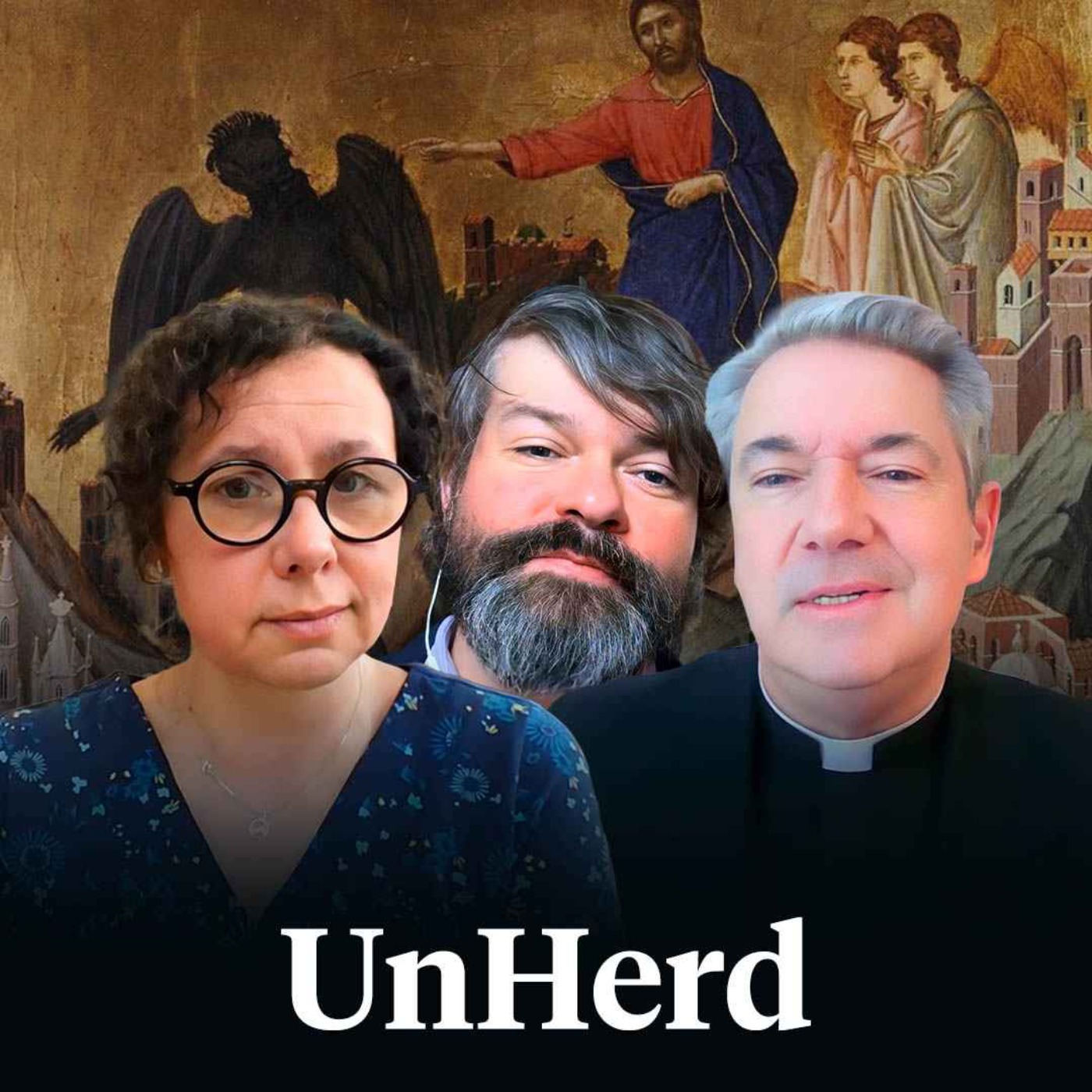
Hello and welcome back to UnHerd. I'm Florence Read. Today we come to you with a rather esoteric story. Exorcism requests are rising globally. 50% of surveyed US diocese reported increased demand, particularly post pandemic, and the number of US exorcists has grown from 24 to 150 in in 15 years. Demand in Italy has also tripled in the last decade, with an estimated 500,000 people seeking help annually. Membership of the International association of Exorcists has grown from 250 members in 30 countries in 2014 to over 1,000 members across 58 countries. So there's certainly a boom. Gallup and Huffington Post polls indicate approximately half of Americans believe in demonic possession, and younger generations up to the age of 27 show the highest percentage of believers 63%, compared to only 44% of those over 65. So maybe it's Gen Z leading the charge. Today I'm going to be joined by three experts in the realm of exorcism. Dr. Francis Young is a historian and author of a history of exorcism in Catholic Christianity. Reverend Dr. Jason Bray is the Dean of Llandaff Cathedral and a deliverance minister, which is the name they give the to exorcists in the Anglican Church. So he'll tell us exactly what it's like to actually perform an exorcism. And Professor Helen hall is the Associate professor at Nottingham Law School and an Anglican priest. She's one of the UK's leading experts on the intersection of law and religious practice and will be telling us a little bit about what it means to have a multi faith society in which exorcisms are not always being performed to the highest standards. So to kick us off, I'm going to ask Dr. Francis Young to give us a brief history of exorcism in the English church. Church, Francis. Exorcisms are not exactly something we associate with the Anglican Church. We usually think of them as something done by Catholic priests, like in the film the Exorcist. Tell us a history of the Church of England and its relationship to exorcism. Where did it all start?
- [03:11]
Dr. Francis Young
So exorcism is a very ancient practice indeed. It's as old as the existence of the written word. And the earliest examples that we have are from ancient Mesopotamia. And the Greek word that we use, exorchao, which is what our exorcism word comes from, is to do with swearing by something. So the idea that you swear by your gods in order to intensify the power of a statement, and I think that captures an element of exorcism that is still in tension today. Is it from the world of magic or is it something that belongs to the world of religion? And I think that exorcism is something which still today straddles those two worlds of magic and religion. And we know that ancient Jewish people used to practice exorcism. And of course, Jesus himself practices exorcism in the New Testament. Although it's important to note that Jesus's exorcisms don't involve swearing by God because they are done through his own power or his own claim to be the Son of God himself. So they are different, for example, from the exorcisms that are then conducted by the apostles in the acts of the Apostle and in the Gospels themselves, sometimes by the apostles, where they will claim to cast out an evil spirit from somebody by the name of Jesus or by the power of Jesus. So in other words, invoking Jesus as God in order to perform this exorcism, exorcism in the way that we use it today, tends to have two different meanings, at least. And those two main meanings are, first of all, ending the demonic possession of a person. So the idea that a spirit has taken control of somebody and is being driven out by those words of power. And the second meaning, which I think is quite common in the Church of England and in the uk, is the sense that you are driving a spirit from a place. So the idea of a, an exorcism of a Haunted house, essentially, where you're trying to get rid of ghosts or you're trying to get rid of some kind of unwelcome presence in a place. And the church has practiced this from the beginning. It's core to the Gospel narrative, It's core to the practice of the early church. It forms part of the liturgy of baptism. So to this day, an exorcism is part of the liturgy of baptism, when a child is baptized in the Church of England or in the Roman Catholic Church. But that was essentially a kind of a ritualistic requirement, over time, lost its real significance. But the exorcism of energumens, that is to say demoniacs or people who are believed to be possessed by the devil, that's something which comes back with a vengeance in the late Middle Ages, and it's something which is associated with the witch trials as well. The Reformation period, it becomes very, very popular claim. Particularly you get the Catholic Church, the Protestants, counterclaiming and claiming they are the best at casting out demons. And the Church of England's role in this really kind of begins in that period where there is an attempt to bring back the idea of exorcism in the 1560s, so early in Elizabeth's reign, where some Church of England clergymen are saying, well, we need to take on the Catholics at their own game. We need to show that we've got the sacred power to be able to vindicate our form of Christianity. But there are others within the Church of England, such as Archbishop Matthew Parker or John Fox, who are deeply hostile to the idea of exorcism. And they don't want this to be part of Anglican tradition. And in fact, in 1604, the then Archbishop of Canterbury, Richard Bancroft, draws up a series of canons which in, in all but name, prohibit exorcism for the next couple of hundred years. Theoretically, they allow an exorcism to take place if the bishop is to use a specific license, but that never happened. No bishop ever did issue a specific license. So effectively that handed exorcism back to the Roman Catholic Church and to the dissenting free churches who continued to practice it, but the Church of England didn't. And that situation continues right into the 20th century, until a priest called Gilbert Shaw, who is an Anglo Catholic priest of Irish ancestry, decides to revive it right in the middle of the Blitz. And he, in fact, carries out an exorcism of a woman in a church in London in the middle of the war. And after the war, he then trains up another protege, Max Pettibierre, Robert Pettibierre, as he was later known, who writes up essentially the foundational texts of exorcism in the Church of England. But people are still very skeptical of it, and it has no official status until, in 1969, that canon by Richard Bancroft of 1604 is abolished. And effectively that means that there is then no law within the Church of England, no canon that is governing exorcism, and that creates an absolute free for all. So clergy can exorcise, they can do whatever they want if they so choose. You get televised exorcisms, you get. Get Mass exorcisms. In some churches, it becomes a huge source of contention until 1974, when a tragic case takes place at Ossett near Bradford in Yorkshire, where a man who was mentally ill was given an exorcism which went wrong. He then went back home, murdered his wife. This terrible case, the offset murder case, as it was known. And as a result of that, the Church of England decided that rules had to be imposed, or rather guidelines. They were still couched as guidelines. And in 1975, in General Synod, Archbishop Donald Coggan, Archbishop of Canterbury, laid down these basic guidelines for the governance of exorcism. And essentially it puts it in the hands of the bishop to decide how exorcism is going to be done within their diocese. It encourages the appointment of diocesan exorcist. By the 1980s, that post had changed its name and it tended to be known as a diocesan Deliverance advisor. Deliverance is the euphemism that the Church of England prefers to use for exorcism these days. And that person is appointed by the bishop and can only act with the bishop's authorization. Other clergy are required to refer any incidents or anything that they think might require exorcism to that advisor. And those guidelines have been refined. So in 2012 and again in 2024, they were refined to their present status. But, yeah, it remains a ministry, which the Church of England is quite cagey about, because I don't think they're keen for a great deal of publicity about it, but absolutely, it happens. And every diocese in the Church of England, all 42 dioceses, has a diocesan deliverance advisor.
- [09:50]
Florence Read
And is it controversial? It sounds like it's had quite a rocky history in the Church of England. So, as it stands today, are there still people who regret the resurgence of exorcism in the Church of England?
- [10:00]
Dr. Francis Young
I think there are, yes. I mean, if you go back to 1975. So in the period before Donald Coggan decided to lay down these guidelines in General Synod, there was a campaign by Geoffrey Lamp and Don Cupit, who were more liberal clergymen within the Church of England of that era, to try and essentially retain the Church of England's historic position of not practicing exorcism. But they were overruled. And I think that the cultural pressures at that time were such that there was huge demand for exorcism. The film the Exorcist had only recently come out and exorcism was in the news. And the Church of England felt that if it didn't offer this ministry to people, they would be left behind. And I think there's always an element within the Church of England of tension between responding to popular demand and what people want and upholding a kind of theological integrity or tradition as it has been passed down. And in this case, I think it was the popular demand which won out. But of course, what that's done is it's left the Church of England in a position where this ministry now exists. It can't really be got rid of now because it's become an accepted thing that the C of E does. And so, yeah, there are certainly clergy who are skeptical, who don't want this to carry on, or are not so much skeptical, but they find the practice of exorcism morally troubling. And I think one issue which has come up in recent years is how exorcism meshes with the Church's requirements of safeguarding, which, of course, requires the protection of vulnerable adults. Any adult who says, I believe that I'm possessed by a demon is ipso facto, you know, whether that's true or not ipso facto, that adult is a vulnerable person because they're clearly in a position of believing something that makes them very vulnerable to, you know, to exploitation or to abuse. And so I think that question is one which the Church of England has struggled with, is still struggling with today. How do you square the circle of continuing the practice of exorcism or with the Church's commitment to the safeguarding of vulnerable adults and children?
- [12:00]
Florence Read
Of course, critics of exorcism will often invoke child exorcisms as an example of a kind of particularly abusive form of practice. Do you know of any examples of child exorcism in the Church of England?
- [12:12]
Dr. Francis Young
The Church of England a few years ago clearly clamped down on this and prohibits the exorcism of any minors. So it can't happen. It would be impossible in the Church of England. And if it did, it would be a Very serious disciplinary offense for any clergy who were involved. Has it happened in the past? Well, yes, I mean, between the early 1970s and now, yes, there certainly were. When I was researching for my book a history of Anglican exorcism, I came across cases like this which I didn't include in the book for ethical reasons because, you know, those people might still be alive. And therefore, even if anonymized, that would be ethically questionable to report on those cases. But in the archives that I was consulting, there were cases of. Of exorcism of children. As far as I'm aware, none of the historic cases of child abuse that have come up in the last few years have concerned claims of exorcism, which you might consider quite surprising. But I think perhaps it shows that it's a fairly uncommon practice. Even in the. The height of this. This period of enthusiasm for exorcism, there were only a few clergy who were doing this. So it's not something which was ever, you know, very common in the Church of England. But, yes, I think that there have historically been cases of exorcism of children.
- [13:31]
Florence Read
Are there any substantial differences in the style of exorcism or the practice of exorcism between what we see in the exorcist, the Catholic version, and the Anglican version? What would an Anglican exorcism look like and as different to that Catholic version?
- [13:45]
Dr. Francis Young
I think it depends on what tradition within the Church of England you're talking about. I mean, Gilbert Shaw and Max Peterpierre, who I mentioned, they came from an Anglo Catholic perspective, so they were advocating and practicing what I would characterize as the sacramental tradition of exorcism, so heavily inspired by the Roman ritual and the way in which exorcisms are conducted in the Roman Catholic Church. So kind of ritualistic, again, similar to what you might see in the exorcist, although probably not as dramatic. But there are, of course, other traditions who are very keen on exorcism. For example, charismatic evangelical Christians. So there. The exorcism would still contain those imperative form of words, the kind of, you know, be gone, Satan. You know, be gone in the name of Jesus and so forth. But it would not be couched within specific liturgical arrangements, but would still be rooted in the reading of Scripture and things like that. There are other traditions which are hostile to exorcism. So, you know, traditionally, the conservative evangelical tradition within the Church of England tends to be hostile to these kind of charismatic expressions or enthusiastic expressions of spirituality like exorcism. So, you wouldn't find, you wouldn't find conservative evangelicals very much in favor of exorcism. And again, within the sort of the soft centre, if you like, of the Church of England, the kind of liberal mainstream, this is something which you won't always find, although sometimes you will, from a therapeutic point of view. You will find people who will advocate the idea of that, even if they don't. They're not sure whether exorcism really does anything on a spiritual level. They might say, well, if somebody wants it and they feel that it is beneficial to them and to their mental health and well being, then it could be one among a variety of approaches that the churches take, takes towards someone's psychological healing. So I don't think you necessarily have to be an, an avowed believer in the demonic world to necessarily think that exorcism is a good thing. And so you will find a kind of liberal tradition of exorcism as well within the modern Church of England.
- [15:42]
Florence Read
Surely there are some more people now who believe in demonic possession than there were. Given the sudden rise in interest in exorcism, is it true that people are now considering the possibility of demonic or satanic possession where they weren't before, where they were more sceptical?
- [15:59]
Dr. Francis Young
Yes, I think so. I think that there is a comparison to be made between our current era and the 1970s, the 1970s being a decade when there was a huge upsurge of interest, occult and in, in the possibility of spiritual forces beyond our ken. And I think that that's something which has experienced a bit of a revival, actually. I think that there is a. Yeah, a kind of a turn away from the kind of rationalistic way of looking at the world that we might have seen in the 80s and 90s and early 2000s. And you see this also among clergy. I think younger clergy tend to be quite serious about the supernatural in the same way that they're quite serious about their faith. And, you know, you won't find younger clergy in the Church of England who don't believe in the resurrection of Jesus Christ or who don't believe in miracles. And that would be rare. I think, you know, mostly they are quite serious. And I think that that's a result of religion being a conscious choice. You know, if you're going to be a Christian, if you're going to be religious, that's quite a countercultural thing to be in our society. And so if you're going to do it, you might as well do the full fat version. And I think that A lot of younger clergy therefore, tend to be quite keen on, on the idea of theological authenticity. Now, that doesn't necessarily mean that they're all big on demons, but it does mean that there is a space within which it's possible to be quite serious about the threat posed by the demonic world.
- [17:17]
Florence Read
Given that you're someone who's over the kind of trends in the mystical, the spiritual, is there anything else that has resurged or become popular at the same time that exorcisms have?
- [17:27]
Dr. Francis Young
Yeah, well, I think that it is something which is paralleled in other spiritual traditions, a kind of resurgence of interest in the supernatural. Natural. For example, you know, there's growing numbers of people who would identify as contemporary pagans. You've got growing numbers of people who would identify with occult practices or spiritual practices without necessarily joining a group. And I think, you know, with the rise of TikTok and social media and the idea that you can simply find out what's, what's going on out there, but without joining something, that's a new development. You know, if you go back to the 1970s, if you wanted to know about this stuff, usually you had to sort of sign up by mail order, find out, you know, join a society or get initiated into something and, you know, join a group. And I think, you know, people are very averse to that kind of, you know, belonging to groups, especially post Covid. And yet there is this new space in which it's possible to, you know, find out about all sorts of stuff. And so clergy themselves will say that, you know, a lot of the people who are asking for help have got in trouble as a result of something which they, you know, saw on YouTube or saw on TikTok and they tried at home and then they became disturbed by, you know, some, some perceived kind of spiritual influence that that resulted from that. And so there is this kind of spiritual marketplace out there which is pretty chaotic and it, yeah, it causes some people quite a lot of distress.
- [18:45]
Sponsor Voice
This episode is sponsored by the new film October 8th. October 8th offers a look at the real life impacts of October 7th on the lives of Jewish people and the eruption of anti Semitism on college campuses, social media, media and in the streets of America. Beginning the day after the attack on Israel by Hamas. The film also uncovers how over decades Hamas created sophisticated networks in America to permeate U.S. institutions and examines the tsunami of online anti Semitism and disinformation unleashed by Iran, China and Russia with the goal of dividing American society. The film features expert insights from the likes of Bari Weiss and Douglas Murray. This is a vital wake up call about the threat of extremism Against Democracy and October 8th is now available to buy or rent on Amazon Prime, Apple TV and YouTube.
- [19:39]
Professor Helen Hall
This is an ad by BetterHelp.
- [19:41]
Sponsor Voice
Did I talk too much?
- [19:42]
Dr. Francis Young
Can't I just let it go?
- [19:50]
Professor Helen Hall
Take a breath. You're not alone. Let's talk about what's going on. Counseling helps you sort through the noise with qualified professionals, and online therapy makes it convenient. See if it's for you. Visit betterhelp.com randompodcast for 10% off your first month of online therapy and let life feel better.
- [20:11]
Ryan Reynolds
Ryan Reynolds here from Mint Mobile with a message for everyone paying Big Wireless way too much. Please, for the love of everything good in this world, stop with Mint. You can get premium wireless for just $15 a month. Of course, if you enjoy overpaying. No judgments. But that's weird. Okay, one judgment anyway. Give it a try@mintmobile.com Switch upfront payment
- [20:33]
Mint Mobile Announcer
of $45 for 3 month plan equivalent to $15 per month required intro rate first 3 months only, then full price plan options available, taxes and fees extra. See full terms@mintmobile.com youm know what's wild?
- [20:42]
Ad Voice
Most people are still overpaying for car insurance just because it's a pain to switch. That's why there's Jerry. Jerry's the only app that compares rates from over 50 insurance in minutes and helps you switch fast with no spam calls or hidden fees. Drivers who save with Jerry could save over $1,300 a year. Before you renew your car insurance policy, do yourself a favor, download the Jerry app or head to Jerry. AI Acast,
- [21:11]
Florence Read
you mentioned Covid there. Why was it the zenith of this explosion of alternative spirituality?
- [21:16]
Dr. Francis Young
I think that it's simply that people had time on their hands to reflect on the meaning of things and on the spiritual or on the unseen. And people also spent a lot of time in their own homes in one particular space. And so, for example, there was a huge upsurge of people reporting haunted houses simply because they were spending so much time in their homes that they were becoming aware of things which they interpreted as, you know, a presence of a spiritual haunting. But I think also, you know, the same way that people have turned to conspiracy theories or they've turned to alternative spiritualities as a result of spending a bit too much time online during the pandemic. So, you know, people have developed these kind of spiritual speculations and had the space and the time to reflect on these things which in Some cases has been a good thing. In other cases has caused people pain and distress and led them down pathways which they now regret. But, yeah, I think it was a kind of a strange time when people turned inward, and therefore it has had these kind of spiritual consequences.
- [22:22]
Florence Read
What might this moment suggest about where we're going? Have there been points like this in history where exorcism has suddenly become really trendy again? Where do you think we might be headed if we are having a sudden revival of interest in exorcism?
- [22:35]
Dr. Francis Young
Yeah, well, I've argued in my books that exorcism is associated with crisis, and it peaks in times of crisis for the church. The Reformation being example of that. You know, again, around the time of the French Revolution, you know, you got a peak of. A peak of exorcism there with. With a kind of a crisis in identity for Christianity and the church. And I think we see the same thing in the 1970s when, again, the church is finding an identity for itself in a rapidly secularizing society. And I think that there is a crisis point for the church now in the sense that secularization has, to some extent, ground to a halt. It no longer appears as though secularization will just continue forever and consume. It seems that religion is making a bit of a comeback, but at the same time, it is forced to find a new identity for itself in a religious marketplace where people are not necessarily schooled in one particular religion and they don't have that background, and they can choose whatever they want. You know, anything's out there for you to. For you to adopt if you choose to do so. And therefore, Christianity is competing with other religions and other spiritual traditions for hearts and minds and spirits. The church itself would believe. And so, yeah, I think that there is a sense of crisis, of uncertainty about the future, of, you know, potential, you know, positive futures for the church, where church attendance grows, whether it's kind of a revival, but also concerns about dwindling congregations and declining churches and declining national influence when it comes to the Church of England. And with the Church of England, I always get the sense that it clings to exorcism as one way to make itself relevant, to deliver a service, if you like, to the population of England, which no one else can deliver in quite the same way. And therefore, that's one of the linchpins that kind of keeps exorcism in place as something which the Church of England offers.
- [24:28]
Florence Read
Great, Francis, thank you so much. I really appreciate your time.
- [24:31]
James Billow
You see the headlines every day, but do they actually tell you what's going on? We don't just look at the front pages. We look at what's moving beneath the surface. That's Undercurrents, the new daily newsletter from Unherd. It lands in your inbox every morning at 8am EST or 1pm GMT. Get the perspective that really matters. Get Undercurrents by me, James billow in the U.S. newsroom. Sign up today@unherd.com undercurrents newsletter.
- [24:58]
Florence Read
Next up, we are going to be joined by Reverend Dr. Jason Bray, somebody who has actually performed exorcisms, or as he calls them, deliverances, as dean of Landaff and a deliverance minister. He's an Anglican priest and he joins us from his home. Now, could you just share how one gets into performing exorcisms? It's not something we usually associate with the Anglican Church. You know, we all know that the Exorcist is about Catholic priests. So how do you, as an Anglican priest, end up performing exorcisms?
- [25:27]
Reverend Dr. Jason Bray
We tend to call it deliverance ministry, but what we tend to do is we deal with the paranormal. And most of us get into it by having some sort of experience. In my case, it was an experience that happened actually in my own home. So it was the house that we moved into when I was a curate. And we just had a whole series of weird experiences happening there. And I realized that actually maybe this was the thing that I really needed to explore.
- [25:51]
Florence Read
And so what's a normal act of deliverance? Like, if you're called out for a deliverance job, what does it look like? What are you doing?
- [25:58]
Reverend Dr. Jason Bray
What we're doing is basically inviting God in a sort of quite elaborate way to. To deal with the situation. When a call comes in, it goes. Actually, the first thing it does, it goes to the bishop, so it can be logged for insurance purposes. So we're insured by our bishops. And then the case will come back to us. And we have conversations with people usually on the phone. First, go out to see them and try to work out what's going on. One of the things that we always try to do is to sort of bless the house, bless them, maybe. So that would involve blessing holy water. So you bless the water, you bless salt, mix them together, and then we sort of sprinkle holy water around the house, come back, say the Lord's Prayer, also providing a huge amount of reassurance while we're doing it.
- [26:43]
Florence Read
What are the most common reasons for requiring or requesting deliverance services? Why do people need these deliverances?
- [26:50]
Reverend Dr. Jason Bray
There are Things to do with houses. So people see stuff around the house and stuff moves around. So poltergeist activity is a really common thing often associated with children, with teenagers, with people who aren't very good at opening up about things, people going through stress. And we reckon that it's probably an extreme stress reaction that somehow things build up and that they earth themselves in physical objects. So what we need to do in that case is to provide huge amounts of reassurance. And so I say also bless the house as well. And then occasionally people will see things around. Auntie Brenda keeps appearing on the. You know, on the landing upstairs in her nightie when she really shouldn't be there. She died 10 years ago, so that's something that we also deal with. I also get lots of calls of people asking me to exorcise them properly because they're demonically possessed.
- [27:42]
Florence Read
What would be the threshold to reach a point where you would say, yes, we will perform an exorcism? What symptoms might someone have that suggest that they are a good candidate for exorcism, then?
- [27:52]
Reverend Dr. Jason Bray
What we're actually looking for is three very specific things. So we're looking for somebody who has preternatural strength. So basically, if they can do things that they really shouldn't physically be able to do, that's one. The second thing would be preternatural knowledge of stuff that they shouldn't know. So if you walk in and somebody knows, your browsing history knows you've got gambling addiction, knows that you've got wife and family somewhere that you're not telling your present wife and family about all that sort of stuff, if they know that, that might be another symptom. The other one is a weird knowledge of languages that they've never studied. One of the cases that somebody reported was there was a little old lady who lived in Cornwall. She'd never left Cornwall. She lived there for the whole of her life. She was able to speak colloquial Arabic. The deliverance minister was able to say, actually, yeah, actually, I studied Arabic. And this is from Upper Egypt. So we're looking ideally for all three of those things, each diocese in England and Wales, and there are 48, I think, dioceses in England and Wales would have a team of people that would go out and do these things.
- [29:01]
Florence Read
What does it tell us about the change in the way people are perceiving Christianity that there does seem to be more demand for exorcism or deliverance in this current moment? Are we moving backwards in a kind of timeline of Christianity, or is this just a new phase.
- [29:18]
Reverend Dr. Jason Bray
There is something happening. So all the research seems to suggest that people are much more interested in religion and are much more interested in some of those aspects of religion that the Anglican Church really hasn't been good at explaining. You know, the supernatural healings are, you know, sort of things that people are looking for. They're looking for authenticity and authenticity in spiritual experience as well. There does seem to be a sort of change in this current generation, generation Z, in that sort of looking for something, looking for meaning. Somewhere along the line, I suppose, the whole idea of the supernatural and the paranormal is something that's actually become much more acceptable in today's world. Previous generations, certainly Christians, haven't helped themselves. So I was reading an article earlier on Today that said, well, Christians today don't believe in the supernatural. In fact, most Christians today don't believe in God, they just believe in being nice to people. And I think we've moved away from that sort of idea. Christians today are much more likely to be upfront about the fact that they believe in God as an external entity, but also much more interested in some of those deeper questions that we've sort of lost sight of over the years.
- [30:31]
Florence Read
I'm going to ask you the really cheeky question I'm sure you get asked at every dinner party you go to, which is, what's the most kind of memorable deliverance job that you've been on?
- [30:39]
Reverend Dr. Jason Bray
Somebody got in touch with me and told me that her mum was experiencing something utterly weird. So she could feel rats under the bed clothes when she went to bed at night. In fact, she felt that the rats were actually eating her insides. Her daughter would go in and they could almost see them seething under the bed clothes, but they couldn't really understand what was going on. When they took the bed clothes off, there was nothing there. And when I got there, they were really uptight. There was something going on there I couldn't work out. So I laid out my salt, my holy water in that kitchen and I was standing there just saying the prayers when the light started to go off one by one above me. So went round, blessed the house, blessed them, said some prayers for them and just sort of walked away and thought, this is a bit weird. The daughter came up to me and said, thank you very much for coming round. Just to let you know that Mum is waiting for a diagnosis for bowel cancer. She's just had some tests, but she didn't want to tell you about that because she's, you know, she's a bit Embarrassed about the whole thing. And it was just sort of one of those cases where I thought, actually, that's probably what's going on. That somehow, you know, sort of her anxiety about her bowel cancer, which you couldn't really talk about, had manifested itself in the physical sensation of rats eating her. And then when they looked at the bed clothes and they could see the rats actually moving around, interestingly enough, I bumped into the daughter a little while afterwards and she said, just to let you know, moments of the all clear, it wasn't that at all. And she said, and the rights have gone as well.
- [32:18]
Florence Read
We're speaking to other experts on exorcism and deliverance today just to get different perspectives. And one of their concerns about the rise in interest in exorcism is the way in which it is not evenly spread across cultures and that some religious traditions have, let's say, looser practices when it comes to the ethics. Is there a risk to the sudden uptake and enthusiasm around exorcism in this country where not everything is regulated in the way that the Anglican church is?
- [32:49]
Reverend Dr. Jason Bray
Yes, I think there is, actually, because exorcism as such, the expelling of a demon will only work if there is a demon present. So, as I said, you know, we are looking for those three very specific things. They are remarkably rare, but it would be really easy for me to sort of get in touch with people and say, yeah, yeah, come around. I'll do you a quick exorcism when I know perfectly well that it's not going to work. So, yeah, we are deeply concerned about these things. The whole idea of conversion therapy as well, you know, this sort of expelling demons of homosexuality from people, that's not a form of demonic possession. So it simply won't work. You can go online. You can get online exorcisms. There is also a mental health epidemic out there, and in a sense, treating mental health as if it's a paranormal thing that's just simply not going to work at all.
- [33:43]
Florence Read
Do you think that potentially we are looking down a track of a future which involves much more religious esoterica? Is this a new direction that we are headed, or is it a phase that we're going to kind of come out of in the way that there have been many phases in the past?
- [33:59]
Reverend Dr. Jason Bray
It is remarkably difficult to tell. So nobody was expecting this to happen. The Bible Society produced a report called the Quiet Revival because they were quite surprised by what they were seeing. And in a sense, we weren't expecting this. So we don't know how it's going to go. And it's possible that there will be an increase in interest in spirituality. For me, I feel that there needs to be a balance between doctrine, between what the church believes, and also the teachings of teachings of Jesus, their sort of love and community teachings, and also the spirituality that underpins it all. I think it's all part and parcel of the same thing. So maybe this is a way of recapturing some of the spirituality that the church had in the past but has lost. But who knows where we go from here?
- [34:48]
Florence Read
I think that's a good point to end. Thank you, Jason. I really appreciate it. And last but not least, we're going to be joined by Professor Helen hall, an associate professor at Nottingham Law School. She is going to help us understand the landscape of contemporary Britain and its exorcisms. Because it isn't just the Church of England that's had a resurgence in interest. There has also been much evidence that other faiths are engaging in this practice as well, and sometimes without the guardrails that the Church of England offers. She joins us now. Welcome, Professor Hall.
- [35:19]
Ryan Reynolds
Ryan Reynolds here from Mint Mobile with a message for everyone paying big wireless way too much. Please, for the love of everything good in this world, stop with Mint. You can get premium wireless for just $15 a month. Of course, if you enjoy overpaying. No judgments. But that's weird. Okay, one judgment anyway. Give it a try. @mintmobile.com Switch upfront payment of $45 for
- [35:42]
Mint Mobile Announcer
3 month plan equivalent to $15 per month Required intro rate first 3 months only, then full price plan options available, taxes and fees extra. See full terms@mintmobile.com Most drivers overpay for
- [35:51]
Ad Voice
car insurance not because they're careless, but because the system is needlessly complicated. Jerry fixes that. Traditional comparison sites give you quotes once, then disappear. But Jerry can handle all the insurance shopping legwork and never stops working. Compare 50 plus insurers side by side and purchase directly in the app. No spam calls, no hidden fees. They'll even monitor price trends and can alert you to better rates. Drivers who save with Jerry could save over $1,300 a year. Download the Jerry app or visit Jerry AI Acast today.
- [36:26]
Florence Read
I suppose we should start with the obvious, which is do you concur with the evidence that seems to suggest that there is a rise in interest in exorcisms in in this country and in fact, across Europe and America?
- [36:38]
Professor Helen Hall
I think there has definitely been a rise in the amount that we've talked about and seen of exorcisms. And that's really been a continual trend with some ups and downs. But from the sort of, you know, 60s and 70s onwards, when there were, you know, some notorious, of course the Exorcist, but various other well known sort of blockbuster films, the whole phenomenon of the Satanic panic, which hasn't gone anywhere, there was basically a conspiracy theory that has been completely debunked by every reputable commentator of real supposed cults that were meant to be sacrificing children to Satan and things like that. And that's unfortunately circled back around into things like the Qanon conspiracy. So it's been in the popular culture for a long time and of course we've had, you know, Covid where people have had a lot longer to spend time on the Internet and exchanging and finding ideas. We also live in a more multicultural society now than we did previously. So that's had an influence on the kinds of exorcism that are being practiced, traditionally speaking, for a lot of the history of the Church of England. It wasn't a mainstream part of Church of England practice for quite a lot of centuries. So it was something that was practiced more from other groups. It's always been part of, for instance, a lot of Islamic traditions to have exorcism. And obviously a greater diversity of society has meant that we have seen different groups, of course, in a different way. We've seen a rise in things like neo paganism. Alternative spiritualities are being practiced more as well. So we have these new religious streams going along as well as greater access to information.
- [38:21]
Florence Read
What is it then that has caused British Anglicans, who previously might not have sought out an exorcist to look for one?
- [38:29]
Professor Helen Hall
It has always been something that has been permitted within Anglican tradition. So the Anglican Church took a very stereotypical fence sitting kind of position on it at the Reformation, where we basically said, well, it's not something we do routinely, but if you get permission from the bishop, then you can do it. So it's never been a completely alien thing and it has been something that we've offered increasingly. I mean, within Anglicanism, we've always been very careful about how we've done it and we've always done it within consultation with medical professionals. We've always been very careful to have proper safeguarding and guidelines around things, at least since some incidents in the 1970s. And we want to make sure that if we do offer this, we do it in a very responsible and considered way. Because if it's done without Proper thought. You can inadvertently do a great deal of damage to people because if somebody has a mental illness and you encourage them in the narrative that actually what's going on with them is a demon and your exorcism is not going to cure an illness like schizophrenia, you can just make them even more distressed than they were previously because you've encouraged them to believe that this is something demonic. You fail to help and you leave them with the idea, well, now I'm at the mercy of this demon, and nobody, even the church, seemed able to help. In terms of people's welfare. There is a real risk in carelessly carrying out exorcism.
- [39:55]
Florence Read
Is there a societal question here around the way in which we care for people with mental health problems that lead to those kind of delusions?
- [40:03]
Professor Helen Hall
I mean, I certainly think we are much more able to talk about our struggles than we were in previous generations and maybe even 10 or 15 years ago. And people do that in different ways, put things across in different ways. And I think a willingness to say, I have a problem, I'm frightened, that can have an impact sometimes as well. People might have had a negative experience of conventional medicine. There is a lot of suspicion around conventional medicine, a lot of unhelpful conspiracy theories. And in the same way some people, people might choose to reject vaccines, they might also want to reject psychiatric care because they don't trust science and the medical establishment as much. So that could be another reason why some people are seeking alternative explanations and alternative ways of dealing with problems.
- [40:53]
Florence Read
Why do people seem to be turning away from mainstream religiosity and biblical texts and turning towards these alternative texts, alternative practice, spiritual practices? What can that tell us about the society we're in?
- [41:06]
Professor Helen Hall
I mean, it's really interesting. I mean, obviously there's been a sort of slow decline in, you know, participation in organized religion in the last sort of 200 years or so. Although the narrative of its decline and death has definitely been exaggerated in that it's. I think quite a lot of people at the beginning of the 19th century thought that churches will all have shriveled up and died a long time ago. Also, we have lots of fascinating evidence from historians, including historians of the relatively recent past, that people have always sought out alternative spiritualities, cunning folk, for instance, and people within their local communities, even in urban areas. So people have often stereotyped ideas of kind of like, you know, witch type figures in villages in the distant past. But often even in urban areas in the late 19th, early 20th century, you got people in exchange for money or favours. Might be willing to tell your fortune, for instance. Might be willing to effectively curse somebody who'd upset you. So this isn't. Oh, suddenly people have started doing these out there things that they weren't doing in the past. It's always been there. I think it's become more acceptable to be interested in alternative spiritualities. I think for a lot of the 20th century that would have been seen as, you know, a bit socially shameful and embarrassing. I think maybe people just feel a little bit more of a permission to expl other things now.
- [42:34]
Florence Read
It does feel strikingly old school, though, the kind of vision of the priest turning up at the house of the demonically possessed. Is the modern exorcism what I'm imagining.
- [42:45]
Professor Helen Hall
It's definitely not like that in the sense of certainly within Anglicanism and to be fair, also within Roman Catholicism, I think that's important to emphasize. A priest would not just turn up at somebody's house, discern that they were possessed by a demon and then start shouting at them in Latin. Basically, that's not what really happens. There would be a great deal of conversation beforehand trying to work out what was going on. Most of the time we would conclude that actually this is not something that's appropriate for an exorcism and we would encourage people to try and seek out medical care and possibly other therapies and ways forward that might be right for them. If we did in either case decide that exorcism might be appropriate, that would be sense checked with other experts within the church. It wouldn't be something that just somebody would go off as a maverick and do do. And it would be done in a very gentle, calm way with a minimum of publicity. It's fair to say, though, that other religious traditions do things differently and have different approaches. And there are some Christians, for instance, and there are others from other traditions who'd say, well, we have to respond. And our narrative is that this person is genuine, in the grip of an evil spirit and it was the right thing to do. And basically, yes, I am a hero in this situation and what I did is in accordance with my religion beliefs. It's in accordance with the religious beliefs of the person who received it. And who are you to question the validity of that? And this is a really difficult question. And it's one of the things that a lot of my research is concerned about, really. How do we balance, on the one hand, respecting individual freedom and saying people have a right to practice whatever faith or spirituality they want to. Doesn't matter if Other people think it's weird. They have that, that dignity and that freedom as adults in a liberal democracy from on the other hand, saying, but we don't permit vulnerable people to be abused and manipulated. And at what point is it right for us to come in and intervene?
- [44:47]
Florence Read
And obviously the fear of cultural insensitivity plays a part here in that if you've got a multi ethnic society in which different religions have connections to different communities, then the government might be wary of jumping in and trying to intervene in what could potentially be an abusive or explicit exploitative situation because of those cultural sensitivities. Is that something you find in your research?
- [45:09]
Professor Helen Hall
Yes, it is. And it's a really difficult thing. There are instances of it going wrong both ways in the sense of there are instances of things being perceived as problematic or dangerous or worrying when actually within a particular culture they are just accepted and relatively normal parts of life. And on the other hand, there are instances of intervention not happening. I mean, the most tragic and one of the most high profile was the death of a little girl called Victoria Clymbier at the beginning of the 21st century. And she was murdered by family members in an informal fostering arrangement that she was living with her great aunt and the partner of this woman. And they effectively tortured and killed the little girl. Now, there was a lot going on in the situation. There were a lot of child protection failures at the time, but part of their narrative for what they were doing had to do with cultural beliefs about spirit possessions. Essentially, one of the reasons why the authorities didn't intervene in a timely way and didn't save this little girl was a failure to understand and a fear of being perceived as racist or culturally insensitive. But unfortunately, this backfires horribly and this little girl isn't saved in circumstances where perhaps a white child would have been, because at a much earlier point someone might have been willing to say, this is alarming, this isn't appropriate here.
- [46:30]
Florence Read
And so when these people in positions of authority who should have noticed that this was going on, saw the signs, they actually projected their own vision of what was normal in this culture as being an element of the religious zealousness of that household was that the abuse was kind of downstream from that. And therefore to intervene in that situation would be to be insensitive to the culture of the people in that house.
- [46:57]
Professor Helen Hall
Yes, basically they made assumptions and they projected their own fears and ideas of what was going on and therefore didn't correctly make the judgment call. I think it's fair to say that There has been a lot of learning since then. Certainly various police forces have done a lot of work trying to train professionals. I think the social work profession has done a lot of work. There was a national working group on spiritual and ritual abuse which was set up, which is still carrying on, which I'm still involved with. So we have made a lot of effort in the last quarter of a century to try and avoid such tragedies. However, is spiritual and ritual abuse still a problem? Absolutely, it is. And there is still definitely work to be done.
- [47:38]
Florence Read
And what do you think that work is like? What do you think the next stages are in terms of safeguarding young people or vulnerable people in communities where demonic possession might actually just be a good excuse to enact abuse or exploitation on them?
- [47:52]
Professor Helen Hall
I think a lot of it has to do with education and empowerment. So I think getting faith communities on board to ensure that good safeguarding is treated as something that's important across the board, across faiths and spiritualities and traditions. I'm in favour of encouraging voluntary guidelines on exorcism that perhaps could be taken up across the board. I also think it's very important to educate people of all ages, but including young people, so that they can spot red flags. If somebody is offering you some kind of spiritual intervention, how is it being offered? For instance, are they encouraging you to carry on talking to other people, to family members? Are they encouraging you to carry on going to your gp? Or are they doing things which make you feel uncomfortable? Really, it's part of a bigger conversation of empowering individuals to recognise when things aren't right and to feeling it's appropriate to question and knowing where to seek help if they need to do that.
- [48:57]
Florence Read
Great, Helen, thank you so much. I really appreciate it.
- [49:00]
Ad Voice
Well, there you have it.
- [49:01]
Florence Read
Three experts on exorcism giving us some reasons why there might have been an uptick since the pandemic in interest in spiritual deliverance. If you are interested in this sort of esoteric content, then why not not subscribed to the Unherd channel? There'll be plenty more where this came from. Thanks for watching. This was Unherd.
- [49:24]
Fin AI Announcer
AI is transforming customer service. It's real and it works. And with fin, we've built the number one AI agent for customer service. We're seeing lots of cases where it's solving up to 90% of real queries for real businesses. This includes the real world competition, complex stuff like issuing a refund or canceling an order. And we also see it when FIN goes up against competitors. It's top of all the performance benchmarks, top of the G2 leaderboard, and if you're not happy, we'll refund you up to a million dollars, which I think says it all. Check it out for yourself at Fin AI
- [49:56]
Dr. Francis Young
ACAST powers the world's best podcasts.
- [50:00]
Sponsor Voice
Here's a show that we recommend.
- [50:03]
Ad Voice
Michael Gargiulo stalked and slaughtered his female neighbors in LA in the 2000s until one survived.
- [50:11]
Reverend Dr. Jason Bray
She painted a picture that you could never imagine.
- [50:14]
Ad Voice
In a First on Mind of a Monster, we dive into a case that's still active. Did Michael's murderous rampage start in the 1990s when he was just 17? His impulsivity and his rage was starting to peak around that age. Listen to Mind of a Monster, the Hollywood Ripper. Wherever you get your podcasts, ACAST helps
- [50:36]
James Billow
creators launch, grow, and monetize their products.
- [50:39]
Sponsor Voice
Podcasts everywhere Acast.
- [50:41]
Dr. Francis Young
Com.