Loading summary
Transcript145 lines
- [00:00]
Sherrell Dorsey
Hi, this is Sherrell Dorsey from TedTech and this episode is brought to you by Solidigm. The world runs on data and data relies on storage. But most businesses rarely think about how crucial that storage really is. The truth is it's no longer just a commodity with new demands and constraints, especially from AI. The old ways of managing data are holding innovation back. Solid State Storage from solidigm is changing that. It helps reduce energy use, shrink physical footprints and accelerate data at the edge, unlocking more from your AI infrastruct. Learn more at whatsthestateofyourstorage.com A lot of.
- [00:36]
Momentous Brand Representative
Supplement brands chase trends, but if you're serious about your health, we know research backed science is what actually moves the needle. Momentous works with the best brains in human science to create every formula and every batch is made of pure ingredients tested for safety and does not contain fillers so you get the best long term results possible. Creatine isn't just for muscle gains. It's essential daily fuel for your brain, body and long term performance. Momentous Creapure Creatine is backed by leading performance experts like Dr. Andrew Huberman and Dr. Stacey Sims. Sourced exclusively in Germany, Creapure sets the gold standard for creatine, delivering the purest form creatine monohydrate that's rigorously washed and never cut with fillers. With over 2,000 five star reviews, over 112,000 customers have seen the results firsthand with Momentous. The fundamentals are done right. Right now, Momentous is offering our listeners up to 35% off your first subscription order with promo code Acast. Go to livemomentous.com and use promo code Acast for up to 35% off your first Subscription Order. That's livemomentous.com promo code Acast.
- [01:49]
Saurabh Amari
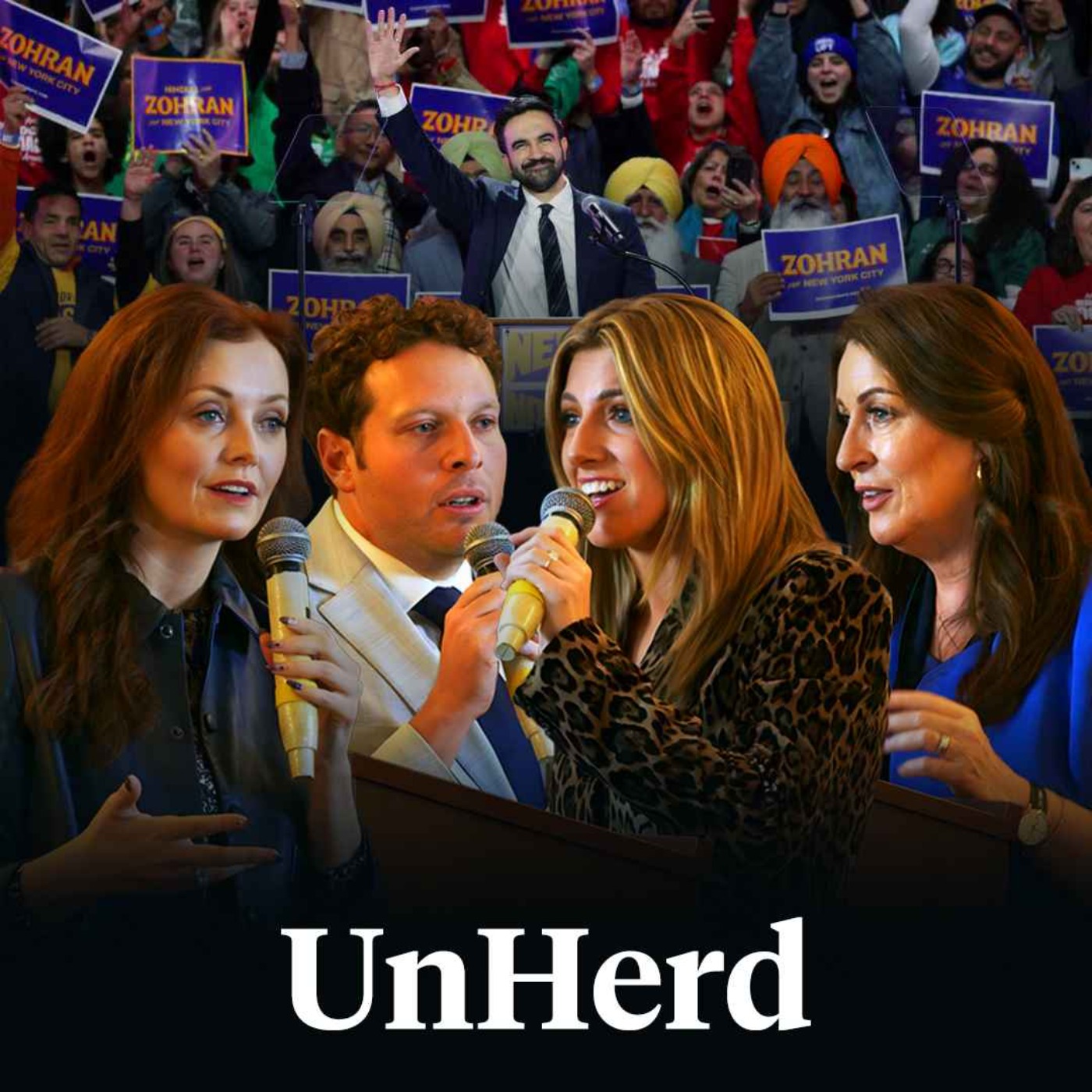
Greetings and welcome to UnHerd's US headquarters. I'm Saurabh Amari, our US editor, and I'm delighted to moderate tonight's debate on the on the resolution Resolved. This House is terrified by Mayor Mamdani. I've lived in New York City since 2012, although there was a little interval in London for four years there, and I can tell you we've never had such excitement locally and nationally around a mayoral election. If polls are to be believed, Zohran Mamdani, a self described democratic socialist, is poised to become the next Mayor of the Big Apple. His history as a police abolitionist, his calls for wealth redistribution, and his fierce criticisms of Israel have rankled the city's old guard. While galvanizing many young Gothamites, including many young Jews. Should we be afraid of his mayoralty or should we welcome it? Well, we've assembled a perfect panel to debate the question tonight. For the proposition that we should be afraid of Mirmadani, we have my former colleague and for my money, one of the country's best daily paper columnists, Miranda Devine of the New York Post. Joining her is Caroline Downey, staff writer for National Review and a fellow parishioner of mine at The Church of St. Vincent Ferrer, though we don't usually go to the same mass. Against the motion arguing that we shouldn't be afraid of Madani is Ross Barkin, who, in addition to being a writer for Unherd, is a columnist for New York magazine and a contributor to the New York Times Magazine. Joining him is Lindsey Boylan, a former candidate for the City Council and a former top staffer to Governor Andrew Cuomo, who blew the whistle on his sexual misconduct, ultimately leading to his early resignation from office. Please give them a round of applause.
- [03:45]
Miranda Devine
Before we start this episode, a brief.
- [03:46]
Jesse Single
Word from our sponsor, Charles Stanley Wealth Management.
- [03:49]
Miranda Devine
The economic tumult of the past month has forced many people to take another look at their finances and whether their retirement plans are on track. This is where having an experienced wealth manager can make all the difference, because it's not just trying to hit a number. It's about planning the life and lifestyle that you want to lead.
- [04:05]
Jesse Single
Charles Stanley Wealth Management can help you.
- [04:07]
Miranda Devine
Chart your financial course, guiding you on when you can retire comfortably, as well.
- [04:11]
Jesse Single
As how best to pass on your.
- [04:12]
Miranda Devine
Wealth to the next generation. Unless you're planning to spend it all, discover how partnering with a dedicated wealth manager can let you focus on what matters most. For more information, visit charles-stanley.co.uk today to schedule a free, no obligation call to discuss your situation. And remember, investment involves risk.
- [04:30]
Saurabh Amari
So without further ado, please join me one more time in welcoming Caroline Downey to the podium for the motion we should be affirmed.
- [04:39]
Jesse Single
A couple years ago, I, a recent graduate from college and a transplant to New York City from Florida, Somebody has to move in the opposite direction. Had a scary experience on the subway. I was getting out of the subway car at the 53rd and Lex station and the only other person that was on that subway car followed me out, confronted me, cornered me on that platform. I sprinted as fast as I could to the other end of that platform. Must have been like five minutes. I sprinted.
- [05:09]
Ross Barkin
It was.
- [05:10]
Jesse Single
It was pretty long and thankfully there were multiple police officers there patrolling. I breathed a sigh of relief. I was shaken up, but I recovered. And I continued to take the subway as I do today. But I had this troubling, invasive thought in the days that followed. What if the cops had not been there? And what would this look like if Zoran Mamdani were elected mayor of New York City? The fact is that the cops were there, but I wouldn't have the confidence, had he, would he be elected, that there would be that police presence. The fact is that Zoran Mamdani is no friend to the nypd. He's not interested in beefing them up, even though they're already woefully understaffed. And when it comes to criminals, he's more interested in hand holding than handcuffs. He has a philosophy of progressive law enforcement rather than actually deterring crime and arresting them. Now, I don't agree with Zoran Mamdani's politics. He's a socialist. Self professed. I am not. But the reason why I do not believe he's fit to be mayor of New York City is actually much more profound than that. And I can boil it down to one word, and that is confidence. Visitors, citizens, businesses, they all need confidence that they have the potential to flourish in this city. Without confidence, you have absolutely nothing. And with his radical promises and words, Zohran Mamdani has made it clear to business people, to landowners, to property owners, to Jews, to parents who recognize academic aptitude in their children at a young age, to young women like me, who don't want to be harassed or worse, harmed on public transit, to law enforcement, go pound sand. That's his message. Get lost. And so people are going to leave. And I would argue tonight that New York City cannot afford to have those important stakeholder groups leave. Now, I'm going to go through each of them. The first is the wealthy, the affluent. He's promised that he wants to tax them into oblivion. Obviously, the Democratic governor, Kathy Hochul, she's concerned about her brand right now. She has vowed to refuse him and his ambitions for tax increases. I don't know if we should really trust that, however, that she's actually going to follow through on that. She did give in by endorsing him, after all. And Kathy Hochul has already said, we are losing enough people already to Palm Beach. We can't afford to lose anymore. She knows this is the city's lifeblood. We need those people to pay our bills. And Mamdani seems to forget that millionaires in money are mobile. They can go to the sunny shores of Florida and Texas much more Hospitable tax environments. They're not masochists. They don't have to lie down and take it. But it's not just the wealthy we should be concerned about. It's the blue collar, salt of the earth, ordinary people. And when Zohan Mamdani attacks their employers, he's attacking their livelihoods, he's attacking their quality of life. Why wouldn't they just move to Long island where all the descendants of the voters for Rudy Giuliani went to 30 years ago? Now, Long island is a very pretty red enclave. They don't have to stay here either. There's families, parents with children who again show academic excellence at a young age. By saying that he wants to get rid of the gifted program for kindergarteners, he's not only attacking excellence, but he's attacking parents rights to explore opportunities for their kids. You know, in New York, the mantra, kind of cliche is, you can be whatever you want to be. But Mandani's message to families is, and their children is you can be what I say you can be. So for him, his socialist agenda starts at age 5. Beyond that, it's cops, as I mentioned, law enforcement. If you don't have law and order, if you don't have enough cops on the beat, it greatly undermines confidence in this city. And he's made, he's, he's not, has not minced words about the cops in the past. He's trying to walk back and distance himself from some of his past inflammatory comments about the police, whether it's, you know, that they're a fundamentally racist institution, the nypd. That was few years ago, but even as recently as 2023, on a panel with the Democratic Socialists of America, he said, if the boot of the NYPD is on your neck, it's being laced by the idf. Which of course was very insulting remark to both police, but also to Jews. Which brings me to my next stakeholder group that has no reason to be confident. In New York City under Imam Donnie regime, there's like 12% New York City's population is Jewish people. It's like the largest outside of Israel. It's a really significant size. And just a few days ago, a rabbi, it was his first ever visit to New York City. He was sucker punched in the face, he alleges, by someone who allegedly pointed to his kippah and said, what religion are you? What religion are you? And they forcefully took it off, threw it on the ground, spat on it, and then punched him in the face. And he was, he lamented the whole situation because, again, this is New York. New York is supposed to be a much more hospitable place. And we don't know if this guy was a madman, but I'm sure he's able to read the room just like anyone else, which is that the climate in this city is not good for Jews right now. And Mamdani, in his refusal both to condemn the phrase repeatedly globalize the intifada, but also in his apparently ignorance or just inability to answer on a very basic question of whether Hamas should lay down their arms. This is something he's been commenting on the entire campaign trail, suddenly was at a loss for words. Again, this is the terrorist organization of barbarians responsible for the most brutal attack on the Jews since the Holocaust. And he could not come up with an answer. Commuters is the last group I'll mention, and I am a commuter. I think many of us in this room are commuters in New York City. We also have reason to believe that we'll be sitting ducks under Mamdani's administration. We know that he's going to open the doors to the subways to more homeless people by using some of the underutilized retail space. That, of course, is under the guise of compassion for the homeless population. But many of these very unwell people have violent predispositions, and we, the law abiding, are going to suffer as a result of that. So to many voters out there, there's a question implicit in Mamdani's message. Why would you want to stay in a city that doesn't want you again? You know cops, they could just go to Long island and be cops. Will they make a lot more money and it'll be safer and less challenging of a jock. Why do they have to stay here? But does he really care whether any of these stakeholders go anyway? Maybe not. Socialism rarely if ever lives up to its declared objectives, but it does have a funny way of allowing the ambitious to seize power. And I think that's what Mamdani is interested in at the end of the day, his power for himself and his cronies. Mamdani seems like someone who'd rather preside over decay. And if he declares ideological war on the people who hold this city together, decay is what we're going to get.
- [13:27]
Ross Barkin
So I just want to say thank you for coming out tonight. I'm excited to be here. Known Zoran Mannani a long time, but I'm not going to speak to my relationship with him. Speak more on the policy and the issues. And I'll say, just to reassure all of you, the communist re education camp's not open in New York city till the third week of January. So you're going to have two weeks to adjust Shia law. February 1st though. So again, one month. I think that's fair. I think that's reasonable. But Zoran Mamnani is on the cusp of becoming the mayor of New York City. And so what we heard just here were a mixture as a fact in fiction. Right. What is he about versus what do people think he is about? And they're two very different things. Let's start. I want to, I'm going to answer point by point, but we'll, we'll just go through the, the big basic campaign planks, some of which were notably left out probably because they're popular and people want them. So one is universal child care. Zoran Mamdani is proposing an expensive program, but one funded by a very small tax increase. Very small. We're talking raising the corporate tax slightly to match New Jersey's. A 2% increase in the top 1% to help pay for a universal child care program. Five months to five years. So I can imagine all these stakeholders who are fleeing New York City, right. The whole idea is that Mamdani is going to chase them out. In fact, you might have the opposite problem. All these people wanting to come to New York City for the free child care. Free buses didn't wasn't brought up. Some people like free buses, some hate them. The good news is unlike child care costs less than $1 billion a year. To put that in perspective, the New York state budget is 200 billion plus. Even the municipal budget is over $100 billion. Not too expensive. Free buses need approval by the state but will help people get around. A lot of people jump the fare on the bus anyway, so why might as well let working class people in the poor get around. By the way, this radical communist proposal is supported by Michael Bloomberg. He wanted to get it done. Ran out of time in his third term, but it's something he wanted to do. Didn't talk about freezing the rent. Rent stabilized apartments. About 40 something percent of all rentals are rent stabilized. He's proposing something that other mayors have done before, again helping working class and middle class tenants out. But I'll try to speak to the points brought up which really boil down to public safety and Jews. I am Jewish and I take public safety seriously and I believe Mamdani does as well. Right. The resolution here. Should you be afraid now we're not making this who you should vote for because I do think it's a bit unfair. I would put put the onus on our my opponents here to say who they actually want to be mayor instead of right. It's a choice. You can choose to sit out this election fair and don't begrudge people who don't vote. You vote for Andrew Cuomo or vote for Curtis Lewa and got some Curtis supporters in the room or just Halloween aficionados. And we welcome, welcome all supporters in this democracy. So I think that's something if you're going to argue against Mamdani, make an affirmative argument. Andrew Cuomo should be the mayor or Curtis Lewis should be the mayor. If you think Mamnani can inspire confidence. But let's take this point by point. The public safety point. Public safety obviously a very serious concern. Zoran Mamnani in the past supported defunding the police. That is inarguable. He said it. Many politicians said it. Even Andrew Cuomo in 2020 was flirting with it. He has recanted repeatedly. You can say he's being insincere. There's two arguments to make here. He's being insincere. When he gets in power he's going to defund the police. Or you acknowledge reality that the climate has shifted. He has shifted as politicians do. By the way, we I just going to assume you're Donald Trump supporters. Maybe not. I'm just guessing. I think Donald Trump changes his opinions from time to time. I think he's also said things right. He's going to annex Greenland, he's going to annex Canada, wants to grab women by the. You know what. So Zoran Mamite does not support defining the police. In fact he so much does not support defying the police. He's defying DSA and his socialist brethren by announcing he wants to appoint Jessica Tisch to be police commissioner. Jessica Tisch, by the way, who is Jewish, who's a Zionist, who's a strong supporter of Israel. Zoran Malmani said on the debate stage and told the media afterwards this is his choice to be police commissioner. So you start there. This is someone who apparently doesn't care about public safety at all and wants criminals to run rampant on the subway and attack people. But then he wants Jessica Tisch to run the department. Doesn't really make sense. Is Jessica Tisch going to just enact a DSA agenda? Perhaps, maybe. But I think it shows already he's being very serious in who he's considering for his appointments. Let's take his public safety policy. He supports a Department of community safety. What is that right? It's not defunding the police. It's simply allowing for mental health responders to join police to respond to certain calls. By the way, this program is implemented successfully in Oregon, in Colorado, in many other municipalities. New York, actually, until Eric Adams had a pilot as well. And the truth is, if you talk to cops, which again, supposedly, you know, this is the pro cop side of things, I don't think that's really true. If you actually talk to police, which I've done, they'll tell you they don't want to respond to mental health calls. They want to do their job. They're not social workers, not psychiatrists. Yes, people experiencing mental health crises can be violent. That's why you pair a police officer with a mental health professional. It's very simple, it's very easy. And we've had many tragedies throughout the years of the NYPD where people experiencing mental distress whether Stubber Danner was win Rosario having killed by police. Zoran Mandani is not an anti Semite. Criticizing Israel does not make you anti Semitic. It's just like if you're Irish, for example, you criticize the new Irish president who's a very pro Palestine actually. Does that make you anti Irish? No. He said repeatedly he's going to stand up against anti Semitism. He's visited many synagogues, he's attempted dialogue with Jews again and again. So just because one criticizes Israel as a making an anti Semite and I'll say finally just a correction of the matter, he never has used the phrase globalize the intifada. He was asked on a podcast about it one time. This has not been part of his rhetoric and he also disavowed it as well. So I'd love to speak forever and ever to have many much more to say. But I'll rest my case for now and I'll be back.
- [20:16]
Miranda Devine
Just before I start, I wanted to let you know that in case you're wondering why an Australian is standing up here trying to tell you who to vote for or who not to vote for, I'm actually a native born New Yorker. I was born in Queens. And so I have a profound duty of care I feel to the city of my birth and the city that I chose to come back to. And I have been in this city pre Giuliani in the bad old days when Times Square was a no go zone, when Central park was dangerous to go to, when the city was really like A Hobbesian hellhole. And then I lived here then. And I have come back periodically during the bucolic Giuliani days when families came back to the city and it became so safe that some people criticized it for being like Disneyland. So now I arrive back in the middle of the de Blasio years in 2019 and the signs of disorder were everywhere. And I feel like the Eric Adams interregnum. Although obviously he was nowhere near perfect. There was some sort of ability that he had as a former cop himself, hiring Jessica Tisch to. To bring law and order, to start bringing it back again to a city which had fallen into a trajectory that was heading down to the pre Giuliani bad old days. And we have seen already what a mayor like Mamdani, who is a defund the police acolyte, it doesn't matter what he says now. He was dragged kicking and screaming to endorse Jessica Tisch and say that he would finally having disavowed her and said nothing and pretended that he didn't hear the question. He finally had to say yes, he was going to have just Katish, probably as keeper on for a while anyway. This is a man who has airy fairy ideas like Ross just told you, that have been tried and failed all over the world about having social workers and mental health. It sounds utopian. What a wonderful idea. It would be much better to actually fund mental health beds and get people into them before they end up being violent on the street. But anyone who has lived in this city knows what it's like, and especially after the pandemic, and will be again having mentally ill, violent people roaming the subways, roaming the streets, pushing people in front of subways, giving an air of menace to the city and forcing a lot of people like me to be afraid of catching the subway. So we've seen that kind of utopian vision before. I don't think New Yorkers are so naive that they would believe that Zoram Mamdani is going to make law and order his first point of business. However, I do understand the attraction because the alternatives are not attractive. Because in the Democratic Party, young voters have been so badly let down, they've had a gerontocracy in Washington D.C. running everything. The Democratic establishment is just a decayed, corrupt rump of a party. And young people saw with Joe Biden that they'd been lied to and betrayed. So of course there is going to be a generational change. There needs to be in this country, in politics. And so this is a change election. And young people see Zoram Mamdani as the answer to their dreams. They don't really care. They just want to burn the house down because the house has been terrible. And that's what Mamdani. The only thing he promises is to burn the house down. And he's never built anything, so it means nothing to him to burn the house down. Anybody who has lived in this city back in the pre Giuliani days knows what it's like and how difficult it is and how brutal it is to bring it back. And I know that there's an argument that. And I mean, Ross touched on it when he talked about Trump, because of course, Mamdani supporters always try to change the topic by appealing to Trump hatred, which is big. I mean, Trump derangement syndrome is like a rite of passage in this city. So that's kind of a cheap. A cheap trick. I've heard the argument that sort of Trumpish right populism, maga populism is the other side of the coin from the left wing populism that Mamdani supposedly embodies. And I just think that that is a threadbare argument because although there is superficially some sort of logic to it, the left wing populism is very different. 30 seconds is very different from right wing populism because right wing populism is about building things. It's about inspiring people to share the wealth and to create wealth, to build wealth. Left wing populism is driven by envy. It's driven by coercion to take wealth from people who've earned it. And it never works. It's never worked anywhere. It just drives more envy, more hatred, more anger, and an inability to build anything or create a healthy economy.
- [26:17]
Lindsey Boylan
You know something I think that was very interesting that Zoran Mamdani did as he was thinking about running for mayor, was he went to two areas of the city where Trump had had clear, overwhelming support. And he asked those people why they were supporting Trump. And a lot of them were Democrats, right? This is a largely democratic city. And what he kept getting back, and you may have heard this in interviews, is that people just couldn't make ends meet, and they no longer thought that their government, their city government was going to do anything about it. And he took that to heart. And what came out of that was a series of policy planks that focused entirely on how do we keep New Yorkers in New York. And the big ones that you've heard a little bit about here are make buses free and fast. Fast and Free universal childcare. And then what else? What do we have? Grocery stores. And then how do we just make it possible for people in this city to stay here with a rent freeze? Right. None of these things are new ideas. Previous mayors have done rent freezes through the rent guidelines board. We have a starting point with universal childcare, with universal pre K which, whether or not you like de Blasio, has been a huge success, both enabling parents to go to work and also getting kids early education. That's a net, net win. You can say you hate de Blasio. Still a good thing. And that laid the groundwork for this policy in the pilot bus program. And he did do a lot of work in the state assembly that he led. They found that people in the most poverty stricken areas of the city, which is a huge percentage of our city, huge percentage of our kids started riding the bus more and they could make it work. And these are all things that have been tried, have been done before, but because people don't like that and it will mean more of a burden on our wealthiest people try to make him seem extreme. Media tries to make him seem extreme. But all of these things have been done before in some cases by people like Bloomberg. You know, I worked for Cuomo, which is kind of a funny he ha ha thing. And I was the first one to come forward about sexual harassment. I feel very safe in a city where a man is listening to his constituents and saying, you know what? It seems like they want Jessica Tisch. She may not be the my pick. She may not have been the pick of people who have helped uplift me, but what I am hearing is that she is important to making people feel safe. He's listening. I also feel much safer in a city where you have a group of people connected to the policing system that are dealing with the backlog of people experiencing homelessness. The reason why cops are doing so much overtime is because they're overloaded with calls they should never be taking in the first place. Which means we are making the city less safe for ourselves by having them deal with all of those things Mamdani isn't having. He's not going to have this new community policing group deal with domestic violence survivors, which is what people say when they, they want to use scare tactics that have nothing to do with reality. It's really just to answer and help with the calls that should never be to the police in the first place. So it will help police and he'll be keeping those numbers of policing. He's not defunding the police. He said that. Don't we want politicians who listen and say, you know what? I had this belief, but now this is what my city is telling me. We want something different. You know, people know me for the sexual harassment stuff, but I was Cuomo's business person. And I had a chance to listen to Cuomo mom Donnie speak at the Crane's business breakfast. And I loved what I heard, because when I talked to businesses overseeing the state's economic development, it was all about affordability. How can they attract employees to come to the city? And it's impossible because it's too expensive. They can't retain good talent unless it's at the highest levels. And what he's talking about dealing with is exactly that. He made a case for. Listen, I may not be your first choice CEO, maybe the Partnership for New York doesn't want me, but I'm still going to address your problems. And I think that's pretty powerful. That was the number one issue that I heard CEOs make when I was dealing with job creation in the state. That and also affordable housing. That is the other plank of his policy platform. That is exactly what he's responding to, and I think that's exactly what we want. When he doesn't respond to the attacks on him, I think it's because he doesn't want to get stuck in those attacks. He's got important work to do, and he wants everyone to hear it. And I think he's very focused on people feeling safe around him and his administration. Just today, a large Satmar community in Brooklyn said, don't you dare call this man anti Semitic. We're not endorsing him, but that is an unfair thing to do. We all have to live in this city. He's speaking with us, and this is a group of people that is probably the most visibly Jewish in this city. I think that's a really powerful thing to say. I think it's also really powerful to say that he will go to Abni, he will go to Bloomberg, he will meet with anyone, and he'll be responsive to that. You don't have to be a socialist to think that affordability is what is making people leave here. And finally, on the tax issue, Massachusetts did this very same thing. People didn't leave, and they raised the income tax for the highest earners more than we are. He is proposing to. And they did not leave. We literally have the data as far as our corporate tax rate increase that he's proposing would. Would be. It's just to be in line with New Jersey. You know, these are, there's a lot of scare tactics. I think what he would say if he was here is he'd love to talk about them, he'd love to address them. I don't think he's, he's presenting himself and I think he's done a good job because he likes people, which isn't that great, as opposed to the one I worked for who hates people. He's listening and I think it's powerful that he's listening to people who say the most outright smears and lies about him. So I'm excited to engage in this conversation.
- [32:15]
Sherrell Dorsey
Hi, this is Sherrell Dorsey from TED Tech and this episode is brought to you by solidigm. The world runs on data and data relies on storage. But most businesses rarely think about how crucial that storage really is. The truth is it's no longer just a commodity with new demands and constraints, especially from AI. The old ways of managing data are holding innovation back. Solid state storage from solidigm is changing that. It helps reduce energy use, shrink physical footprints and accelerate data at the edge, unlocking more from your AI infrastructure. Learn more at whatsthestateofyourstorage.com A lot of.
- [32:51]
Momentous Brand Representative
Supplement brands chase trends, but if you're serious about your health, we know research backed science is what actually moves the needle. Momentous works with the best brains in human science to create every formula and every batch is made of pure ingredients tested for safety and does not contain fillers. So you get the best long term result possible. Creatine isn't just for muscle gains. It's essential daily fuel for your brain, body and long term performance. Momentous Creapure Creatine is backed by leading performance experts like Dr. Andrew Huberman and Dr. Stacy Sims. Sourced exclusively in Germany, Creapure sets the gold standard for creatine, delivering the purest form creatine monohydrate that's rigorously washed and never cut with fillers. With over 2,000 five star reviews, over 112,000 customers have seen the results firsthand with Momentous. The fundamentals are done right. Right now, Momentous is offering our listeners up to 35% off your first subscription order with promo code Acast. Go to livemomentous.com and use promo code Acast for up to 35% off your first Subscription Order. That's livemomentous.com promo code Acast. If you're the purchasing manager at a manufacturing plant, you know having a trusted partner makes all the difference. That's why Hands down you count on Grainger for auto reordering. With on time restocks, your team will have the cut resistant gloves they need at the start of their shift and you can end your day knowing they've got safety well in hand. Call 1-800-granger. Click granger.com or just stop by Grainger for the ones who get it done.
- [34:28]
Ross Barkin
Hey, Ryan Reynolds here wishing you a very happy half off holiday because right now Mint Mobile is offering you the gift of 50% off unlimited. To be clear, that's half price, not half the service. Mint is still premium unlimited wireless for a great price.
- [34:44]
Lindsey Boylan
So that means a half day.
- [34:47]
Ross Barkin
Yeah. Give it a try@mintmobile.com Switch upfront payment.
- [34:51]
Jesse Single
Of $45 for three month plan equivalent to $15 per month required new customer offer for first three months only.
- [34:55]
Lindsey Boylan
Speed flow after 35 GB of network spizy taxes and fees extra.
- [34:57]
Jesse Single
See mint mobile.com.
- [35:01]
Saurabh Amari
I'll start with the the pro side. Pro being not pro Mamdani, but pro the resolution, which is this house is terrified of my mumdani. And that is this question. I think you already hinted at it, Miranda, but, but, but. Let's unpack it. So Zoran Mamdani, for the most part, if you listen to the national coverage about him, it's all about, you know, Israel and Hamas and this and that. But for the most part, he's run on account on affordability. He's not run on defund, as, as the, as the con side pointed out. He ran on supporting Jessica Tisch and, and disavowing defund, the police and so on. So isn't New York City unaffordable? And what do you have to say to the lots of young New Yorkers who are rallying to his cause, many of whom have, you know, they're in this trapped in the so called two income trap, meaning that they cannot sustain themselves unless both of them work. So what, what do you say to, to the affordability problem? So that's for the, the pro side, please, either of you.
- [36:07]
Miranda Devine
Look, you're spot on about affordability. And the problem is that Mamdani has cleverly identified the major issue. But he's like the Pied Piper. He'll lead people, you know, to what they think is the promised land right over the cliff. Because he doesn't have an answer. And just as an example, he is going to double down on sanctuary city policies. Sanctuary city policies. What they do is they make the life and the affordability for the working poor for workers in this city even worse. Because you now have these new people who are subsidised very generously with all sorts of welfare and get to the top of the queue and they are competing with you for apartments, they're competing with you for rent stabilised apartments. Zoram himself is doing that. They're competing with you for jobs. They are willing to take slave labor wages because they're being subsidised in all these other ways that other workers aren't able as easily to access. So in fact his sanctuary city policies, which are a central part of his platform, will make life even more difficult and more unaffordable for working New Yorkers.
- [37:28]
Saurabh Amari
And do you want to respond to that roster?
- [37:32]
Ross Barkin
Yeah. So I'll talk. You said nothing about child care. It's interesting that the child care does not get brought up because it's popular and they're afraid to talk about it.
- [37:39]
Saurabh Amari
But I'm happy to talk.
- [37:40]
Ross Barkin
Oh, you haven't. Sanctuary cities. Let's, let's tackle that. So New York, New York's been a sanctuary city for, for a long time. You can track this affordability problem to the migrant influx, those temporary last few years, the 2010s. We had an affordability problem. We had affordability problem. The 2000. So the whole 21st century one, we got rid of a lot of the rent stabilized apartments. In the 1990s, very few people know the city council and the state legislature, Democrats and Republicans together voted to allow rent stabilized apartments to leave the system. We lost over 200,000 units. So those disappeared entirely. And we haven't built enough housing. And this is something even Mamnani, he supports, he supports building more housing. Michael Bloomberg, even his administration has conceded they didn't do enough upzoning in residential middle class neighborhoods. They added in working class neighborhoods. They didn't increase supply enough to address the affordability problem. That's what you have to do. We are a city first of all of immigrants. I mean I am the product of open borders. That's why this whole anti immigrant fervor is so funny to me. Literally my ancestors came here in the 1880s and 1990s through Ellis Island. Literally had nothing poor from Eastern Europe, Russian Jews came through here legally. There's nothing. You showed up at Ellis island, said hi, they threw you into Lower east side and that was it. You fended for yourself. And it was a tough system, it was a tough time for them. But that immigrant wave built America. It literally created the 20th century, that immigration wave. So now we say certain immigrants can't do that. They can't come here. Well, we need a system, we need a border. We all support that. But if immigrants show up here, they've literally powered the rejuvenation of New York City again and again and again. That's why we're a global leader still. Like, that's why we have money and success and small businesses. I grew up in Brooklyn and Bay Ridge. I'm surrounded by immigrant businesses. That's all there is, Carolyn. Great, great restaurants, great places to go. It's immigrant. It's not, it's not the, not the natives, it's the immigrant.
- [39:38]
Jesse Single
So I covered the migrant crisis in New York City during the Adams administration, especially in the Upper west side of all neighborhoods, a very affluent neighborhood that was adversely affected. And to Miranda's point, affordability does intersect with the sanctuary city policies because when you have illegal aliens running their mopeds on the opposite end of the road, nearly running over grandma, which I literally talk to many of them, your quality of life is severely diminished. Even if it doesn't hit your pocketbook directly, it's a palpable change in your quality of life that there is, that it is a sanctuary city. I'd also reject fundamentally the idea that Mamdani is solely focusing on affordability. And these peripheral initiatives are not at all what his priority is. Very recently he released a video where he said, I'm going to double down on Mayor Adams transgender activism and I'm going to invest a lot of public money into making this place more of a safe harbor for those who want to go under, undergo gender transitions. Well, public resources are finite. We only have so much. So if you're going to allocate XYZ to the transgenderism cause, well, that's going to be less for the main affordability pitch. Right? And, and I would also reject the idea that his affordability pitches, rent freezing are actually going to work. These prescriptions are going to backfire because I know the opponents have mentioned, okay, it's worked in previous cases. But like fundamentally, the economics of rent freezing, first of all, only the rent regulated units are what this policy are going to apply to, which means that the landlords of the non rent regulated units are going to have to jack up the prices. So the Gen Z New Yorkers who are struggling with cost of living, half of them are definitely going to see their rent go up. And also the landlords have no incentive now to maintain the buildings. They're going to fall into disrepair and be dilapidated because their income has been capped. I mean, this is the Basic economics that especially Mamdani's Gen Z base doesn't seem to understand.
- [41:34]
Lindsey Boylan
We're talking about over $100 billion budget here. I don't think trans kids getting the care they need is going to put a dent in that. I think it's more scare tactics. And in the video that he gave, it's responding to the concerns of New Yorkers just like was previously brought up. Certain people in the Jewish community feeling attacked. And what a good mayor would do is respond to that because that is who his community is. No one has said that the rent freeze is going to ameliorate the housing crisis that we have. Which is why he's talking about building 200,000 more affordable houses. Which is also why it is important to pass these ballot measures which speed up the affordable housing process. And my hope is that they will pass. There's a lot of support behind it. The rent freeze is to for a period of time alleviate the burden on an already overburdened group of people, which is sizable. 2 million people of 8 million people. It is sizable. But I agree alone that won't do anything. Which is why he's Talking about building 200,000 more affordable housing units and something that invariably he will be parting partnering with the private sector because you still have real estate in that equation. So the person who everyone is scare tactoring about being a socialist and erroneously saying he's a Marxist and a communist and all these other, these other terms to scare you is going to be working with real estate to do this real quick.
- [42:57]
Ross Barkin
Okay, quickly. In the rent stabilization point you by law, because the state legislature passed good cause eviction, they cannot raise it by more than 10% or tied to inflation. So even if the landlords want to create these fantasy rent hikes, in most cases they actually cannot. And for the landlords who do own distressed rent stabilized buildings, there are tax abatements, there are loan programs the city and state offer many ways for to help them get out of debt or sell their buildings. So it's not as if there's not help for landlords out there.
- [43:24]
Saurabh Amari
So my question, or my first question really for the con side, that is the Ross and Lindsay side you, you should not be afraid of, Mayor Mandani is what is your metric of success for Mehrma Dani, what would even success look like? I say that because I think one of the smartest arguments against Mamdani was made not by a kind of traditional conservative but by actually our columnist Michael Lind at Unherd and his argument Was that actually Mamdani is still just a neoliberal leftist in the sense that what he mainly wants is, is like small ameliorating, you know, buses and free, you know, state grocery stores rather than changing the fundamental distribution of the social income through unions and higher wages and so on, that really doesn't seem to be part of this program.
- [44:18]
Ross Barkin
So, yeah, I mean, I would disagree. The neoliberal point. I mean, he's trying to use state power. I mean, in a way, in a way, Trump is trying to use state power too, I think, for success. I think if he alone does universal childcare to the scale he is promising, which is an expensive program, it is a lot of money. But if he's able to secure the funding from the state, funding from the city, you can mix city and state funding, you can do it in piecemeal, you can do it, you can expand it over time. It's something the governor does support. If you can get a universal childcare program five months to five years in the city, if he gets his four years or gets eight years, finishes it by his second term, which most mayors who are not indicted do in reelection, if he can do that alone, we'll put aside the rent freeze, we'll put aside free buses, we'll put aside the grocery stores. Universal child care, that on its face is bigger than pre K. That changes the face of raising a family in New York City. But that will.
- [45:16]
Saurabh Amari
Would that just bring more people into the market? The whole point is of universal child care is that it liberates people to enter the workforce, which neoliberals love. Would you urge him to also support other options like kind of an equivalent vouchers and so on for stay at home parents? Whether it's the mom or dad doesn't matter.
- [45:38]
Lindsey Boylan
I think we should start with universal child care. I think that's a big enough ticket to focus on. And I think the only reason why it doesn't get more traction is because entire generations of people in this city and in this country don't think they can afford kids. So that's the reason why it's not even a palatable conversation for a lot of people. I mean, that would be the most transformative thing we can do. Building off of universal pre K. I don't think of any of what he's doing as neoliberal, but I don't really care what you call it if it makes you more likely to support it. If we can get universal childcare and partner it with things that actually make it easier for our working class to actually stay here. I would love to have the problem of working class and middle class New Yorkers wanting to be here. And there's so many people, but we're going to be building more affordable housing. So if he has to, he has to succeed on that front, too. To respond to your levers of issues.
- [46:33]
Saurabh Amari
Here, let me pose one to, to the, to the, to the pro side, meaning Miranda and Caroline, you mentioned the public safety issue, but would be. Mayor Mohamdani has gone out of his way to repeatedly say, I disavow defund, and he's committed to retaining Commissioner Tisch. I mean, like, what would he have to do to reassure you that he's serious about public safety as he not, you know, can't politicians change their minds and say so insistently for the public to ultimately accept?
- [47:15]
Miranda Devine
I'll go quick, quickly. Look, I, I just don't believe anything he says. He's a shape shifting chameleon. I mean, all politicians are, but he's more slick at it than most. He's a concocted theater kid, very good at it.
- [47:33]
Ross Barkin
Donald Trump loves the theater. He shouldn't say that. And he's, he's gone from loves Lehmantha.
- [47:38]
Miranda Devine
He's gone from being rabidly anti police. Before he was running for mayor, he was the absolute extreme of defund the police, they're anti queer. The police cause, you know, lack of public safety. What did he say the other day that Caroline mentioned? That, you know, the, the boot of the NYPD when it comes down on you is laced by the idf. That all comes from a deep feeling of antipathy towards the police. And the NYPD has already kind of been on its knees. De Blasio is offering them bonuses to come down to Florida. Of course they're going to do that. And the city will be left with a demoralized.
- [48:26]
Jesse Single
What did I say?
- [48:26]
Saurabh Amari
De Blasio.
- [48:27]
Miranda Devine
Oh, sorry. Desantis de Blasio. It's got you, Carolyn.
- [48:33]
Jesse Single
He just hasn't offered a compelling conversion story to now suddenly move from holding the police at minimum at arm's length or actively demonizing them to saying, yeah, I want to work with you guys. You know, I just don't really buy it. And at the end of the day, I just think he's, he doesn't like Western civilization. And one of the pillars of Western civilization is law and order. So I mean, the philosophy that animates him is.
- [49:00]
Ross Barkin
Can I, can I respond to.
- [49:01]
Saurabh Amari
Yeah, please, Ross, go ahead.
- [49:03]
Ross Barkin
Doesn't like Western civilization. Okay, so we have Someone who became an American citizen, ran for the state assembly, worked as a housing counselor, ran my campaign as well. All this time, I didn't know. He just. He hates the West. He hate. I didn't know this. I wasn't aware.
- [49:17]
Jesse Single
He thinks of New York. Social experiment. Yes, that's exactly what he believes.
- [49:20]
Ross Barkin
What, so by bringing free child care and free buses, he wants Western civilization to collapse so we'll have the caliphate where we'll get free childcare? Is that what we're in for? I'm genuinely. I'm trying to understand.
- [49:33]
Jesse Single
And we're going to liquidate the billionaires that we can get.
- [49:36]
Ross Barkin
Help me. Help me out. I want to stick on this. I really do. He hates. How does he hate. Tell me, what has he said to make you think he wants the collapse of Western civilization?
- [49:44]
Jesse Single
For starters, his mother has been on the record saying he.
- [49:48]
Ross Barkin
That says. That's his mother. We're talking about him. Well, I mean, you're a Nair who's a wonderful filmmaker, very talented. She's not sitting here. Let's talk about. Let's talk about Zoran Gandani.
- [49:57]
Jesse Single
He doesn't.
- [49:58]
Saurabh Amari
Ross. Letter. Letter, answer.
- [49:59]
Jesse Single
He doesn't think of himself as an American first and foremost. So I think that disqualifies you from being.
- [50:05]
Ross Barkin
Say that.
- [50:05]
Jesse Single
New York City.
- [50:06]
Ross Barkin
When did he say that?
- [50:07]
Jesse Single
Well, his mother did. And, you know, to me, that was very jarring.
- [50:10]
Ross Barkin
Say it.
- [50:10]
Miranda Devine
And when you say he became an American citizen. He came here when he was seven. He did not become an American citizen until he was 27, and only because it suited him to when he was going into politics and he had to. So this is someone he's. I am a rootless cosmopolitan, so I know one when I see one.
- [50:29]
Saurabh Amari
Lindsey.
- [50:31]
Lindsey Boylan
I mean, I don't know how to react to things that he hasn't said, hasn't evidenced. This is a city of immigrants. The idea that we are faulting someone for becoming an American and becoming a public servant, to me, just doesn't ring true. And I certainly agree with all these policy standpoints. Am I the next person who is anti Western civilization, or is it just. Is it just him because he's Muslim? That's what I hear.
- [50:58]
Jesse Single
Well, I think. I do think. Nobody said that.
- [51:01]
Lindsey Boylan
Well, you're saying a lot of things that other people didn't say, so I'm just drawing the next conclusion here.
- [51:08]
Jesse Single
He thinks America is rotten to the core.
- [51:10]
Lindsey Boylan
He didn't say this.
- [51:12]
Jesse Single
It's, like, quite evident from every.
- [51:15]
Lindsey Boylan
I mean, take from your feelings.
- [51:17]
Jesse Single
No, no, he doesn't he doesn't believe in the American founding. He thinks that we fundamentally.
- [51:23]
Miranda Devine
Okay, well, if we're going down the Muslim route, let me.
- [51:26]
Ross Barkin
I can make things up too. I write novels as well. I could do that.
- [51:30]
Miranda Devine
This is a guy. I don't want me to bring this up, but this is a guy.
- [51:34]
Ross Barkin
Bring everything up.
- [51:35]
Miranda Devine
24 years after 9 11, 24 years ago, he. He stood with a radical imam who has publicly said that America is evil, that we need to have Shariah law everywhere. And he cuddled up to him, he photographed himself with him, and he put it on his.
- [51:57]
Jesse Single
Question for you.
- [51:57]
Ross Barkin
No, I got to answer. I got to. Do you know which former mayor also met that imam? Proudly met him. Do you know trivia question. That imam. She's referring to which former mayor of New York City also met the imam?
- [52:10]
Jesse Single
Multiple ones.
- [52:10]
Miranda Devine
Giuliani.
- [52:11]
Ross Barkin
Michael Bloomberg. Giuliani too. Michael Bloomberg. There you go.
- [52:15]
Miranda Devine
Wonderful.
- [52:15]
Lindsey Boylan
He also did something on the house floor in 1991. He gave some blessing on the House.
- [52:21]
Miranda Devine
Floor doesn't erase what his entire philosophy has been. And the fact that he testified, gave character testimony for the blind sheik in the first World Trade center bombing. So I would say that the fact that Zoram Mamdani, in the middle of a campaign, feels confident enough to do that because he wants the votes of 1 million Muslims in this country, in this city, tells us that he doesn't really. He's so confident and he's holding up the middle finger to all the first responders, all the New Yorkers who gave their lives on 9 11.
- [53:00]
Lindsey Boylan
So that wasn't that. That wasn't even the bombing that people say he was associated with. It was 1993. This was not 9 11.
- [53:07]
Jesse Single
It was the World Trade center bombing, which was the pre. But it was not 9 11.
- [53:11]
Lindsey Boylan
Saying 9 11. He's not giving the finger to 9 11.
- [53:15]
Saurabh Amari
So. So I love.
- [53:17]
Ross Barkin
I think the main point is Bloomberg also met the imam. So Bloomberg wants civilization to collapse. I want civilization to collapse. Lindsay, we all apparently have this. A lot of people aren't afraid of Madani. You guys really want Western civilization to die, I guess. Wow. So here's. I'll say one quick thing. Sorry then, Please, Saurabh, Go ahead. No one here.
- [53:37]
Saurabh Amari
Philadelphia. Go on, go on.
- [53:38]
Ross Barkin
No, they did not. I hate to say this. I'll play a standpoint epistemology here. You didn't grow up in New York City. The idea that someone moves to New York City at 7 or 8 and then tries to become a citizen later on their lives goes to the Bronx High School of Science, goes to college, has a cosmopolitan worldview and came here. That's very alien to the both of you, which is very strange. I grew up around all these people. Literally there is Zoran Mamdanis throughout my childhood because that's what New York City is. If you don't think that is New York City, well, that's why your candidates are losing.
- [54:11]
Saurabh Amari
Last question to the con team before we move on to the audience questions. And I just want to commend all four debaters for not saying Sohrab Mamdani because it happens all the time. John Podhoretz tweeted something raging at Saurabh.
- [54:28]
Lindsey Boylan
Bandani for being I get Lindsey Graham sometimes, so I get it.
- [54:35]
Sherrell Dorsey
Hi, this is Sherrell Dorsey from TED Tech and this episode is brought to you by solidigm. The world runs on data and data relies on storage. But most businesses rarely think about how crucial that storage really is. The truth is it's no longer just a commodity with new demands and constraints, especially from AI. The old ways of managing data are holding innovation back. Solid State storage from solidigm you is changing that. It helps reduce energy use, shrink physical footprints and accelerate data at the edge, unlocking more from your AI infrastructure. Learn more at whatsthestateofyourstorage.com A lot of.
- [55:10]
Momentous Brand Representative
Supplement brands chase trends, but if you're serious about your health, we know research backed science is what actually moves the needle. Momentous works with the best brains in human science to create every formula and every batch is made of pure ingredients and tested for safety and does not contain fillers so you get the best long term results possible. Creatine isn't just for muscle gains, it's essential daily fuel for your brain, body and long term performance. Momentous Creapure Creatine is backed by leading performance experts like Dr. Andrew Huberman and Dr. Stacey Sims. Sourced exclusively in Germany, Creapure sets the gold standard for creatine, delivering the purest form creatine monohydrate that's rigorously washed and and never cut with fillers. With over 2,000 five star reviews, over 112,000 customers have seen the results firsthand. With Momentous, the fundamentals are done right. Right now, Momentous is offering our listeners up to 35% off your first subscription order with promo code Acast. Go to livemomentous.com and use promo code Acast for up to 35% off your first Subscription Order. That's livemomentous.com promo code Acast.
- [56:21]
Saurabh Amari
The Sanctuary City question. Look, some of the sharpest shifts to the GOP in the 2024 presidential election took place in blue cities among working class people, including working class people of color in places that have been overburdened by the Biden migration wave. Insofar as Mamdani has energized progressives across the country and kind of given a hope to the Democratic Party, does he not risk further kind of alienating that block of voters? Not just in New York, it happened in New Jersey, California and elsewhere, where people making under a hundred thousand dollars a year, working class people of color who went for the GOP in large part, or at least in part over this kind of surface, this flood of newcomers.
- [57:13]
Lindsey Boylan
That's exactly what he's doing, though. I mean, I started my piece by saying he went to the Trump strongholds and he said, why you vote for him? And they said it was affordability and cost. And that is the argument he's making. Now, you can disagree that those are actually going to deal with people's pain points, but that is exactly what he's been building this plank of response to transit, mass transit, making it fast and affordable, or free in some cases with buses, child care, which is probably the biggest concern with nucleus families in the city, housing 2 million people, keeping the rent stabilized is a huge issue. And then saying you're going to build on top of that, he's, that is exactly who he's talking, talking to. And I would say from a strategic standpoint, as a politician, part of the reason why he's not engaging in some of these things that people want him to, that I think are cynical is because he wants to stay on that message. And I think we're going to be surprised by some of the vote he gets here.
- [58:05]
Saurabh Amari
But why the hundred million to defend migrants who are targeted for deportation.
- [58:11]
Ross Barkin
Yeah, so, so I'll talk in the migration part a bit. Obviously, migration is something not a New York City mayor alone can control or any, any mayor anywhere. Right. You need strategy. We'll start there. The Biden administration failed, by the way. There was, you need a border, need a secure border. But this also is an opportunity. You could have settled these, settle these migrants across America with their labor shortages, where people need to work. That's actually, we have a deficit. There are employers who cannot find employees. The farms right now are suffering under, under Donald Trump, literally. Iowa farmers cannot get farm work because they want slaves. They can't get anywhere.
- [58:50]
Jesse Single
They're cool with an underclass.
- [58:51]
Ross Barkin
I'm the communist, the Communists here talking about raising. So you support a higher minimum wage then Zoran Mandani wants to raise the minimum wage to $30 an hour by 2030. You're with me.
- [59:01]
Jesse Single
No, we don't want to mass import millions of unvetted people to do jobs.
- [59:05]
Ross Barkin
Can the natives then get 30 by 2030 at least the market will decide.
- [59:09]
Miranda Devine
If there is a.
- [59:10]
Saurabh Amari
Let me answer and then we'll go to the audience.
- [59:13]
Miranda Devine
Obviously, that these people that you're talking about that you want to spread across the country to do jobs that Americans won't do, it's Americans won't do them because the employers refuse to pay them decent wages. If there is a labour shortage, the employers will have to pay more. So you are advocating to diminish and erode the standard of living of the working class. And I'm just going to say one thing about this universal childcare that you both keep on rabbiting on about and think is like the magic elixir this is. It's free childcare. I have lived in quasi socialist countries where this was an article of faith of the labor government and it was an unmitigated disaster. What happens is that you're expecting childless workers, young people to subsidise middle class families who could perfectly afford childcare. You are forcing everybody to pay for childcare because nothing is free. It ends up being paid for by taxes. Obviously it doesn't. Money doesn't grow on trees. You end up using other people's money. And the people who are subsidizing the childcare aren't necessarily getting the benefit from it.
- [60:40]
Ross Barkin
My question is, Liv, Miranda, you called New York under Giuliani bucolic and Rudy Giuliani introduced free fares on the Staten Island Ferry. Under Giuliani, murder was double what it is today. And under Giuliani we had sanctuary city policies. And he said, quote, we welcome undocumented immigrants. So if New York under Giuliani was bucolic, why should we be afraid today?
- [61:03]
Miranda Devine
Please, Miranda Well, I think that you can perhaps in a city like New York, which is pretty Democrat, you are, you have the luxury of doing these kind of left wing policies, I would call them, that Giuliani imposed. I mean, he wasn't really terribly right wing at all because, you know, he wouldn't have been elected as mayor for so long, but he had the luxury of doing those things because A, he got the city's finances in order and and B, he got law and order in order. The cities were safe, businesses were coming back. And so it was, it was a land of milk and honey. And in a land of milk and honey, you can afford the odd utopian policy that really around the edges. But what we're talking about with Mamdani is no effort to actually address the real problems in New York. To say, you know, his. It's a very clever policy for him to go and talk about affordability, because that is something that everybody, especially young people, especially in a city like New York, is worried about. But he doesn't really have any solutions. He has these sort of just little nitty bitty thing. I mean, free grocery stores and free this and free that.
- [62:18]
Saurabh Amari
I'd like to get the opinion of the panel here as to the possibility that Mamdani may be Bernie 2.0, AOC 2.0. This is from the standpoint of a former Democrat who wishes that actually Mamdani could actually be the change that he seems to present. But for someone like myself, who's deeply, deeply skeptical about the Democratic Party and its capitalist orientation, really wouldn't permit somebody like Mamdani to occupy the space in the same way that we've already seen with Bernie and with ours. That's a very. That's an obvious question for us or Lindsay.
- [62:58]
Ross Barkin
There you go. I'll take that one. Just a quick point to universal healthcare costing money. Nothing is free in life. Well, we support public libraries and public schools, and everyone can use those things, but I guess universal childcare, we don't support that. So it's a little interesting. Library is good, school's good. Universal childcare bad. To your point, I think Zoran Mamdani is very committed and serious about getting the core policies he campaigned on accomplished. This whole debate has been around what he said years ago, what his mother said, what he never said, and there's been very little. Well, from me and Lindsey, there's been discussion of the actual things he wants to do. So on the core policies, if you support them and want them and are excited about them, I believe you have a lot to look forward to. And he's going to attract the best and brightest to come to the city and to work for the city works, the administration, which he's already doing just very quickly. Yeah.
- [63:49]
Lindsey Boylan
I would also just say his overwhelming win the primary. And I think if he gets a good mandate in this process, it's hard to refute him. I mean, I don't think if the governor, the speaker and the Senate majority had an alternative, they would have come to his rally on Sunday and, you know, Glad handled and supported him because his next fight is going to be on taxing the rich in Albany. And every time the governor spoke at that rally, every other chant was tax the rich. So I don't think that to your point, forces necessarily want him, but I think if he maintains the amount of support he has for these policies that Ross is talking about, he can be unstoppable in this way. So I think there's reason to be hopeful.
- [64:30]
Saurabh Amari
Jesse Single. Go for it.
- [64:32]
Jesse Single
Yeah, just the. I'm embarrassingly ignorant of this election, to.
- [64:37]
Ross Barkin
Be honest, but the idea that Zhou Madani hates the west, this is something.
- [64:41]
Jesse Single
I see a lot from sort of conservative populist types.
- [64:45]
Momentous Brand Representative
Could you define the West?
- [64:46]
Jesse Single
I mean, do you actually think he, he hates the West? Because I don't want to make this.
- [64:50]
Momentous Brand Representative
More of a comment than a question.
- [64:51]
Ross Barkin
But like I, I feel like our.
- [64:52]
Jesse Single
Brand is very strong and actually a lot of people love the west and.
- [64:56]
Ross Barkin
Love America and would love to come here.
- [64:58]
Momentous Brand Representative
Do you actually think that?
- [65:00]
Jesse Single
Well, like to me again, having lived in the city for five years, I've experienced one of the benefits, I think of Western civilization, which is law and order. And I do think that that is one of the foundational tenets of Western civilization. We know, we know it is. And as I've laid out, and I don't believe again that he has evolved in a positive way to now have a good relationship with the nypd to want to actually again, we're. They're understaffed. They are very much understaffed. And he's already said he doesn't want to add to their ranks. There's a recruitment crisis. So I just do not believe that the NYPD is going to be empowered under the Mamdani administration, given his past rhetoric, but also given what I think he's actually going to implement. And I mean without, without. I mean it's like the right to private property as well. But he's literally said it makes Western.
- [65:48]
Ross Barkin
Civilization like an applause line versus saying he has a policy difference about policing.
- [65:52]
Jesse Single
Another tenet of Western civilization is the right to own private property. John Locke out laid this out very clearly. All of the early political philosophers that the founding fathers relied upon and Mamdani has said in the past that he is not totally opposed to nationalizing some industries. I don't think he respects private property actually. I mean landlords land. He's literally going to restrict landlords ability to make money to operate a business. Private property. Private property being that if you exert labor over something that you are entitled to, to what, what you work my.
- [66:25]
Ross Barkin
Name is Peter Arbini. My issue has been nursing homes against Governor Cuomo, which I know some of your panelists. But to address the reporter, I would like to say that sexual harassment in the workplace ends in two ways. A resignation or a termination. And Governor Cuomo resigned. And that's all I'd like to say.
- [66:47]
Miranda Devine
I would just like to say that the reason I think that Mamdani has any shot at all, we're talking about really a phantom candidate who's going to fluke it in in a Democrat city because Andrew Cuomo is so terrible, the worst possible person to put up for the Democratic Party to put up and who didn't take the hint after the primary. And Peter, you, you are big on the nursing homes and that's an enormous black mark against him. And Lindsay, you can talk to the rest.
- [67:22]
Lindsey Boylan
Yeah, I mean, I appreciate you saying all of that, Peter, and we're friends in the fight. I think anyone who's watched Andrew Cuomo of the last several months knows that he is an abuser who doesn't take no for an answer. They don't need to take my word for it. They can see it themselves every day. And I don't respond to trolls.
- [67:38]
Jesse Single
Hi, I'm a New York City school teacher, high school teacher, and just for the record, I teach asylum seeking migrants.
- [67:46]
Saurabh Amari
Most of whom are very supportive of Western civilization.
- [67:49]
Jesse Single
Just as a note, my fear about.
- [67:51]
Saurabh Amari
Mandani is my contract comes up in 2026.
- [67:56]
Jesse Single
Even if you are at the top of the salary scale in the New York public schools, that means you have the equivalent of a bachelor's degree, a master's degree and either another master's degree and a PhD you can't afford to own a home. And my fear about Mandani is you're talking about paying for universal pre K when right now you can't pay for.
- [68:18]
Saurabh Amari
Teachers to actually live in the city.
- [68:21]
Ross Barkin
Well, I'll speak to that quickly and say Mamdani came out recently of the whole teacher retention and also recruitment program. He wants to raise teacher salaries. He's supported by UFT and he's very committed to bringing in more teachers into the system and paying them more money. So I know if you're talking about a mayor in this race, like who are you going to vote for who actually supports boosting the pay public school teachers? If it's Mamnani, Cuomo, who's very anti teacher and Curtis Sliwa Momdani is someone who definitely wants to raise salaries. Of course. Can you raise enough to afford a $2 million home we got. We have to build more housing. We have a big affordability crisis here. We have to create supply and freeze the rent. But raising teacher salaries is something Mamdani does support.
- [69:03]
Saurabh Amari
Let's go on to closing statements. And that will be in the reverse order of what the teams went. So Miranda will go first for the con or sorry for the pro, and then Lindsay and then Caroline here. And Roz has the last words.
- [69:20]
Miranda Devine
I'm not a huge fan of any of the alternatives in this race. And that's the big tragedy for New York and really writ large for America because the Democratic Party is really imploding in front of our eyes. So you have this kind of nascent left wing populism that's struggling to, you know, to find form. And it's found form in this race in Zoram Mamdani, who's an attractive package, but if you scratch the surface, there's not very much there. He is a construct. His policies are either tiny and, you know, won't make a dent on anything or, or they're enormously expensive. Have been tried elsewhere in the world like this free childcare, you know, boondoggle. I mean, the teacher back there who talked about wages just, you know, the public school system is already a disaster. Zoram wants to, he's antagonistic to charter schools, which has really been a path for poor kids to actually learn to read, which they struggle to do in the public school system. The teacher unions have had a stranglehold. We saw during the COVID pandemic, the way the teacher unions, and particularly Randy Weingarten, whatever her name is, managed to force the schools to stay closed for much longer and waste a whole lot of money that should be spent on teaching kids to read and write and do arithmetic. That's not even happening in the public school system. I just see that the, you know, it's not feasible economically anyway to have this free childcare has been tried, okay, give it a go. But all it's going to do is entrench the problems that you already have in public schools in preschool. And not only that, you are going to be, as Zorab said, you are unfairly penalizing those families that don't want to have two salaries, that want to try and have stay at home mothers. Why wouldn't you give vouchers? But that is not something that's in even in the sort of mental architecture of Azoram Mandani. In closing, I think I can understand why New Yorkers would follow the Pied Piper, he's an attractive package, but I think everything that he is talking about is going to end in tears. And maybe the good thing is it'll be a one term wonder and New York will come to its senses. But the past has shown us that New York has to descend to real chaos and danger before anything good comes.
- [72:11]
Lindsey Boylan
I think it's worth mentioning how Zoron has completely transformed the electorate. In the primary, the biggest number of people who came out in that race were 35 and under. If you had told me that in advance, I would not have believed you. And I think it's worth saying because it's going to take that kind of huge momentum to do some of these things to tax the rich. I mean, the amount of money that has been put up against Zoron by billionaires in this city is astronomical. And it's because he is taking them on. And I think that's really important. I think the reason why you find commonality between people who voted for Trump and who are voting for Zorin is because one thing a lot of us can agree on is that the consolidation, monopolies, oligarchy is hurting all of us. And I think that you can't discount the amount of people who are supporting him. And he's made it pretty clear if you go to these rallies, people are filling the blanks of what he's talking about. And it's pretty simple. It's ambitious, of course, but as a parent myself, with nieces who have decided that they don't want to have children because they just can't afford it. And for them to be that young and to be that cynical about the world says quite a lot. So to do universal child care is huge. To talk not just about rent a rent freeze, but also talk about building affordable housing and also have a suite of ballot proposals that will enable that affordable housing to be built. And to go across, across bridges and talk to Rebny and talk to Abney and talk to Cranes and all the folks that are trying their hardest to not get him elected is pretty powerful. And I think again, on the policing front, to have someone who's actually much more conciliatory as than you've seen me be here, he has a huge amount of restraint. He has decided to keep just Tish. And I think that's pretty powerful for someone who did start out saying defund the police, who saw the Black Lives Matter movement take off in New York and see the implication of police brutality. So I think he's going to win again. He's going to have a mandate to do all the things that need to be done and he's going to try and bring people along who are even afraid of him. And I think that's one of the more admiral things about his abilities and his experience.
- [74:23]
Jesse Single
I'll start by speaking on behalf of my generation, Gen Z. I know Gen Z is largely driving a lot of Zoran Mamdani's momentum. And I give his campaign credit for tapping into aesthetics, virality, vibes, amazing graphic design, and the magical buzzword affordability that Gen Z's especially sensitive to. I'm a transplant myself, as I said in the beginning, and many of us here, we thought we'd be a lot further ahead than we are right now. But Mamdani's prescriptions to fix our financial woes I think will very much backfire. And I wanted to deconstruct another one of these ideas that we didn't get to, which is this idea of government run grocery stores. So there's going to be one in every borough is what has been reported. But fundamentally I don't understand why Zoran Mamdani made supermarkets that charge charge more apparently than, than what he thinks is reasonable. The bogeyman, given that the profit margins for grocery stores is on average 3%. So it's not like they're making out like bandits here. And there's also a really much better idea, an antidote to high grocery prices, which is competition. Competition is one of the. One of those tried and true things that tends to work to bring down prices. So he could start by bringing Walmart into Manhattan. I think that would improve the lives of many young people here. And at the end of the day, we know what competent common sense governance looks like in New York City. As we mentioned before, Rudy Giuliani presided over a very good era in New York City. Not just law and order, but prosperity. He wasn't the most conservative guy ever. He obviously had to deal with other factions, other interest groups, including on the left. But you know, he turned Times Square from a kind of uninhabitable rough district to a place that was very family friendly. So he had a clear track record of what good governance looked like. Whereas Mamdani is very much going to be dabbling in social experimentation. We're not even sure if he's going to be able to pay for much of the laundry list of goods that he's promising to Gen Z. And I think they will be sorely disappointed because Hochul, which we don't know if she's going to be to follow through on this. She said that she's not going to raise taxes. So the question. And also, even if he does successfully get that through, who's going to pay for the socialism when they inevitably leave? Because again, the richest and the wealthiest, the innovators, the entrepreneurs in the city, they might tolerate for a little while. I think Mamdani recognizes that it's a bit of a sticky situation. They can't get up and leave tomorrow, but they don't have an incentive to stay.
- [77:06]
Ross Barkin
Well, thank you. So I'll try to be as crisp as possible. There's so much to talk about here tonight. I want to address a few points. One, we've heard a lot about Zoran Mamdani, relatively little from the opposition about what he'll actually do. You have a lot of scaremongering tactics, right? The very worst that could happen, Zoran Magnani is he doesn't quite accomplish the things he sets out to do. New York City is New York City. It's a big city, successful city. So we're talking about whether to fear him or not, quite frankly. What is there to fear? That you might get five grocery stores? Is that so terrifying? There might be one sitting in a food desert in Brooklyn, one sitting in a food desert in Queens. By the way, we do have a target in Manhattan. You can shop there. It's uptown. It's pretty nice. But, you know, maybe Walmart will show up one day, who knows? This idea, too, about confidence, this point was made before. Zoran Mandanya will not inspire confidence. People want to leave. The opposition here has been a little schizophrenic, I would say. You hear everyone's going to leave. The taxes are high. They're implying he's Muslim, he's going to chase them out. But at the same time, universal childcare. Too many people are going to come in and use our public goods. Right. So which one is it? In fact, people are excited about this. That's why turnout is so high. Confidence in New York right now has never been higher, I'd say, in my lifetime living here since, since I was born here in 1989. And it's remarkable to see and right now you have a government that, that could come into power, has not won yet, that could come into power, that can literally attract the best and brightest in the country to come work here. He's already announced Jessica Tisch to remain as police commissioner. He can get the best transportation commissioner. He can get the best deputy mayors. Everyone wants to work in New York City. They're going to want to work for him. He's young, he's dynamic. Compare him to Andrew Cuomo. Again, the other side can't even speak about the other candidates. They can only talk. Zoran, Zoran, Zoran. Remember, this is an election. We have choices here. We've got choices here. Andrew Cuomo drove out Andy Byford from the government who is a world renowned transit expert turning around the subways, now overseeing Penn Station. Zoran Mahmani will not do that. He will have the very best people here. And finally to this point about Western civilization, someone who became a citizen, who's worked here, who's run for office, who's building this kind of campaign. The idea that he hates the west is beyond laughable. And also this idea that law and order is a Western value. Have you been to Japan? Have you ever been to any eastern countries? They have. They have police there, I promise you. And they take law and order seriously. And Mamnani does as well. The fact that Tish has been selected, the fact that he has a policy to help police respond to mental health crises, the fact that he supports adding more psychiatric beds, the fact that he actually wants to build a social safety net in the city make people excited about New York City again. There is a real opportunity to change the city for the better. And I believe that is the thing you should most look forward to and not be afraid of. Thank you.
- [80:12]
Sherrell Dorsey
Hi, this is Sherrell Dorsey from TED Tech and this episode is brought to you by solidigm. The world runs on data and data relies on storage. But most businesses rarely think about how crucial that storage really is. The truth is, it's no longer just a commodity with new demands and constraints, especially from AI. The old ways of managing data are holding innovation back. Solid state storage from solidigm is changing that. It helps reduce energy use, shrink physical footprints and accelerate data at the edge, unlocking more from your AI infrastructure. Learn more at whatsthestateofyourstorage.com if you're the.
- [80:48]
Momentous Brand Representative
Purchasing manager at a manufacturing plant, you know having a trusted partner makes all the difference. That's why hands down, you count on Grainger for auto reordering. With on time restocks, your team will have the cut resistant gloves they need at the start of their shift and you can end your day knowing they've got safety well in hand. Call 1-800-GRAINGER click granger.com or just stop by Grainger for the ones who get it done.
- [81:17]
Lindsey Boylan
What are you reaching for? If you're a smoker or vaper, you could be reaching for so much more with sin nicotine pouches. When you reach for Zyn, you're reaching for 10 satisfying varieties in two strengths for a smoke free experience that lets you lean in for chances to break free from your routine and a unique nationwide community. Whatever you're reaching for, reach for it with America's 1 nicotine pouch brand. Find your Zen wherever nicotine products are sold near you. This product contains nicotine. Nicotine is an addictive chemical.